What is the one place on Earth that you can go where all your troubles fade away? For Doctor Manette, the answer lies within Soho Square. In A Tale of Two Cities by Charles Dickens, the famous code words “recalled to life” are used to describe the rescuing of Doctor Manette from the Bastille, a fortress in Paris used as a political prison. Just after acclimating to society, he faces the violence of the French Revolution and seeks to protect his family from what he sees as the extremist’s war. He searches for a safe haven, and finds it in Soho Square. This site in the book acts as a recluse, and similarly to this fictional tale, it serves as an asylum to people throughout history. To this day, Soho Square represents a place of pride, joy, and livelihood that has spread across London.
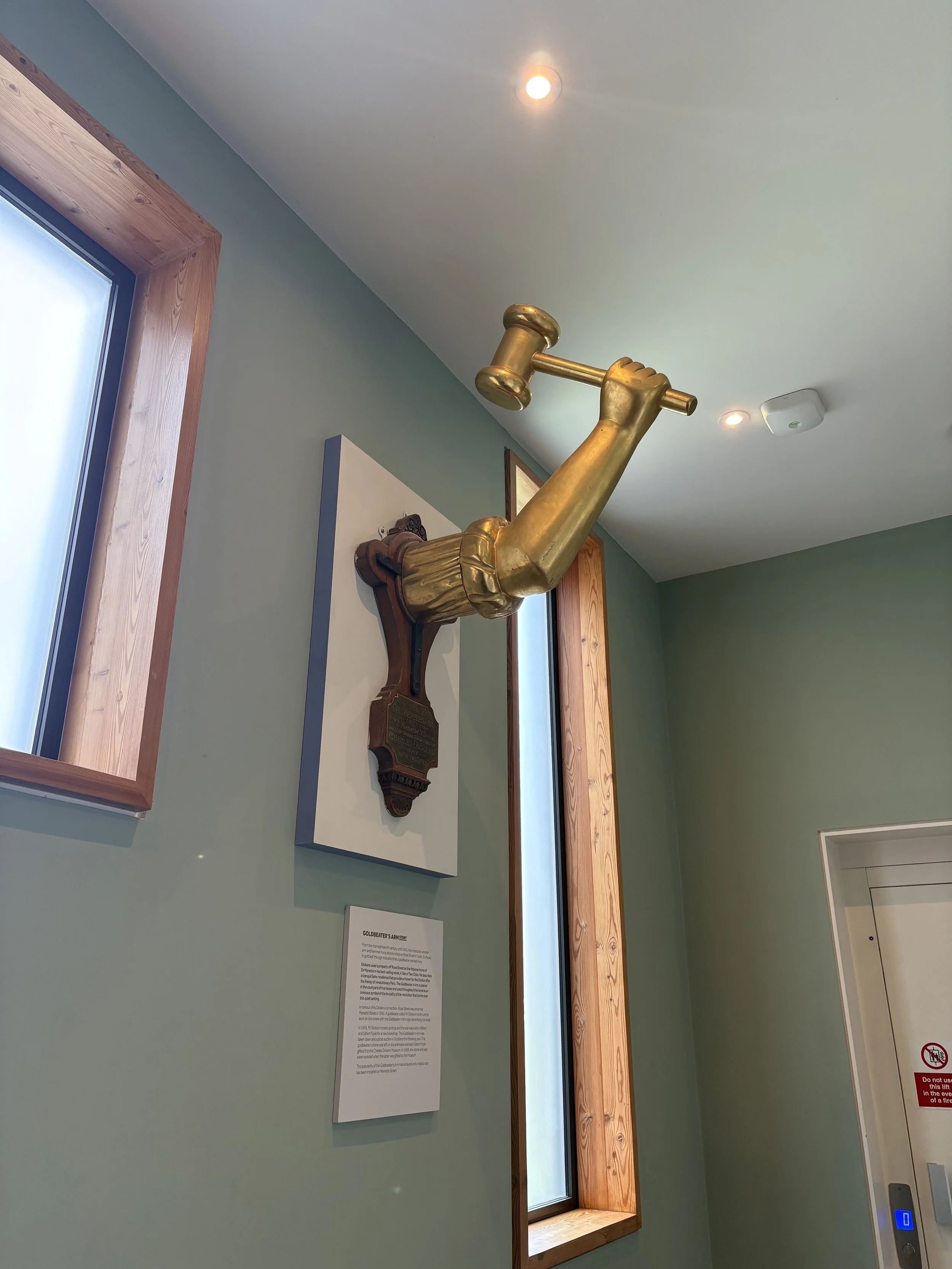
Gold Beater’s Arm Story: “From the mid-eighteenth century until 1905, this muscular, wooden arm and hammer hung above a shop on Rose Street in Soho. Surfaced in gold leaf, the sign indicated that a goldbeater worked here. Dickens used a property off Rose Street as the fictional home of Dr. Manette in his best-selling novel, A Tale of Two Cities. He describes a tranquil Soho residence that provides a haven for the Doctor after the frenzy of revolutionary Paris. The Gold Beater’s Arm is placed in the courtyard of the house and used throughout the novel as an ominous symbol of the brutality of the revolution that looms over this quiet setting…”
The Gold Beater’s arm is a symbol of the strength and the calm after the storm of revolution. This statue is located in Soho Square as tribute to the story of A Tale of Two Cities. The story of the arm quoted on this page is an inscription alongside a replica located in Dicken’s house.
French Influence
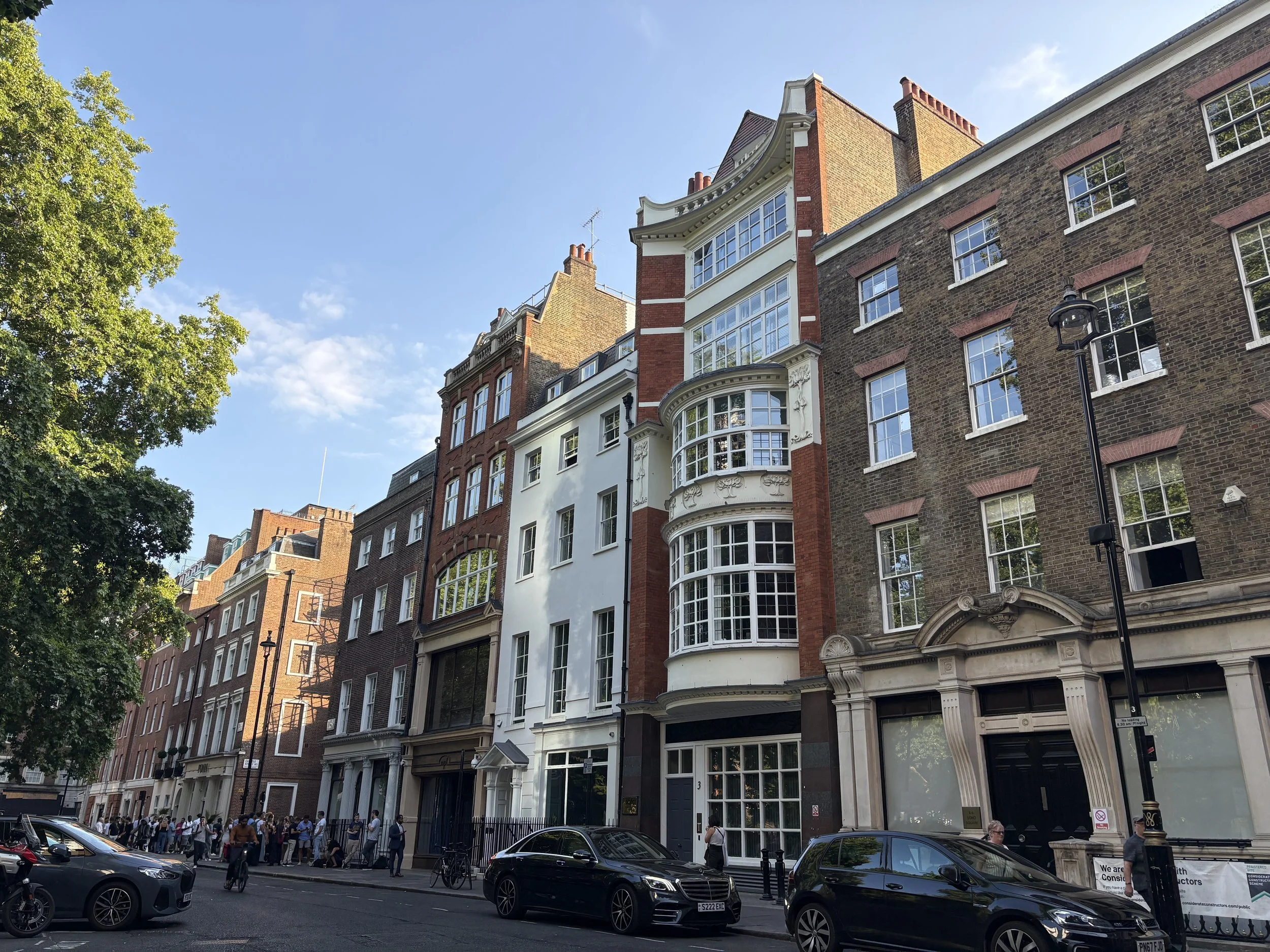
The streets of Soho, London.
One of the earliest tributes to activism that can be found in Soho Square is the French Protestant Church. The origins of this church can be traced back to 1550, with the current structure having been refurbished most recently in 1893.
During the French Wars of Religion, after Louis XIV revoked the Edict of Nantes in 1685, thousands of French Huguenots fled to England and found refuge in this church. Here they took asylum and began to live normal lives. The notable French cultural, culinary, and skilled trades that were brought to London during this time can still be seen in Soho today.
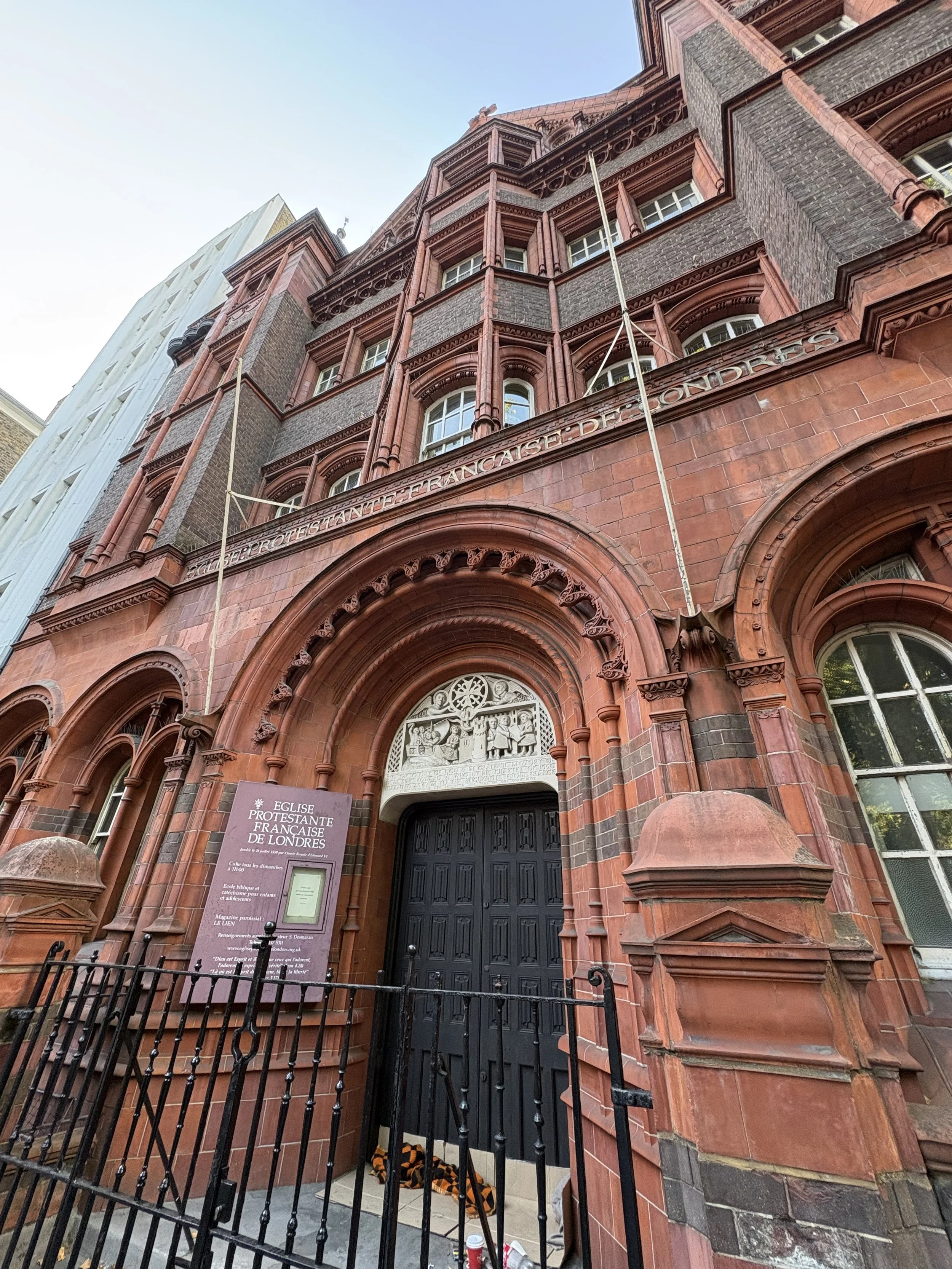
French Protestant Church, Soho Square, London.
A Day in Soho Square
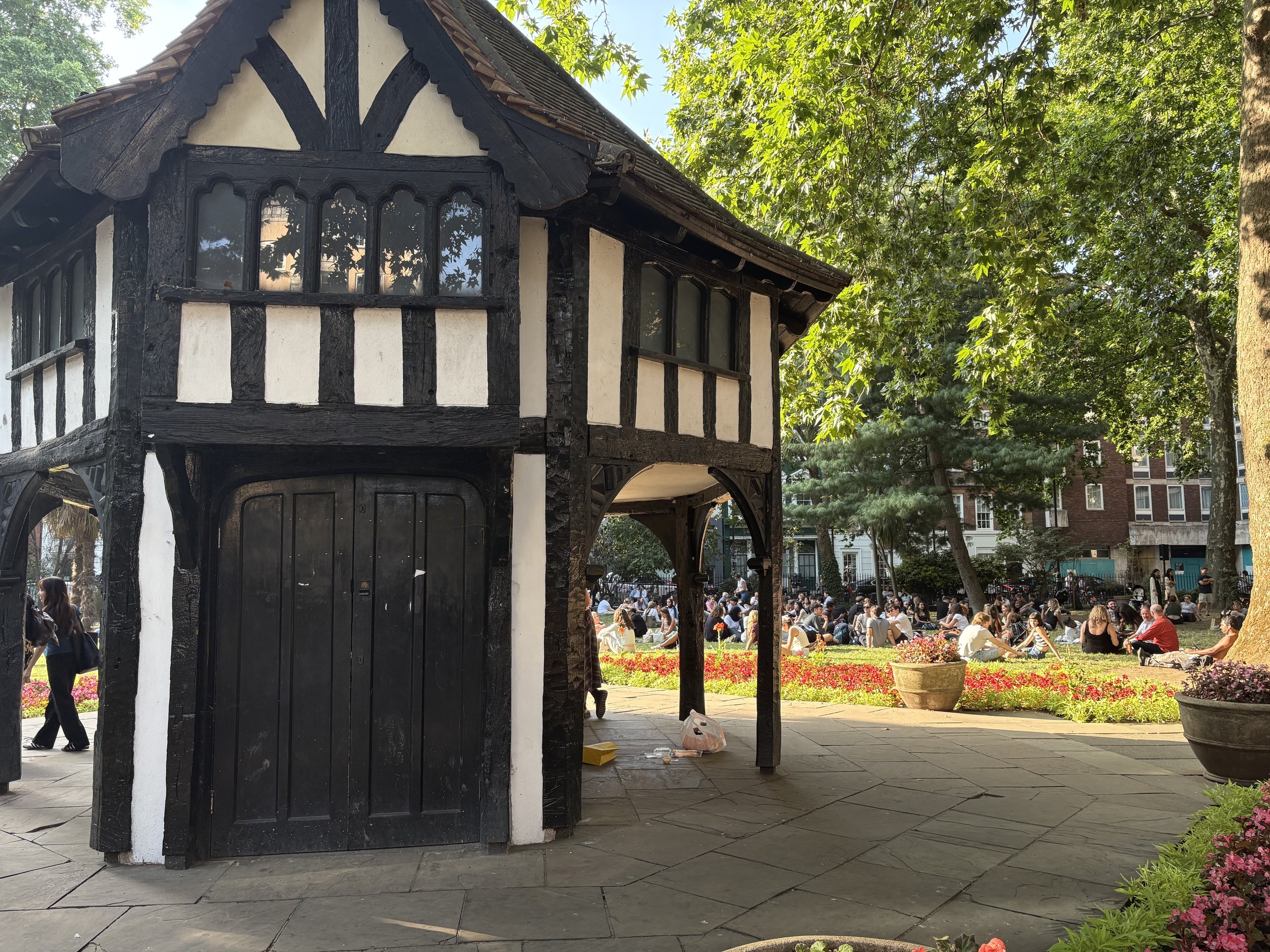
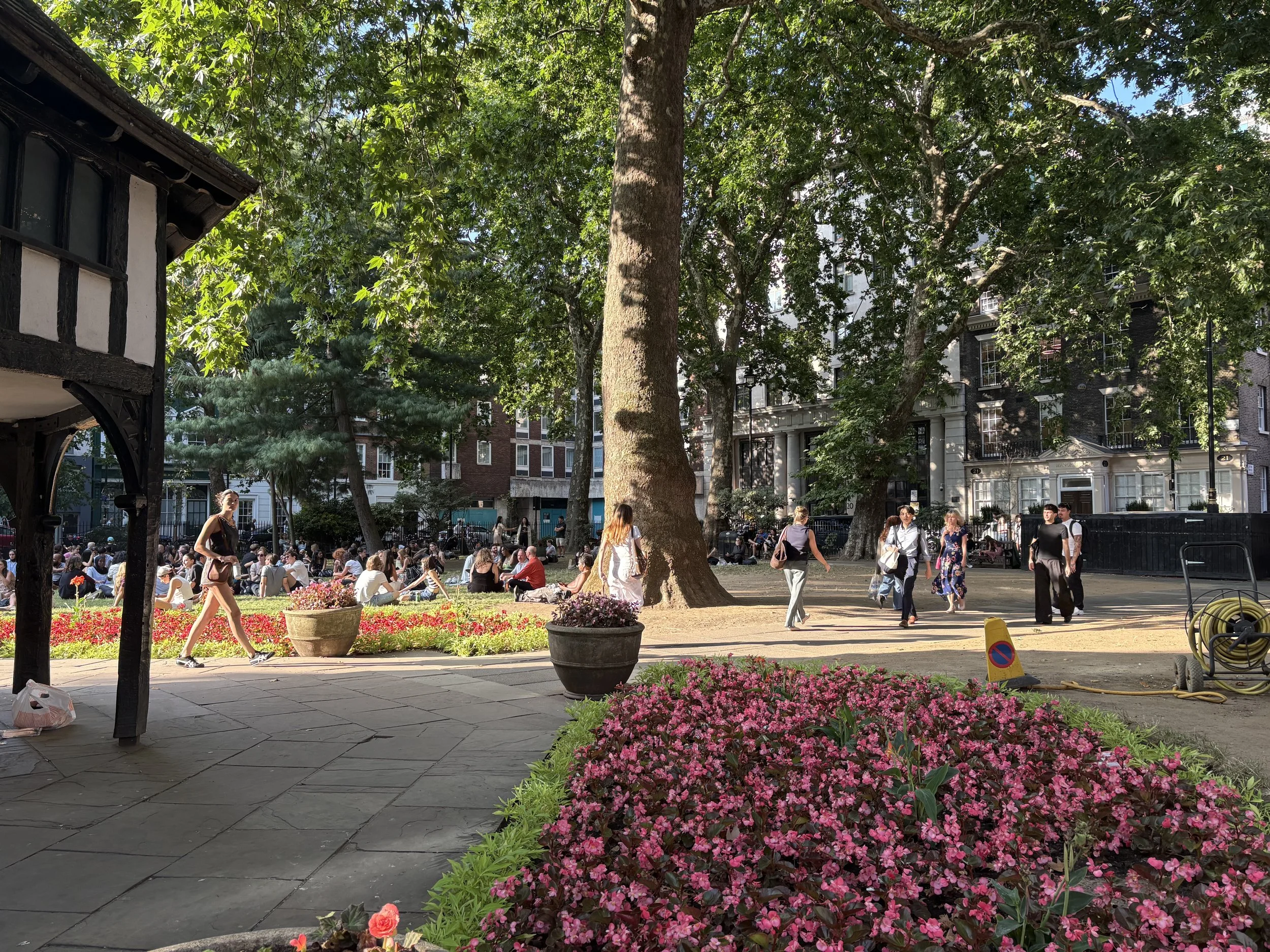
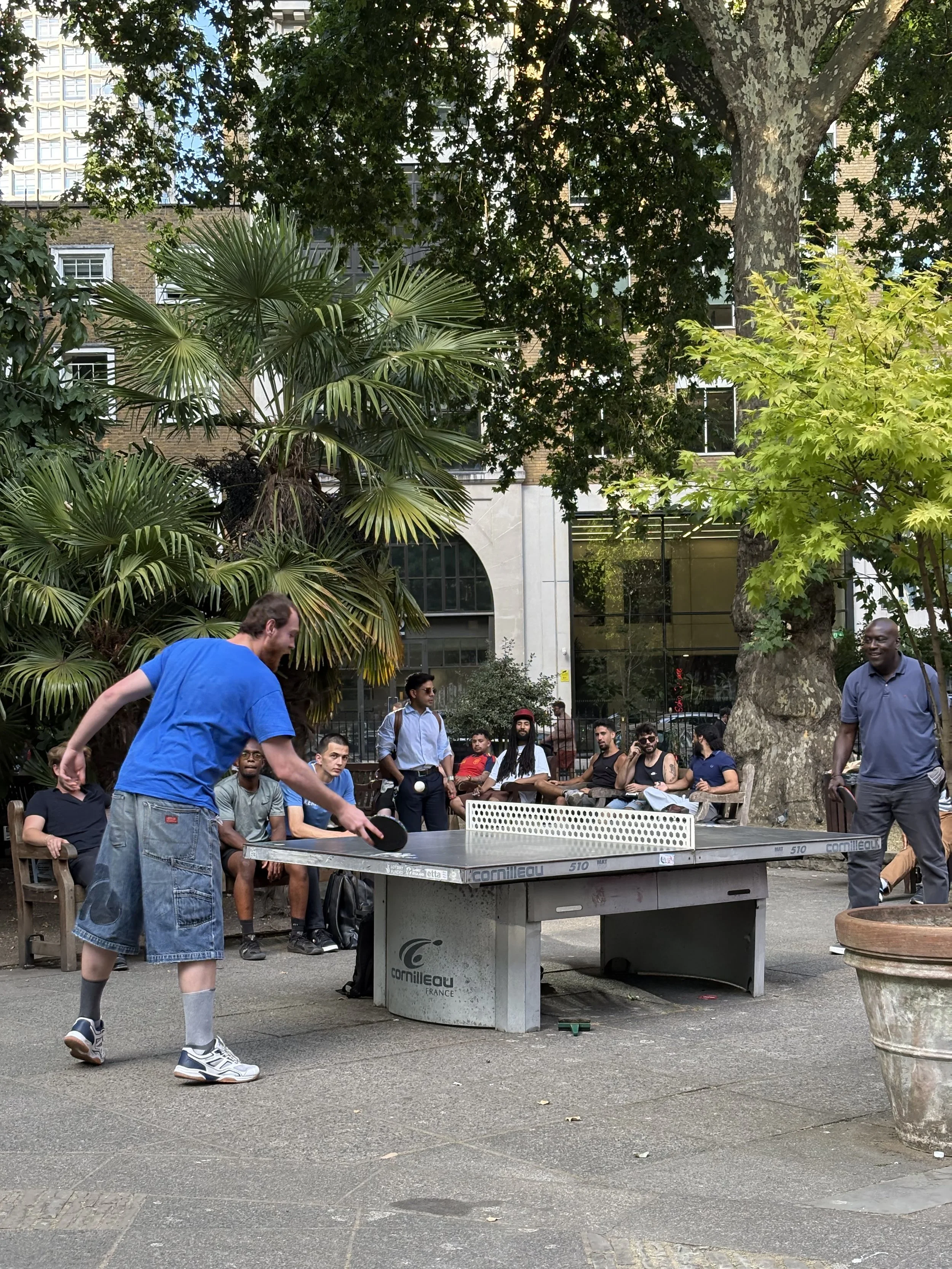
Today, beyond being a hub for activism, people use the park of Soho as a space to meet and enjoy the sun. As we walked through the square, I came across this pair of men playing ping-pong, verbally jousting with the crowd and with each other. While this seems like a simple scene, I could have stayed and enjoyed the liveliness this duo brought to the area for hours. There is a beauty in the simplicity of joy found in an area that once used to be many refugees’ last hope. Being able to remove the fear factor from a safe haven is what makes it a space where all people are truly free.
Pride in SOHO
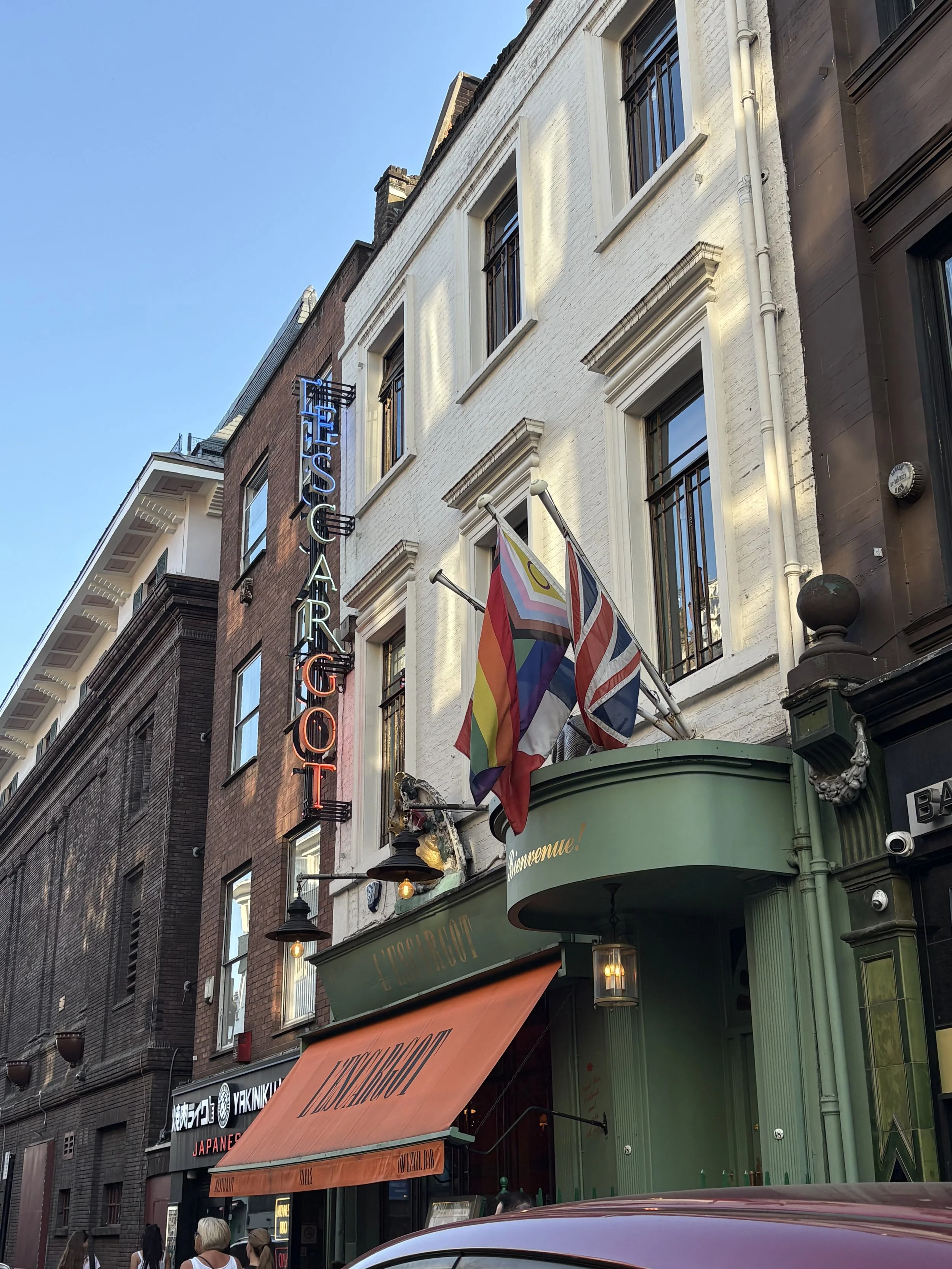
An example of the dozens of pride flags that cover the streets of Soho. These flags are notably above the restaurant L’Escargot, a nod to the French heritage that remains a vital part of London today.
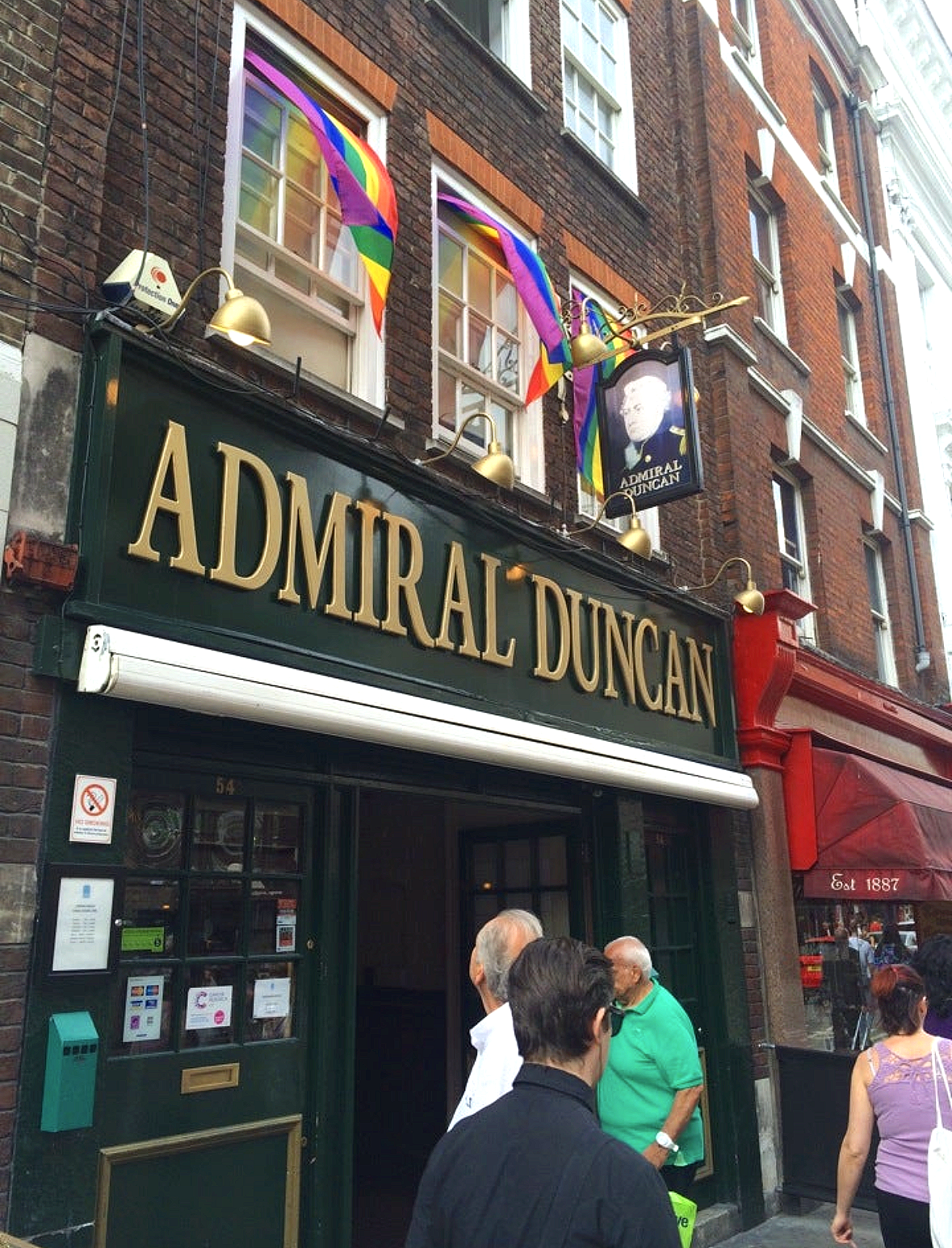
LGBTQ+ Nightclub: Admiral Duncan, London. (Picture from Google Maps)
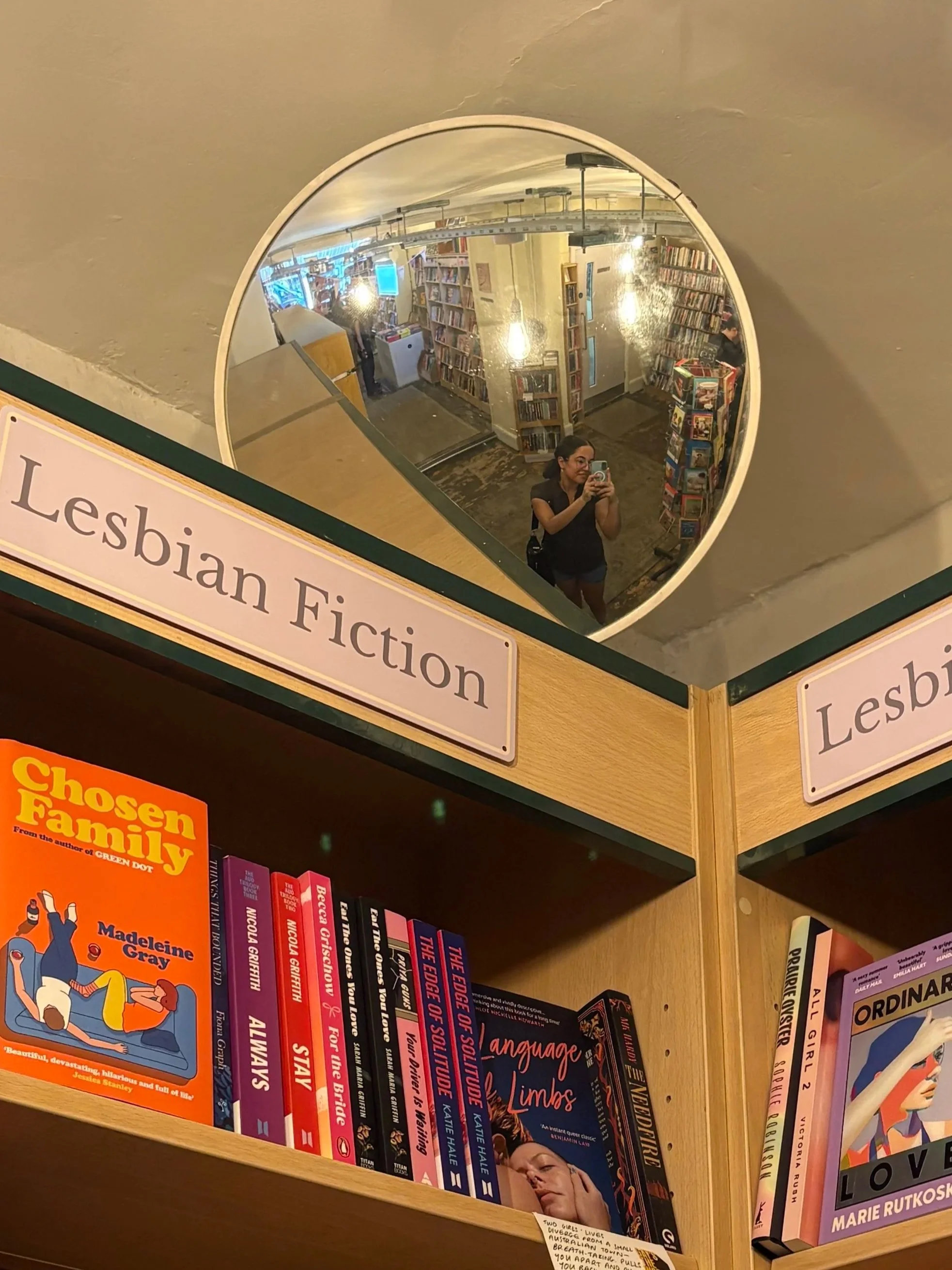
Cheeky mirror picture at the bookshop Gay’s The Word, London.
The standard of acceptance, while a difficult road, has slowly spread outside of Soho Square and into the rest of London. As I walk the streets of Soho, countless pride flags fly, dozens of happy couples roam the streets, and you cannot help but to be enraptured by this air of bliss. The bookshop Gay’s The Word was established in 1984, and faced numerous raids where books were seized and called indecent. Writers rallied to support the shop, and it now remains a landmark of pride filled with books supporting queer love.
Admiral Duncan is one of London’s oldest LGBTQ+ nightclubs. In 1999, this establishment was attacked by a Neo-Nazi extremist who planted a nail bomb inside the pub, killing three people and injuring approximately seventy others. The assailant was sentenced to life in prison, and the outrage sparked by this attack led to massive marches in support of the LGBTQ+ community. Since then, Soho has blossomed into a place where all are welcome with open arms.
Soho Square has always been, and will always be, a place where anyone can find refuge.
It fills me with hope for the future knowing that places which were once filled with danger and violence can be turned into places of remembrance and love.