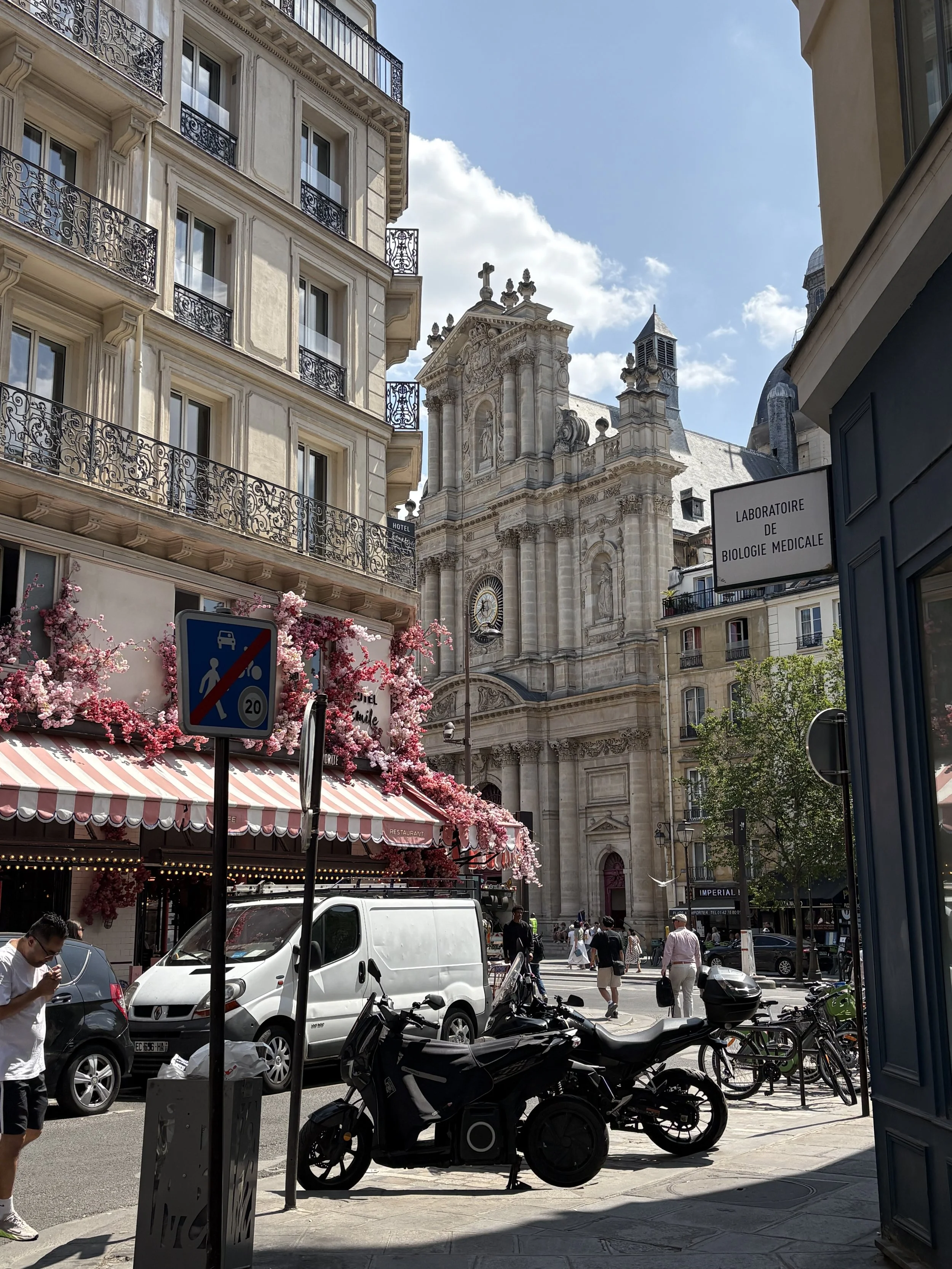
There is an unspoken rule in family that anyone with siblings would know. It is the same reason I am allowed to incessantly harass my sister, but if anyone else were to dare speak to her in the same coarse tongue with which I do, I would be up in arms. This sentiment is not unlike the way Parisians are with France. Never was there such a country in which the citizens will so openly criticize, yet fiercely defend. Liberty, Equality, and Fraternity—the beating heart of France. The French Revolution, while unnecessarily gruesome, is a prime example of this undying patriotism. The people of France will not think twice about defending their country and its principles, even if that means to overthrow the rulers of it.
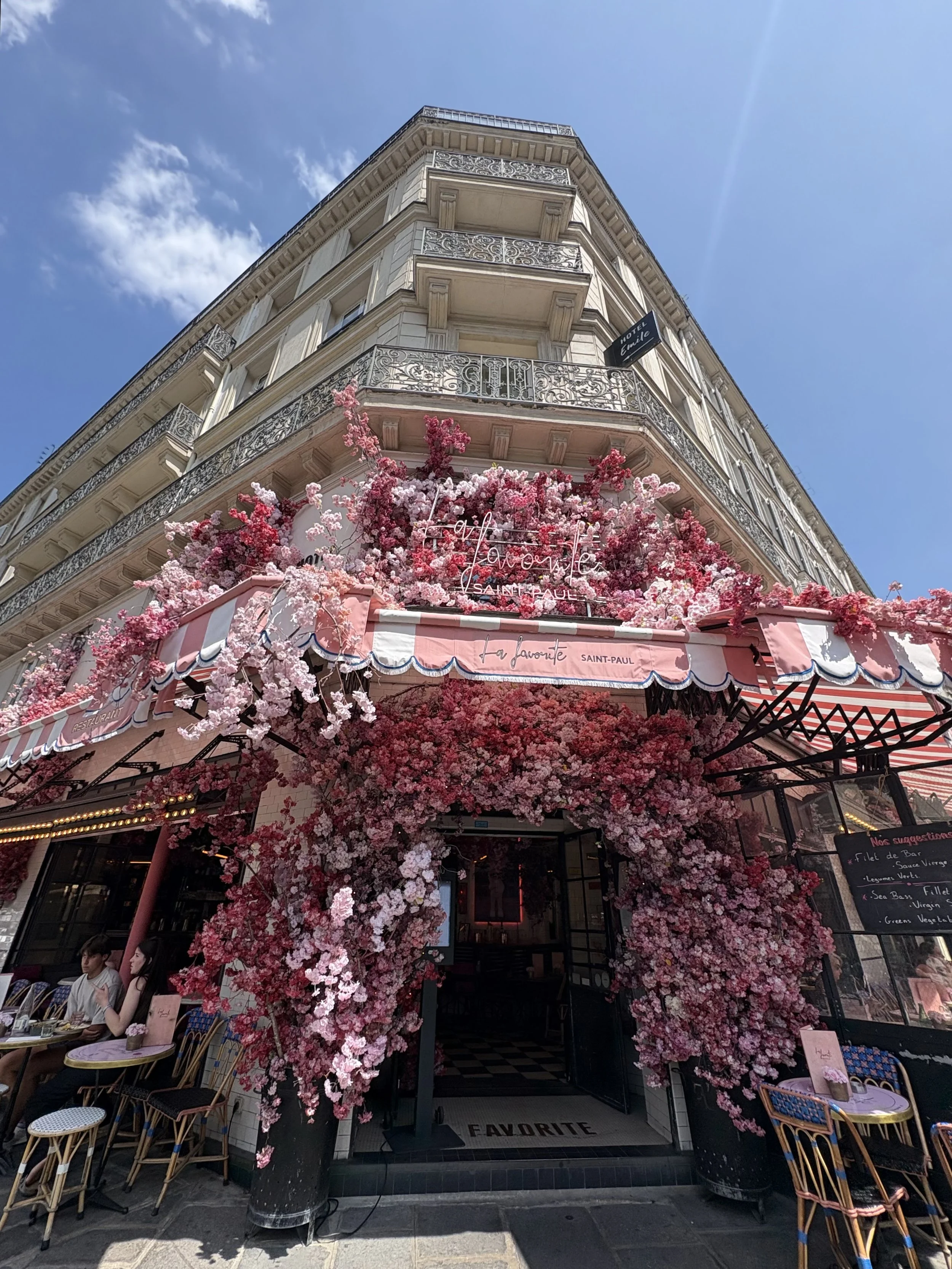
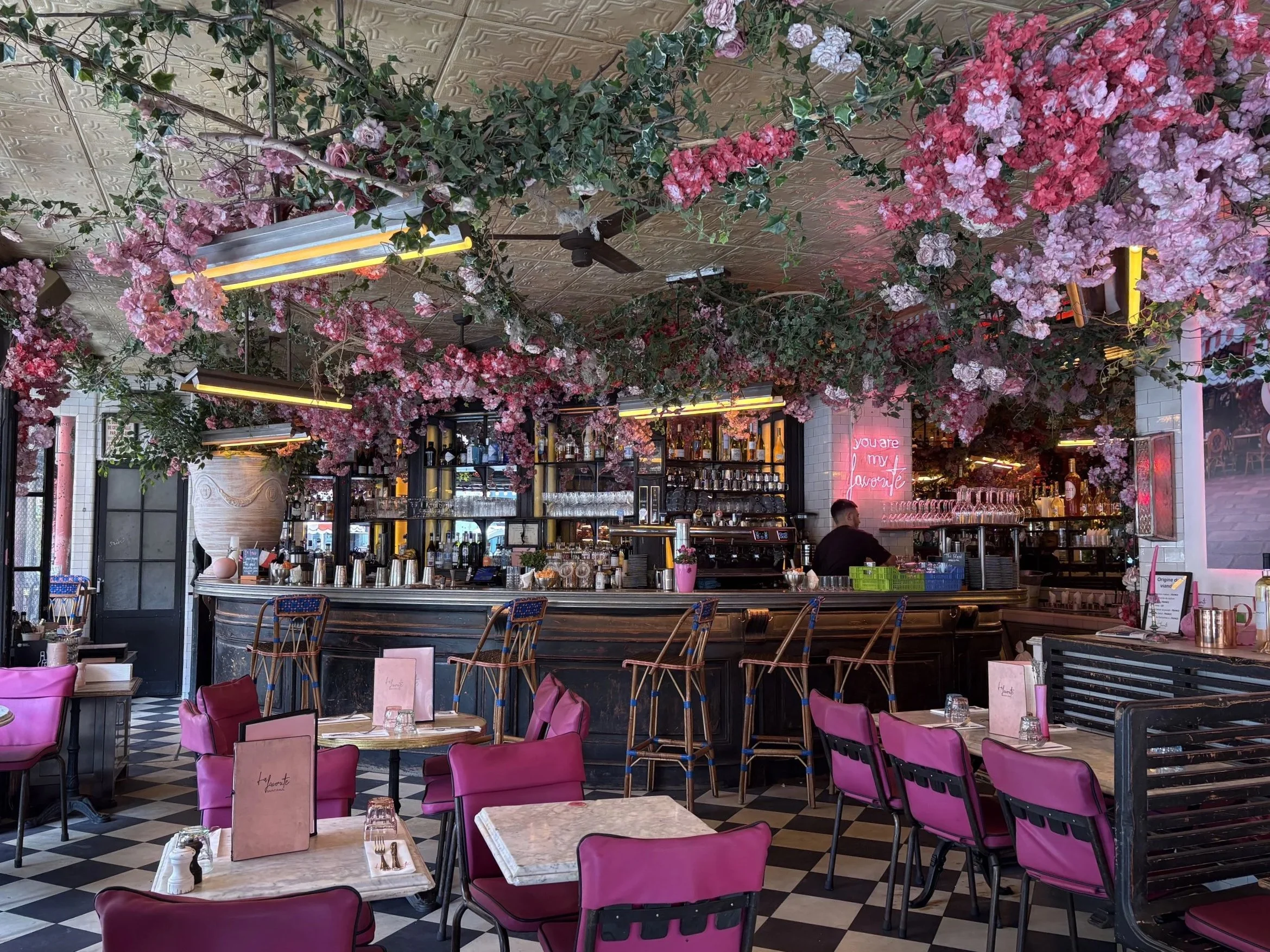
La Favorite Saint-Paul, Paris.
The now pink and frivolous corner of this street marked by La Favorite is the location of the Defarge’s wineshop in A Tale of Two Cities. This site serves as an example of one of the many hubs in France at which the French Revolution was planned. Although this particular building was not evidently used for the French Revolution in real life, it is the location of revolution in Dickens’ story. In this wineshop, Madame Defarge runs secret meetings, creates hit-lists, and shows no mercy to those who stand in her way. She is one of the few female characters of the time depicted with such ferociousness and ambition. It is ironic to me that a place that served the purpose of such violence in a story is now bursting at the seams with pink flowers, but I have never loved anything more. The strength of a woman depicted through this intense pink iridescence instead of grotesque violence is an image I can get behind.
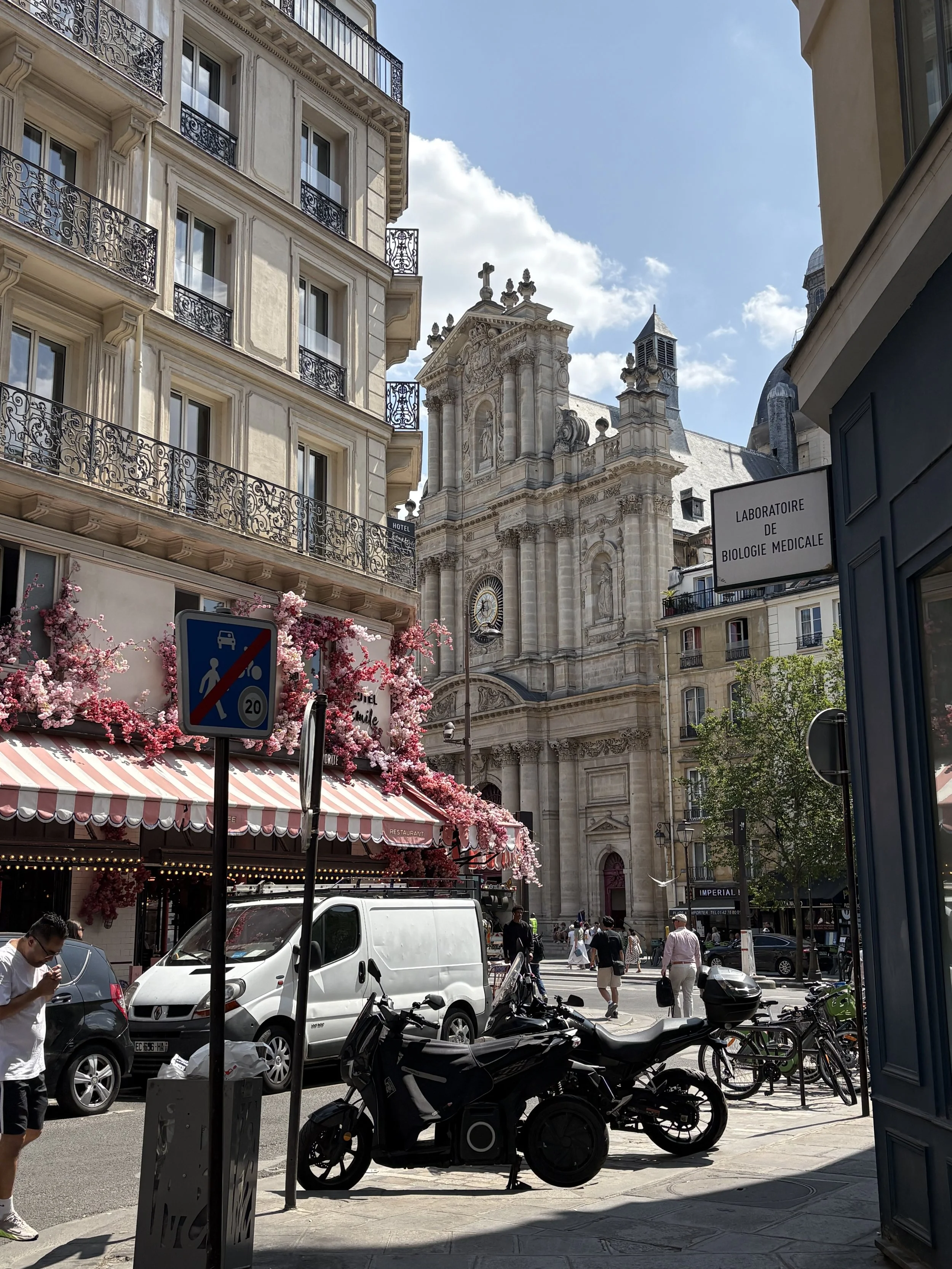
In A Tale of Two Cities: Defarge’s wine shop on the corner, a fountain in front the shop, and a church across the street.
Present Day: Cafe and bar in front of the Jesuit Catholic Church that was vandalized in protest during the French Revolution.
〰️
République Française ou La Mort
〰️
Republic of France or death
〰️ République Française ou La Mort 〰️ Republic of France or death
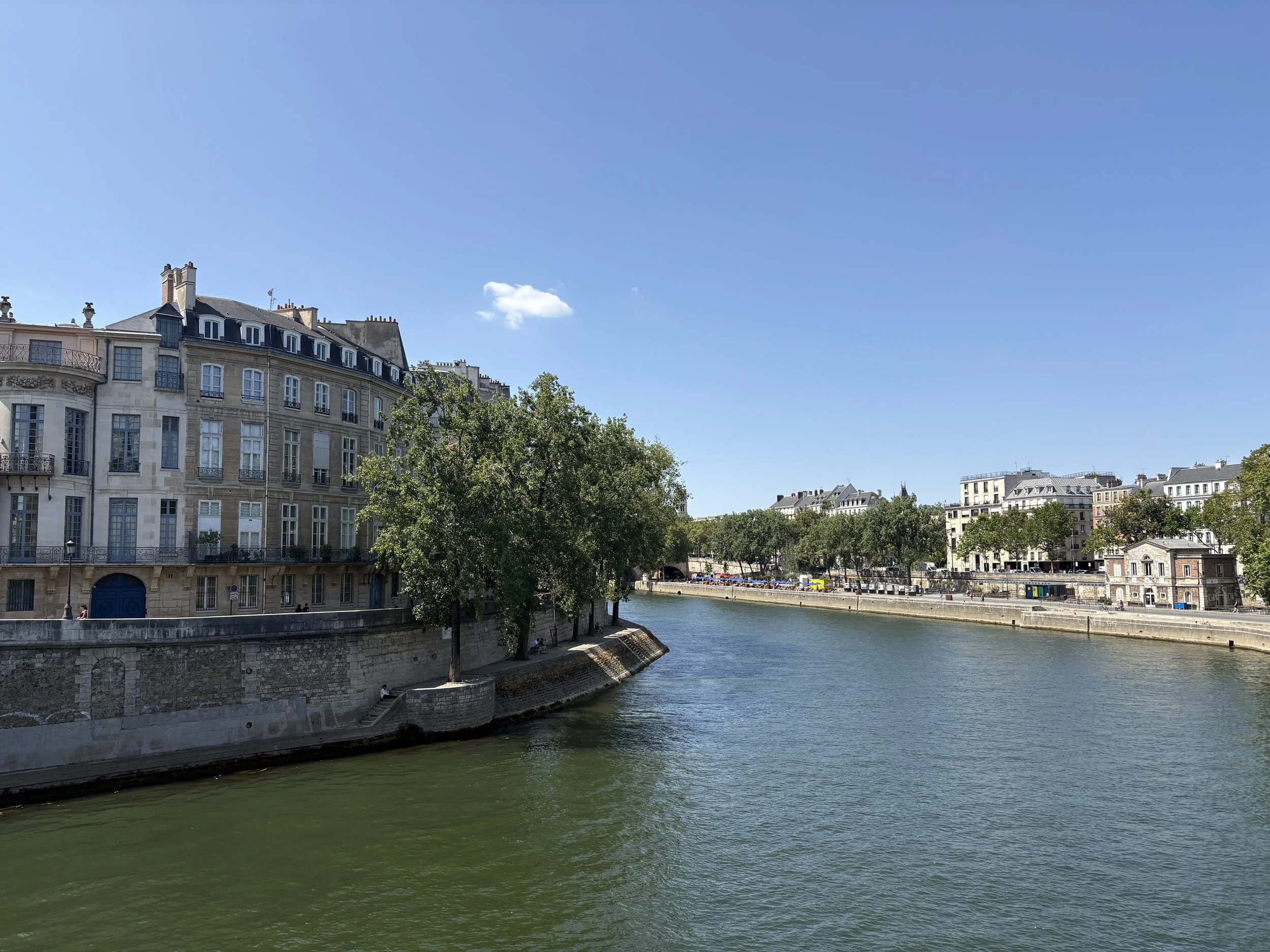
View of the Seine from a nearby bridge, Paris.
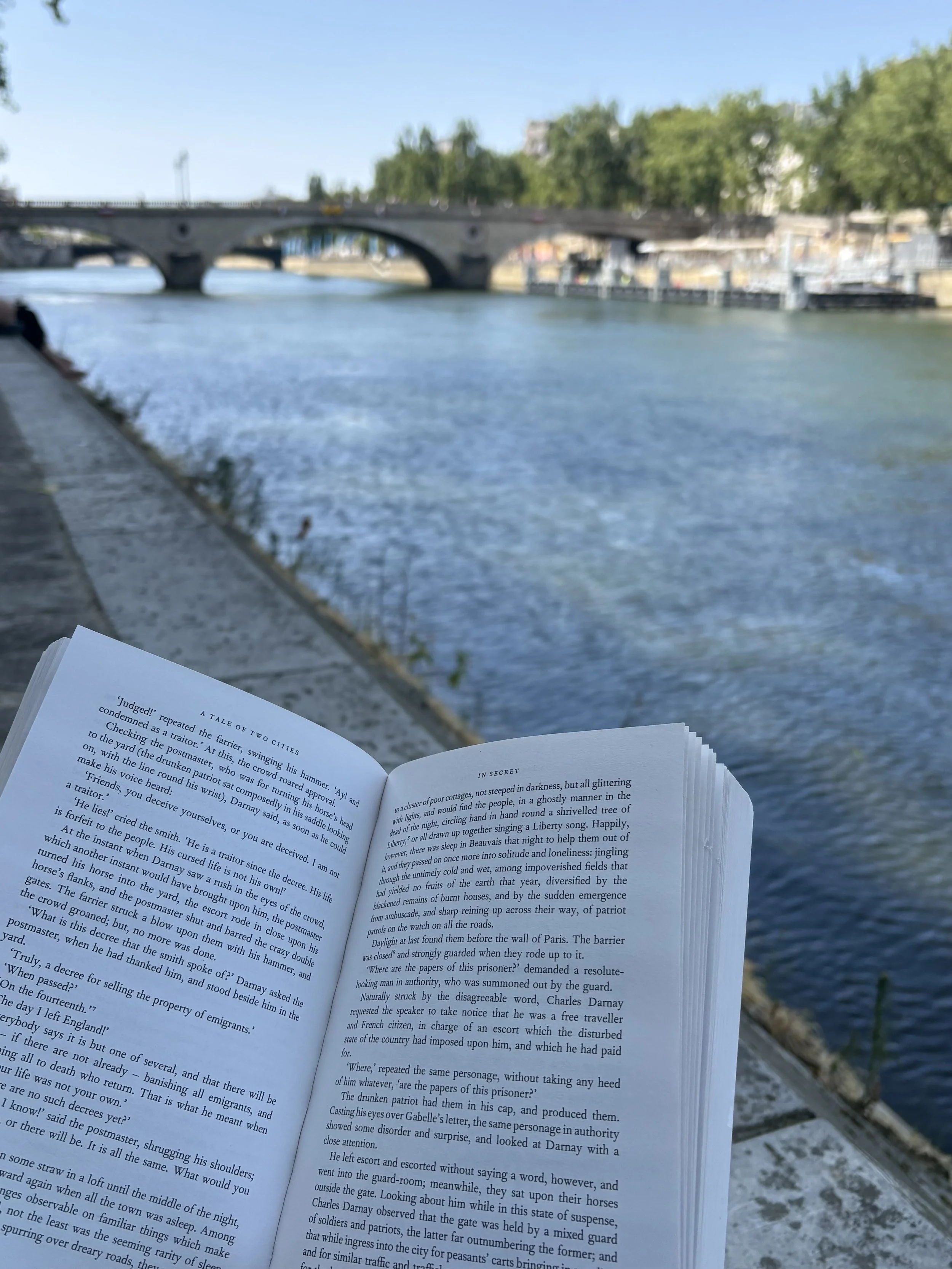
Reading A Tale of Two Cities at the riverbed of the Seine.
While the French made mistakes during the Revolution that led to unnecessary amounts of death, the principle with which they fought was pure. The notion of Liberty, Equality, and Fraternity will remain at the foundation of French culture for years to come.
“... all red wine for La Guillotine… Liberty, equality, fraternity, or death; – the last, much the easiest to bestow…”
The image the below was captured inside of a Jesuit Church across the street from La Favorite. In A Tale of Two Cities, just outside of this church is a fountain next to which a small child is murdered by an aristocrat. In the story, when the child is murdered, a mob immediately forms and (in due time) revenge is taken on the aristocrat: death. The immediate response of the French people to avenge and fight for their small brother demonstrates the level of patriotism with which many fought during the revolution. Every citizen, including the poor and the young, was part of the fraternity of France. This was the core ideal that sparked and spearheaded change in French society.
In actuality, there was no mob as a response to a child’s death, but this church was truly vandalized during the French Revolution. The anger of the French people marked through a symbol that persists even today is a fascinating addition to the history of this city. I like how you can clearly see there was an attempt to clean the graffiti off the wall (to no avail). This implicitly adds to the air of government control and defiance that was alive and well at the time of the Revolution. Additionally, there is no roping-off or attention called to this mark on the wall. There are chairs in front of it, and I imagine dozens of people have sat next to this invaluable mark and never paid it a second thought.
To deface a house of God! Now that is sending a message.
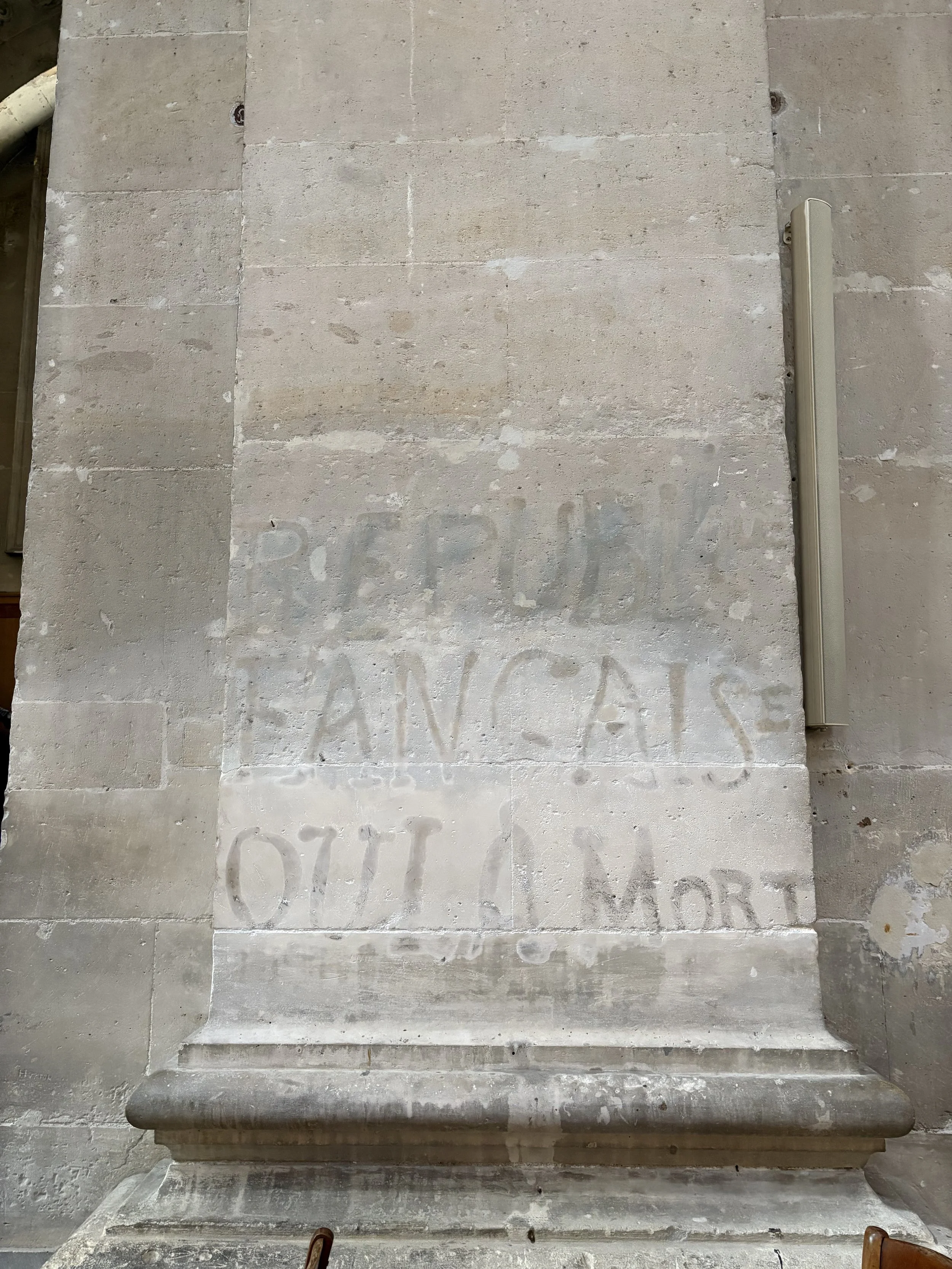
Inscription inside the Paroisse Saint Paul Saint Louis du Marais Jesuit Catholic Church, Paris.
Inscription: République Française ou La Mort.
Translation: Republic of France or Death.

Selfie at the Seine!
Allow me to emphasize the one aspect of France that has never wavered: patriotism. This was the heart of the French Revolution, and this notion remains the core of French society. No matter which side of history they were on, Parisians always acted in a way which they thought was best for France.
One landmark that I particularly love that exemplifies this principle of French life is the Seine. Historically, this river has served as an artery for commerce, military, and cultural exchange. It has inspired worldwide architecture and urban planning since the Middle Ages, and its influence continues to run worldwide. In fact, back in 2024, this was the very site where open-water Olympic swimming events took place. The Seine is formidable, ever adapting, and persistent—just like the French. In A Tale of Two Cities, this is the place where Carton crosses a bridge as he reaches a crucial decision to sacrifice his life for his dear friend.
“… no sorrowful story of a haunting Spirit ever arose among the people out of all the working of the Guillotine… Carton crossed the Seine again for the lighter streets...”