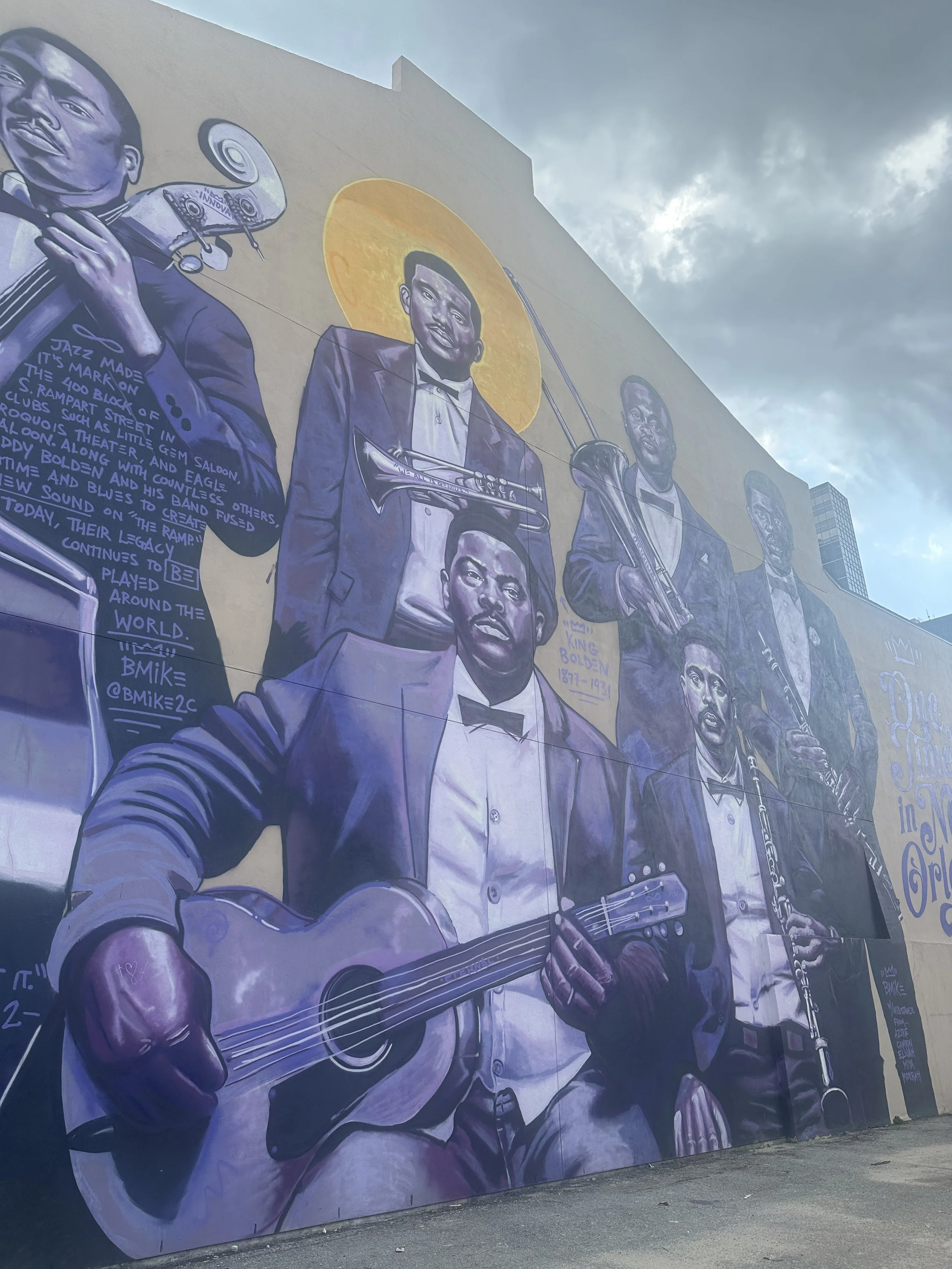
“EVERYONE MUST KNOW BUDDY BOLDEN”
I came to New Orleans with a deep love for music, but not much of a jazz background. My roots were in blues and folk guitar, and most of my musical education either came from players in that genre, or learning by ear, writing songs, and jamming with my friends. (I was even guitar club president in high school!) I did spend about six months in a high school jazz ensemble, but I never quite spoke the language. While others around me seemed to be fluent in the technical, swing rythms, chord substitutions, I clung to what I was comfortable with, like the good ol pentatonic scale. Theory always felt like a world I never was eager to hop into.
Jazz as a result has always held some kind of mystique. It was something I deeply admired but didn’t fully understand. The students in that ensemble felt like they operated on a different plane than me, effortlessly communicating in ways that I couldn’t. I loved listening to Miles Davis, Thelonious Monk, Chick Corea, Hiatus Kaiyote, but my relationship with their music wasn’t at all technical. I could feel it, but I could never explain it.


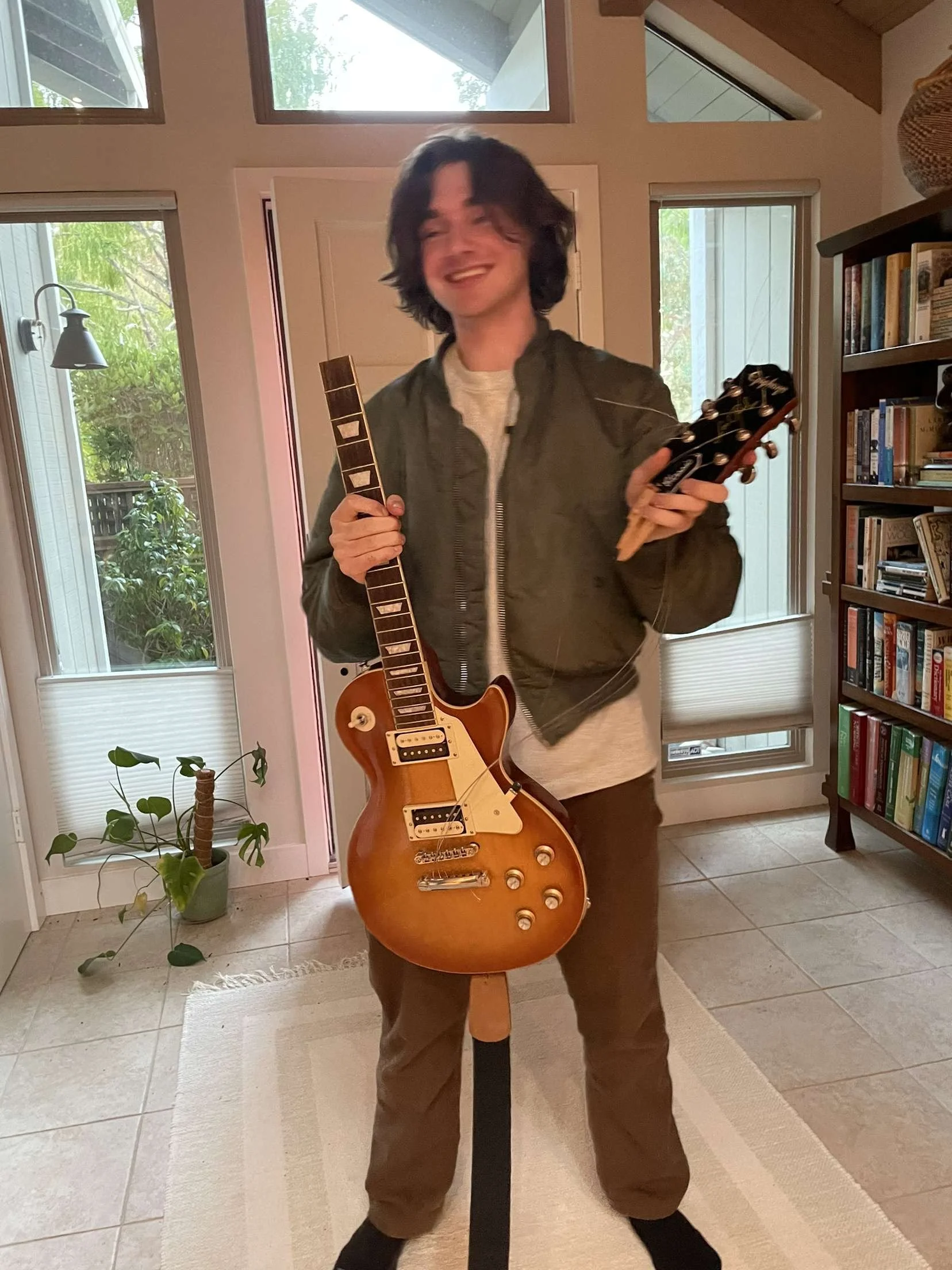
Coming to New Orleans as the birthplace of Jazz, I felt like stepping into the language that I’ve never fully grasped. It was intimidating, but I was only here to listen and observe.
“Everyone must know Buddy Bolden”
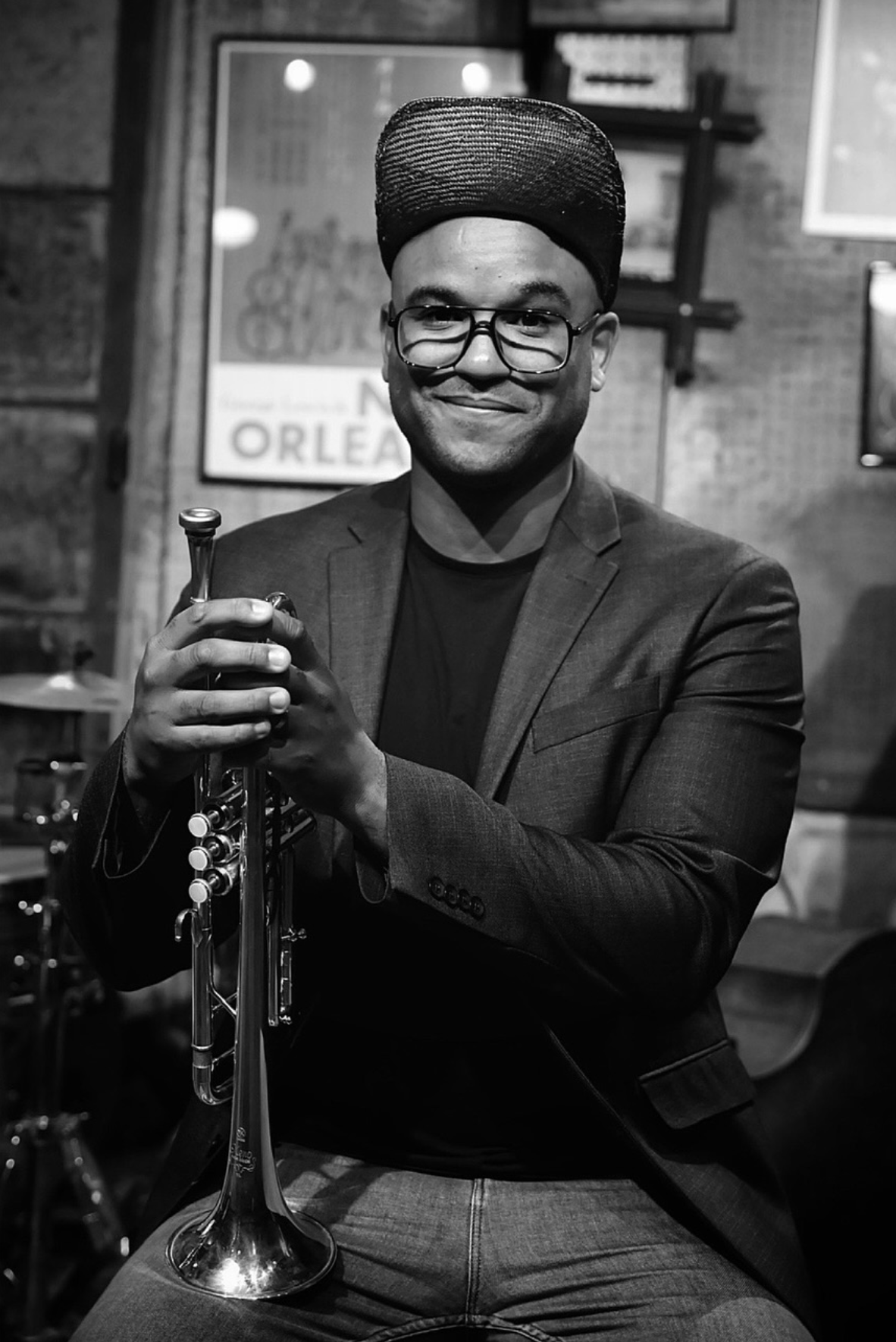
Branden Lewis
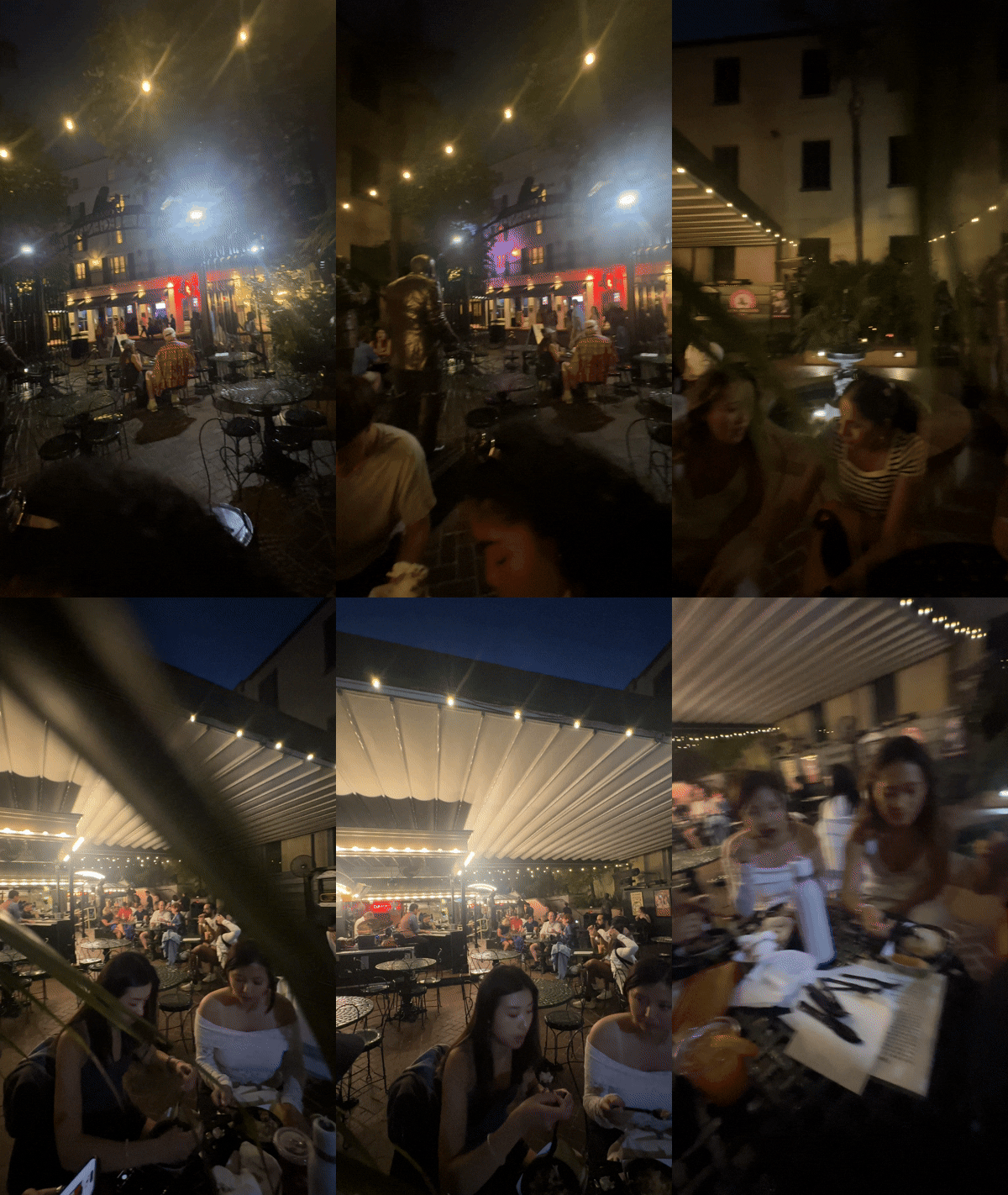
Our first night in the heart of New Orleans, we were in search of two things: food (of course!) and good music. We followed the sound of a live band spilling out of a little cata-corner of Bourbon Street. The food was really good, our first taste of New Orleans food, and the music felt like what we had expected: classic songs and jazz standards we recognized. We thought we had struck gold.
We came back a few more times after that. The band never changed, and neither did their set. We realized quickly that the food, although good the first few bites, wasn’t the epitome of New Orleans food. We realized this place wasn’t a hidden gem, but a tourist trap for the unsuspecting. The music, although good, stayed on the surface. It wasn’t what we were looking for… We were still on the surface.
We were sitting outside of Preservation Hall, anxiously awaiting the jazz performance ahead of us. As we were waiting, a local man came by and laughed at us: “Why are you waiting to listen to music that puts you to sleep?” I wondered if the performance would disappoint.
Preservation was a wonderful exploration into the historical roots of Jazz. Dating back to the 1950s, it became “the most iconic Jazz Club in New Orleans.” Personally, I was enthralled, and so were most people in the room. People got up to dance (and importantly tip!), and you could tell they were all professionals in their craft. However, was it the Jazz I was looking for?
After the show, we all had the wonderful opportunity to talk to Branden Lewis. He asked us why we were here, and we told him about our bookpacking. We had been reading Coming Through Slaughter, so Sam brought out the book for him to see. We asked if he knew Buddy Bolden. “Of course, Everyone must know Buddy Bolden!”
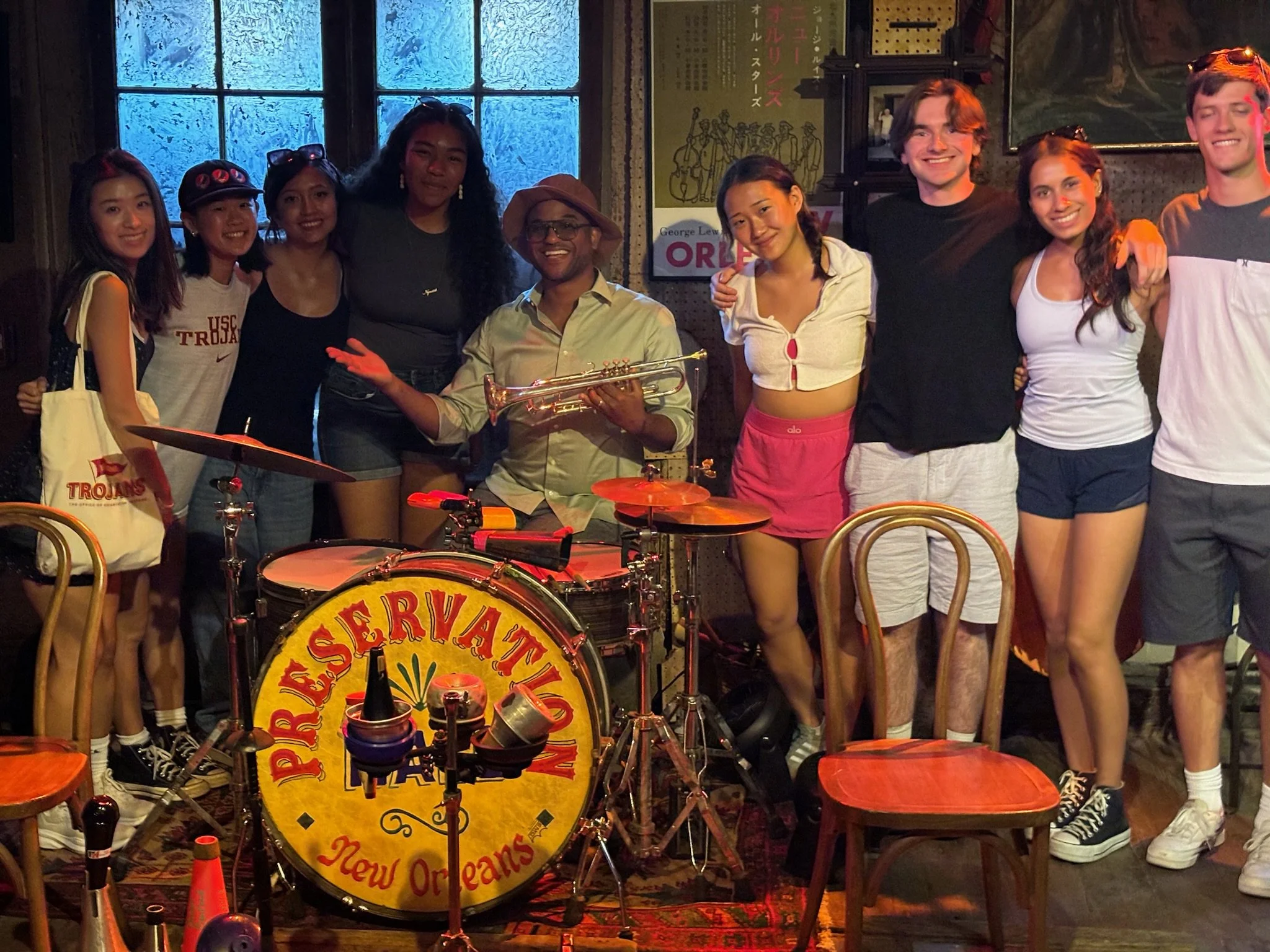
Preservation Hall With Brendan Lewis! (June 4th)
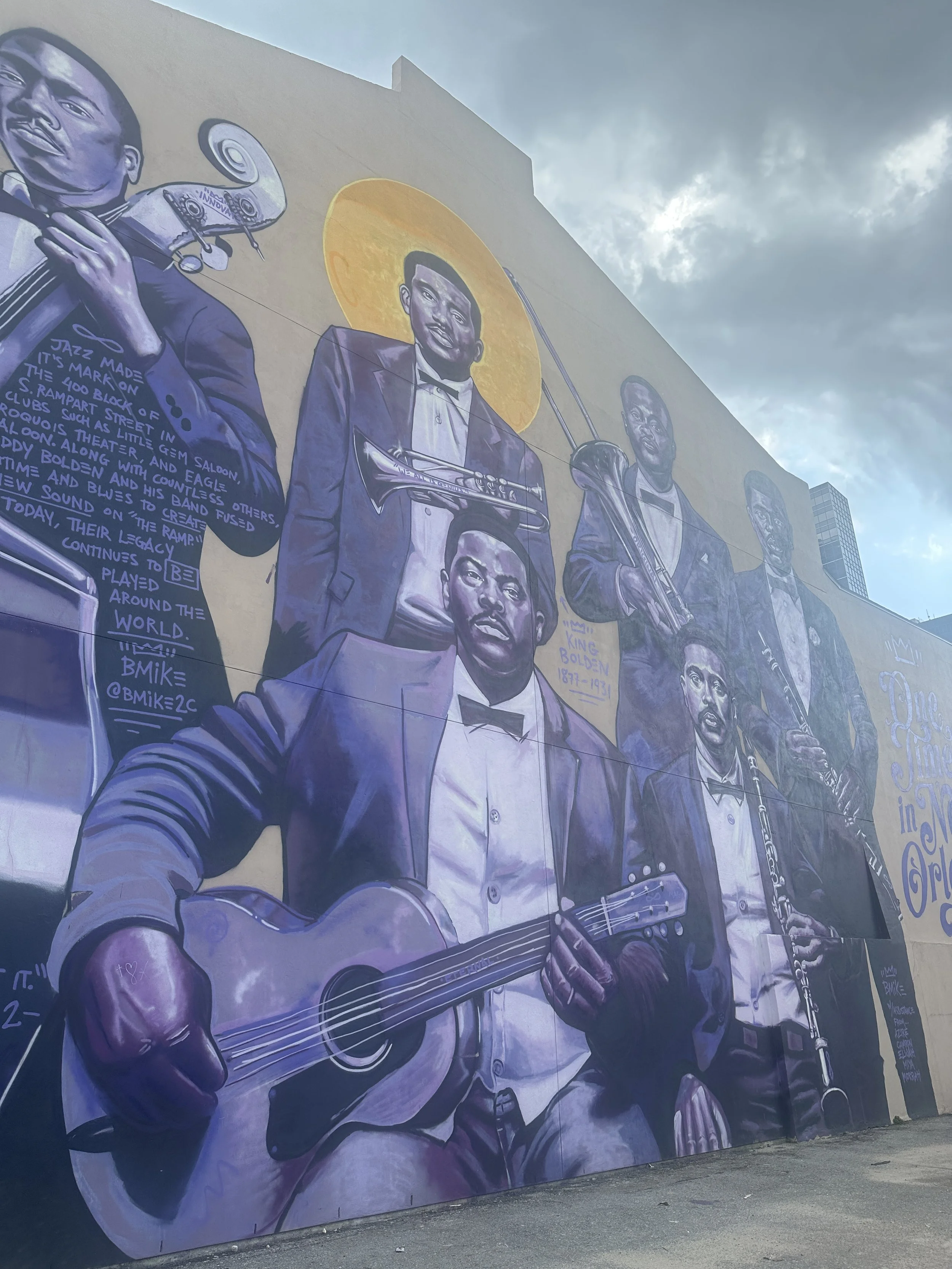
Buddy Bolden Mural (June 2nd)
Coming Through Slaughter was one of our most interesting books. The writing is manic, often requiring a pass over or two to fully understand it. It’s written sporadically, much like the unravelling of Buddy Bolden himself. The writing style is intentionally sporatic not only to represent his mental state, but also the state of jazz. It’s not something that’s supposed to inherently technically difficult or emotionally distant. Instead, it’s the raw lived experiences of everyone around us. That’s what it was trying to tell us.
Walking the French Quarter once again, I heard a trumpet. It wasn’t a band, wasn’t a venue, just a woman sitting alone at a Cafe table outside of Envie Cafe, one of my favorite cafes in the french quarter. There wasn’t an audience, no tips, just a woman and her horn. The sound wasn’t polished, it was raw and real. Most thoughts weren’t finished and she didn’t seem to practiced. Even though the sound wasn’t too pleasing to the ears, I realized I had found it what I’d been looking for.
I hadn’t found it on a stage or in a historic club. Instead, I found it on the streets where people lived. And here in New Orleans, she refused to be silent.
In the end, I didn’t find a technical mastery of jazz or a new appreciation for its theory. I didn’t leave speaking the language fluently, but I will leave hearing to it differently. I’ve come to understand that it’s not just something to be played on stages or in sheet music. It’s human. Born on the streets from unheard voices. People like Buddy Bolden who try and play not just for recognition but because they have something uncontrollable they need to let out.
Branden Lewis was right. Everyone must know Buddy Bolden! That’s because he’s the epitome of jazz- imperfect, improvisational, and deeply human, although flawed. Bolden’s legacy lives not in the clean picture perfect new orleans that tourists come for, nor does he live in preserved performances. Instead, you can find him in the raw notes drifting from cafe corners where music is messy and live, unapologeticaly free. That’s the Jazz I was looking for, and the New Orleans I’ll carry with me.
“The music was never seperate from the man.”