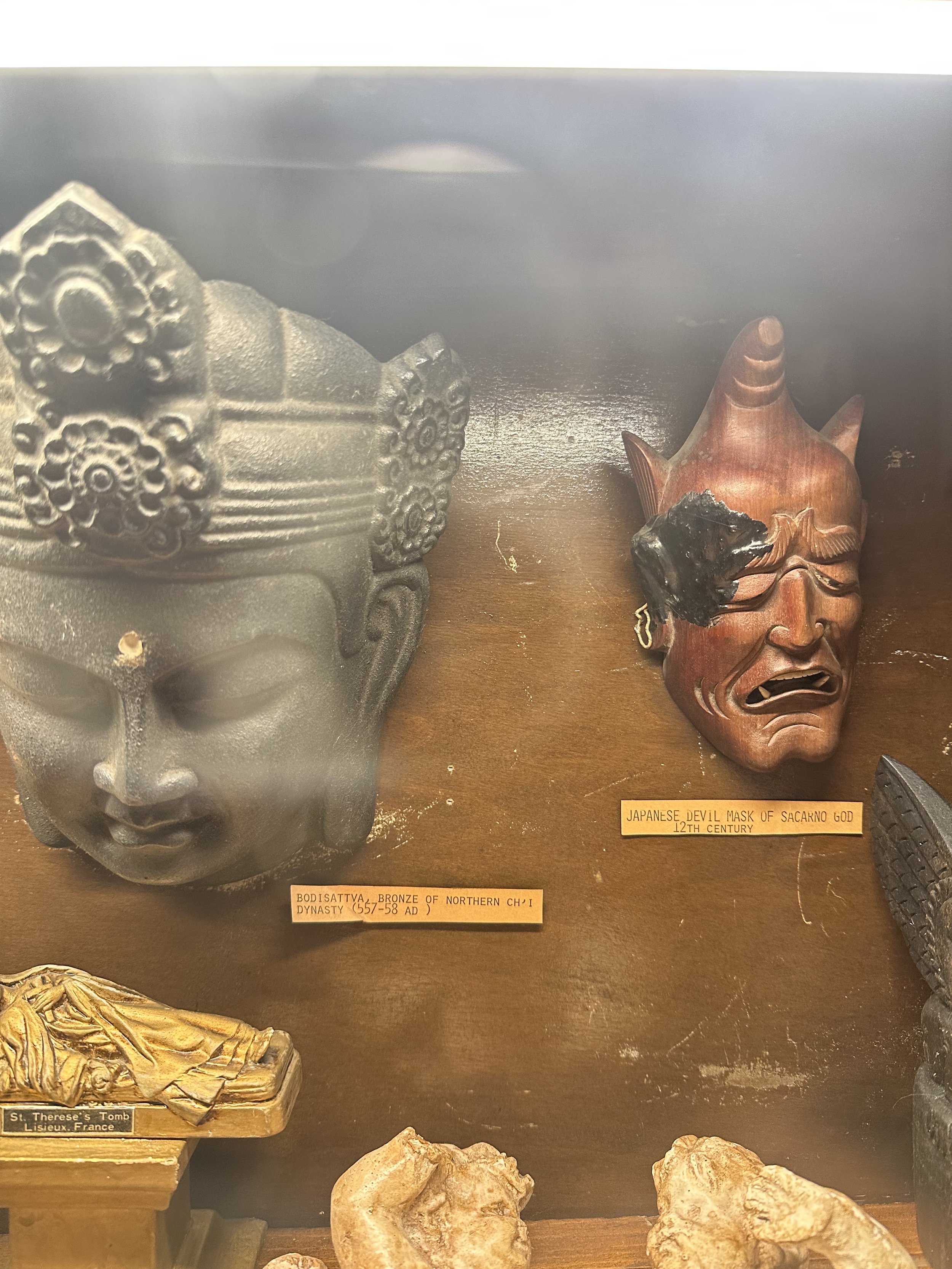
In the first room of the New Orleans Voodoo Museum, I see the Bodhisattva of the Northern Ch '1 Dynasty and a Japanese devil mask of the Sacarno God of the 12th century. I love and study both East Asian and New Orlean’s culture, so I want to find the connection between the two or the influences one had on the other. However in this context I could find more overlap between fire and ice.
From what I can understand, New Orleans is special not solely in its diversity but because of its history of diversity giving rise to an amalgamation of cultures. Not just a mixture. Most densely populated cities around the U.S. can boast diversity. As a matter of fact, several cities beat New Orleans statistically in that respect. But New Orleans has an edge on them because of identity as a whole. When I eat the gumbo here I taste several components of Spanish and French cuisine, along with the Southern touch. It has become its own. The same cannot be said about the other diverse cities. No one craves San Francisco food, it's not a thing.
I started realizing not fully understanding the culture of this place results in a demeaning and over simplification of its culture. Anne Rice describes late 18th century New Orleans with detail and care, but everything is the other. Everything is exciting, erotic, and exotic. New Orleans is the exotic other.
““There was no city in America like New Orleans…there were not only black slaves, yet unhomogenized and fantastical in their different tribal garb and manners…those marvelous people of our mixed blood…a magnificent and unique caste of craftsmen, artists, poets, and renowned feminine beauty…magnificent Grecian houses which gleamed in the moonlight.””
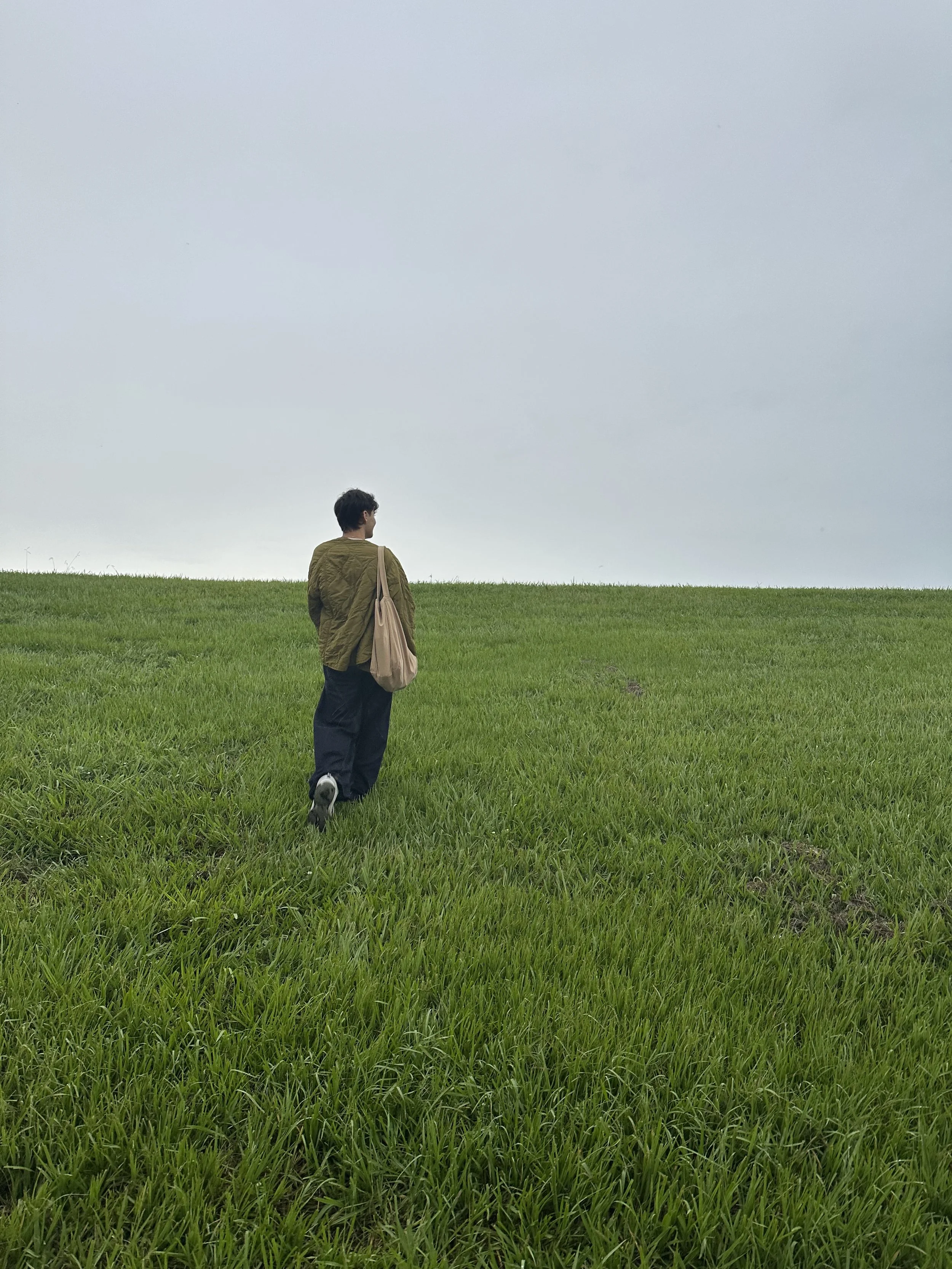
Setting Interview with a Vampire in New Orleans and utilizing, if not generating its exoticism in the public eye allows Rice to make daring choices. Choosing vampires as the main characters intensifies this freedom. If Anne Rice depicted two priests in Oklahoma showing the same levels of homoeroticism that Lestat and Louis showed, one sucking on the other’s neck, sacrilegious would not begin to describe the accusations. But showing two already unholy beings doing unholy things is to be expected. This weirdness has served people in New Orleans for decades. New Orleans has been labeled the weird other, so it is now a sanctuary for oddities and freedom. As I walk through the French Quarter, specifically coming up Canal Street, I remember Red Dress Day, where I saw men and women of any age wearing all red dresses and skirts. People dress and act however they please because New Orleans has become an environment to do so. I start wearing the clothes I wouldn’t even consider in Grand Isle, including my dark, vivid sapphire-blue button pants and tight fitting green shirt.
Getting mixed up in the festivities and blend of cultures, New Orleans has become to Anne Rice and many today, the other. But bunching up everything that isn't normal for the rest of America and labeling it the other means demeaning the identity of New Orleans and its people. It leads to random asian artifacts in a Voodoo museum with no correlation, and more so the general mistreatment of voodoo as a whole. Islam and Judaism has spread through America enough for it to not to be treated as the other, but perhaps “an” other. Voodoo as an animistic religion or spiritual practice has not yet been converted to that sphere of American consciousness, and thus is still not seen as anything but the other. Being the other to America means voodoo is anti-catholic, anti-christian, anti-god and nothing more. Although New Orleans being labeled this other has lended itself to being a haven, this foolish approach leads to more foolish and disrespectful thoughts. I think New Orleans can be thought of as special. It is special in regards to cuisine, special in regards to slavery in the South, and special in regards to architecture and landscape.
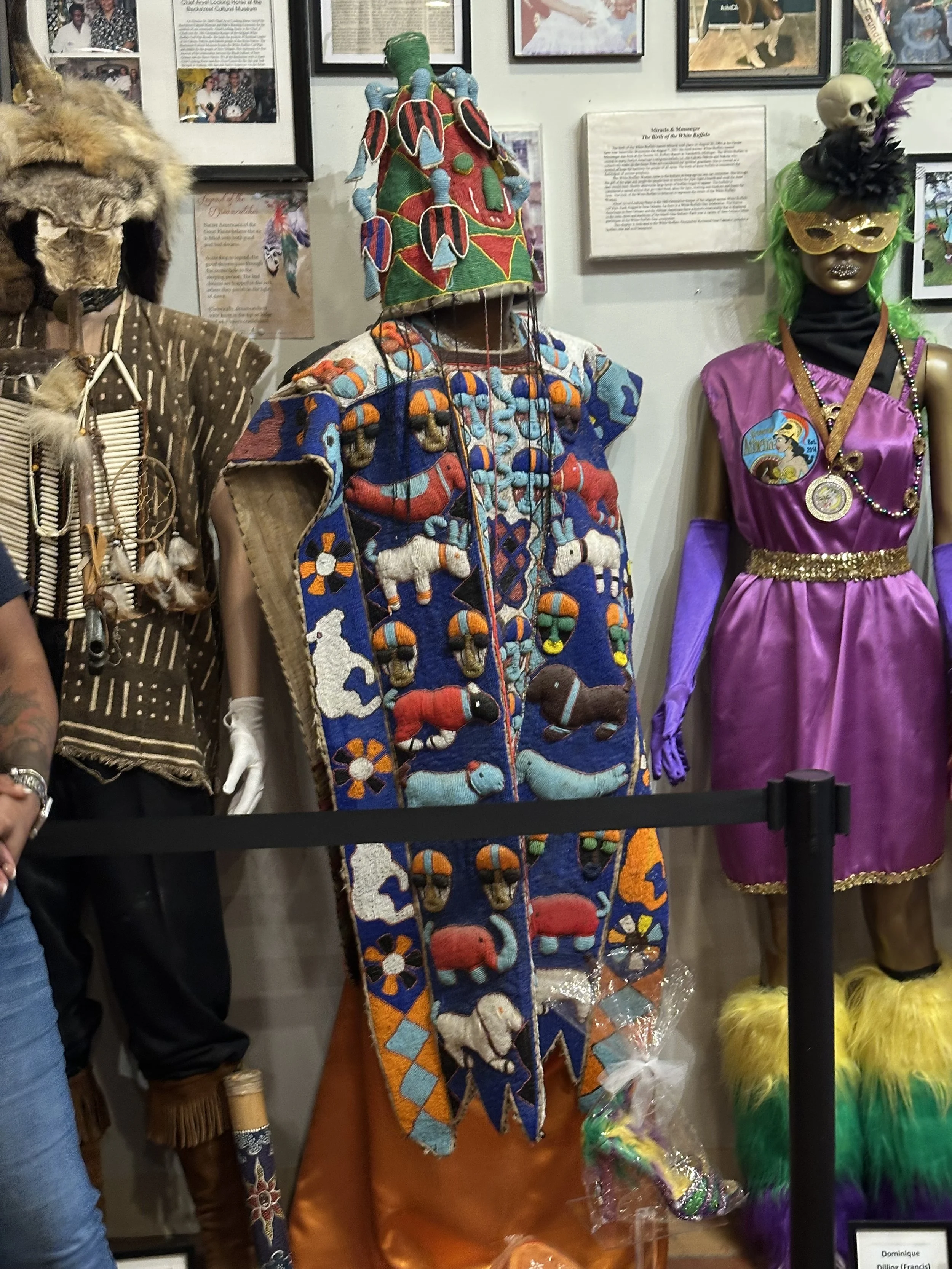
Walking into the Backstreet Cultural Museum is the opposite. No exoticism, no silliness. The story of every artist is explained in great detail. And there is no disrespectful bunching up of cultures.
Most people see feathers so they think it's Indian. It's not.
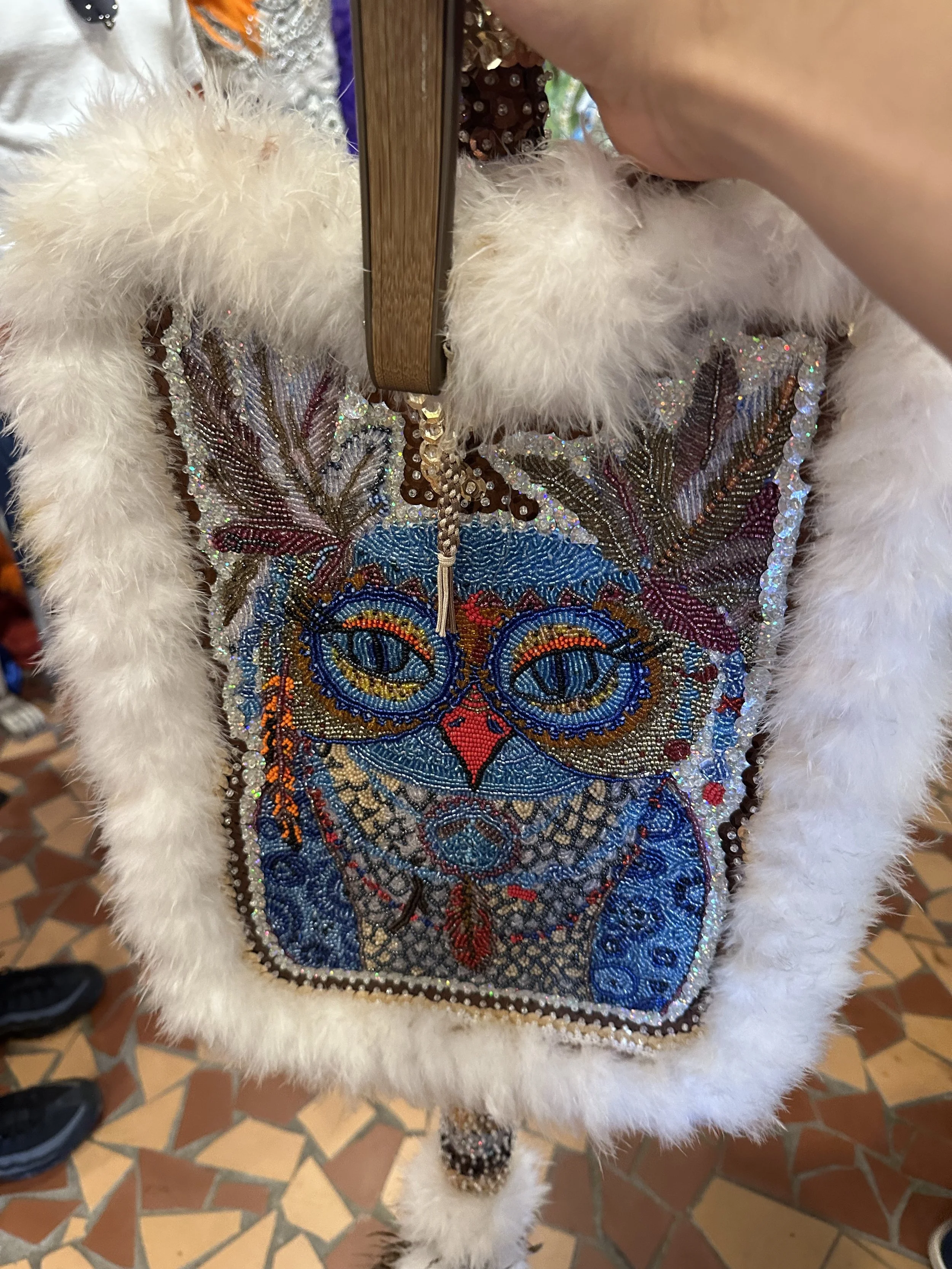
The costumes from Native and African influence are described as such, and those of only African American creation are described as such. The work put into the owl makes a big impression on me. I follow every bead with my index finger. Looking up, the artwork on the costumes is so meticulous and precise. Everytime the museum guide says some people think this is thread but its actual bead, I had thought it was thread. I slowly come to understand the intense work and creativity, considering every year you had to outdo yourself, and reusing was not an option. Unlike the voodoo museum and Anne Rice’s flawed explanations, there is such a thoroughness to every display and word. I have no comments or questions during the tour, despite the guide's comical frustration. The fashion, culture, and stories are told through such precision. Immediately after leaving, I turn to Trey and tell him that this was and will be my favorite activity we do on the entire trip.
Of course, one of the only informational places in New Orleans I have visited that did not treat it like the other was self funded. There are donations from locals for the Backstreet Cultural Museum, but no government assistance according to the guide. From what I can tell in the infrastructure, the pollution, the cultural conservation, the supermarket food quality, and a million other things, there is little to no government assistance in anything here. I joke with everyone that the sidewalks are like a maze, and I have seen Vanessa trip more times than I can count. But for locals in a wheelchair there is no comical aspect to not being able to easily cross the street. New Orleans, and Louisiana as a whole is treated like the other not just culturally but politically and economically as well. I realize this, and the people of New Orleans realize this. The welfare and cultural preservation of New Orleans is important, and I wonder how I can support it from California. I’ve voted here once, but my registered district is now in Historic South Central. But just like how the cultures intertwine in New Orleans, I believe America is intertwined. I can still talk with friends from Louisiana, and support the institutions I believe will help. I will do what I can for New Orleans because it is not the other.