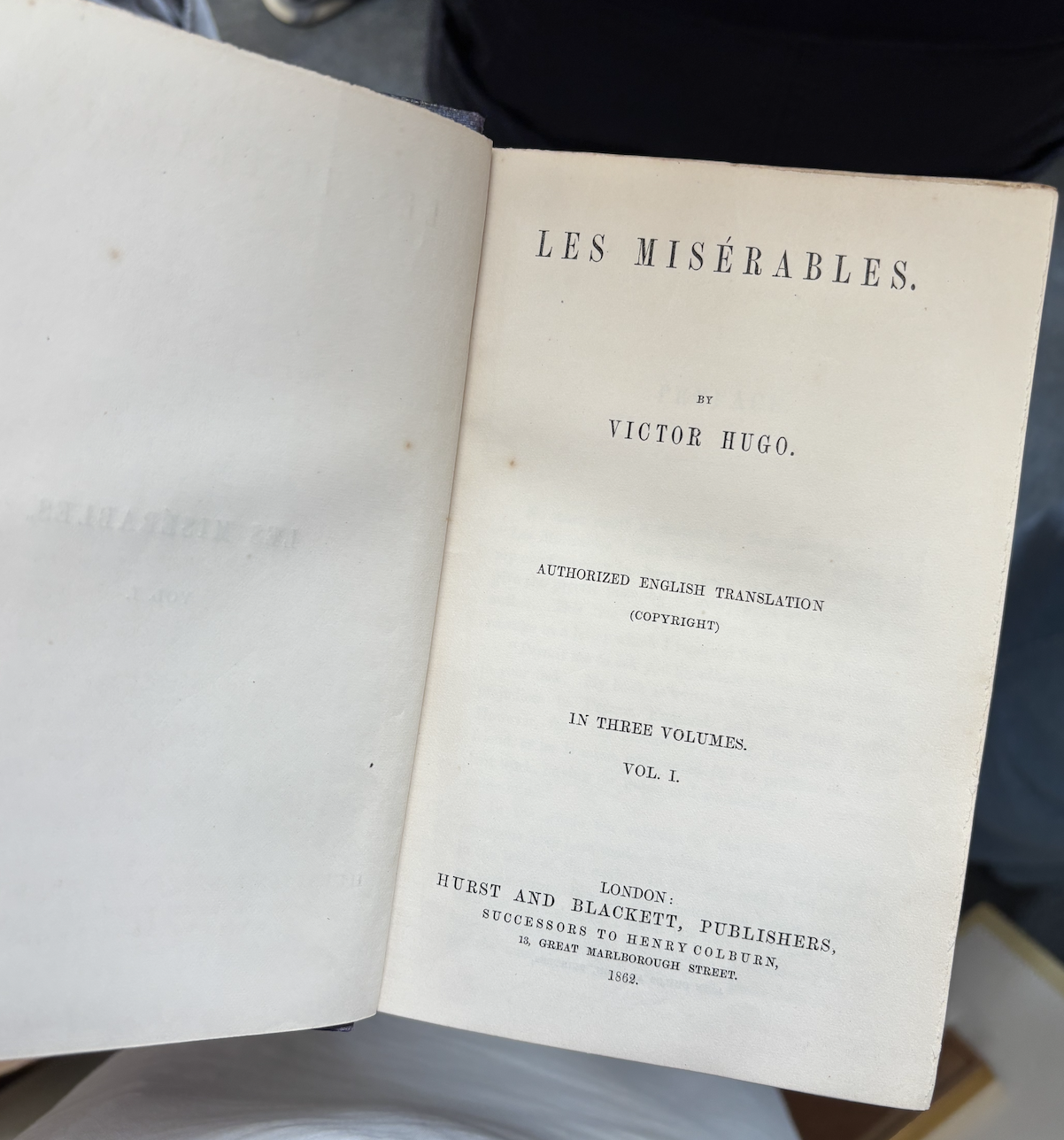
“He loved books. Books are cold and dependable friends.”
One of my favorite places we visited in London was Jarndyce Antiquarian Booksellers, despite the absolute oven of a back office. I am actually quite passionate about antique hunting and collecting, and I myself have a small collection of antique books.
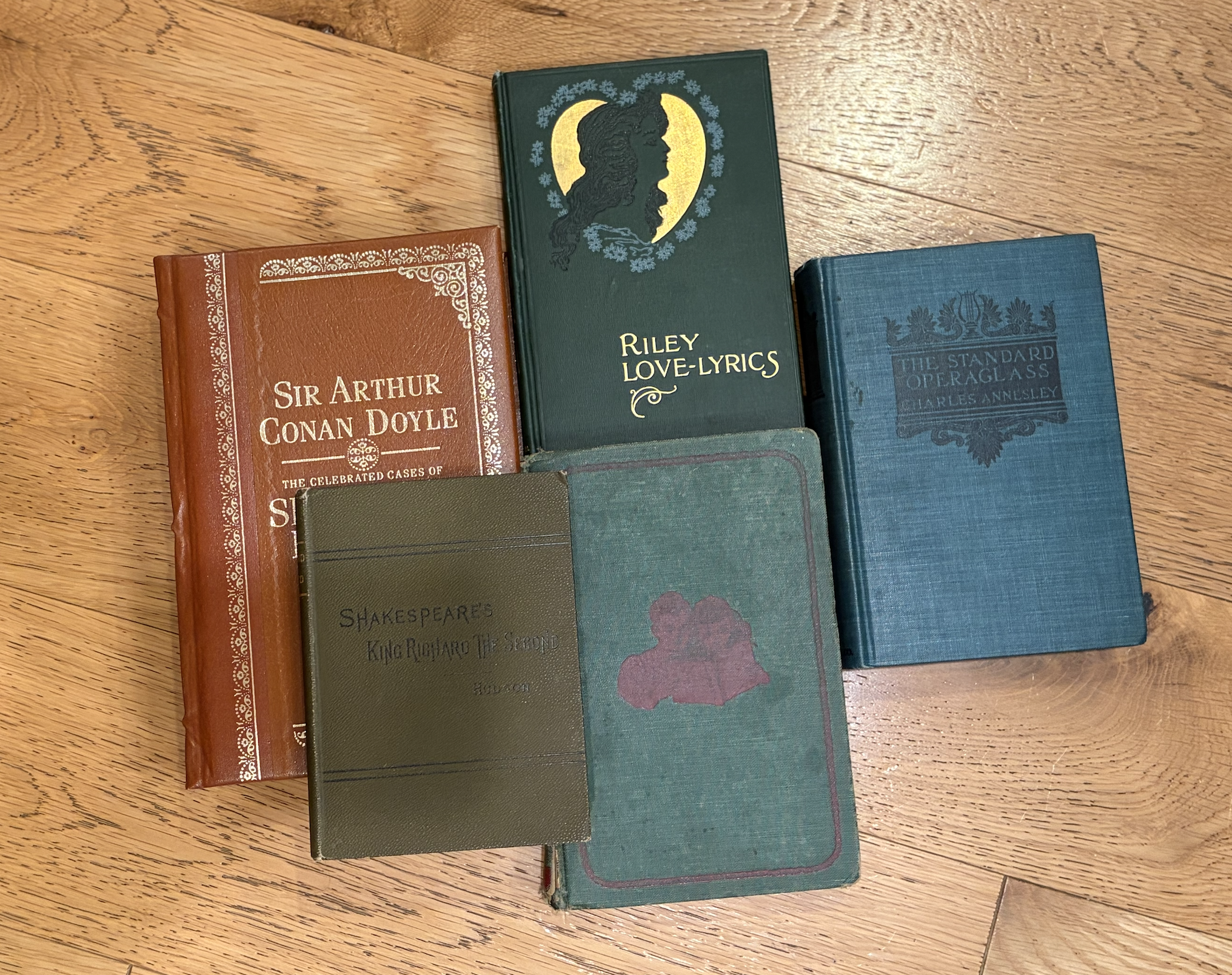
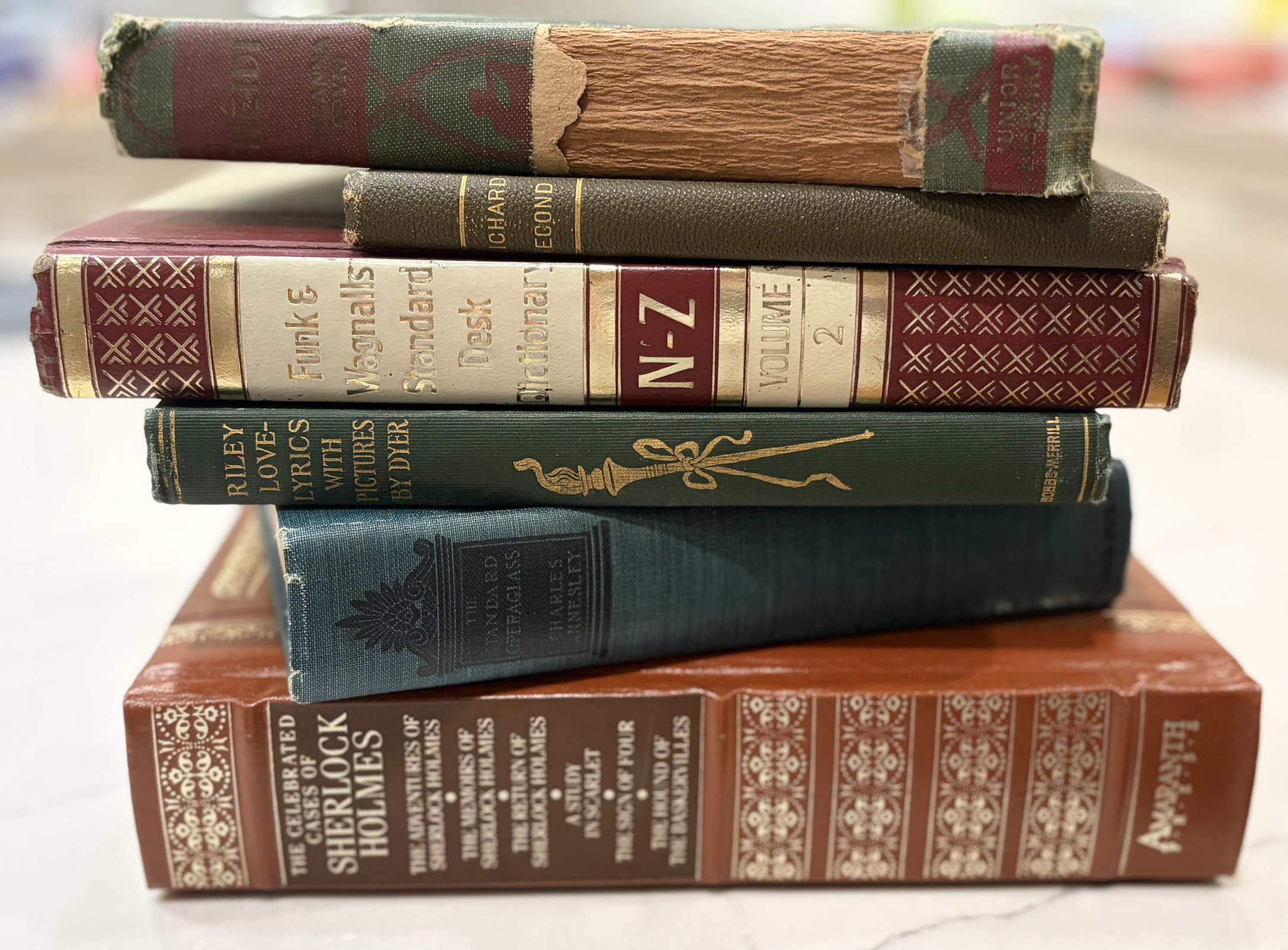
I’ve always loved narrative—especially via literature and history—making antique book-collecting a perfect hobby for myself. I love being able to hold a book and know that some other girl from ages past, in a dress from a different era with interests, relationships, and hobbies of her own once held it. She would have enjoyed it during an age where technology could not document or remember her existence. Therefore the act of antique collection feels to me a way to uncover narratives—whether projected or factual.
Jarndyce was established in 1969 and is across from The British Museum, the last standing of a street that was once filled with antique booksellers. Our class had the privilege of meeting with Mr. Joshua Clayton, a cataloguer of their 19th through 17th century books.
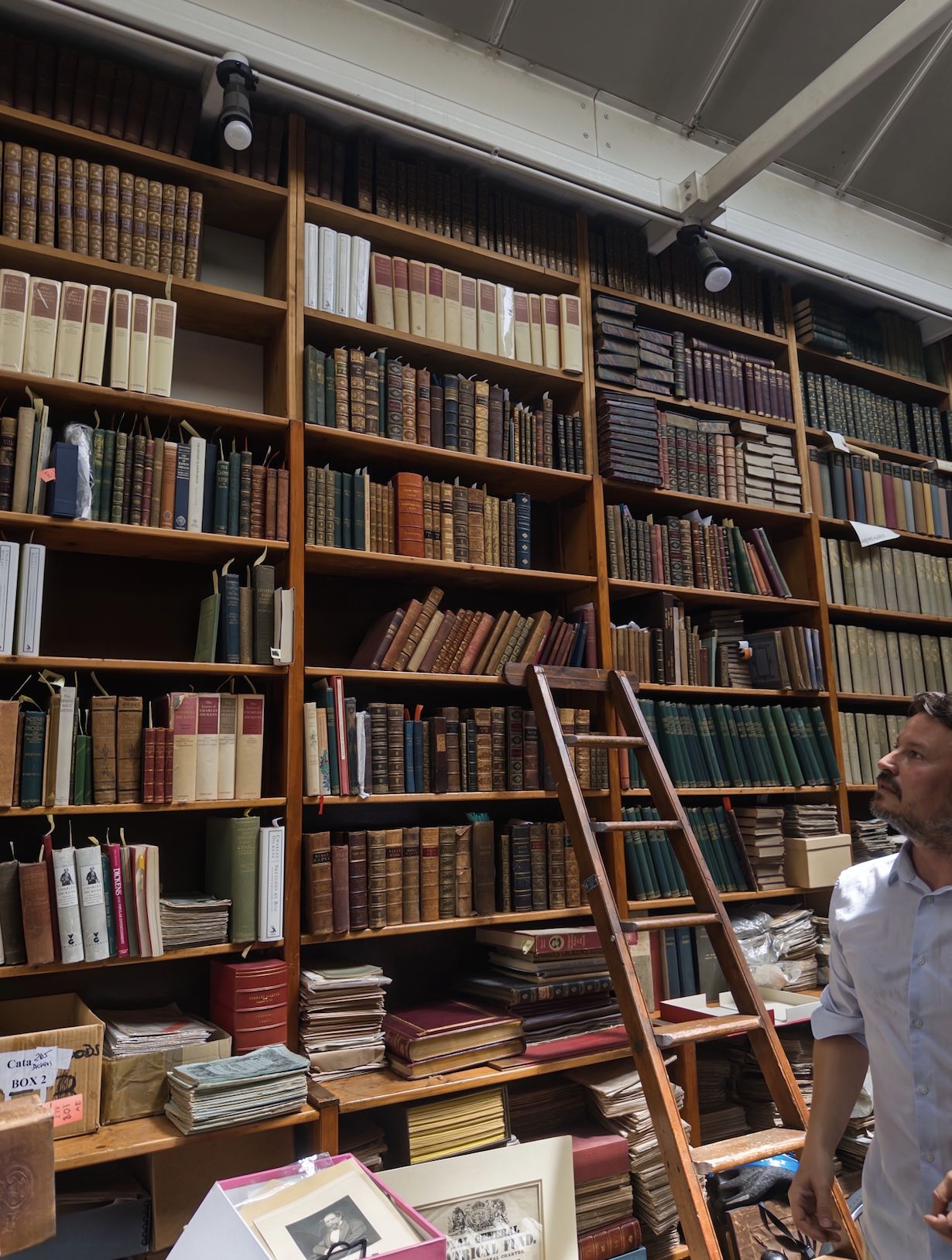
Mr. Clayton in the backrooms of the bookshop, where he does cataloguing.
Mr. Clayton showed us a selection of their special collection, ranging from original and first edition Les Misérables to A Tale of Two Cities in parts.
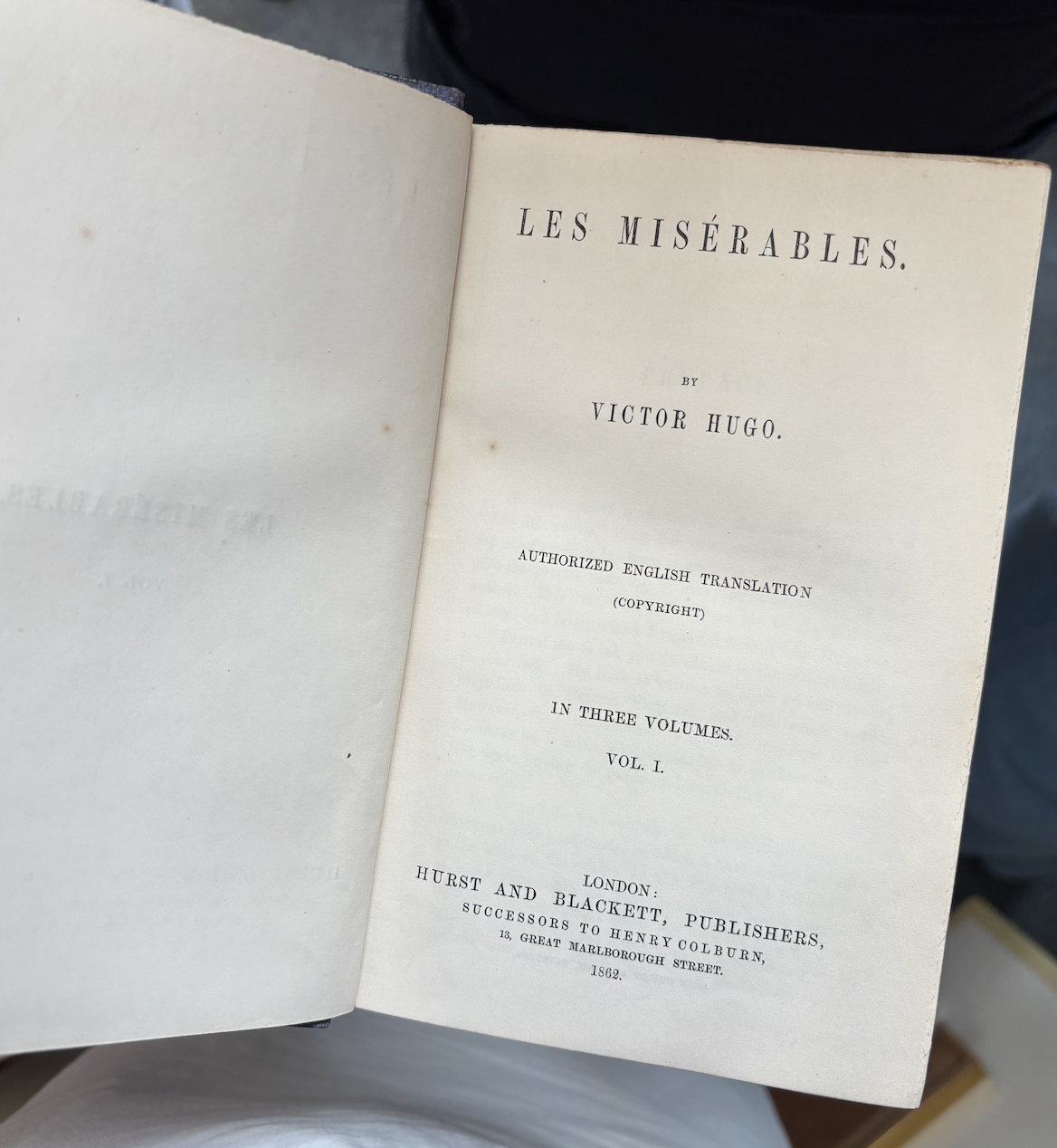
And per the International League of Antiquarian Booksellers, “it is the voyage that will give you incomparable pleasure, not the arrival at the destination.”
It really is the hunt of the rare antique book that is so fun for me, rather than seeing it on my shelf each day. On a larger scale, the act of collecting rare books reminds me of the way Britain holds on to traditions of old, whether or not the people of its modern nation desire to do so.
Something we spoke about in class was how England retains certain traditional class divisions and more conservative politics. Not only can you find a castle at every turn, but the country, though a democracy and a labour government, retains a figurehead monarchy. Why hold on to such an old tradition that does not serve its contemporary government or people? Additionally, England still abides by class traditions—such as higher respect for their “sirs” with higher titles, or being able to distinguish someone’s class background—such as financial standing, ancestry, and education—via the nuances of their accent.
Per Thomas Paine in his Rights of Man,
“What is called the splendour of a throne is no other than the corruption of the state. It is made up of a band of parasites, living in luxurious indolence, out of the public taxes.”
The French recognized this, certainly in 1789. La République franchise had its revolution, and it carried with it an anti-clericalism that challenged feudal power and allowed power into the very hands of the people who dismantled its Bastille brick by brick. While England mostly abandoned their belief in the divine right of kings following the Glorious Revolution of the 17th century, power was—and is still—allotted via birthright.
So why does Britain tend towards holding on to these very antiquarian traditions of monarchy, despite the royal family carrying no real power compared to the popular democracy? I would argue that, similar to antique books, the British monarchy—and its associations with class traditions—is entirely preserved through longstanding traditions. Both antique books and social and political traditions of antiquity provide a window to the past. Both are treated with great respect—the same way a bookkeeper like Mr. Clayton must be careful and gentle in his handling of Dickens’ and Hugo’s novels of old, checking temperature levels and cloth versus leather bindings.
In the chapter of Les Misérables on the battle of Waterloo and Wellington, Hugo writes of old England:
“After her own 1688 and our 1789 she still cherishes the feudal illusion. She believes in heredity and hierarchy. This people that none surpasses in power and glory respects itself as a nation, not as the people. And as the people it willingly submits to authority and take a lord for its leader. It lets the English workman be scorned, it lets the English soldier be flogged.
”
While this quote speaks directly to the harm the monarchy can bring, another example in A Tale of Two Cities cements the necessity of stepping away from feudal hierarchy. Le droit du seigneur is the said medieval European tradition of the lord having the right to his subjects’ brides on their wedding nights:
“As arbitrary imprisonment had become the exemplary abuse of monarchial power, so droit du seigneur was the exemplary abuse of aristocratic power; Dickens’ plot links these two formative transgressions.”
And in conversation with his nephew Charles Darnay, the marquis explains that he does miss the ways of past:
““It not used to be so, but France in all such things is changed for the worse. Our not remote ancestors held the right of life and death over the surrounding vulgar…one fellow, to our knowledge, was poniarded on the spot for professing some insolent delicacy respecting his daughter.””
It is true, England has made much progress and is a stronger country for it today. But the preservation of history is simply that: a remembrance of the past, rather than a blueprint or guide for our future or present. One theme of revolution present throughout A Tale of Two Cities suggests that moving away from inherited traditions that offer respect on the basis of birthright or wealth is necessary, and Britain has done that—though I am unsure the need to hold on to the monarchy still today.
There is no question whether preserving history—such as our beloved antique books—is beneficial for education. In such, so is preserving state history—so that future generations may learn from the mistakes of a nation’s ghosts. In that same vein, preserving outdated class systems is not beneficial, serving a hierarchy of exclusion as it recreates the past in the context of the modern-day—a problematic dilemma.
I truly believe preservation of museums and archives to be vastly important. And don’t get me wrong, I love history. But as a society we should strive to think about history the same way we care for our antique books—they are something to hold close to the heart, but to learn from and display as an artifact of the past—not a blueprint for the future.