Hannah Dean

Javert's old Law, versus Valjean's new Grace

One of the most interesting class conversations we had was on the biblical allusions in Les Misérables. We were asked whether we think Hugo’s incorporation of Christianity in the book aligns with our beliefs and with the Bible.

The idea that the book’s themes could have possibly not aligned with biblical teachings was so alien to me—simply because I felt they aligned so well. I was interested in finding the exact scripture that either supported or contradicted this.

The first and most obvious Biblical references start with the character of Bishop Myriel. During our class discussion—I think, if I’m remembering correctly—someone referenced how the Bishop gave up his home for the hospital patients and allotted the majority of his budget to social causes, and contrasted his actions with some some modern-day church operations. However, his actions do directly align with what the Bible calls us to do:
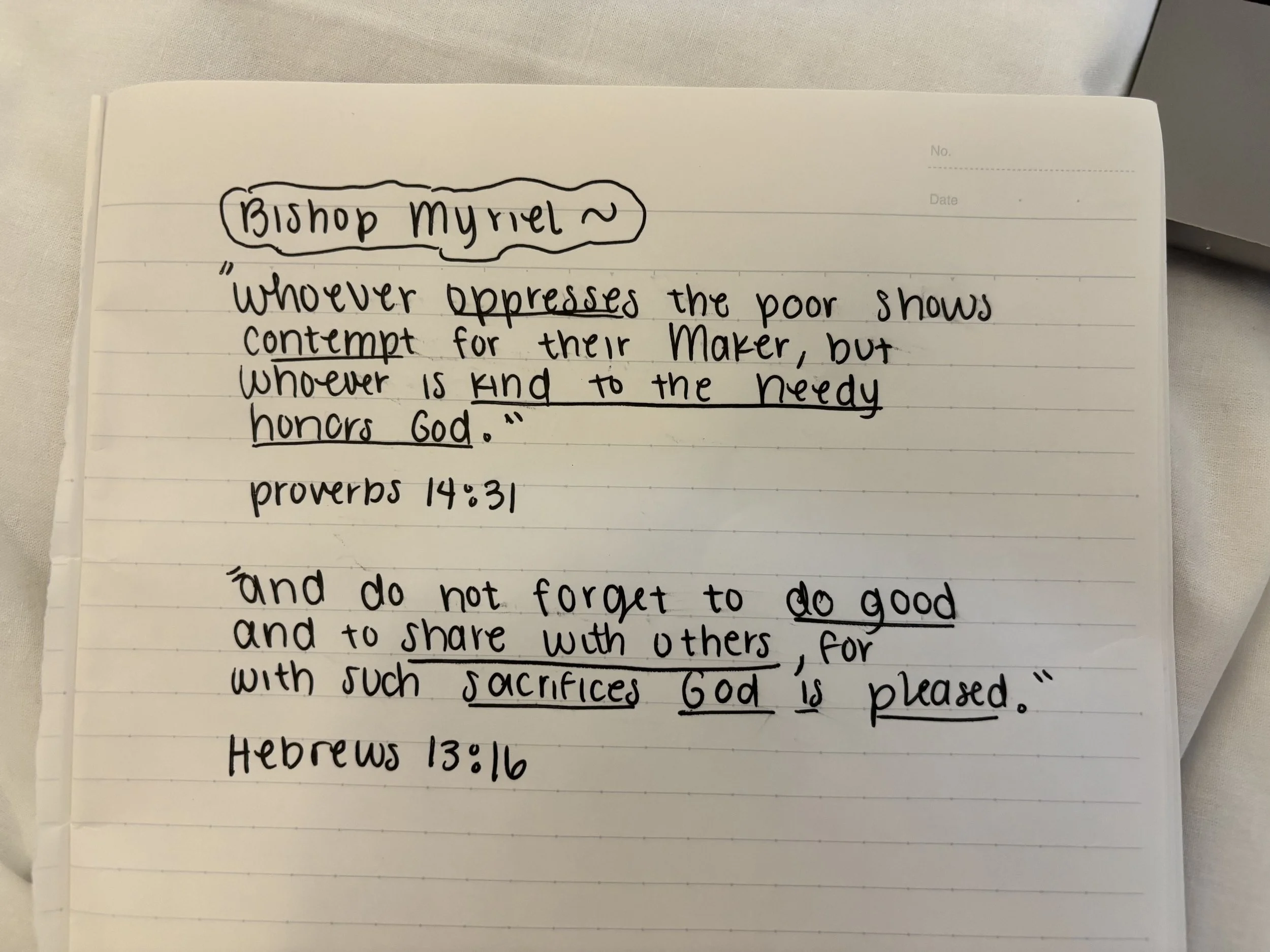
The verses I found correlating to the Bishop’s way of life—namely, Proverbs 14:31 and Hebrews 13:16.

But in my opinion, a more interesting reference Hugo made was the biblical metaphors in Javert and Valjean—each representing a different testament of the Bible.

The Old Testament is centered around history and law, closer to Javert, while the New Testament coming after the death and resurrection of Jesus Christ, is focused on mercy and forgiveness, like Valjean. In Christianity, we believe the Father sent His Son to die for our sins, and in doing so, He fulfilled the law of the Old Testament, establishing a New Covenant. Therefore, Jesus’s sacrifice offers us forgiveness for sins, alleviating the stricter laws and punishments of the Old Testament. An example of the difference between the testaments is in the Old book of Proverbs and New book of Ephesian. Both books offer guidelines for us to follow, but Proverbs is stricter and more detailed while Ephesians is—in my opinion—more generalized, centered on love and trying to be a good person. 

Therefore, I believe Javert and Valjean both align with the Bible, but in different ways. Javert is a representation of the Old Testament in his unending search for justice and his strict moral compass. His beliefs are centered on obedience to the law and authority, similar to the Old Testament. Javert centered his life on the ideas of a “respect for authority and hatred of rebellion.” 

In fact, Javert’s principles are so challenged by Valjean’s forgiveness that he is inspired to end his own life, as Hugo writes:

A benevolent malefactor, merciful, gentle, helpful, clement, a convict, returning good for evil, giving back pardon for hatred, preferring pity to vengeance, preferring to ruin himself rather than to ruin his enemy, saving him who had smitten him, kneeling on the heights of virtue, more nearly akin to an angel than to a man. Javert was constrained to admit to himself that this monster existed. Things could not go on in this manner.
— Les Misérables

Javert’s principles are so deconstructed by Valjean’s virtuous, forgiving, selfless character that he cannot comprehend it—nor go on.

I wonder if in writing Javert’s suicide, Hugo was trying to make a greater commentary on misunderstanding and call for Christian forgiveness. 

I sometimes see Christians struggle with the concept of Jesus’s total forgiveness, as well as moving on from the Old Testament. But this Christian dilemma is a tale as old as time, evidenced in this parable:
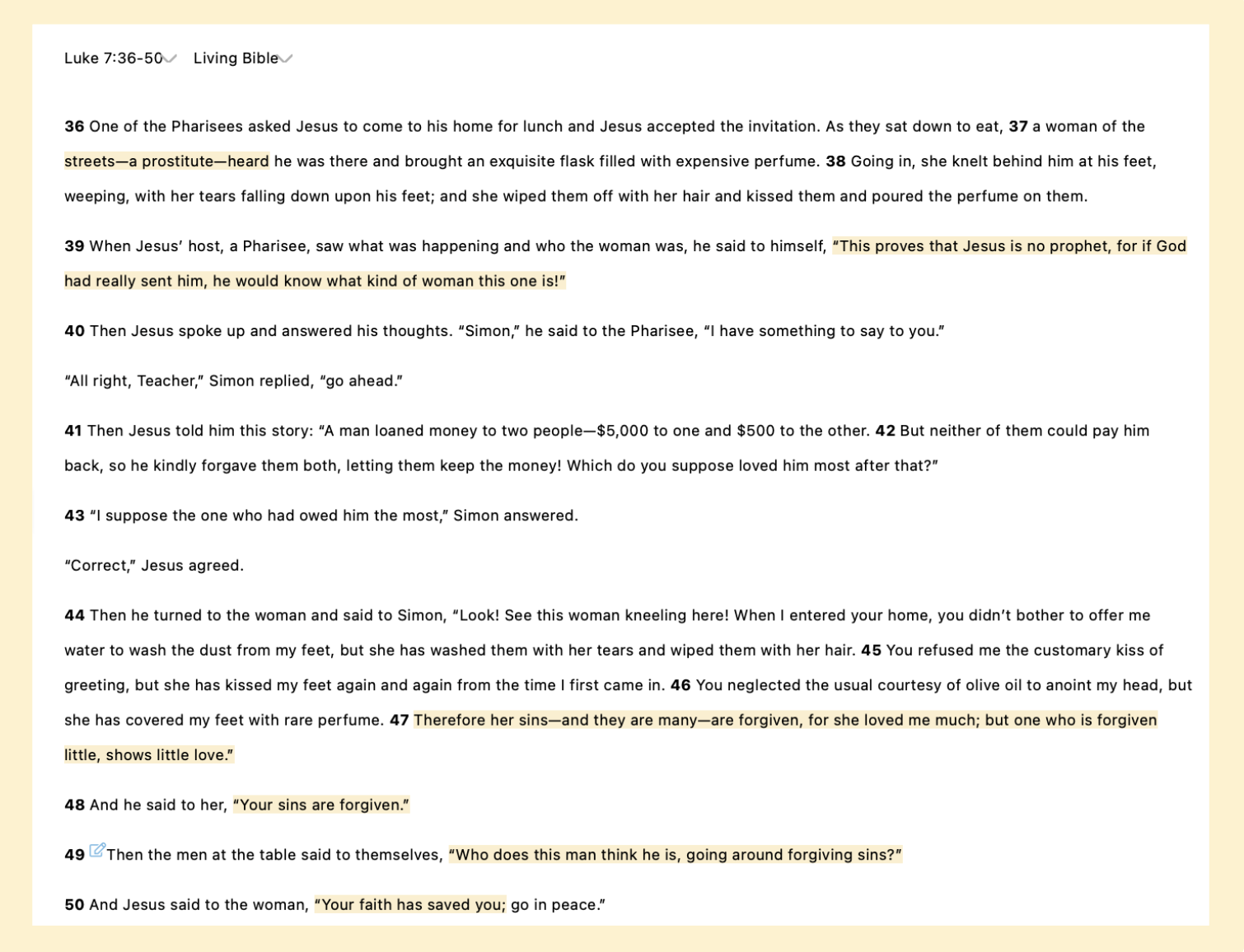
Luke 7:36-50.

In the same way Javert cannot comprehend Valjean’s forgiveness, neither can the Pharisee comprehend Jesus’. But Jesus does not prefer the non-sinner over the sinner, and all sin. He offers a consistent love, only asking us to offer the same in return. If Jesus forgives us, and we accept this forgiveness, yet refuse to offer it to others—by judging them and holding grudges—where is the fairness? Bishop Bienvenu—and, by virtue, Jean Valjean—exhibit the grace of God. Hugo continues this exhibition in writing Fantine from a position of empathy and pity for the condition society forced her into, rather than judging her in an era where prostitution was more shameful than it even is today. 

Furthermore, I do think—though this is an entirely personal opinion—Hugo chose names for the protagonist and antagonist that directly relate to these concepts. 

Authors never choose throwaway names—there must be some meaning, whether it references personal history or is some symbolic creation. This is evidenced in Hugo’s metaphorical naming of the Bishop Bienvenu, meaning “welcome.”

I think, possibly, Javert is a combination of Latin roots and words—juris meaning “justice” and “law,” and either veritas, being “truth,” or severus, being “severe.” All of these possibilities correspond with his harsh characterization.

“Jean” Valjean is a name meaning “God is gracious”—so obviously symbolic of Valjean’s Christlike goodness. I also found some verses, included below, that remind me of his story and life trajectory; that is, life post-imprisonment for stealing to feed his sister’s family, his decision to change for the better after experiencing Bishop Myriel’s goodness, his generosity to the people of M-s-M and his factory, and his dedication to raising Cosette.
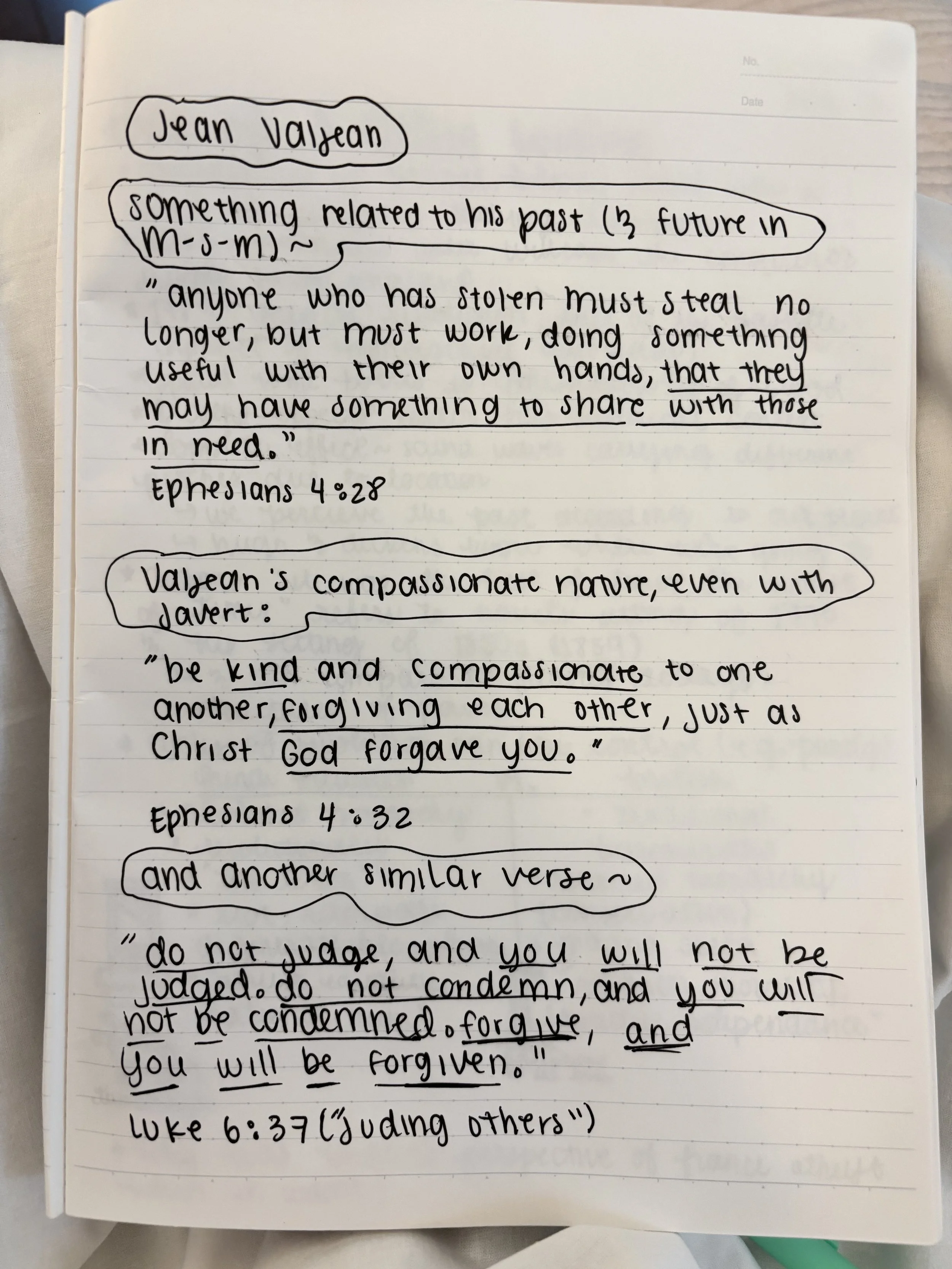
Verses that correlate to Hugo’s writing of Valjean—Ephesians 4:28-32 and Luke 6:37.

I really believe Les Misérables mirrors biblical teachings. In fact, reading it for the first time, it was astonishing to me how accurately Hugo portrayed goodness. So while some Christians’ belief systems may contradict with Hugo’s writing of faith in Les Mis, Christianity does not; it directly aligns. One, or two, or three Christians’ beliefs or misinterpretations—as we discussed in class—do not speak to the goodness of Christianity as a whole, nor the religious accuracy of Les Mis. Instead, such contradictions speak to the fault-prone nature of humans. Just as my religion and faith are centered on forgiveness, so is Les Mis.
Scrapbookpacking

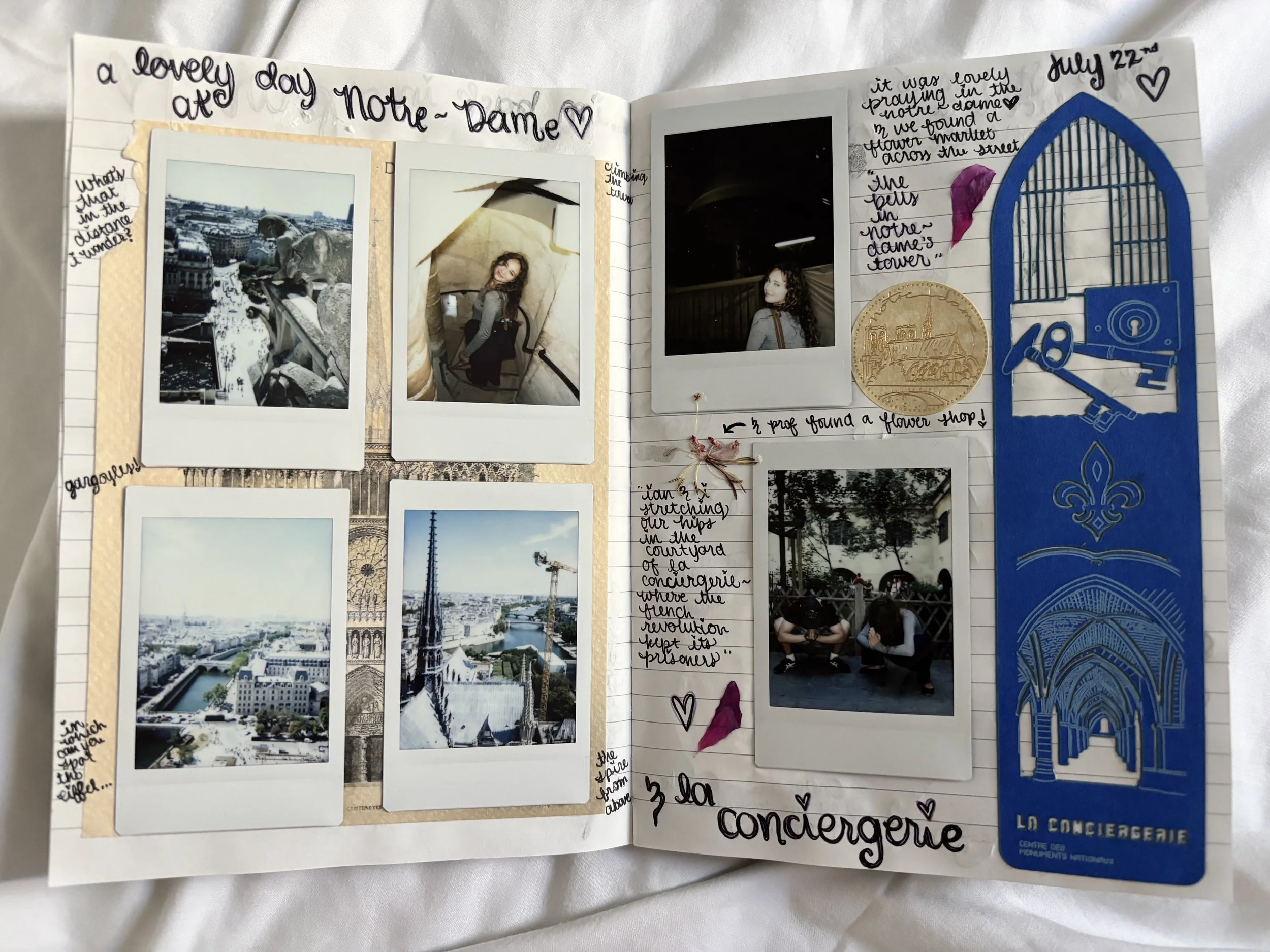
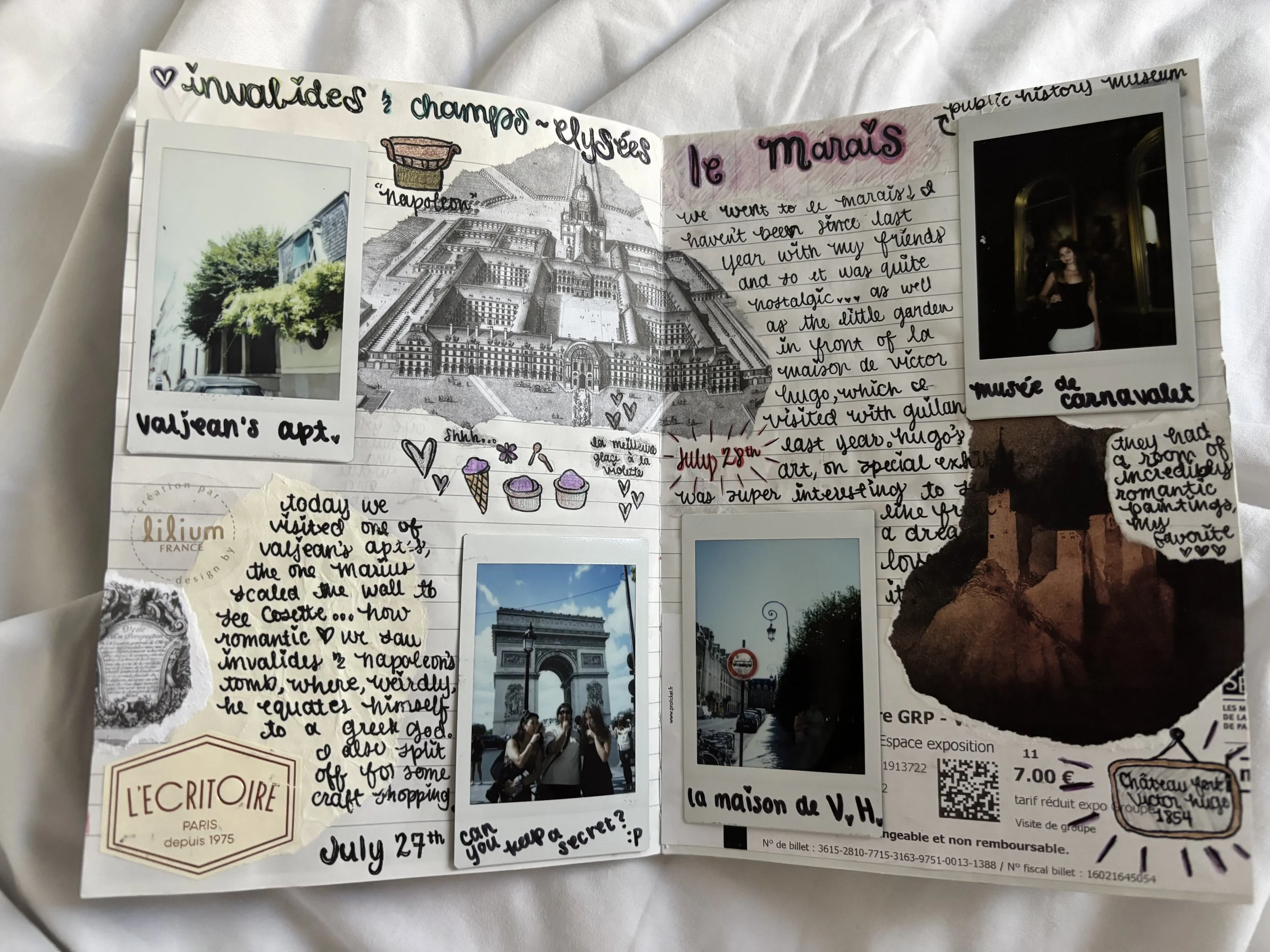
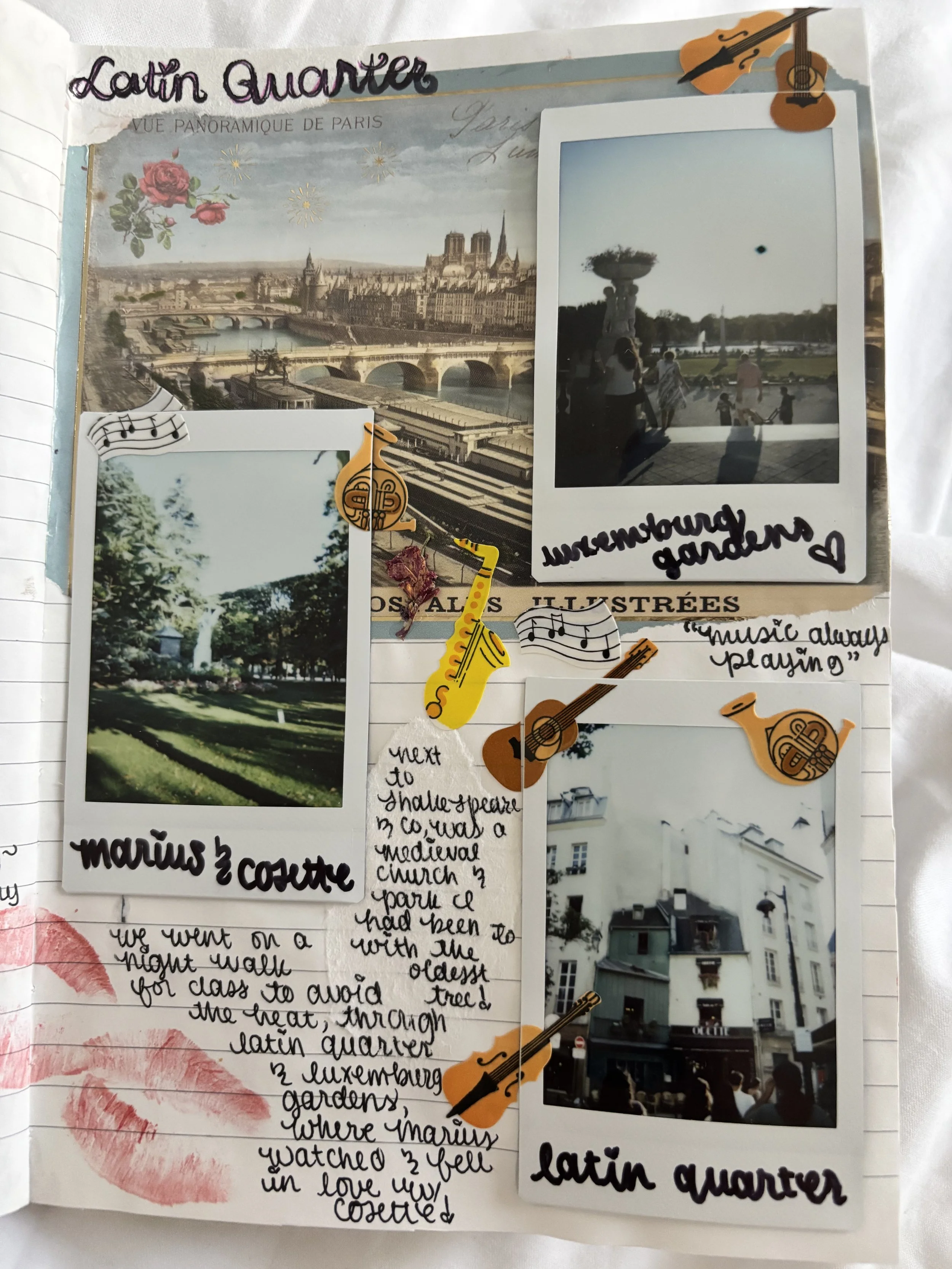
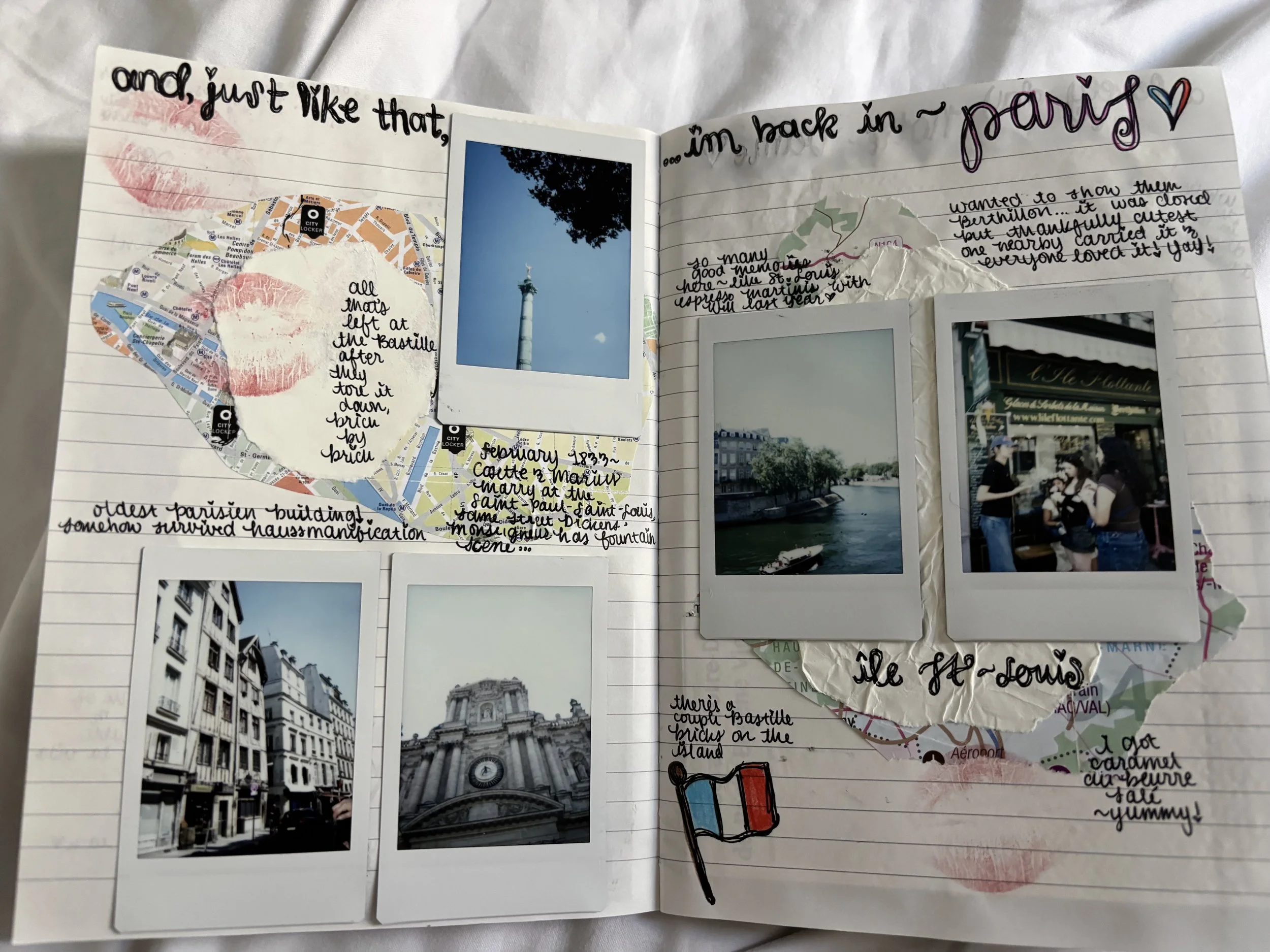
As the class bookpacked through London and Paris, I scrapbookpacked my fair share of the two cities. I have an utter fear of forgetting things important to me—my memories are precious to me, and I used to hold on to every single scrap of paper or useless receipt to protect them. But it crept a bit too close to hoarding, so now I create travel scrapbooks to recall my memories to life.

I honestly do not know what to write in this blog…Andrew asked me to include more of my personal voice, so I will try to share all of my thoughts these past couple of weeks regarding our class—though I’m sure it will be messy and tangled (like my hair!).

When I was a child, I had a perfect photographic memory. I retain these old memories, still clear, like a camera. Even now, there are certain days or events where this photographic memory will reactivate, and I’ll remember exactly what I was wearing, when, who said what, et cetera. But it is faultier and less accessible than in my childhood.

I also learned a love for reading when I was young. I was scared of growing up, and thought that trading the colorful illustrations of my picture books for greyish pages of black text meant just that. So I stayed away from books, until my second grade teacher told my mom I had to read more. She did a book club with me, with a hard book—we read The Odyssey. I found that in the blank spaces between each word, and in the half-seconds of darkness when I closed my eyes, my mind painted beautiful pictures of adventure. And so I fell in love with reading, especially the classics.

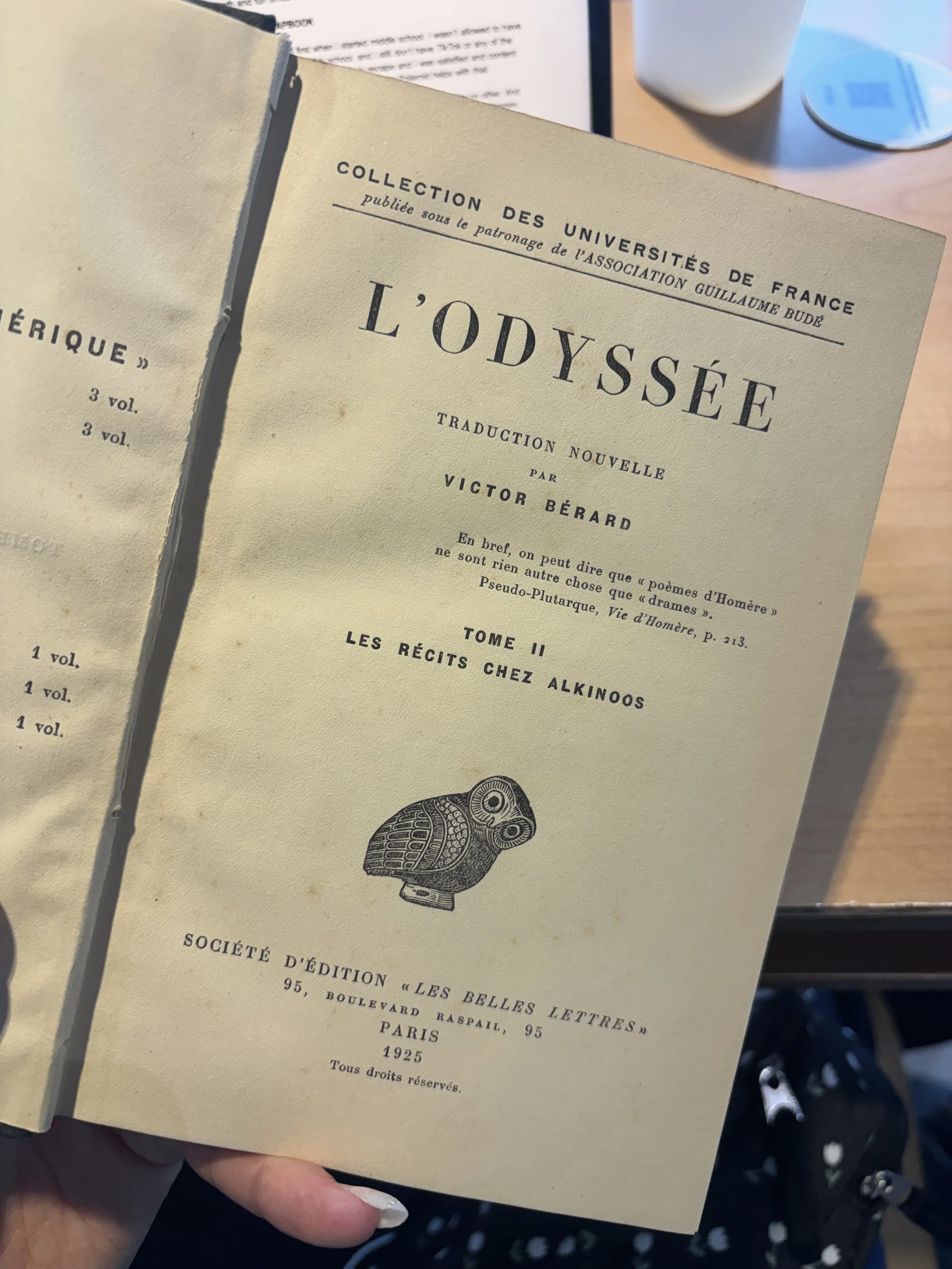
A 1925 copy of L’Odyssée I picked up in the 9e, at the antiquarian bookshop Andrew found in the back of Passage Jouffroy.

Thus, reading two classic pieces of literature—both important cultural texts, and visiting the sites each character once traversed (and most likely the authors), was an absolute dream of a class for me. 

But my memory isn’t what it used to be, it’s slower and dimmer now. It’s the fatal flaw of technology: excessive digital consumption being tied to a cognitive decline. And so I dutifully kept my scrapbook, marking down monuments both of the history we learned in class as well as of personal growth and fun times with friends. 

I raised without a phone, given my first when I started middle school. I wasn’t allowed to have Instagram until I was a sophomore in high school, and I still don’t have TikTok or any of the other social media apps. Back then, I used books to escape and I was satisfied and content with that. Now, even my photo gallery is overwhelming—my Polaroid helps with that.

But the dopamine hits I learned online were, as much as I hate to admit it, like no other. And even as my memory fades, I still vividly remember how happy I was before I had Instagram. And I’m not saying it’s the Internet’s fault that I always feel alone, I certainly felt that way even when I only had books. But even though my feed is bunnies and recipes and romantic Disney scenes, I struggle to feel alive as I once did. I feel like a zombie, and I feel my creativity leaving me. I want to be intelligent, but I don’t know how to be when I forget everything eventually. Especially when artificial intelligence will always beat me to the point. 

As someone who wants to be a writer, all of these ideas are unnerving to me. The entirety of this class, I have wondered: if Victor Hugo grew up in our generation, would he be able to write Les Misérables again? If Hugo had social media, and text messaging, would his brain still find a way to imagine 1400 pages? 

Hoping to pursue creative writing, I constantly wonder if I am still capable of doing so. Has the blue light I have exposed myself to severed the neurons necessary to paint such vivid images, am I now reduced to fuzzy Monets?

There’s a whole trope about girls being drained, or tired, and it being romanticized. There’s plenty of internet art of petite girls with long, droopy lashes and big doe eyes with purple circles and hair flowing as they drape themselves over the edge of their beds. Captions liken the art subjects to the artists themselves, some even as simple as: “me.” I know you’ve seen it, and if you haven’t, I know you can find it. I know sadness, and grief, and depression have always existed. It just feels so much easier to succumb to it now. 

And so even when I don’t have time, when it feels like homework, I make time to scrapbook the things we have learned and the places we have visited. The hobby keeps my eyes off the screen for the time being, and helps me retain my precious memories. I have a certain love, as well, for untouched classic literature, or old-fashioned cartography—and was fascinated with Professor’s ability to do so as he taught us how to map old maps onto new.

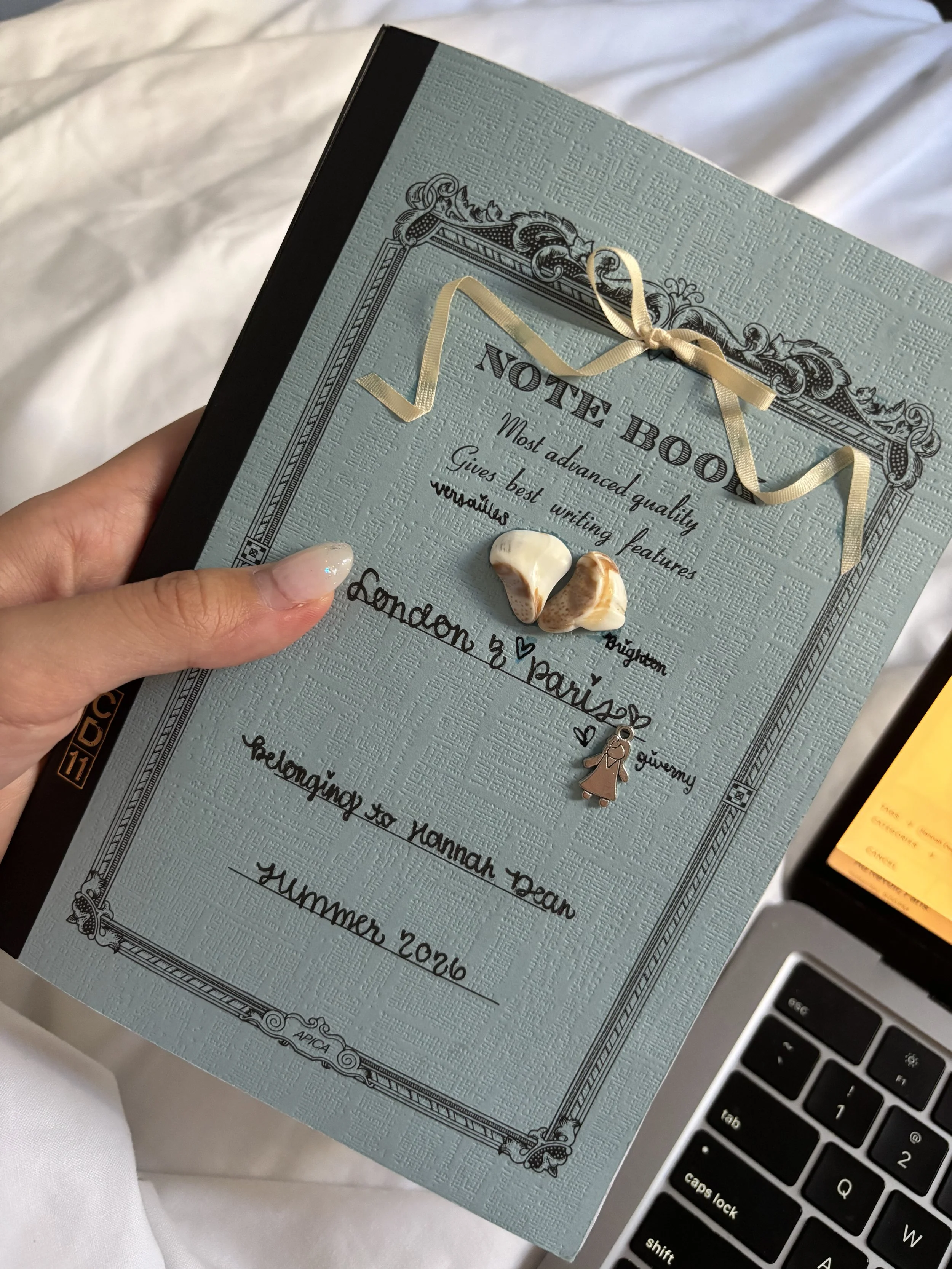
The cover of my travel journal.

As we followed Andrew’s mapping of Les Misérables, walking the same boulevards and avenues Valjean and Cosette once did, I feel a sense of déja-vu for a life that wasn’t my own—one fictitious, that never existed. 

Another part of Cosette’s story that we walked.

I briefly touched on this idea in my first blog, where I explained why I so enjoy collecting antiquarian books, vintage vanity pieces, and old-fashioned clothing—as I love imagining the lives of the people who first touched these treasures, however many hundreds of years ago. 

Would I have been friends with Hugo if I had the chance of meeting him? Would he have liked me? Could I have been a writer? Did Hugo know someone who passed the same way Javert did? Were his characters truly just political or social arguments, or did they honor lives he once knew? There’s this constant, unfamiliar déja-vu of narratives that aren’t my own as we bookpack. I have so many questions and no answers. But Paris also reminds me of a déja-vu of my own. 

When I was about 15, my family started visiting Paris. And last year, I had the privilege of spending two months here—one in Paris, one in the south of France—first for a class, second to see family.

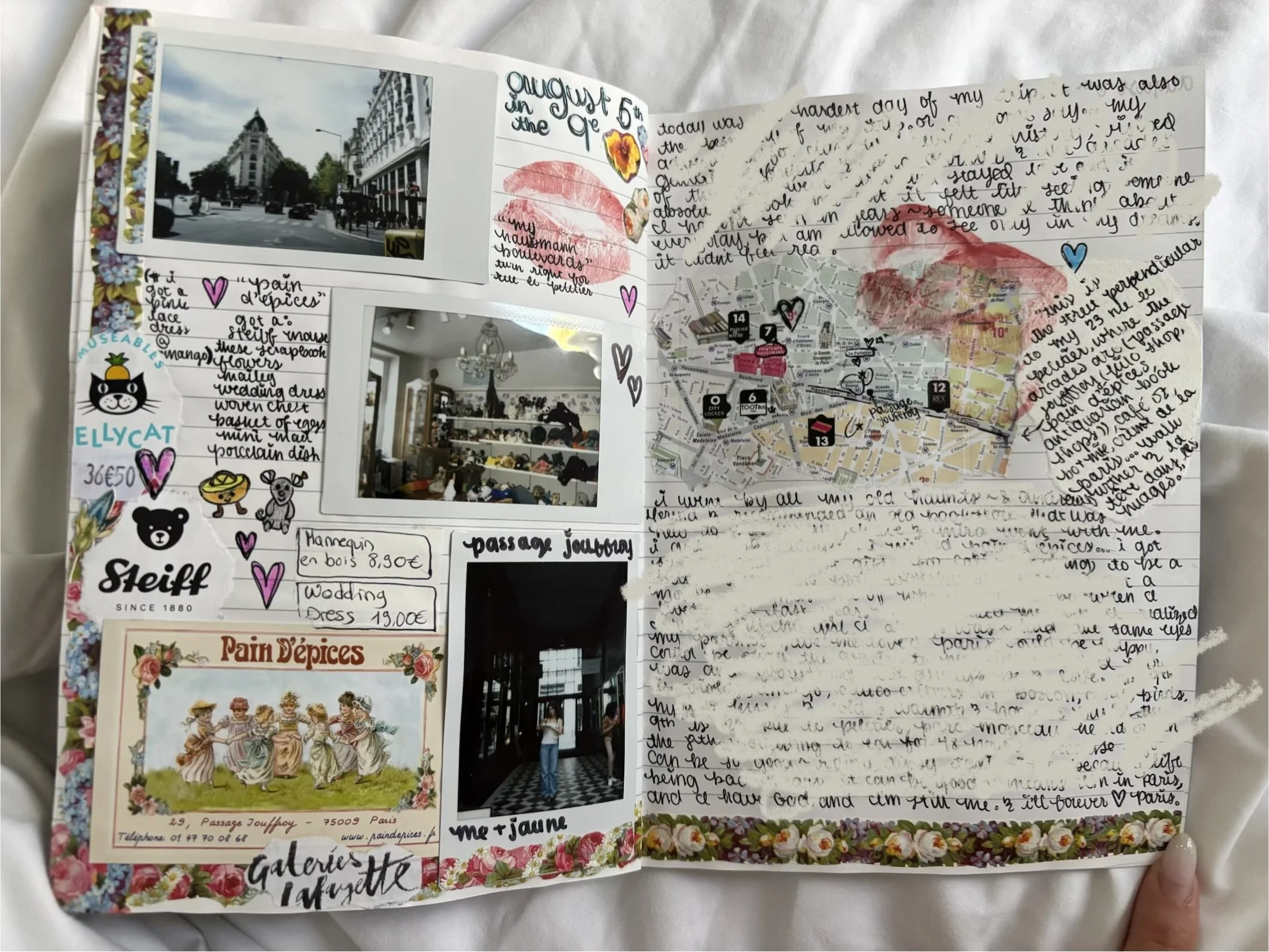
While in Paris, I stayed in the 9e arrondissement. A couple days ago, our class excursion took place just a couple blocks away from my old studio when we visited Galeries Lafayette and Palais Garnier, both places I came to love last summer. 

My pages after we visited the 9e.

I spent the rest of the day flâneuring my old stomping grounds. It was simultaneously the hardest and best day of this trip. It felt like seeing someone I haven’t seen in years, someone I once loved, whom I think about everyday, but am allowed to see only in my dreams before I wake and remember all is lost. So dramatic, right?! I just don’t know how else to explain it. Now that my memory isn’t so sharp, it’s become such a physical attribute—I see or smell or feel something an old me knew and suddenly I remember all these other versions of myself. 

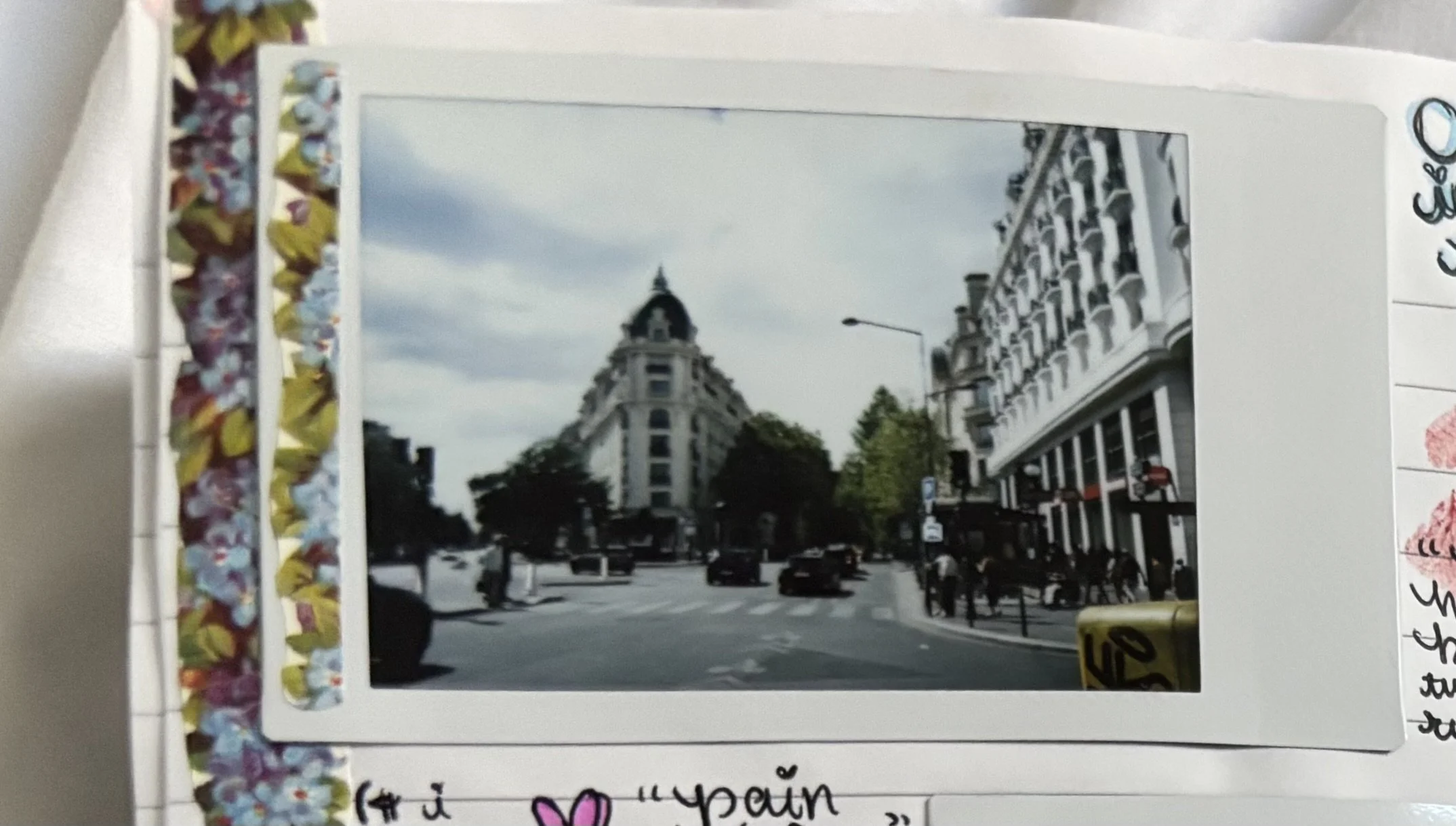
I had a hard time making friends or at least it felt that way. I was in love with someone who had become a person I didn’t know anymore. Sometimes I was selfish without realizing it. I ate too much and cried too little. Walking along Boulevard Haussmann and then down Rue Drouot and Rue le Peletier, these memories activated again. 

Boulevard Haussmann.

I realized that in exploring other narratives, my own felt lighter. I turned back to books and my love for reading after last year’s class, which gave me the desire to apply for this class. I found myself—and didn’t—in fictional characters like Sydney Carton, Cosette, Valjean, and Javert. And through all of the struggles I put myself through in the past, I realized I was still the girl I always had been, the same realization the Bishop’s kindness allowed Valjean.

I found this experience to be similar to Jean Valjean’s. He tried to create a new life for himself, be a better person and start anew. But Javert was a constant reminder of who he was escaping, the harder person the criminal justice system had once forced him to become. 

Valjean was honest about his flaws during the Champmathieu Affair, trading his well-to-do life he built where he helped many others for a harder one where he could protect Cosette. I’m sure Cosette remembered his kindness and their love when she and her future family walked through the same streets she and Valjean once ran through under the cover of darkness. 

Professor asked us in class if we experienced the magic and romance of Paris. How much more magical does it get than stepping into a book, and making my own memories appear on the pages of my scrapbook? This class made me want to bookpack all of my other favorite books too. I wonder if the magic and romance we feel today is anything similar to what Hugo once felt. 

This blog has been long and rambling, and is my attempt at an answer to Andrew’s question about how I felt about the characters of our books. I think I focused on English and French history in my other blogs because I had answers, rather than questions. And I think for most of this trip I was so caught up in understanding our characters’ narratives and recreating their treks across Paris that I had forgotten my own. I still have so many questions that will go unanswered: were the students caricatures he knew or invented? Was the zig-zag through Paris a stroll he once took with a lover or a friend, or was it something he plotted from his desk while looking at a map—something totally unrelated? Did Javert remind him of something or someone from a church he had once visited—and was that the person that made him question his faith? Was Valjean the one who restored it, or did that figure only make him question it more? 

Scrapbookpacking has been a way for me to remember my own, Andrew’s, Hugo’s, Valjean’s, Fantine’s, and Cosette’s memories. I love learning about other people from the smallest of observations they make, from their memories, their experiences and forgivenesses.

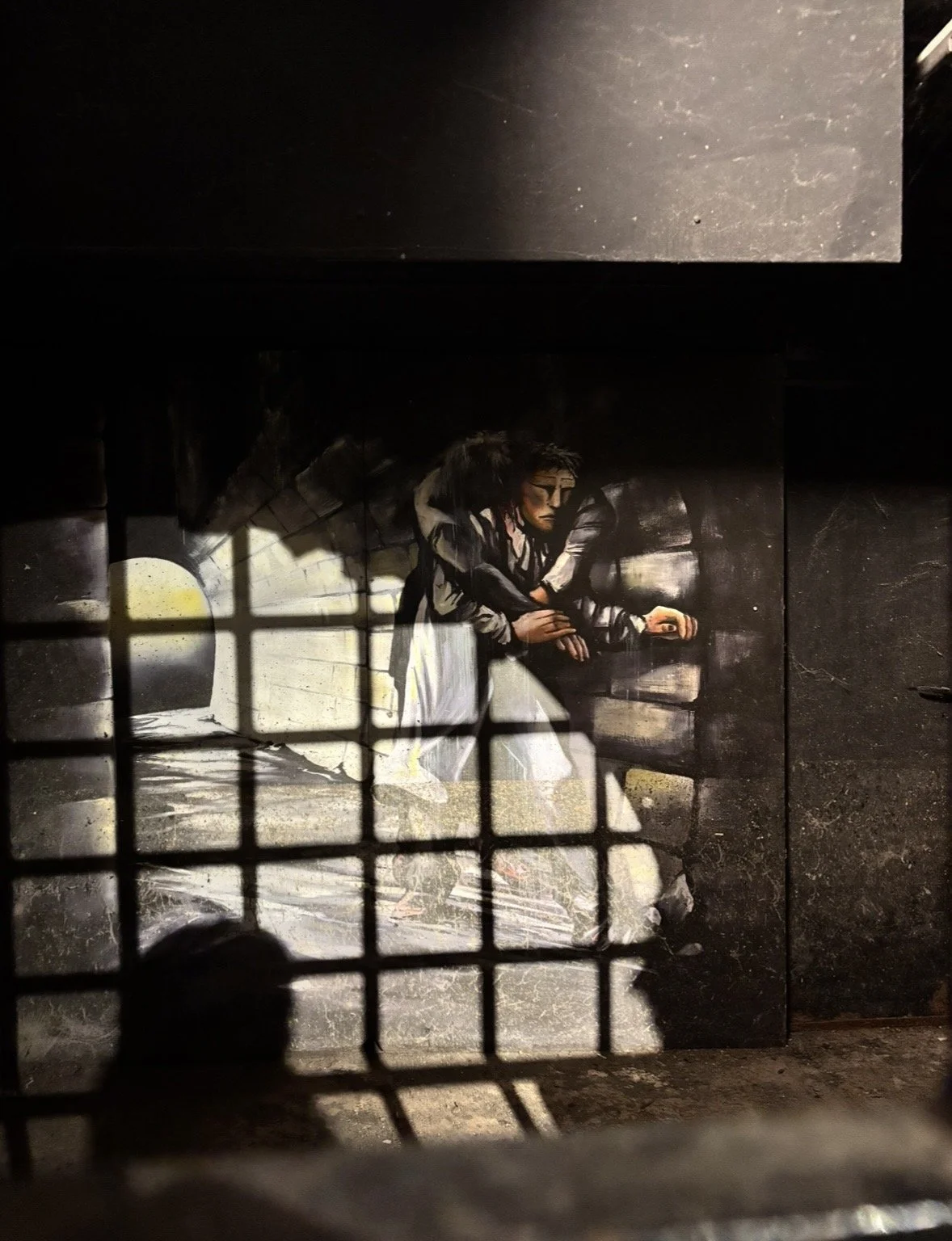
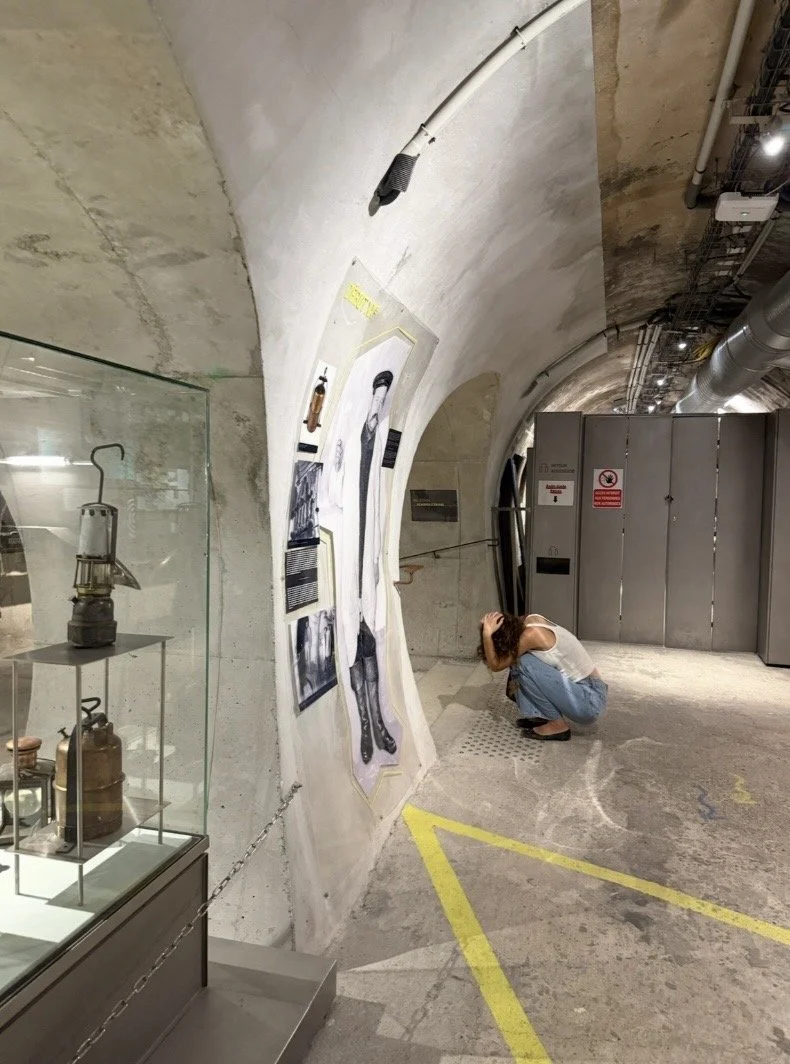
Valjean’s experience vs. mine in the Parisian sewers.

Women and the Revolution

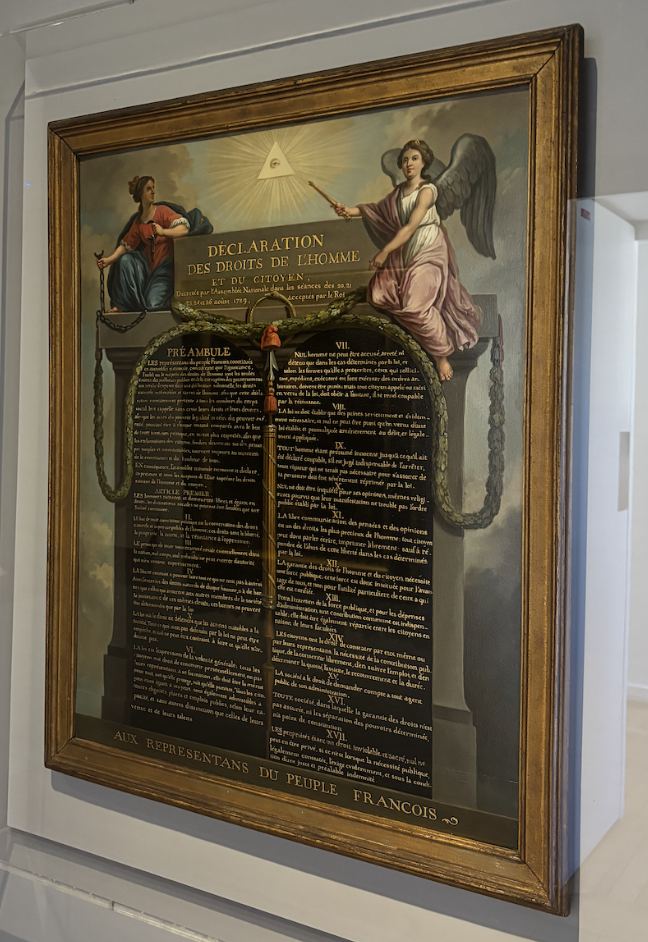
While exploring the Musée Carnavalet with Kate, I was especially interested in the upstairs exhibit on the French Revolution. The exhibition starts with the Déclaration des droits de l’homme et du citoyen.

The Déclaration des droits de l’homme et du citoyen.

A woman in red, with a crown and lilies, is depicted in the top left corner. The museum plaque explains she represents the French monarchy, ”the chains of despotism have been broken.” And to her right, an angel-like figure represents the French nation, carrying a scepter of sovereignty. Finally, the bottom of the image reads: “Aux representans du peuple francois,” or “to the representatives of the French people.” 

The declaration establishes basic freedoms and human rights, and was adopted by the National Assembly in 1789. However, women and slaves were not included in this definition of “human” rights.

And while the plaque on the wall claims the chains of despotism were broken—they were not really. The abuse of the aristocracy and monarchy was gone—but society lived under a man’s rule.

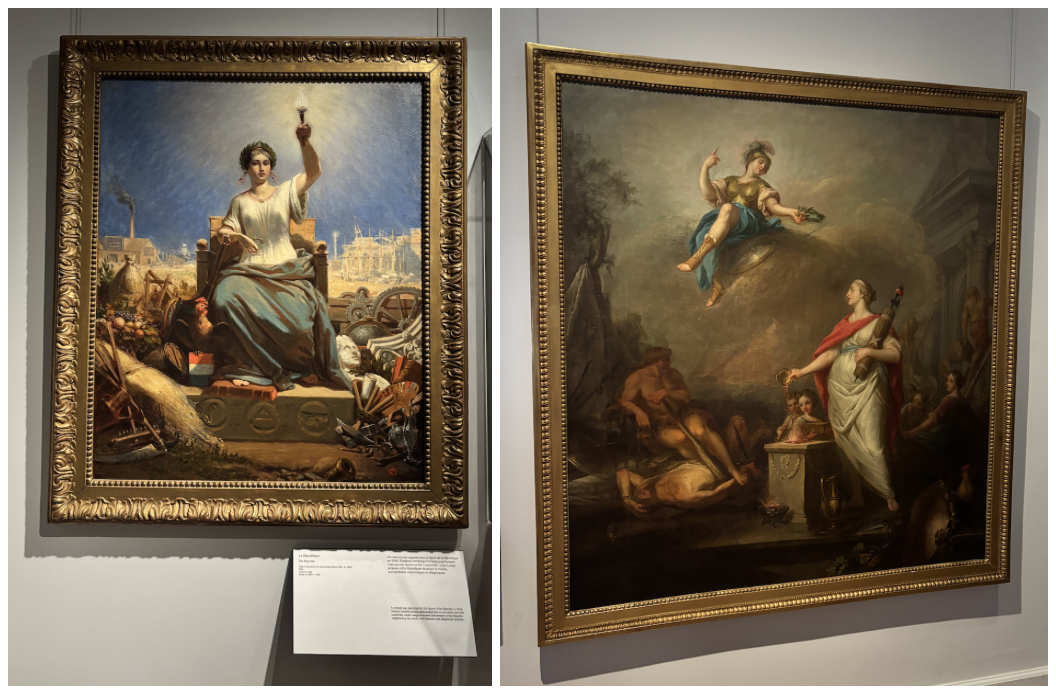
I kept walking through the exhibit, and next I find beautiful representations of free France, depicted as female characters.

La République by Ange-Louis Janet (1848), Allégorie de la Révolution de 1789 by Jacques Wilbault (1791).

France in all her glory, all the people’s glory—is feminine. Even the French language for “France, the Republic, liberty, and reason” are all feminine: “la France, la République, la liberté, et la raison.”

This feminine representation is even represented in literature at the time, such as the poem we read in class: La Curée, by August Barbier in August of 1830. The translated excerpt reads:

“It's that liberty is not a countess 
Of the noble Faubourg Saint-Germain
A woman whom a cry makes weak 
And who puts on rouge and carmine
She is a strong woman with powerful breasts, 
With a hoarse voice, with hard charms
Who, with brown on her skin, fire in her eyes, 
Agile and striding
Pleases herself with the cries of the people, with the bloody melee, 
With the long rolls of the drums
With the smell of gunpowder, with the distant volleys
Of bells and muffled cannons
Who only takes her loves from the people
Who only lends her great bosom
To people strong like her, and who wants to be embraced 
With arms red with blood”

Barbier describes a woman reminiscent of Madame Defarge—a working class woman, one who may have participated in the March on Versailles, a radical with “fire in her eyes” who “lends her great bosom to strong people like her.” In this sense, the physical female body is likened to the glory and freedom of the Republic.

Another topic we discussed in class was how women of the revolution were often painted topless—likening the causes and goals of the revolutionaries to be the attractive side to the fight by invoking the male gaze. For instance, we saw the famous La liberté guidant le peuple by Eugène Delacroix in 1830 in the Louvre.

My question is this: if the woman was such a glorified representation of the revolutionaries’ fight, why is she still treated as the lesser sex? Artistically, she is literally depicted as a higher body than the male.

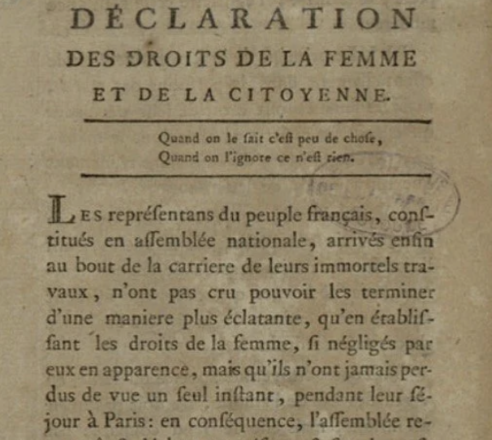
Furthermore, I could not find any displays on the women of the revolution in the Carnavalet. I could not even find any reference to the Déclaration des droits de la femme et de la citoyenne by Olympe de Gouges—an arguably important part of the revolution as well as French feminist theory. When I asked museum attendants, they told me information on Olympe de Gouges and her work would be “up ahead,” but the exhibit ahead was post-1800…and Olympe had been executed in 1793.

Déclaration des droits de la femme et de la citoyenne.

Olympe wrote her declaration in 1791, two years post-original declaration. Following the Women’s March on Versailles, the National Assembly and other revolutionary leaders still had yet to include women in their reforms. Actually, in November 1789, the “Women’s Petition to the National Assembly” was submitted, requesting sexual equality—but made no headway.

Olympe dedicated this declaration to Marie Antoinette, calling for her to back female revolutionaries and feminists or risk the destruction of the monarchy. Olympe also takes up a rather sarcastic, feisty tone. She begins: “Man, are you capable of being fair? A woman is asking: at least will you allow her that right?” and continues in the preamble…“the sex that is superior in beauty as it is in courage during the pains of childbirth recognizes and declares, in the presence and under the auspices of the Supreme Being, the following Rights of Woman and the Female Citizen.”

The articles expand on the original declaration by including women in the equation and offering them equality. However, Olympe also introduces some radical new feminist ideas—such as in Articles X, XI, and XVII. The tenth article calls for women to have equal rights, citing that women are equally punishable as men yet are not granted equal freedoms: “No one should be disturbed for his fundamental opinions; woman has the right to mount the scaffold, so she should have the right equally to mount the rostrum, provided that these manifestations do not trouble public order as established by law.” The eleventh gives women the right to identify the father of their children, whether or not it be their husband. Finally, the seventeenth introduces the idea that marriage must lend towards recognizing equality between spouses: “Property belongs to both sexes whether united or separated; it is for each of them an inviolable and sacred right.”

Reactions to her pamphlet were mixed. The Jacobins believed her to be a Royalist, and the press wrote that she forgets her place as a woman. Needless to say, this constitution was not adopted. And in 1793, Olympe was executed at the guillotine under the Reign of Terror. 

It is remarkable to me how such a rich, important, and equally interesting piece of history is left out of an entire floor of revolution history at the museum. Other women of the revolution whom I found in the museum were uncredited wives of male revolutionaries—such as Lucile Desmoulins and Camille Desmoulins.

In my experience, society—especially old society—tends toward the idea of the feminine as a virtuous, almost-holy figure: a representation of salvation and all that is good, especially in depictions of Liberté, Raison—and later, Marianne. Yet at the same time, that society hated women who stepped out of their place, silencing those like Olympe before any true equality could be reached—an overall historical trend. This is a true contradiction in the finest sense of the word.

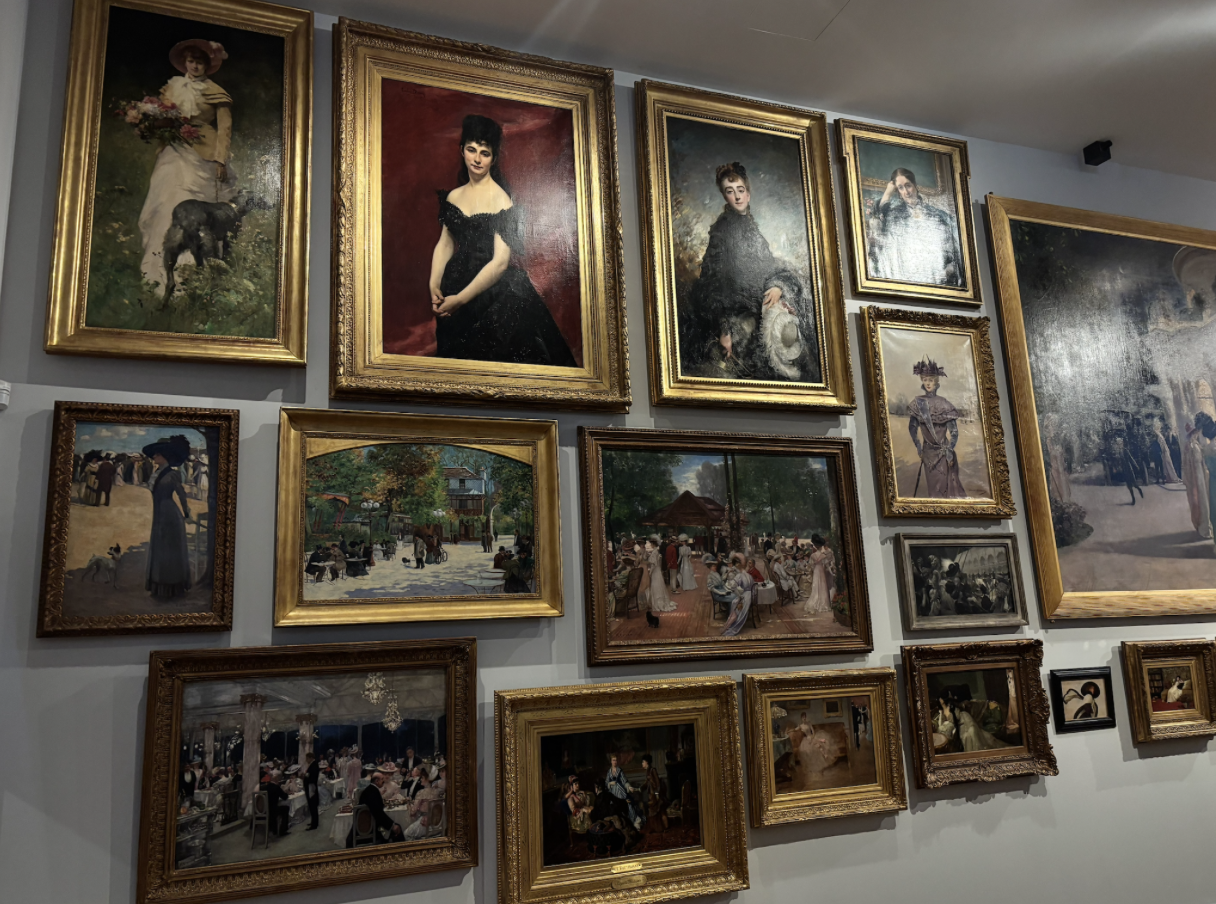
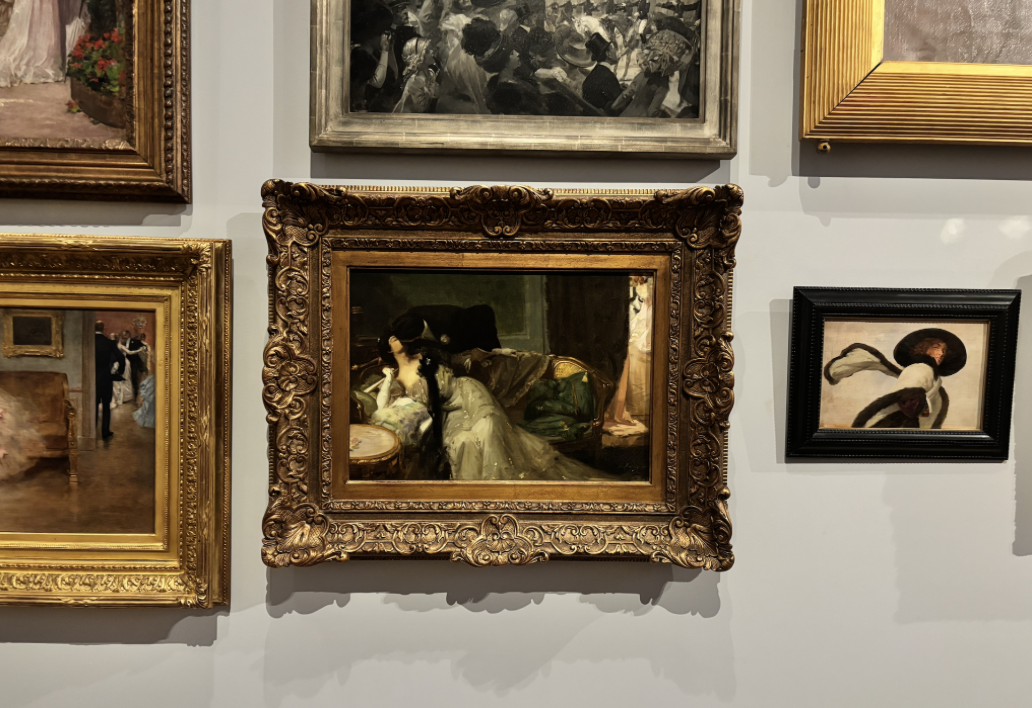
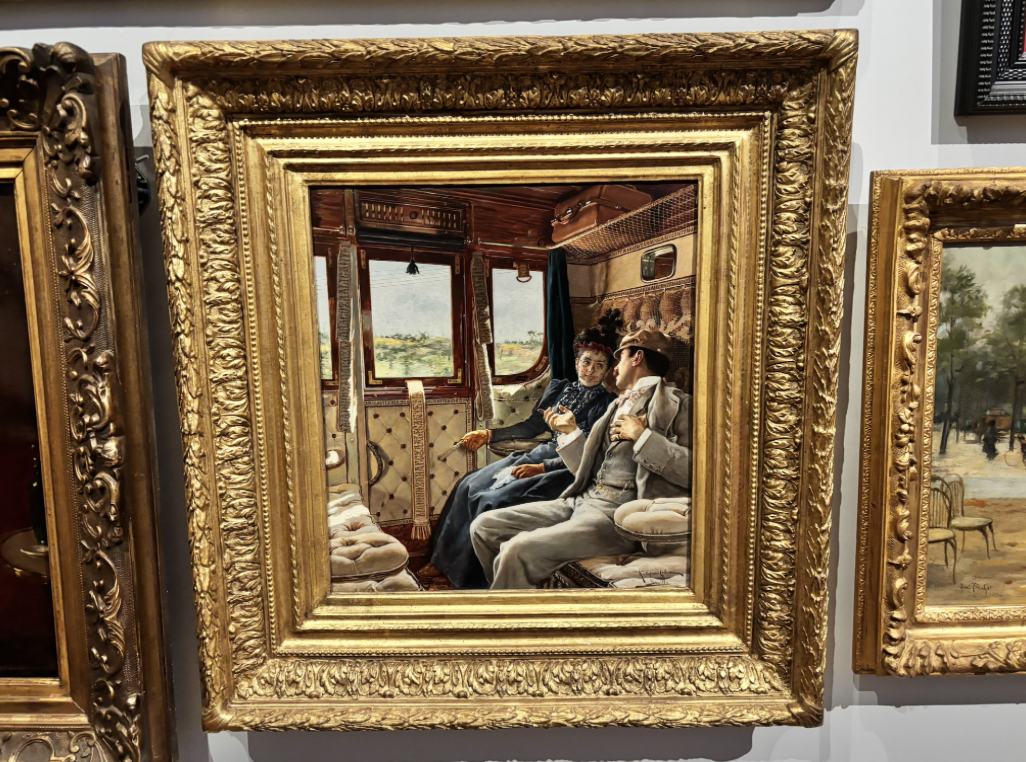
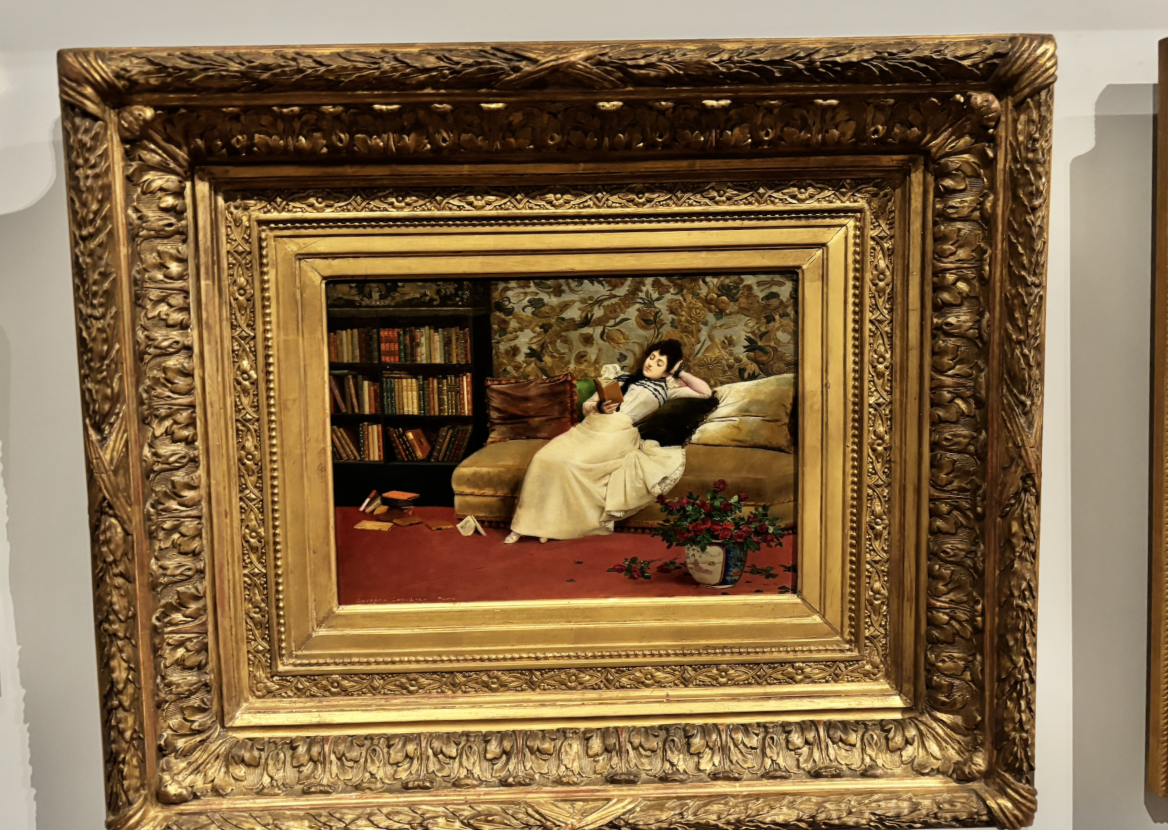
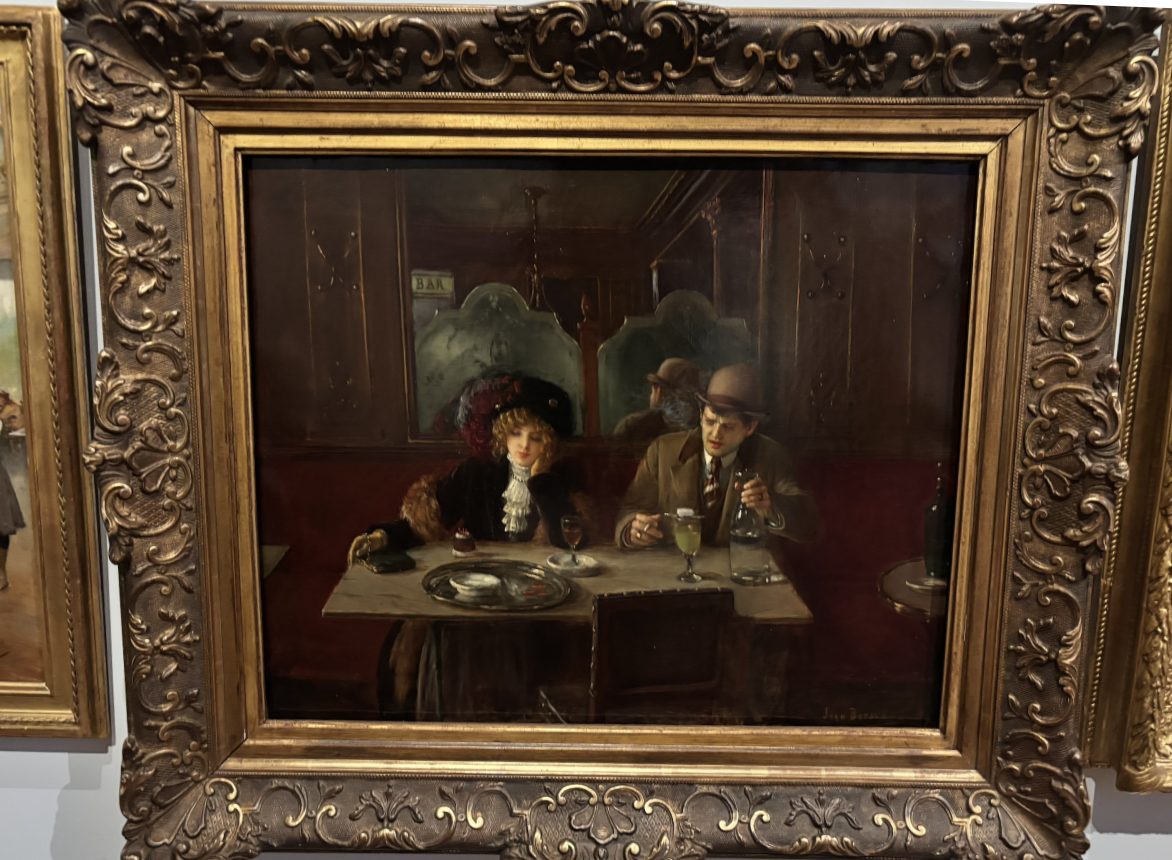
Anyways…my favorite part of the Musée Carnavalet was by far this room with these oh-so-romantic paintings! These are honestly some of my favorite paintings I have ever seen before.

The hall of romantic paintings in the Musée Carnavalet.

Just look at these lovely ladies lounging! These are the type of painting I can look at and imagine old times under a more romantic, idealized lens.

Un mémoire-mélangé

There is a concept in French literary philosophy called lieux de mémoire. It comes from French historian Pierre Nora’s Les Lieux de Mémoire. Nora draws comparison between actual history and remembered history—placing the textbook under memory’s trial. Nora defines this concept:

“Our interest in lieux de mémoire where memory crystallizes and secretes itself has occurred at a particular historical moment, a turning point where consciousness of a break with the past is bound up with the sense that memory has been torn—but torn in such a way as to pose the problem of the embodiment of memory in certain sites where a sense of historical continuity persists. There are lieux de mémoire, sites of memory, because there are no longer milieux de mémoire, real environments of memory.”

Essentially, Nora believes that lieux de mémoire—sites of memory—are places that our society chooses to hold and embody select pieces of our past. These places can be streets, monuments, houses, and so on. But it can also include textbooks and written history—the important thing is, the memory is physical. These lieux de mémoire are a sort of collective, public memory, while his milieux de mémoire would have been oral tradition, localized community memories, et cetera.

This all seemed relevant to me as we bookpack as we are literally visiting physical sites of memory—streets where our book characters walked as well as boulevards where Frenchmen of old fought for the revolution.

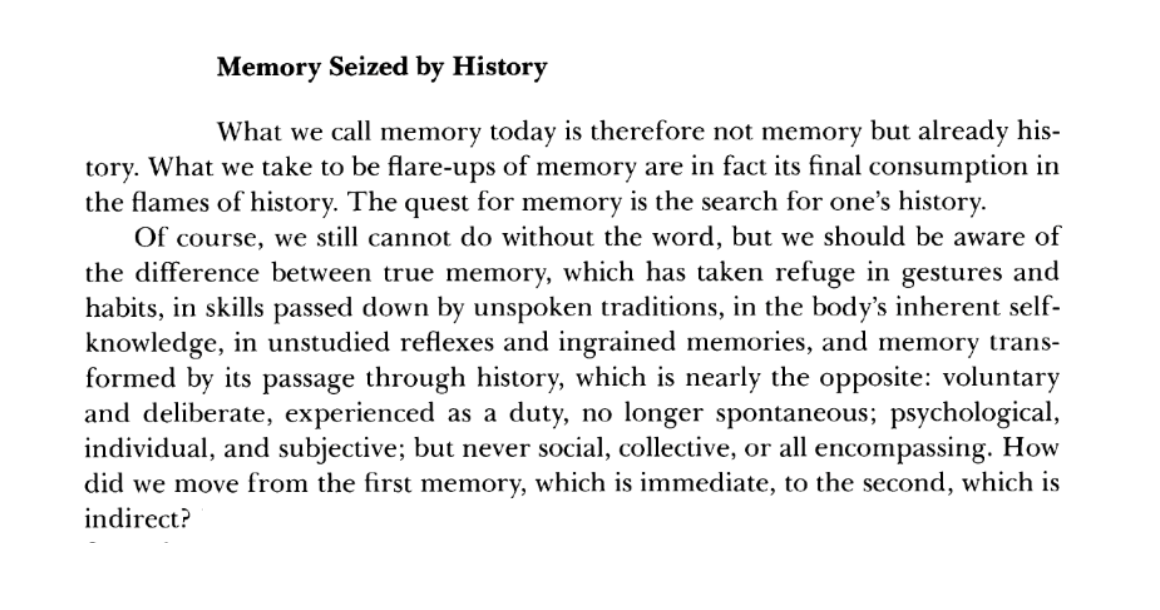
But a piece of Nora’s puzzle that particularly stood out to me in the context of our class was his ideas on “memory, seized by history.” See below:

Nora, Pierre. “Between Memory and History: Les Lieux de Mémoire.”

Here, Nora is expanding upon his introduction to the idea that living memory is a figment of the past.

And this consideration applies to the discrepancy in our understanding of Louis Philippe. In Les Misérables, Victor Hugo writes:

“Louis Philippe had been handsome, and in his old age he remained graceful; not always approved by the nation, he always was so by the masses; he pleased. He had that gift of charming. He lacked majesty; he wore no crown, although a king, and no white hair, although an old man; his manners belonged to the old regime and his habits to the new; a mixture of the noble and the bourgeois which suited 1830; Louis Philippe was transition reigning; he had preserved the ancient pronunciation and the ancient orthography which he placed at the service of opinions modern; he loved Poland and Hungary, but he wrote les Polonois, and he pronounced les Hongrais. He wore the uniform of the national guard, like Charles X., and the ribbon of the Legion of Honor, like Napoleon.”

However, in our secondary reading of “The Insurgents” in The Other Paris by Luc Sante, we see a different picture painted:

“In 1830 the revolution was declared over once the flag had been changed and the Orléanist king installed, and the republicans were invited to go lick their wounds. That king, Louis-Philippe, proved unpopular almost at once—he trampled on freedom of the press, for example, and soon swapped his ministers, most of them active in the events of 1830, for a more conservative set.”

So now we have the perspectives of both a fictional novelist who actually lived during Philippe’s reign, as well as a modern-day historian whose job it is to find facts. Their perspectives are entirely opposite. Yet in class, both Prof Andrew and I were inclined to believe the former—the fictional writer. Why?

Perhaps Nora’s argument supports our choice in belief. Nora states that true memory no longer exists—that our traditional form of remembering is long gone, aligning more so with Socrates’ and Plato’s beliefs on the creation of recorded history leading to a “semblance of truth.” Sante’s version would, to Nora, be “memory transformed by its passage through history.” A memory that can make mistakes.

But this can all get very messy and confusing. So in terms of our reading and bookpacking, I am inclined to reconsider these lieux de mémoire on a much smaller scale. Places like Versailles and Rue Saint-Antoine are primary examples of a blending of memories in the same space—peut-être un mémoire-mélangé.

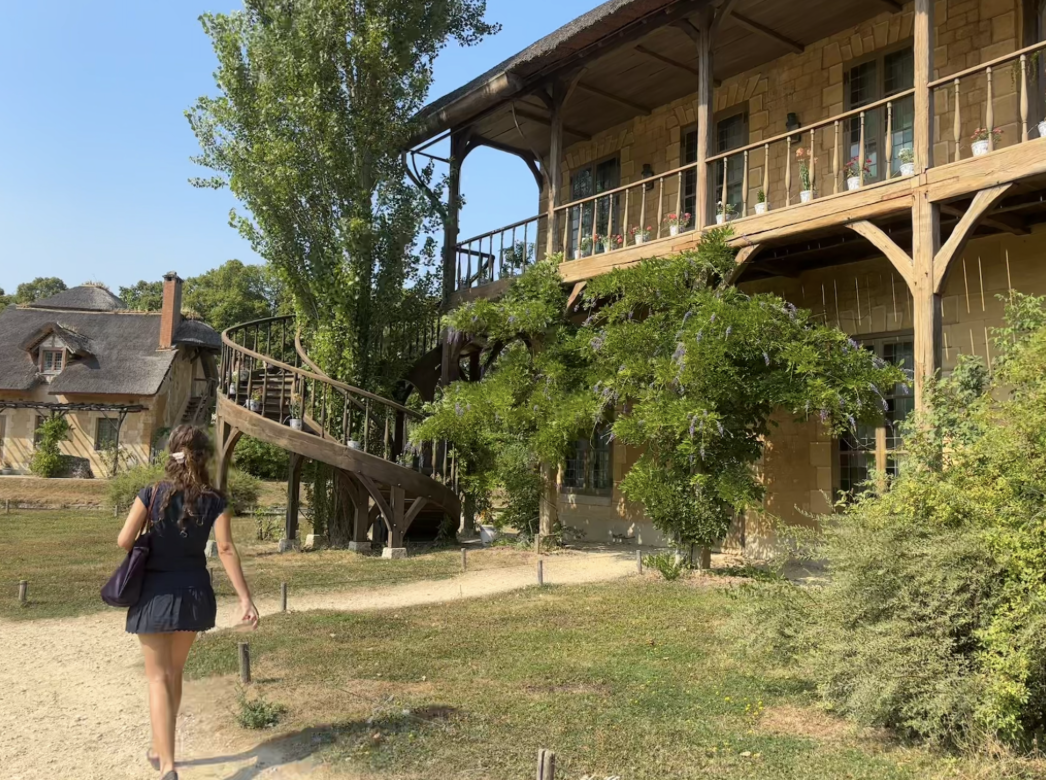
Exploring the Petit Trianon and Queen’s Hamlet.

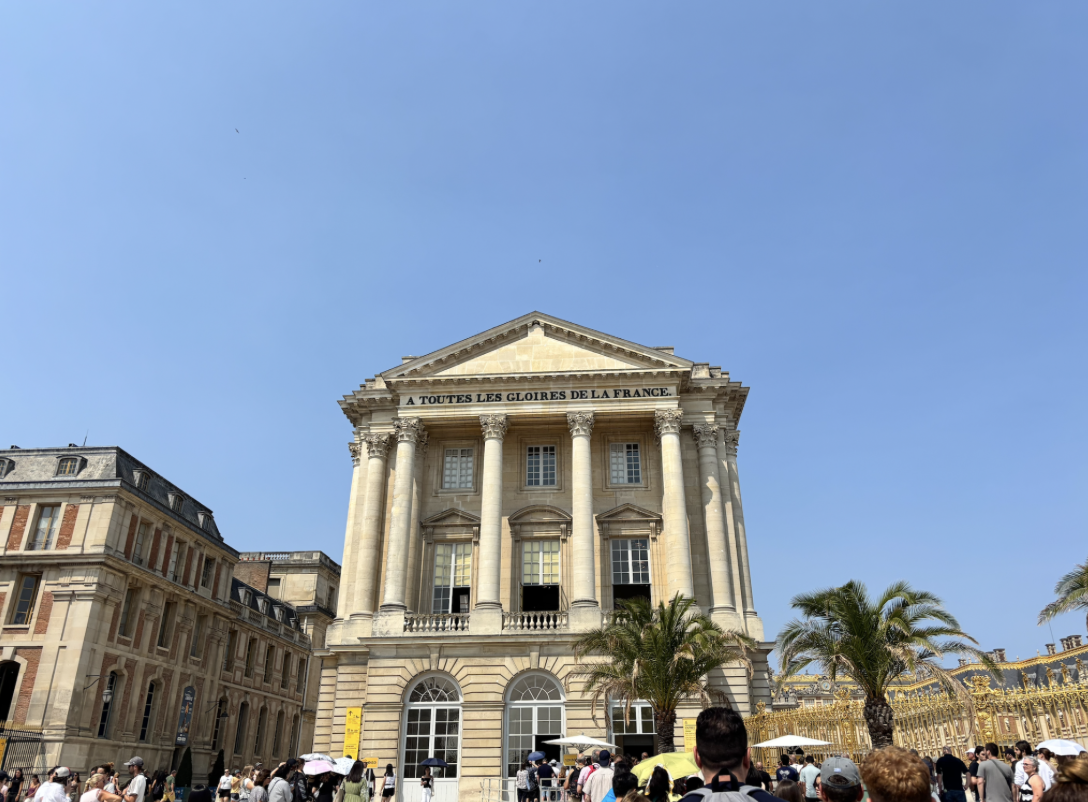
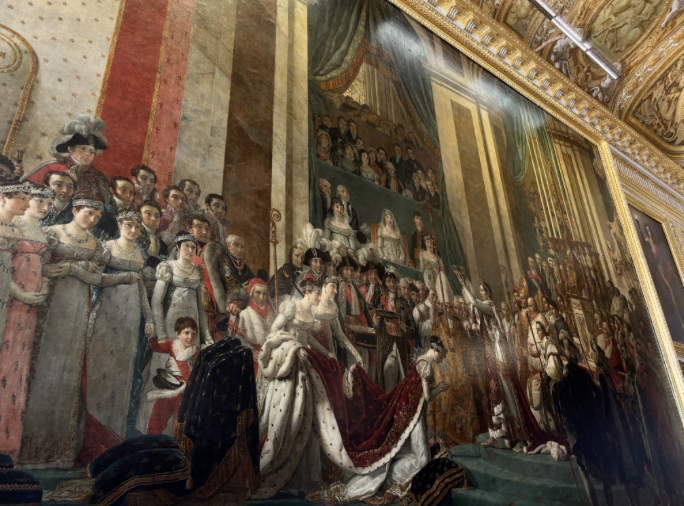
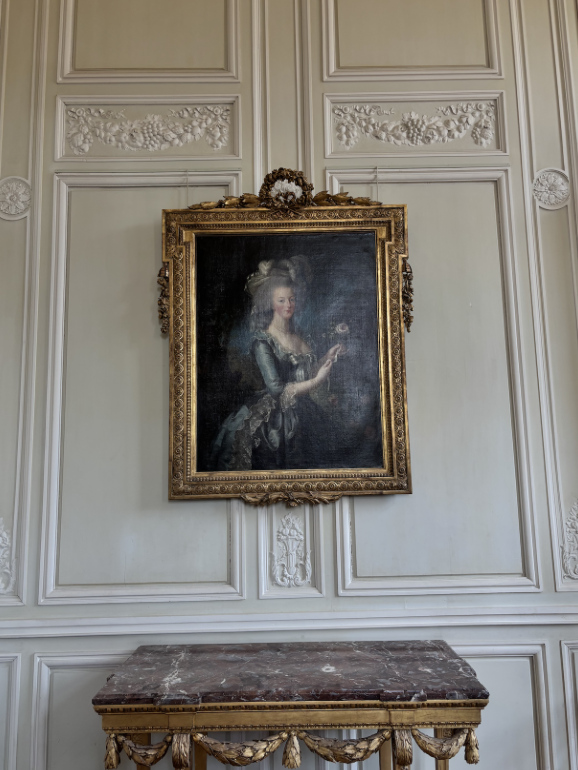
Let’s go back to the very elementary definition of un lieu de mémoire—a site of memory where collective and public memory can be physically embodied, rather than simply the retelling of the late fact within a history book. When we visited Versailles, I thought a lot about this blurring of lines within collective memory. Le Château de Versailles is so exquisite and flamboyant in architecture and design it feels unreal when walking through. There are exquisite portraits of monarchs of old, amongst those are Marie Antoinette and Napoleon. Marie, a teen-bride whose role within the country leant more towards playing milkmaid and dress-up while the poor starved outside the palace walls. And Napoleon, crowning himself and his Joséphine while the pope watches on. Yet the motto on the outside of the palace walls declares “À toute les glories de la France,” installed by the constitutional king Louis Philippe in 1833, when he converted Versailles into more of an all-encompassing museum of French history—including aspects of the revolution as well as Enlightenment. Isn’t that a sort of mémoire-mélangé—a mixing of histories, traditions, and memories in a singular lieu de mémoire?

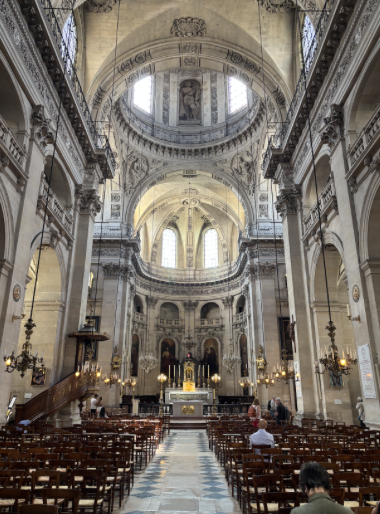
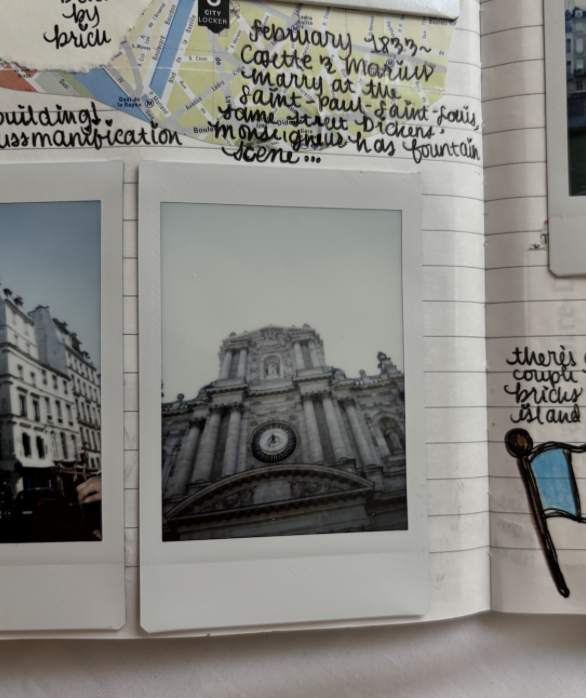
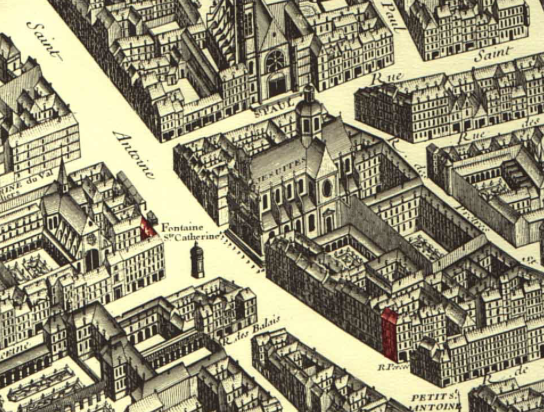
Additionally, when we visited Rue Saint-Antoine, we had the privilege of seeing the beautiful church that Marius and Cosette were married in, the Church of Saint-Paul-Saint-Louis. Yet directly in front of the church, there is an empty space on the pavement where fontaine Saint-Catherine once stood. And in front of that fountain, the monseignor ran over a poor peasant child in his carriage. And I know there are only stories—not real historical fact. Yet oftentimes as I read my favored classical literature, the lines between fiction and reality blend for me. And for the purpose of my next statement, let’s allow this merging of reality—after all, “history” and “story” are the same in French: “l’histoire.” Standing in front of the church, my thoughts and feelings mangled and mixed as I admired the grandiose house of God where oh-so-romantic Marius and Cosette once wed. Yet picturing the absolute tragedy of an image of a little toddler being crushed by the carriage of a man who, rather than regretting his grave sin, tells the father to be glad the boy’s life is over with. How shockingly terrible, then all of a sudden I am recalling the tenderness of Marius and Cosette’s wedding, both of these contrasting memories—one traumatic, one lovely—coexisting in the same place.

On a personal scale, the blending of all of these histories within the same avenues mixes up a bit in my head. But so do my personal memories. I mix my own self up sometimes—when I am focusing on a memory, my costar’s perspective and my perspective of the experience blend and mush into one and suddenly there’s too many thoughts and tangles to work out.

On a larger scale this lends itself to the idea that we all have incredibly different experiences. One person may fall in love with the very person who broke another’s heart. Someone could be treated kindly by the one who turned another away. And, of course, some may find a grave where others, the beginning of a love story. This variance in “different experiences” is especially relevant to us in America—where certain politicians seem to operate on the basis of xenophobia in the modern day as opposed to a pure desire to help their people. And even just one person’s individual beliefs or prejudices can project onto another individual and predetermine an experience.

It is all a lot to think about…but these are ideas that have been on my mind as we bookpack and flâner our way through les rues de Paris.

Bound by the Crown

He loved books. Books are cold and dependable friends.
— Les Misérables

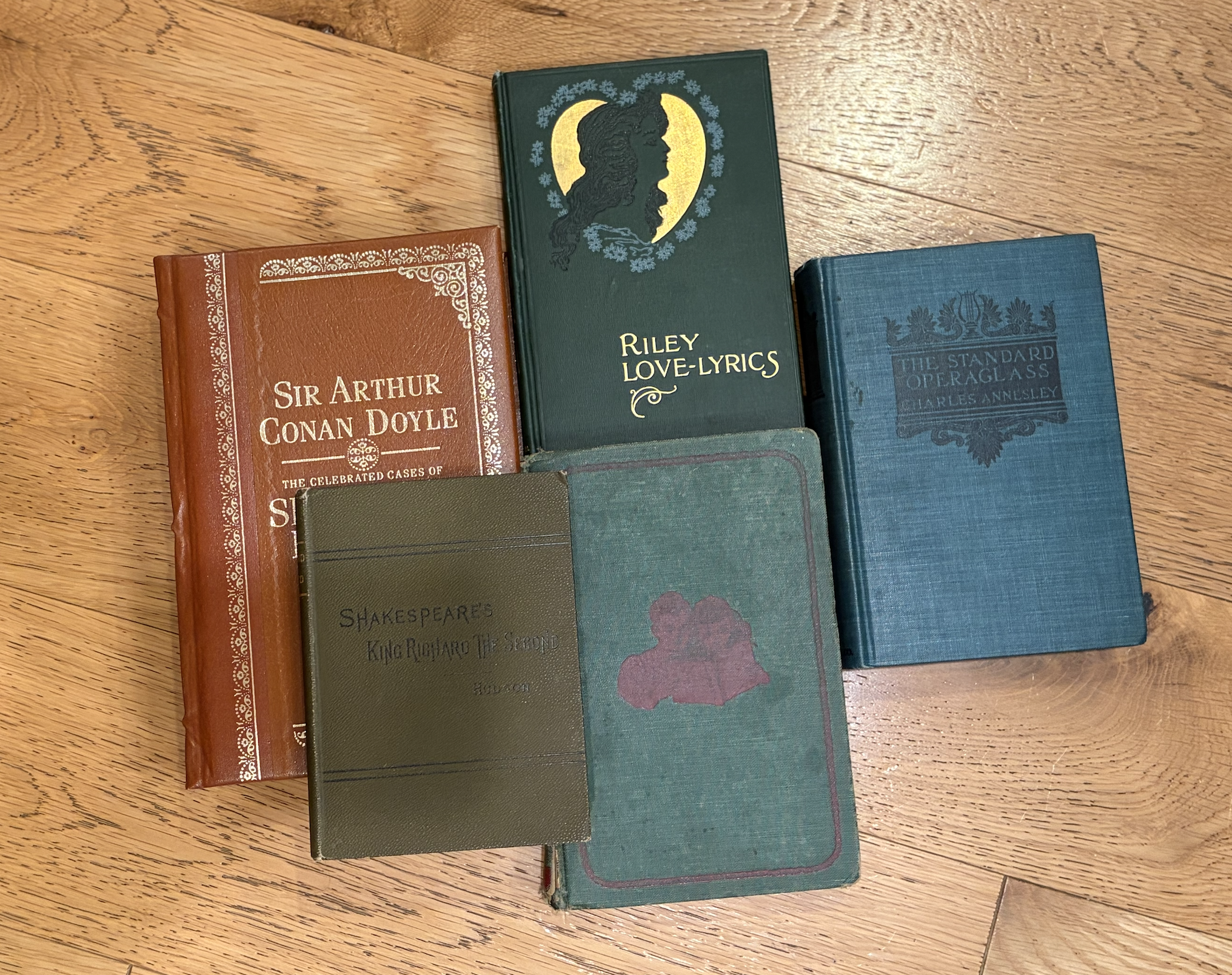
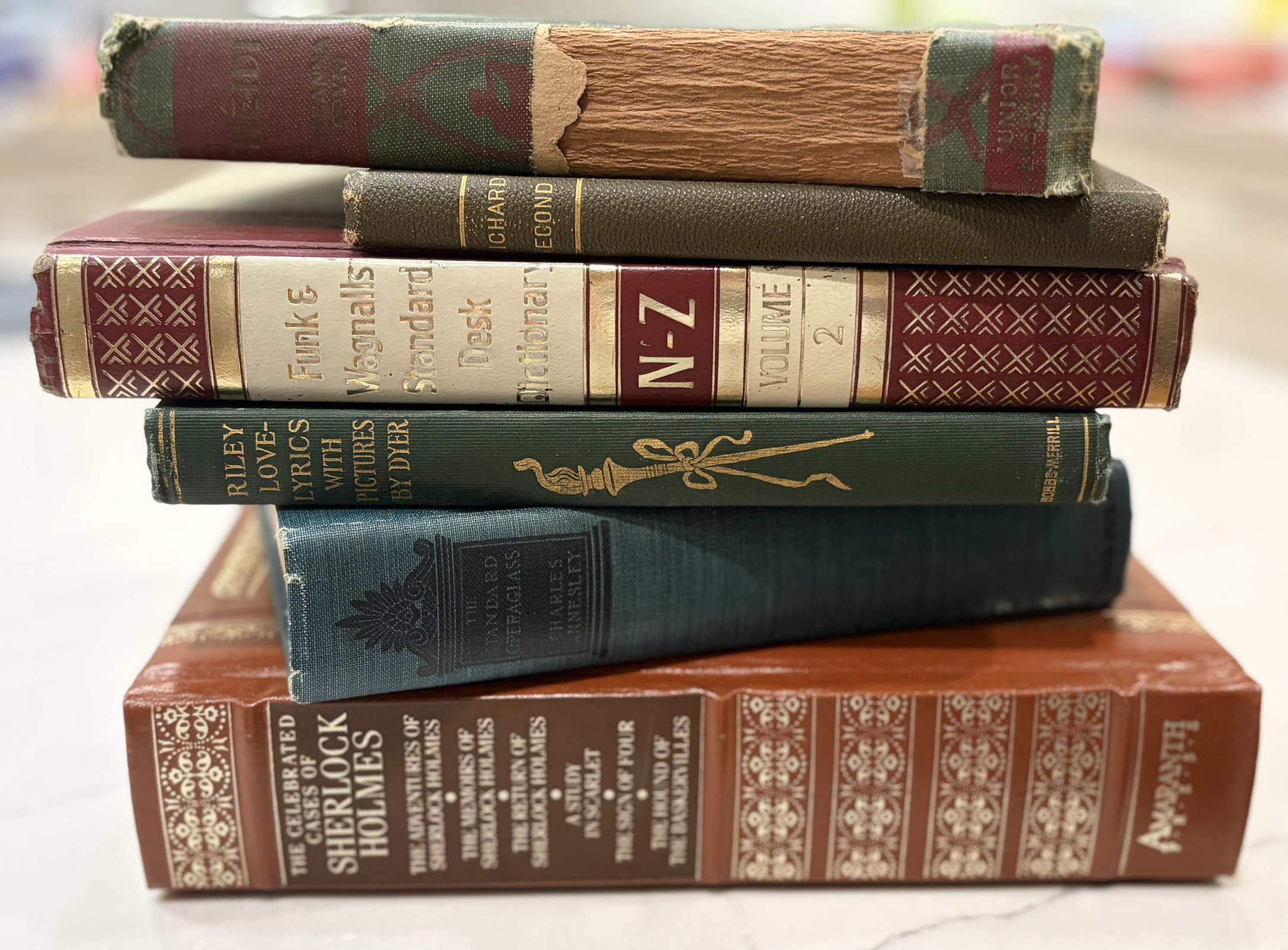
One of my favorite places we visited in London was Jarndyce Antiquarian Booksellers, despite the absolute oven of a back office. I am actually quite passionate about antique hunting and collecting, and I myself have a small collection of antique books.

I’ve always loved narrative—especially via literature and history—making antique book-collecting a perfect hobby for myself. I love being able to hold a book and know that some other girl from ages past, in a dress from a different era with interests, relationships, and hobbies of her own once held it. She would have enjoyed it during an age where technology could not document or remember her existence. Therefore the act of antique collection feels to me a way to uncover narratives—whether projected or factual.

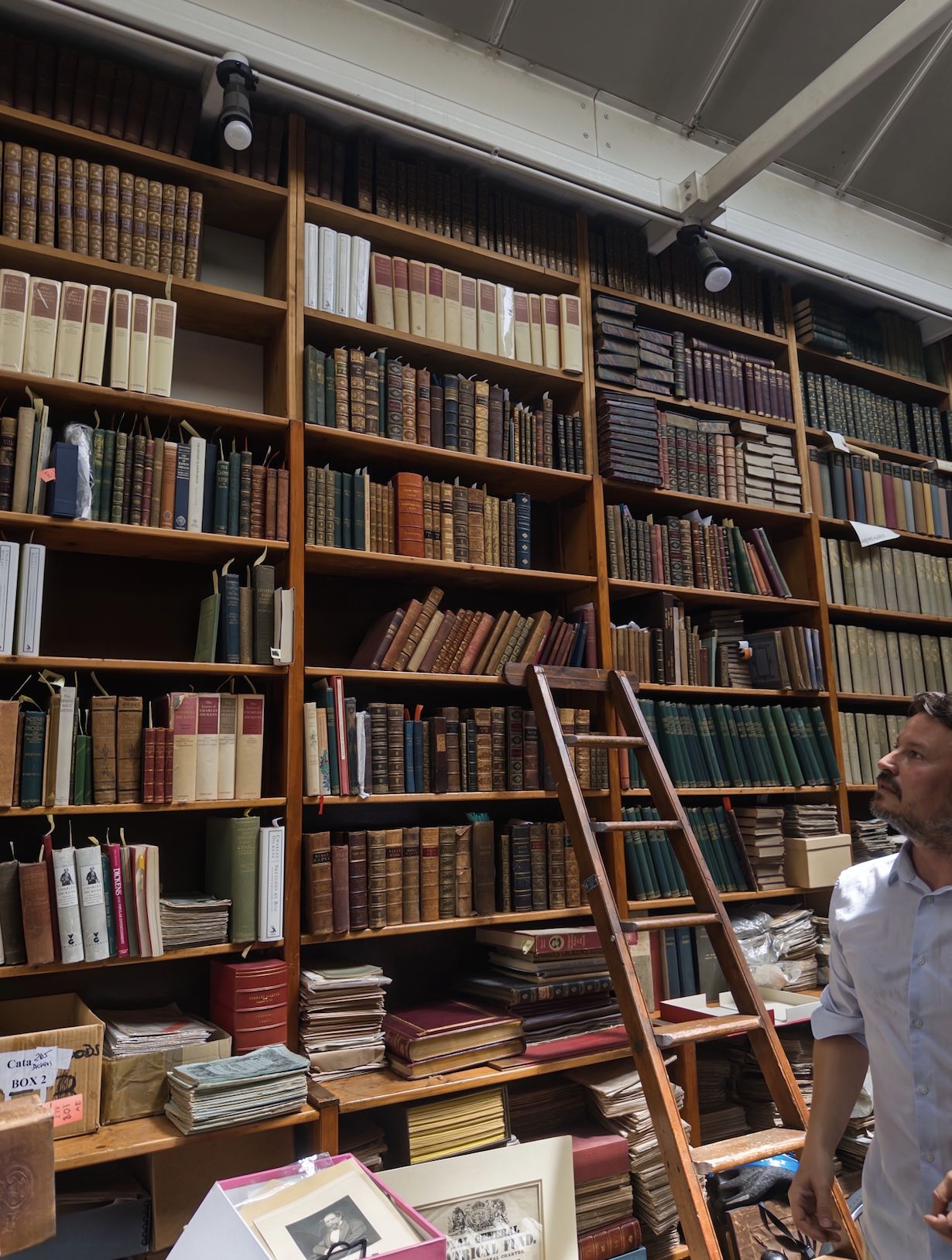
Jarndyce was established in 1969 and is across from The British Museum, the last standing of a street that was once filled with antique booksellers. Our class had the privilege of meeting with Mr. Joshua Clayton, a cataloguer of their 19th through 17th century books. 

Mr. Clayton in the backrooms of the bookshop, where he does cataloguing.

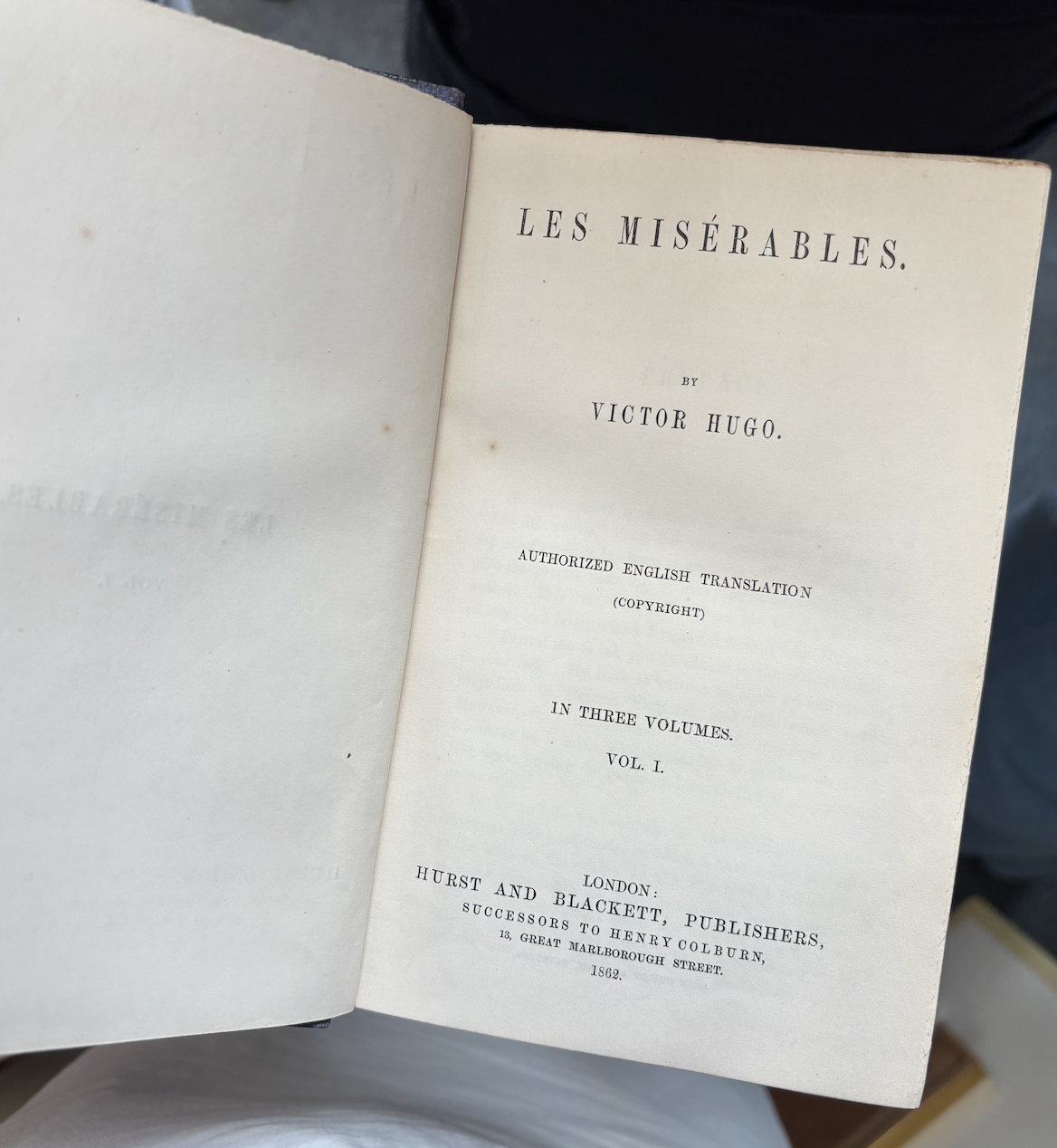
Mr. Clayton showed us a selection of their special collection, ranging from original and first edition Les Misérables to A Tale of Two Cities in parts.

And per the International League of Antiquarian Booksellers,it is the voyage that will give you incomparable pleasure, not the arrival at the destination.”

It really is the hunt of the rare antique book that is so fun for me, rather than seeing it on my shelf each day. On a larger scale, the act of collecting rare books reminds me of the way Britain holds on to traditions of old, whether or not the people of its modern nation desire to do so.

Something we spoke about in class was how England retains certain traditional class divisions and more conservative politics. Not only can you find a castle at every turn, but the country, though a democracy and a labour government, retains a figurehead monarchy. Why hold on to such an old tradition that does not serve its contemporary government or people? Additionally, England still abides by class traditions—such as higher respect for their “sirs” with higher titles, or being able to distinguish someone’s class background—such as financial standing, ancestry, and education—via the nuances of their accent.

Per Thomas Paine in his Rights of Man,

“What is called the splendour of a throne is no other than the corruption of the state. It is made up of a band of parasites, living in luxurious indolence, out of the public taxes.”

The French recognized this, certainly in 1789. La République franchise had its revolution, and it carried with it an anti-clericalism that challenged feudal power and allowed power into the very hands of the people who dismantled its Bastille brick by brick. While England mostly abandoned their belief in the divine right of kings following the Glorious Revolution of the 17th century, power was—and is still—allotted via birthright.

So why does Britain tend towards holding on to these very antiquarian traditions of monarchy, despite the royal family carrying no real power compared to the popular democracy? I would argue that, similar to antique books, the British monarchy—and its associations with class traditions—is entirely preserved through longstanding traditions. Both antique books and social and political traditions of antiquity provide a window to the past. Both are treated with great respect—the same way a bookkeeper like Mr. Clayton must be careful and gentle in his handling of Dickens’ and Hugo’s novels of old, checking temperature levels and cloth versus leather bindings.

In the chapter of Les Misérables on the battle of Waterloo and Wellington, Hugo writes of old England:

After her own 1688 and our 1789 she still cherishes the feudal illusion. She believes in heredity and hierarchy. This people that none surpasses in power and glory respects itself as a nation, not as the people. And as the people it willingly submits to authority and take a lord for its leader. It lets the English workman be scorned, it lets the English soldier be flogged.

While this quote speaks directly to the harm the monarchy can bring, another example in A Tale of Two Cities cements the necessity of stepping away from feudal hierarchy. Le droit du seigneur is the said medieval European tradition of the lord having the right to his subjects’ brides on their wedding nights:

As arbitrary imprisonment had become the exemplary abuse of monarchial power, so droit du seigneur was the exemplary abuse of aristocratic power; Dickens’ plot links these two formative transgressions.

And in conversation with his nephew Charles Darnay, the marquis explains that he does miss the ways of past:

“It not used to be so, but France in all such things is changed for the worse. Our not remote ancestors held the right of life and death over the surrounding vulgar…one fellow, to our knowledge, was poniarded on the spot for professing some insolent delicacy respecting his daughter.”
— A Tale of Two Cities

It is true, England has made much progress and is a stronger country for it today. But the preservation of history is simply that: a remembrance of the past, rather than a blueprint or guide for our future or present. One theme of revolution present throughout A Tale of Two Cities suggests that moving away from inherited traditions that offer respect on the basis of birthright or wealth is necessary, and Britain has done that—though I am unsure the need to hold on to the monarchy still today.

There is no question whether preserving history—such as our beloved antique books—is beneficial for education. In such, so is preserving state history—so that future generations may learn from the mistakes of a nation’s ghosts. In that same vein, preserving outdated class systems is not beneficial, serving a hierarchy of exclusion as it recreates the past in the context of the modern-day—a problematic dilemma.

I truly believe preservation of museums and archives to be vastly important. And don’t get me wrong, I love history. But as a society we should strive to think about history the same way we care for our antique books—they are something to hold close to the heart, but to learn from and display as an artifact of the past—not a blueprint for the future.