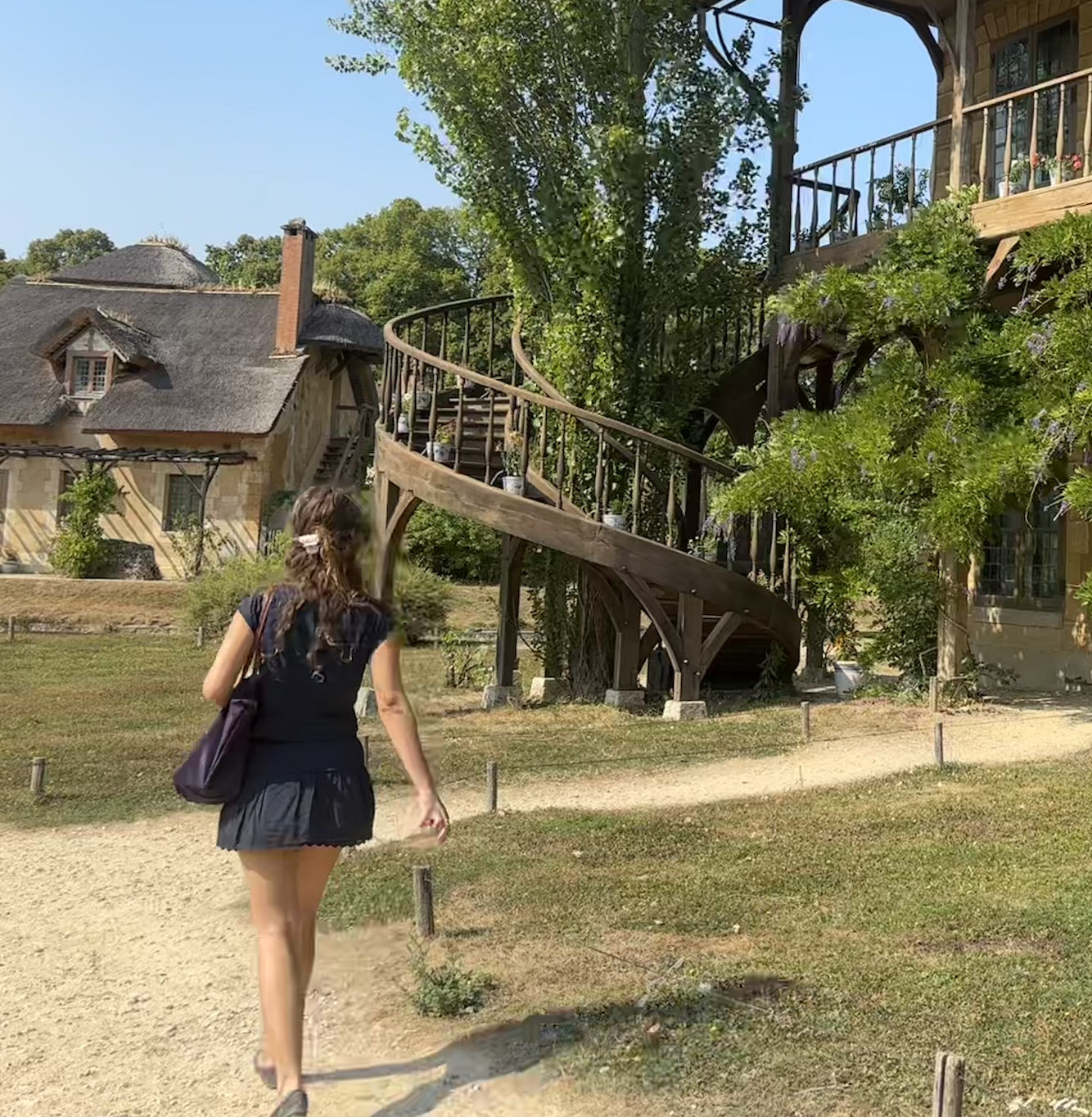
There is a concept in French literary philosophy called lieux de mémoire. It comes from French historian Pierre Nora’s Les Lieux de Mémoire. Nora draws comparison between actual history and remembered history—placing the textbook under memory’s trial. Nora defines this concept:
“Our interest in lieux de mémoire where memory crystallizes and secretes itself has occurred at a particular historical moment, a turning point where consciousness of a break with the past is bound up with the sense that memory has been torn—but torn in such a way as to pose the problem of the embodiment of memory in certain sites where a sense of historical continuity persists. There are lieux de mémoire, sites of memory, because there are no longer milieux de mémoire, real environments of memory.”
Essentially, Nora believes that lieux de mémoire—sites of memory—are places that our society chooses to hold and embody select pieces of our past. These places can be streets, monuments, houses, and so on. But it can also include textbooks and written history—the important thing is, the memory is physical. These lieux de mémoire are a sort of collective, public memory, while his milieux de mémoire would have been oral tradition, localized community memories, et cetera.
This all seemed relevant to me as we bookpack as we are literally visiting physical sites of memory—streets where our book characters walked as well as boulevards where Frenchmen of old fought for the revolution.
But a piece of Nora’s puzzle that particularly stood out to me in the context of our class was his ideas on “memory, seized by history.” See below:
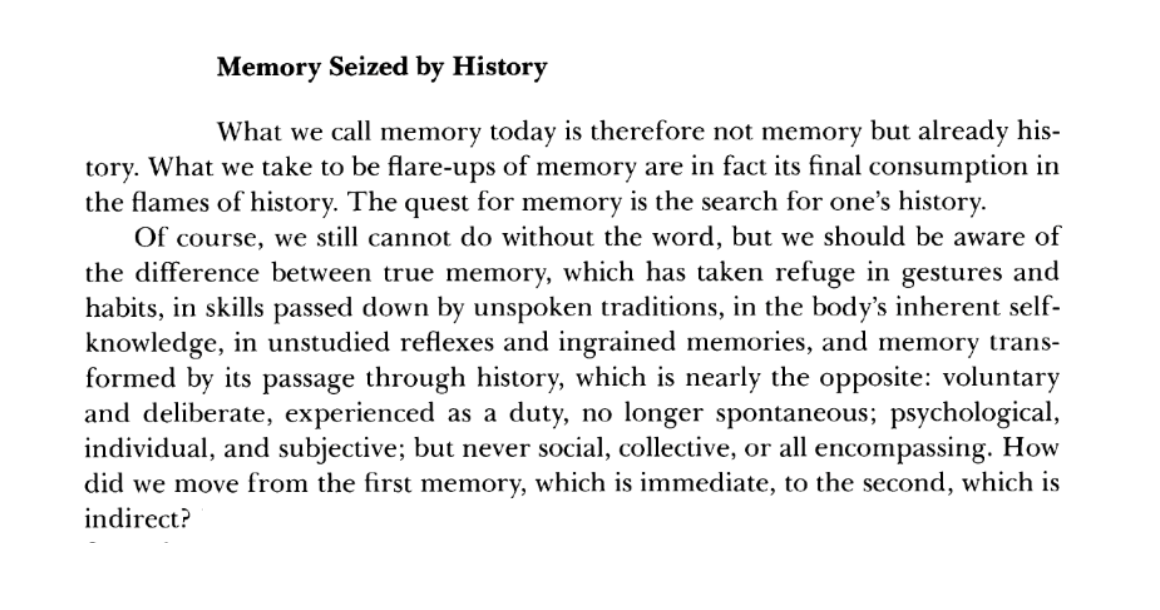
Nora, Pierre. “Between Memory and History: Les Lieux de Mémoire.”
Here, Nora is expanding upon his introduction to the idea that living memory is a figment of the past.
And this consideration applies to the discrepancy in our understanding of Louis Philippe. In Les Misérables, Victor Hugo writes:
“Louis Philippe had been handsome, and in his old age he remained graceful; not always approved by the nation, he always was so by the masses; he pleased. He had that gift of charming. He lacked majesty; he wore no crown, although a king, and no white hair, although an old man; his manners belonged to the old regime and his habits to the new; a mixture of the noble and the bourgeois which suited 1830; Louis Philippe was transition reigning; he had preserved the ancient pronunciation and the ancient orthography which he placed at the service of opinions modern; he loved Poland and Hungary, but he wrote les Polonois, and he pronounced les Hongrais. He wore the uniform of the national guard, like Charles X., and the ribbon of the Legion of Honor, like Napoleon.”
However, in our secondary reading of “The Insurgents” in The Other Paris by Luc Sante, we see a different picture painted:
“In 1830 the revolution was declared over once the flag had been changed and the Orléanist king installed, and the republicans were invited to go lick their wounds. That king, Louis-Philippe, proved unpopular almost at once—he trampled on freedom of the press, for example, and soon swapped his ministers, most of them active in the events of 1830, for a more conservative set.”
So now we have the perspectives of both a fictional novelist who actually lived during Philippe’s reign, as well as a modern-day historian whose job it is to find facts. Their perspectives are entirely opposite. Yet in class, both Prof Andrew and I were inclined to believe the former—the fictional writer. Why?
Perhaps Nora’s argument supports our choice in belief. Nora states that true memory no longer exists—that our traditional form of remembering is long gone, aligning more so with Socrates’ and Plato’s beliefs on the creation of recorded history leading to a “semblance of truth.” Sante’s version would, to Nora, be “memory transformed by its passage through history.” A memory that can make mistakes.
But this can all get very messy and confusing. So in terms of our reading and bookpacking, I am inclined to reconsider these lieux de mémoire on a much smaller scale. Places like Versailles and Rue Saint-Antoine are primary examples of a blending of memories in the same space—peut-être un mémoire-mélangé.
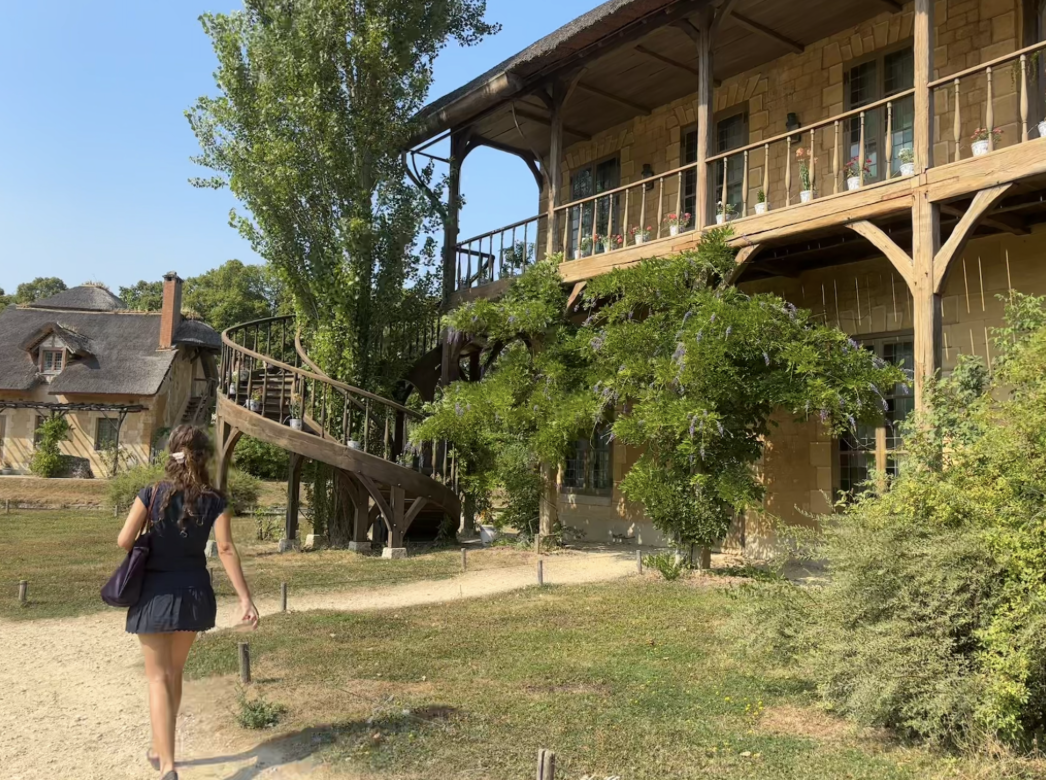
Exploring the Petit Trianon and Queen’s Hamlet.
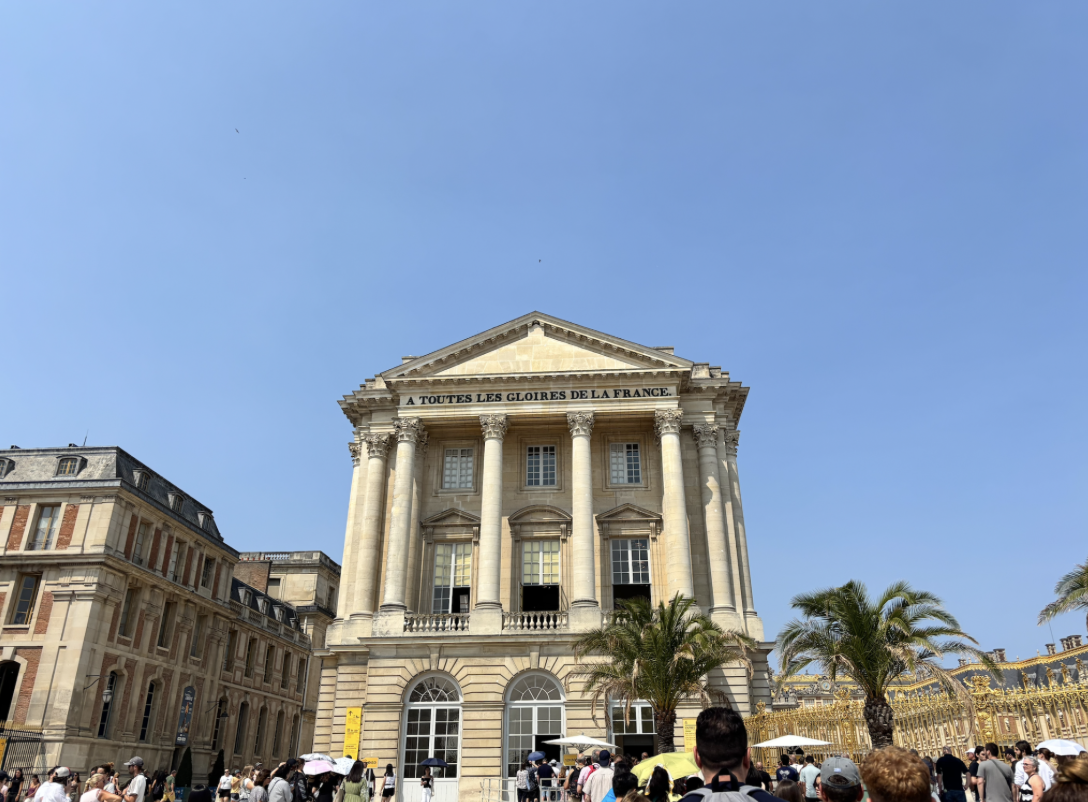
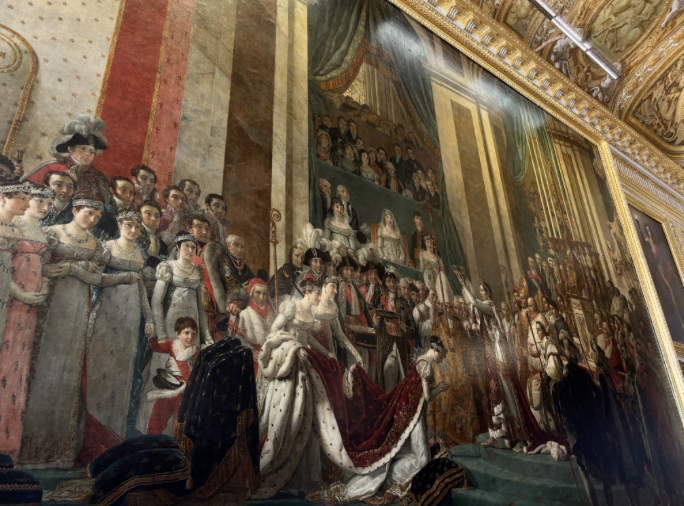
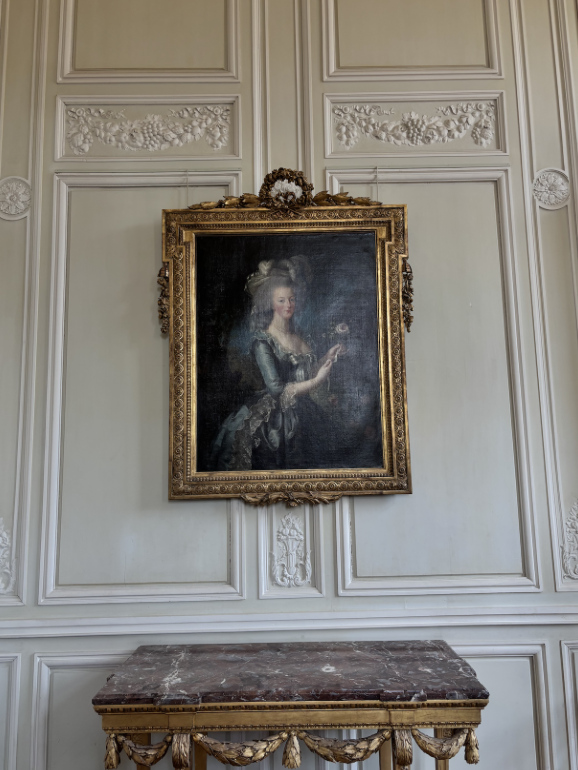
Let’s go back to the very elementary definition of un lieu de mémoire—a site of memory where collective and public memory can be physically embodied, rather than simply the retelling of the late fact within a history book. When we visited Versailles, I thought a lot about this blurring of lines within collective memory. Le Château de Versailles is so exquisite and flamboyant in architecture and design it feels unreal when walking through. There are exquisite portraits of monarchs of old, amongst those are Marie Antoinette and Napoleon. Marie, a teen-bride whose role within the country leant more towards playing milkmaid and dress-up while the poor starved outside the palace walls. And Napoleon, crowning himself and his Joséphine while the pope watches on. Yet the motto on the outside of the palace walls declares “À toute les glories de la France,” installed by the constitutional king Louis Philippe in 1833, when he converted Versailles into more of an all-encompassing museum of French history—including aspects of the revolution as well as Enlightenment. Isn’t that a sort of mémoire-mélangé—a mixing of histories, traditions, and memories in a singular lieu de mémoire?
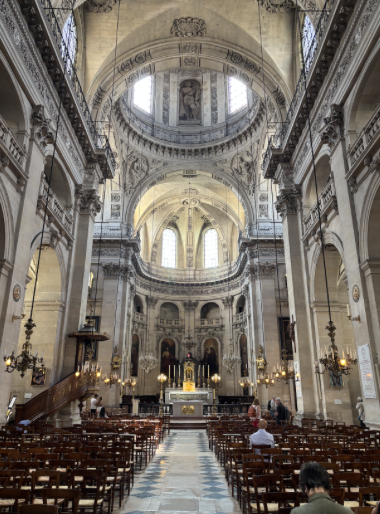
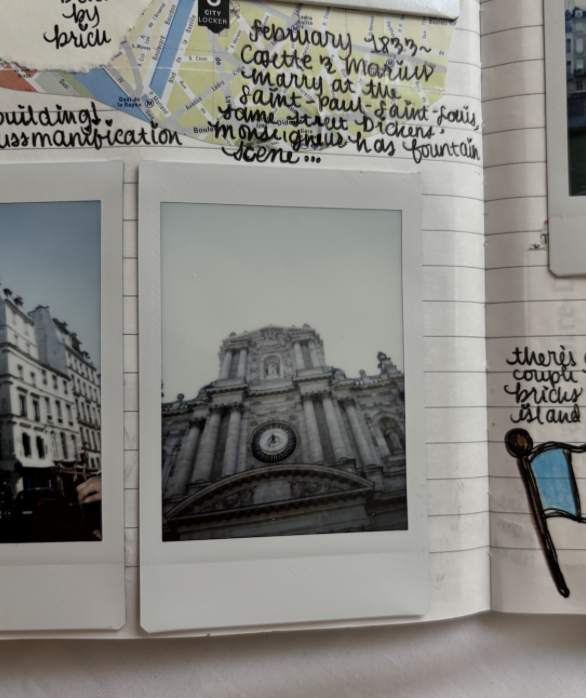
Additionally, when we visited Rue Saint-Antoine, we had the privilege of seeing the beautiful church that Marius and Cosette were married in, the Church of Saint-Paul-Saint-Louis. Yet directly in front of the church, there is an empty space on the pavement where fontaine Saint-Catherine once stood. And in front of that fountain, the monseignor ran over a poor peasant child in his carriage. And I know there are only stories—not real historical fact. Yet oftentimes as I read my favored classical literature, the lines between fiction and reality blend for me. And for the purpose of my next statement, let’s allow this merging of reality—after all, “history” and “story” are the same in French: “l’histoire.” Standing in front of the church, my thoughts and feelings mangled and mixed as I admired the grandiose house of God where oh-so-romantic Marius and Cosette once wed. Yet picturing the absolute tragedy of an image of a little toddler being crushed by the carriage of a man who, rather than regretting his grave sin, tells the father to be glad the boy’s life is over with. How shockingly terrible, then all of a sudden I am recalling the tenderness of Marius and Cosette’s wedding, both of these contrasting memories—one traumatic, one lovely—coexisting in the same place.
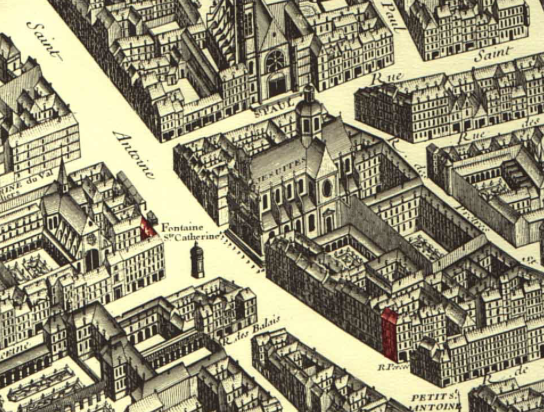
On a personal scale, the blending of all of these histories within the same avenues mixes up a bit in my head. But so do my personal memories. I mix my own self up sometimes—when I am focusing on a memory, my costar’s perspective and my perspective of the experience blend and mush into one and suddenly there’s too many thoughts and tangles to work out.
On a larger scale this lends itself to the idea that we all have incredibly different experiences. One person may fall in love with the very person who broke another’s heart. Someone could be treated kindly by the one who turned another away. And, of course, some may find a grave where others, the beginning of a love story. This variance in “different experiences” is especially relevant to us in America—where certain politicians seem to operate on the basis of xenophobia in the modern day as opposed to a pure desire to help their people. And even just one person’s individual beliefs or prejudices can project onto another individual and predetermine an experience.
It is all a lot to think about…but these are ideas that have been on my mind as we bookpack and flâner our way through les rues de Paris.