Fatherhood is an interesting concept. We don't think about it as much in comparison to motherhood. Our society places a strong emphasis on motherhood. Mothers are meant to be nurturing, protective, and sources of support. We refer to our ancestral nations as our “motherland”. We refer to our planet as “Mother Earth”. Mother’s Day was declared a national holiday in 1914, while Father’s Day wasn’t declared a national holiday until 58 years later in 1972. Mothers are rightfully seen as the ultimate protectors of our well-being and providers of a sense of warmth, love, and security that we often yearn for.
But what does fatherhood represent? Traditionally, fathers are the breadwinners of the family who are out at work. They are the ones bringing in the most resources for the family in order to provide stability for their loved ones. Men in general are seen as more self-sufficient and in less need of praise, love, or emotional reinforcement. Yet that does not mean that fathers are any less loving than mothers. Fathers generally still deeply love, care, and spend time with their children just as much as mothers do. They express these feelings in different ways though, probably because of societal standards and the idea of what it means to be a father. Mothers traditionally represent the love and acceptance of vulnerability that one needs to feel fully supported. Mothers are by your side in times of distress and provide you with a sense of warmth that makes home feel like home. Fathers, on the other hand, traditionally set up the structure and building blocks of the family. They are the ones you play with when they come home from work, and the ones who you view as your hero when you’re young. They are meant to be strong, inspiring, and resilient.
Victor Hugo touches on this concept of fatherhood in Les Miserables through the characters of Georges Pontmercy and Monsieur Gillernormand, Marius’ father and grandfather, respectively. In the novel, fatherhood is initially depicted in a very traditional sense until the characters’ vulnerability, emotions, and love are exposed.
Firstly, when we are first introduced to Georges, he is depicted as a man who had abandoned his son and did not want to undertake the responsibilities of fatherhood. Marius subscribed to this negative impression of his father until he was told at church that his father had been secretly coming to mass regularly to see how Marius was doing.
“The father kept behind this pillar so he wouldn’t be seen. He would gaze at his child and weep. He adored that child, poor man!”
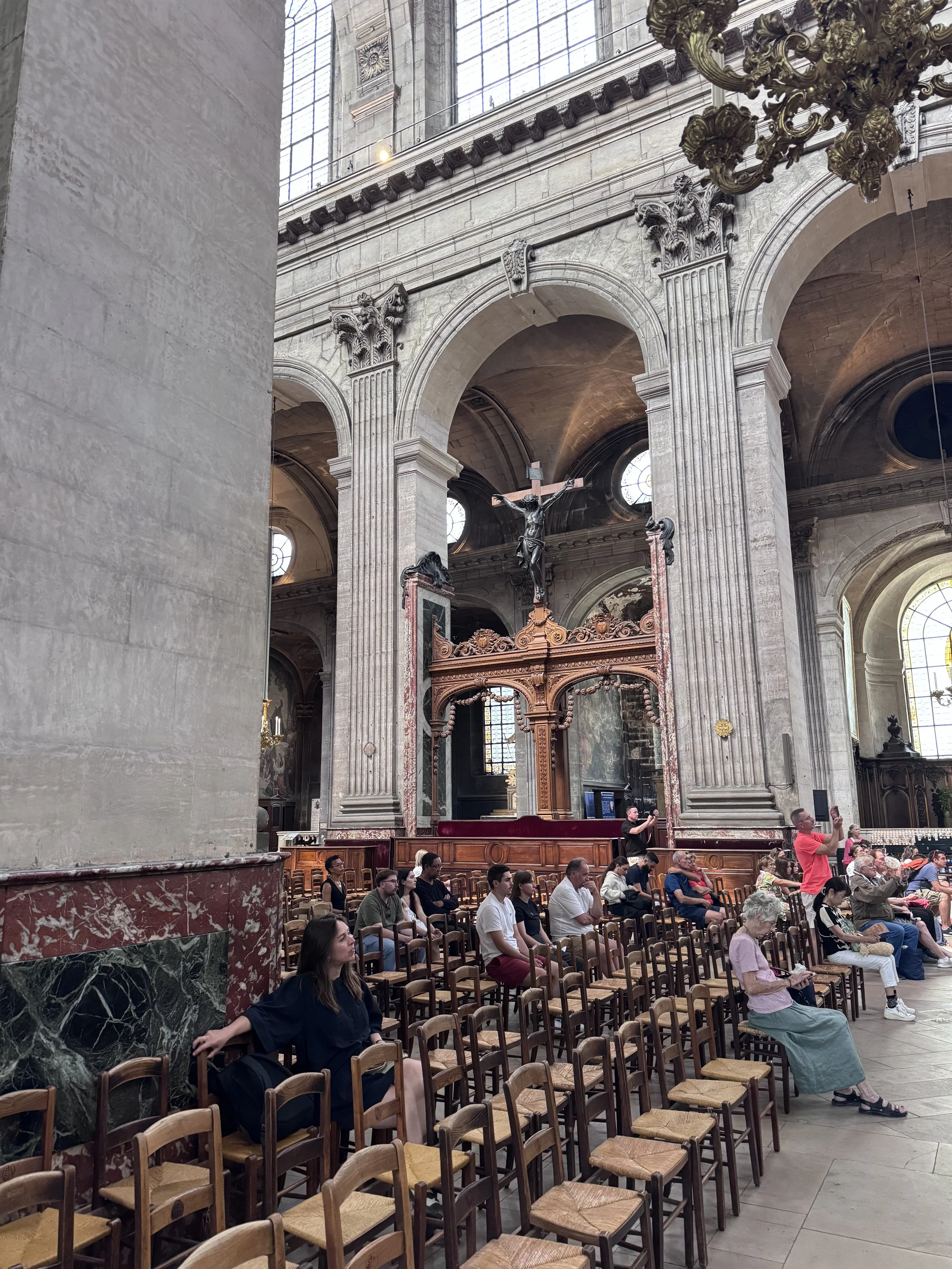
Victor Hugo shows a sense of paternal vulnerability. When I went into the church where Marius and his grandfather would attend mass, I could picture a father hiding behind a pillar and staring at his child in a paternal way in such a spiritual setting, trying to cherish the joyous period of youth that his son is experiencing and hoping that his son his living his best life, even without his father. It is the location best suited for this sense of vulnerability, as it is a public space where one builds their personal relationship with God. It’s traditionally paternalistic in a sense that Georges is resilient against his own desires to fully be with his son and instead watches Marius from afar, rather than trying to reclaim him. He only hopes that his son is living happily.
At the same time, Hugo shows a different side of fatherhood, one that is deeply emotional. Georges lets go of his son, but also lets out deep emotions when he weeps about Marius, imagining a life where he could be a proper father figure. While fathers are typically portrayed as figures who provide structure for their loved ones without being driven too much by emotion, they still can share a sense of love and vulnerability that mothers also provide. Hugo perfectly illustrates this through Georges’ character and does a great job of showing the nuances behind fatherhood.
Monsieur Gillernormand is also a father figure that is portrayed in Les Miserables. Hugo depicts a relatable gruffness and harshness through this portrayal. These quotes show how traditional paternal characteristics eventually peel off overtime, and how masculinity can shield our true emotions about loved ones.
“[Monsieur Gillenormand] felt like opening his arms to [Marius], calling his name, rushing towards him; his heart melted in rapture, affectionate words swelled his breast to bursting. Finally all his tenderness came to the surface and reached his lips and, by virtue of a contrariness that was the very essence of his nature, what came out was harshness. He said abruptly, “What are you doing here?”
“Monsieur Gillenormand wrung his hands with a dreadful burst of laughter. ‘He’s dead! He’s dead! He’s dead! He’s got himself killed on the barricades! Out of hatred for me! It was to defy me that he did it!”
Gillenormand is a classic stubborn father figure most of us know in our lives, whether it be a grandfather, father, or uncle. He is one that does not prefer to show emotion due to a societal norm of fathers being strong and unwavering. I see this fatherly nature through my own father, who I have frequent political conversations with. While understanding and emotional to a certain extent, he still holds a sense of paternal stubbornness. Gillenormand views him showing his love to Marius after years of not seeing each other as a form of surrendering his own beliefs, which was a primary cause of Marius leaving his home. Slowly, Gillenormand can’t help it anymore and his bottled up emotions burst out.
Hugo shows us how love and emotion is a natural part of being human, despite societal factors that determine our actions and expressions. While mothers are often the ones you confide in and someone you go to when you need a shoulder to lean on, and fathers are the ones you talk politics or go play ball with, they both are figures that love and care deeply, and Hugo shows that maybe motherhood and fatherhood aren’t so different after all.