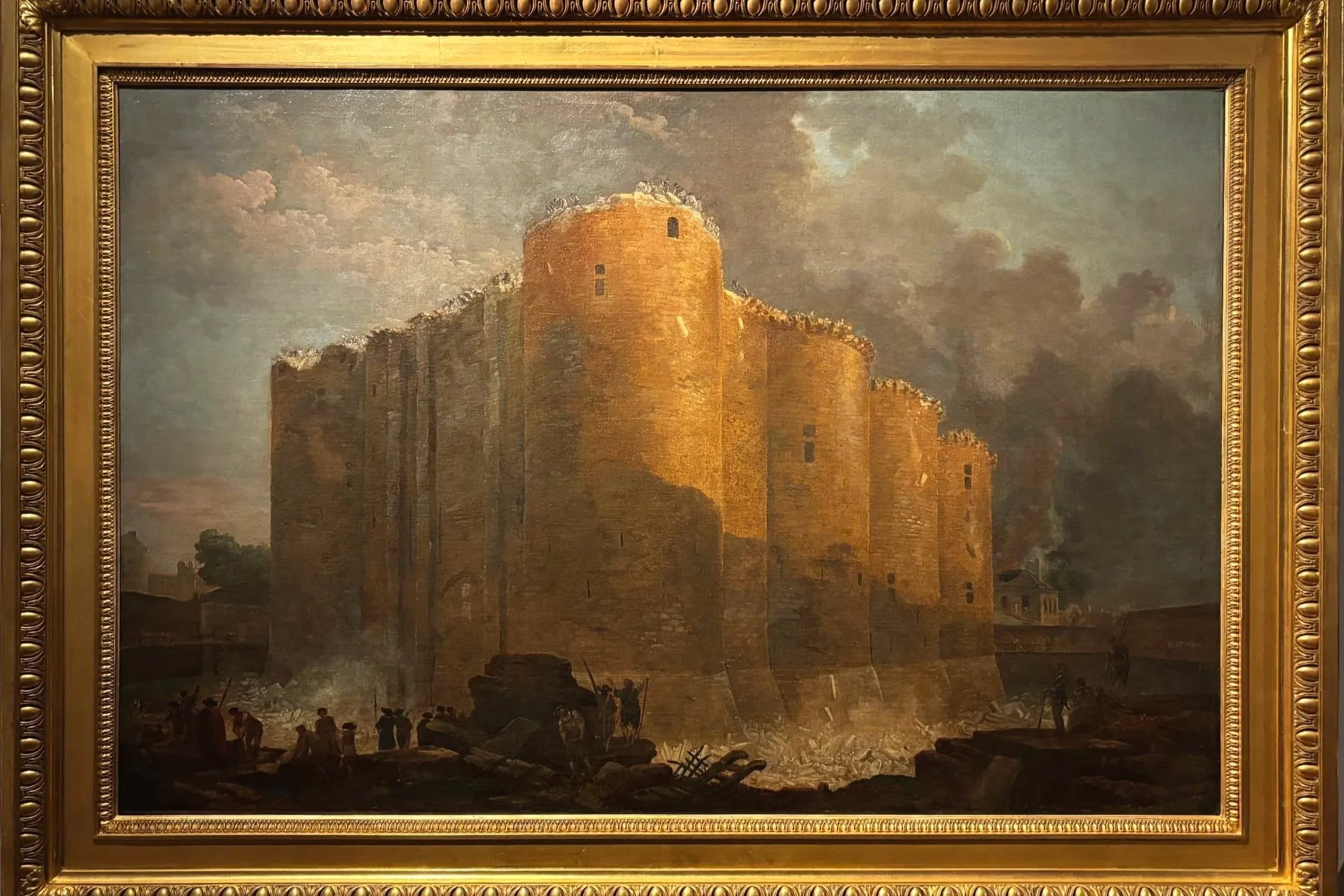
For those of you who are not students––hello, parents––and have happened upon this blog, we had a paper due yesterday. In it, I wrote briefly about the cycles of history and its tendency to repeat itself. As a result, this word, cycles, has been swirling around in my head (pun intended).
I chose to focus on Les Misérables. The novel has a shocking volume of fantastic quotes:
“To put an end to abuses is not enough, attitudes must change. The mill has gone, the wind is still there”
[See the crumb at the bottom of the blog for a tangent.]
There are two main things I’ve been considering in this discussion. First is Charles Dickens’s bloody depiction of the French Revolution of 1789; the gruesome violence of the radical revolutionaries and the paved roads running with blood. We recoil from the grotesque descriptions of beheadings, but find ourselves leaning in because we, too, are entranced by the power of their passion. Madame Defarge, dripping in the blood of the aristocrats, willing to end her own husband’s life, is terrifying but magnetic in her fervor. Reading about the treatment of the starving poor by characters like the Marquis, who kills a child in his speeding carriage and tries to fix the tragedy with a coin, we begin to understand the anger.
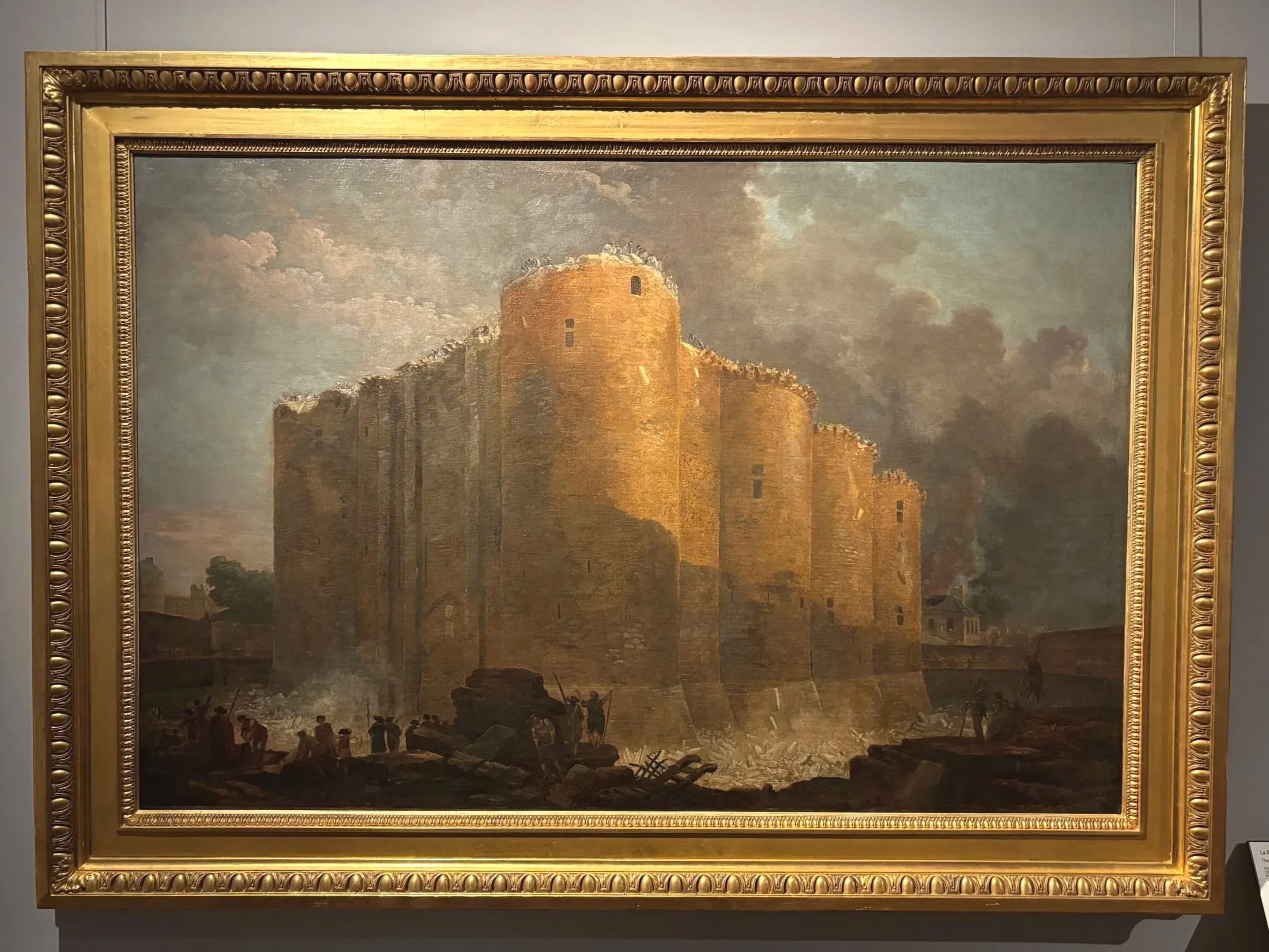
Then, there is Versailles. The harm of the Palace of Versailles is less explicit than the murder of a child or execution by guillotine. Still, it’s quite flashy. The palace itself is a behemoth that had only grown in size over the years. The opulence is absurd. From the roofs dripping in gold to the intricately painted ceilings, every inch of the palace radiates unnecessary luxury. I found the palace beautiful. I found it simultaneously ridiculous. I could not stop joking about the number of people that probably snuck in and made a home in the structure’s unchecked corners. The trek across the palace garden's infinite expanse had my Apple Watch prompting me to record my outdoor workout again and again. Walking down the endless halls, I wondered how the number of people visiting the palace that day compared to the number of residents back in the day. After some Googling, I discovered that the 30,000 or so people who visit the palace on a busy day are, in fact, more than the few thousand who had inhabited the rooms, but the hustle and bustle of the palace would still have been overwhelming. A third of the echoing footsteps. A third of the conversations. A third of the sweaty bodies pushing by in the statue-filled halls. All these people were still but a glittering fraction of the French population, most of which constituted the common third estate. That is to say, the palace was huge, and the people were tired of being trampled on by the rich.
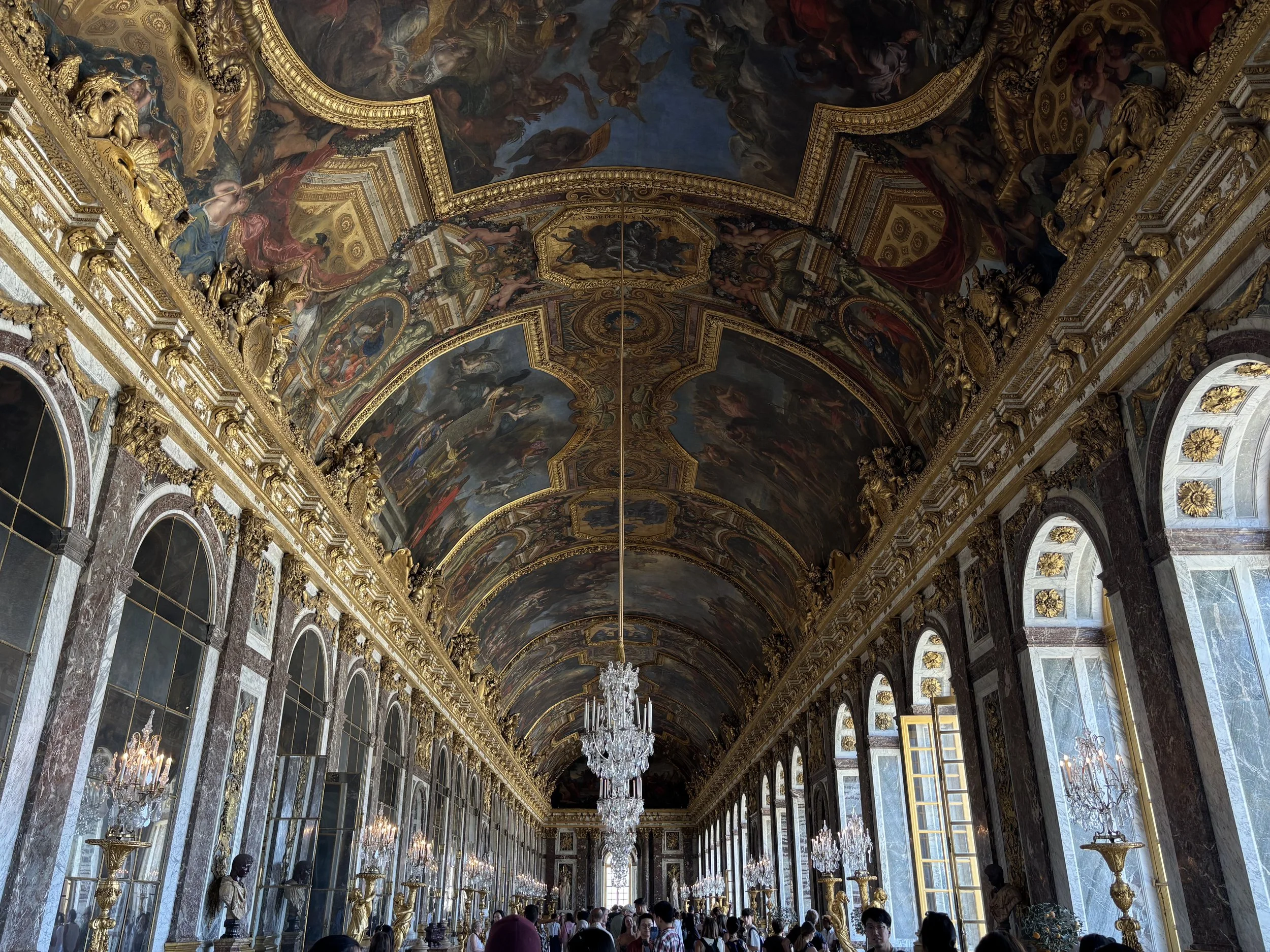
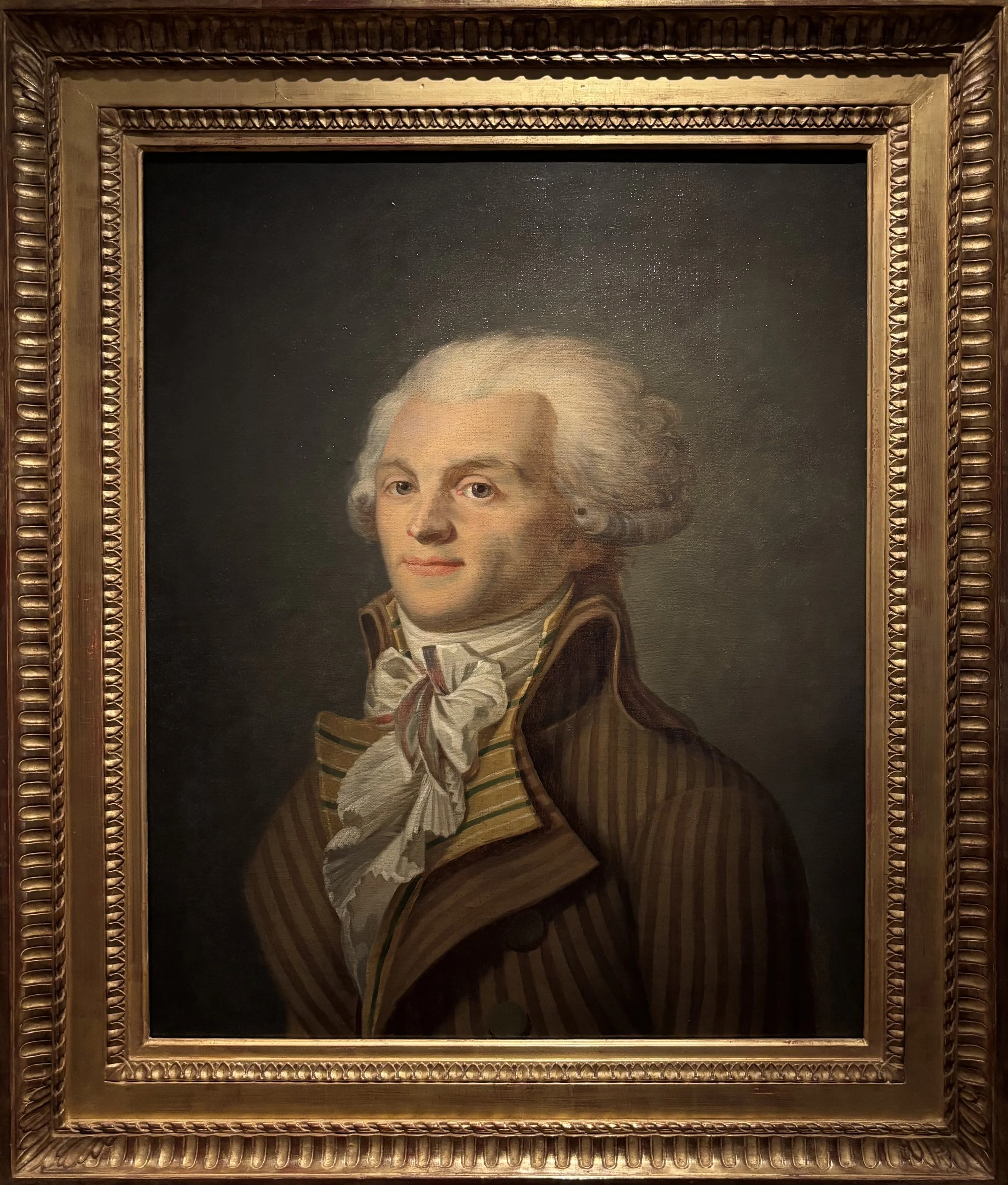
Robespierre. Buckets upon buckets of blood on this guy’s hands.
Still, reading about the gore and bloodshed, I am conflicted. When I see paintings of Marie Antoinette, I understand her role in the revolution, as a symbol of the old system. I cannot help but ask whether execution was really the path of justice. Here are the million-dollar (million-euro?) questions: When is violence justified? How much is too much?
Obviously, I do not have an objective answer to these questions. I have never been a hungry laborer in 18th-century Paris, nor have I been a suspected enemy of the revolution staring at the stone walls of La Force prison awaiting trial. Whether I would be for or against the revolution had I been alive at the time (ignoring the likely case that I would have been in China at the time––whoops) is unclear. However, looking back from my position in the present day, I can’t say I’m keen on the idea of ending someone’s life as a symbol of the previous regime. But again, the passion of the revolutionaries in the 1832 revolution of Les Misérables is truly inspiring, and I have a tender spot in my heart for each of the Café Musain students. I can imagine that people fought for love (sigh… Éponine) or for a better future, and I respect and am moved by their cause. But I find myself returning to the words of Combeferre: “Good must be innocent.”
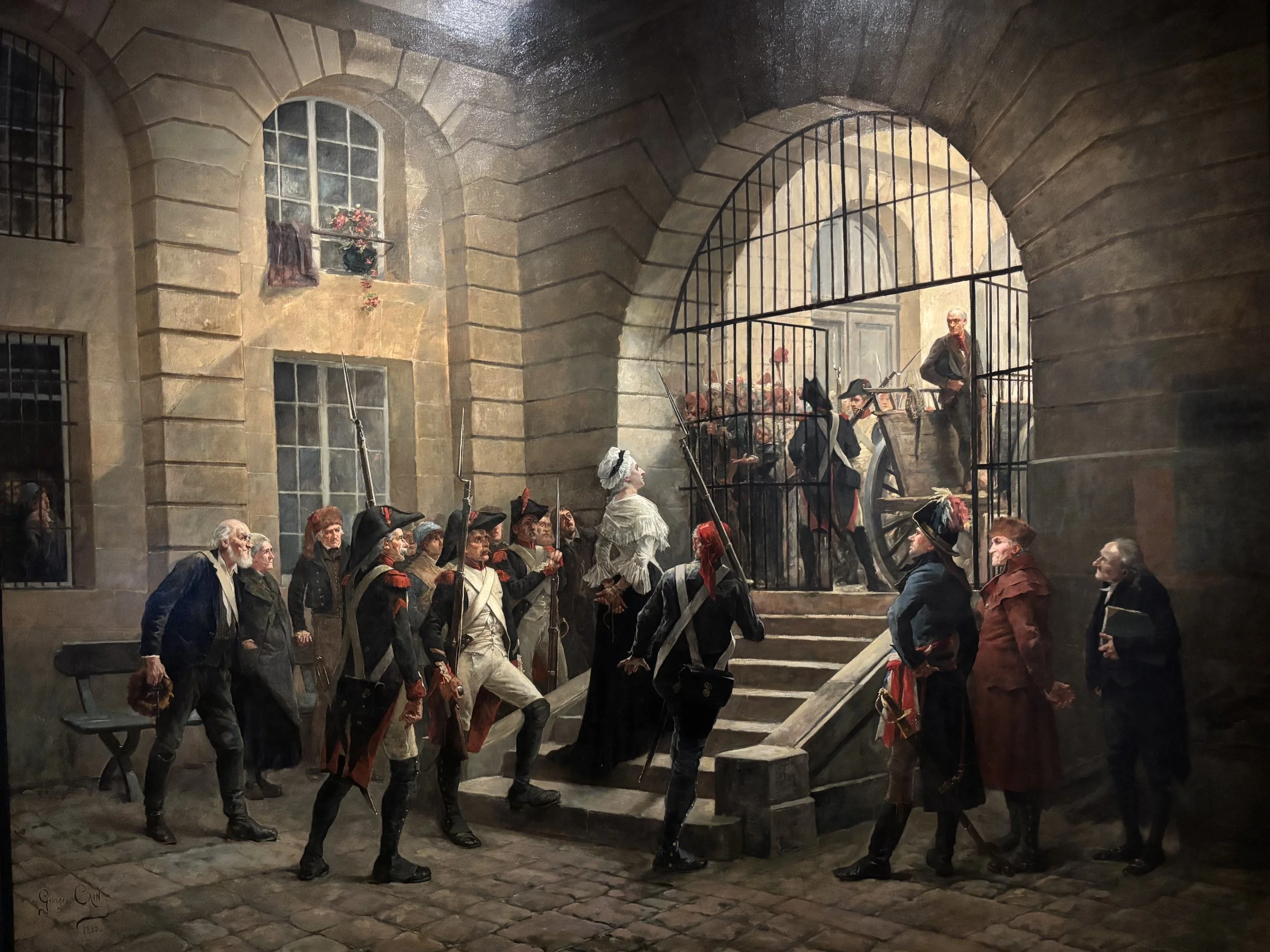
Marie Antoinette and her path to the tumbrils.
Again, it’s more complicated than that. When it comes to taking action against systems so ingrained in our societies, is a peaceful approach effective? Are we justified in responding to violence with violence? Does violence get us closer to addressing the root of the issue? Do we consider it retaliation or self-defense? What else can we expect? Sometimes, it’s not enough to be innocent, and good can exist in violence. Innocence alone could not have broken down the walls of the Bastille, or shielded the common people against the whims of the elite. Where there is oppression, there will be resistance. This is the case time and time again. And it is always more complicated than a choice between violence and peace (Violence for whom? Peace for whom?).
“Crush humanity out of shape once more, under similar hammers, and it will twist itself into the same tortured forms. Sow the same seed of rapacious licence and oppression over again, and it will surely yield the same fruit according to its kind.”
poetry alert
!!
poetry alert !!
MOUNTING
one rock removed
another tumbles down
relentless avalanche rumbles
tumbrils in the town
The crumb as promised:
Thinking about cycles and revolutions reminded me of the Palestine protests in London. When I was visiting London from Cambridge last year, similar demonstrations were taking place. I observed the passionate masses marching down the streets, standing with the people suffering from the ongoing conflict as well as the historic oppression of Palestinians with the creation of Israel. I could not help but think of the demonstrations on the USC campus my sophomore year. Free speech zones. Students detained by the LAPD. Students shot with rubber bullets. Not to say that London is some sort of protester’s haven, but, in the moment (I am unsure what happened after, as my parents and I left Trafalgar Square), watching uniformed officers stand aside and let the protesters do their thing, I felt deeply moved.
In relation to the French Revolution, the question here is similar to that of the National Guard's role during civil unrest. Are these forces that claim to protect the people really doing that? When people rise in protest, are the tear gas and muskets really there to keep them safe? Who, or what, are these forces protecting? All of these questions continue and will continue to resurface.

Progress–7.29. Onto the flip side!