While exploring the Musée Carnavalet with Kate, I was especially interested in the upstairs exhibit on the French Revolution. The exhibition starts with the Déclaration des droits de l’homme et du citoyen.
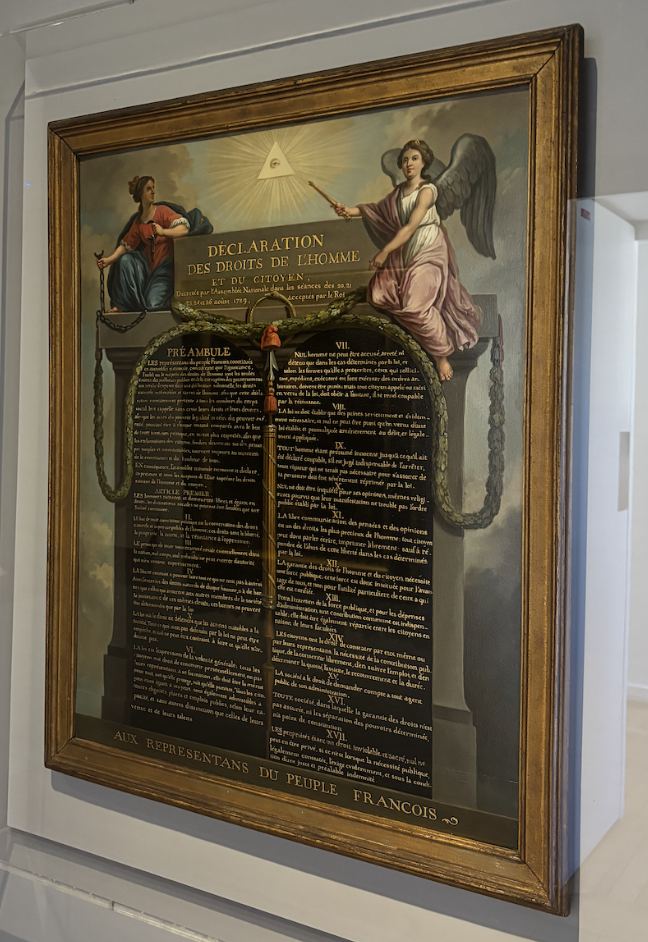
The Déclaration des droits de l’homme et du citoyen.
A woman in red, with a crown and lilies, is depicted in the top left corner. The museum plaque explains she represents the French monarchy, ”the chains of despotism have been broken.” And to her right, an angel-like figure represents the French nation, carrying a scepter of sovereignty. Finally, the bottom of the image reads: “Aux representans du peuple francois,” or “to the representatives of the French people.”
The declaration establishes basic freedoms and human rights, and was adopted by the National Assembly in 1789. However, women and slaves were not included in this definition of “human” rights.
And while the plaque on the wall claims the chains of despotism were broken—they were not really. The abuse of the aristocracy and monarchy was gone—but society lived under a man’s rule.
I kept walking through the exhibit, and next I find beautiful representations of free France, depicted as female characters.
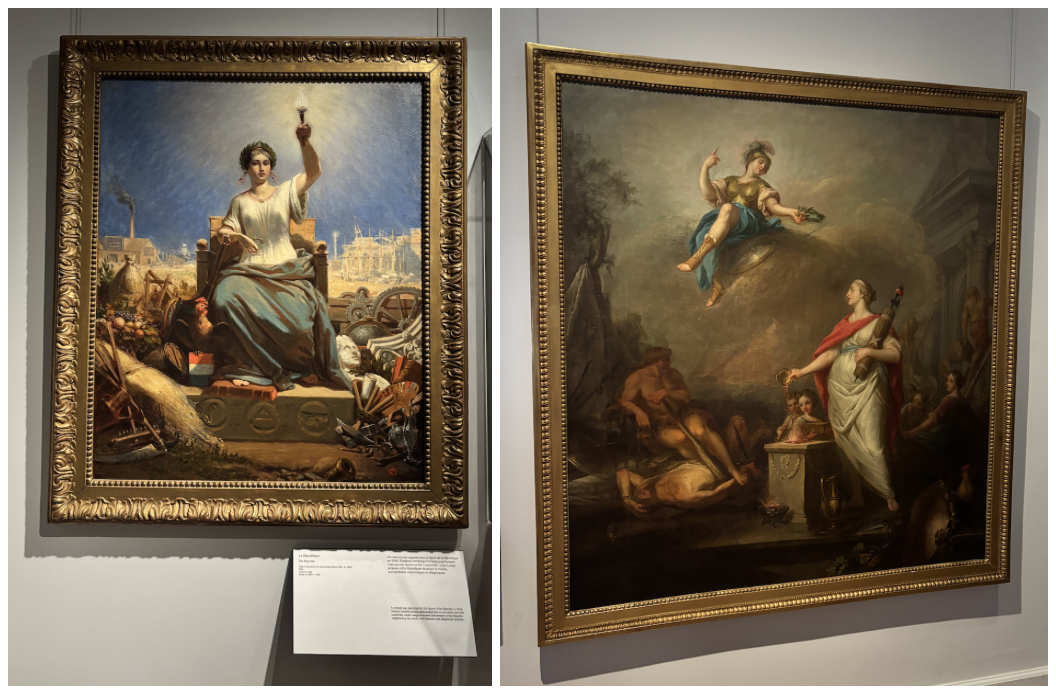
La République by Ange-Louis Janet (1848), Allégorie de la Révolution de 1789 by Jacques Wilbault (1791).
France in all her glory, all the people’s glory—is feminine. Even the French language for “France, the Republic, liberty, and reason” are all feminine: “la France, la République, la liberté, et la raison.”
This feminine representation is even represented in literature at the time, such as the poem we read in class: La Curée, by August Barbier in August of 1830. The translated excerpt reads:
“It's that liberty is not a countess
Of the noble Faubourg Saint-Germain
A woman whom a cry makes weak
And who puts on rouge and carmine
She is a strong woman with powerful breasts,
With a hoarse voice, with hard charms
Who, with brown on her skin, fire in her eyes,
Agile and striding
Pleases herself with the cries of the people, with the bloody melee,
With the long rolls of the drums
With the smell of gunpowder, with the distant volleys
Of bells and muffled cannons
Who only takes her loves from the people
Who only lends her great bosom
To people strong like her, and who wants to be embraced
With arms red with blood”
Barbier describes a woman reminiscent of Madame Defarge—a working class woman, one who may have participated in the March on Versailles, a radical with “fire in her eyes” who “lends her great bosom to strong people like her.” In this sense, the physical female body is likened to the glory and freedom of the Republic.
Another topic we discussed in class was how women of the revolution were often painted topless—likening the causes and goals of the revolutionaries to be the attractive side to the fight by invoking the male gaze. For instance, we saw the famous La liberté guidant le peuple by Eugène Delacroix in 1830 in the Louvre.
My question is this: if the woman was such a glorified representation of the revolutionaries’ fight, why is she still treated as the lesser sex? Artistically, she is literally depicted as a higher body than the male.
Furthermore, I could not find any displays on the women of the revolution in the Carnavalet. I could not even find any reference to the Déclaration des droits de la femme et de la citoyenne by Olympe de Gouges—an arguably important part of the revolution as well as French feminist theory. When I asked museum attendants, they told me information on Olympe de Gouges and her work would be “up ahead,” but the exhibit ahead was post-1800…and Olympe had been executed in 1793.
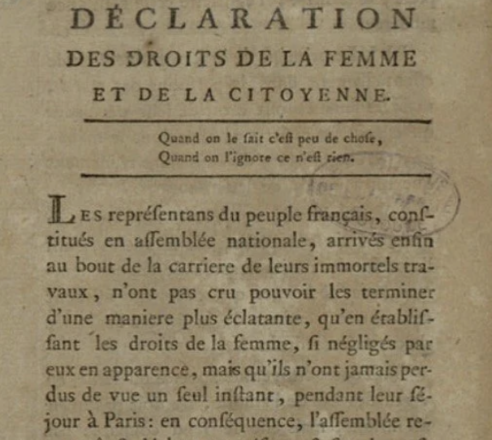
Déclaration des droits de la femme et de la citoyenne.
Olympe wrote her declaration in 1791, two years post-original declaration. Following the Women’s March on Versailles, the National Assembly and other revolutionary leaders still had yet to include women in their reforms. Actually, in November 1789, the “Women’s Petition to the National Assembly” was submitted, requesting sexual equality—but made no headway.
Olympe dedicated this declaration to Marie Antoinette, calling for her to back female revolutionaries and feminists or risk the destruction of the monarchy. Olympe also takes up a rather sarcastic, feisty tone. She begins: “Man, are you capable of being fair? A woman is asking: at least will you allow her that right?” and continues in the preamble…“the sex that is superior in beauty as it is in courage during the pains of childbirth recognizes and declares, in the presence and under the auspices of the Supreme Being, the following Rights of Woman and the Female Citizen.”
The articles expand on the original declaration by including women in the equation and offering them equality. However, Olympe also introduces some radical new feminist ideas—such as in Articles X, XI, and XVII. The tenth article calls for women to have equal rights, citing that women are equally punishable as men yet are not granted equal freedoms: “No one should be disturbed for his fundamental opinions; woman has the right to mount the scaffold, so she should have the right equally to mount the rostrum, provided that these manifestations do not trouble public order as established by law.” The eleventh gives women the right to identify the father of their children, whether or not it be their husband. Finally, the seventeenth introduces the idea that marriage must lend towards recognizing equality between spouses: “Property belongs to both sexes whether united or separated; it is for each of them an inviolable and sacred right.”
Reactions to her pamphlet were mixed. The Jacobins believed her to be a Royalist, and the press wrote that she forgets her place as a woman. Needless to say, this constitution was not adopted. And in 1793, Olympe was executed at the guillotine under the Reign of Terror.
It is remarkable to me how such a rich, important, and equally interesting piece of history is left out of an entire floor of revolution history at the museum. Other women of the revolution whom I found in the museum were uncredited wives of male revolutionaries—such as Lucile Desmoulins and Camille Desmoulins.
In my experience, society—especially old society—tends toward the idea of the feminine as a virtuous, almost-holy figure: a representation of salvation and all that is good, especially in depictions of Liberté, Raison—and later, Marianne. Yet at the same time, that society hated women who stepped out of their place, silencing those like Olympe before any true equality could be reached—an overall historical trend. This is a true contradiction in the finest sense of the word.
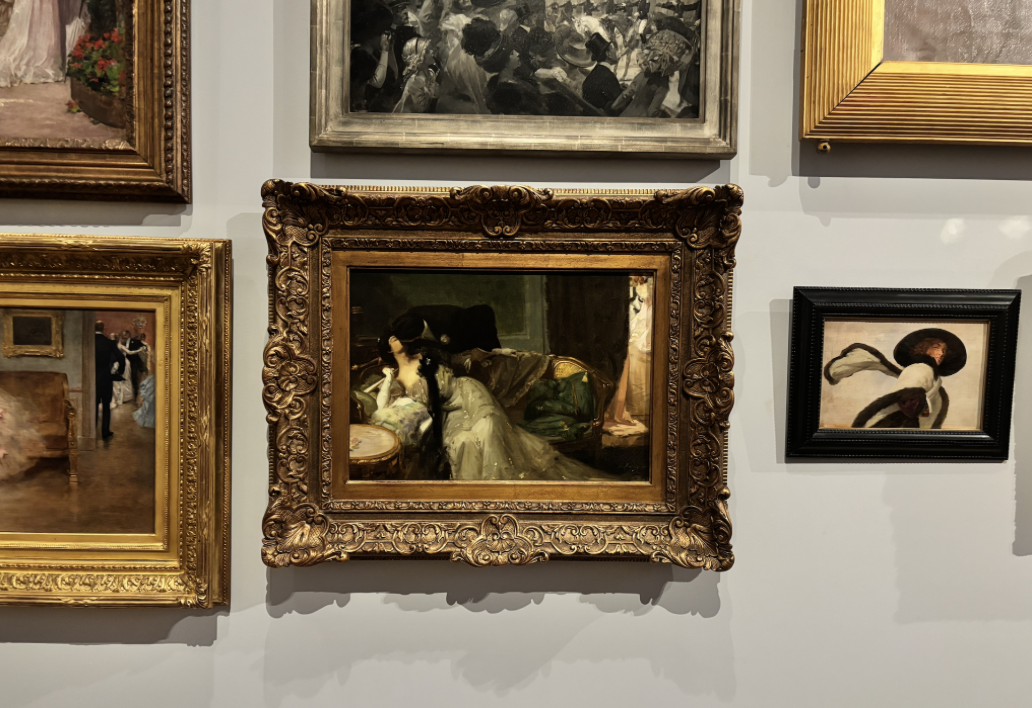
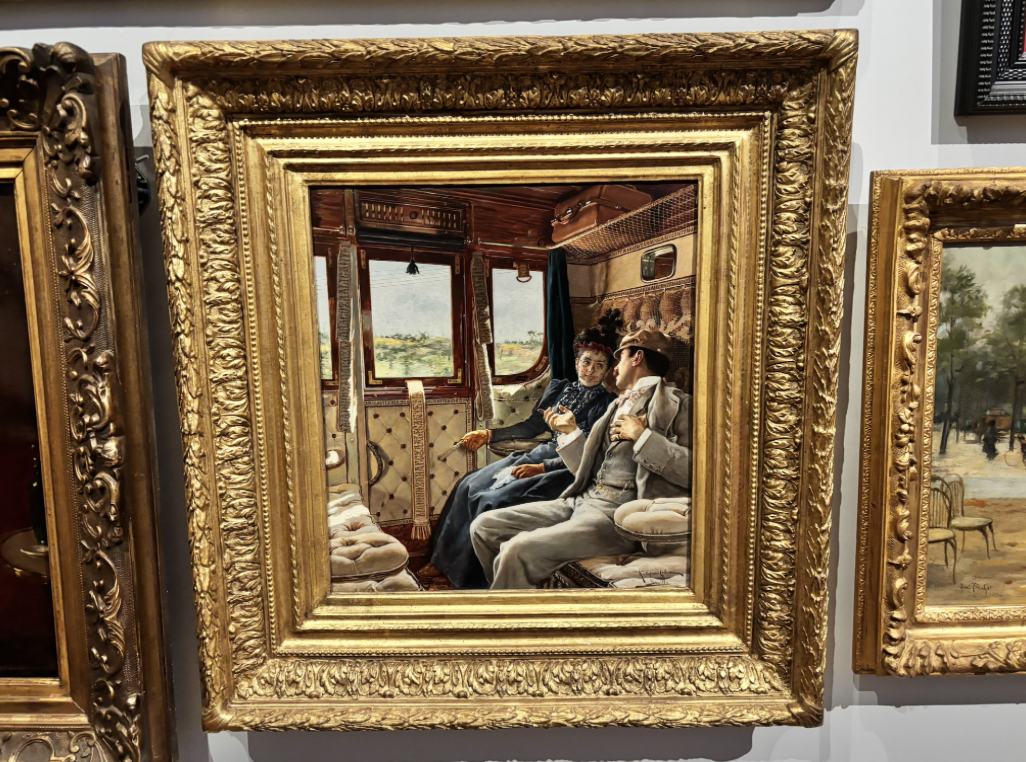
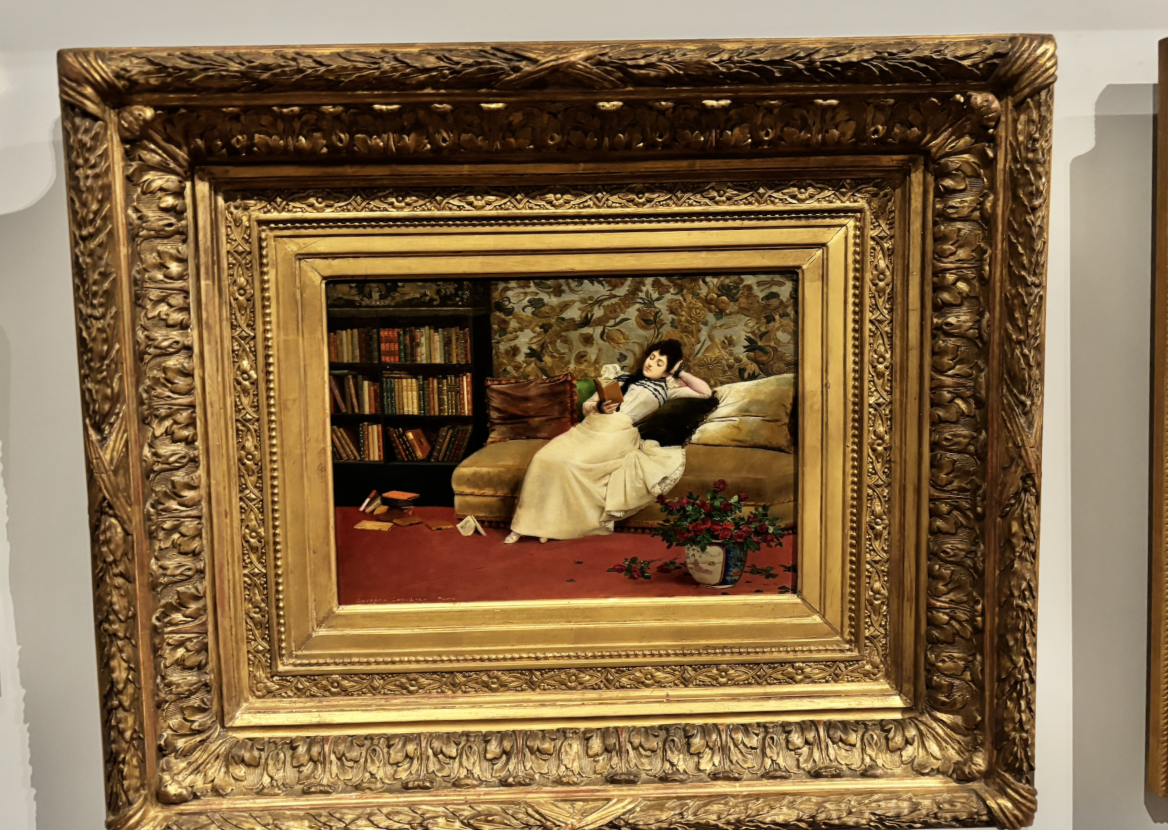
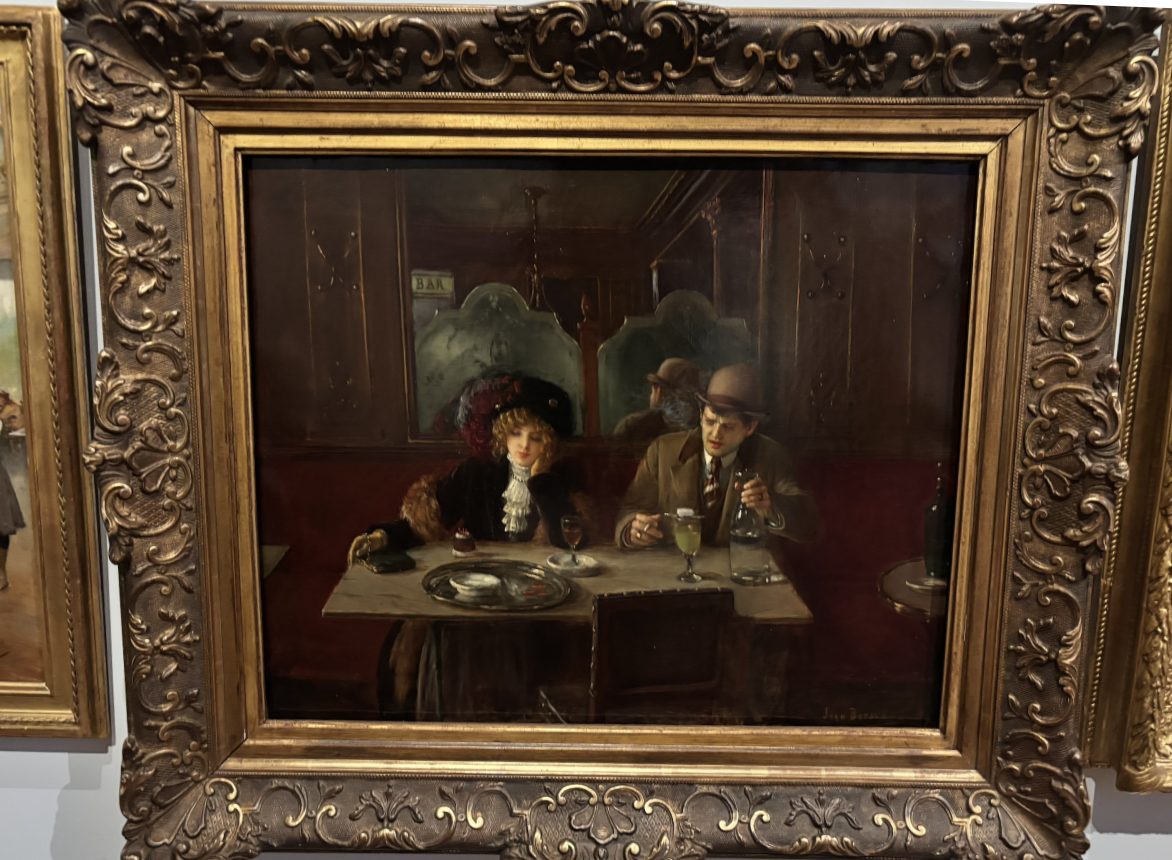
Anyways…my favorite part of the Musée Carnavalet was by far this room with these oh-so-romantic paintings! These are honestly some of my favorite paintings I have ever seen before.
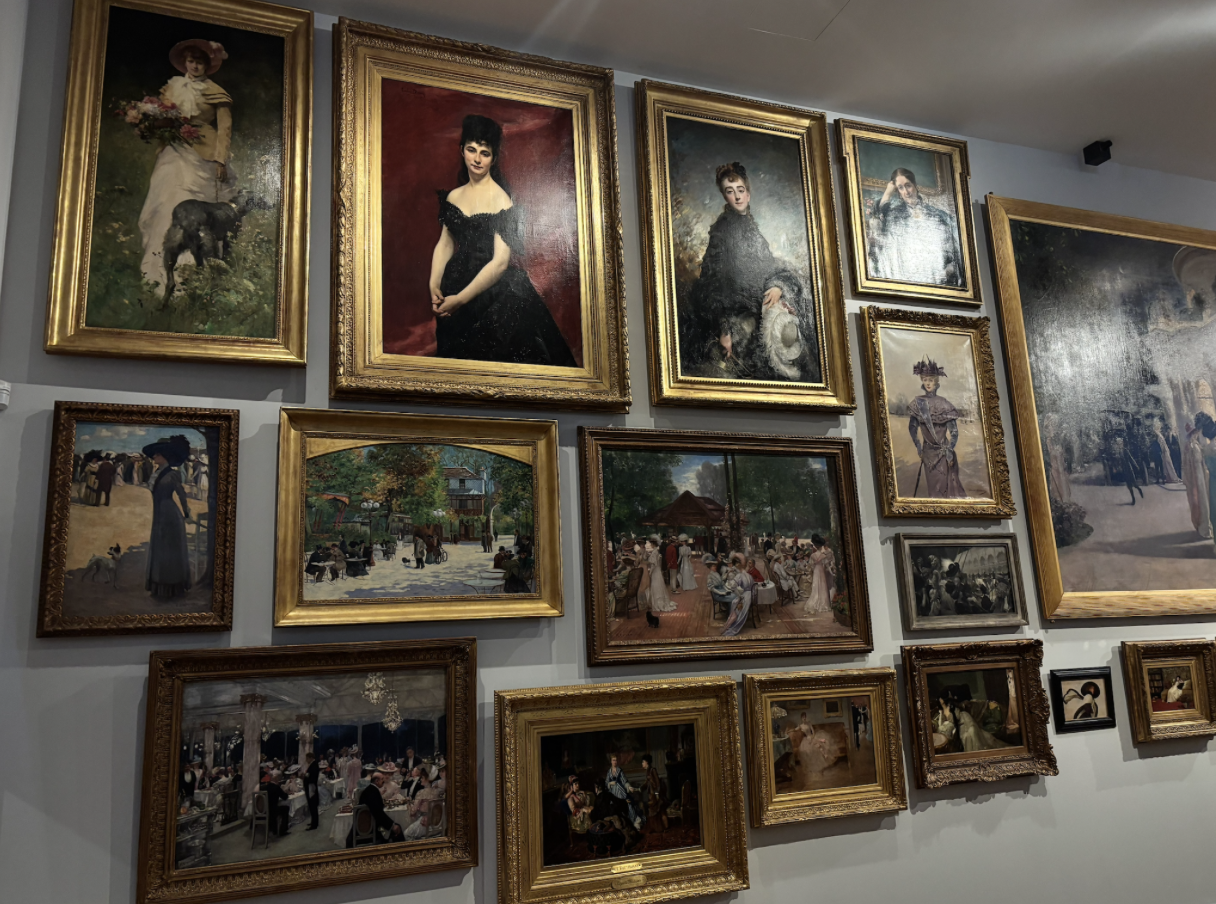
The hall of romantic paintings in the Musée Carnavalet.
Just look at these lovely ladies lounging! These are the type of painting I can look at and imagine old times under a more romantic, idealized lens.