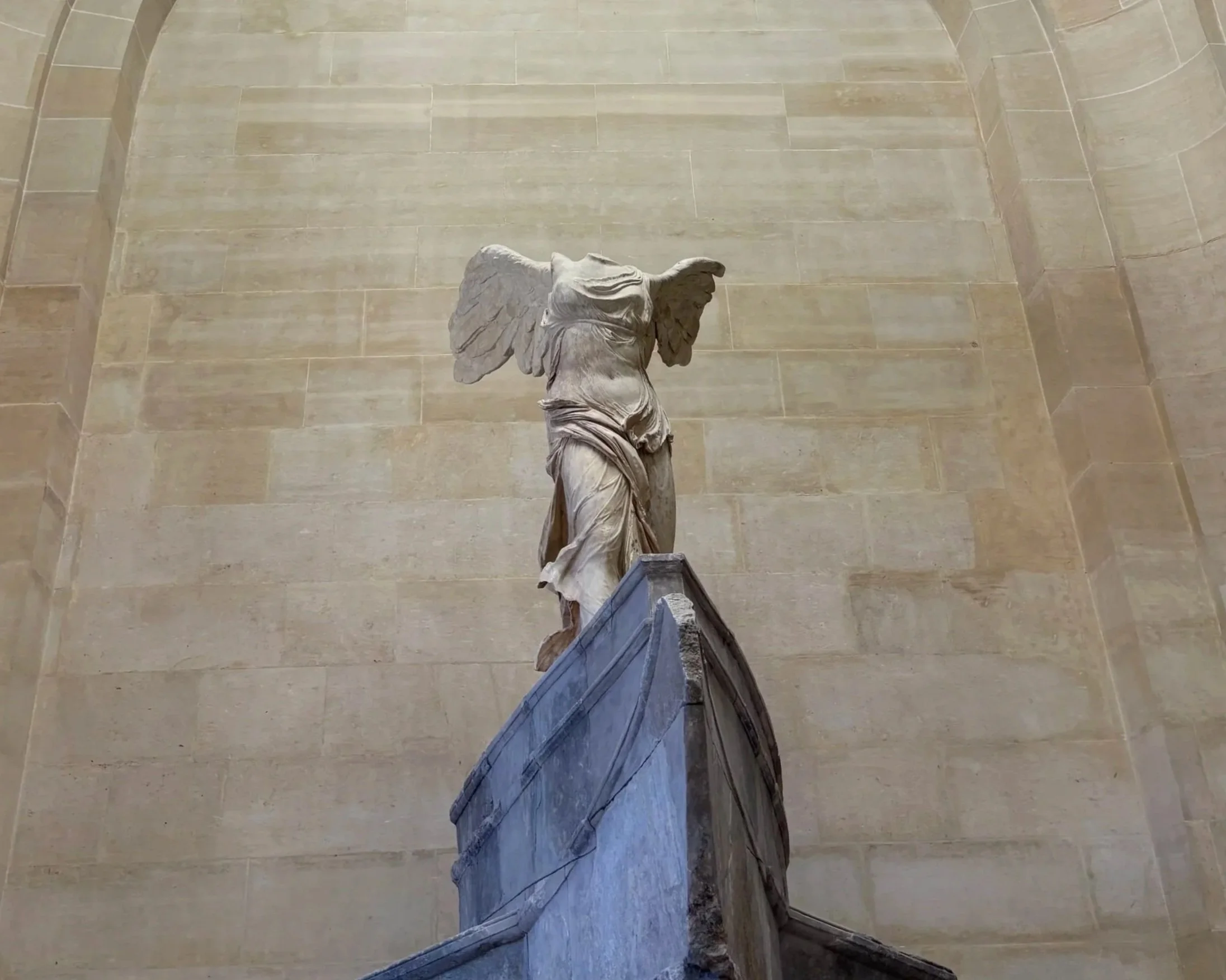
Art is best appreciated in person. Nothing quite compares to stepping into a museum and admiring human artistry with your own eyes. The scale of the piece makes a difference–you come to understand just how much time a piece takes. The raised ridges of dried paint are mesmerizing, each stroke lovingly placed. Marble statues present a different face at every angle.
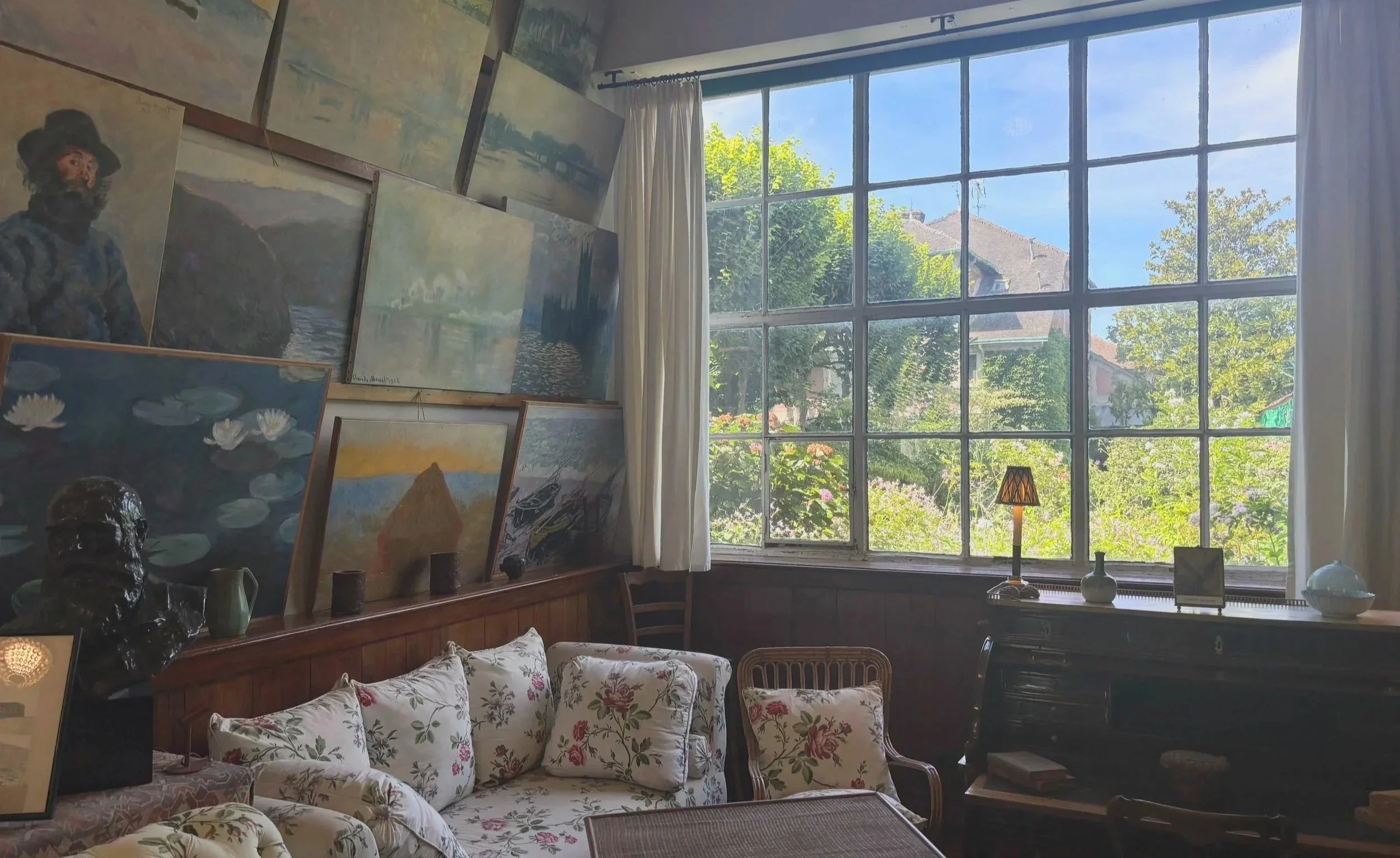
Talk about romantic… Claude Monet’s home in Giverny.
My favorite art movement is Impressionism. There is something so romantic about capturing the feeling of a moment. Of focusing more on perception than actuality. One artist might represent the blur you experience in your vision at the setting sun, or the hazy glow of the fresh dawn. Realism doesn’t necessarily mean a better visual description of the scene. I always say the reason I enjoy impressionist art is that it feels a bit like a memory, fresh enough to recall the impression of it but not the minuscule details you can observe in a photograph. In this way, art (not limited to impressionist art) is like history, where it becomes increasingly difficult to pinpoint the exact realities of an era as time passes, but we can grasp its essence through cultural artifacts and written evidence.
Art allows us a glimpse into the intimate moments of everyday life of the past. Tender portraits depict the fashion of the time. Paintings of fiery revolutionaries draw you in, urging you to rally with the crowd (hello, Delacroix!). Then there is everything else to consider–the symbols, the artist’s intentions, the historical viewer’s thoughts.
“To depict a battle, one of those powerful painters with a sense of chaos in their brush-stroke is needed… the hurricane alone is truthful.”
In some ways, the Louvre felt like the palace of Versailles. This makes sense given the structure’s history as a place of royal residence for some time. The milling sea of tour groups certainly helped me feel transported back to last week’s visit. The ceilings and walls in some rooms were lined in gold. In other rooms, artifacts looked out at me from glass cases. I found myself wondering, as I did in the British Museum, how many of the pieces of art were taken as a result of the wars (for the Louvre, Napoleonic) and colonial acquisitions. With pieces like the Amaravati and Parthenon marbles in the British Museum and various Egyptian artifacts in the Louvre, there is the additional consideration of the countries of origin wanting them back.
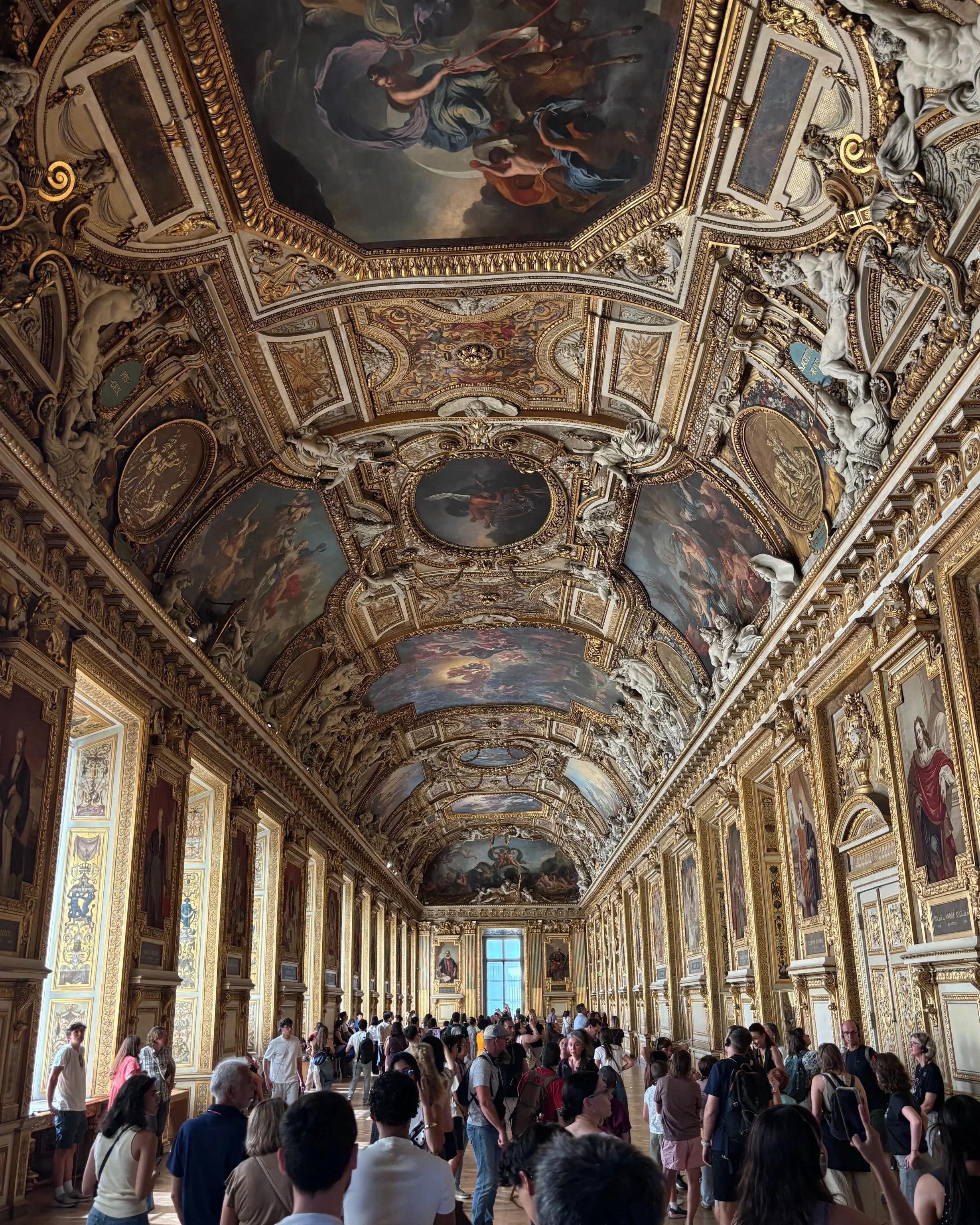
Hall of portraits at the Louvre
Reflecting on the reality that museums are really quite morally complicated has made visiting museums (particularly those that contain more imported historical cultural artifacts) a strange experience.
On the one hand, I adore exploring objects and art created centuries ago. I cannot emphasize enough the love I have for what humanizes ancient societies. So often it’s easy to think about civilizations that have since died out or changed significantly as ones very different from our own. Ancient China and modern China are certainly different. The chiton is no longer fashionable in Greece. Still, looking at the tiny sculptures of dogs and goats, or illustrations of bug-eyed birds and silly cats, I am reminded of some of the persistent charms of humanity–our ability to create, and to love, be it our household pets or the divine figures of our cultures.
On the other hand, it saddens me to think of these fragments of old, wandering and displaced in various parts of the world, so far from home. I don’t consider myself particularly spiritual, but I am deeply sentimental. There is something about the idea of relief sculptures taken from their original locations that makes my museum-induced heartache especially apparent. The idea of a complete story, lovingly chipped into the stone of a wall, fractured and separated, feels lonely. Does the rest of the relic from which the art was taken cry for the stolen piece of its body?
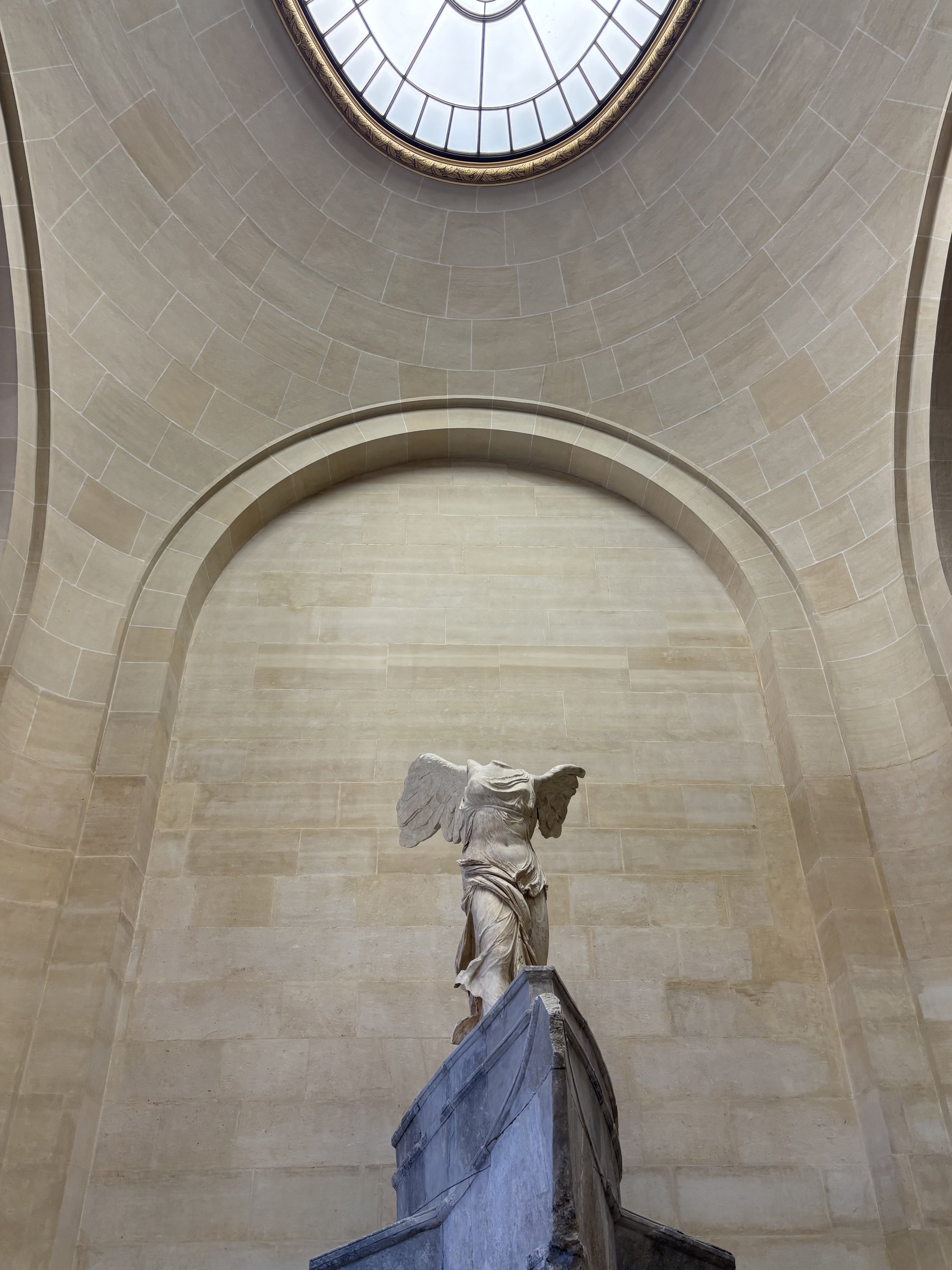
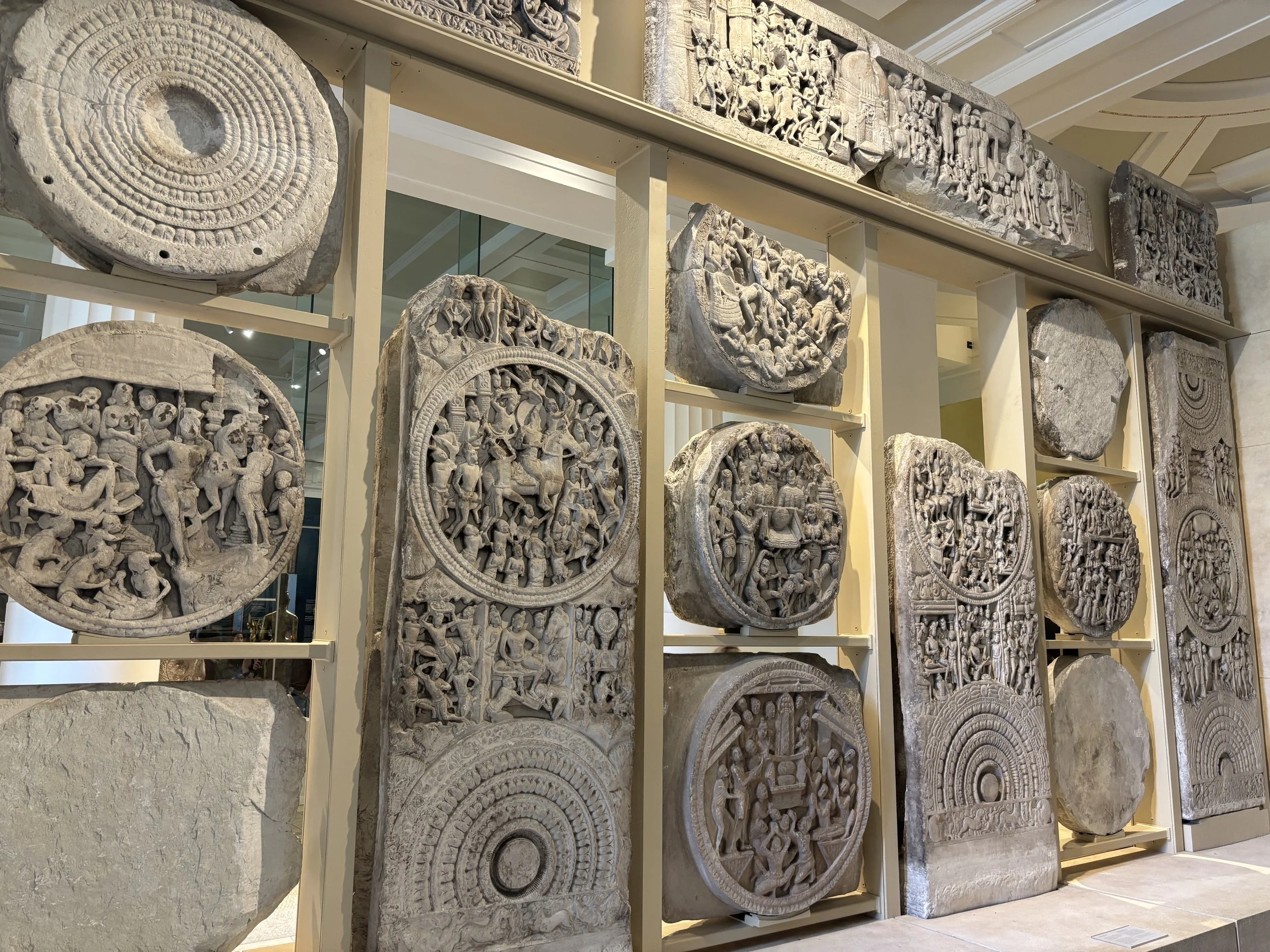
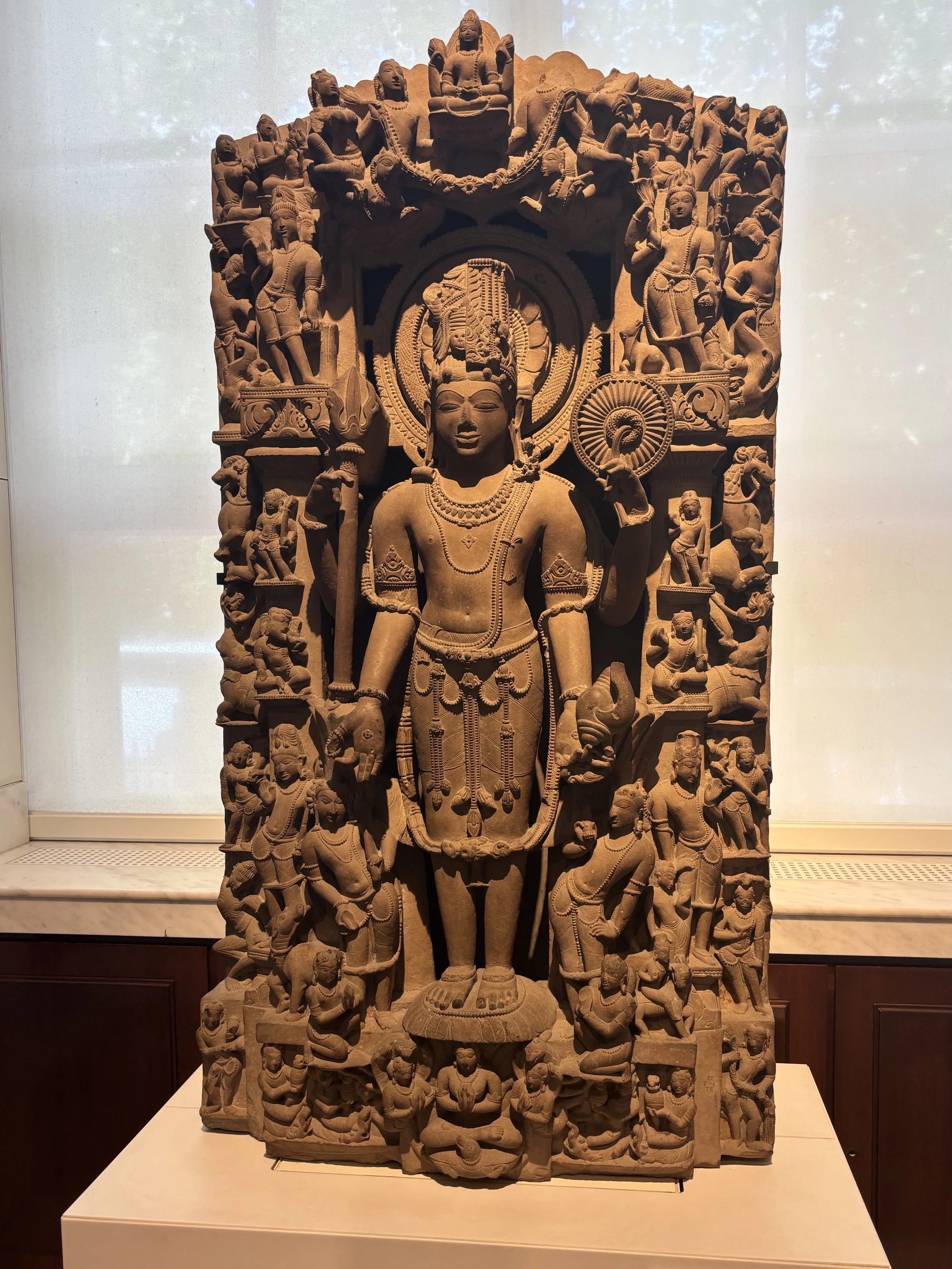
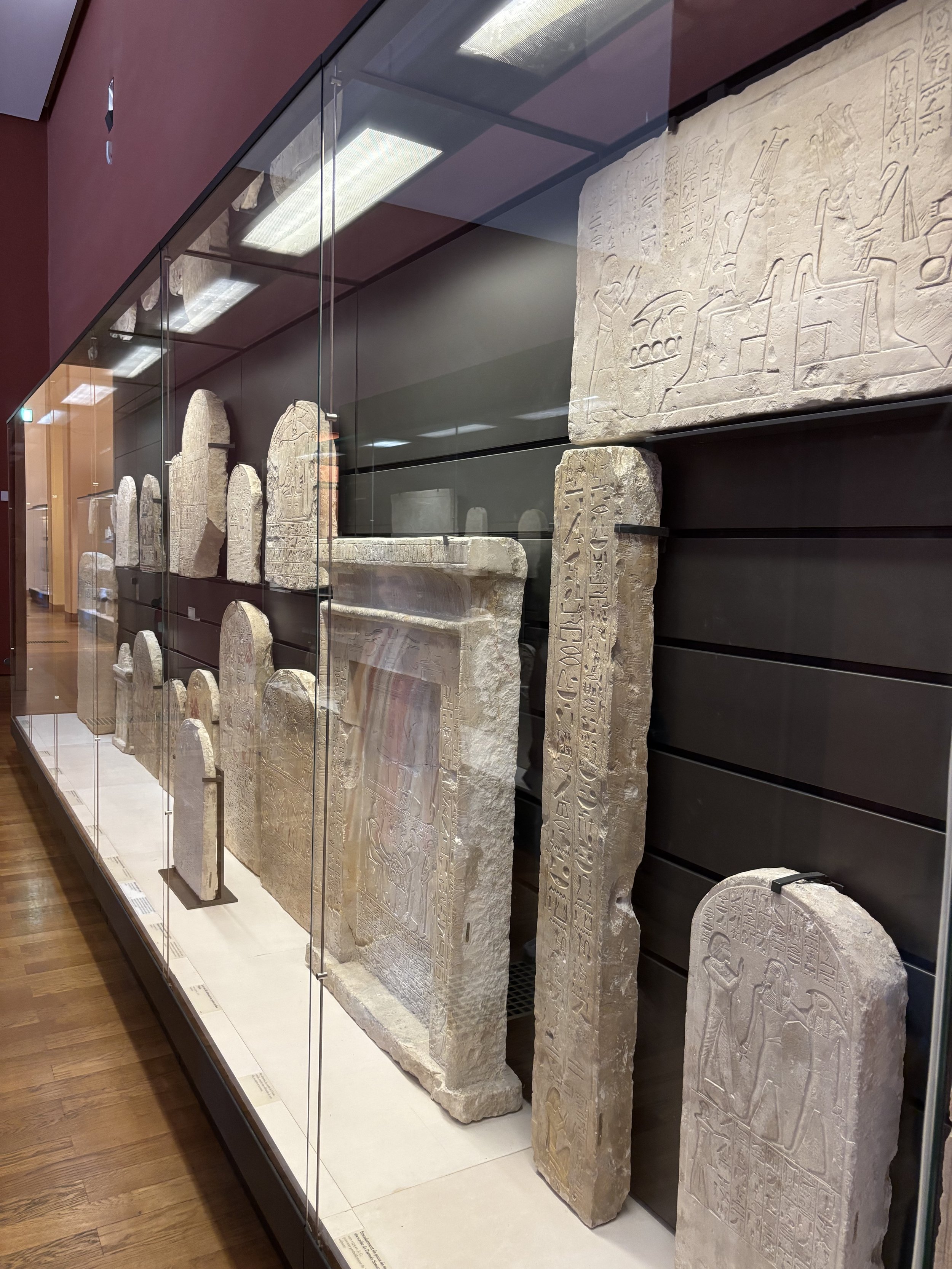
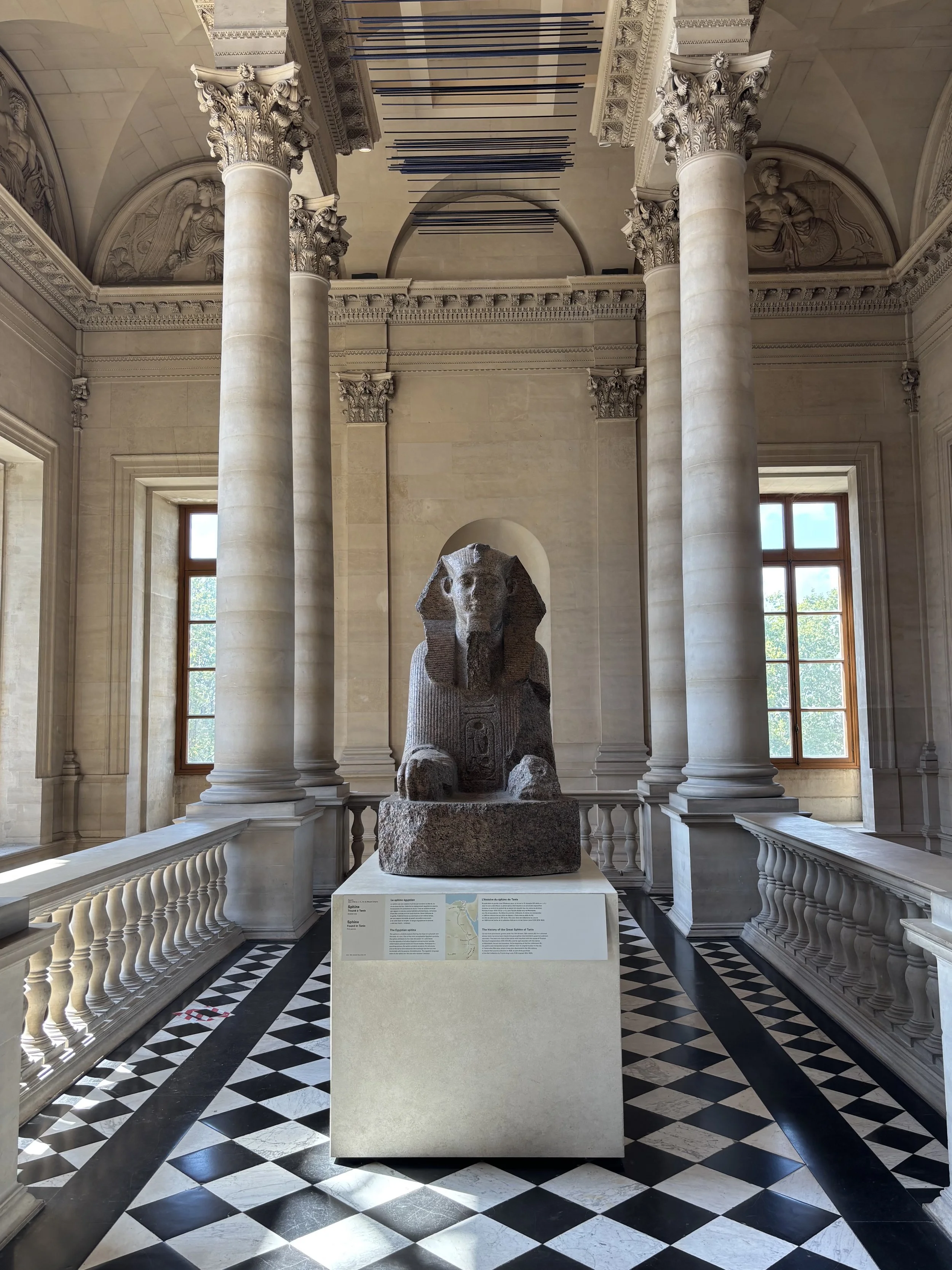
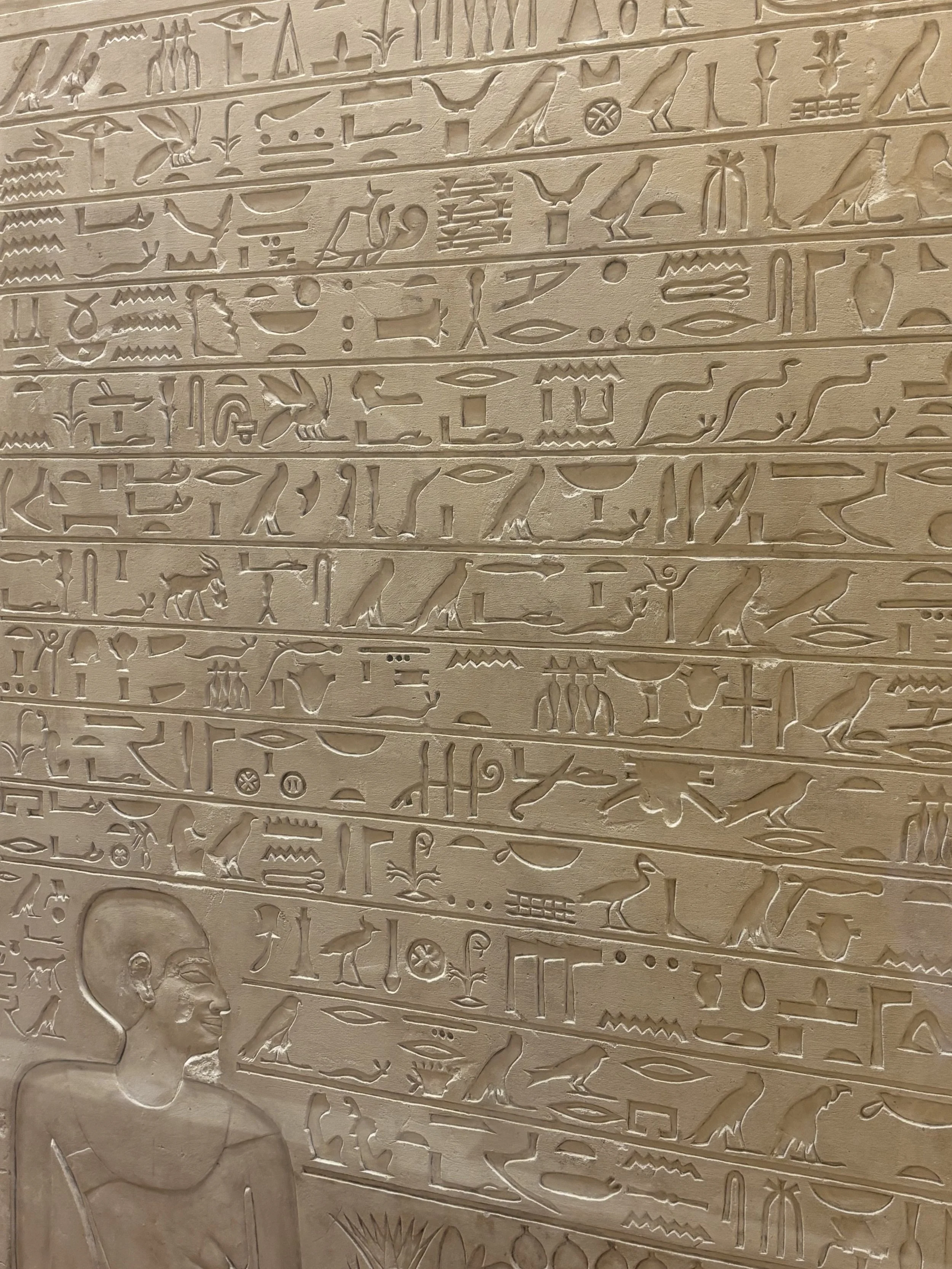
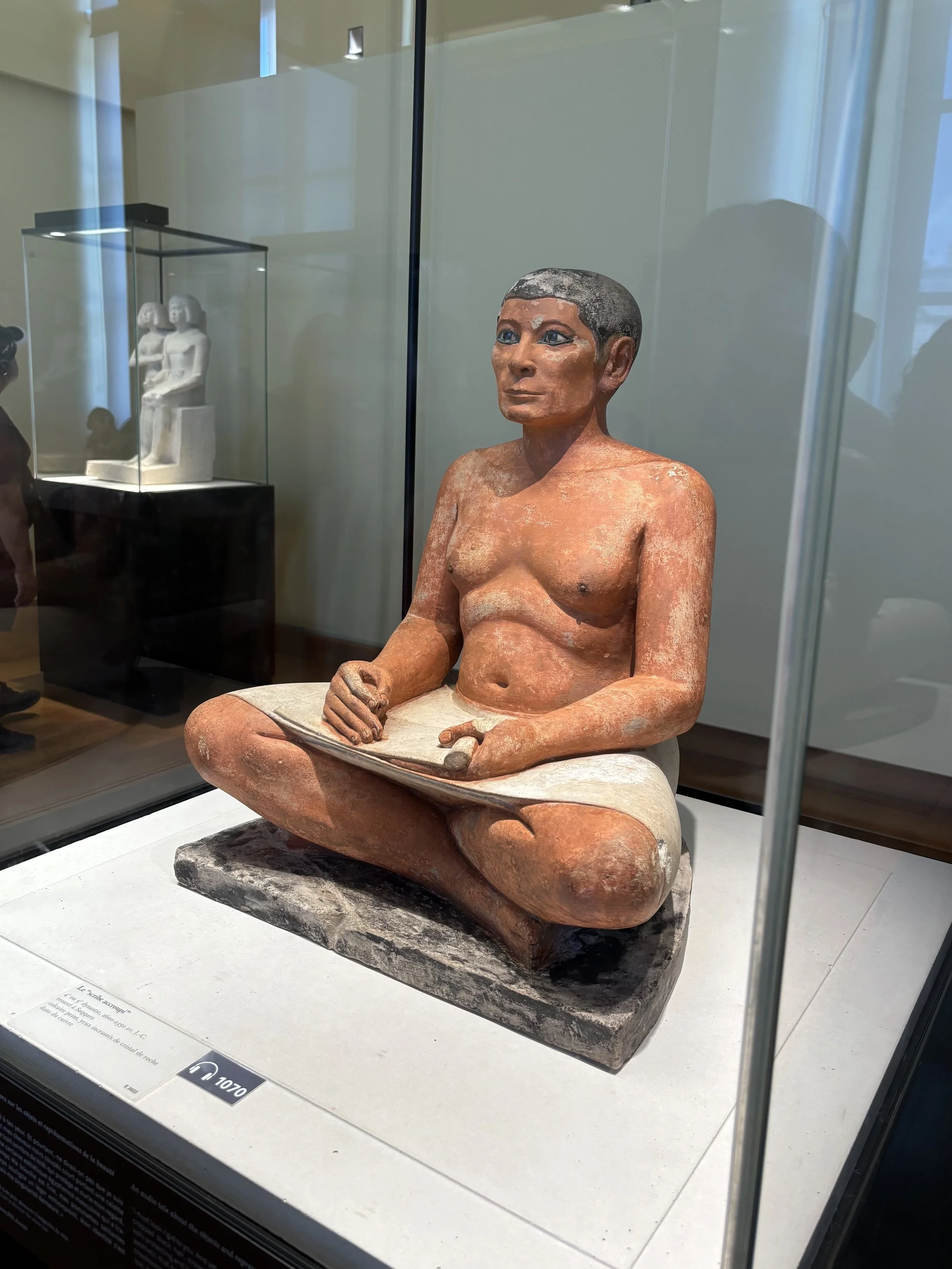
All roads lead back to the sins of the West.
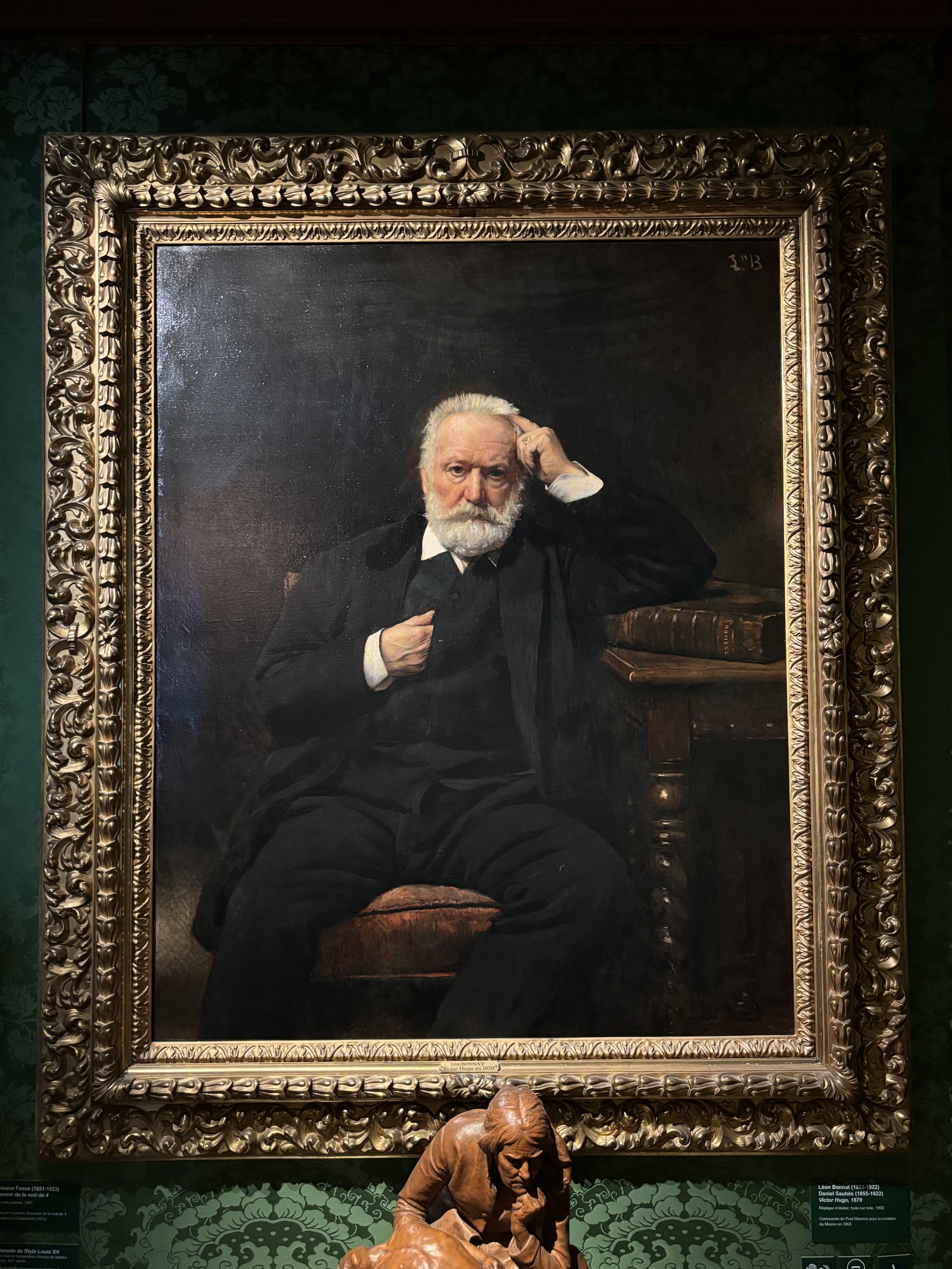
Victor Hugo definitely not thinking about the racial undertones of his novel.
In this morning’s class, I was distracted from our discussion of religion by echoes of questions I’d encountered in a prior course on religion. How do we define religion? Our very concept of “religion” is influenced by the dominant Western thought. How much does the influence of the West impact our philosophies and experiences?
We can expand this idea to encompass grappling with history. I’ve introduced this idea of “those in power.” In the museums, this is the Western Imperial forces. In the context of our readings, this interaction surfaces in various ways, including the patriarchy (gender dynamics) and the relegation of people of color to antagonistic roles. There are characters like Eponine and Madame Defarge who are examples of nonwhite and female characters in the two books who counter characters like the villanous Thenardier and the virginal Lucie.
It is always interesting to understand how power dynamics frame the text as they do museum artifacts. The flip side is that our awareness of these contexts also changes the way we percieve things. For the museums, it is a reminder that some of the art I am enjoying is not innocent, and the methods of acquisition are worth considering. For the readings, it encourages me not to judge relationships like Marius (21) and Cosette’s (15) from a modern perspective– which I am guilty of doing quite frequently (every time I think of them…)–and to think about the ways characters adhere to and subvert stereotypes.
The lesson: there is always more to think about, and I don’t know if I would have gone to the British Museum if it wasn’t free…
poetry alert
!!
poetry alert !!
Over and Out
silhouettes and scars,
the outline of
you, out of place
and overseas
me, asking–
when are you coming home?
Today’s crumb is sweet:!
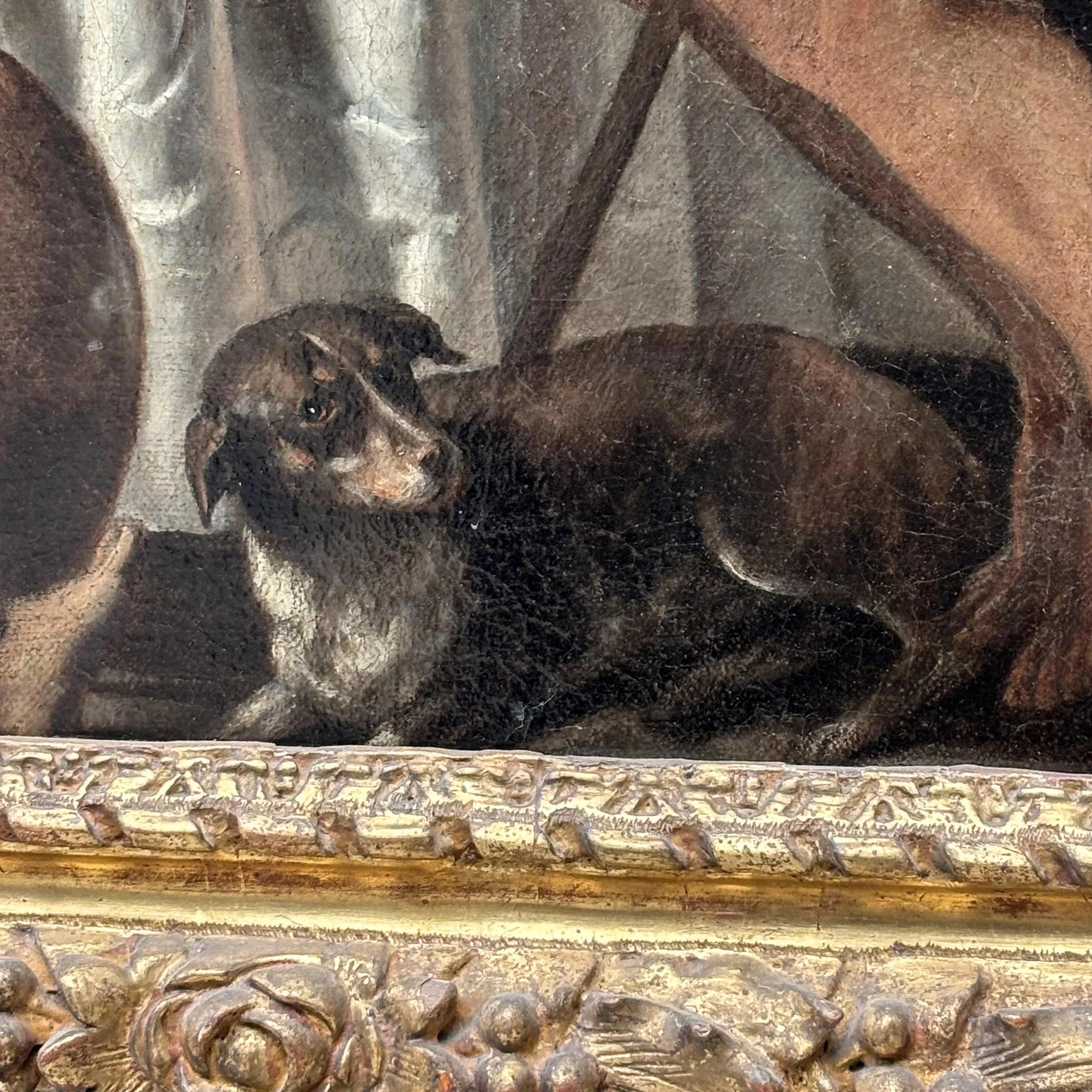
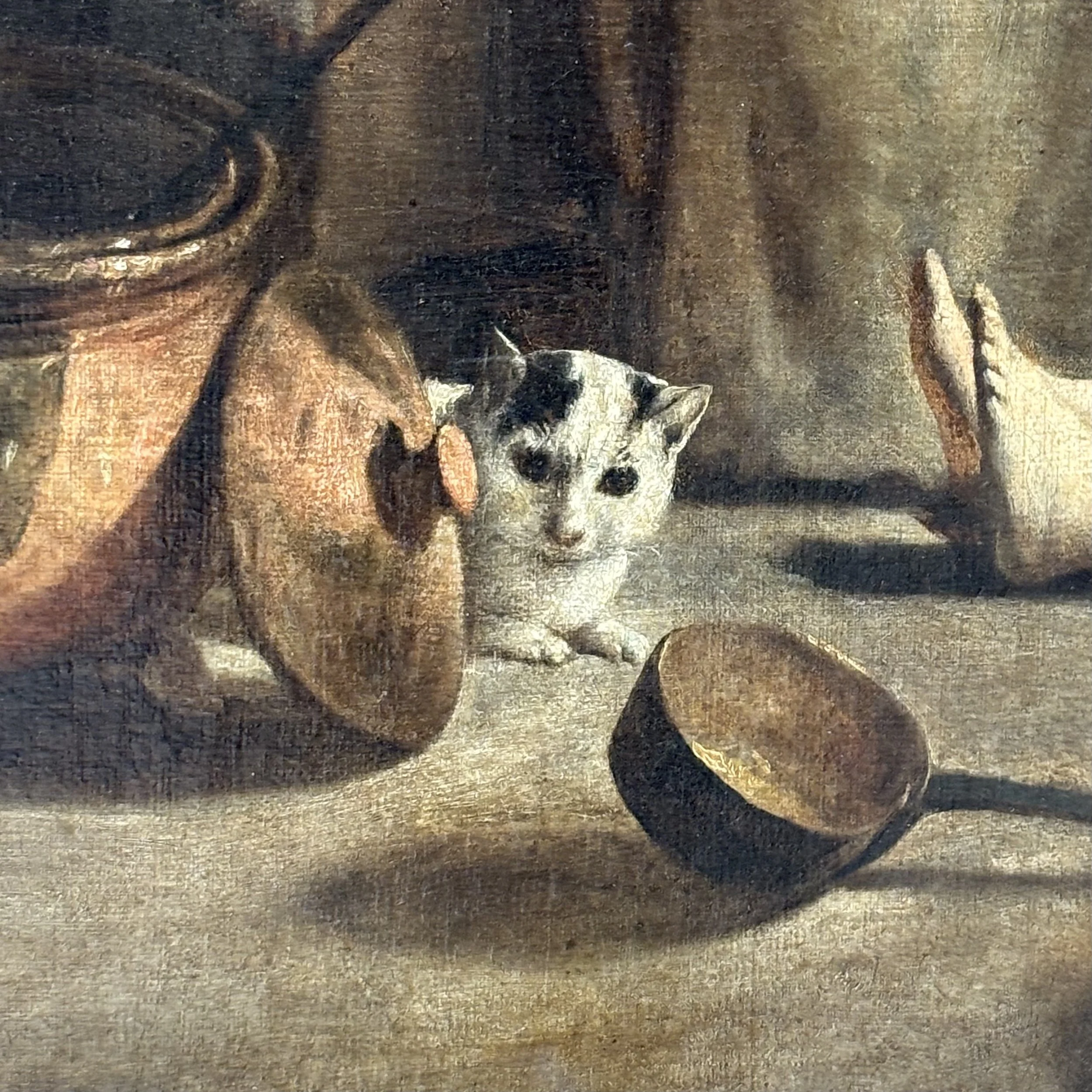
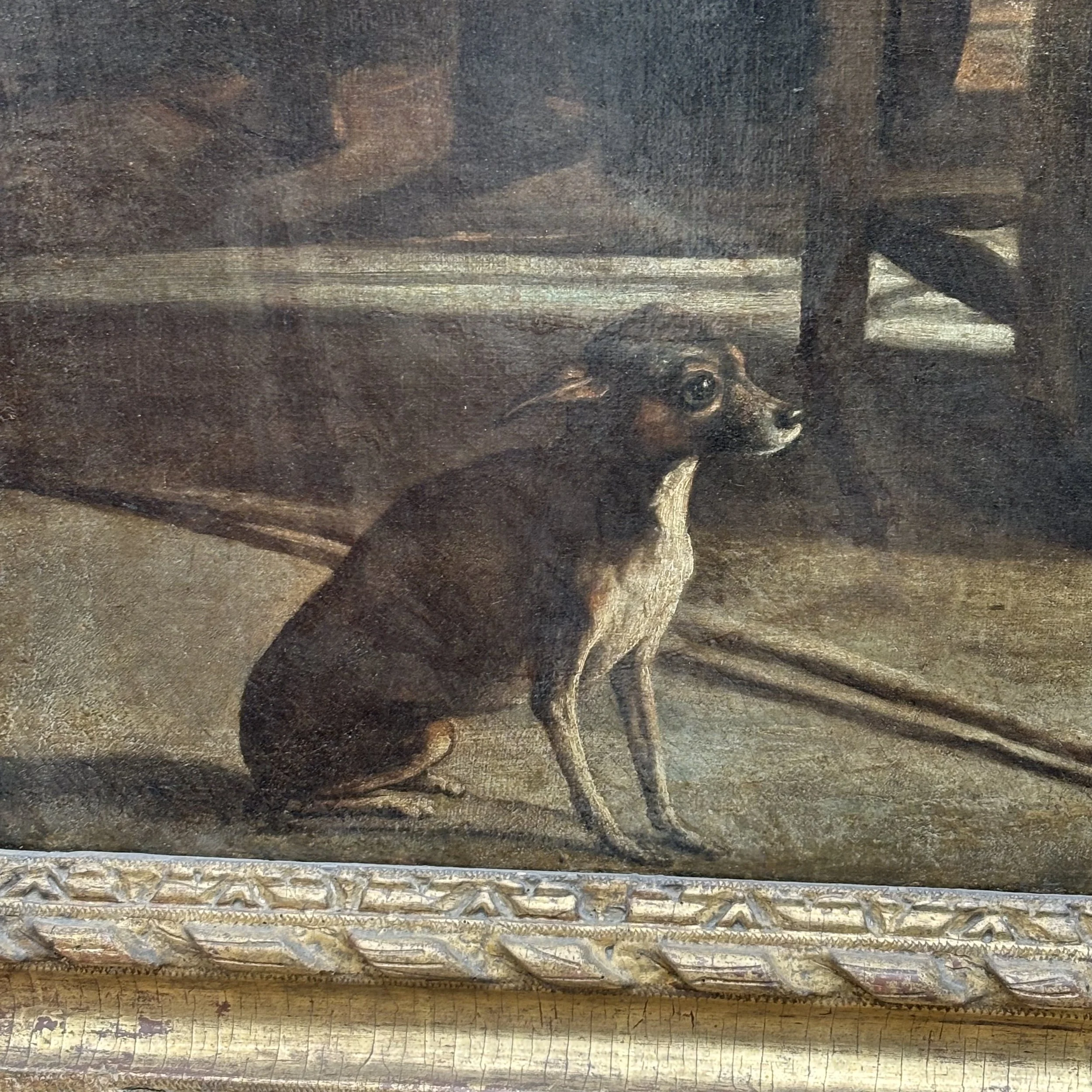
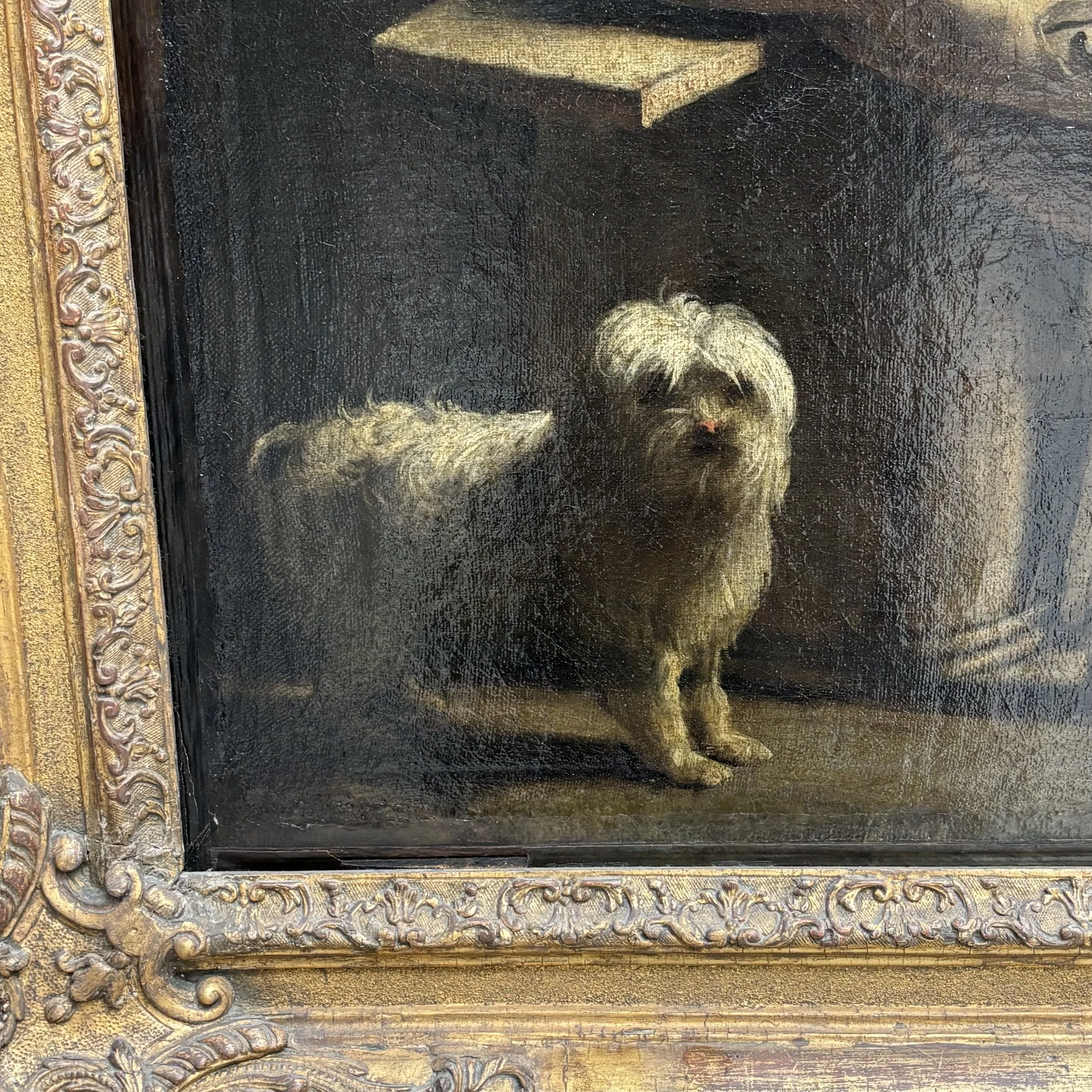
Below are some critters to heal the soul since the last two blog topics have been so dark. When I think about all the ties that connect us to the people of the past, one thing that often comes to mind is how much they also loved their domestic animals. One of my favorite museum activities is to spot all the dogs and cats in works of art. People back then must’ve also seen these fluffy friends and thought awww! so cute!!!
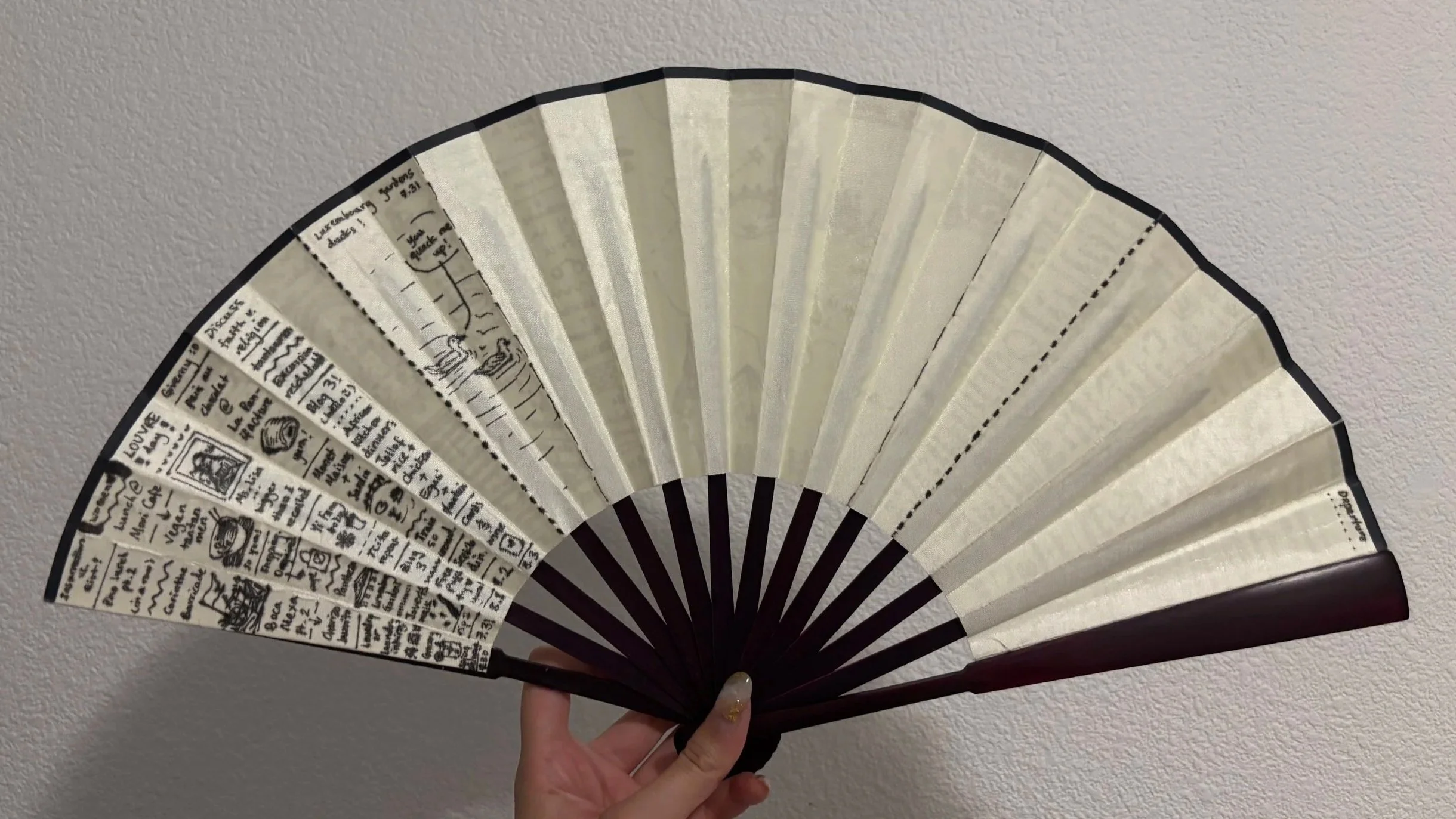
Progress–8.3
This fan is like the opposite of impressionist art–I’ve recorded only the events and not how they make me feel. But how can I do that with so little space and color at my disposal?! Maybe the next course of action is to paint each of these days from my hazy, pastel memories…