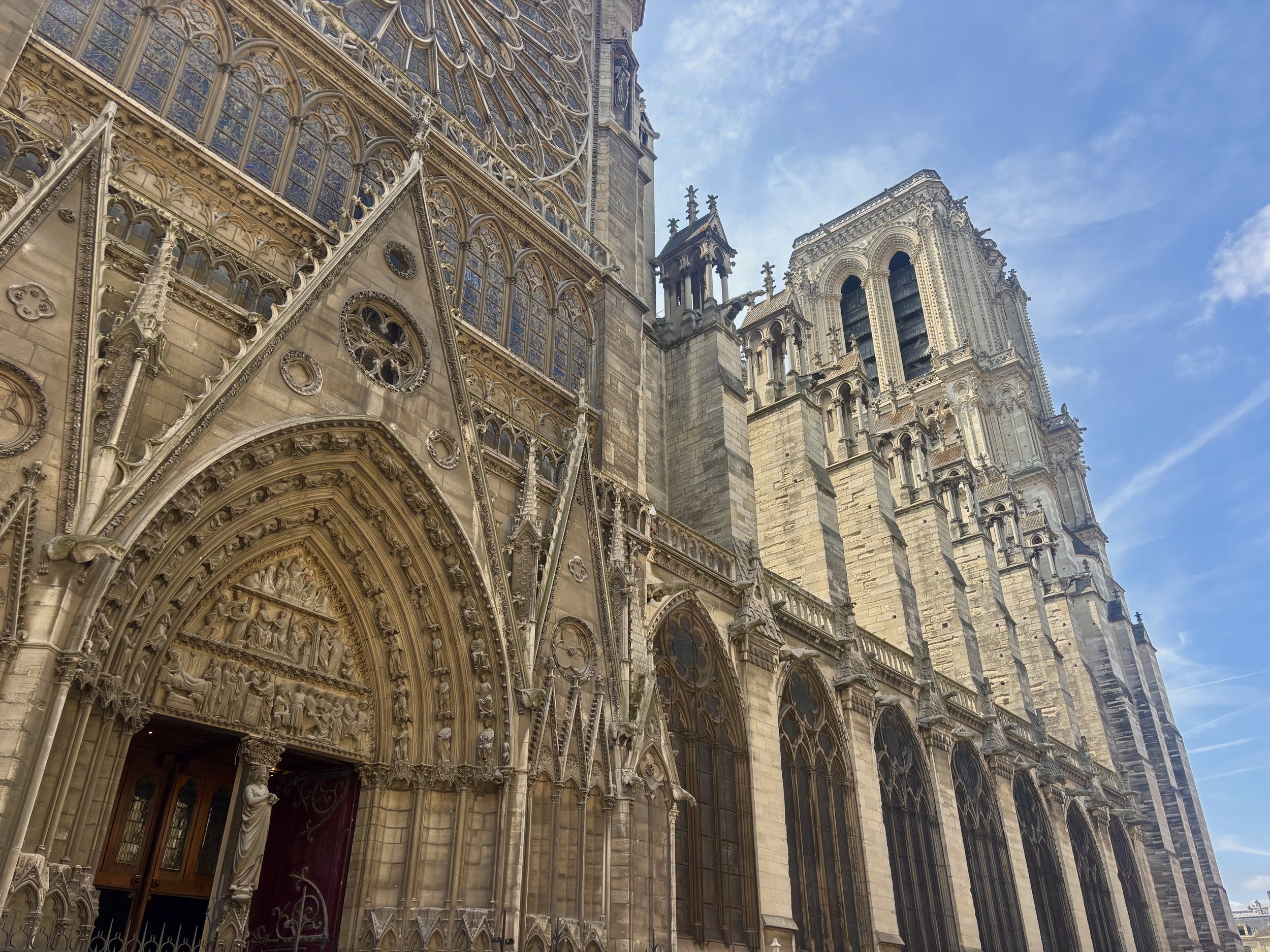
Some monuments inspire awe. Others inspire reflection. Notre-Dame did both.
Victor Hugo never asked me to believe in God. He asked me to question the institutions that claim to speak for Him.
That distinction didn't fully resonate with me until I walked into Notre-Dame.
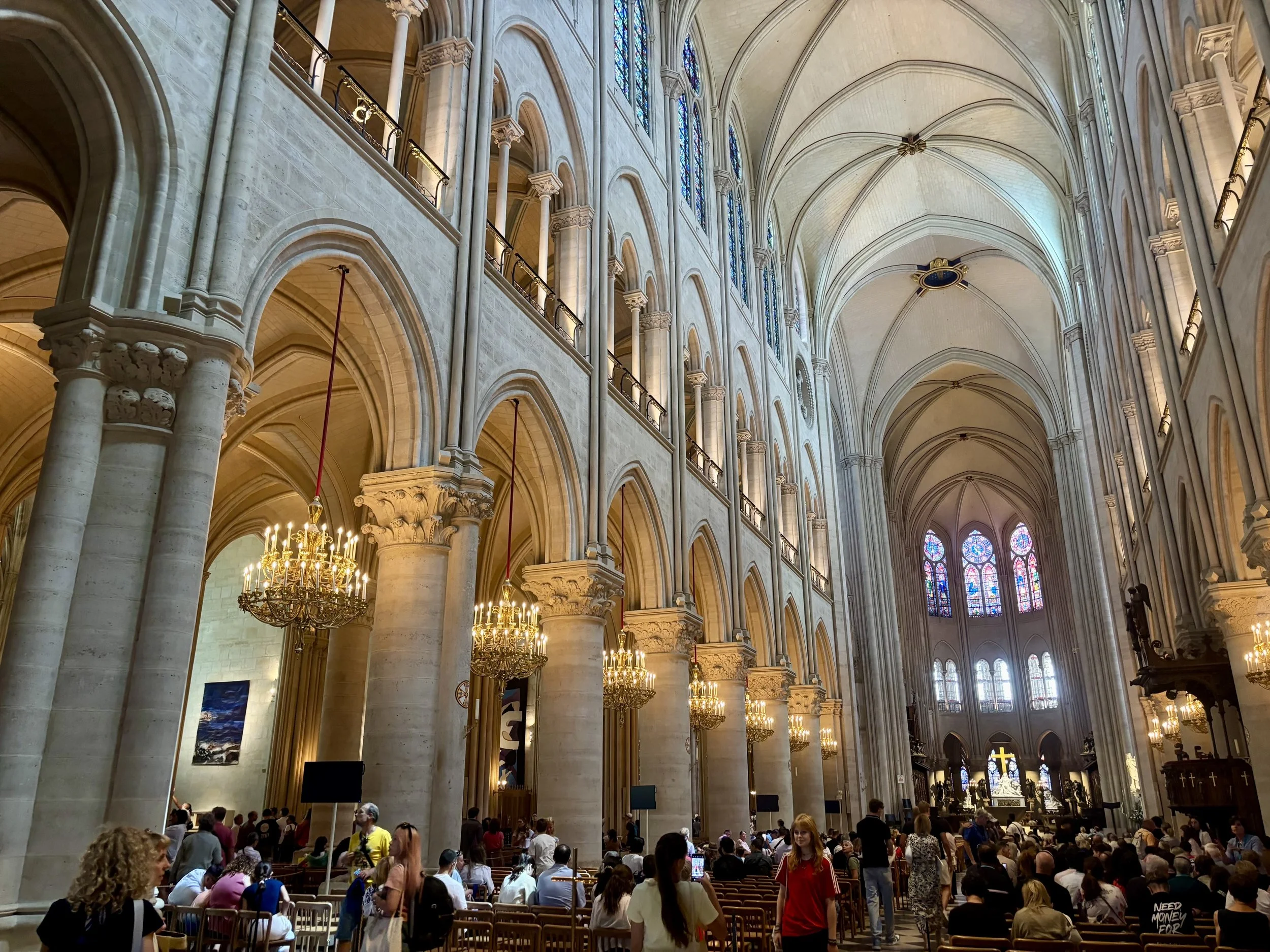
As I stood inside Notre-Dame, sunlight, stone, and nearly nine centuries of devotion surrounded me.
Stepping inside, I understood why millions of people have traveled here for centuries. Sunlight poured through the stained glass windows, illuminating towering stone columns that have stood for nearly nine hundred years. Every carving, every arch, and every pane of glass reflects an astonishing level of craftsmanship and devotion. Even as someone who is not Christian, I couldn't help but admire the cathedral and appreciate the role it has played in French history.
But as I stood beneath its soaring ceiling, another thought quietly entered my mind.
How could a Church capable of creating something this magnificent coexist with the poverty that shaped so much of France's history? What responsibility comes with possessing such extraordinary wealth in the name of faith?
As I looked around the cathedral, I found myself wondering whether admiration and discomfort could exist at the same time. Did questioning the institution somehow diminish the beauty of the building? Or was asking difficult questions actually another way of appreciating it?
These weren't questions I expected to ask while admiring stained glass windows. Ironically, they were questions Victor Hugo had already begun asking nearly two centuries ago.
Before this course, I assumed Les Misérables was simply a story of redemption. Somewhere between turning its pages and walking through the churches of Paris, those churches stopped feeling like places to visit and started feeling like places to think. I hadn't expected one of Hugo's central questions to follow me there. Instead, I discovered that he is making a much more nuanced argument, carefully distinguishing between faith and religion and suggesting that while the two often overlap, they are not always the same thing.
As I continued reading, I realized Hugo wasn't criticizing faith itself. He was warning us what can happen when religious institutions become more concerned with preserving themselves than living out the values they were created to uphold. They develop hierarchies, accumulate wealth, and sometimes become more concerned with preserving itself than serving the people it exists to help. Faith, however, is something entirely different. It is deeply personal. It is found in compassion, sacrifice, forgiveness, and the quiet choice to place another person's dignity before your own comfort.
He doesn't leave this as an abstract idea. He gives it a face in Bishop Myriel.
Although he is a bishop, Hugo presents him as someone who rejects the privileges of his position. Rather than living comfortably, he gives away much of what he has to the poor. He measures devotion not by ceremony or status, but by generosity. Bishop Myriel never asks Jean Valjean to become more religious. He simply chooses mercy when everyone else expects punishment. In that single act, he accomplishes what doctrine and authority never could: he changes the course of Valjean's life.
One passage in particular stood out to me:
“To crush fanaticism and to venerate the infinite, such is the law... to purify belief, to remove superstitions from above religion... to clear God of caterpillars.”
It is one of the most striking metaphors in the novel. Hugo is not asking readers to abandon religion. Instead, he argues that religion must continually be stripped of the "caterpillars" that cling to it: fanaticism, superstition, corruption, and empty displays of piety that obscure its original purpose.
Hugo wasn't alone in asking these questions.
He was writing in the wake of the Enlightenment, when philosophers across Europe were reexamining institutions that had long been accepted as unquestionable. Voltaire criticized religious intolerance and abuses of power. Rousseau argued that people are fundamentally good and that society often corrupts them. Diderot sought to make knowledge accessible through the Encyclopédie, challenging the idea that truth belonged only to religious or political elites. Across France, people were beginning to question not only the divine right of kings but also the authority of institutions that claimed moral superiority.
What makes Hugo's response so compelling, however, is that he refuses to throw faith away alongside those institutions. Instead, he asks readers to separate the two.
Standing inside Notre-Dame, that distinction suddenly felt tangible. I wasn't looking at hypocrisy carved into stone. I was looking at a monument built by generations of people whose motivations were undoubtedly varied. Some gave because of genuine devotion. Others sought influence, prestige, or power.
The beauty of Notre-Dame doesn't become less beautiful because of those questions. If anything, the questions make the cathedral even more compelling.
Walking out of Notre-Dame, I realized the questions hadn't ruined the experience. They had deepened it. I admired the cathedral just as much as when I first stepped inside. The difference was that I no longer saw it as just an architectural masterpiece. I saw it as a physical reminder that even the noblest institutions are still created by imperfect people.
A few days later, that same idea resurfaced in an entirely different way.
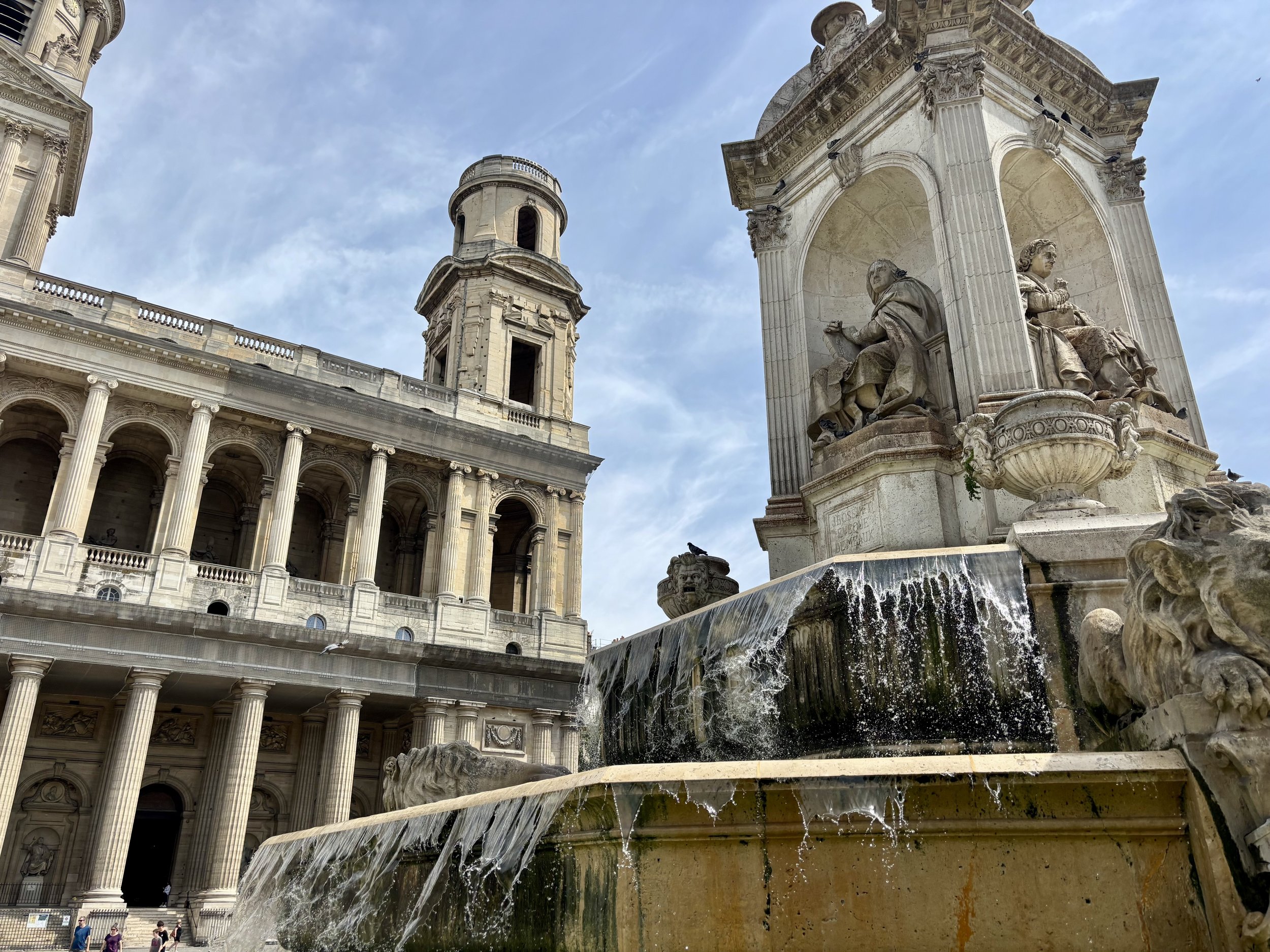
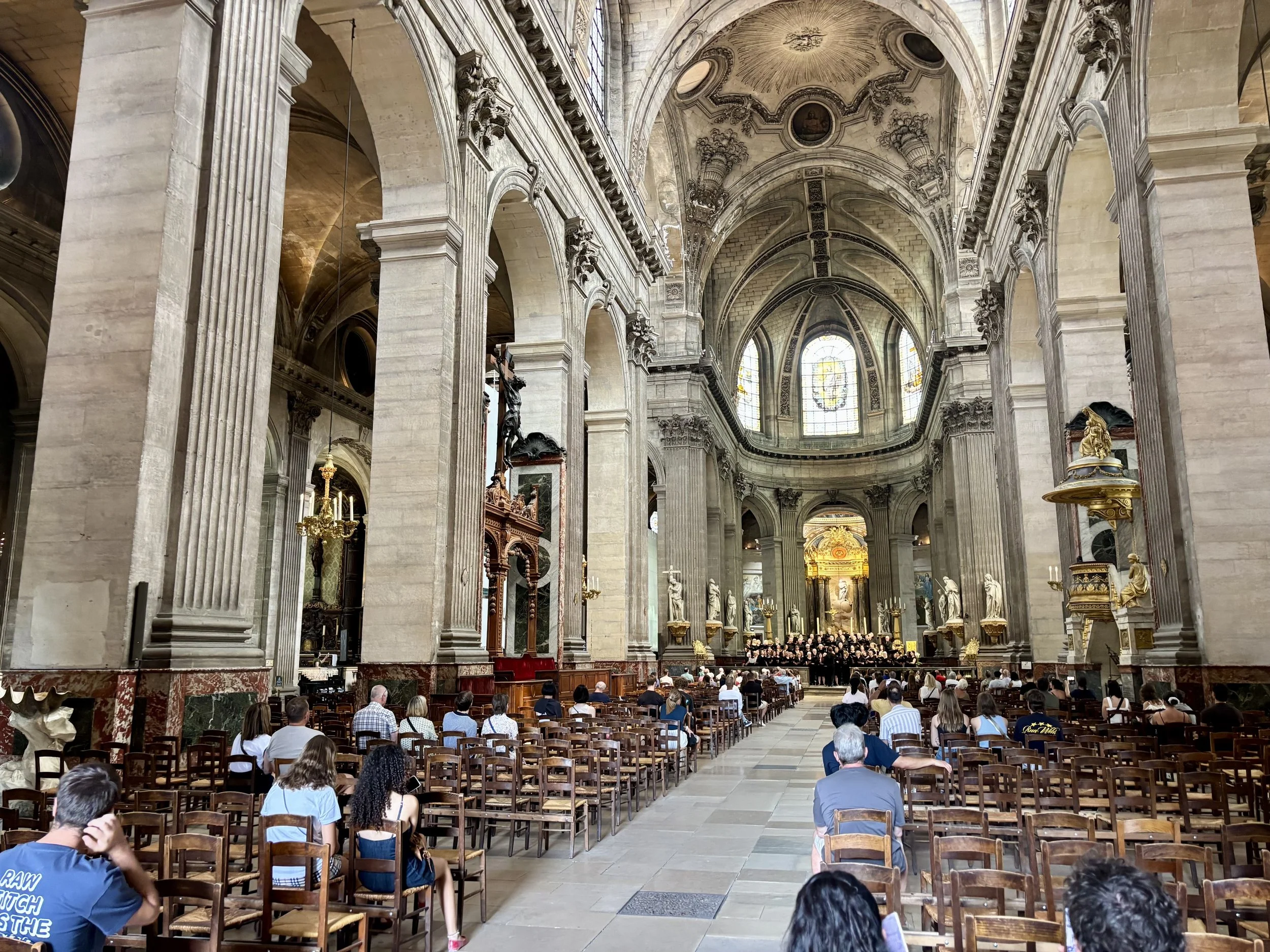
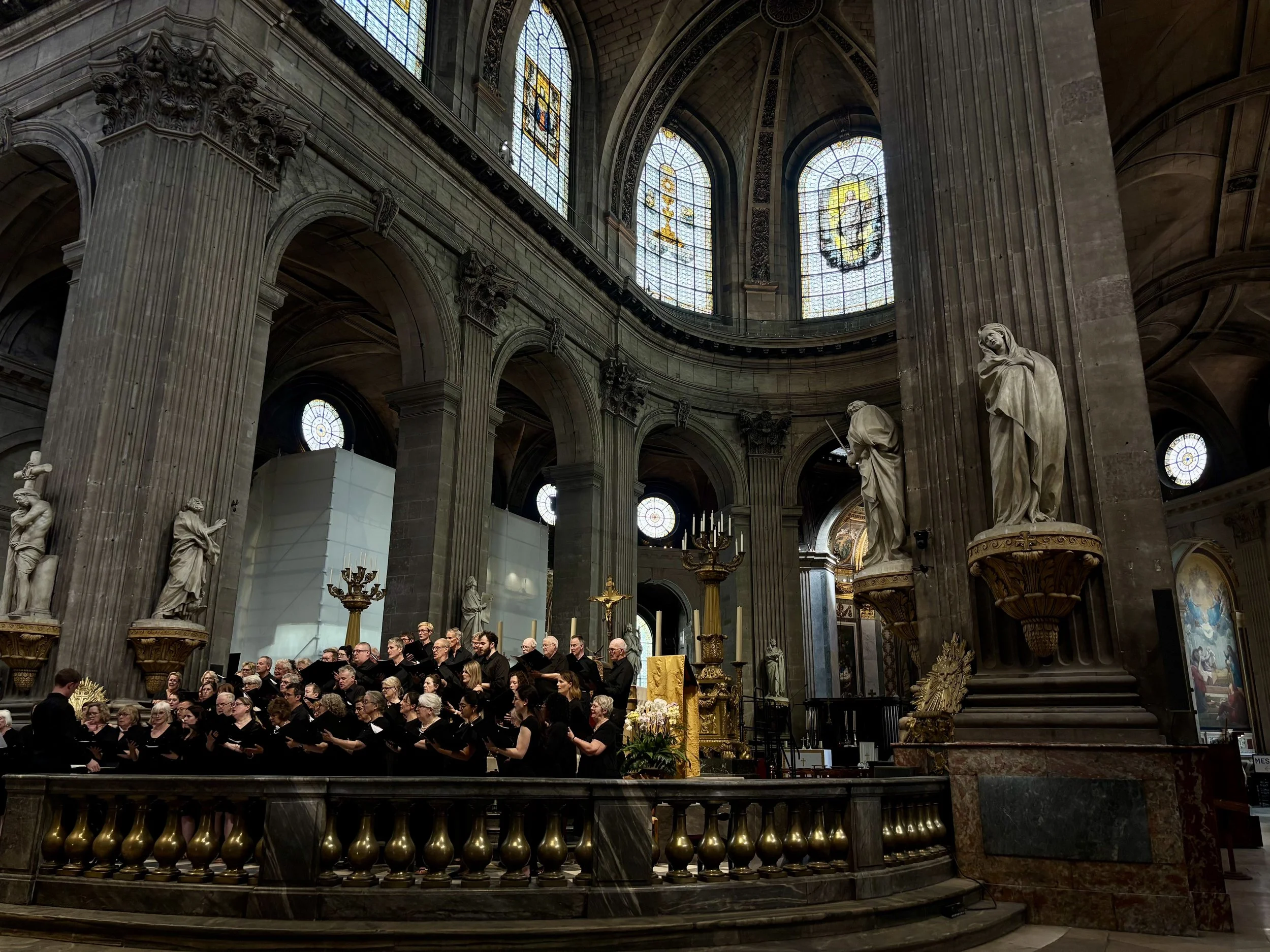
We visited Saint-Sulpice, the church where Marius and his grandfather attend Mass in Les Misérables. While walking through the sanctuary, I noticed a young couple a few pews away. The woman carefully positioned her boyfriend, motioning for him to bow his head and clasp his hands together in prayer. She stepped back, took a few pictures, looked them over, adjusted his pose, and took a few more. A minute later, they smiled, put away the phone, and walked straight back out of the church.
I found myself quietly amused.
Maybe they had prayed before I arrived. I have no idea what was in their hearts, and that's not really the point.
What stayed with me wasn't the couple themselves. It was how instinctive it has become to curate moments before we experience them. Even a church, a place intended for quiet reflection, had become another backdrop for a perfectly composed photograph.
After spending weeks with Hugo, I couldn't stop thinking about the difference between performing faith and living it.
Religion can become performative when institutions prioritize appearances over compassion. But individuals can do the same thing. We have become remarkably good at documenting experiences while they are happening. Sometimes I wonder whether we have become equally good at inhabiting them. Social media hasn't invented performative behavior, but it has certainly amplified it.
Jean Valjean becomes Hugo's clearest example of what faith looks like when it is lived rather than displayed. Throughout the novel, he returns again and again to the mercy Bishop Myriel first showed him. His compassion for Fantine, his sacrifices for Cosette, and even his decision to spare Javert all reflect a life shaped by grace rather than obligation. Hugo suggests that faith is measured less by the rituals we perform than by the way we treat the people around us.
Faith is not something that can be photographed. Hugo knew that long before Instagram did.
As I left Saint-Sulpice, I realized I wasn't questioning faith. If anything, Les Misérables strengthened my appreciation for it. What I found myself questioning instead was something much broader: how easily both institutions and individuals drift toward appearances. Churches can become consumed by opulence and prestige. We can become consumed by image and performance. The temptation is the same: to mistake the outward expression of our values for the values themselves.
That may be why Hugo's distinction between religion and faith continues to resonate nearly two centuries later. We still ask whether governments, universities, religious organizations, and other institutions live up to the values they proclaim. Hugo gently reminds us that the same question belongs to each of us. It is easy to appear compassionate, principled, or faithful. It is much harder to quietly become those things.
Notre-Dame taught me to question institutions. Saint-Sulpice taught me to question myself.
I arrived in Paris expecting to admire the places Hugo wrote about. I left seeing them through his eyes.
Victor Hugo never asked me to believe in God.
After tracing Hugo's Paris, I think I finally understand what he was asking instead.
Faith, Hugo reminds us, is never proven by the buildings we admire.
It is proven by the lives we choose to build.