Paris Fashion's Not Weak

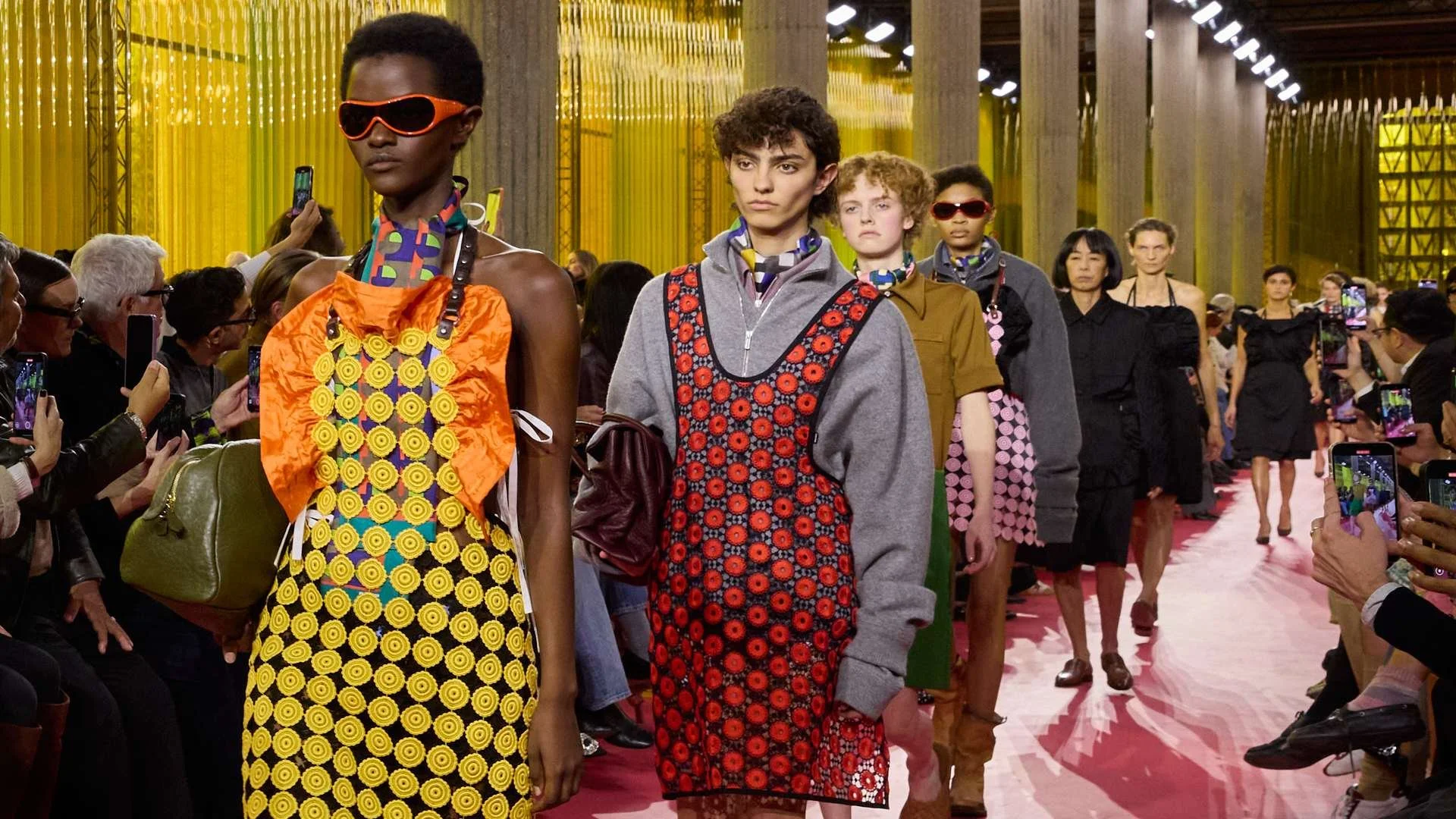
All it takes is a few minutes of walking the streets of Paris to see some insane style. Say what you want about the Parisians, that they’re romantic and snobby and rude, but undeniably do they have steeze. For as long as my interest in clothes emerged, I have heard of Paris fashion week and of Paris as a hub for designers, models, and new trends. While I have always equated Paris with devoted fashionistas, what I didn’t know is how far back Paris’ relationship with good taste really goes, and, surprisingly, how it relates to the French Revolution.
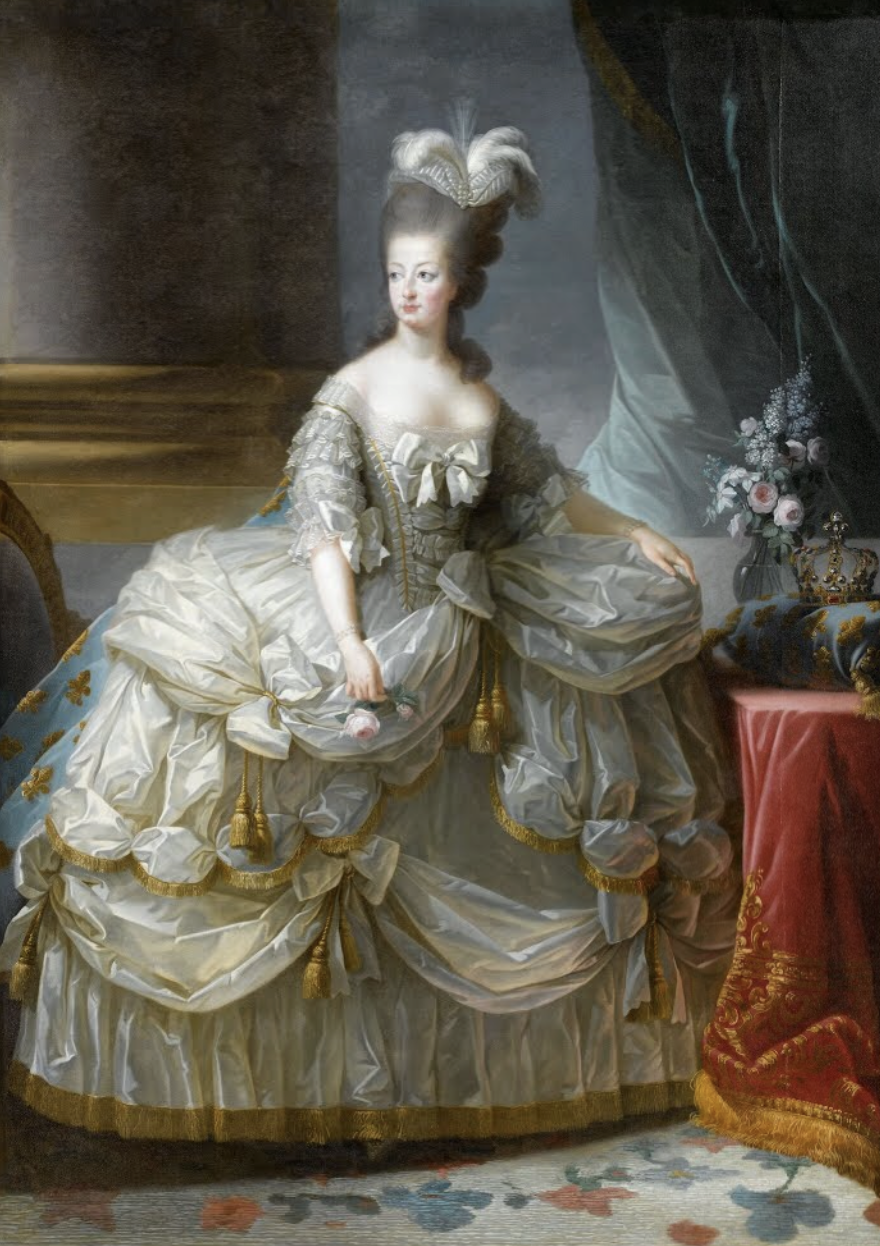

Back in the 17th century, Louis XIV had set the standards for Paris fashion and by the 18th century, Marie Antoinette had become one of its most famous style icons. To dress well, one needed to spend exorbitant amounts of money on skilled seamstress and fine fabrics (not to mention bootmakers, braid makers, button makers, embroiderers, glovers, hatters, hosiers, haberdashers, perfumers and even ribbon weavers if you really wanted to look good). 

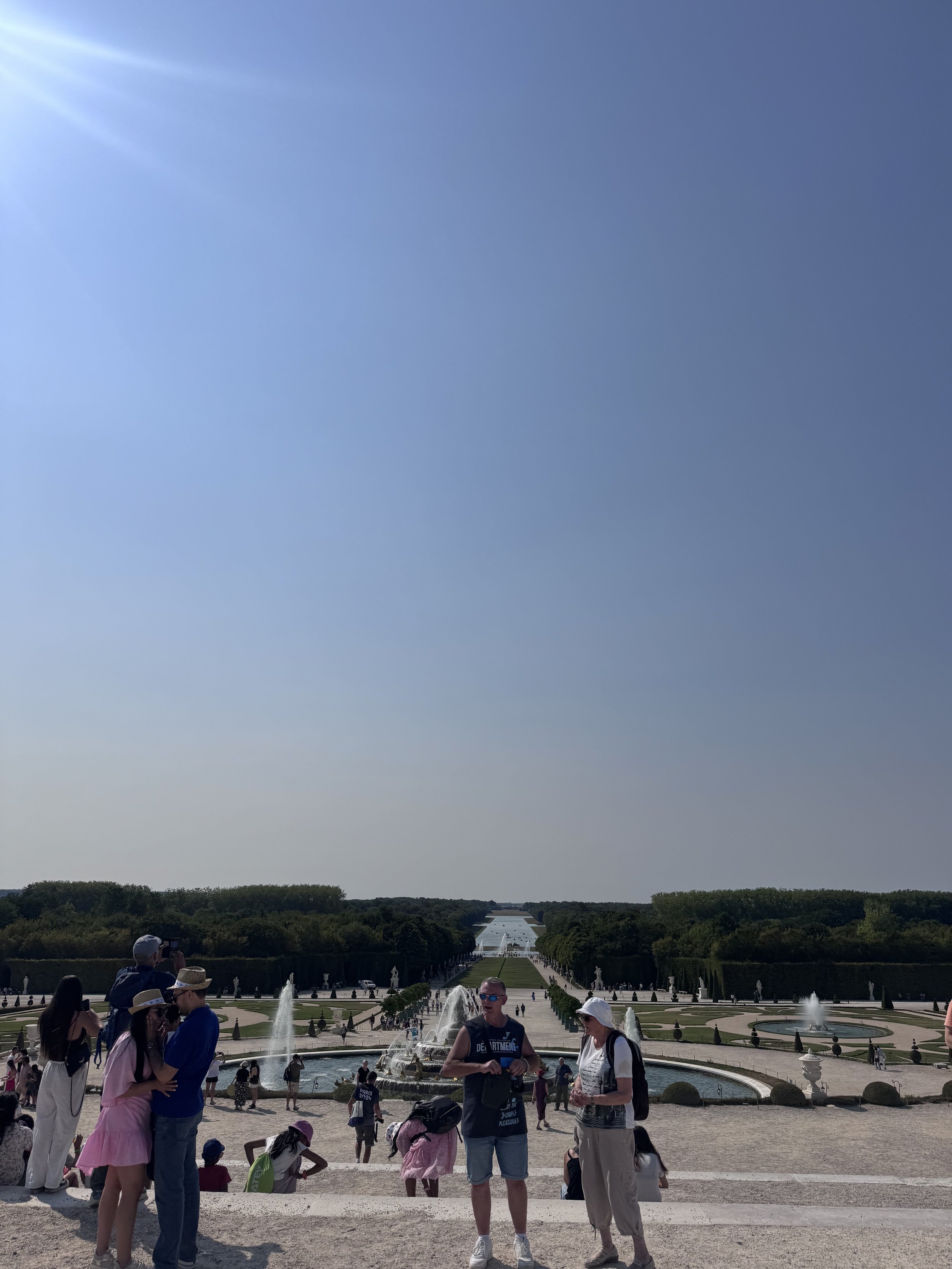
For me, one long stroll through the Palace of Versailles in all its gaudy opulence, and I knew that these people were dressing crazy. 

Outrageous wigs of curly hair and ginormous dresses with a million bows, it was obvious from the paintings that dressing well meant showing off your money. A woman couldn’t even get dressed without countless servants lacing, layering, and pinning.
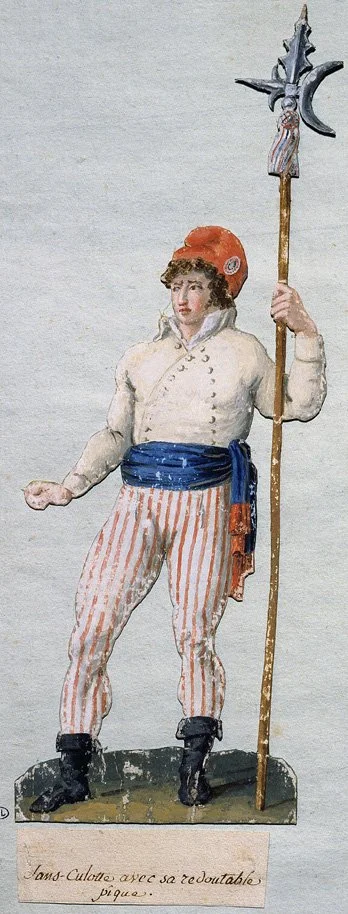
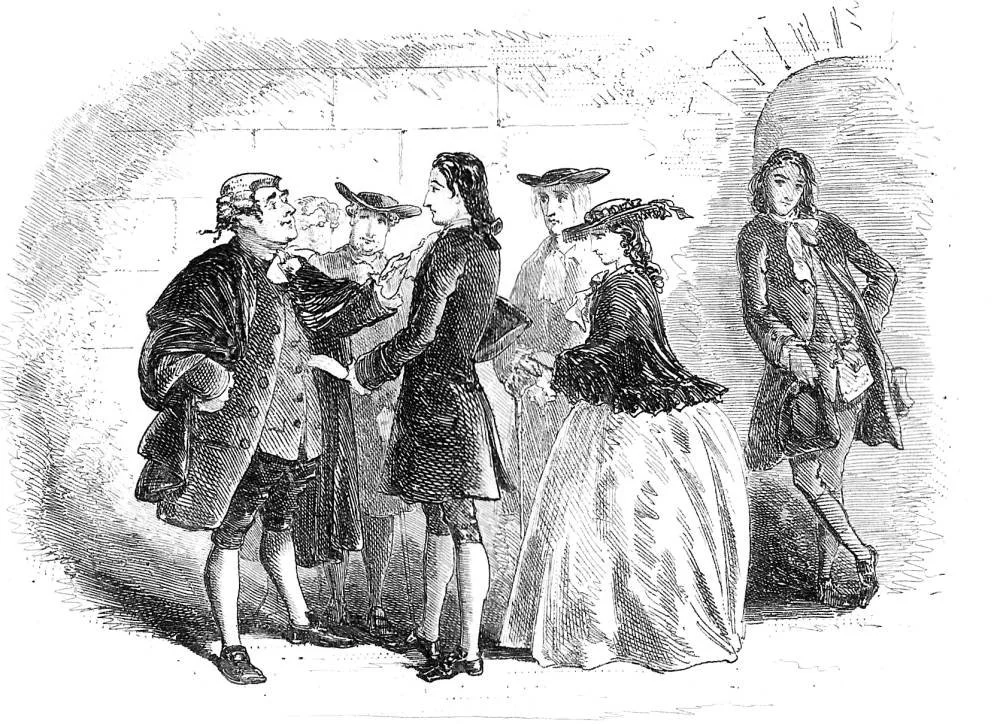
Darnay and Stryver in culottes. (Congratulations by Phiz)

Dickens gives us a good picture of this time before the French revolution. The Monseigneur in a Tale of Two Cities displayed this same wealth, requiring at least four men in “gorgeous decoration” to prepare his chocolate every morning. Back then, luxury was not simply about enjoying something nice, but about demonstrating that you have enough wealth to make extravagance look ordinary. 

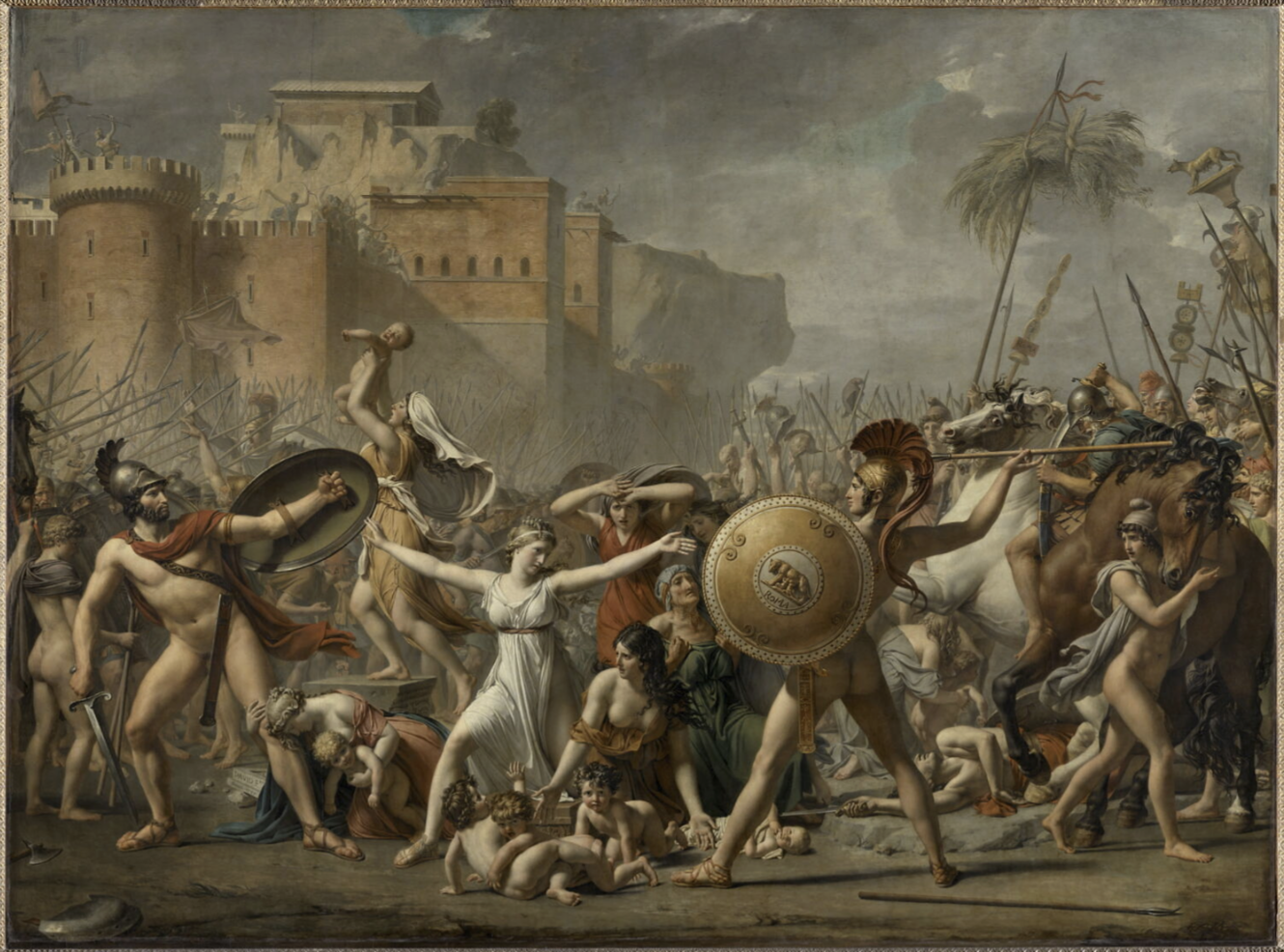
Unsurprisingly, this excessiveness led to mass upset leading to the French Revolution (yes–trust me–I am thinking about the women who marched to Versailles):

When it came to revolutionary wear, in class, we discussed how losing the culottes, or the mid-length, white breeches which were commonplace as fashion for nobility, was an important step for people to show their support for the revolution. Sans-culottes (literally, ‘without breeches’) were seen as the most dedicated members of the cause as living representations of the spirit. They transformed the dress of poverty into one of pride. However, this fashionable form of virtue signalling later became part of the Reign of Terror, where “counter-revolutionaries” were searched for everywhere, even where there were none. 
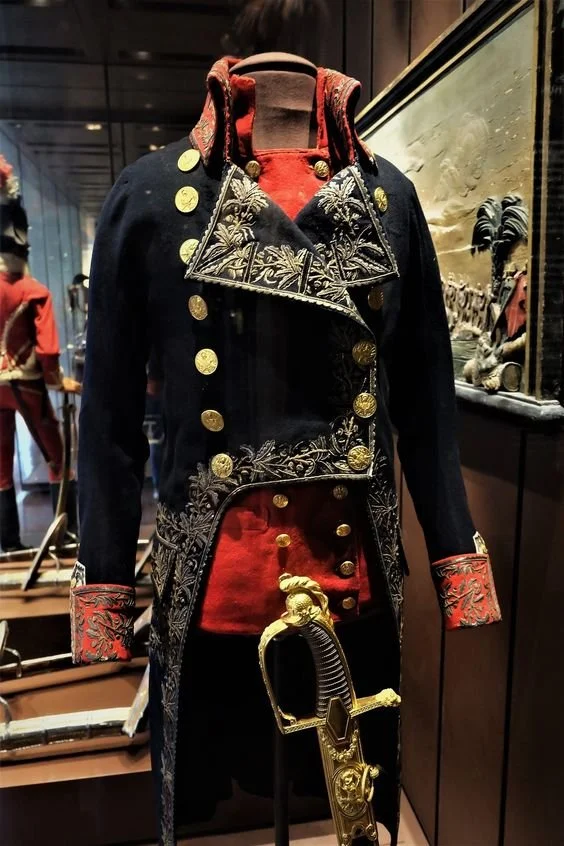
The Revolution did not make fashion disappear, but reinvented what fashion was supposed to communicate. But once Napoleon rose to power in 1799, France once again had a ruler who understood the power of spectacle. As we moved from the Revolution to the Napoleonic era, military garb directly represented the wealth and power of its sovereign ruler. Napoleon used elaborate uniforms, medals, decorations, and ceremonial dress to construct a glittering military aristocracy and project the image of an unstoppable empire.

When we toured the Musée de l'armée at Les Invalides, we got to look upon all of the gorgeous uniforms used by the French army. I was in awe at the craftsmanship and detail given to clothes that were essentially going to be ripped to shreds on the battlefield. It made me recall our conversations during lecture on how much of what we do and believe in is about performance. The French have long represented themselves with what they wore and these soldiers sold an idea of France. 

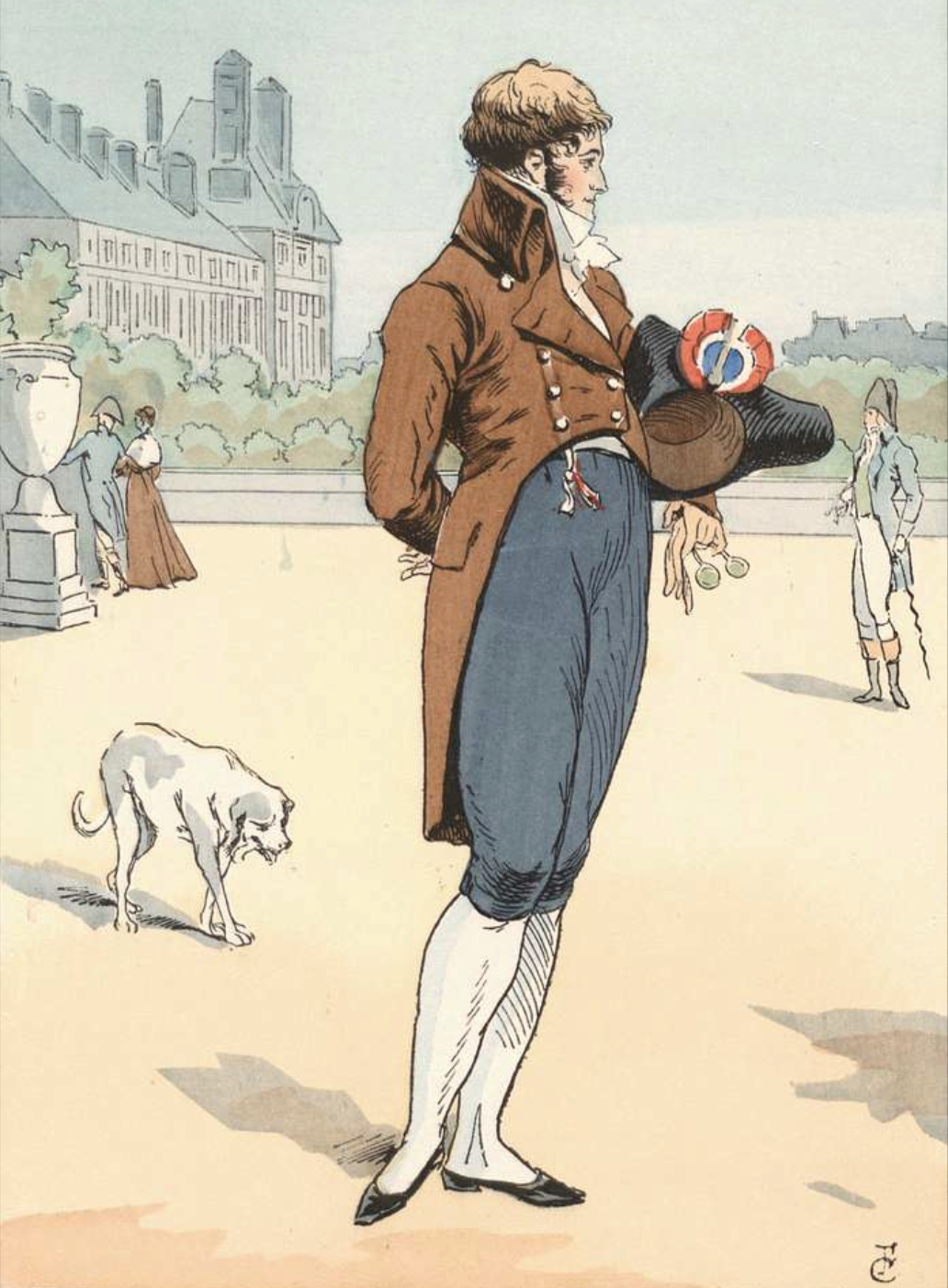
And then, after Napoleon's defeat, the pendulum swung again. During the Bourbon Restoration, France rediscovered its taste for high fashion, status, and power. For some, France had returned to a place of frivolity and fun. We discussed in class the dandies with their refined style and leisurely hobbies like Félix Tholomyès, the Parisian student who gets Fantine pregnant. Hugo describes this time “In the year 1817” where wig-makers hoped “the royal-bird style of powdered wig would make a comeback” and the “French army was dressed in white.” The Restoration had revived the pleasure of looking the part and attention to appearance.

In the modern day, Paris clothing is chic and fashionable, but not fussy, in a way that is simple and appealing. As Guinut puts it in her book, Dress Like a Parisian, La Parisienne doesn’t take fashion too seriously and trends do not really matter to her...Yet she may follow fashions when they please her and, as long as she likes them, doesn’t care about wearing the same.” In fact, the way that she describes how “La Parisienne” sees fashion feels like a testament to how Parisians experience life in general. 
He would be happy to trade all his knowledge of artists’ quarters, birthplaces, and princely palaces for the scent of a single weathered threshold or the touch of a single tile.
— The Flâneur: A Stroll Through the Paradoxes of Paris, by Edmund White, 2001

A store I saw someone looking in on my way to class

Something I witnessed in the modern day is how often Parisians window shop. It was frequent enough I’d notice it every day on my walk to class, where someone would freeze and mill in front of a store display. Maybe window shopping is a dead practice in the States (or maybe I just only go shopping when I need something) but I see it as a tribute to the French spirit of the flâneur. This idea, to stroll and observe aimlessly allowing curiosity to lead your way, is one of my biggest takeaways from the trip. With our study abroad coming to end, I have a greater appreciation of French culture and the sentiment that they work to live and not the other way around. Perhaps I should be living more, taking a moment to smell the roses, and appreciating the little things in life. 

There’s no better picture to describe it than me, bustling to class everyday, eating my breakfast as I walk, and noticing the French, who linger at storefronts to see that jacket there or those earrings, just because it caught their eye. While I was always trying to get somewhere, they were simply there.
I feel like there is a culture to always be looking toward the next big step: graduation, work, promotion, marriage, etc. But maybe I should be in search of a private message, not a lesson. If I have learned one thing from Bookpacking (and the French) as a whole, life is best spent experienced, not learned.
What I'm Taking With Me

As this journey comes to an end, I can't help but feel a little sad about everything that is being left behind: the art, the architecture, the streets, the language, the food, the bikes, the books, the inside jokes, and the memories made in classrooms, churches, museums, and on sidewalks. After four weeks of waking up every morning knowing there was somewhere new to explore, it feels strange to think that tomorrow I won't have somewhere else to walk to.

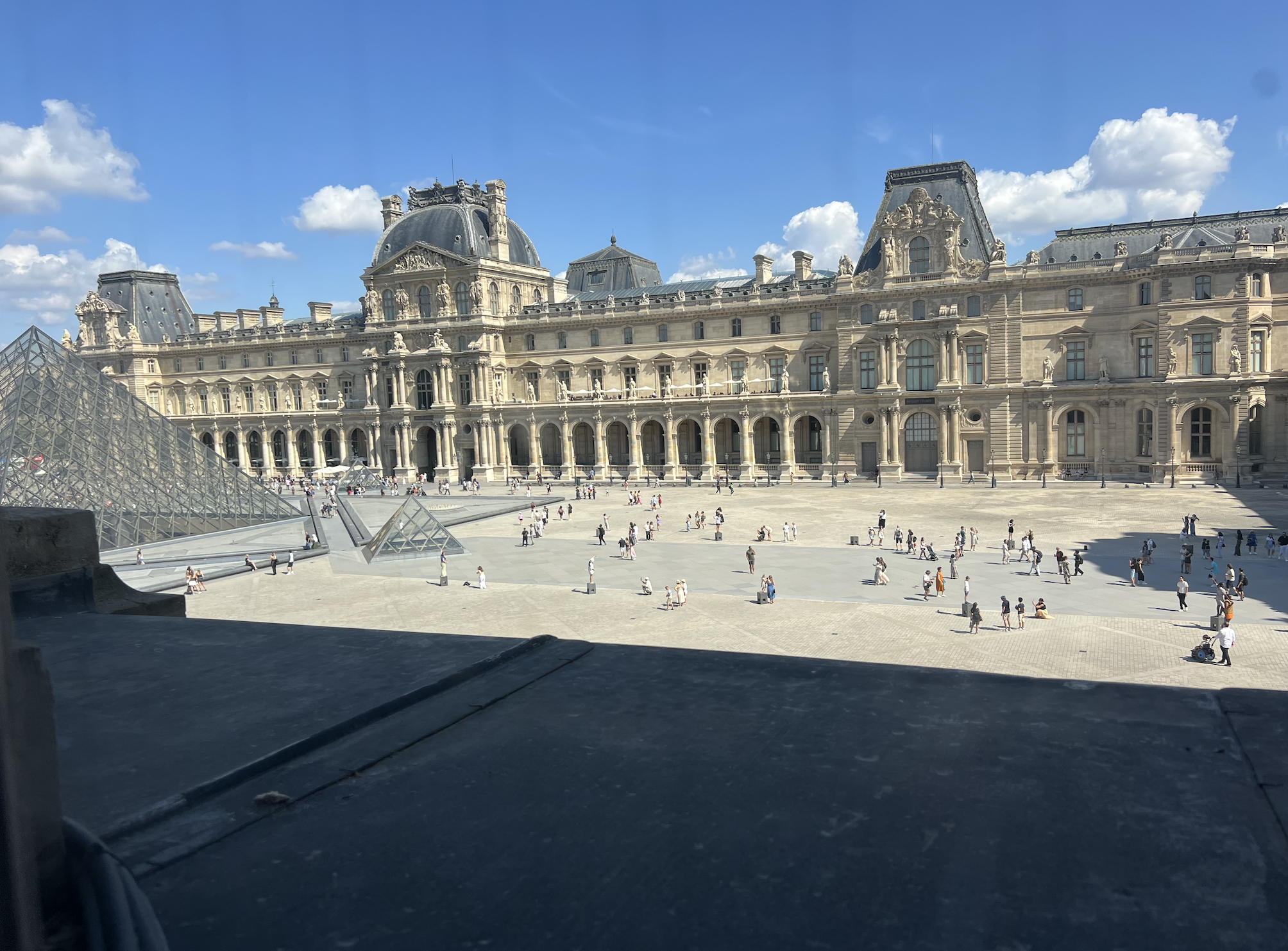
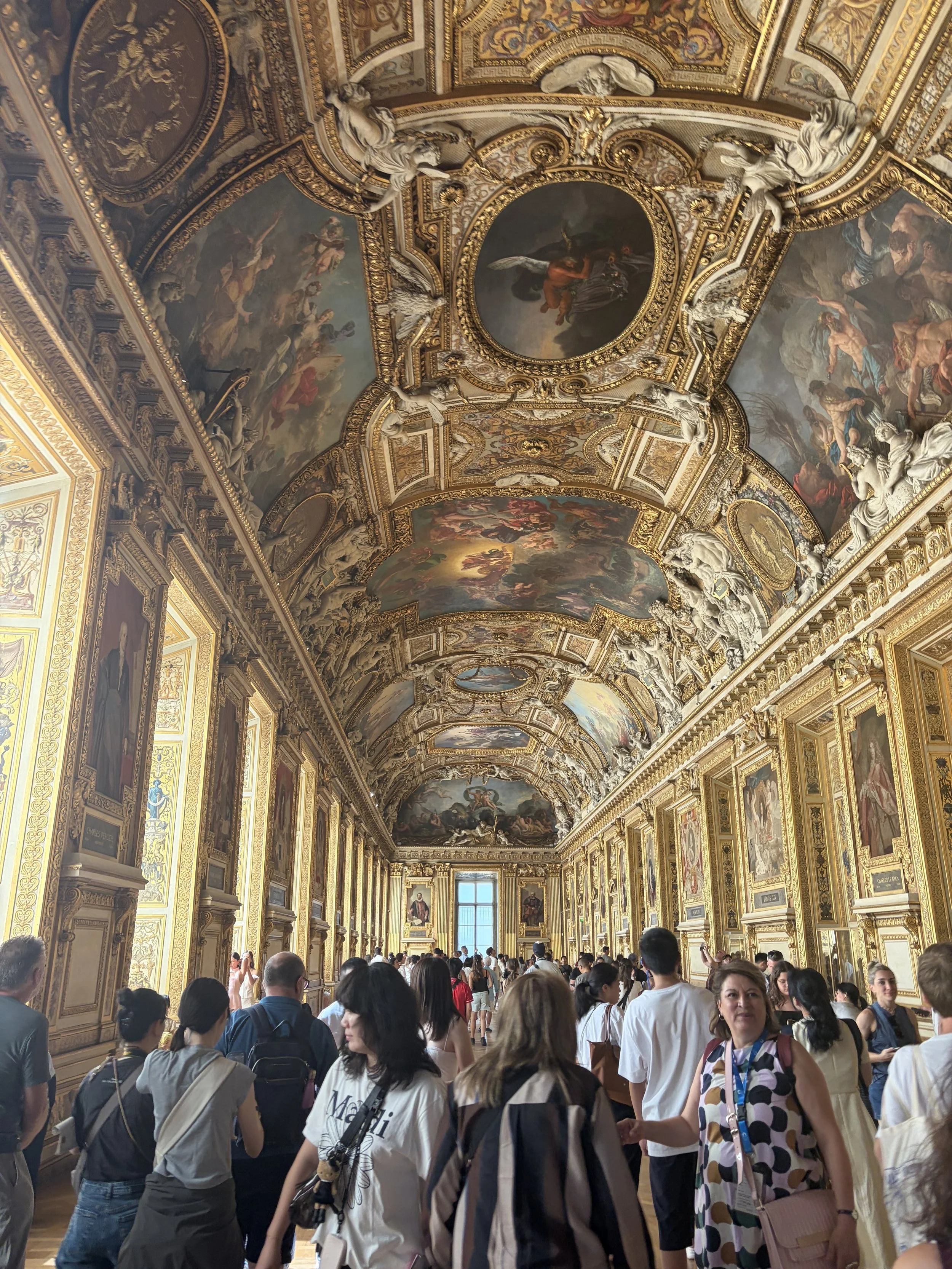
Le Louvre

From walking through the halls of Versailles to exploring the sewers while plugging my nose, I have seen more of London and Paris than I ever expected to see in one month. But somewhere along the way, I realized that the most important things I am taking home aren't things I can put in my suitcase.

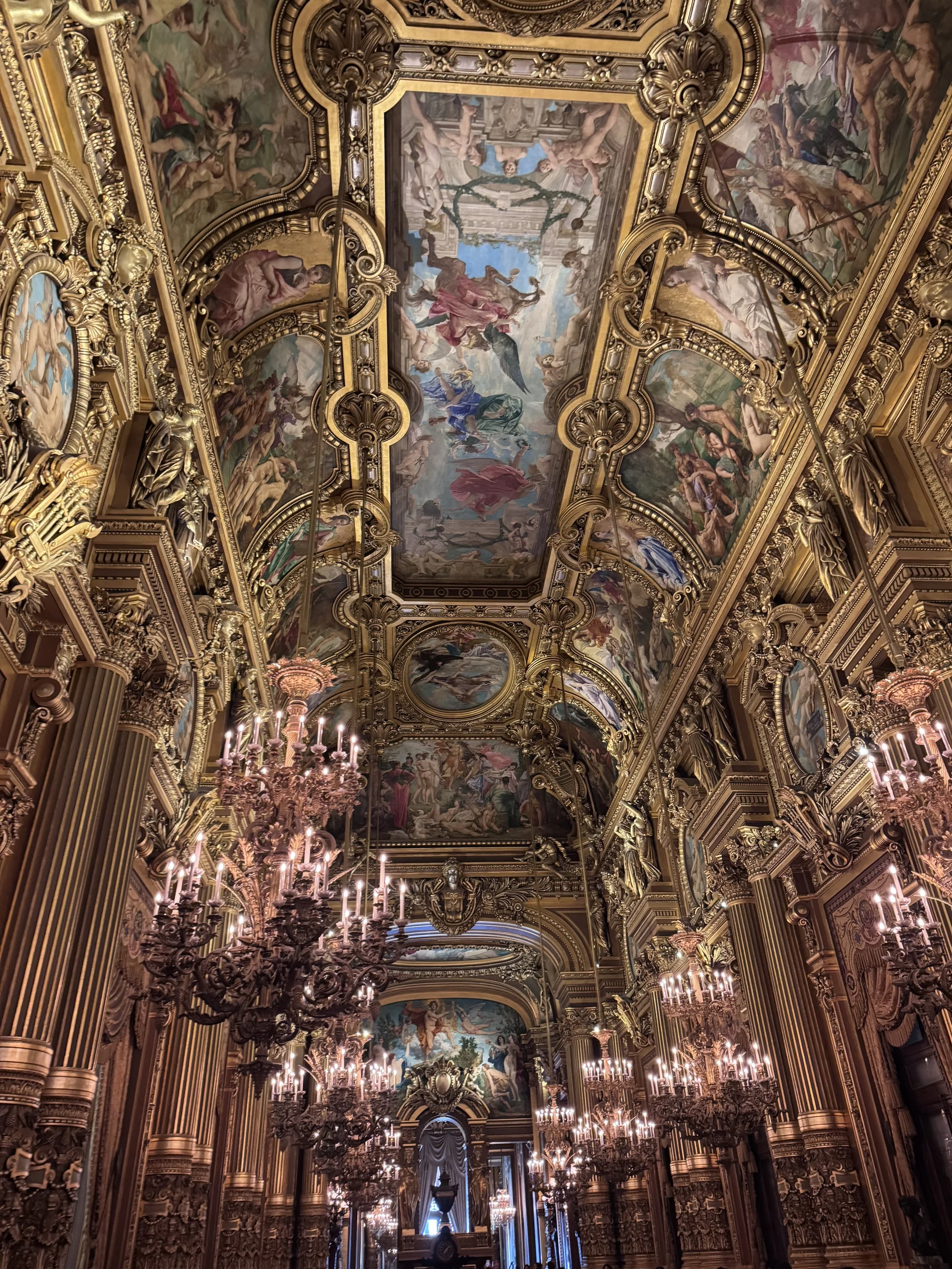
When I arrived in Europe, I never expected this class to turn me into an art appreciator. I have always liked art, but I wouldn't have called myself someone who goes looking for it. After spending a month in London and Paris, however, it became almost impossible to walk anywhere without looking up and noticing something. The Louvre was obviously overwhelming, but some of my favorite pieces of art weren't even inside it. They were on ceilings, in churches, along buildings, in museums like the Carnavalet, and tucked into places we passed without even realizing they were there. Paris made it difficult to ignore art.

You can turn a corner and suddenly find yourself standing in front of a building that looks like it belongs in a museum. You can walk into a church and realize that the ceiling above you is more beautiful than some of the paintings you traveled across the world to see. You can spend an afternoon at Versailles staring at rooms that seem almost impossible to have been built by people, then spend another afternoon underground in the sewers, wondering how the same city can contain both.

The architecture was just as overwhelming. I think that might be one of the biggest things I will miss. Not one particular building, but the streets themselves. The way old and new seem to exist together. The palaces, churches, apartments, bridges, gardens, and narrow streets all somehow become part of the same city.

And then there was the language. I definitely did not walk away from this trip fluent in French. If anything, there were probably just as many moments when I had absolutely no idea what someone was saying as there were when I understood them. But I did walk away appreciating the language in a way I didn't before.

I'll always remember the man sitting on the bench who spoke to me in French, even though I couldn't understand everything he was saying, and responding with one of the only phrases I know, “Désolé, je parle pas français.” I couldn't walk away from that conversation, suddenly speaking French, but I could walk away realizing that language doesn't have to be something you completely understand to appreciate. I started listening differently. The sounds of conversations around me, the announcements on the Metro, people ordering food, even the way French sounds when someone was simply talking became part of the experience, but you don't have to understand everything to appreciate it.

There were plenty of moments in class when I didn't understand Hugo's point immediately. There were pages of Les Misérables where I wondered why we were spending so much time on a particular street, building, character, or historical digression. Then we would walk through that place, and suddenly it made sense.

Some of my favorite memories have absolutely nothing to do with the novels. They are the moments that happened in between them. Laughing with everyone in class until we had to remind ourselves to be quiet while walking through a church. Getting slightly lost. Finding food after a long afternoon of walking. Riding bikes to class. Making jokes that probably won't be nearly as funny once we are back at USC. Sitting together after a long day and realizing that somehow we had walked another ten miles. Those are the moments I know I'll remember.

When I think back on this trip years from now, I probably won't remember every street name or every date we discussed in class. I might not even remember exactly which day we visited certain museums. But I will remember what it felt like to ride a bike through Paris in the morning. I will remember the overwhelming rooms of Versailles, the paintings at the Louvre, and the smell of the sewers that made me question every decision that led me underground. I will remember walking through London and seeing Dickens differently. I will remember standing where Gavroche's elephant once stood and realizing that a place I had only imagined could have once felt real. I will remember tracing the streets of the Corinth barricade and looking at Paris through Hugo's eyes. And I will remember learning that a city is more than its landmarks.

When I wrote my first blog, I was still trying to figure out what bookpacking actually meant. I thought it meant finding the places in a book and seeing them in person. Four weeks later, I know it is much more than that. Bookpacking taught me to slow down, to look up, to look down, to notice the building I might otherwise walk past, to wonder what happened on the street underneath my feet, to appreciate the detours, to let a book change the way I see a city, and to let a city change the way I read a book.

I am sad to leave all of that behind. I am sad to leave the art and the architecture, the streets and the language, the cafés and the bikes, the books and the memories. But I also know that none of it is really being left behind. I get to take it with me. Maybe not the paintings. Maybe not the buildings, and definitely not the smell of the sewers. But I get to take the way I remember them with me, and I think that's one of the best souvenirs I could have asked for.

.

Javert's old Law, versus Valjean's new Grace

One of the most interesting class conversations we had was on the biblical allusions in Les Misérables. We were asked whether we think Hugo’s incorporation of Christianity in the book aligns with our beliefs and with the Bible.

The idea that the book’s themes could have possibly not aligned with biblical teachings was so alien to me—simply because I felt they aligned so well. I was interested in finding the exact scripture that either supported or contradicted this.

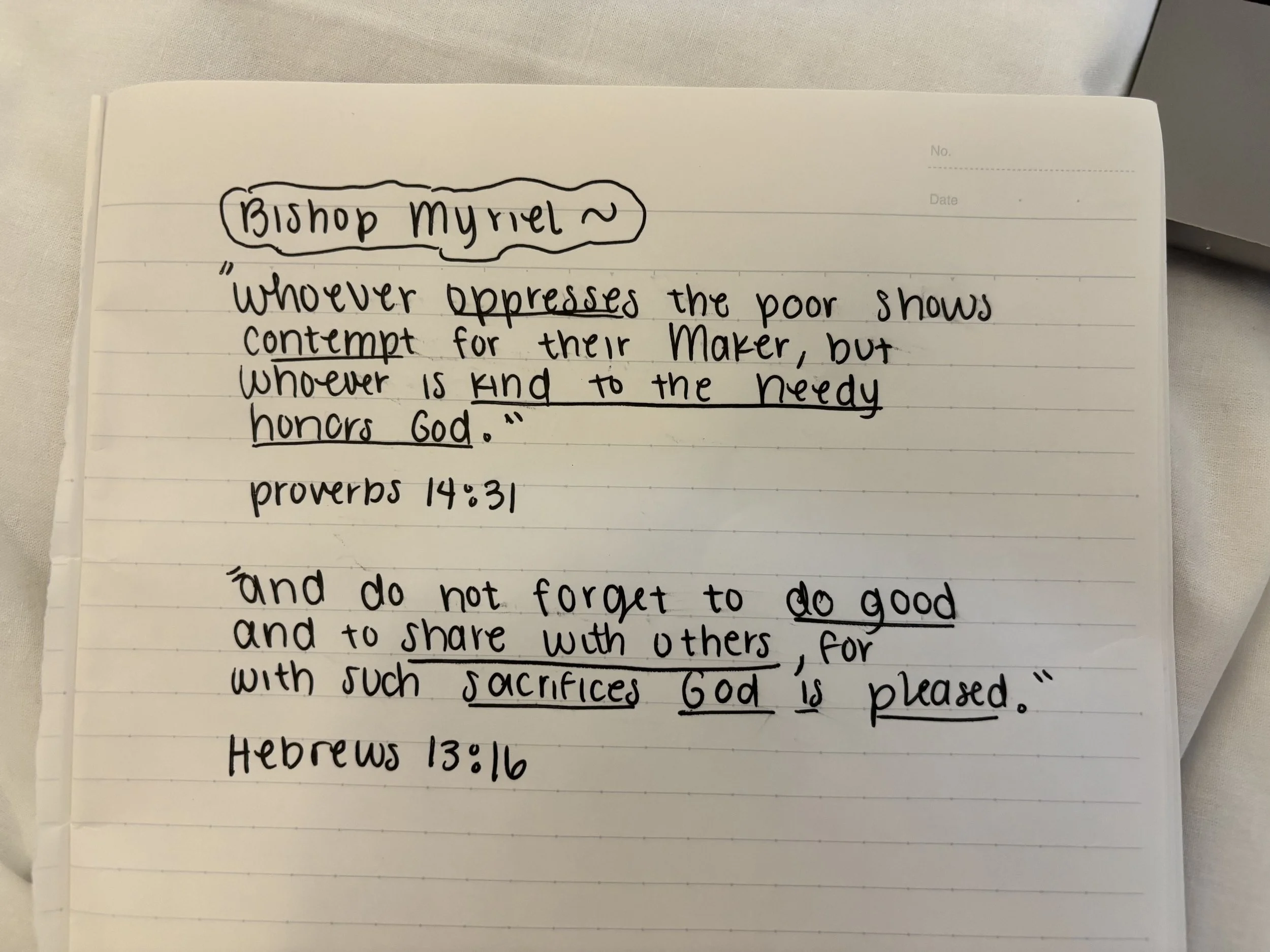
The first and most obvious Biblical references start with the character of Bishop Myriel. During our class discussion—I think, if I’m remembering correctly—someone referenced how the Bishop gave up his home for the hospital patients and allotted the majority of his budget to social causes, and contrasted his actions with some some modern-day church operations. However, his actions do directly align with what the Bible calls us to do:

The verses I found correlating to the Bishop’s way of life—namely, Proverbs 14:31 and Hebrews 13:16.

But in my opinion, a more interesting reference Hugo made was the biblical metaphors in Javert and Valjean—each representing a different testament of the Bible.

The Old Testament is centered around history and law, closer to Javert, while the New Testament coming after the death and resurrection of Jesus Christ, is focused on mercy and forgiveness, like Valjean. In Christianity, we believe the Father sent His Son to die for our sins, and in doing so, He fulfilled the law of the Old Testament, establishing a New Covenant. Therefore, Jesus’s sacrifice offers us forgiveness for sins, alleviating the stricter laws and punishments of the Old Testament. An example of the difference between the testaments is in the Old book of Proverbs and New book of Ephesian. Both books offer guidelines for us to follow, but Proverbs is stricter and more detailed while Ephesians is—in my opinion—more generalized, centered on love and trying to be a good person. 

Therefore, I believe Javert and Valjean both align with the Bible, but in different ways. Javert is a representation of the Old Testament in his unending search for justice and his strict moral compass. His beliefs are centered on obedience to the law and authority, similar to the Old Testament. Javert centered his life on the ideas of a “respect for authority and hatred of rebellion.” 

In fact, Javert’s principles are so challenged by Valjean’s forgiveness that he is inspired to end his own life, as Hugo writes:

A benevolent malefactor, merciful, gentle, helpful, clement, a convict, returning good for evil, giving back pardon for hatred, preferring pity to vengeance, preferring to ruin himself rather than to ruin his enemy, saving him who had smitten him, kneeling on the heights of virtue, more nearly akin to an angel than to a man. Javert was constrained to admit to himself that this monster existed. Things could not go on in this manner.
— Les Misérables

Javert’s principles are so deconstructed by Valjean’s virtuous, forgiving, selfless character that he cannot comprehend it—nor go on.

I wonder if in writing Javert’s suicide, Hugo was trying to make a greater commentary on misunderstanding and call for Christian forgiveness. 

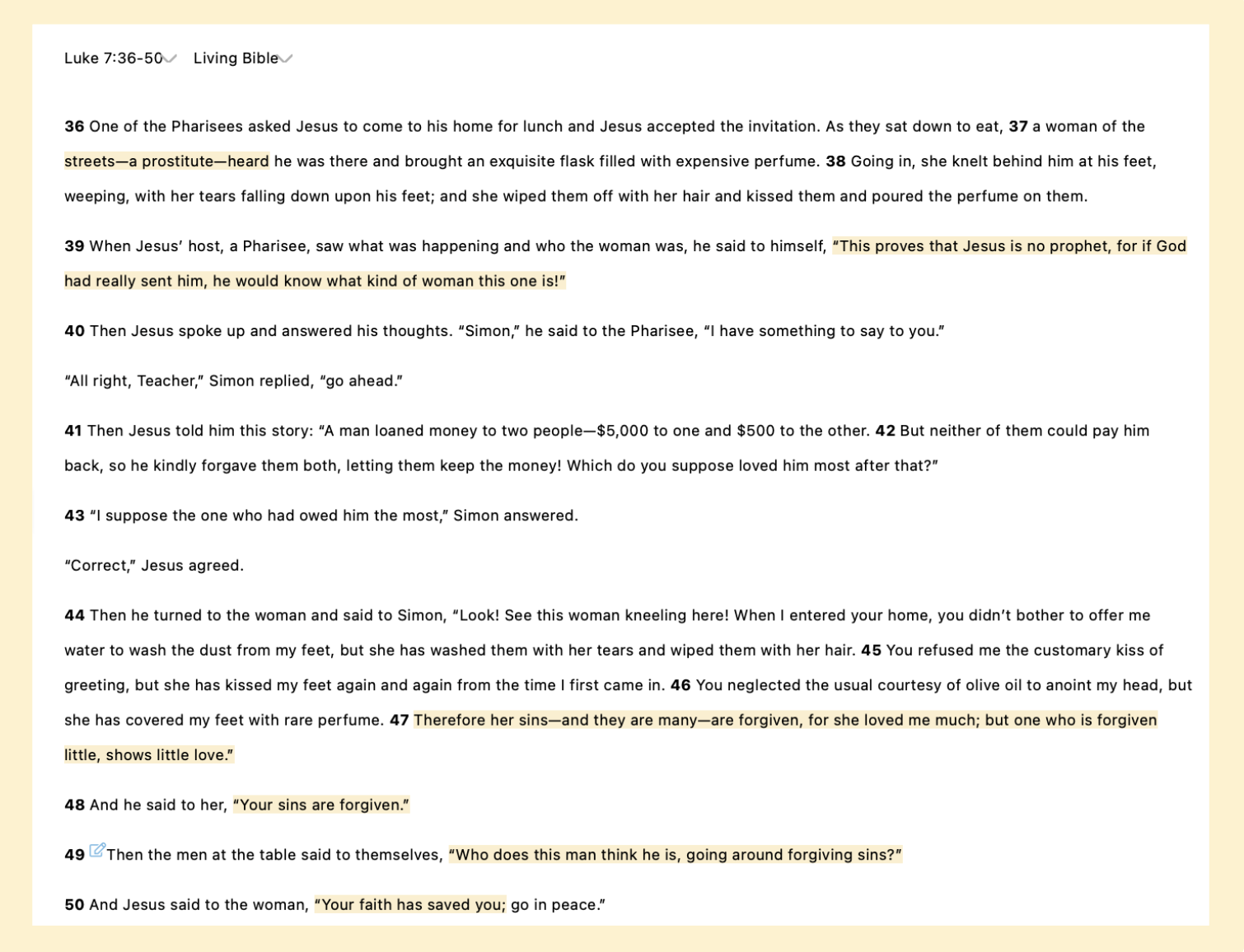
I sometimes see Christians struggle with the concept of Jesus’s total forgiveness, as well as moving on from the Old Testament. But this Christian dilemma is a tale as old as time, evidenced in this parable:

Luke 7:36-50.

In the same way Javert cannot comprehend Valjean’s forgiveness, neither can the Pharisee comprehend Jesus’. But Jesus does not prefer the non-sinner over the sinner, and all sin. He offers a consistent love, only asking us to offer the same in return. If Jesus forgives us, and we accept this forgiveness, yet refuse to offer it to others—by judging them and holding grudges—where is the fairness? Bishop Bienvenu—and, by virtue, Jean Valjean—exhibit the grace of God. Hugo continues this exhibition in writing Fantine from a position of empathy and pity for the condition society forced her into, rather than judging her in an era where prostitution was more shameful than it even is today. 

Furthermore, I do think—though this is an entirely personal opinion—Hugo chose names for the protagonist and antagonist that directly relate to these concepts. 

Authors never choose throwaway names—there must be some meaning, whether it references personal history or is some symbolic creation. This is evidenced in Hugo’s metaphorical naming of the Bishop Bienvenu, meaning “welcome.”

I think, possibly, Javert is a combination of Latin roots and words—juris meaning “justice” and “law,” and either veritas, being “truth,” or severus, being “severe.” All of these possibilities correspond with his harsh characterization.

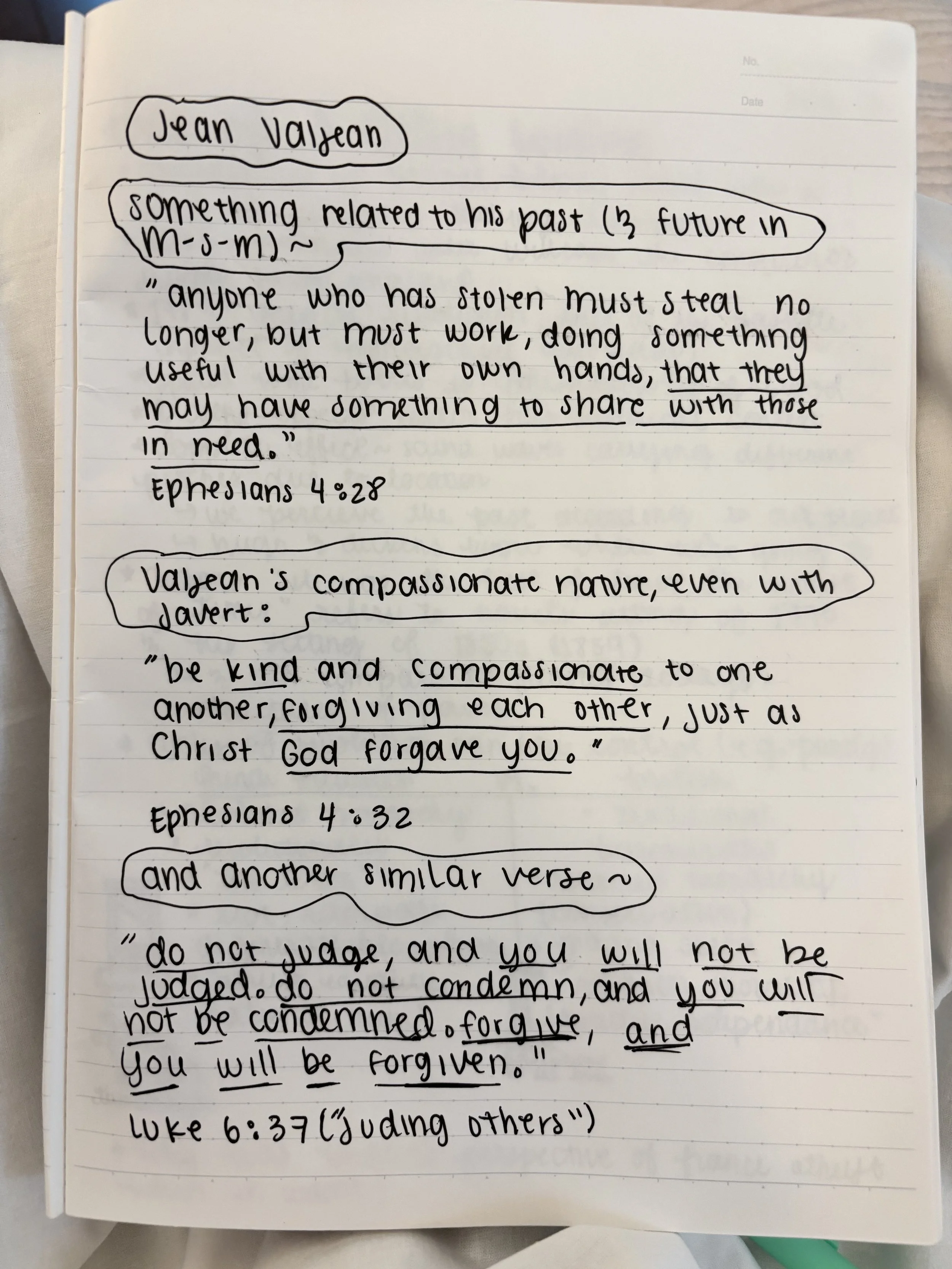
“Jean” Valjean is a name meaning “God is gracious”—so obviously symbolic of Valjean’s Christlike goodness. I also found some verses, included below, that remind me of his story and life trajectory; that is, life post-imprisonment for stealing to feed his sister’s family, his decision to change for the better after experiencing Bishop Myriel’s goodness, his generosity to the people of M-s-M and his factory, and his dedication to raising Cosette.

Verses that correlate to Hugo’s writing of Valjean—Ephesians 4:28-32 and Luke 6:37.

I really believe Les Misérables mirrors biblical teachings. In fact, reading it for the first time, it was astonishing to me how accurately Hugo portrayed goodness. So while some Christians’ belief systems may contradict with Hugo’s writing of faith in Les Mis, Christianity does not; it directly aligns. One, or two, or three Christians’ beliefs or misinterpretations—as we discussed in class—do not speak to the goodness of Christianity as a whole, nor the religious accuracy of Les Mis. Instead, such contradictions speak to the fault-prone nature of humans. Just as my religion and faith are centered on forgiveness, so is Les Mis.

Life | Death

The program has come to an end. I’m so happy to go home to my friends and family, but I am sad to know the excursions and discussions are no more. I have begun to think about other kinds of endings, the big one being death.

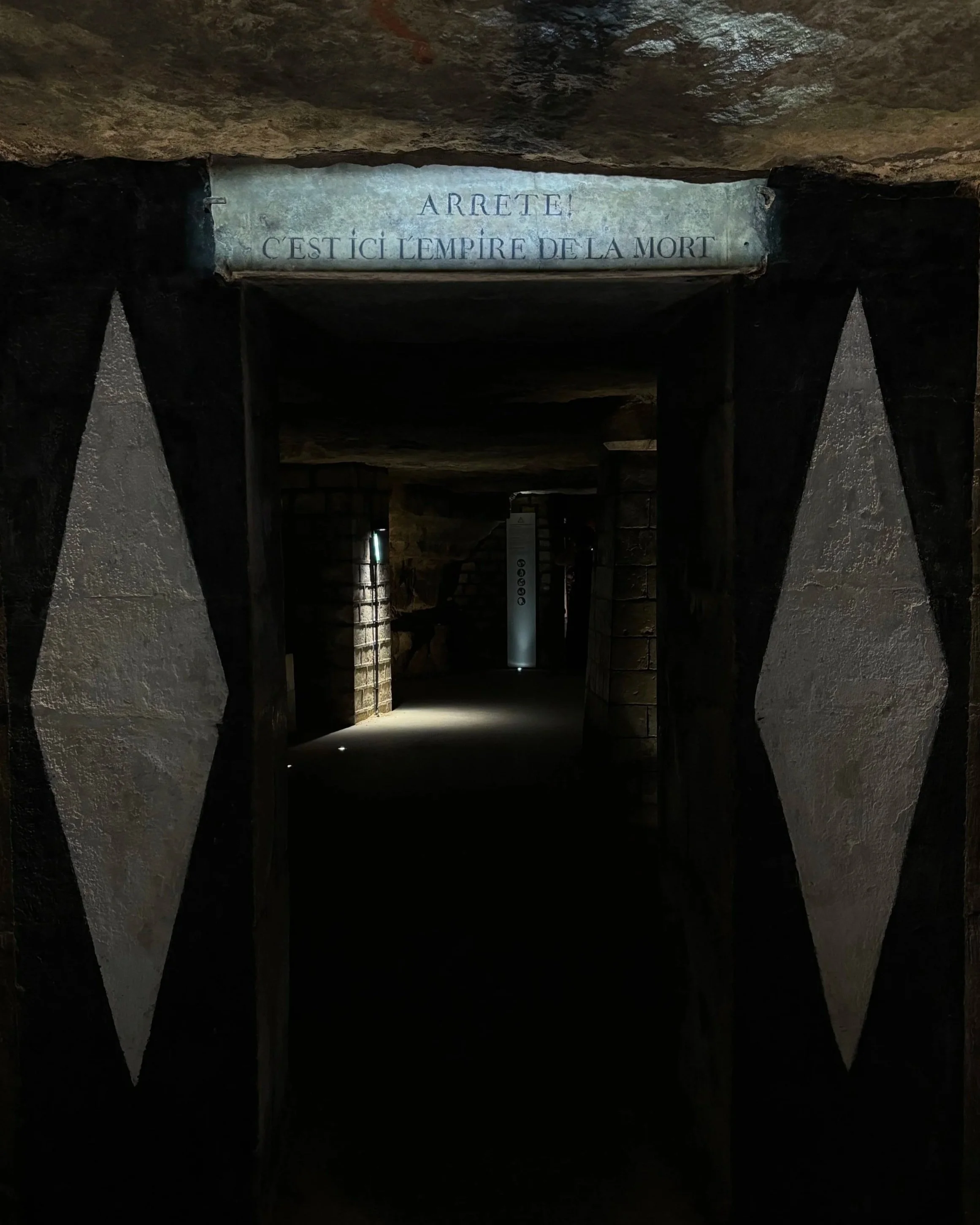
Our final outing was a visit to the Catacombs of Paris. Walls of skulls and femurs surrounded us, all of the physical remnants of millions of lives that reached completion centuries ago. The tunnels were eerie but serene. There, I was a drop in the ocean, and I was once again aware of the world that existed before me and would continue to exist beyond my lifetime.

The entrance to the Catacombs–what better reminder of death?

What, then, should we do with the time we have before death?

People, like stars, have the right to go into eclipse.
— Victor Hugo, Les Misérables

Goodbye, Paris…

In the short time we have spent exploring Paris, I have packed one lesson to take home: enjoy life. One of my favorite things about Paris was the slow pace. There is an idea of French life that involves meandering summers and a wandering spirit, and I found this leisurely romance in the city's air. The shops closed for a months-long break. The people strolled down the streets at a snail’s pace, going nowhere. In stark contrast to the fast pace of the American city, Paris seemed to say, "Slow down." Even the bumpy, cuboid pavement stones urged me to take a breath, threatening to break my ankles if I walked too fast. In the chaos of the early 19th century depicted in Les Misérables– with revolutionary thoughts drifting through the streets and nosy police inspectors threatening lives–the weary revolutionaries and fleeing fugitives found tender moments of enjoyment with family and lovers. Jean Valjean and Cosette experience the beauty of Luxembourg Gardens together. Marius and Cosette find time to waste hours in the shade of overgrown greenery, surrendering to their newfound romance.

I have never enjoyed life more than in the moments I have to spend with those I love, free from looming deadlines and ‘real-world’ responsibilities. Instead of the anxiety of work, I can immerse myself in the full experience of being one small soul in a world of endless experience. Ambition is awesome (as Hugo says, let us not forget the importance of progress), but leisure is sublime. With that, I carry this wandering, content fragment of Paris’s spirit with me.


Poetry Alert

!!

Poetry Alert !!


In place of my usual original work, here is my favorite poem by William Henry Davies. I came across it in a poetry book my parents gifted me for my birthday. It perfectly encapsulates my feelings on life and giving oneself the chance to breathe and take it all in.

Leisure

What is this life if, full of care,
We have no time to stand and stare.

No time to stand beneath the boughs
And stare as long as sheep and cows.

No time to see, when woods we pass,
Where squirrels hide their nuts in grass.

No time to see, in broad daylight,
Streams full of stars, like skies at night.

No time to turn at Beauty's glance,
And watch her feet, how they can dance.

No time to wait till her mouth can
Enrich that smile her eyes began.

A poor life this if, full of care,
We have no time to stand and stare.


The final crumb:

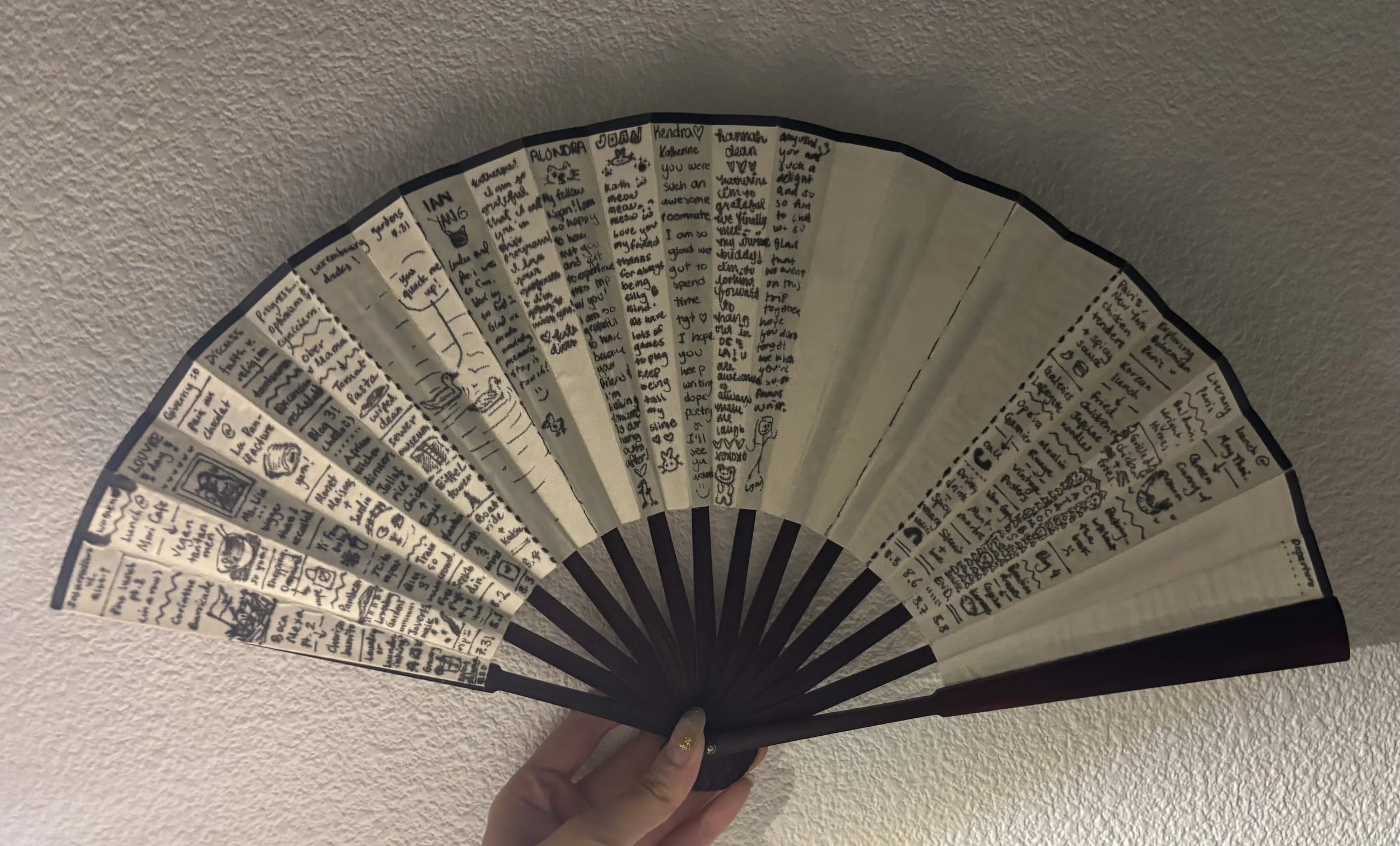
If you have been following this blog, you may be wondering why I haven’t included a final image of the completed fan. The answer is quite simple–it is incomplete. I missed a few classmates’ signatures, as well as Professor Chater’s, and I cannot bring myself to fill in the blank spaces in their place. So, instead, I will wait for our next encounter. Life is a practice of patience, and I will allow myself to be sentimental. What better metaphor for life than an incomplete project? The adventure is not over!

I hope you enjoyed everything between hello and goodbye. If life is by chance and death is inevitable, let us linger on the moments in between.

See you sometime,

Katherine :)


Love from Paris

As we wrap up our bookpacking experience, I am writing this blog with a bittersweet feeling. It has been such an incredible adventure that must come to an end, but I am able to carry away the knowledge and memories of this class. There have been so many things that I have learned through reading and walking through the words of Victor Hugo and Charles Dickens, and through the minds of their novels characters. I have learned how to approach classic novels, learned about the history of France and how it impacts the present, and have learned so much about the ideas and beliefs of society. Everything that I have learned has been so meaningful, though I would like to highlight one topic in this short blog which I found particularly impactful, which is that of human connection, relationships, and love for one another. 

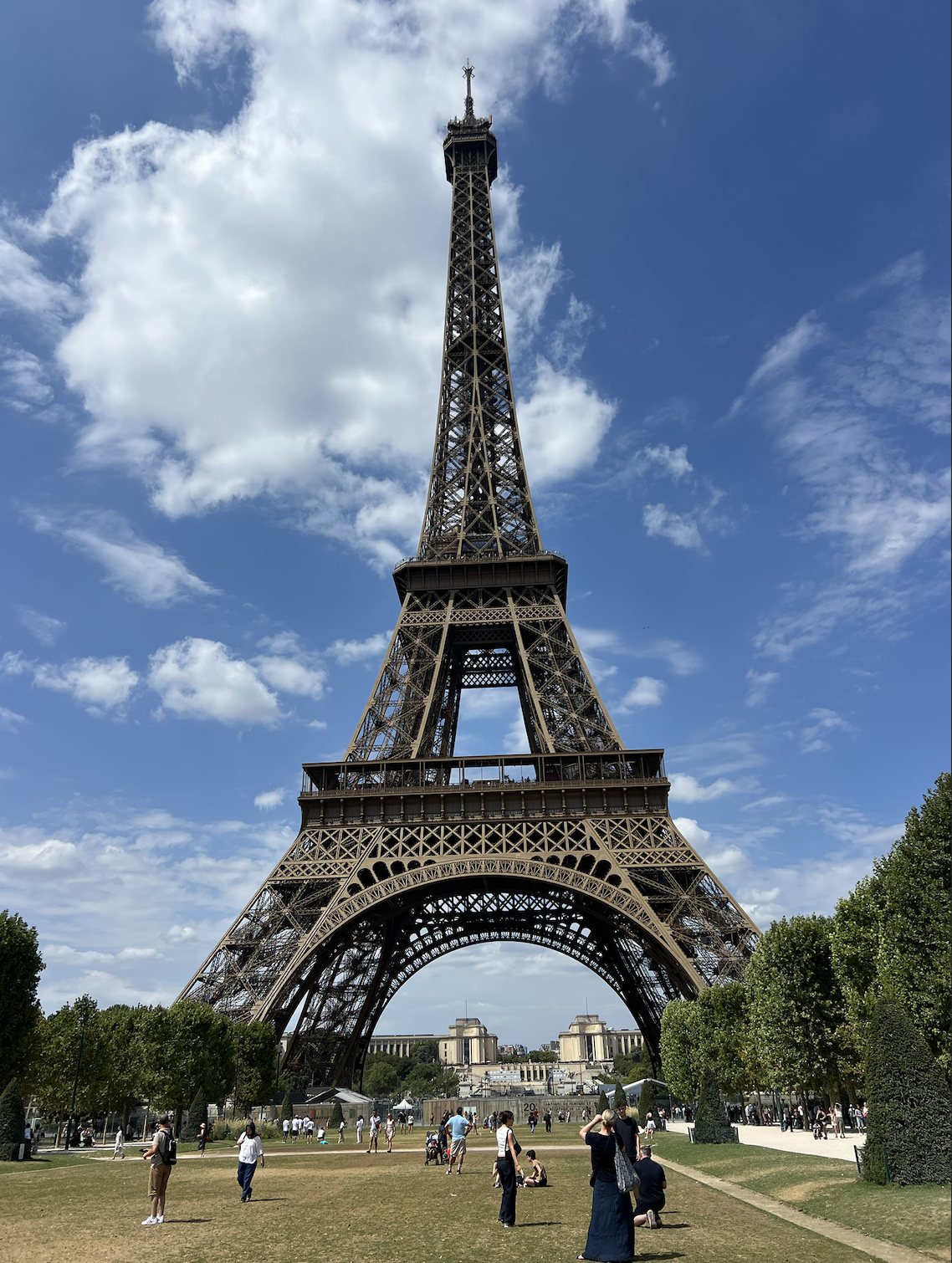
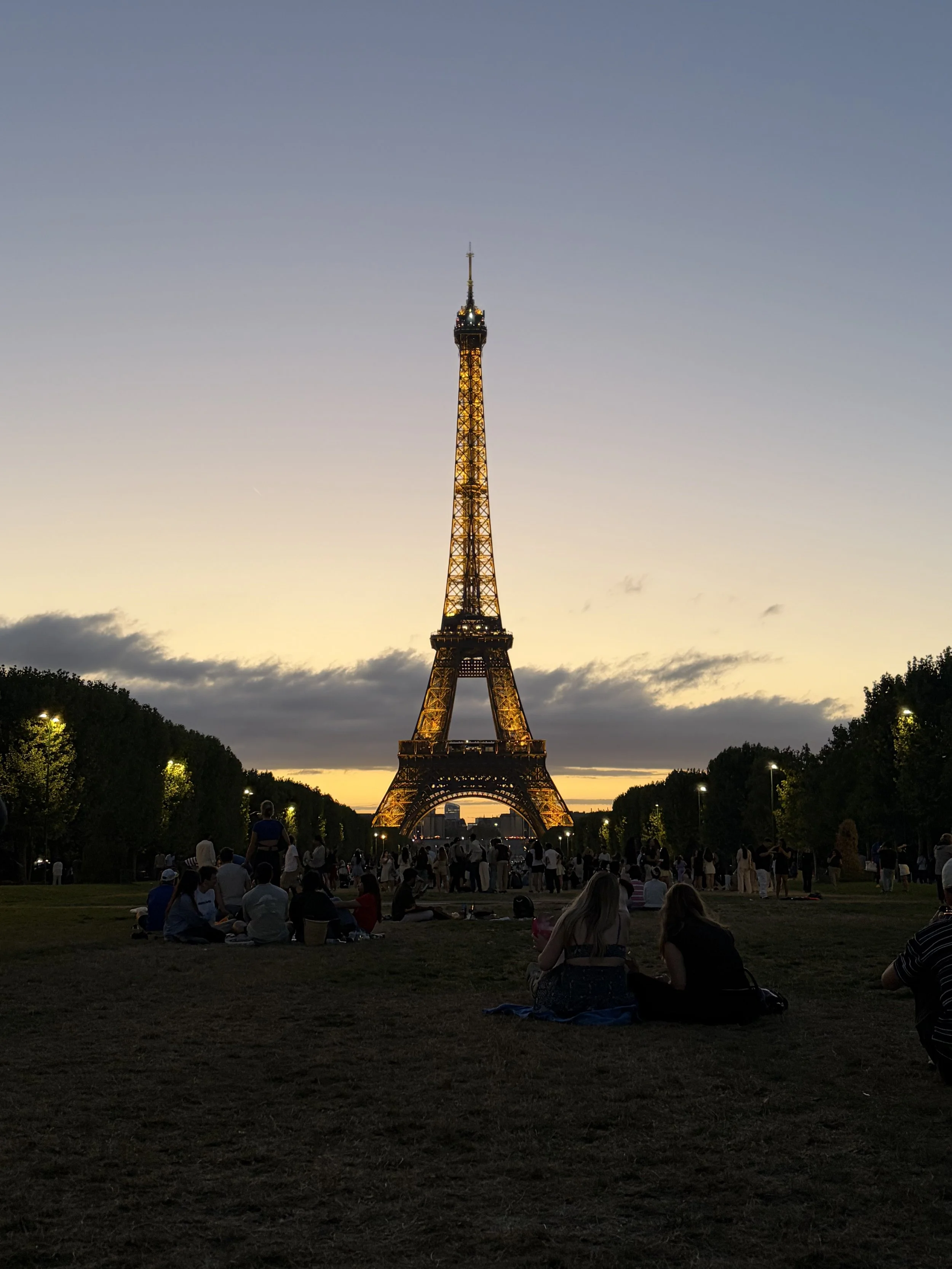
Eiffel Tower

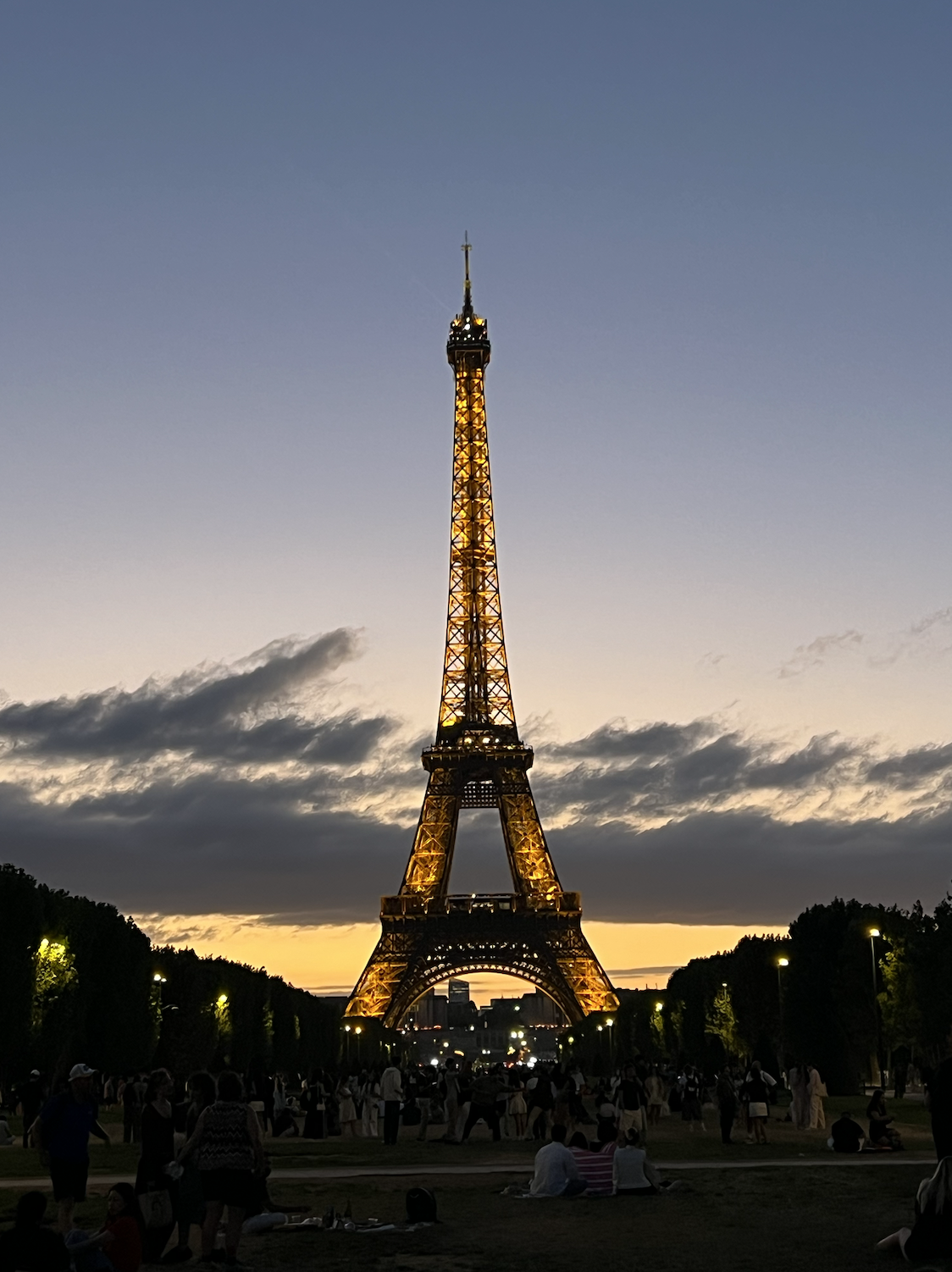
Eiffel Tower

Les Miserables I found significantly discusses this topic of connection and love. Victor Hugo’s writing on this struck me in such a way that he was portraying these things as what being human is about, and that they are the strongest forces in times of both darkness and light. Having spent three weeks in Paris, I found that this city speaks to me similarly. When I visited the Eiffel Tower was when this idea came all together, which I know is just so extremely cliche, but looking around me I was surrounded by this as I could see all the various types of relationships and love that fill the space. A couple sitting in front of me, a child running in circles around their parents who watched with amusement, and when I looked closer I was lucky enough to be surrounded by the laughter and smiles of friends. In Les Miserables we are also shown various forms of love and connection. Romantic love through Cosette and Marius, familial love through Jean Valjean and Fantine's care for Cosette, and also friendship through the ABC. Through these connections between one another we saw how it can influence change in one's person, allow forgiveness, bring happiness, and change one's life.

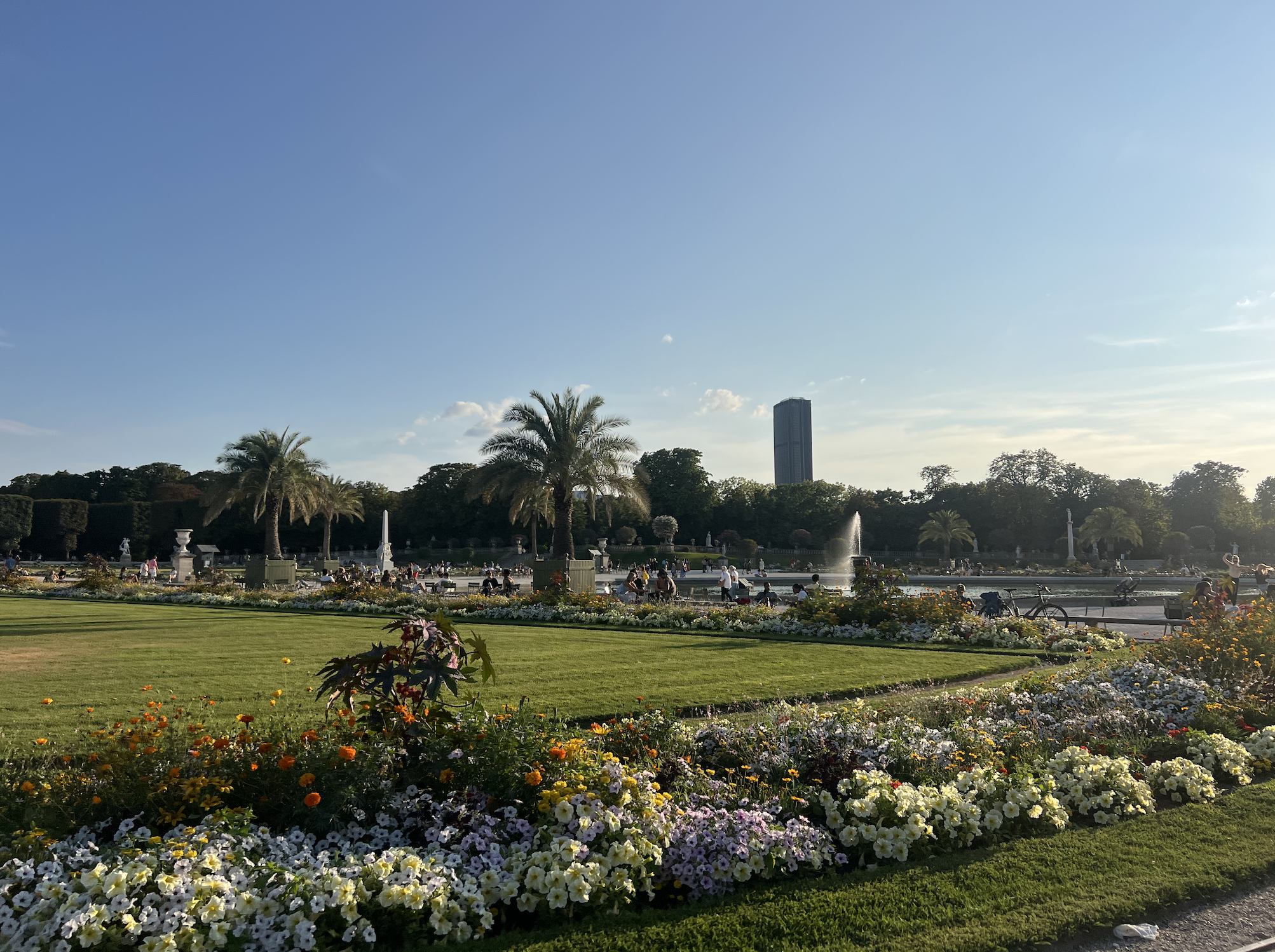
Luxembourg Garden

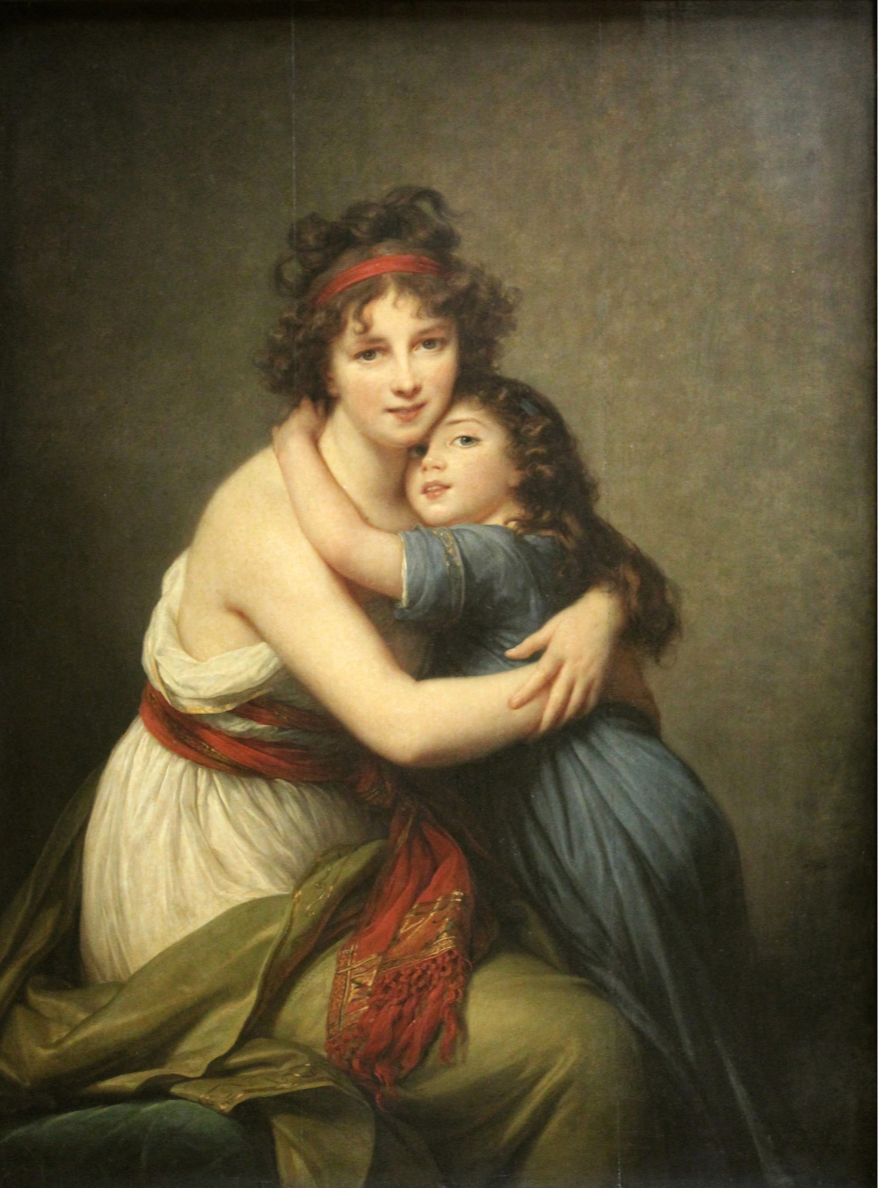
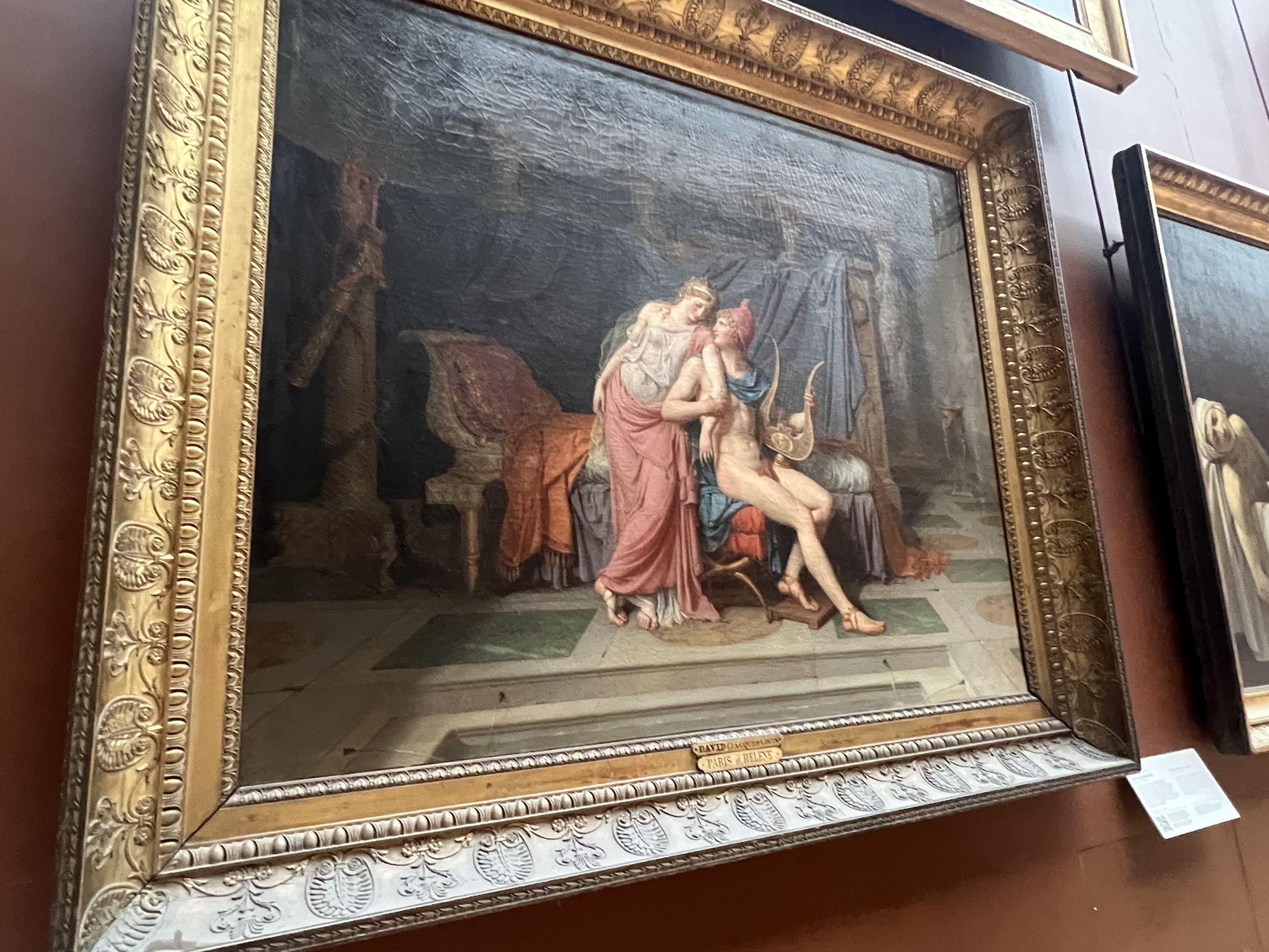
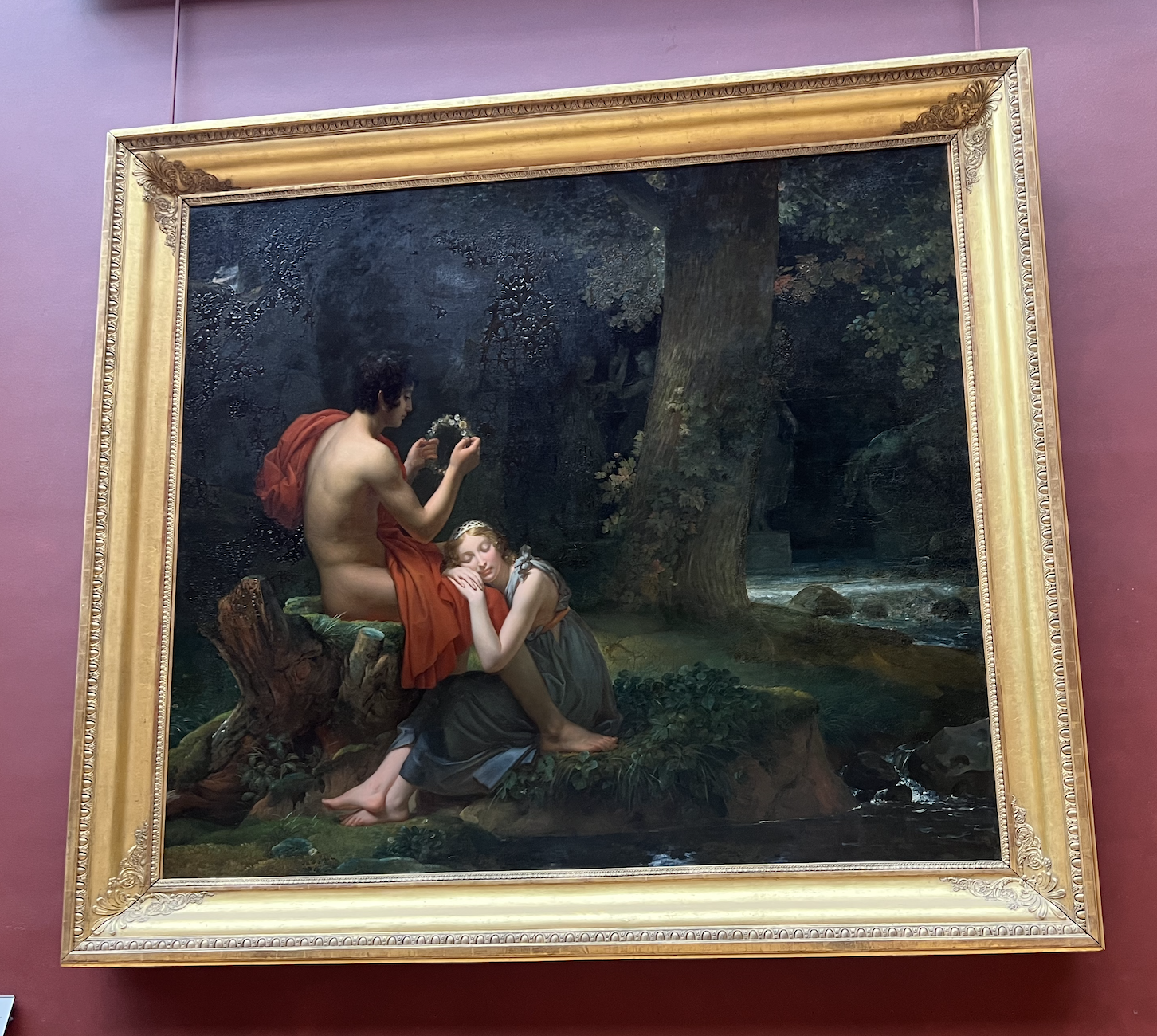
The Eiffel Tower wasn't the only place I found this, it is all around this city. The Luxembourg Garden carries an ambience of peacefulness and beauty in a way that creates this sense of romance as one walks through the paths, past the fountains and flowers. Art was plentiful in showing these connections as well. The Louvre contained many paintings portraying love. For instance, maternal love, the relationship between mother and daughter was seen through Self-Portrait with Her Daughter, Julie by Élisabeth Louise Vigée Le Brun. I found portrayals of romantic love and youthful love through Daphnis and Chloé by François Gérard, and The Loves of Paris and Helen by Jacques-Louis David. 

Looking back at what I have mentioned above I have gained an evolved perspective on what connection and love in society can be. As I walk away from this time I want to carry the idea of love shared by Hugo which is that love, kindness and compassion are what allow us to fight against the darkness that surrounds our society. Importantly, this must be shared to all individuals of society, including people who society has shunned and marked as undeserving of these. By sharing love, compassion, and kindness we can stand alongside all and allow opportunity for redemption, turn around, healing, and ultimately happiness and love for all. 

I would like to end my blogs with a thank you to Professor Andrew, my amazing classmates, and the cities of London and Paris for this incredible experience. 

WHO IS THAT?

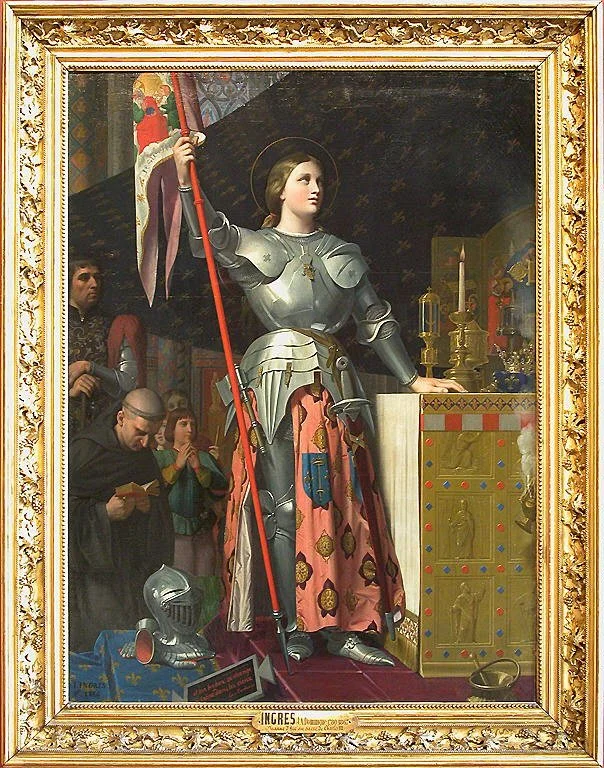
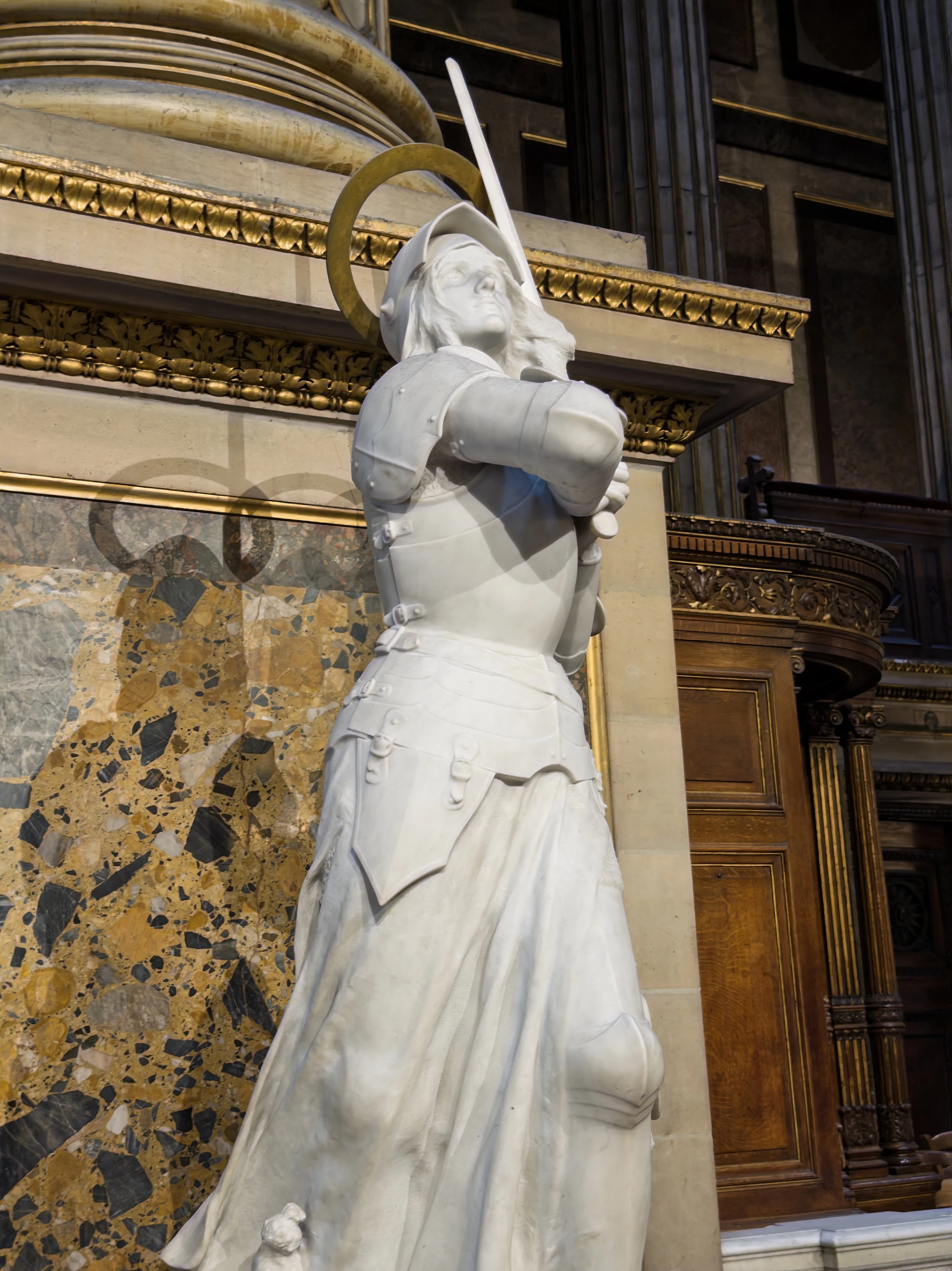
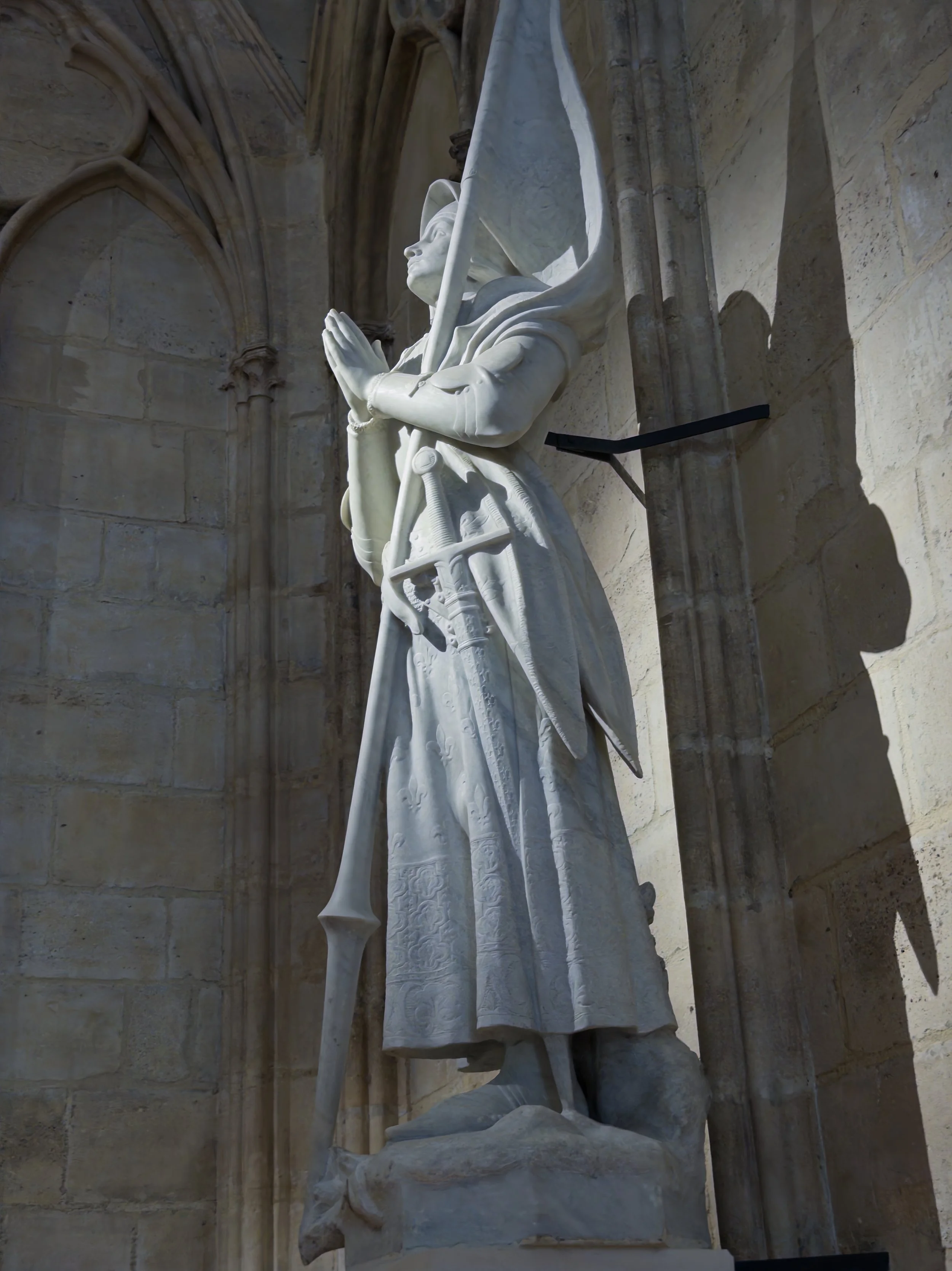
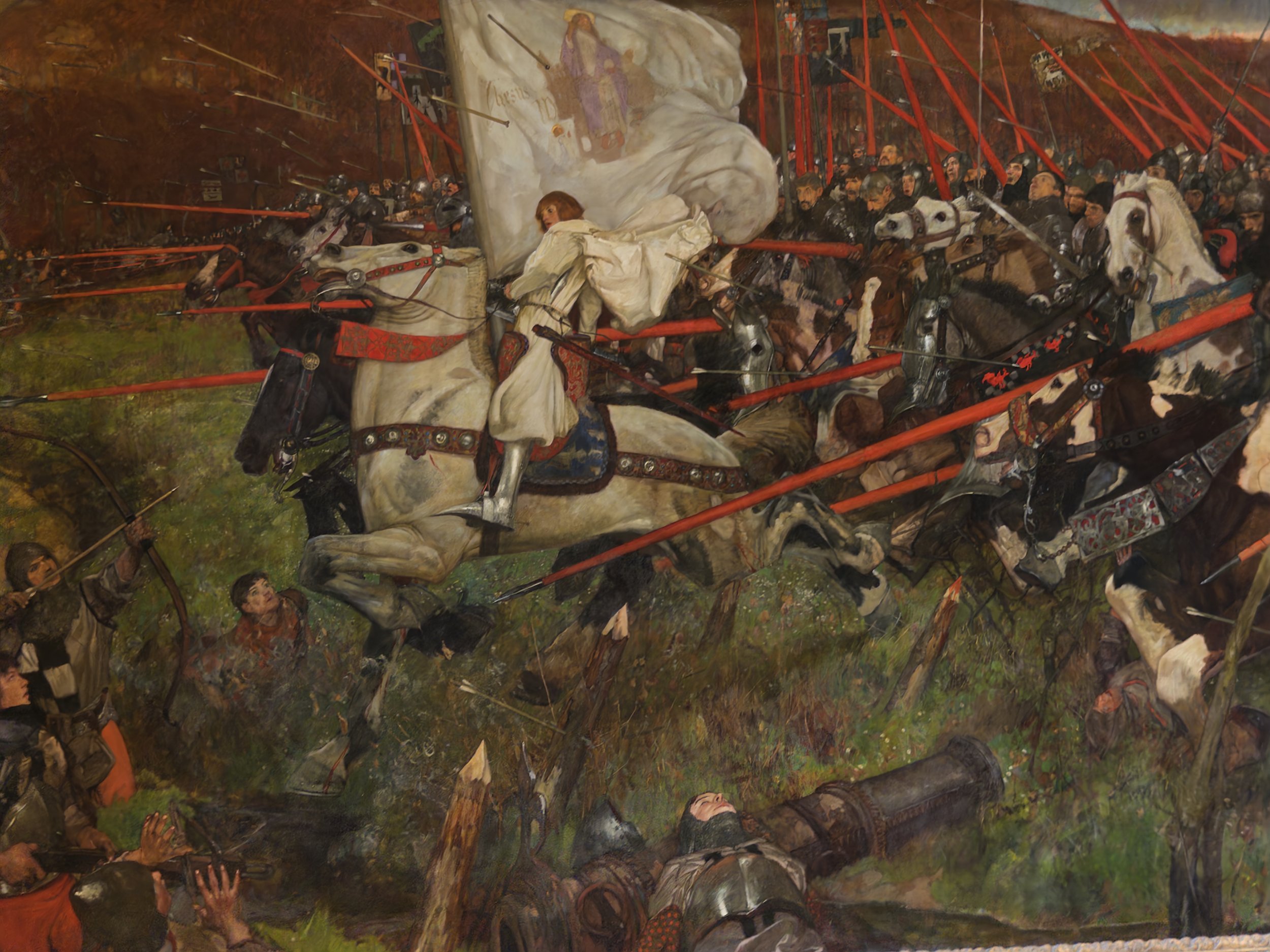
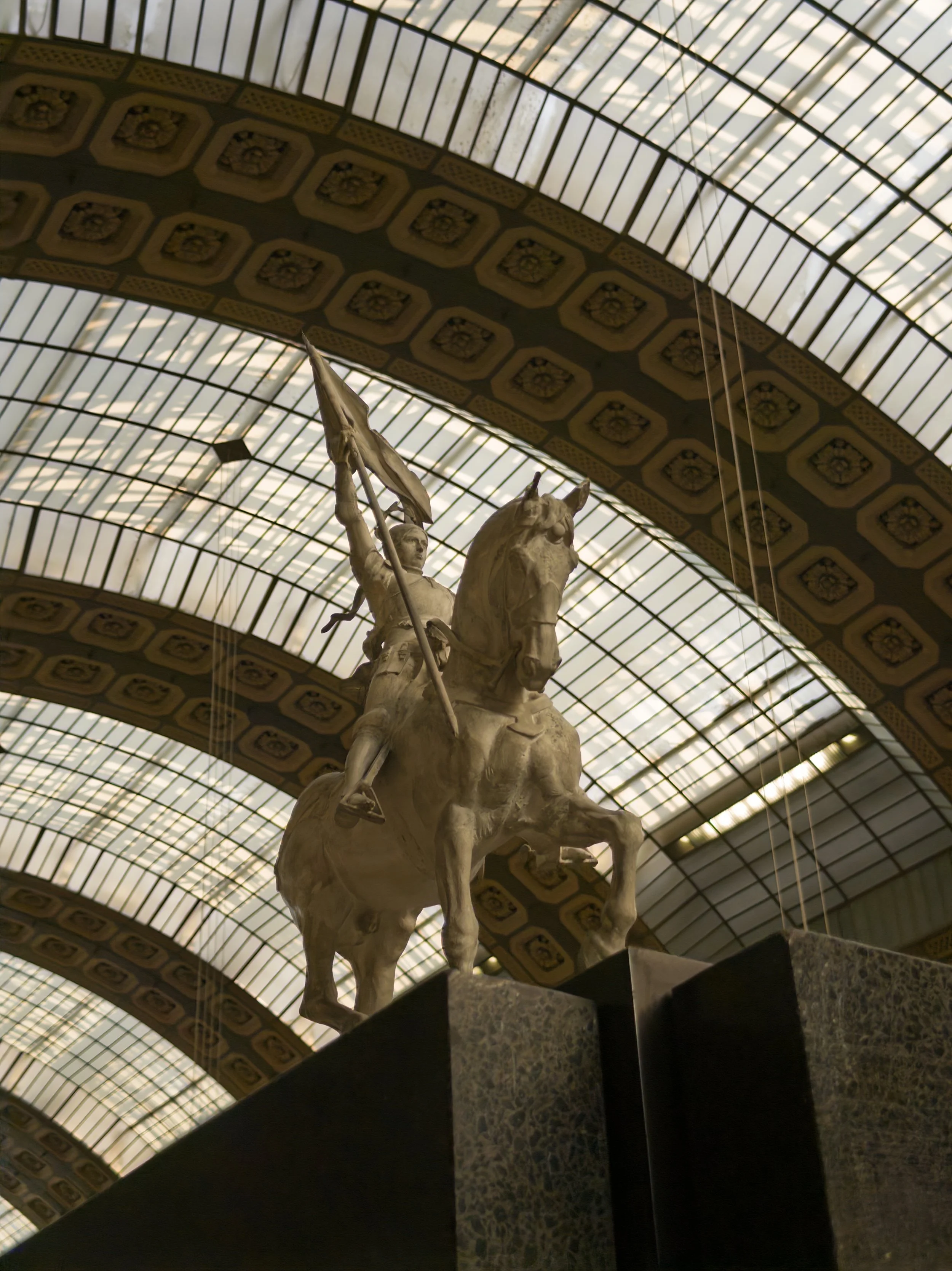
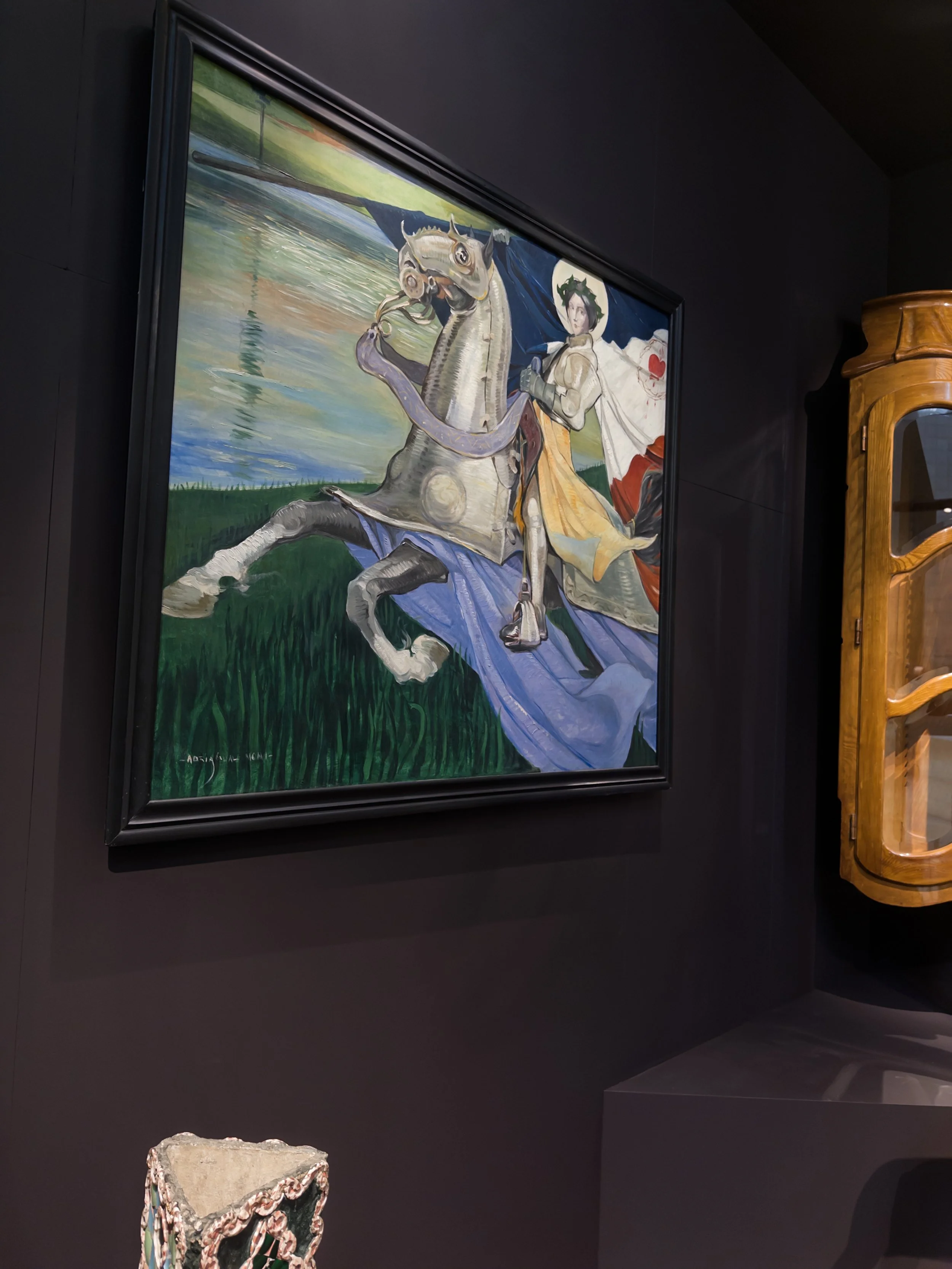
What’s in a name? I fell down this rabbit-hole of namesakes when I first noticed all of the ‘Joan of Arc’ imagery as we trekked across Paris. From the Église de la Madeleine to the Louvre, it seemed everywhere we went had a statue or painting of her. As the patron saint of France, it was hard for me to ignore the constant reminder of where I got my name (although I find my parents’ reasoning dubious at best considering I’ve never met a Joan who wasn’t white or 80 years old).

Joan of Arc sculpted by François-Raoul Larche at the Église de la Madeleine

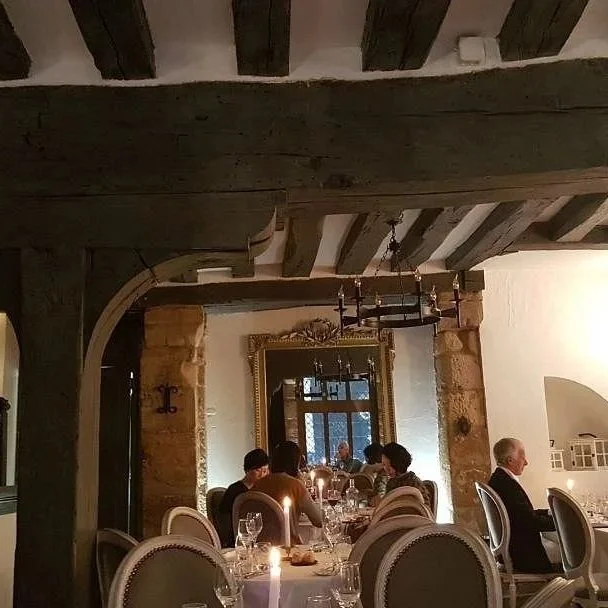
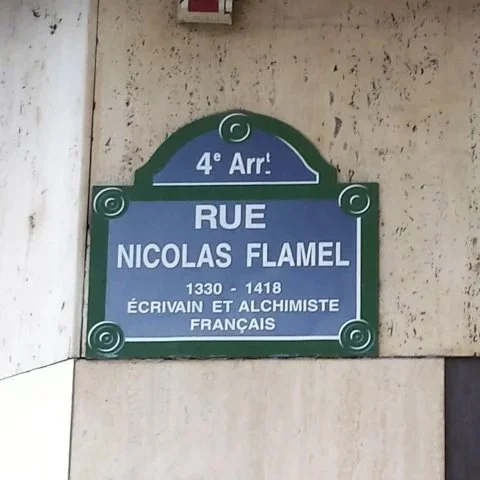
With names, legacy, and Les Mis always on my mind during this program, I couldn’t help but wonder where Victor Hugo could have gotten the inspiration to name his characters. As someone who loves creative writing I don’t think it’s possible to name a character without some kind of forethought or underlying meaning. Even the streets in Paris are meticulously named with historical figures’ home streets always boasting their titles, like Nicolas Flamel’s home (now amusingly turned restaurant):

(“French writer and alchemist”)

In Les Miserables especially, Hugo has Jean Valjean take on many different aliases from Monsieur Madeleine to Monsieur Leblanc in order to conceal himself. Clearly, names play an important role in the novel, which leads me to my original question: What’s in a name?

I’d now like to present what a few hours of mad Googling earned me:

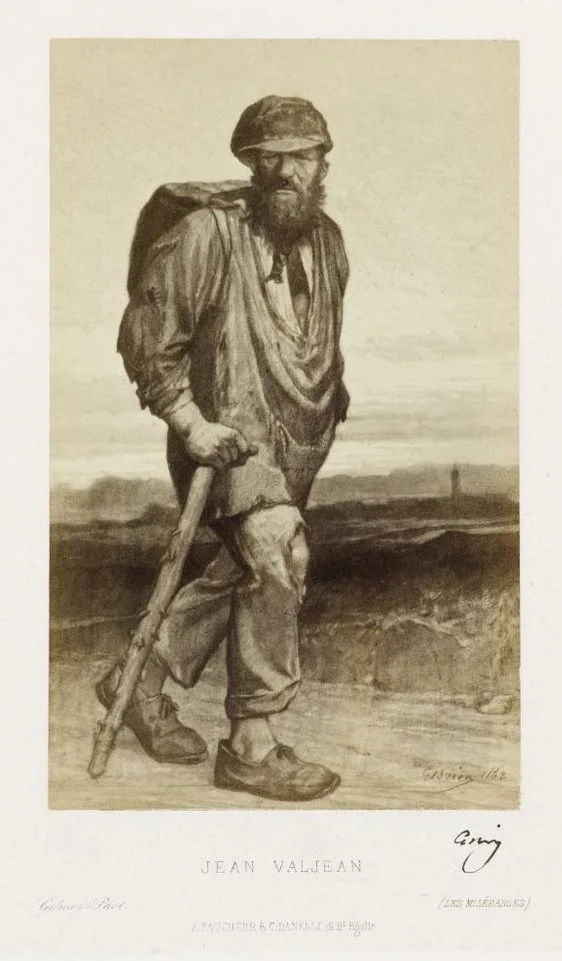
As we’ve talked about in class, Jean Valjean’s name represents the common everyman, something akin to “John Doe” in the modern age. It comes from the contraction of “voilà Jean,” literally “here is Jean.” This generic namesake works well for his character as, in the beginning of the novel, he really is a nobody. The name gives him anonymity and an unspecial quality, fitting for, well…a regular person. Later in the novel, when Champmathieu is found by Javert, the anonymous quality of Valjean’s name aids him in the mix-up. Since the name is so generic, it’s believable that “the local pronunciation turns ‘Jean’ into ‘Chan’” in Auvergne where Champmathieu is found. 

Additionally, Jean Valjean is undeniably presented as a Christ-like figure in the novel with his resurrection from wretchedness and internal spirituality of love and faith. This ties into Jean Valjean’s name as a pun on a biblical reference. When Pontius Pilate presents Jesus Christ bound to the cross, he announces “ecce homo” or “Behold the man” (ie. voilà Jean!) This reference is made again when Valjean is on his deathbed. He stands with his final strength to grab a copper crucifix off the wall and says “in a loud voice as he laid the crucifix on the table, ‘There’s the great martyr.’” In the original text, Hugo writes, “Voilà le grand martyr!” 

Another theory suggests Jean Valjean could be a reference to the character’s salvation, symbolizing his journey with ‘val’ relating to valley. Jean appearing on either side of it alludes to the novel’s themes on redemption. As a whole, it is fascinating how ‘Jean Valjean’ as a name plagues the character, often used to dehumanize and insult him.

As he rises from wretchedness and his role as an ex-convict, Jean Valjean assumes the title of Monsieur Madeleine. This too is a biblical allusion, but to Mary Magdalene. It represents his selflessness and sacrifice. In a way, he is the mother of the town, nurturing each of its residents and spreading his gospel of love.

Some of the names Hugo chooses are much more obvious, like Monsieur Leblanc, (literally Mr. White), being because of Valjean’s stark white head of hair. Interestingly, I discovered that Prisoner 24601 could be a reference to Hugo’s own birthday, as he believed he was conceived on 24th of June, 1801.

The time would come when that name would ring in his ears, when the hideous words ‘Jean Valjean’ would suddenly emerge from the darkness and loom before him
— Les Miserables Part I, Book VII, Chapter III, p. 205

For the other characters, I found the name “Cosette” to come from a pun on “cosseted and beloved,” which perfectly match her angelic nature and the love that Fantine has for her. Though it’s often forgotten her given name is Euphrasie, it is said in the book that “with that endearing nature and charming instinct that mothers and the populace have,” Euphrasie became Cosette. It is also speculated that Cosette could come from the French word “chosette” which literally means “little thing.” As a cute nickname from mother to daughter, I like this interpretation the best. 

It is given in the book that Eponine’s name comes as a result of her mother “with a taste for silly novels” naming her a frivolous, flowery name after a romance novel. This is likely the character “Eponina or Epponina” which was a popular figure in 19th century historical romances. It is also theorized that Eponine’s name may come from the word “eponymous,” basically to imply that she is a “girl named after herself” or a girl without a name. This could represent both her poverty, in that she has no name for herself, and also her independence in trying to rewrite that fact by defying her family. 

Fantine’s name is easily pinned as a derivative of “enfantin,” or child-like, in order to symbolize her purity and innocence before her fall. Unfortunately, I couldn’t find much on where Javert’s name comes from but it’s interesting to note that he only has a first name since historically in France, abandoned children or those from lower classes were often recorded with only a single name which checks out with Javert’s parents.

Names are fascinating to me both as literary choices and as what they can symbolize. (Did you know that gavroche is now considered Parisian slang as a common noun for a street urchin?) They can be ordinary or ridiculous, chosen lovingly or almost arbitrarily, but they inevitably accumulate meaning. Jean Valjean cannot escape his name, and neither can I with the way she seems to be following me on this trip.

Regardless of my doubts for the validity of my parents’ claim, I still love my name. I have always been inspired by the story of Joan of Arc, and, honestly, for a long time I’d hoped for a similar destiny of greatness. Plagued with visions at 17 with the key to winning France a victory at the siege of Orléans, Joan’s future changed in an instant. She went from a peasant teenager to a military leader who saved France from English domination. One failed siege later, she was burned at the stake at 19 (maybe that’s where my fear of failure comes from). All of this to say, names carry so much meaning. May I one day live up to the legacy!

P.S. if you’re at all curious why my sister is named Emily, here is a link to the story my parents tell. (This one I actually believe!)

Grass grows over and rain washes away

I’ve been debating how to open this blog. I thought maybe a rhetorical question could be good, real solid English class stuff y’know? I’ll list a few potential openings. Why do bad things happen to good people? Can a single person make a difference? What is the point of life? You can see why these are perhaps not the best openers. They’re a little much for a student travel blog…

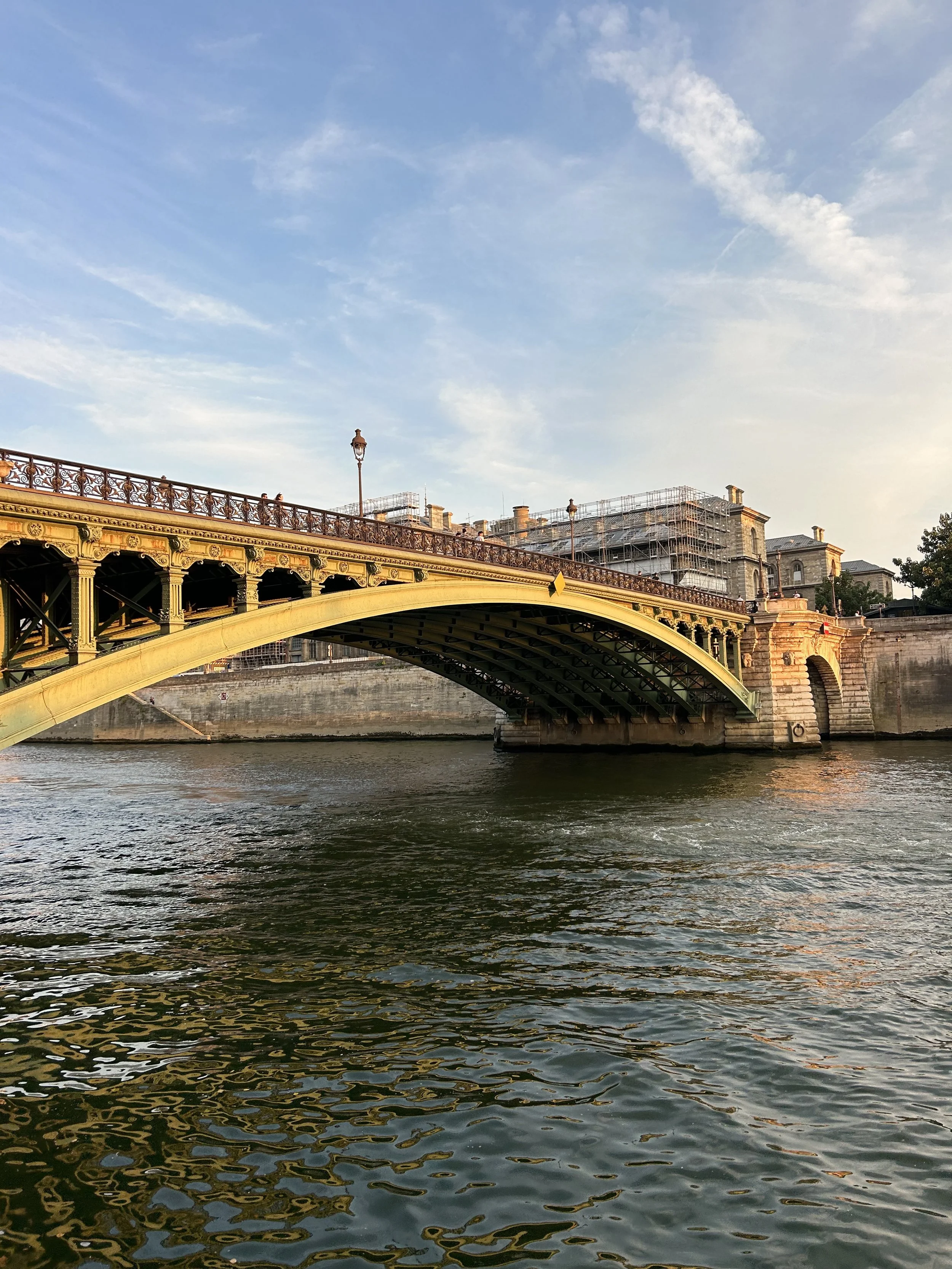
The Seine, where Javert takes his fatal jump.

Truthfully though, during our time bookpacking I've asked myself more questions than I’ve answered. Getting an entire month to unpack (bookpack some might say) A Tale of Two Cities by Charles Dickens and Les Misérables by Victor Hugo has been wonderful. It has been a gift to be able to take time and sit with the texts. To walk the streets as the characters did and try to place ourselves in their shoes. To imagine a Paris in the midst of revolution and domestic bliss.

A Tale of Two Cities was published in 1859, with Les Misérables published shortly after in 1862. That’s 167 years ago. Yet here we are, meeting outside the Sephora searching for traces of the higgledy-piggledy (a beloved phrase within our class) Paris of the past. So, here’s another loaded rhetorical question– why are we still reading books from 1859 and 1862 today?

I’ll give you my long-winded answer.

I knew, vaguely, that these were notable books before reading them and the titles were largely the reason I wanted to take the class. Both books have been on my “To Read” list for a while now, probably having been added after looking up classic literature lists. And yet, I knew, if I was not incentivised, I was never going to finish Les Misérables. When I was 8 my voice teacher showed me her copy in preparation of doing the musical. I looked at “the brick” as we call it and decided right then I could never do that. So, to spite myself I decided I could and I would. I’m grateful I did.

So, what makes us want to read these books today? Even when I was young, I understood there was something moving about Les Misérables. My sister was playing “a lady of the night” in the junior production of Les Misérables, so naturally we were front row for all 8 shows. I cried every single time. I don’t think I even understood what had upset me so much. I’m sure I hadn’t picked up on any of the plot, I just knew that people were experiencing great hardships that I could never have imagined. This was probably one of my first exposures to art exploring both the highs and lows of the human experience. As I read Les Misérables in preparation for the class, I once again found myself with tears in my eyes, but this time I was able to take in the work in its original, full, unabridged glory.

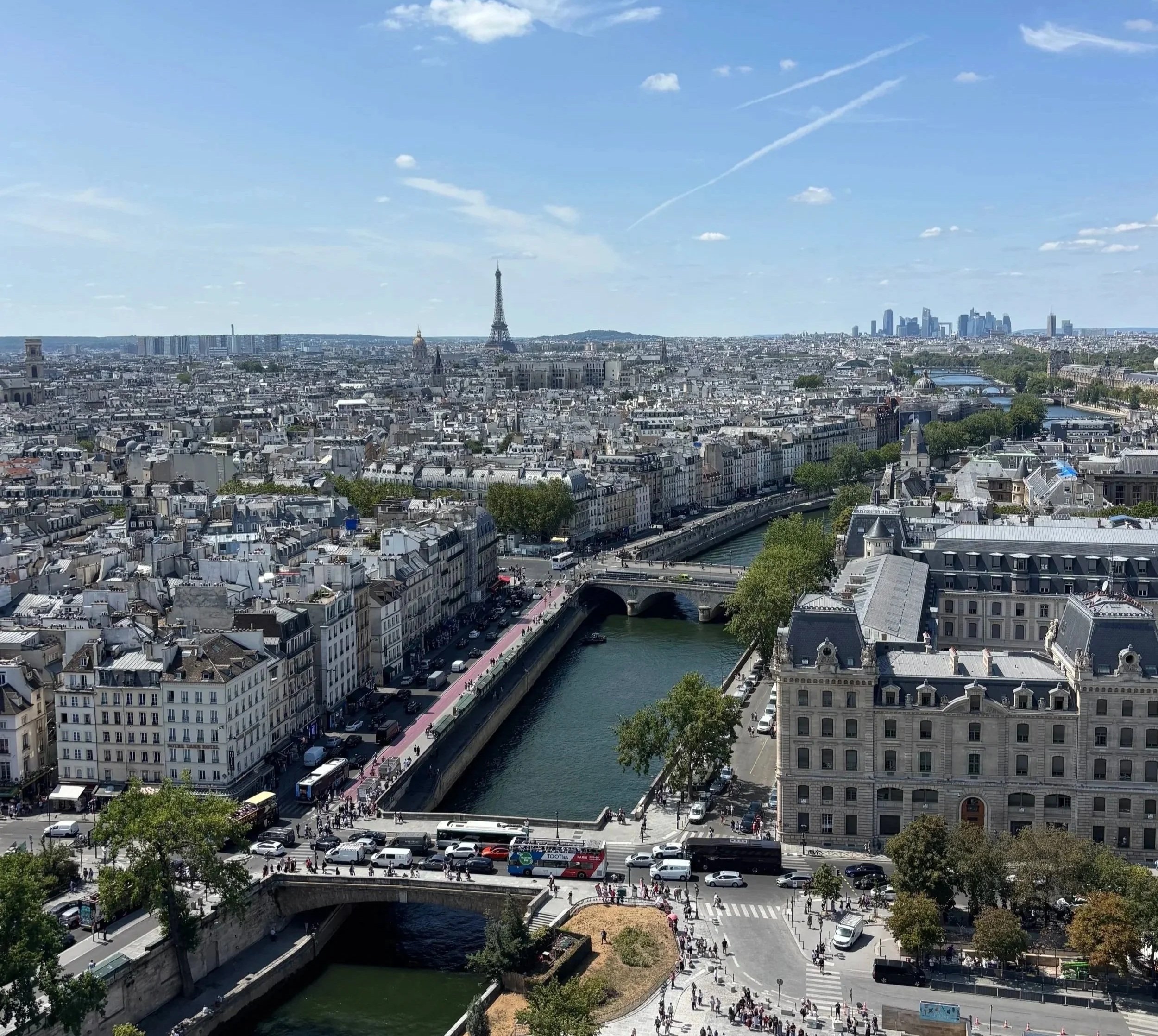
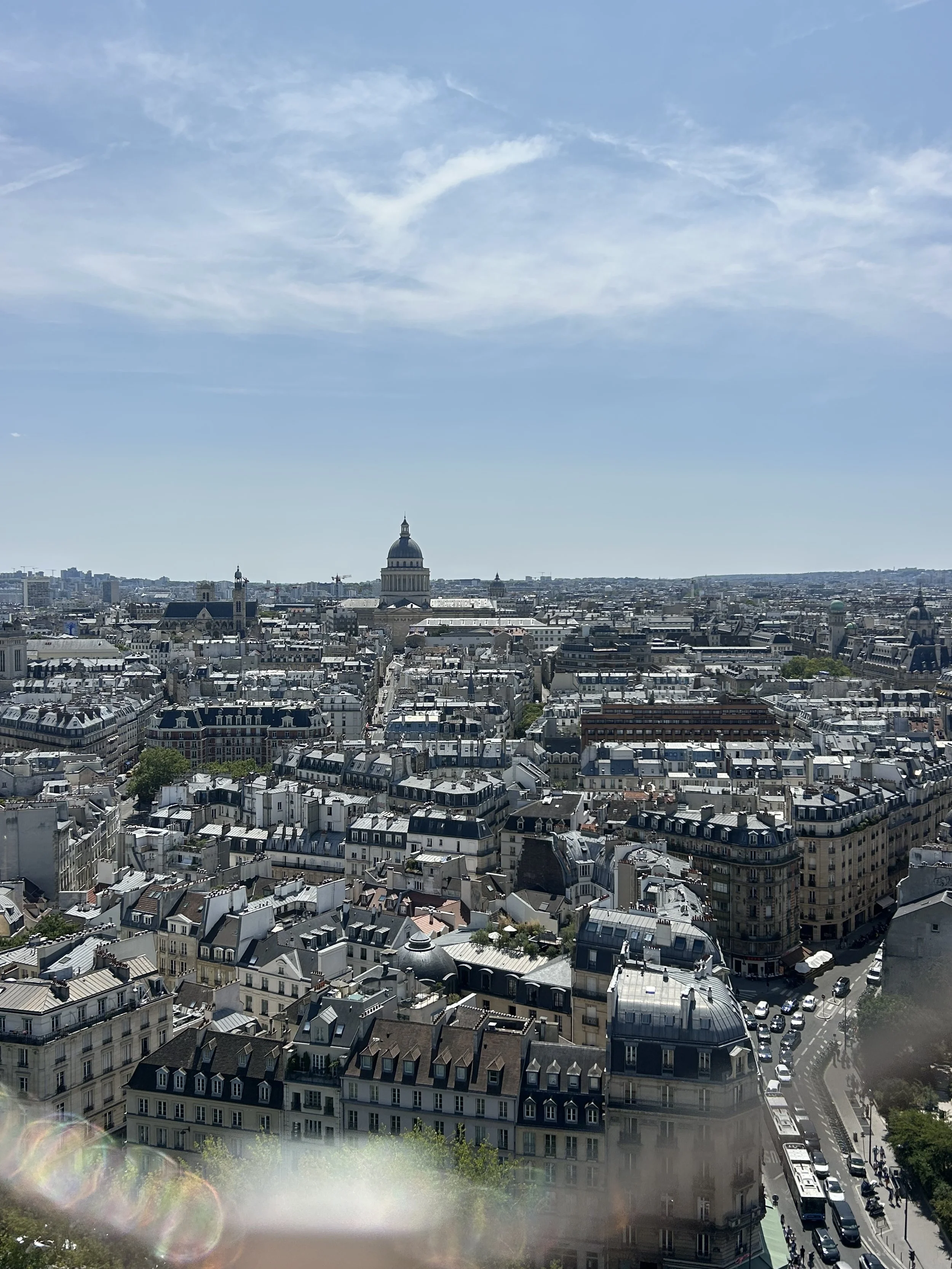
The view from a tower In Notre Dame.

Hugo’s work is so reminiscent of Paris itself. When we trace Jean Valjean and Cosette’s escape from Javert, you get a sense of how one can disappear amongst the diagonal streets and alleyways. When reading the book back home, it often felt so sprawling yet specific that it was hard to make sense of, but when you stand at the students’ barricade of 1832, you get a sense of the people over the individual. The book does a marvelous job of helping modern readers understand the political state and tension of the time. It covers important historic moments with a degree of detail not found in most academic materials. But even with the Waterloo tangent being delightfully entertaining, the most memorable moments for me, were tied to the personal journeys of characters. These moments are why I believe we still care so much about this text. Detached recountings of the July Monarchy and June Rebellion are plentiful, but heart wrenching tales of friends standing beside each other before the National Guard are more rare and to me, more valuable.

In my screenwriting courses at USC, we talk a lot about the personal being the universal. I find this to hold true for Les Misérables. The French Revolution, and the following cycles that Les Misérables follows, are incredibly important in human history’s march toward democracy. But numbers and facts can only tell you so much. It’s the characters and relationships that impart a sense of scale, cost, and purpose to such events. Through characters like Marius and his grandfather, we get to understand how different political beliefs interacted with each other. Marius being cast out of his own home by his royalist grandfather for his initial admiration for Napoleon speaks to the political tension of the time. Beyond this, Hugo can dive deeper than many academic works, he is not constricted by what we deem important enough to be remembered.

History neglects nearly all these details, and cannot do otherwise: it would be overwhelmed by their infinitude. Yet these details, wrongly called trivial - there is no trivial fact in the affairs of man, no trivial leaf in the vegetable world - do serve a purpose. The features of the years are what the face of the century is composed of.
— Victor Hugo

With this in mind, it makes sense why Hugo covered the students’ barricade of 1832. There was no great change as a result of the fight, and the students are brought down in a horrific, beautiful ending. Its lack of place in textbooks does not make it insignificant. Real people’s lives were lost, real lasting damage was done.

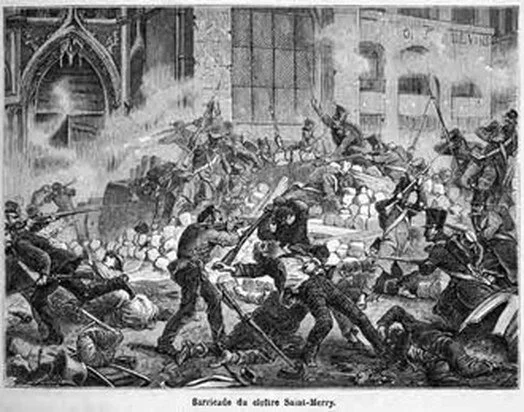
Depiction of the barricade from Les Misérables.

Les Misérables does not let you separate yourself from the past, it puts you in it. And once you are in it, it can feel an awful lot like today. And for me, that’s why it is still moving. Circumstances change, but grief and pain are a human truth that 167 years cannot change. There are many ways in which you could draw comparisons between modern day and Les Misérables. Parallels are plentiful for the inequality and injustice of life, and these instances are best felt through the experiences of characters. The unfairness of Jean Valjean's punishment evokes the same anger within me that cases of oppression do today. This is a gift. Hugo reminds readers,

The counterfeits of the past assume false names, and gladly call themselves the future. This specter, this past, is given to falsifying its own passport. Let us inform ourselves of the trap. Let us be on our guard. The past has a visage, superstition, and a mask, hypocrisy. Let us denounce the visage and let us tear off the mask.”
— Victor Hugo

Here lies one of the great importances of connecting to our past. Hugo provides a wonderful opportunity to fulfill our great duty.

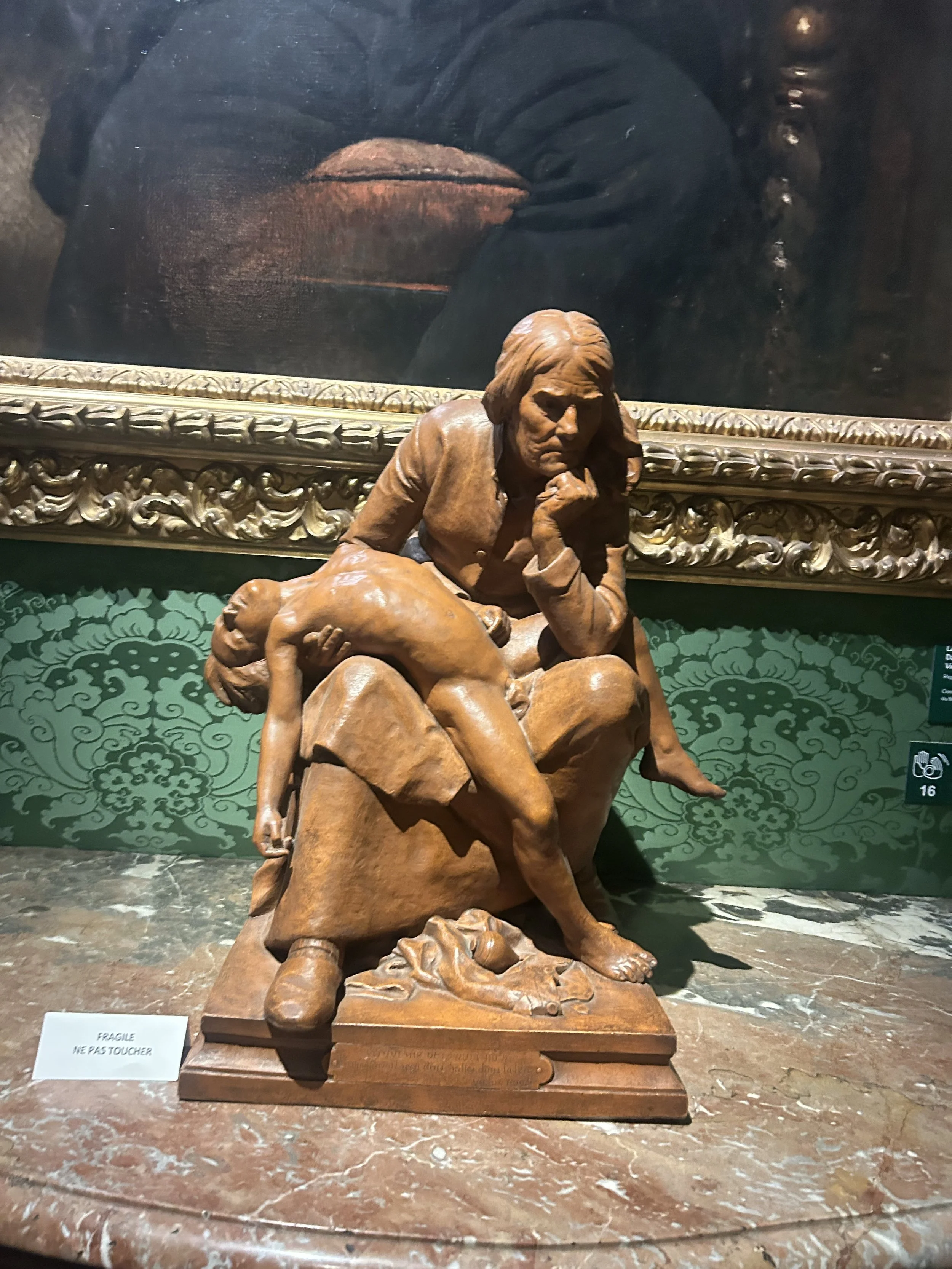
Sculpture from Victor Hugo’s Paris residence. The piece was inspired by imagery from Hugo’s political poem Souvenir de la nuit du 4 ("Memory of the Night of the 4th").

Honestly though, the most special part of reading this book had nothing to do with recognizing that we are constantly writing the history of tomorrow. To me, I cried while reading this because it reminded me that while there will always be darkness, there will always be light. Les Misérables does not sound like a happy book, but happy is a strong word. Les Misérables does not shy away from the hard and horrible truths of life. The world and the society we have created is unfair and unequal. Circumstance is not always under your control. Bad things will happen to good people.

I lie awake a lot thinking about this. Why? Why do bad things happen to good people? I haven’t got an answer and Les Misérables does not try to offer one. Instead, it offers time to grieve and a reason to hope. Marius loses the friends that had become his brothers. Hugo does not try to diminish or distract from that grief. He acknowledges it and holds your hand. He says to find joy and happiness not in spite of pain, but because of it. Life is as horrible as it is incredible. During Marius and Cosette’s wedding Hugo writes,

To have suffered, how good it is! Their grief made a halo around their happiness.
— Victor Hugo

I’m not sure I have quite as much conviction, but I can appreciate the sentiment. Hugo provides hope where he cannot provide answers. Monseigneur Bienvenu, the bishop who sets Jean Valjean on his path to goodness, is a testament to the change a single person can create. He wasn’t like Napoleon, deliberately deciding the fates of so many men. Monseigneur Bienvenue lived his life with compassion and kindness, and even if it had only reached one person, he still would’ve changed the world. In just Jean Valjean’s story, the lives of many were improved and so much love was born. And is that not the point of it all? To love others and be loved in return? Death is an unchangeable facet of life and what it takes cannot be returned. This is the hardest truth I’ve ever had to reckon with. In my life I’ve been trying to figure out how to go on living while those that I love cannot. I tried to cry quietly as we watched the musical adaptation of Les Misérables. The haunting loneliness and pain of “Empty Chairs at Empty Tables” seemed to speak to my grief so profoundly I didn’t know what to do myself. So I cling to Hugo’s closing reflections, the one that reminds me why the book mattered then, today, and tomorrow.
To love or have loved, that is enough. Ask nothing further. There is no other pearl to be found in the dark folds of life.
— Victor Hugo

Scrapbookpacking

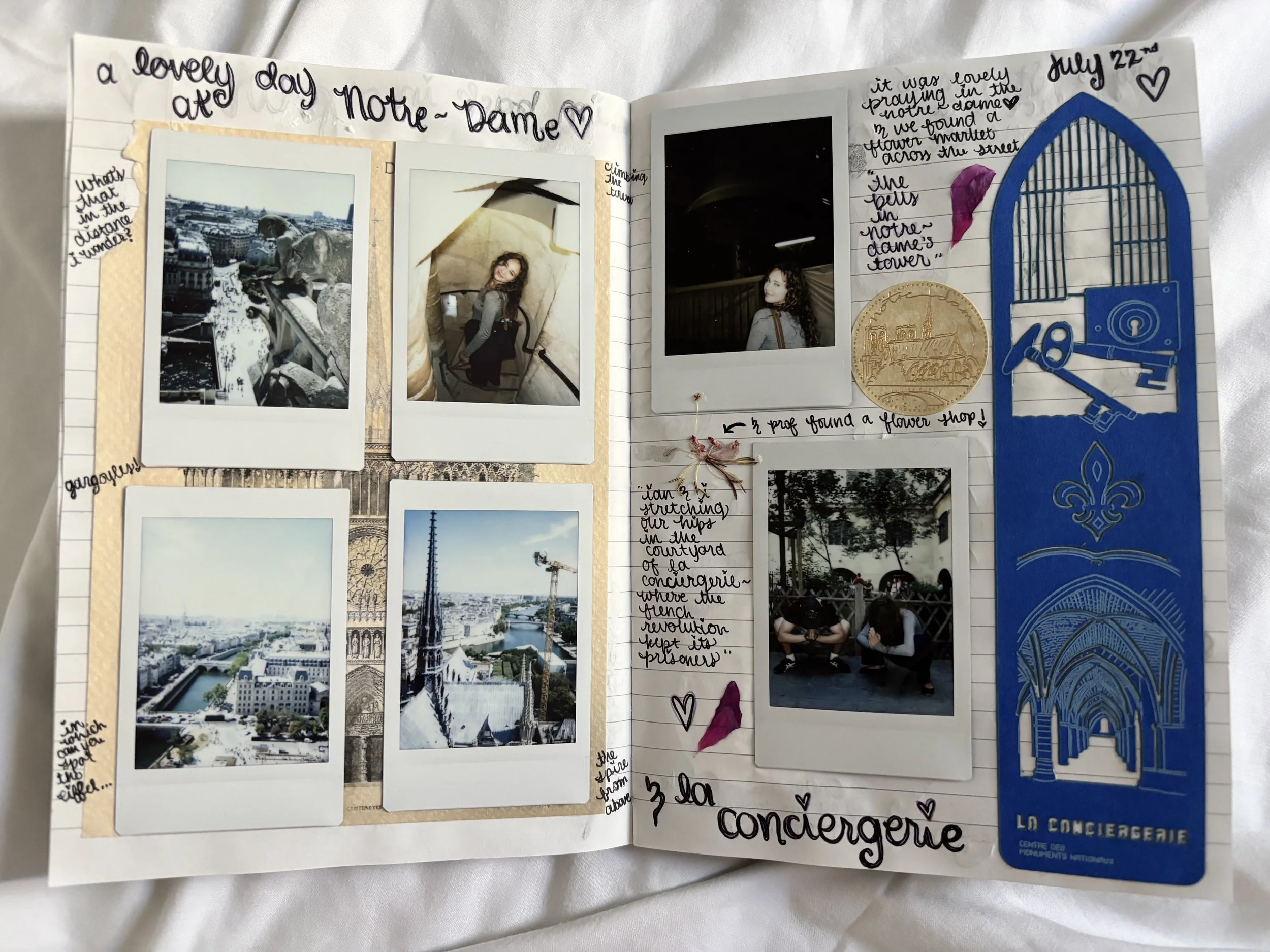
As the class bookpacked through London and Paris, I scrapbookpacked my fair share of the two cities. I have an utter fear of forgetting things important to me—my memories are precious to me, and I used to hold on to every single scrap of paper or useless receipt to protect them. But it crept a bit too close to hoarding, so now I create travel scrapbooks to recall my memories to life.

I honestly do not know what to write in this blog…Andrew asked me to include more of my personal voice, so I will try to share all of my thoughts these past couple of weeks regarding our class—though I’m sure it will be messy and tangled (like my hair!).

When I was a child, I had a perfect photographic memory. I retain these old memories, still clear, like a camera. Even now, there are certain days or events where this photographic memory will reactivate, and I’ll remember exactly what I was wearing, when, who said what, et cetera. But it is faultier and less accessible than in my childhood.

I also learned a love for reading when I was young. I was scared of growing up, and thought that trading the colorful illustrations of my picture books for greyish pages of black text meant just that. So I stayed away from books, until my second grade teacher told my mom I had to read more. She did a book club with me, with a hard book—we read The Odyssey. I found that in the blank spaces between each word, and in the half-seconds of darkness when I closed my eyes, my mind painted beautiful pictures of adventure. And so I fell in love with reading, especially the classics.

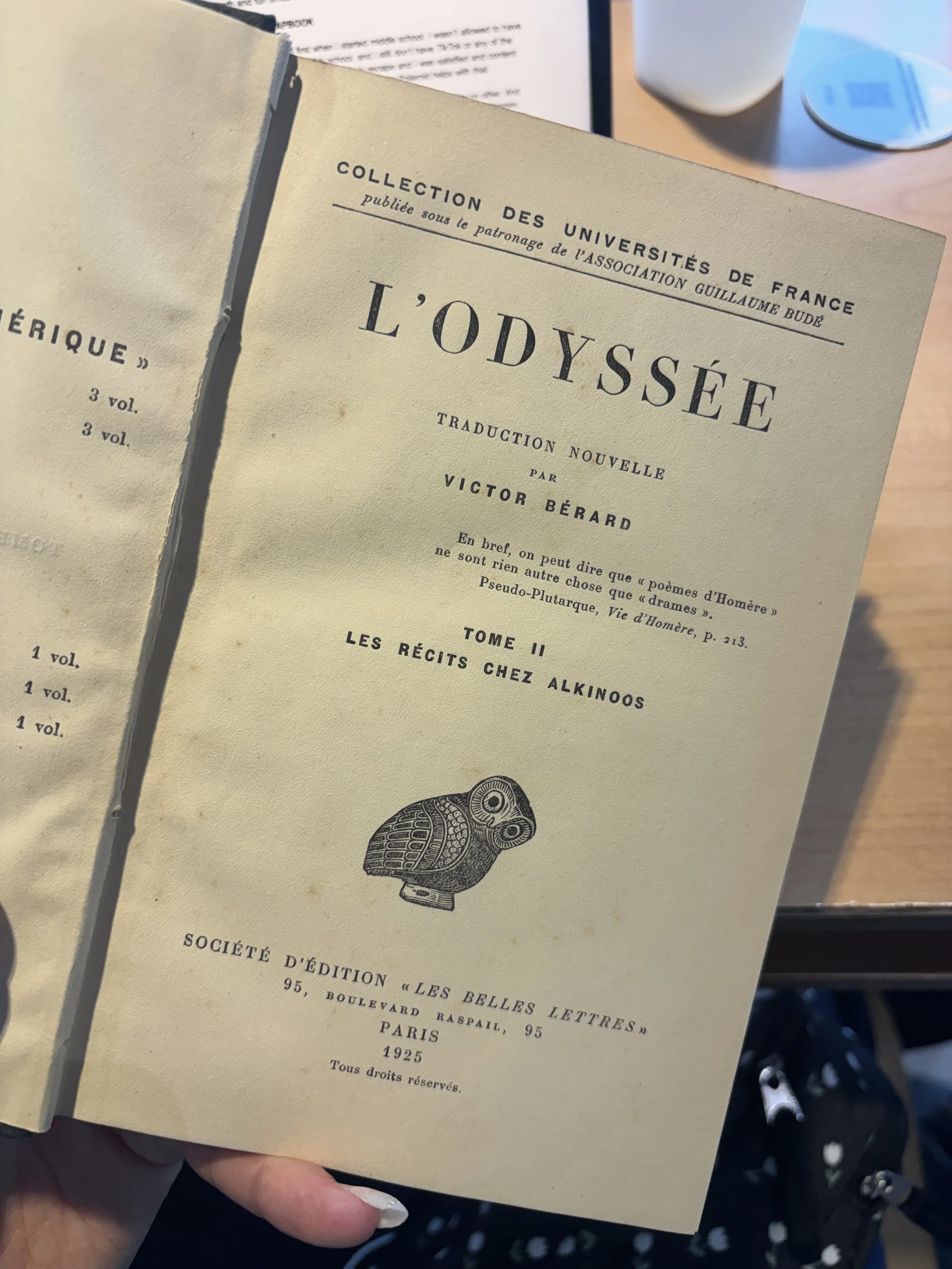
A 1925 copy of L’Odyssée I picked up in the 9e, at the antiquarian bookshop Andrew found in the back of Passage Jouffroy.

Thus, reading two classic pieces of literature—both important cultural texts, and visiting the sites each character once traversed (and most likely the authors), was an absolute dream of a class for me. 

But my memory isn’t what it used to be, it’s slower and dimmer now. It’s the fatal flaw of technology: excessive digital consumption being tied to a cognitive decline. And so I dutifully kept my scrapbook, marking down monuments both of the history we learned in class as well as of personal growth and fun times with friends. 

I raised without a phone, given my first when I started middle school. I wasn’t allowed to have Instagram until I was a sophomore in high school, and I still don’t have TikTok or any of the other social media apps. Back then, I used books to escape and I was satisfied and content with that. Now, even my photo gallery is overwhelming—my Polaroid helps with that.

But the dopamine hits I learned online were, as much as I hate to admit it, like no other. And even as my memory fades, I still vividly remember how happy I was before I had Instagram. And I’m not saying it’s the Internet’s fault that I always feel alone, I certainly felt that way even when I only had books. But even though my feed is bunnies and recipes and romantic Disney scenes, I struggle to feel alive as I once did. I feel like a zombie, and I feel my creativity leaving me. I want to be intelligent, but I don’t know how to be when I forget everything eventually. Especially when artificial intelligence will always beat me to the point. 

As someone who wants to be a writer, all of these ideas are unnerving to me. The entirety of this class, I have wondered: if Victor Hugo grew up in our generation, would he be able to write Les Misérables again? If Hugo had social media, and text messaging, would his brain still find a way to imagine 1400 pages? 

Hoping to pursue creative writing, I constantly wonder if I am still capable of doing so. Has the blue light I have exposed myself to severed the neurons necessary to paint such vivid images, am I now reduced to fuzzy Monets?

There’s a whole trope about girls being drained, or tired, and it being romanticized. There’s plenty of internet art of petite girls with long, droopy lashes and big doe eyes with purple circles and hair flowing as they drape themselves over the edge of their beds. Captions liken the art subjects to the artists themselves, some even as simple as: “me.” I know you’ve seen it, and if you haven’t, I know you can find it. I know sadness, and grief, and depression have always existed. It just feels so much easier to succumb to it now. 

And so even when I don’t have time, when it feels like homework, I make time to scrapbook the things we have learned and the places we have visited. The hobby keeps my eyes off the screen for the time being, and helps me retain my precious memories. I have a certain love, as well, for untouched classic literature, or old-fashioned cartography—and was fascinated with Professor’s ability to do so as he taught us how to map old maps onto new.

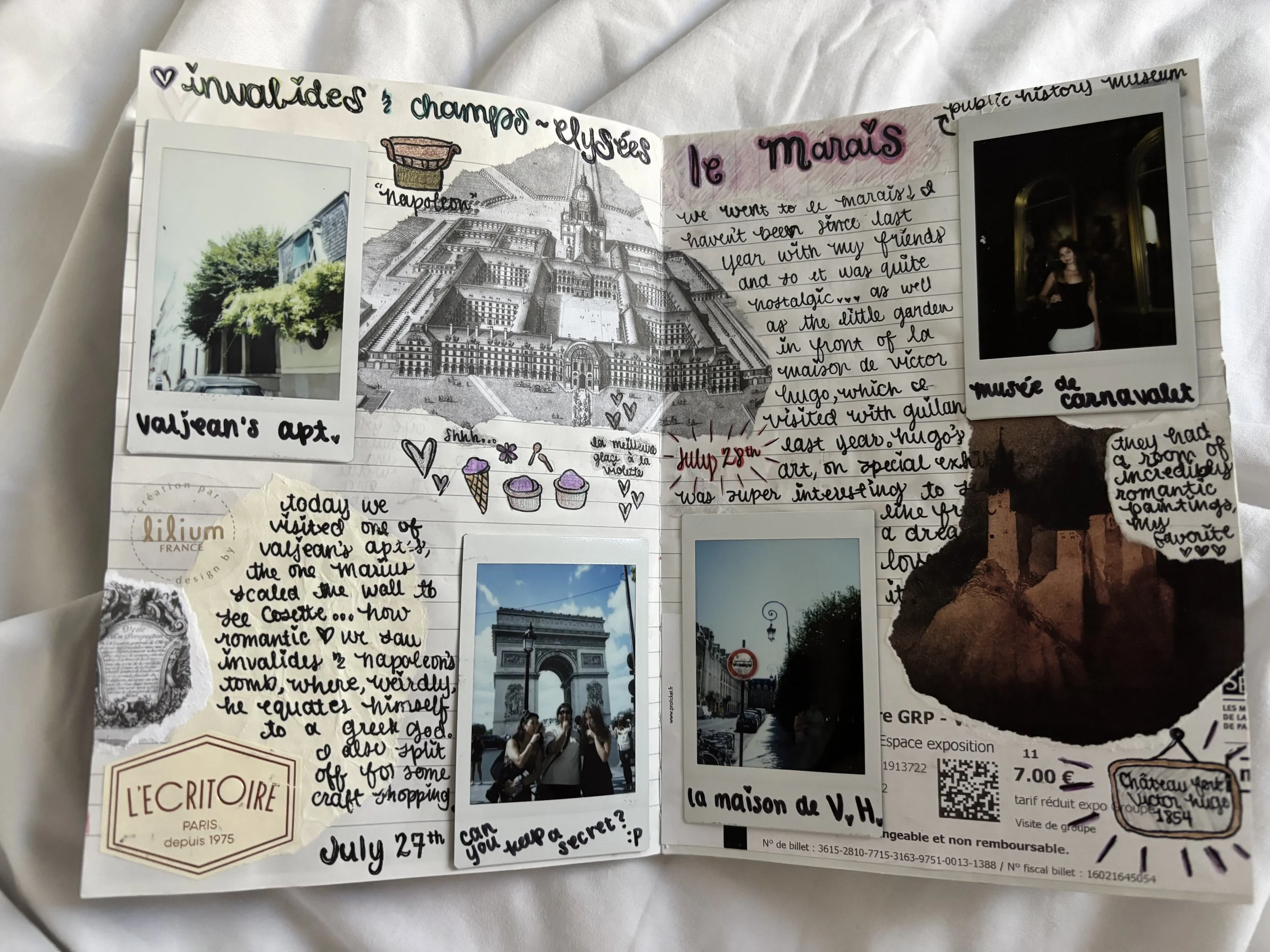
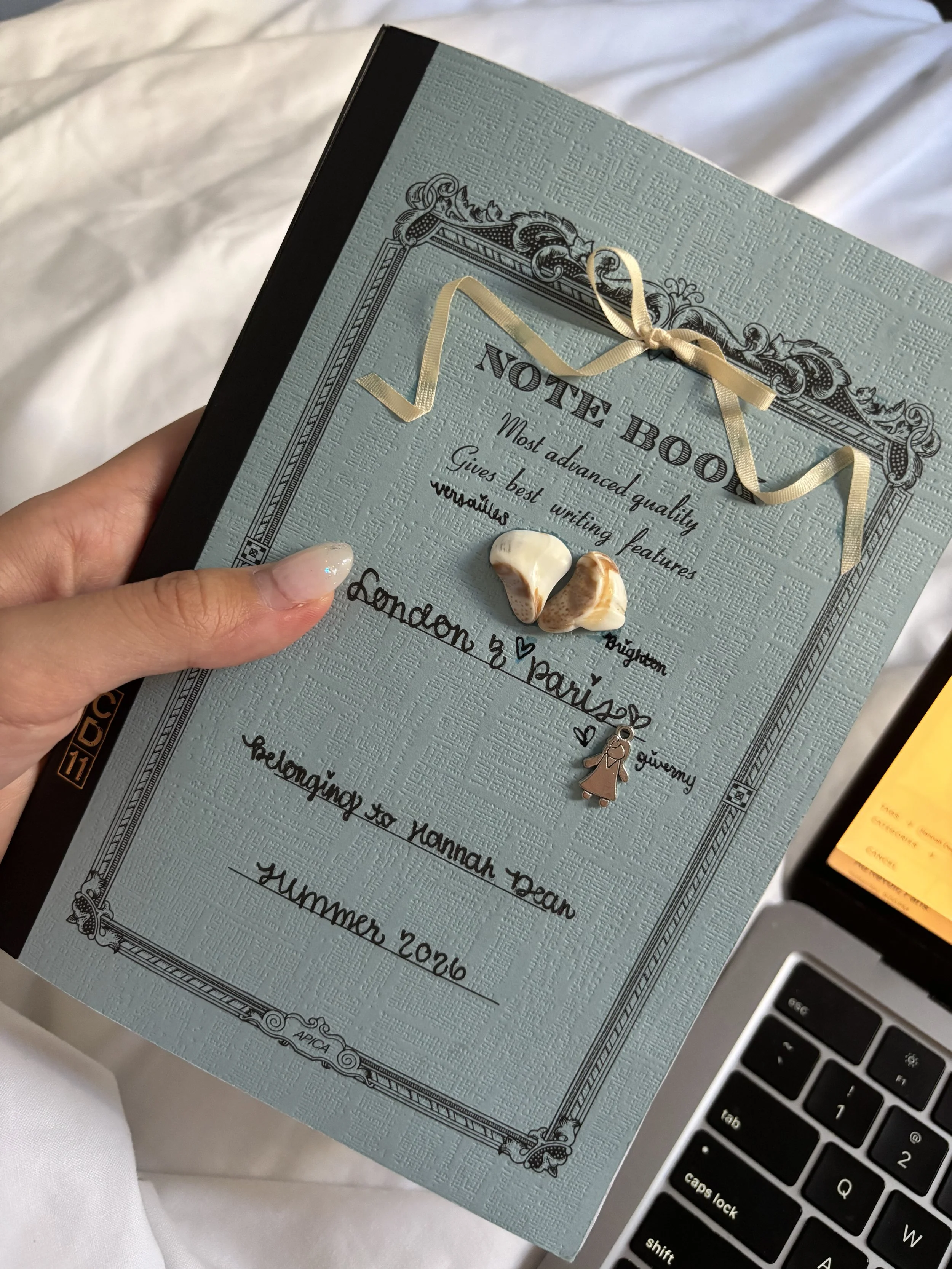
The cover of my travel journal.

As we followed Andrew’s mapping of Les Misérables, walking the same boulevards and avenues Valjean and Cosette once did, I feel a sense of déja-vu for a life that wasn’t my own—one fictitious, that never existed. 

Another part of Cosette’s story that we walked.

I briefly touched on this idea in my first blog, where I explained why I so enjoy collecting antiquarian books, vintage vanity pieces, and old-fashioned clothing—as I love imagining the lives of the people who first touched these treasures, however many hundreds of years ago. 

Would I have been friends with Hugo if I had the chance of meeting him? Would he have liked me? Could I have been a writer? Did Hugo know someone who passed the same way Javert did? Were his characters truly just political or social arguments, or did they honor lives he once knew? There’s this constant, unfamiliar déja-vu of narratives that aren’t my own as we bookpack. I have so many questions and no answers. But Paris also reminds me of a déja-vu of my own. 

When I was about 15, my family started visiting Paris. And last year, I had the privilege of spending two months here—one in Paris, one in the south of France—first for a class, second to see family.

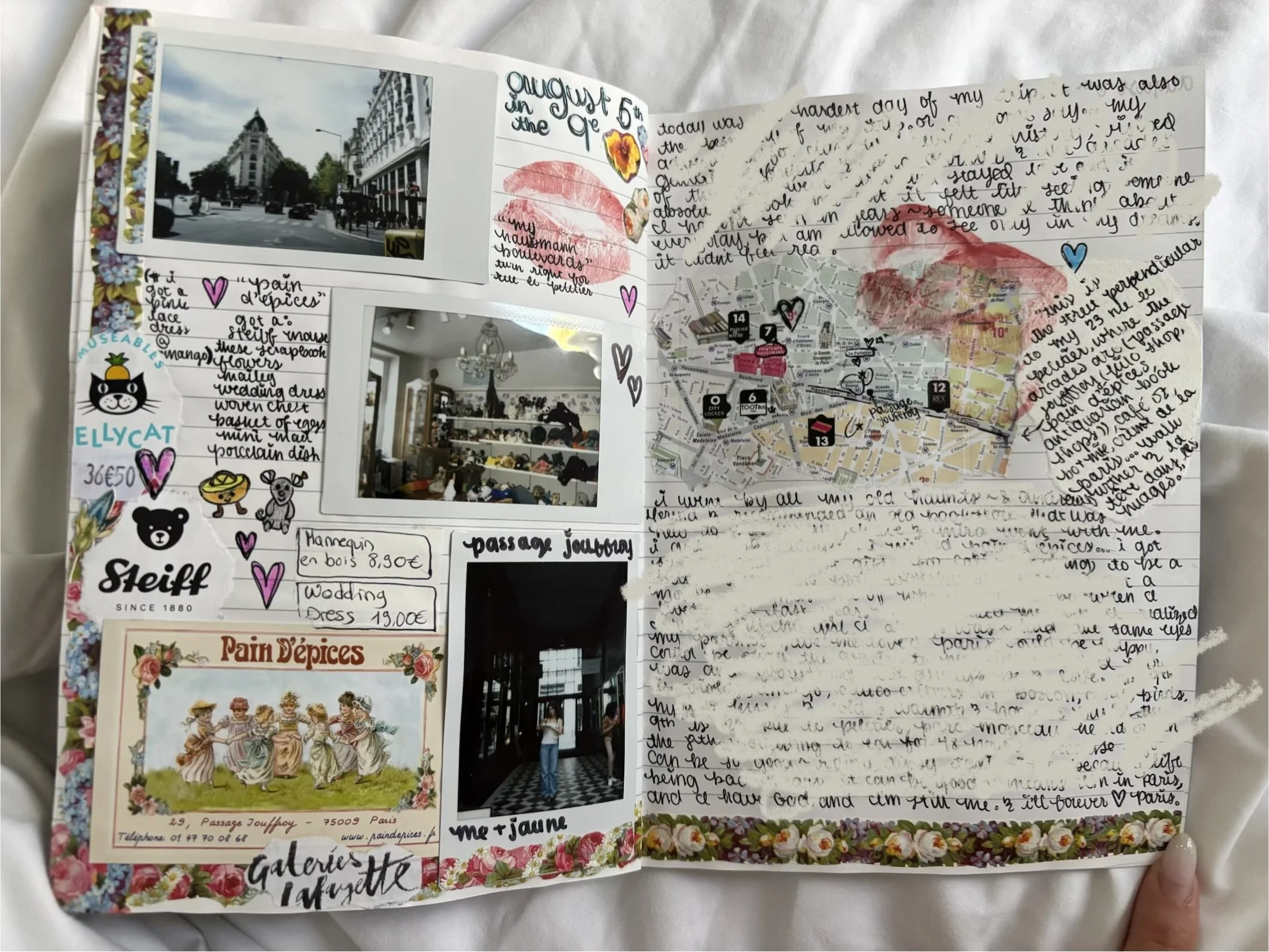
While in Paris, I stayed in the 9e arrondissement. A couple days ago, our class excursion took place just a couple blocks away from my old studio when we visited Galeries Lafayette and Palais Garnier, both places I came to love last summer. 

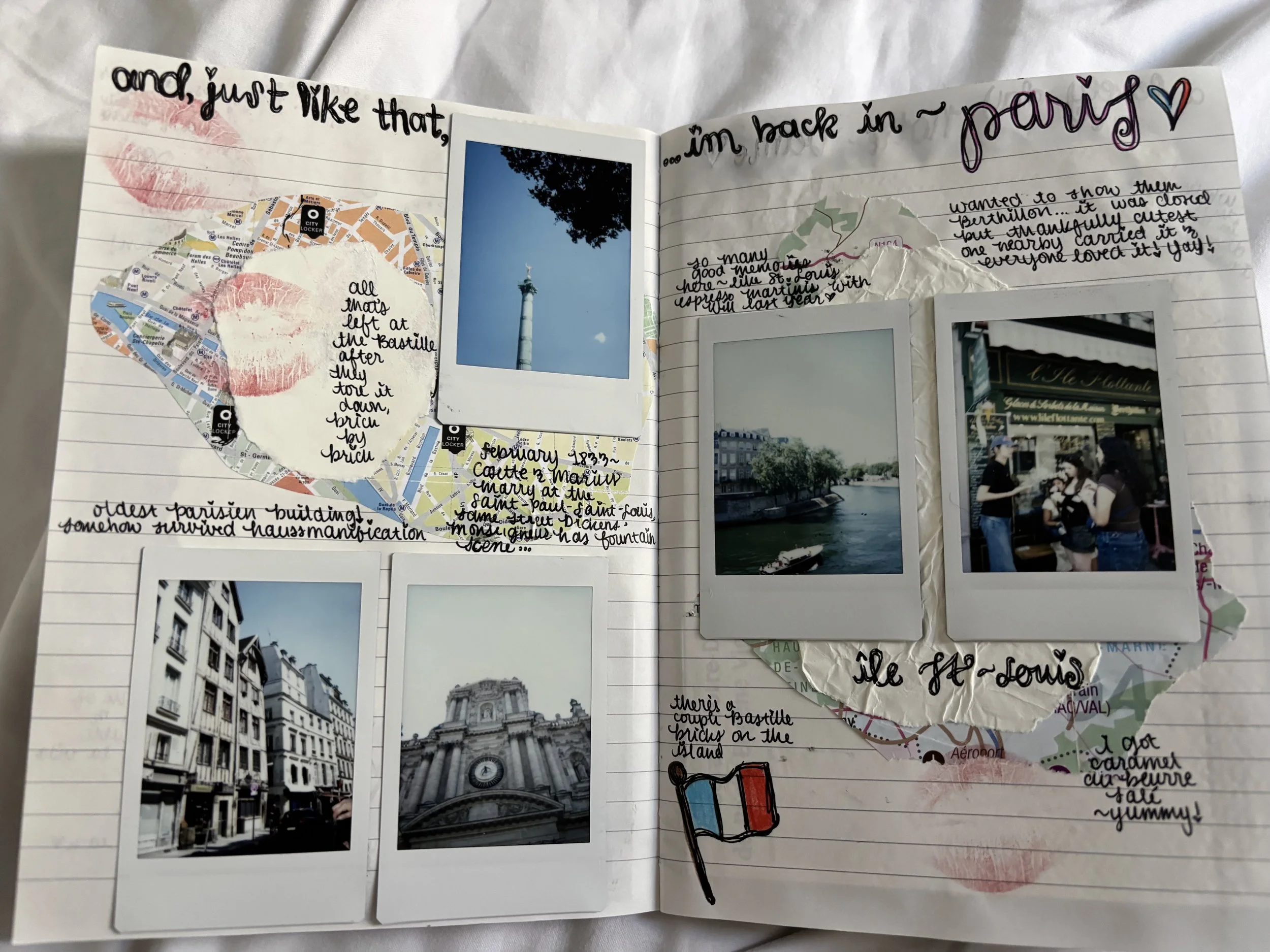
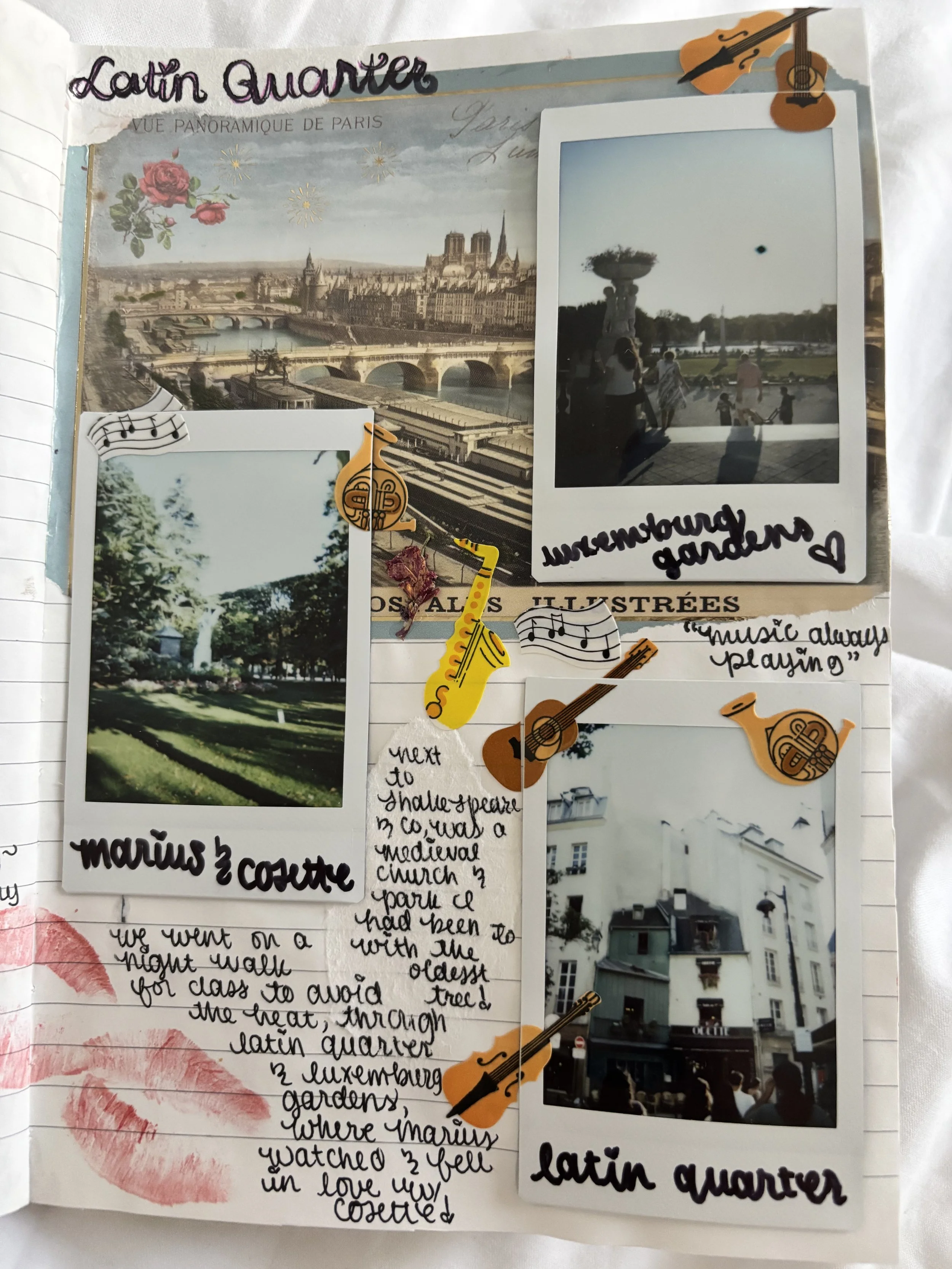
My pages after we visited the 9e.

I spent the rest of the day flâneuring my old stomping grounds. It was simultaneously the hardest and best day of this trip. It felt like seeing someone I haven’t seen in years, someone I once loved, whom I think about everyday, but am allowed to see only in my dreams before I wake and remember all is lost. So dramatic, right?! I just don’t know how else to explain it. Now that my memory isn’t so sharp, it’s become such a physical attribute—I see or smell or feel something an old me knew and suddenly I remember all these other versions of myself. 

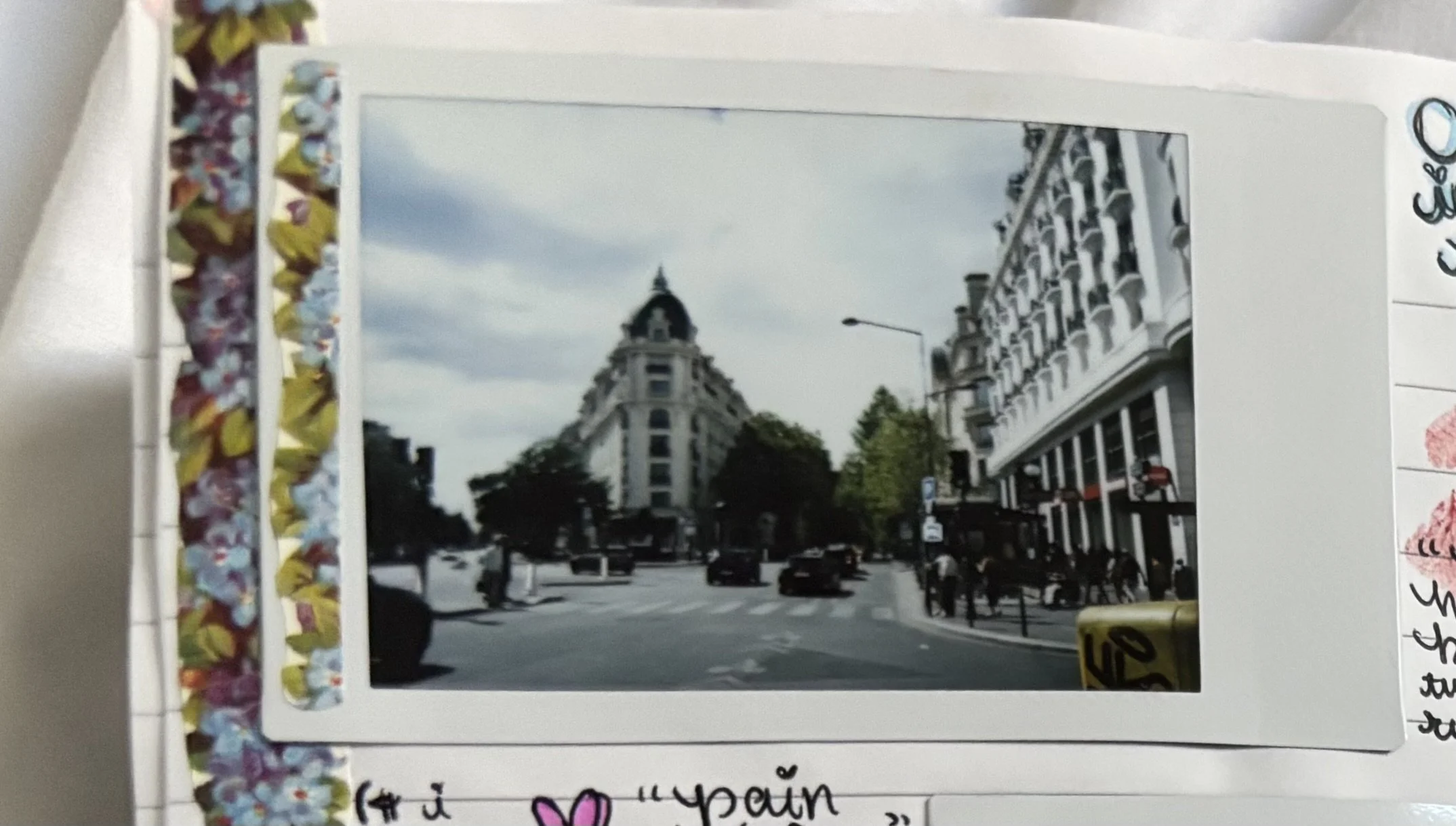
I had a hard time making friends or at least it felt that way. I was in love with someone who had become a person I didn’t know anymore. Sometimes I was selfish without realizing it. I ate too much and cried too little. Walking along Boulevard Haussmann and then down Rue Drouot and Rue le Peletier, these memories activated again. 

Boulevard Haussmann.

I realized that in exploring other narratives, my own felt lighter. I turned back to books and my love for reading after last year’s class, which gave me the desire to apply for this class. I found myself—and didn’t—in fictional characters like Sydney Carton, Cosette, Valjean, and Javert. And through all of the struggles I put myself through in the past, I realized I was still the girl I always had been, the same realization the Bishop’s kindness allowed Valjean.

I found this experience to be similar to Jean Valjean’s. He tried to create a new life for himself, be a better person and start anew. But Javert was a constant reminder of who he was escaping, the harder person the criminal justice system had once forced him to become. 

Valjean was honest about his flaws during the Champmathieu Affair, trading his well-to-do life he built where he helped many others for a harder one where he could protect Cosette. I’m sure Cosette remembered his kindness and their love when she and her future family walked through the same streets she and Valjean once ran through under the cover of darkness. 

Professor asked us in class if we experienced the magic and romance of Paris. How much more magical does it get than stepping into a book, and making my own memories appear on the pages of my scrapbook? This class made me want to bookpack all of my other favorite books too. I wonder if the magic and romance we feel today is anything similar to what Hugo once felt. 

This blog has been long and rambling, and is my attempt at an answer to Andrew’s question about how I felt about the characters of our books. I think I focused on English and French history in my other blogs because I had answers, rather than questions. And I think for most of this trip I was so caught up in understanding our characters’ narratives and recreating their treks across Paris that I had forgotten my own. I still have so many questions that will go unanswered: were the students caricatures he knew or invented? Was the zig-zag through Paris a stroll he once took with a lover or a friend, or was it something he plotted from his desk while looking at a map—something totally unrelated? Did Javert remind him of something or someone from a church he had once visited—and was that the person that made him question his faith? Was Valjean the one who restored it, or did that figure only make him question it more? 

Scrapbookpacking has been a way for me to remember my own, Andrew’s, Hugo’s, Valjean’s, Fantine’s, and Cosette’s memories. I love learning about other people from the smallest of observations they make, from their memories, their experiences and forgivenesses.

Valjean’s experience vs. mine in the Parisian sewers.

What the Postcard Cropped Out

Every city shows you its best angle and hides the rest. That's not an accident. It's a choice, the same way a highlight reel is a choice — you never see the footage that got cut, and you rarely think to ask who's holding the camera. Every skyline is a magic trick: look here, at the spires and the gilded domes, and please, whatever you do, don't look down.

I spent a week doing exactly that in Paris. Then I went underground, and the trick stopped working.

The Paris sewers, courtesy of the internet, because the smell was so bad that taking a photo was genuinely the last thing on my mind. I was focused on one thing: finding the exit.

Our class visited Notre-Dame on a Tuesday, all craned necks and cathedral light, the kind of morning that photographs itself. A few days later we descended into the Paris sewers. On paper these are two unrelated field trips — one a pilgrimage to human genius, the other a tour of human plumbing. Victor Hugo, who apparently could not write a single chapter of Les Misérables without detouring into a meditation on the soul of civilization, insisted they were the same story told from opposite directions. I used to think this was one of his more indulgent digressions. Barricades are exciting. Sewage infrastructure is not. Why interrupt Jean Valjean's escape to give the reader a guided tour of Parisian drainage history?

Because he wasn't writing about tunnels. He was writing about the parts of ourselves we flush and never think about again. Notre-Dame had asked nothing of my body. The sewers asked immediately. The ceiling dropped low enough that I ducked out of instinct before I'd even registered why, and the air changed in a way no photograph of a cathedral has ever prepared you for — not the postcard stench you brace for, but something mineral and old, like a basement that has been wet for two hundred years and stopped apologizing for it.

Somewhere below the walkway, water moved with a sound I felt more than heard. Down here we walked in a single file without anyone organizing it, the tunnel deciding our formation for us. Nobody photographed anything. I don't think it occurred to a single person in the group to try.

One line from the novel followed me down into that tunnel and hasn't quite left since:

Humanity is identity. All men are made of the same clay… But ignorance, mingled with the human paste, blackens it.
— Victor Hugo, Les Misérables

I'd underlined this weeks earlier, back home, where it read as a tidy observation about morality — the kind of sentence you nod at and move past. Standing in the dark beneath the Rue de Rivoli, ducking under stone with water running somewhere I couldn't see, it read as something closer to an indictment.

Hugo isn't saying some people are born saints and others born villains. He's saying we start identical, and then circumstance gets its hands on us. Ignorance is the sculptor. Poverty is the sculptor. Indifference — maybe the most patient sculptor of all — works slowly, over generations, until the shape it leaves behind gets mistaken for someone's nature, rather than what it actually is: the residue of everything a city declined to fix.

It would be easy to say Hugo believed in inevitable moral progress — light wins, justice arrives, the arc bends — and to say I don't. But that flattens him into something less interesting than what's actually on the page. Hugo doesn't write like a man who thinks improvement is automatic. He writes like a man holding onto hope with both hands, in a country that had just finished eating itself in revolution after revolution, fully aware of how easily the barricade could go the other way. His optimism isn't naivety. It's a decision he keeps making, book after book, against a mountain of evidence that should have talked him out of it.

So the disagreement, once I take him seriously, gets smaller and sharper. Hugo believes humanity can move toward justice. I believe it can too — I just don't believe anything guarantees that it will. The sewer is a useful place to think about the difference because a sewer makes the point brutally well: something can exist beneath your feet for years without you ever choosing to look at it. Infrastructure for seeing clearly is not the same thing as the will to see.

That gap — between the capacity for progress and the choice to exercise it — is where I think modern history becomes difficult to romanticize. We learned to split the atom and almost immediately learned how to turn that knowledge against entire cities. We built technologies capable of connecting billions of people and discovered they could distribute cruelty as efficiently as solidarity. We became extraordinarily good at changing the world without becoming equally good at deciding what kind of world deserved to replace it.

None of that proves progress is a myth. It proves progress is not a law of physics. It is closer to a door left unlocked: nothing stops us from walking through it, and nothing makes us.

Hugo, I think, would agree with more of this than I first gave him credit for. He just never stopped believing people would eventually choose to walk through the door. I'm less sure.Not because I think we’re worse than he thought, but because every generation gets handed the same unlocked door and has to decide, from scratch, whether to open it, armed with nothing but whatever wisdom the previous generation bothered to leave behind.

The names change. The architecture changes. The people standing comfortably aboveground change. The question underneath does not: who gets left in the tunnels, and who decided that was acceptable?

Before this trip I experienced places the way most people do: as a checklist. Notre-Dame was architecture. The sewers were engineering. A prison was history. A slum, if I noticed one at all, was scenery on the way to somewhere prettier. Hugo ruins this way of seeing, and I mean that as a compliment. Once you accept that a civilization’s underside and its overside belong to the same civilization — built from the same money, the same labor, the same century of decisions — you can’t un-accept it. Now, when I walk into a museum, I wonder what paid for it. I wonder who wasn’t allowed inside when it opened. I wonder whose labor made the beauty possible, and what else that money might have built. It is an exhausting way to tour a city. I suspect it's also the only honest one.
A civilization's museums tell you its favorite story about itself. Its sewers, its shelters, its underfunded hospitals — those tell you what actually happened while the story was being written. Both are true. Only one gets marketed. The other has to be walked into, on purpose.
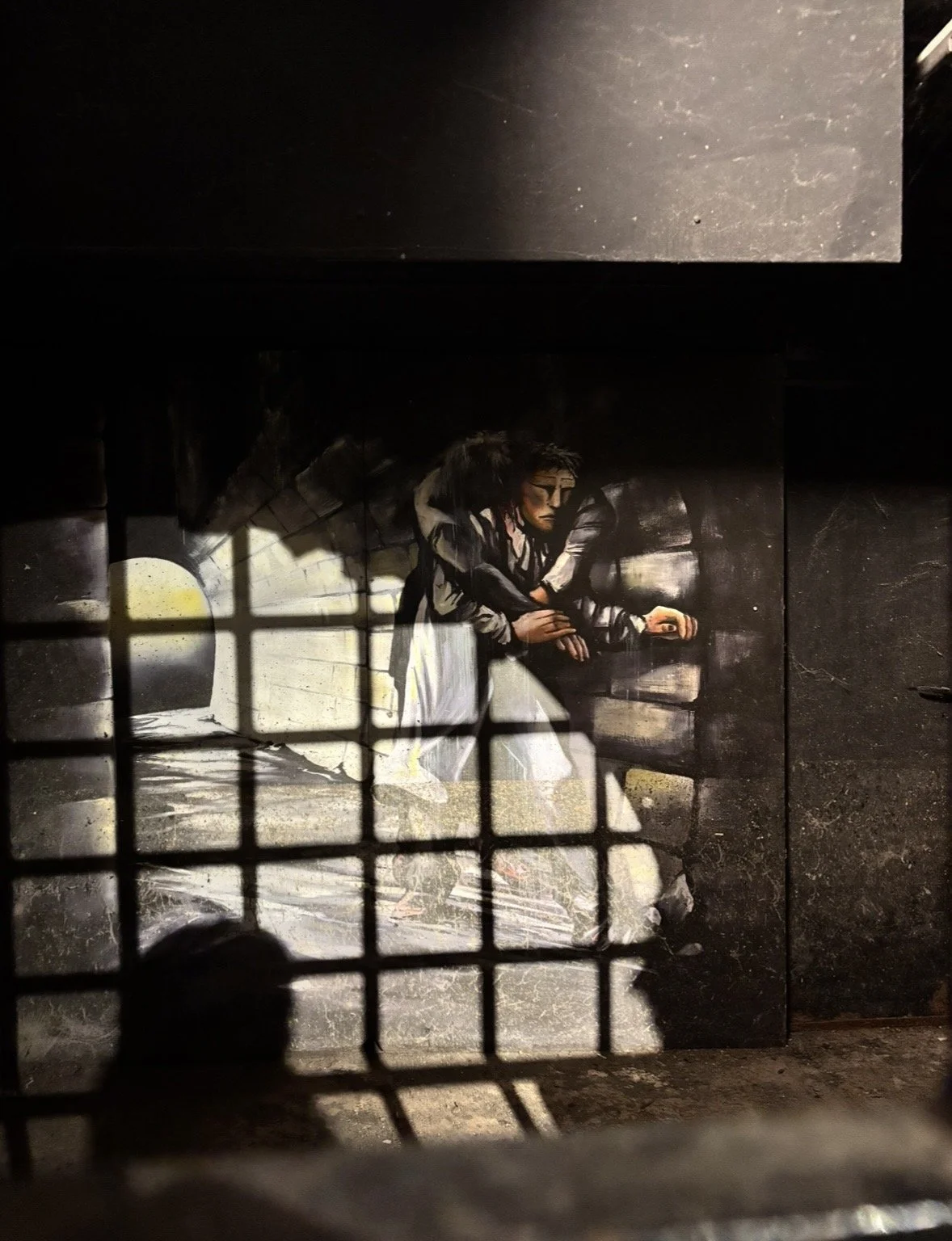
There's a reason, I think, that Jean Valjean's last great act of heroism — carrying a half-dead Marius to safety — happens not on a mountaintop or a barricade but in a sewer. He wades through the exact filth the rest of Paris has paid good money to forget exists. Hugo could have staged that rescue anywhere. He chose the drain. For most of the novel, Valjean is trying to escape what society has decided he is: prisoner, criminal, irredeemable man. But underground, stripped of witnesses and recognition, none of those categories matter. There is no audience in the sewer. No institution tells him what the right thing is. No monument will be built to the decision he is about to make. There is only another human being who will die if Valjean stops carrying him. And he doesn’t.

Maybe that is where Hugo’s faith in progress actually lives—not in the belief that history naturally improves, but in the stubborn possibility that a person can encounter everything designed to make him indifferent and refuse to become indifferent anyway.

That is harder for me to argue with.

I had spent much of Les Misérables looking for Hugo’s answer in revolutions, laws, barricades, and declarations about humanity. Paris put the answer somewhere less impressive. Beneath the monuments. Beneath the politics. Beneath even the streets.

A man is carrying another man through the dark. Nobody is watching. He carries him anyway.

Us and Them

I have been using an old notebook for this class. As a result, I’ve found myself constantly flipping to the wrong pages and catching glimpses of my notes from previous classes. The notes on religion and political violence are not at all unrelated to this Bookpacking program, and the topics have since reemerged in our recent discussions on faith and stereotyping.

I’ve listened to many people talk about their personal experiences with faith. A recurring theme is the community that religion fosters. Community identity like this is not unique to religion–we see communities form from shared ethnic, national, and ideological identities. The Bangladeshi community in London. The righteous revolutionaries of Paris. The unity of the people under the French flag. There is a beauty in commonality. In The Tale of Two Cities, one of Sydney Carton’s final scenes is with the seamstress, in which the two prisoners sentenced to death bless one another in a moment of tender spiritual comforting. The students at the barricade have a moving brotherhood. They face their inevitable deaths together with mutual support and courage. Even our being Americans in Europe has allowed us, Bookpackers, to bond over the cultural distance we feel from the local people.

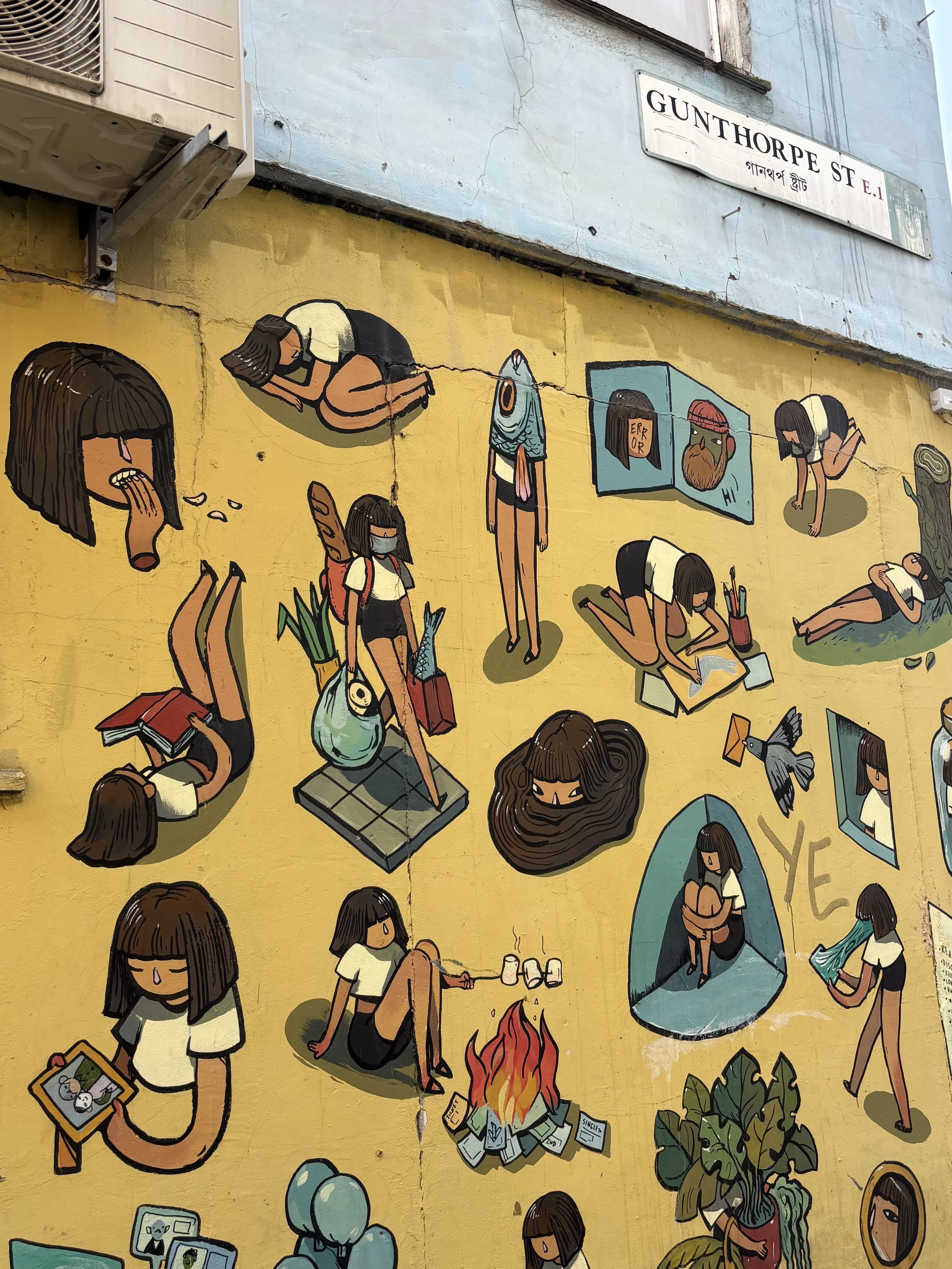
Banglatown Mural.

So, how does shared passion and identity end in bigotry and violence?

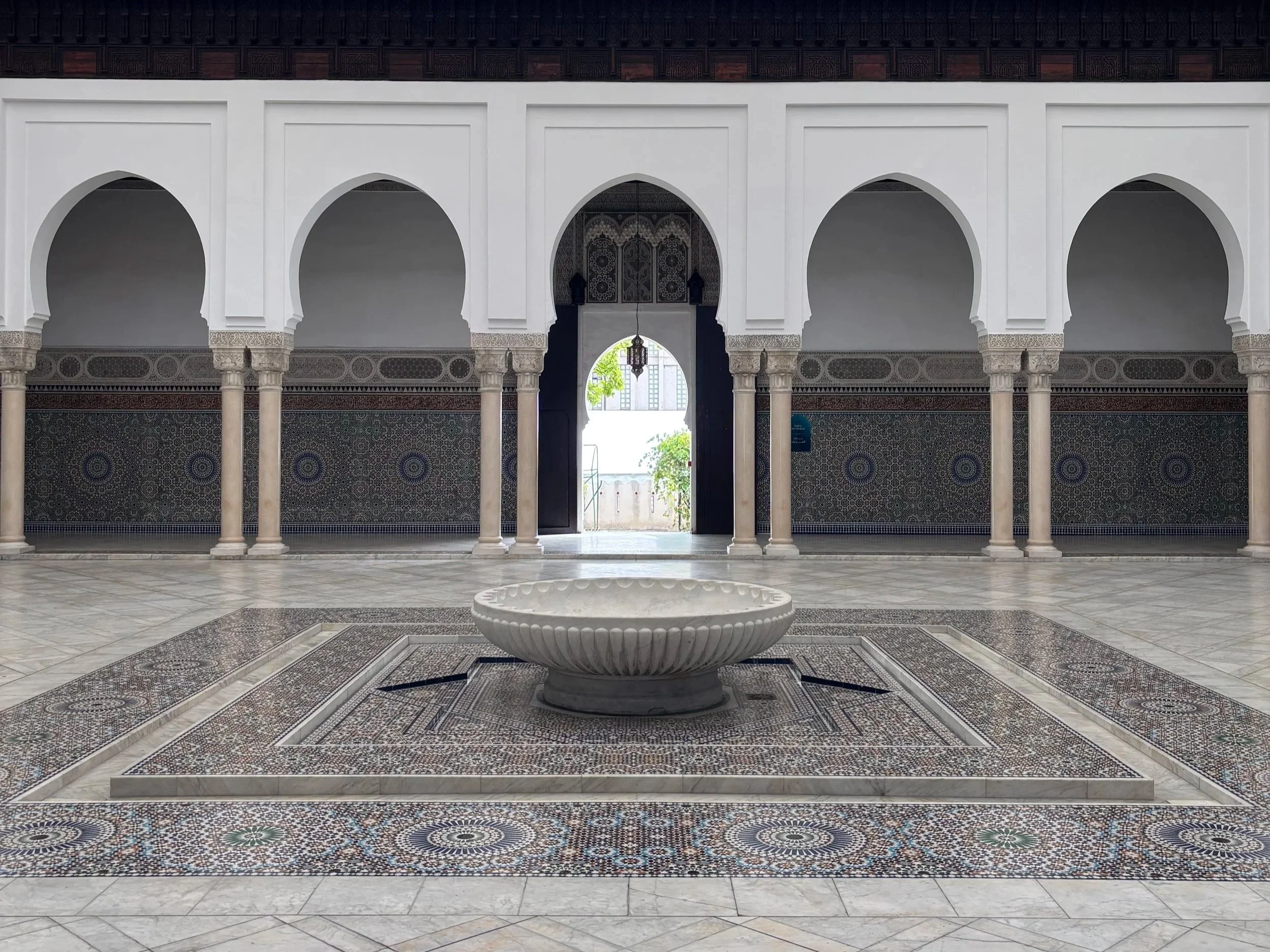
The Grand Mosque.

Community has been a basis for alienation. Massacres based on religious difference are not uncommon. The Terror that followed the French Revolution targeted those perceived as enemies of the revolution, such as the young seamstress. The key here is perception, which is subjective. The bar keeps raising. The criteria for the ingroup and outgroup depend entirely on whoever is most influential. Visiting the Grand Mosque of Paris reminded me of the islamophobia that followed the War on Terror. The enemy is abstract. The War on Terror was used to justify suspicion and attacks on innocent Muslims. The Terror justified both the imprisonment and execution of aristocrats and the Third Estate it claimed to represent. The French flag is stained with examples of violent ethnic and political disunity.

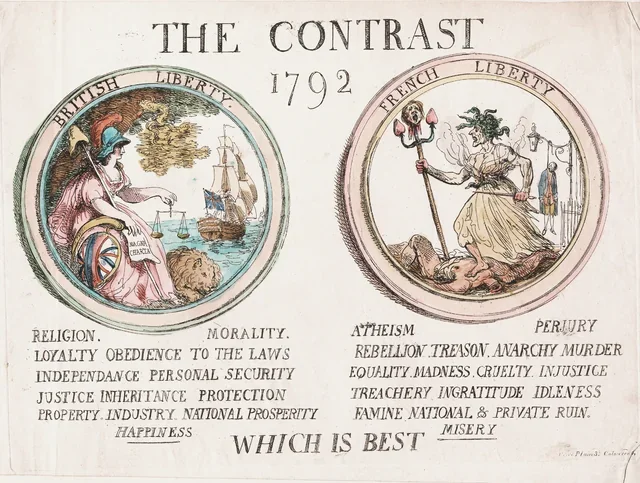
For there to be an us, there must be a them. The more we define the elements of our identity that we require for inclusion, the more people are excluded. But this is our way of life. We cannot seem to help it. We gravitate toward community, friends, and shared ideals, and we relish the support we gain from one another for who we are and who we are not. Here is what it is to be British. Here is what it is to be French.

Us v. Them. British / French Edition.

Now, no sword cuts only one way. Every blade is double-edged. Whoever wounds with one edge wounds himself on the other.
— Victor Hugo, Les Misérabels

Suddenly, categories are formed out of assumptions and prejudices. All aristocrats become evil, and Sydney Carton (as Charles Darnay, who disagreed with the classist actions of the aristocracy) dies by the blade of the guillotine. All prisoners become brutes, and Jean Valjean’s heart grows more hateful as a result of the townsfolk’s discrimination. Only the ingroups remain, then even they chip away. Monsieur Defarge is kept around until he is deemed insufficiently radical. Nobody is safe when the enemy exists only in broad concept.

Not all stereotypes are wrong. As a loud American myself, I’ve felt the disgruntled stares at the Parisian restaurants. Our American joy is far too loud for the French (and now I’ve separated them and us–it’s that easy!). This separation may be a comfort to the little French lady on the bus who points and, laughing, whispers to the bystanders, these Americans do not understand how the buses work; how annoying. It is off-putting for those on the receiving end of that perception. But I understand. Their disdain for us stems from a heritage we do not share, and the security of a community is (allegedly) strengthened by highlighting what we share and what people who aren’t us don’t.

How do we end up so divided, ignoring our shared human identity? We do it to ourselves.


poetry alert

!!

poetry alert !!


Two words

two words

me and you

and the human face


here and there

two words

occasion and place


all it takes is

us and them

two cursed words and


all goes to waste


Crumb:

I rarely feel more like a tourist than I do in Paris. Maybe it’s the sheer volume of tourists in the area that makes people wary. Maybe it’s the fact that I can’t stop laughing and speaking English with my new friends (is that such a crime?!). Having had many conversations with my fellow Bookpackers about the way French folks perceive us as we giggle our way through the streets, I’ve decided (as I do every time I travel out of California) that there is no shame in being a tourist. I would not give up the smiles and train conversations with my fellow Americans or friendly French travelers for the world. The modern world, with all its curiosity and globalization, was not built for isolation.


Progress–8.8.

Between the Landmarks

When people ask about Paris, they usually want to hear about the landmarks. The Eiffel Tower. The Louvre. Notre-Dame. Versailles. Those places deserve every bit of their reputation, and after spending three weeks in Paris, I understand why millions of people travel across the world to see them. But when I think back on this trip, those aren't the moments that immediately come to mind. Instead, I think about everything in between.

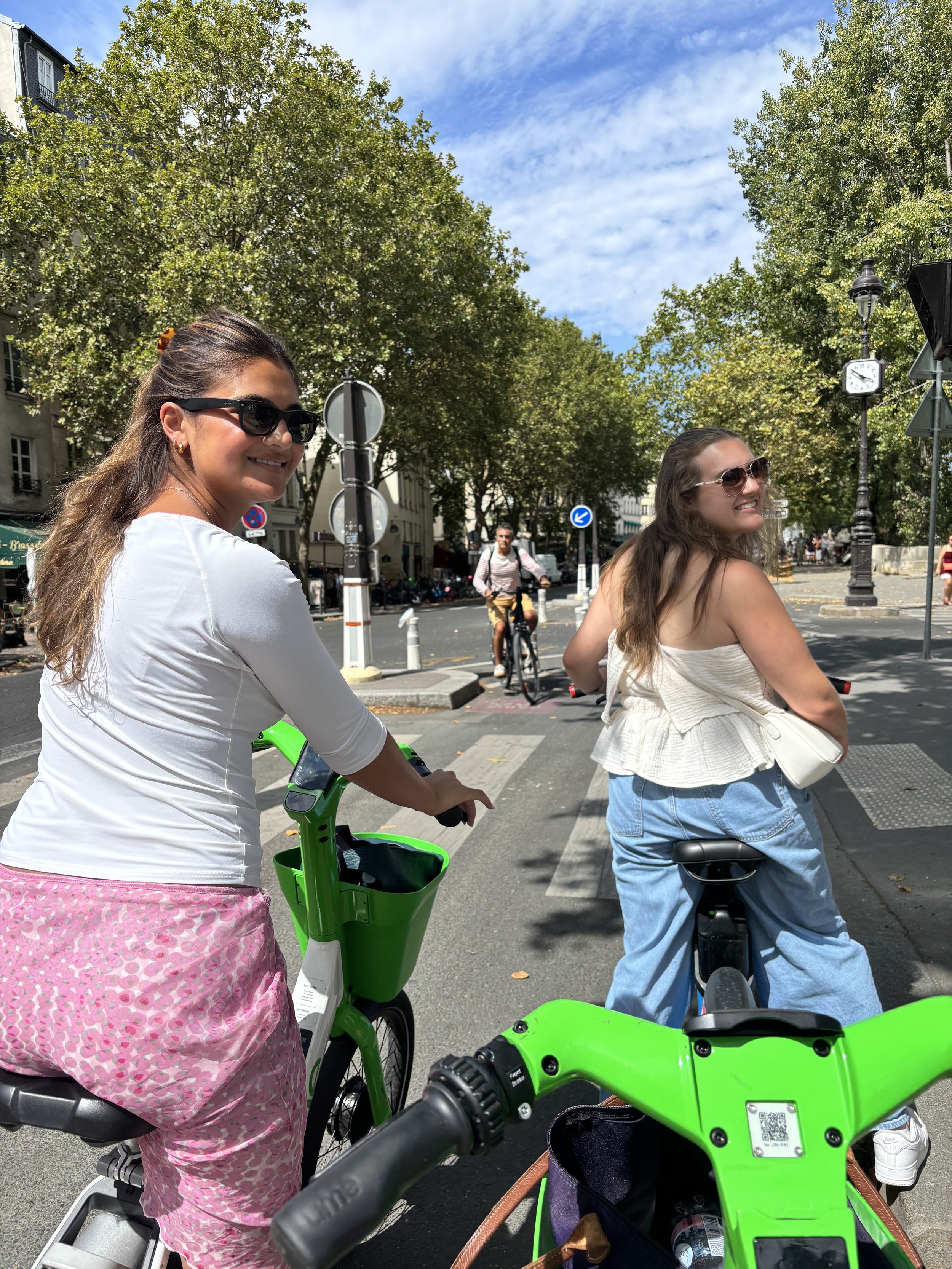
One of my favorite parts of this program became riding the city bikes to and from class and between some destinations. At first, they were simply the fastest way to get across Paris. By the end of the trip, they had become one of my favorite parts of every day. We could have taken the metro almost everywhere. It would have been quicker, cooler, and probably less exhausting after walking several miles each afternoon. But underground, you miss the city itself.

On a bike, Paris unfolds slowly. You hear conversations drifting from cafés as people linger over lunch. You pass the smell of fresh bread escaping from boulangeries before you even see them. You stop at a traffic light and suddenly notice Notre-Dame towering over the rooftops or catch a glimpse of the Seine reflecting the afternoon sun. Every ride became an opportunity to stumble across something unexpected.

The destinations mattered, but so did getting there. That realization made me think about the way Victor Hugo writes Les Misérables. He rarely rushes from one major event to the next. Instead, he lingers. He follows Jean Valjean down ordinary streets, lets Marius wander through the Luxembourg Gardens, and spends pages describing neighborhoods, convents, and even the route someone takes across Paris. Before this class, I sometimes found myself impatient with those digressions. I wanted to get back to the plot. Walking and biking through Paris made me realize that those "detours" are often the point.

One afternoon, we visited the Paris sewers. Throughout Les Mis, Hugo devotes an astonishing amount of time to describing them, transforming what could have been a brief escape scene into one of the novel's longest and most memorable sequences. I'll admit that I didn't linger there nearly as long as Hugo would have liked. The smell alone was enough to encourage me to keep moving. But even while trying to make my way through as quickly as possible, I thought about why Hugo spends so much time underground. The sewers aren't meant to be beautiful. They're meant to remind readers that every magnificent city has another side that most people never see. Paris isn't only its grand boulevards, elegant gardens, and famous monuments. Beneath all of that is another city, hidden from view, doing the unseen work that allows everything above ground to exist.

Oddly enough, that felt connected to riding the bikes. Both experiences reminded me to pay attention to parts of the city that are easy to overlook. Sometimes that meant looking up and noticing a church tucked between apartment buildings. Sometimes it meant looking down into the less glamorous parts of Paris that tourists rarely think about. Either way, the city became richer the moment I stopped focusing only on the postcard views.

After a couple of weeks, another realization I had was that bookpacking isn't just about standing in front of famous landmarks or finding the exact location of a fictional barricade. It's about learning to slow down enough that the journey between those places becomes meaningful, too.

Ironically, the moments I'll remember most probably won't be standing in front of the Eiffel Tower or walking through the Louvre. They'll be riding a bike through quiet Parisian streets on the way to class, hearing the city wake up around me, turning a corner, and unexpectedly finding another piece of history hiding in plain sight. Sometimes the best part of the story isn't the destination. It's everything in between.

.

Children of the Revolution

History has a way of making revolutions feel like they belong to adults. When we study them, we learn the names of kings, generals, politicians, and revolutionaries. Louis XVI. Robespierre. Napoleon. General Lamarque. Enjolras. We talk about governments rising and falling, constitutions being written, and barricades filling the streets. Children rarely appear in those conversations. Victor Hugo refuses to let us forget them.

When I first read Les Misérables, Gavroche immediately became one of my favorite characters. He's witty, fearless, sarcastic, and somehow manages to make even the darkest moments of the novel feel lighter. I admired his confidence and independence, but I also thought of him as exactly what he was intended to be: a memorable fictional character. It wasn't until I started walking through Paris that I realized Hugo was asking his readers to see something much bigger.

Where the elephant would have been

One afternoon, we walked toward the Place de la Bastille from Saint-Gervais Church, tracing the events in A Tale of Two Cities, but somehow the locations we strolled past were also mentioned in Les Miserables as well. Along the way, we stopped where the Elephant of the Bastille once stood, the enormous unfinished monument that Hugo chose as Gavroche's home (think of an empty elephant version of the Trojan horse). Before this class, the elephant had always struck me as one of those strange details authors invent to make a character more memorable. Standing there, you realize that Hugo modeled Gavroche on the countless children who lived on the streets of nineteenth-century Paris, children who survived wherever they could, even inside an abandoned monument.

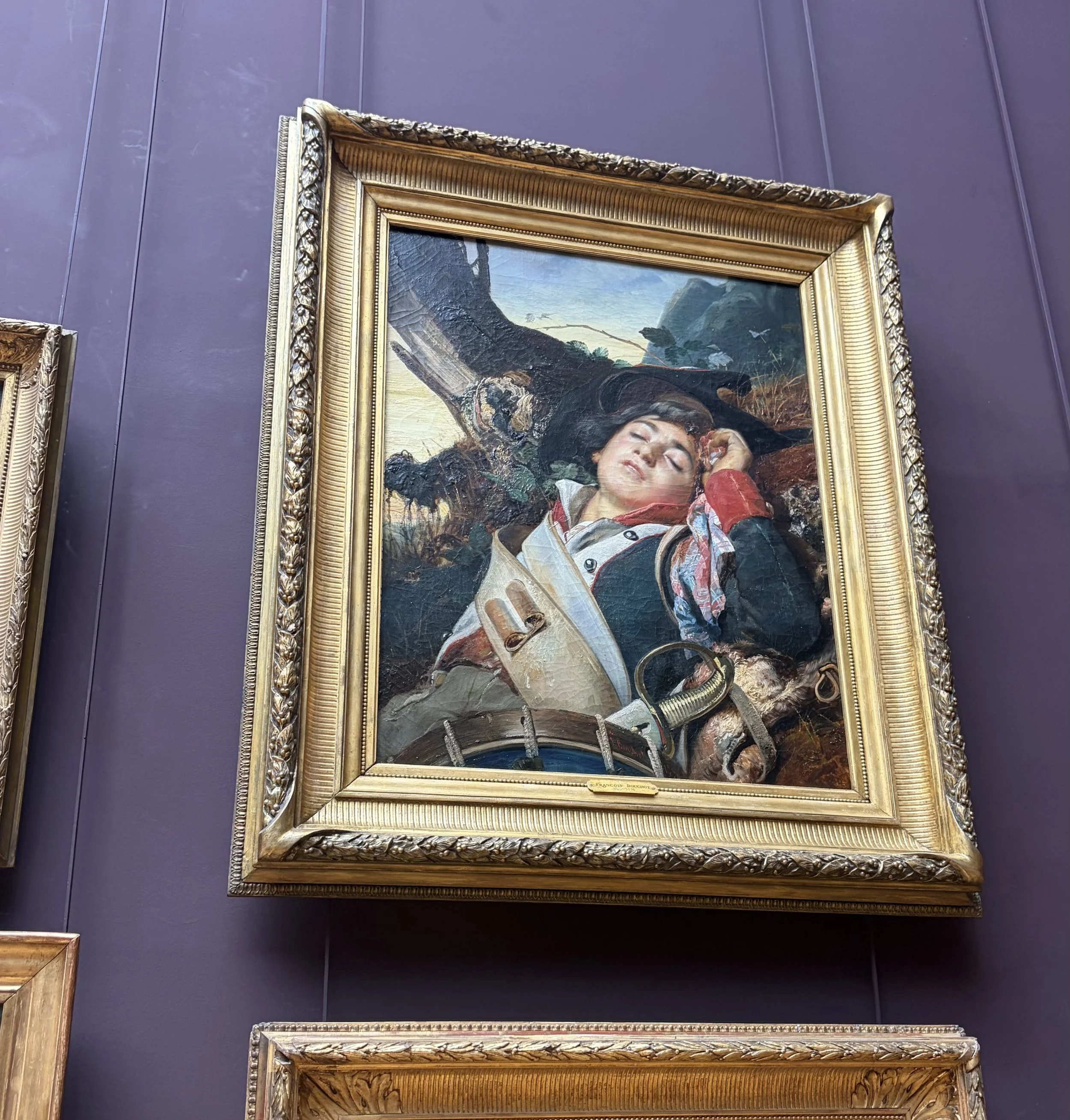
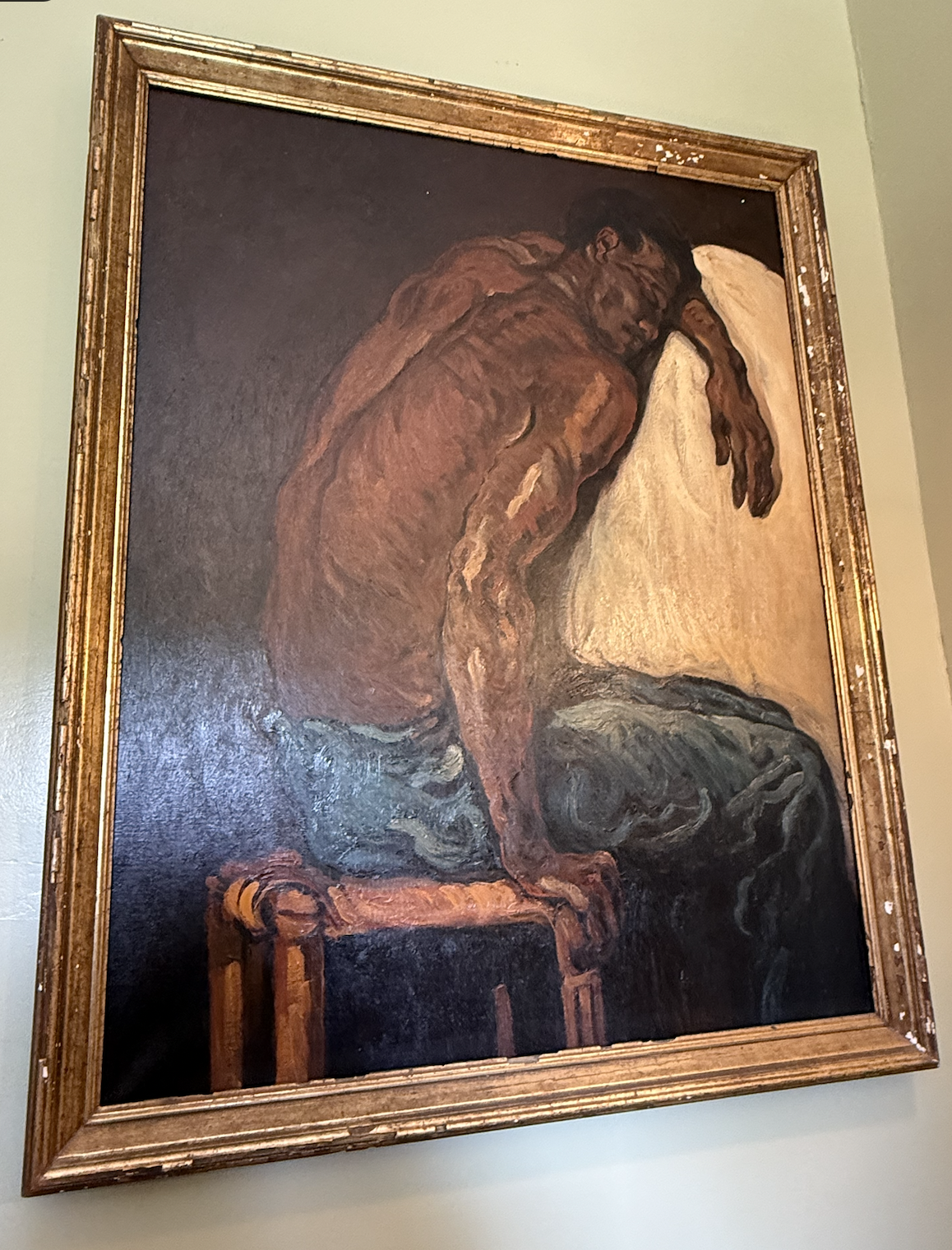
Fallen Drummer Boy (in the Louvre) - Gavroche?

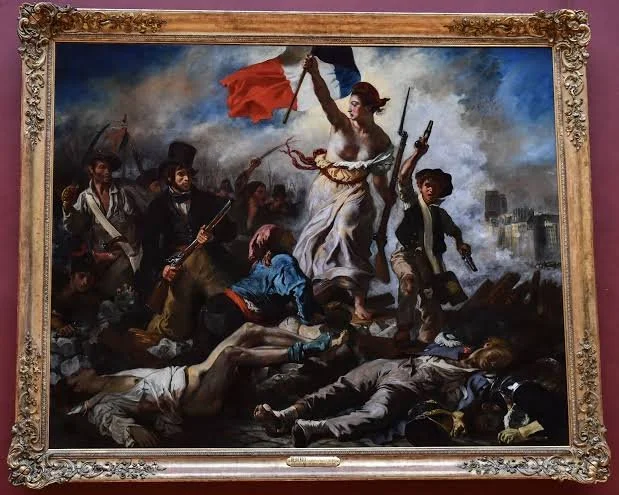
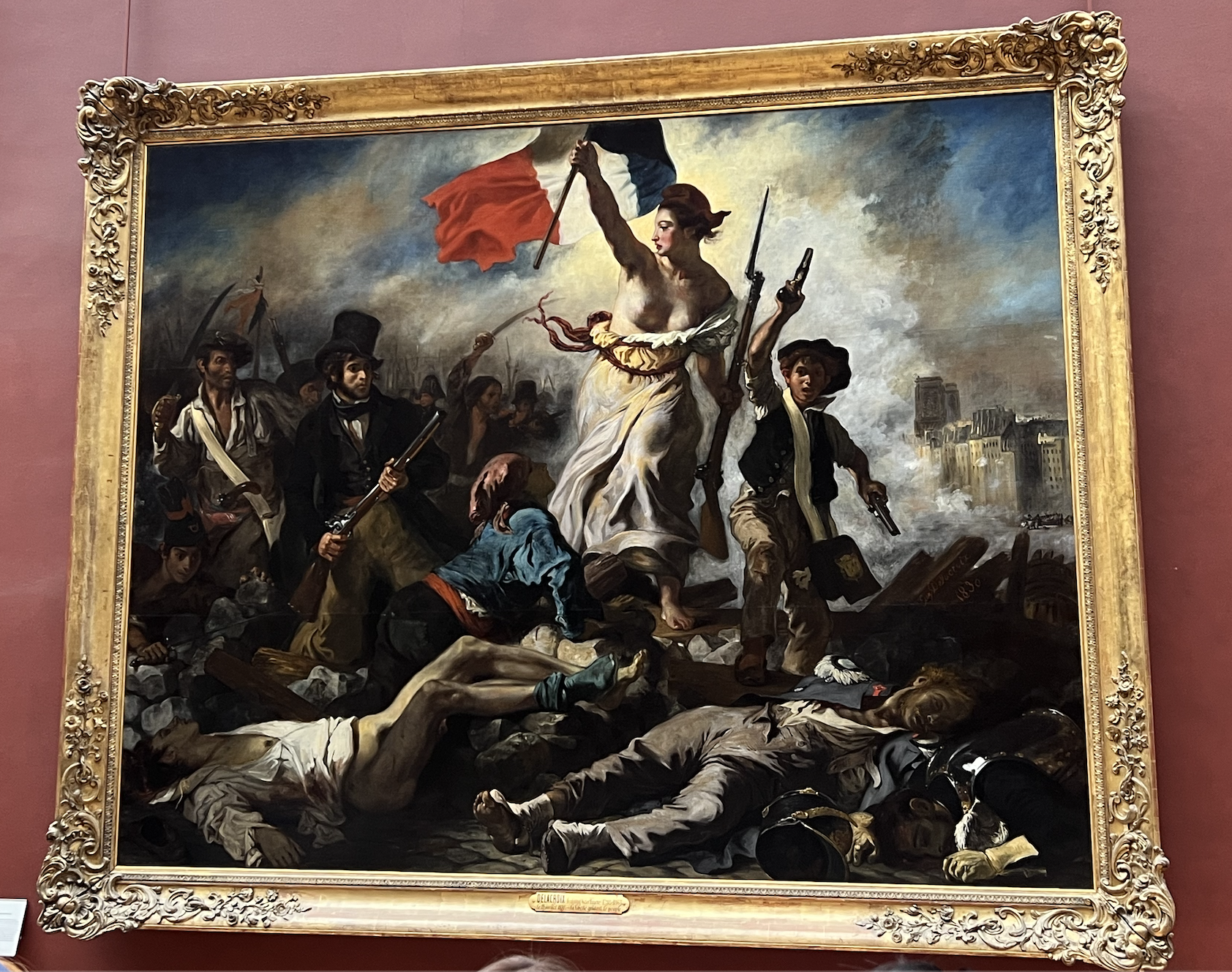
Our seminar later connected Gavroche to nineteenth-century paintings of revolution, where boys often appear delivering ammunition, holding pistols, or following adults into battle. Looking at those paintings after standing where the Elephant once stood, I noticed something I hadn't before. Artists often make these children appear heroic and almost triumphant. Hugo certainly allows Gavroche moments of heroism, but he never lets us forget that beneath the confidence and clever jokes is still a child. His courage doesn't erase the tragedy of his circumstances. If anything, it makes it even more heartbreaking.

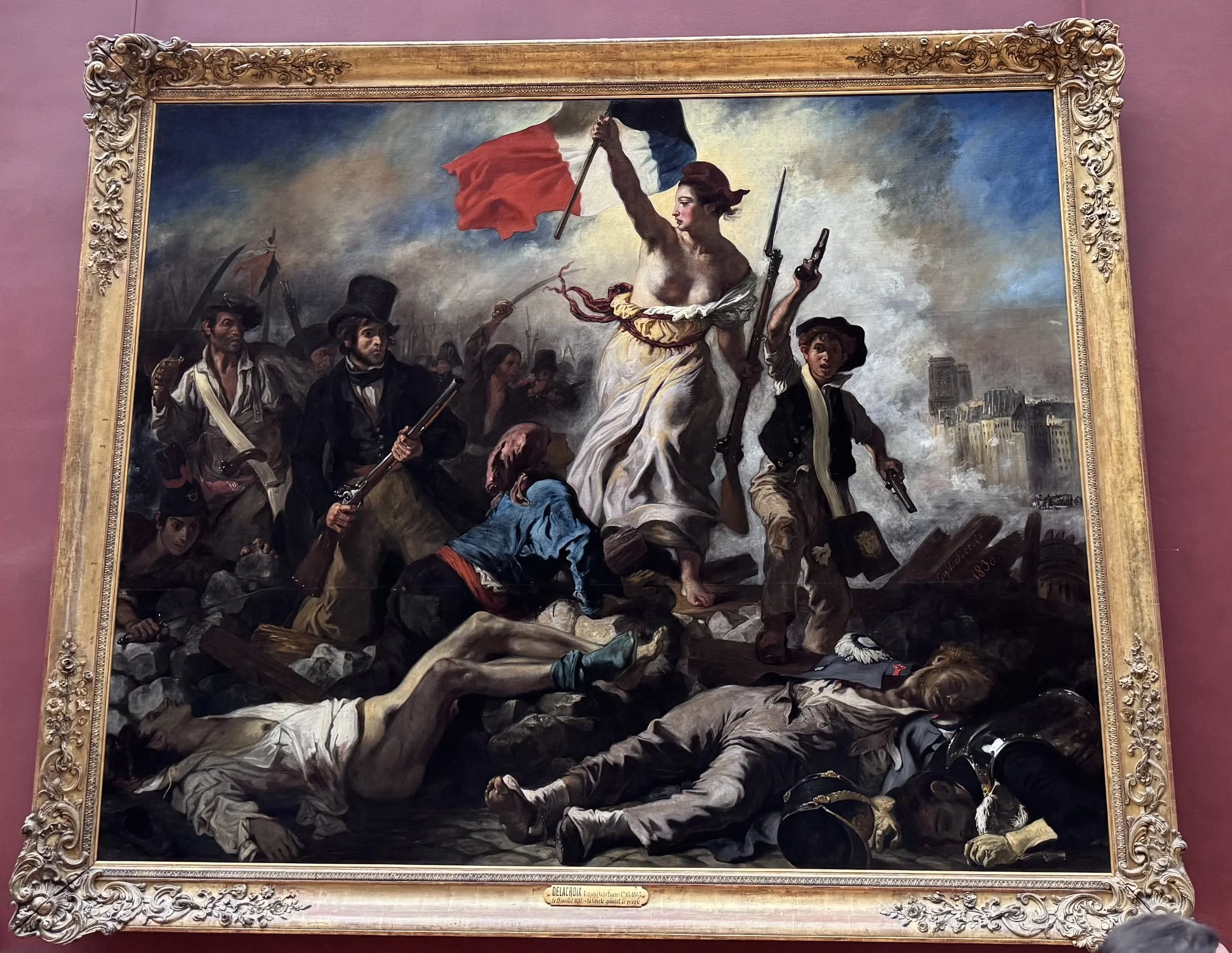
Liberty Leading the People (in the Louvre) - Can you spot Gavroche?

Our seminar later connected Gavroche to nineteenth-century paintings of revolution, where boys often appear delivering ammunition, holding pistols, or following adults into battle. Looking at those paintings after standing where the Elephant once stood, I noticed something I hadn't before. Artists often make these children appear heroic and almost triumphant. Hugo certainly allows Gavroche moments of heroism, but he never lets us forget that beneath the confidence and clever jokes is still a child. His courage and "grand little soul" doesn't erase the tragedy of his circumstances. If anything, it makes it even more heartbreaking.

Where the barricade once stood. Photo by Andrew Chater

Later in our trip, we searched for the location of the Corinth barricade, following Hugo's remarkably detailed descriptions through streets that have long since disappeared beneath modern Paris, with restaurants and stores and some guy named David who created a pin to remember it. I had expected standing there to make me think about Enjolras giving speeches or Marius choosing between love and revolution. The students choose to enter the barricade because of their political convictions. Gavroche enters because the streets have always belonged to him. The revolution interrupts the lives of the students. For Gavroche, it is simply another day of surviving in the only world he has ever known.

Walking through Paris also made me realize something about the way cities remember their past. Paris is full of monuments to revolution: the July Column rises above the Place de la Bastille, Delacroix's Liberty Leading the People hangs in the Louvre, plaques, statues, and memorials preserve the names of generals, politicians, and great historical figures. Everywhere we went, there were reminders of famous people who shaped French history. But there is no monument to some influential children. Their memorial lies in literature or in the small details of a painting. Without Hugo, the thousands of anonymous children would largely remain invisible. Through Gavroche, Hugo gives them a voice that history rarely does. One of the things I've appreciated most about bookpacking is that it constantly reminds me that novels aren't only about fictional characters. They're also about the people who inspired them. Walking through London changed the way I understood Dickens' contrasts. Walking through Paris changed the way I understood Hugo's compassion. Before this class, I thought Les Misérables was primarily a novel about redemption, justice, and revolution. It still is. But after spending two weeks walking through Hugo's Paris, I think it's also a novel about remembering the people history tends to overlook.

Kings have monuments. Generals have statues. Revolutionaries have streets named after them. Sometimes, all a child gets is a chapter in a novel. And after walking the streets that Gavroche once wandered, it somehow feels both tragically insufficient and incredibly moving.

.

I'm no sewer rat

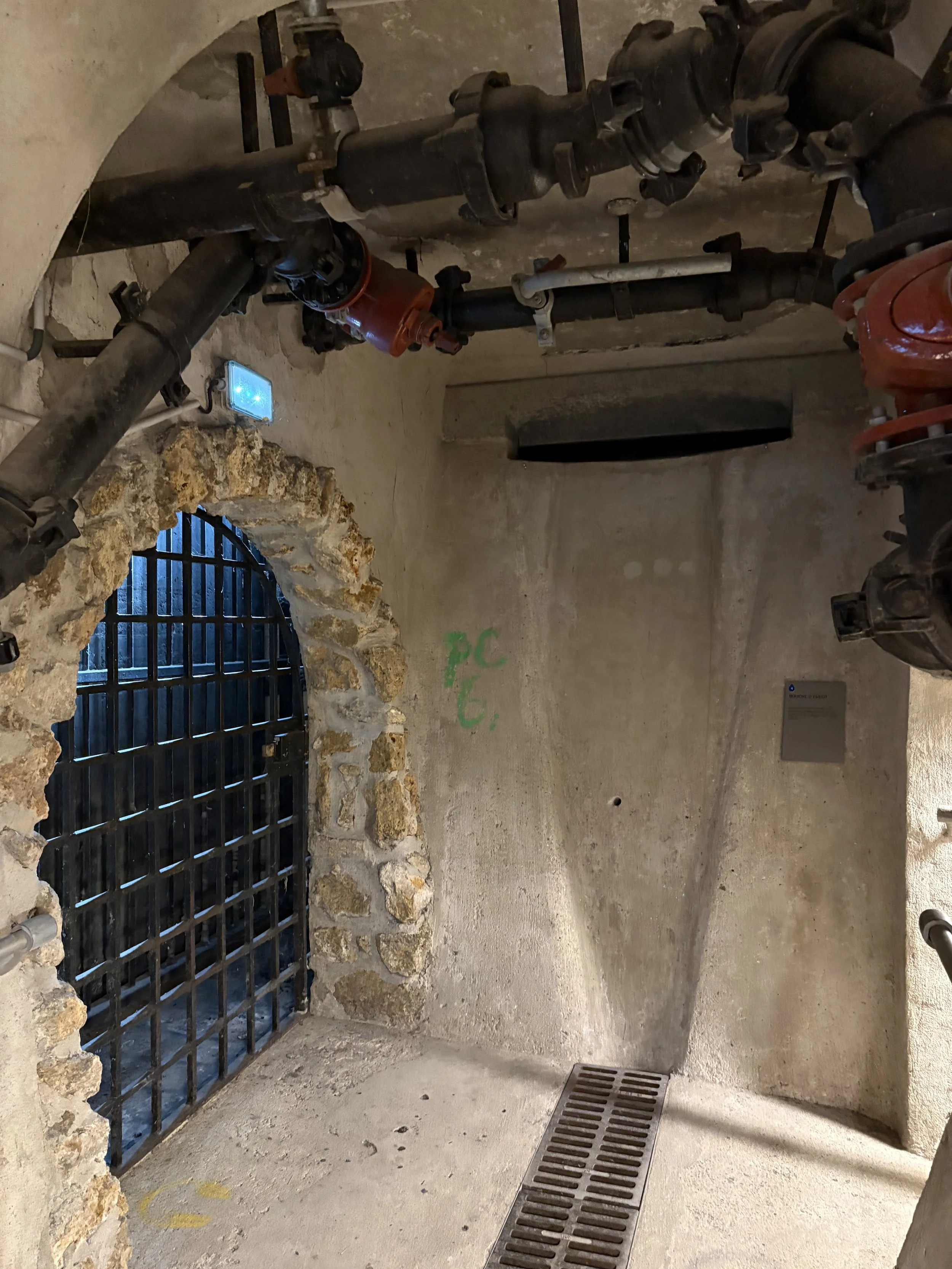
I’m no sewer rat. I don’t much enjoy exploring caves where I can’t see the light of day—let alone ones that smell wretched—but I am a sucker for engineering feats that revolutionize the world as we know it. In Les Miserables, the sewer system plays a pivotal role in Jean Valjean’s escape from the barricade. As he carries Marius on his back, all of their exit paths are cut off except for the grate of one meger sewer. He climbs in, and through the dark and the soot, is able to navigate his way across Paris to safety. This underground system is one that is often taken for granted. In the earliest days of Parisian life when there was no efficient way to dispose of human waste, it would often be dumped onto the streets, and polluted the waterways. The development of the sewage system is both the salvation of Jean Valjean, and in another sense, of the Parisians. 

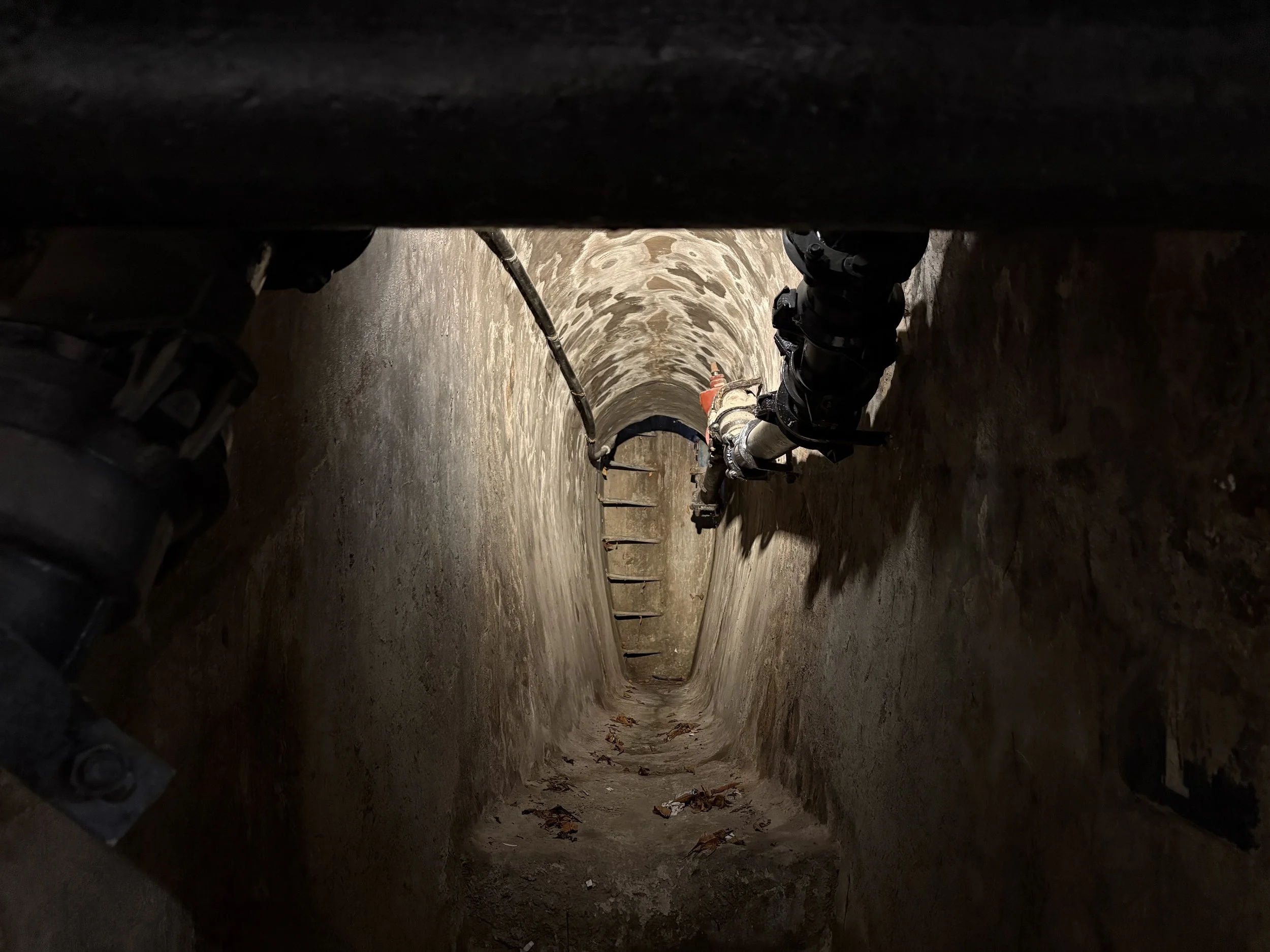
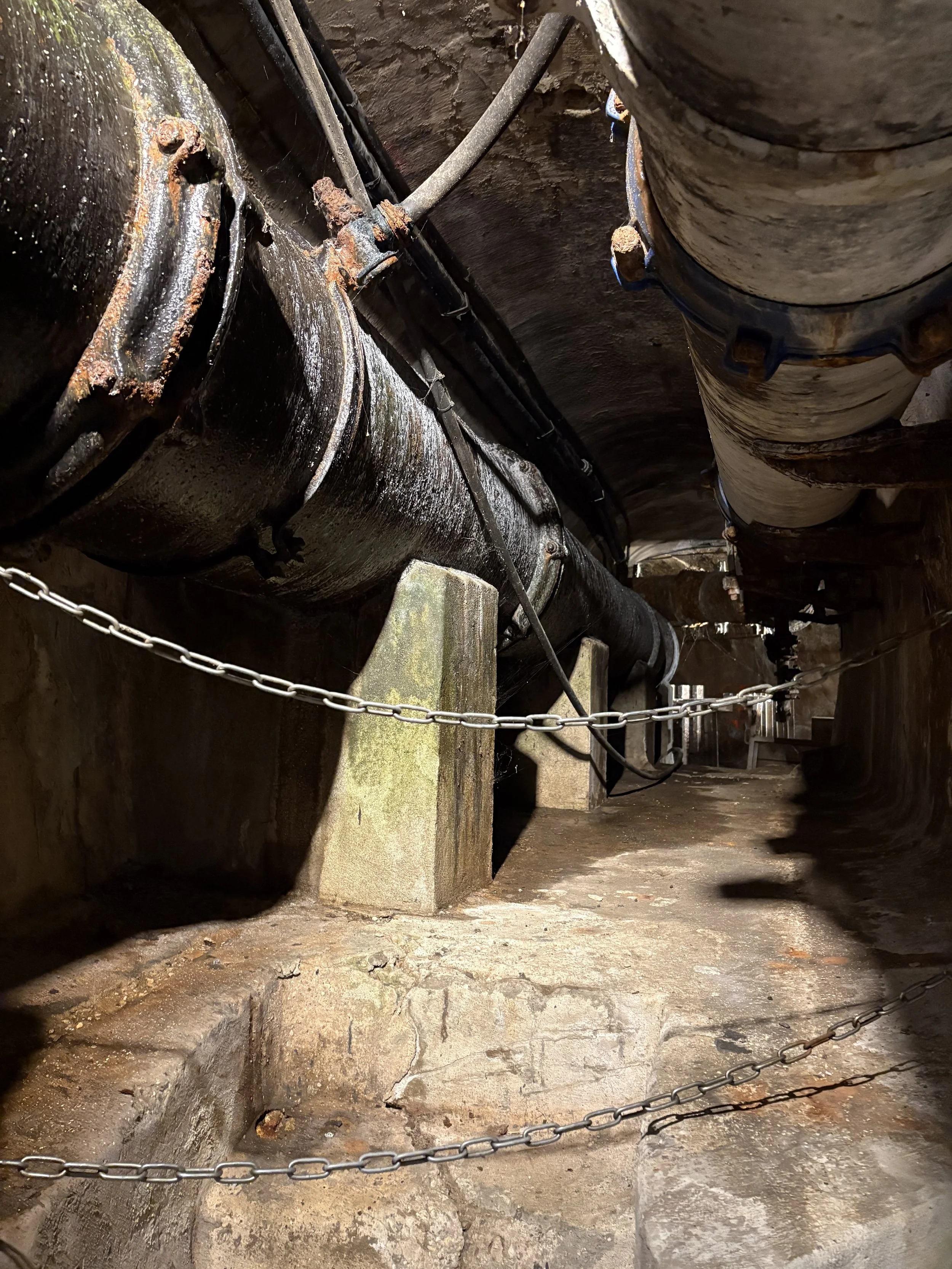
The image above is the epitome of the sewer system of Paris. This narrow passageway, with exposed pipes and a shifty ladder that lowers you further into the ground, is the exact depiction I imagine when reading Victor Hugo’s novel. If you were to eliminate the minimal illumination that exists, this is the same environment where you could have found Jean Valjean waist deep in waste with a half-dead man on his back.


The importance of a sewer system can be seen through the Cholera outbreak that occurred in 1832. Cholera is a water-born disease that comes from tainted water supplies. Since Paris did not have an efficient sewage system, human waste would seep into the drinking-water supplies, and pollute the entire city. The devastating outbreak of Cholera in Paris hit working-class communities the hardest, leading to the loss of roughly 19,000 lives. 

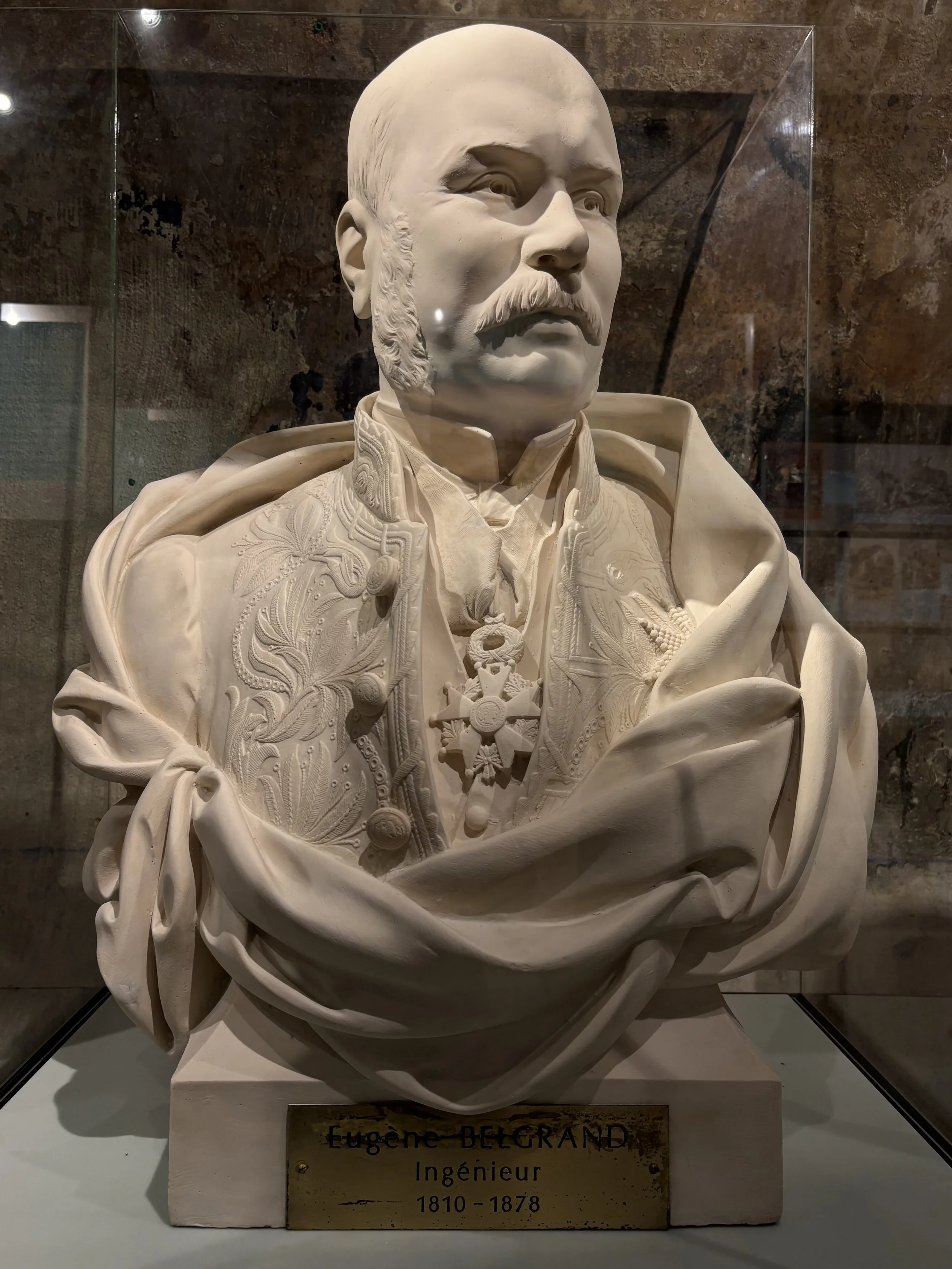
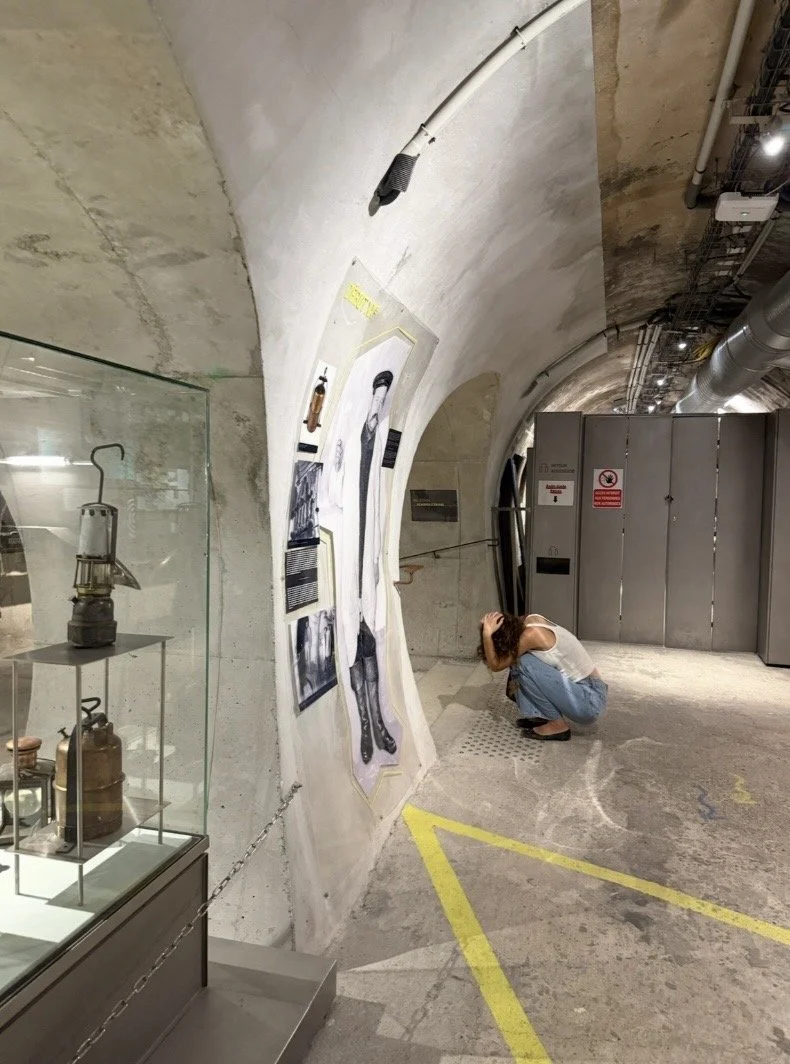
A sculpture of the bust of Eugène Belgrand in the Museum of the Sewers of Paris.

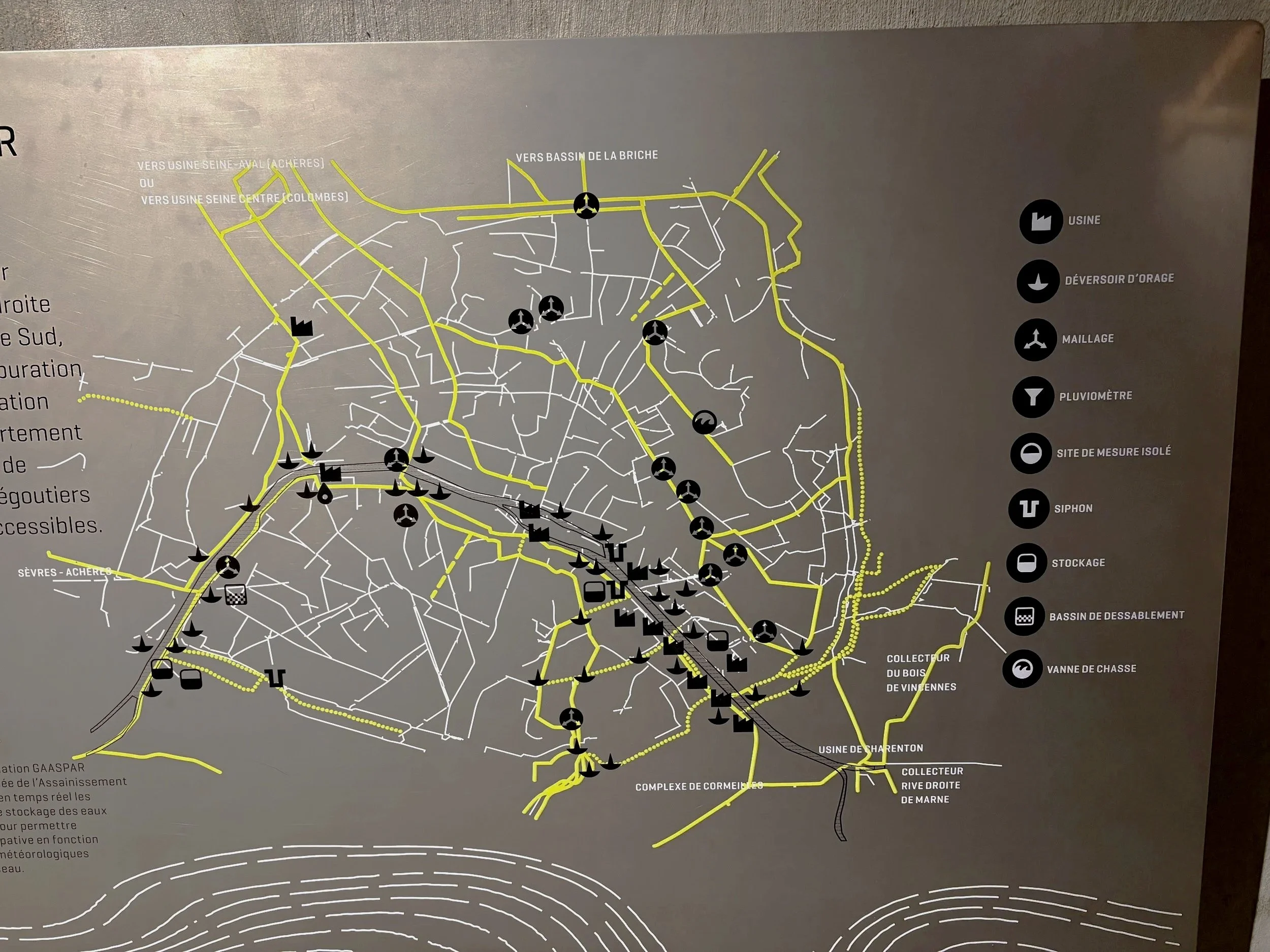
A depiction of the sewer system in the 7th and 15th arrondissement in Paris.

This health crisis led to the French engineer Eugène Belgrand to redesign and expand the entire sewer system. Before this expansion, the old systems were often filled with toxic gases, deadly disease, and were prone to flooding. His design led to hundreds of kilometers of sewers all being connected to one central channel that could efficiently carry waste out of the city, preventing cross-contamination. He created a dual-water supply system that separated clean water from the non-potable; this combined with the long-distance aqueducts allowed for drinking water to be returned to the city, waste to be removed, and was essentially the savior of the Parisian working-class. The water treatment mechanics that Belgrand designed are still used in Paris today.

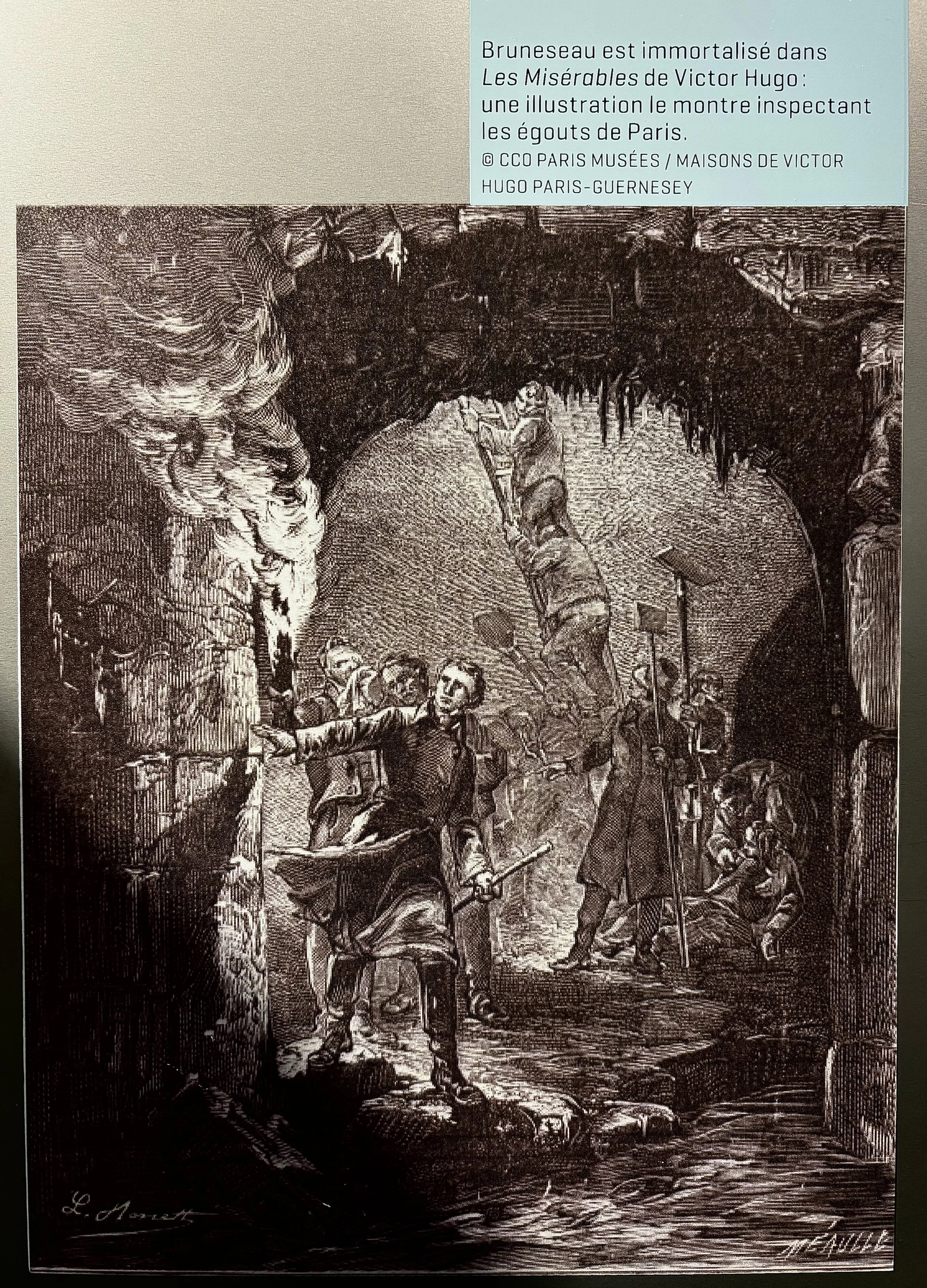
The overdue praise of this underground system that helped to shape Paris today is immortalized in the story written by Victor Hugo. The sewers in Les Miserables are most famous for the chapters which depict the saving of Marius, but the part that I found most fascinating was the role the sewers played in the crime life of France. These sewers, or the “underworld,” were a hub for crime syndicates to plot the most gruesome of crimes, including the capture of Jean Valjean and the disposal of numerous dead bodies (according to Thernardier). While this may seem far fetched, it is true. Before 19th century modernizations, the underground labyrinth that is the sewage system genuinely served as a hideout and escape route for thieves, pick-pockets, and fugitives that had escaped prison. Police were often deterred by the foul smell (which you can in fact smell in the museum), which led to high-stakes criminality and heists being made plausible. 

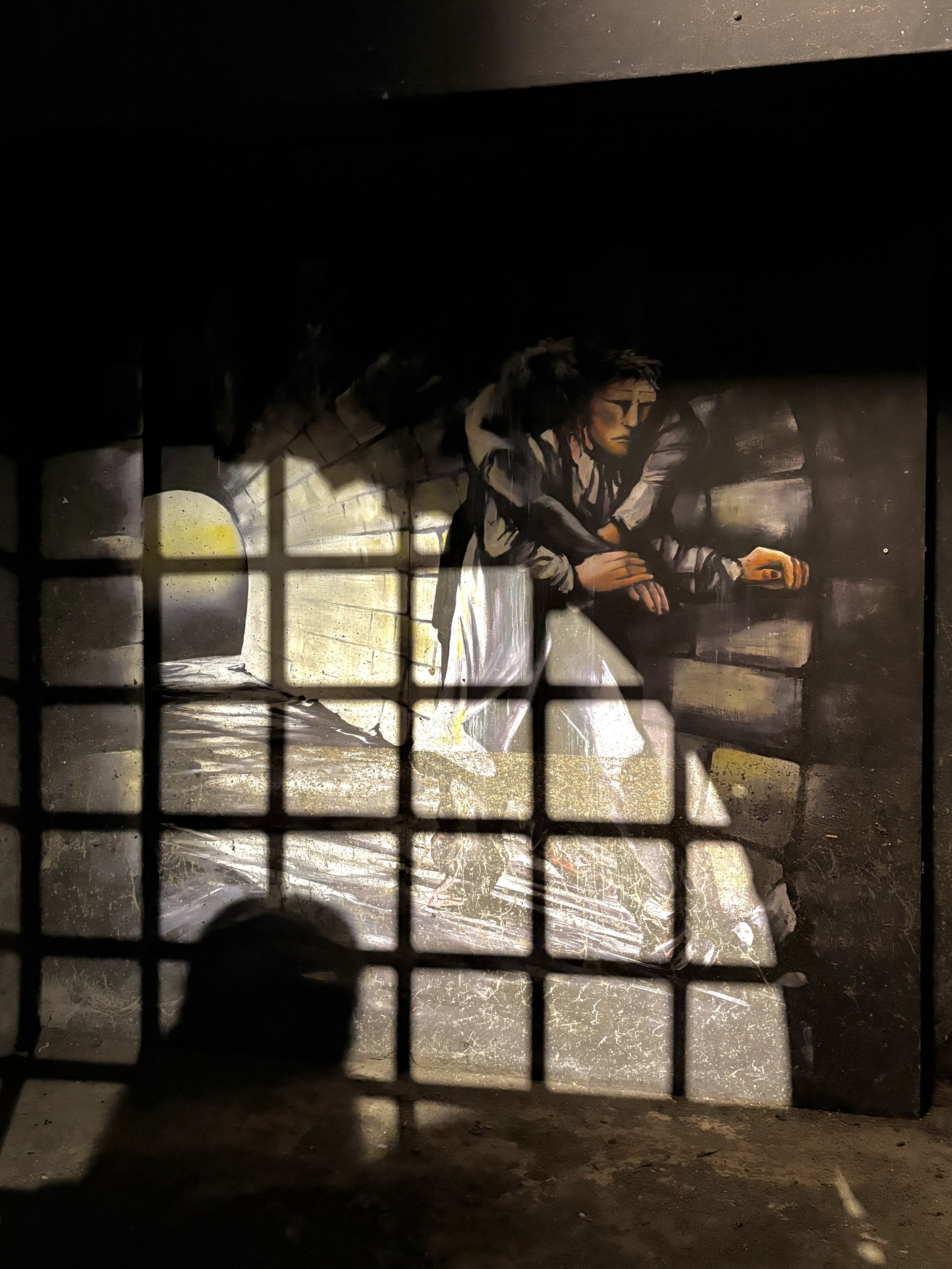
A mural in the Museum of the Sewers of Paris, paying tribute to the scene in Les Miserables when Jean Valjean escapes with Marius on his back.

Thankfully, Paris now has constant sanitation patrols and advanced digital surveillance that works both day and night. This system has allowed for the elimination of such a dangerous underworld. I still think it is a fascinating part of history. The fact that you do not often hear about facets such as the sewer system other than through fantastic novels such as Les Miserables is a bit of a metaphor on how we study history today. The unspoken parts that are so prominent in shaping society often slip through the cracks because they are not as glamorous as a bloody revolution.

The history of men is reflected in the history of waste dumps… Crime, intelligence, social protest, freedom of conscience, thought, theft, everything that human laws pursue or have pursued has lain hidden in that warren…
— Victor Hugo, Les Miserables

A depiction of sewer inspections as seen in Les Miserables.

How History Portrays Women

The discussion of one of our class seminars last week focused on women. In this blog I want to continue this discussion on women in history by sharing what I have seen and learned throughout this experience. I have actually been planning and looking forward to writing on this topic where I want to share my thoughts on how women and young girls are portrayed and what they experienced in French history through our two novels, visited locations, and art.

To begin I would like to dive into the women and girls of our two novels. Les Miserables and A Tale of Two Cities gives us female characters with different backgrounds, personalities, and outcomes, which allow us to see and dive into multiple perceptions on women, in this case in the time of the revolutions, through Victor Hugo and Charles Dickens. Between the two novels, I find a similarity in Cosette and Lucie Manette. In both the stories, these two characters are the good and the innocent that help those in darkness, like Jean Valjean and Mr. Manette, to turn around their lives for the better. Described with angelic characteristics they served as the light and hope of society in these dark times as well. Lastly, they were portrayed to embody and give both compassion and love to those around them. Through Cosette and Lucie, women are seen as bodies of light, whose love and purity inspires change and redemption, which I believe is a beautiful portrayal of women. Fantine was also described in a similar way as Cosette and Luice Manette in her youth. However, she does not retain this characterization throughout the novel as she undergoes hardships and loss ultimately leading to her death. In this way, Fantine shows the unfairness and cruelty women experience in society. She also shows the love and sacrifice women give through motherhood. Fantine gave every part of herself, giving her teeth, hair, and body, so Cosette could live a life of less suffering than her. Eponine is another portrayal of self sacrifice in the name of love as she puts herself in danger and loses her life for her unrequited love for Marius. An interesting aspect of Eponine's character that I liked in portraying women, was that she went into action. She was actively fighting for who she loved, for example, putting herself in danger to stop Thenadier and the other men from entering Jean Valjean's and Cosette's home and being in the fight of the barricades. Continuing with this idea, A Tale of Two Cities brings in the amazing character of Madame Defarge. She brings an image of women that was not seen much in historical novels, as her character strays away from the ideal goodness and innocence mentioned above. Instead I believe that she symbolizes the anger, power, and action of women as she is a leader in the storming of Bastille, and is ruthless in who she thinks should pay with their life in the revolution.

The Women’s Courtyard in The Conciergerie. Image from Paris Discovery Guide.

Information on Olympe de Gouges, on the wall of the Women’s Courtyard.

When looking at the history of the French Revolutions there is not much focus on how women were affected by this time or much credit given to the women who helped fight for it. One location that we visited which I found interesting in shedding light on this is The Conciergerie. The Conciergerie in the time of the revolution was a prison, where individuals would be held awaiting their execution. In terms of bookpacking, this location is used in A Tale of Two Cities as this is the prison Charles Darnay awaits his execution before being saved by Sydney Carton. In terms of this blog, I want to discuss an area within the Conciergerie which is The Women’s Courtyard. This was a small area which had a small space of greenery in the center. Today, along this courtyard's walls there are images and information on women who spent their time in the Conciergerie allowing us a glimpse into the women of this time and place. One woman mentioned is Olympe de Gouges. She was an advocate for human rights fighting for causes such as the abolishment of slavery and equality for women's rights. She was arrested and executed for accusing Maximilien Robespierre of wanting to establish a dictatorship and for putting up a poster stating that there should be a direct public vote on the French government. Manon Roland was also mentioned in the courtyard. Roland was involved in the Girondin party which appeared to have fought for personal freedom, end of the Terror, and such. During her life she was involved in politics sharing her thoughts which lead to her experiencing violent reactions which is stated to be due to her being a woman. Lucile Desmoulins was another woman held in the Conciergerie who was executed for an accusation of plotting against the Revolutionary Tribunal. She kept a diary where her beliefs and ideas are expressed in which she speaks on the absence of freedom women had in politics. In her diary she wrote:

What a sad fate that of women. Slavery and tyranny, that is their share…let them defy us less and leave us free.
— Lucile Desmoulins

Information on Lucile Desmoulins, on the wall of the Women’s Courtyard

From the Women’s Courtyard of the Conciergerie we are able to see the treatment and status women held in that time. Society did not allow them to express their ideas and concerns regarding politics and the state of the country, but, this also shows us how women fought to have their voices heard, and were actively engaged in the revolution to improve their lives and their neighbors even if it cost them their lives in the end. 

Louvre Museum

Liberty Leading the People by Eugène Delacroix.

Lastly, to discuss how women were portrayed in French history I want to look at art. We visited the Louvre Museum last week which contained many types of art forms ranging from sculptures to paintings to decorative art. On top of the various art forms, there were pieces from several countries including Italy, Greek and Italic, Spain, Egyptian and more. One of the sections in the Louvre contains French paintings, which when exploring I found interesting in showing the ways women were represented. The first painting I would like to discuss is “Liberty Leading the People” by Eugène Delacroix. This piece shows a woman in the center who is holding a rifle in one hand and holding up the French flag in the other. The setting appears to be one of a revolution, perhaps a barricade as we can see those who have fallen and others who are by her side to fight such as the young boy with the two pistols. In portraying women, I think Delacroix is showing how women can be seen as symbols of hope, freedom, and light for society, which correlates with the our novel characters, Cosette and Lucie Manette. Another piece which emanates a similar meaning is “The Intervention of the Sabine Women” by Jacques-Louis David, which was a painting I personally really liked. This painting shows a battle between two groups and in the center are women standing in between the fight in an attempt to stop it and who are also protecting young children. Seeing this piece I thought the women shined so brightly as symbols of protection and peace against violence, but also as strong and fearless for stepping into the center of an active battle. Additionally, by trying to stop the bloodshed and protect all I think they show a love for society, for human kind. One aspect of this painting that stood out to me was that there is an older woman who is also present, which to me shows that women of all ages are seen this way and symbolize these qualities. When thinking about women through art, many times they are portrayed as bare breasted or nude. To this aspect, often women were painted this way for the male gaze, meaning they are depicted this way due to male desire and enjoyment. For what this meant for women was that they were not seen as a person with thoughts, emotions, and feelings, but as an object. Though this is not true for all paintings depicting women this way, as sometimes doing this is meant to represent goddesses and such, though it shows this aspect to how women were seen in society.

The Intervention of the Sabine Women by Jacques-Louis David. Image from Louvre Collections. 

There is still so much I hope to learn about women in French history and in other historical times and events. It is unfair and a shame that many women go unrecognized in history as we are restricted from diving into more amazing minds and stories. However, through our novels, locations, and through art we can get a glimpse of the life of women back then and bring light to their pain and loss, but also to their power and victories.

Scribbling on the Subway

Not to be cliché, but being a young person right now is hard. It sucks pretty bad. There are lots and lots of cool things about living in the 21st century, but when you add up the countless recessions, global democratic backsliding, a major pandemic, and the entirety of the internet, it doesn’t look very good. In the last ten years, there has been a rise in protests and civil unrest in response to various injustices. The BLM protests in June 2020, for example, were among the largest and most sustained civil demonstrations the world has seen in decades. However, the re-election of Trump and the rise of right-wing populism have clearly demonstrated that the pendulum is swinging the other way. At this point, when I read the news, I can barely tell if I’m reading an Onion headline or not. Now, some of this increased support for the right is for (more or less) valid reasons. Many became upset with the rising cost of living, thinking that lower taxes might improve their financial situation. Others became upset with the purity culture perpetuated by the left, or the idea that one mistake meant you could no longer truly be a part of the cause. And others still likely fell victim to the rapid rise in right-wing content being pushed by social media algorithms online.

Figure out which one is real challenge

Le Pen arriving at court to appeal her conviction. It didn’t work.

This is not just true of the United States. In France, while there is certainly more variation, a rightward shift is currently happening. This is for reasons similar to those in the US: the right is consolidating power and appealing to ‘ordinary people’ while the left remains fragmented and focused on infighting. In fact, in the 2027 French presidential election, Marine Le Pen, the leader of the far-right French National Rally party, is predicted to win. This is despite the fact that just last March, Le Pen was convicted of embezzling EU funds. A criminal president? Sounds familiar to me. Regardless, Le Pen and the National Rally have been gaining public support due to strong anti-immigration sentiment and economic anxieties.

In class, we read a fascinating excerpt from The Other Paris by Lucy Sante. When contextualizing Parisian activism, she says, “In a sense, the revolution that began in Paris in 1789 never really ended.” She explains that this applies to the current day, with the city still continuing “to serve as a theater for every sort of demonstration and strike” even as “[France’s] social problems have been exported to the banlieues and the provinces.” With the rise of Le Pen and the National Rally, however, it really doesn't feel like that's true.

On the other hand, Sante's argument is exactly the sentiment one feels when reading about the Friends of the ABC in Hugo’s Les Misérables. These students are idealistic and want a better future for themselves and the people of France, so much so that they are willing to put their lives on the line. Yet, ironically, the 1832 students’ revolution barely left a dent in France's revolutionary history. Most of its current notoriety stems from its inclusion in Les Misérables. Hugo even titles a chapter about them “A Group That Came Close to Becoming Historic.”

One day, while I was on the subway, I saw an advertisement for weight-loss pills. It was defaced with graffiti - pretty normal in Paris. My train was delayed at the station, so I decided to translate what it said.

The ad’s original text says, “Getting in shape is the result of strict discipline - like taking a pill in the morning. Losing weight is a science.” The second half is crossed out, with the addition of “Fuck the patriarchy. By the way, why bother losing weight?”

When I saw it, I couldn’t help but smile. This was the kind of revolutionary spirit that Sante was talking about, the kind of spirit that the Friends of the ABC had. Sure, it isn’t a grand political statement about the human condition. But it is a bold public statement against what is, in my opinion, a gross attempt to profit from an insecurity that was falsely constructed by the patriarchy and forced onto women.

While this ad was the first defaced ad I saw, as the Baader-Meinhof phenomenon tends to work, once I noticed one, I saw them everywhere. For the first time in a long time, I felt a little bit of hope. Not because I think that graffiti on subway ads is the way to affect lasting political change. I mean, the person who crossed out that ad will be forgotten even faster than the student revolutionaries were. Instead, it was the concept that some people are always going to scribble in the margins, whether or not history is watching. To get any reminder that there are still good people out there, people who care just like you care, feels amazing. So, while I’m not sure we can still consider Paris a revolutionary city any more than any other city in the world, I do want to thank it for letting me gain some new perspective. And it was all because of a subway ad.

Au Revoir, Paris

When I first got to Paris, I opened the window in my accommodation, which was facing the courtyard where I could see everyone else’s windows. It felt kind of romantic in a way. It reminded me of Beauty and the Beast where people would just open their windows in the morning and say “Bonjour!” to each other. I got excited about exploring Paris, as I was very eager to understand one of the most important cities in Europe. 

The accommodation

Honestly, my expectations were not very high before coming to Paris. I had obviously heard about how people fall in love with the city and how Paris was so romantic, but I had also heard that it was overrated, dirty, and that the people were rude. 

To me personally, I loved my time in Paris. It was a city full of life, beauty, and soul. It is extremely diverse and the amount of culture and history within the city fascinates me. I enjoyed walking past cafes with people chatting over a cup of coffee, a croissant, and a cigarette. I enjoyed exploring beautiful churches that reflect the French’s attention to beauty; it really reflected France’s commitment to preserving their culture and how longstanding their art is. And I especially loved bookpacking and going to locations mentioned in A Tale of Two Cities and Les Miserables, as it made my experience more immersive. It wasn’t as dirty as I expected, but compared to many other Asian cities that I’ve been to, it definitely wasn’t the cleanest. 

Yet the fact that Paris isn’t squeaky clean and extremely organized was tolerable to me because it represented the freedom that it has. Perhaps it was also because it was balanced out by the beautiful architecture and streets. But the point of a city isn’t just to be a museum display. It’s a place where people work, live, and explore. It’s a place where people experience both their highest and lowest points in life. I can accept the fact that sometimes it’s okay for a city to be a bit more rugged; it displays what humanity truly is. 

Victor Hugo mentions how he believes that Paris is a “summation”, and “the greatest achievement of the human race.” I honestly can see his point. I believe Paris represents a society that represents multiple facets of human nature, or a “summation” of humanity. It’s a city that appreciates the beauty of the arts, including fashion, food, music, and visuals. But it’s also a city where people feel free to flaneur around, smoke cigarettes, and push and shove to squeeze onto an already packed train… It represents the extent of humans and what we can achieve. I completely appreciate this about Paris. 

At the same time, I’m not sure if Paris is necessarily “the greatest achievement of the human race” nowadays. I can understand that back then, it definitely was one of the greatest cities in the world due to France’s domination and imperialism on the world stage. However, cities all across the world are developing into global and diverse hubs. I especially believe that many major cities in the United States, such as New York City, are just as much of an achievement as Paris, as the U.S. was founded on exploring “new” lands and searching for liberty. In America, there is a different sense of freedom, one that is newer and more individualistic. The idea of America to me, is just as great as the idea of Paris. While I recognize its ugly past, I can appreciate the idea and values of America. It’s a nation where so many people have flocked to in order to chase their dreams. It’s a nation that has built itself up from a few British colonies to the most powerful nation in the world. It’s a nation where people are able to go out in their pajamas without being judged. 

This is just one example of another great human achievement. You could also talk about how Nordic countries have built social democracies that have placed them in the position of the happiest countries in the world. Or you could talk about how Singapore built itself from the ground up after years of British colonization. But in my eyes, Paris is a city of neverending exploration. While Paris does have many flaws, it is an extremely unique, accomplished, and beautiful city that I will definitely return to. The beauty, culture, and freedom of the city have appealed to me, and allowed me to understand not only French society, but also the possibilities of what our global society can achieve.

Palais Garnier

“For Paris is a summation. Paris is the greatest achievement of the human race. This whole marvellous city is a compendium of ways of life past and present.”


BE NOT AFRAID

A huge black space then opened up in front of me and I fell inside it. I couldn’t see what was in front of me and I couldn’t hear anything around me. I couldn’t think of anything except that my mother was no longer near me.
— Jamaica Kincaid (Annie John)

Statue of the Virgin Mary and Jesus, from Notre-Dame cathedral

On this trip we visit a lot of churches. Like a LOT of churches. Don’t get me wrong, I quite enjoy these visits. I have always been one for the stained glass, beautiful architecture, and quiet, pious spaces. Religion has long been at the center of some really great art, but recently I’ve been struck by the countless iterations of “Madonna and Child” I see. For being such an important figure on her own, Mary is always usually depicted in the paintings and statues I’ve seen alongside an infant Jesus or mourning over Jesus’ body. When doing research for this blog, I spent an hour searching for a painting from the Louvre I remembered of Mary alone, only to realize Jesus was in the painting the whole time. Yet–for some reason–I only remembered Mary; her face glows, her saintly presence strong, her downcast eyes turned graciously toward her son. She is the Virgin Mary or Mary, mother of Jesus, but when I look at depictions of her holding this baby, I just see Mary, the teenage girl. 

The story of the Virgin Mary is so complicated for me to grapple with. Mary was around 16 years old when she gave birth to Jesus, and was told her child would be the Son of God. Was she ever upset at the unfairness of the expectations and responsibility placed onto her? And was she ever afraid?

“Madonna and Child” by Domenico Ghirlandaio (Louvre)

With these paintings and statues of Mary, we never get to see her anger or resentment. “Where Mary is so too is Jesus.” Her life and role were predetermined to be tied directly to him from cradle to grave. And yet, we are so often fed this image of her idealized serenity. To me, it feels like Mary is a mother before she is a person. So much is missing from her story. Have you ever seen a statue where Mary is shown with a pregnant belly? Or read a scripture that talks about her loneliness, her stretch marks, or her anxieties while traveling on a donkey, near her due date, for miles through rough terrain and cold desert temperatures?

The only time during this trip I have seen Mary’s fears portrayed is in depictions of the Pietà (the pity). Mary is permitted to be upset, but only when cradling the dead body of Christ after his crucifixion. Mary does not cry out in rage, instead, she shows a quiet, peaceful acceptance of God's plan. The cost of her motherhood is allowed only when it is holy and beautiful, and especially when it is in relation to her son. When Michelangelo sculpted his version of the Pietà, he represented her extremely young to represent her incorruptible purity. He said to his biographer:

"Do you not know that chaste women stay fresh much more than those who are not chaste? How much more in the case of the Virgin, who had never experienced the least lascivious desire that might change her body?"

Society will strip a mother of her dignity, sexuality, money, hair, teeth, anything it can get its hands on, then turn their sacrifice into shame.


Gazing up at these portrayals of Mary during the many quiet moments of reflection we’re allowed in the churches, my mind always turns to Fantine in Les Miserables. When I read Fantine's sacrifices for Cosette, it’s difficult for me to control my emotions while getting through the pages. Threatened with the fabricated story of her daughter’s sickness, Fantine sells her hair, her teeth, and her purity. In many ways, her motherhood feels like the ultimate sacrifice to me. Before Cosette, Fantine was not simply a mother waiting to become one. She was a young woman with her own desires, relationships, and imagined future. We know so little about that version of her because, once Cosette enters her life, Fantine’s entire story becomes organized around what she is willing to surrender for her daughter. Even her physical transformation feels symbolic: her hair is cut, her teeth are pulled, her body is sold, and eventually her health deteriorates until she passes away, still thinking of Cosette and Cosette only. With every sacrifice, another piece of Fantine seems to disappear. Mothers give up their youth, their beauty, their bodies, their whole souls to their children, and Fantine is no exception. Her identity is so completely intertwined with motherhood and her love for her daughter, that it becomes difficult to imagine what she might have wanted outside of it. I find this representation interesting because, while it is no exception to romanticizing the hell out of motherhood, it also doesn’t shy away from showing what it cost her.

“Pietà [Our Lady of] Pity” by Michelangelo (Saint Peter's Basilica, Vatican City)

“Pietà” by Rosso Fiorentino (Louvre)

It would be like if somebody said ‘your car keys are in the drawer.’ And you go and you open the drawer and not only are your car keys not in the drawer..there’s nothing in the drawer. The drawer is empty. And you come back and you say ‘the keys aren’t in the drawer.’ And they say ‘no, go back and look again...they are in the drawer.’ And you go back and you open the drawer and it is empty.
— Ann Patchett's analogy for her desire to have children (These Precious Days)

In class we discuss what it means to be a good person, and if sacrifice for others constitutes a good deed. Should a mother’s love have to hurt this much to prove that it is sincere? Fantine makes this question especially difficult for me because I do not doubt that her sacrifices for Cosette are acts of love. But how much of that sacrifice is truly a choice when society gives her so few alternatives? The most unsettling part is that we have made these acts so culturally familiar that it can look less like loss and more like virtue like in the case of Mary.

Motherhood terrifies me, and for the time being, I can confidently say I do not want to have children. Even just that statement, “for the time being,” scares me, and the idea that I could one day be brainwashed by some biological instinct to have a child. Even my therapist told me that one day my mind could change, and that “when she was my age,” she too truly believed she’d never have kids. I think the world must be full of others like me who don't want to have children, not now, not ever, but are too afraid to say it because of the expectations society places on women. Like having a child is my single greatest purpose. I always think about the “girl with the list” on Tiktok (I know, Joan and her Tiktok references), but it gives some real life examples and reasons not to have kids. Not because they don’t like kids or are mad at those that do, but just because they’ve never felt that desire or simply don’t want to.

Maybe I just don’t have the selflessness it takes to be a parent. Or maybe we have romanticized maternal sacrifice so thoroughly that we forget to ask whether mothers should have to sacrifice anything in the first place. Honestly, I can’t make up my mind which scares me more.

Think About the Women's March From Versailles!

I was tired. The sunlight was beating down on our bodies. It was 80 degrees out. There were too many tourists. I enjoyed my experience but I had enough; it was time to go home.

On a sweltering summer Saturday, my classmates and I were walking through the gardens of Versailles. We had just finished looking through the Petit Trianon, but we still had a long walk ahead of us. The massive size of Versailles was unexpected for me, so what took about 40 minutes felt like hours. But I had a thought that came to my mind that I told my classmates: “If the women during the French Revolution could march from Paris to Versailles, walking to the Palace’s entrance is nothing.”

The long path we walked from…

These were some joking words of motivation, as I don’t really believe in comparing one’s suffering to another. However, I am fascinated by the extremities that many revolutionaries go through due to their utmost passion and willingness to sacrifice for the cause. The Women’s March on Versailles is a good example of this. The rightful rage that the French had because of not only the extreme societal inequality and the French ruling class’ oppression, but also because of the meaning of Louis XVI being in Versailles, fueled a complete overhaul of France’s social and political structures. It meant that the king was able to be isolated from Paris, the capital of the nation, because he felt that he was above them. It meant that the leader of the nation was able to escape the wishes of the people. The people had had enough of this centuries-old hierarchical structure. A five-hour march to Paris was nothing compared to the suffering they had been enduring. The payoff from spending five hours of their time was so great, as anything was better than living under an autocracy. 

I also thought about how marches are significant parts of many revolutionary movements throughout world history. In 1965, Martin Luther King and other civil rights leaders led a march from Selma to Montgomery, Alabama in protest of oppressive Jim Crow laws that enforced racial segregation. Protestors were tear gassed and brutally beaten by police officers during this march. But they kept going. Being tired was not an excuse, as they were also tired of centuries of white supremacy and the consistent oppression and stripping of humanity from Black Americans. Their goal of voting rights and racial equality needed to be accomplished. In 1934, Mao Zedong led the Long March during the Chinese Civil War, which was an escape from the corrupt Chinese Nationalist forces. From the Chinese perspective, the Long March represented the communist revolutionary struggle for liberation from hierarchies that had oppressed the working class for millenia. Despite a multitude of attacks and casualties, they kept going; to them, this suffering was needed to achieve their goal of a communist China.

Why are marches so important though? When does a walk become a march? Marches represent the great lengths a movement is willing to go through, or “march” in order to achieve a goal. In this case, it’s essentially a glorified walk. But marches also refer to military demonstrations that display the pride and strength of a nation. Soldiers “march” in an organized and glorified manner to show greatness. 

From a revolutionary perspective, these events that I mentioned above are more than just walks, journeys, runs, or any form of travel by foot. There is a sense of determination and “glory”, similar to how soldiers march to represent their nation. Revolutionaries march for the sake of a societal cause, which is their “destination”. Marches are walks that encapsulate the spirit of what one is truly fighting for and the suffering one is willing to endure in order to achieve a goal.  

Pondering about this march on Versailles led me to also think about the revolutionaries that started the 1832 Revolution in Paris, which was depicted in Les Miserables. While the revolution was not even close to the scale and impact of the 1789 French Revolution, the revolutionaries were also extremely committed and were willing to sacrifice their lives for the sake of the revolution. The catalyst for the revolution, which was the funeral of General Lamarque, could be compared to a “march”.


“So on the fifth of June, a day of sunshine and rain, General Lamarque’s funeral procession passed through Paris… Then came a strange, excited, countless multitude, local sections of the Friends of the People, the Law School, the School of Medicine, refugees of all nationalities, Spanish, Italian, German and Polish flags, horizontal tricolours, every conceivable banner, children waving green banches… unorganized and yet united in spirit, now a tumultuous mob, now a column. Insurgent groups chose leaders for themselves.”


This excerpt encapsulates unity. The people of Paris are gathering and “marching” through the streets as a way to express their discontent with the July Monarchy. They are coming out and taking action for a purpose: To revolt against Louis Philippe and liberate their nation for the sake of equality and self-determination. We can see that multiple social groups are uniting for a revolution and putting themselves at risk just so that they can fight for a France where they can be free from autocracy.

We later find out in the book that the revolution was unsuccessful. Sometimes sacrifice and revolutions do not work out in the end. Yet, it is still beautiful that there was a united attempt from French society to call out the establishment and take collective action against hierarchy and oppression. 

Sometimes protests and revolutions have imperfect or unexpected outcomes as well. For example, the civil rights movement and their marches were successful in terms of the passage of the Voting Rights Act and desegregation, but many Southern states are still led by right-wing governments who implement policies that are considered to be oppressive to Black Americans, women, and other marginalized groups. China had some initial success with dismantling oppressive institutions and social structures through land reform and gender equality initiatives, but they ended up becoming an authoritarian government that engages in the oppression of minority groups and imperialism against other surrounding nations. 

Perhaps France is an example of what countries or regions could have been in terms of states with a long history of revolutions and change. Maybe China could have achieved a liberal democracy if it had gone a different path. Maybe states in the American South could have voted in more liberal governments that would have implemented more progressive policies to alleviate poverty and inequality. But opposing forces are always present and can often impede on efforts to achieve true liberation.

To me, the fact that the revolutionary spirit of France was so profound, as that is how I believe a society progresses. Progress is not an easy path, and it only comes when people express dissatisfaction, whether it be a small protest or a major revolution that changes the soul of the nation. I am inspired by Enjolras, Marius, and the student group’s determination and drive that allowed them to organize a revolution, as well as their free discussion of ideals that are crucial to achieving democratic values in a society.

France had still partaken in centuries of imperialism throughout the globe during these times of domestic revolutions, and radical political forces and ideals from the left and right that could threaten democracy and liberalism are still present in the nation today. But I can appreciate that great change was still able to occur and a vibrant Western democracy was able to emerge from this process. After all, it is the existence of democracy that allows these radical values to gain traction. Perhaps it was because of France’s established position as a dominating and developed European power compared to other nations that had undergone colonization or poverty that hindered their growth, as it allows them to avoid the dangers of populist and authoritarian forces that often emerge through developing nations. 

So was our walk from Versailles a march? Probably not. But maybe you could argue that our walk to the train station had a greater purpose of us writing these blogs and thinking about ideas that could potentially inspire us to contribute to a greater good. Maybe we are all engaging in a mini-intellectual revolution right now and marching through the streets of Paris to expand our worldviews and forming ideals that will be revolutionary in the future. 


Race in Les Misérables

The Negro Scipion by Paul Cézanne (1866) - seen at Monet’s studios and said to be one of Monet’s favorite paintings

When we got to Paris, one of the first things I noticed was the city's diversity. Maybe this is the uncultured American in me, but (as a gross oversimplification) I didn’t tend to think of European cities as quite the melting pot the US is. Of course, a major European city is more likely to be diverse than a small town anywhere, but I digress. My point, generally, is that I was pleasantly surprised when I got here and noticed that there were actually more different backgrounds than I thought.

France has a long history of African migration from West, Central, and North Africa, as well as the Caribbean. As a result, it’s home to Europe’s largest Black population by far. There is also a strong history of Asian migration, especially from Vietnam (a former colony), China, and Cambodia. One day, I was curious to see how evident this was in the statistics of Parisian ethnicity, so I looked it up.

I found that France has legally banned the collection of race and ethnicity data as an attempt to be ‘colorblind,’ which is a whole other can of worms. Some argue that this law is based on residual trauma from racial identification categories being used in WWII to identify Jews to be taken by the Nazi regime. Further, in the modern day, the concept of race and ethnicity as a key personal identifier has been considered by some in France to be a sign of increasing Americanization. All of these factors have led the official government position to favor universalism and assimilation above all else. Personally, I find that fascinating, and not a position I can necessarily get behind. The reality of human nature is that race is a characteristic that impacts who you are. At the very least, your experience moving through the world is different from others in some ways, and ignoring that reality is both condescending and naive.

The ideas of universalism and assimilation are fairly modern policy stances, but intellectual discussions about race in France go back much further, to the 17th century. The concept of race is said to have been first articulated by a Frenchman, Francois Bernier, who wrote an essay dividing humanity into four racial categories. However, even though he was a prominent physician and philosopher, his writing never gained much traction and was generally ignored by history. Race began to take shape as a concept in the 18th and 19th centuries. However, while America had to reckon with race in a much more explicit way during this time period, France didn’t follow suit.

Alexandre Dumas

When I opened Les Misérables, I had no expectation that race would be discussed in the book. Sometimes, classic novels simply don’t have diverse casts of characters. And, as I expected, there were only passing mentions. One of the most explicit examples is in our introduction to Javert, the novel's antagonist, who, in our translation, is said to have “an inexplicable hatred for that gypsy race to which he belonged.” Scholars do debate whether or not Hugo meant this, because in the original French text, instead of gypsy race, it said race de bohèmes, which some have interpreted as a broader, metaphorical usage that just evokes a wanderer’s lifestyle. Other than this, though, race isn’t really touched upon. However, even if Hugo meant it metaphorically, the fact that these two were interchangeable enough to make the translation ambiguous says something in and of itself.

Race was a real fact of life during Hugo’s lifetime. His peers weren’t even all white. Alexandre Dumas, the author of The Count of Monte Cristo (1844, twenty years before Les Misérables), was Black. He was born to a French nobleman and an enslaved African woman in Haiti, before being taken to France at 14 by his father to be educated and given his freedom. Dumas gained notoriety and fame through his writing, but he still faced racist caricatures and generalizations from readers. He was mocked in ways his peers, like Hugo, were not. Additionally, although slavery was abolished in the French Revolution, Napoleon reestablished it by decree in the colonies in 1802, where it stayed legal until 1848. I find it hard to believe that Hugo knew absolutely nothing about this back-and-forth. Yet, the only mention of slavery in the book is a throwaway line at the end, saying that Thenardier was going to move to America to become a slave trader. Now, I am not of the opinion that Hugo had to talk about every possible social issue in Les Misérables. However, this one seems like a pretty big oversight to me, especially given the novel's recurring themes of goodness, religion, and morality.

Caricature of Dumas

Now, after reading Les Misérables and rereading a lot of the most poignant sections over the time we’ve had in Paris, I can undoubtedly say that it is one of the best books ever written. Yet, while its themes are certainly universal, the reader is often reminded of Hugo’s position in life - a Frenchman who didn’t really grapple with themes of race. As an American and someone who aims to work in progressive policy, I tend to think about race a lot. It is clear that at least in Les Misérables, Hugo did not. I’m not trying to fault Hugo for failing some modern test he was never given the rules to. However, it’s important to acknowledge that all the material to reckon with race was right there. Yet, he chose not to (or maybe just didn’t think to) in a book that otherwise tries to explain and touch upon so many different nuances of society. This gap tells us what “universal” meant to a Frenchman in 1862. Today, it’s not like that. Instead, ‘les misérables,’ or the (literal) wretched, don’t share one nationality or race.

A Woman, Ideal, or Object?

As a part of our class we had to write an essay, (sadly, we don’t spend all our time walking around pretending to be Jean Valjean). I wrote my paper in response to the question of how well Victor Hugo speaks to contemporary audiences. One of the main issues I grappled with, was the role of women within Les Misérables. However, as we’ve worked our way through Charles Dickens’ A Tale of Two Cities, other art, and history I’ve been looking at this question more broadly.

Discussing women in 19th-century literature can be a tricky subject. Personally, I find it difficult to find the line between understanding that social norms and conventions were wildly different from modern feminism versus condemning authors for their treatment and views on women. I enjoyed both Les Misérables and A Tale of Two Cities, and I found it easy to get lost within their worlds. Then, they hit you with a “One of the generosity of women is to yield,” and I’m yanked right back out. I’d say this is an eye-rollable offense. Annoying reminders of the patriarchal thought process like this are present in both books. And yet, I liked the books. Does this make me a bad feminist? I certainly hope not. When deciding my own distinction between period-typical attitudes and book-ruining offenses, I found that intention played an important role. I don’t believe Victor Hugo or Charles Dickens meant to intentionally degrade and suppress women’s rights and autonomy; to me, their offenses are born of ignorance but not malicious intent. Their ignorance would be a bigger obstacle if their female characters did not push against the authors’ own limitations. I believe that if either book were written today, the perpetuation of women as wholly submissive creatures would not be present. Alas, these books were written in the 19th century.

The bedroom of Charles Dickens’ sister-in-law, Mary Hogarth. Mary died in Charles arms at just 17 and is said to be the inspiration for many of Dickens’ pure and perfect female characters, like Lucie Manette in A Tale of Two Cities.

I find Dickens’ treatment of women quite baffling. His novel contains a perfect, beautiful, dutiful woman whose entire purpose revolves around the men in her life. Lucie Manette has no ambition beyond her role as a daughter, wife, and mother. She’s entirely good, angelic, and unflawed. All to say, she’s boring and absolutely fictional. And yet, the novel also contains a fascinating portrait of a vindictive, unforgiving, and intelligent woman whose autonomy leads her to storm the Bastille. When you meet Madame Defarge, she’s silently knitting while her husband runs the wine shop. How absolutely predictable of Dickens. I quickly learned that my own immediate dismissal of Madame Defarge was ill-placed. She isn’t just knitting; she's “knitting, knitting, counting dropping heads” (wow). She isn’t knitting socks or mittens but writing and marking enemies of the revolution to die. She directs all the women in the neighborhood to do the same and even remains in charge within her marriage. I feel I should include one of my amazingly academic annotations about Madame Defarge to fully illustrate her character. Here, the husband, “Defarge, with his pipe in his mouth walked up and down complacently admiring, but never interfering; in which condition, indeed, as to the business and his domestic affairs, he walked up and down through life,” to which I wrote she is running this man. Or when Defarge questions how long it may take the revolution to succeed, she responds with, “‘Vengeance and retribution require a long time; it is the rule’… ‘How long’ demanded madame, composedly, ‘does it take to make and store lightning? Tell me?’” I, of course, wrote GOTTEM BADDIE. For all of Lucie’s angelicness, Madame Defarge makes up for it with maliciousness. I would have loved to see a female character that fell somewhere in the middle, but I still can applaud such a marvelously flawed woman.

Hugo also walks the line between saintly and realistic female characters. Fantine becomes pregnant before being married and is abandoned before the father ever knows. This, at the time, would have been scandalous and damning. Fantine sells her hair, teeth, and body to provide for her daughter– saintly actions by unsaintly means. By the time she falls ill, she transcends into an angelic figure, even to the nuns taking care of her. When we first began talking about Cosette, Fantine’s daughter, it seemed like she was a Lucie Manette figure, beautiful, devoted to her father and husband, and lacking any personality. But as I looked back, there was so much of her character that we were simply erasing. She certainly is not the most nuanced or well-developed character, even by 19th-century standards (Jane Eyre anyone???), but still, as readers we’ve ignored aspects of her character so that we could take the easy route and throw her into the innocent, naive, subservient female character bucket. I don’t think Cosette is so easily classified. One day she learns that she is pretty (and Hugo has some… interesting takes on what that does to a woman) and wields it “like a knife”. Her train of thought isn’t saintly; after meeting Marius, she decides the officer she used to watch is “dull, inane, stupid, feckless, conceited, disagreeable, impertinent, and very ugly” (I even included this quote in my essay; it was too funny to ignore). We allow Marius, Cosette’s husband, to retain other pieces of his character after he falls in love but reduce Cosette to an infatuated girl in love. Which, to be fair, she is. Still, Marius is the one writing her love poems, and Cosette is 15! And I don’t know about you, but a 15-year-old girl with a crush is a fearsome thing to behold.

A painting of Juliette Drouet, Victor Hugo’s mistress and companion for 50 years, in his Paris home.

Something I found really interesting was the difference between the relative “innocence” of female characters in the books and the art we’ve seen in museums and even churches in London and Paris. Dickens and Hugo both draw very strict lines on what they deem as invasive to portray in their books. A lot of the other artists of this period, or even earlier, don’t seem to have such qualms. Semi- or full nudity seems incredibly common in the artwork of the 19th century, which seems a little strange considering the strict societal conventions about public decency. Once again, another distinction must be made: what is art and what is sexual provocation dressed up as allegory. Calling a nude statue a goddess does not negate its true purpose. Once again, intention matters. Nudity or even sexuality is certainly not inherently nefarious; it can be honest, empowering, and beautiful. However, consent from those involved and awareness from the artist of the power they hold are essential when crafting such vulnerable pieces. There must be a larger purpose than simply gratifying voyeuristic tendencies of the men who could afford this art at the time.

Le Déjeuner sur l'herbe (The Luncheon on the Grass) by Édouard Manet in 1862 and 1863. The painting calls out how women are treated in art without hiding behind the guise of allegory.

Men portraying women in art is a conversation that is very much relevant today. In fact, I learned about Laura Mulvey’s concept of the male gaze when reading her essay Visual Pleasure and Narrative Cinema for a Cinema and Media Studies class at USC. I find it quite sad how similar the male gaze functions between traditional visual art forms, like paintings or sculptures, and modern forms of visual media, like film, animation, and video games. At their worst, they remove the woman and leave only a shell meant to be sexualized behind. It’s hard to watch as people stand around and take pictures of paintings that seem to intentionally remove humanity in favor of sexuality. It appears that the woman in the painting is offering herself to the viewer, or at worst, there for the taking. This plays into the voyeuristic aspect of art, and I would argue contributes to the “ego libido” of the viewer. For the paintings driven by and for the male gaze, the women are explicitly crafted as objects. In film, the narcissistic gratification of ego libido is achieved by viewers identifying with the powerful male protagonists who have these women at their disposal. The viewer simply inserts themselves into these roles. For these paintings, the owners essentially play the part of the male protagonist. These women are at their disposal. They may view them when they please and control who else may get that privilege. I don’t believe those who commissioned such paintings actually cared about the goddess or figure the woman was supposed to be portraying; I feel their pleasure from these paintings came from knowing it was a real woman being depicted, over whom they had control. Please note, I have intentionally only alluded to male gaze-driven paintings vaguely as I don’t feel it necessary to subject those pieces to more attention.

This isn’t to say women and femininity can’t be appreciated and depicted in art; I vehemently want more of that. I want more women with character, more with flaws, more who wield their body as they see fit. It’s heartbreaking to see the same issues of a 19th-century painting present in an advertisement on the metro. Just as we adjust our expectations for feminism in past centuries, those in the future will have to adjust to ours. I, for one, hope they condemn our complacency. And if life imitates art, I fear I must get working.