History has a way of making revolutions feel like they belong to adults. When we study them, we learn the names of kings, generals, politicians, and revolutionaries. Louis XVI. Robespierre. Napoleon. General Lamarque. Enjolras. We talk about governments rising and falling, constitutions being written, and barricades filling the streets. Children rarely appear in those conversations. Victor Hugo refuses to let us forget them.
When I first read Les Misérables, Gavroche immediately became one of my favorite characters. He's witty, fearless, sarcastic, and somehow manages to make even the darkest moments of the novel feel lighter. I admired his confidence and independence, but I also thought of him as exactly what he was intended to be: a memorable fictional character. It wasn't until I started walking through Paris that I realized Hugo was asking his readers to see something much bigger.
Where the elephant would have been
One afternoon, we walked toward the Place de la Bastille from Saint-Germain-l'Auxerrois Church, tracing the events in A Tale of Two Cities, but somehow the locations we strolled past were also mentioned in Les Miserables as well. Along the way, we stopped where the Elephant of the Bastille once stood, the enormous unfinished monument that Hugo chose as Gavroche's home (think of an empty elephant version of the Trojan horse). Before this class, the elephant had always struck me as one of those strange details authors invent to make a character more memorable. Standing there, you realize that Hugo modeled Gavroche on the countless children who lived on the streets of nineteenth-century Paris, children who survived wherever they could, even inside an abandoned monument.
What stayed with me most wasn't the elephant itself. It was the walk. We covered the distance comfortably while carrying water bottles, stopping for photos, passing some of the oldest houses in Paris, and peeking into jaw-dropping churches. Somewhere along that same route, Hugo imagined Gavroche wandering without any of those certainties. For me, it was another afternoon exploring Paris. For him, the streets we wandered were home.
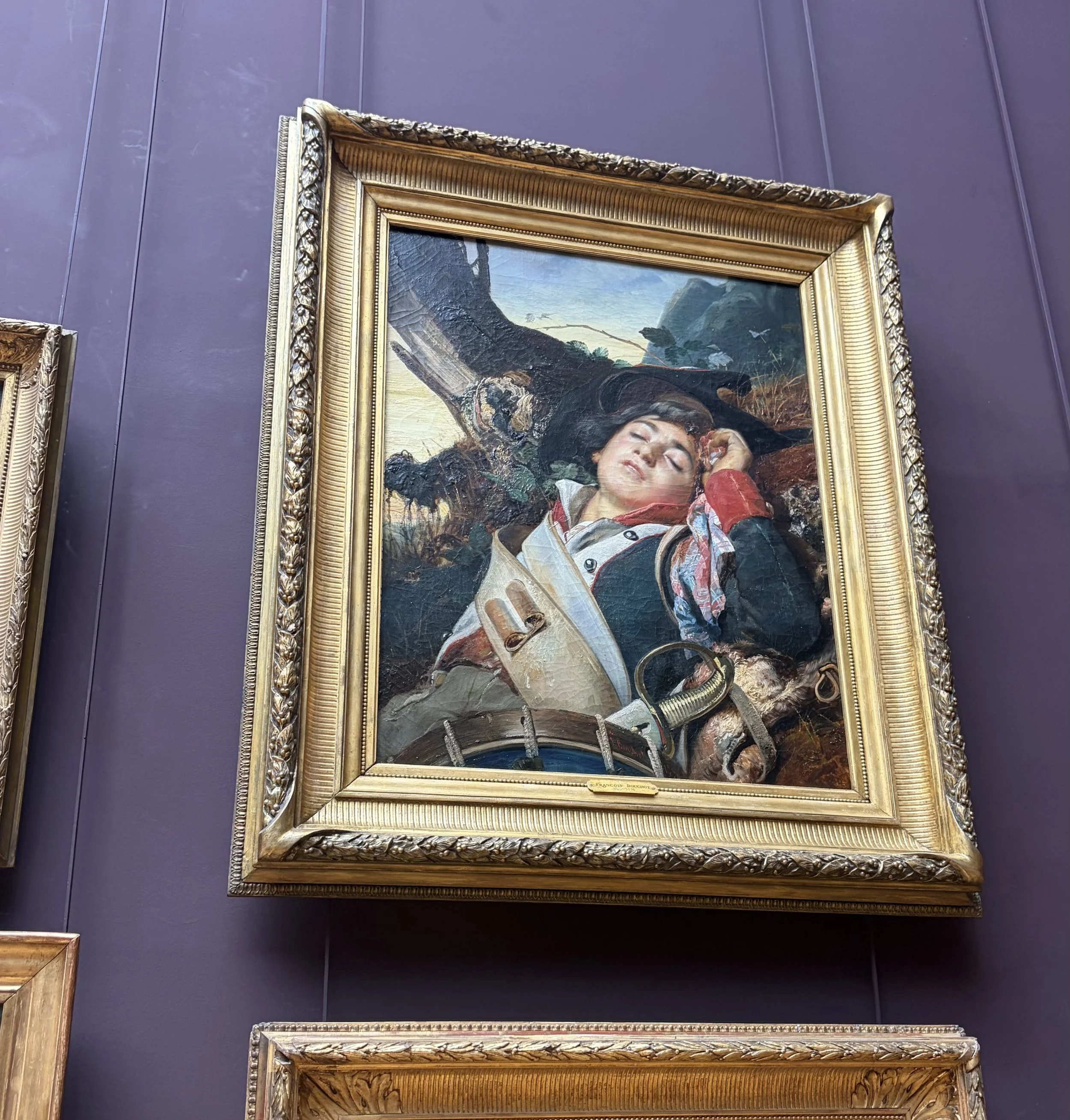
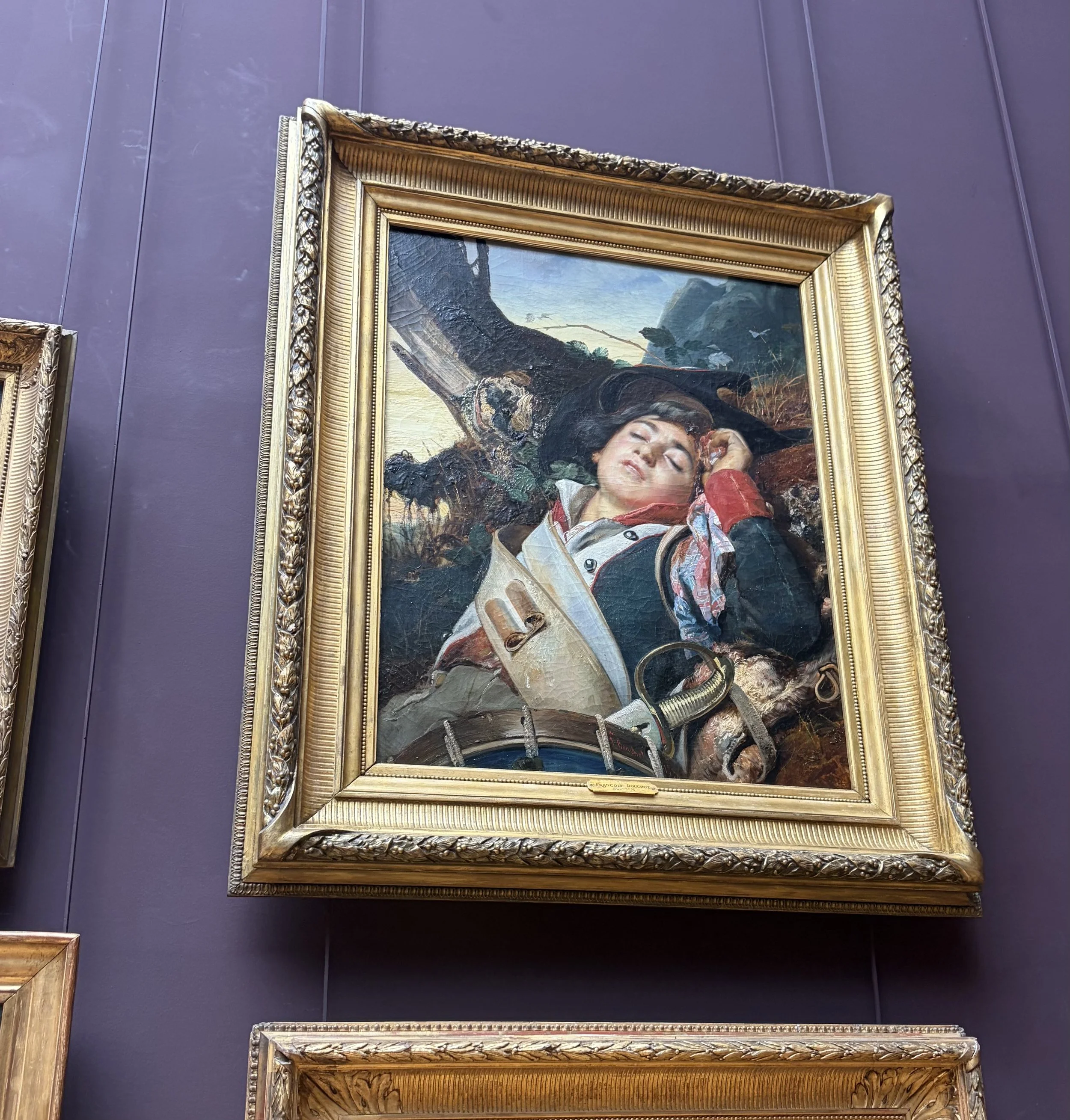
Fallen Drummer Boy (in the Louvre) - Gavroche?
As we continued studying the history behind Les Mis, our conversations naturally centered on revolutions. We discussed the various French revolutions, the 1832 rebellion (the one in Les Mis), and the long-standing tradition of Parisian uprisings. We discussed the significance of Hugo’s barricade and whether meaningful political change can be achieved through protest or through institutional channels. But while those discussions focused on politics, I kept thinking about Gavroche. He isn't a politician. He isn't a military leader. He isn't even old enough to vote or fully understand the complicated political arguments unfolding around him. He was a neglected son, a brave revolutionary child, and a street urchin. Yet he becomes one of the novel's greatest symbols of revolution.
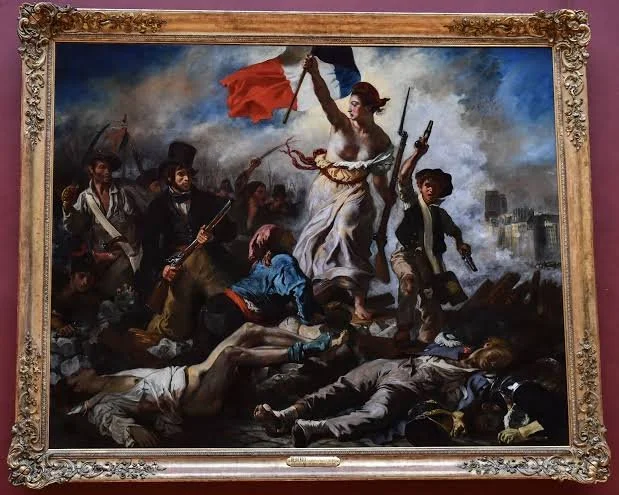
Liberty Leading the People (in the Louvre) - Can you spot Gavroche?
Our seminar later connected Gavroche to nineteenth-century paintings of revolution, where boys often appear delivering ammunition, holding pistols, or following adults into battle. Looking at those paintings after standing where the Elephant once stood, I noticed something I hadn't before. Artists often make these children appear heroic and almost triumphant. Hugo certainly allows Gavroche moments of heroism, but he never lets us forget that beneath the confidence and clever jokes is still a child. His courage and "grand little soul" doesn't erase the tragedy of his circumstances. If anything, it makes it even more heartbreaking.
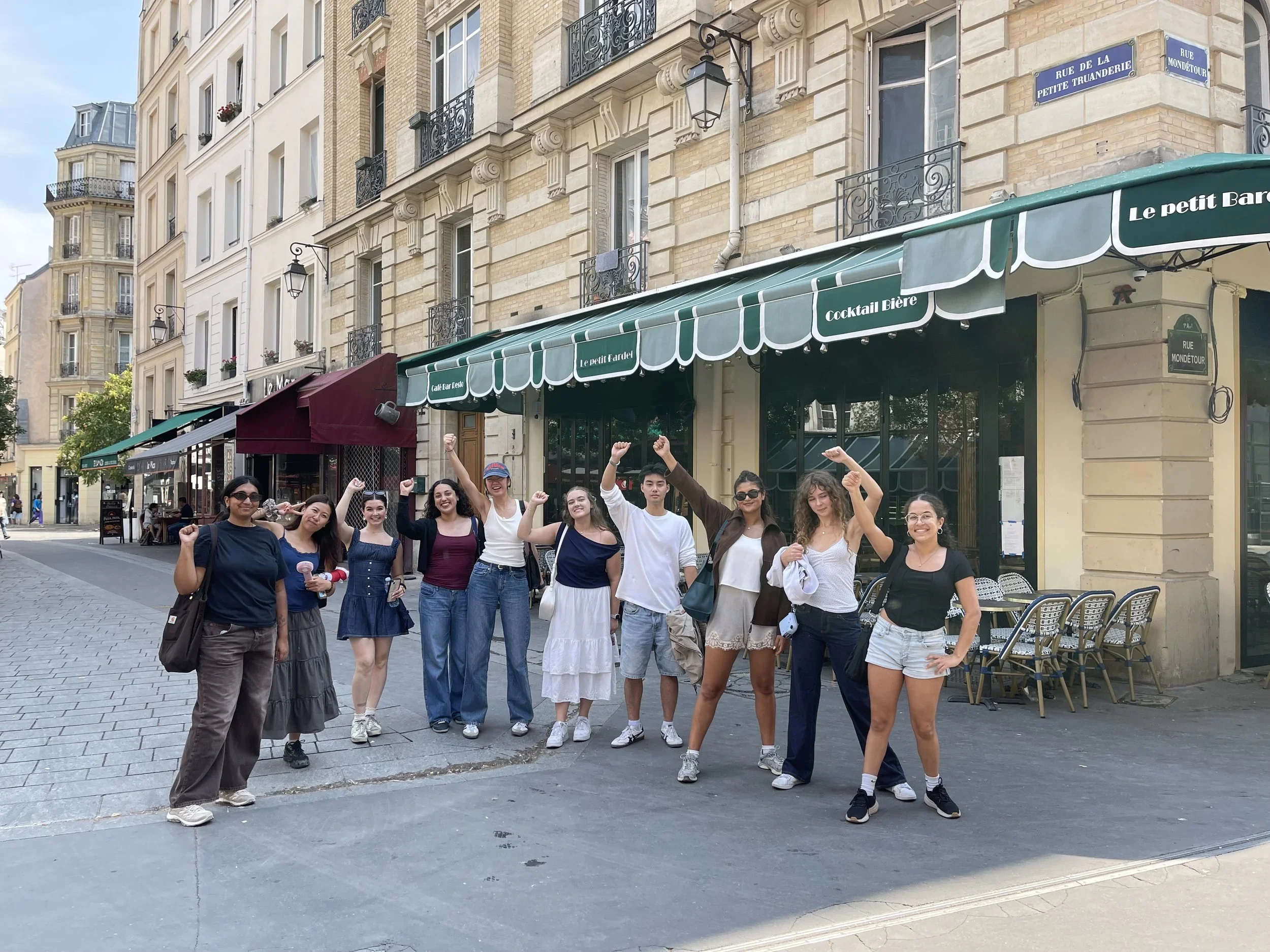
Where the barricade once stood. Photo by Andrew Chater
Later in our trip, we searched for the location of the Corinth barricade, following Hugo's remarkably detailed descriptions through streets that have long since disappeared beneath modern Paris, with restaurants and stores and some guy named David who created a pin to remember it. I had expected standing there to make me think about Enjolras giving speeches or Marius choosing between love and revolution. The students choose to enter the barricade because of their political convictions. Gavroche enters because the streets have always belonged to him. The revolution interrupts the lives of the students. For Gavroche, it is simply another day of surviving in the only world he has ever known.
Walking through Paris also made me realize something about the way cities remember their past. Paris is full of monuments to revolution: the July Column rises above the Place de la Bastille, Delacroix's Liberty Leading the People hangs in the Louvre, plaques, statues, and memorials preserve the names of generals, politicians, and great historical figures. Everywhere we went, there were reminders of famous people who shaped French history. But there is no monument to some influential children. Their memorial lies in literature or in the small details of a painting. Without Hugo, the thousands of anonymous children would largely remain invisible. Through Gavroche, Hugo gives them a voice that history rarely does. One of the things I've appreciated most about bookpacking is that it constantly reminds me that novels aren't only about fictional characters. They're also about the people who inspired them. Walking through London changed the way I understood Dickens' contrasts. Walking through Paris changed the way I understood Hugo's compassion. Before this class, I thought Les Misérables was primarily a novel about redemption, justice, and revolution. It still is. But after spending two weeks walking through Hugo's Paris, I think it's also a novel about remembering the people history tends to overlook.
Kings have monuments. Generals have statues. Revolutionaries have streets named after them. Sometimes, all a child gets is a chapter in a novel. And after walking the streets that Gavroche once wandered, it somehow feels both tragically insufficient and incredibly moving.

.