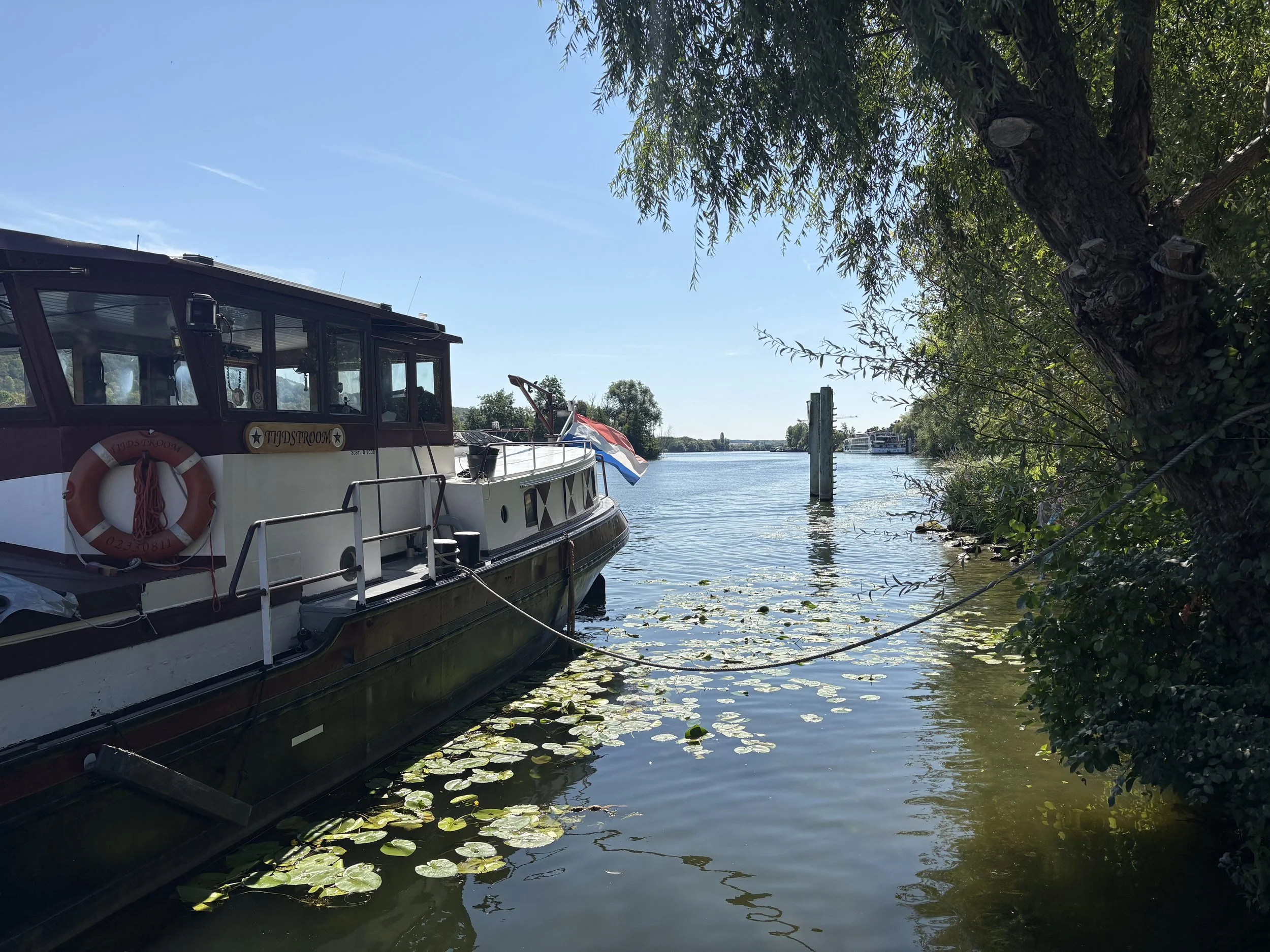
I’m no sewer rat. I don’t much enjoy exploring caves where I can’t see the light of day—let alone ones that smell wretched—but I am a sucker for engineering feats that revolutionize the world as we know it. In Les Miserables, the sewer system plays a pivotal role in Jean Valjean’s escape from the barricade. As he carries Marius on his back, all of their exit paths are cut off except for the grate of one meger sewer. He climbs in, and through the dark and the soot, is able to navigate his way across Paris to safety. This underground system is one that is often taken for granted. In the earliest days of Parisian life when there was no efficient way to dispose of human waste, it would often be dumped onto the streets, and polluted the waterways. The development of the sewage system is both the salvation of Jean Valjean, and in another sense, of the Parisians.
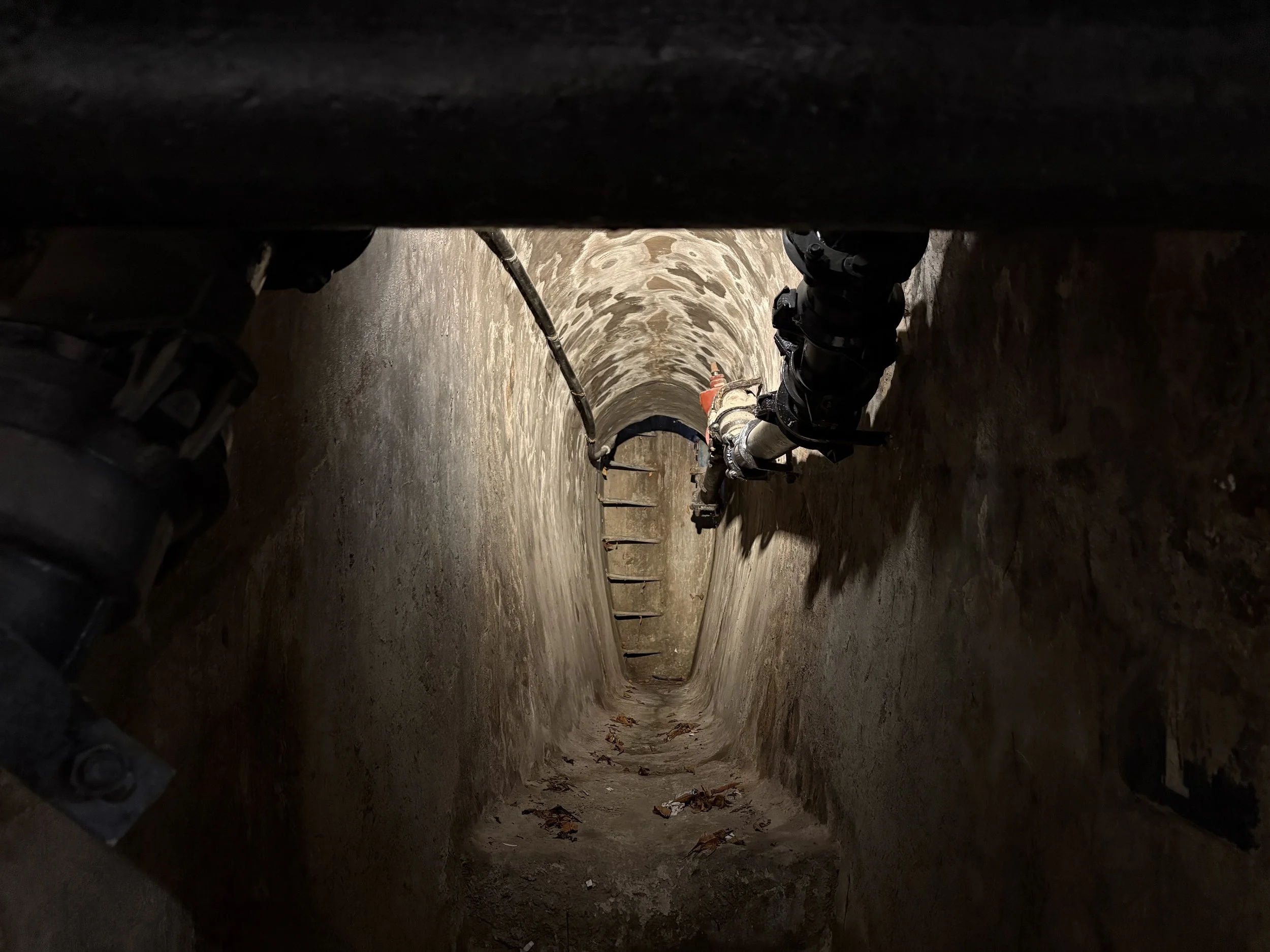
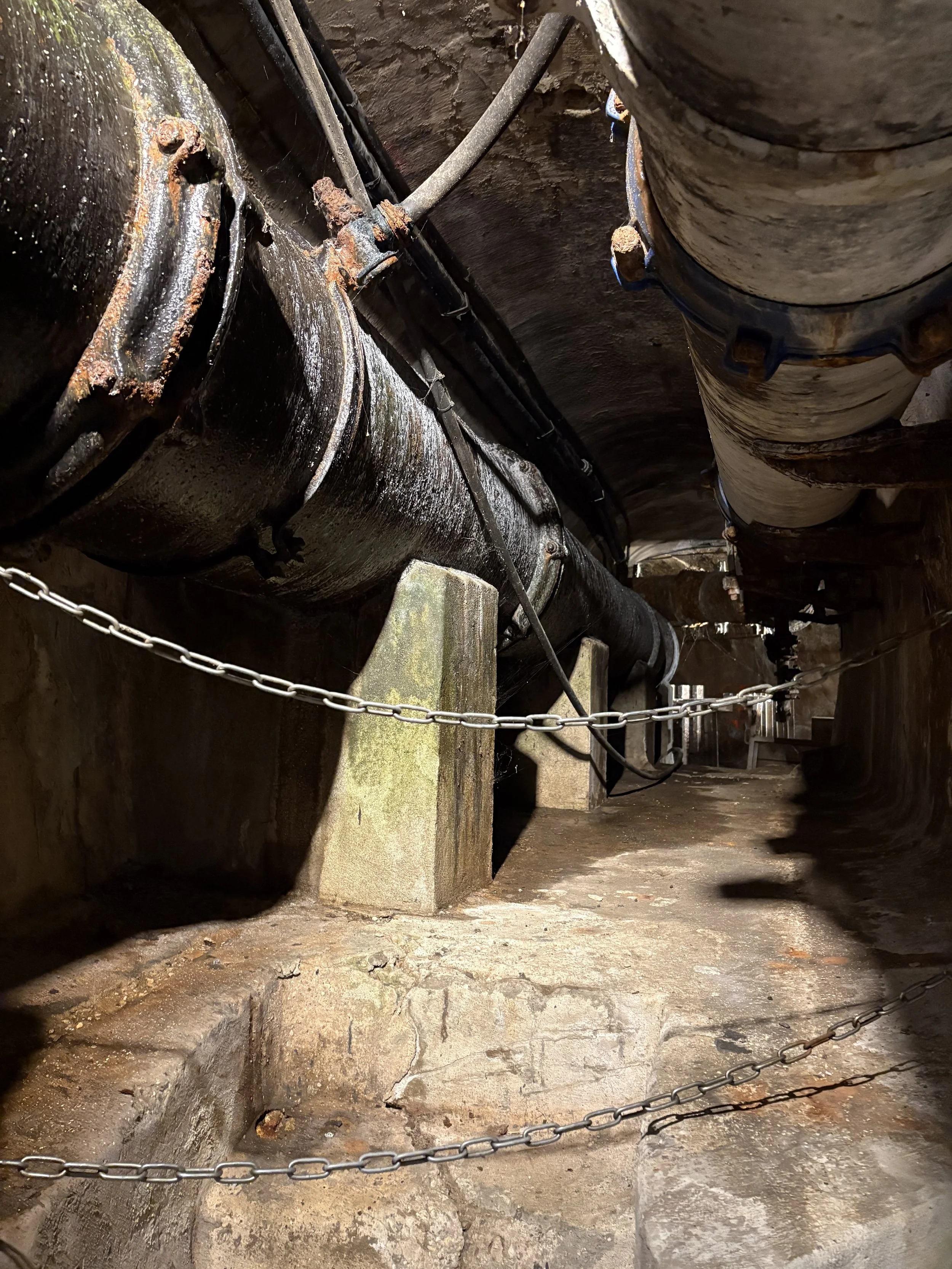
The image above is the epitome of the sewer system of Paris. This narrow passageway, with exposed pipes and a shifty ladder that lowers you further into the ground, is the exact depiction I imagine when reading Victor Hugo’s novel. If you were to eliminate the minimal illumination that exists, this is the same environment where you could have found Jean Valjean waist deep in waste with a half-dead man on his back.
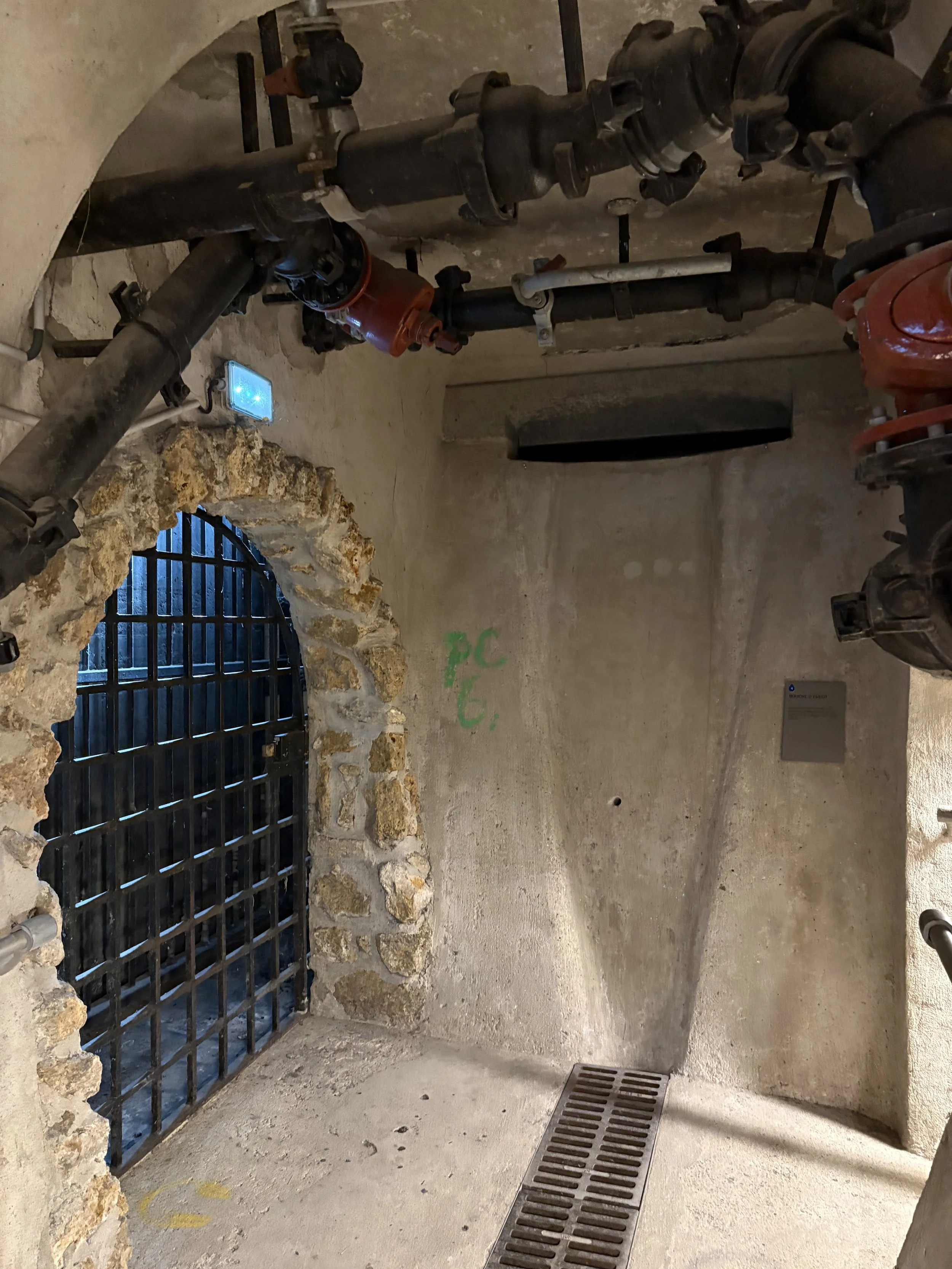
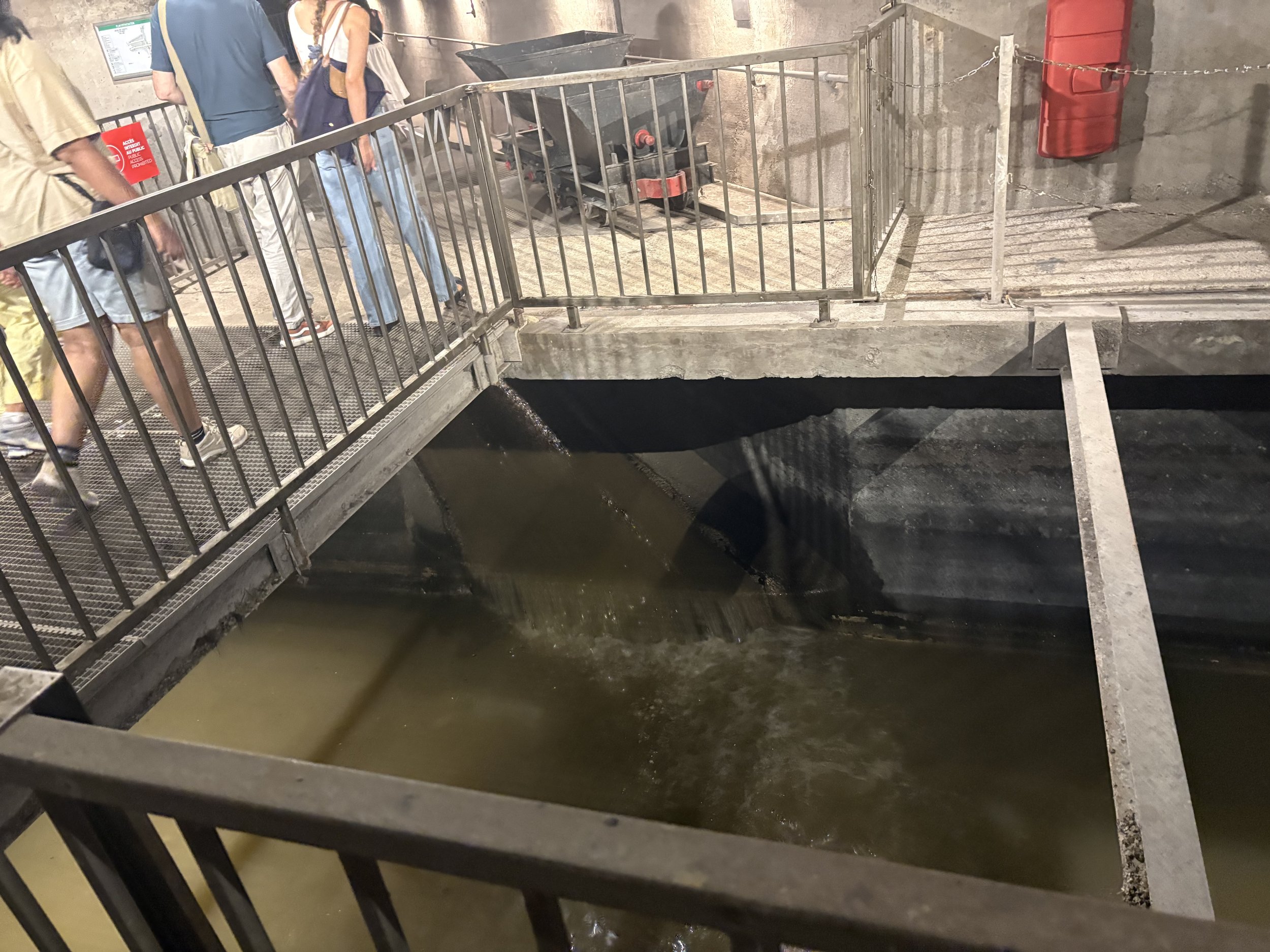
The importance of a sewer system can be seen through the Cholera outbreak that occurred in 1832. Cholera is a water-born disease that comes from tainted water supplies. Since Paris did not have an efficient sewage system, human waste would seep into the drinking-water supplies, and pollute the entire city. The devastating outbreak of Cholera in Paris hit working-class communities the hardest, leading to the loss of roughly 19,000 lives.
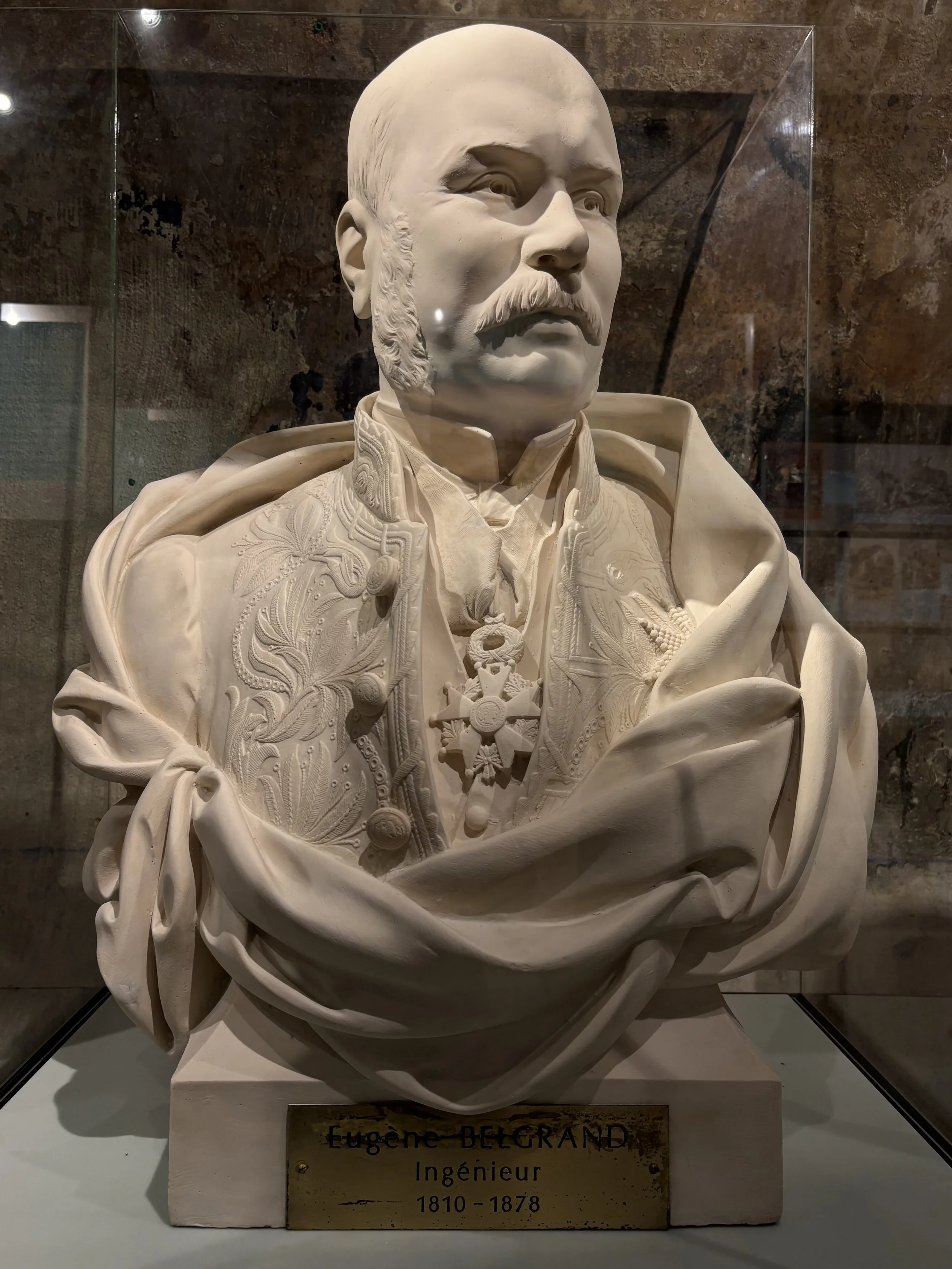
A sculpture of the bust of Eugène Belgrand in the Museum of the Sewers of Paris.
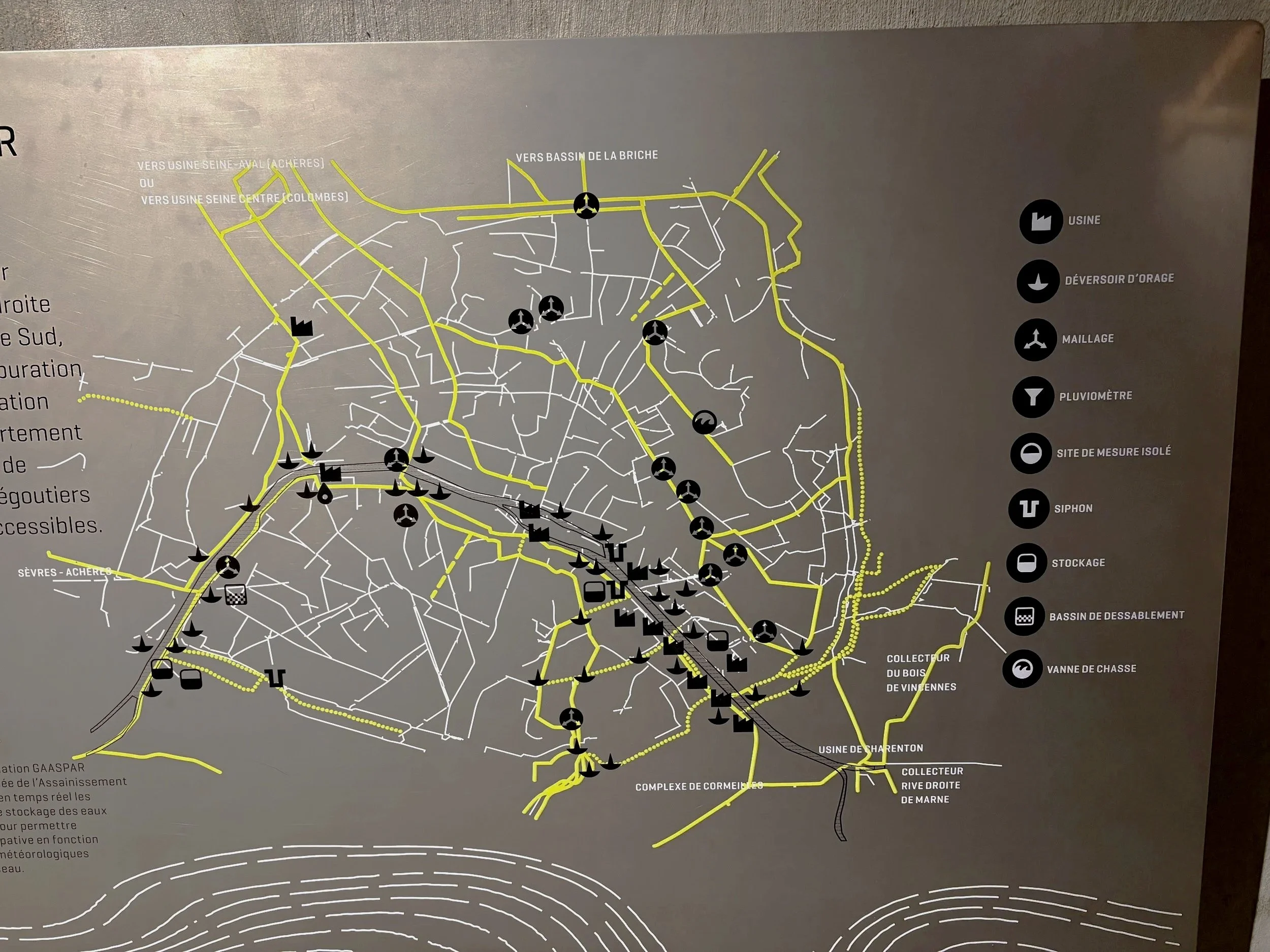
A depiction of the sewer system in the 7th and 15th arrondissement in Paris.
This health crisis led to the French engineer Eugène Belgrand to redesign and expand the entire sewer system. Before this expansion, the old systems were often filled with toxic gases, deadly disease, and were prone to flooding. His design led to hundreds of kilometers of sewers all being connected to one central channel that could efficiently carry waste out of the city, preventing cross-contamination. He created a dual-water supply system that separated clean water from the non-potable; this combined with the long-distance aqueducts allowed for drinking water to be returned to the city, waste to be removed, and was essentially the savior of the Parisian working-class. The water treatment mechanics that Belgrand designed are still used in Paris today.
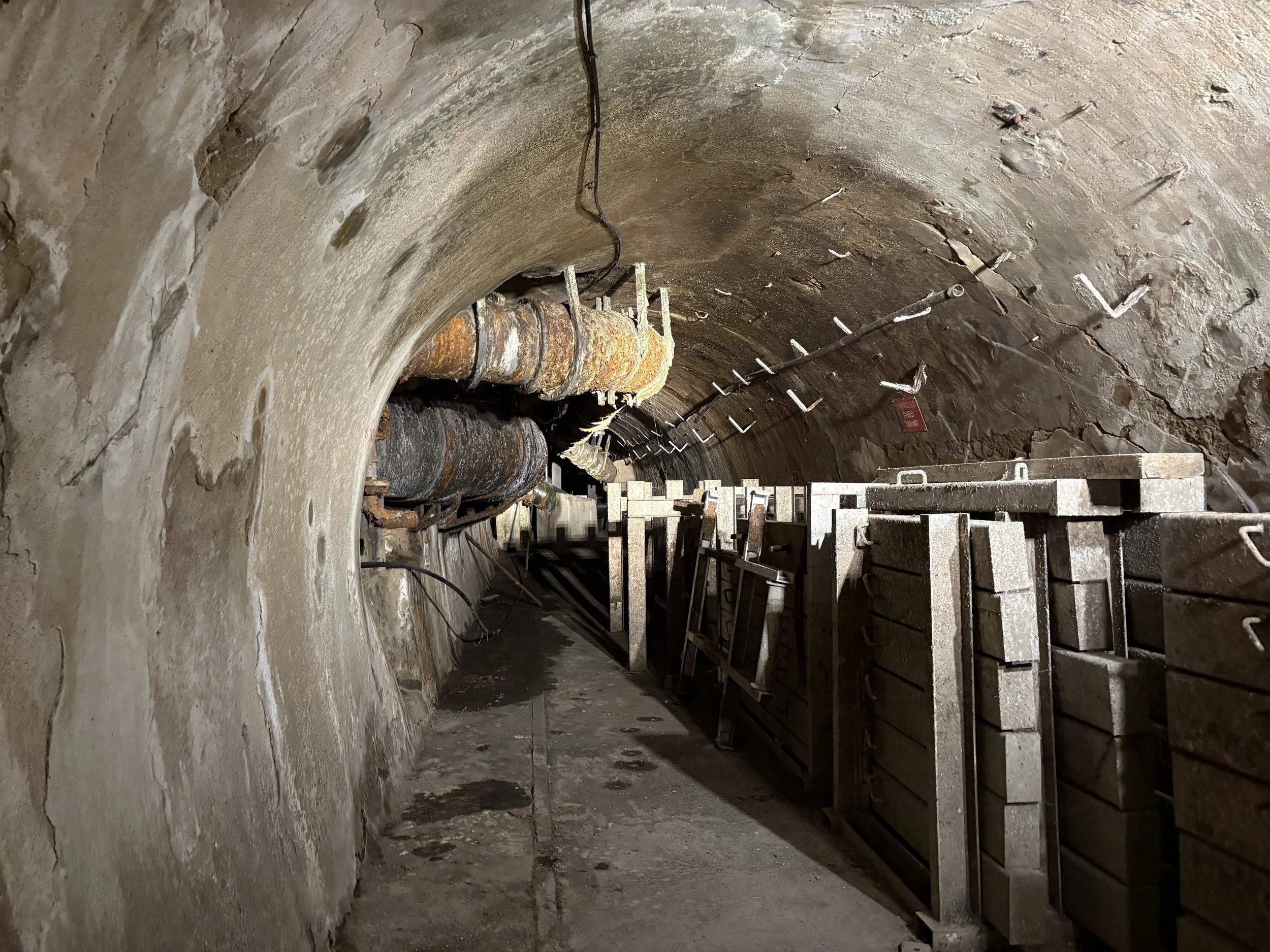
The overdue praise of this underground system that helped to shape Paris today is immortalized in the story written by Victor Hugo. The sewers in Les Miserables are most famous for the chapters which depict the saving of Marius, but the part that I found most fascinating was the role the sewers played in the crime life of France. These sewers, or the “underworld,” were a hub for crime syndicates to plot the most gruesome of crimes, including the capture of Jean Valjean and the disposal of numerous dead bodies (according to Thernardier). While this may seem far fetched, it is true. Before 19th century modernizations, the underground labyrinth that is the sewage system genuinely served as a hideout and escape route for thieves, pick-pockets, and fugitives that had escaped prison. Police were often deterred by the foul smell (which you can in fact smell in the museum), which led to high-stakes criminality and heists being made plausible.
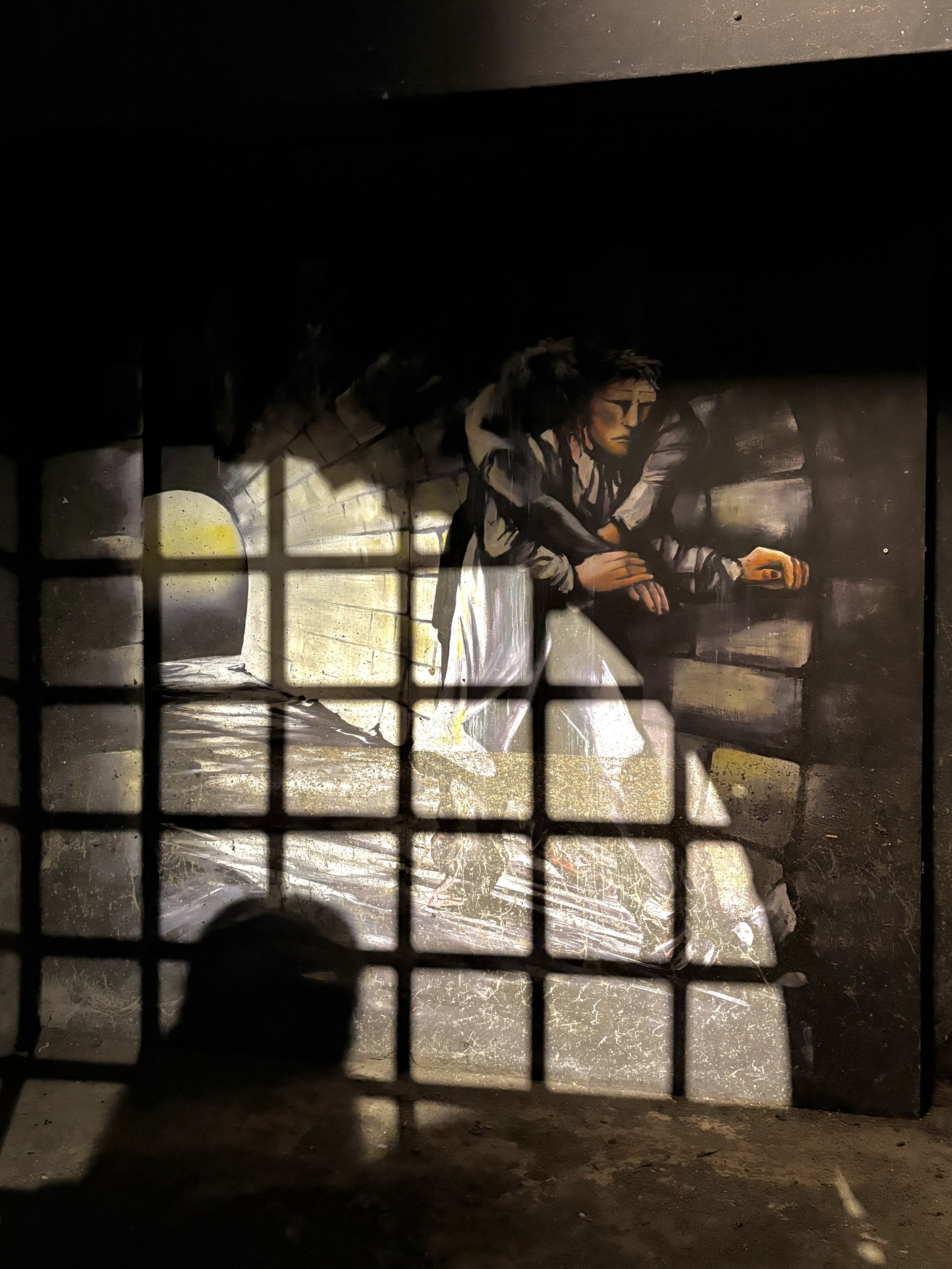
A mural in the Museum of the Sewers of Paris, paying tribute to the scene in Les Miserables when Jean Valjean escapes with Marius on his back.
Thankfully, Paris now has constant sanitation patrols and advanced digital surveillance that works both day and night. This system has allowed for the elimination of such a dangerous underworld. I still think it is a fascinating part of history. The fact that you do not often hear about facets such as the sewer system other than through fantastic novels such as Les Miserables is a bit of a metaphor on how we study history today. The unspoken parts that are so prominent in shaping society often slip through the cracks because they are not as glamorous as a bloody revolution.
“The history of men is reflected in the history of waste dumps… Crime, intelligence, social protest, freedom of conscience, thought, theft, everything that human laws pursue or have pursued has lain hidden in that warren…”
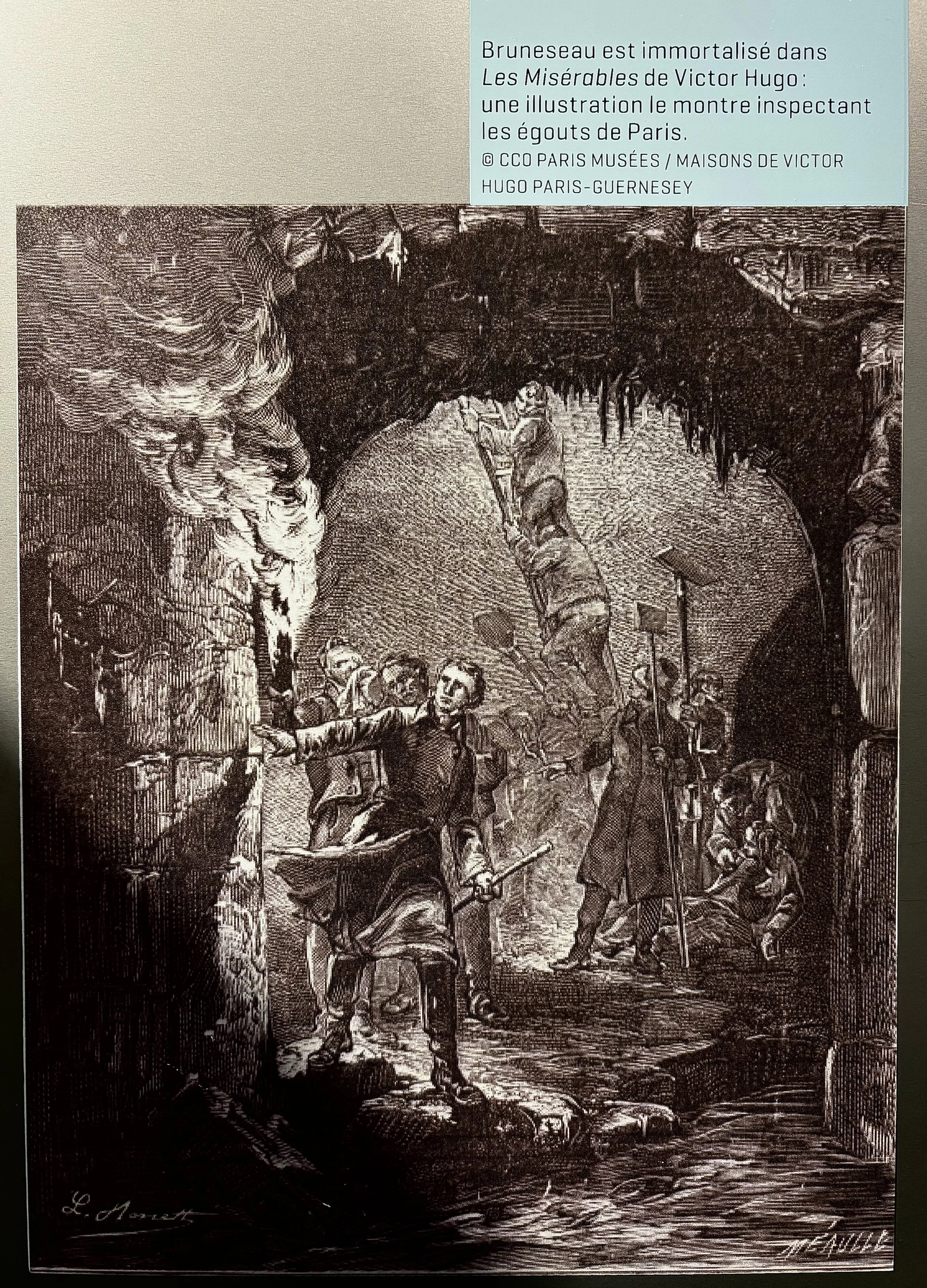
A depiction of sewer inspections as seen in Les Miserables.