The discussion of one of our class seminars last week focused on women. In this blog I want to continue this discussion on women in history by sharing what I have seen and learned throughout this experience. I have actually been planning and looking forward to writing on this topic where I want to share my thoughts on how women and young girls are portrayed and what they experienced in French history through our two novels, visited locations, and art.
To begin I would like to dive into the women and girls of our two novels. Les Miserables and A Tale of Two Cities gives us female characters with different backgrounds, personalities, and outcomes, which allow us to see and dive into multiple perceptions on women, in this case in the time of the revolutions, through Victor Hugo and Charles Dickens. Between the two novels, I find a similarity in Cosette and Lucie Manette. In both the stories, these two characters are the good and the innocent that help those in darkness, like Jean Valjean and Mr. Manette, to turn around their lives for the better. Described with angelic characteristics they served as the light and hope of society in these dark times as well. Lastly, they were portrayed to embody and give both compassion and love to those around them. Through Cosette and Lucie, women are seen as bodies of light, whose love and purity inspires change and redemption, which I believe is a beautiful portrayal of women. Fantine was also described in a similar way as Cosette and Luice Manette in her youth. However, she does not retain this characterization throughout the novel as she undergoes hardships and loss ultimately leading to her death. In this way, Fantine shows the unfairness and cruelty women experience in society. She also shows the love and sacrifice women give through motherhood. Fantine gave every part of herself, giving her teeth, hair, and body, so Cosette could live a life of less suffering than her. Eponine is another portrayal of self sacrifice in the name of love as she puts herself in danger and loses her life for her unrequited love for Marius. An interesting aspect of Eponine's character that I liked in portraying women, was that she went into action. She was actively fighting for who she loved, for example, putting herself in danger to stop Thenadier and the other men from entering Jean Valjean's and Cosette's home and being in the fight of the barricades. Continuing with this idea, A Tale of Two Cities brings in the amazing character of Madame Defarge. She brings an image of women that was not seen much in historical novels, as her character strays away from the ideal goodness and innocence mentioned above. Instead I believe that she symbolizes the anger, power, and action of women as she is a leader in the storming of Bastille, and is ruthless in who she thinks should pay with their life in the revolution.
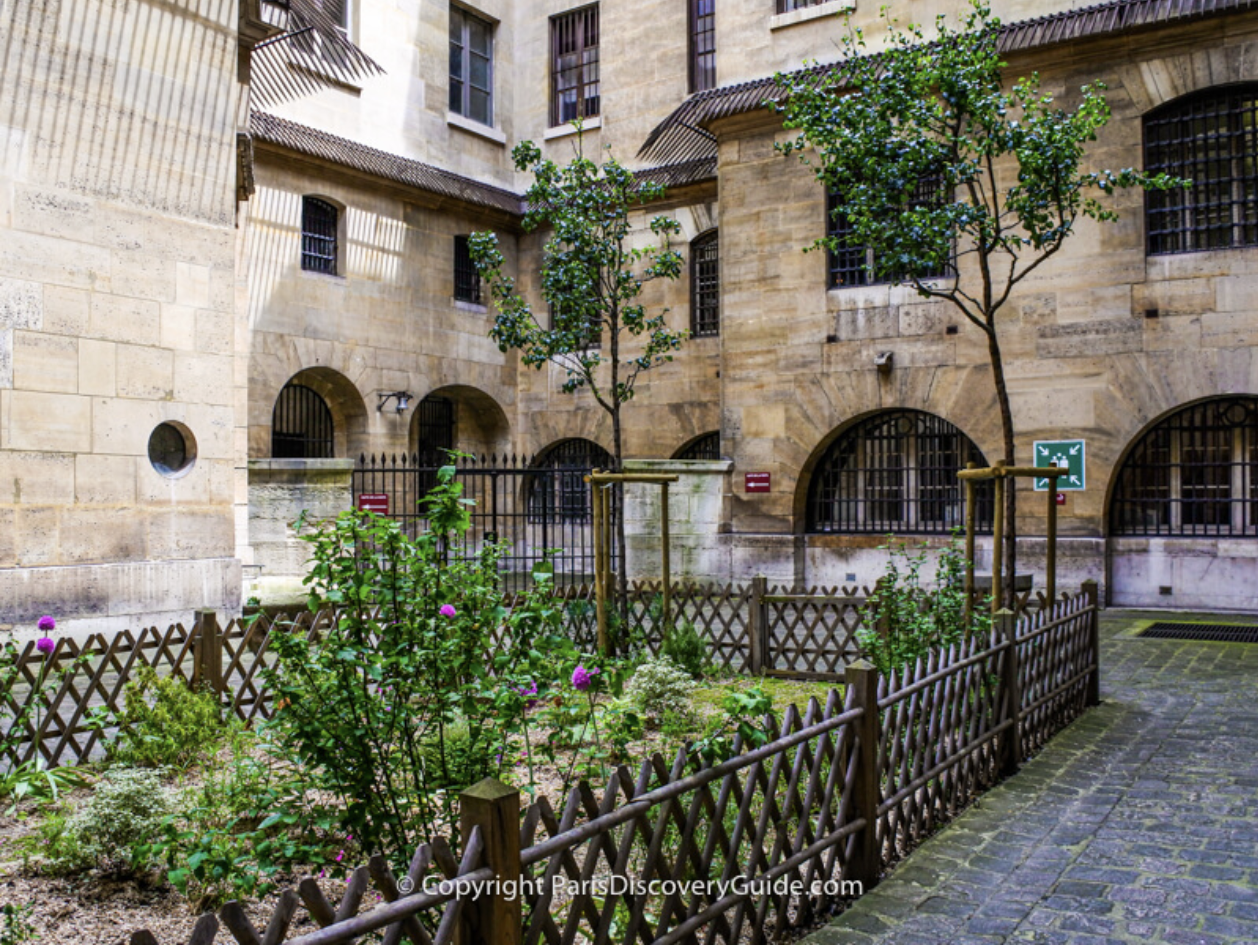
The Women’s Courtyard in The Conciergerie. Image from Paris Discovery Guide.
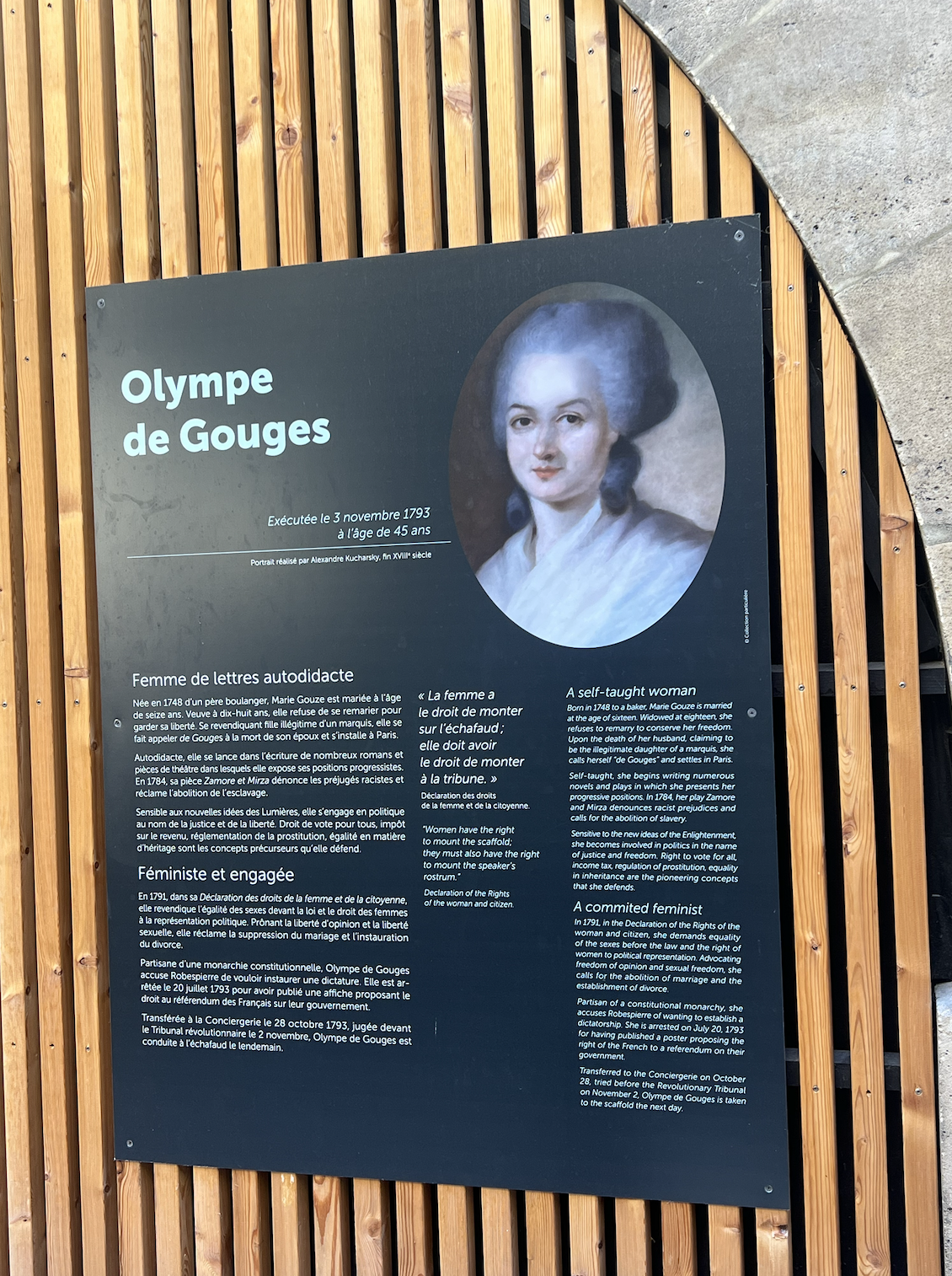
Information on Olympe de Gouges, on the wall of the Women’s Courtyard.
When looking at the history of the French Revolutions there is not much focus on how women were affected by this time or much credit given to the women who helped fight for it. One location that we visited which I found interesting in shedding light on this is The Conciergerie. The Conciergerie in the time of the revolution was a prison, where individuals would be held awaiting their execution. In terms of bookpacking, this location is used in A Tale of Two Cities as this is the prison Charles Darnay awaits his execution before being saved by Sydney Carton. In terms of this blog, I want to discuss an area within the Conciergerie which is The Women’s Courtyard. This was a small area which had a small space of greenery in the center. Today, along this courtyard's walls there are images and information on women who spent their time in the Conciergerie allowing us a glimpse into the women of this time and place. One woman mentioned is Olympe de Gouges. She was an advocate for human rights fighting for causes such as the abolishment of slavery and equality for women's rights. She was arrested and executed for accusing Maximilien Robespierre of wanting to establish a dictatorship and for putting up a poster stating that there should be a direct public vote on the French government. Manon Roland was also mentioned in the courtyard. Roland was involved in the Girondin party which appeared to have fought for personal freedom, end of the Terror, and such. During her life she was involved in politics sharing her thoughts which lead to her experiencing violent reactions which is stated to be due to her being a woman. Lucile Desmoulins was another woman held in the Conciergerie who was executed for an accusation of plotting against the Revolutionary Tribunal. She kept a diary where her beliefs and ideas are expressed in which she speaks on the absence of freedom women had in politics. In her diary she wrote:
“What a sad fate that of women. Slavery and tyranny, that is their share…let them defy us less and leave us free.”
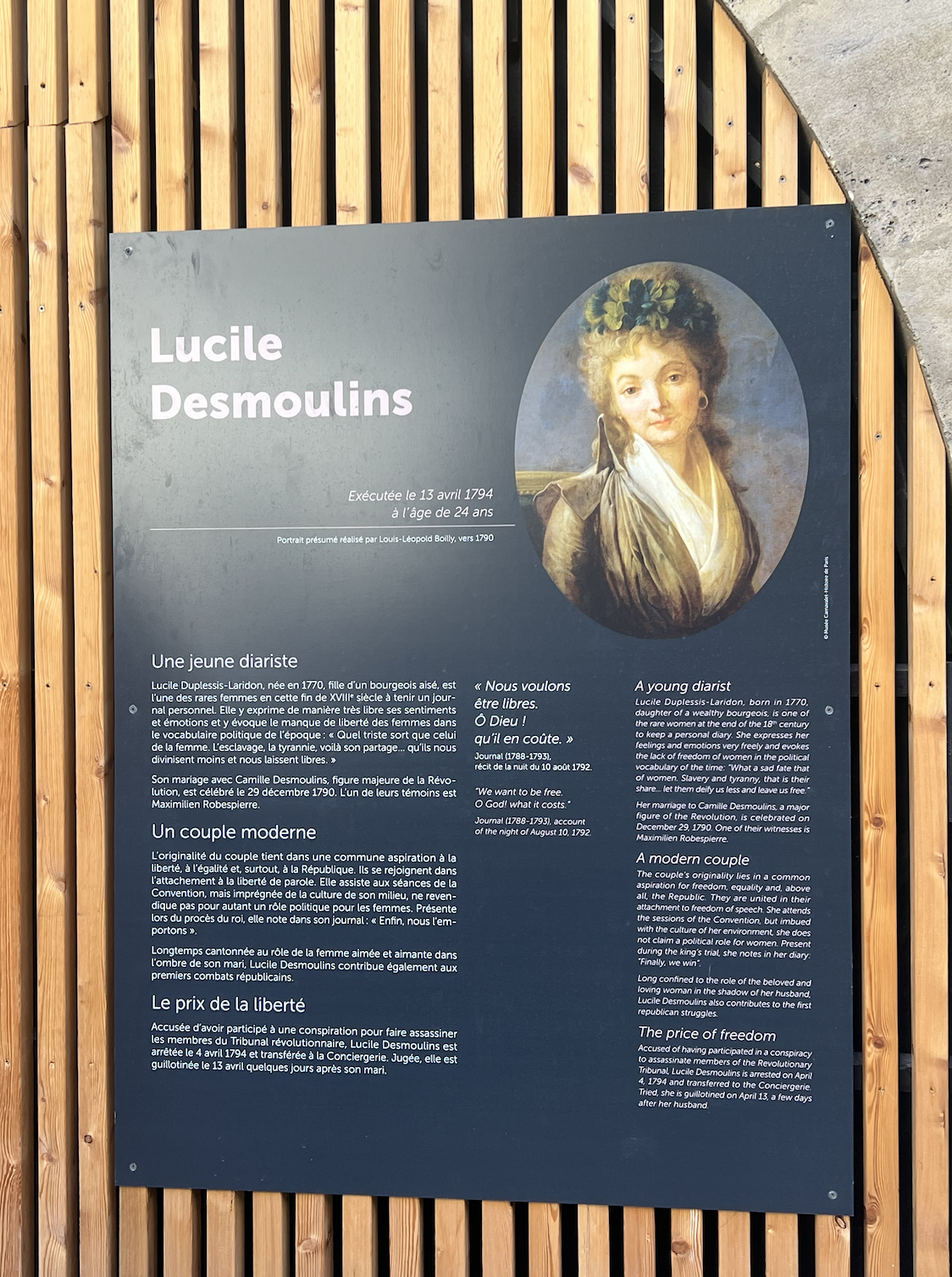
Information on Lucile Desmoulins, on the wall of the Women’s Courtyard
From the Women’s Courtyard of the Conciergerie we are able to see the treatment and status women held in that time. Society did not allow them to express their ideas and concerns regarding politics and the state of the country, but, this also shows us how women fought to have their voices heard, and were actively engaged in the revolution to improve their lives and their neighbors even if it cost them their lives in the end.
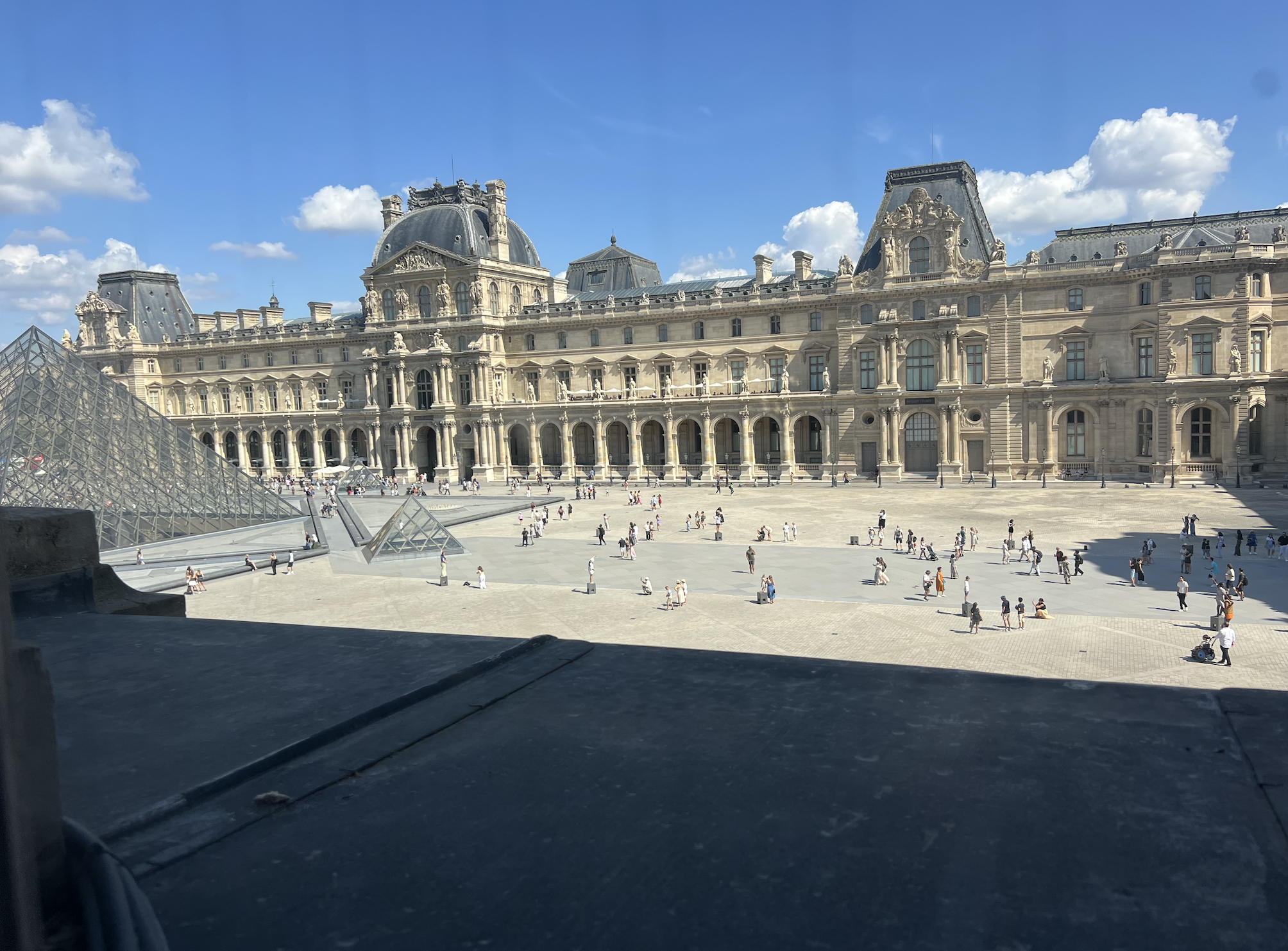
Louvre Museum
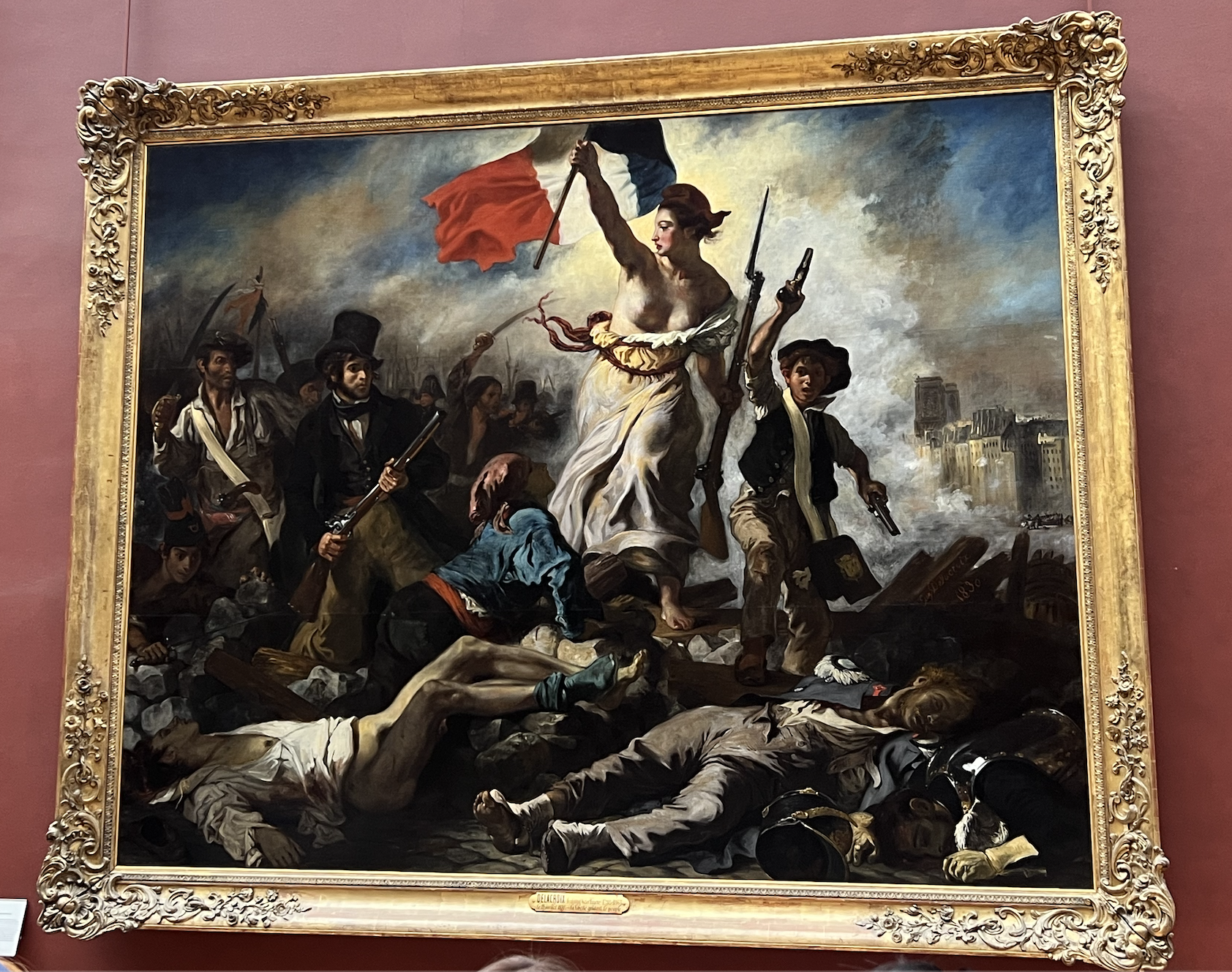
Liberty Leading the People by Eugène Delacroix.
Lastly, to discuss how women were portrayed in French history I want to look at art. We visited the Louvre Museum last week which contained many types of art forms ranging from sculptures to paintings to decorative art. On top of the various art forms, there were pieces from several countries including Italy, Greek and Italic, Spain, Egyptian and more. One of the sections in the Louvre contains French paintings, which when exploring I found interesting in showing the ways women were represented. The first painting I would like to discuss is “Liberty Leading the People” by Eugène Delacroix. This piece shows a woman in the center who is holding a rifle in one hand and holding up the French flag in the other. The setting appears to be one of a revolution, perhaps a barricade as we can see those who have fallen and others who are by her side to fight such as the young boy with the two pistols. In portraying women, I think Delacroix is showing how women can be seen as symbols of hope, freedom, and light for society, which correlates with the our novel characters, Cosette and Lucie Manette. Another piece which emanates a similar meaning is “The Intervention of the Sabine Women” by Jacques-Louis David, which was a painting I personally really liked. This painting shows a battle between two groups and in the center are women standing in between the fight in an attempt to stop it and who are also protecting young children. Seeing this piece I thought the women shined so brightly as symbols of protection and peace against violence, but also as strong and fearless for stepping into the center of an active battle. Additionally, by trying to stop the bloodshed and protect all I think they show a love for society, for human kind. One aspect of this painting that stood out to me was that there is an older woman who is also present, which to me shows that women of all ages are seen this way and symbolize these qualities. When thinking about women through art, many times they are portrayed as bare breasted or nude. To this aspect, often women were painted this way for the male gaze, meaning they are depicted this way due to male desire and enjoyment. For what this meant for women was that they were not seen as a person with thoughts, emotions, and feelings, but as an object. Though this is not true for all paintings depicting women this way, as sometimes doing this is meant to represent goddesses and such, though it shows this aspect to how women were seen in society.
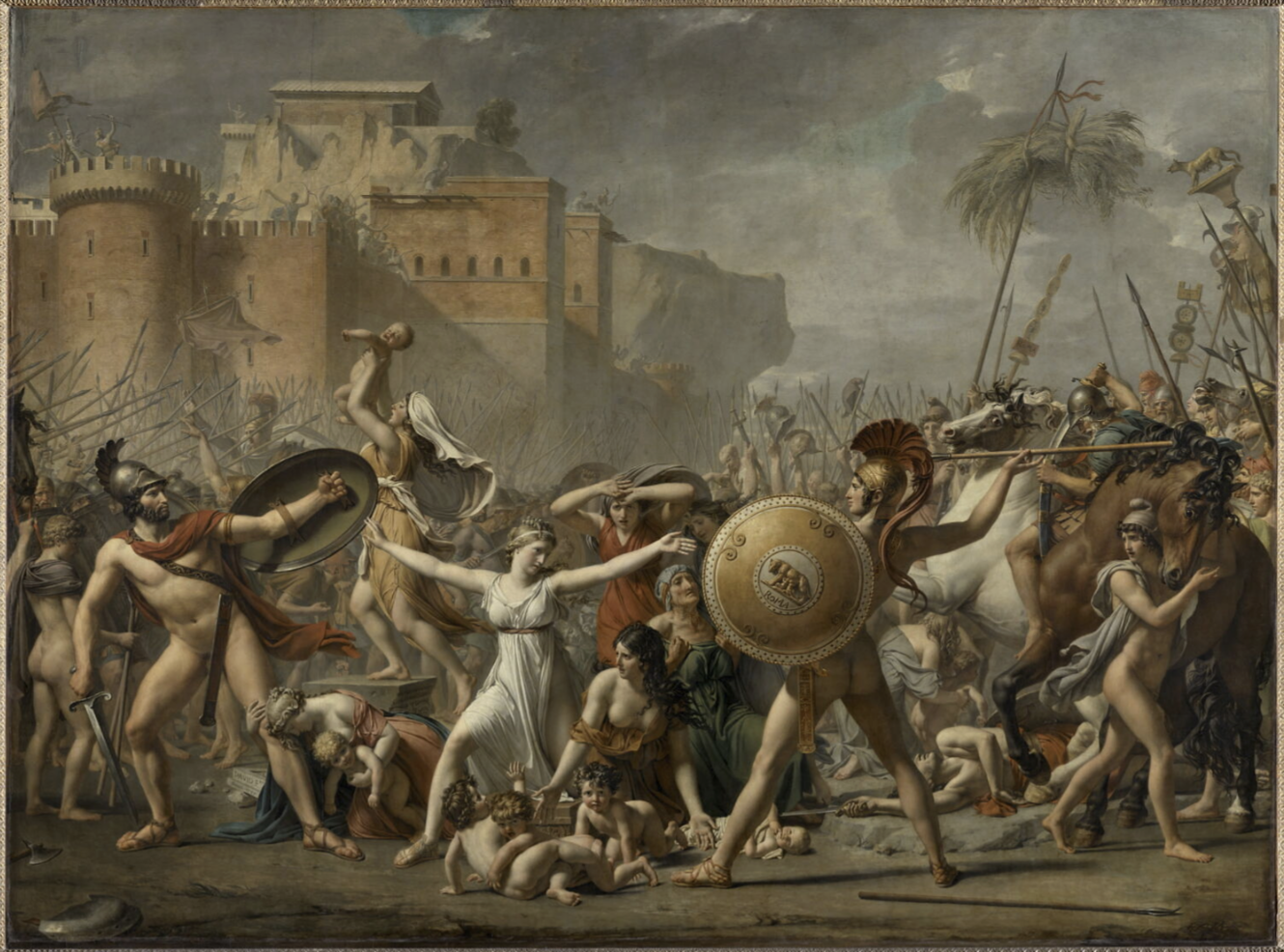
The Intervention of the Sabine Women by Jacques-Louis David. Image from Louvre Collections.
There is still so much I hope to learn about women in French history and in other historical times and events. It is unfair and a shame that many women go unrecognized in history as we are restricted from diving into more amazing minds and stories. However, through our novels, locations, and through art we can get a glimpse of the life of women back then and bring light to their pain and loss, but also to their power and victories.