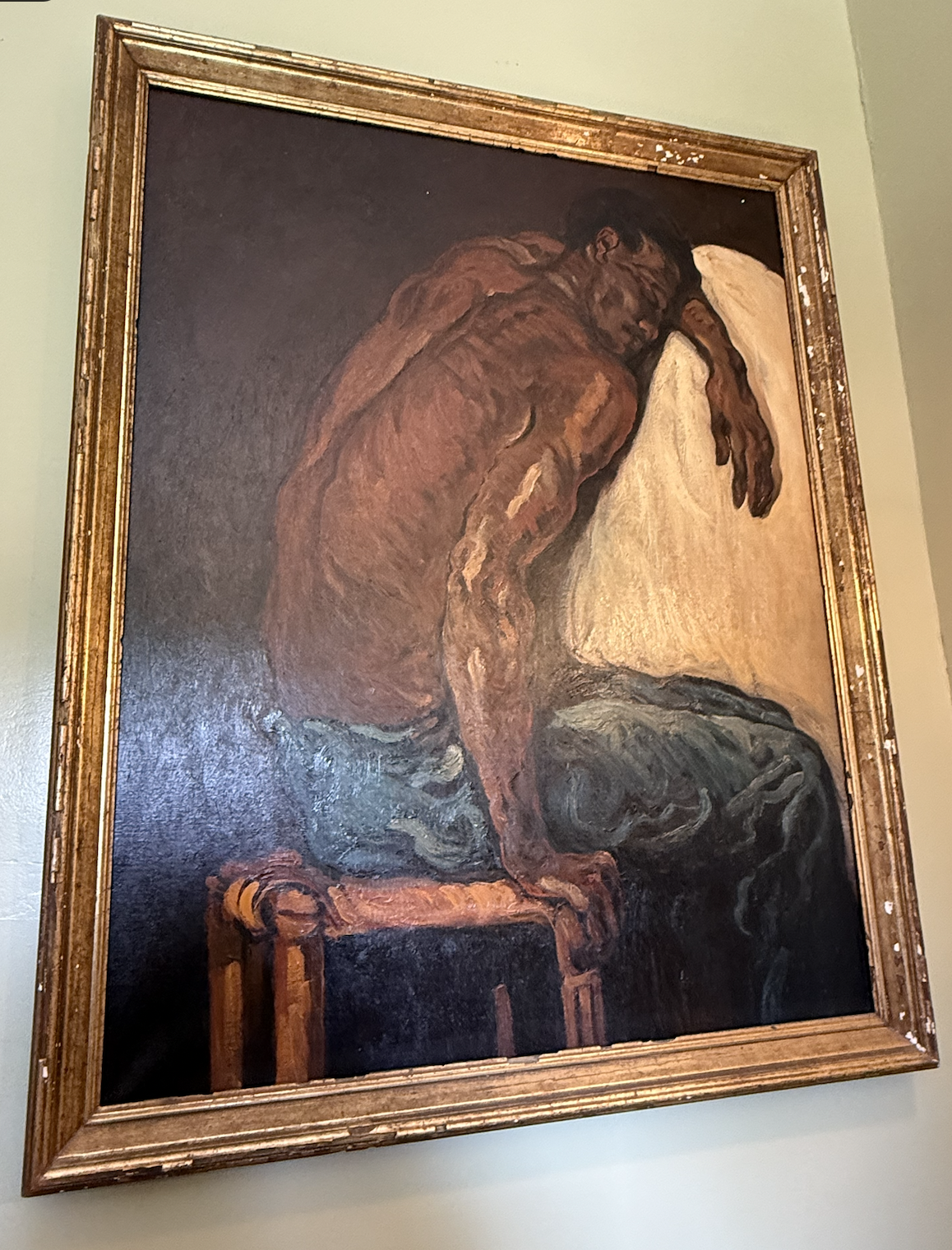
The Negro Scipion by Paul Cézanne (1866) - seen at Monet’s studios and said to be one of Monet’s favorite paintings
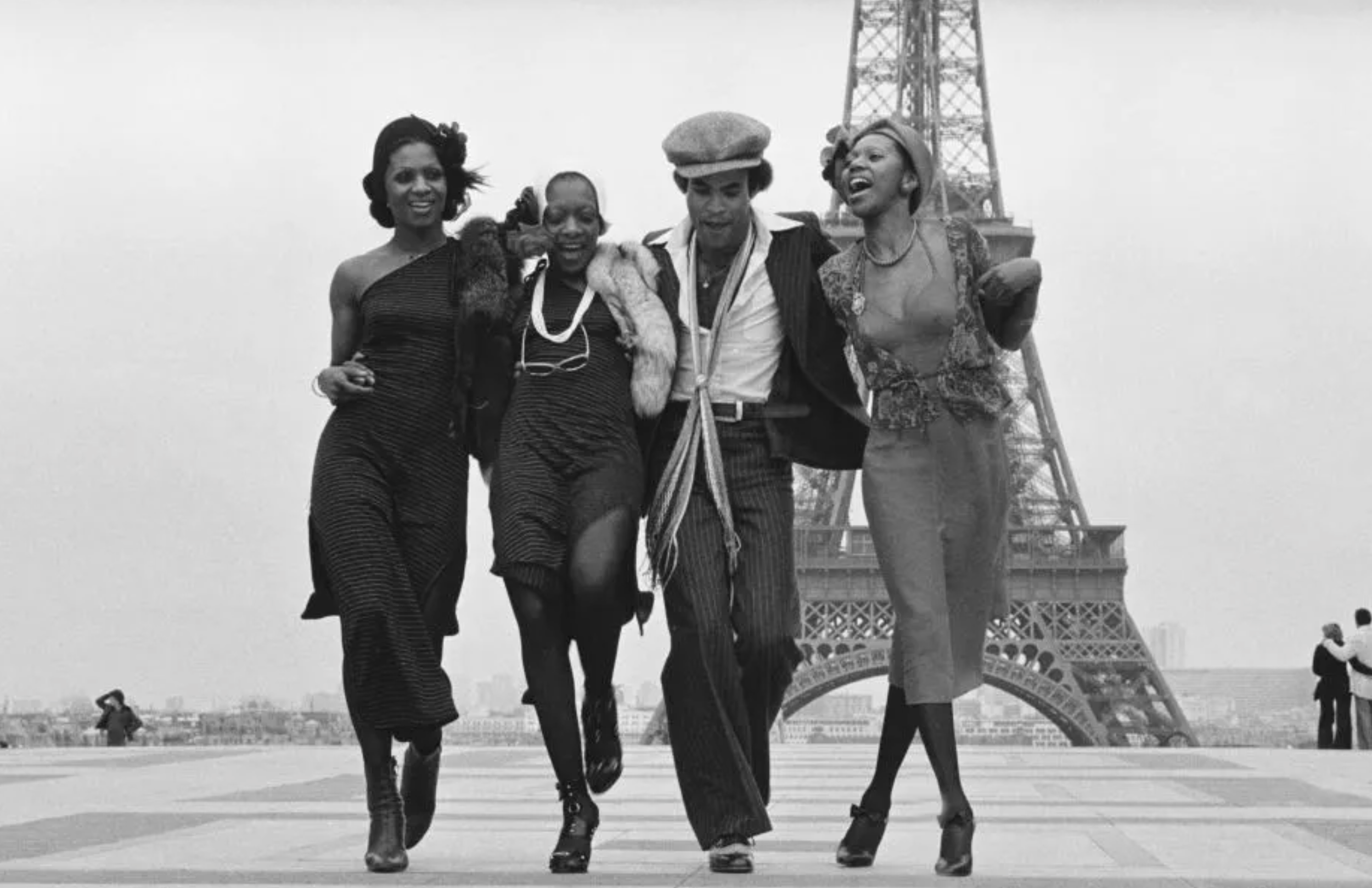
When we got to Paris, one of the first things I noticed was the city's diversity. Maybe this is the uncultured American in me, but (as a gross oversimplification) I didn’t tend to think of European cities as quite the melting pot the US is. Of course, a major European city is more likely to be diverse than a small town anywhere, but I digress. My point, generally, is that I was pleasantly surprised when I got here and noticed that there were actually more different backgrounds than I thought.
France has a long history of African migration from West, Central, and North Africa, as well as the Caribbean. As a result, it’s home to Europe’s largest Black population by far. There is also a strong history of Asian migration, especially from Vietnam (a former colony), China, and Cambodia. One day, I was curious to see how evident this was in the statistics of Parisian ethnicity, so I looked it up.
I found that France has legally banned the collection of race and ethnicity data as an attempt to be ‘colorblind,’ which is a whole other can of worms. Some argue that this law is based on residual trauma from racial identification categories being used in WWII to identify Jews to be taken by the Nazi regime. Further, in the modern day, the concept of race and ethnicity as a key personal identifier has been considered by some in France to be a sign of increasing Americanization. All of these factors have led the official government position to favor universalism and assimilation above all else. Personally, I find that fascinating, and not a position I can necessarily get behind. The reality of human nature is that race is a characteristic that impacts who you are. At the very least, your experience moving through the world is different from others in some ways, and ignoring that reality is both condescending and naive.
The ideas of universalism and assimilation are fairly modern policy stances, but intellectual discussions about race in France go back much further, to the 17th century. The concept of race is said to have been first articulated by a Frenchman, Francois Bernier, who wrote an essay dividing humanity into four racial categories. However, even though he was a prominent physician and philosopher, his writing never gained much traction and was generally ignored by history. Race began to take shape as a concept in the 18th and 19th centuries. However, while America had to reckon with race in a much more explicit way during this time period, France didn’t follow suit.
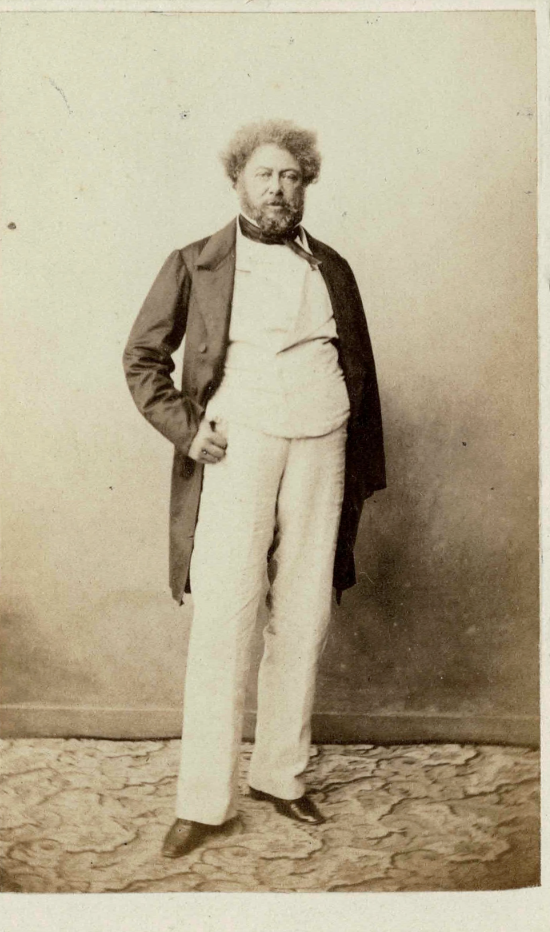
Alexandre Dumas
When I opened Les Misérables, I had no expectation that race would be discussed in the book. Sometimes, classic novels simply don’t have diverse casts of characters. And, as I expected, there were only passing mentions. One of the most explicit examples is in our introduction to Javert, the novel's antagonist, who, in our translation, is said to have “an inexplicable hatred for that gypsy race to which he belonged.” Scholars do debate whether or not Hugo meant this, because in the original French text, instead of gypsy race, it said race de bohèmes, which some have interpreted as a broader, metaphorical usage that just evokes a wanderer’s lifestyle. Other than this, though, race isn’t really touched upon. However, even if Hugo meant it metaphorically, the fact that these two were interchangeable enough to make the translation ambiguous says something in and of itself.
Race was a real fact of life during Hugo’s lifetime. His peers weren’t even all white. Alexandre Dumas, the author of The Count of Monte Cristo (1844, twenty years before Les Misérables), was Black. He was born to a French nobleman and an enslaved African woman in Haiti, before being taken to France at 14 by his father to be educated and given his freedom. Dumas gained notoriety and fame through his writing, but he still faced racist caricatures and generalizations from readers. He was mocked in ways his peers, like Hugo, were not. Additionally, although slavery was abolished in the French Revolution, Napoleon reestablished it by decree in the colonies in 1802, where it stayed legal until 1848. I find it hard to believe that Hugo knew absolutely nothing about this back-and-forth. Yet, the only mention of slavery in the book is a throwaway line at the end, saying that Thenardier was going to move to America to become a slave trader. Now, I am not of the opinion that Hugo had to talk about every possible social issue in Les Misérables. However, this one seems like a pretty big oversight to me, especially given the novel's recurring themes of goodness, religion, and morality.
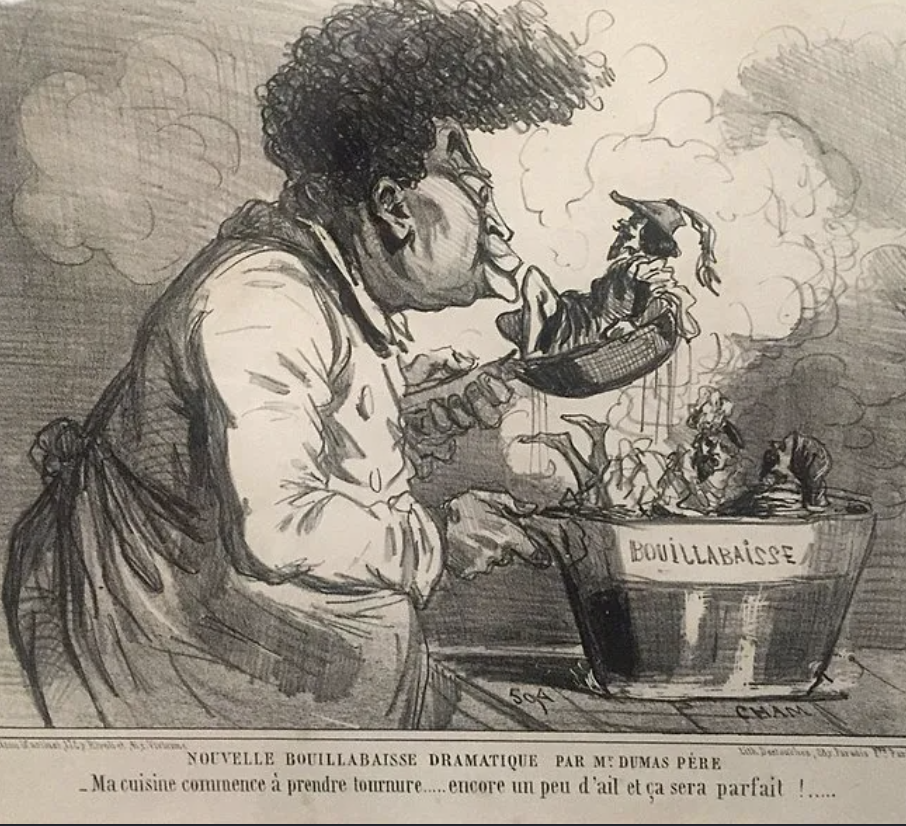
Caricature of Dumas
Now, after reading Les Misérables and rereading a lot of the most poignant sections over the time we’ve had in Paris, I can undoubtedly say that it is one of the best books ever written. Yet, while its themes are certainly universal, the reader is often reminded of Hugo’s position in life - a Frenchman who didn’t really grapple with themes of race. As an American and someone who aims to work in progressive policy, I tend to think about race a lot. It is clear that at least in Les Misérables, Hugo did not. I’m not trying to fault Hugo for failing some modern test he was never given the rules to. However, it’s important to acknowledge that all the material to reckon with race was right there. Yet, he chose not to (or maybe just didn’t think to) in a book that otherwise tries to explain and touch upon so many different nuances of society. This gap tells us what “universal” meant to a Frenchman in 1862. Today, it’s not like that. Instead, ‘les misérables,’ or the (literal) wretched, don’t share one nationality or race.