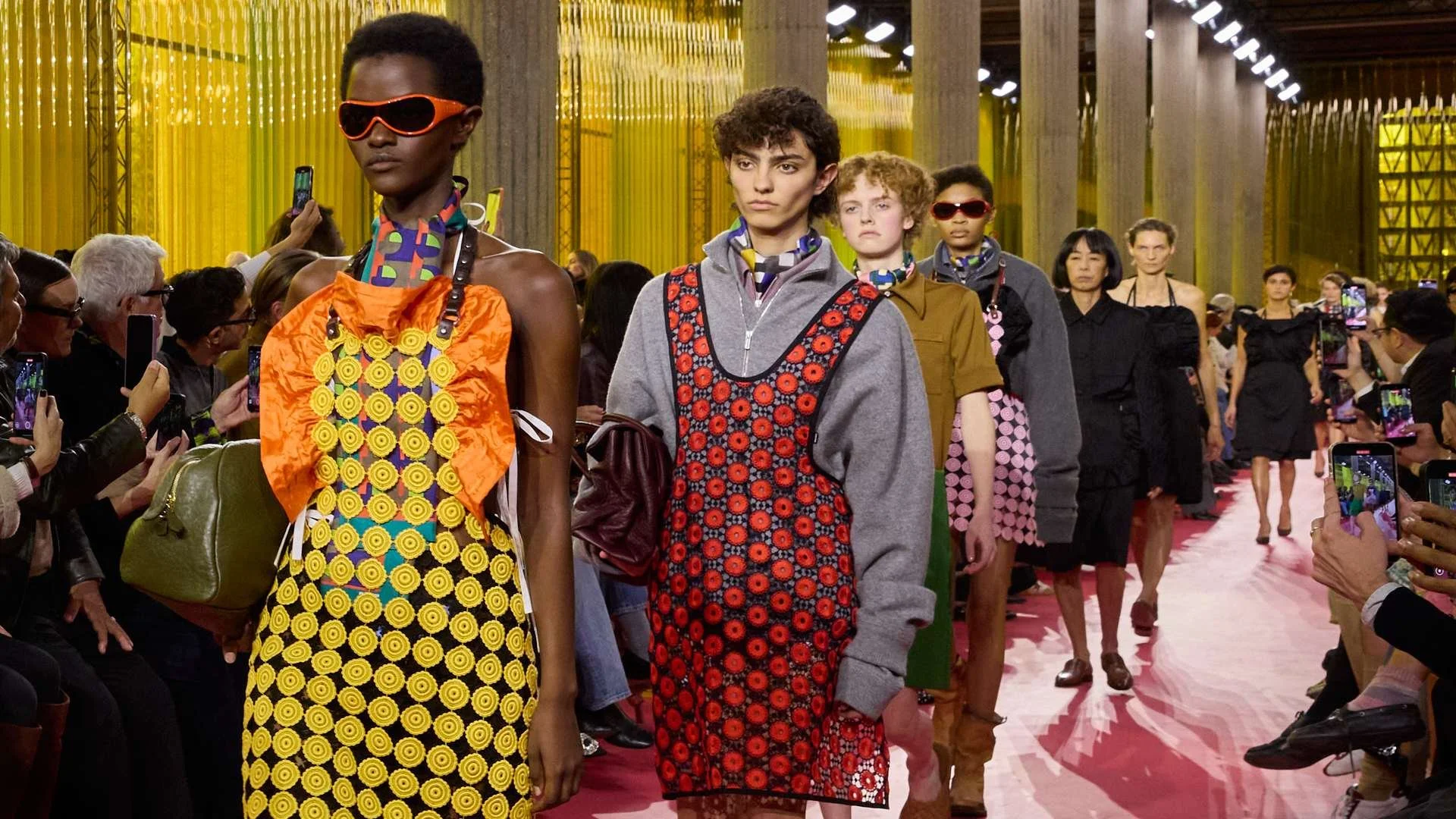
All it takes is a few minutes of walking the streets of Paris to see some insane style. Say what you want about the Parisians, that they’re romantic and snobby and rude, but undeniably do they have steeze. For as long as my interest in clothes emerged, I have heard of Paris fashion week and of Paris as a hub for designers, models, and new trends. While I have always equated Paris with devoted fashionistas, what I didn’t know is how far back Paris’ relationship with good taste really goes, and, surprisingly, how it relates to the French Revolution.
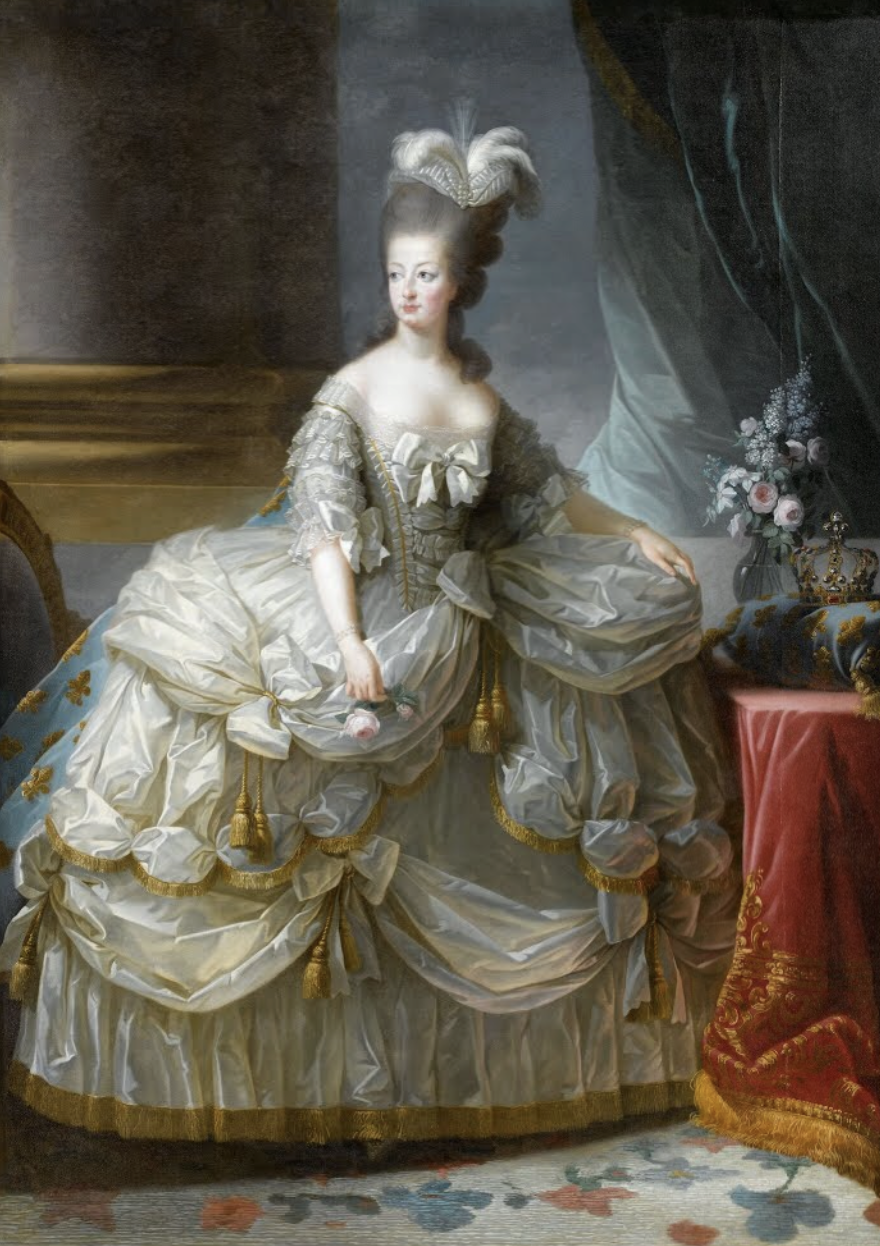
Back in the 17th century, Louis XIV had set the standards for Paris fashion and by the 18th century, Marie Antoinette had become one of its most famous style icons. To dress well, one needed to spend exorbitant amounts of money on skilled seamstress and fine fabrics (not to mention bootmakers, braid makers, button makers, embroiderers, glovers, hatters, hosiers, haberdashers, perfumers and even ribbon weavers if you really wanted to look good).
For me, one long stroll through the Palace of Versailles in all its gaudy opulence, and I knew that these people were dressing crazy.
Outrageous wigs of curly hair and ginormous dresses with a million bows, it was obvious from the paintings that dressing well meant showing off your money. A woman couldn’t even get dressed without countless servants lacing, layering, and pinning.
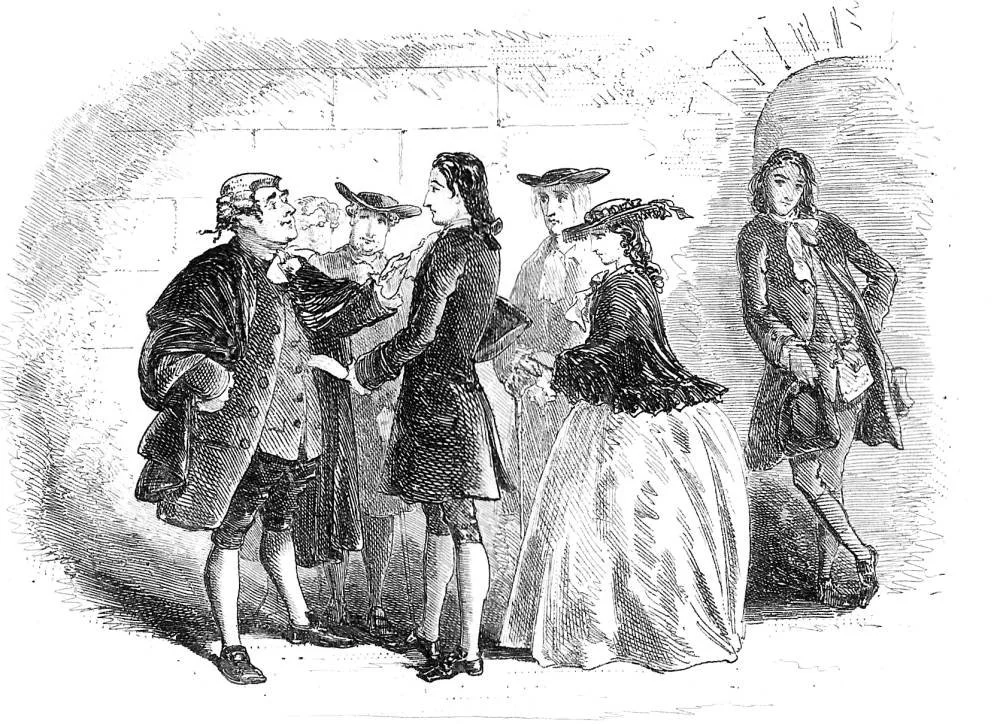
Darnay and Stryver in culottes. (Congratulations by Phiz)
Dickens gives us a good picture of this time before the French revolution. The Monseigneur in a Tale of Two Cities displayed this same wealth, requiring at least four men in “gorgeous decoration” to prepare his chocolate every morning. Back then, luxury was not simply about enjoying something nice, but about demonstrating that you have enough wealth to make extravagance look ordinary.
Unsurprisingly, this excessiveness led to mass upset leading to the French Revolution (yes–trust me–I am thinking about the women who marched to Versailles):
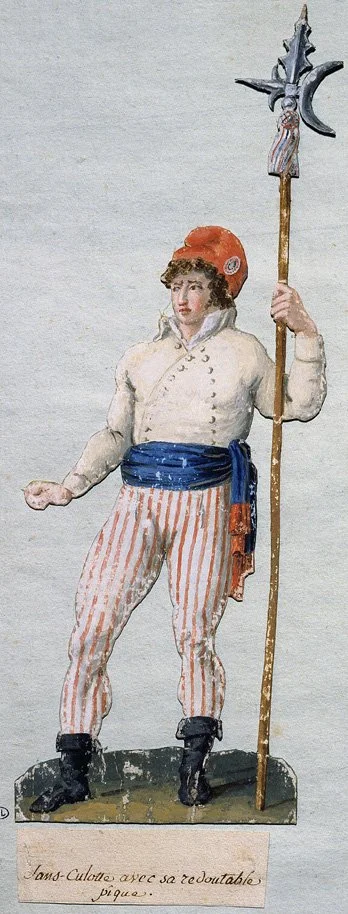
When it came to revolutionary wear, in class, we discussed how losing the culottes, or the mid-length, white breeches which were commonplace as fashion for nobility, was an important step for people to show their support for the revolution. Sans-culottes (literally, ‘without breeches’) were seen as the most dedicated members of the cause as living representations of the spirit. They transformed the dress of poverty into one of pride. However, this fashionable form of virtue signalling later became part of the Reign of Terror, where “counter-revolutionaries” were searched for everywhere, even where there were none.
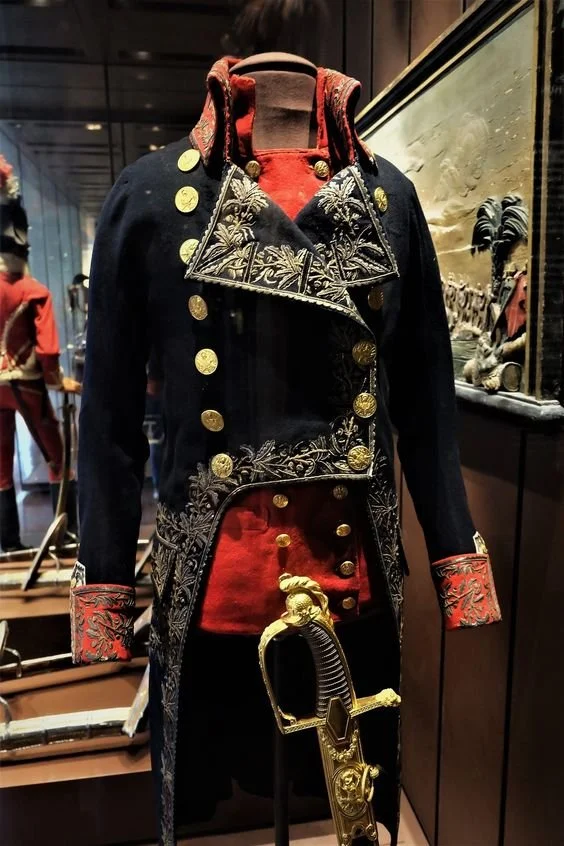
The Revolution did not make fashion disappear, but reinvented what fashion was supposed to communicate. But once Napoleon rose to power in 1799, France once again had a ruler who understood the power of spectacle. As we moved from the Revolution to the Napoleonic era, military garb directly represented the wealth and power of its sovereign ruler. Napoleon used elaborate uniforms, medals, decorations, and ceremonial dress to construct a glittering military aristocracy and project the image of an unstoppable empire.
When we toured the Musée de l'armée at Les Invalides, we got to look upon all of the gorgeous uniforms used by the French army. I was in awe at the craftsmanship and detail given to clothes that were essentially going to be ripped to shreds on the battlefield. It made me recall our conversations during lecture on how much of what we do and believe in is about performance. The French have long represented themselves with what they wore and these soldiers sold an idea of France.
And then, after Napoleon's defeat, the pendulum swung again. During the Bourbon Restoration, France rediscovered its taste for high fashion, status, and power. For some, France had returned to a place of frivolity and fun. We discussed in class the dandies with their refined style and leisurely hobbies like Félix Tholomyès, the Parisian student who gets Fantine pregnant. Hugo describes this time “In the year 1817” where wig-makers hoped “the royal-bird style of powdered wig would make a comeback” and the “French army was dressed in white.” The Restoration had revived the pleasure of looking the part and attention to appearance.
In the modern day, Paris clothing is chic and fashionable, but not fussy, in a way that is simple and appealing. As Guinut puts it in her book, Dress Like a Parisian, “La Parisienne doesn’t take fashion too seriously and trends do not really matter to her...Yet she may follow fashions when they please her and, as long as she likes them, doesn’t care about wearing the same.” In fact, the way that she describes how “La Parisienne” sees fashion feels like a testament to how Parisians experience life in general.
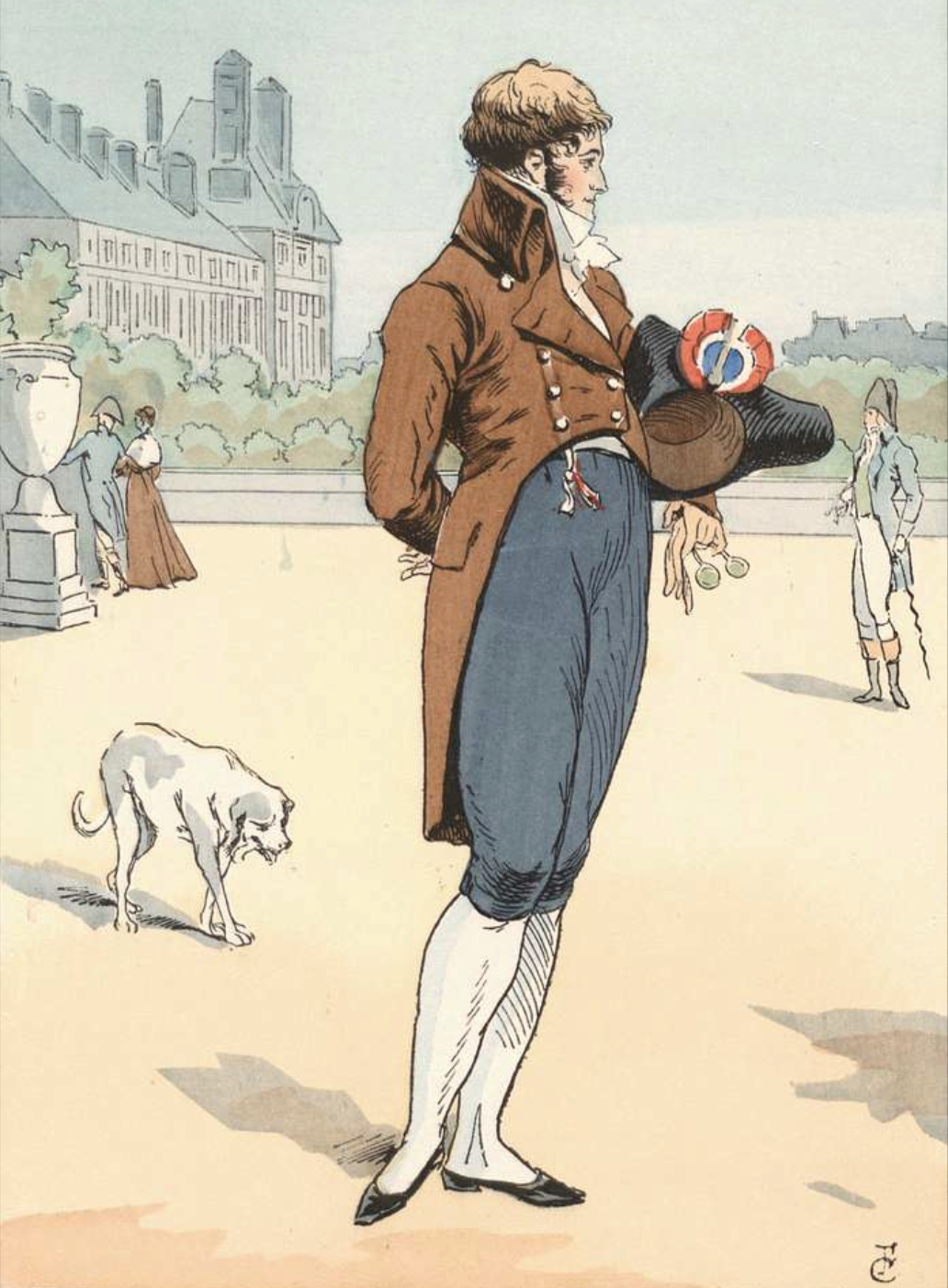
“He would be happy to trade all his knowledge of artists’ quarters, birthplaces, and princely palaces for the scent of a single weathered threshold or the touch of a single tile.
”
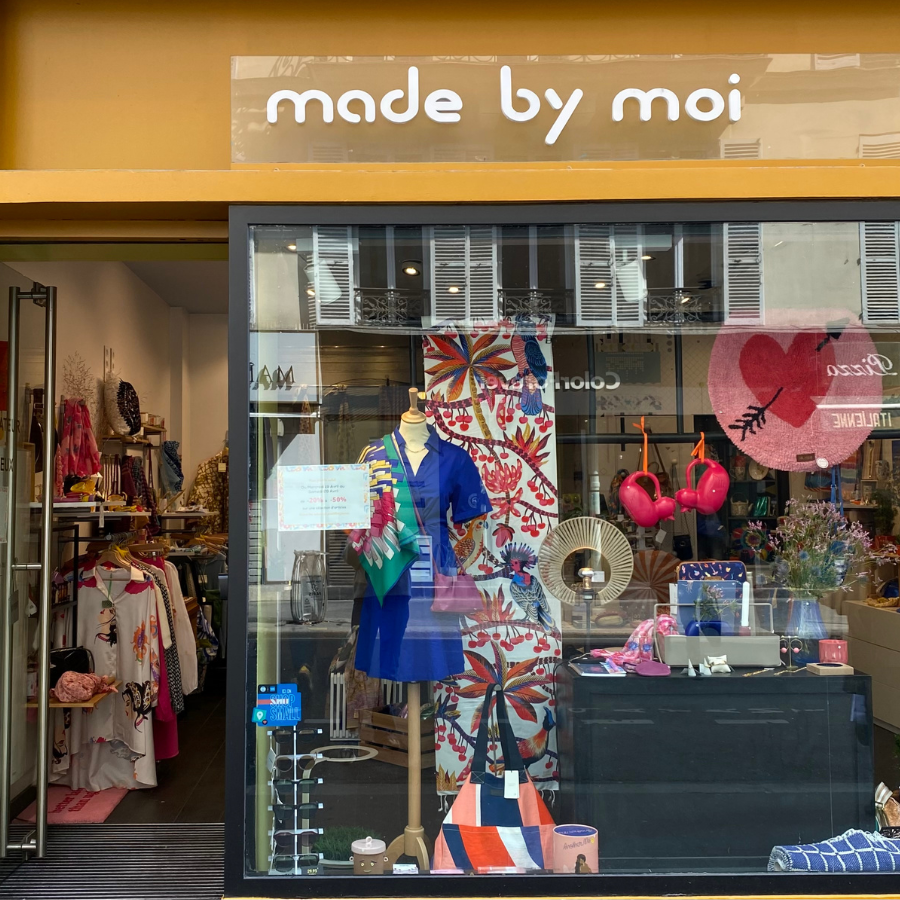
A store I saw someone looking in on my way to class
Something I witnessed in the modern day is how often Parisians window shop. It was frequent enough I’d notice it every day on my walk to class, where someone would freeze and mill in front of a store display. Maybe window shopping is a dead practice in the States (or maybe I just only go shopping when I need something) but I see it as a tribute to the French spirit of the flâneur. This idea, to stroll and observe aimlessly allowing curiosity to lead your way, is one of my biggest takeaways from the trip. With our study abroad coming to end, I have a greater appreciation of French culture and the sentiment that they work to live and not the other way around. Perhaps I should be living more, taking a moment to smell the roses, and appreciating the little things in life.
There’s no better picture to describe it than me, bustling to class everyday, eating my breakfast as I walk, and noticing the French, who linger at storefronts to see that jacket there or those earrings, just because it caught their eye. While I was always trying to get somewhere, they were simply there.
I feel like there is a culture to always be looking toward the next big step: graduation, work, promotion, marriage, etc. But maybe I should be in search of a private message, not a lesson. If I have learned one thing from Bookpacking (and the French) as a whole, life is best spent experienced, not learned.