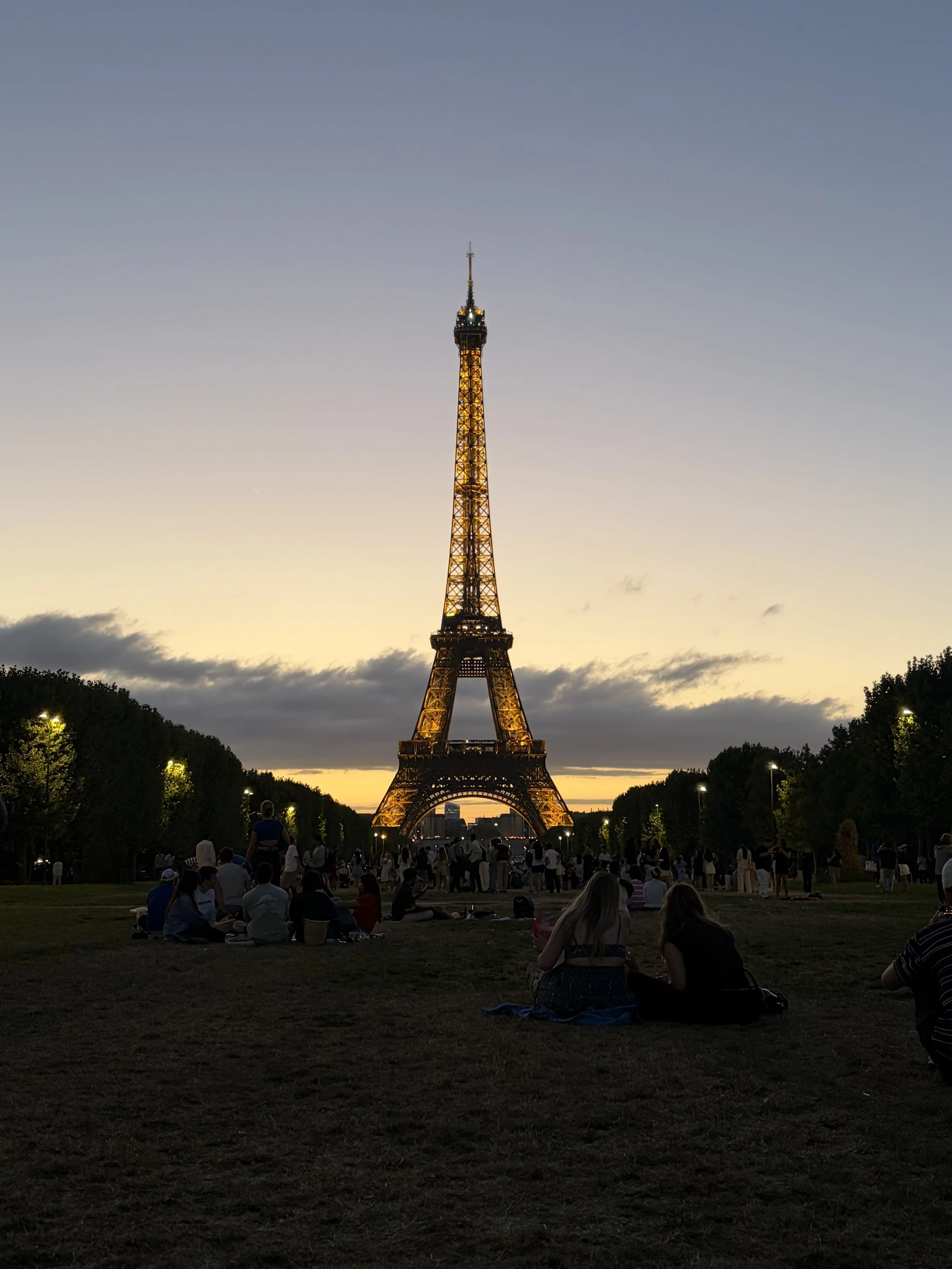
As this journey comes to an end, I can't help but feel a little sad about everything that is being left behind: the art, the architecture, the streets, the language, the food, the bikes, the books, the inside jokes, and the memories made in classrooms, churches, museums, and on sidewalks. After four weeks of waking up every morning knowing there was somewhere new to explore, it feels strange to think that tomorrow I won't have somewhere else to walk to.
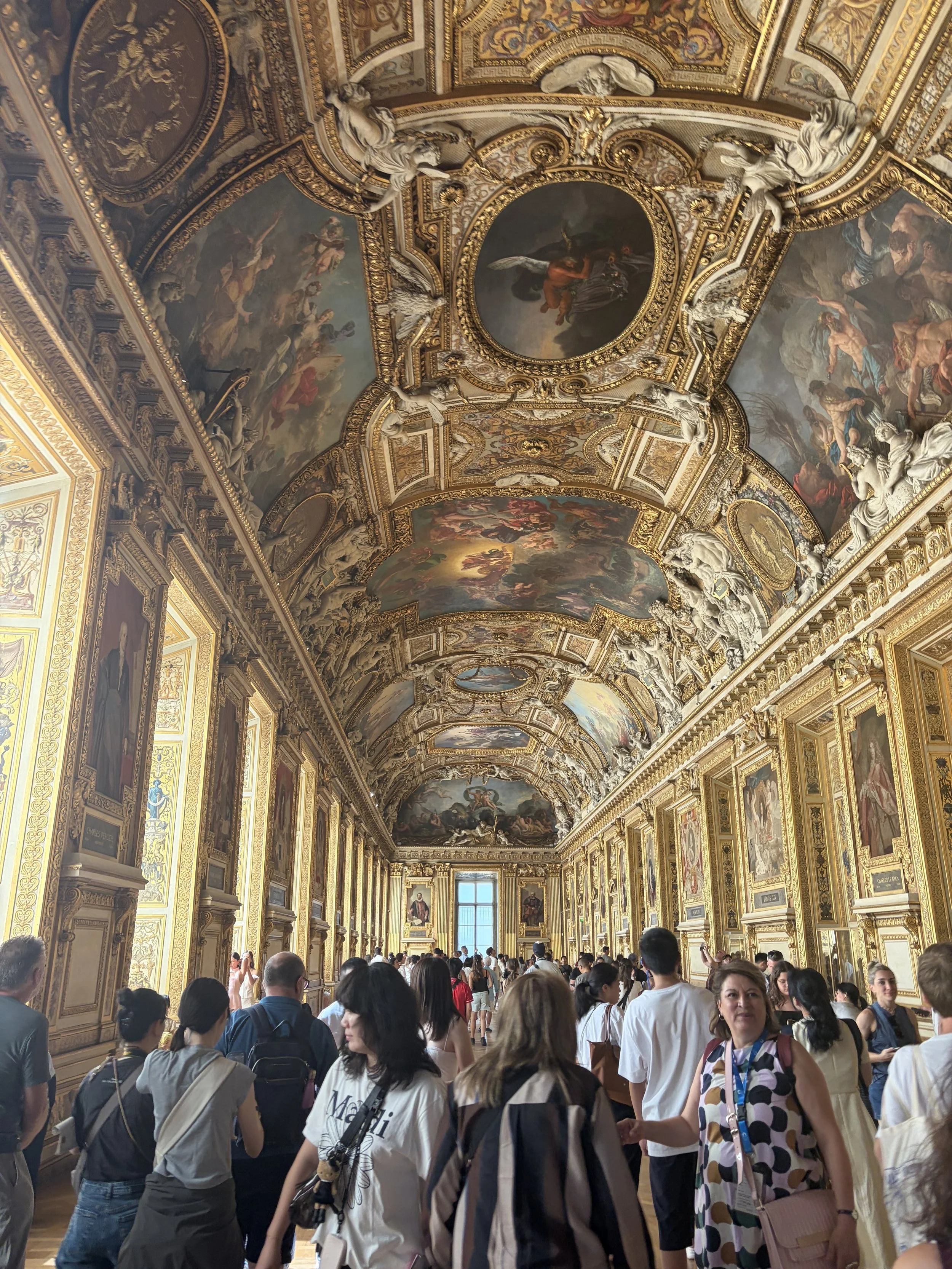
Le Louvre
From walking through the halls of Versailles to exploring the sewers while plugging my nose, I have seen more of London and Paris than I ever expected to see in one month. But somewhere along the way, I realized that the most important things I am taking home aren't things I can put in my suitcase.
When I arrived in Europe, I never expected this class to turn me into an art appreciator. I have always liked art, but I wouldn't have called myself someone who goes looking for it. After spending a month in London and Paris, however, it became almost impossible to walk anywhere without looking up and noticing something. The Louvre was obviously overwhelming, but some of my favorite pieces of art weren't even inside it. They were on ceilings, in churches, along buildings, in museums like the Carnavalet, and tucked into places we passed without even realizing they were there. Paris made it difficult to ignore art.
You can turn a corner and suddenly find yourself standing in front of a building that looks like it belongs in a museum. You can walk into a church and realize that the ceiling above you is more beautiful than some of the paintings you traveled across the world to see. You can spend an afternoon at Versailles staring at rooms that seem almost impossible to have been built by people, then spend another afternoon underground in the sewers, wondering how the same city can contain both.
The architecture was just as overwhelming. I think that might be one of the biggest things I will miss. Not one particular building, but the streets themselves. The way old and new seem to exist together. The palaces, churches, apartments, bridges, gardens, and narrow streets all somehow become part of the same city.
And then there was the language. I definitely did not walk away from this trip fluent in French. If anything, there were probably just as many moments when I had absolutely no idea what someone was saying as there were when I understood them. But I did walk away appreciating the language in a way I didn't before.
I'll always remember the man sitting on the bench who spoke to me in French, even though I couldn't understand everything he was saying, and responding with one of the only phrases I know, “Désolé, je parle pas français.” I couldn't walk away from that conversation, suddenly speaking French, but I could walk away realizing that language doesn't have to be something you completely understand to appreciate. I started listening differently. The sounds of conversations around me, the announcements on the Metro, people ordering food, even the way French sounds when someone was simply talking became part of the experience, but you don't have to understand everything to appreciate it.
There were plenty of moments in class when I didn't understand Hugo's point immediately. There were pages of Les Misérables where I wondered why we were spending so much time on a particular street, building, character, or historical digression. Then we would walk through that place, and suddenly it made sense.
Some of my favorite memories have absolutely nothing to do with the novels. They are the moments that happened in between them. Laughing with everyone in class until we had to remind ourselves to be quiet while walking through a church. Getting slightly lost. Finding food after a long afternoon of walking. Riding bikes to class. Making jokes that probably won't be nearly as funny once we are back at USC. Sitting together after a long day and realizing that somehow we had walked another ten miles. Those are the moments I know I'll remember.
When I think back on this trip years from now, I probably won't remember every street name or every date we discussed in class. I might not even remember exactly which day we visited certain museums. But I will remember what it felt like to ride a bike through Paris in the morning. I will remember the overwhelming rooms of Versailles, the paintings at the Louvre, and the smell of the sewers that made me question every decision that led me underground. I will remember walking through London and seeing Dickens differently. I will remember standing where Gavroche's elephant once stood and realizing that a place I had only imagined could have once felt real. I will remember tracing the streets of the Corinth barricade and looking at Paris through Hugo's eyes. And I will remember learning that a city is more than its landmarks.
When I wrote my first blog, I was still trying to figure out what bookpacking actually meant. I thought it meant finding the places in a book and seeing them in person. Four weeks later, I know it is much more than that. Bookpacking taught me to slow down, to look up, to look down, to notice the building I might otherwise walk past, to wonder what happened on the street underneath my feet, to appreciate the detours, to let a book change the way I see a city, and to let a city change the way I read a book.
I am sad to leave all of that behind. I am sad to leave the art and the architecture, the streets and the language, the cafés and the bikes, the books and the memories. But I also know that none of it is really being left behind. I get to take it with me. Maybe not the paintings. Maybe not the buildings, and definitely not the smell of the sewers. But I get to take the way I remember them with me, and I think that's one of the best souvenirs I could have asked for.
.