I have been using an old notebook for this class. As a result, I’ve found myself constantly flipping to the wrong pages and catching glimpses of my notes from previous classes. The notes on religion and political violence are not at all unrelated to this Bookpacking program, and the topics have since reemerged in our recent discussions on faith and stereotyping.
I’ve listened to many people talk about their personal experiences with faith. A recurring theme is the community that religion fosters. Community identity like this is not unique to religion–we see communities form from shared ethnic, national, and ideological identities. The Bangladeshi community in London. The righteous revolutionaries of Paris. The unity of the people under the French flag. There is a beauty in commonality. In The Tale of Two Cities, one of Sydney Carton’s final scenes is with the seamstress, in which the two prisoners sentenced to death bless one another in a moment of tender spiritual comforting. The students at the barricade have a moving brotherhood. They face their inevitable deaths together with mutual support and courage. Even our being Americans in Europe has allowed us, Bookpackers, to bond over the cultural distance we feel from the local people.
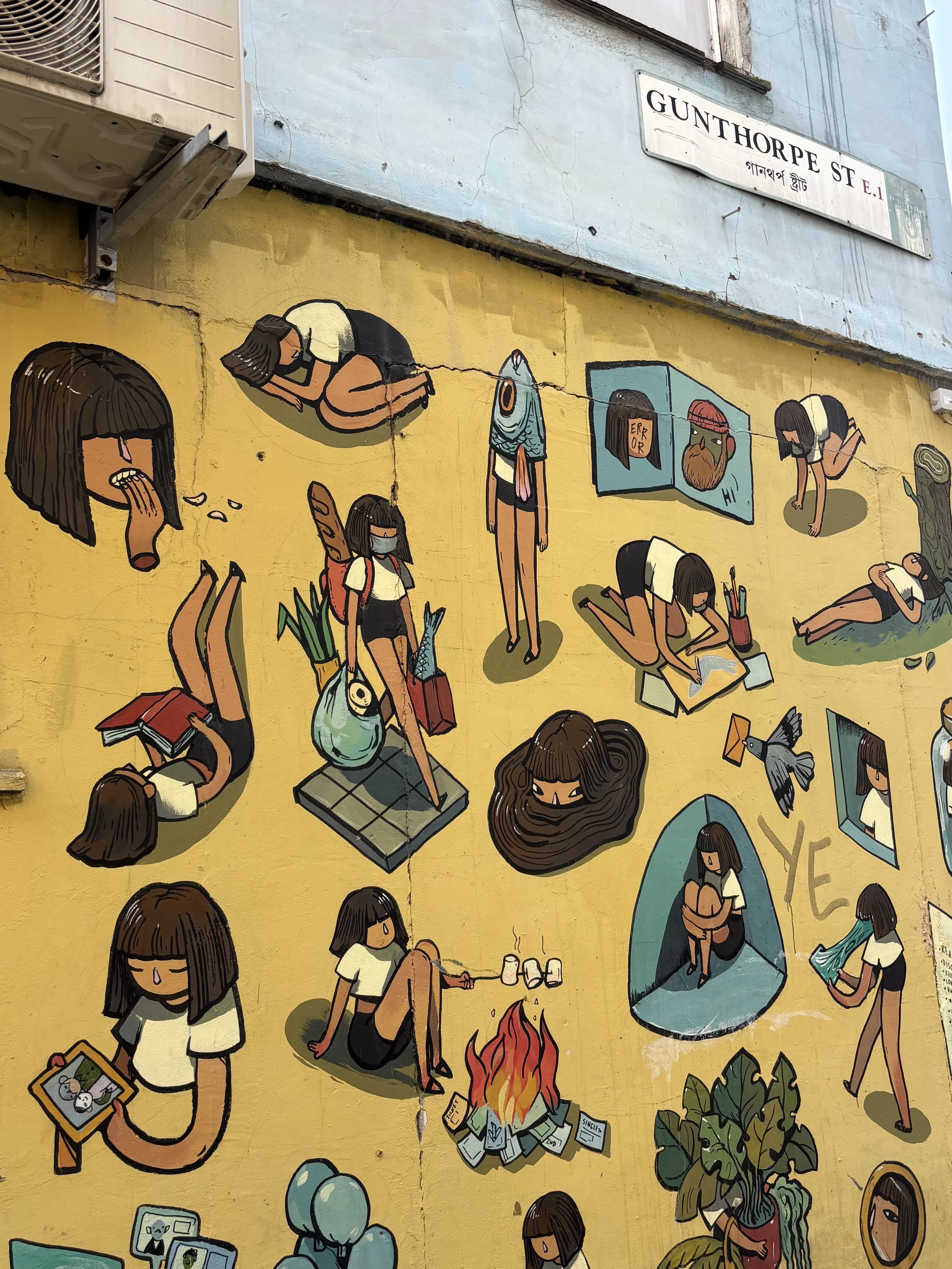
Banglatown Mural.
So, how does shared passion and identity end in bigotry and violence?
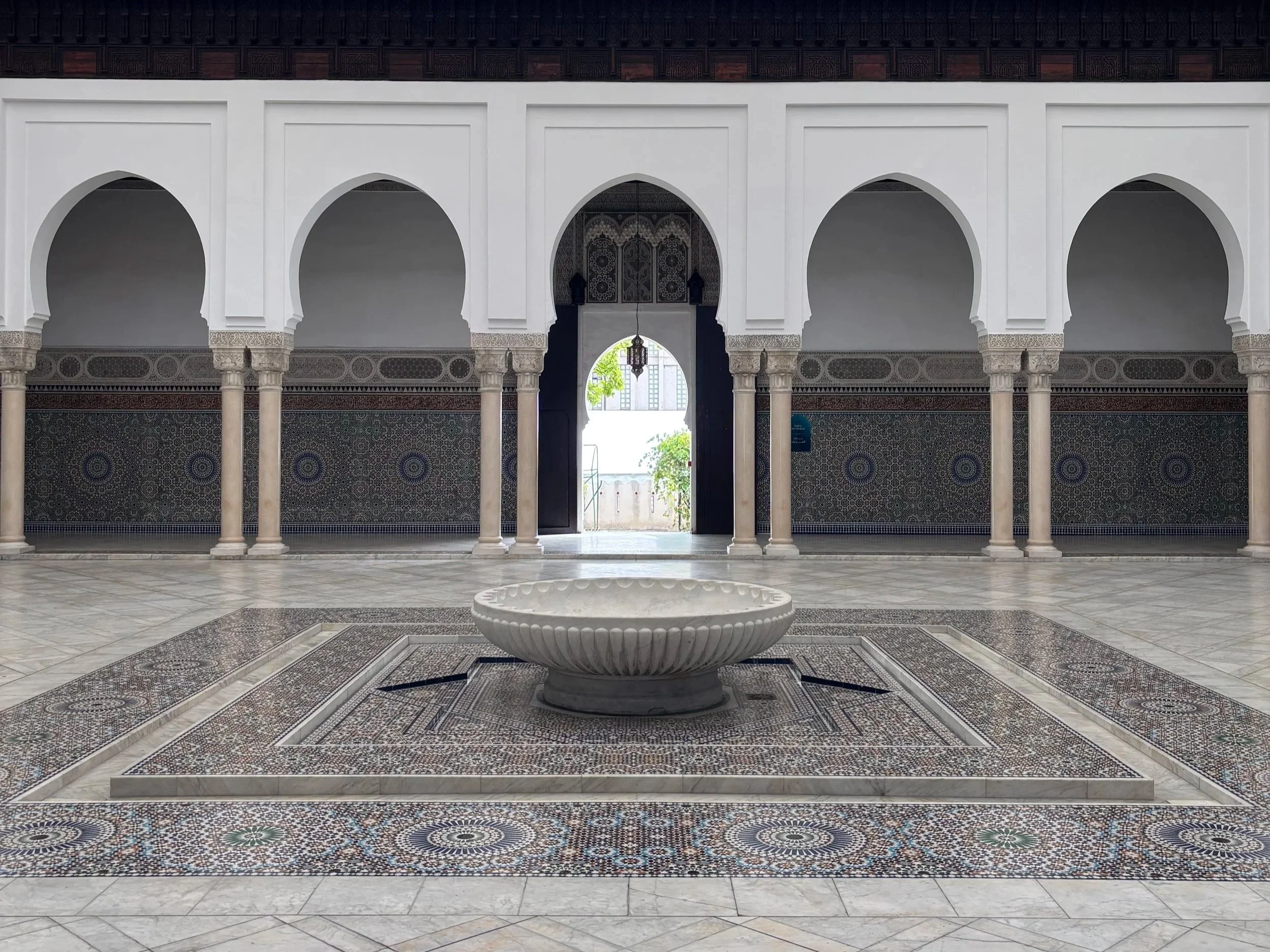
The Grand Mosque.
Community has been a basis for alienation. Massacres based on religious difference are not uncommon. The Terror that followed the French Revolution targeted those perceived as enemies of the revolution, such as the young seamstress. The key here is perception, which is subjective. The bar keeps raising. The criteria for the ingroup and outgroup depend entirely on whoever is most influential. Visiting the Grand Mosque of Paris reminded me of the islamophobia that followed the War on Terror. The enemy is abstract. The War on Terror was used to justify suspicion and attacks on innocent Muslims. The Terror justified both the imprisonment and execution of aristocrats and the Third Estate it claimed to represent. The French flag is stained with examples of violent ethnic and political disunity.
For there to be an us, there must be a them. The more we define the elements of our identity that we require for inclusion, the more people are excluded. But this is our way of life. We cannot seem to help it. We gravitate toward community, friends, and shared ideals, and we relish the support we gain from one another for who we are and who we are not. Here is what it is to be British. Here is what it is to be French.
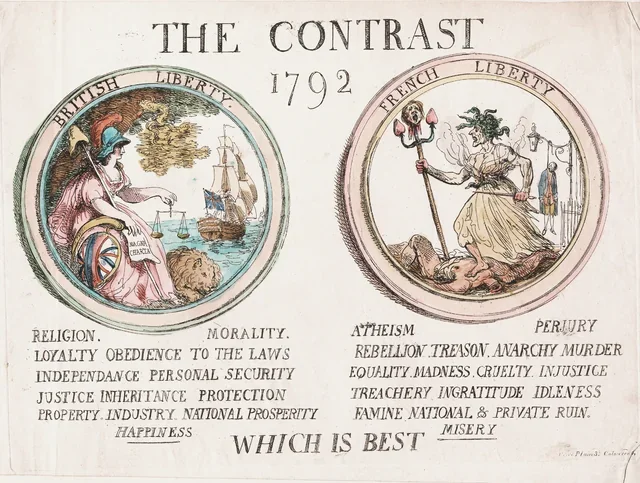
Us v. Them. British / French Edition.
“Now, no sword cuts only one way. Every blade is double-edged. Whoever wounds with one edge wounds himself on the other.”
Suddenly, categories are formed out of assumptions and prejudices. All aristocrats become evil, and Sydney Carton (as Charles Darnay, who disagreed with the classist actions of the aristocracy) dies by the blade of the guillotine. All prisoners become brutes, and Jean Valjean’s heart grows more hateful as a result of the townsfolk’s discrimination. Only the ingroups remain, then even they chip away. Monsieur Defarge is kept around until he is deemed insufficiently radical. Nobody is safe when the enemy exists only in broad concept.
Not all stereotypes are wrong. As a loud American myself, I’ve felt the disgruntled stares at the Parisian restaurants. Our American joy is far too loud for the French (and now I’ve separated them and us–it’s that easy!). This separation may be a comfort to the little French lady on the bus who points and, laughing, whispers to the bystanders, these Americans do not understand how the buses work; how annoying. It is off-putting for those on the receiving end of that perception. But I understand. Their disdain for us stems from a heritage we do not share, and the security of a community is (allegedly) strengthened by highlighting what we share and what people who aren’t us don’t.
How do we end up so divided, ignoring our shared human identity? We do it to ourselves.
poetry alert
!!
poetry alert !!
Two words
two words
me and you
and the human face
here and there
two words
occasion and place
all it takes is
us and them
two cursed words and
all goes to waste
Crumb:
I rarely feel more like a tourist than I do in Paris. Maybe it’s the sheer volume of tourists in the area that makes people wary. Maybe it’s the fact that I can’t stop laughing and speaking English with my new friends (is that such a crime?!). Having had many conversations with my fellow Bookpackers about the way French folks perceive us as we giggle our way through the streets, I’ve decided (as I do every time I travel out of California) that there is no shame in being a tourist. I would not give up the smiles and train conversations with my fellow Americans or friendly French travelers for the world. The modern world, with all its curiosity and globalization, was not built for isolation.
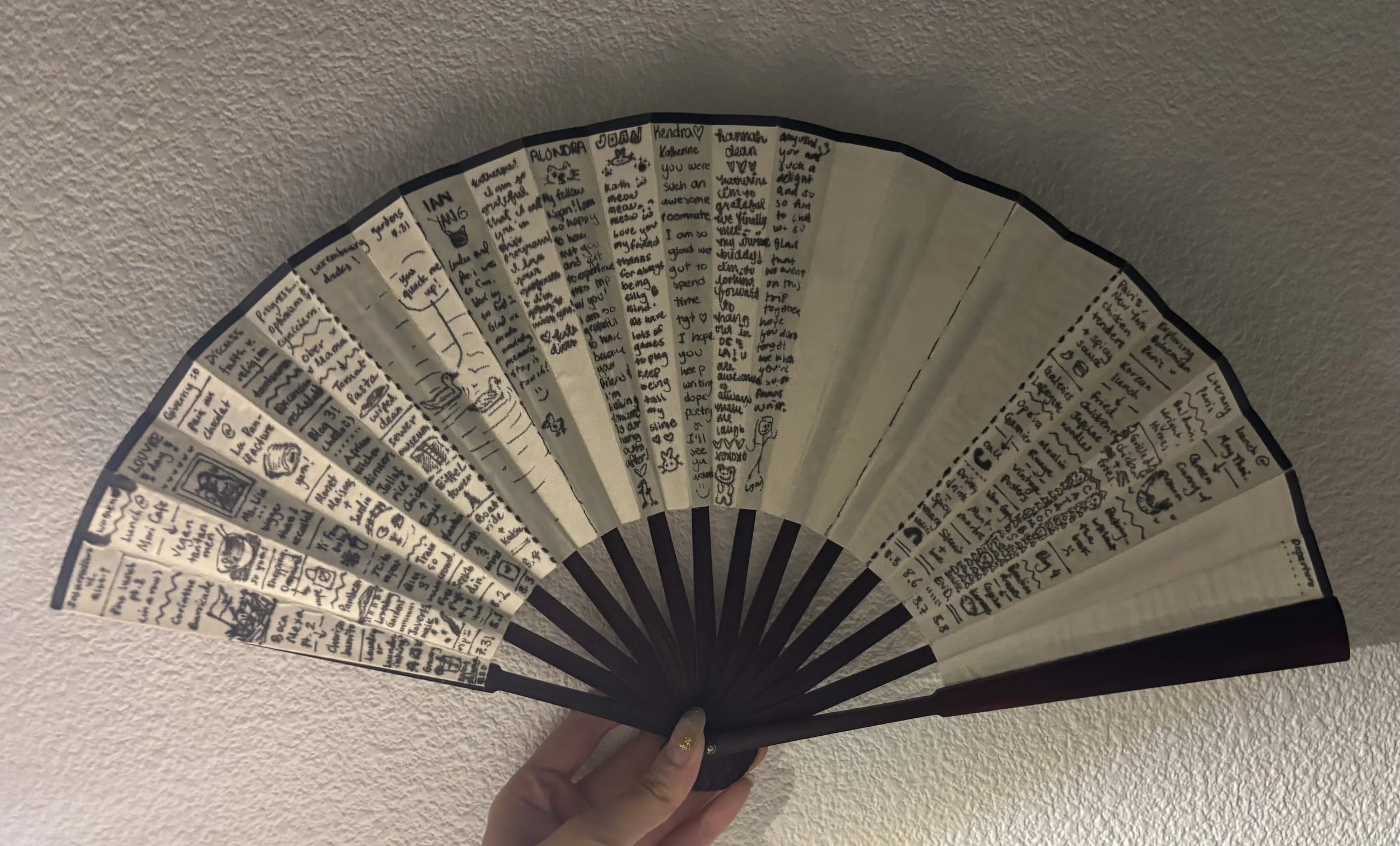
Progress–8.8.