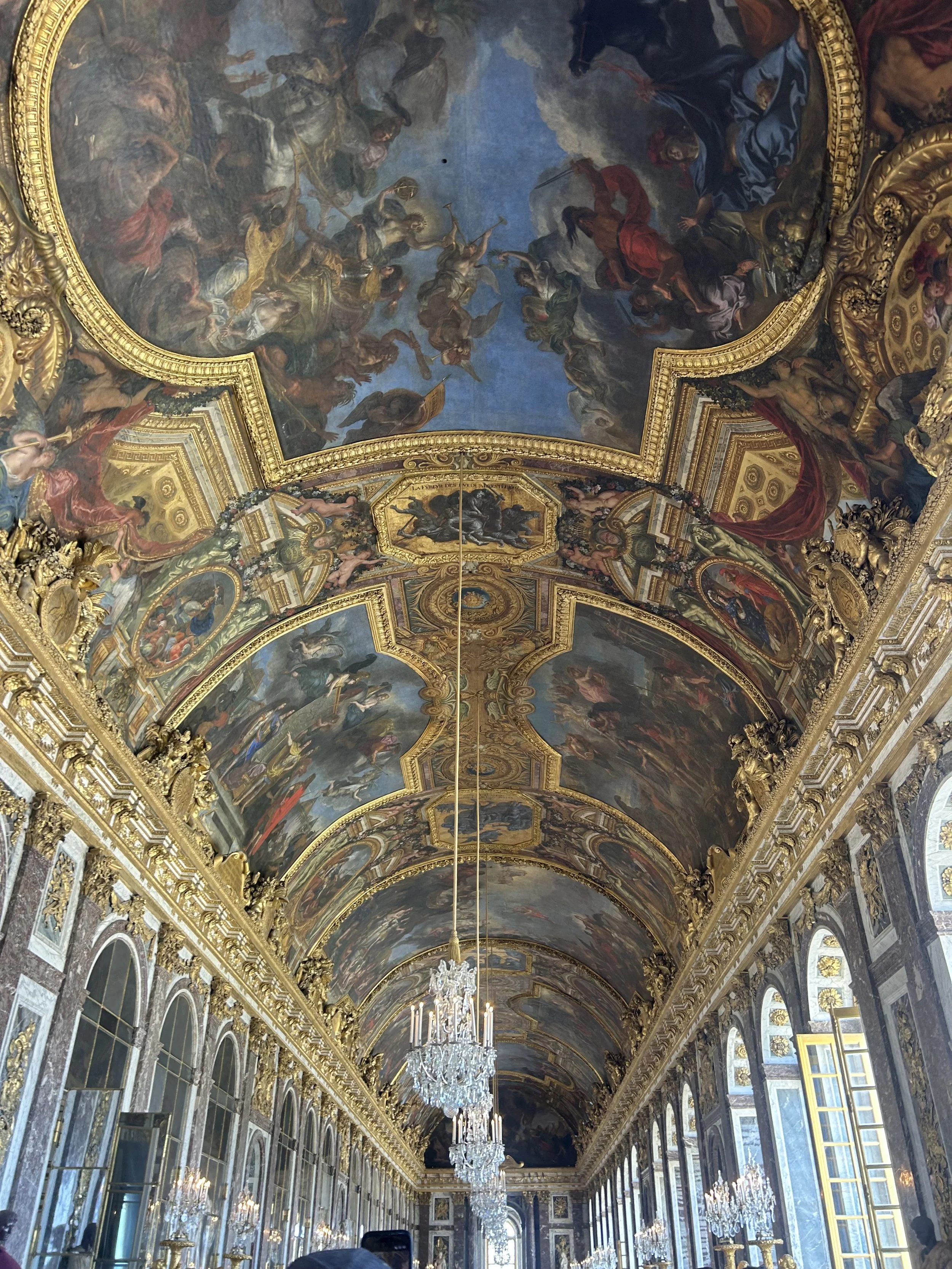
I’ve never felt so American until I got to Paris. I try my best to wear clothes appropriate for Paris, always say bonjour when entering a boulangerie, and even fight my instincts and not smile at pedestrians (smiling at strangers is an American symptom). And yet, you take one look at me speed walking down the streets (yay, walkable city!) and you know that I am afflicted with the American hustle and bustle. Parisians love to amble– I do not.
For class, we read a fascinating excerpt from The Flâneur by Edmund White, which defines Flâneur as a Parisian figure that wanders the streets without an end destination while observing and pondering every facet of the city. White, an American himself, points out that “Americans are particularly ill-suited to be flâneurs.” I obviously immediately took offense until I realized that he was probably right.
There were so many differences in opinion to be found and I found myself surprised at how violently I was reacting to a mandatory piece of sourcework. I think I actually eye rolled at this:
“I asked a French couple who recently visited me in New York for their first impressions after just twenty-four hours in America. The wife said, ‘In New York you can tell by people’s body language that no one cares what other people think of them, whereas in Paris everyone is judging everyone and the only people who have this American-style insouciance are the insane.’””
To my senses it seemed like an argument against themselves? Frankly, the stress of trying to always be presentable and perfect in Paris has worn me down. Another culture shock has been, let’s say, the language of love here. For all the smiling we do in America, we don’t usually flirt with people on the street. My use of flirting really is being quite generous. As White puts it “American-style feminism had restrained men not to ogle women”. Interestingly, here White is explaining to a french couple who were upset by the lack of attention they had received in the United States.
That’s when it hit me. Maybe I was so upset because the French seem as strong in their conviction as Americans. Would you look at that?
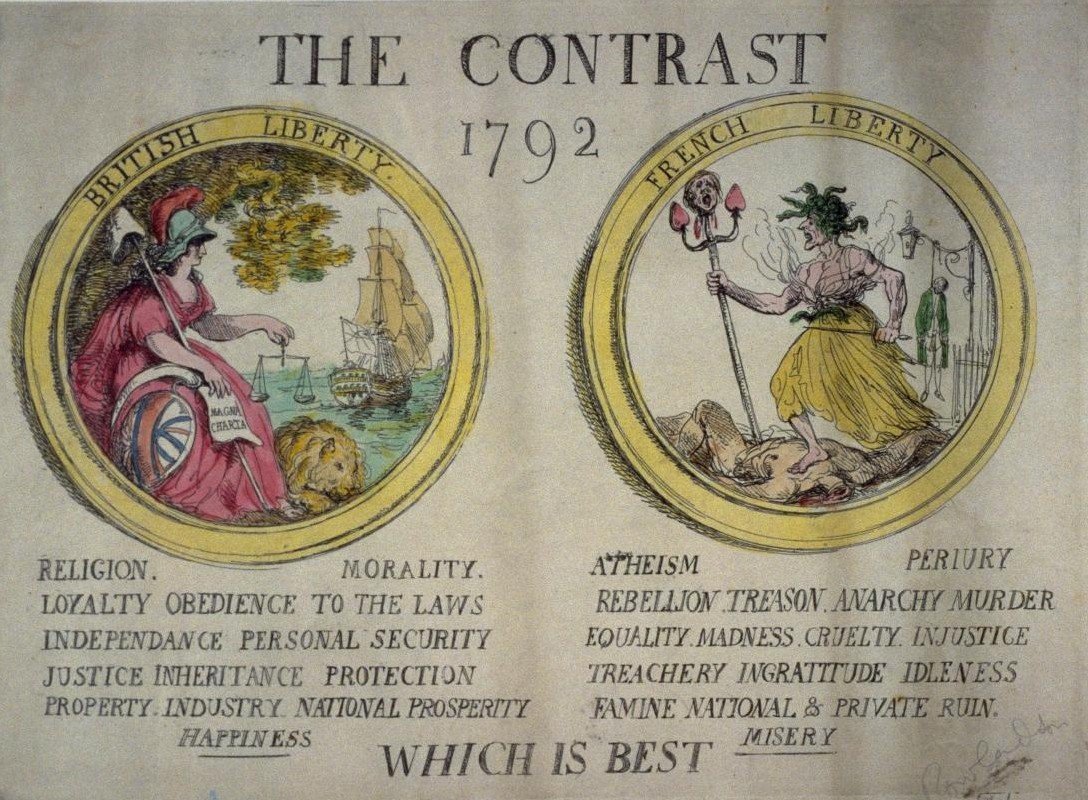
Throughout our study of A Tale of Two Cities by Charles Dickens, we’d been talking about the differences between Britain and France and how they viewed one another. It seems strange now that the countries would have viewed themselves so differently, especially when both were poised for some sort of change in the monarchy. The political cartoons against each other were, of course, cartoonish, but still reveal their deeper sentiments towards one another. Both countries had deep rooted convictions that since it was the way they did it, it was the right way.
With this understanding, the hatred aimed at Darnay, for being an aristocratic emigrant in A Tale of Two Cities, started to make more sense. Of course, much of the French public’s resentment is due to his station of power, but after experiencing the culture alongside reading the book, I think much of their anger was flamed by what they feel is a betrayal to France, and its ideals by retreating to England.
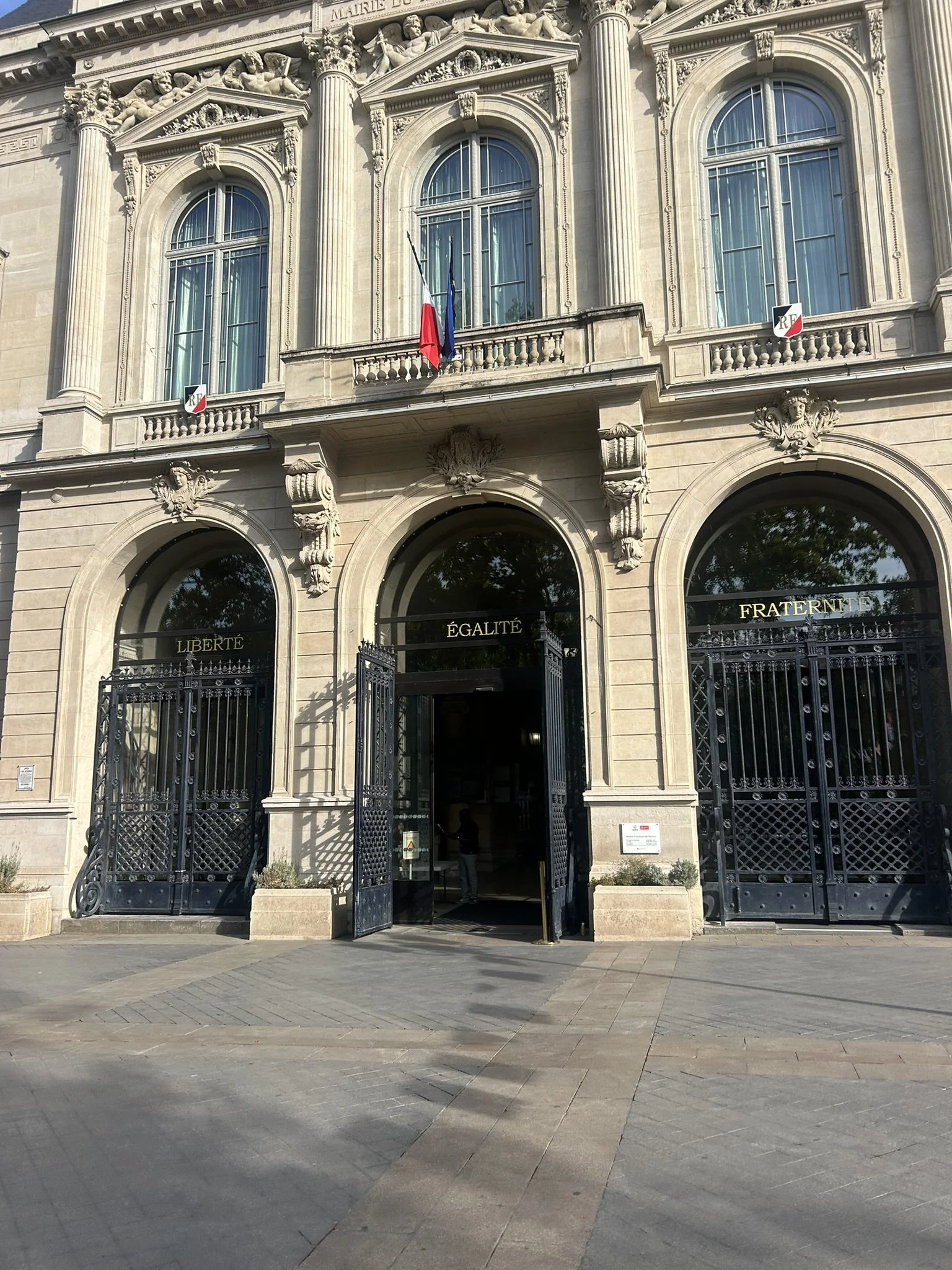
The strength of the French public's conviction about France’s own ideals are memorialized around the city. Nearly every official looking building has three words carved into it, “Liberté, Égalité, Fraternité”. As you may have surmised this translates to “Liberty, Equality, Fraternity”. This is certainly an achievement after a horribly oppressive monarchy, (but please allow this American Feminist an eyeroll at the use of fraternity, but to be fair, “democratic” nations hadn’t quite thought to include women or people of color in their liberation). A whole country will never abhor a single ideal, and such a fundamental shift from a monarchy to a republic (not to mention an empire) will never be clean. I knew very little about the french revolution before this class as it is majorly simplified in a world history curriculum, so I found myself surprised by the complexity of beliefs within Victor Hugo’s Les Misérables.
Hugo explores the varying beliefs and ideals of the French through numerous different characters within the novel. For instance, in just one family you have several different ideas of ideals about what France should be fighting for. Grand-père who is a firm royalist and denounces his son who became a commander for Napoleon. Marius, not unlike France itself, experiences several transformations. He’s raised as a royalist under his grandfather, but after learning the truth of the father he never knew upon his death, he shifts to revere Napoleon and becomes a Bonapartist. Later, he befriends some student revolutionaries, learns about liberty, and eventually fights at the barricade in the name of the Republic.
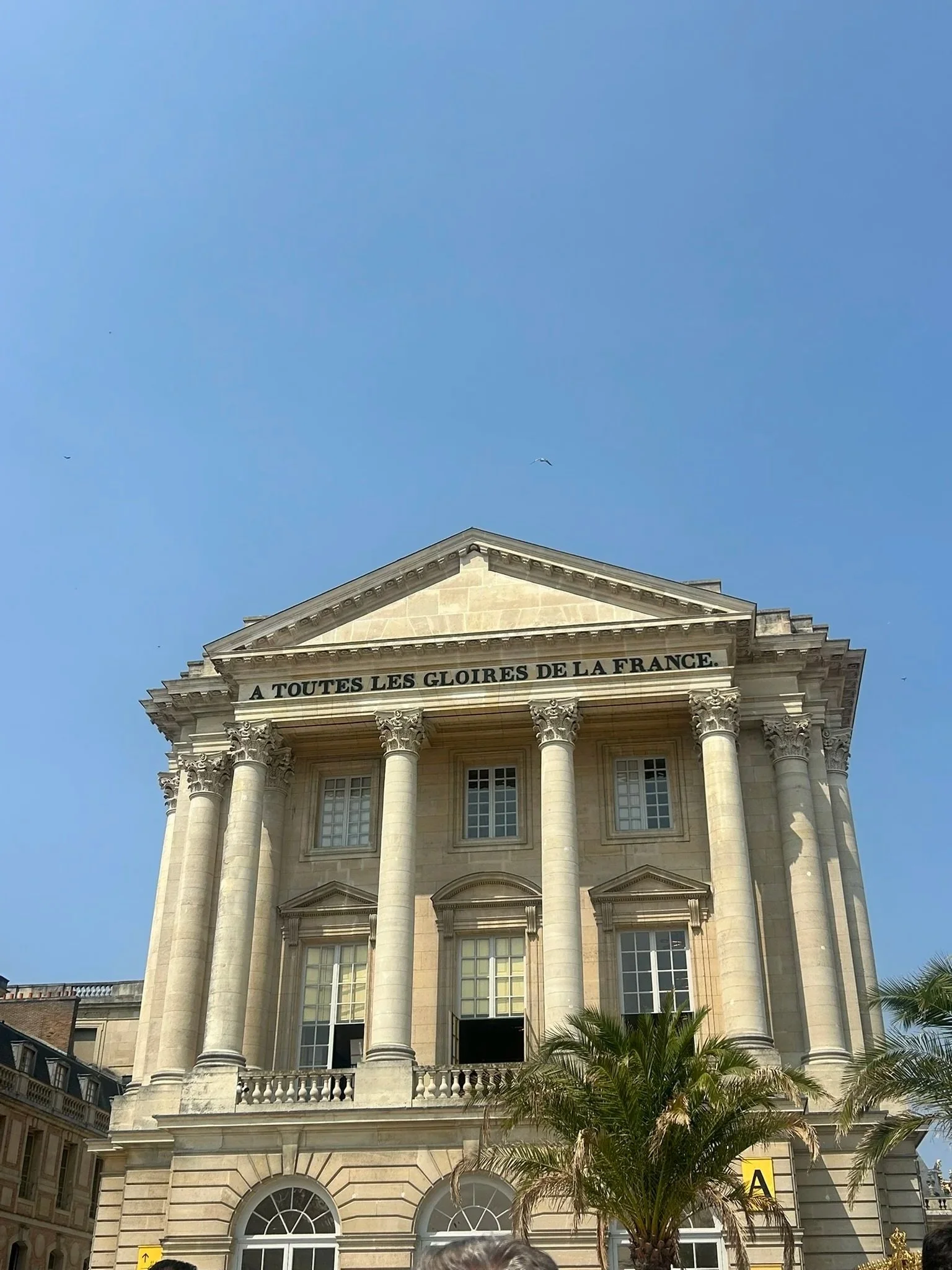
“To all the glories of France”
It is hard to fathom how so many ideals can exist alongside each other. To my surprise, the Palace Of Versailles illustrates this beautifully. As orchestrated by Louis Philippe, the last King of France, Versailles attempts to honor all parts of France’s history. Versailles is large enough to encompass all these warring yet all french beliefs. There is a huge painting of Napoleon crowning himself emperor just as there are statues of Louis XIV and Louis Philippe himself.
In this, I find something enviable from the French. Can we as Americans build a bridge between the fractured pieces of our beliefs. Can we acknowledge those differences while moving forward for the common good? Only time will tell, and it must be remembered this unity inherent from the start, but consciously crafted with the benefit of hindsight and self reflection.
So, in respect to the culture we have been immersed in, I forced myself to slow down and flâneur. I wandered without extensive research and didn’t even overtake smooching couples on the street (ew). However, as White pointed out earlier, Americans really aren’t predisposed to flâneuring. So I flâneured myself into the thing Americans love just as much as ice and air conditioning, shopping!