Our morning seminars, excursions, and the two novels, A Tale of Two Cities and Les Misérables, have allowed us to really dive into French history. Specifically, we have explored its Revolutions, such as the 1789 French Revolution and 1832 June Rebellion. Many places we have seen throughout our experience speak to these Revolutions reasons, drives, and results. In this blog I want to talk about the French monarchy, and discuss how the royalty and aristocracy portrayed and thought of themselves in comparison to the working class people, in which ultimately at the end of this blog will give an understanding of this time before and after the Revolutions in France.
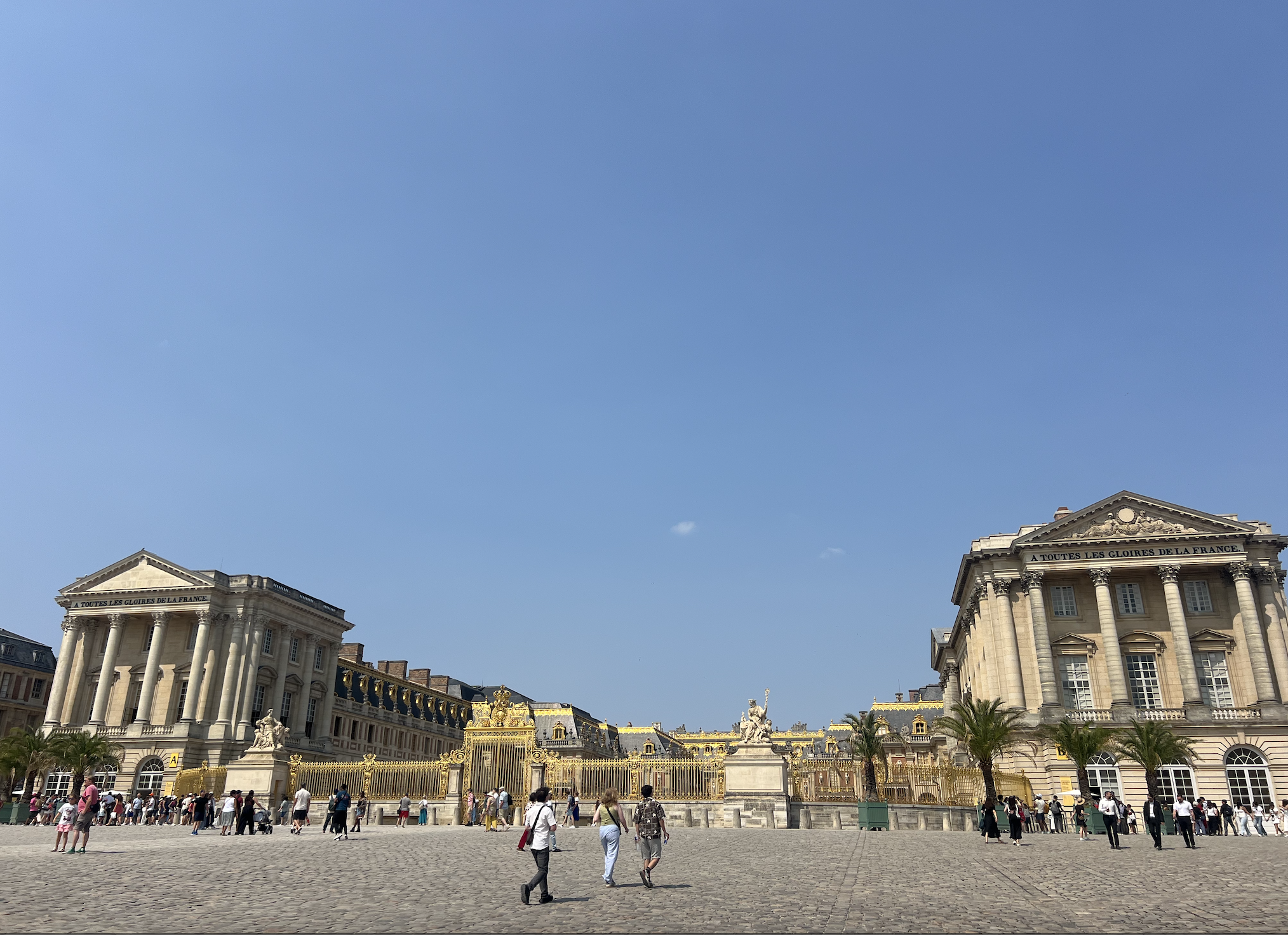
Walking up towards the Palace of Versailles
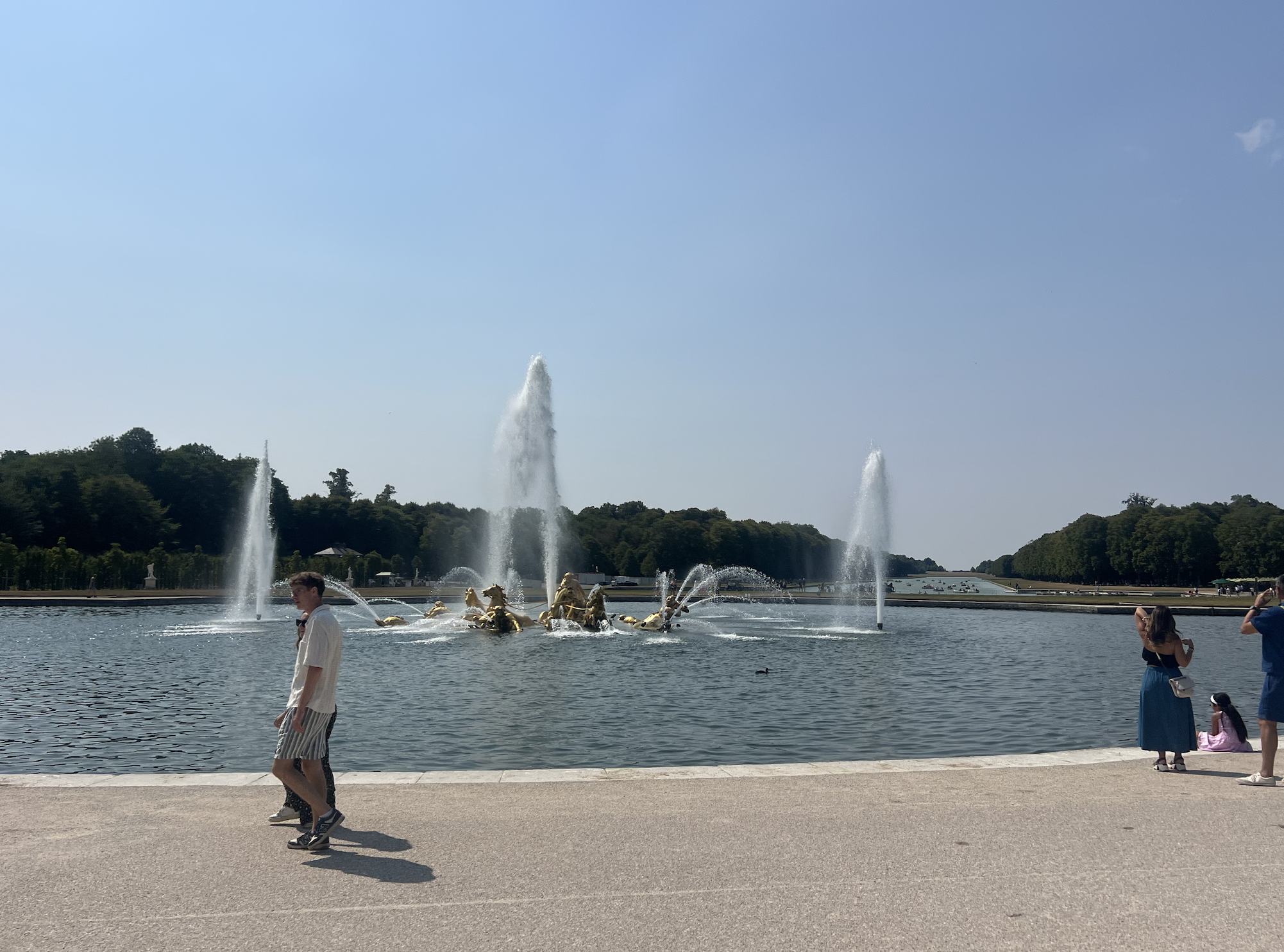
Apollo’s Fountain
One location in particular I felt spoke a lot regarding the feelings and actions of French society before and after the revolutions is the Palace of Versailles. As mentioned by Professor Andrew, it truly felt like the embodiment of everything in those times and society that the Revolutions were fighting against, particularly the 1789 French Revolution. To start, a sense of the Palace of Versailles, before walking in, can be felt through its history, which I found very interesting from our discussions and from videos I watched before and after our trip to Versailles. The core image of Versailles that we see today was created by Louis XIV. To quickly portray his thoughts on his position as king is to share his self-given title of “Sun King.” By thinking of himself as the Sun King, I learned that he was comparing himself to Apollo, the Greek god of the Sun. This was so interesting as we can see this comparison in Versailles, for example in the gardens, there is a gold statue of Apollo in the center of a large fountain, I believe this is called the Apollo Fountain. The fact that he compared himself to a Greek god showed how it was evident that Louis XIV thought of himself very highly and likely thought he rightfully had the crown and was this divine image to the rest of France. From this we can already begin to see the picture of an absolute monarchy in France.
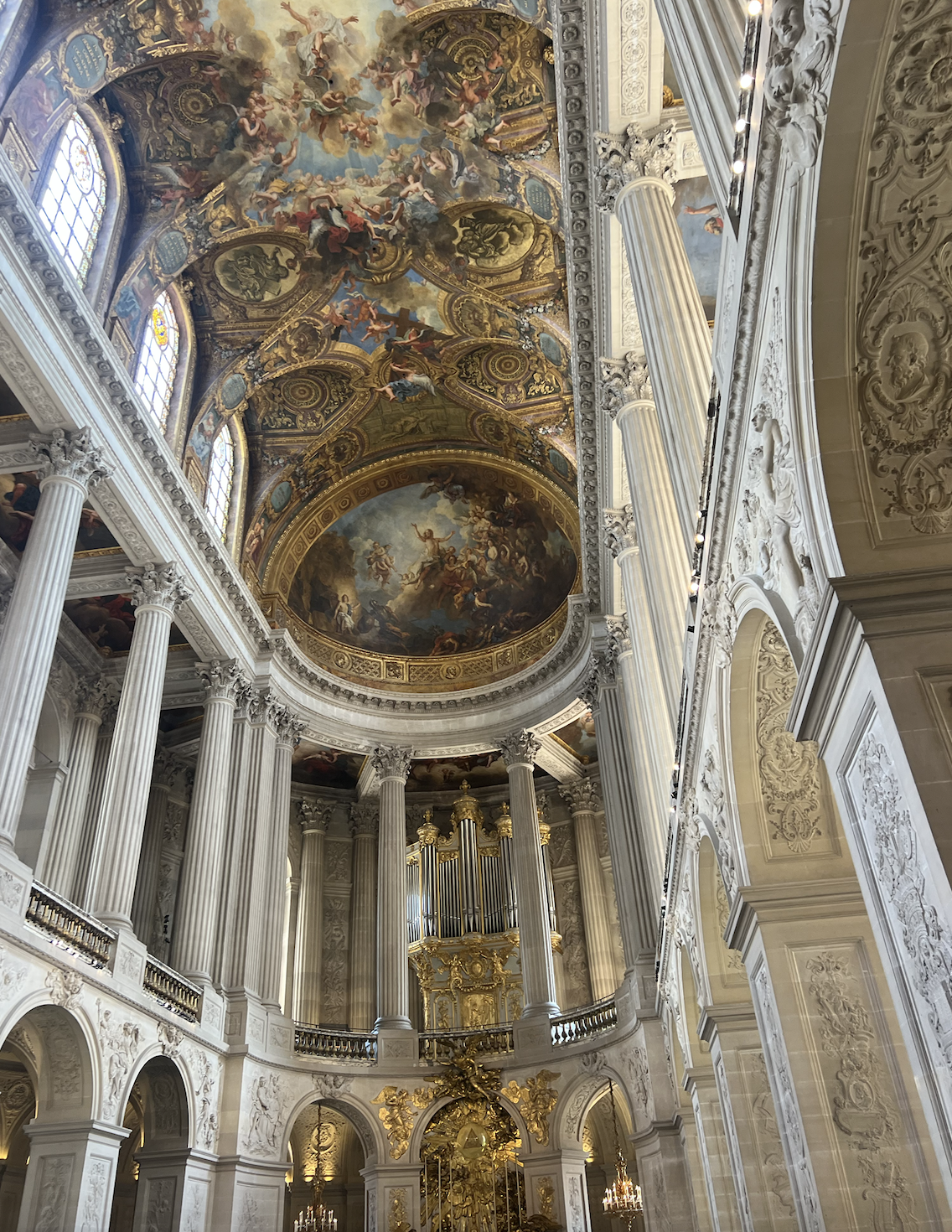
Royal Chapel in the Palace of Versailles
Looking at Versailles was incredible. There are many words that could be used to describe it, grand, over the top, extravagant, luxurious, vast, etc. Initially walking up to Versailles was an interesting experience. You begin to walk up on uneven stone, while seeing this massive palace surrounded by a tall gate slowly get closer. On this walk, I felt as if I was stepping into a different place apart from the city around us, which is likely what this building intends to do. In this way there is already this strong sense of separation between what is behind those gates and those outside. The inside of Versailles was beautiful. There was no wall in the palace that was plain, as they were covered with gorgeous paintings, detailed engravings, designed wall paper, gold borders, which was so much so that it made the big rooms of the palace seem small. The same grandness could be expressed about the Garden of Versailles. There were huge fountains, beautiful flowers, and hedges spreading so vast that it was like a maze. My feet definitely felt just how large this place is after this 20,000 step day.
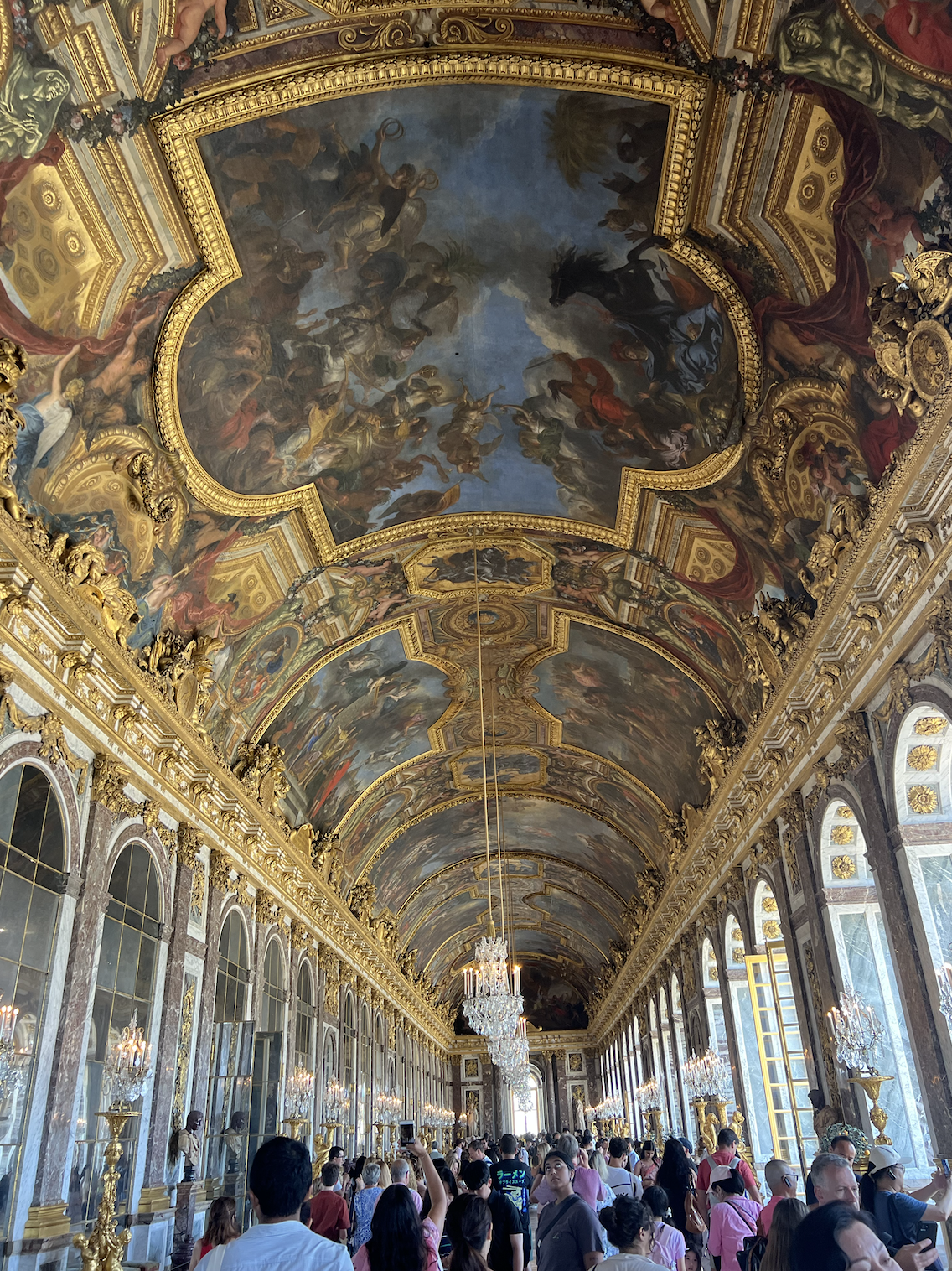
Hall of Mirrors
There were a lot of interesting rooms and objects I saw in Versailles that stood out to me in expressing the time of the Revolution and more so how the monarchy and aristocracy felt during this time. To begin, I want to talk about one of the most impressive and beautiful rooms in the Palace of Versailles, the Hall of Mirrors. This long room was the absolute embodiment of lavishness. Gold color filled this room through statues, stands, borders on the walls, and patterns on the ceiling. Emphasized by this gold were the paintings that covered the entire ceiling and hanging from them rows of chandeliers. Everything in this room was so extravagant and I found it to portray exactly what the monarchy was in this time period in which they lived lives of excessiveness while the working class lived on scraps. The vast inequality between these two groups is shown throughout this room and the entire palace, as it is obvious the level of wealth and power the monarchy held. Being in this room was amazing to see, but it had me questioning how those who could enjoy this side of the inequality without feeling a sense of guilt or sympathy for those outside who couldn't even fill their rooms with food. Therefore, one can also see just how out of touch the monarchy was, continuing to see themselves as higher beings with the right to live this way while others suffer.
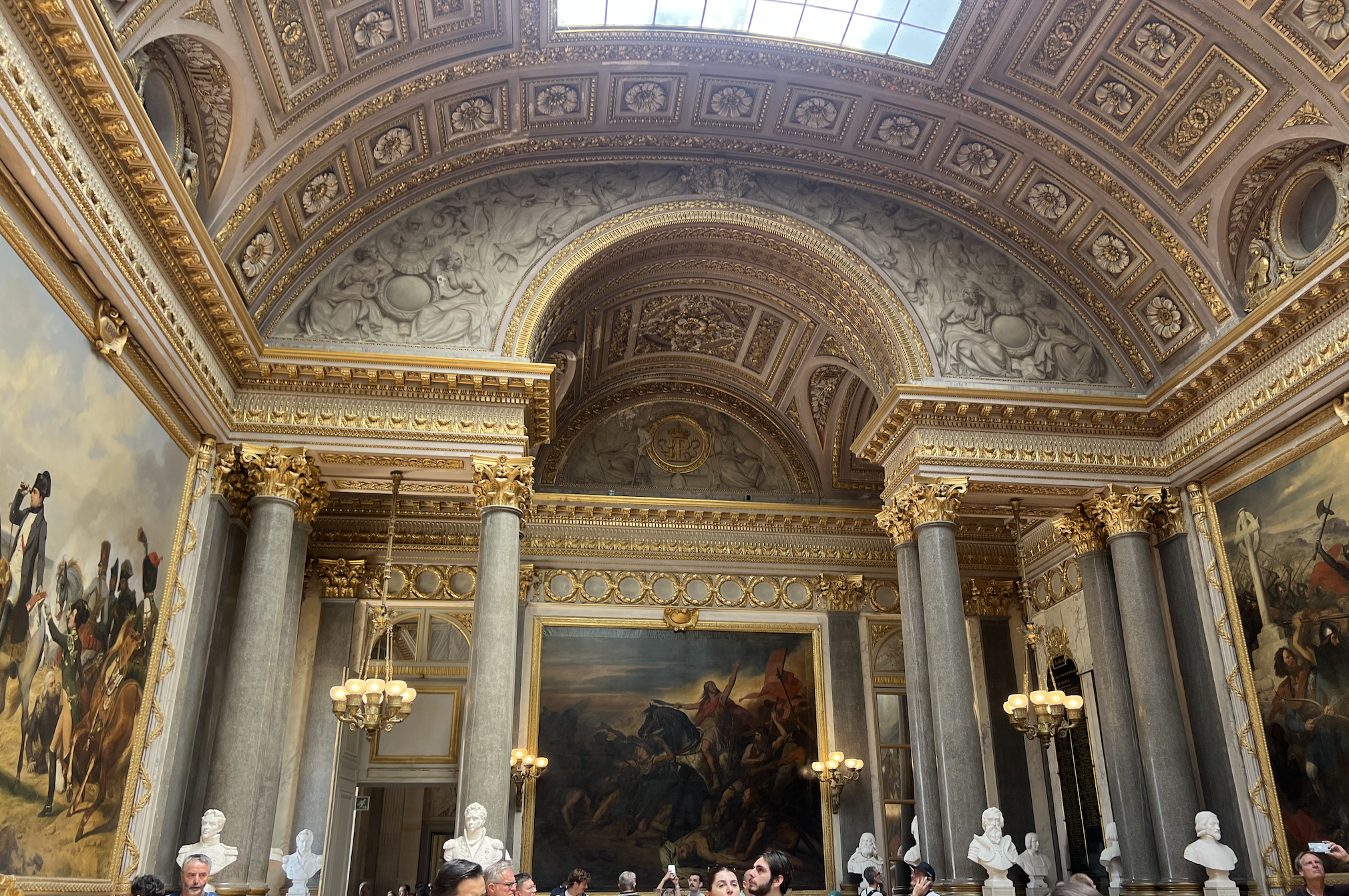
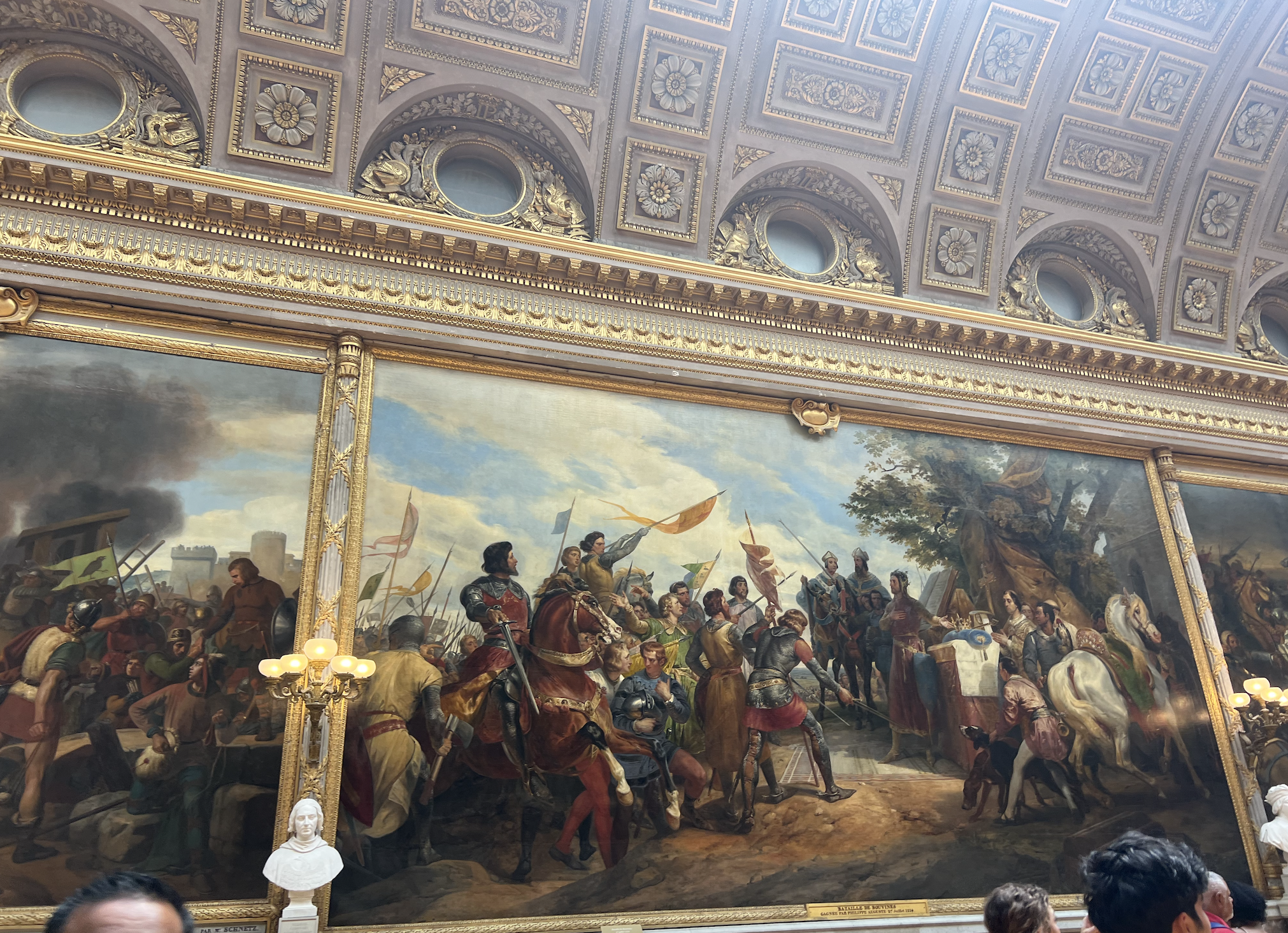
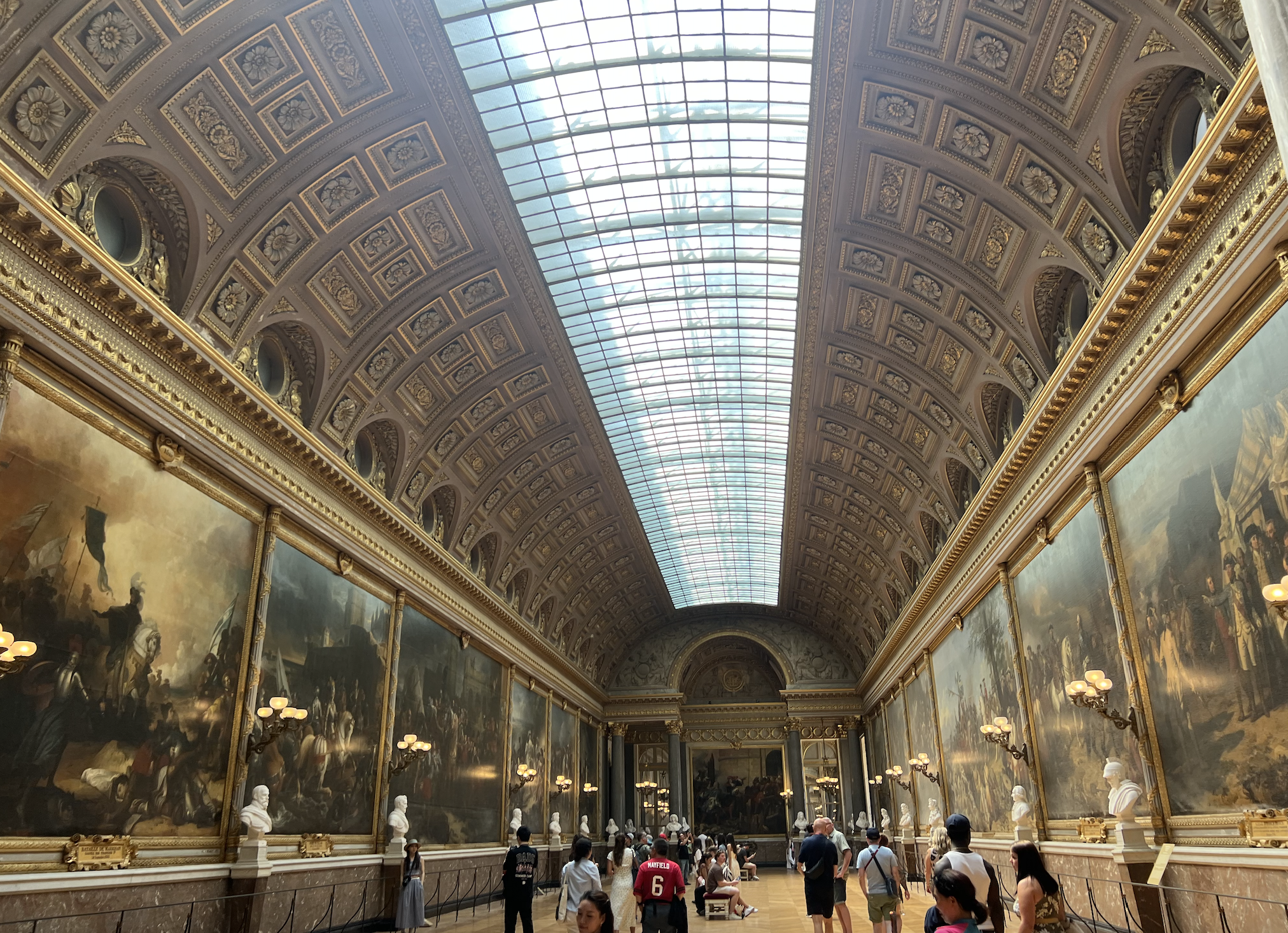
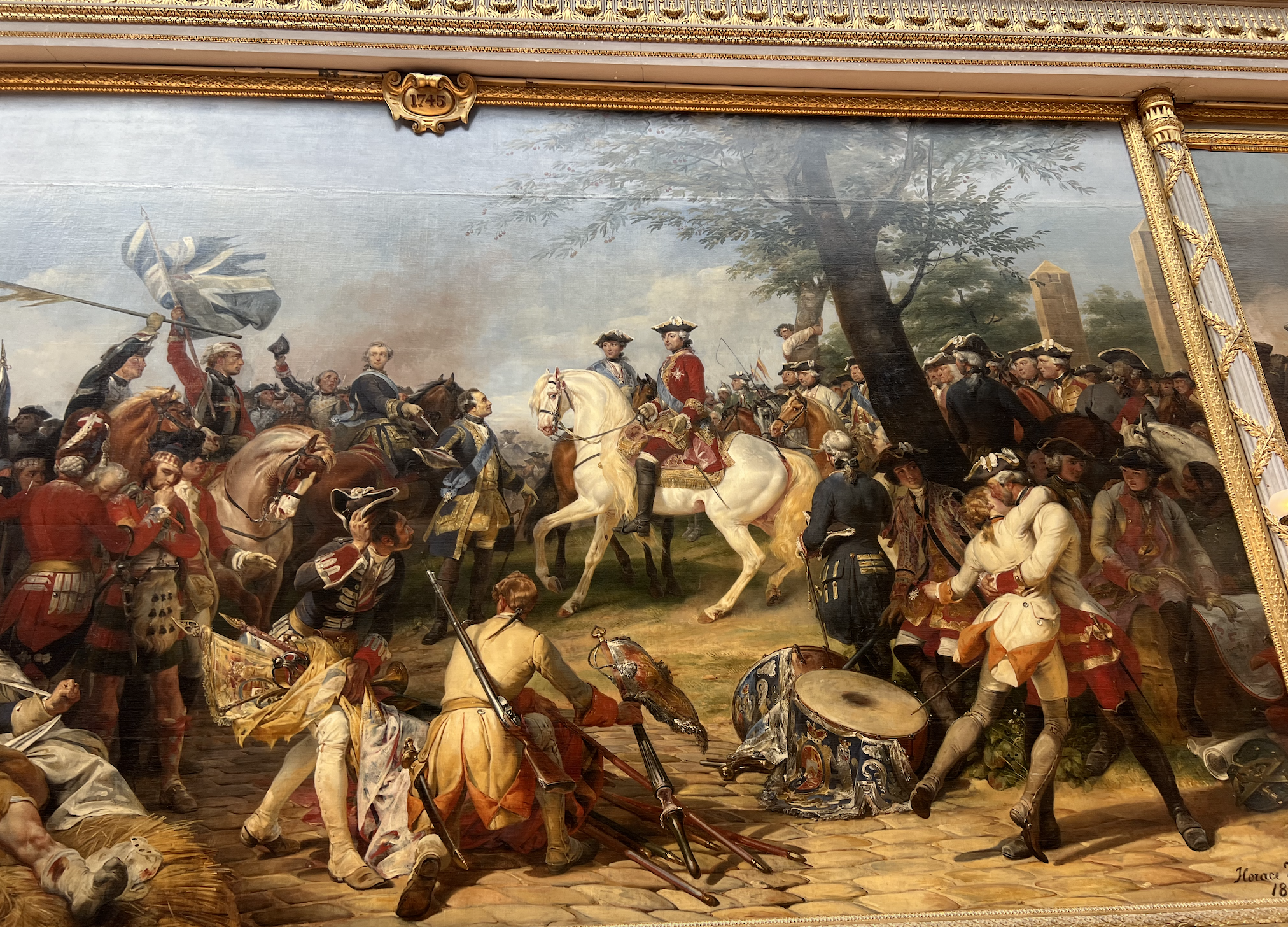
Another location within the Palace of Versailles that I would like to talk about is the Gallery of Battles. I bring this up because it was installed after the revolution, therefore it gives a sense of the status of society after these events. This is another long hall, with similar beautiful patterned walls and gold borders, but along the walls are large paintings of battles and wars throughout French history. In having this hall I believe that it shows a want of patriotism or perhaps unity and pride for France from the monarchy. This could be in response to the revolutions which seemed to uncover the gap that was breaking the country. As I mentioned, there are images of past wars which lead to the France of that time, but from what I observed there was no painting that depicted the battles or war that the people of France fought for in the Revolutions. I think this could reflect the idea that the monarchy was still unwilling to change their ideals and inequality towards the working class. So from this gallery, perhaps the intention was to unite the nobility and aristocracy only, and not the entire country.
L’Église du Dôme
The Coronation of Napoleon in the Palace of Versailles.
Napoleon’s Tomb in L’Église du Dôme
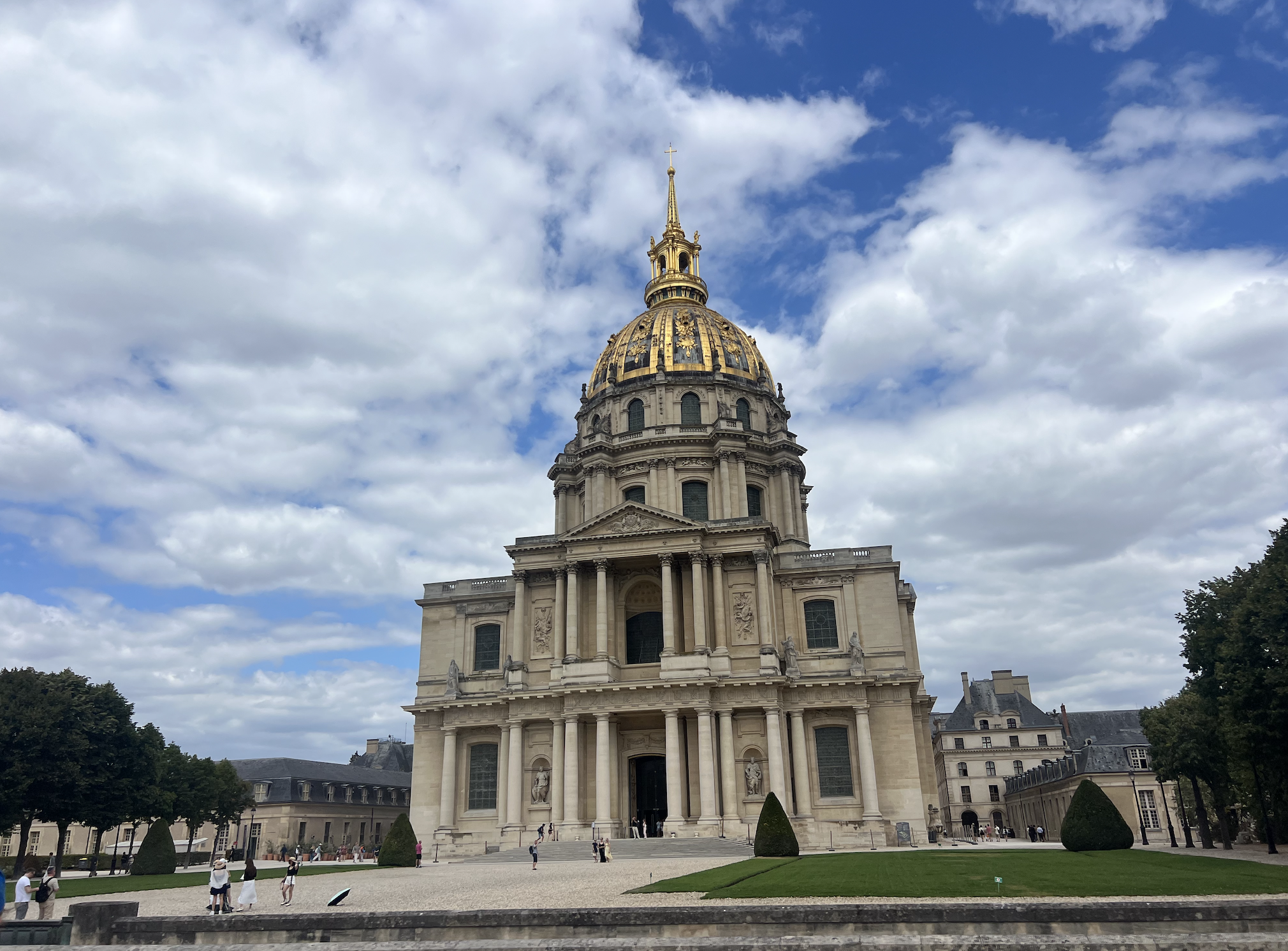
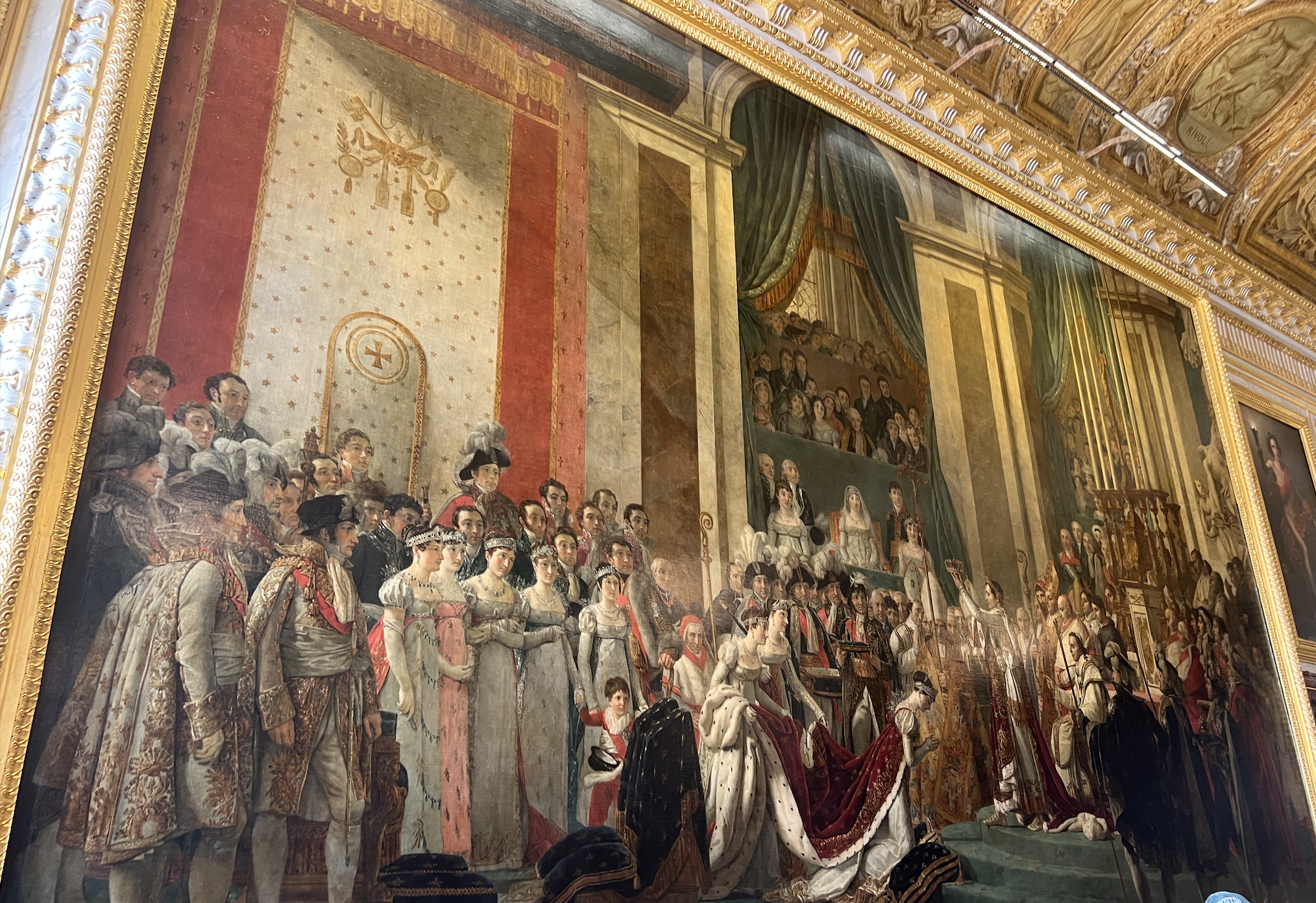
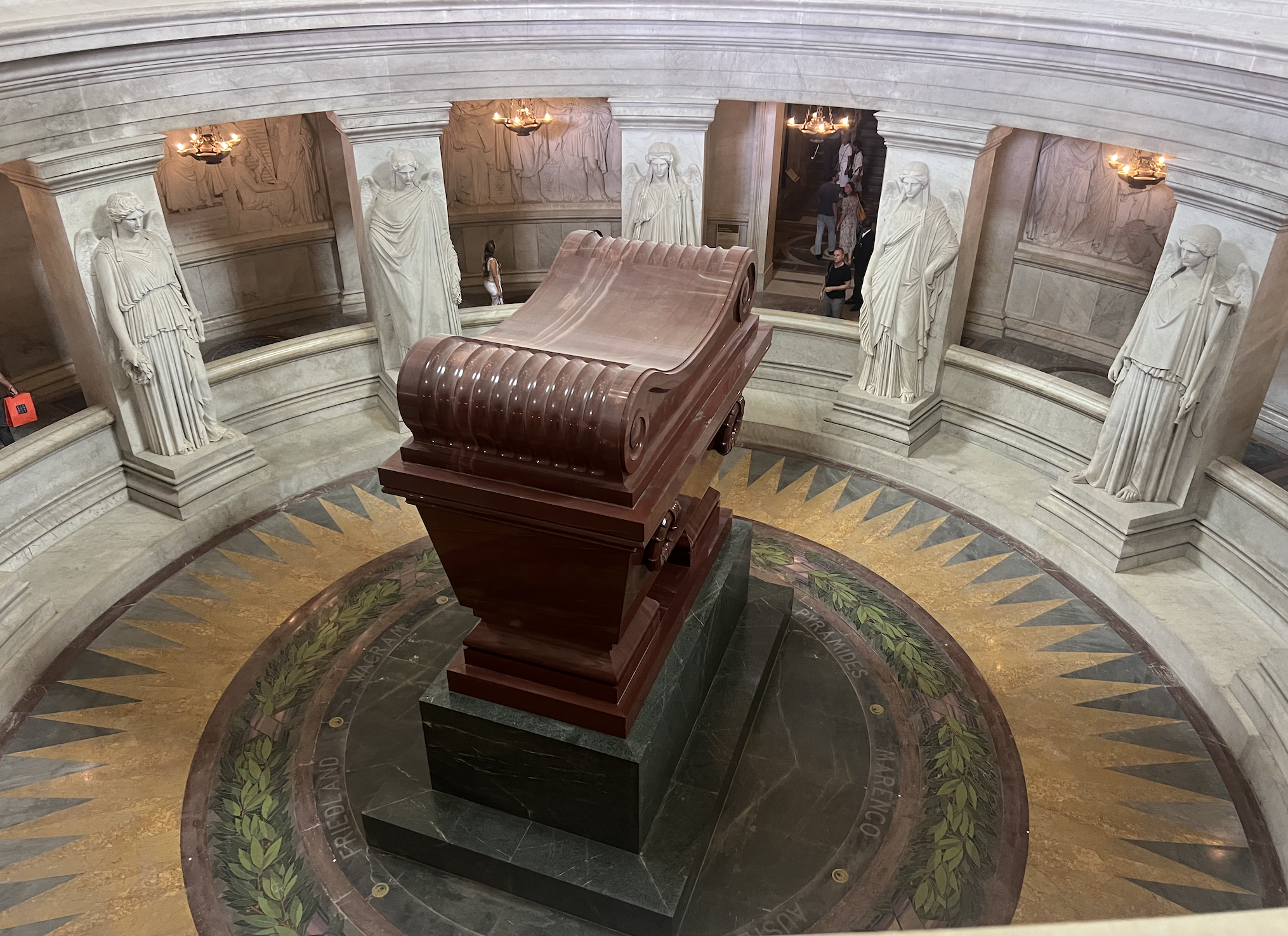
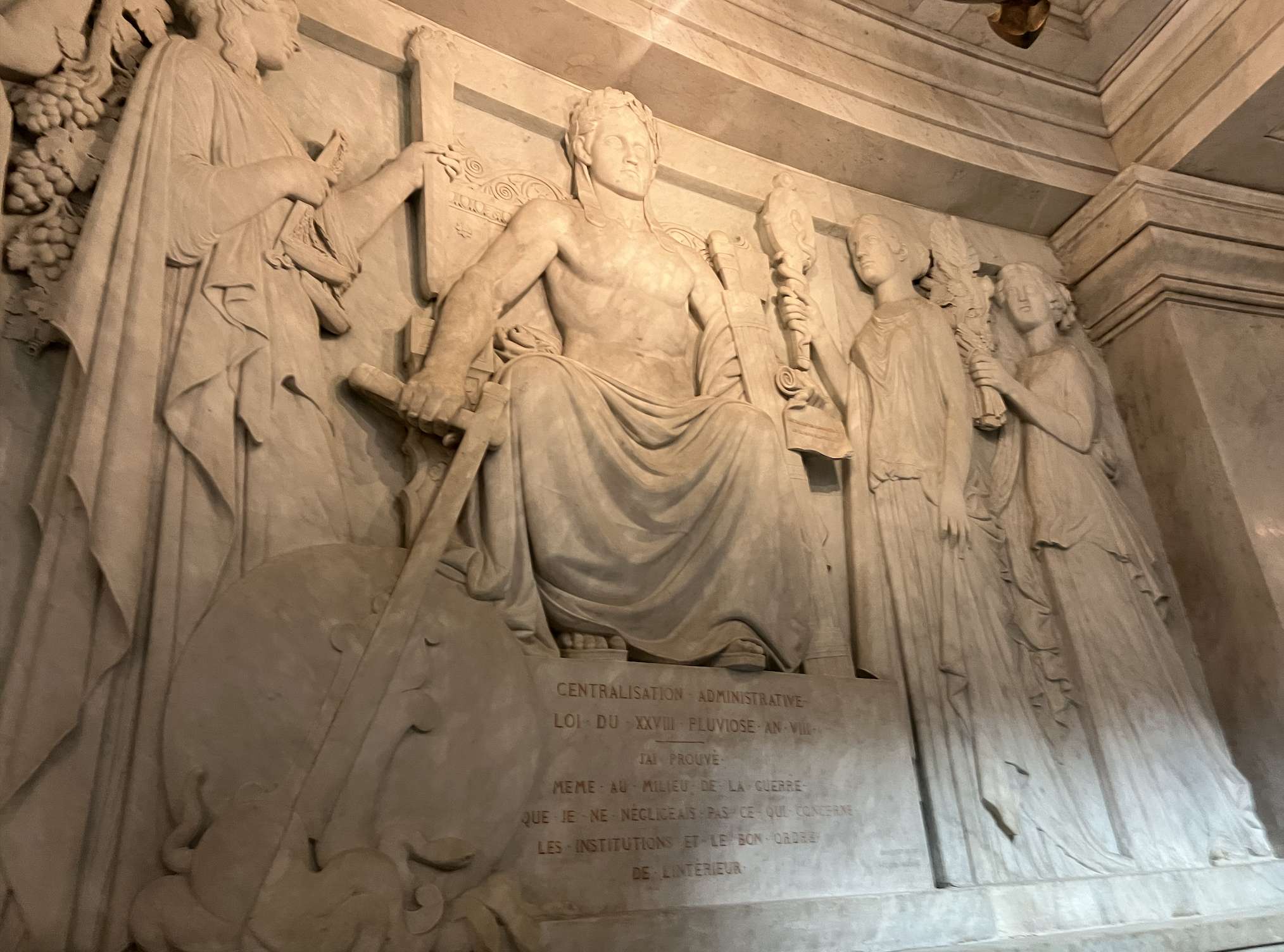
In Versailles and in other locations which I will soon discuss, I found one of the most interesting portrayals of French power through Napoleon. He is portrayed or portrays himself as an amazing powerful individual through intense ego. In Versailles, one painting I found which highlights his image was The Coronation of Napoleon. This painting shows Napoleon at his coronation in which he crowns himself emperor then proceeds to crown Josephine, his wife, as empress. In crowning himself he is stating that he has this absolute power and authority. I feel in doing so this shows an idea of having even greater absolute power compared to the monarchy of before. Napoleon’s background makes this interesting when thinking about what this meant for the society of France at the time. He rose from military power into emperor instead of through hereditary succession. In this way he could have been positive towards France, as a symbol of new times, or as we can see his idea of absolute power could leave France in the same position as it was before. Another location which shows how Napoleon's power was portrayed, was L’Église du Dôme, which is where he is buried. Like no exception from the buildings of Paris, it was visually beautiful. Within it, at its center, I looked down and saw the biggest tomb I have ever seen, surrounded by what I believe was a circle of angels. Walking down to see this tomb from the ground, I noticed that there are white marble carvings along the walls which in the center is Napoleon. In this marble, Napoleon is portrayed as some sort of god, or extraordinary being as he is in the center of each wearing robes and wreaths, and in some sitting on a throne, and in all the others bodies in the picture are facing him. From this, like The Confirmation of Napoleon, we can see how French political power was seen as absolute from its holders. This again separates them from seeing the struggles and lives of the working class, and continued separation for this society.
Marble carvings of Napoleon at L’Église du Dôme
Seeing these places with the background of having read the two novels in which we were able to see the struggle, and loss of the Revolutions and of the working class people allowed me to understand even more the constant anger and inequality they were facing. It appears that in both times before and after the revolution, there is still such an obvious gap of power that is abused and misused. Today, we can still see similar traces of inequality in society and misused authority in the world, as we look out and see similar struggles and personas that mirror these times of French history.