I remember some time during elementary school, one of my friends said that she didn’t like movie adaptations of books because they never pick actors that look like the characters she pictured in her head. This, at the time, confused me. When I read, all that is happening in my head when reading is just my inner monologue speaking the words in my head. I have to make a conscious effort to picture what is being described in a book, and most of the time, it looks more like what I see in my life than what’s actually being described in the text. When I’m listening to an audiobook, I can visualize the story a little, but it is mostly vague images that lack details, or I can picture certain characters in detail, but the rest of the mental image is blurry or missing.
Years later, I would learn that people experience visuals and inner monologues on a spectrum. Where I stand on the spectrum is that I have a strong inner monologue and a weak visual mind. This means that words come to me naturally, while images take effort to create in my mind.
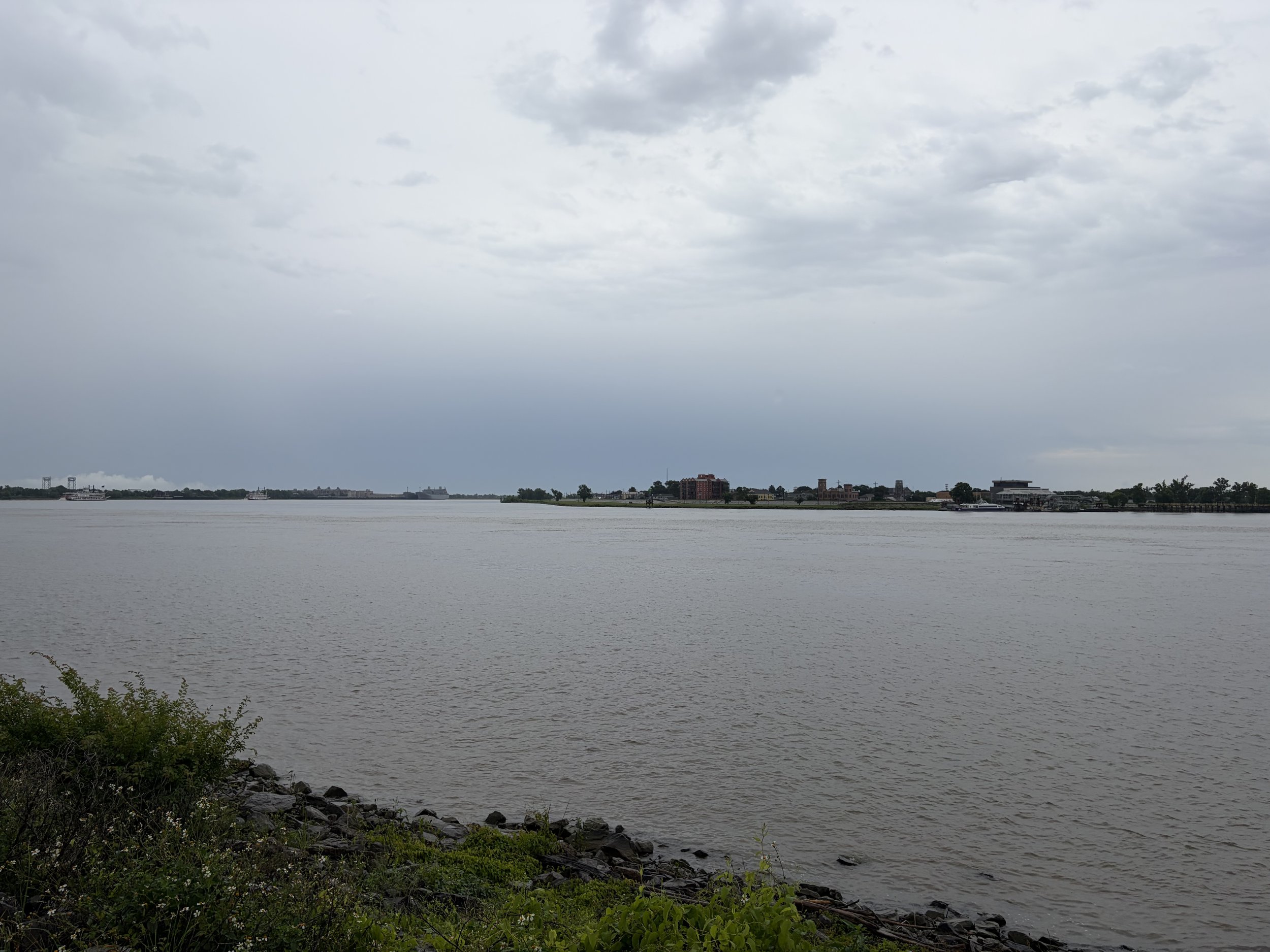
The Mississippi, Which Would Have Been Full of Steamboats Throughout Louis’ Life
However, there is one way I can better picture things in my head while reading. That is, I have seen that person or place in my life. This means that if I watch a movie adaptation of a book, when I read the book, I will picture the actors and sets that were used in the movie instead of what’s actually described, with some variations.
In the case of Anne Rice’s Interview With The Vampire, bookpacking made the story much more engaging and made sense. Rice has long, lush, and vivid descriptions of the world she is building in this story. In fact, one of the best parts of this book is her description of New Orleans over the years and through the lens of this Vampire, Louis, who views the world differently than everyone else. To be able to take in these descriptions would normally be very mentally taxing. Also, I would not have the time to fully picture everything described with the packed schedule that this bookpacking trip has.
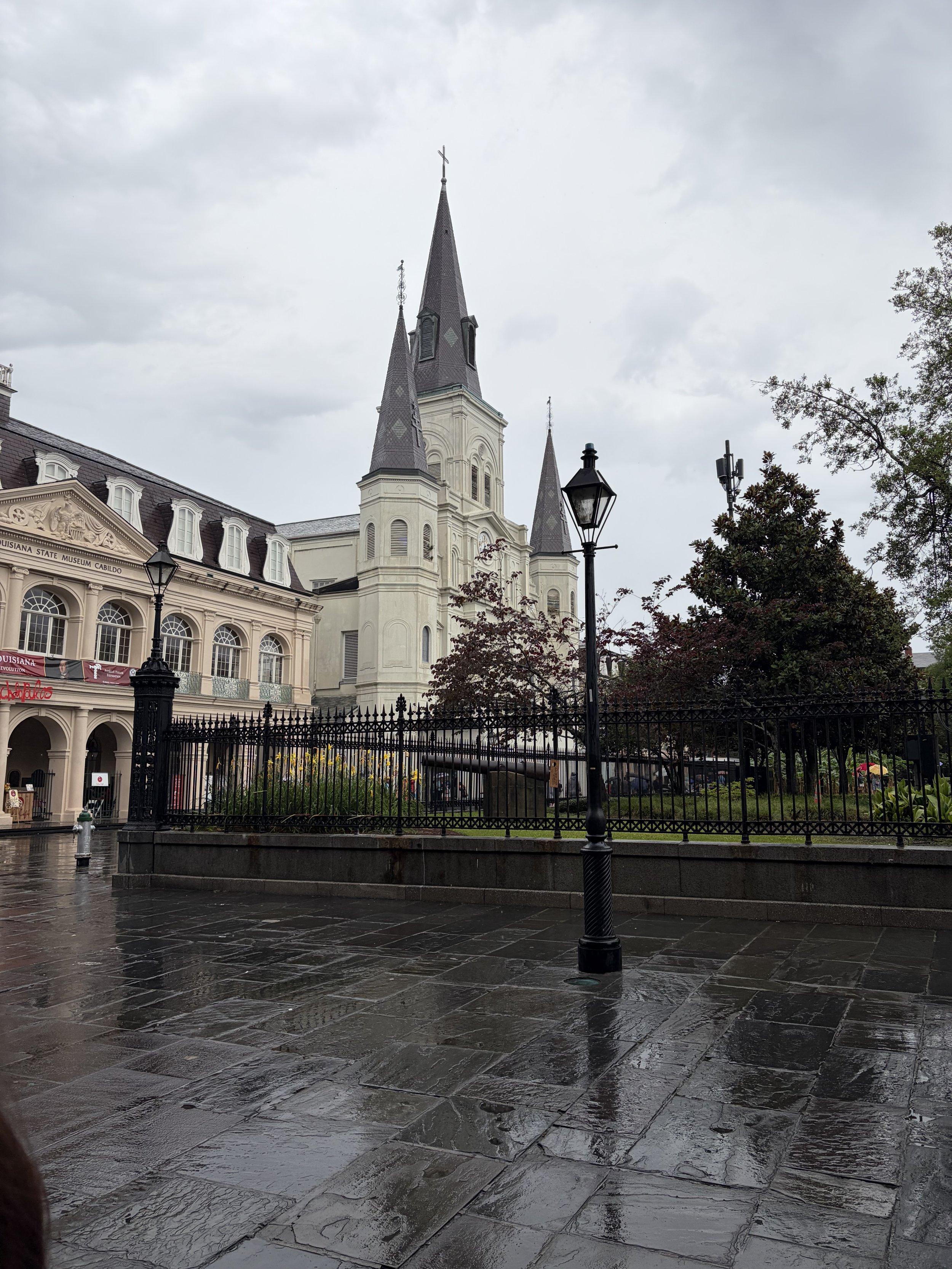
“The great facade of the cathedral rose in a dark mass opposite the square, but the doors were open and I could see a soft, flickering light within...The gold candlesticks shimmered on the altar; a rich white chrysanthemum bent suddenly on its stem, droplets glistening on the crowded petals, a sour fragrance rising from a score of vases, from altars and side altars, from statues of Virgins and Christs and saints.”
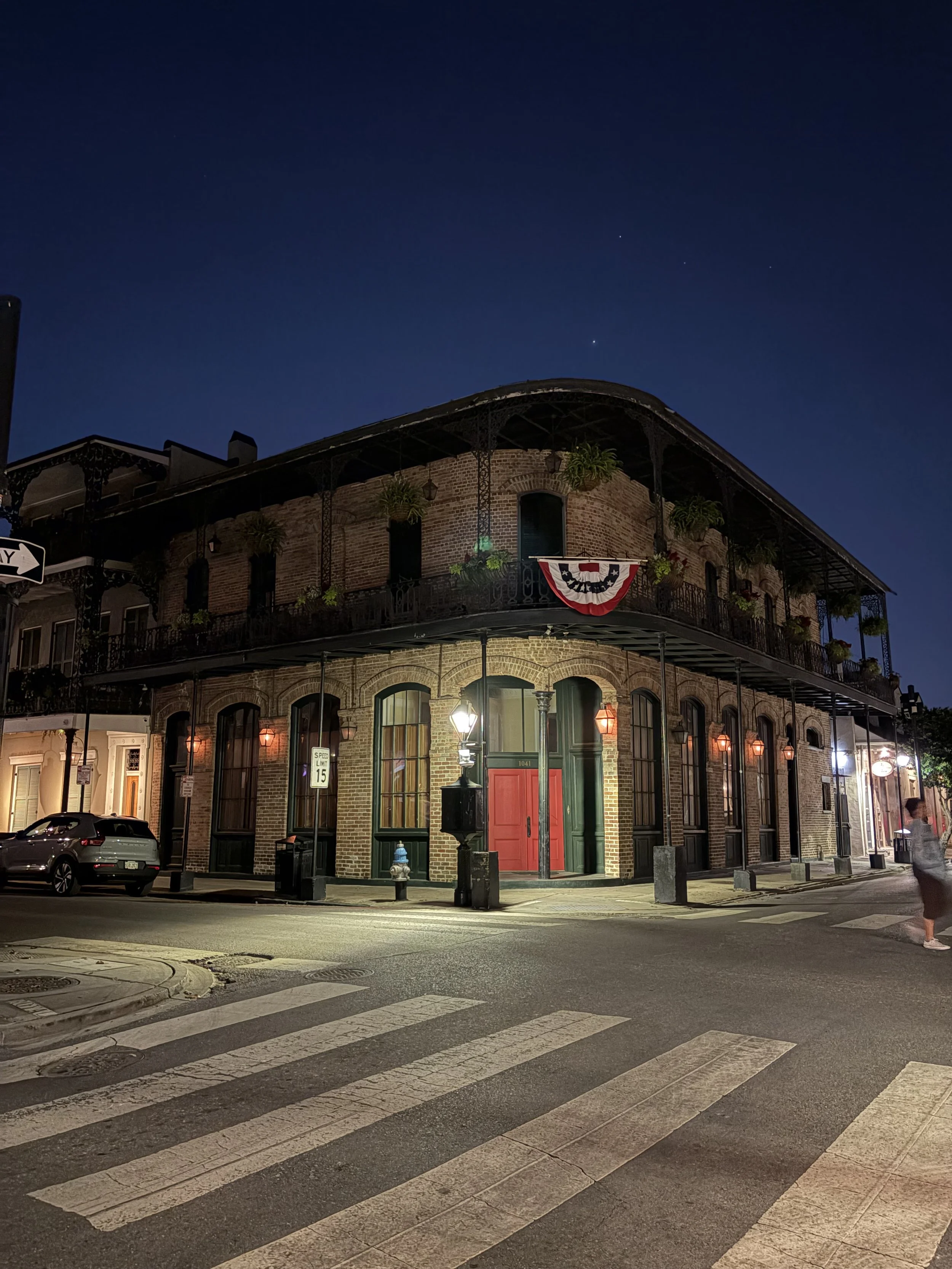
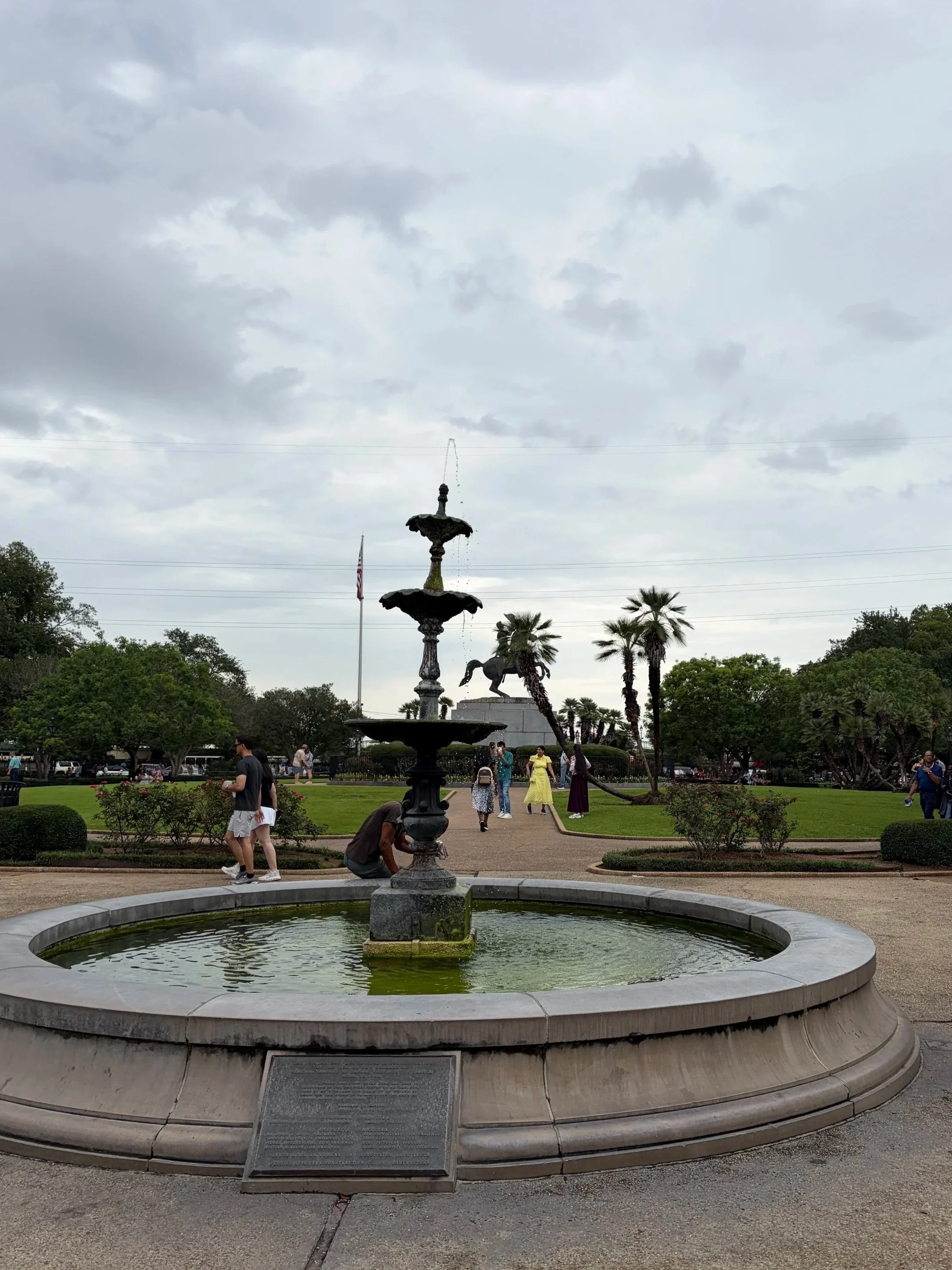
Being able to see and know the places being mentioned in the book added a whole new dimension to my reading experience that I rarely get to have. Funnily enough, I was a little glad that I wasn’t too far into reading Interview With The Vampire when arriving in New Orleans, because it allowed me to see the city, especially the French Quarter, in person sooner rather than later in terms of where I was in the book. When Louis mentions Jackson Square, the cathedral, the Mississippi River, the gas lamps, the flowers, and the colonial-style homes and apartments, I can not only picture them in my head while reading, but I’m envisioning a place that I was in, just a different time. This may not seem like the biggest deal, since the majority of the population are visual learners, but for an auditory learner like myself, it feels like Disneyland. I’m walking into a world that is based on stories, history, and myth, except instead of Aurora’s Castle, it’s a historical building on Royal Street.
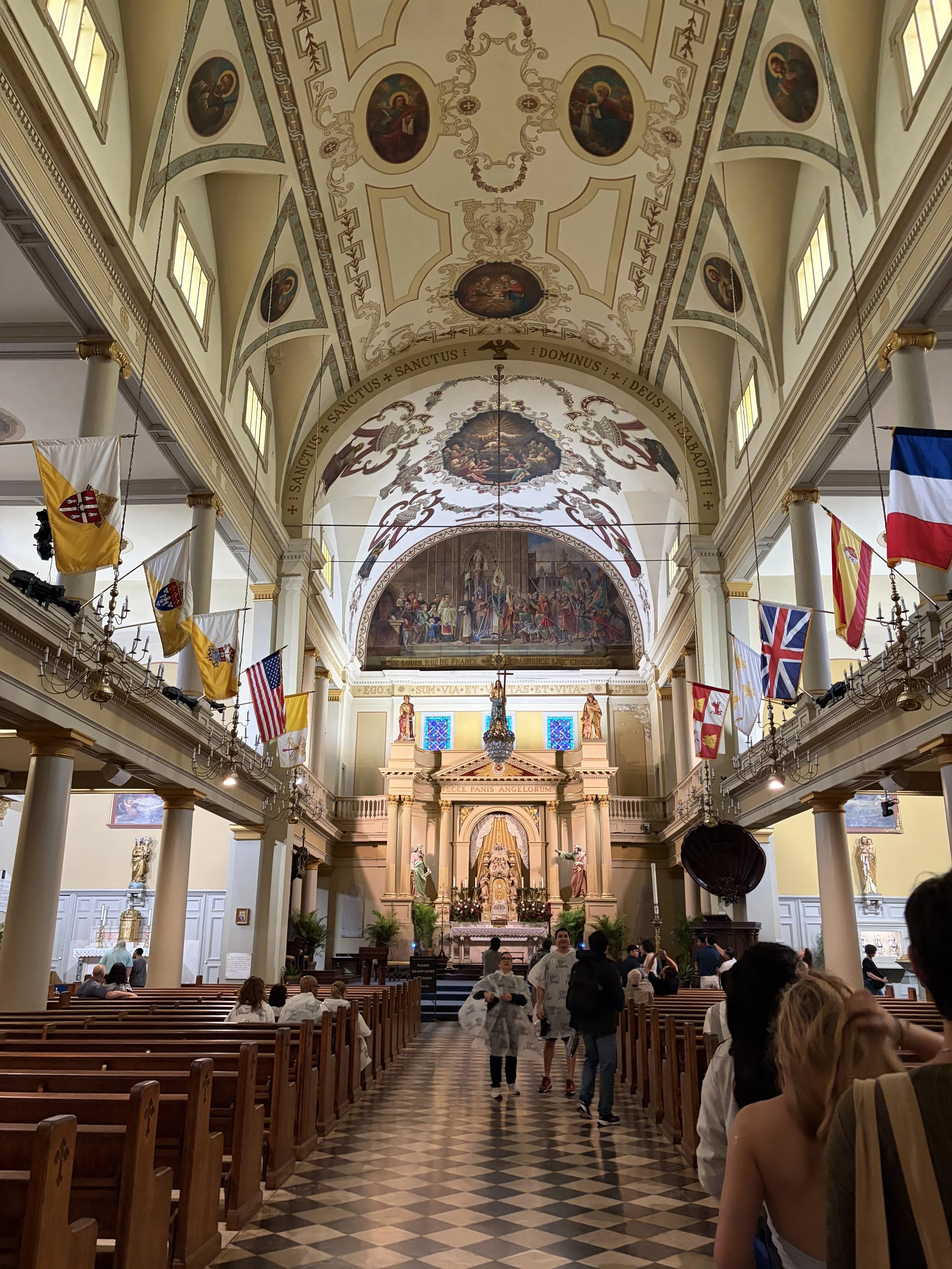
Picture From the Cathedral Described in the Quote
Furthermore, Interview With The Vampire is the book, I believe, that benefits the most from bookpacking. This is because Interview With The Vampire is not the greatest book ever written, and it does suffer from certain issues and flaws. Some examples are how long it can drag on at times, and the interview format, making it so that 95% (this is a guess and not a real statistic, but if it turns out that I’m right, I would not be surprised) of the text is written in quotes, causing unnecessary punctuation. Still, what Interview With The Vampire, and to a greater extent, Anne Rice does really well is the description of places, especially New Orleans. Although it can run a bit long, I admire her for her beautiful ability to describe New Orleans in the past and over the years while still being authentic. Due to how rewarding it is to follow Louis through History and the changing, yet still familiar, places in New Orleans, it makes for a real treat and one of the best books for bookpacking in particular.
This made me want to go back to all the books I read and enjoyed in the past and mark down the places where they are set and bookpack with them. This bookpacking experience made me realize just how much of the book I can be missing out on (and why I get so excited when a book has pictures). I am not afraid to say that I do not believe I would have liked Interview With The Vampire as much as I did if I weren’t reading it after exploring New Orleans. Because long descriptions of places or characters can often feel like a mental chore for me, bookpacking has turned it into a fun Easter Egg hunt of all the places or things I’ve visited or seen.
I do feel that, at times, the auditory learning community is unintentionally ignored in literature because describing places and people and how they look can open the door for beautiful and rich writing. However, getting that little extra help from bookpacking in the space made me feel more included in the Interview With The Vampire club. Although it is not the only reason (or main reason, for that matter), the description of New Orleans through the years is a major factor as to what made this book so successful. Because it does not matter how good or bad you might think the book is, it is impossible to deny the cultural impact it had and how it changed Vampires in the public mind for good. Being in the city where it happens makes not only the book much more enjoyable and interesting, but also the experience of the city itself. For me, that is what bookpacking is about.