Double-click to edit...
One of the reasons I chose this program was a TV show. Specifically a show called The Originals, a spin-off from The Vampire Diaries set right here in New Orleans. I watched it in high school, and it quickly became one of my comfort shows. It was my unofficial standard for what a vampire should look and feel like, which is very dramatic and glamorous, somehow still charming despite all the bloodshed. So you can imagine my surprise when Anne Rice’s Interview with the Vampire gave me something almost unrecognizable in comparison. These characters in the book weren’t comforting at all, quite the opposite actually. They were deeply unsettling and morally tortured. And yet, standing in the very streets where Rice set her story, I found myself relating and understanding them in a way I didn’t think I would.
New Orleans is a city that holds contradictions beautifully. Vampires, voodoo, and ghosts—overall the supernatural are woven into the fabric of this city as naturally as the live oak trees are draped in Spanish moss. And yet, so is Christianity. Walking through the French Quarter, I encountered both a voodoo shop and a cathedral within the same block, and somehow it doesn't feel like a contradiction; it feels like New Orleans.
The same spirit of contradiction lives inside of Louis. Seeing a supernatural being struggling with human emotions such as guilt, grief, and genuine appreciation for life made me sympathize with him. We see him being mocked by his supposed mentor/companion about the things he was feeling, such as having admiration and more appreciation for life.
“You are in love with your mortal nature! You chase after the phantoms of your former self. Frenier, his sister…these are images for you of what you were and what you still long to be. And in your romance with mortal life, you’re dead to your vampire nature.”
- Lestat, Interview with the Vampire
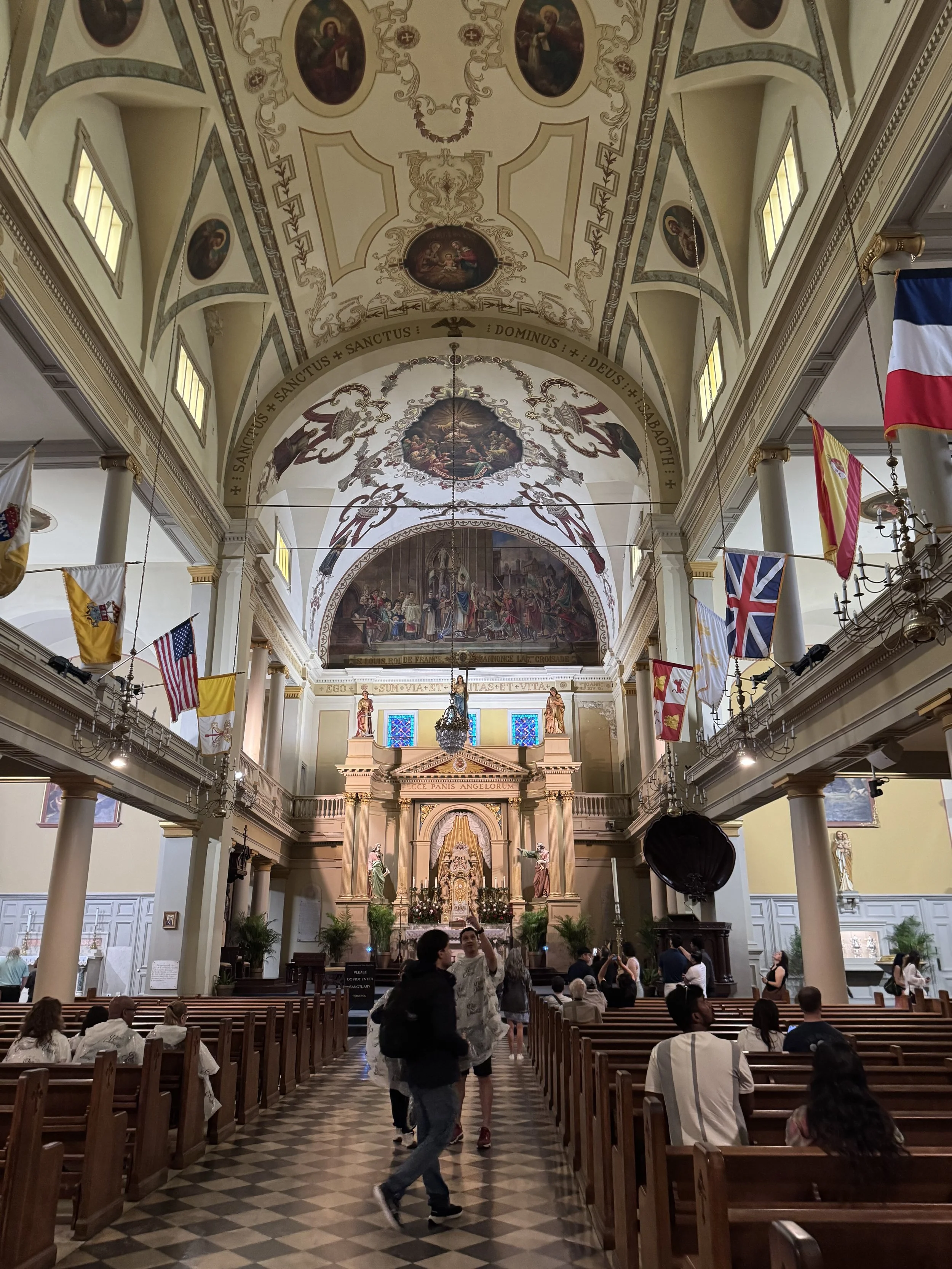
St. Louis Cathedral
This quote mirrors something I've been navigating myself, my struggles in my own faith. Trying to balance my spiritual life while being in college, thousands of miles away from home. I'm constantly being surrounded by distractions where it’s easy to get sucked into things that don't benefit my spiritual life. Being young and not having experienced a lot of things, fighting these temptations could be really hard. Lestant tells Louis that he’s dead to his vampire nature. My faith calls me to be dead in my flesh in order for my spiritual life to thrive.
Similar tension, different stakes, I guess.
One of the ways I could be dead to my flesh is by fasting. Can you imagine fasting in a city like New Orleans? A city filled with amazing cuisine, and I only had a week to explore it. Which isn't nearly enough. Fasting in the deep South, where I could barely access any vegan food, feels like its own set of spiritual warfare. But that is the sacrifice, right? The same way Louis refused to drink human blood and only drinks animal blood such as rats and other small animals, I must also refuse to eat for a long period of time, along with not eating any animal products.
It's uncomfortable, but that's sort of the point.
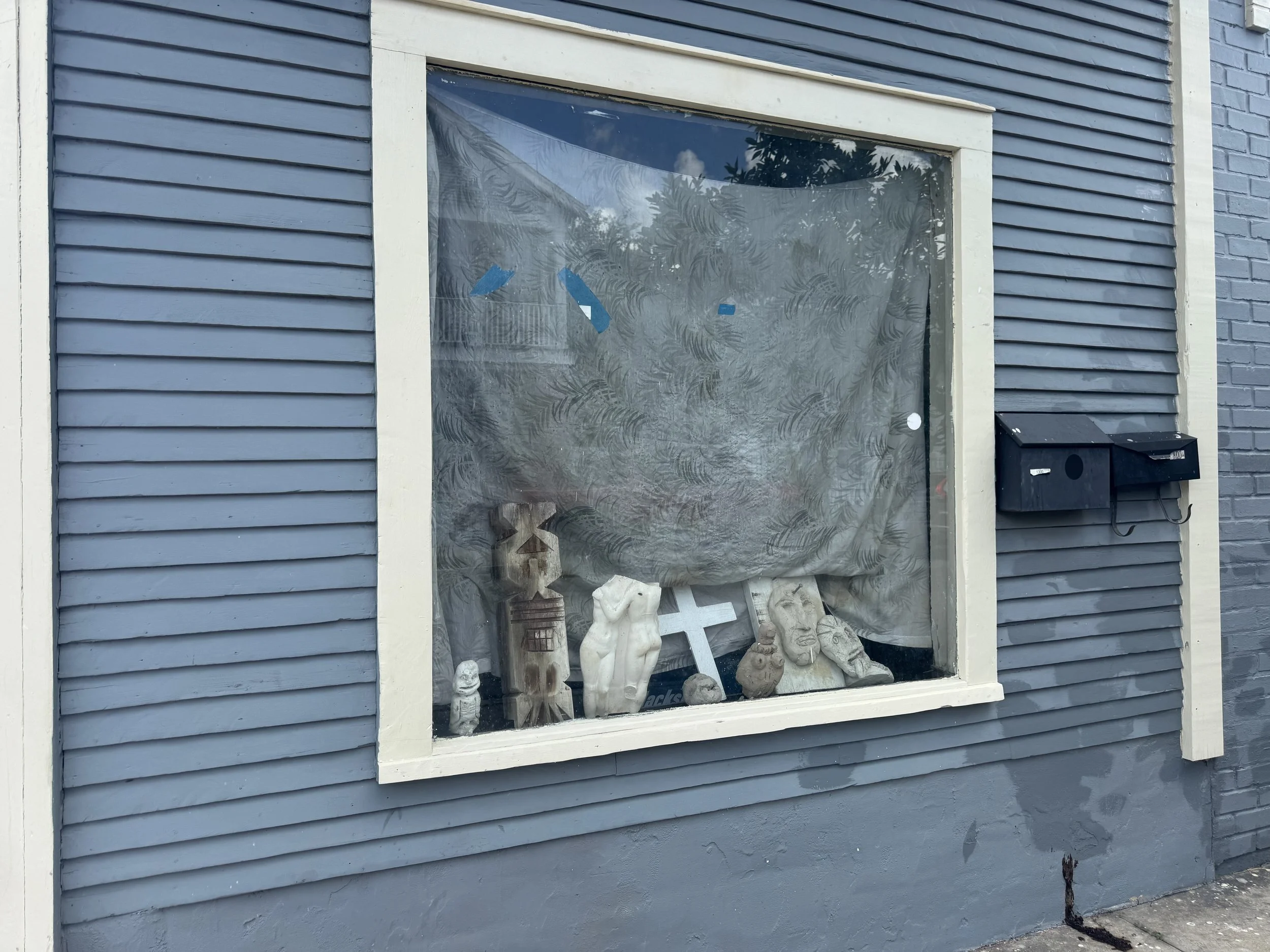
As much as I would like to believe that there isn’t any connection between religion and the supernatural, Interview With The Vampire tells me something different. The religious parallel that is being drawn in the book makes me question how I haven’t noticed it before. But that's what is so beautiful about bookpacking. It forces me to notice things I wouldn't have prior to this experience.
In New Orleans, connection expands past religion and supernatural mixtures into the melting pot of cultures and architecture in the city.
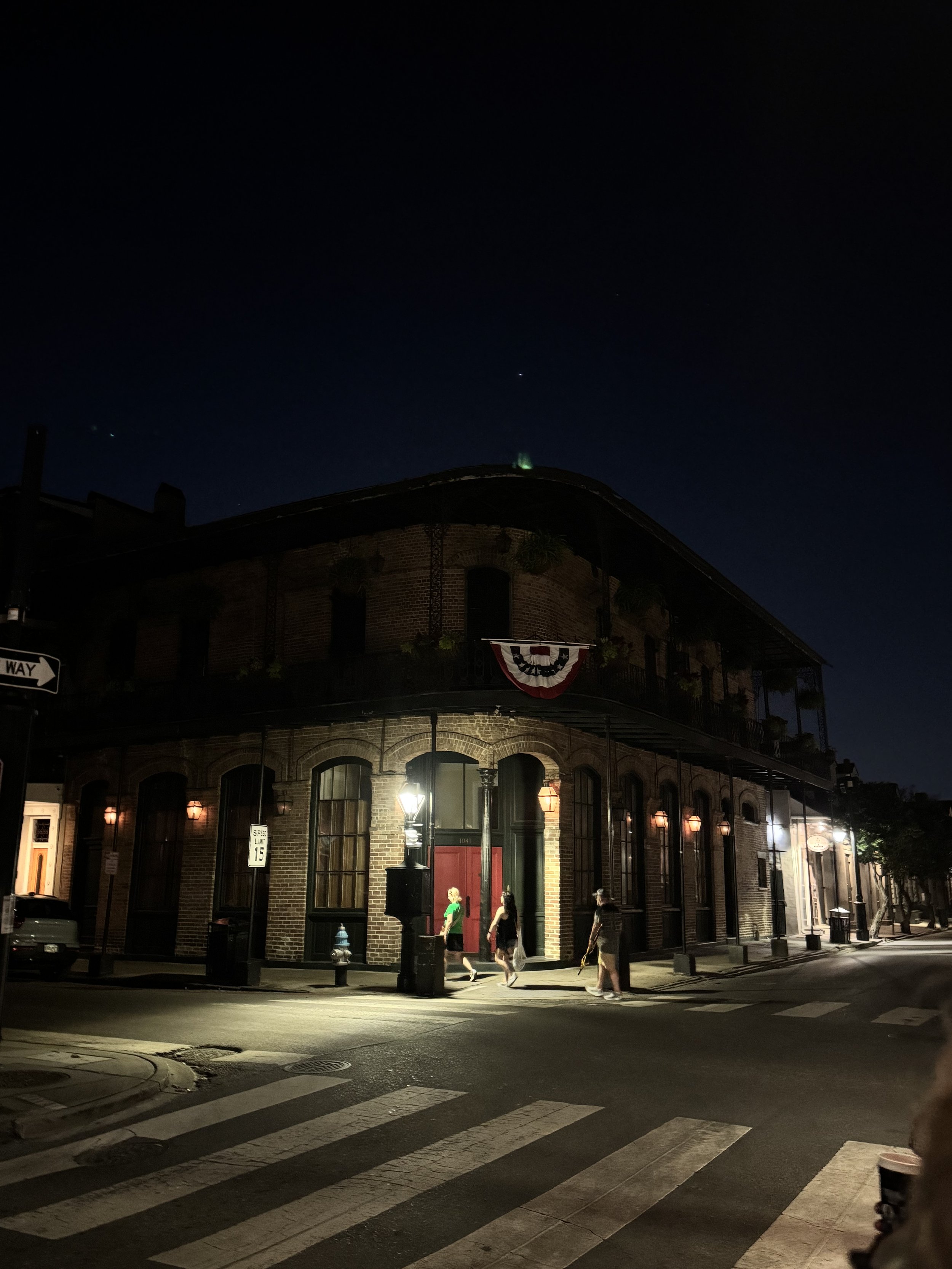
Louis and Lestat’s apartment mentioned in the book
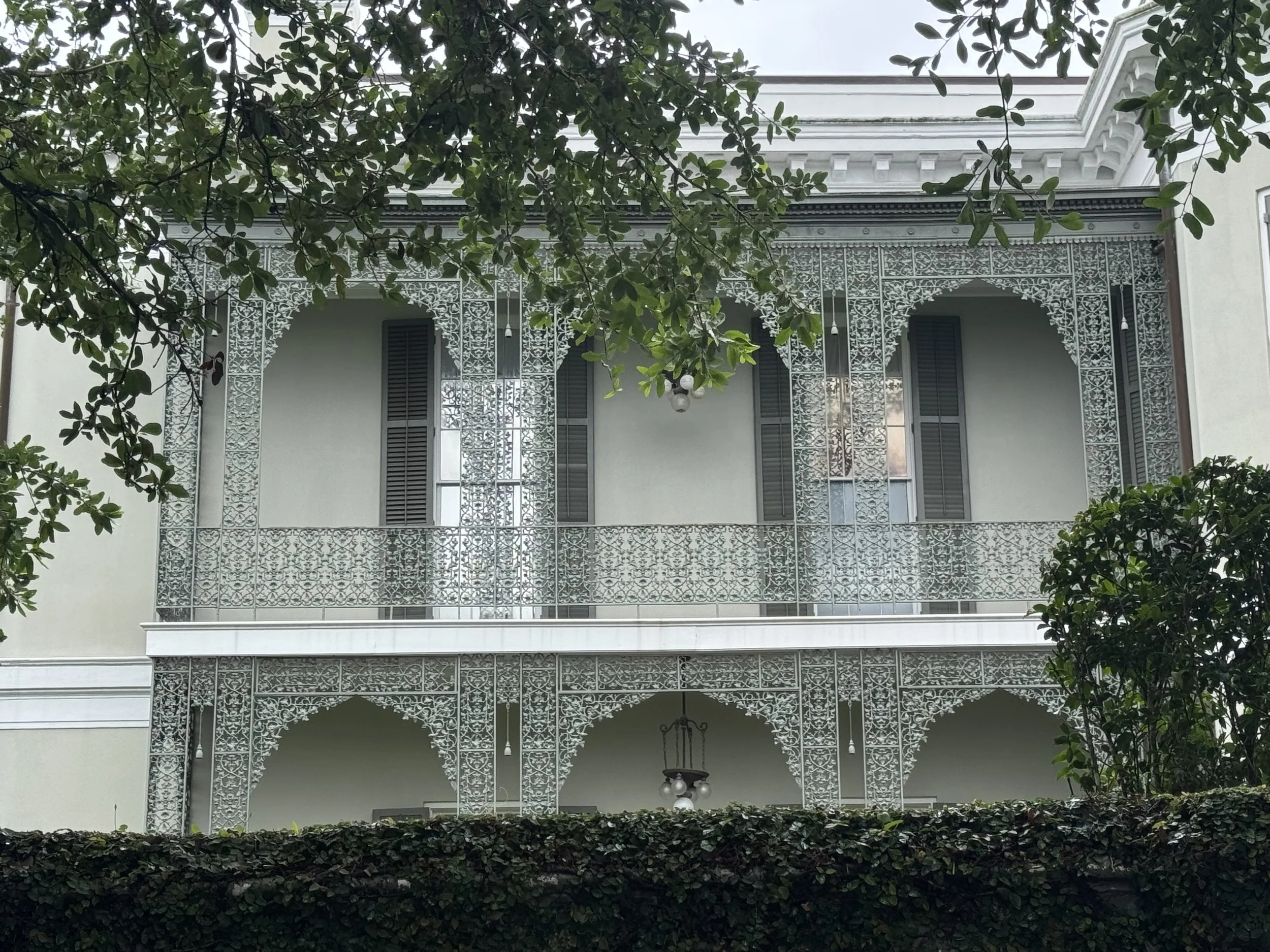
In the book it mentions how glamorous New Orleans is and how much of a melting pot it is. The French, the Spanish, and the American people contributed to the culture and architecture of the city. As I was walking around the city with my peers, we saw the Dantel-like lace wrought iron bars, the Corinthian columns, the gas lamps, and the sailors that came to have a good time… Well, in my case, the Navy SEALs that stopped by to have a great time in the Crescent City. Being able to experience this firsthand has been like a dream; it constantly leaves me in awe of how much being in a place you read about shapes the way of thinking.
Of course there are other things to notice about the city that I'm actively reading about and constantly observing. As beautiful as these buildings are, they are built with the blood, sweat, and tears of enslaved people. As my professor beautifully put it, the vampirism in Interview With The Vampire in a way represents how labor was sucked from the enslaved people in order to build all this glamor, drawing parallel to a vampire sucking blood from a human in order to live.
I didn't expect a vampire novel to make me reflect on my faith, on sacrifice, on the history beneath the beauty of a city. New Orleans got under my skin, and so did Lestant.