Angels Watch Me Through the night
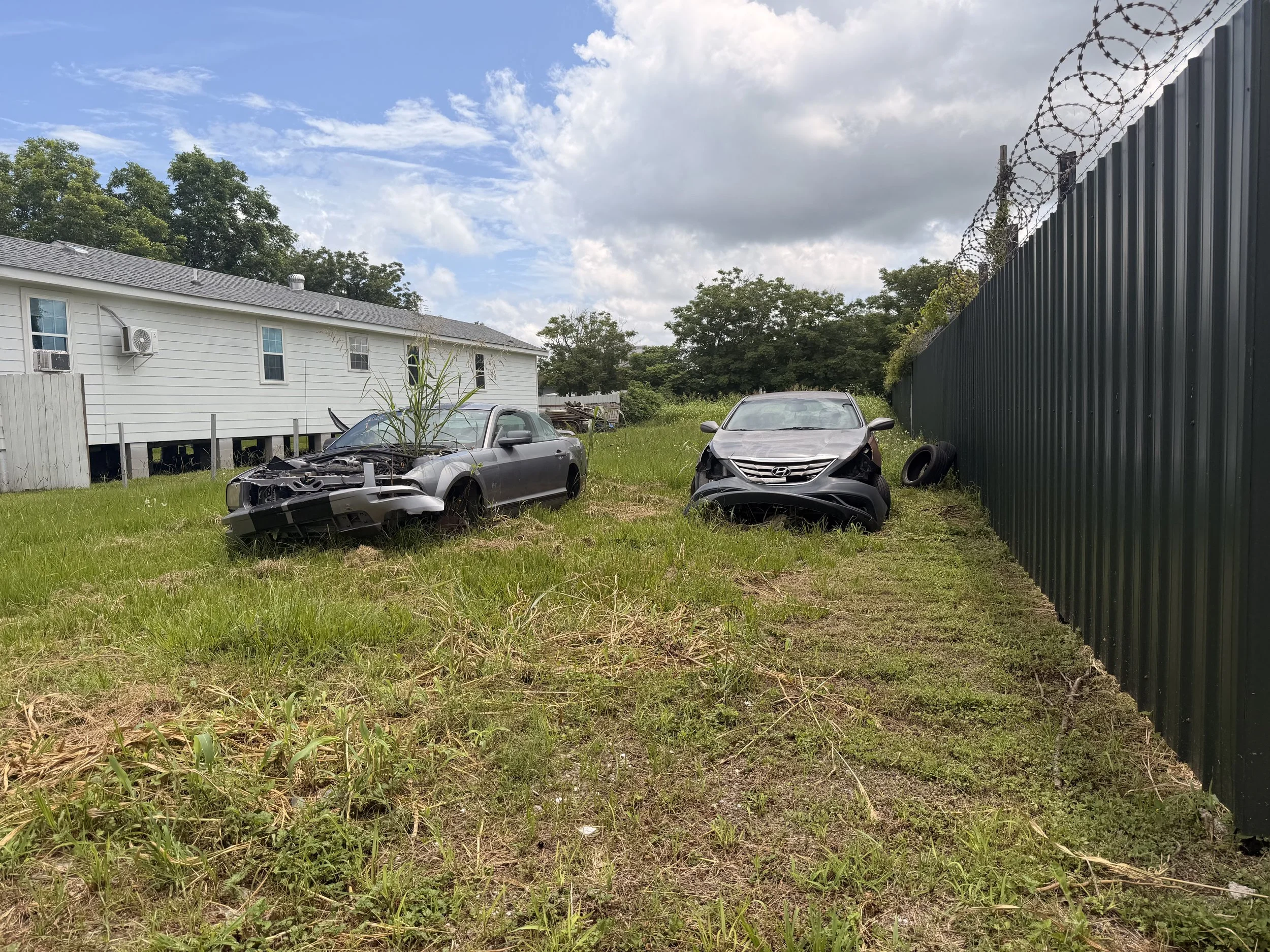
4121 Wilson Ave, New Orleans, LA 70126
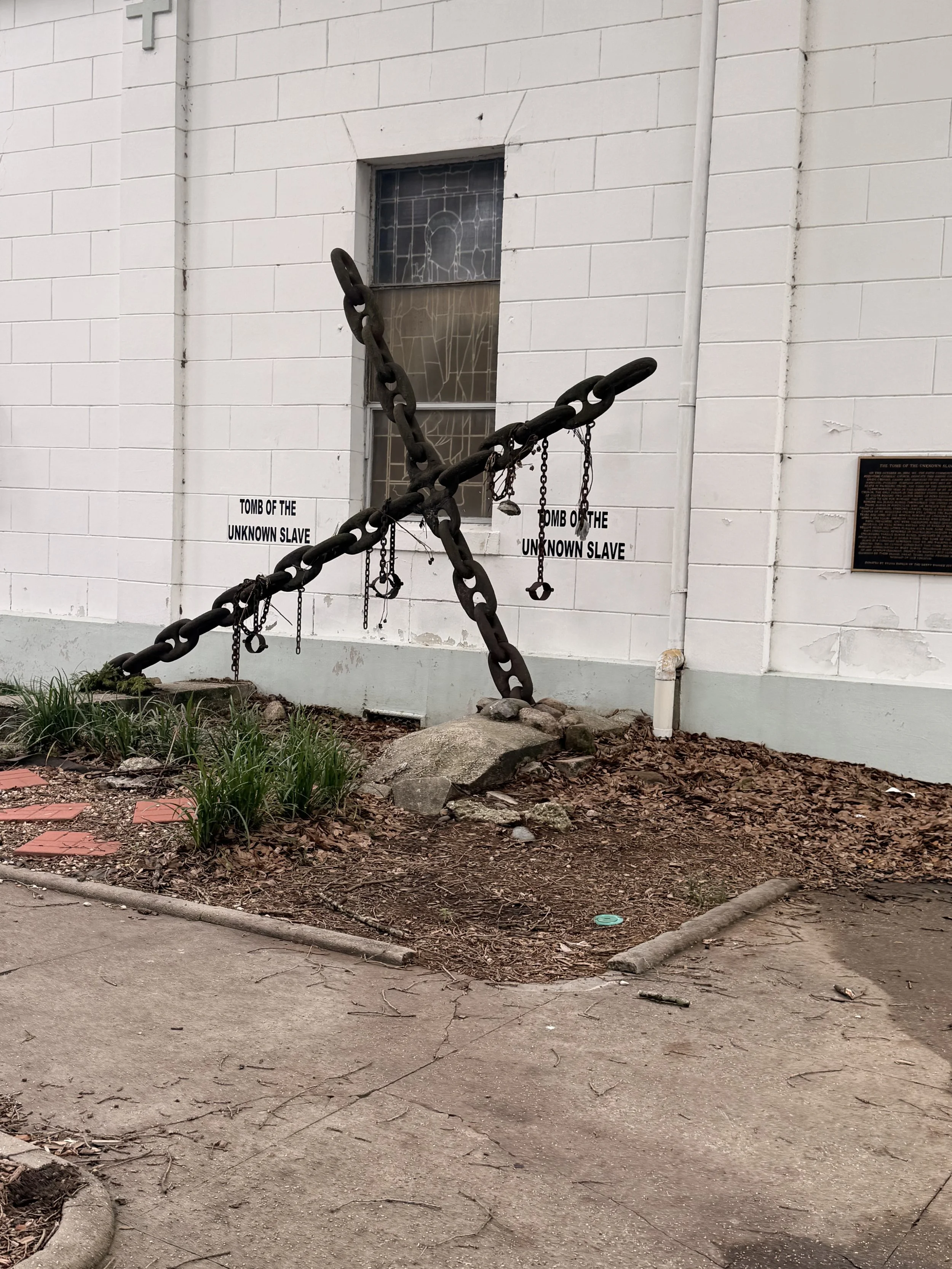
“I can’t stand it anymore,” are words I wish could just plaster themselves to walls and to dirt and be cultivated into a fruit that won’t perish. Unfortunately, my shouts and cries are only that — shouts and cries. And whatever pain and anguish I feel from the burden of my history will only disintegrate if I lay down, and choose to “not” stand it anymore. I stood in Congo Square and moved through the Whitney Plantation. I read Sarah M. Broom's The Yellow House and stood edge of the East, endured Solomon Northup's 12 Years a Slave in a city that contains both the beauty and the evidence of everything those books/movie contained. People have tried to forgo the evidence, but New Orleans doesn't let you ignore it. From fifteen thousand feet up, where the aerial photographs are taken, what remains of 4121 Wilson Avenue is, as Broom writes, "a minuscule point, a scab of green" (Prologue). An overgrown lot where a house full of people used to be, reduced from above to something that looks like nothing. From that height her brother Carl would not be seen, sitting five times a week on an ice chest where the living room floor used to be. The reduction. The animalization. The inability or unwillingness to stand on the ground and see what is actually there. Humans. Standing above the bodies that built New Orleans, you cannot be abstract and pretend the ground was washed over by white. The city will not allow it and the ground remembers too much.
I think there is something to be said about remembrance. About standing in the anguish of what my people experienced. Watching Patsey from 12 Years a Slave be struck over 100 times by the evil held in the hand that held the textured whip. My stomach churned at the sight — I wasn't disgusted, I was angered, and somehow overwhelmed with burden. It's almost as if my stomach and my lungs had become chained together and I was drowning in muddy water. And after the movie was over, this feeling held for an insurmountable number of days. Here’s the thing though, there’s only so much muddy water I can stomach before I realize there is no point in digesting it.
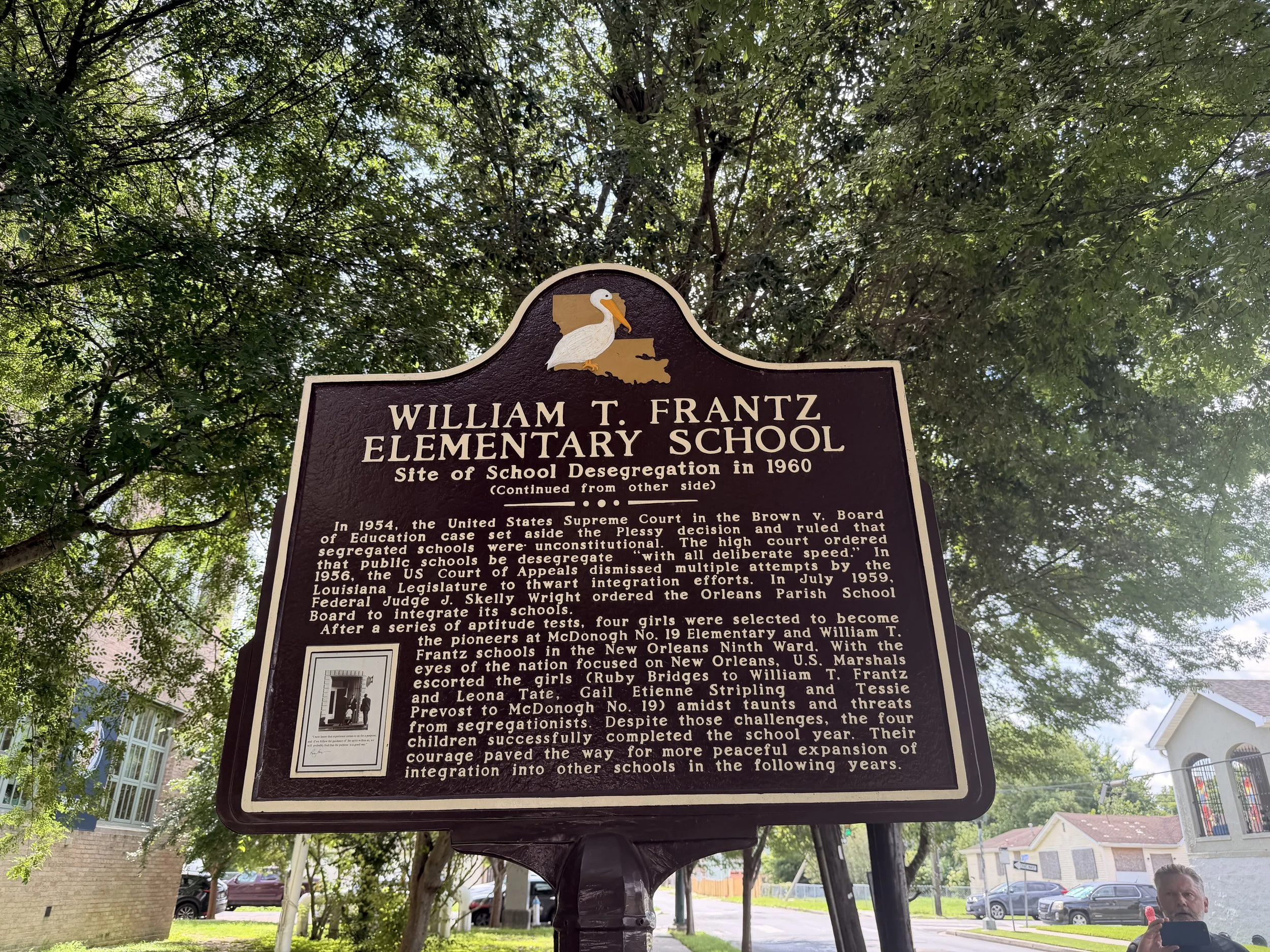
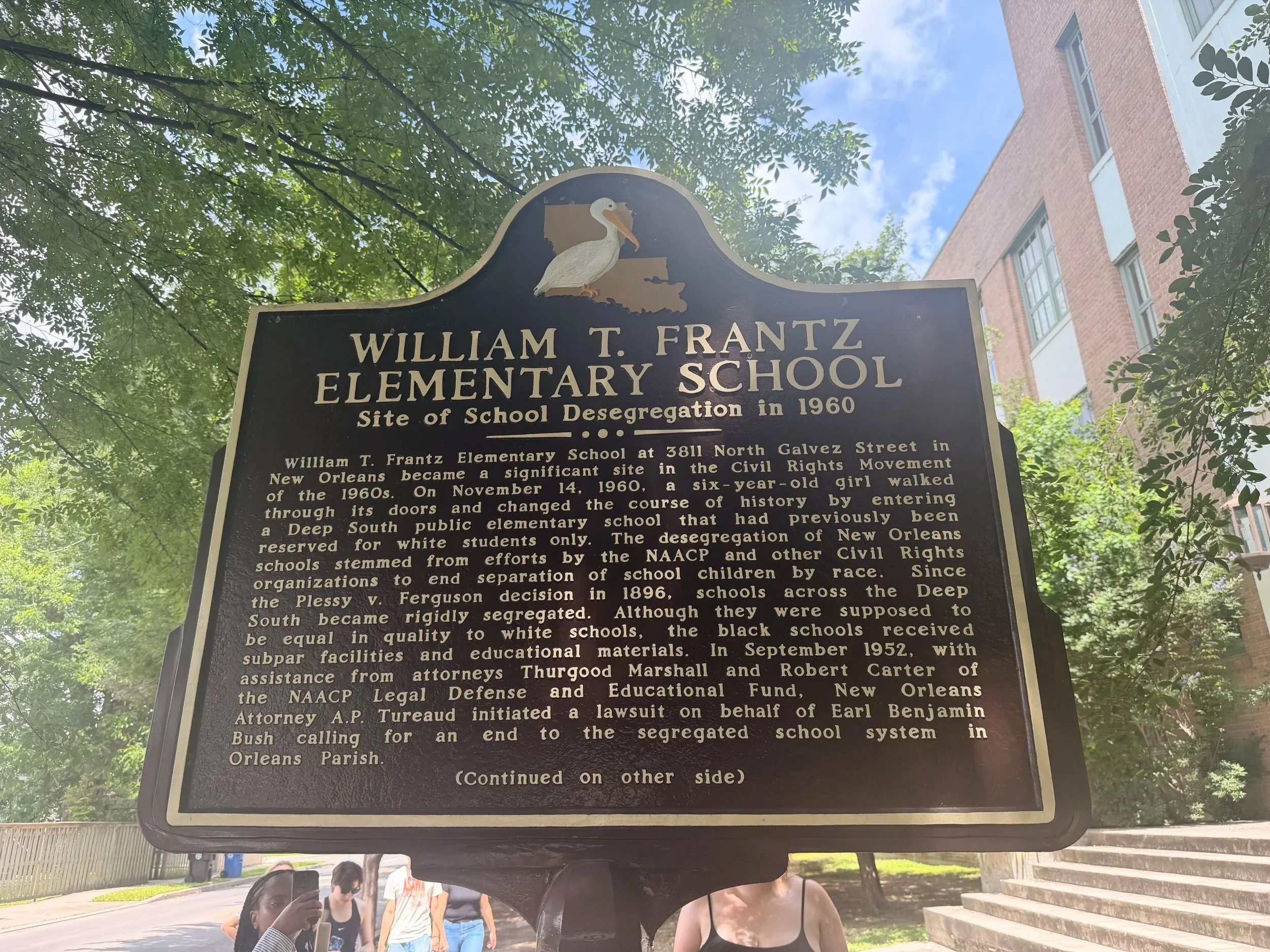
Of course Northup didn't want to endure the muddy water either as he said so plainly, "aloud and boldly," before the first blow ever landed from Burch when he first awoke a slave (Chapter III, pg. 44). "I prayed for mercy, but my prayer was only answered with imprecations and with stripes. I thought I must die beneath the lashes of the accursed brute. Even now the flesh crawls upon my bones, as I recall the scene" (Chapter III, pg. 45). When his tormentor's arm grew tired, he stopped and asked if Northup still insisted he was free. He did. The paddle broke. Then came the rope. And still Northup would not say he was a slave. "All his brutal blows could not force from my lips the foul lie that I was a slave" (Chapter III, pg. 45). And even in saying “I can’t stand it anymore, I am who I say I am.” his words still became white noise, a white lie. I guess what I’m trying to say is, it didn’t matter what was true — the truth of his skin’s existence was the only thing that mattered.
I almost feel apathetic. I didn't cry as much as the others when 12 Years a Slave finished because to do so, would be to not only relive the trauma, but in some ways, it felt like crying gave the white supremacists in the movie power. I must admit — given my history (my mother working in the justice system with falsely incarcerated people, racism that I've experienced in my lifetime not only from white people but from other groups who have the archetypal influence) it's extremely difficult to be any type of empathetic towards the ignorance of racism. I classify it as hate, point blank, and will not tolerate it.
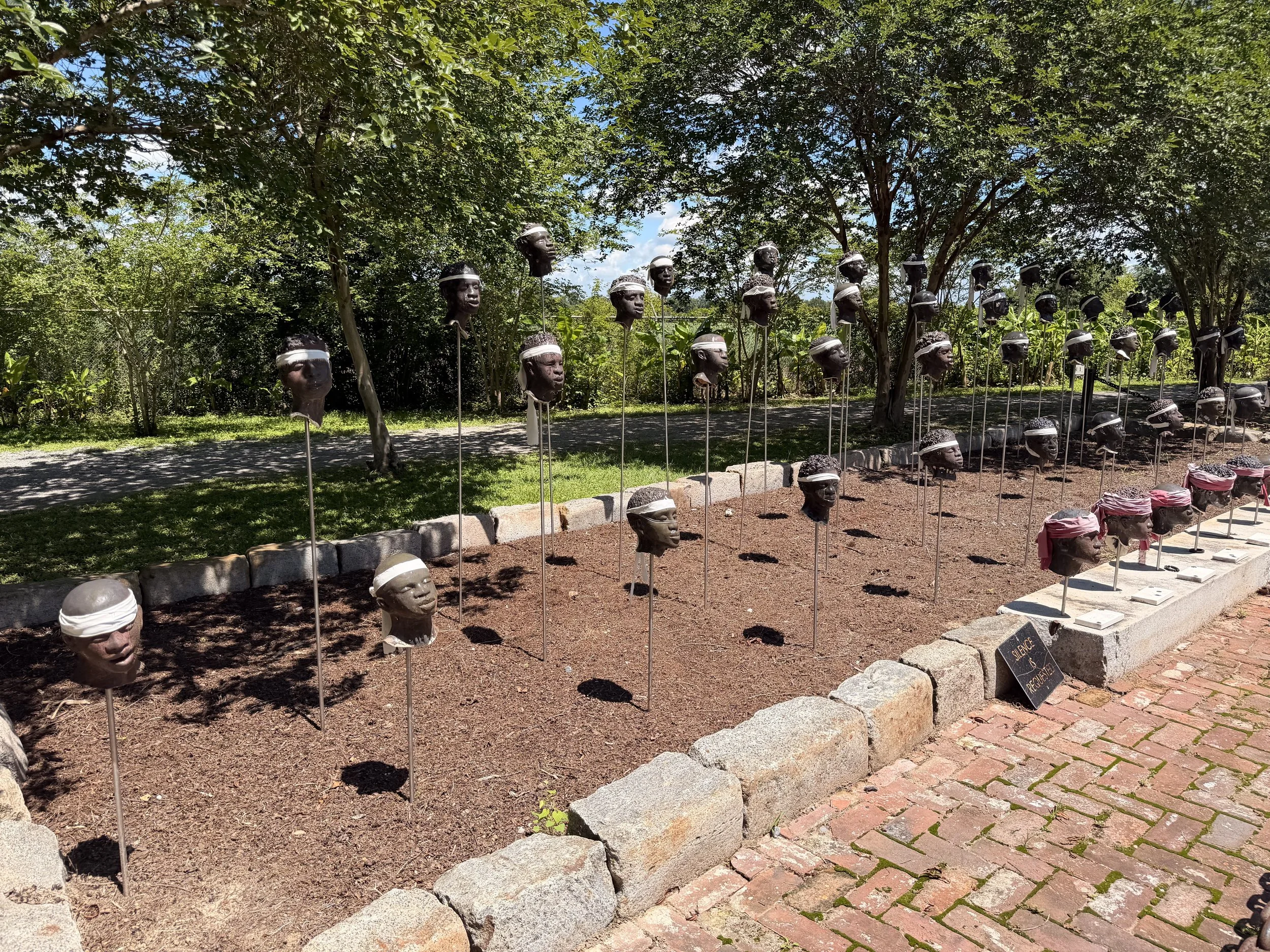
And at the Whitney Plantation, I stood in front of the sculpture garden — dozens of cast iron heads mounted on steel poles, faces of the insurgents from the 1811 German Coast Uprising, arranged in rows in dark soil — the apathy remained. I knew that these faces were a memorial to something that actually happened: the heads of the executed severed and placed on poles atop the River Road levees for forty miles. Somehow though, I couldn’t bring myself to cry. Because what I kept thinking about was Broom’s grandmother being born on Ormond Plantation on that River Road, into a world where this had already happened and been quietly absorbed into the landscape — "the facts of the world before me inform, give shape and context to my own life," she writes, "my beginning precedes me. Absences allow us one power over them: they do not speak a word. We say of them what we want. Still, they hover, pointing fingers at our backs" (Movement I, Prologue). Standing in front of those faces on poles, I felt that hovering. And then separately, the shame of it — which Broom describes not as grief but as "a warring within, a revolt against oneself. It can bury you standing if you let it" (Movement II, Chapter I). I think that shame, or realization rather just made me feel that crying would just be accepting those pointing fingers. The worst part — what makes me most apathetic, is that one of the reasons why Broom was able to publish her book, and the only reason Northup was able to escape, was because the white man was there. A question we then must ask ourselves is: Why does this (white man asserts a leg up)structure still exist?
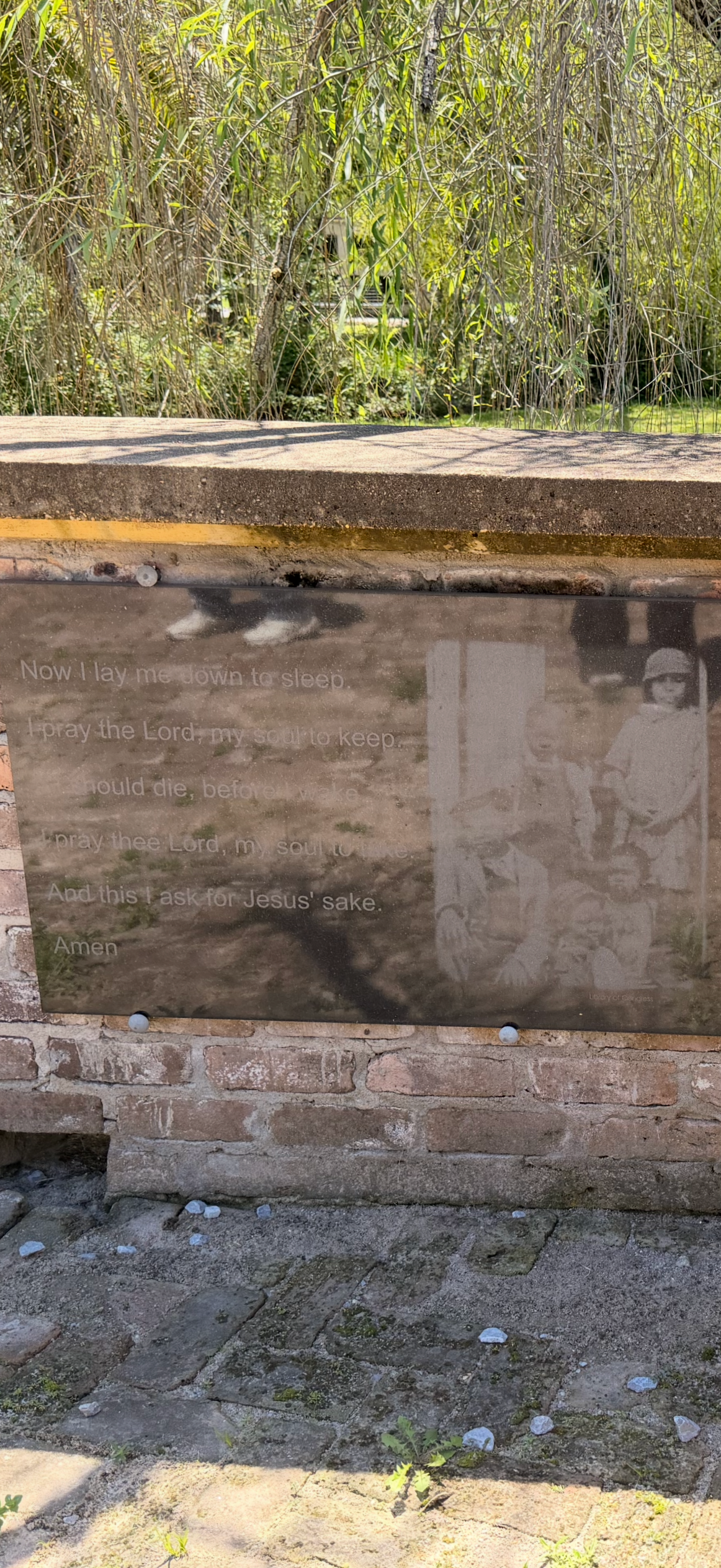
I stood in front of the stories nurtured by the Federal Writers’ Project, one of which read the prayer: “Now I lay me down to sleep. I pray the Lord, my soul to keep. If I should die before I wake, I pray thee Lord, my soul to take. And this I ask for Jesus' sake. Amen.” To fathom that a prayer I said throughout my childhood most likely was passed down from my slave ancestors is incomprehensible. You say those words as a child without knowing they were first said in darkness, by people who genuinely could not be sure they would see morning. And funnily enough – it now makes sense why my grandmother changed the last two lines to, “Angels watch me through the night, until I wake in morning light.” Changing the context, changes the contemporary reality we so desperately want to exist.
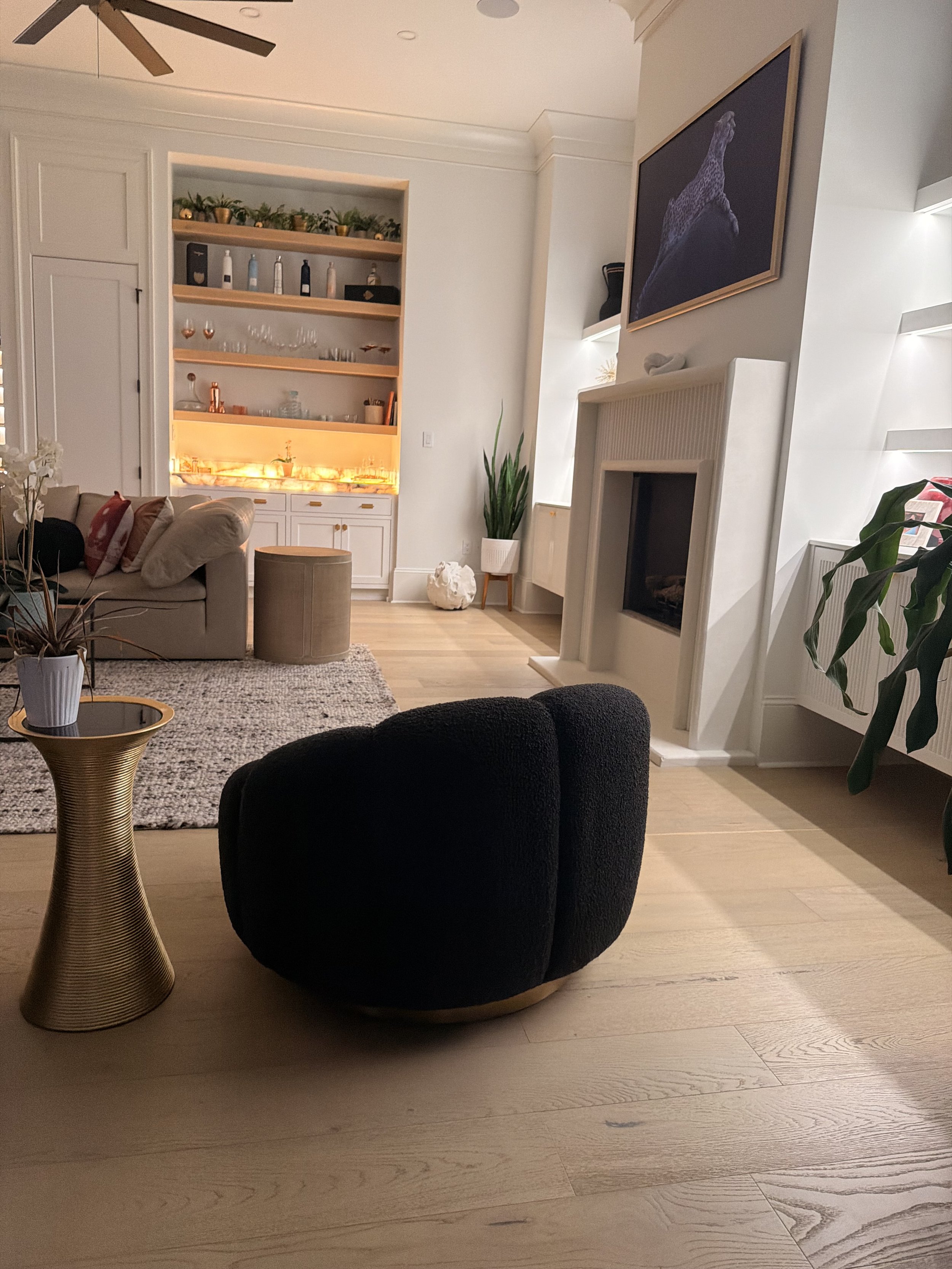
Ultimately though, despite the pain, despite the anguish, after this week, I've gained a new sense of pride as a Black person. Not the kind that needs to be performed or explained. The kind that comes from understanding the full length of what I come from — the people who marched fifty armed toward New Orleans knowing they would probably die, who held their names in their mouths even while being beaten, who prayed the prayer I prayed as a child in the darkness of cabins in Louisiana soil, who sewed beads for a year for two appearances, who cut the grass, who took the paper menu. I come from people who have been making beauty and meaning and resistance out of conditions designed to produce none. To stand in New Orleans and finally see that clearly, from the ground, not from fifteen thousand feet up, not through the tourism brochure, not through the mythology — is something I will continue to remember. And there is evidence of this sentiment: being able to eat with Rich Black Caribbeans of Lake Shore in the most beautiful house I’ve ever seen, embracing a vision from Elvin Ross who is reimagining the tragedy of Jazzland which didn’t permit reconstruction for those (mostly Black people) living in the area. Seeing this, I know that the world is my oyster, and I’m taking advantage of it — heavily entitled, and with every reason to be. Unashamed, despite any odds that are pinned against me by the racism that still persists in America.
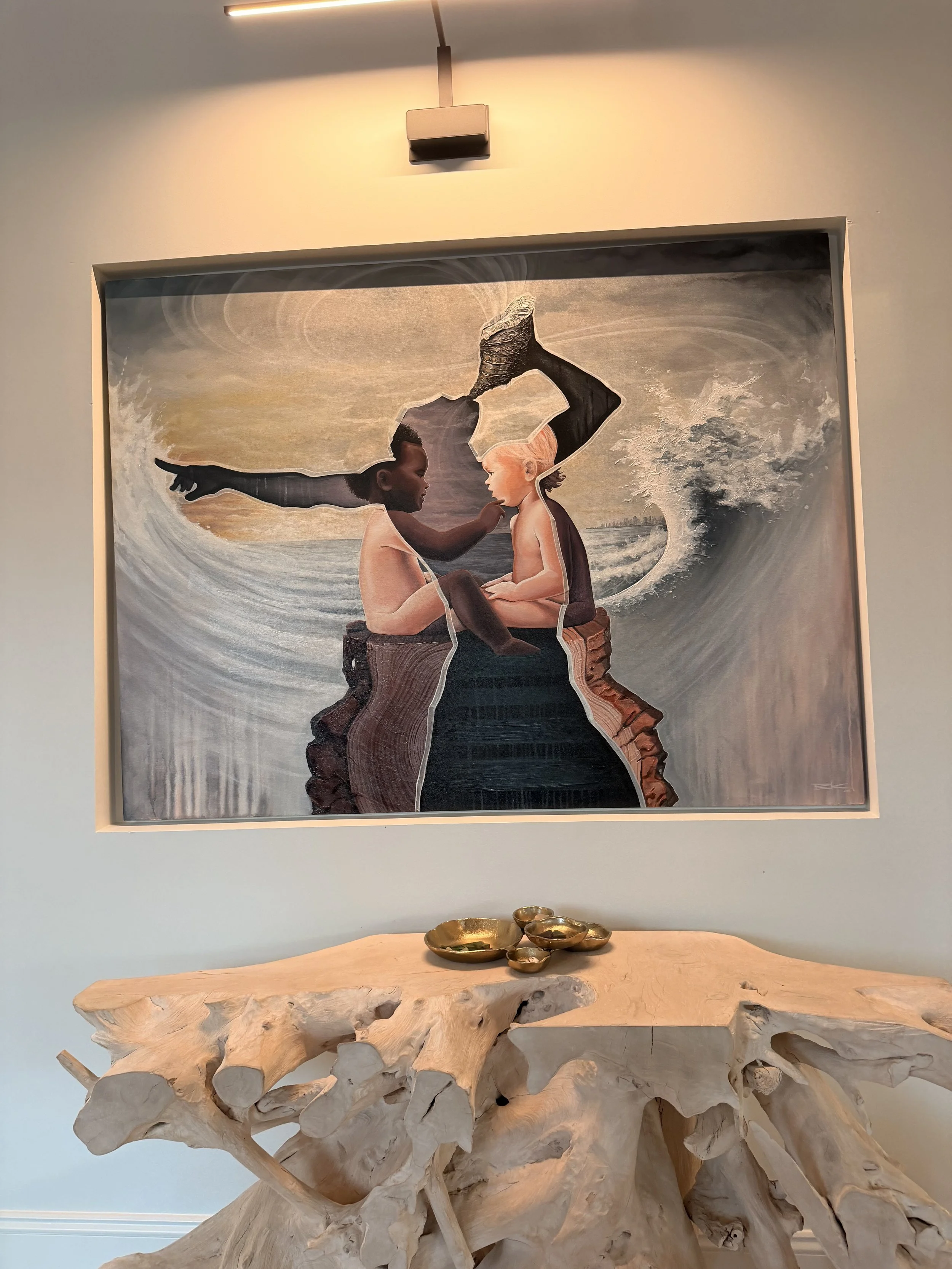

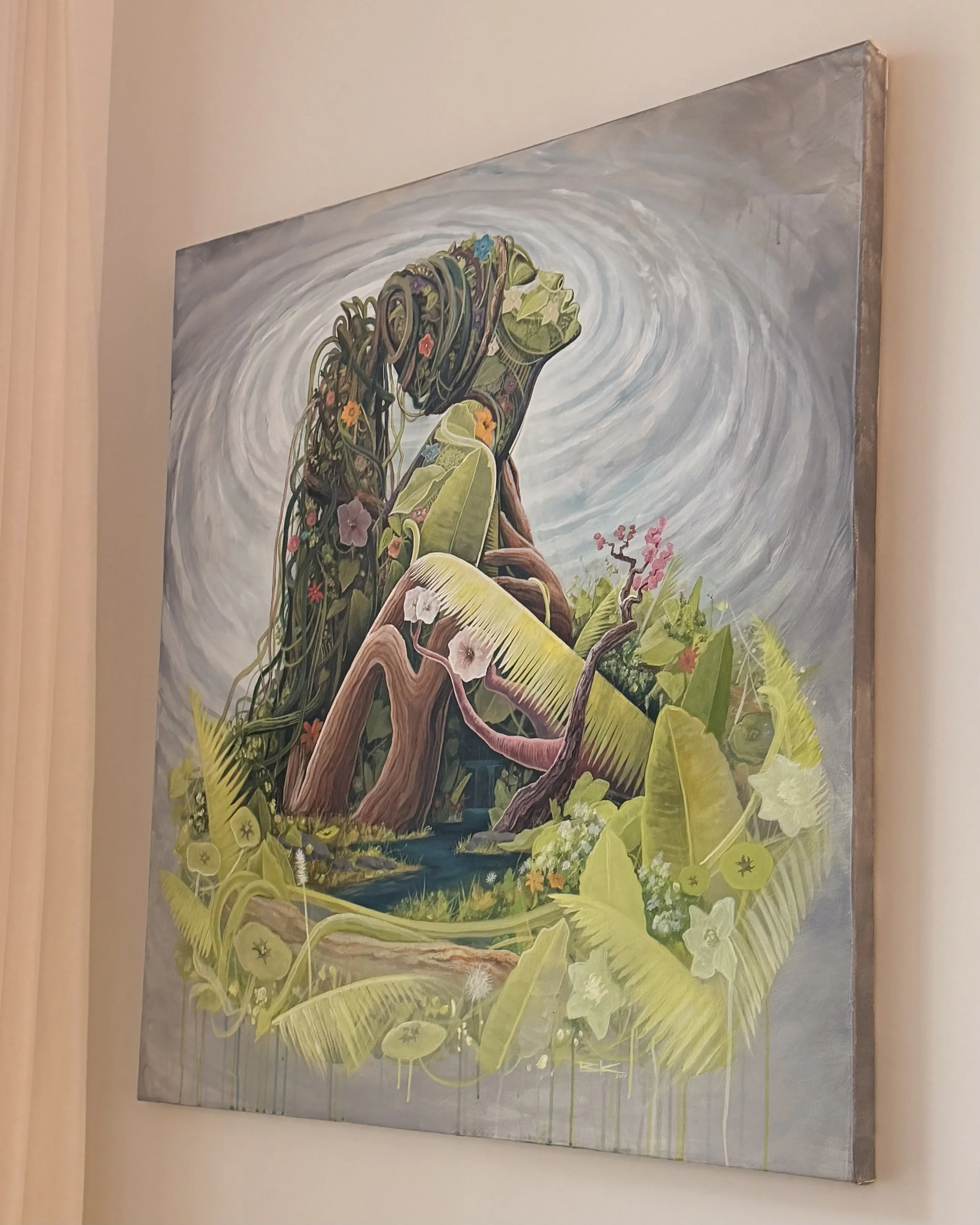
““Now I lay me, down to sleep, I pray the Lord my Soul to Keep. Angels watch me through the night, until I wake in morning light.””
Double-click to edit...