Double-click to edit...
People say details are dead in architecture; I say they just haven’t been to New Orleans.
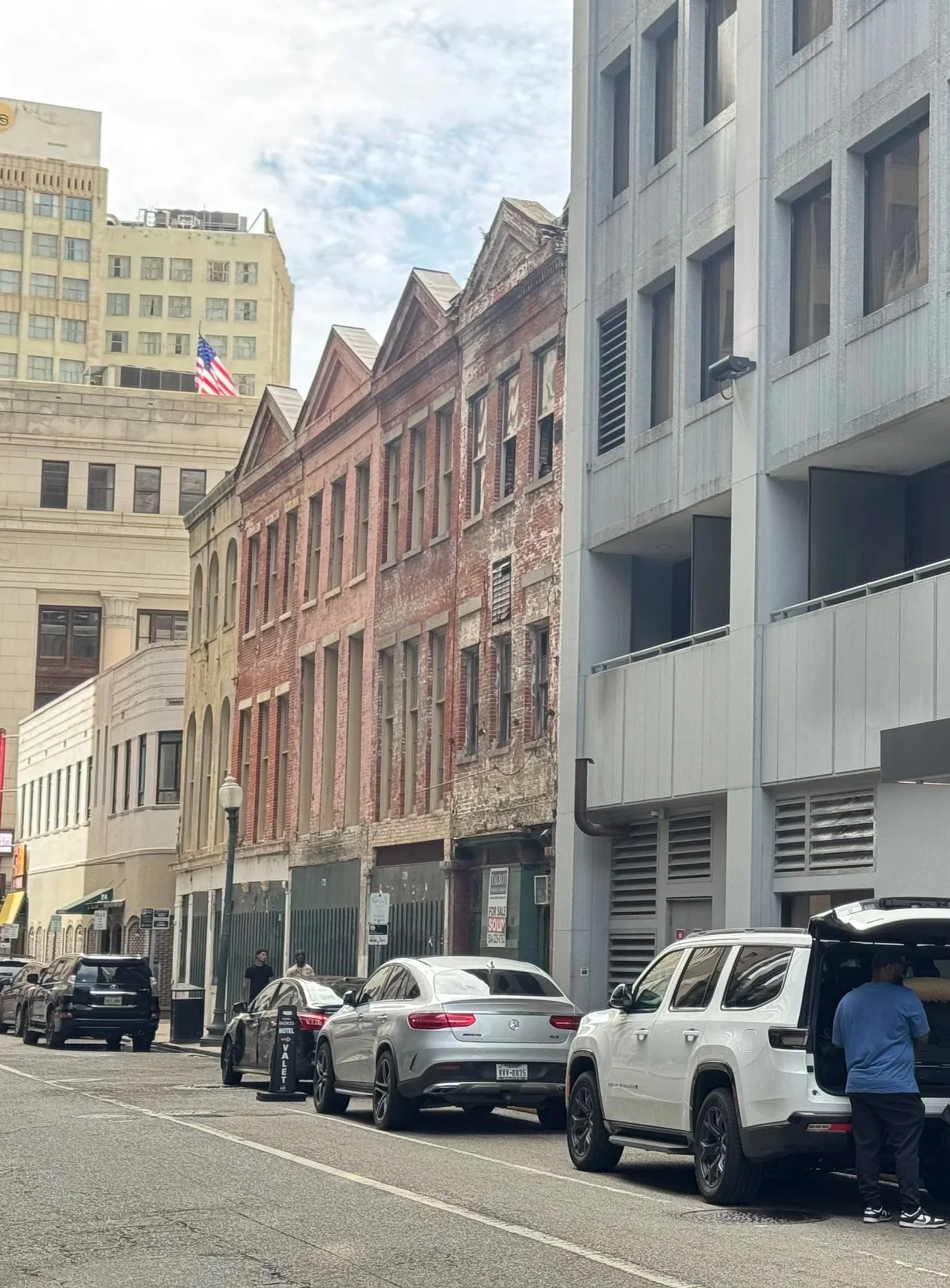
New Orleans doesn’t behave like most American cities, where the architecture presents itself as clean progress or uniform planning. Instead, it’s a constant negotiation between time periods and materials and different cultures that never fully agreed to merge but simply coexist. The architecture in this city is curious; it's not just one thing. It doesn’t feel accidental; it feels layered.
The old and the new are always pushing and pulling one another.
As an architecture student, I can’t help but move through a street without inspecting every building I come across. I notice the tacked-on balconies/galleries and the fully flat sides that make my head turn in confusion. I notice the abundance of stairs and the lack of inclusive entrances and walkways—not afterthought ramps that are bolted on later but a meticulous, accessible design that accommodates everyone without having to use different walkways or entrances. I notice the wrought iron balconies that must have taken hours and hours to perfect and the various types of columns. I notice the shortage of adequate water drainage. All this, and the city carries it all unapologetically.
In most big cities I have been to, they are always trying to show their uniform continuation of buildings that all look modern and show seams but not New Orleans. New Orleans is proud to show its seams: the patches where the time has caught up with the building, the places where materials were swapped out, and moments where buildings from different eras come together without ever fully resolving one another.
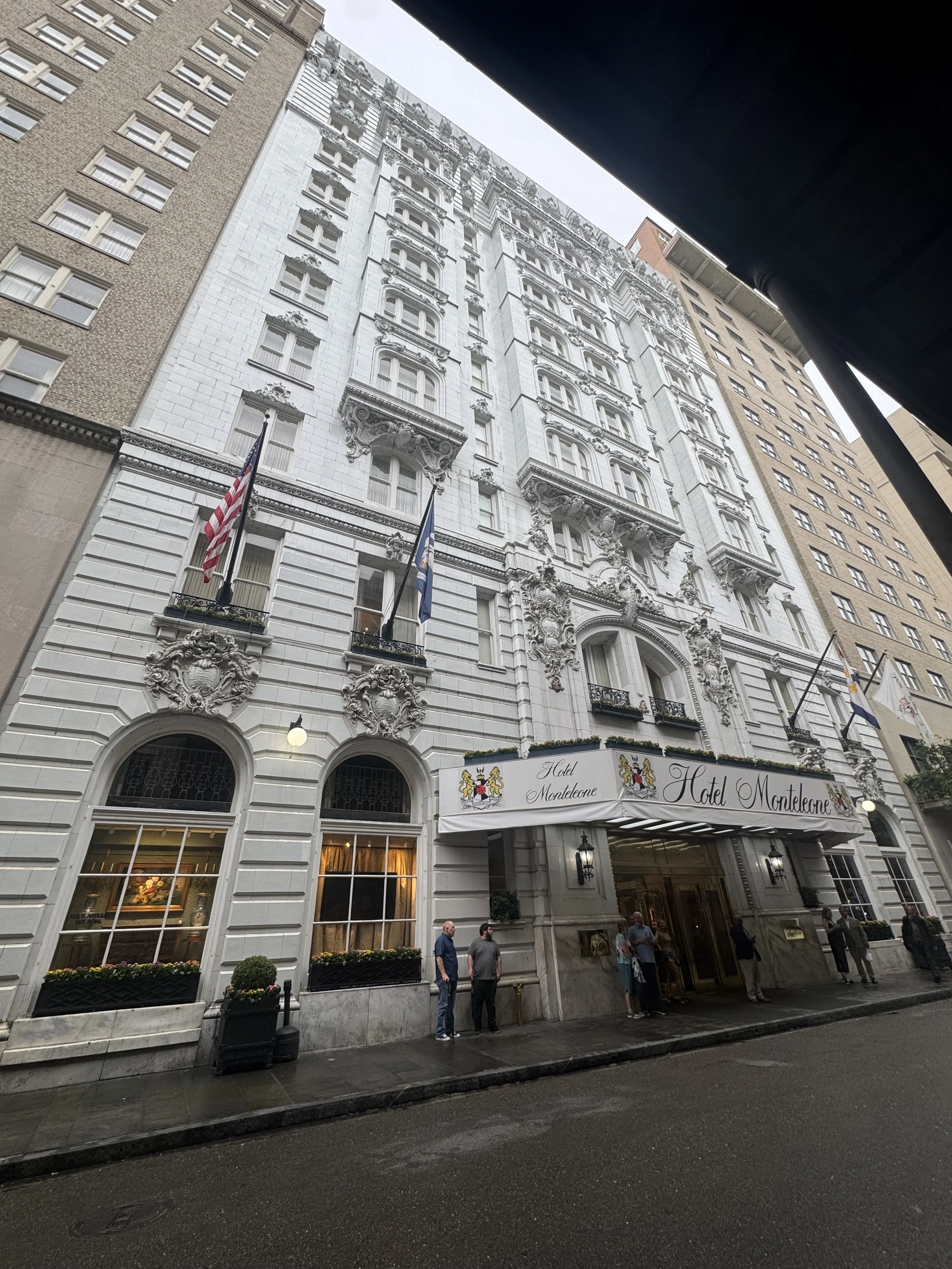
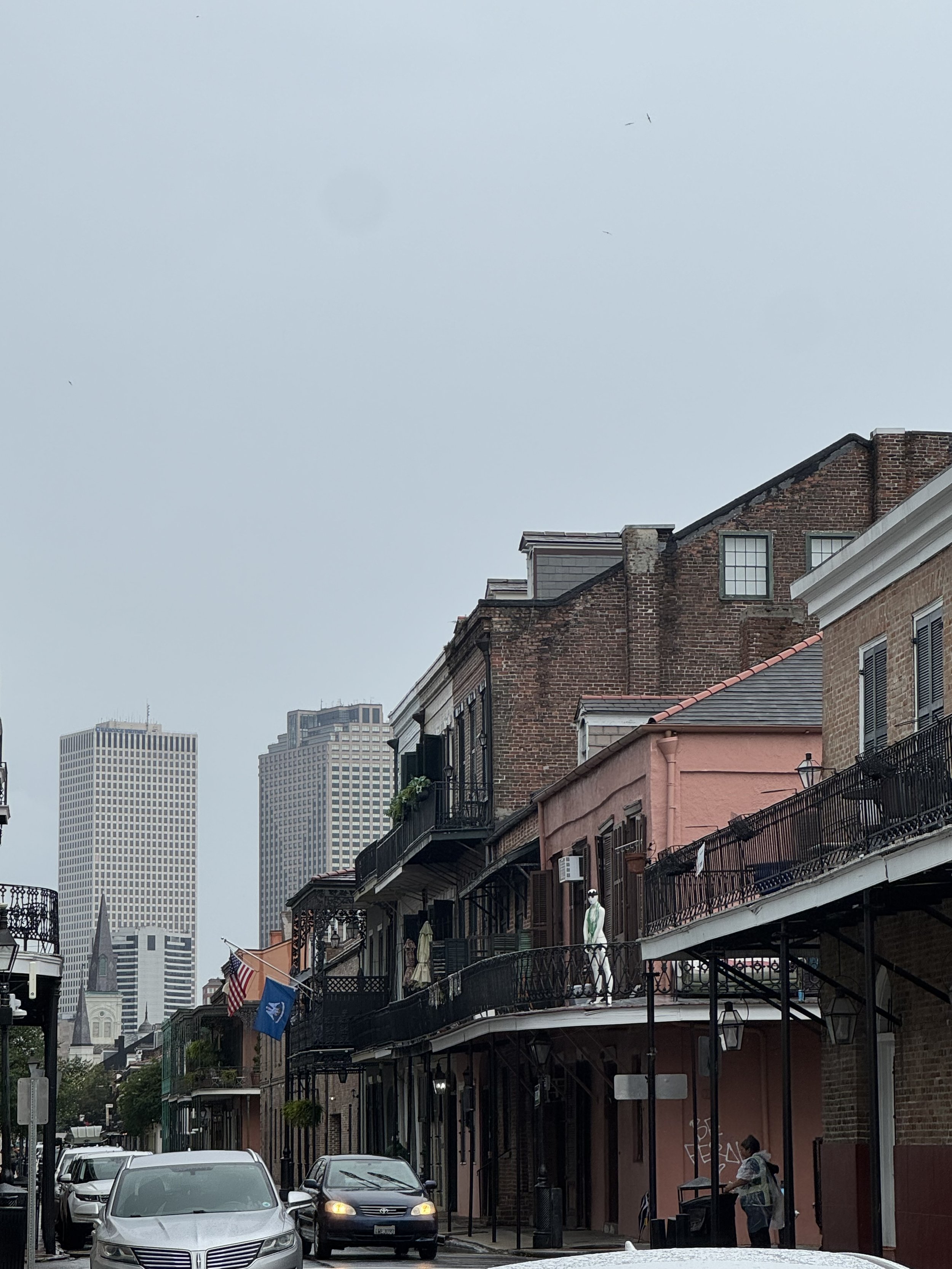
Bookpacking helped me see the city from different perspectives. I got to see the city through the lenses of the books I have read so far.
In Interview with the Vampire, New Orleans is almost too beautiful to be real, so glamorous and gothic, draped in wrought iron and dim lights. In Confederacy of Dunces, the architecture is neither romantic nor mystical but simply real/human. It cracks, it leaks, and eventually collapses. In The Moviegoer, the elegance has started to loosen up. The city feels fixed and more uncertain, drifting, which reflects how the main character in the book, Binx Bolling, was feeling during the entirety of the book. In Coming Through Slaughter, the architecture becomes something more unstable. Buddy Bolden’s New Orleans is less about structure and more about vibration, the wooden houses and narrow rooms that seem to bend under the weight of music and memory. In The Awakening the buildings become a form of confinement. Edna Pontellier, or Kate Chopin’s house parts, the room, and the galleries that are carefully maintained domestic spaces are very elegant and suffocating in equal manner. The contradiction between the openness of nature and the enclosure of social expectation mimics Edna’s struggle between desire and limitation, wanting to expand but yet be so restricted. In The Yellow House, architecture is described as a breathing entity that reflects complex matters like systemic inequality and familial bonds. And, in the yellow house, we see architecture isn't about beautiful structures but a weapon that has been used to keep people of color at a disadvantage. All these books I have read show that the buildings are never really just the background but more so an active participant in the lives that are unfolding inside or around these buildings.
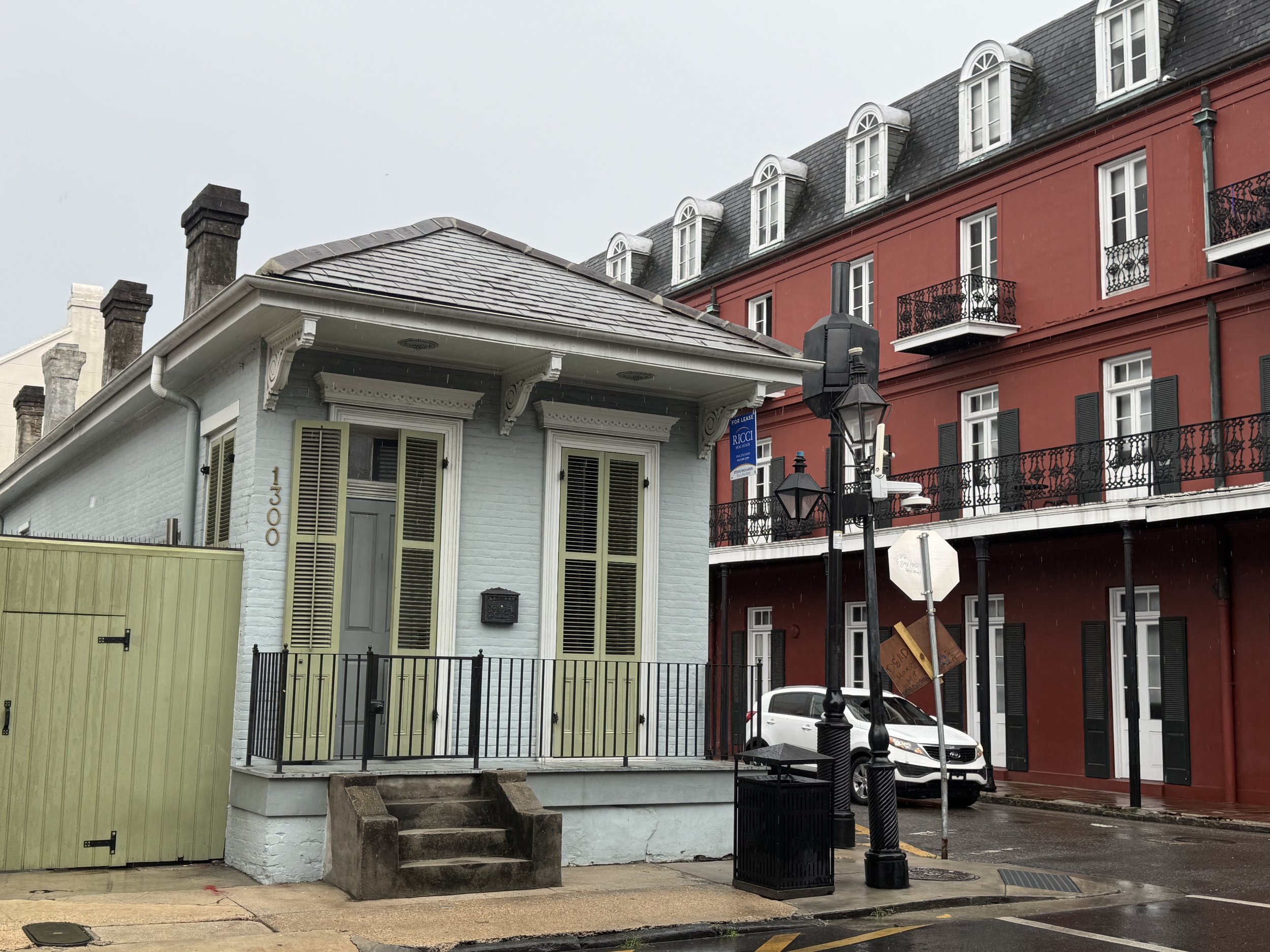
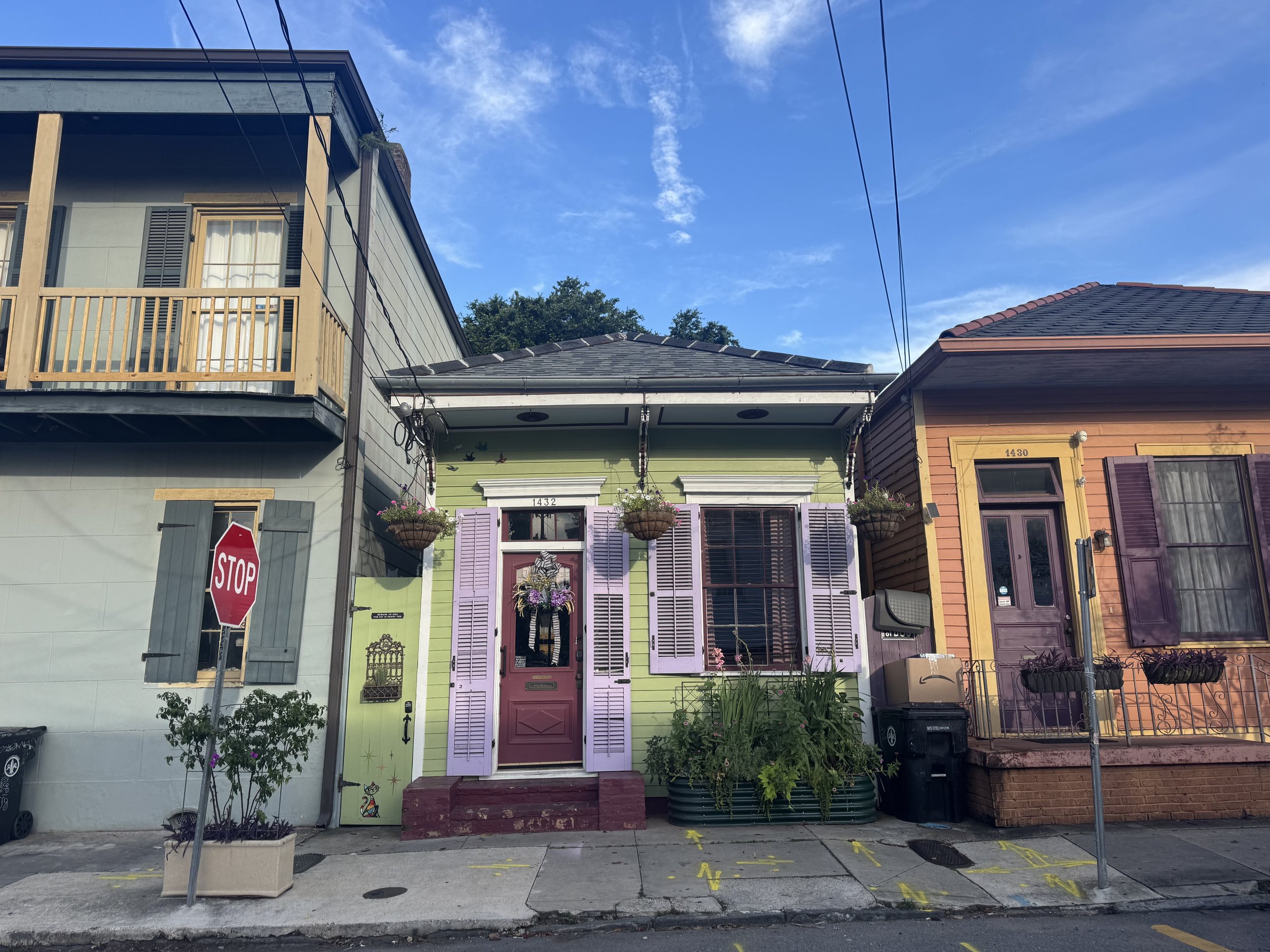
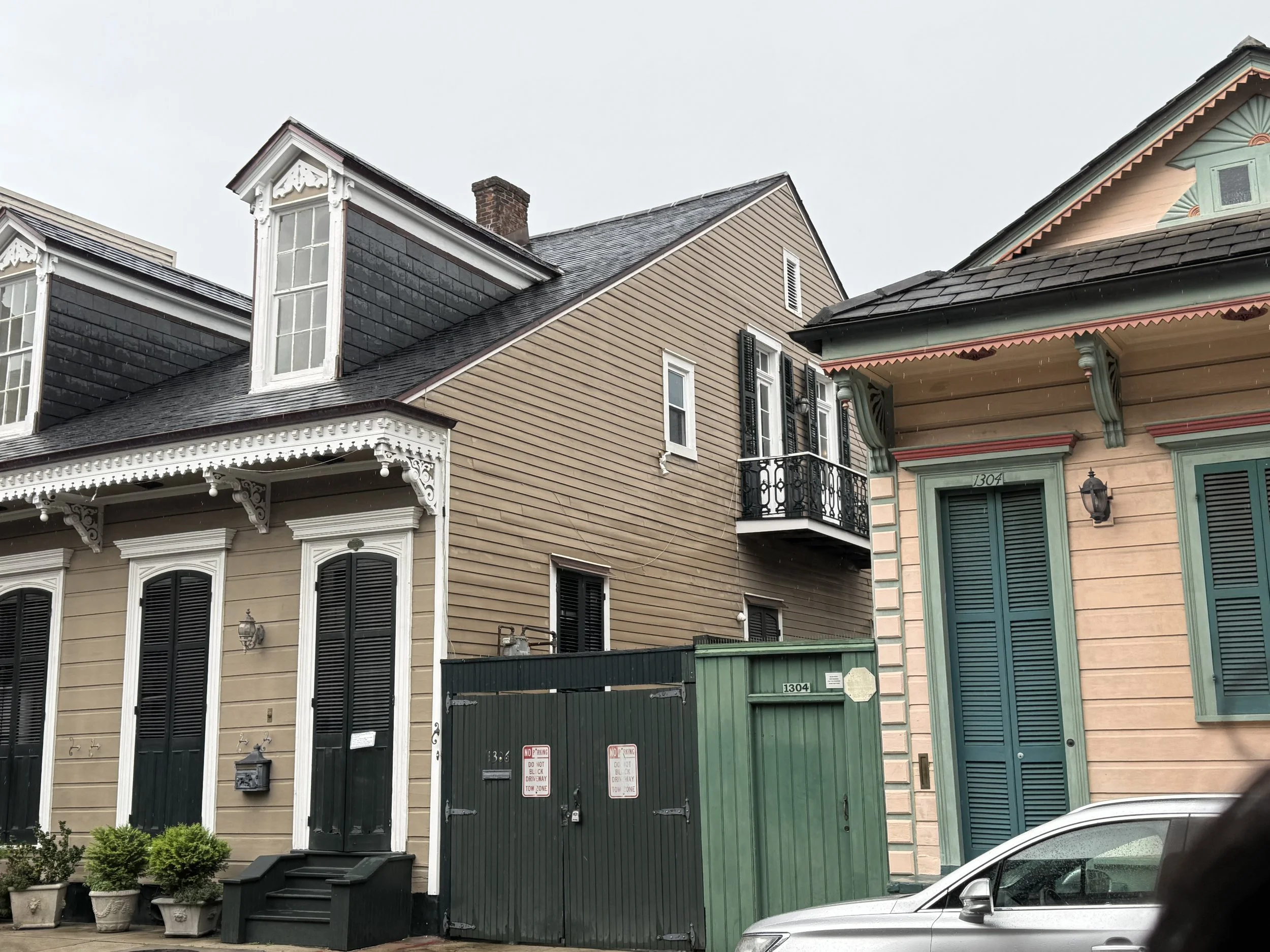
My personal favorite is the shotgun house. They originated from West Africa and were further developed in Haiti. They are my favorite because they are one of the smartest designs I have ever come across so far. One of the design features is that the interior and exterior doorways line up perfectly from front to back, which, combined with the high ceiling, allows cross ventilation to happen, which is so important in places that are humid like New Orleans.
New Orleans is filled with shotgun houses that are just explosions of color, not afraid to show out like the people who live in them. In most American cities, a bright pink or cobalt blue house is a statement of defiance against a sea of beige. Here, it simply belongs. The explosion of color isn't just ornamentation for its own sake, but it's an extension of the same spirit that produced the wrought iron, the courtyards, and the layered history visible in every block. It is a city that refuses to be muted.
New Orleans architecture is not a result of a single grand vision executed cleanly. It is a result of centuries of improvisation under pressure shaped by hurricanes and floods, by the collision of the French, the Spanish, and the African influences, and by poverty and wealth existing side by side. It is architecture that was never finished because the conditions that produced it never stopped changing. And yet it endures, not despite that instability but because of it. The buildings are resilient like the people who occupy them.
Details are not dead. They just require a city patient enough and stubborn enough to hold onto them.