Edna and Adèle never did anything more than cuddle, Buddy and Bellocque never buddied up, and Binx, the guy who pays more attention to movies than his female dates, was adamantly heterosexual. Don’t get me started on Louis and Lestat. All these 19th and 20th century writers allow raunchy sex, but apparently everyone drew the line at being friends with Dorothy. Despicable. On my last day here, I decide to take matters into my own hands.
Hello Mr. Capote.
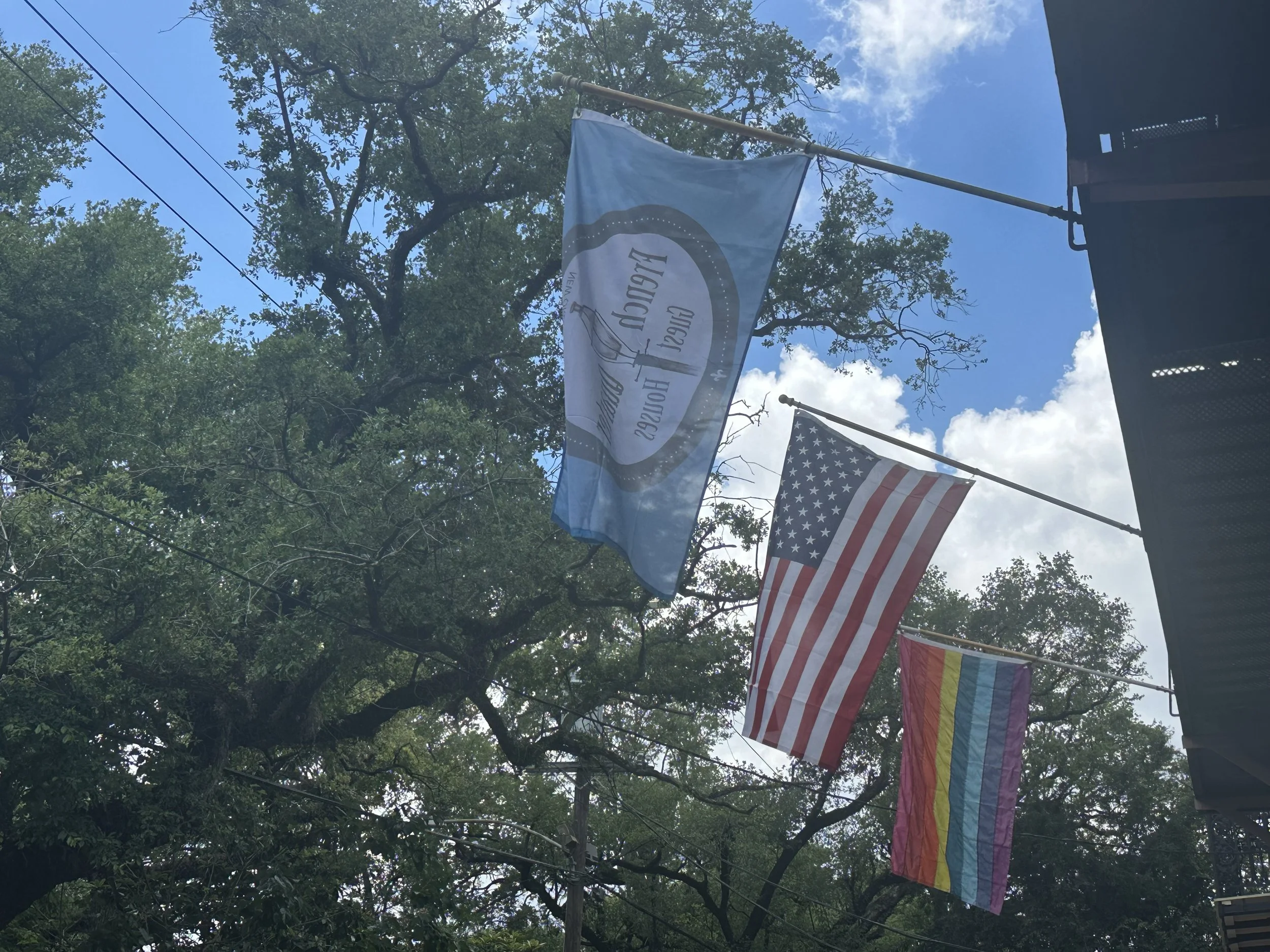
Per various sources, when Truman Capote lived in New Orleans he rented an apartment on 811 Royal Street. I approach the building, and I see Ghost City Tours of New Orleans. I get tense, and frankly annoyed. I got it wrong, that was 809. I walk into 811 and a wave of relief comes over me.
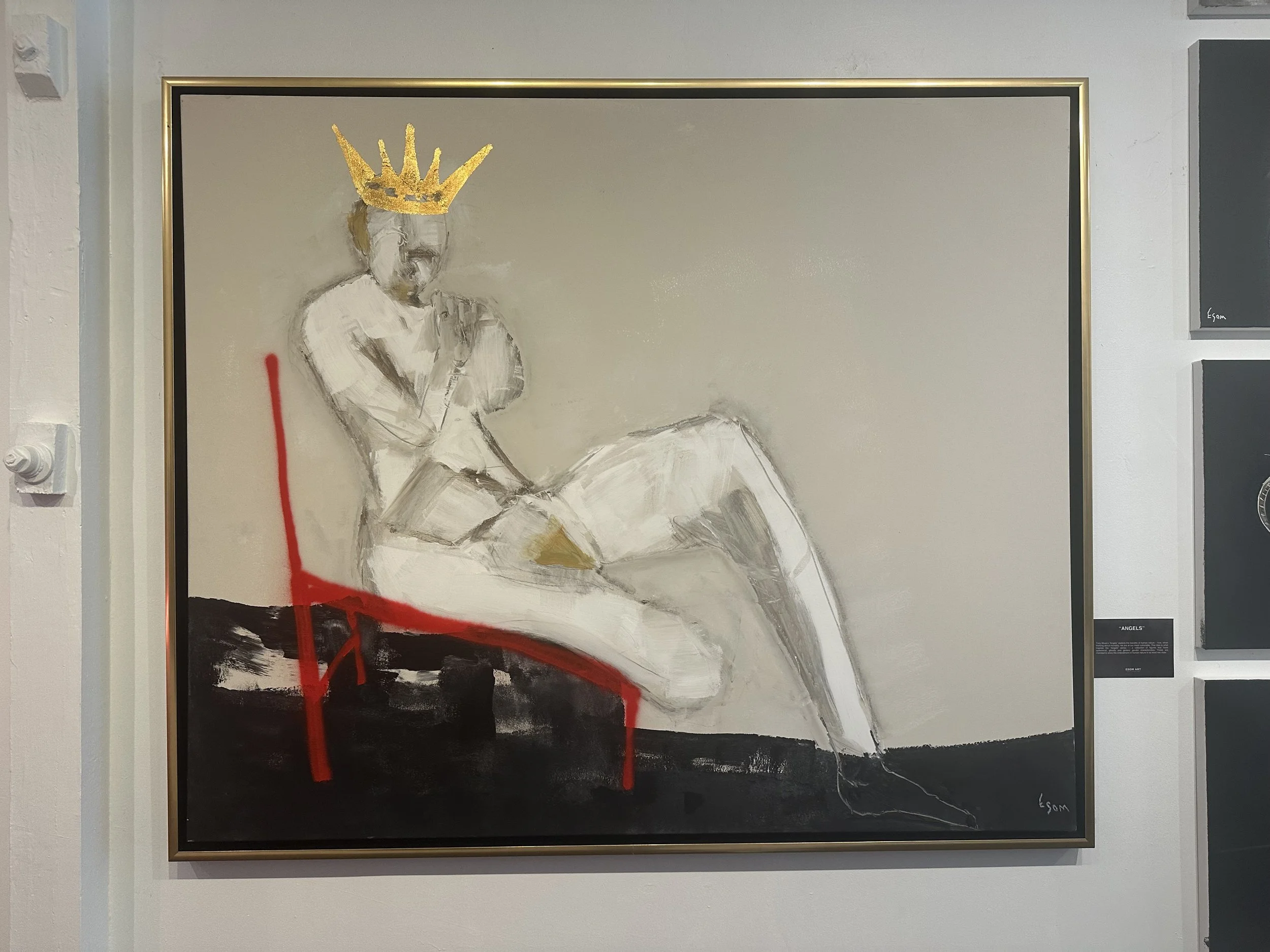
Truman’s past apartment is now Esom Art. I start chatting with the guy in front and tell him I’m in New Orleans reading books. I ask him if he knew Truman Capote used to live here. He says no, but that doesn’t matter to me. Swans, erotic and bizarre poses, the naked body as a foreground; the art is still queer. Truman’s presence is still here. We crack a few jokes and then I continue to examine the art. One piece really speaks to me, and it turns out to be his favorite too. Gay guy taste is universal.
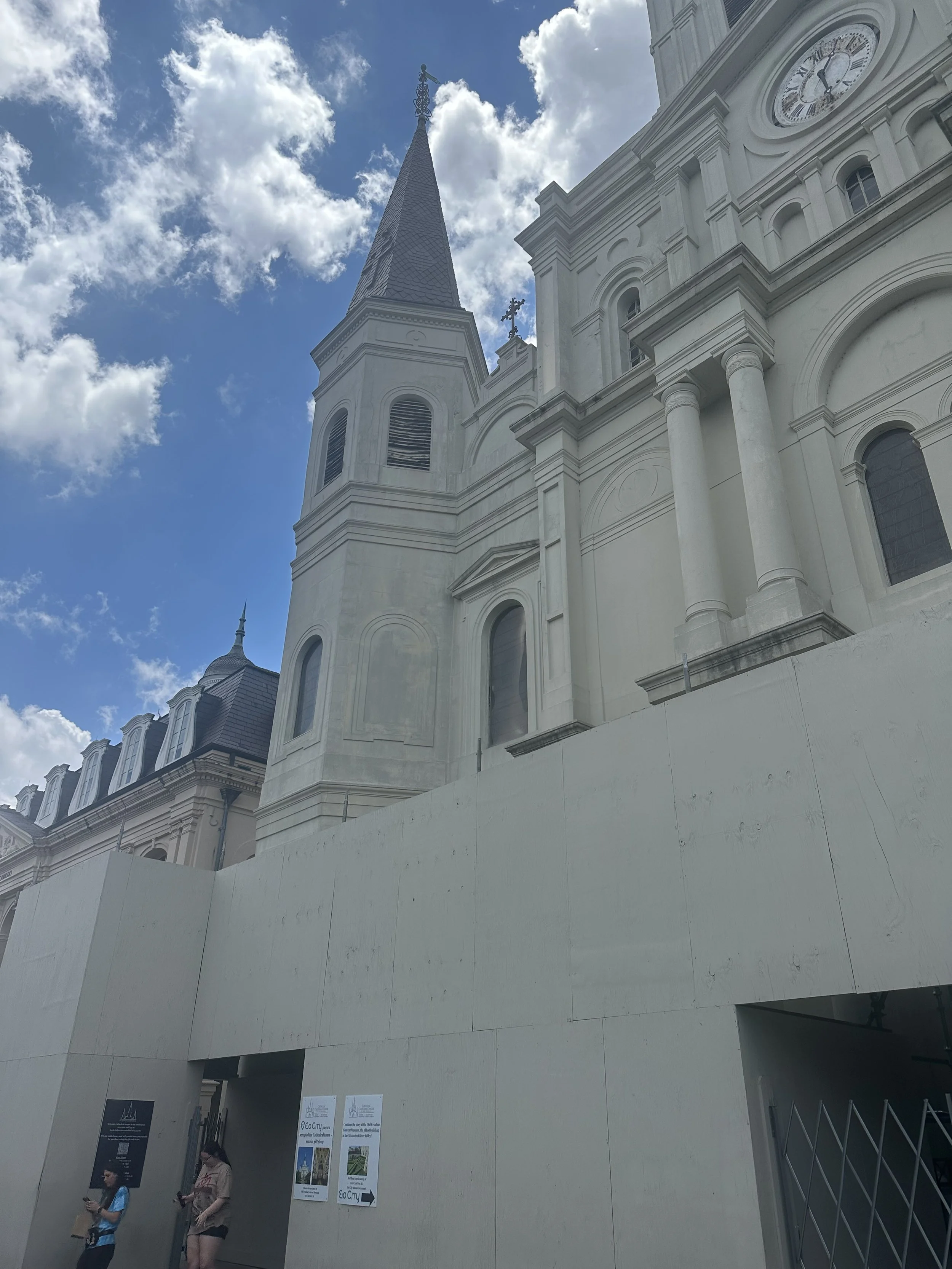
Truman apparently also liked loitering around the Saint Louis Cathedral. I ponder my bittersweet relationship with religion. I never ever believed in any God. I still don’t. I am really pondering religious people. I couldn’t stand them, and then when I tried to take queerness out of the emotional equation I ended up feeling disdain. I can’t say I’ve had a full change of heart throughout my life, but I am more open now. In New Orleans I have seen more and more religion as a community and culture rather than homophobic bible thumpers. After visiting the Katrina exhibit and the Whitney Plantation, I realized the church went from a place forced onto Black America to one of its strongest assets during hard times. Again my relationship is bittersweet; its origins in the U.S. are disgusting but it has turned into something so powerful. Should this be celebrated? I don’t know.
Truman might have just liked the aesthetics of the church. I’ll admit it, I do too. I love the iconography, I also love when the seven deadly sins or ten commandments are personified in fiction. I love how my grandma prays to remove the evil eye from me over FaceTime when she hears I have a headache: xematiasma. Even the most atheist queer people have their own special relationship with religion.
I later walk through the Marigny and see more queerness. An alternative queerness that I’m not sure resonates with my image of Capote. It is less elitist and overt, and rather presents itself in community. It is less loud. I stop at a cafe, and see more community. The baristas recognize couples, the bakers in the back keep extra pastries for regulars. I sense I prefer this more than Breakfast at Tiffany's.