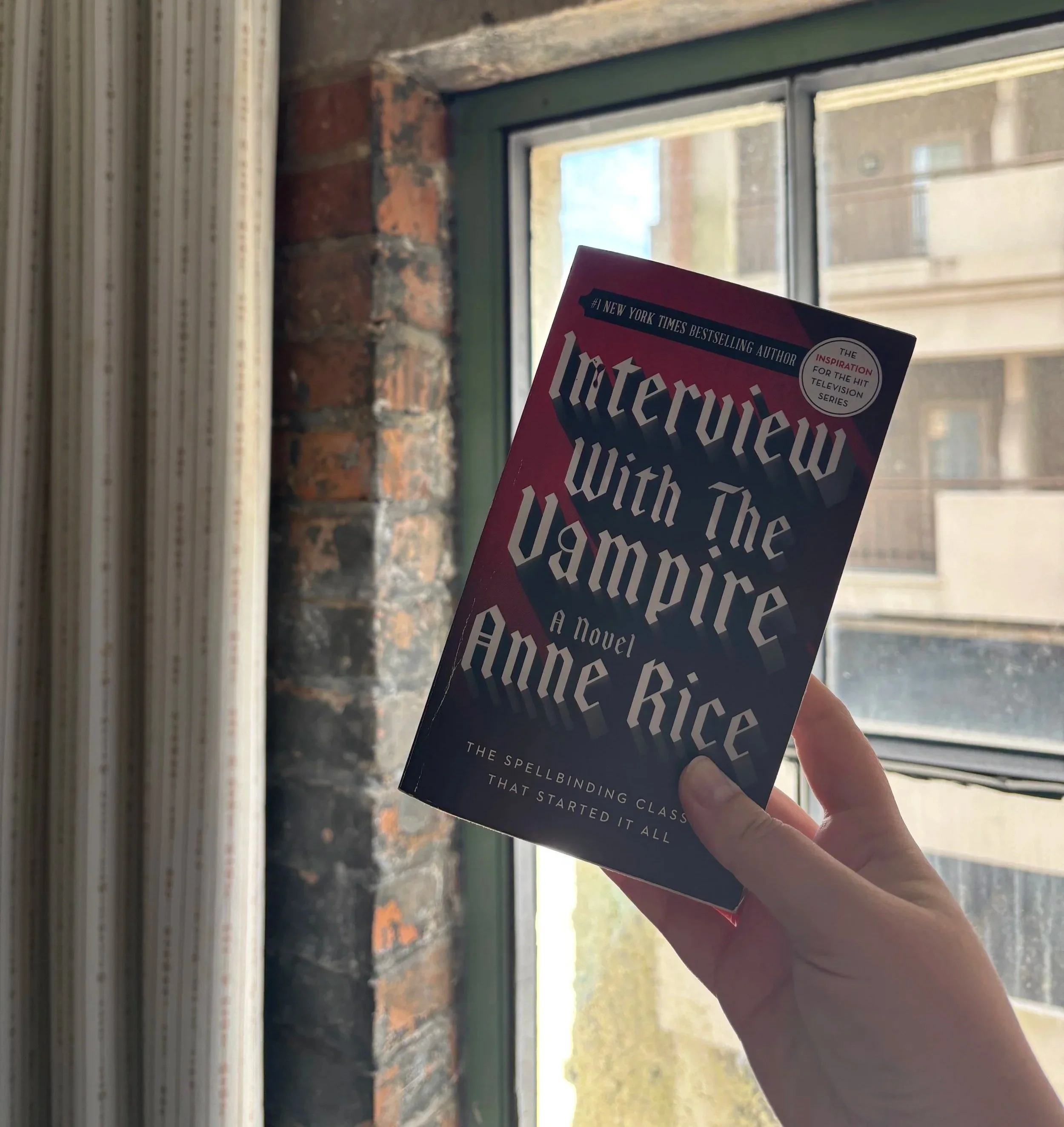
One of the most complex aspects of human mortality is struggling with one's perception of life and death. We all cope with it in different ways, through religion, science, faith, medicine, magic, or maybe a mixture of all of those paths. These themes become even more prevalent when faced with the supernatural; this was my experience reading Interview with the Vampire, by Anne Rice.
Interview with the Vampire is groundbreaking in its depiction of supernatural life, or should I say existence, by examining man through the eyes of Louis de Pointe du Lac. We see Louis struggle with understanding his own existence and face moral quandaries unique to someone who has gone through a transformative experience, such as turning into a vampire.
However, I argue that much of Louis’ story of struggle is relatable to many of us readers, as he faces the conflict of who he is, what is expected of him, and who he wants to be. These internal dilemmas plague most humans on our path of life.
Viewing New Orleans through these struggles has made the Bookpacking experience surreal and impactful. Although I say I do not believe in ghosts, vampires, or anything unnatural, I am, like most creatures, scared of what I do not know or understand.
I am always reminded of this fear when a loved one passes away or when I face a great challenge in my personal life. The constant dynamic of being so utterly involved in myself that I feel anxiety over the most minute details, but also trying to humble myself and live in the great words of Kansas;
““Nothing lasts forever but the earth and sky, It slips away, And all your money won’t another minute buy, Dust in the wind, All we are is dust in the wind.””
Louis faces these same struggles, these anxieties; however, I must admit that I never carry fear of killing another, as I have never thought to!
This coexistence of life and death is so authentic to the streets of the French Quarter, where Louis, Lestat, and Claudia live for many years together. The French Quarter has nightlife so loud and extravagant that even the undead can walk along the living knowing their outrageous looks and strange behaviors couldn't possibly be noticed.
These same behaviors still exist, this is an opinion shared by anyone who has met some of the visitors on Bourbon Street around 3 a.m. Some of them I would even say were drunk enough to be targets of real-life vampires!
These clashes bring many devious plot twists to Louis’ existence, where he turns a young girl into a vampire, Claudia, and begins a wildly inappropriate father-daughter relationship with her that seems almost incestuous. Forcing you to wonder if Anne Rice had some unresolved childhood conflicts of her own…
Louis’ relationship with Claudia became one of the most pivotal parts of the novel, creating a space for personal examination of ‘toxic,’ ‘unhealthy,’ or ‘codependent relationships’ in our own lives. Then, ultimately, bringing readers back to death when Claudia faces her untimely demise.
I grew up with agnostic parents, and eventually became an atheist and extremely opinionated about life and the existence of a god. But only because I feel I must be consistent and hold fast to my beliefs. The reality is I have no answers, none that aren’t at least proven by science. In the place of the unknown, I choose to believe there is nothing when we pass, and that our energy, yes, our literal energy, just recycles into the universe to become a pencil or a pine tree.
But exploring the supernatural world challenges these basic notions, and forces me to wonder if all those I have loved, from grandparents, friends, to even my childhood dogs, really do go to heaven? Or can they become zombies? Maybe they are reincarnated into new people or beings?
All of these questions have no definitive answer, but Louis' experience as a vampire, in a way, showcases a possibility of life, or existence, after death. Louis seems to find his ‘second life’ beautiful, exciting, and new. He doesn’t see it as the end, but maybe the ‘limbo’ aspects of his existence are what confuse him? In the supernatural world, the lines between life and death are completely blurred. I can no longer rely upon science to explain why vampires suck blood. Yes, many cultists and fans of Vampire Diaries or Twilight may have reasons, but no facts.
This unknown is what scares Louis and me. We face the world feeling helpless, grasping onto a semblance of self-identity. I, looking for truth and fact, he, hoping to keep his humanity and central beliefs. But maybe the only truth a person, or being, can find in their life and existence is that of their own. Not defined by natural or manmade laws, by social convention or personal anxieties, only by experience and the pursuit of growth.
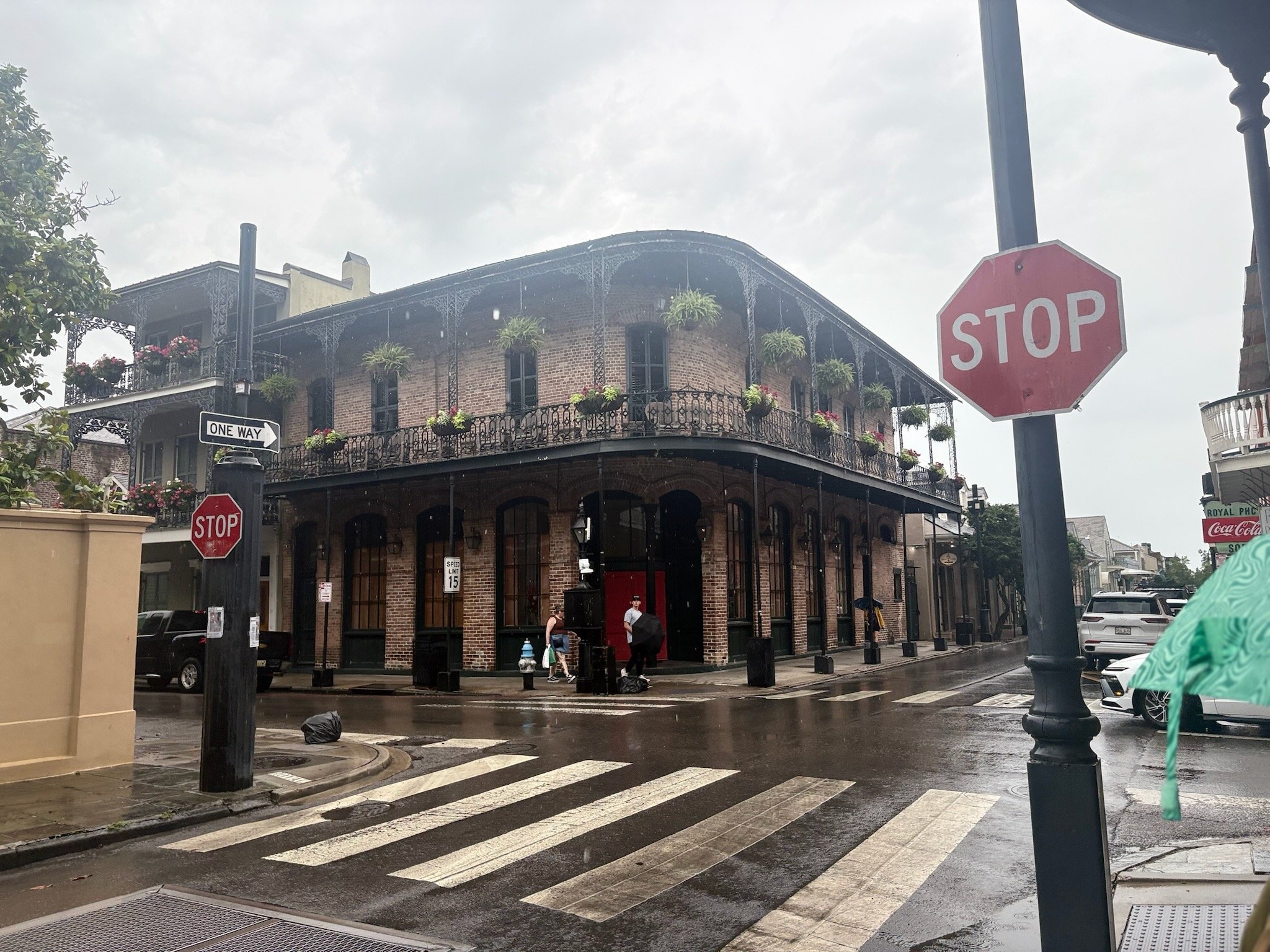
Picturing Louis, Lestat, and Claudia's lives together brings to mind one dark picture, where coffins took the place of beds, and strategies to effectively drain people of their blood start growing in numbers, but actually seeing the location where this all took place completed the image.
On the inappropriately named ‘Ghost Tour’ my fellow bookpackers and I attended, it should have been called Vampire Tour if you ask me; we paused by the townhouse that Louis retained in the story. The oh-so-fitting red bricks, its location on the corner of the street, and its devilishly dark wrought iron railings were almost too perfect for a physical representation of Interview with the Vampire.
This experience, although slightly submerged in ‘hurricanes,’ created the connection between Louis and me, our shared struggles, blurring the lines between fiction and reality, as well as life and death. Where I began to challenge my perception of these lines, conflicts, and struggles, which thankfully I believe is the ultimate goal of Bookpacking.