Rythym and Ruse
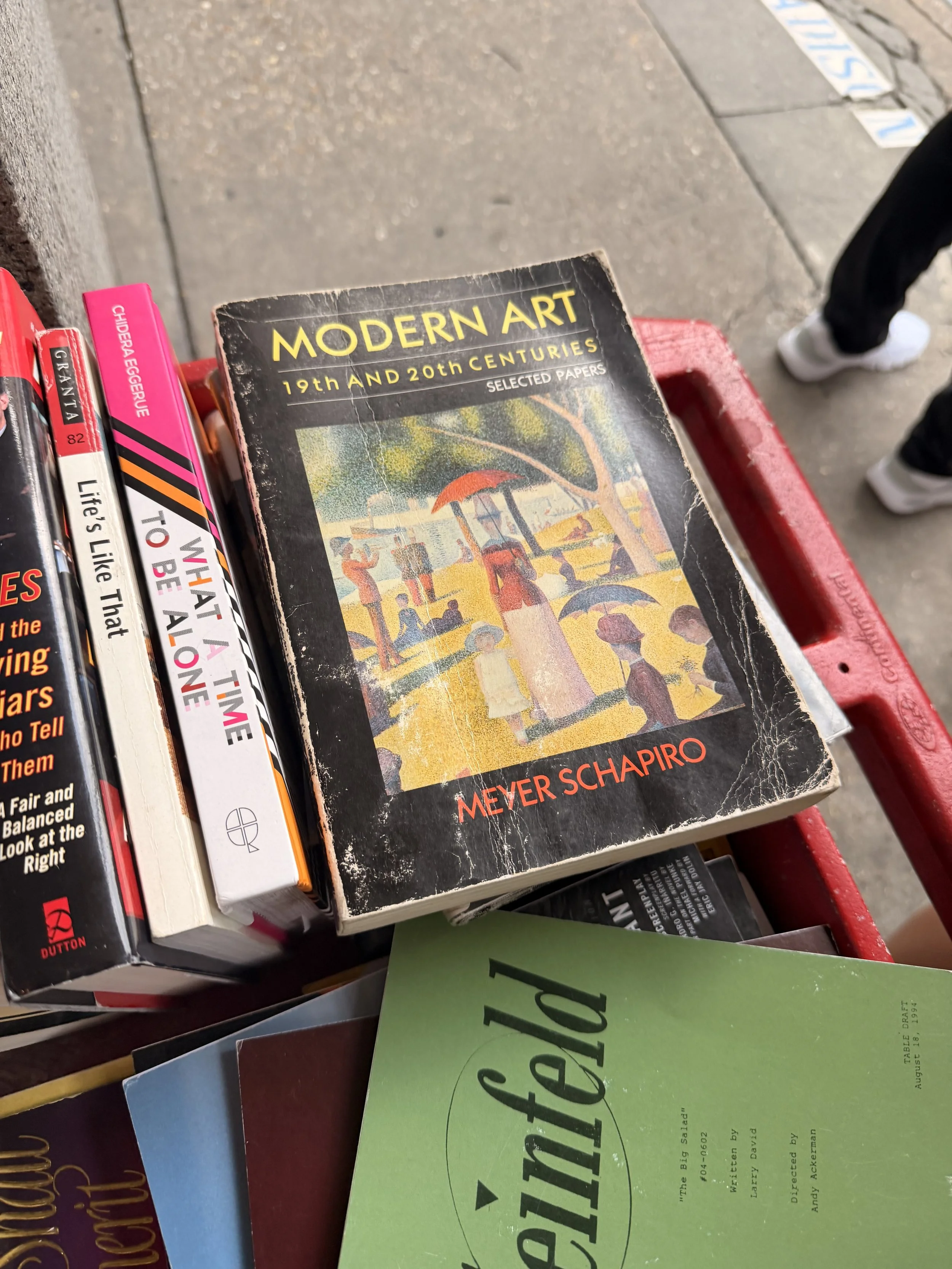
The rain falls — 8am then 2pm then 5pm. Unpredictable increments. Unpredictable screams. It’s similar to how Bolden felt in Coming Through Slaughter when the veil of emotions led him, unstrung through life. “There was no control except the mood of his power … he was tormented by order, what was outside it. He tore apart the plot — see his music was immediately on top of his own life. Echoing. As if, when he was playing he was lost and hunting for the right accidental notes.” (pg.37). When he played, Ondaatje describes his music as having no control beyond the mood of his own power. Notes passed before he even approached them, chasing something he could never quite name. Jazz, for Bolden, was not a release from the weight of living in the South; it was that weight, made audible. The music didn't save him; it mirrored him so perfectly that when the mirror shattered, he shattered with it.
What’s so interesting about Jazz is that the music chords rely heavily on four-note, 7th chords rather than standard triads. They use rich extensions (like 9ths, 11ths, and 13ths) for color and tension, and are typically organized into smooth, predictable progressions (like the \(ii-V-I\)). That is why it often feels ‘unresovled’ or ‘open,’ or might I say, soulful. When I stand in the rain in the French Market of New Orleans, I can somewhat understand Bolden’s mind. The whiplash of just sloshing through life and then having to become serious once the rain dries out is stressful. I can empathize with Bolden, and I love Ondaatje’s mesh style of prose and poetry that really allows us to swim through Bolden’s mind.
Nora’s Song
“Dragging his bone over town. Dragging his bone over town.
Dragging his bone over town. Dragging his
bone over town. Dragging his bone
over and over dragging his bone over town.
Then and then and then and then
dragging his bone over town
and then
dragging his bone home.”
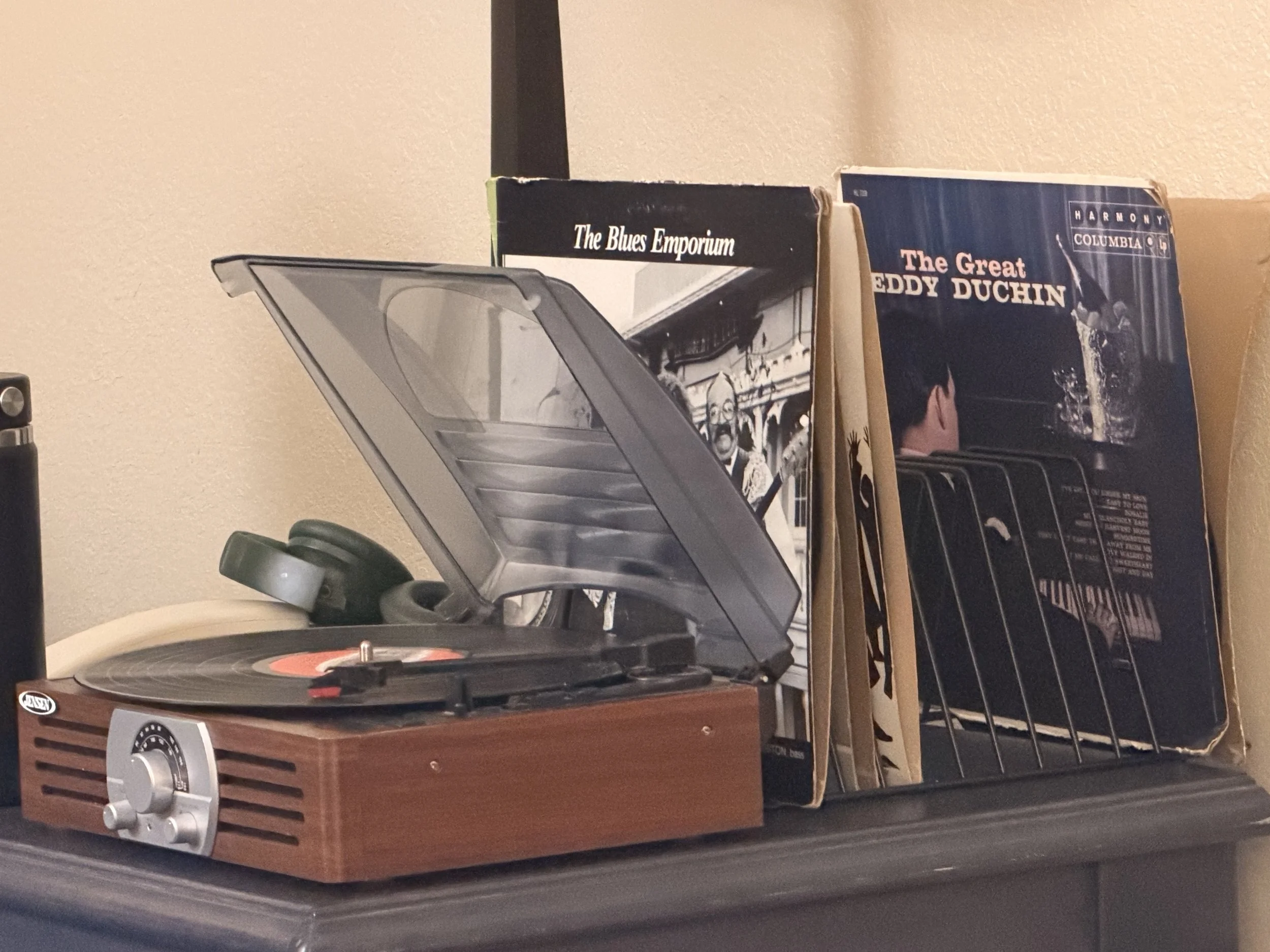
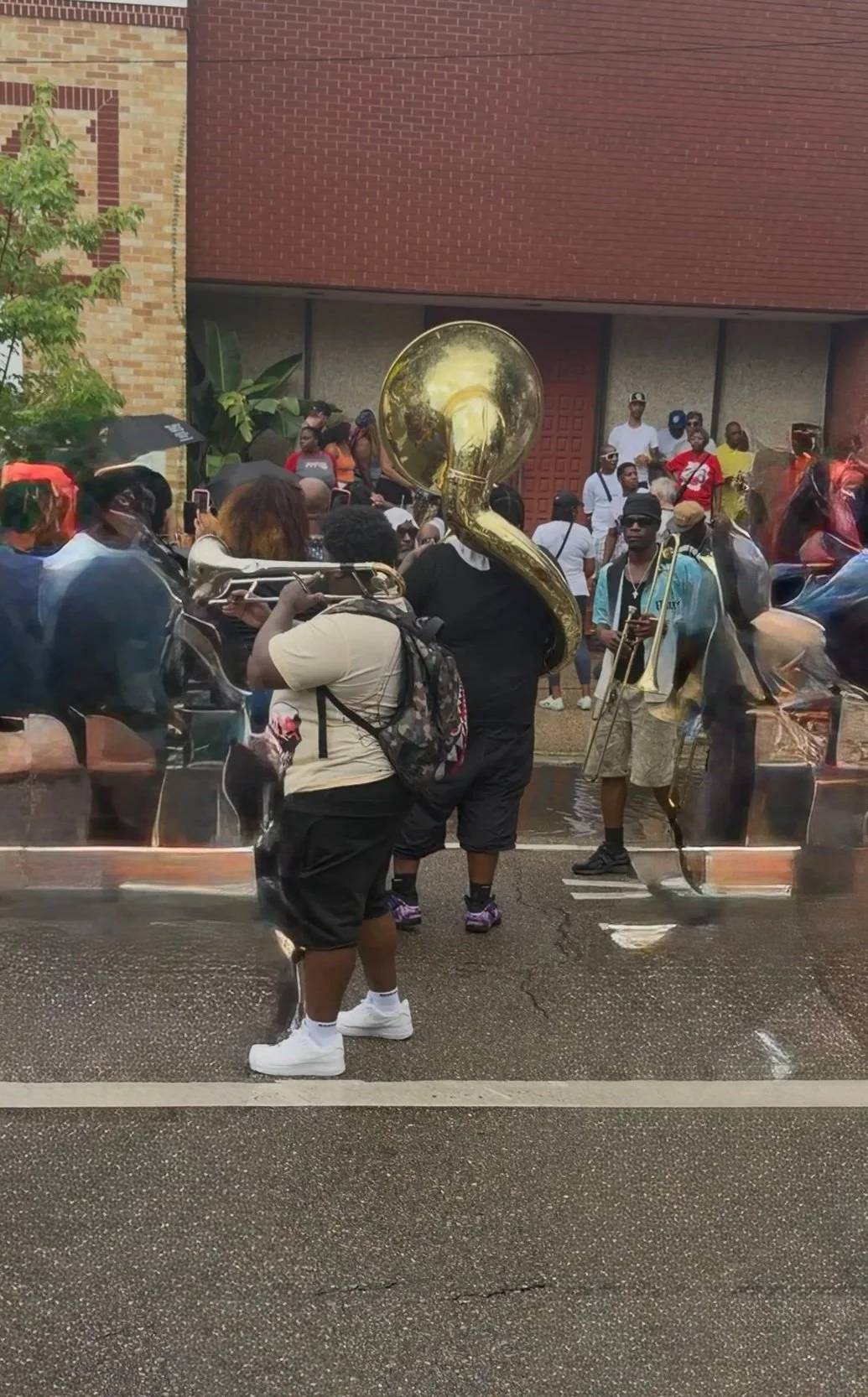
I’ll admit, I don’t know what it’s like to be a musician. I don’t know what sweat and brow goes into going home with a nickel from a silver hat from the 1960’s. But regardless, as I listened to the band in Preservation Hall – I could feel the rain. I could feel the soul.
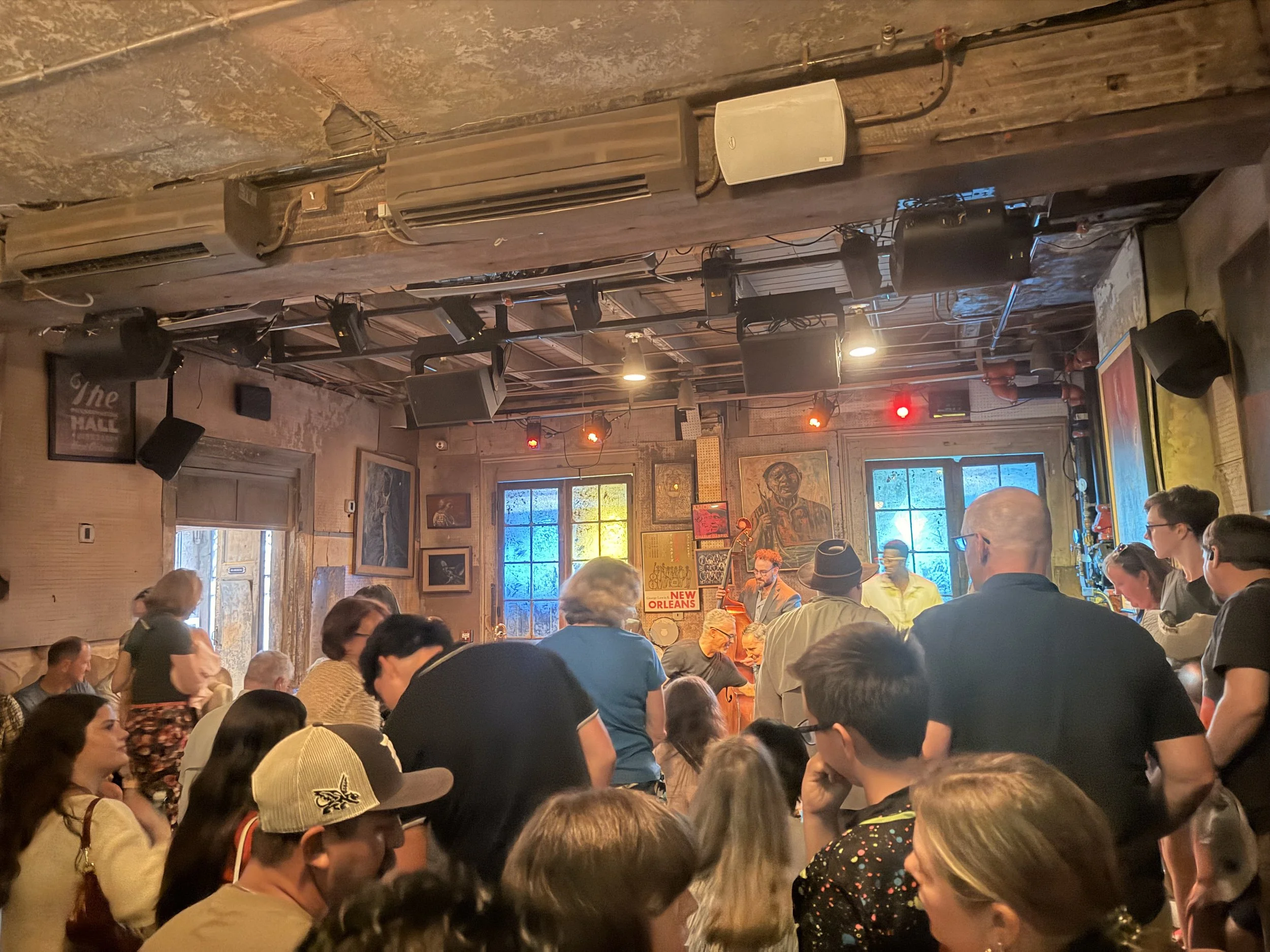
New Orleans at the turn of the twentieth century was the only city in the world where jazz could have been born. It was a place where African rhythms, French Creole culture, the Protestant hymn, and the Catholic street parade all crashed into each other on the same block. Storyville — the legal red-light district that pulses through the novel like a second nervous system, pumped capital and money into music the way the Mississippi pumps silt into the Gulf. Bolden emerged from that pressure the way a note emerges from a horn, forced out by something larger than itself. As I walk down Iberville Street, near Canal St. where Bolden's final parade ended in blood and collapse, it reminds me of Ondaatje's description of him spinning at the Liberty-Iberville intersection, playing until the notes were “more often now, every five seconds,” (pg.129) until something in his body finally gave — “can't stop the air the red force coming up” (pg.131). It makes me feel like the city itself is a kind of instrument, tuned just slightly past what any one person can bear. Just like Preservation Hall, 45 minutes of “blues and the hymn sadder than the blues and then the blues sadder than the hymn.” (pg.81) just so I can forget slightly that the veil life holds is uncovered. And like Bolden, the music reminds a person of the rain outside, so much so that you might want to sink your head underneath some water.
“In the heat heart of the Brewitts’ bathtub his body exploded. The armor of dirt fell apart and the nerves and muscles loosened. He sank his head under the water for almost a minute bursting up showering water all over the room. Under the surface were the magnified sounds of his body against the enamel, drip, noise of the pipe. He came up and lay there not washing just letting the dirt and the sweat melt into the heat. Stood up and felt everything drain off him. “ (pg.58)
And of course, behind all the music is Nora. Bolden's wife — a woman who worked for three years as a prostitute before marrying Buddy, and who somehow survived him without bitterness. When Webb comes to her door asking about the disappearance, she gives him nothing he hasn't earned. And when Buddy finally returns two years later, after acting like a child to Webb, he gently but in a way that frightens her more than his rages ever did, meets him with devastating honesty: “Still love you Buddy … not like it was before because I don't know you anymore but I care about you, love you as if you weren't my husband” (pg.122). It seems to be part of the city for those who are artists to accept this way of living just as is.
“You may perhaps but it is not real. When I
played parades we would be going down Canal Street and at each
intersection people would hear just the fragment I happened to be
playing and it would fade as I went farther down Canal.”
Another example of this is what happens on page 92 when Bolden is hiding from his life, staying with pianist Jaelin Brewitt and his wife Robin. He is in love with Robin. She is in love with him. And Jaelin — more sensitive, more loving, more patient than Buddy by almost any measure — simply walks downstairs and sits at his piano while they do the Devil’s Tango. His music travels up through the floor to the bedroom where Buddy and Robin lie together. “His practice reached us upstairs,” Bolden reflects, “each note a finger on our flesh … The music was his dance in the auditorium of enemies. But I loved him downstairs as much as she loved the man downstairs.” (pg.92). And as I walk through the Marigny on a Tuesday night, music bleeding out of every doorway, it reminds me of that passage, the idea that jazz has always held grief and desire in the same hand. It makes me feel that sound, in this city, is never just sound. It is everything that cannot be said out loud.
And I think that overall, what I’m trying to say in this blog is that Buddy Bolden is just like any of us if we didn’t have something that grounded us. And although Bolden virtually had music to ground him, the four-note, 7th chords and incremental rain made it so that the ground itself kept shifting, and every resolution dissolved into the next unresolved tension, every moment of stillness was swallowed by the next squall, until there was no difference between the music and the man playing it. And this truth could be said about New Orleans itself, a city where music and body were commodified on the same block, which is why the musician, and the jazz itself probably shared the same emotion — led to the same lifestyle. Thirty piano players pulling in thousands weekly, brothels and jazz halls sharing the same advertisement in the same Blue Book, and where, as musician Danny Barker put it plainly, “if you wanted to go anywhere [in New Orleans] at all, you had better learn to play something.”
Double-click to edit...