Isabel Cash

The Citygoer

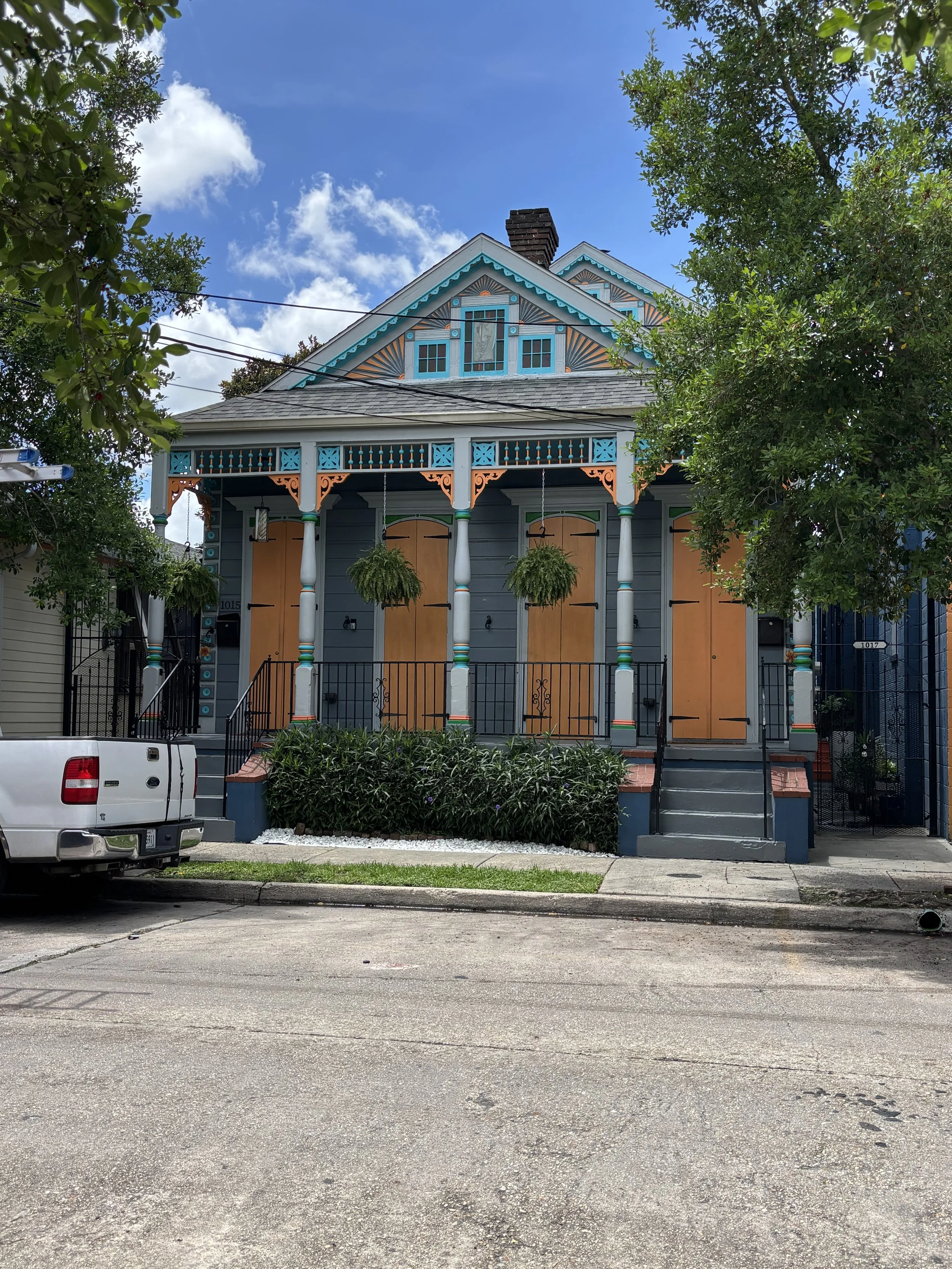
Modern New Orleans is a city unlike any other, with communities that are seemingly perfect capsules of time and up-and-coming downtown areas like the business district. All are rich in history and highlight the unique neighborhoods and people that call this city home. In my three weeks exploring New Orleans, I can confidently say that the literary journey we bookpackers have taken has been unlike any other adventure I have had.
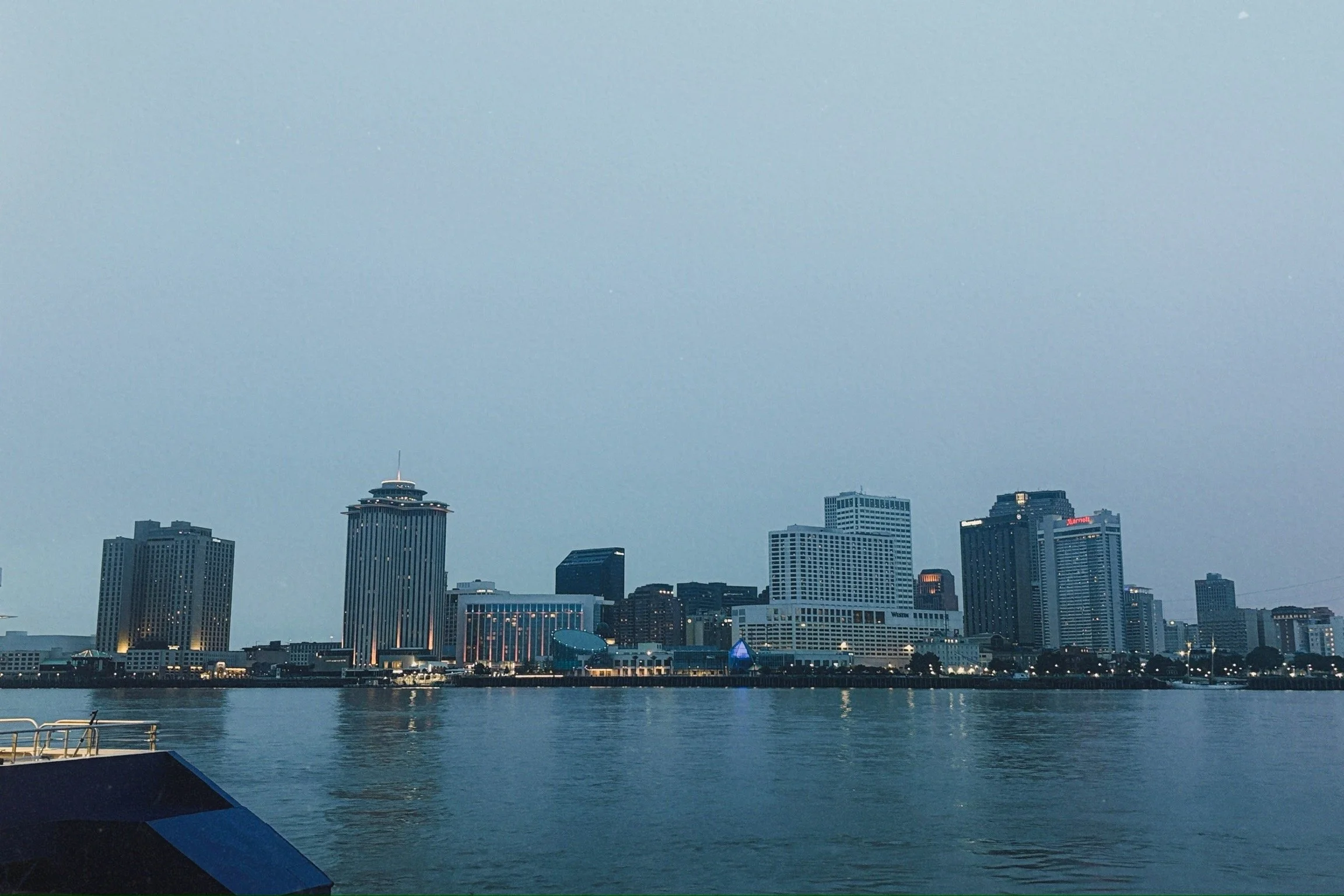
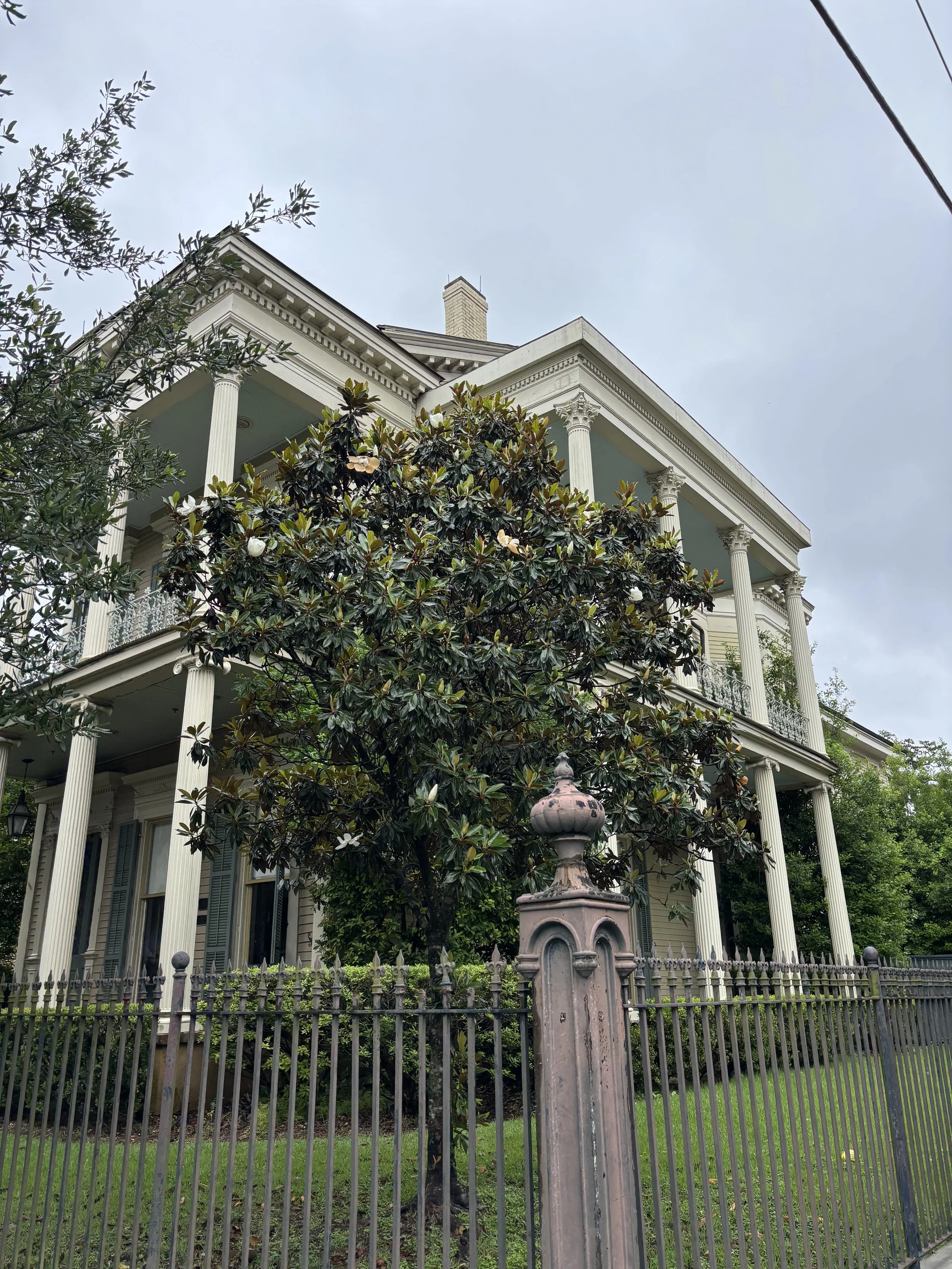
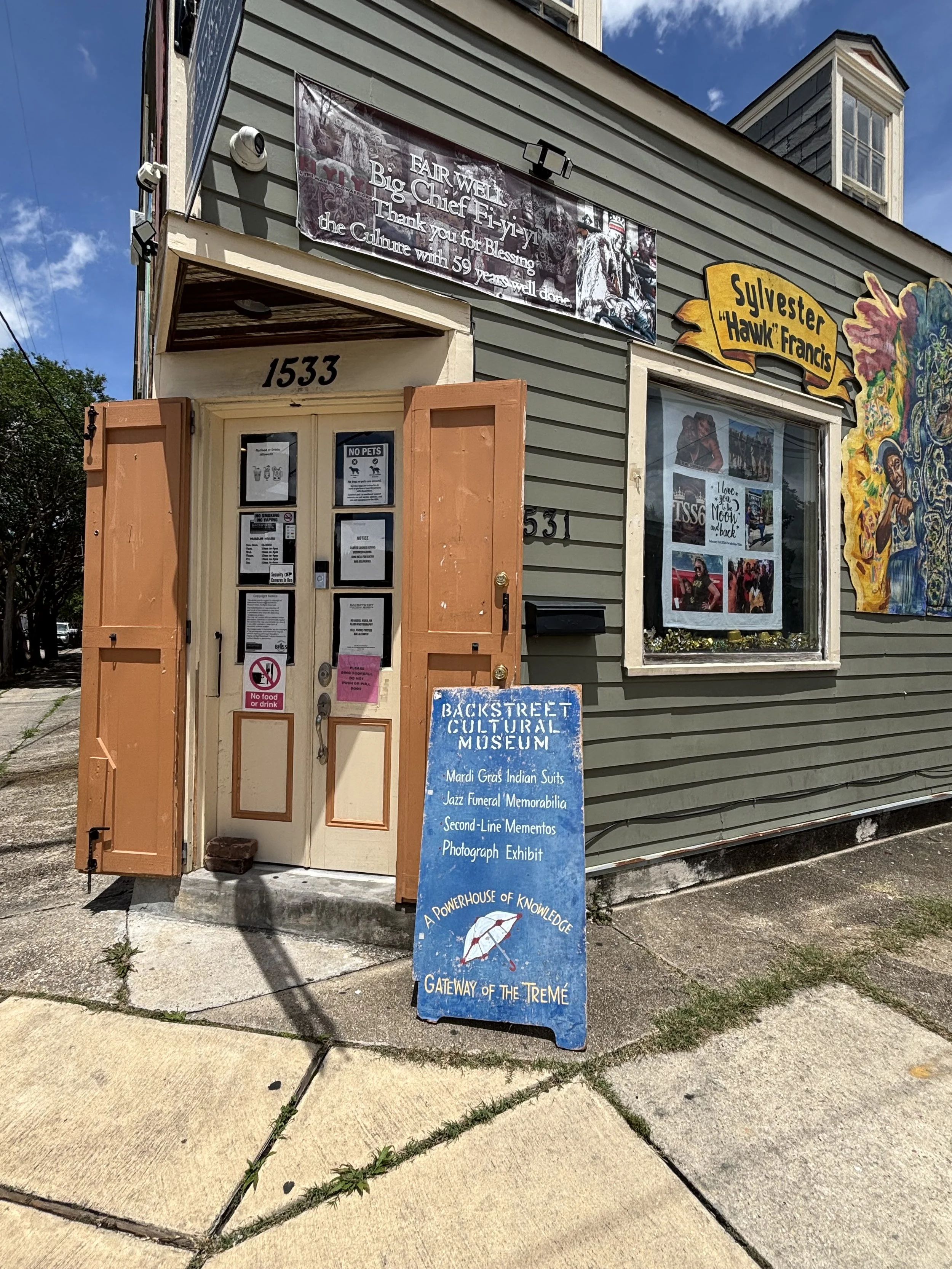
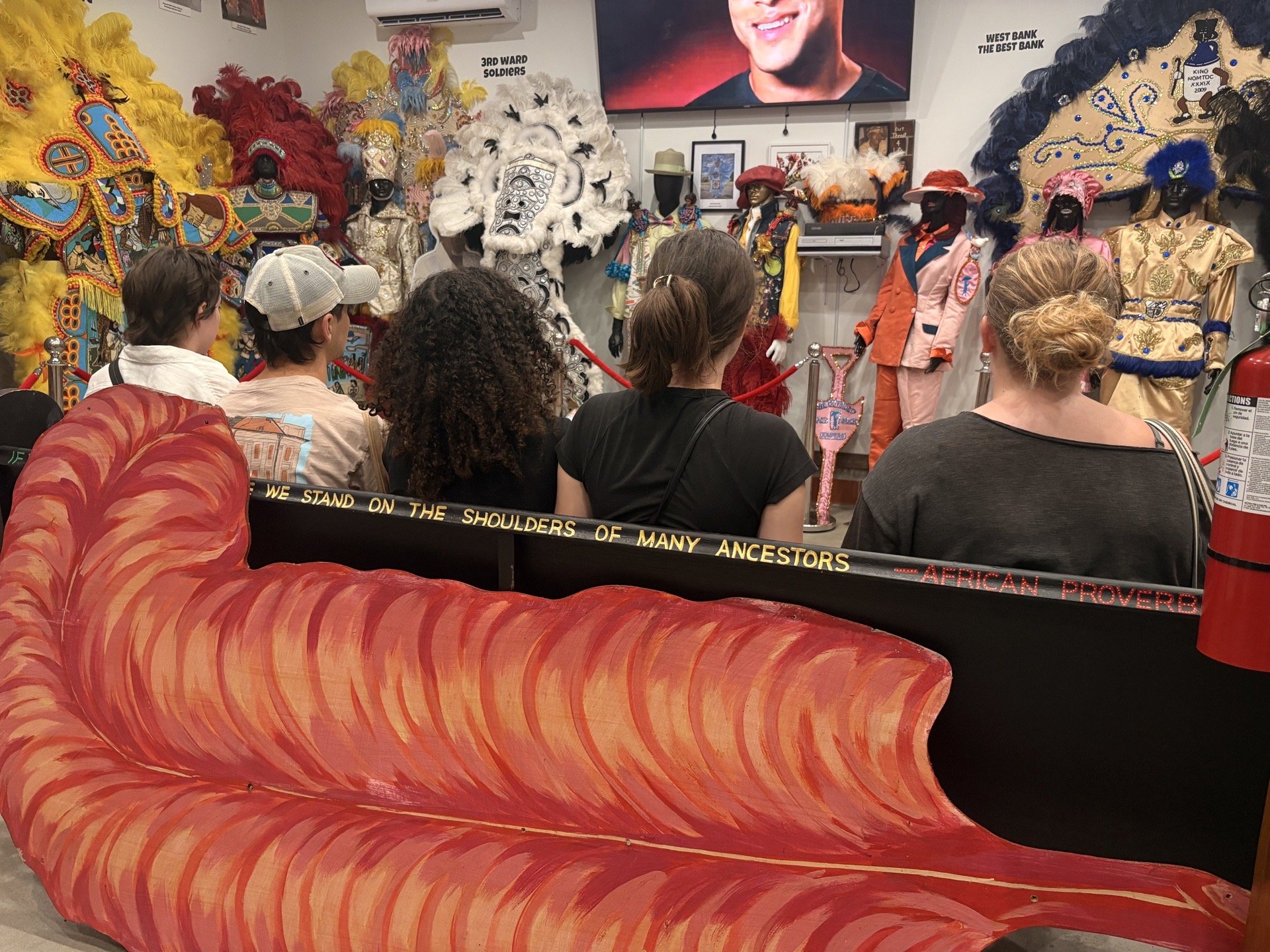
The experience of feeling like you are in Disneyland, with the fantastical architecture of the French Quarter and its spooky tales, to feeling like you are in a movie with the romantic buildings of the Garden District, is unlike anything else. The theaters that have been preserved over time, with conservative exteriors and wild midnight showings of the Rocky Horror Picture Show, are just one example of the city's eccentric nature. The layers of history, in the eyes of enslaved people and women, create a picture of strength and resilience. Stories from Maria and Nancy, our teachers at our Cajun cooking class, and their journeys during and after Hurricane Katrina, show just how stubborn and unbending the people of New Orleans are. Places like the Backstreet Museum are reminders that culture and love do not disappear, but are fueled by disaster. The beautiful, gracious city we only had the privilege of visiting has and continues to be the home of celebration, multicultural identity, hearty food, and art.
The characters, real people, and fictional worlds we got to visit, Ignatius Reilly, Edna Pontelier, Louis de Pointe du Lac, Sarah Broom, Buddy Boldin, and Binx Bolling, are the greatest reflection of the city. Representing real people and ideas, perceptions of slavery, womenhood, and the constant class and power struggle of the South. The opportunity to explore them in their natural habitat, walking where they walked, seeing what they saw, and even experiencing their world was such a special experience. I can firmly say that nothing will ever compare to the emotional and physical connection I feel to those characters, those pieces of writing, and this city.

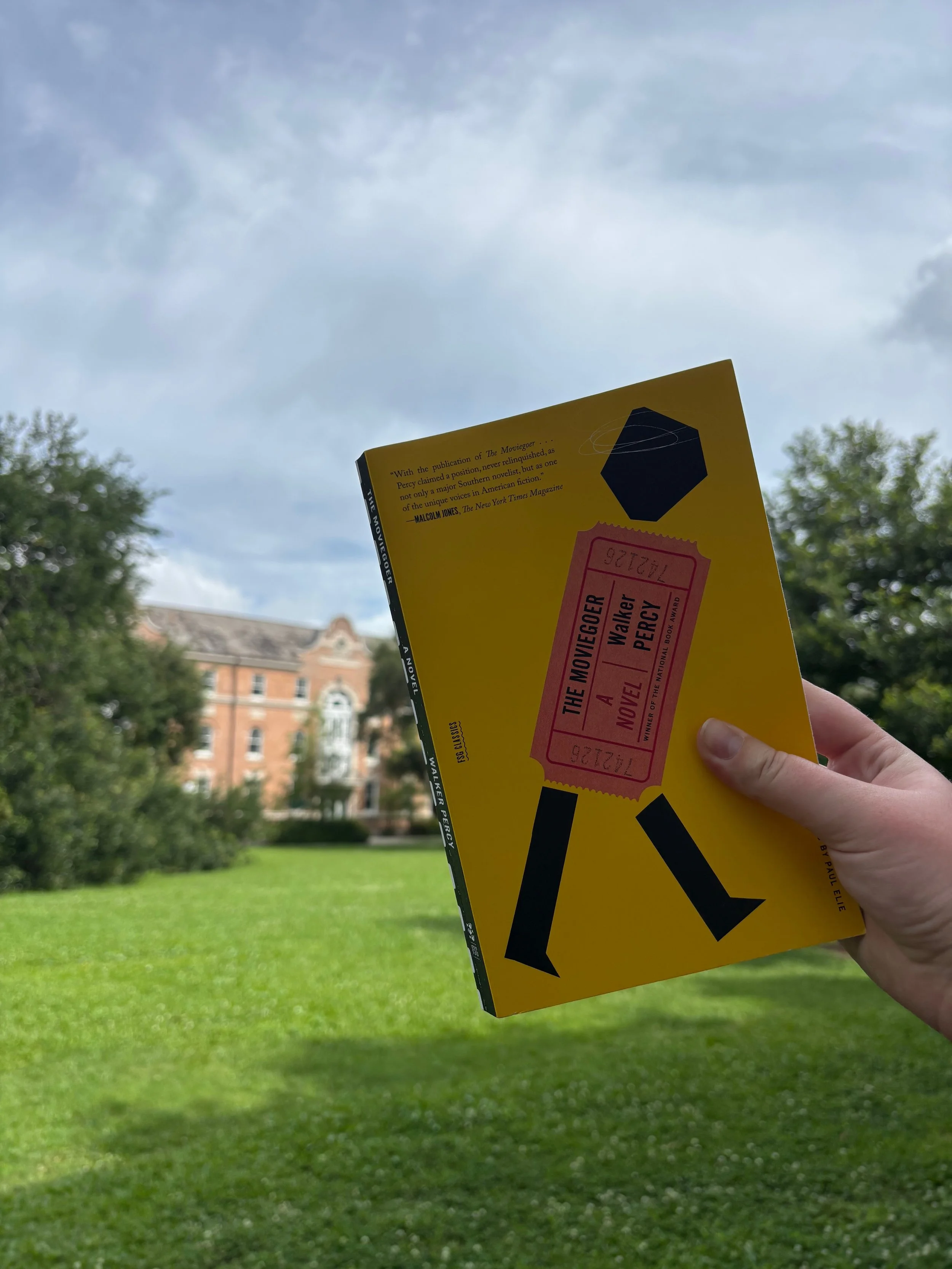
Books like The Moviegoer have left permanent imprints on my being and how I see the world. The post-war world in New Orleans is a unique period of history for the city, where we see veterans returning to an industrialized place that has seemingly moved on. The combination of the Old World South and the up-and-coming business of the 50s is what makes New Orleans the perfect place to research characters like Binx Bolling, and how his ideas and perspective reflect the values of the culture of New Orleans.

In New Orleans I have noticed that people are happiest when they are going to funerals, making money, taking care of the dead, or putting on masks at Mardi Gras so nobody knows who they are
— Binx Bolling, The Moviegoer (Chapter 1)

The Moviergoer encapsulates the post-war period of New Orleans, romanticizing it and passing over the racist and problematic depictions of African Americans and women, which is a pivotal aspect of Binx’s character. His treatment of women, and perspective towards African Americans, and generally people of color, is astonishing. Particularly, his descriptions of Mercer, the butler of Binx’s Aunt Emily, are filled with suspicion. Binx feels uneasy and unsure of Mercer and can’t decide if he would describe him as kind and devoted or as knowing and calculating. Binx’s depiction of Mercer is a reflection of how white society in the South perceives black individuals as unreliable and untrustworthy. This narrative stems from systemic issues that we have as a nation; it lies within our politics, our cultures, and our class structure. The United States is built on ‘untrustworthy’ men and ‘unstable’ women like Kate, Binx’s step-cousin and love interest. We as a society rely upon those who are mistreated, oppressed, and ultimately villainized. This story is personal to so many, and many who have been put into a box like Mercer, deemed unworthy and strange by people like Binx. This is the result of our longstanding systems, and it is seen in almost every aspect of American life today.
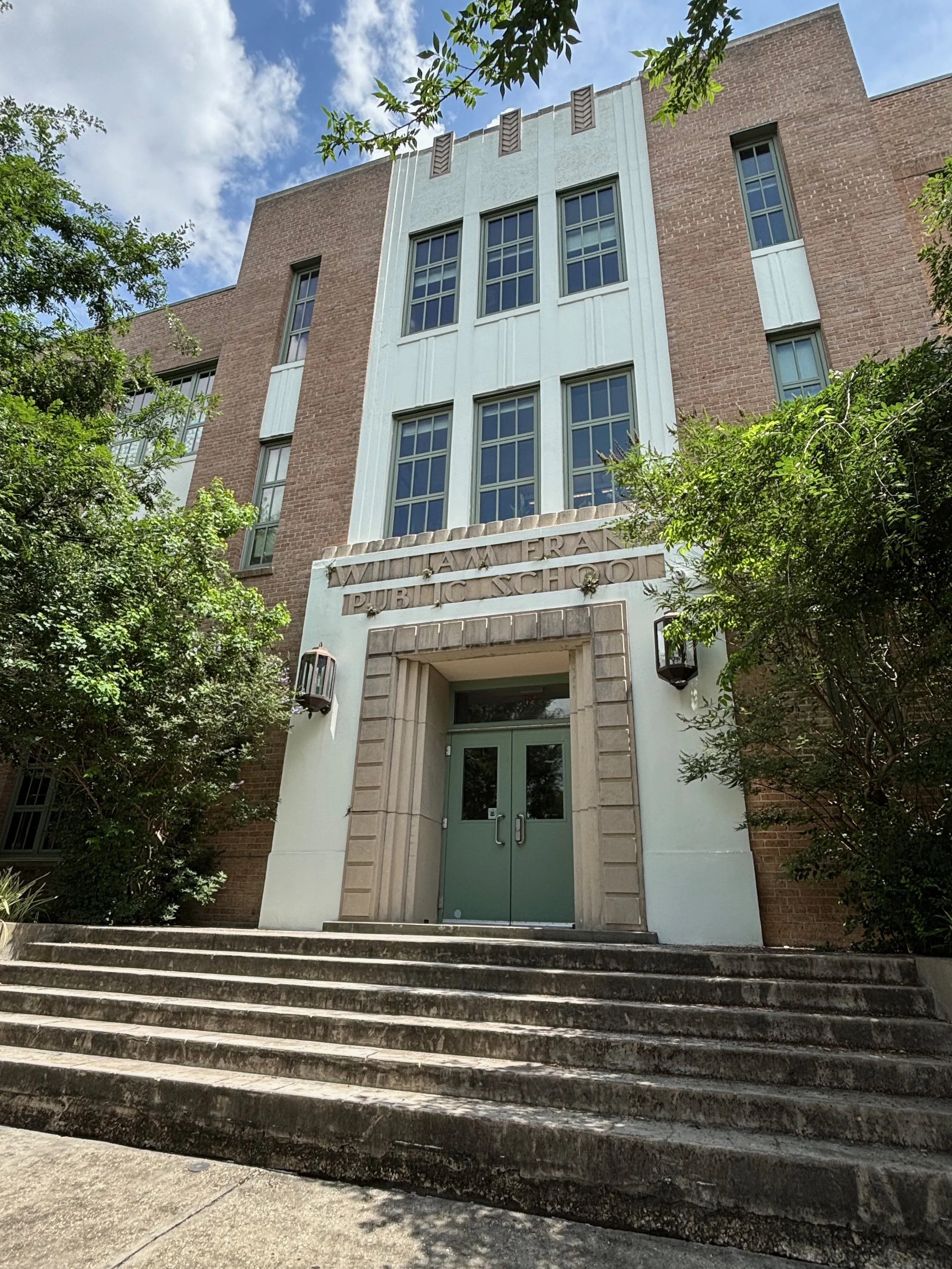
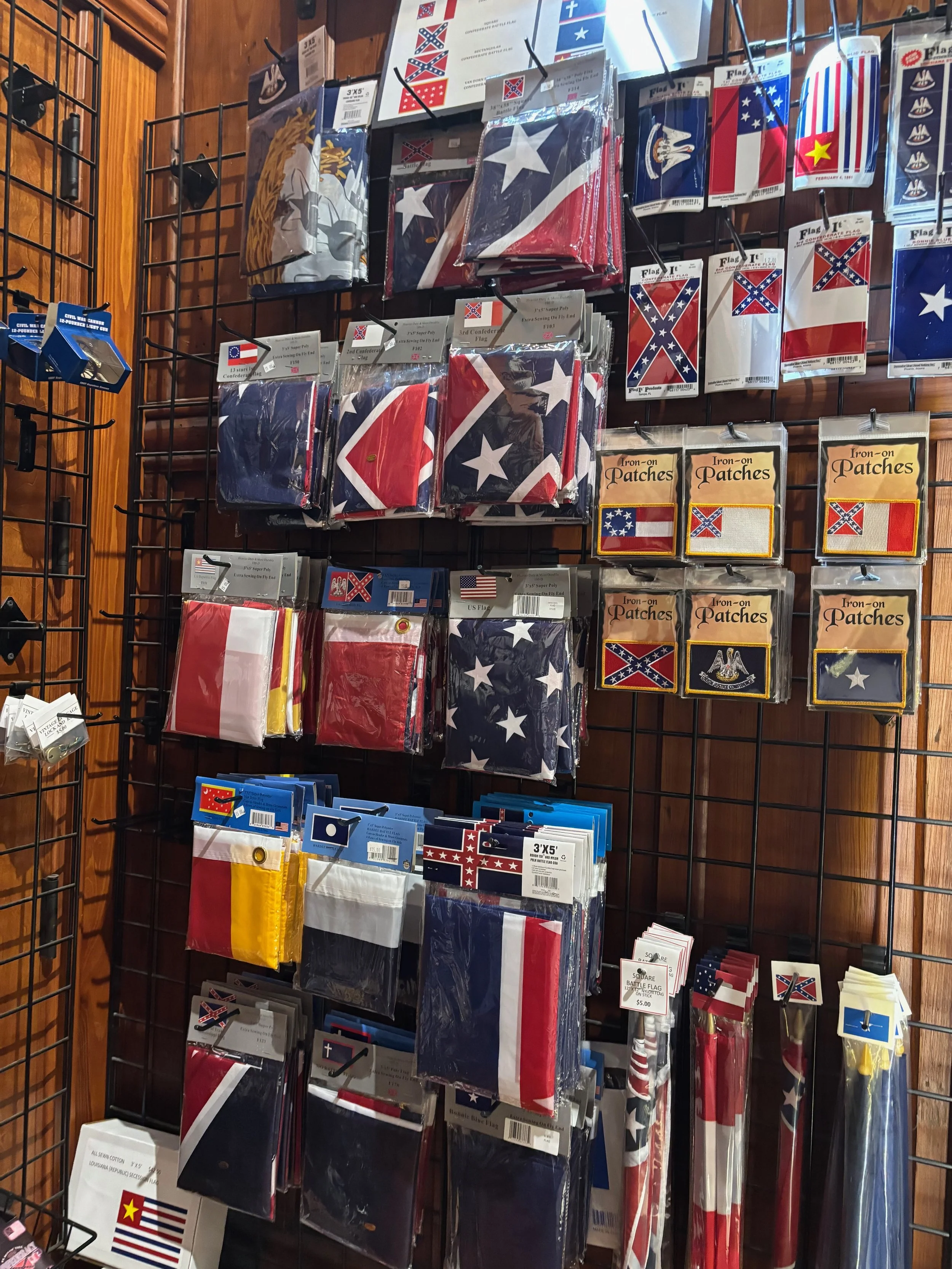
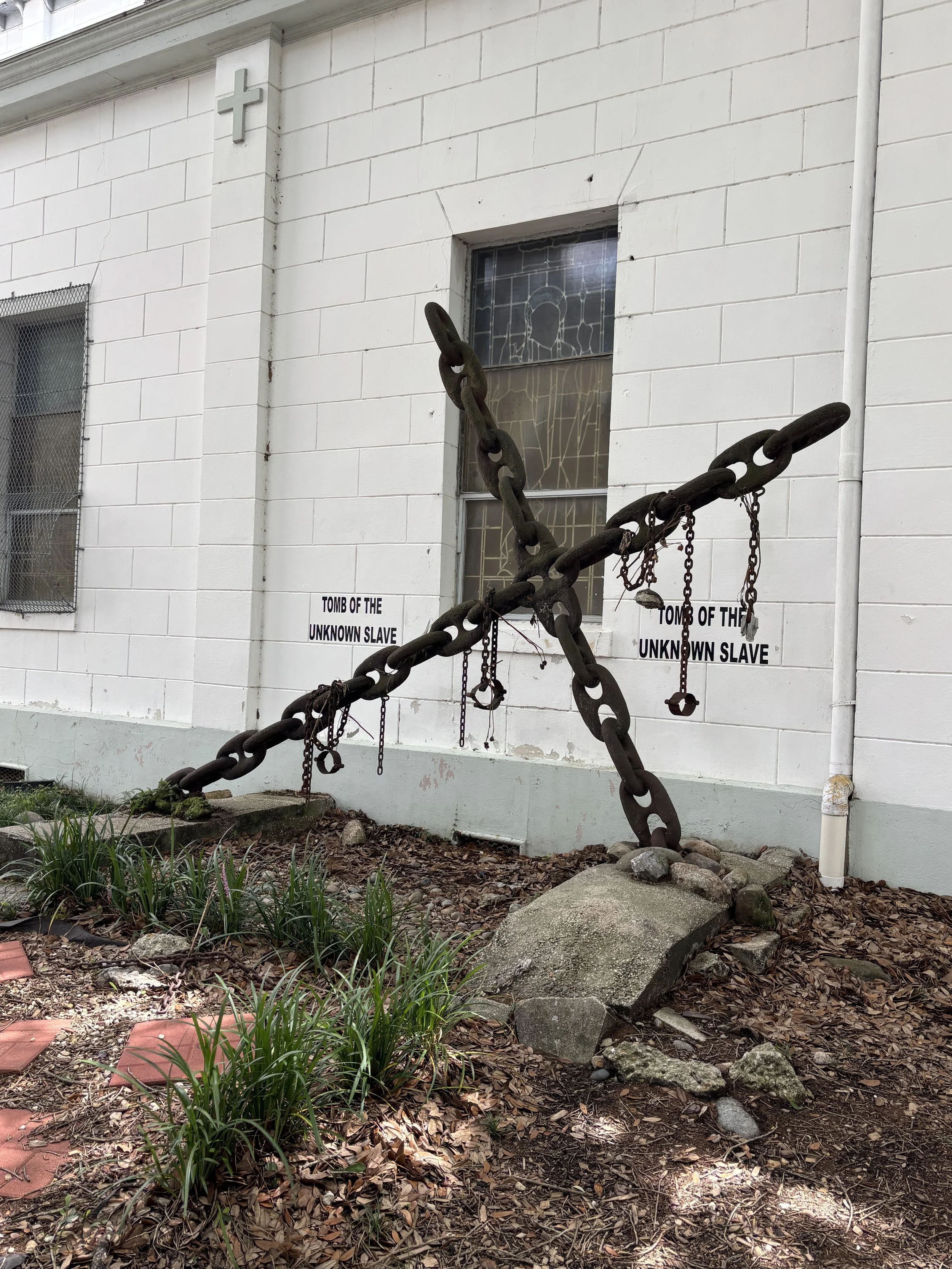
New Orleans, a progressive city in the southern part of the United States, reflects this tension and ongoing struggle. As it welcomes so many, it also lies within a culture of the ‘undying’ South. Experiences like visiting the ‘Civil War Museum,’ which really is the museum of the Confederacy, make these stories a reality. The slave pens and auction buildings just across the street from a church, and the multi-million-dollar mansions just miles from the neighborhoods devastated by Katrina, are the truth of the city.

In its beauty, there is devastation, physical and cultural. Through personal stories from Sarah Broom and fictional characters like Ignatius Reilly, we see the great diversity of the city and how the devastation permanently alters individual lives. This special experience of bookpacking is the epitome of how to understand this devastation and beauty. To see how characters like Binx Bolling live in privilege, yet suffer on the ultimate human journey.

Binx’s flaws are the cicities'laws, his misogynistic view of women, his bigoted view of people of color. This lives not in the underbelly of the city but at the forefront of its deliberate actions. Which neighborhoods to save in Katrina, which parts of the city are well-funded, all of these facts are based on the current struggles that Binx represents. New Orleans searches for an identity that is not built on the backs of enslaved people, nor on the backs of women who suffer silently in their roles. It searches for the harmony of people, of all backgrounds, connecting them with music and food. This hope that the unyielding people of New Orleans have is what makes it the most special book-packing location.

An experience like this, shared with others, is so special. To spend it with students of all areas of study, entirely different backgrounds, and strong opinions, made this journey what it was. With the help of our passionate and informative professor, we together explored these challenges and made sense of what New Orleans was to us, an onion, blue, jazzy city, filled with Creole women and vampires.
The Blue Side of Jazz

My extreme fascination with music has taken over many parts of my life, listening to on average 200,000 minutes a year of music (thank you Spotify), which amounts to almost 139 days of music. A statistic I wasn’t aware of until I somehow accomplished it- maybe I need to go outside more. A large part of this obsession is based on familial priorities of music, as my dad owns an extensive record collection, which I have repeatedly told my brother I insist on taking when he passes. But beyond these records, I find that my background in piano and ballet has heavily impacted my tastes and has created a desire to involve music in almost every part of my life. I have curated soundtracks for any scenario, awarding myself the privilege of music while walking down the street, driving, sitting, and talking to others.

What's so horrible about this obsession is how much I prefer music to people! Music helps me travel from the comfort of my home, taking me to every inch of the world, exposing me to life and culture, language, and sound. It makes me feel something unlike any other form of media or art that is available, made by humans for humans. It almost feels as though every musician or contributor has taken some of the inner lining of their soul and woven it into each piece they make. Creating an infinite loom of layered emotion and feeling that goes beyond any other form of expression, even words.

If the world was mine, I’d tell you what I’d do
I’d wrap the world in ribbons and then give it all to you
— If the Stars were Mine, Melody Gardot

Thanks to my parents, my ‘musication’ (music education) has been diverse and extremely in-depth. I grew an appreciation for classic female jazz artists like Etta James, Ella Fitzgerald, and Billie Holiday, as well as artists like Duke Ellington, John Coltrane, and my personal favorites, Chet Baker and Miles Davis. With an appreciation for any sub-genre of rock, folk, classical, musical theatre, country, and just about anything with ‘real’ instruments. Because my dad firmly believes that someone cannot call themself an artist if they can’t at least play some kind of instrument.

Maybe I like Miles Davis because of him, and all the memories I have as a teen listening to jazz with my parents in our living room on dusty old vinyls my dad collected. In these special evenings, my parents taught me poker so I could best my peers in college, and I tried my mom's Grey Goose martini for the first time (which I hated). We would play cards until my fingers were red and raw from gripping my hand with anticipation, laughing with my parents while listening to their stories from work and hoping to distract them enough to win a game every once in a while.

Memories like these are perfectly encapsulated in music; a single moment in time can be etched onto the record of our life and forever memorialized in a song or voice. Even now, as I listen to "In a Sentimental Mood" by John Coltrane and Duke Ellington, I think back to Christmases with my brother and parents in Monterey Bay, California. The feeling of the cold, crisp, foggy air and the water dripping from the intertwining mess of Spanish Moss that hung on the tree outside the patio of our home. I remember my sweet childhood dogs, Gracie and Audrey. I remember when we brought Gracie home to that house, and she couldn’t eat anything besides pumpkin and rice. I remember how I would squish my little bottom at age 7 into a large Chinese-inspired pot at the front of our home, using my blanket as a cushion. I would grab my binoculars and ‘spy’ on our neighbors, and in the background there would always be jazz and country. I remember my brother breaking his whoopee cushion the same day he received it from Santa Claus. I remember him asking me which side of my blanket I wanted on top of me when he tucked me in to go to sleep. I always picked blue.

Even now, as I am listening to this music, I am tearing up thinking about these fond memories, my heart is aching, wishing and wanting to go back. Hoping to feel how our family felt in those perfect moments of absolute bliss. Music makes me forget my childhood innocence at this time; it paints a romantic picture of perfection that I'm sure my parents and brother would break in an instant with reality.

But the divine romantic aspects of these memories are a representation of what music does to the soul. Creating niceties that didn’t exist before, drowning you in a pool of what once was and how you wish to remember it. Sometimes forcing an artificial memory in place of the real ones.

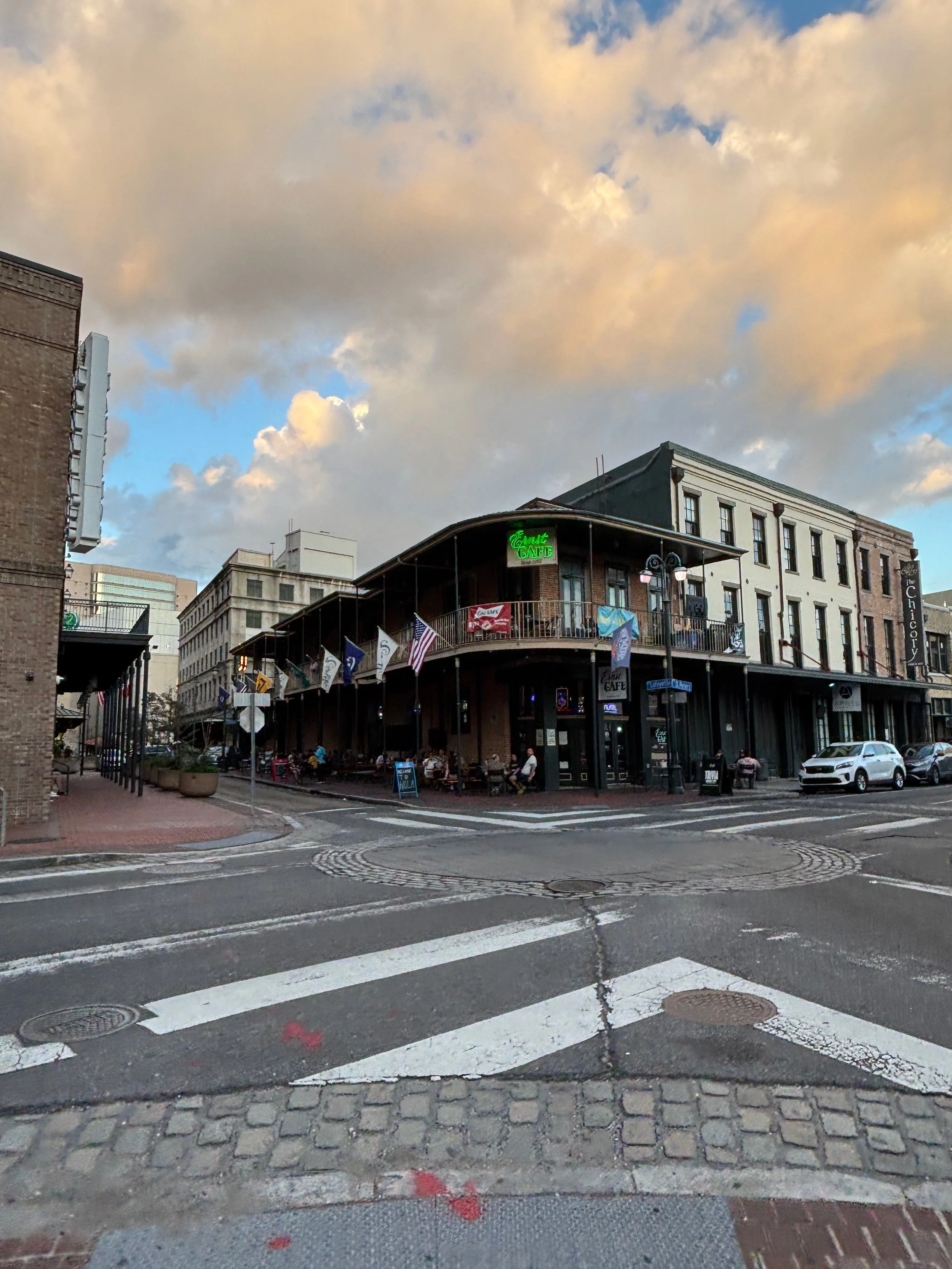
However, it is impossible to say anything is artificial about the music scene in New Orleans. New Orleans is a city of culture and jazz; music billows out from every building, filling the streets with singers, buskers, bands, and bucket drummers. The French Quarter exists as a physical box keeping in all the gooey goodness of this music. You can’t walk through any part of the quarter without hearing a trumpet, a drum, or some kind of lick you can’t quite place.

Each instrument carries a tune of its own, and each band its own chorus. Leaving you feeling enraptured with the magic of the city, as one block of music ends, another picks up where it left off. Culminating in a never-ending party of laughter, dancing, drinks, and memories.

In my time walking these streets, I am reminded of Halloween when I was 11, living in Santa Barbara with my parents and brother. I would trade candy with other kids for my favorites, as I attempted to be as practical and diplomatic as possible. I always carried extra clothes with me to school ‘just in case,’ and visited my brother in his ‘yurt’ in our backyard. I remember the summer days spent in the pool, our backyard being filled with palm trees, olive trees, and fruit trees of every kind. The blackberry bush that would stain my fingers pink after picking and eating berries until my belly was full. I remember my brother's wedding reception and how I couldn’t believe he was leaving me, and how beautiful I thought our family was. I remember the Christmas I snuck a peek at the gifts and was scolded by my parents, rightfully so. I remember my brother teaching me how to skate on his long board, and I remember him asking me which side of my blanket I wanted on top of me when he tucked me in to go to sleep. I still picked blue.

The ecstatic beauty of music keeps these memories alive, living for me, replaying in my head every time I have ever felt homesick or missed my family. The music has followed me in every home I have ever lived in, in every place we stayed together, and every tragedy of each move was overplayed by the vinyls and love. And even in my now adult years, I still get emotional thinking of how much we have all changed and grown, how much I love our additions to our family, and I am just so grateful.

I imagine these feelings are universal, in some capacity, we all waltz back in time when we walk through the quarter, or romanticize our past when we see some great big lovely mansion in the Garden District. Because in these places, these real physical places, we hear music. And music does connect us, remind us of who we are, and it places us in our current reality. Every single person I have ever met can confidently name a tune that brings them back to a special moment, person, or time in their life where everything was rose-colored and perfect. And as I wander through this great big city of music, and I look at all of the other people around me, I hope they feel as touched as I do, and I know they do.

For a place as special as this, practically vibrating with the actual drums of the city, carries the key to unlocking these memories. Isn’t this why people come here? To listen to the music? To be reminded of all those little things that make you, you?

This unique experience is so alluring and addictive, drugging you with every lullaby and voice that melts even the coldest parts of ourselves. It is this feeling in this city of jazz that brings us back out every night, hoping to feel as we once did, and have the oh-so-therapeutic experience of missing, longing, and loving.

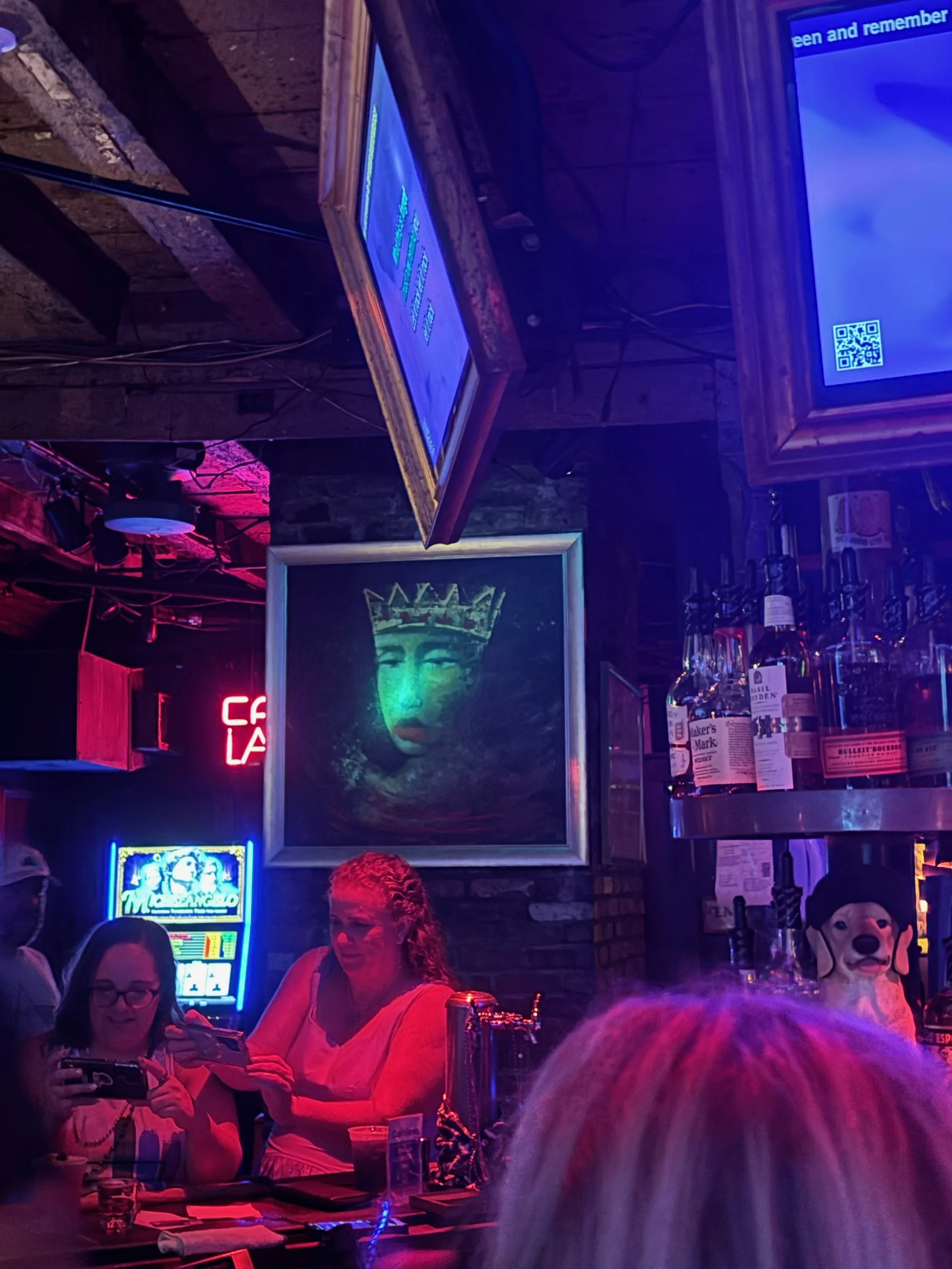
That is why so many come here, why I came here, to visit the music and hear it in the most outrageously named bars and clubs. Trekking to the ‘Spotted Cat’ and the ‘Snug Harbor,’ desperately hoping to walk down memory lane, and to do so with my fellow humans in a dark, lit room, swimming in smoke and tears. Watching those who seem blessed by God to artfully pluck their instruments or play the piano with such grace, I fear I am watching something alien at work. The fear is overridden by that universal experience, the hope of being reminded, of being given the time and space to process all that we have gone through, in a room together. I always picked blue.

Interview With Life and Death

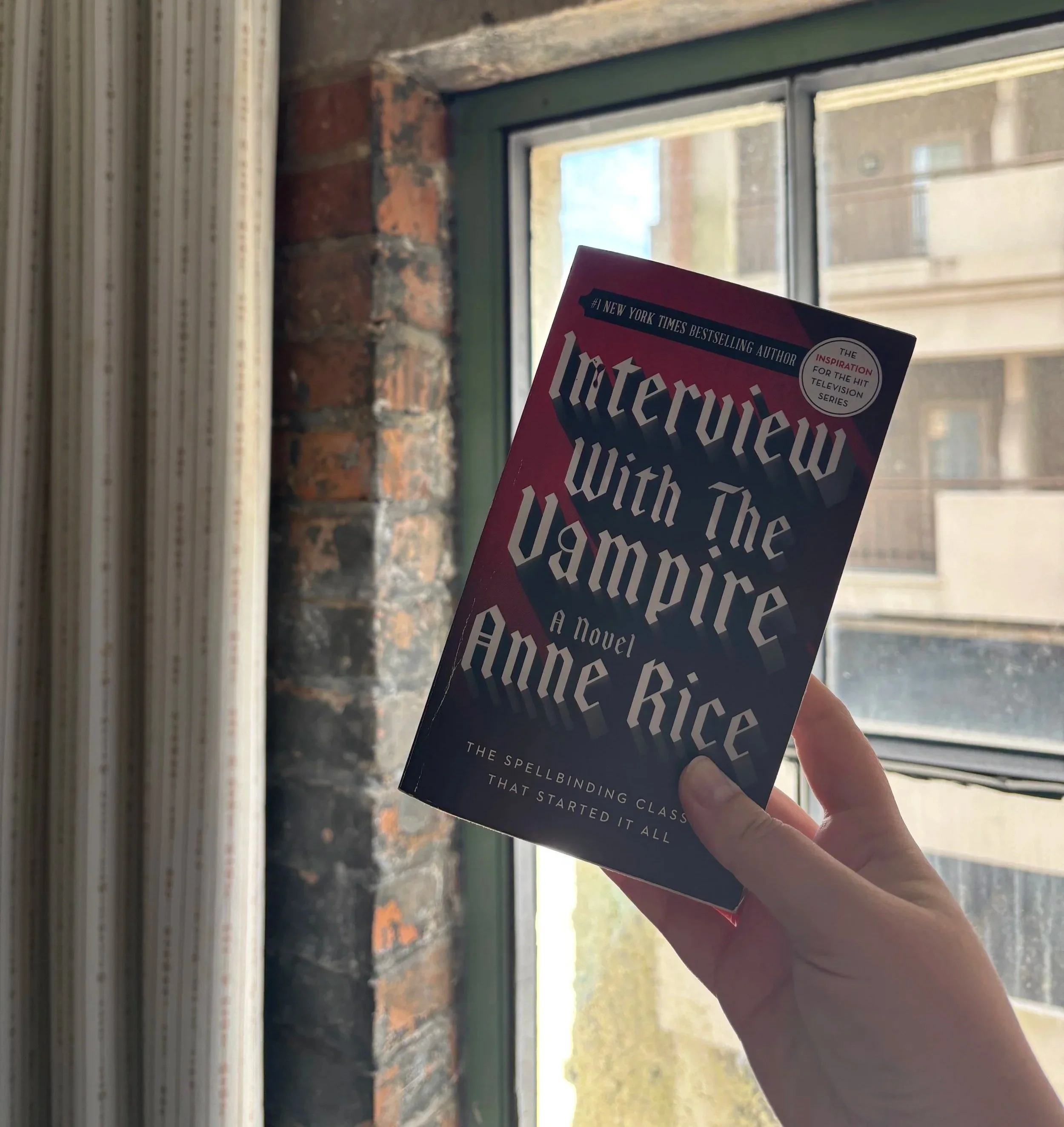
One of the most complex aspects of human mortality is struggling with one's perception of life and death. We all cope with it in different ways, through religion, science, faith, medicine, magic, or maybe a mixture of all of those paths. These themes become even more prevalent when faced with the supernatural; this was my experience reading Interview with the Vampire, by Anne Rice.

Interview with the Vampire is groundbreaking in its depiction of supernatural life, or should I say existence, by examining man through the eyes of Louis de Pointe du Lac. We see Louis struggle with understanding his own existence and face moral quandaries unique to someone who has gone through a transformative experience, such as turning into a vampire.

However, I argue that much of Louis’ story of struggle is relatable to many of us readers, as he faces the conflict of who he is, what is expected of him, and who he wants to be. These internal dilemmas plague most humans on our path of life.

Viewing New Orleans through these struggles has made the Bookpacking experience surreal and impactful. Although I say I do not believe in ghosts, vampires, or anything unnatural, I am, like most creatures, scared of what I do not know or understand.

I am always reminded of this fear when a loved one passes away or when I face a great challenge in my personal life. The constant dynamic of being so utterly involved in myself that I feel anxiety over the most minute details, but also trying to humble myself and live in the great words of Kansas;

“Nothing lasts forever but the earth and sky, It slips away, And all your money won’t another minute buy, Dust in the wind, All we are is dust in the wind.”
— Dust In the Wind, Kansas

Louis faces these same struggles, these anxieties; however, I must admit that I never carry fear of killing another, as I have never thought to!

This coexistence of life and death is so authentic to the streets of the French Quarter, where Louis, Lestat, and Claudia live for many years together. The French Quarter has nightlife so loud and extravagant that even the undead can walk along the living knowing their outrageous looks and strange behaviors couldn't possibly be noticed.

These same behaviors still exist, this is an opinion shared by anyone who has met some of the visitors on Bourbon Street around 3 a.m. Some of them I would even say were drunk enough to be targets of real-life vampires!

These clashes bring many devious plot twists to Louis’ existence, where he turns a young girl into a vampire, Claudia, and begins a wildly inappropriate father-daughter relationship with her that seems almost incestuous. Forcing you to wonder if Anne Rice had some unresolved childhood conflicts of her own…

Louis’ relationship with Claudia became one of the most pivotal parts of the novel, creating a space for personal examination of ‘toxic,’ ‘unhealthy,’ or ‘codependent relationships’ in our own lives. Then, ultimately, bringing readers back to death when Claudia faces her untimely demise.

I grew up with agnostic parents, and eventually became an atheist and extremely opinionated about life and the existence of a god. But only because I feel I must be consistent and hold fast to my beliefs. The reality is I have no answers, none that aren’t at least proven by science. In the place of the unknown, I choose to believe there is nothing when we pass, and that our energy, yes, our literal energy, just recycles into the universe to become a pencil or a pine tree.

But exploring the supernatural world challenges these basic notions, and forces me to wonder if all those I have loved, from grandparents, friends, to even my childhood dogs, really do go to heaven? Or can they become zombies? Maybe they are reincarnated into new people or beings?

All of these questions have no definitive answer, but Louis' experience as a vampire, in a way, showcases a possibility of life, or existence, after death. Louis seems to find his ‘second life’ beautiful, exciting, and new. He doesn’t see it as the end, but maybe the ‘limbo’ aspects of his existence are what confuse him? In the supernatural world, the lines between life and death are completely blurred. I can no longer rely upon science to explain why vampires suck blood. Yes, many cultists and fans of Vampire Diaries or Twilight may have reasons, but no facts.

This unknown is what scares Louis and me. We face the world feeling helpless, grasping onto a semblance of self-identity. I, looking for truth and fact, he, hoping to keep his humanity and central beliefs. But maybe the only truth a person, or being, can find in their life and existence is that of their own. Not defined by natural or manmade laws, by social convention or personal anxieties, only by experience and the pursuit of growth.

Picturing Louis, Lestat, and Claudia's lives together brings to mind one dark picture, where coffins took the place of beds, and strategies to effectively drain people of their blood start growing in numbers, but actually seeing the location where this all took place completed the image.

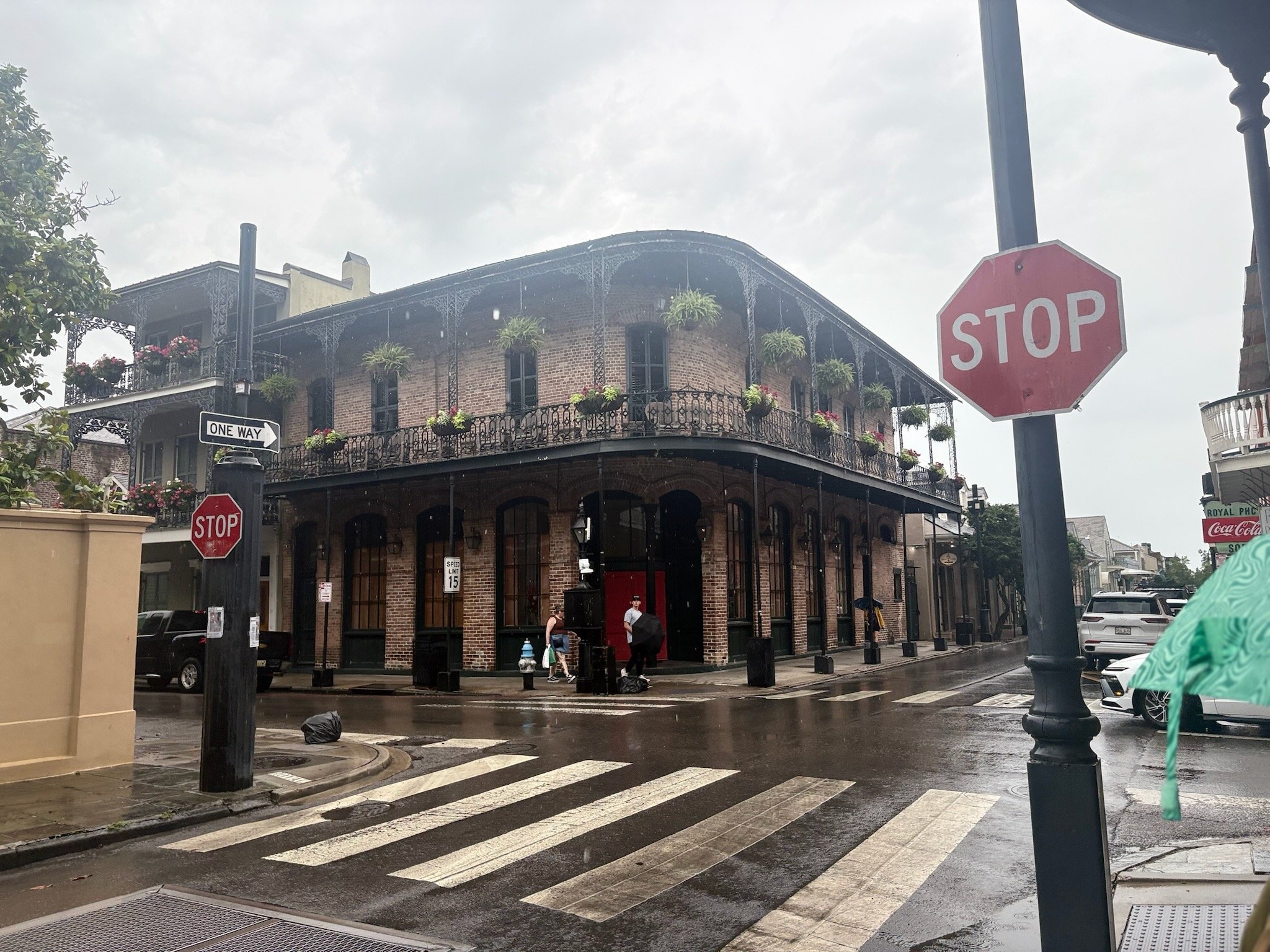
On the inappropriately named ‘Ghost Tour’ my fellow bookpackers and I attended, it should have been called Vampire Tour if you ask me; we paused by the townhouse that Louis retained in the story. The oh-so-fitting red bricks, its location on the corner of the street, and its devilishly dark wrought iron railings were almost too perfect for a physical representation of Interview with the Vampire.

This experience, although slightly submerged in ‘hurricanes,’ created the connection between Louis and me, our shared struggles, blurring the lines between fiction and reality, as well as life and death. Where I began to challenge my perception of these lines, conflicts, and struggles, which thankfully I believe is the ultimate goal of Bookpacking.

Adventuring: The Onion City

I have been fortunate to travel plenty in my childhood and adolescence. Seeing cities internationally, where I heard words strange to me and tried food even when I wasn’t quite sure what I was eating.

And who knew I could have this enlightening experience, to which I call ‘adventuring,’ in my own country!

Already shocked by fried food having grown up in the great state of acai bowls, salads, and almond moms, I am glad to say that my palate has been greatly expanded. I grew up a picky eater, quite frankly scared of anything that didn’t resemble a familiar brown or beige color. As a child, I quickly grew fond of honey nut oats, mac n cheese, and plain vanilla yogurt. Even in my dessert selections, I was always jumping for vanilla bean or something lemon-flavored.

You would think, how strange is that little girl who has all the food in the world available to her in California, only ever reaching for a Caesar salad at a restaurant, afraid of sauces and spice. This is even more shocking when I share that my mother is somewhat of a sauce maniac herself! Putting sriracha on pizza and just about anything edible.

But as I grew older and ventured out myself, I did dare to eat animal testicles (yuck!), schnitzel, and meat pies of all origins and natures. So now, I find myself in one of the most culturally diverse cities in the southern half of the United States, and I have been fearless in trying the vast cuisine!

It is impossible to wander this great place and not be drawn by the various smells, sounds, and people. Small talk, something I have general anxiety about, is unavoidable. That great ‘southern charm’ is real!

So as I have explored the many different neighborhoods, both with my fellow Bookpackers and independently, I have held no fear. I have courageously gone beyond where any member of the Cash family has dared.

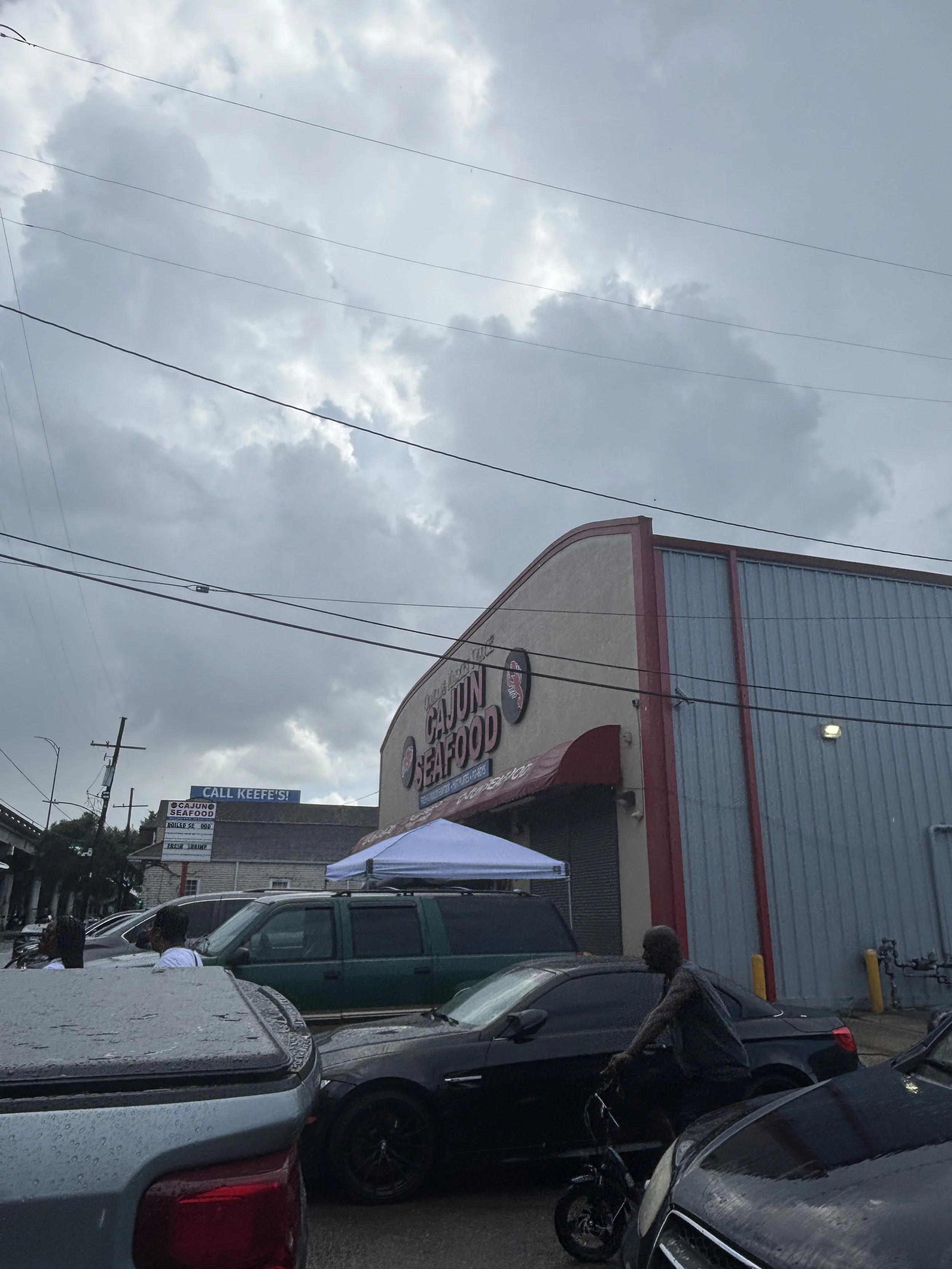
Starting with various ‘cajun’-flavored things, ranging from dips, entrees, drinks, and even soups, I began my food journey. Kicking off with a Cajun-flavored pasta sauce that I can’t say was my favorite, to trying a Cajun cocktail and even a Cajun burger! I am beginning to think they slap that word, that particular word, Cajun, on any old dish to bring the sales up. But what can I say, maybe I am just a gullible tourist.

All of this ‘Cajun’ cuisine makes me wonder: what is the importance of labelling food? Why is it that I suddenly feel the need to try an ironically named hurricane or bring home a beignet or two? Is this the result of aggressive marketing strategies, or is it purely because the great city of New Orleans and its food truly deserve the praise?

This impractical question may not be easily answered, but after spending my first week in what my professor calls ‘the big bad city,’ I can confidently add to this dialogue. It does deserve the praise.

From ghost tours, extravagant mansions, quirky theatres, to explosive nightlife, casinos, bars, clubs, music, and fun, I have never seen anything quite like New Orleans. I have never eaten as I have here, with interesting restaurants on every corner forcing me to recall my French language classes in high school to decipher the names. Or even places where real-life ghost stories seem to plague the residents of the French Quarter.

The privilege of roaming this wonderful city has left me hopeful that a place so resilient and beautiful, proudly celebrating the heritage of many peoples, exists and thrives. I have yet, in my many travels, to come across a place that feels alive such as this one, living and breathing with an unfailing heart. My hope stems from that awkward chit-chat I hate so much, and in preservation, something that, as a student of history, I care for deeply.

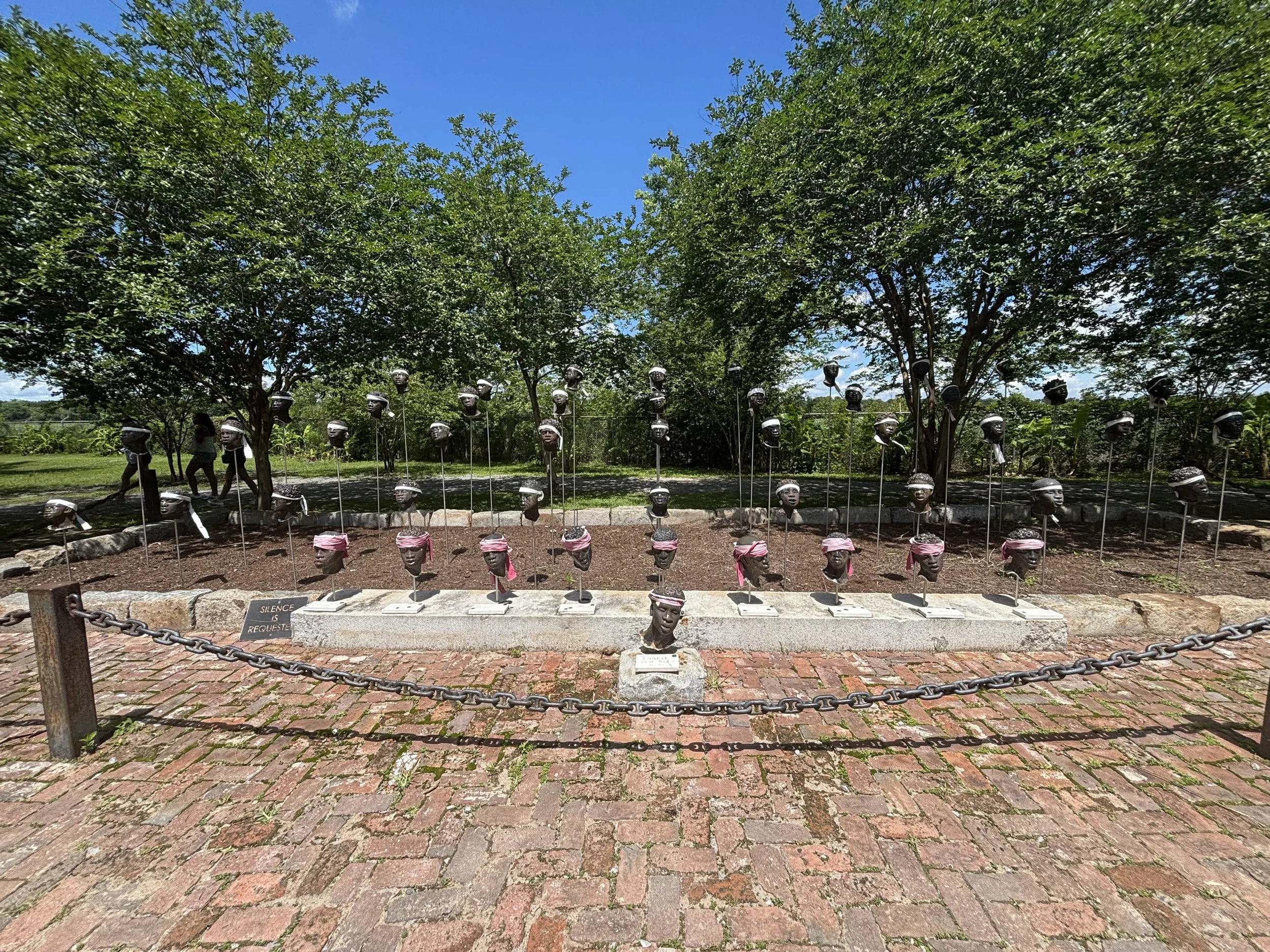
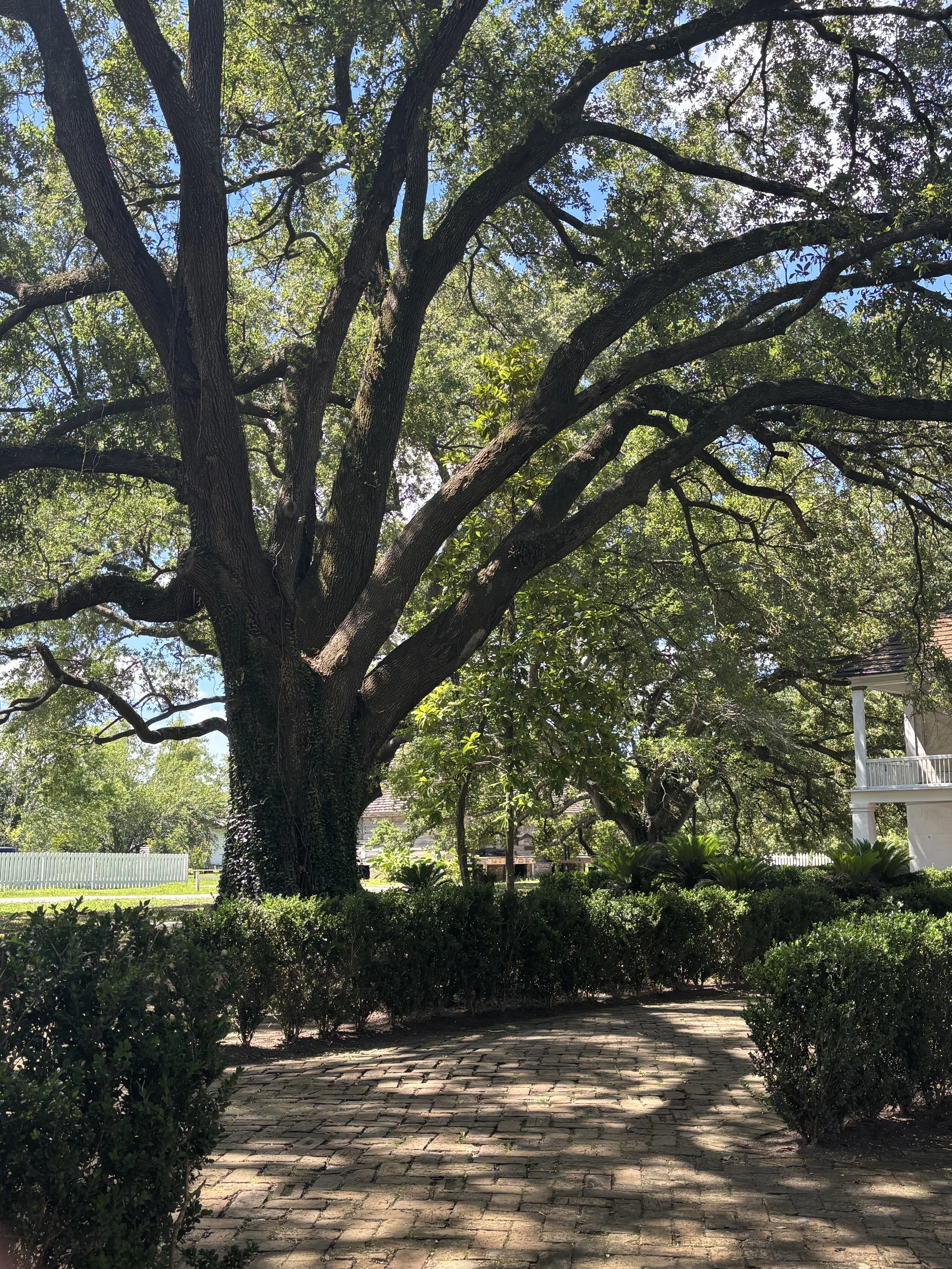
Although I could begin to criticize the South for its lack of sharing the histories of enslaved peoples of the United States, as I find myself so easily doing. I then experience something like touring the Whitney Plantation. Which ultimately leaves me uplifted that, amid the labels, wars, and tragedy the human race seems to fling upon itself, we can value our respective backgrounds and appreciate little things. Like the importance of Cajun cuisine and how it can turn a picky eater like myself into a food lover.

One of my peers remarked on our 'Ghost Tour' that this city is like an onion, every story, exprience, and person we uncover adds a layer to an already complex ecosystem. These layers can often exist at the same time, cooporating, conflicting, and ulitimately impacting one another. In our thoughtful walking tour of the Business District, our professor pointed out how enslaved people were living, being tortured, and kept in brutal conditions literally across the street from a church, a theater, and lavish hotel. The diacatomy of this city is what makes it so beautiful, and so tragic. And remains a reminder of who we were, who we are, and who we must be.

But before I lose myself in an exceedingly long rant over the current socio-political climate of our planet, I must look out my window and ground myself in what I see. The sub-tropical rain and humidity, gas lamps lining street corners, people laughing and drinking. And I am humbled; I am reminded of the simple truths of this city. That every label, food, cajun or not, person, language, scary tale, is what makes this city alive, gives it a soul. And every whisper of ghost, prayer said, and cajun dish consumed stokes the fire of that soul.

My Awakening

A young adult's life is filled with monumental experiences. Many of which occur on a stumbling path to adulthood and independence. Along this road, you are faced with decisions that shape your character, your identity. In my time as a young adult, I have experienced revelations, big and small, ranging from my favorite foods to inherent beliefs.

It is not often that on this path we are given literature to relate to and feel through. This particularly special experience is heightened when shared with others, who, like myself, just recently graduated from university. Or they are making their way to graduation.

When feeling so utterly alone on this path to adulthood, it is difficult not to isolate yourself and walk alone. However, Bookpacking has forced me to sit with my thoughts, see my struggles as common and shared with my peers.

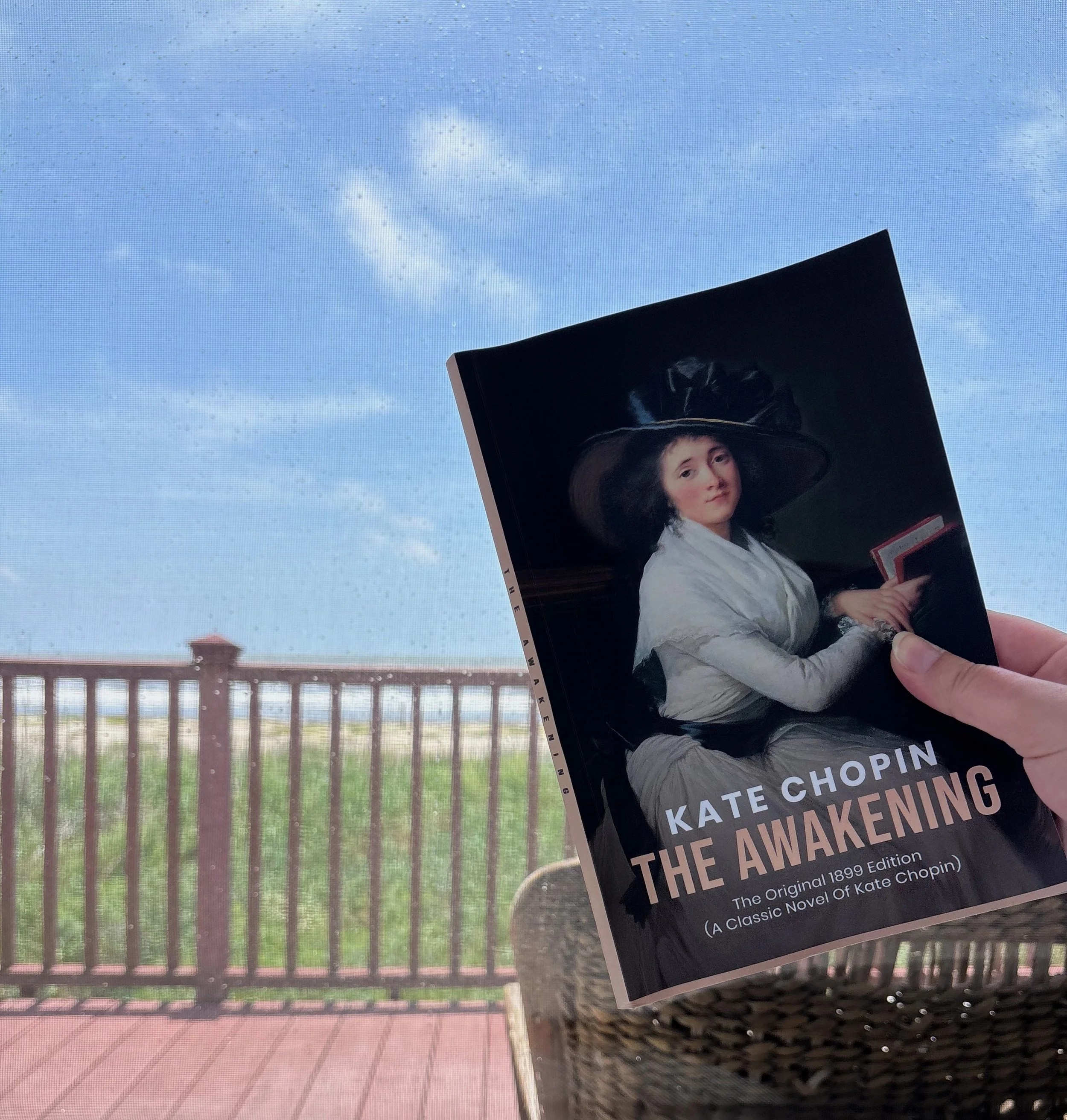
I felt seen in our first book, The Awakening by Kate Chopin, where her frank story of Edna Pontiller details a distinctly feminine experience. Which to me was exploring life beyond the roles of woman, mother, and wife, just as a person. Edna sought pleasure, happiness, and aimed to discern what gave her joy and independence. She did this not for her kids or her husband, but for herself.

In a world of boxes, labels, and roles, I often try to push the boundaries of ‘feminine’ of what it means to be ‘woman.’ I reject narratives and embrace my loud, opinionated personality as a way of personal protest. I love that I can be honest and advocate for myself and others, while also appreciating that these are personality traits born from privilege.

Edna, a woman of the late 19th century, did not have these privileges. But what is so transformative about The Awakening is how Edna's story and struggles live through time. Because of this, this particular reading, so very different from my traditional history textbooks, was entirely emotional and relatable. I felt as though I could understand Edna, who, through observation, could very well be an extension of Kate Chopin herself. The result of this was a growing appreciation of female authors and alternative female characters. As Edna’s ‘awakening’ felt so similar to my own.

At the beginning of the Bookpacking experience, my eight peers and I headed south to the Grand Isle of Louisiana. A place that, although it existed in my country, felt entirely foreign. For the first time in eight years, I saw outside of school, relationships, and work, and explored this strange island through Edna Pontieller.

I looked upon the same beaches that Edna lounged on, and although being familiar with oceans and beaches, having grown up on the coast of California, I can easily say that the sand, creatures, and flora all felt alien to me. Immediately shocked by the size of the mosquitoes that inhabit that region, I took it upon myself to appreciate every different bit of that small island. The fascinating people, strange houses, and different food, I could not believe how Louisianans dared to fry just about everything. And after tasting fried gator, oysters, and okra, I understood why. My worldview, imagination, and ability to truly see others have been forever altered.

If I had read The Awakening in my seaside home in Long Beach, California, the beach I would have pictured would have been far different. Coarser, darker sand, with sand fleas that nipped around your toes as you walked into the freezing water. In the distance on a clear day, you would easily see the Catalina Islands, which a ferry would take you to and from. In the ocean, you can see sea turtles, dolphins, as well as shrimp, which, if you were submerged, you could hear crackling underneath you.

Kate Chopin's Awakening, however, sets Edna in a wildly different beach; Grand Isle has a flat beach, where the waves are far more temperate. The wind and rain make one feel as though they are in a tropical storm, where the sand is white and soft. Facing the ocean, it looks as though it expands forever, making one feel completely and utterly alone. I often thought of Edna's death when staring at the ocean. Imagine the enthralling feeling of control and equally terrifying loss of control in such a powerful body of water.

A feeling of exultation overtook her, as if some power of significant import had been given her to control the working of her body and her soul. She grew daring and reckless, overestimating her strength. She wanted to swim far out, where no woman had swum before
— The Awakening, Kate Chopin (Chapter X)

In this place, I thought of the corners of the country that this water has touched along its journey throughout the Mississippi River. Sitting on that porch of the house on stilts, I could see her, Edna, walking along the beach as I did. During these days, I quickly became emotional, feeling both the relief of graduation as well as relating to Edna's journey. A journey that was so relatable, so real to the human experience.

I am sure to look back on these days as when I moved towards something new, something better, in my very own awakening. Inspired by Edna Pontieller, or really, Kate Chopin.