A Court of Throne's and Color
I'm not going to pretend to understand Mardi Gras, but I really enjoy the colors of it.
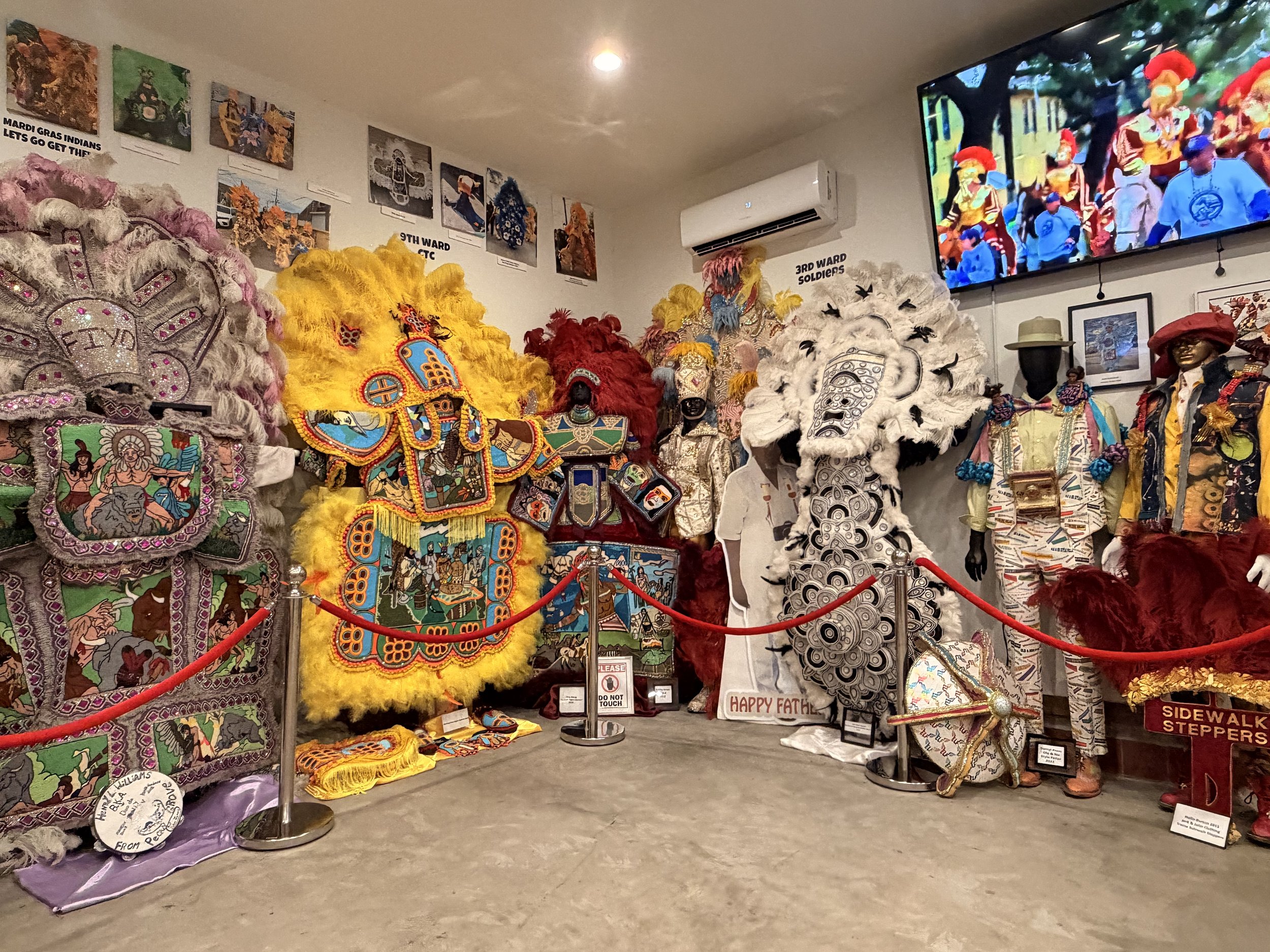
Maybe that's the most honest thing I can say walking through New Orleans. The colors don't ask for comprehension. Purple: Justice, Green: Faith, Gold: Power — they simply land on you like a verdict.
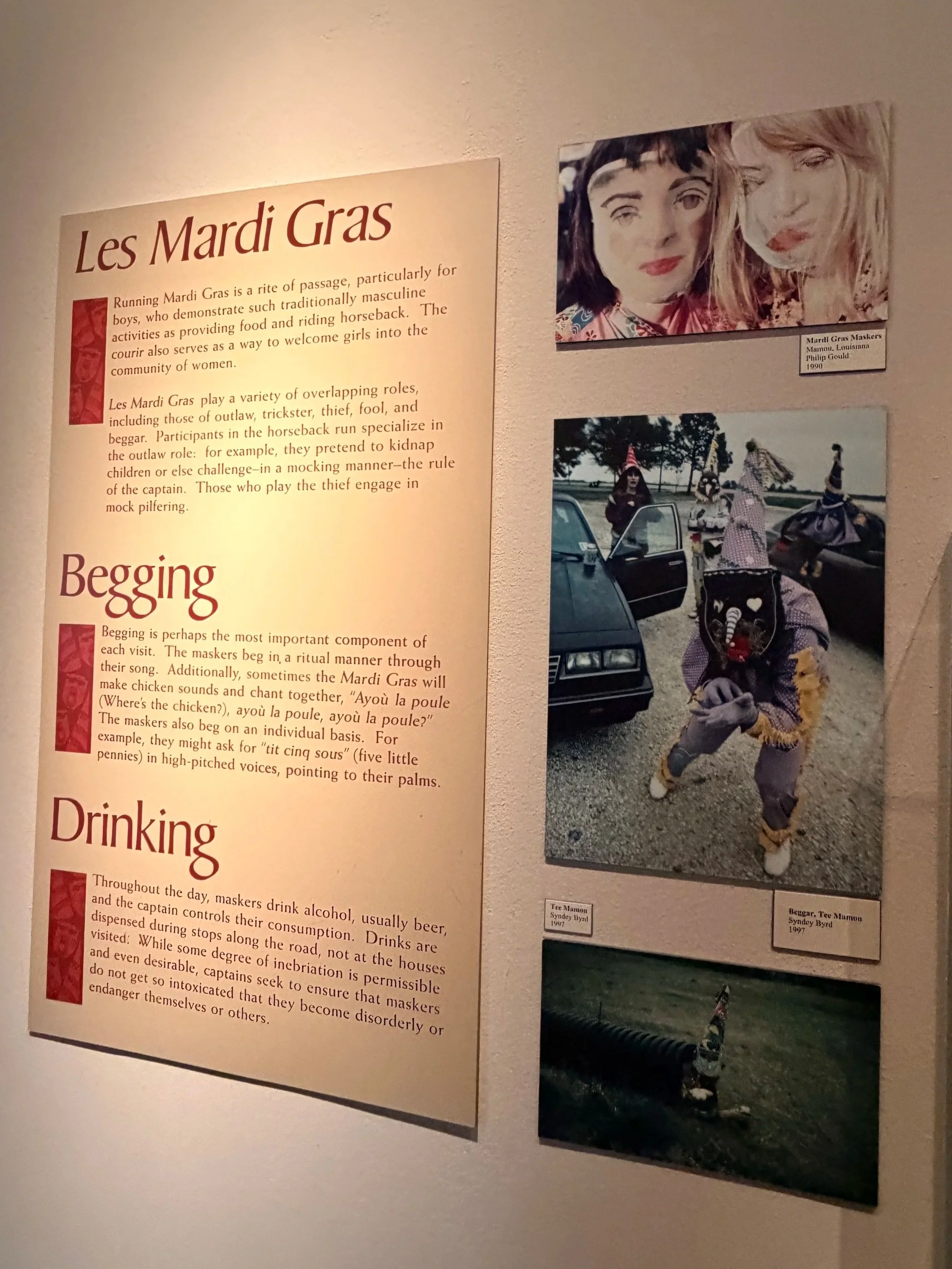
There's something about watching a parade move through a street that certifies those colors. Before the floats, before the brass and the beads catching light mid-air, a street is just a street. Although, I’d also argue that one should consider knowing the history of said street if it was built in New Orleans. It could be anywhere. Yet, it’s here. Then the parade passes through and the whole block becomes Somewhere. The street becomes Somewhere. The colors did that. The spectacle did that. The history of the colors did that. And after standing inside of it, I can’t unfeel it.
What does it mean that a city like New Orleans needs color? Why does it need Mardi Gras? I think my original qualm with my misunderstanding of it was that it didn’t make sense to have abstract colors and beads and float and music and food just for the sake of celebrating. It didn’t make sense to me. It didn’t make sense that it scheduled its excess into a liturgical calendar, crammed all its desire into one Tuesday, then (most likely) woke up the next morning and let someone draw a cross of ash on its forehead? So I did some research: The word Carnival translates from the Latin carnelevamen ~ farewell to flesh ~ a last indulgence before forty days of fasting and penance. French and Spanish Catholics carried that tradition across the Atlantic, planted it in Louisiana's particular mud, and watched it grow into something the Church probably didn't anticipate. Kings and queens. Royal courts. Hierarchies celebrated in public, decorated in sequins, legitimate and absurd at once.
The Rex Organization formally codified the colors in 1892: purple for justice, gold for power, green for faith. Justice and power named by the same organizations that, at that time, barred Black people, women, Jews, and Italians from membership entirely. The irony doesn't require commentary. It just sits there, in the color.
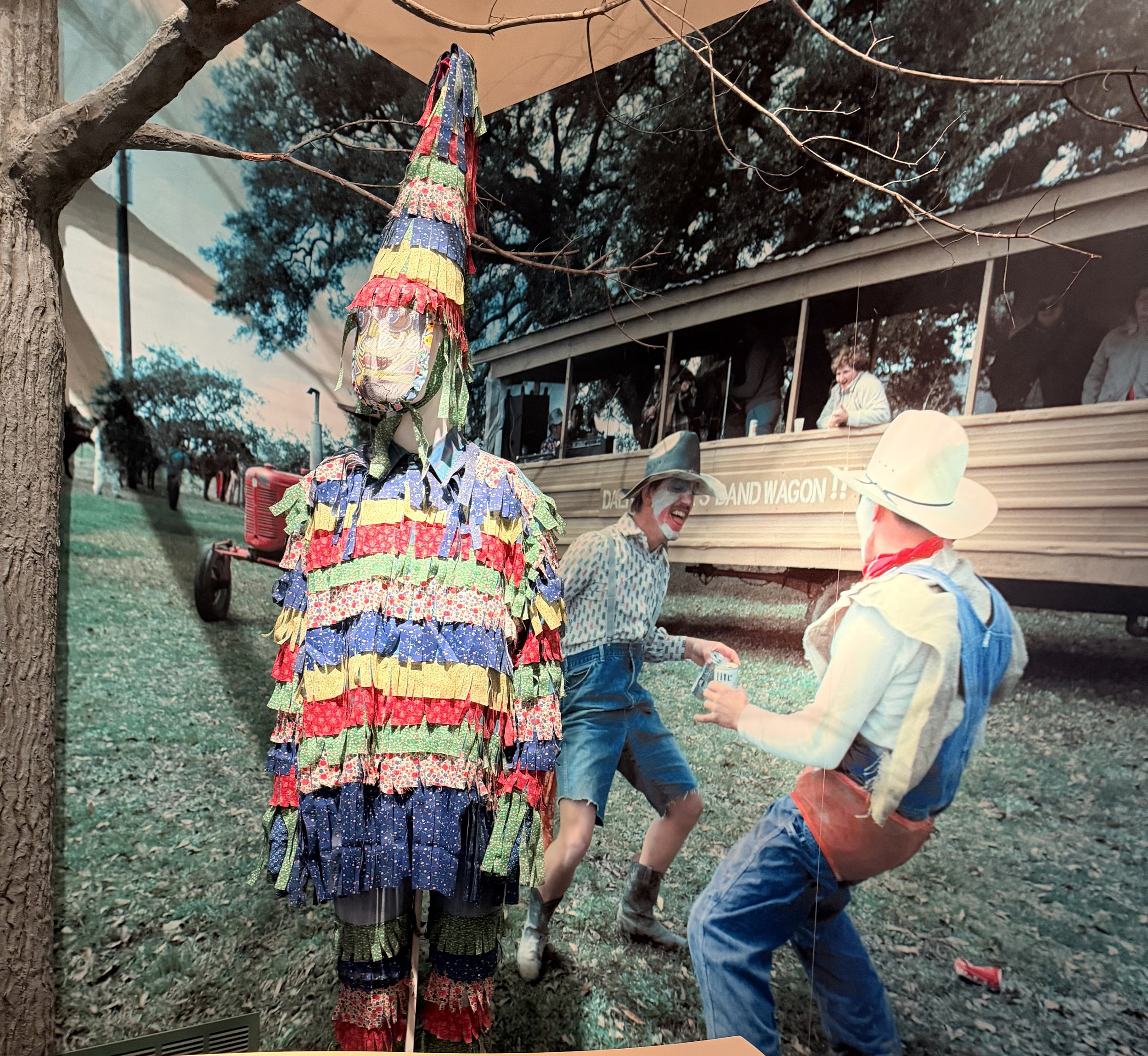
I keep thinking about the pointed mask and where that silhouette has been in this country. The Catholic capirote dates to the Spanish Inquisition, the pointed cone becoming the preferred form because the tip was thought to direct the penitent's prayers upward — shame reaching skyward, someone who had sinned coming publicly to account for it. Then the shape travels. Gets absorbed into The Birth of a Nation. Gets mass-produced and worn by men who used it not to seek mercy but to terrorize people in these very streets. Commentators link the Klan's visual identity directly to the folk traditions of carnival, circus, and minstrelsy. The same cultural lineage. The same instinct toward costume and procession and the anonymity of the crowd, turned into something unforgivable. This is why as I walked through the Mardi Gras museum I had a strange sense of unease. Seeing the people of rural Louisiana celebrate on tractors with beer, colorful masks and pointy hats – though I doubt even they understood what they were celebrating. Because if they did, they would know, none of the colors were welcome or prompted to be shared with those who actually were.
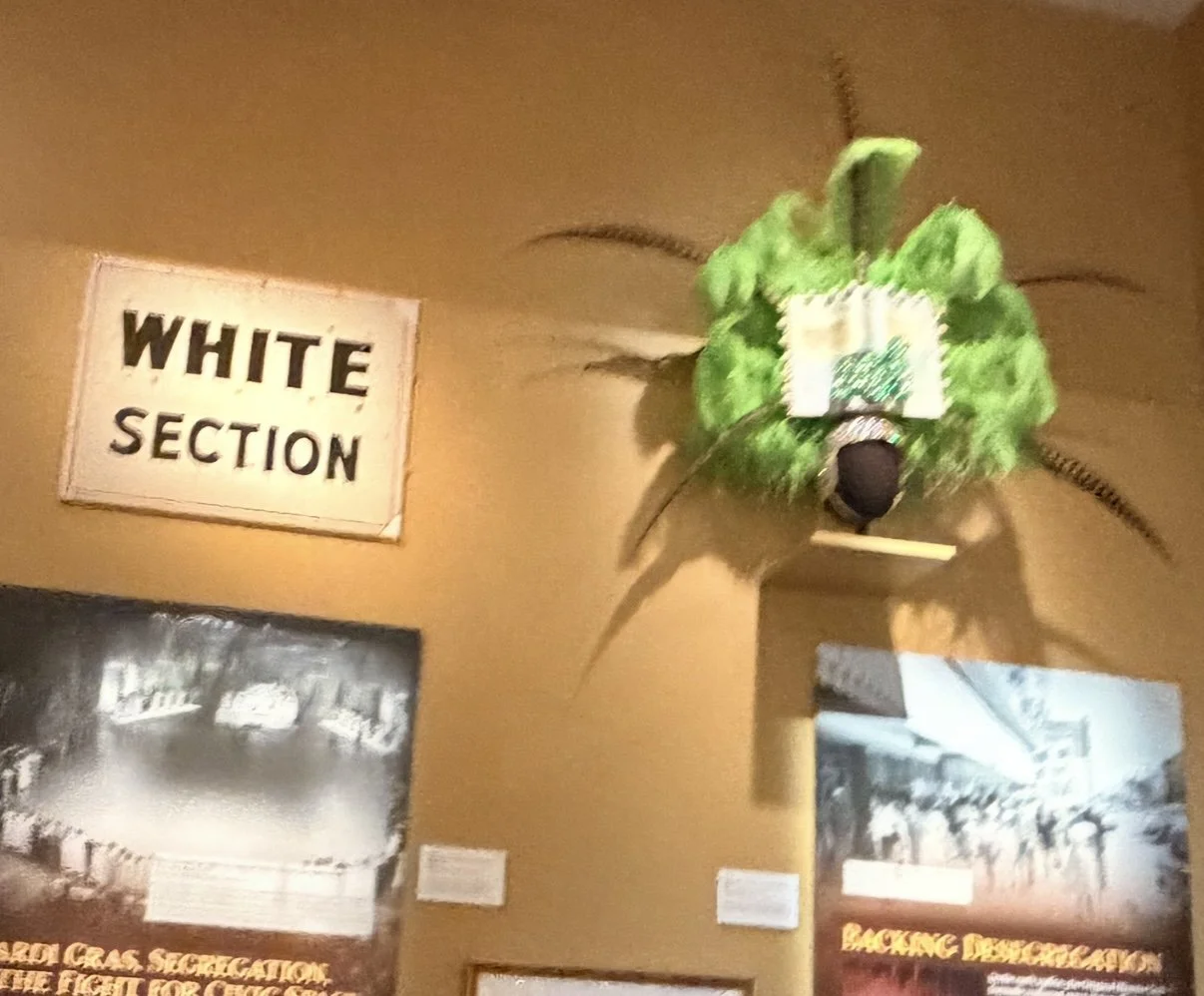
Another example of this is the Mystick Krewe of Comus which remained closely tied to Confederate ideals after the Civil War, including ex-Confederates in their parades, and the second krewe was founded by a club working toward the same goals as the KKK. The royal court, in turn, was not a metaphor in their eyes. It was an actual power structure with a throne and a very specific list of people not invited. There was a Robert E. Lee statue here for decades, presiding over a traffic circle like he owned it. It's gone now (thank God), but just the ideologies that these “courts” were built on a semblance of misplaced pride makes me shiver.
I should specify though that what I’ve been feeling walking through the streets of New Orleans isn't anger exactly. It's the sensation of the layers, the mixation of cultures, and of course all of the colors my eyes have been inputting that didn’t seem to exist until I got here. The feeling standing on ground that has been everything at once, and seeing the ignorance peel through the city that still holds so much beauty.
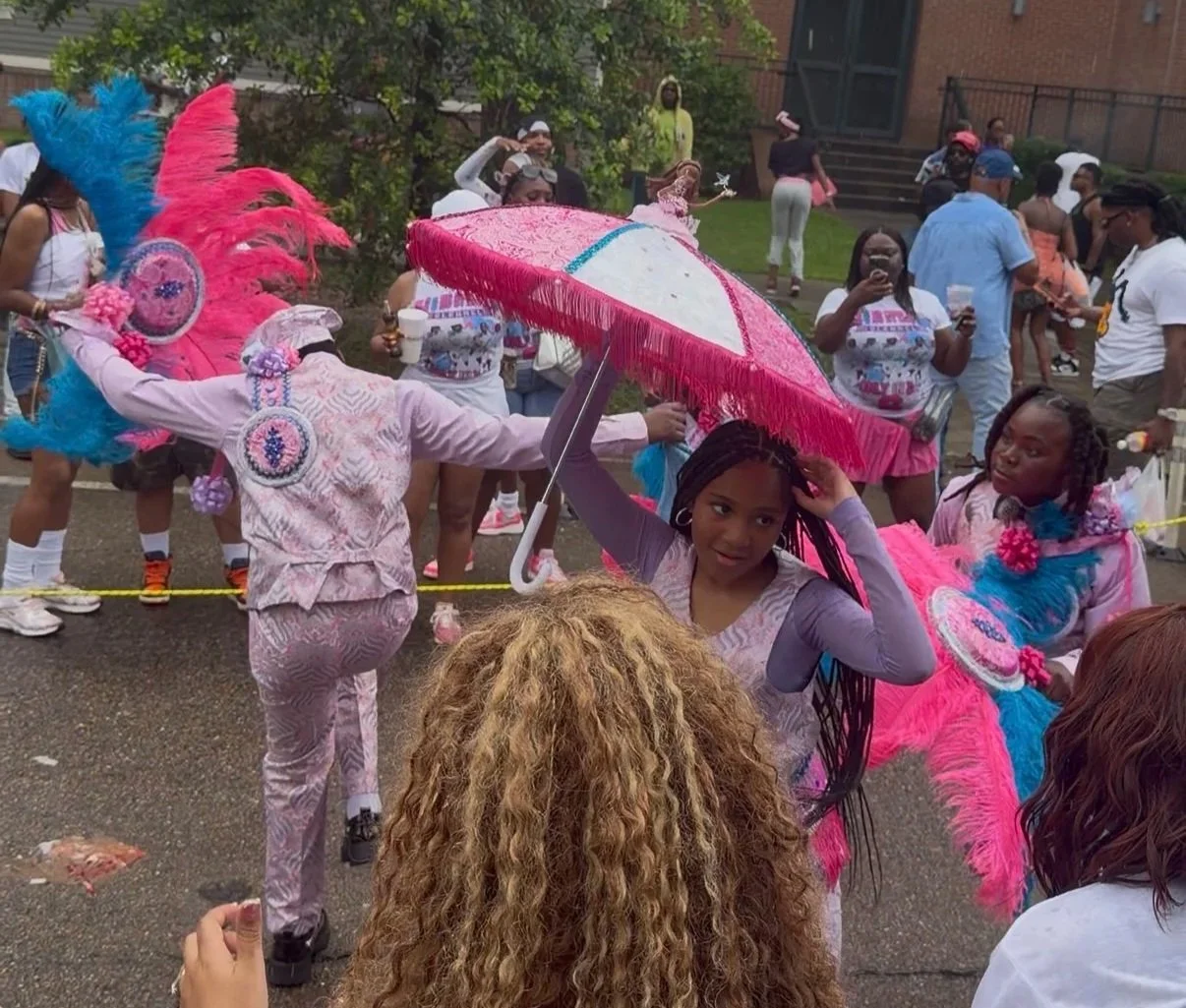
The Zulu Social Aid and Pleasure Club was founded in 1909 precisely because the carnival parades were segregated (crazy I know). And Black New Orleans didn't wait to be included, despite the historical relevance of Mardi Gras being rooted in racist, albeit English ideals. It built its own court, its own royalty, its own spectacle within a tradition designed to shut it out. It reminds me of the founding of HBCU’s in the South and other Black organizations that have built and designed specifically because one group didn’t want to be inclusive. I’ve actually had the unfortunate encounter of someone telling that they HBCU’s should “no longer exist” because things are integrated now, and it “served it purpose.” This is why I am glad that The Mardi Gras Indians sew suits by hand that take an entire year to make, and that they built a culture that is entrenched in preservation of culture — and even acknowledging the help a separate group grave to Black people by paying homage to Indigenous Americans who sheltered and aided runaway enslaved Africans. Now we are walking through the colorful streets that once legally excluded them, purple, green, and gold beads and all. And the preservation of this tradition, including showcasing it in The Backstreet Museum makes it all the more colorful.

I imagine arriving back into the city just as the street cleaners were sweeping up after the last parade passed (Moviegoer, pg.218). All that color from the celebration placed on a curb. The city, exhaling. I can see someone stepping out of an Ash Wednesday service with a gray smear on their forehead, sitting in their car for a minute before driving anywhere having indulged and splurged in celebrations the day before. I can imagine them not really thinking about all the color they experienced. Not really looking out the window to consider that what they’d just celebrated may have simultaneously been ostracizing. But nonetheless, they still celebrated — and went to church the next day, still dizzy from the stimulation of yesterday's juicy colors. And weeks from now, they’ll go to work — forgetting about the parade — yet still embellishing and appreciating the colors, regardless of history, of New Orleans. The Robert E. Lee statue is gone. But the systemic inequalities are not. The parade continues. Purple for justice, gold for power, green for faith. What that means now, who it belongs to now, is not settled. But I find, with the colors and richness of New Orleans, I'm not in a rush for it to be.