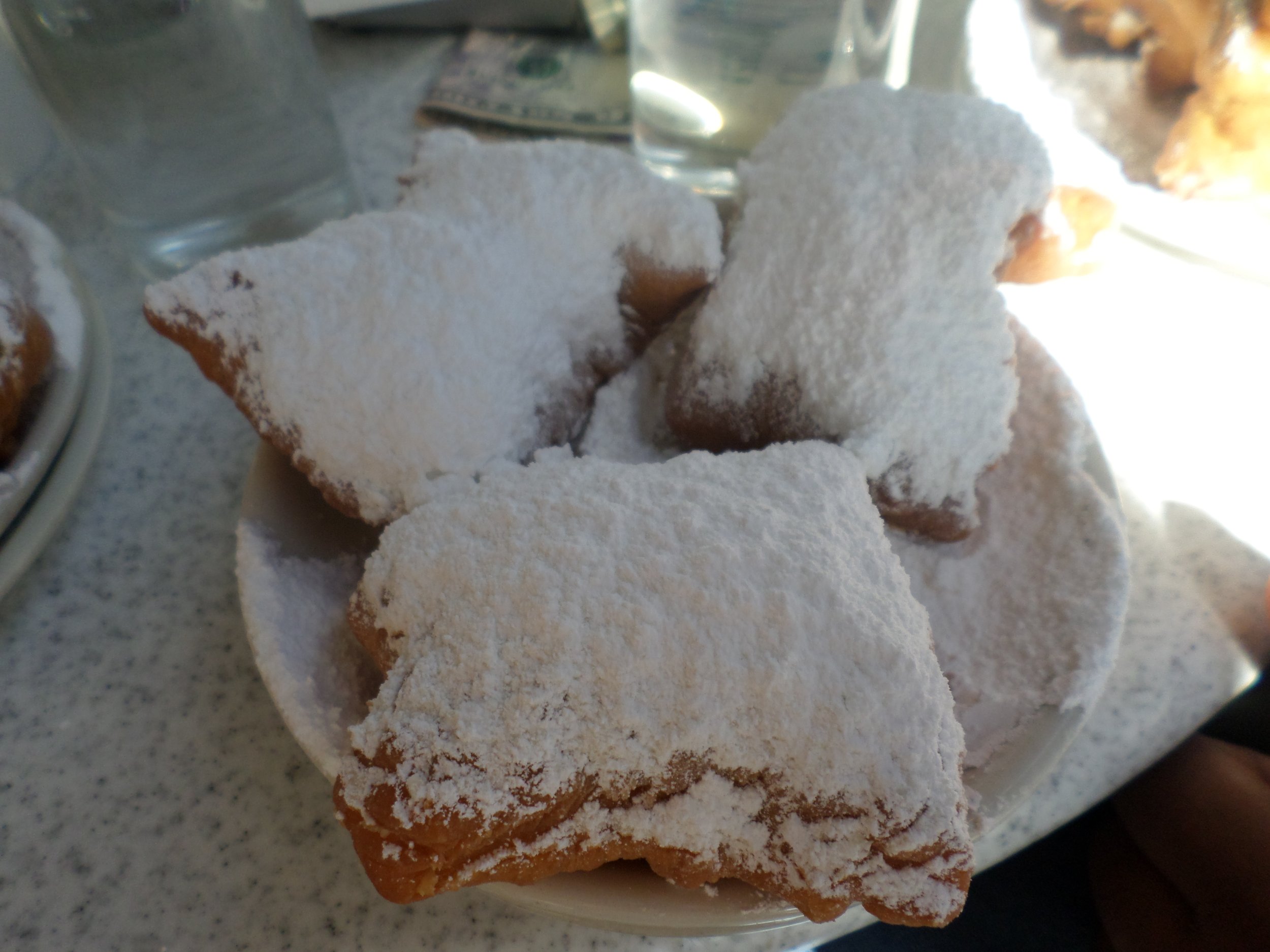
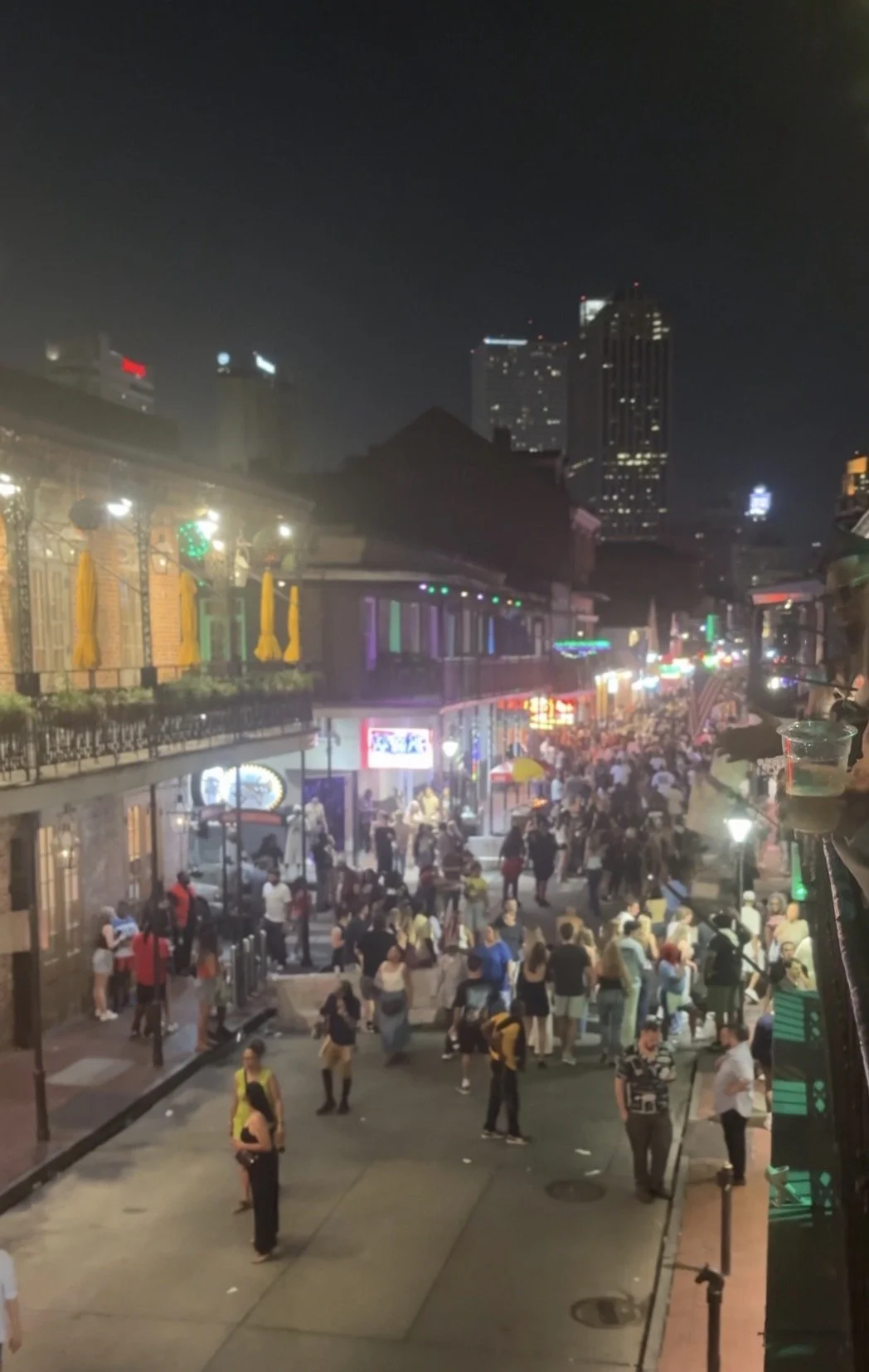
When I think of New Orleans, the top three things I think of are beignets, Bourbon Street, and most importantly, the magnificent, dance-worthy jazz music. But while growing up, I never thought of jazz as having cultural or historical significance. Honestly, it wasn't really anything to me. It just existed, but not as something I could define or even name at the time. It was more like a background noise that had always been there.
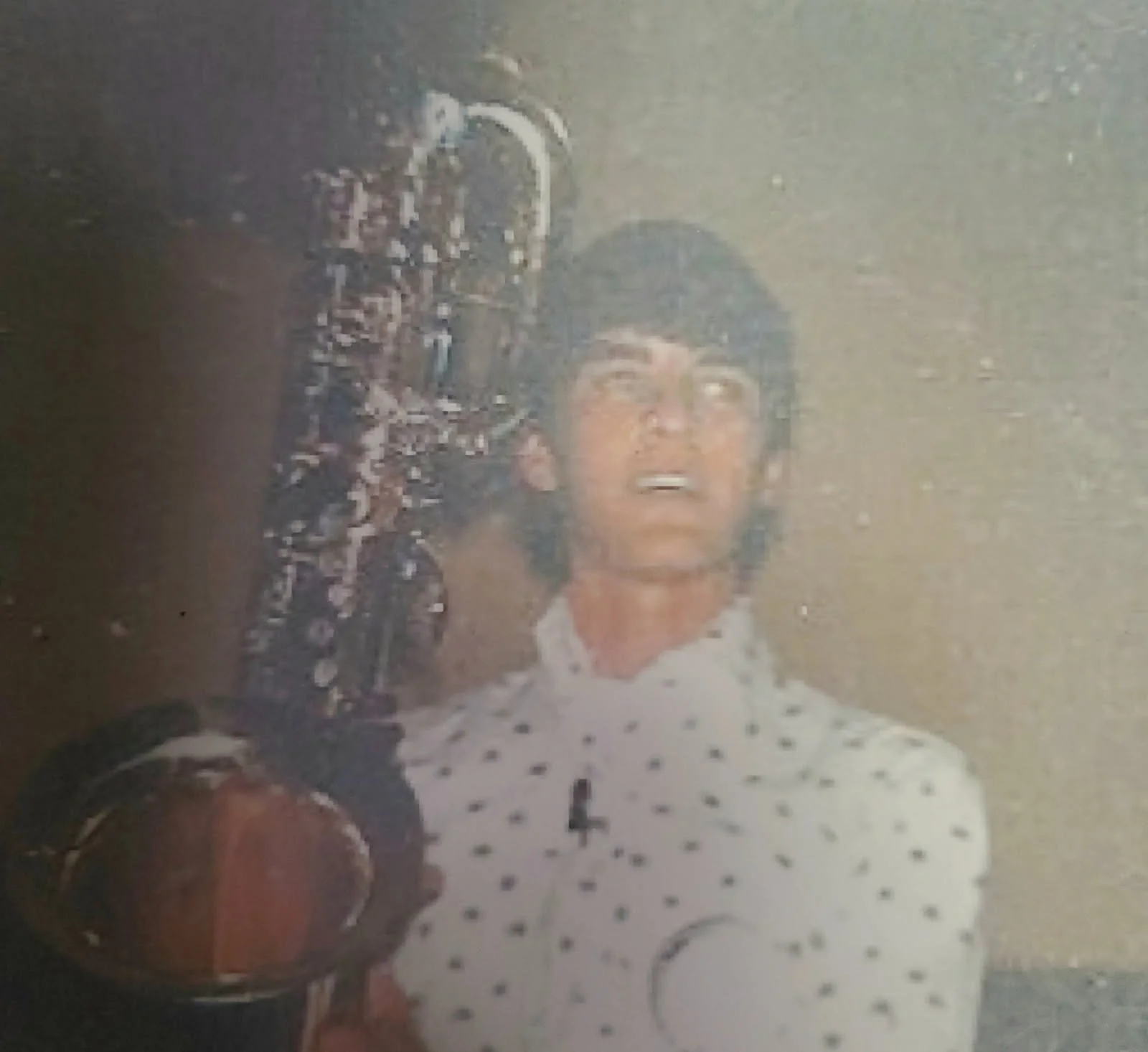
My dad in high school with his saxophone!
This was mainly because of my dad. He played saxophone in high school and majored in music in college before deciding to focus on a different career. Even after graduating, marrying my mom, working since he was a freshman in high school, and raising two daughters, jazz never left him. It shows up in everyday moments, like playing music around the house, casually mentioning songs he likes, and even in the way he reacts to jazz, as if he experiences it physically before ever trying to make sense of it. When I asked him to describe that feeling, he said it is almost instinctive, like it shifts his energy and pulls him into a different rhythm without him even realizing it.
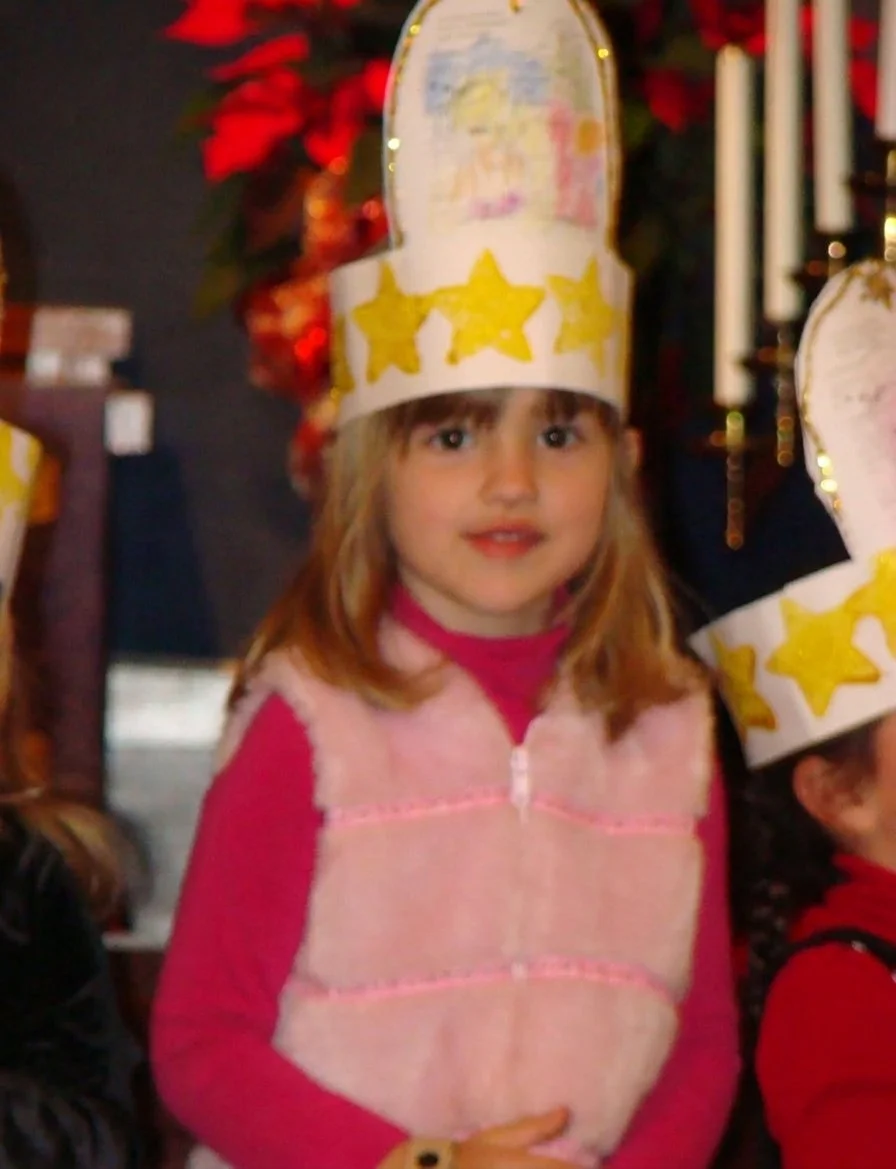
Me peforming in a Christmas musical!
That's probably why I began participating in musical performances growing up. Music had always been present in my life, so getting involved myself and eventually trying to learn an instrument (didn't end well) felt like a natural progression rather than a deliberate decision. Although I never became particularly skilled at playing, those experiences changed the way I listened to music. I became more aware of how performers communicate emotion, how audiences respond to certain sounds, and how the same piece can feel completely different depending on who is performing it. Rather than focusing on technical skill, my experience with music made me appreciate its ability to create a shared emotional experience between performers and listeners.
Looking back, this also made me realize that culture is often absorbed long before it is consciously understood. Some things become familiar not because they are formally taught, but because they are constantly present. Jazz was one of those things for me. I never sat down to study its history or learn how its musical structures developed. Instead, it became associated with specific memories, places, and moments from everyday life. By the time I was old enough to think critically about jazz as a cultural tradition, it already felt familiar. My connection to it was shaped less by education and more by the environment in which I grew up.
My idea of proximity became more evident while walking around New Orleans. Jazz is not separated from the environment and people. It exists throughout the streets, crowds, and public spaces; anywhere I went, I heard some sort of instrument being played. I love how it is not confined to performance halls or concerts. It just appears throughout the city, whether it's brass instruments playing in the French Quarter, musicians gathering on sidewalks to play unrehearsed, or rhythms shifting as people move to the sound. For New Orleans, jazz is not something people go to watch but something they move through.
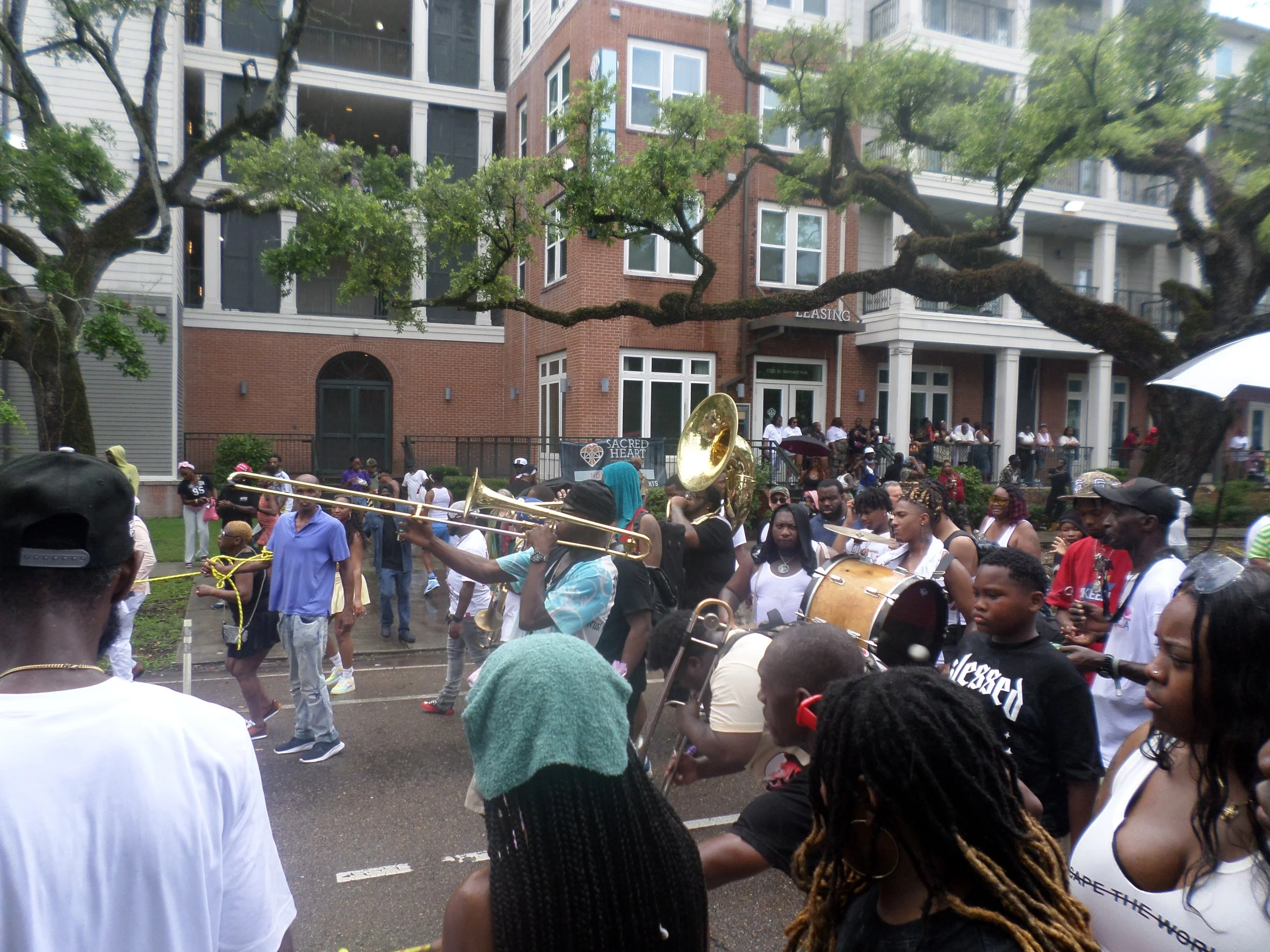
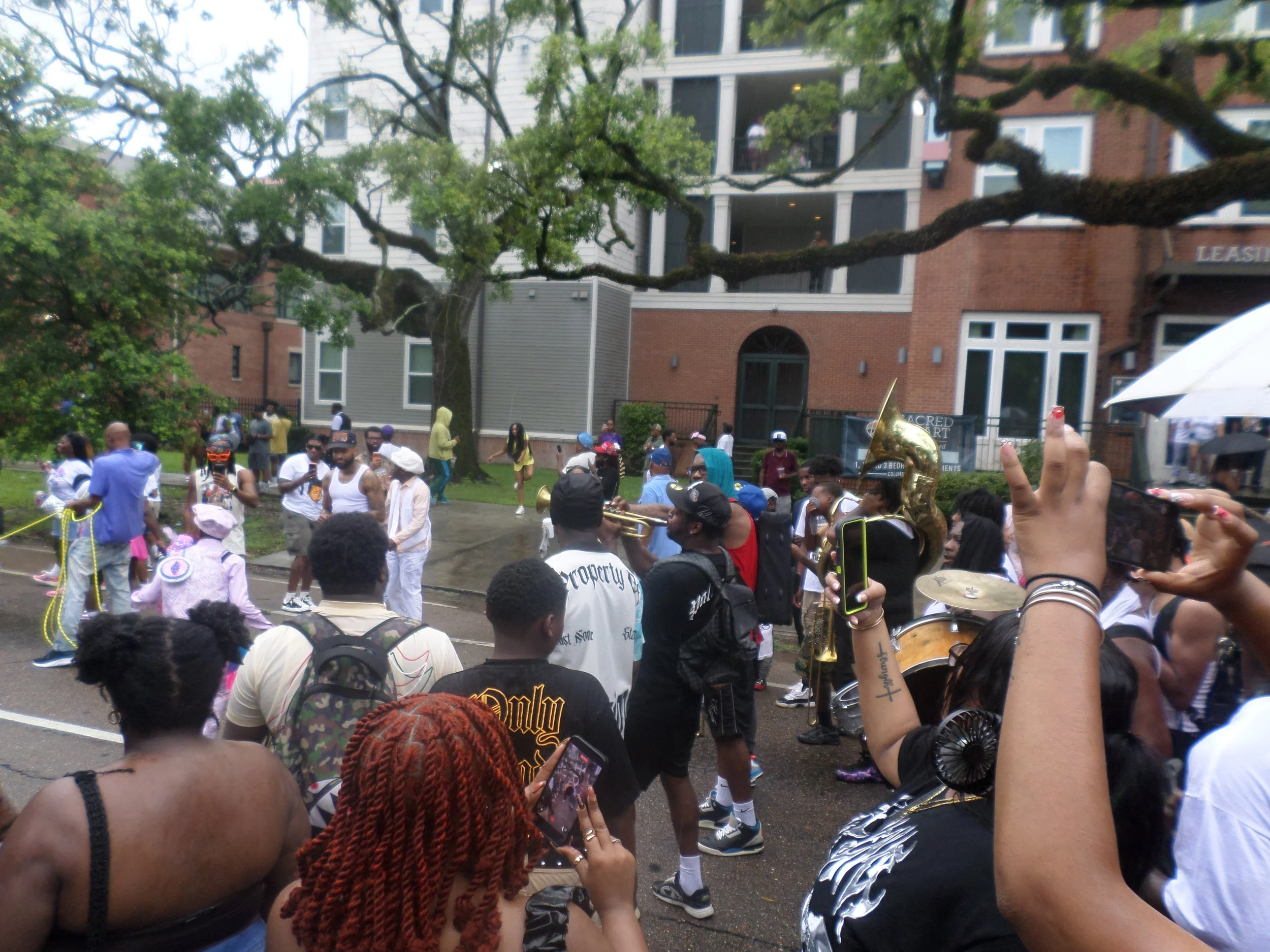
One of the best expressions of this that I had the opportunity to witness is the Second Line Parade. Tourists, like myself, may see it as a musical procession led by a brass band, but I have realized its structure is more participatory than it is performative. After my failed first attempt to see the parade due to heavy rain, I decided to research what the performance meant. I found that the “first line” refers to the main group of musicians and organized participants, while the “second line” is made up of anyone who joins in behind them, including locals, visitors, and community members who follow the music through the streets. What makes this extraordinary is that there is no strict boundary between performer and audience.
The Second Line treats music as something that happens through movement: clapping hands, swaying side to side, and nodding in rhythm as the procession moves forward. The sound itself shifts depending on the crowd, the walking pace, the energy of the moment, and even the weather that shapes how the street feels and responds. Although the tradition has very recognizable musical patterns and historical roots, no two parades are exactly alike. What does stay consistent, though, is the opportunity for people to become involved in it. This may be one of the reasons why the tradition continues to feel relevant across generations.
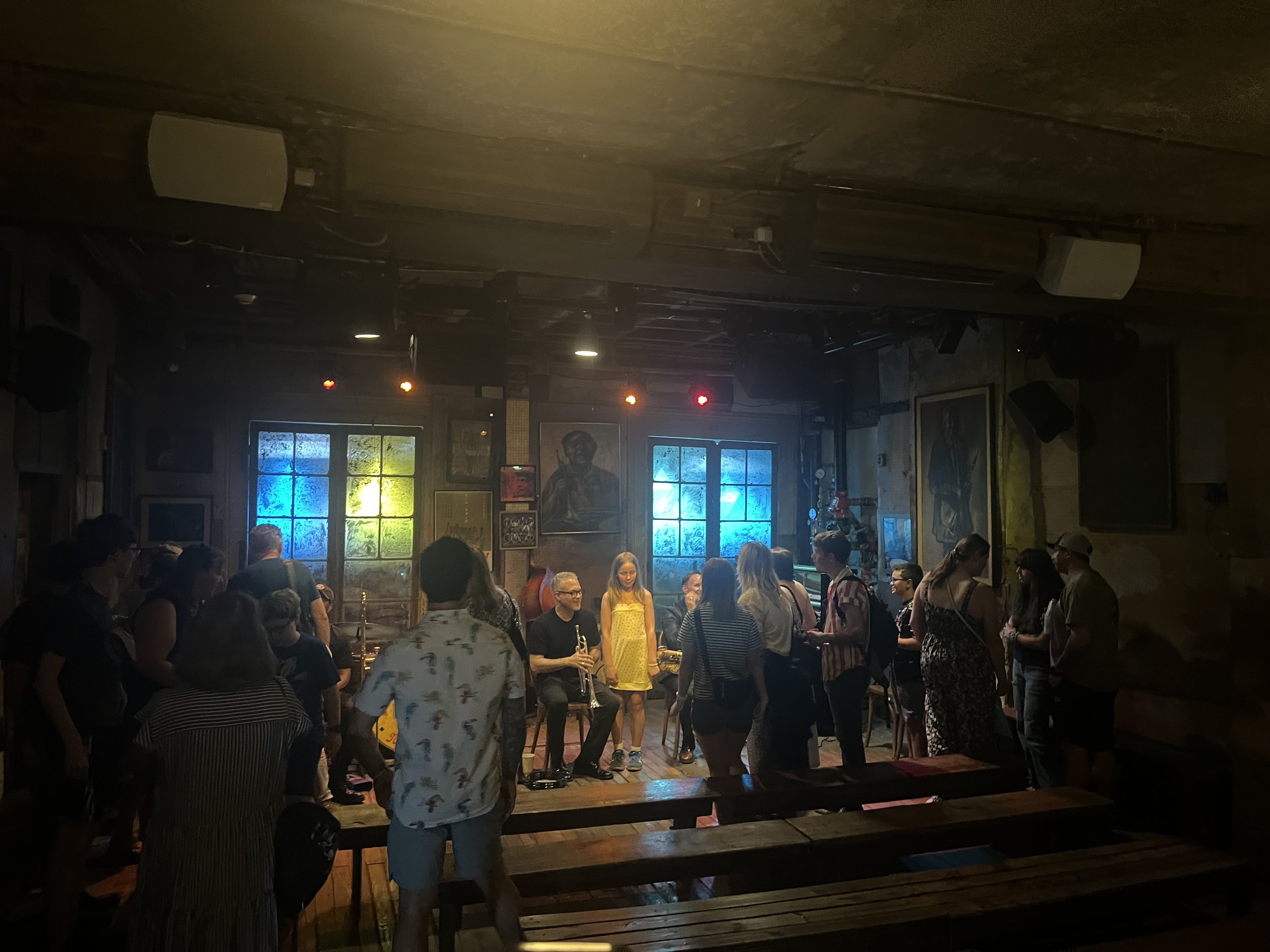
That idea of music existing through movement and participation became even more tangible during my visit to Preservation Hall. Nothing could have prepared me for that performance. It was in a small room, with no elaborate stage effects or technological enhancements that separated the audience from the performers. It was extremely interactive, and the musicians were close enough that the sounds felt immediate, not projected. What I loved the most was seeing how attentive and engaged everyone else was. They did not allow phones or cameras during the performance, so the focus remained entirely on the musicians.
After the performance was over, I began researching the history of Preservation Hall to learn more about why they started the foundation. When I read how it emerged in the mid-20th century, I realized that it was during a time when traditional New Orleans jazz was no longer the center of mainstream music culture. Once newer styles gained popularity, a lot of older musicians were pushed out of major venues and commercial recognition. Preservation Hall then became a place where those musicians could continue performing and share their musical tradition that could have faded from public view. The venue chose to create a space for artists whose contributions continued to be valuable even if they were not commercially dominant.
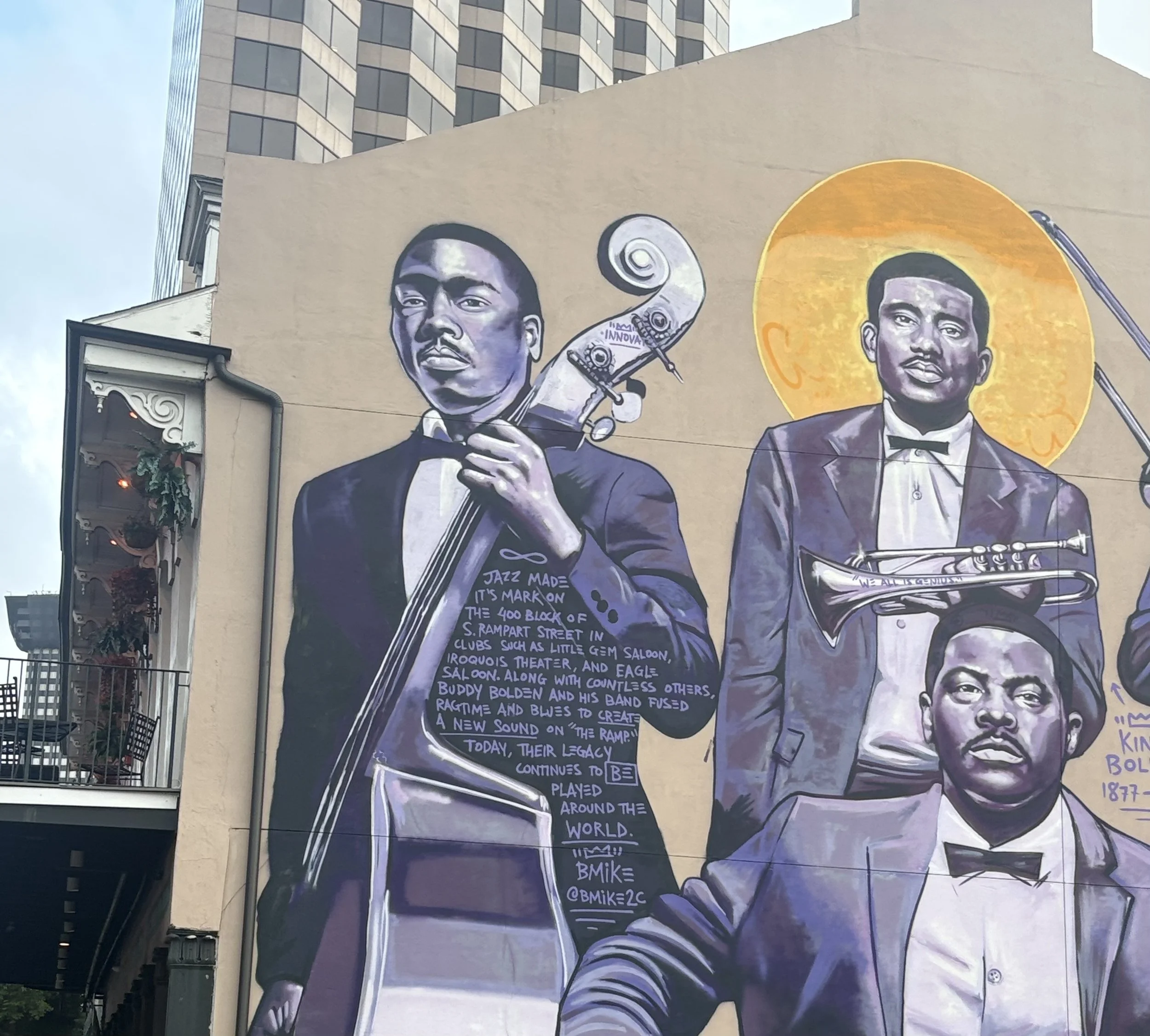
After researching the history behind the parade and venue, I began to understand Michael Ondaatje’s Coming Through Slaughter in an entirely different way. The novel follows an early New Orleans music performer, Buddy Bolden, but the way Ondaatje tells his story suggests something besides biography. What began to stand out to me was the book's structure and how it was written differently compared to the other books I have read on the trip. I remember discussing in a seminar how the novel does not follow traditional linear narratives, and instead is fragmented, shifting between perspectives and impressions. It reflects the uncertainty surrounding Bolden himself. The novel does not try to tell a complete or definitive story of his life. Instead, it implies that Bolden's life and experiences cannot be fully described by a single explanation. Even the fact that there are no recordings of Bolden's music becomes significant. Rather than treating that absence as a problem to solve, Ondaatje builds the novel around it, forcing readers to think about how historical figures are remembered when parts of their stories have been lost.
“This last night we tear into each other, as if to wound, as if to find the key to everything before morning.”
- Michael Ondaatje, Coming Through Slaughter
What stands out in this line is not just the emotion but the urgency. The characters seem aware that whatever understanding they are searching for may be temporary. That tension appears throughout the novel, where moments of clarity emerge briefly before slipping away again.
Looking back, I am surprised by how often similar questions appeared throughout this trip. Whether I was listening to my dad talk about music, following a Second Line through the streets, sitting inside Preservation Hall, or reading Coming Through Slaughter, I kept returning to the relationship between memory and experience. Each encounter approached that idea differently, yet all of them made me think about how culture continues to shape people long after its origins. Jazz survives because people continue finding new ways to engage with it, reinterpret it, and make it meaningful within their own lives. In that sense, what I inherited from my dad was not a specific collection of songs or facts about jazz history. It was a familiarity with a tradition that I only began to fully appreciate after experiencing New Orleans for myself. Jazz, as I came to understand it, is not something that is kept alive by protecting it from change. It is something that stays alive precisely because it cannot remain the same.