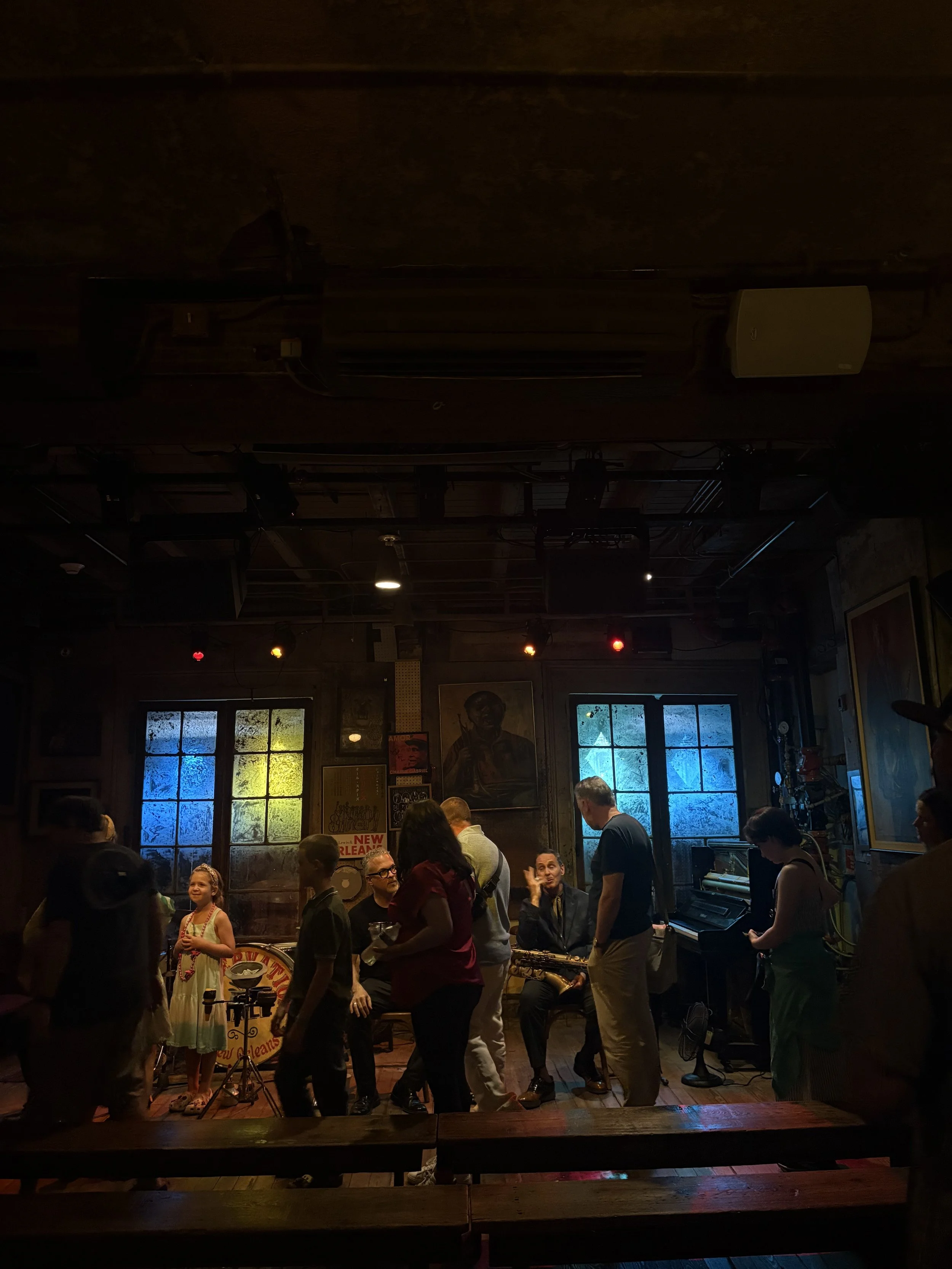
I’m not sure what I expected from Preservation Hall. I suppose I thought that one of jazz music’s most iconic venues would be a bit… grander. But there it was, tucked into the French quarter across from a bar with hand-drawn signs advertising $4 tequila shots. The building was an unassuming dove grey, only revealing its history through age spots and faded graffiti.
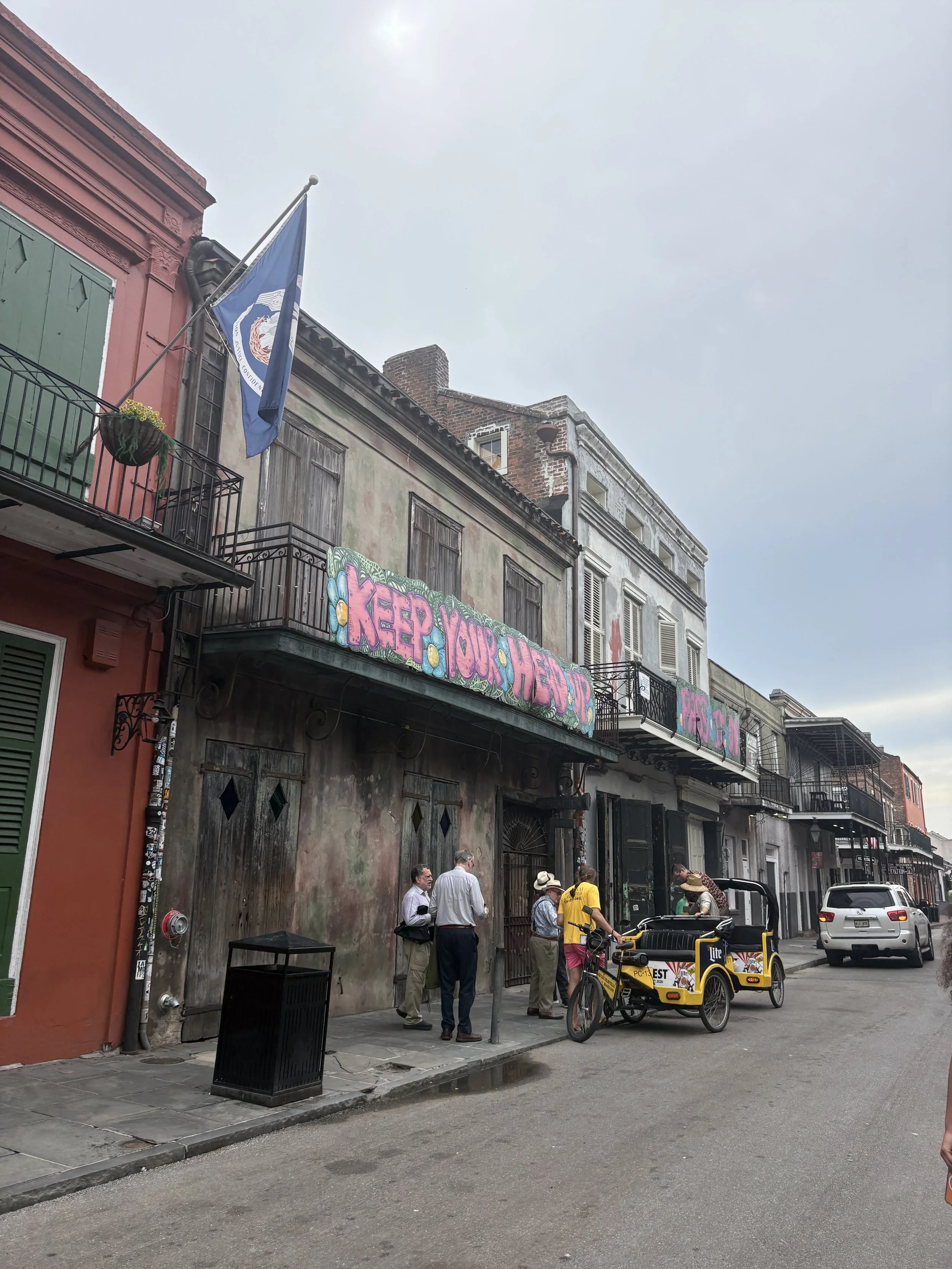
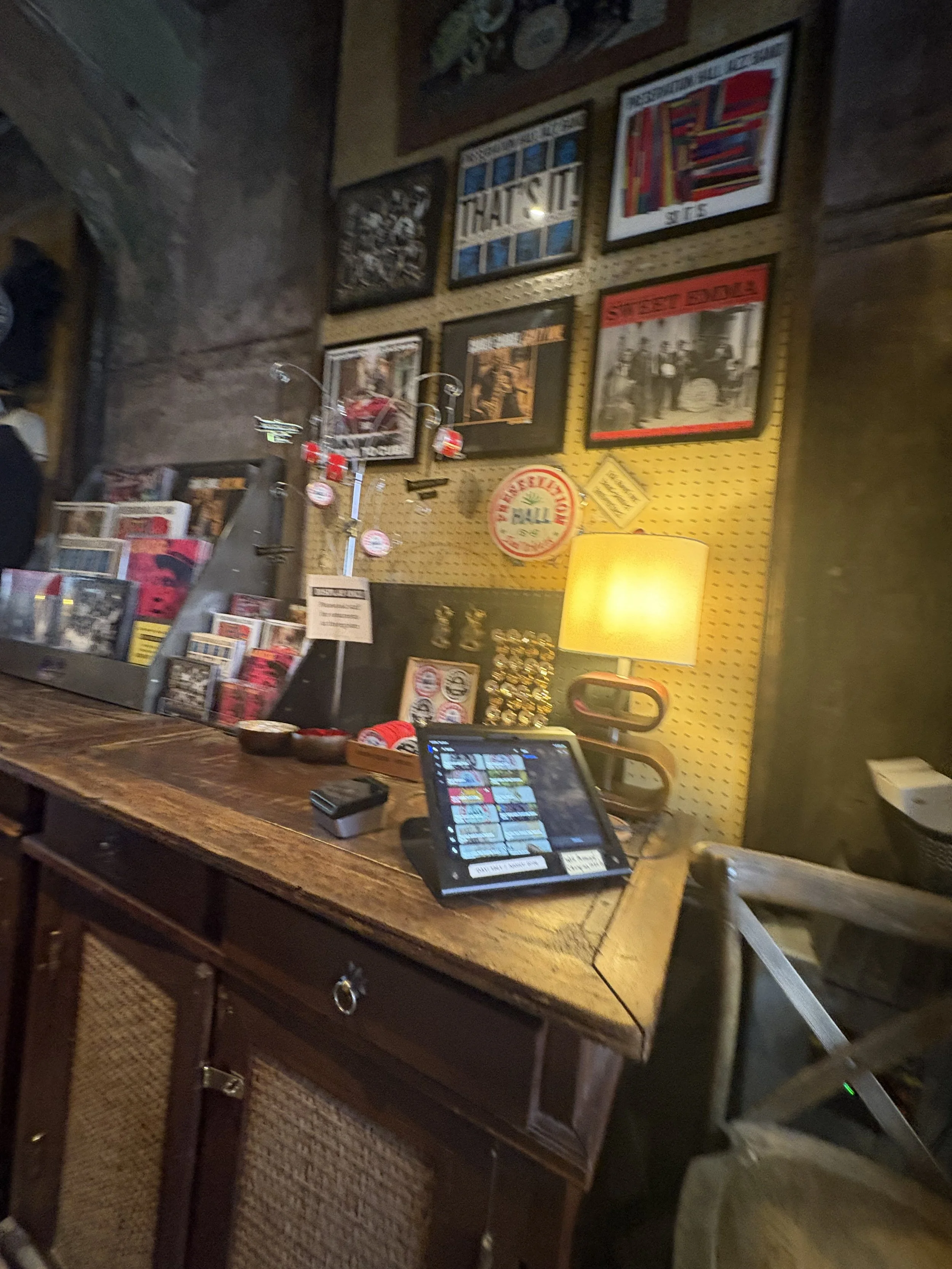
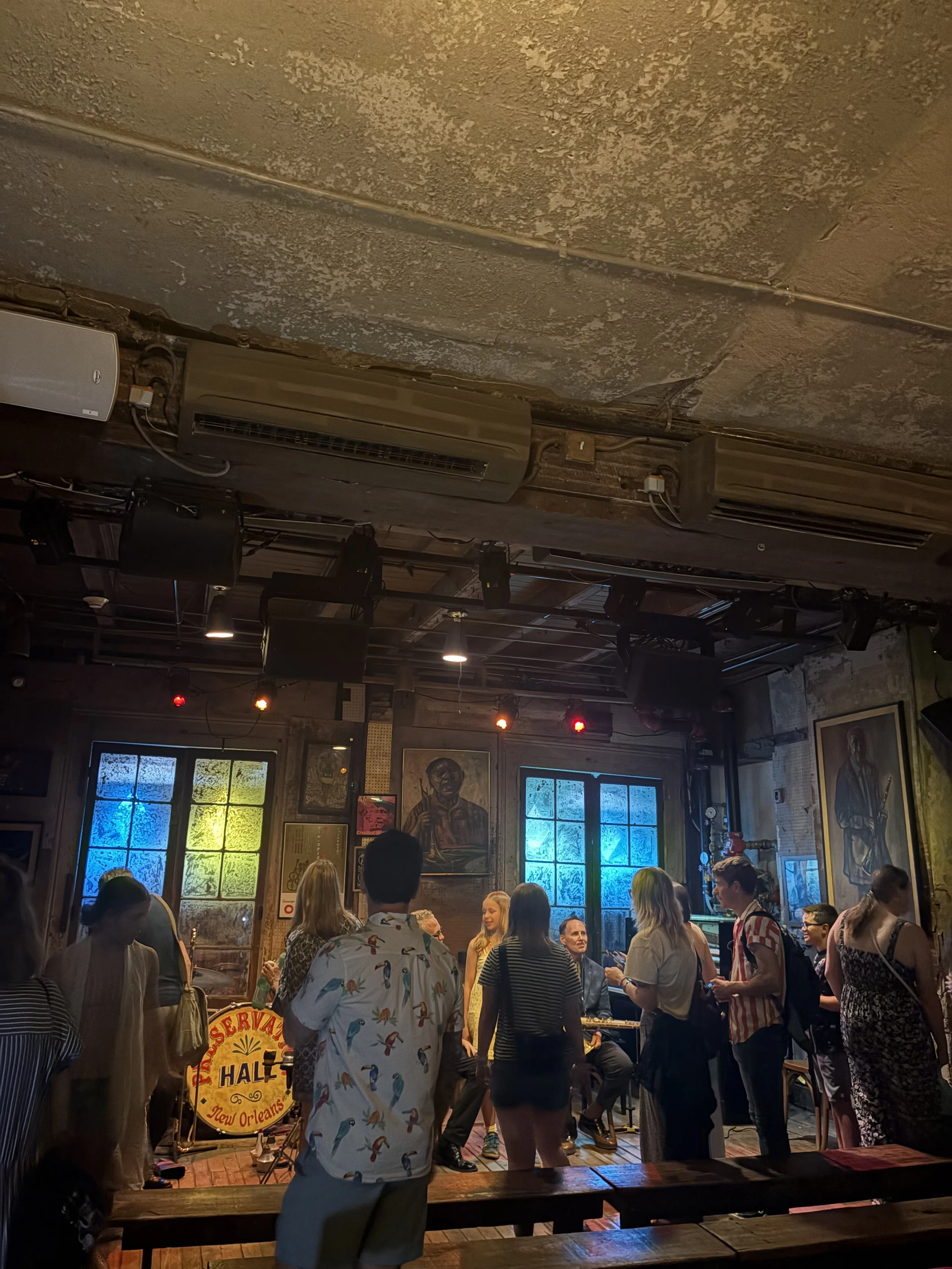
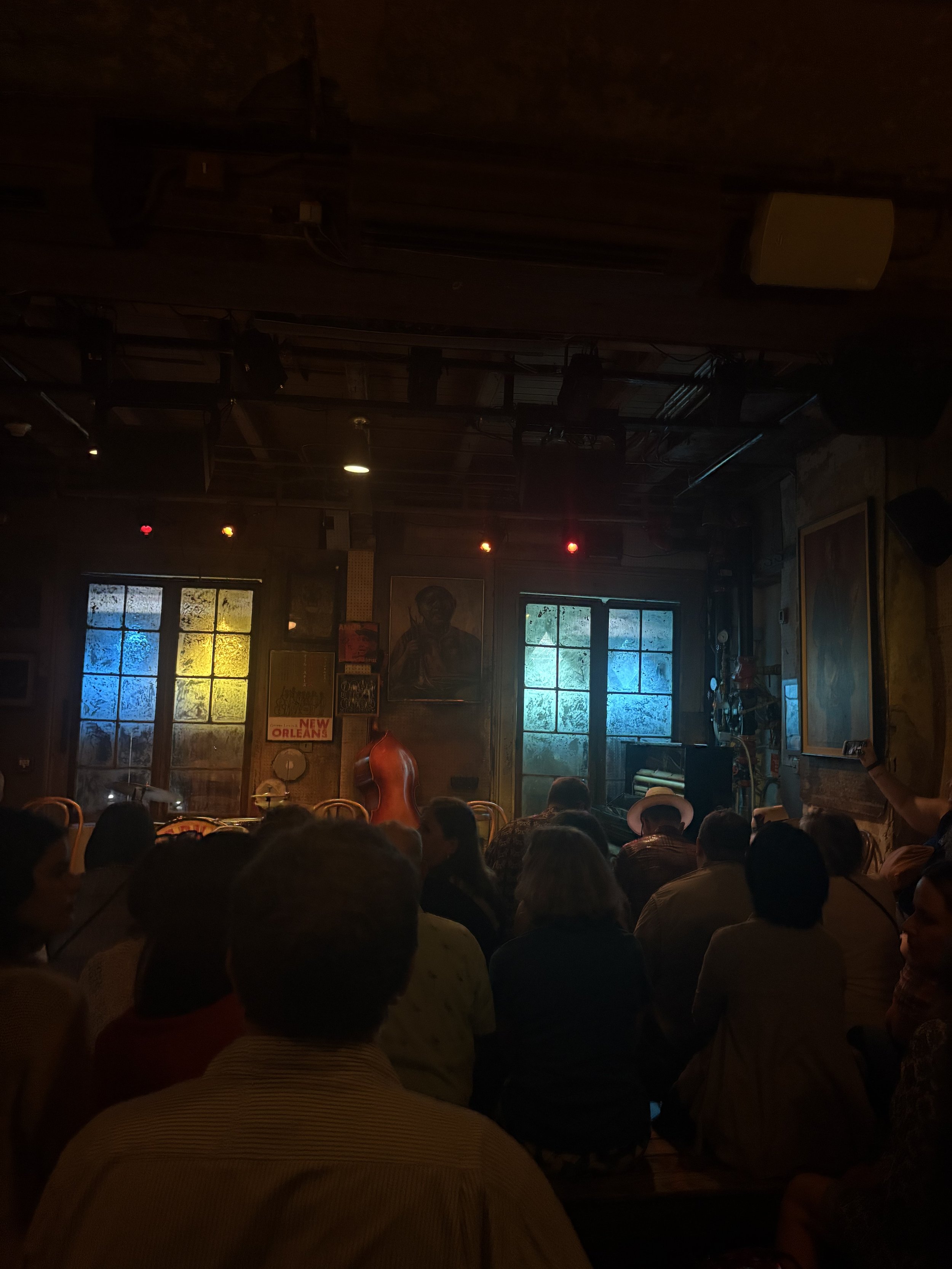
Inside was just as understated. The venue was one room with rows of wooden benches and a small area in the back where we stood. The stage was reminiscent of the ‘Whammy Bar,’ a place in rural Vermont that would sometimes have live music (and also really great truffle fries). I felt immediately transported back to my childhood. When we were told to put our phones away for the performance, there was a part of me that internally panicked. Even though I’m an adult now, I will always on some level be the ADHD ten-year-old trying to sit through a two-hour classical music performance. The idea of being stuck in a room with just my thoughts, (mostly) instrumental music, and strangers made me feel almost trapped.
I needn’t have worried, however. From the moment the trumpet blew the first note, I was entranced. Almost spellbound. I watched the band play song after song, from a hilarious rendition of Sweet Emma Barrett’s ‘None of My Jelly Roll’ to rolling bluegrass tunes to slower, deeper melodies. I felt truly immersed in the music. People always talk about jazz being about emotions, like being able to hear the sadness in a trombone or the anxiety of a syncopated beat. I don’t think I entirely understood that idea until this performance, being able to fully focus on the sounds with no phones, no distractions, a lot of the time not even lyrics. I could hear a sweeping melancholy in some of the songs, or the blatant joy in other melodies. Throughout it all ran a sense of abruptness, spontaneity, as though these musicians didn’t take themselves too seriously. Learning afterwards that the performance wasn’t rehearsed but was instead mostly improvised was wild because of the quality, but almost made a strange sort of sense.
In fact, reading Michael Ondaatje’s Coming Through Slaughter about jazz pioneer Buddy Bolden felt almost like being at Preservation Hall all over again. Bolden’s music, though it’s been lauded as fundamental in the creation of modern jazz, was never recorded. His music only exists now through memory, through re-creation. Though we’ll never know how accurate Ondaatje’s portrayal of Bolden is, I do believe he was able to breathe life into the character the same way a skilled musician is able to breathe life into a piece of sheet music by sight. The story of the book is messy, told in bits and pieces. It’s nearly impossible to tell at some points when things switch from one timeline to the next, from Buddy’s narration to another character searching for him. This style is reminiscent of Bolden’s jazz music itself, which was often spontaneous, jumping around. “He was the best and the loudest and most loved jazzman of his time, but never professional in the brain,” Ondaatje writes (pg 14).
““Unconcerned with the crack of the lip he threw out and held immense notes, could reach a force on the first note that attacked the ear.” ”
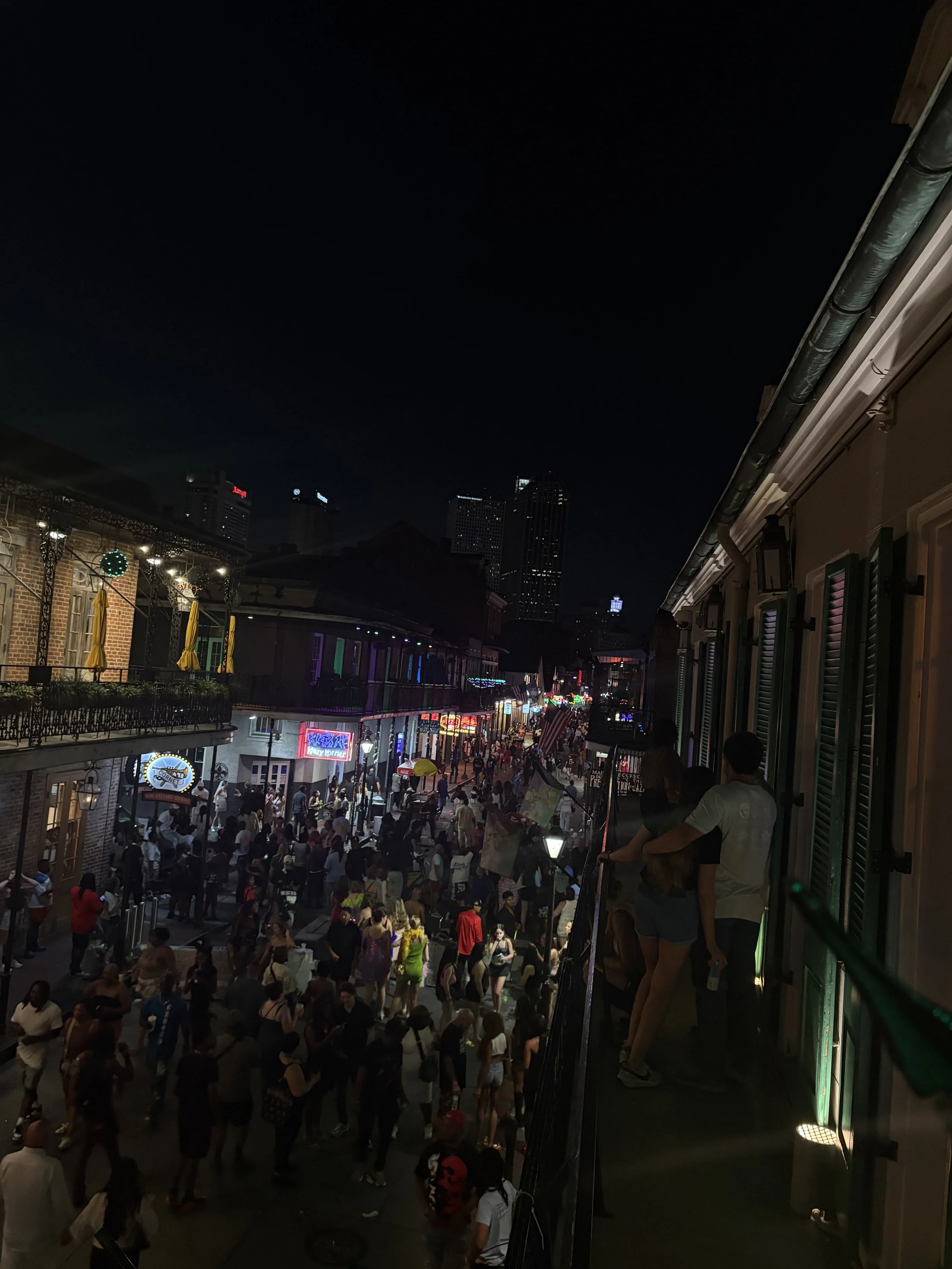
Bourbon St. at night — I can fully imagine dipping into one of these bars and finding Buddy Bolden playing for a rapt crowd.
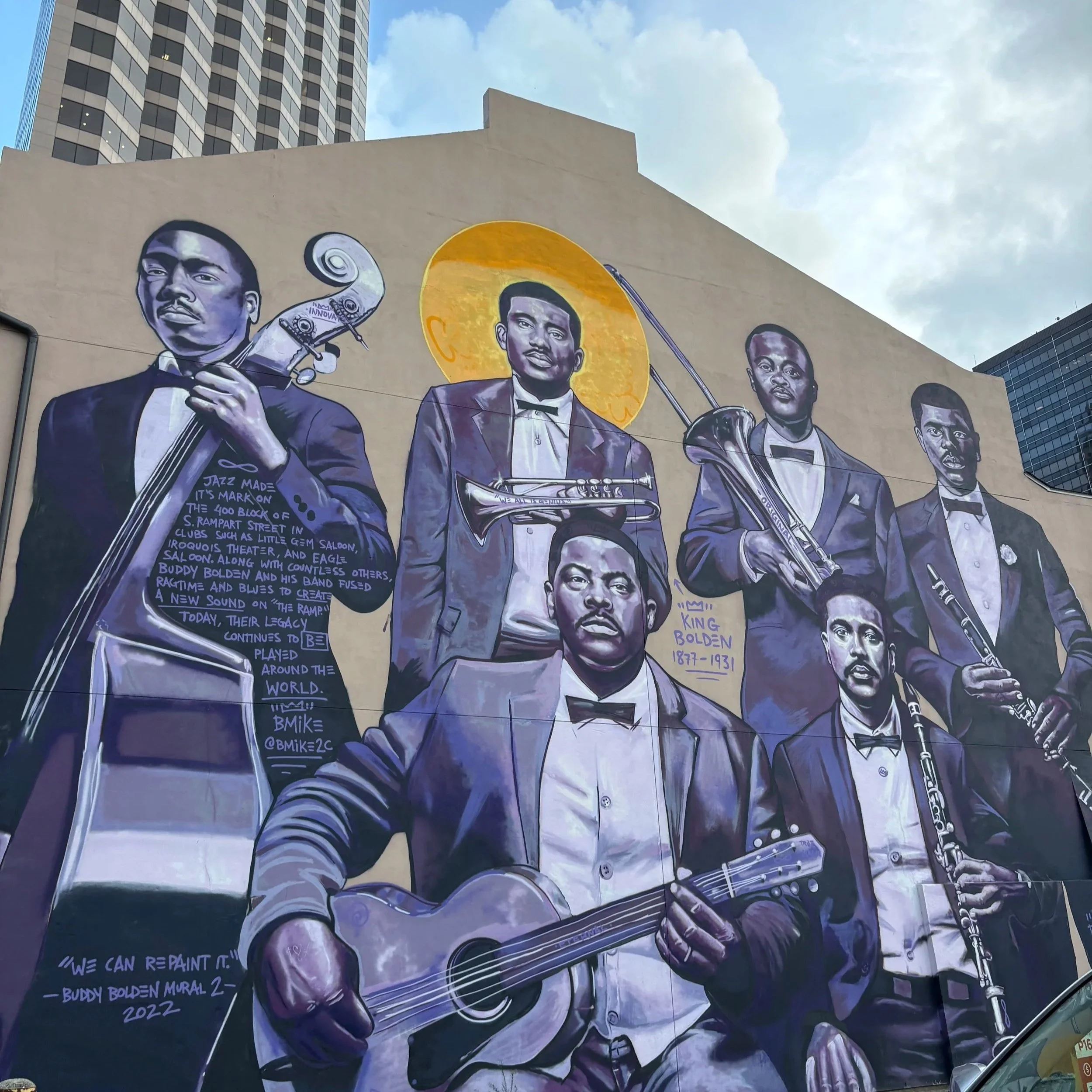
Mural of Buddy Bolden’s band that Laura, Trey, and I came across while getting pizza.
Bolden was a genius, but in a way he was almost more impressive for his lack of genius, of planning and strategy. Reading the book gave me the distinct impression that within Bolden was jazz; as though the music came straight from his soul and one could not exist without the other. No wonder Bolden didn’t have to rehearse in order to play incredibly. He already was talented. He just had to be.
As I stood in that bare bones room of Preservation Hall, heels of my feet almost numb from standing so long, it was as though I could sense Buddy Bolden’s ghost within the walls. Preservation Hall was built after Bolden’s time, and yet I could almost picture him standing on stage playing his cornet, whether a century ago or today.
With all the spontaneity and improvisation I’ve discussed also comes a dark side. It’s risky to play in such a way. For every time you get something right, you also run the risk of getting it wrong. Such is the thesis of Buddy’s life — as much as he’s a musical genius, he’s also an abusive alcoholic going through a mental health crisis that consumes him until he is ultimately taken to a psychiatric hospital where he spends the rest of his life. You can say that the book’s structure (or lack thereof) is meant to represent jazz music, but you can just as easily make a case for it being the disorganization of Bolden’s mind. The book reads like a fever dream with memories flying at you, not separated by time or distance or even narrator. The story is beautiful, but ultimately haunting. It’s one that has stayed with me in my own memory, just as Buddy’s music has lived on through memory, much like Preservation Hall has been kept alive through recollection and word of mouth as there is no recording allowed. I feel as though I hadn’t fully been able to dive into jazz and its influence on New Orleans, and this book really put me in the thick of it. Every time I see a brass band or a street performer singing Ella Fitzgerald, I find myself thinking back to Buddy. I have no way of knowing what his life really felt like, what his music really sounded like, just as Michael Ondaatje didn’t when he wrote the book. But through memory, through imagination, his ghost is kept alive.