Trey Dyson

The Archives of History

My mother graduated from Xavier University. She loved Xavier. Everytime we drive past Xavier University I feel this sense of pride in that THAT is where my mother had her education. Where she took on the world and conquered. It felt so surreal to even see where my mother flourished, it always felt like this foreign place. 

Xavier Uni

My family overall was actually rooted in New Orleans. I don’t know the exact origins but my family has largely been based and centralized in most of the South, especially Louisiana. Our literal history is here and to be completely honest with you, I have no clue. I am not cognizant of my history and to that, I don’t like that. And that's when I understand the importance of archiving. As we drive through streets of the 9th Ward and see the countless housing projects that have been abandoned and set adrift, I start to understand why the historical importance of this city matters so much. I start to see why memorials have been laid throughout, why there’s statues nearly on every corner. Knowing the countless houses but also historical buildings that were destroyed and dismantled from countless hurricanes. I get the severity of ensuring that Hurricane Katrina and Hurricane Ida were relentlessly documented and recounted for through numerous documents, first hand testimonies, and heartbreaking debris. I completely understand the responsibility that this city feels that it carries to each and every citizen that has once inhabited it. And simultaneously, I understand the want to capture one’s ancestral and familial history through yearbooks, photo books, letters, cards, and so on. 
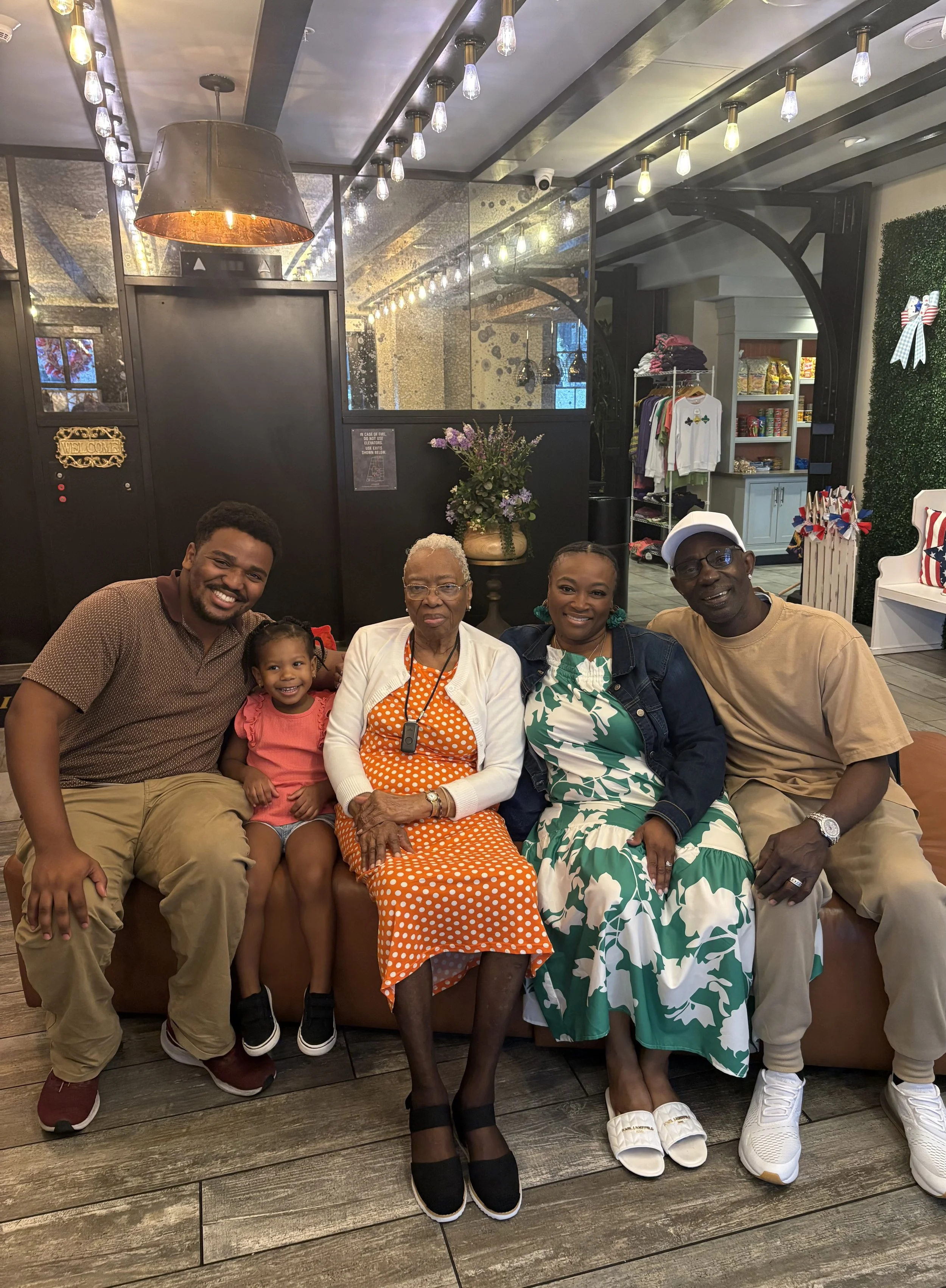
Meeting Family in NOLA
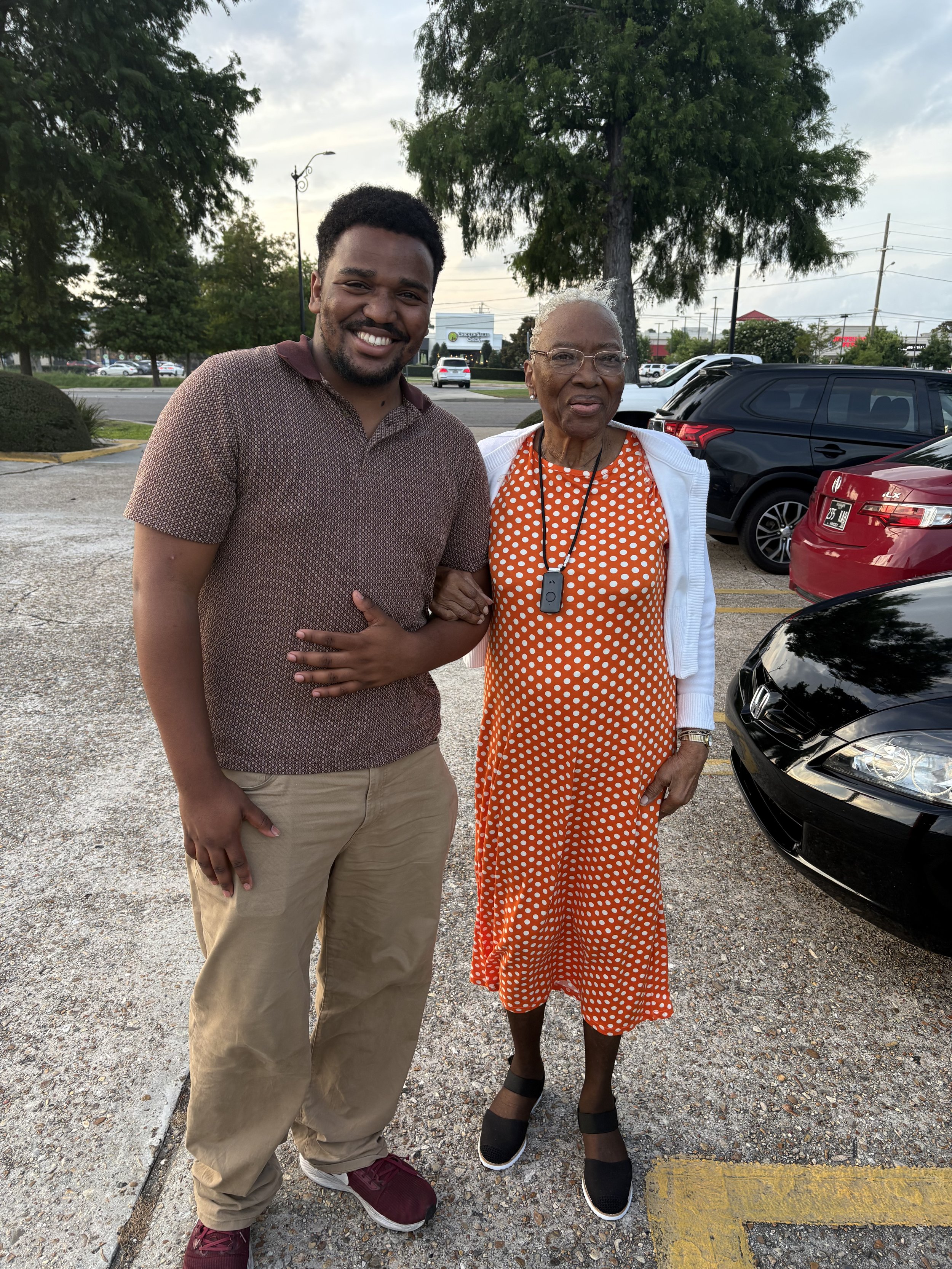
My Great Grandmother!! Mama Hill

As I meet some of my family - my great-grandmother, my auntie, her husband and a niece - I realize that there is so much history that is unsaid and has been untapped. Seeing Mama Hill (my great-grandmother) in person, I realized that I truly didn’t know much but even then I felt a responsibility to know. Yet so much time has passed and so many years have expired that I feel I don’t have much time left. And then I think what happens if I don’t explore that, if I don’t hear those stories. Do they just all disappear? Does it all just go down the drain? And then I think of the stories of every family, of every grandparent, of every ancestor and the history that pervades and exist all through time. It’s befuddles me to think about it all and sometimes I have to shield myself from my mind spiraling. Truly, this is the thought process that comes to mind everytime.

Anyways, I thought about this constantly as I read Coming Through Slaughter. Racing through pages of firsthand memories but then to find songs that were played, short little memories of those that knew Bolden best or briefly, reels that were played from interview tapes, timelines pulled from the histories of hospitals, words from Brock and Willy and memoirs too. A colorful description of his life that depicted the brilliant, the terrible, the chaotic and the tragic. I am not a fan of biographies nor am I a fan of autobiographies but I deeply respect what it took to flesh Buddy out and to give this fully realized depiction of what Buddy was as a human. To see firsthand how he clearly devolved and experienced his tragic downfall. But without the archival of history, what would we have known about Buddy?

And for this to be fragments of his life, fictionalized at that, the line is clearly blurred between what’s real and fictional? What much has been said through history that was simply conjured up from imagination and then spread as if the Bible? What has been said from one perspective only to be made the only perspective? Something that I know can be applied to war, to literature, to politics, et cetera. 
Buddy Bolden Mural

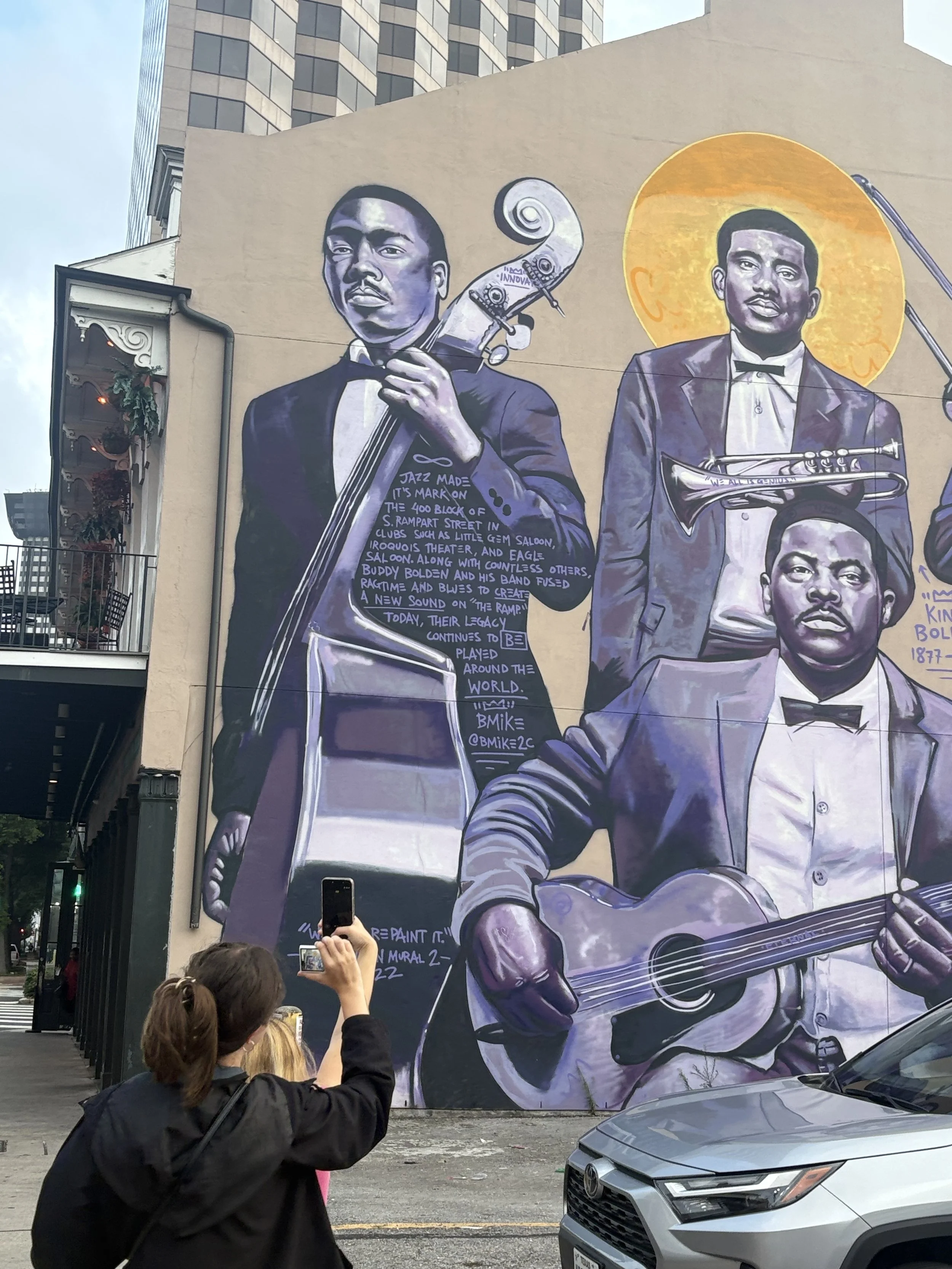
And so as I walked through the Central Business District, I found myself walking down a street and lo and behold, Celeste notices the popular mural of Buddy Bolden and friends much to the amazement of Laura and I. This gorgeous mural possesses these beautiful, darkly purple hues and gold lining. It’s a beautiful mural painted by Brandan Odums’. But something I thought interesting was something our Professor brought up. The fact that Brandan painted this mural with his friends in mind and actually recreated the mural (because it was destroyed due to a hurricane) with their faces in place of the other band members. And though it’s a small thing and actually quite harmless, I found it dreadful the thought that those band members may have just had their only contributions to history erased and cast aside. Albeit, I don’t think these are the only recollections of that ‘band’ but even then I don’t know their names nor where to even start besides Buddy. Just a morbid thought I had, this idea that despite all the archives in the world, you could still be erased from history in a flash. It terrifies me deeply. 

On the other hand, as I read Coming Through Slaughter, I couldn’t help but think about the layers of this city that exist and the layer that is slavery and white supremacy that exists on the very grounds that we lay our feet upon. And how you truly have to sift through archives upon archives and divulge in documents upon documents of that nature in order to really find something pertaining to the hideous events of that period. To see those documents from Solomon Northrop knowing the tragedy of his life, it crushed me. It wasn’t without our professors insistence, the documents that he searched through extensively that we would have even know about the slave ones that existed in the Central Business District and all throughout the French Market. 

Who would have known that a statue so prevalently known throughout New Orleans was destroyed and replaced at the corner of some train stop without literally searching painstakingly through endless documents. It’s the archival process that truly fascinates me because who keeps hold of it all. What is deemed important and who is deemed important enough. Who is worthy of being captured and archived so that their name truly becomes immortal through time. Who and what thought it necessary that Buddy Bolden's life be immortalized through this fictionalized account of the life of a jazz pioneer? Clearly, enough people. 
This Malaise Thats Settled Over The City

Canal Street

I have a couple of thoughts about the Moviegoer, a novel written in 1961. A recurring thing I’ve noticed actually for these novels, set in a time long, long ago. Something I’ve actually had to get used to now, that objectifying of the black male to just that, the “Negro”. “Negro this” and “Negro that”. The Negro being minimized or reduced to just someones plaything. It’s obviously symptomatic of that time and era, clearly. But it catches me off guard when every protagonist written in this past century possesses this higher sense of self or standing in relation to the Black Man. This is not something plaguing novels set in New Orleans specifically, this is just emblematic of that time and place. I understand that. But hearing Mercer's sad tale of inhabiting this small space between usefulness and non-belonging. It's quite disturbing and it's like he possesses this dumb aloofness where we all silently pity him and point and laugh because he is this ‘other’ (courtesy of Andonis) and is beneath Binx, as if a sad circus animal. Rings true when I see something like…

“He liked to think that Negroes have a sixth sense and that his Negro had an extra good one.”

Moving on. How is it that every novel we have read has featured some aimless, existentialist, confused protagonist who wants to upend the societal expectations set upon them since birth but still end up becoming almost entirely resigned to their fate? If I had a nickel for every time it happened in the books we’ve read thus far, I’d have like 3 nickels I think. But this is the most existentialist and middle-aged crisis of them all. But it really intrigues me as to why New Orleans seems to be the safe haven for both the eccentric and depressed. So much so I even took a screenshot of something I read because it was just so morose and saddening to hear.

“For years now, I have had no friends. I spend my entire time working, making money, going to movies and seeking the company of women.”

There is no bright light in this statement. I sense no positivity or any hint of life and this goes on for a great majority of the novel. This leering and noting every woman's physical stature and whether or not they had a sizable caboose or not. I kid you not, he comments on so many women’s hips in this novel that I couldn’t help but feel as if I was reading through the eyes of the author himself. (I think I know what his bodily preferences were…..) But, my god, what a drab and boring way to view life and I couldn’t help but feel such immense pity for this Binx. Who has no sort of purpose or possesses any bout of inner happiness. He begins the novel exactly where he ends the novel. Sort of just….there. In the streets of Prytania, passing down Canal Street, going through Lake Pontchartrain, living in Gentilly and visiting Elysian Fields forever, it seems. But rather than the calming, drowsy nature of Grand Isle, this time there’s this droning, gray, everydayness to New Orleans or Elysian that will clearly drive you insane from utter monotony.

Which is utterly fascinating. Because the backdrop of New Orleans is actually quite the opposite to Binx’s morbid depiction of life and how the everydayness of routine seeps into one’s livelihood and wreaks havoc to all that comes near. And it's this that paves the way for the ever so close search of life? A search, “anyone would undertake if he were not sunk in the everydayness of his own life.” This search to avoid the mundaneness of his own life, but why in the city of New Orleans? Why does this continue to happen? Edna suffered a similar fate. Always tiptoeing the edge between livelihood and eternal peace or life on land and life beneath the water (suicide). What is it about this culturally dense, culturally abundant city that renders people confused about the purpose of life? You’d think that you’d never encounter a problem or find issue with life if you were strolling down the streets of Canal or living in the Garden District. But Binx taps into this concept that I actually found to be quite profound. That this ‘search’, being aware of it, allows for the possibility of the search to be successful, for you to ‘be onto something’. Whereas not being aware or onto anything at all means falling into despair. You are the everyday man, someone who is dead. You are so sunk into everydayness that the possibility or an idea of a search is simply preposterous and is never once conjured up in your brain to be something worthy of thinking about.

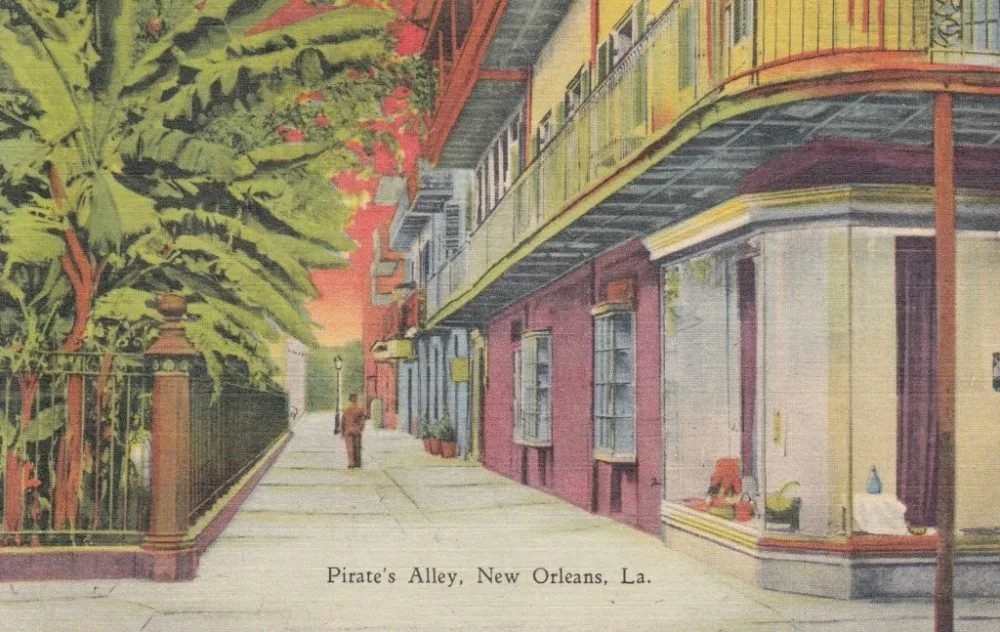
Pirates Alley

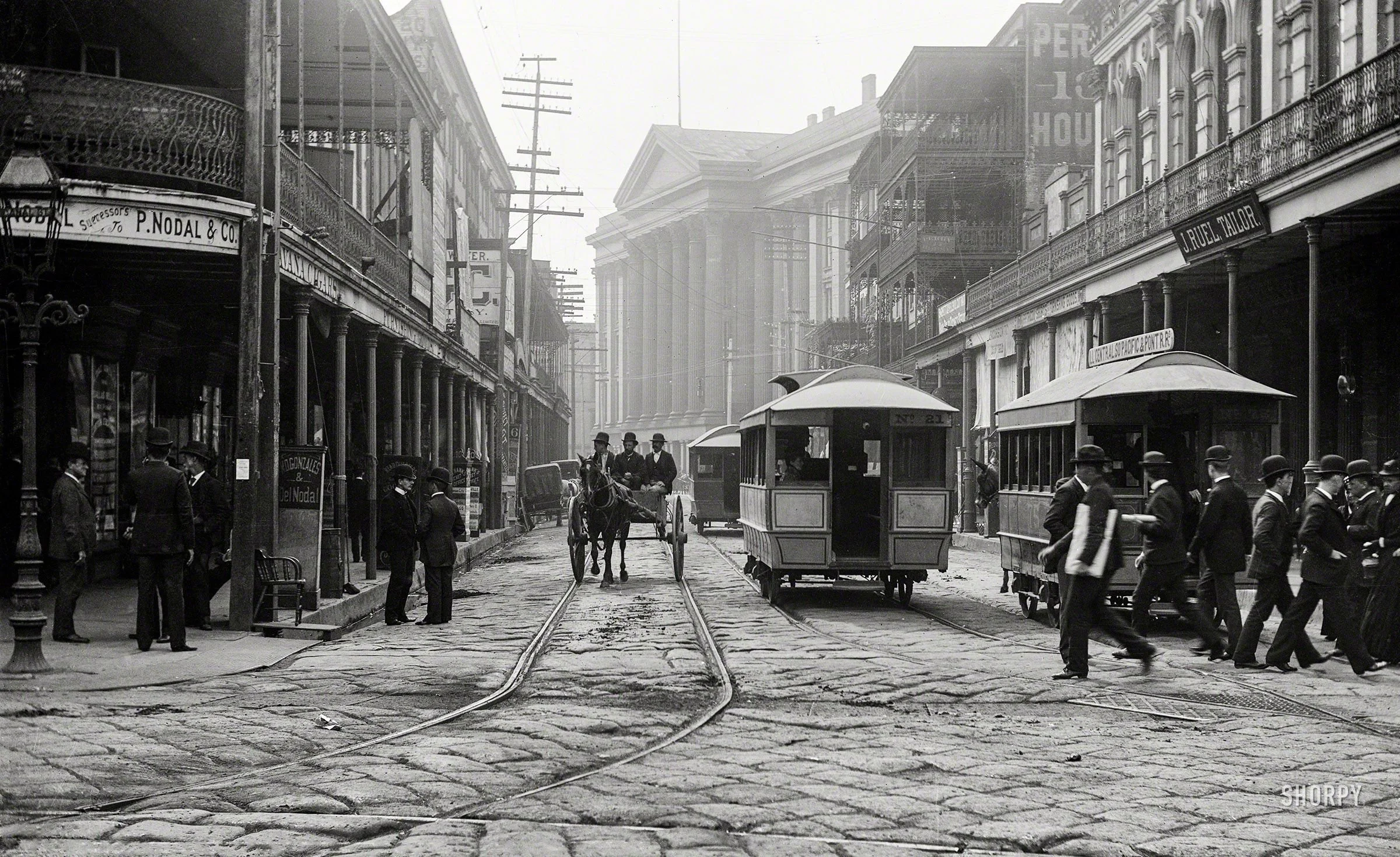
Case in point, this sort of interaction that Binx recounts about William Holden and this young fellow he runs into. But let me remind you, we are bookpacking. To be reading a passage and suddenly you're able to stick an image with a corresponding landmark or name. It’s a wonderful feeling. To read about Binx traveling up Esplanade, passing through Pirates Alley, towards Canal but then being able to visualize a map in your mind of where he may be, is second to none. I know the cobblestone they are stepping on, the awnings that lay overheard, the wrought iron railings that decorate the sky almost. I can hear the conversations that are being had in open passageways, the passersby on trolleys down Canal Street and otherwise. So imagine all of this while the interaction is underway. Hearing this young man size himself against Holden only to believe himself inept, undeserving and worthless. Only to have “....won title to his own existence…by refusing to be stampeded like the ladies from Hattiesburg.” I just thought it stunning that we all try so much to validate our existence be it through social media, one’s physical presence or in being perceived positively. It’s something we all tend to do subconsciously and it truly can’t be helped. But for it to be described so effortlessly, in that “....he is a citizen like Holden; two men of the world they are. All at once the world is open to him.” I freaking love that. It’s just so accurate. Something as simple as an interaction from someone we deem superior somehow validates us and makes us feel that we finally have a right to live? How enlivening but simultaneously saddening that is. To feel we NEED that validation from someone, ANYONE. I feel Edna needed this as well? To an extent, Louis too.

This malaise that Binx is so mortally afraid of ONLY to fully submit himself over to that same damn fate at the end of the novel having completely done away with his ‘search’? Much like Edna who herself gives up and willingly. I just don’t understand it.

A Necessary Experience

What do I even say? After the last couple of days that we’ve had?

I’ve never felt such a volley of emotions, I haven’t felt this emotionally spent since the Black Lives Matter protests in 2020 that just left me so completely emotionally and spiritually drained.

It’s been a long couple of days and I can tell because I can feel the weight of the subject matter that we’re confronting at the moment. But as a privileged African American boy from Las Vegas, this experience was long overdue. And largely necessary.

Mind you, I come from the decently sized hometown of Las Vegas where we were ranked dead last or nearly dead last in the entire country in terms of the quality of our curriculum…. Our curriculum was genuinely horrid so imagine in US History, how deep the textbook likely goes when it comes to the International Slave Trade or the Emancipation or the Civil Rights era. I’d probably have to say most of the education I received of the injustices of our people were from the many documentaries or shows my parents put on over the years. One core memory being the Central Park Five, that lies centerfold within my memory. I’ve had so many opportunities to educate myself and learn more and more, and it coincided often with Trump being elected or honestly anything immoral he’s done to erase African American history so integral to the beginnings and going ons of this nation.

So to come here, in New Orleans, where slavery was pronounced and so heavily relied upon for Indigo markets. It’s stunning. It’s devastating. We spent one day choosing to explore the history upon the grounds that we walked and to be honest with you, it was absolutely crushing. I didn’t yet cry at this point but there’s always this tension I feel when I’m at odds with myself. I want to put on a tough face when I hear the immoral deeds done against the enslaved people but I also want to emotionally express what I’m thinking. I consider myself to be quite the empath, quite the sympathetic soul. So it weighs on the mind almost immediately. Walking around the city so comfortably, at ease, without having to worry for my personal safety. I’m not at threat of being whipped or hung from a tree or being decapitated. I don’t fear for my life, fear myself to be lynched or brutalized at any given moment in time (unless of course, a police car drives near). I have the privilege of not having to concern myself with any of this because of the pain, the service, the years upon years of enslavement that my ancestors had to go through. And I am mindful of that every single day. Grateful is the word of the day every single day. But to walk through these alleyways and streets, it was so utterly surreal to know what lay beneath these foundations and the true history these highrises and restaurants and hotels had to this day. Walking past ‘Hotel Indigo’ for example….. To know that these were the stomping grounds for slave owners, that some of these buildings were slave pens and also where the enslaved would get auctioned off. There apparently was a church right by an auctioning site. It pissed me tf off. And left me crushed. Because, as a tourist if you are not seeking out information and the history that lies here. You wouldn’t ever have a clue that somewhere like the Warehouse District could be privy to so much inhumaneness. It's truly devastating.

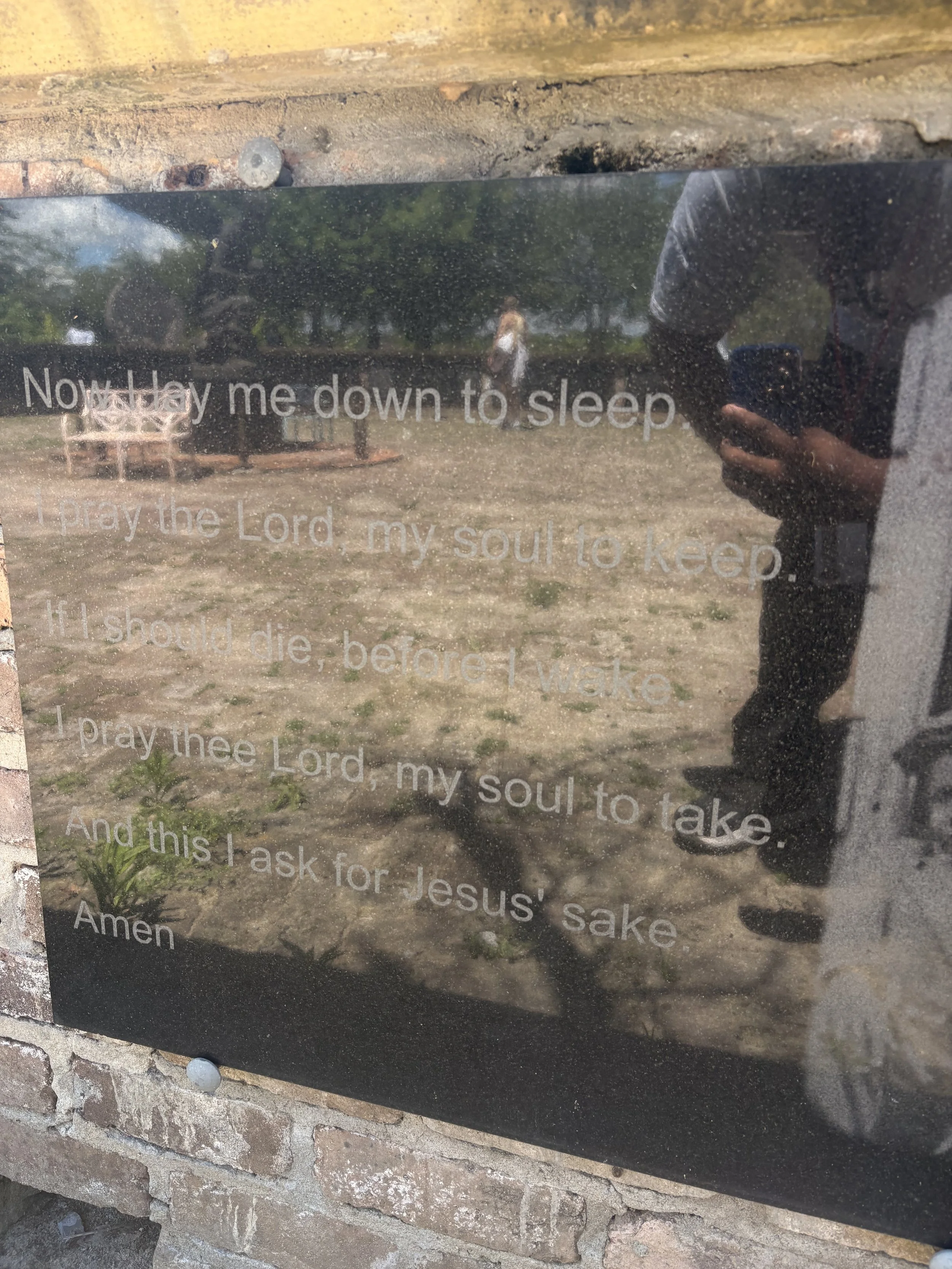
Then we had the Whitney Plantation. Hearing that people (White people) would often seek out these plantations for their PHOTO OPS and weddings and events and yada yada yada yada bull. It’s disgusting yet to me, somehow completely on brand and something I’ve gone to long expect from that crowd. What I truly do respect from the new ownership over the plantation was the taking out of furniture from the white house to ensure that the building was stripped of its humanity. That you could not see these people as human or humane. Avoiding that entirely, I loved it. Your brain had to fill in the gaps and we’re already understanding that these were horrid people. I love it. Anyways, I actively chose not to take any photos of the building, of any of the stops until the memorial. I guess I just felt internally disturbed. I was adamant about that, I had no intention of taking photos of that house or anything surrounding it. There was no need for me personally. It was only until I took to the memorials that I pulled the phone out. Because, as Jae and I saw, there was a prayer that goes….


“Now I lay me down to sleep, I pray the lord my soul to keep. If I should die before I wake. I pray thee lord, my soul to take. And this I ask for Jesus’ sake. Amen.”


A prayer that I’ve repeated myself to exhaustion. A prayer that I recount every single night before I go to bed. A childhood prayer, one of the two prayers that I’ve consistently done every single day. And it was here on a plaque at a slave plantation. I was speechless….. And shocked. I didn’t know what to say. I guess, I never thought the origins of such a prayer and had never even considered that it could trace so far back. It made everything that much more real. And seeing these plaques with all these names of children that were enslaved, only to see names like ‘negro boy’ or ‘negress’ and so many other blank, general names or some with no names or labels at all. It was devastating. It was devastating.

‘Slave Revolt Memorial’

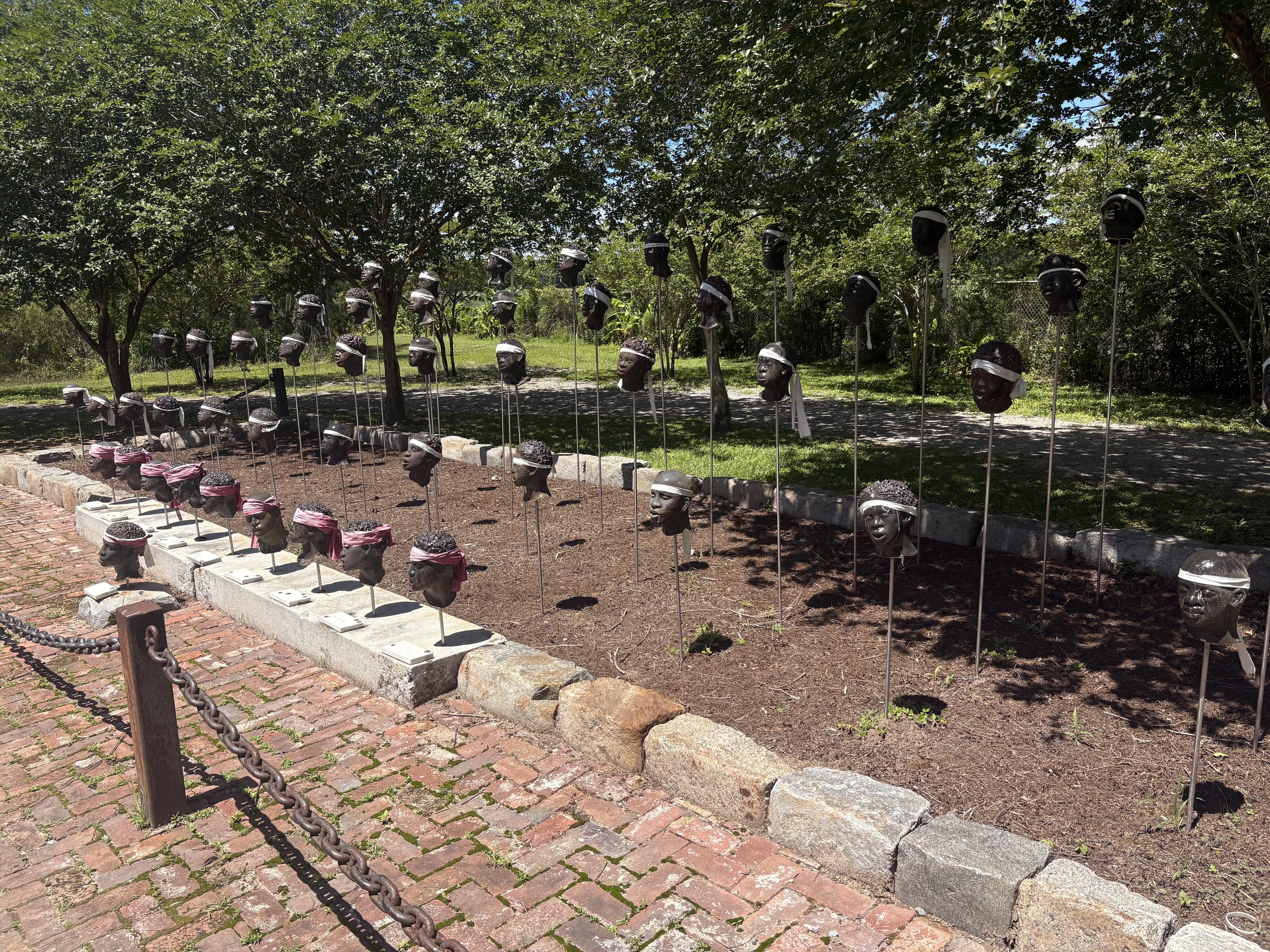
And then, of course the memorial for the 1811 German Coast Uprising led on by the heroic Charles Deslondes. And for some reason, it never registered in my mind that a slave uprising was ever a thing. I am pleasantly surprised that one ever did come to fruition and that they had the insurmountable courage and bravery to attempt something so risky. Never once heard of it in my life. Never a mention of Charles Deslondes, not at all and that is truly a disservice to his legacy. But my goodness, the memorial. I was shocked to see that the ‘Slave Revolt Memorial’ had several decapitated heads of the enslaved on these poles which was a crushing tribute to those that suffered that same fate and had their heads placed on sticks all along the Mississippi. Jesus. But visually seeing it in front of you, utterly devastating and something that truly gets etched in your brain forever. It will forever stay with me, I know that. But I had this thought of why it was so sheltered away when it's something so poignant and integral to the ties of this place. And it made me curious about the capacity that we all have for truthful stories like this. Have we become so shielded from the truth or the past that something like this, only scares us away and terrifies us? It’s sort of pathetic, if you will. Idk, I just sort of latched on to that thought. That the plantation had to reconfigure the walkways so that this memorial was easily missed because apparently it was too explicit or frightening for guests to recall and interact with. It’s like, what is that line of what's necessary and what's deemed excessive to people? Having to dumb it down or strip it of its morbid details just so it can be made consumable or risk scaring people away from facing the horrors that their own kind had committed?

Lastly, ‘12 Years of Slave’. A true biographical film about Solomon Northup and his story of being a freeman snatched away to become a slave for 12 years before finally obtaining his freedom once more. It’s a film I will only be seeing once in my lifetime. I have no intention of ever watching this ghastly film ever again. But I am grateful to have it seen at the appropriate time (if ever there is one). I felt every single emotion. I was exhausted. I was holding back tears. I was sobbing silently. I felt completely at the mercy of the film. It kept going. So much suffering. We had already gone through so much pain and misery before freaking Lupita even showed up. And that's when I knew we still had so much to GO. But it pissed me off. It left me feeling so full of rage. Drained me of my willpower and rendered the rest of my day blank and useless. I was in bed the rest of the afternoon and night. I’ve never once heard of his journey ever in my life. Never even knew of the name Solomon. And it pisses me off that there is so much I DON’T KNOW ABOUT. I feel this guilt because of this responsibility to be knowledgeable and knowing of my history, of my past and ancestry. It’s like, oh you don’t know of this tale or this piece of history, then you’re not Black enough. It’s just that I chose to avoid the film because of ‘trauma porn’ and didn’t want to subject myself to all of that misery and excessiveness. But again, what’s truly excessive if the entirety of the film is TRUE and ACCURATE? It renders the entire conversation pointless, honestly. It drained me. It truly drained me.

To finish off, I really want to note how icky it made me feel to see one of my favorite actors (not people, actor) put himself in this film as the ONE good guy, the white Savior of Solomon knowing damn well he produced this film and it was his production company. He knew damn well how that would look for his reputation and what that would do to his image. I thought it really curious and honestly, quite a stupid move on his part. Who told him to do that?!? And I am sure this was in the midst of his troubles with Angelina Jolie. Makes no damn sense. And it makes me mad that we have to resort to white people to save us, to be our saviors, to be the vessel to go through in order to tell our stories. It frustrates me to no end. I can’t tell you how maddening it was to see that Solomon got out not from his own hands, but at the mercy of another White man. Just maddening. But what can I say, that's just the way of the world.

Just not my world.

Vampires, Vampires, Vampires....

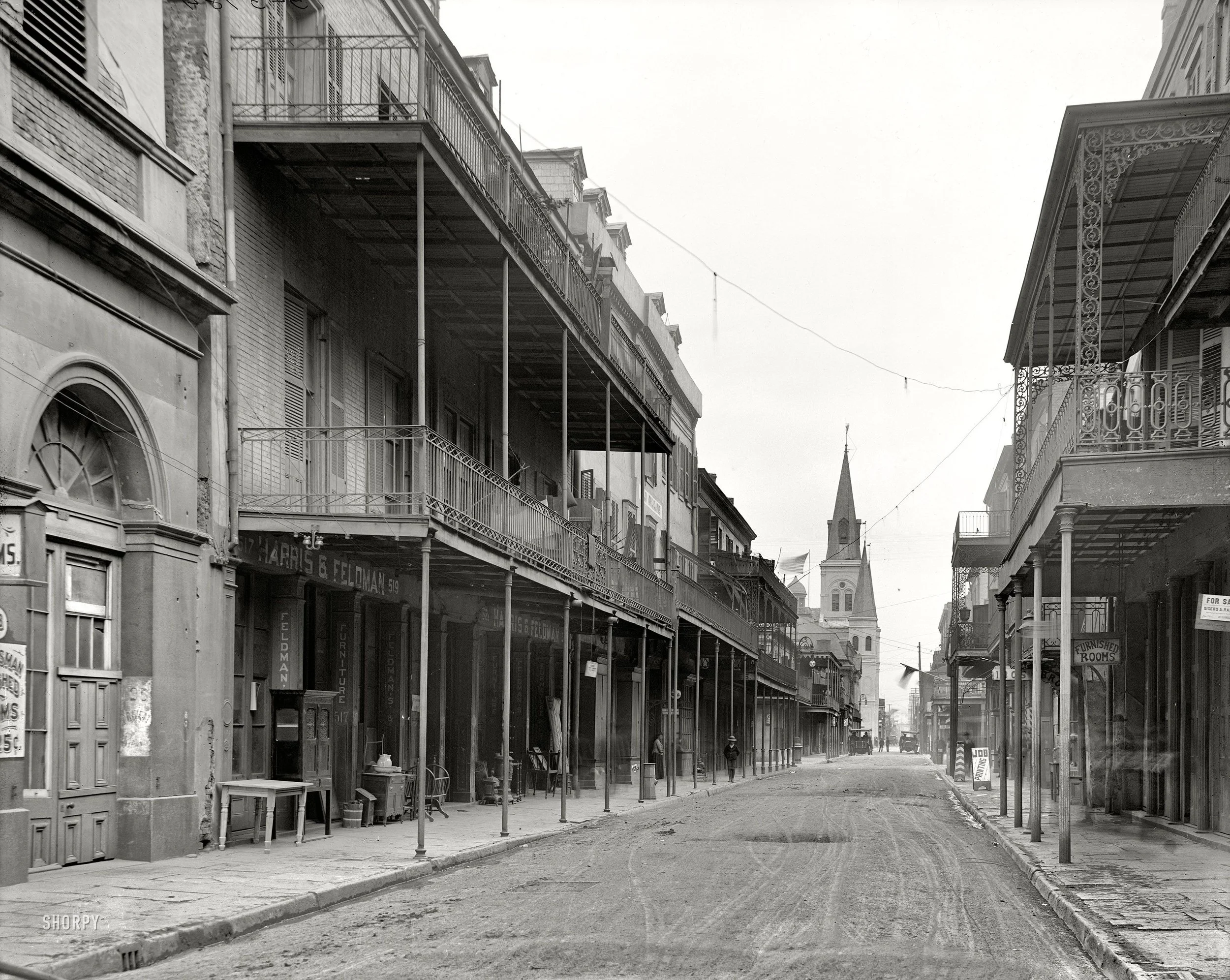
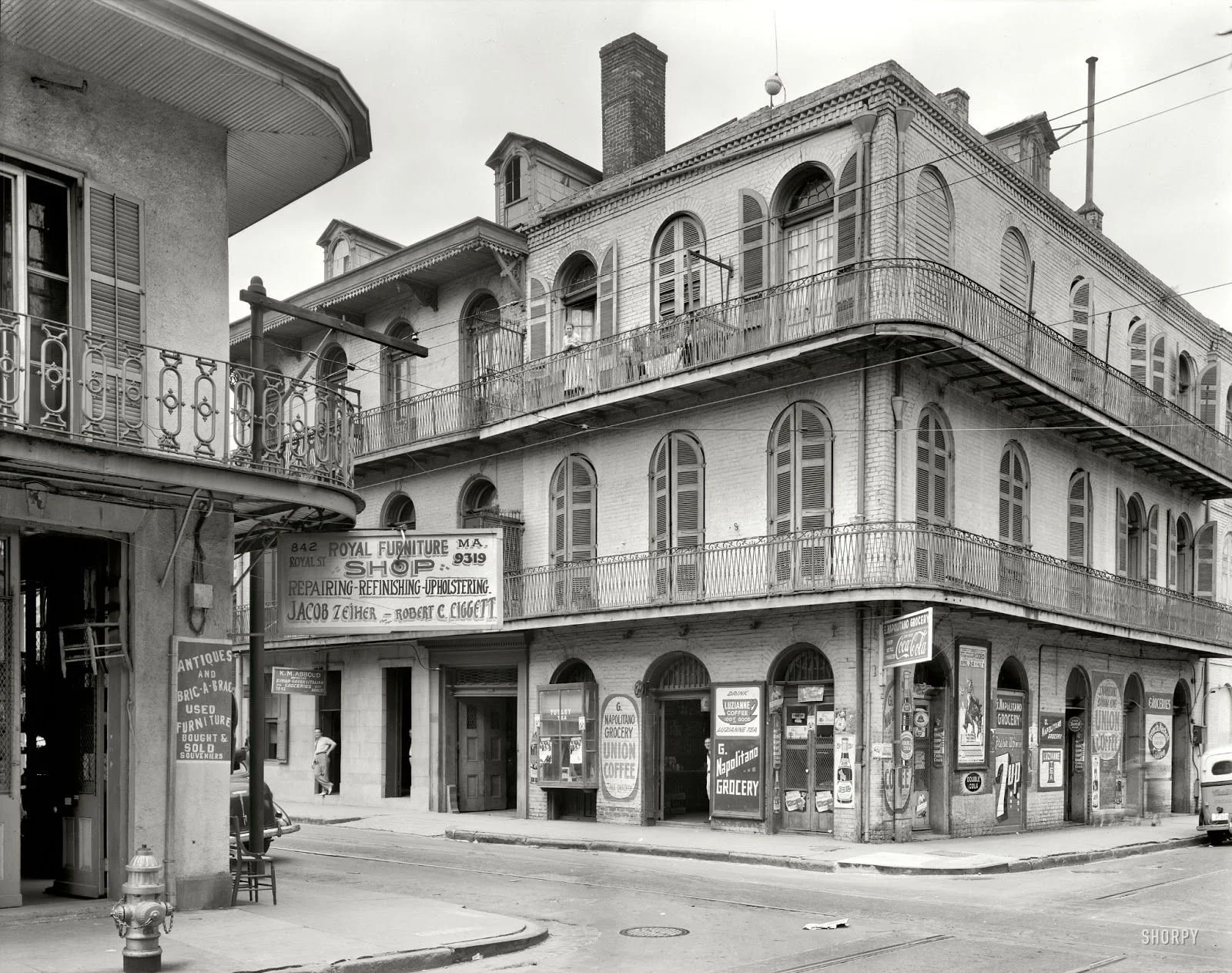
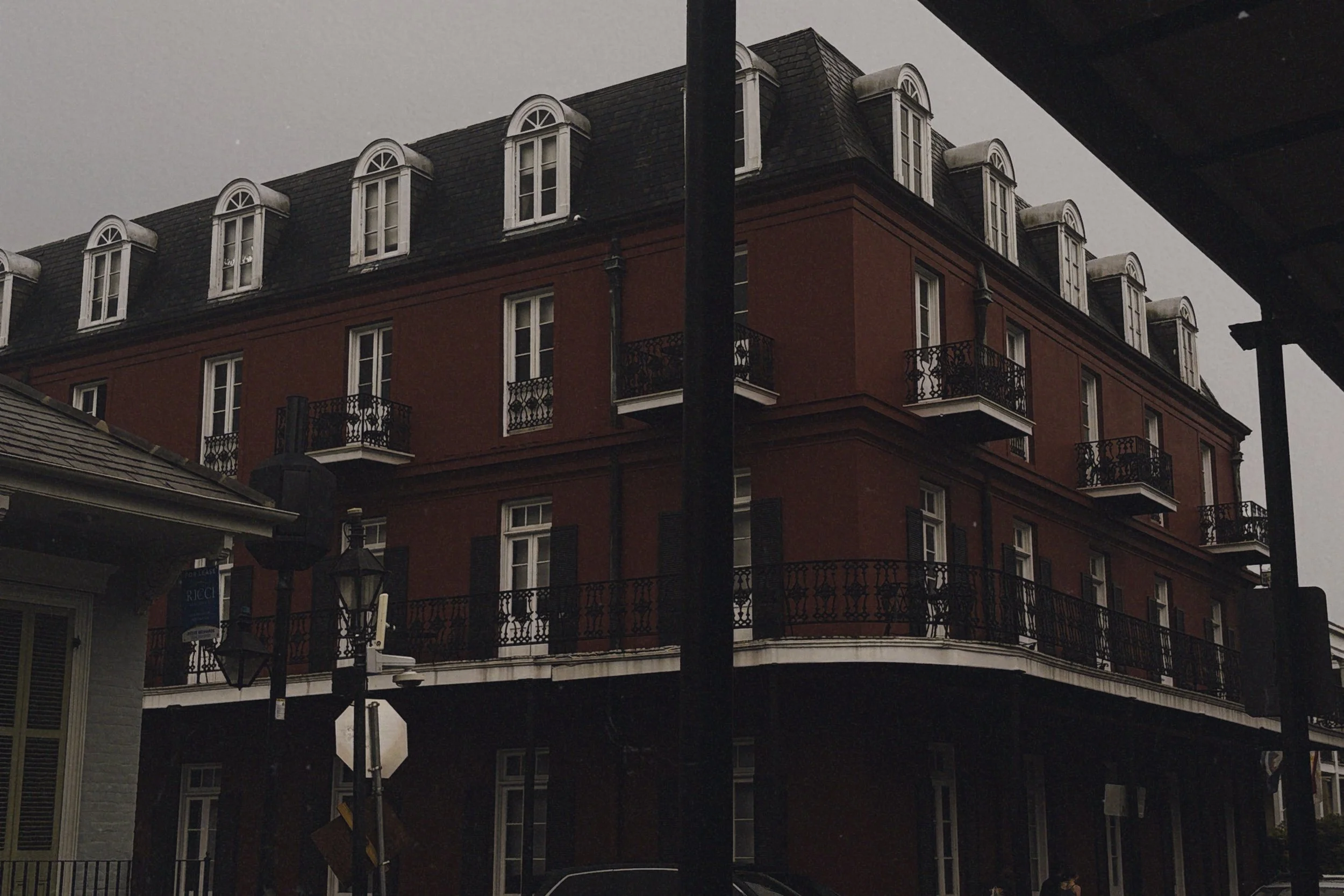
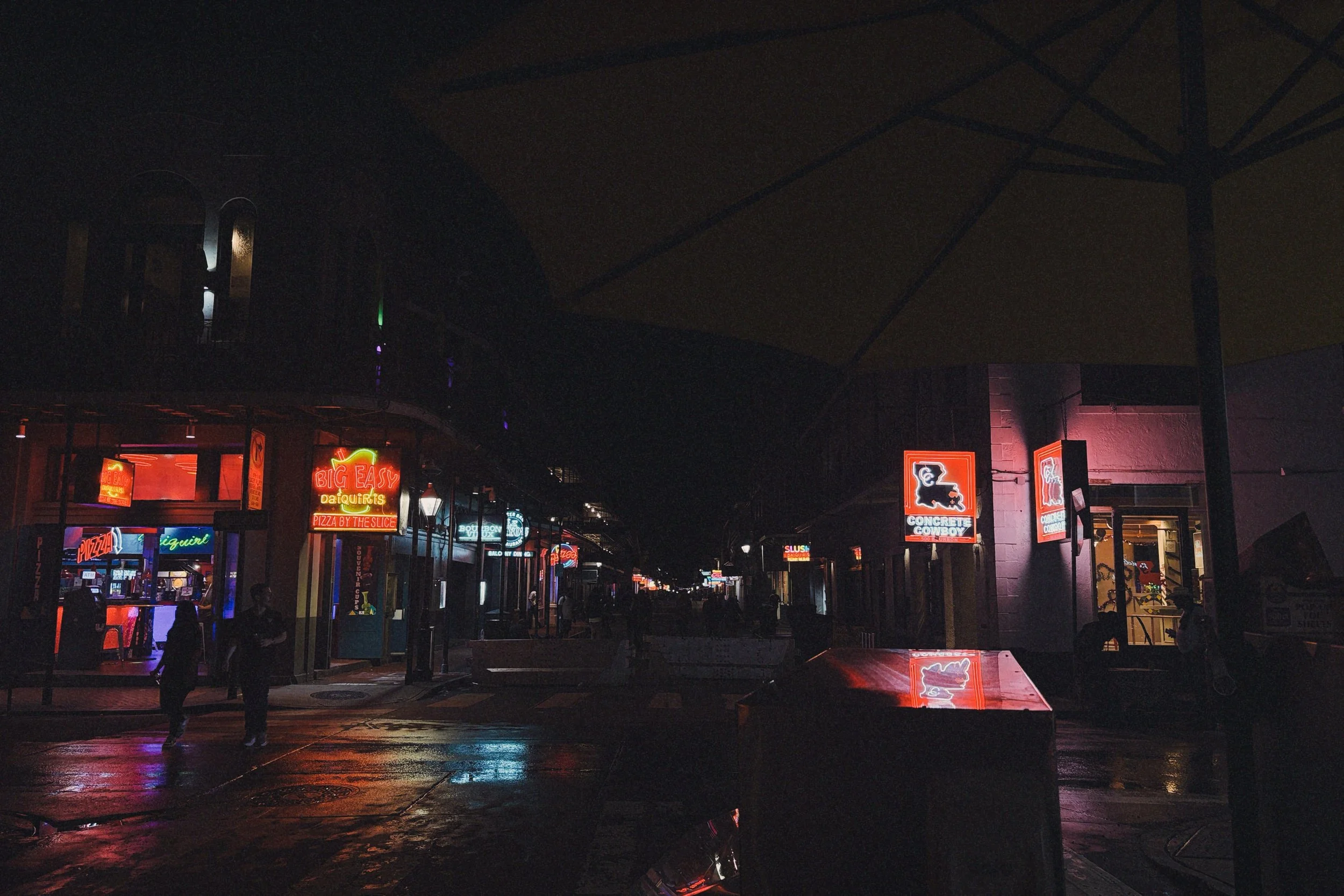
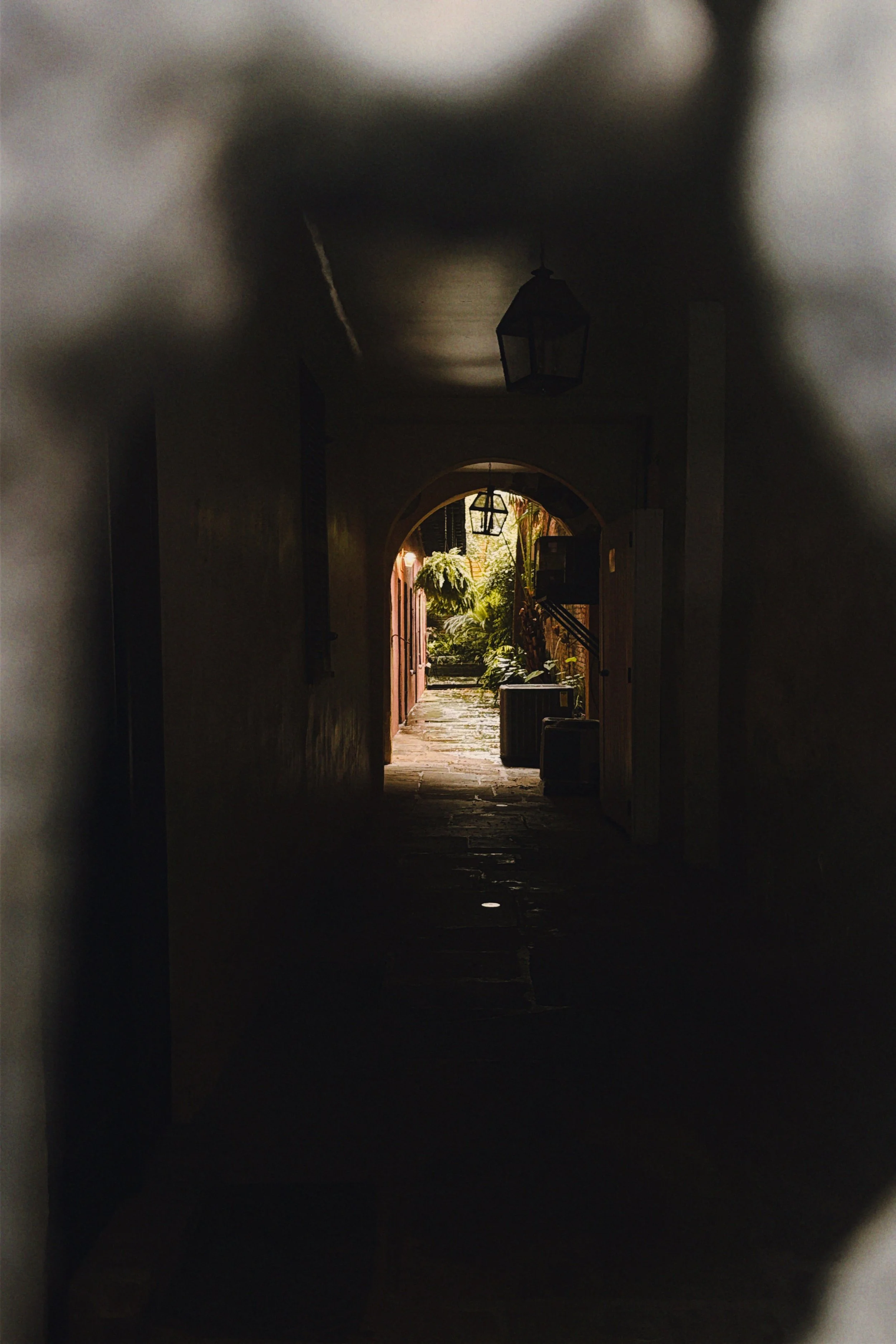
If I’m being completely honest, I’d be lying if I didn’t tell you Interview With A Vampire was my most anticipated novel of the entire bookpacking program. If I think of New Orleans, my mind immediately goes to that gothic, French and Spanish Creole architecture that pervades throughout the French Quarter. The heart of the city, truly. The sort of city that you end up walking throughout constantly to get to and fro just for the sake of doing it. With its mixture of broken-down, shoddy locations and sudden modernistic highrises through Canal Street. And then the gorgeous awnings that lay overhead as you step through a portal, almost, of 18th and 19th century New Orleans. Two to four story brick buildings, often stucco with gorgeous courtyards, both cast-iron and wrought iron railings (stunning) lacing these many balconies with gorgeous, intricate designs. A lot of long, narrow homes with a wide door facing into the street or mini front yards filled to the brim with plants, decorations left over from mardi gras, or decorations that’d fit quite nicely into a Halloween celebration. It’s a stunning city overflowing with personality and this unique energy that reveals itself in its populace. A city that's proud, that's loud and rambunctious and quite eccentric. I freaking love it.

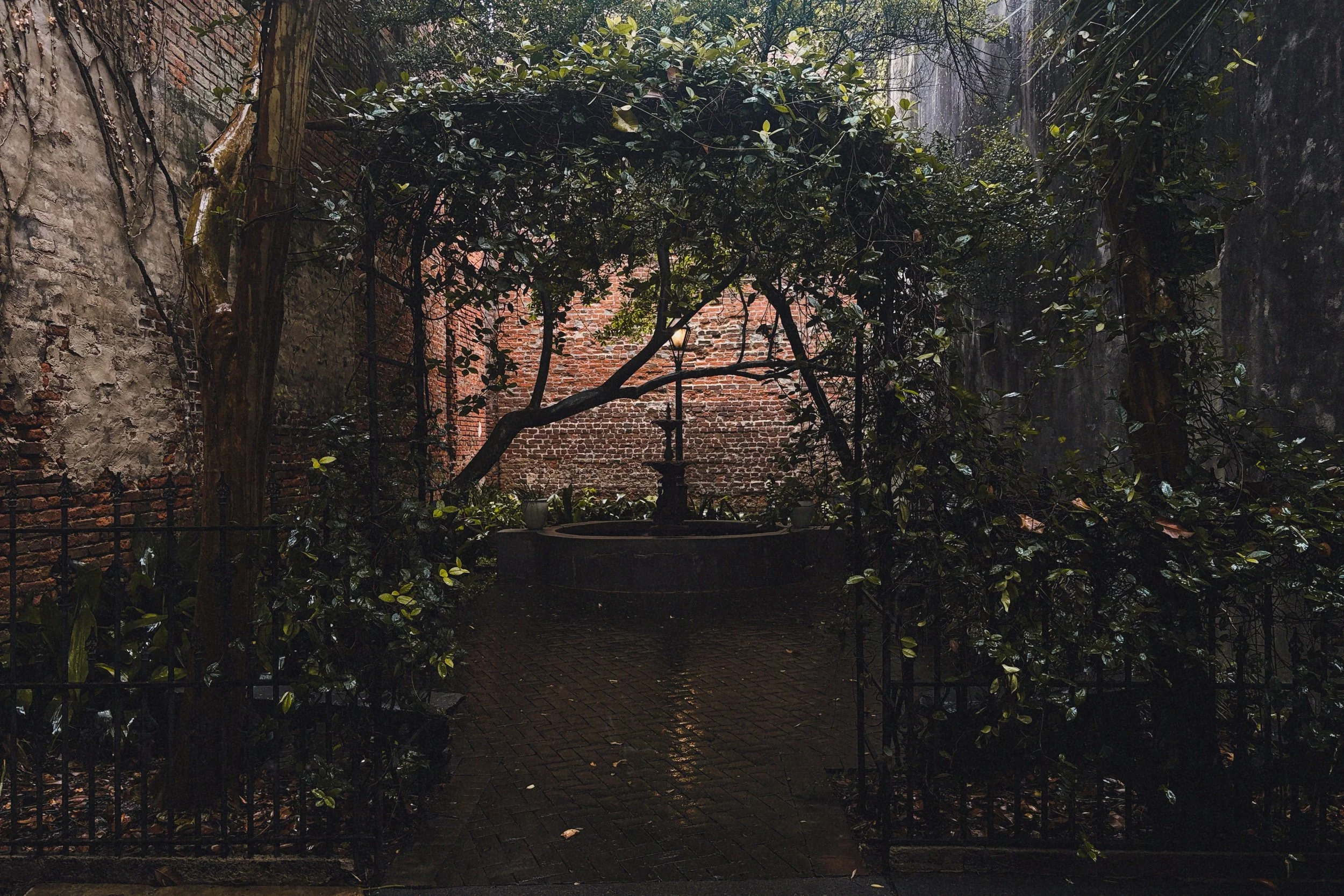
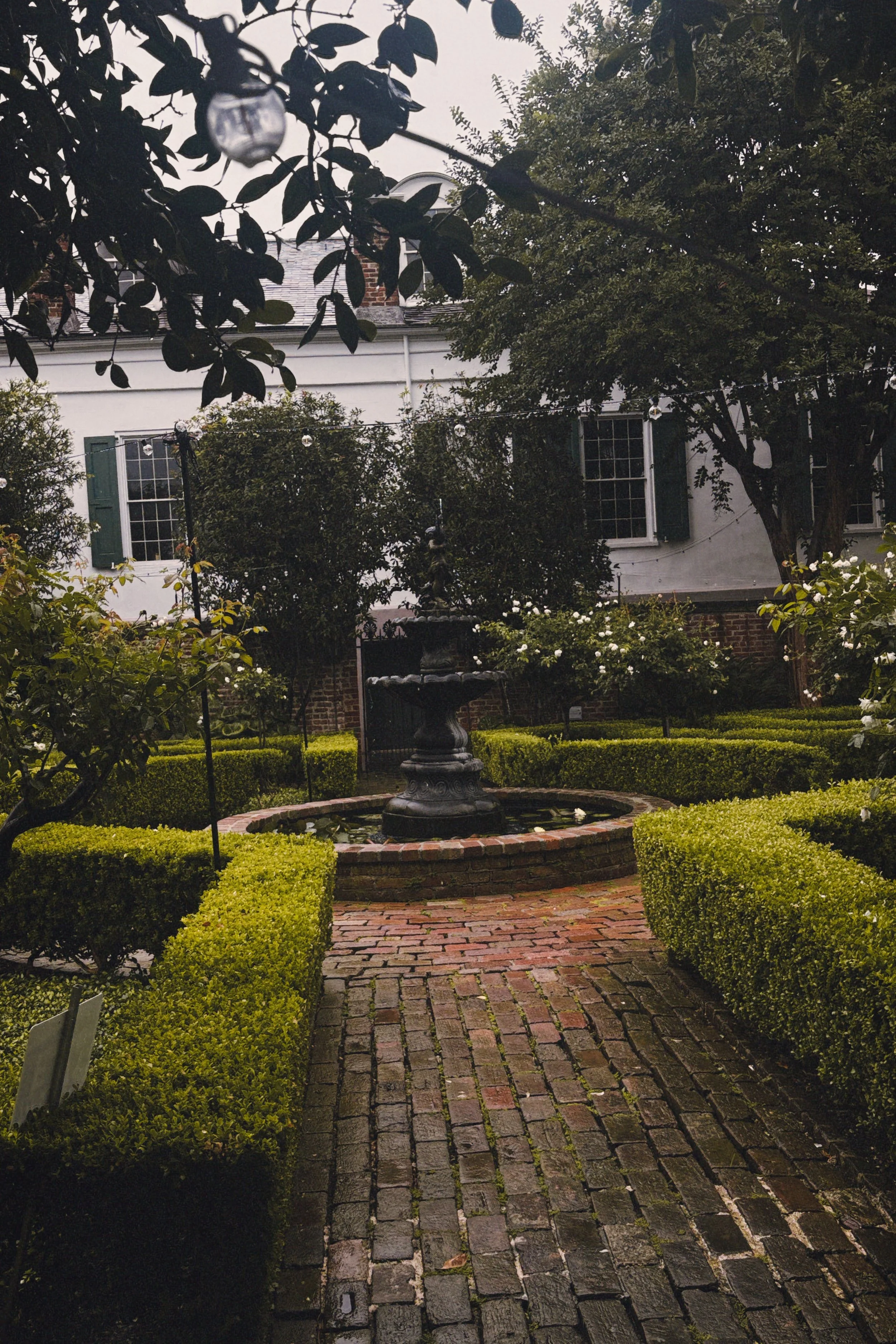
And it’s so visually distinctive that I had no problem visualizing New Orleans throughout its many historical eras from the 18th century to the 20th. I can put myself in that Spanish-style townhouse that they occupy for a great chunk of the novel and return to for Part 4. I could see the streets of the French Square from their balcony overlooking the streets. Even the hidden courtyard that's squared away. I saw something quite similar in the Pharmacy Museum that we visited earlier on the trip, a little courtyard across the way from the museum that had a gorgeous fountain behind a metal arch and these luscious trees. I’ve been able to sort of substitute locations and landmarks into this novel that I otherwise wouldn’t have been able to do without the help of Bookpacking and that is an amazing feat. Even the Gallier House that the house is modelled after, seeing that landmark in person was surreal. And all I needed to sort of flesh out the details in my mind as I’m reading Louis' and Lestat’s ventures with Claudia. Anytime they returned to their vampiric hangout, I sort of fell into this comforting feeling of being right at home in that Gallier House.

And just the idea of Victorian-era New Orleans being a hunting ground of sorts, I could see myself envisioning this world or playground of sorts where they are constantly searching for their merciless victims. I got this odd sense of New Orleans, not necessarily being a background character but a driving force in the going ons of this novel. In my mind, it made so much sense that New Orleans would be a place strife with death and misfortune (especially, in the case of Claudia and her mother) at the hands of these supernatural beings. It just makes so much sense that this gothic setting would be the playground for vampires, I think it was a brilliant match made in heaven especially considering the taboo that is voodoo that infiltrates and remains a central concept integral to New Orleans at its core.

New Orleans is a character in and of itself which is so necessary for this story being told. As Louis says in the novel…..


“This was New Orleans, a magical and magnificent place to live. In which a vampire, richly dressed and gracefully walking through the pools of light of one gas lamp after another might attract no more notice in the evening than hundreds of other exotic creatures—if he attracted any at all, if anyone stopped to whisper behind a fan, ‘That man… how pale, how he gleams… how he moves. It’s not Natural!’”


Considering how nearly every exhibit or museum we have gone to has had this underlying creepy theme or horror aesthetic to it, I can understand how 18th century New Orleans was dark and creepy in its ‘behavior’ if you will. Its depiction seems to be wholly accurate and not at all exaggerated, honestly. And as I reread certain paragraphs as I write this blog, I see a little one-off sentence saying ‘in which sailors slept with their heads on the tables.’ Which is actually quite stunning and a bit of a coincidence (I guess not) as quite recently, we’ve had a large endless supply of Navy sailors? They have invaded the city, it seems, but have arrived on a beautiful boat called the USS Kearsarge. You can imagine the bouts of fun they’ve had since, infiltrating Bourbon Street late at night, no doubt. But I thought that such a loving coincidence and it further settled the sentiment that bookpacking in the city that a novel was set in, an extremely cool feeling. Quite necessary actually.

This is rather off the mark quite a bit but I would love to discuss something that came out of an accident I made while first reading this beautiful novel. I came into this novel knowing absolutely nothing besides its TV show counterpart of the same name. All I knew were these random tiktok edits of these white and black men, these two seemingly intermingled and involved in a certainly sexual relationship of sorts. The black men I inferred to be Louis, of course. So as I started reading, I didn’t have the foresight to imagine that maybe the novel actually featured a caucasian version of Louis or that the character itself was actually race-swapped in the conversion from novel to TV. So I am reading the novel imagining Louis to be this Black man and imagine my slow descent into confusion as I encounter several paragraphs or instances of Louis referring to what I thought were his people as ‘slaves’. On one hand, I’m imagining what Anne Rice was attempting to accomplish depicting this black man as having an elevated status to the extent that he was so far removed from his own people. I knew that black people had owned slaves as well but the sensitivity in writing that kind of fiction, I didn’t think Anne Rice had the capacity to do so.


“Then there were not only the black slaves, yet unhomogenized and fantastical in their different tribal garb and manners, but the great growing class of the free people of color, those marvellous people of our mixed blood and that of the islands, who produced a magnificent and unique caste of craftsmen, artists, poets, and renowned feminine beauty.”


And then the descriptions of ‘black slaves, yet unhomogenized and fantastical’ completely threw me off because I didn’t understand how someone could see their own race as fantastical, regardless of their rich, privileged upbringing. But obviously, I made the connection, connected the dots and understood through the seminar that Louis was a white man just like his vampire counterpart and suddenly everything clicked into place. How disappointing it is that once I made the distinction, I suddenly understood the reason for why these Africans were being characterized in a piss-poor way. Anyways….

Gave me pause and really forced me to reframe the narrative and the goingons of that plantation in the first third of the novel. But it would be remiss of me to say I didn’t enjoy the novel because I very much did, especially the third act of the novel which in my opinion was the emotional core of the book. The point in which the novel truly unlocks itself and pretty much resets the narrative to be much more action-heavy rather than be so introspective and expository. To me, any novel that really has me wanting to explore and dissect its every aspect. To me, that is the makings of a great novel. I want to talk about framing the narrative as an interview, what the hell was with that? I want to speak on the entire third act, truly my favorite and just written at a breakneck pace. But also the sexualization of Claudia (wtf?) and this attempt at domestic life with the dynamic that is Louis and Lestat at the helm of Claudia. So much to explore, so much to think about. And just think, I’m on episode 2 of its TV counterpart and I think the show is already going about things in a fantastically, improved way.

How about that.

Here Goes The Awakening...

I remember in High School, I bought myself a book a day and placed it squarely on the corner of my desk. Proud and always eager to read it. A new novel or short story every single week, oftentimes a different one every other week. In college, I couldn’t tell you the number of books I’ve read for my own enjoyment unfortunately. And that saddens me tremendously. And then 2026 came along and I read Project Hail Mary, recognizing the love I had for the novel once more. That was in January. I started reading another book I never finished, Once Upon A Time In Hollywood. I read it intermittently in January, in February, and in March and still have yet to finish it. All of a sudden, here we are. The Awakening by Kate Chopin, finished in two days. Interview With The Vampire, finished in four days (one of which I stayed mostly in the hotel.) To be back in the midst of literature warms my heart and excites my childish spirit, something I’ve been internally begging myself to do for years now. And it feels so good. But let's rewind.

I have no expectations. Stepping off the flight and into New Orleans, I knew not what to expect. Walking down that terminal, picking up my luggage, awaiting others. I possessed this nervous energy. Feeling that pit in your stomach when you don’t know what the hell you're doing but you can’t go back. And then I saw Andrew, and we were off for the races. And what a wonderful introduction it was having not been able to attend or take part in any pleasantries nor meetings. I had no sense of who anybody was, fully just immersing myself instantaneously. For better or worse, I didn’t know. But I immediately felt welcomed and as more of the group trickled in, started to get a better sense of who I’d be surrounding myself with for the better part of a month. What a lovely group it was, would be the first and last of its kind for me in this particular setting and program and that excited me more.

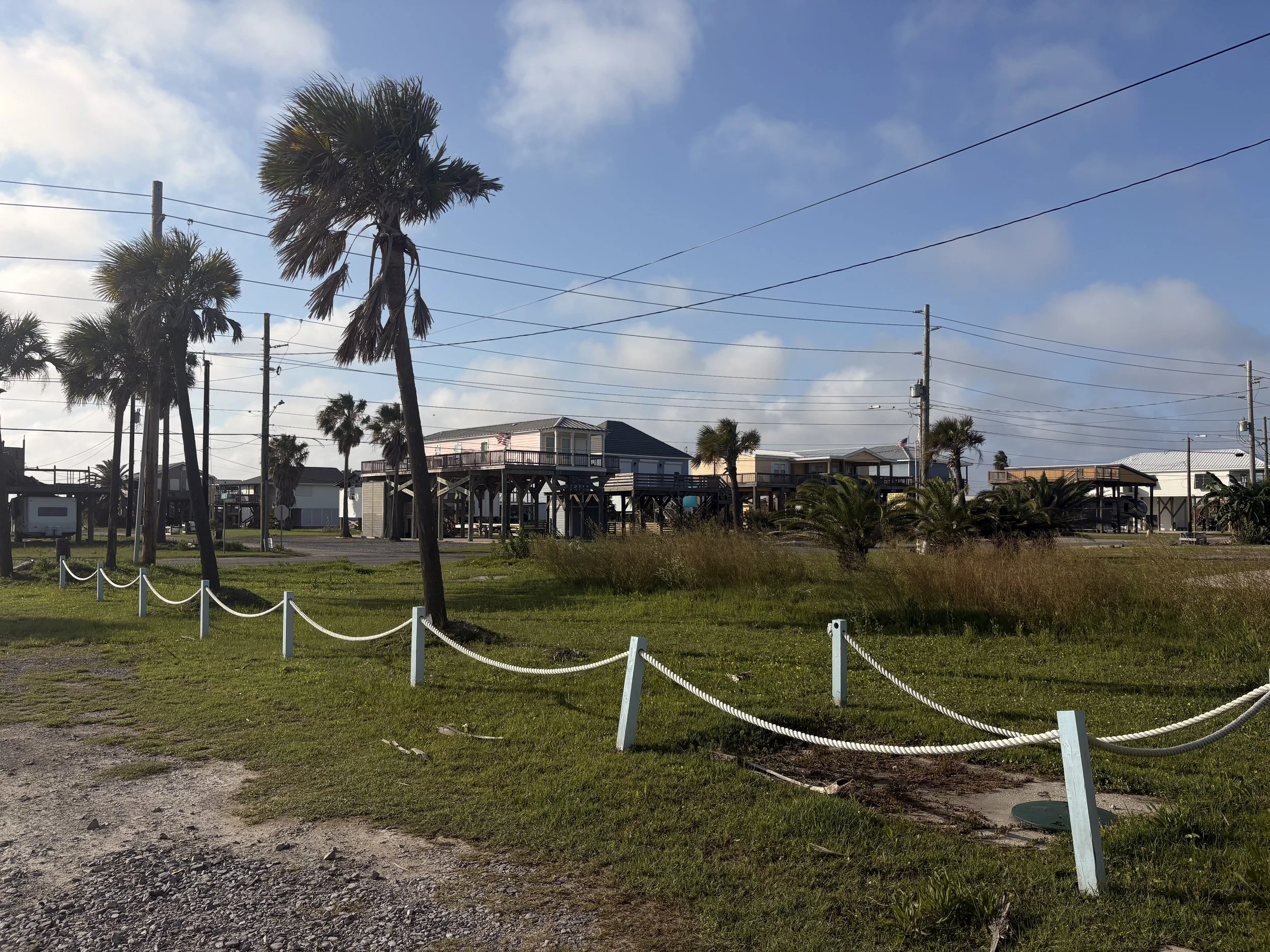
We somehow lugged everything inside very strategically (tetris) and we were off! And my god, what a sight for sore eyes. A radically new biome (for Sadie) and landscape, something completely foreign to me. Marshes, swamps, bayous, wtf? Mind you, I myself grew up surrounded by mountainous regions, scorching heat of 120 degrees, frigid, cold temperatures in the nighttime and snow only 3 times in the 15 to 20 years I’ve lived there. All my life, I knew the desert. Louisiana was something else entirely. A whole lot of firsts for me. And as we rode, I was just sitting in awe. My mouth an ‘O’. Riding that lengthy highway, viewing the endless stretches of marshland and swampland for all the eye could see. Subconsciously preparing myself for the landscapes that these upcoming novels would feature. Becoming excitedly so. In my mind, constantly inquiring how this land was made inhabitable at ALL. How in the heck did they construct these extensive bridges of miles upon miles upon miles of roads? It fascinated me greatly, my architectural mind going 100 mph.

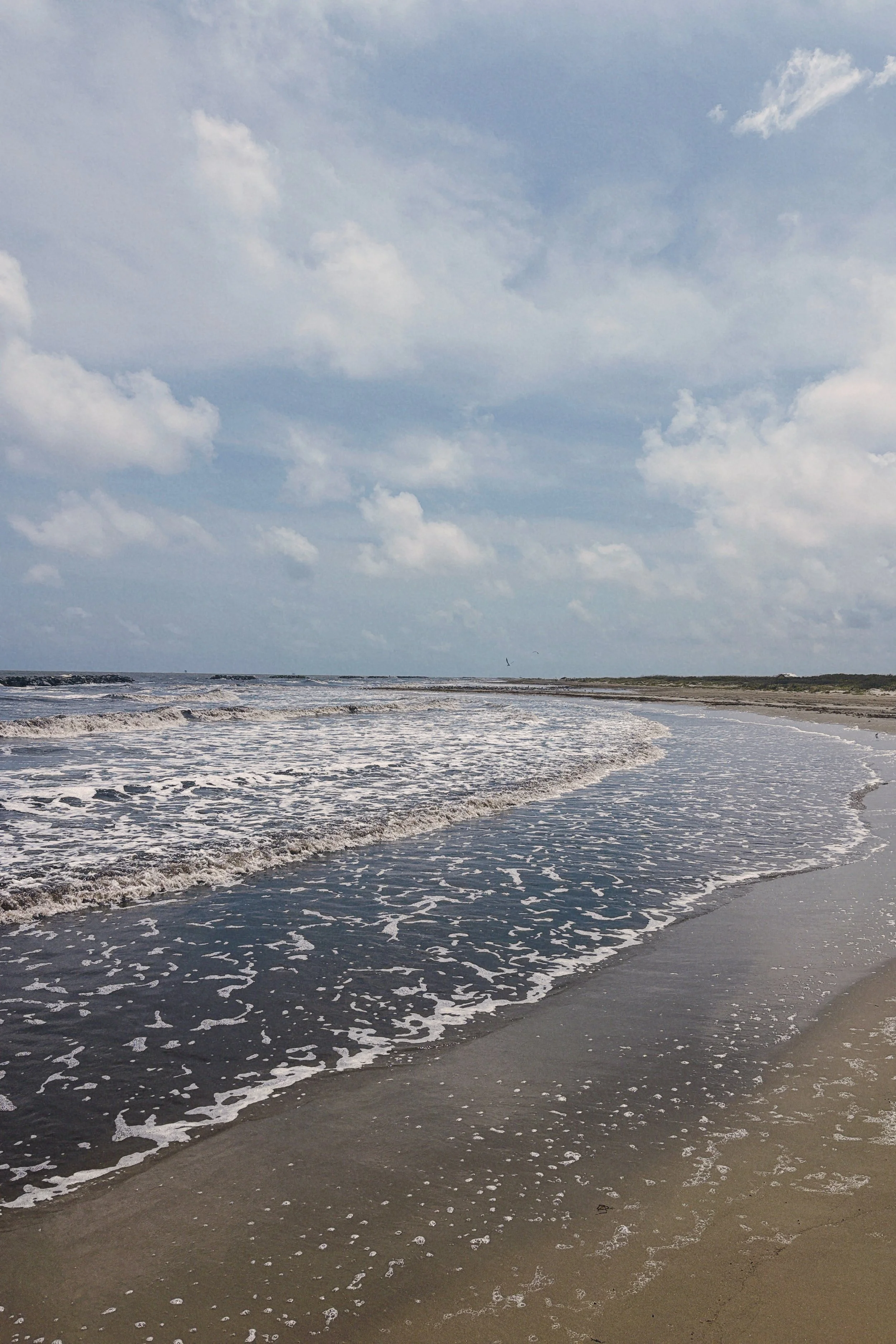
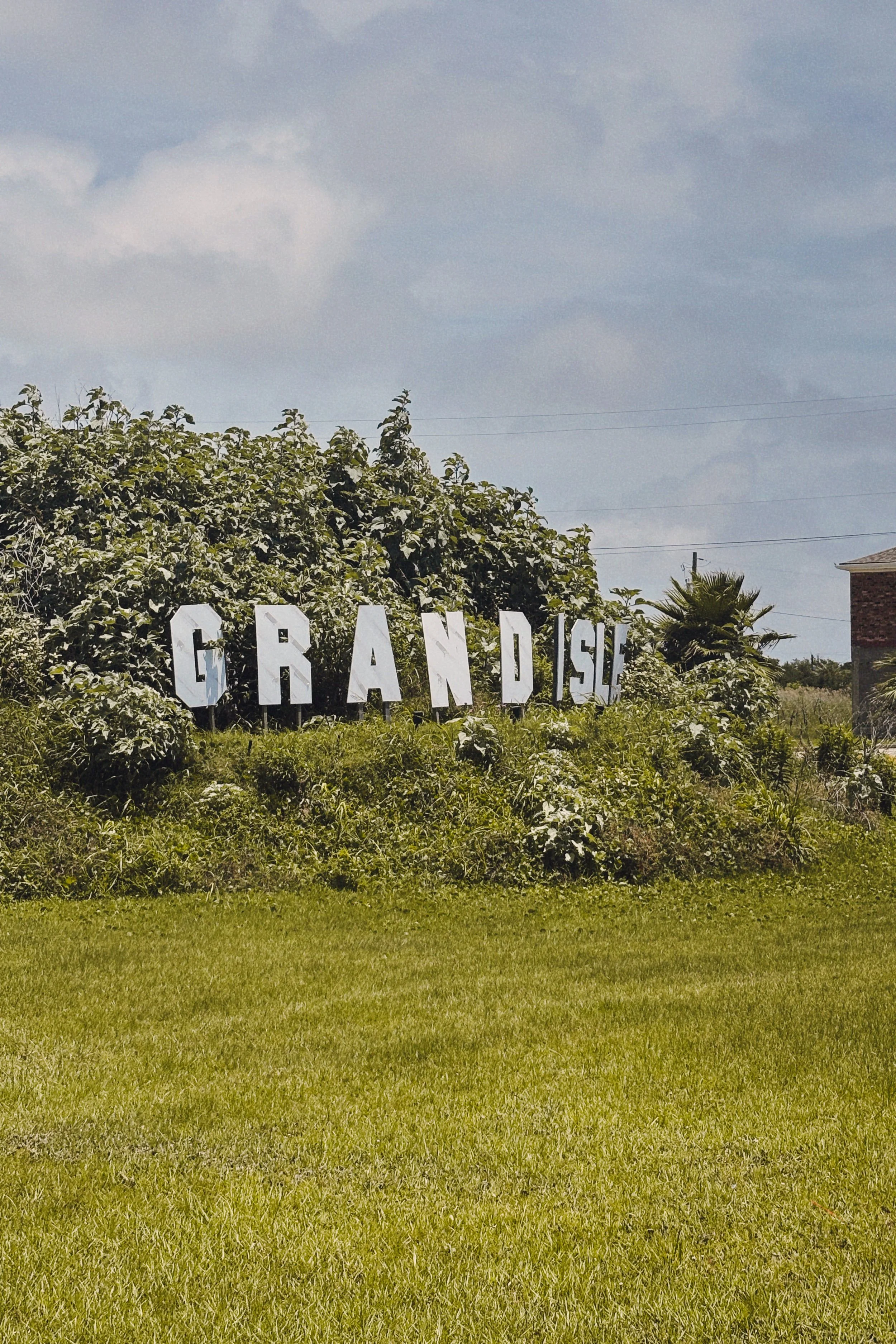
And so arriving at the Grand Isle, it completely subverted my expectations in how calm it was. How utterly quiet it was if you were to step outside and breathe in the air for a moment. Nothing but bugs chittering about. I could immediately see myself living here if not for the underlying politics that no doubt invaded the area. Case in point, the many American flags hung high and proud, a couple of Confederate flags passed by. Republican signs stuck into the ground almost like a huge arrow saying ‘AVOID. AVOID. AVOID.’ Despite that, I could feel the pull of the water. Much like that of Edna in The Awakening, that constant magnetic pull to the water. Almost like we belong solely there.

When I tell you, the feeling of sitting on the balcony in a short and sandals. Darkly, cloudy weather looming about as the wind picks up speed every once in a while. It was the perfect setting to read such an older novel set in a time long forgotten, long disappeared. And I couldn’t help but think of the homes, the buildings, communities made extinct by the ever-rising water, the many floods and tides over the past centuries. Entire histories erased and made to be combed over. Much like that of Edna, I feel. Or put it simply, the many hopeful lives of women teeming with life and ambitions and goals made extinct because of the societal expectations set upon them because of their own gender. The redundant belief that they must give birth to a child, care for their children, live in the captivity of their own home, setting aside their own dreams to fit themselves neatly into this unfair box called womanhood alongside a (usually) unloving husband.

Which is why I found it absolutely astounding this depiction of Edna that is so rich and unapologetically honest in its portrayal of someone breaking away from social norms and struggling to separate themself from all that tethers her to the world. And to be honest with you, why wouldn’t you want to do so in New Orleans & the Grand Isle? It feels almost as if distant from society altogether, in a quiet world of its own absent of expectations and law. As I read through the novel, I could visualize these descriptions of the Grand Isle so clearly as if I could place myself in the grand narrative. I could hear these private conversations between Edna and Adèle on the beachside front, can feel the calming effect of the waves, and hear the chirping of birds and seagulls. Considering I am very much a visual learner, I felt it enlivened my experience quite a bit. I just felt as if I was immersing myself in an audiobook with sound effects. Genuinely was so authentic.

And as I got to the end of the novel, and as we transitioned to her time in New Orleans, there was still this underlying freedom attached to the sea in this story. This sense of liberty that came with visiting the beachfront, it seemed only when she was happiest and it’s no coincidence that she’s experiencing this inner turmoil for pretty much the entire second half having been deprived of that joy. And so taking a walk alongside the beach, I attempted to put myself in her steps. Understand what she may have been thinking in those last few moments, if she was thinking anything at all? But being out there, I understood. It was extremely dark. I could feel that warm, humid air on my skin even though I could simultaneously feel a couple of droplets as the night droned on. Could see even the many oil rigs hundreds of miles away in the sea, lights of boats passing the coastline. I took all of this in. Looked up at the night sky and for a second, I could understand why she’d swum out to sea. Letting the sea consume her, able to finally escape all that consumed her racing mind. All these restrictions and beliefs on how she should carry herself. And I imagined Edna stepping out into the water and never looking back. But alas, that was not me. I stepped back from the water, and understanding that fiction was merely just fiction, I bid Edna farewell and continued walking on. Promising myself, that if it ever got too much. I will keep pushing, in fact. And I would avoid Edna’s example.

Because all in all, I feel that despite Kate's depiction of Edna being so extremely realistic. I think she sort of faltered in Edna’s final moments allowing her to take the easy way out. I feel that goes against the grain of her character, everything that she stood for. To be honest, I don’t think Edna would ever allow herself to get so worked up over Robert, in the end. I do think Robert came to be her true love but in the end, I can’t see her choosing to throw her life way ultimately over a man. I think for this to be such a revolutionary piece of feminist literature, it still falters in that it's so central about men. Way too overly reliant on other men and honestly, that may be my only critique throughout it all. Well, that and the ending, of course…….

I give the Awakening a 7.5/10.