Before arriving in London and Paris, I expected two cities that were both representative of the deep history and rich civilizations of Britain and France, two of the historically most powerful nations in Europe. I expected old and historical buildings, prideful people, and quintessential European walkable cities. To me, London and Paris do contain those aspects. They do contain a deep history and a sense of pride that represents their recognition of their achievements for Western civilization and the utmost power they had relative to the world. They are culturally rich and traditional cities while holding a sense of globalism due to their size and appeal to people from all over the world.
While both London and Paris contain these two aspects, they are extremely different as well. The stark contrast between the two cities was not something I expected coming to London and Paris. But the thing is that I would not have felt and understood this contrast if it weren’t for furthering my understanding of British and French history, as well as Londoner and Parisian experiences through the lens of literature, such as through Charles Dickens’ A Tale of Two Cities. Through these two vessels of understanding these European cities, I notice the differences in cultures and auras between the two cities. I can feel the historical context behind the streets I walk through and the people I walk past.
My view of London is one that holds onto a sense of tradition and order. Walking through the streets of London, I notice that novelty and experimentation do not stand out. While grandiose and beautiful, the streets and buildings feel sterile, and they give off a sense of conservatism; it feels very structured and uptight. While London is a bustling and diverse city that contains a melting pot of different cultures, I don’t feel the lively density and freedom that I feel in cities such as Paris. People walking by seem to have a purpose and destination that they need to achieve. Hundreds flock to Buckingham Palace to celebrate the British monarchy. Rather than wandering through endless street stalls, people find restaurants, sit down, and order fish and chips. Maybe they’ll drink a beer on a good (or bad) day.
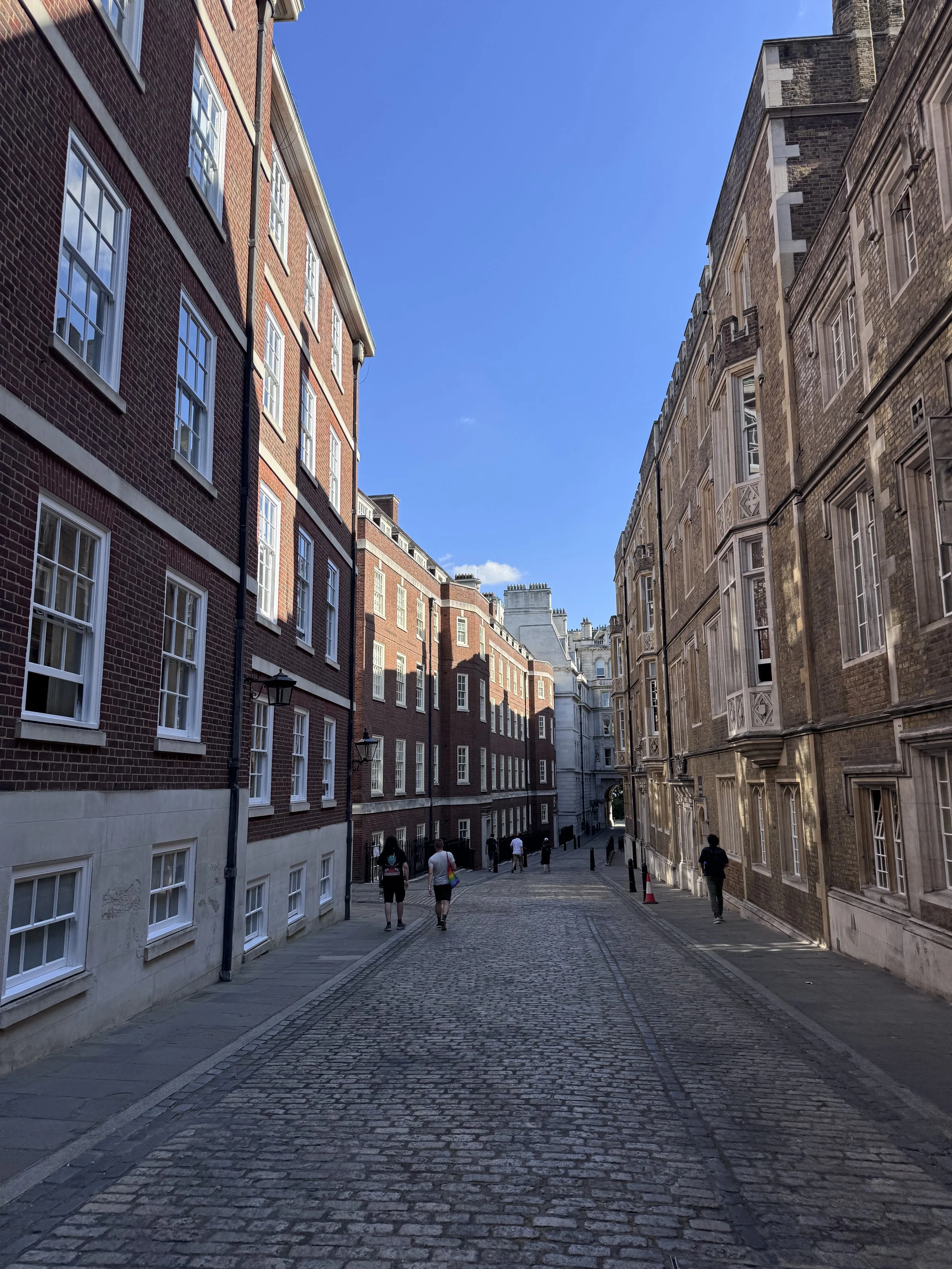
London’s streets
It feels representative of the Anglo tradition that you also see in the United States. For example, in New York City, there is a sense of hustle culture, where people are serious and focus on efficiency and work. But even in NYC, I feel more of a sense of freedom and creativity, probably due to the fact that the United States is a much less traditional nation and was founded on the basis of freedom, individualism, and “chasing the American dream”. London feels much more established, especially walking past the gentleman’s clubs and buildings occupied by the British establishment. In a way, it matches the stereotype of British people – one that portrays them as uptight, well-mannered, and hierarchical.
Charles Dickens in A Tale of Two Cities touches on this idea of London in his book when he describes Mr. Lorry, who is a British banker.
“Very orderly and methodical he looked, with a hand on each knee, and a loud watch ticking a sonorous sermon under his flapped waistcoat”
The description of Mr. Lorry perfectly encapsulates the British’s orderly and conservative nature. Their habits are to dress orderly and follow “how things are” in British society. Their expectations are to follow routines and conform to societal expectations and norms. While Britain is a nation that has progressed immensely in terms of allowing for diversity and freedom of thought, there seems to be routines and traditional ways of doing things that have not changed much, even to this day.
Paris, on the other hand, gave me a completely different impression. It is a city and society that feels like it is full of life and freedom. You have the freedom to go downstairs from your apartments and run into a plethora of food options, from small stands selling crepes and paninis to upscale restaurants serving steak and escargot. You have the freedom to flaneur around and find markets selling fruits, shoes, and knock-off handbags. You have the freedom to sit down in an outdoor seating area of a cafe and eat a croissant, drink a coffee, and smoke a cigarette.
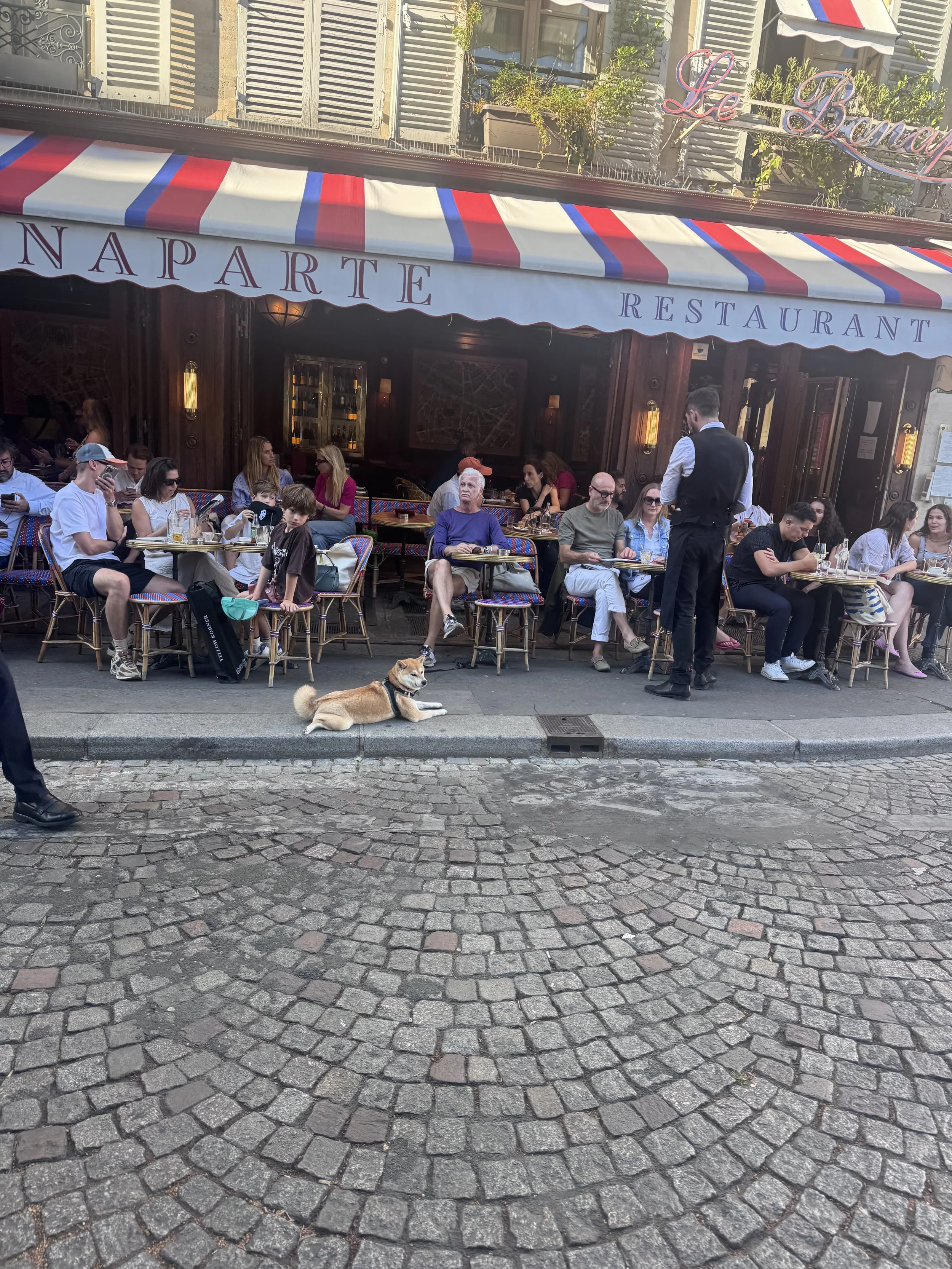
Parisian restaurant
At night, the streets are bustling with people drunk off of wine, chatting away, and probably buying a crepe from the stand next door. Young people are coming home from wine bars or clubs, enjoying their period of youth and freedom. Although the French hold onto a sense of pride and value their fashion and presentation, it differs from British pride. To the Brits, their pride stems from the “great” nation that their rulers and establishment had built. It stems from the years of British imperialism and the accomplishments of the ruling class. To the French, their pride stems from the culture and diversity that all people built and fought for. It celebrates the revolutionary ideals that set aside room for intellectualism, art, romance, politics, music, and more. It recognizes what the people fought for and holds its accomplishments on a high pedestal.

People watching the Eiffel Tower sparkle while drinking wine.
I can recognize this free, revolutionary, and liberal view of Paris through A Tale of Two Cities. Dickens describes the chaos and rage of the French Revolution in the novel.
“With a roar that sounded as if all the breath in France had been shaped into the detested word, the living sea rose, wave on wave, depth on depth, and overflowed the city to that point. Alarm-bells ringing, drums beating, the sea raging, and thundering on its new beach, the attack had begun.”
The narrative of the revolution perfectly represents the uprising of the people and the Parisian tradition of revolting when injustice occurs. The people are the ones who control France’s future, not the upper class. The common folk are the ones who drive France’s culture, traditions, and politics. It is liberation that gives Paris its charm and culture of freedom. Parisians are not just tolerant to change, as change and novelty is expected. The collective power that builds Paris’ bustling streets, artistic expressions, and fashionable people is what holds their community together.
To me, this relationship has parallels to other cultures’ relationships, such as Japanese and Chinese culture, where the former holds a sense of order and tradition while the latter is much more lax and has more of a culture of change.
Learning about British history and its hold onto tradition reminds me of Japanese culture and history. Japan is known for having a culture that holds manners, cleanliness, and order to utmost importance. They follow their centuries-old traditions to this day and hold very conservative and prideful views when comparing their culture to other cultures. Their culture is extremely hierarchical; even their language, which contains honorifics that are essential for understanding Japanese grammar, has components that reflect one’s place on the social pyramid. Even walking and eating is frowned upon, because to them, meals are moments of gratitude and not something that you should multitask.
Walking through the streets of Kyoto, one of Japan’s more major, but traditional cities, I notice that despite the crowds of tourists that flock to visit, there is still a sense of order and extreme cleanliness to the streets. It is a city where you can really get a sense of Japanese traditionalism. Finding trash on the ground is extremely rare. You can still see Japanese women walking around wearing kimonos. Traditional Japanese homes and upscale (but extremely discrete) restaurants line the streets. You feel a culture of routine in Japan. While I would consider Japanese culture much more conservative than British culture and Japanese cities much more clean and orderly than British ones, there are similarities in the sense that both societies grip onto their traditions and hierarchy.
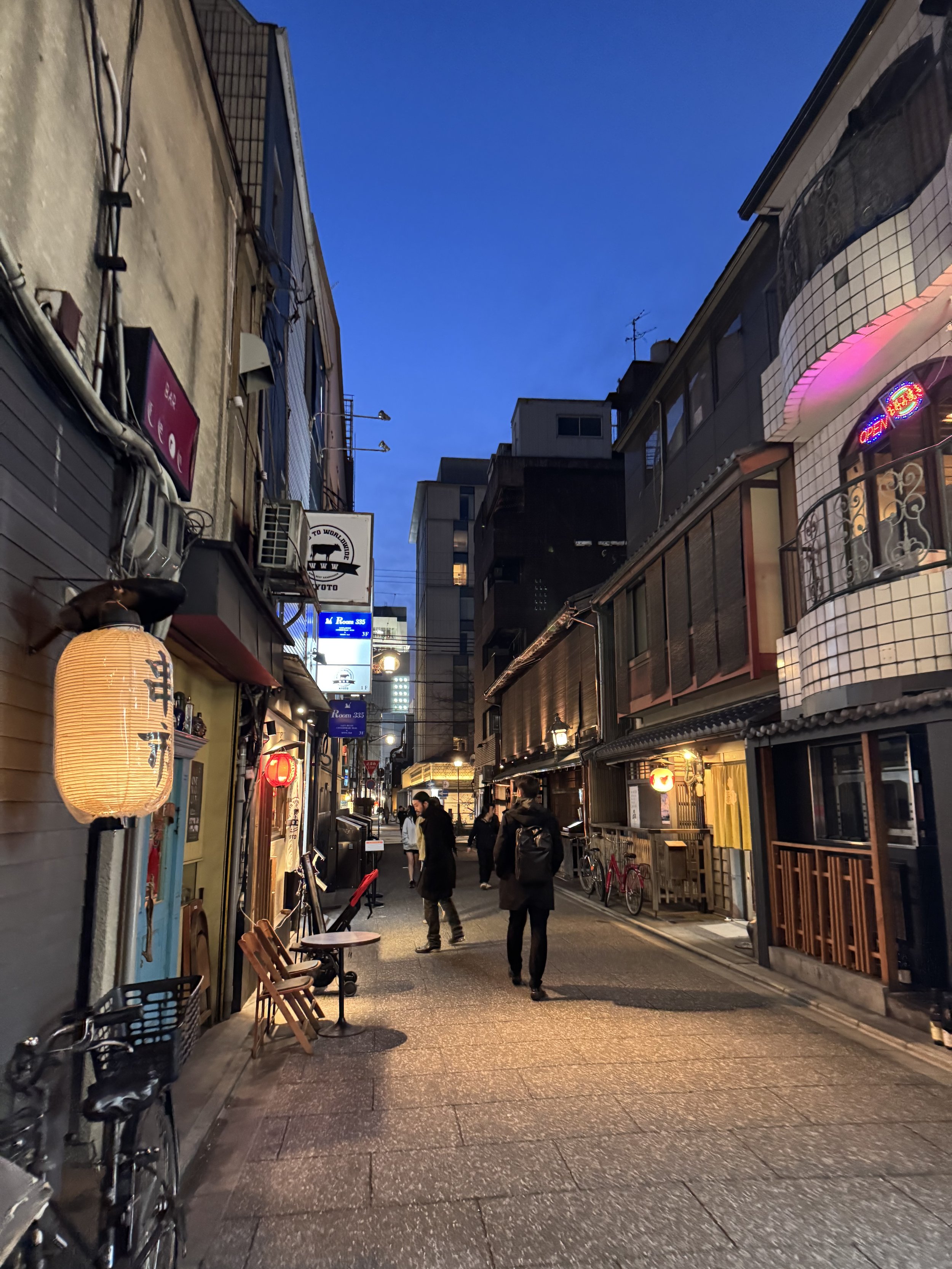
Restaurant-lined streets in Kyoto
Even in Taiwan, which had been colonized by Japan during the 19th and 20th centuries, I can see a microcosm of Japanese culture. In metro stations, people naturally line up and politely wait their turn to board the train. People speak very politely, even to a point where it gets indirect at times. Grandiose buildings that were built by the Japanese are still intact and remind Taiwan that it was an established and industrialized island before other nations such as China and Korea were able to modernize.
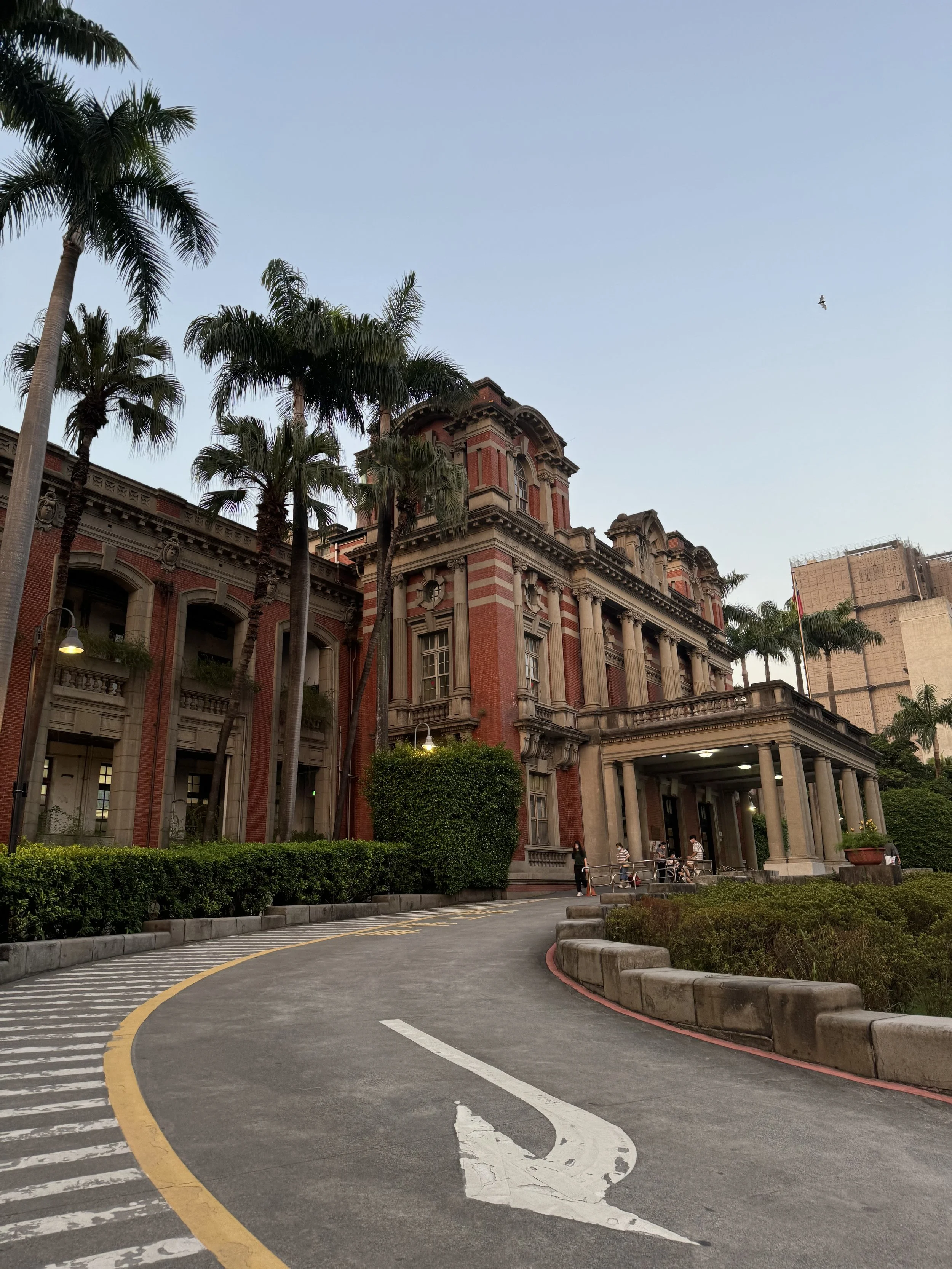
National Taiwan University Hospital, built in 1912 during the Japanese colonial period
Perhaps this conservatism is due to the fact that Britain and Japan are both island nations that were able to preserve their culture against a multitude of invasions. Britain was able to protect itself against Napoleon’s conquest because of the English Channel, and Japan was able to protect itself against Kublai Khan’s conquest because of the typhoons in the Sea of Japan. Another reason could be because both nations have not gone through radical revolutions that had completely uprooted their respective nations’ political systems. Britain and Japan have always been monarchies and the major revolutions that occurred in these countries were primarily led by the upper class; the common folk did not have a major role and radicals did not gain enough power to completely do away with the established system. For example, the Glorious Revolution in 1689 was led by aristocrats, and the Boshin War that overthrew the shogunate was led by nobles and dissatisfied members of the samurai class. These factors most likely led to a more conservative culture that does not leave as much room for challenging societal norms. People feel a need to subscribe to the established customs and routines.
Japan’s history, society, and culture contrasts with Chinese culture. While I have not been to China (which is currently a horrible representation of the free-spirited nature of Chinese culture), Taiwan is a nation that is majority Han Chinese. In terms of Chinese culture’s influence on Taiwan, it shares similarities to my perception of Paris. The bustling night markets with people selling a multitude of foods fill the streets. Old women sing karaoke and dance in parks by the riverside. Old men sit on plastic chairs on the side of the road and talk about politics and their families while drinking tea. Beautiful and vibrant temples are scattered throughout the city, honoring various Chinese deities. These are the elements of Chinese culture that I feel are similar to Paris. There is a sense of freedom and tolerance, as well as a more lax view on their society. In Taiwan and France, people are seen as the cultural aspect that is celebrated, not the establishment’s achievements.
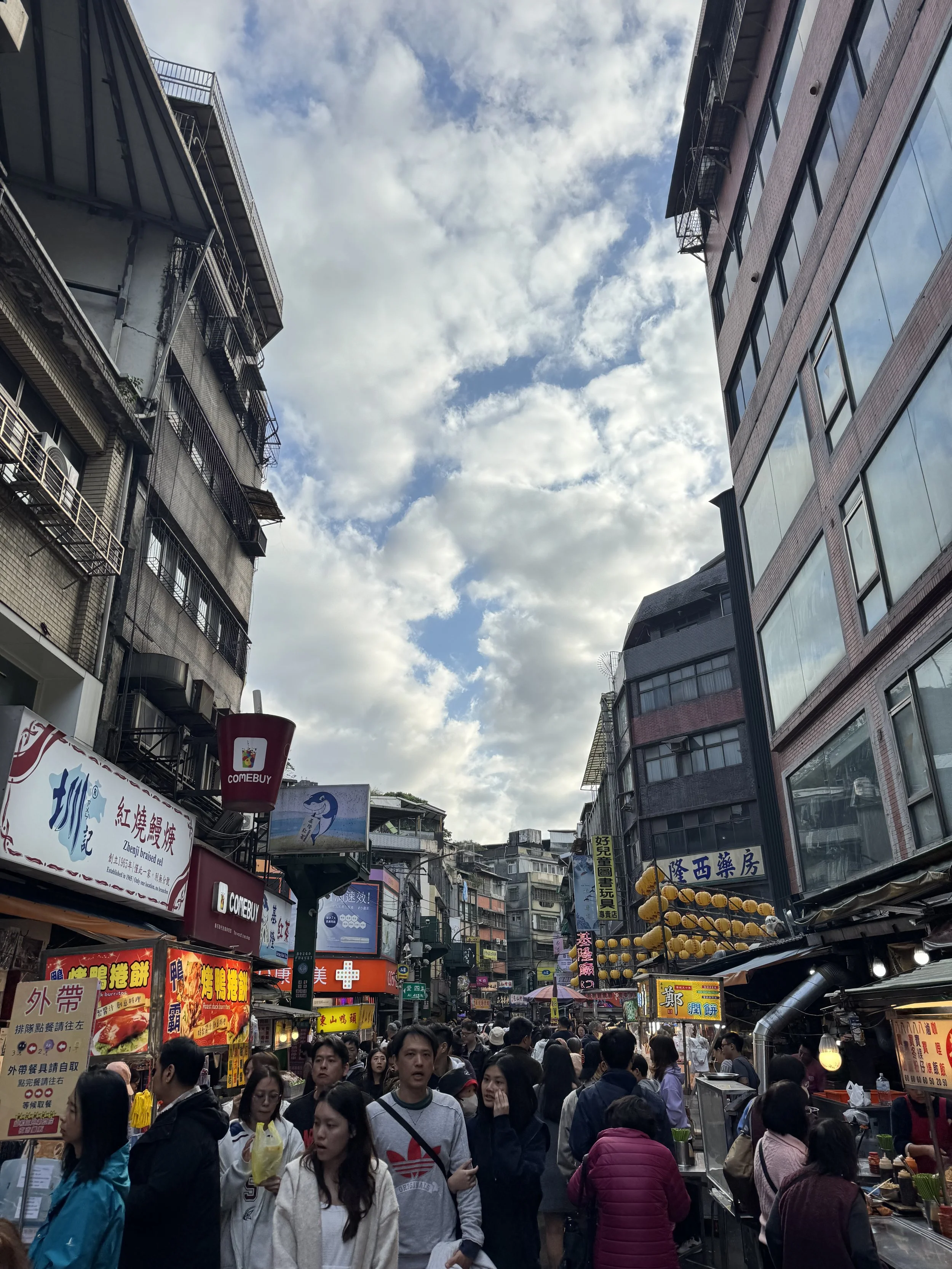
Night market in Keelung, a port city located 25 km away from the capital, Taipei
In regards to a possible explanation for these similarities, maybe it is because France and China are both continental nations that have been exposed to a multitude of different cultures. France shares borders with other European nations, which has allowed for greater cultural exchange between them. For example, French culture and language is prevalent in Belgium, Switzerland, and parts of western Germany, which are all very distinct countries. China shares borders with a multitude of other east and central Asian countries, and has even been conquered by many foreign forces, such as by the Mongols and the Manchus. Or it could also be because of the fact that France and China have both undergone revolutions that had completely uprooted their respective political establishments. France went through various revolutions that had completely changed the course of their political systems, and they eventually abolished their monarchy. China had also gone through various dynasties, and eventually got rid of their monarchy during the Xinhai Revolution. They even went farther and established a communist government, which is the current People’s Republic of China. These moments of diversity, change, and revolutions allowed room for a tolerance of ideas and a sense of freedom. France and China’s history were both defined by change, which forced their societies to grow towards a more casual and novel path.
There is not one better culture or society. There is not one model that we should strive to follow. In my opinion, it really is subjective. Some may like the order and tradition that London upholds, as it distinguishes itself from other nations and allows for a more organized society. Others may enjoy the freedom and liberating spirit of Paris, where you can flaneur around the city and indulge in drinking, smoking, and eating to your heart’s desire.
I enjoy how Dickens captures this contrast through A Tale of Two Cities, because it does not only describe the dynamic between London and Paris, but it also encapsulates the dynamics between other neighboring cultures around the world.