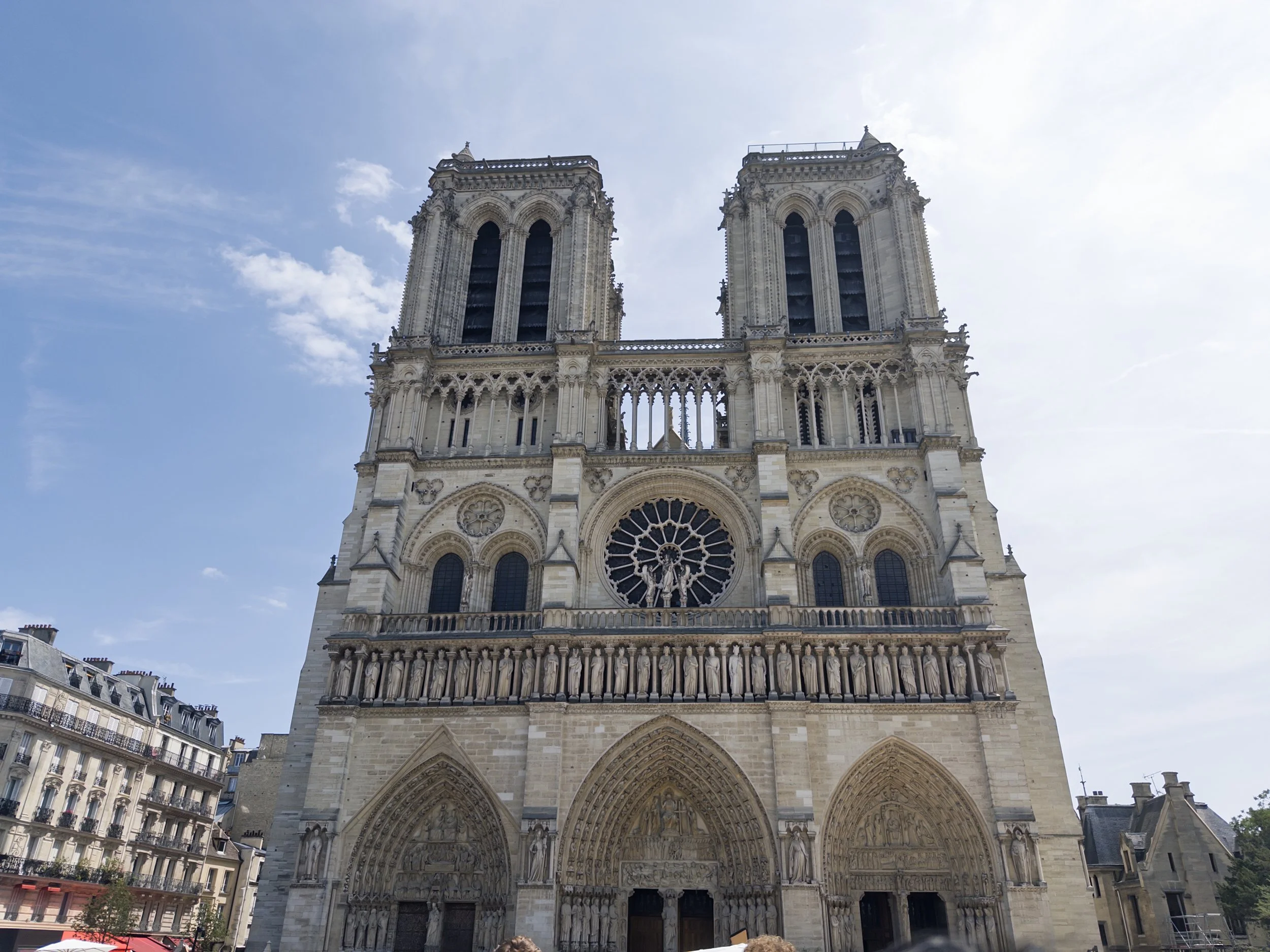
The Notre Dame Cathedral
Looking up at the towers of Notre Dame, I absolutely adored looking at all of the gargoyles. From chimeras to harpies, and–my personal favorite–dragons, gargoyles have been shaped into fantastical beasts for centuries. Their purpose on paper is to serve as decorative drainpipes, carved with a spout to spit out water away from the stone walls of cathedrals to prevent erosion. It’s incredible both the engineering and artistic vision which existed centuries ago to build something not only exceedingly practical, but also fascinating to look at. (Aren’t they just badass?!)
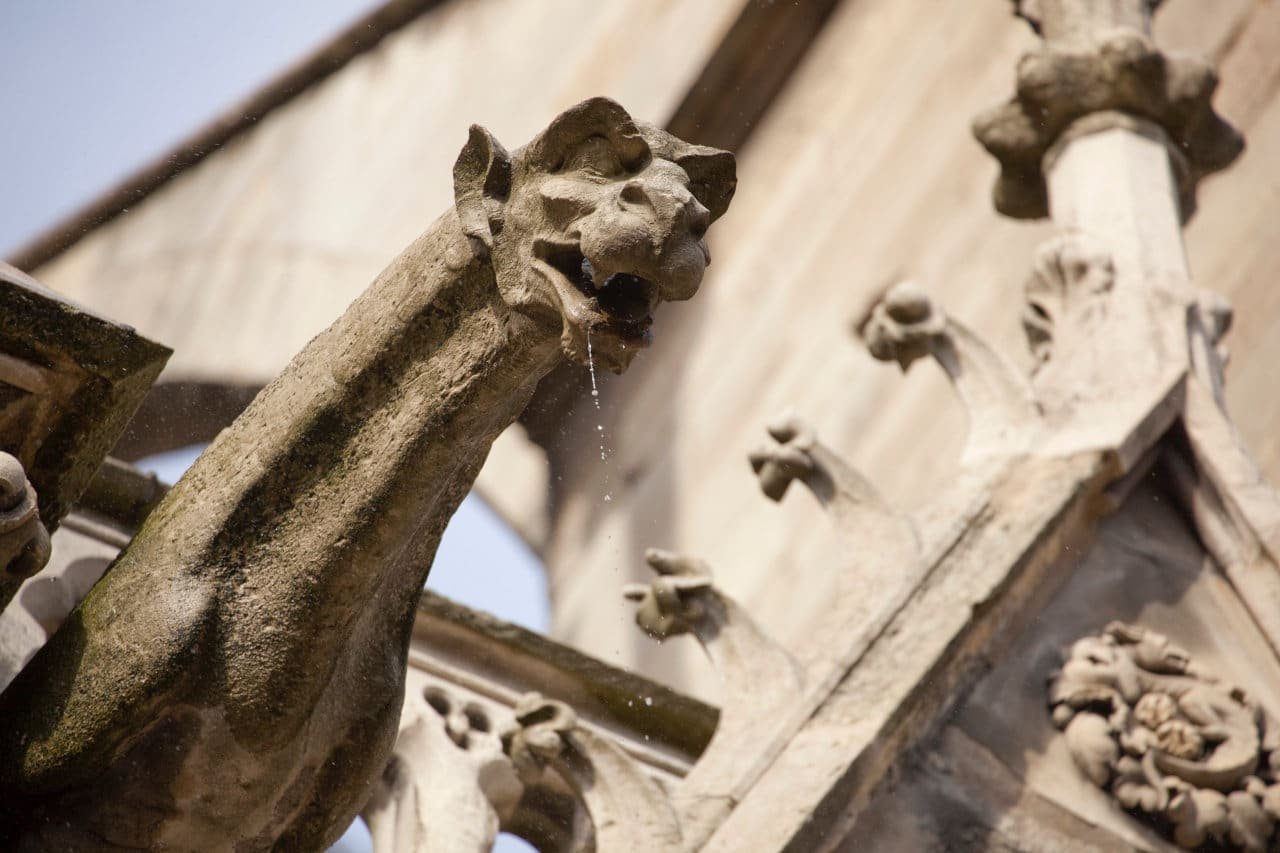
Image of gargoyle courtesy of Friends of Notre-Dame de Paris
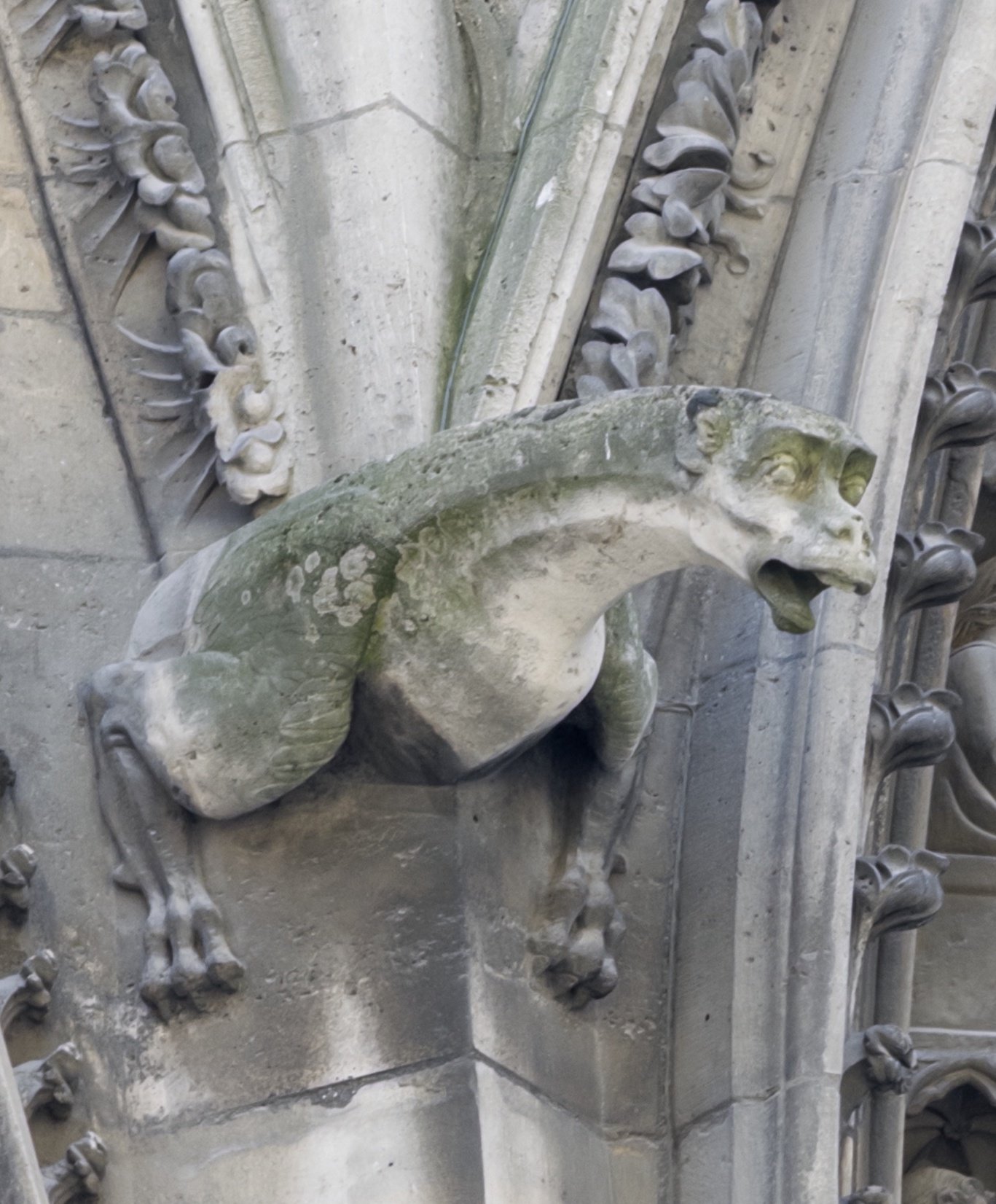
A beastly gargoyle at Notre Dame
However, gargoyles also serve as protectors, keeping careful watch on cathedral visitors. While their use as gutters is largely understood, their specific role as spiritual objects has been debated. Some say that gargoyles’ grotesque and menacing expressions ward away evil spirits and sin. Others argue that gargoyles were meant to strike fear into the “hearts of the pious” by depicting devilish traits. Another theory suggests that gargoyles represent the torturous fate of those who sin, morphing them into animalistic half-breeds. All agree that gargoyles have served many different purposes depending on where and when they were made (and that they look incredibly cool!)
Victor Hugo, famously, held a deep passion for architecture. His novel, The Hunchback of Notre Dame, served as his love letter to the Notre Dame cathedral and embodied Hugo’s commitment to protecting medieval architectural heritage. To Hugo, architecture was “the great book of humanity,” allowing us to remember and honor the memory of all humankind. In 1824, Hugo wrote an ode called “The Black Band,” which glorified monuments and denounced revolutionary vandalism. Eight years later, he wrote “War on the Demolishers” condemning “destruction and hazardous reconstructions.” Hugo believed that architecture and literature could draw out a narrative and bear witness to human history. Victor Hugo also loved to sketch and draw architecture, exhibiting his passion for the history architecture contains.
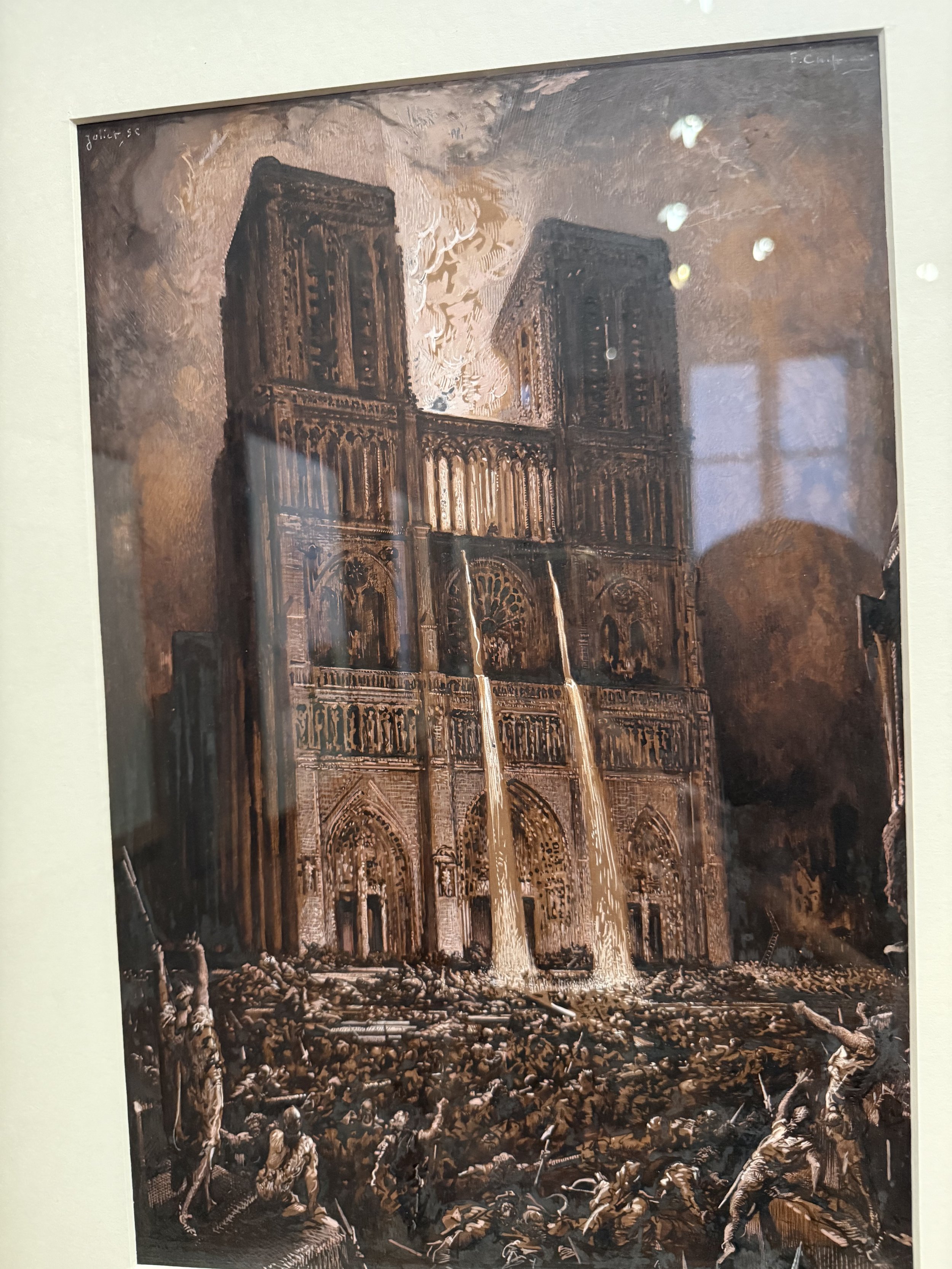
Attaque de Notre-Dame by François Chifflart. On display at The Maison de Victor Hugo.
“Two monster-headed gutters were vomiting incessantly that burning shower, the silver trickling of which shone out upon the darkness on the lower part of the grand front. ”
When we got the chance to visit Notre Dame in Paris, I was stunned to think I was seeing the same things Victor Hugo saw over 200 years ago. The towers were massive and the intricate carvings were mesmerizing. I have always appreciated a good gargoyle and Notre Dame has so many to boast (around 54!). Demons, dragons, humans, animals, and creature-animal-humanoid-figures galore; during my visit, I never stopped finding new gargoyles to marvel at.
Though, at the moment, I thought I was seeing the same cathedral as Hugo, there were a few small changes that I actually had him to thank for!
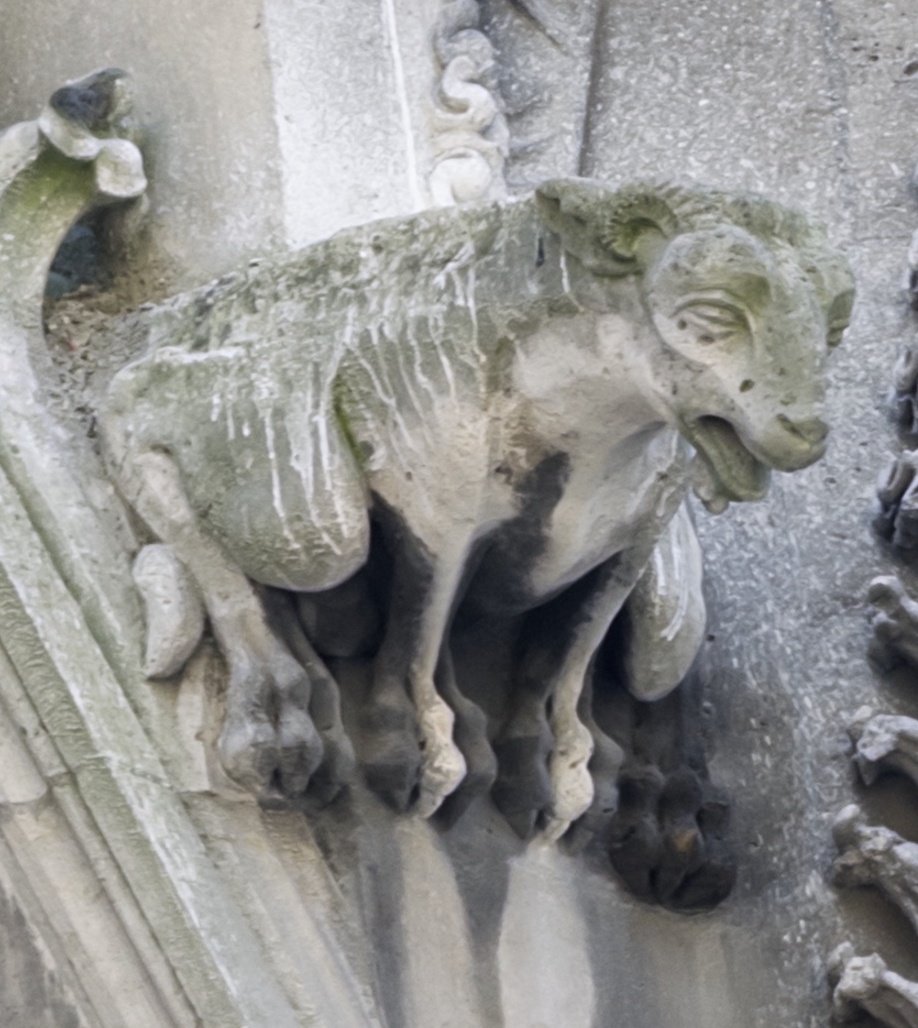
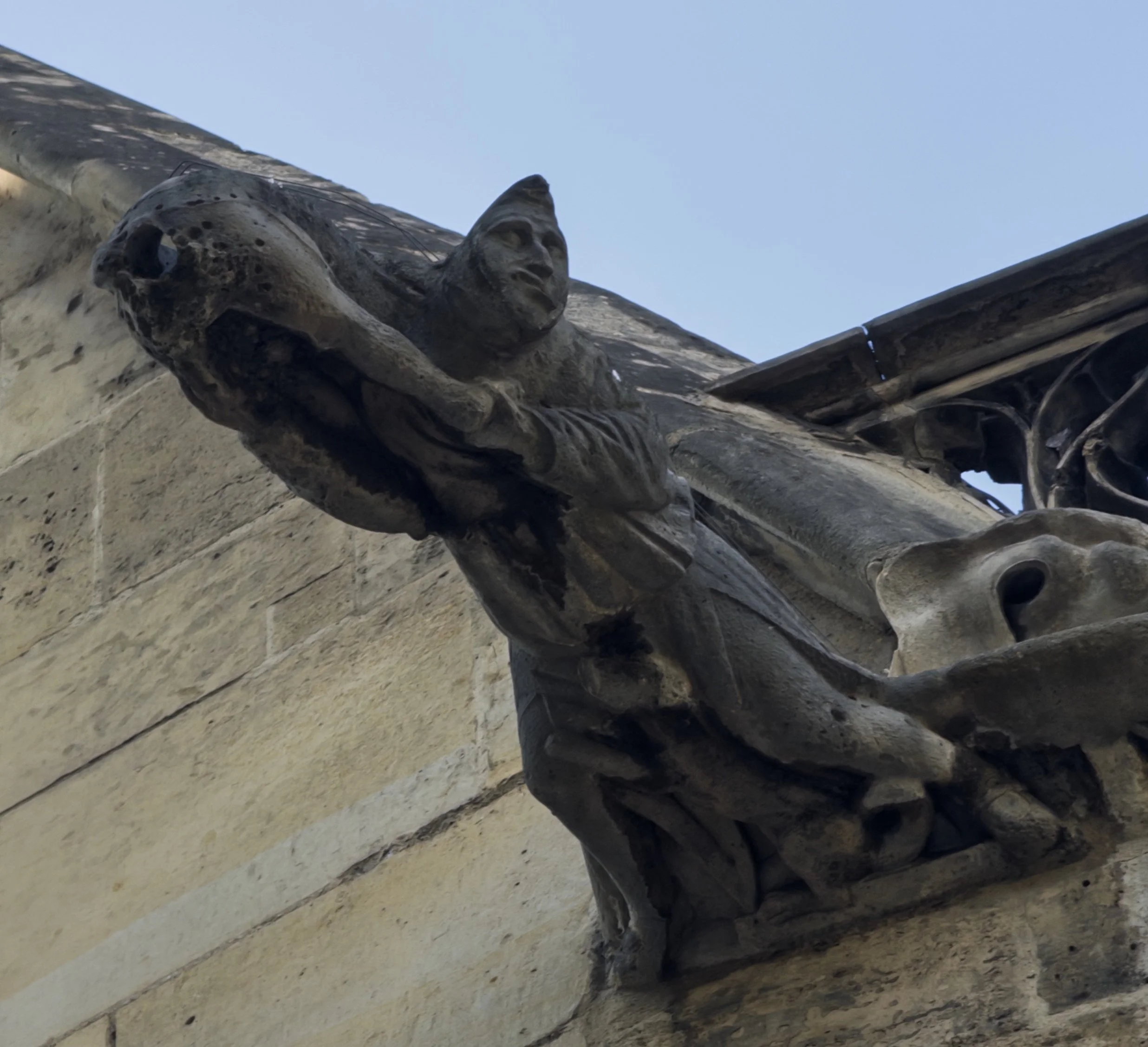
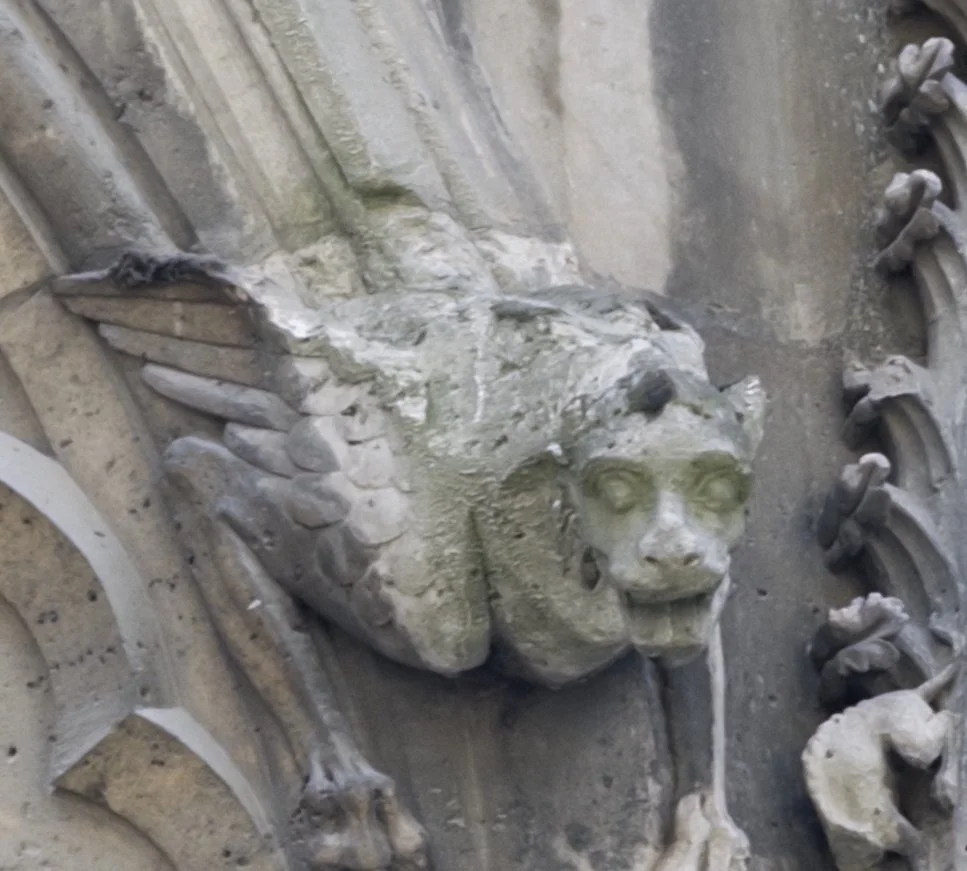
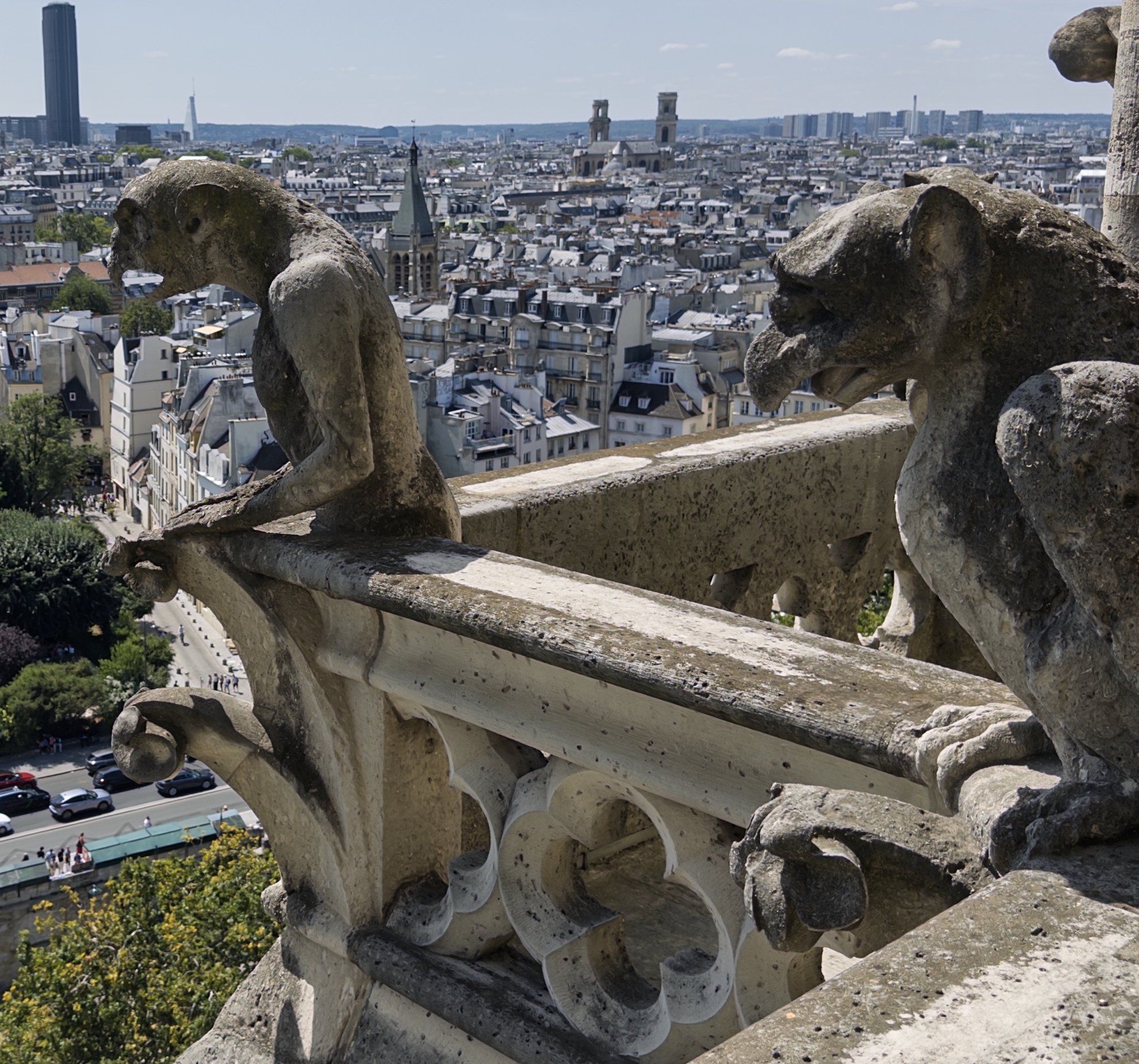
Today, the original medieval gargoyles from the 13th century are all but gone, having faced constant erosion with rain, frost, heat, and humidity wearing down the limestone. Even worse, during the French Revolution, Notre Dame was targeted as a religious symbol and many of the cathedral elements were vandalized or desecrated. By the 19th century, Notre Dame was in disrepair and almost all of the gargoyles were broken, missing, and or disfunctional. Yet, when all hope seemed lost, Victor Hugo helped bring the cathedral to the current glory we get to see now with a single book: The Hunchback of Notre Dame!
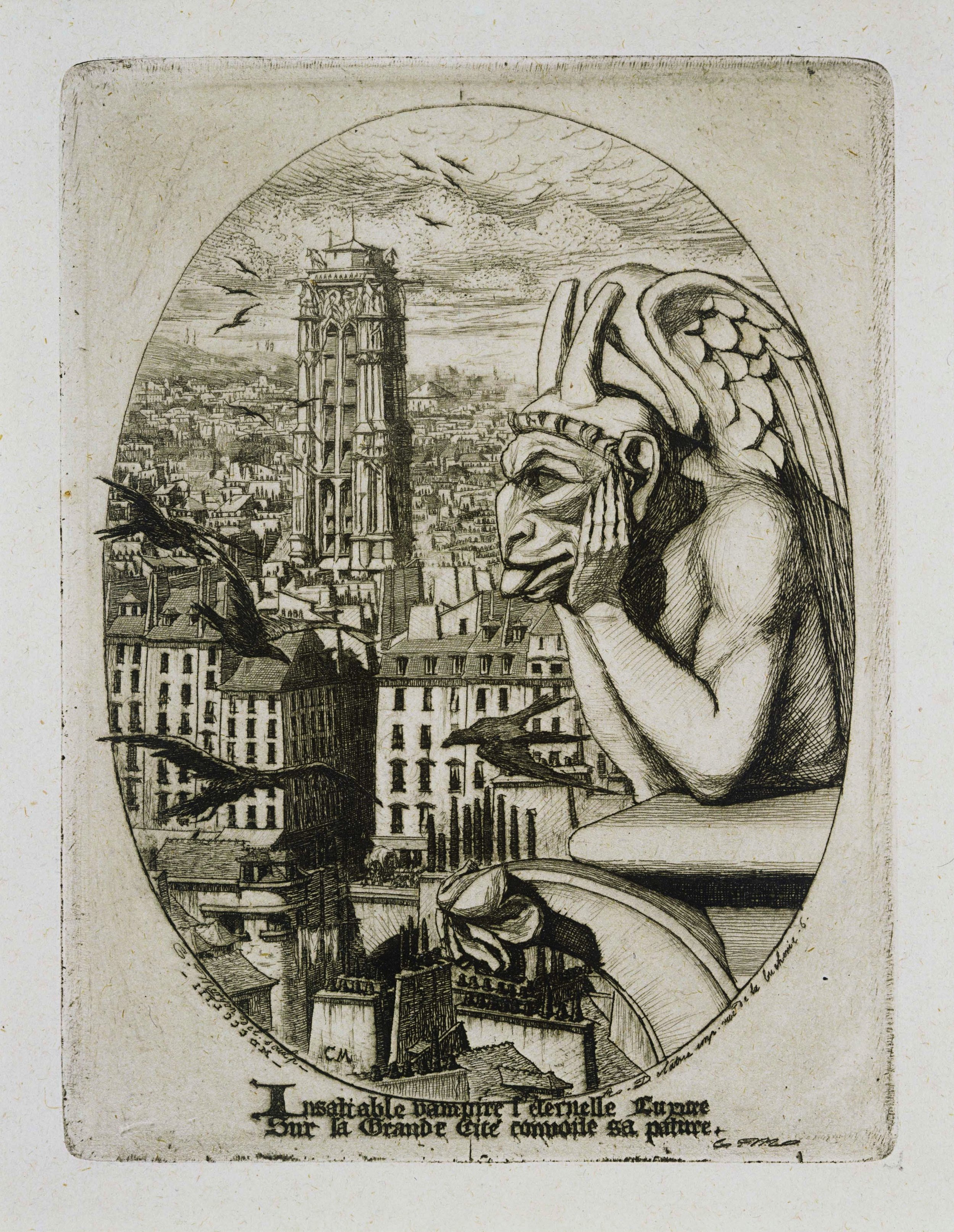
Le Stryge by Charles Méryon. On display at The Maison de Victor Hugo.
The current gargoyles we see were erected during the restoration between 1845 and 1867, which was spurred by the coverage and success of Hugo’s novel. Some of the grotesque sculptures erected by architect Eugene Viollet-le-Duc were actually inspired by Victor Hugo. Le Stryge (The Strix), is one of Notre Dame’s most famous sculptures, inspired by a half-woman half-bird mythological creature. It combines the figure of Esmerelda, associated with a witch, and that of Quasimodo, compared to a gargoyle. Even though Le Stryge is not a gargoyle (it’s a grotesque, NOT a gargoyle), I still think it looks pretty cool and it has served an important role in defining Notre Dame, and Paris’, visual identity.
Victor Hugo talks at length about Paris in Les Miserables and the collective history its stones hold. For Hugo, he has seen Paris be transformed as a “result of demolitions and rebuilding,” evolving the Paris of his youth into a “Paris of the past.” Perhaps this is where his passion for the preservation of buildings and monuments stems from, an intense appreciation for these cobbles and buildings he cherishes. To Hugo, all these places are “the very embodiment of France…for the face of your homeland is as dear to you as the face of your mother.” Even the sewers of Paris were worthy of Victor Hugo’s attention, and he saw that “history passes through the sewers.” His ability to see the narrative and human history in any structure was incredible, even a sewer could “[bear] traces of the revolutions of the globe as well as of the revolutions of man.”
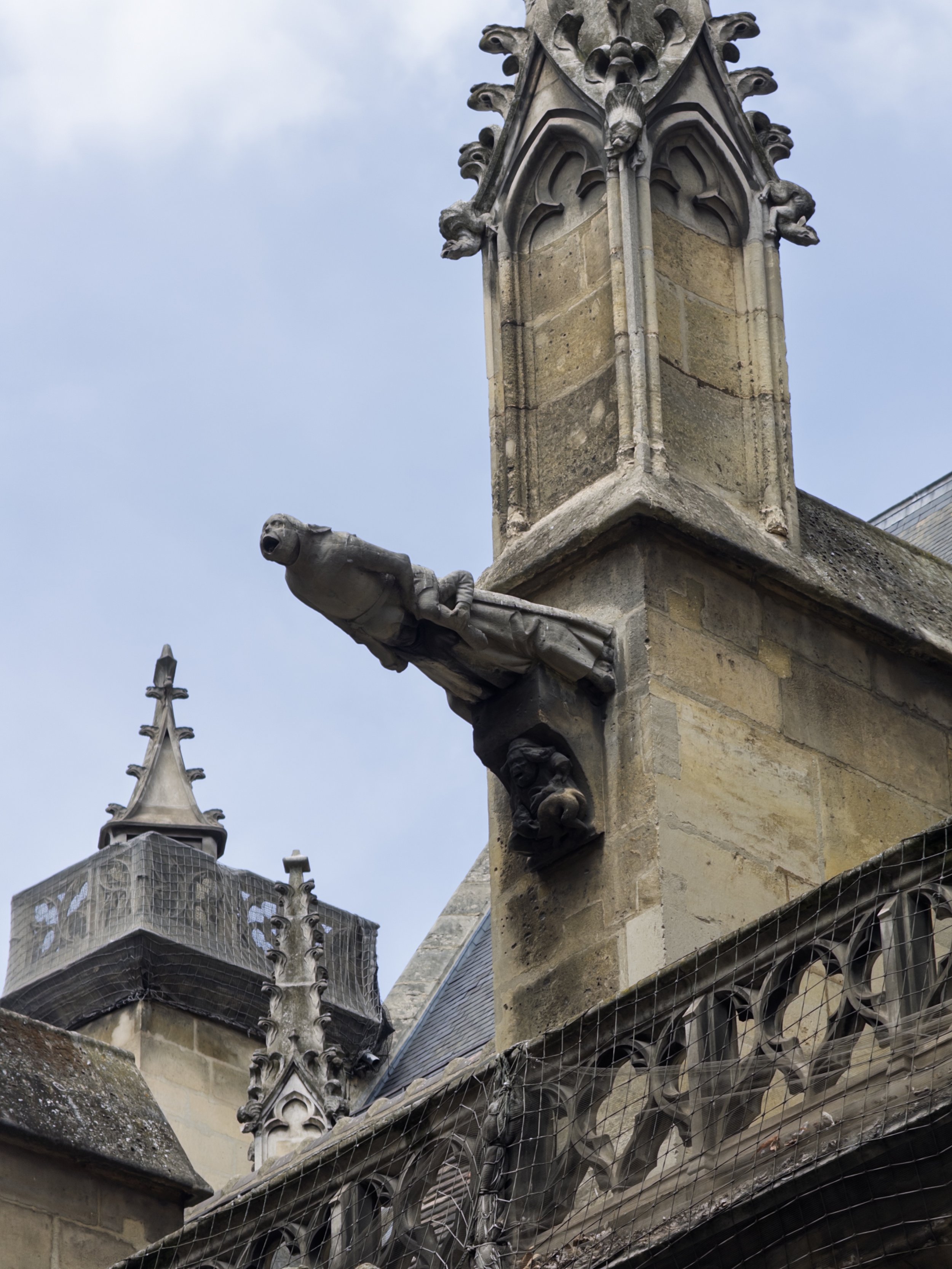
To me, gargoyles elicit that same sense of admiration. Incredibly useful and with a rich history, gargoyles fascinate me. While they can be intimidating, they can also be sometimes silly; human figures throwing up or sometimes even defecating. Personally, I love how the gargoyle beasts and dragons are always so fantastical and imaginative, like they might start moving the second you tear your gaze away from them. Craning my neck up to look at all the gargoyles with their gaping maws, I understand where Hugo was coming from with all his obsession with preservation. Architecture gives us something that literature cannot, tangible evidence of the people and histories which existed before us. While Hugo can tell me about Notre Dame, there is nothing like staring up at it, a physical connection to the author who marveled at it once before me. Hugo wanted us to see Notre Dame as more than just a place, but to consider who built it, who lived around it, who repaired it, who nearly destroyed it, and who fought to preserve it.
I like to picture what the gargoyles of Notre Dame may have seen from their position way above: The Paris Commune commandeering their home into the Temple of Reason. Napoleon marching up the steps on his way into the cathedral to crown himself Emperor. Rocks and stones piercing the stained glass windows below them during the vandalism of the July Revolution. Victor Hugo making sketches while writing the Hunchback of Notre Dame. It’s amazing to think of the history this building represents and the accumulation of stories these stony sentinels have collected over the 800 years it's been standing. Perched above Paris, these gargoyles have protected their home from revolutions, restoration, neglect, and even fire. The next time you visit Notre Dame, take a few moments to appreciate both the usefulness and beauty of the gargoyle, the coolest looking guardians of Paris.