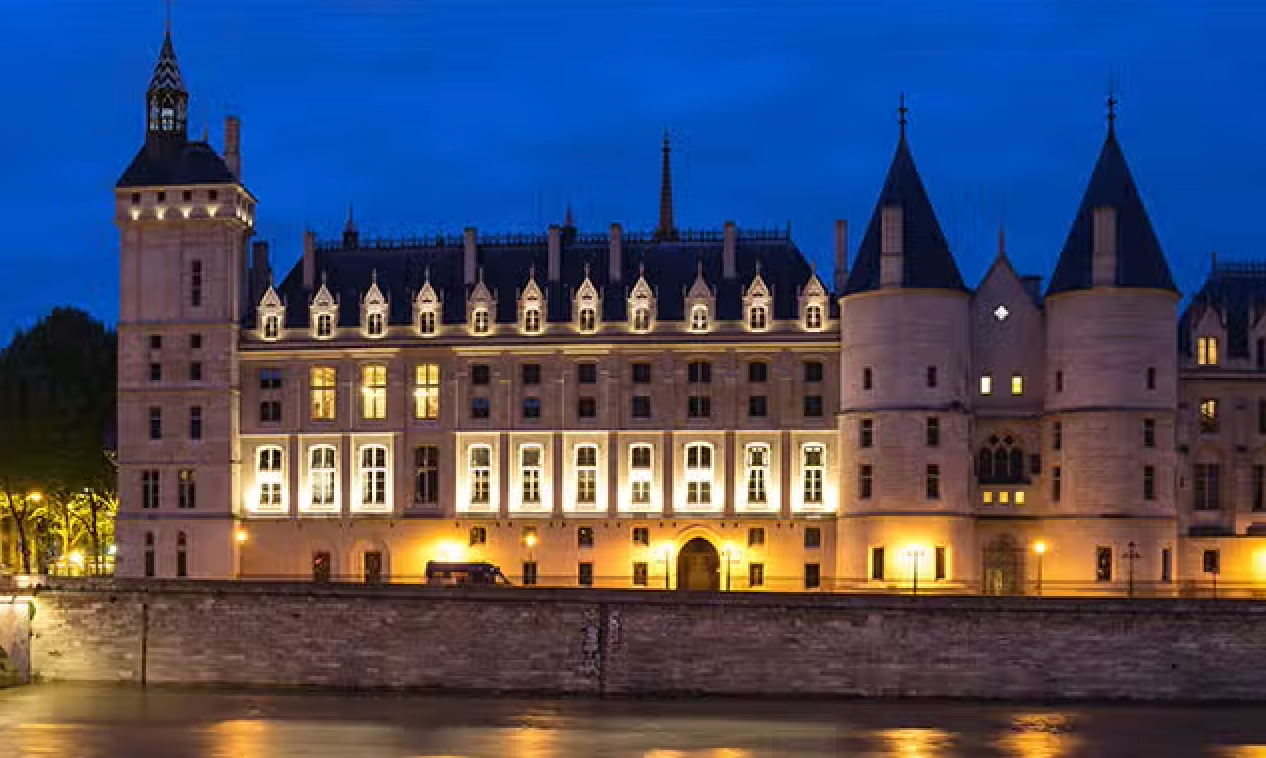
The Conciergerie, a former royal palace and prison on the Île de la Cité, stands illuminated along the Seine River in Paris, France. Photo courtesy of Introducing Paris.
Yesterday, I walked through the heavy stone doors of the Conciergerie and into one of the darkest chapters of the French Revolution.
The prison is quieter than I expected. Thick stone walls absorb every sound, and the narrow corridors feel almost suspended in time. It is difficult to imagine who once waited behind these walls: Marie Antoinette, awaiting her execution, ordinary seamstresses, laborers, priests, and thousands of others whose stories have long since disappeared from history.
Walking through the prison, I found myself thinking less about the executions themselves than about the waiting. Every prisoner entered the Conciergerie knowing there was a chance they would never leave alive. Every morning, names were called. Those selected climbed into tumbrils waiting outside and began the short journey to the guillotine. I left the prison wondering what the final walk must have felt like. Today, I found out.
Our class retraced the route that Sydney Carton takes in A Tale of Two Cities after exchanging places with Charles Darnay. We left the Conciergerie behind, crossed the Seine, and walked along the Rue Saint-Honoré toward the Place de la Révolution, where the guillotine once stood. Everything about the afternoon felt ordinary. People hurried home from work carrying shopping bags. Cyclists wove between tourists taking photos of the Louvre. Couples sat outside cafés drinking coffee beneath striped awnings. Street musicians filled the air with music as traffic flowed steadily through the city. Had I not known the history, nothing about the walk would have suggested what had once happened there. That was the strangest part.
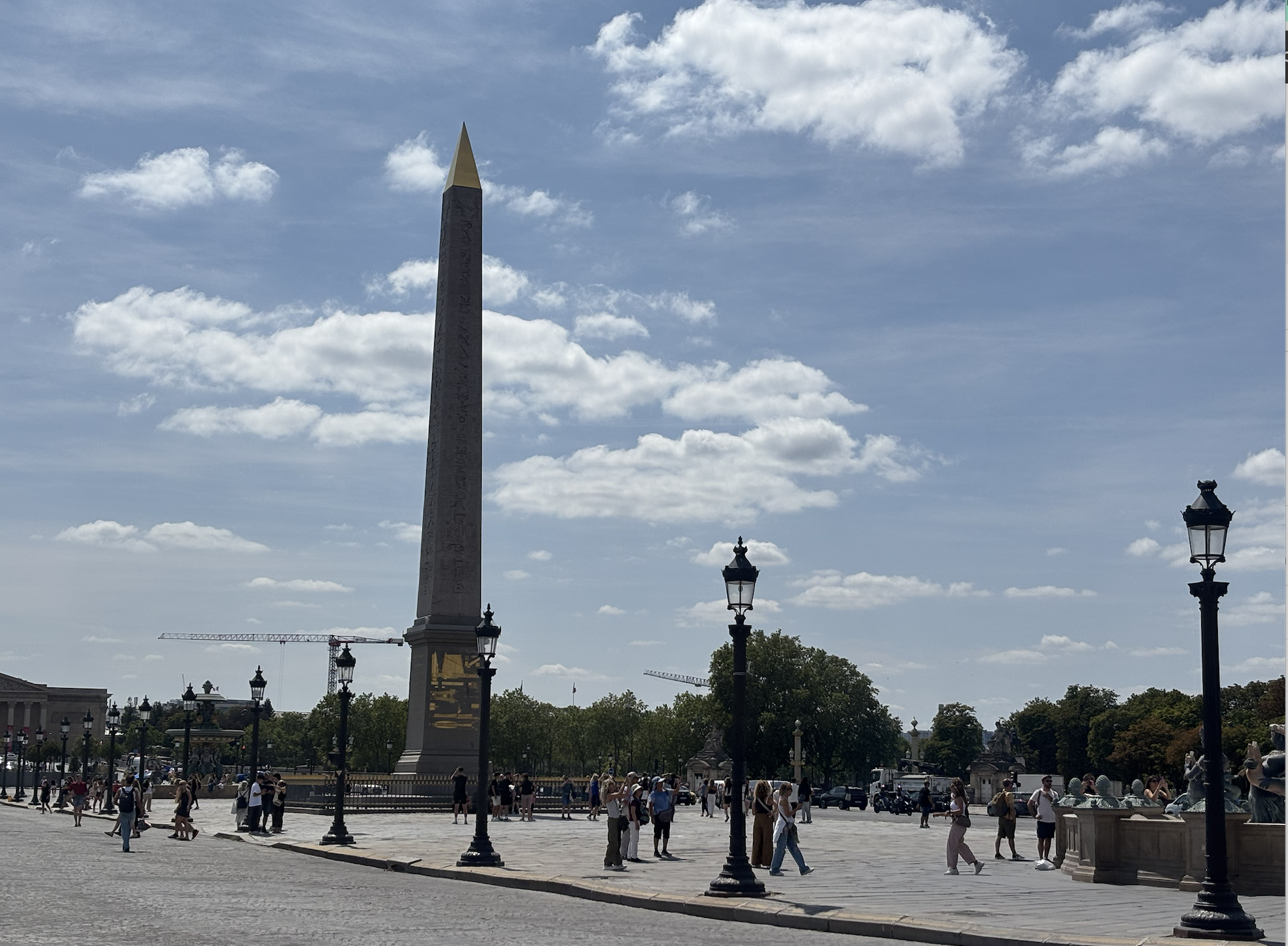
Place de la Concorde, where Paris' most beautiful square conceals one of its darkest histories. Standing beneath the Luxor Obelisk, it is difficult to imagine that the guillotine once occupied this same space.
In A Tale of Two Cities, Dickens describes the tumbrils carrying prisoners through these streets toward their deaths. The journey is heavy with silence and inevitability. Walking the same route today, it was almost impossible to reconcile Dickens’ Paris with the one around me. Modern Paris feels vibrant and alive. Yet beneath the cafés, boutiques, and wide boulevards lies the memory of a city where crowds once gathered to watch people die. By the end of our walk, we reached the Place de la Concorde. Today it is one of Paris’ most beautiful public squares. The Luxor Obelisk rises from the center. Elegant fountains sparkle in the afternoon sun. Tourists gather to photograph the Eiffel Tower in the distance.
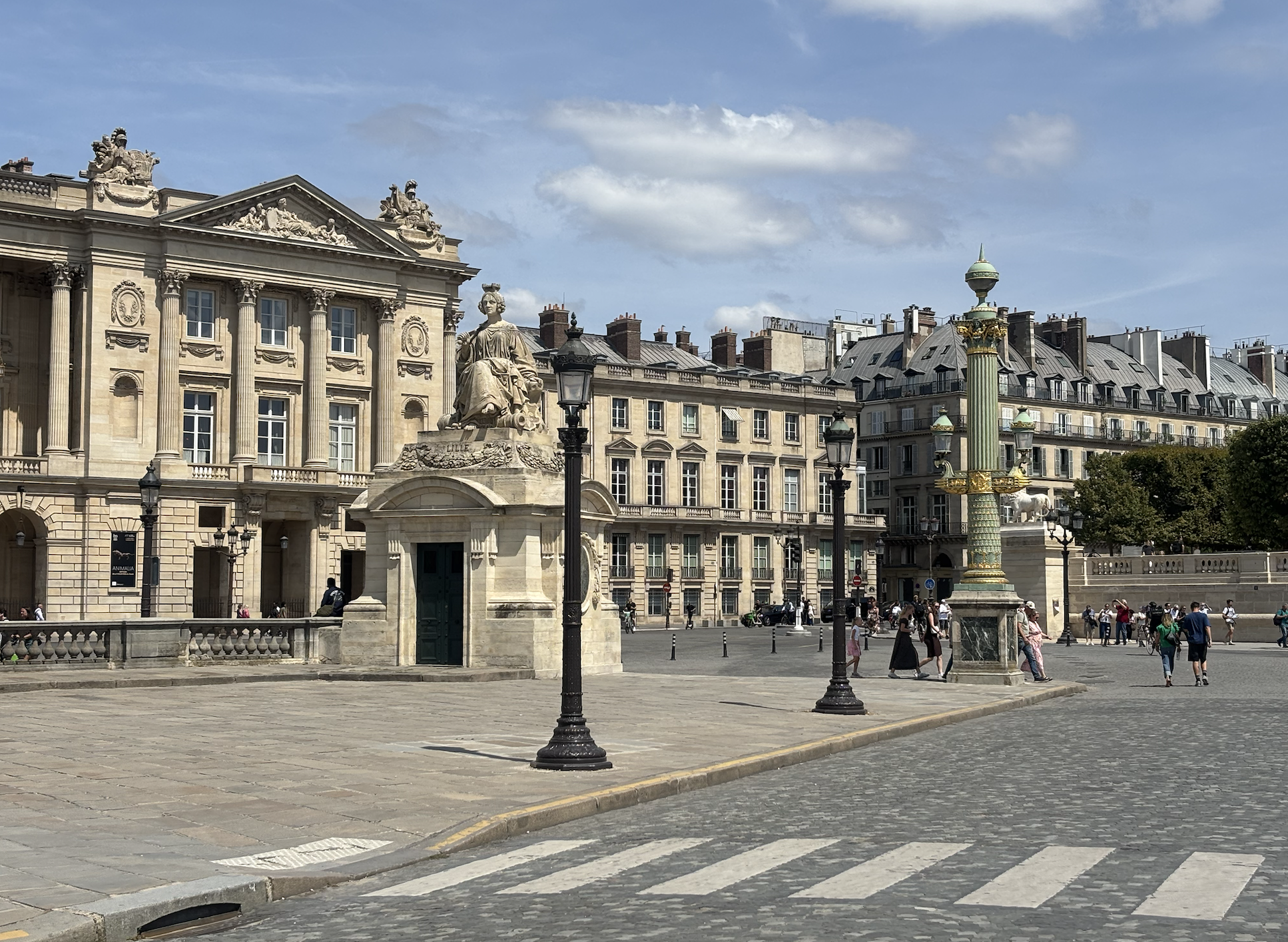
Today, Place de la Concorde is filled with tourists, gardens, and grand architecture. Two centuries ago, this was the Place de la Révolution, where thousands, including Louis XVI and Marie Antoinette, were executed.
Two centuries ago, this same square was known as the Place de la Révolution. The guillotine stood here. Louis XVI died here. Marie Antoinette died here. Danton died here. Eventually, Robespierre himself died here. Thousands of others – many remembered only as names on execution lists – met the same fate. Standing in the middle of the square, I found myself searching for some visible reminder of what had happened. There is no guillotine. No bloodstains. No crowds. History has quietly disappeared beneath fountains, gardens, and traffic circles.
Somehow, simply knowing what had happened was enough to change the way I saw the space. What struck me most was the difference between the real prisoners and Sydney Carton. Marie Antoinette never chose this journey. Neither did the countless anonymous prisoners who left the Conciergerie each morning. Sydney Carton did. That single difference transformed his final walk from an execution into a choice. Yesterday, while standing inside the prison, Carton’s sacrifice still felt like fiction. Today, after walking his route through the streets of Paris, it felt profoundly human. Dickens transformed an ordinary walk across the city into one of literature’s greatest acts of self-sacrifice and altruism. For the first time, I understood why.
The walk lasted no more than thirty minutes. I found myself slowing my pace, almost subconsciously trying to imagine what it would have felt like to know that every step brought me closer to my final destination. History often feels enormous when we read about it. Revolutions span years. Thousands of people die. Political systems collapse. But walking Carton’s final journey reminded me that history is also measured in individual footsteps. Every person who left the Conciergerie made this same journey knowing it would be their last.
As I stood in the Place de la Concorde, surrounded by tourists laughing, taking photographs, and moving on to the next attraction, I realized something that surprised me. The most powerful part of Bookpacking isn’t standing where history happened. It’s walking through places that no longer look like history at all. Yesterday, the Conciergerie showed me where prisoners waited. Today, the streets of Paris showed me where their stories ended. And somewhere between those two places, Sydney Carton stopped feeling like a fictional character and began to feel like someone I had quietly walked beside.
Before coming to Paris, I thought Sydney Carton’s final words were about sacrifice. After walking his final journey, I think they’re about something else entirely. For the first time in his life, Carton knew exactly who he wanted to be. The “far, far better thing” wasn’t the guillotine. It was the choice he made before he reached it. Standing in the Place de la Concorde, I finally understood that the most important part of Carton’s story was never how it ended. It was how he chose it would end.
““It is a far, far better thing that I do, than I have ever done; it is a far, far better rest that I go to than I have ever known.””