#VanessaRomero

Bittersweet

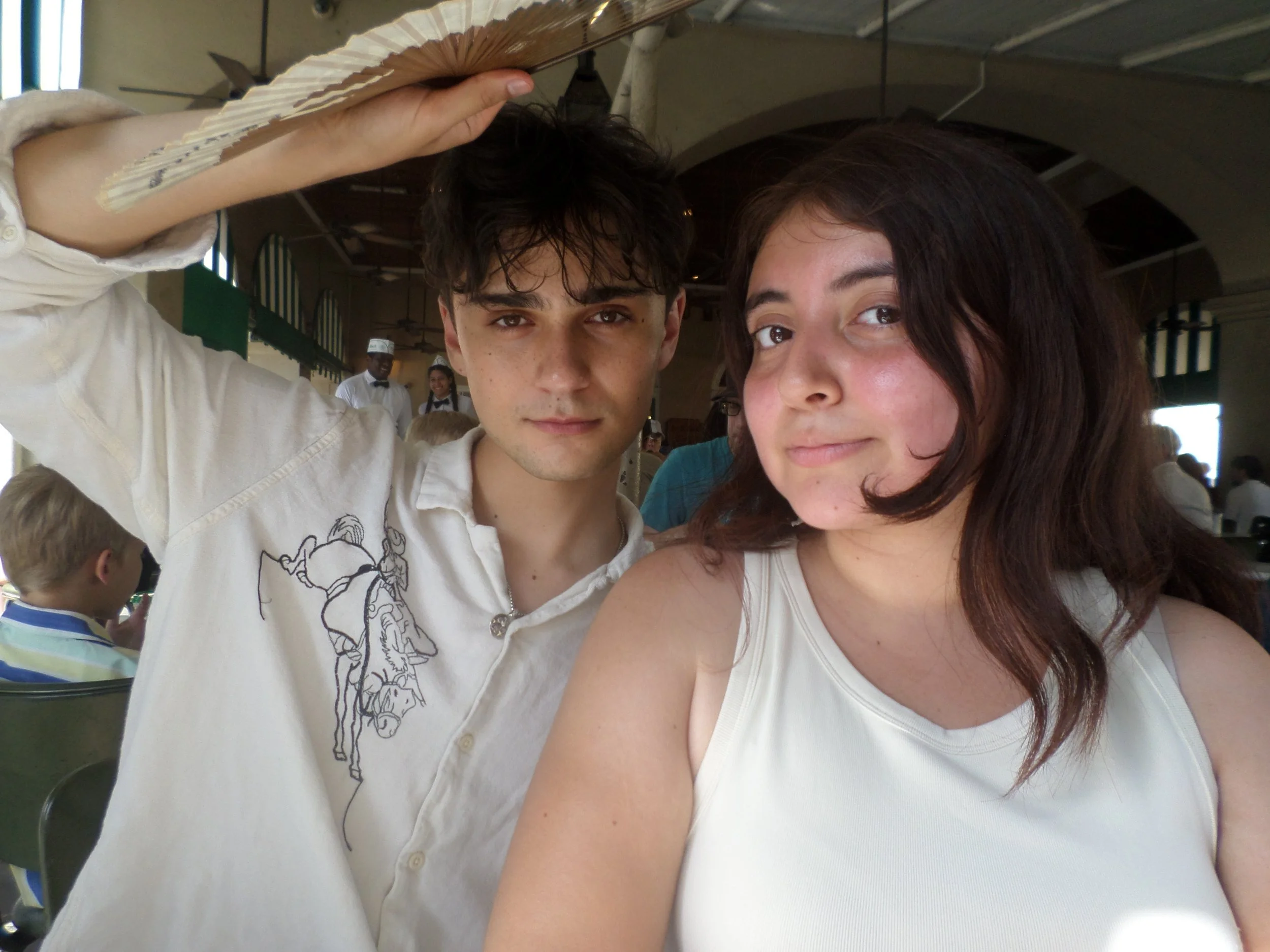
When thinking of my trip to New Orleans, what I feared most was not the unknown, not seafood, rather something I know pretty well — myself. 

It had been three years since I had taken a trip alone for a long duration in another state and in the meanwhile I had been quite comfortable in the familiarity of Los Angeles. 

Although I applied to this program with excitement to experience something new, I couldn't help but fear I'd retract from the unknown as a hermit hides in its shell. 

What I had failed to realize however was that it had been three years since I had last traveled alone, three years of all things brand new. A new school. A new environment. New friends, new family members, and a me who had become much more willing to confront something that was new

So I tried seafood.

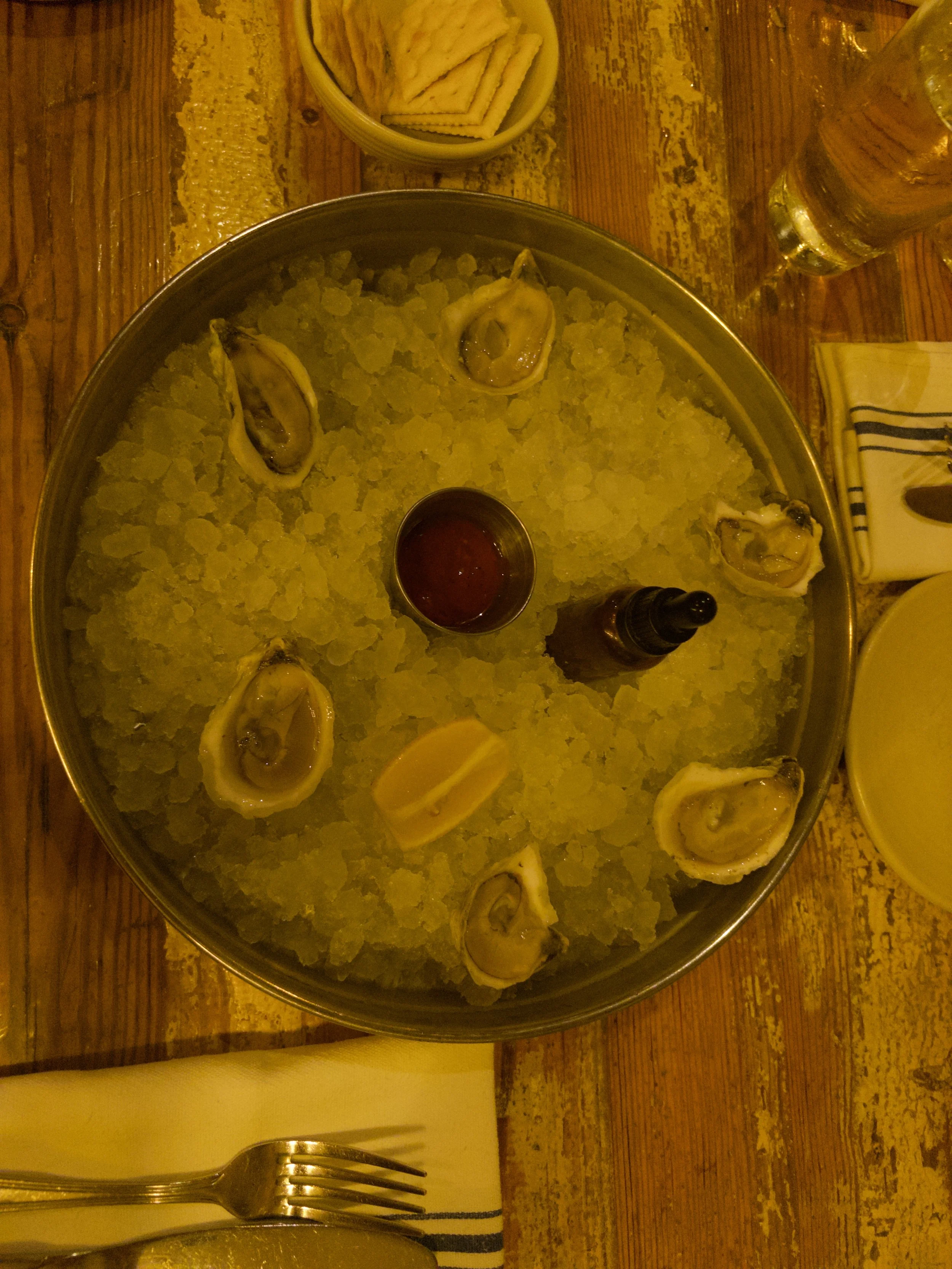
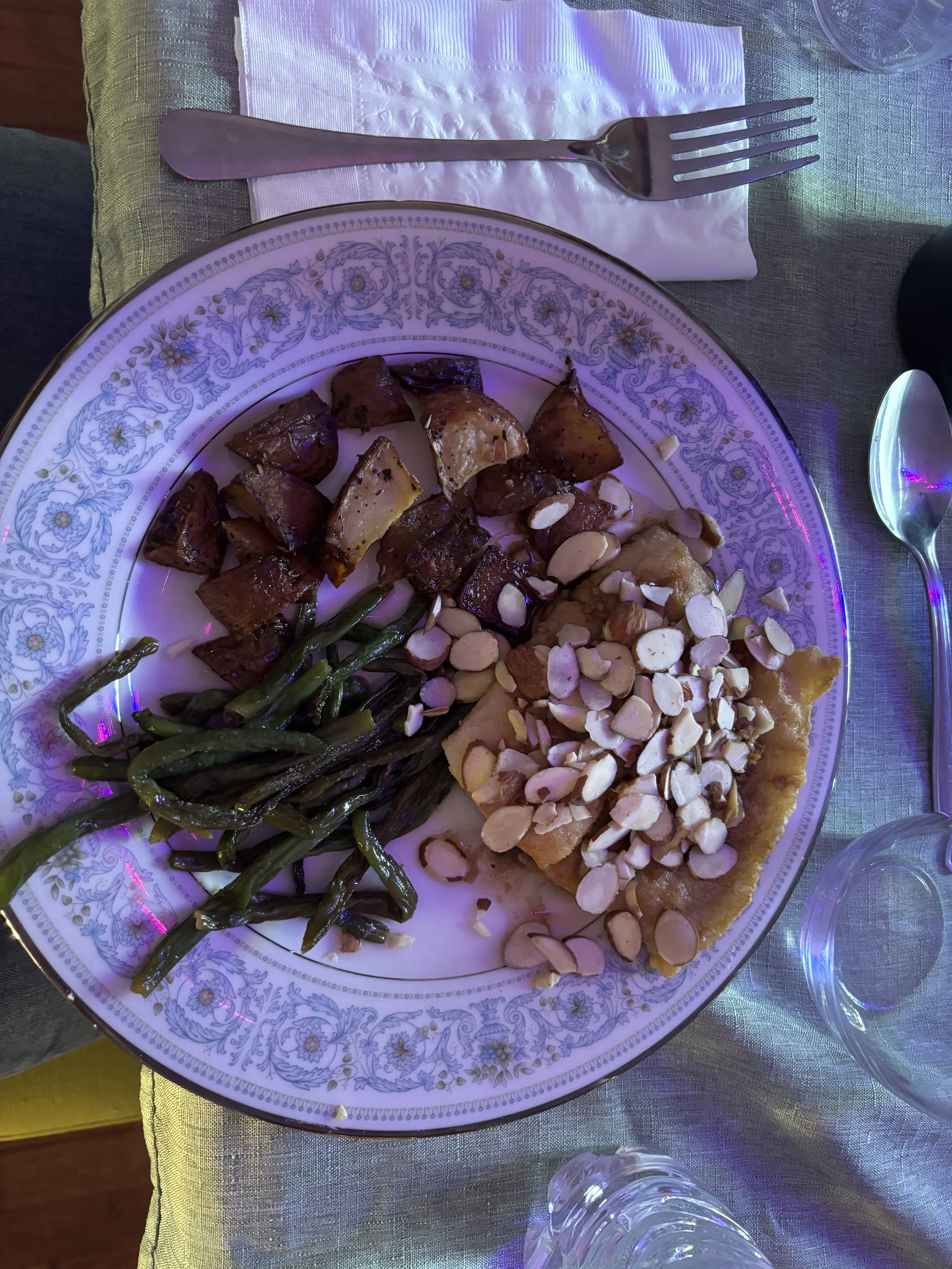
I ate oysters, shrimp, catfish, and trout. 

And did I like it? 

YES

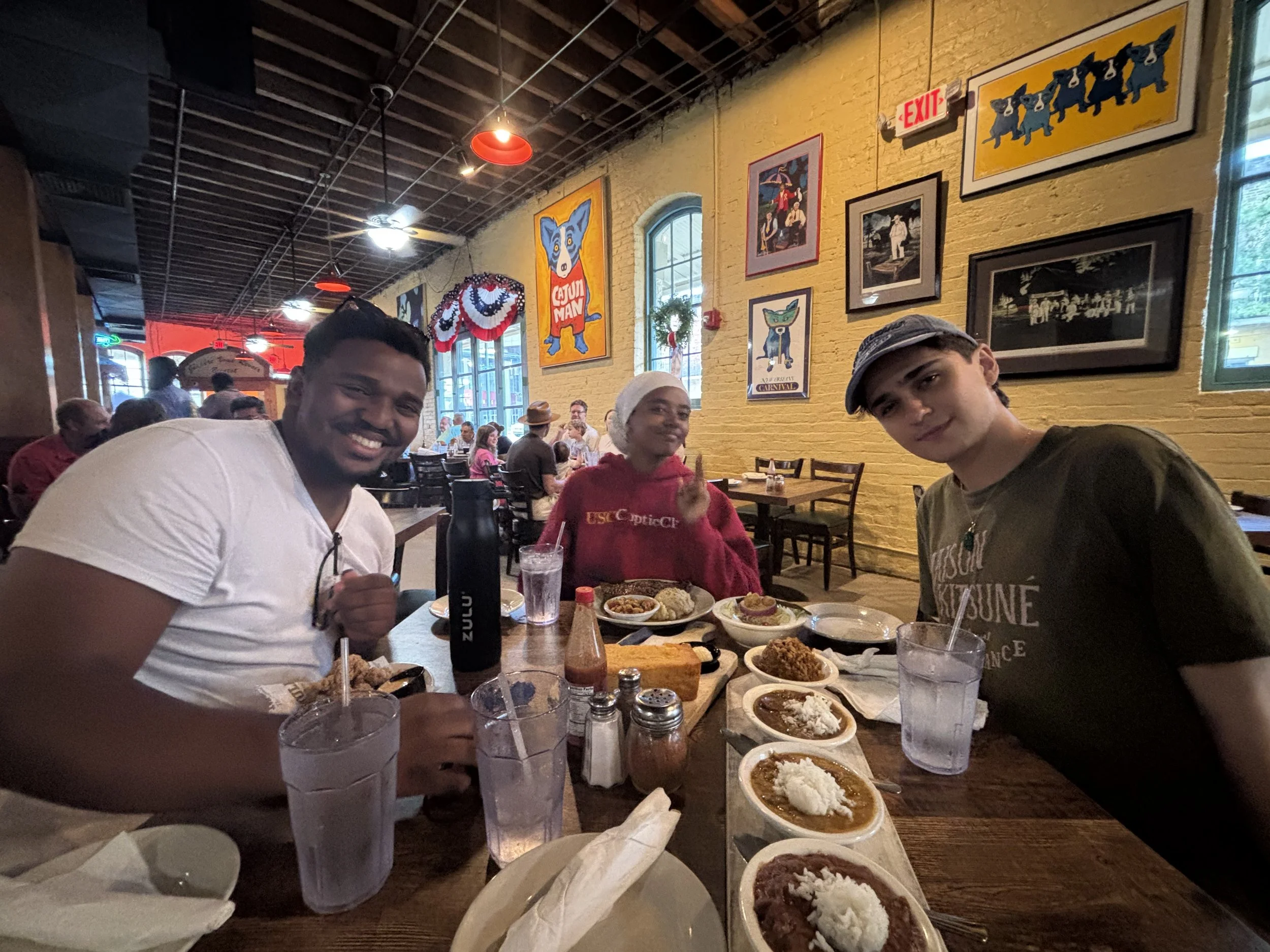
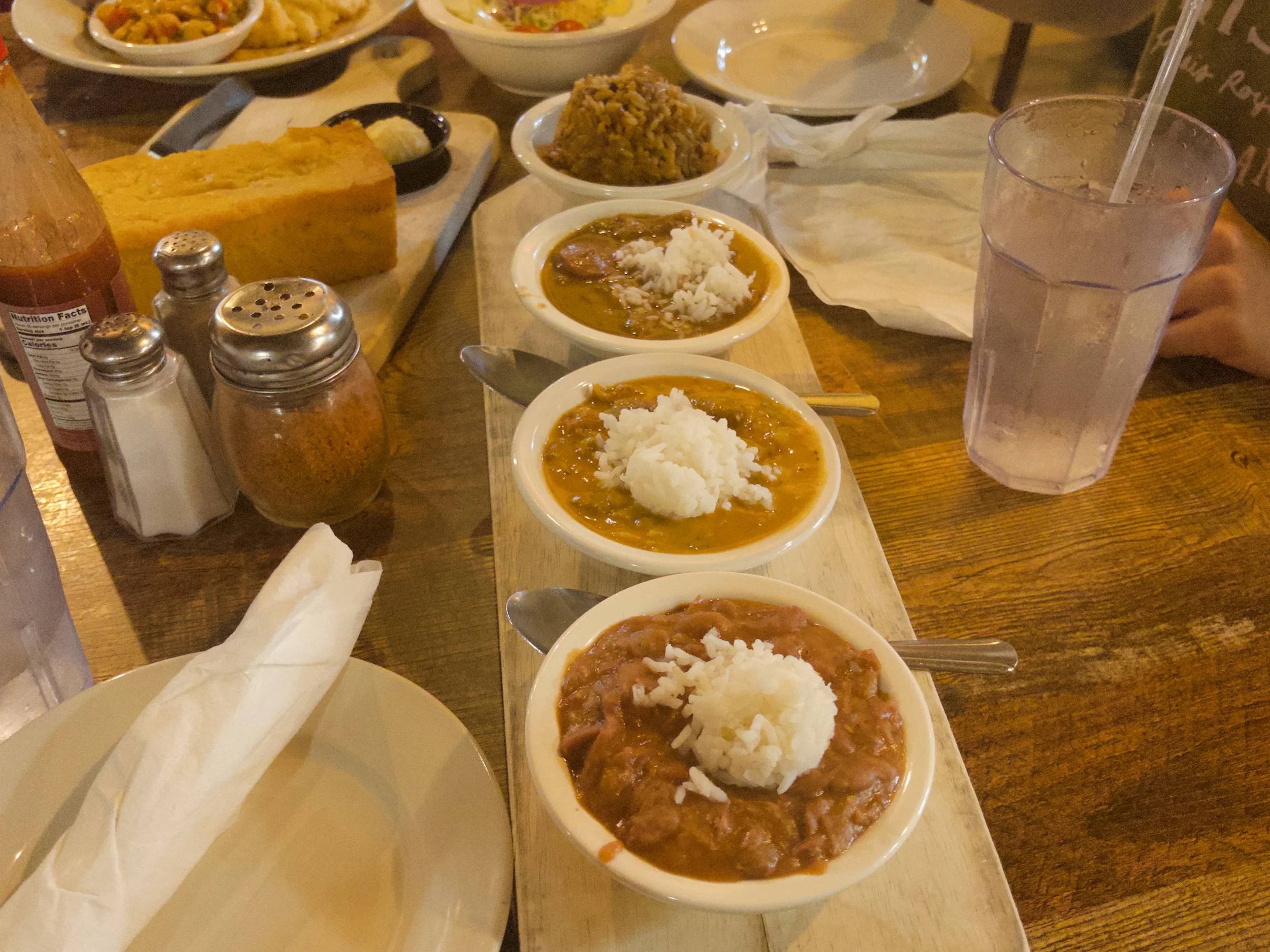
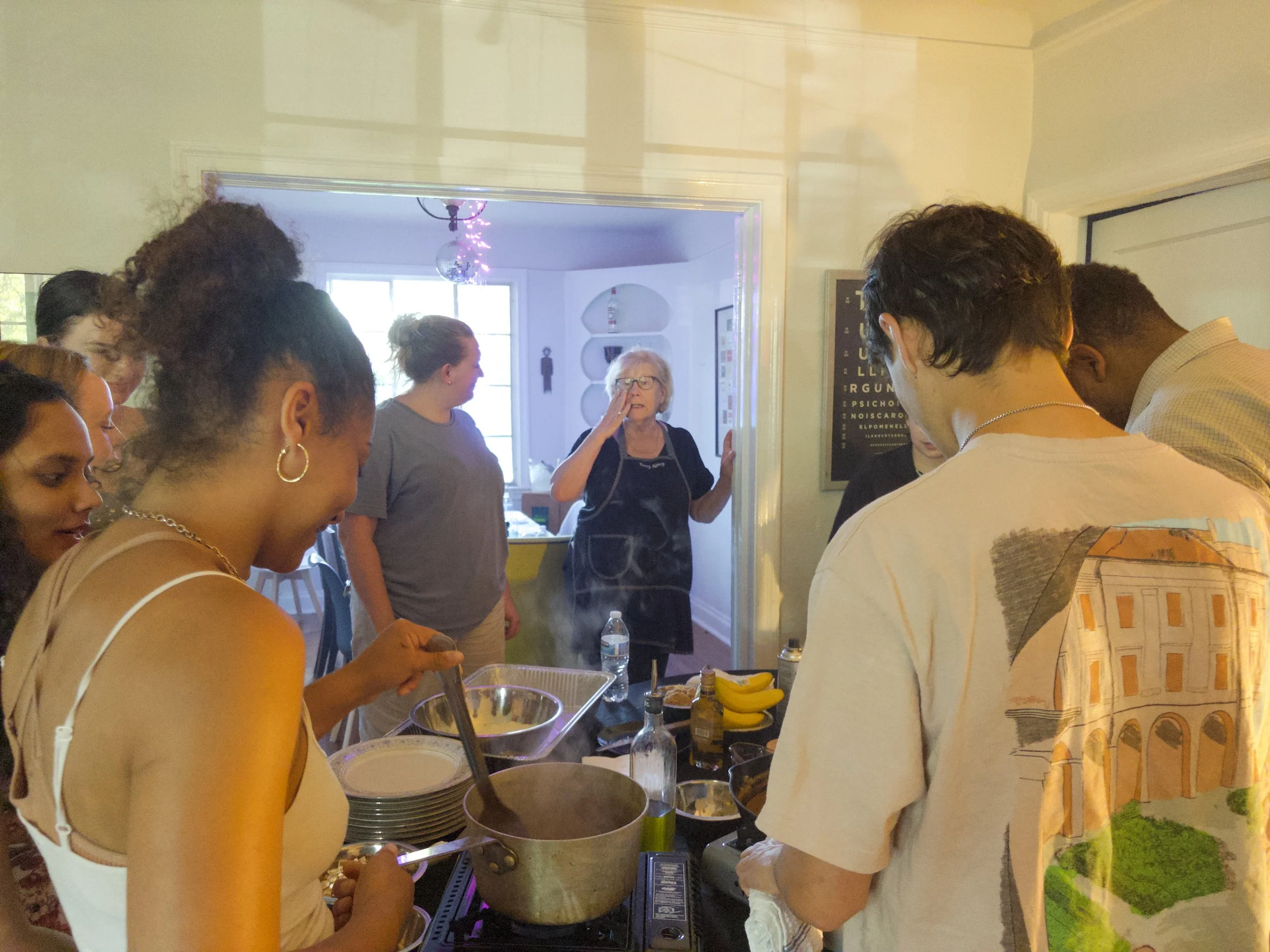
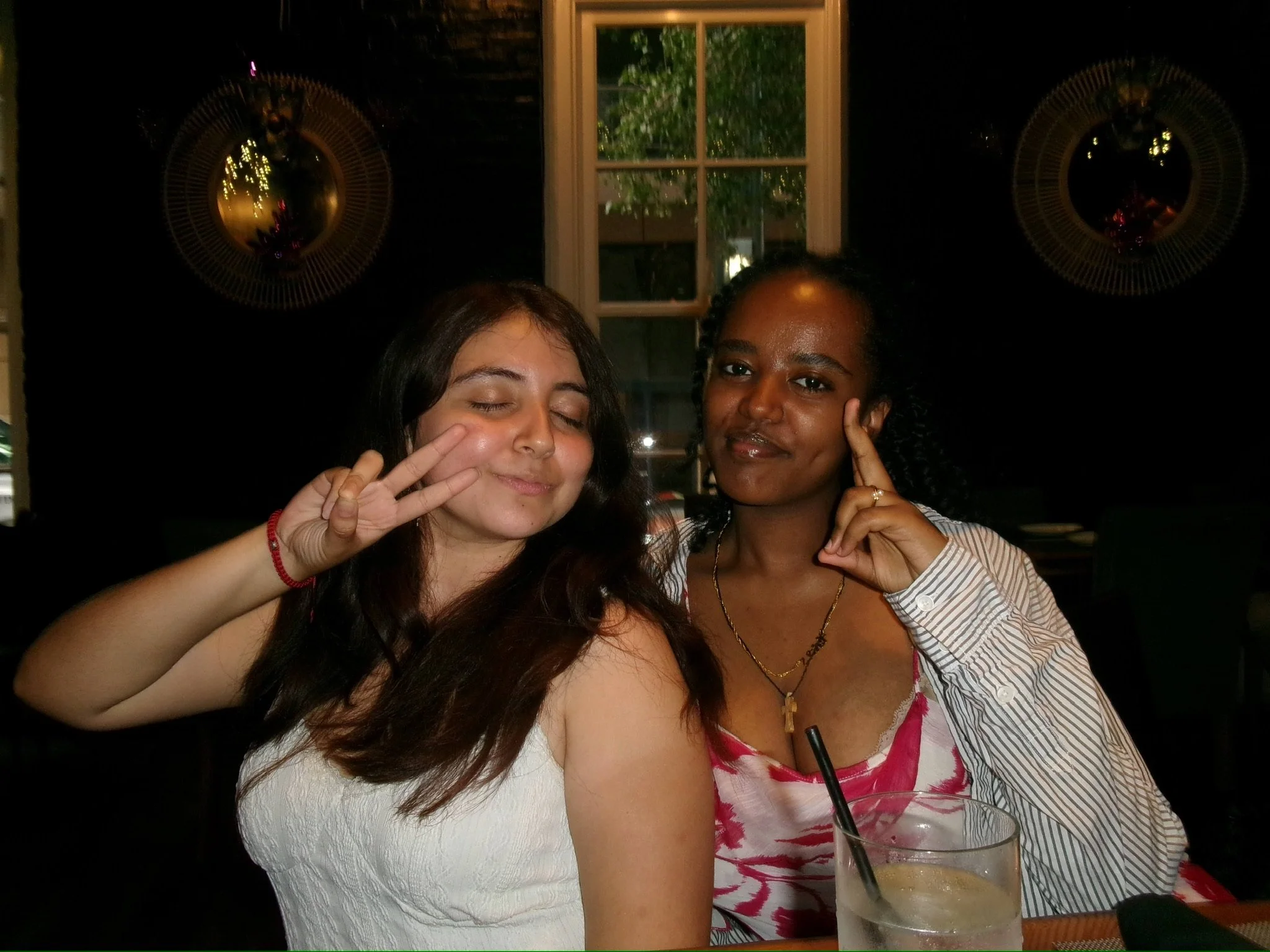
But what I enjoyed even more than the seafood, were the conversations amongst it. The people among those experiences.

Within these past three years, I've grown out of my shell. As cheesy as it sounds, it’s true. My insecurities no longer supersede my confidence, I'm less likely to cower from who I am from the fear of rejection. I'm more likely to embrace it. And as a result, I've been able to build such beautiful connections on this trip. 

But a connection is formative upon a relationship between the two, a presence of the self and of the other. 

On our trip, Andonis introduced me to the topic of dividualism. The idea that there is not one individual identity, but varying identities within ourselves that manifest through our connection with others and I find this to be true.

Each conversation with each of my peers on this trip brought out different sides of me. Each provoking different thoughts. Different emotions. Different memories. 

And that’s the beauty of humanity. The ability to learn alongside and from each other. The ability to challenge each other. To grow amongst each other. To understand each other. And most of all, the ability to gain a sense of self from one another. 

I LOVED my experience in New Orleans. I'm so grateful for this whole experience. But yesterday I left and today I'm 20.

Heading back into the familiarity of Los Angeles and into the unknown of my twenties, I know one thing for sure. I don't want to limit myself. To second guess, to fall to fear. I want to explore. Try new foods. Learn new things. Travel to different places. But most of all, I want to explore my life through the wonderful connections I make, both old and new.
Saxophone

I have 26,074 photos saved on my phone. 26,074 photos to my name. Far too many. I can make the excuse that I’m simply too lazy to clear my camera roll, but I wouldn’t be addressing the root of the problem. How did these photos end up there in the first place?

I took them. 

I took many

I spam my phone with images in hopes of capturing fleeting moments, but in the very act I lose them. It’s a problem, but how could I resist it? With phones, you capture an image almost instantly. In seconds, I can preserve what I deem as valuable. But does a moment left uncaptured make it less valuable than one that is? Although I have 26,074 moments captured on my phone, I have a million more captured through what I’ve seen, smelled, touched, tasted, and heard. 


Memory is invaluable. 

Inquire about my grandfather and you’ll get a different response from each Raygoza. He loved pistachios. He smoked. He drank. He was quiet. He was calm. He was loving. He was abusive. He was caring. He was distant. He was a musician. He played the saxophone. 

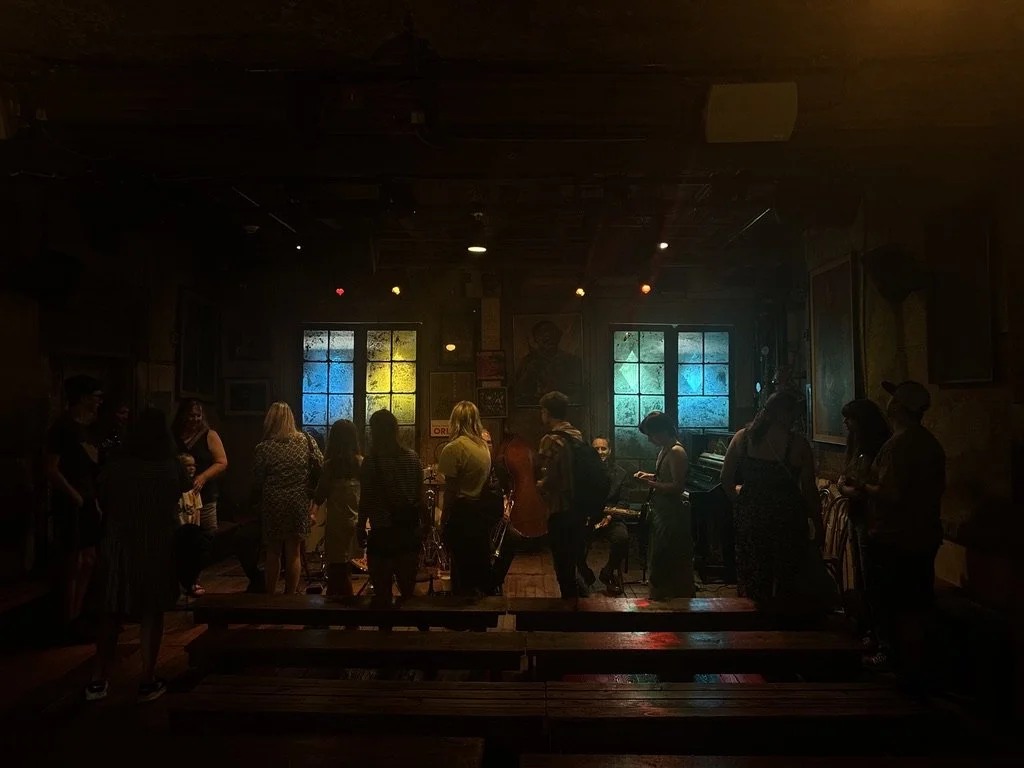
Before we head to Preservation Hall, Andrew speaks of what the experience will look like. He says that sometimes they play the clarinet, but today it’s the saxophone. Phones are not to be used during the performance. There are no images, no videos. When the sax solo begins, my still feet break into a rhythm, each step recalling a memory of my grandfather that isn’t mine. I had never met him. He passed away before I was born. My memory of him is composed of perspectives that are not all one in the same. Still, they create a connection I otherwise wouldn’t have. A connection between me and him, between the music and me.  


Memory is imperfect

It’s built from perspective. Perspective shapes memory and memory shapes connection. In Michael Ondaatje’s Coming Through Slaughter, Ondaatje intertwines his creative mind with the historical perspective of Buddy Bolden, often referred to as the Father of Jazz. In doing so, my remembrance of Bolden is forged by the perspective of Ondaatje. It’s inherently flawed and it prompts the questions: Whose memory gets to be preserved? How is it preserved? And who gets to preserve it? 

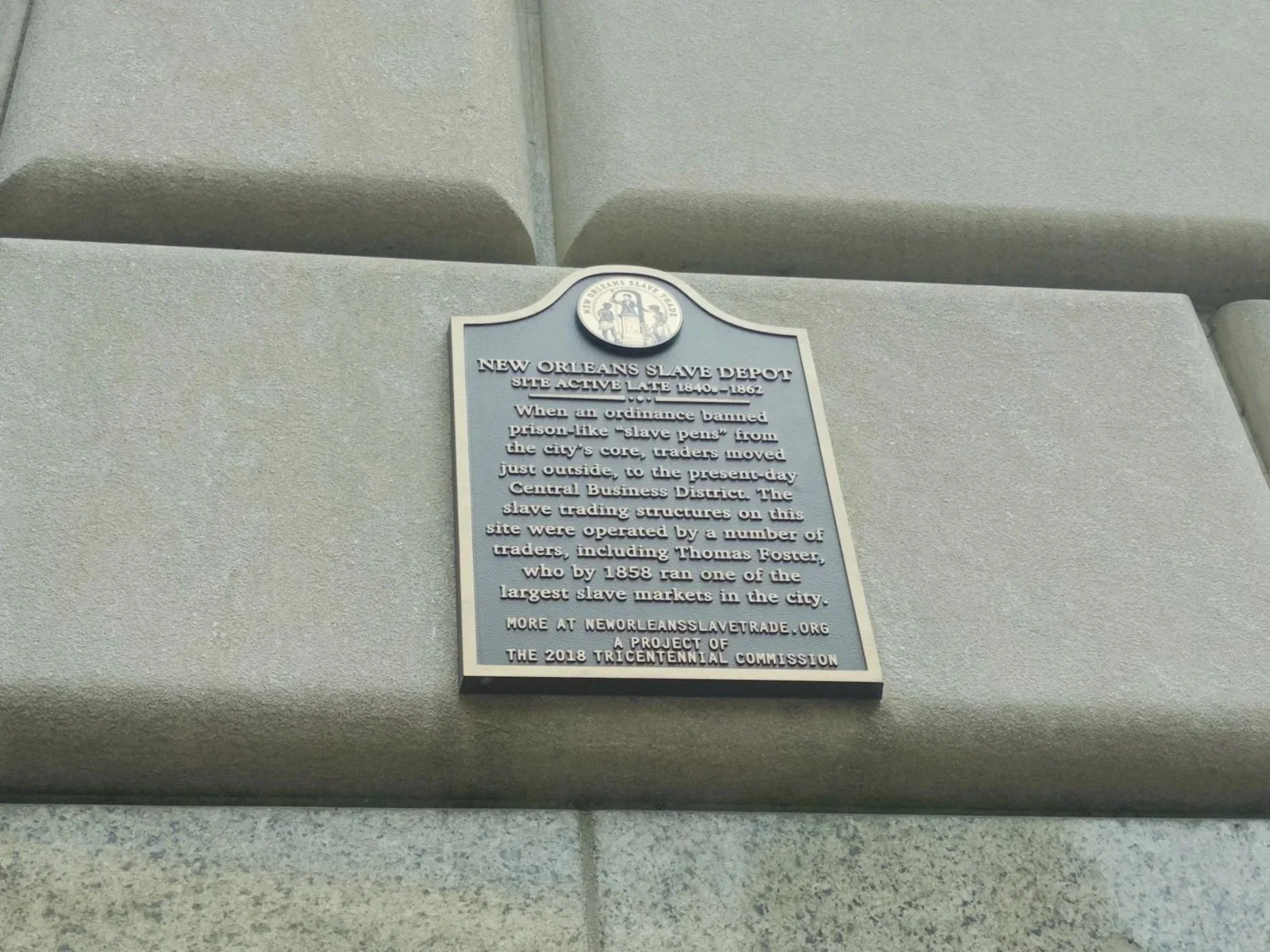
I think back to the statue of John McDonogh, a wealthy slave owner who willed 2 million dollars to New Orleans public schools, now replaced by a potted plant in Lafayette Square. Down Lafayette Square on Saint Charles Ave and above eye level lies the small plaque acknowledging the New Orleans Slave Depot. Although the McDonogh statue is no longer there, having been toppled by protesters in 2020, I dwell on the question of how a slave owner gets a larger memorial than the suffering of enslaved people in these slave markets? It’s upsetting, but not surprising. America has long been selective in the memory it chooses to tell. The white perspective, the white story, has long dominated avenues of remembrance from memorials to film to the history books we read in class. 

Memory is power

And the protestors who tore down McDonogh’s statue resist a memory, a power that is abusive (to say the least). Instead, individuals like Sylvester Francis, preserve a memory rooted in resilience, love, joy, community and culture. A memory rooted in Black Power. 

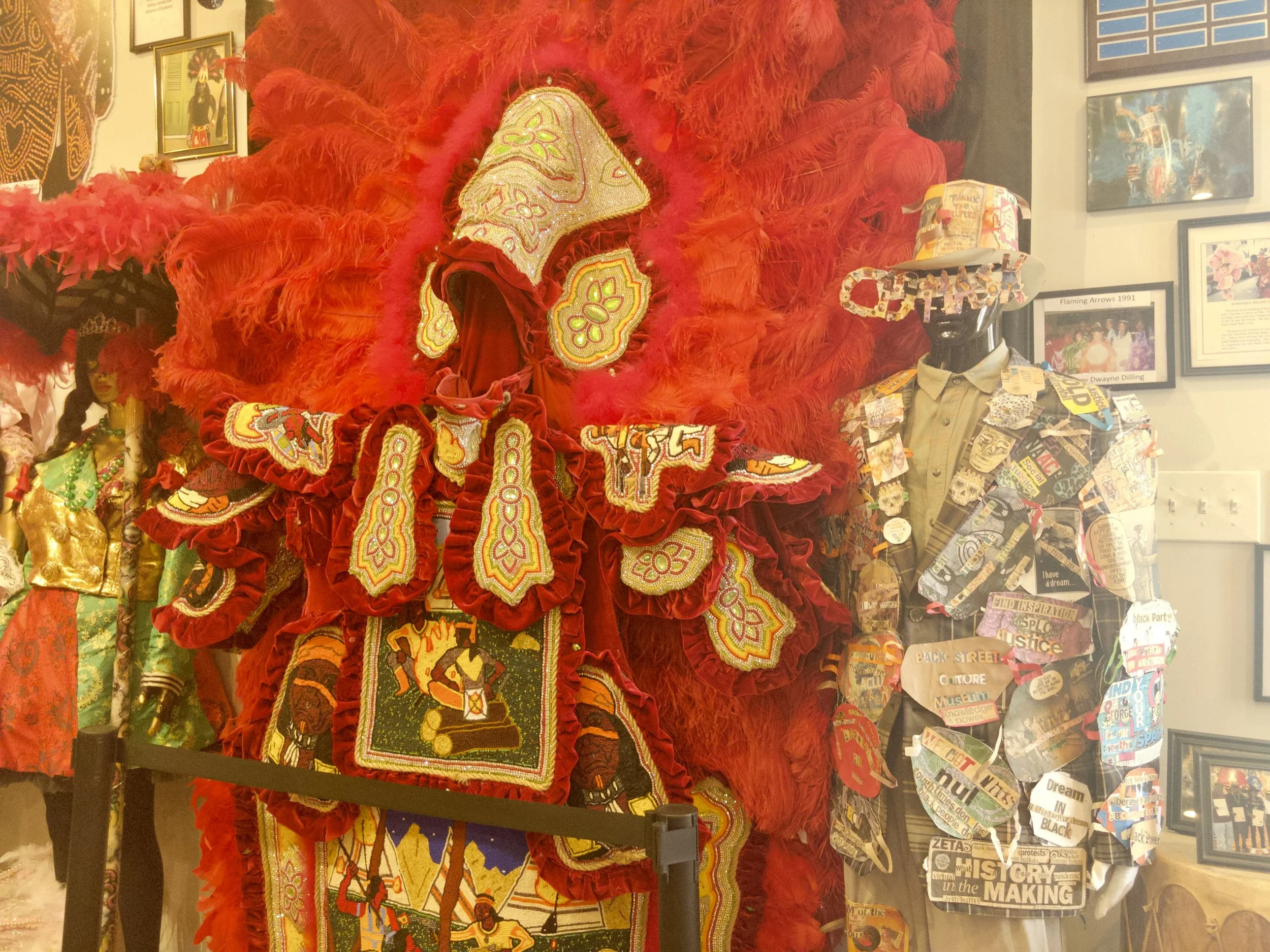
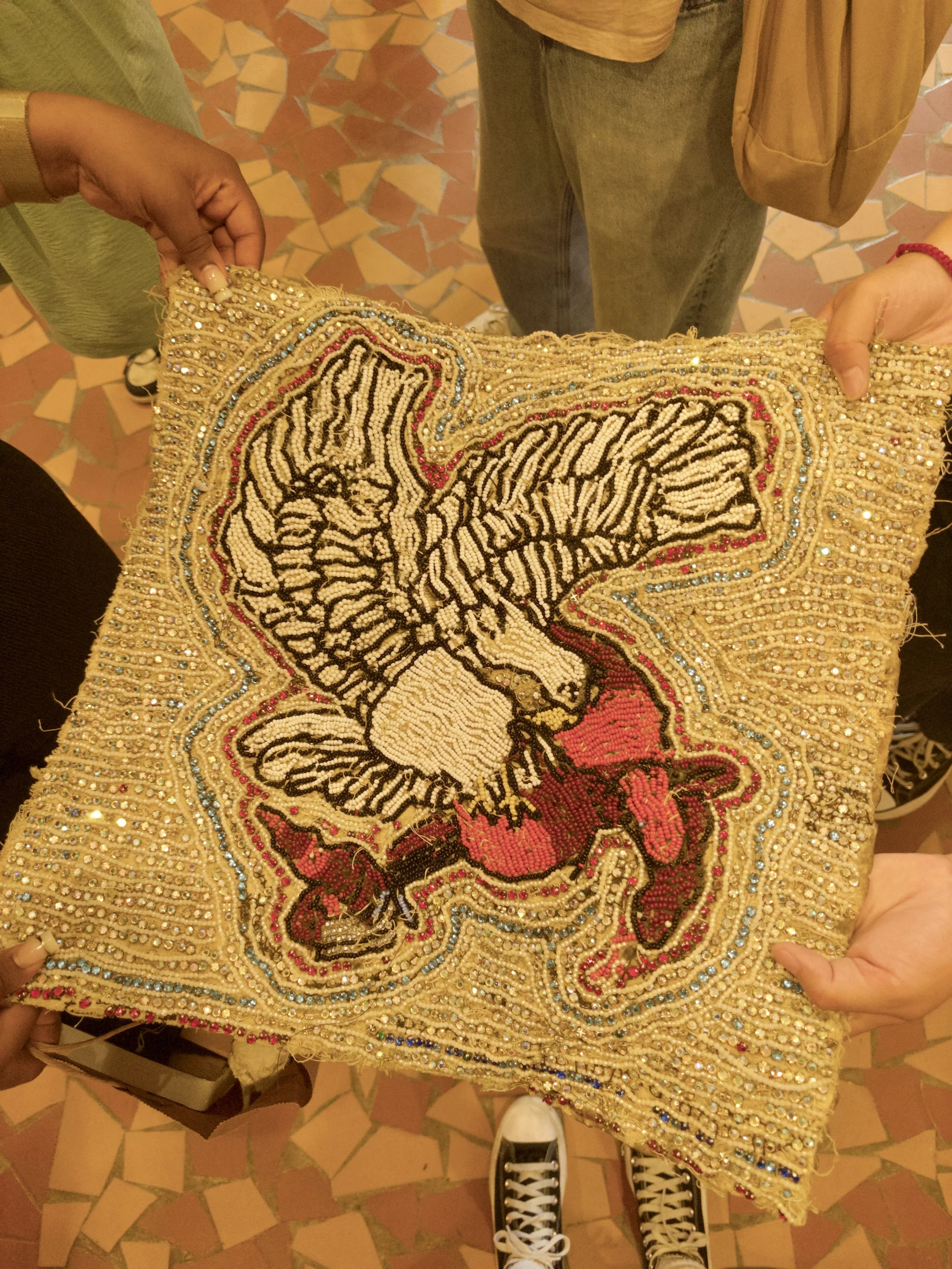
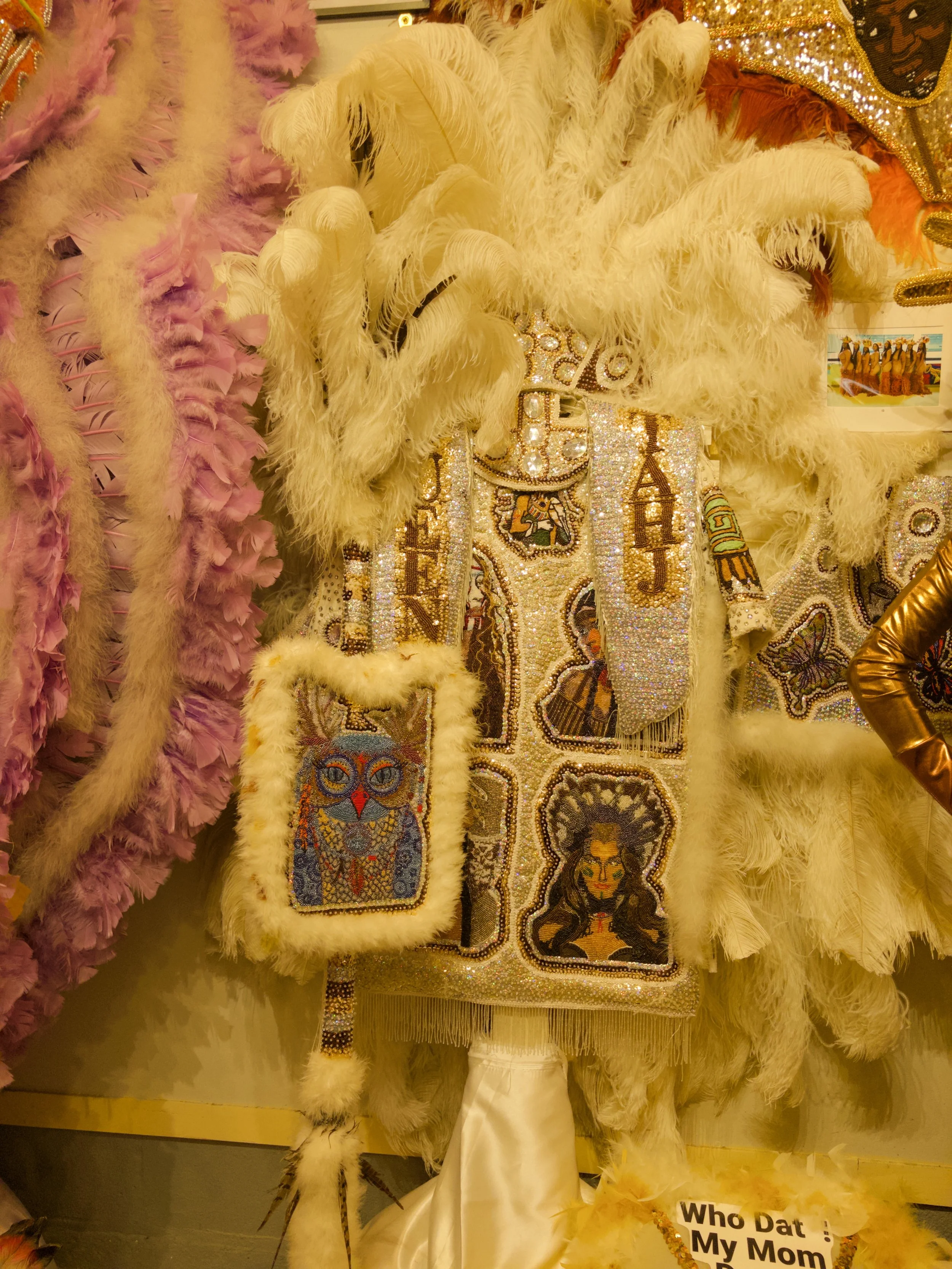
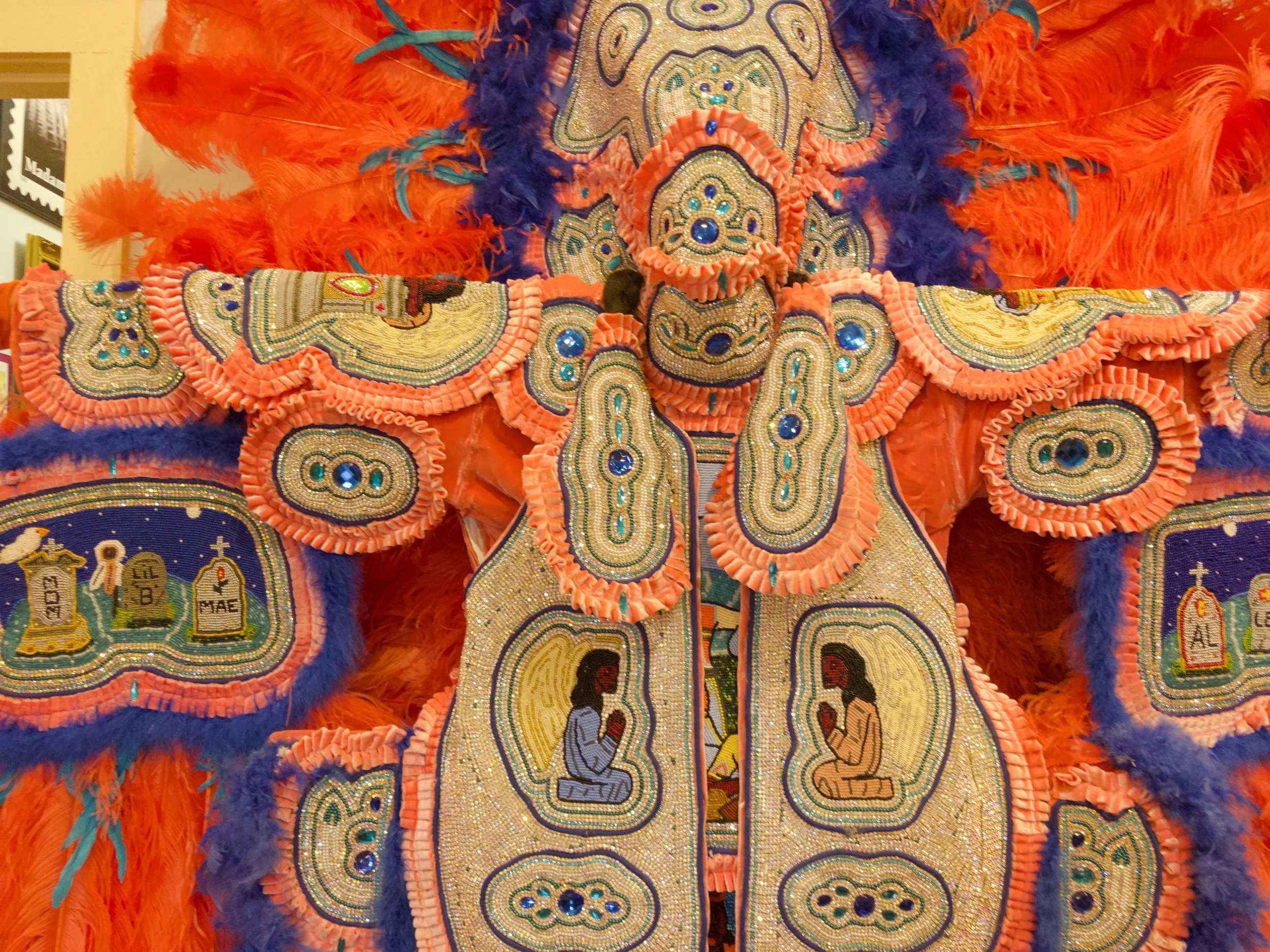
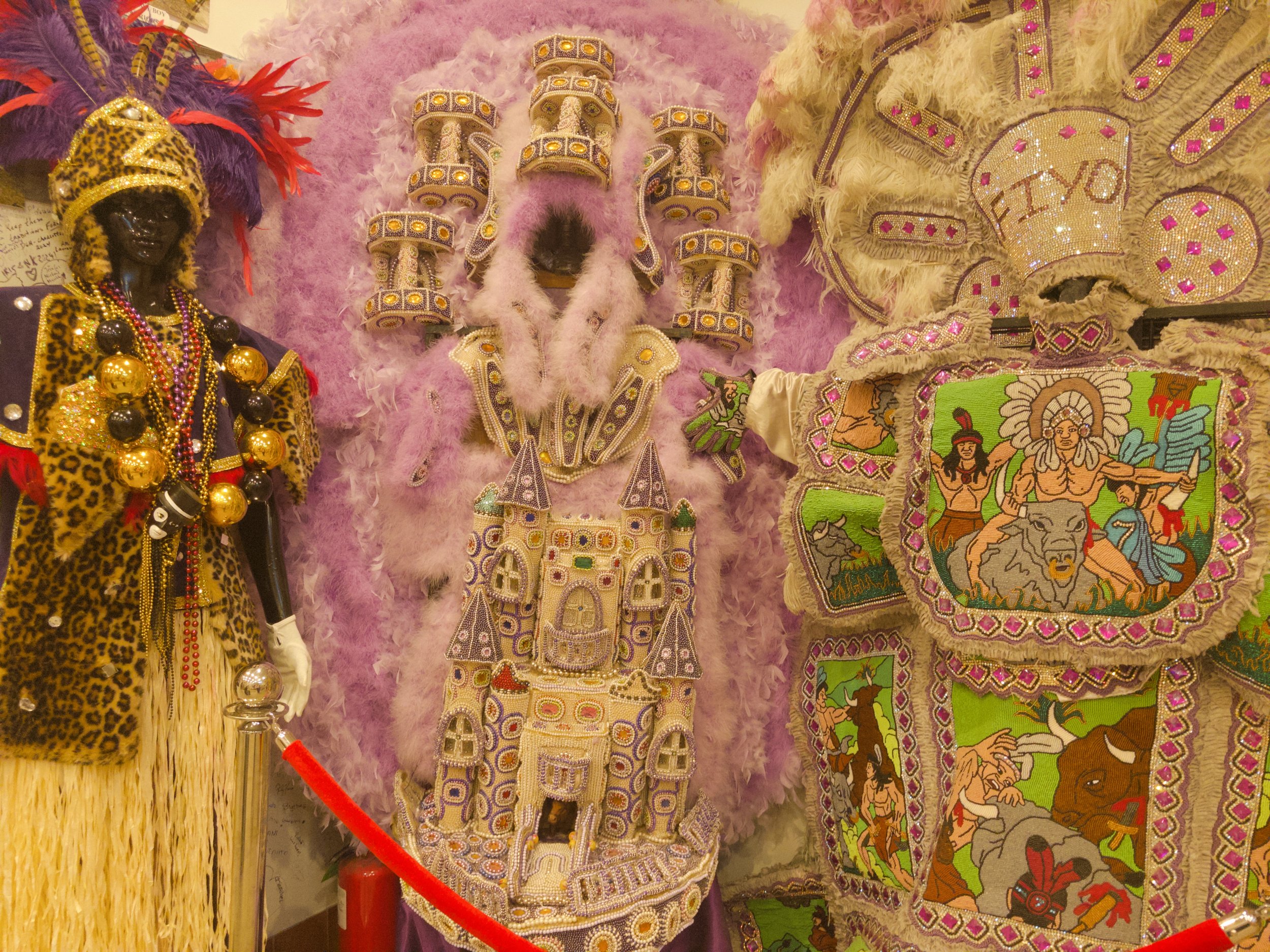
At the Backstreet Cultural Museum, my eyes wouldn’t dare to look away from the brilliance of beads. Each bead strings a story together. It radiates a legacy of Black resistance and pays respect to the Native Americans who assisted Africans escaping enslavement. Each bead, each feather, each plume is brought together through a year’s long labor at the hand of those who choose to wear them and no suit is the same nor reworn. Each suit remains dedicated to the year in which it is made, preserving its history while continuing its legacy. These are the suits of the Mardi Gras Indians. 

“On my tombstone, you’ll be able to see a man had his dream and the dream was to open up a museum.”

– Sylvester Francis

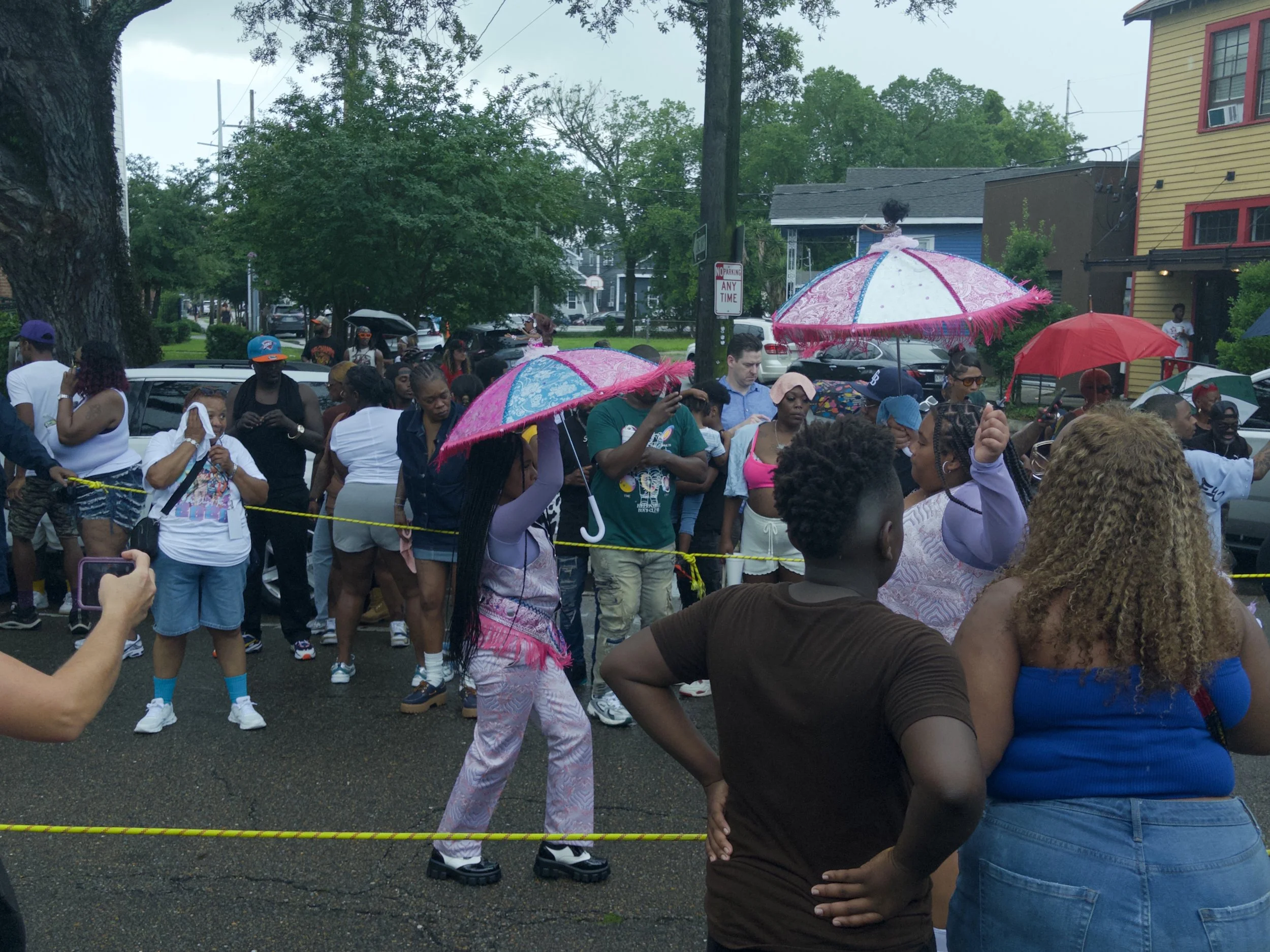
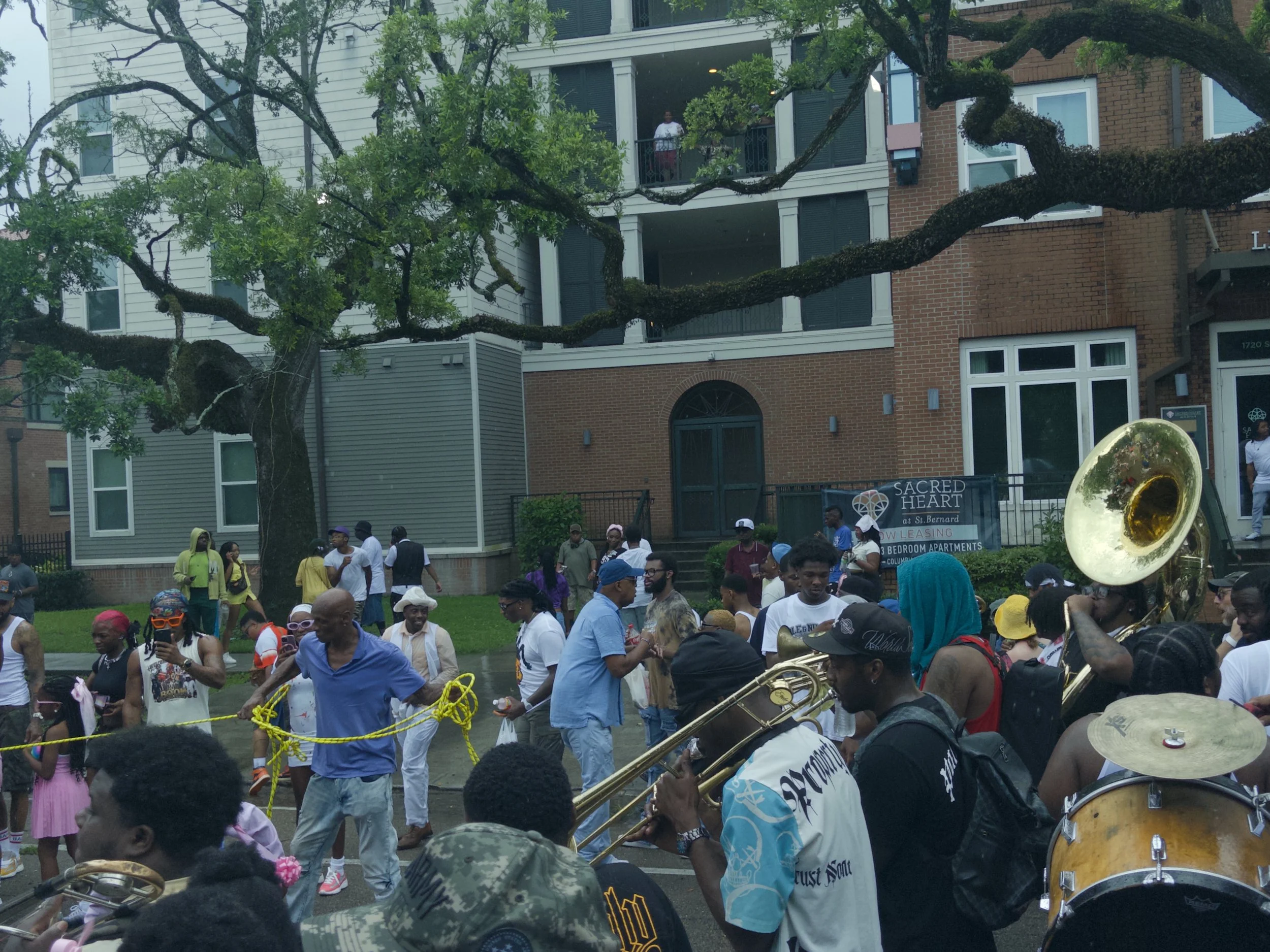
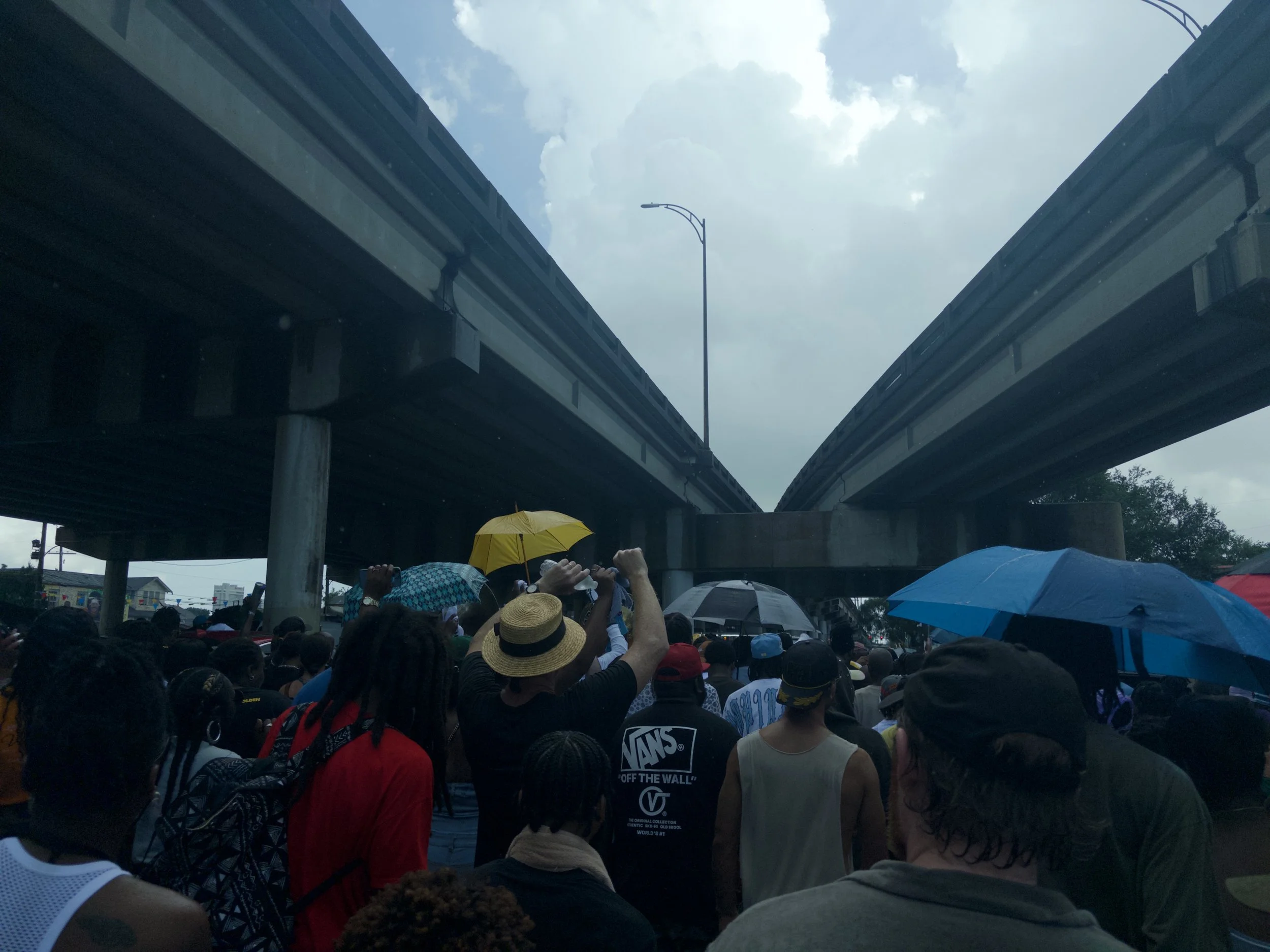
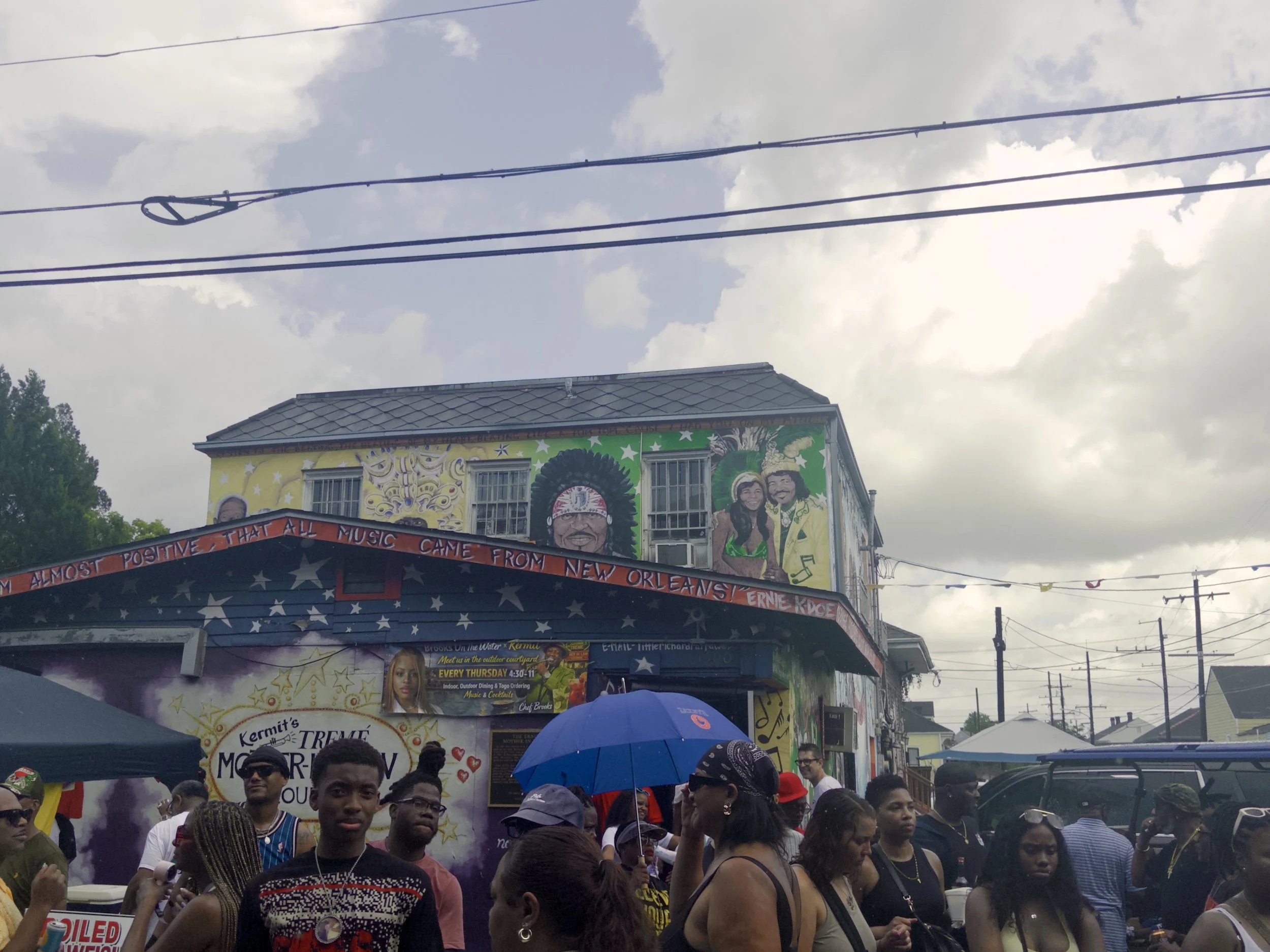
Sylvester Francis is the founder of the Backstreet Cultural Museum, who dedicated immense time and money to recognize the traditions, the celebrations, and the memories engrained in his own community, the memories that make New Orleans what it is. That is power. And this power transcends beyond its walls and onto the streets, vibrating through the vibrant sounds and sensations of the Second Line Parade.

To be honest, I don’t think my picture taking problem will stop. Or maybe my storage will stop it. But this trip has reminded me of what memory is and it is much more than an image.

Map


I’ve had the privilege of visiting seven of the fifty states of the United States of America: Nevada, Rhode Island, Massachusetts, New York, Connecticut, New Jersey, Illinois, and now Louisiana. Most of which have been for educational purposes. Of course, my experiences in each of these locations aren’t the same. Their landscapes, histories, cuisines, populations, and cultures differ, some more greatly from others based on regional differences. Each state is indeed unique, yet they are still united under not only the same (troubling) governance, but shared history, shared triumphs and losses, and the shared identity as “Americans.” This blend of cultural, historical, and regional differences is what makes the American experience so beautiful in my eyes, yet tragic in those whose definition is limited to that of one perspective. 

The United States was not built upon the sole identity of the white man. The United States was colonized by Europeans who terrorized the Indigenous Peoples of the Americas, stealing the same resources, land, and knowledge they deemed “uncivilized” to form their own civilization in North America. For nearly four centuries, the transatlantic slave trade fueled the economy of the United States, extracting labor, blood, and life from enslaved African people for wealth. And today, the United States is hunting down and concentrating people into detention centers, stripping them of their communities, their homes, their families, their humanity, for they believe their immigration status, the same act of immigration that forged America, is what makes them unAmerican. 

America contradicts itself. 

It prides itself on being a country for “liberty and justice for all” and it's often seen as the country for opportunity. And to some extent it is. As an American, I have greater access and opportunity to pursue my education, various career paths, as well as greater access to medical resources, food, water, and to travel if I wanted to. Yet this access wasn’t simply given, it was often fought for and still today this access is limited and being diminished, from the end of affirmative action to SNAP and Medicaid budget cuts and policy changes. America prides itself on being a leader of justice and opportunity, yet it deprives not only its people, but people of other countries from those same rights. Other countries don’t have the same opportunities and justice not purely from their own doing, but from the interference, manipulation, and imperialism of the United States. We see this with Trump claiming to liberate Iran from oppression by threatening to make it a living hell on Truth Social or with our tax dollars being used to fund the bombs that have damaged and destroyed 97 percent of schools in Gaza, furthering Israel’s genocide on the Palestinian people as reported by the UN Independent International Commission of Inquiry in September 2025. 

America contradicts itself and as a result, my experience here feels contradictory. To be an American feels both right and wrong. Admiration for my experiences here, and disgust for the foundation they were found upon and those they continue to support. 

Why do I mention this? 

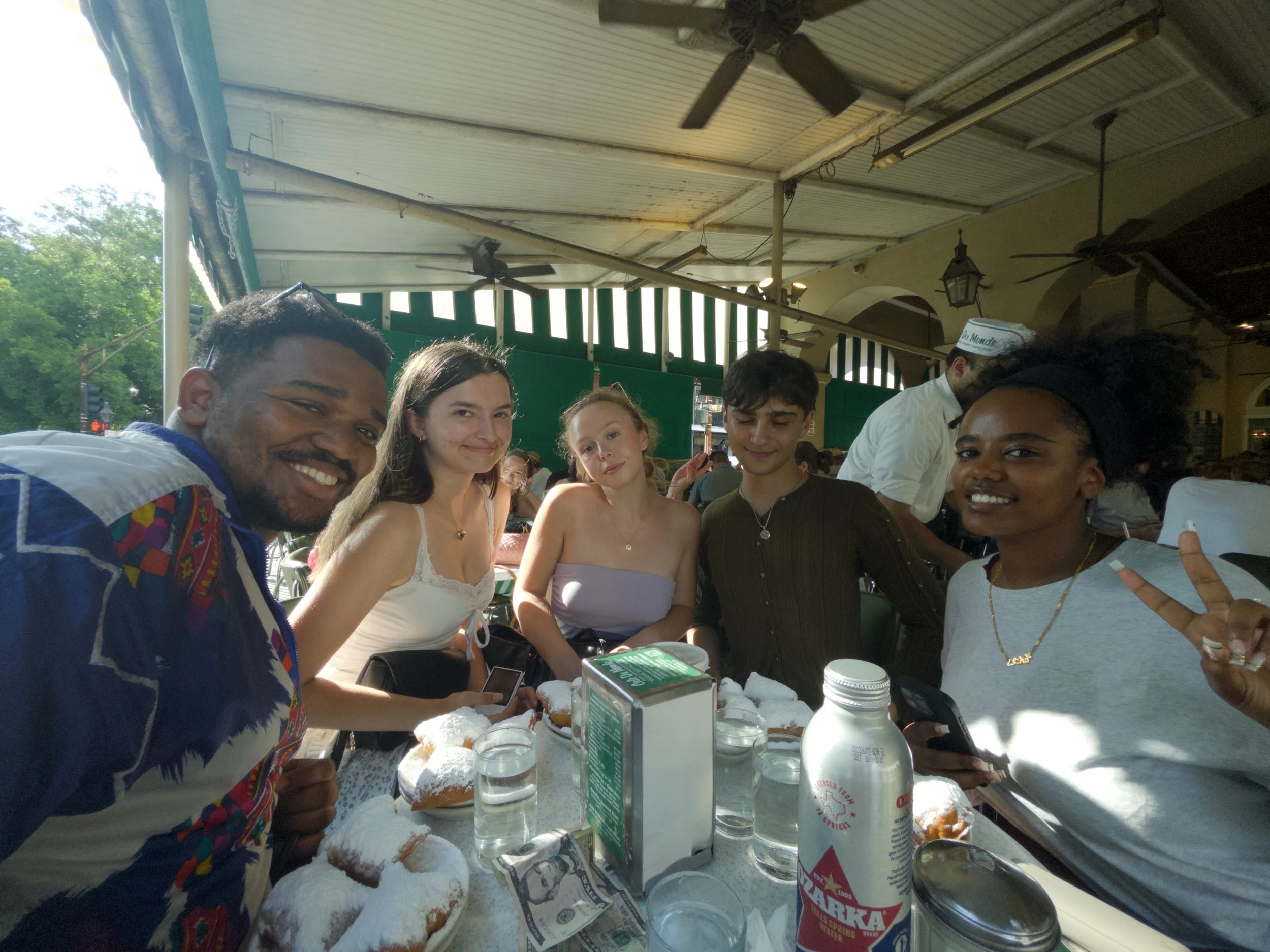
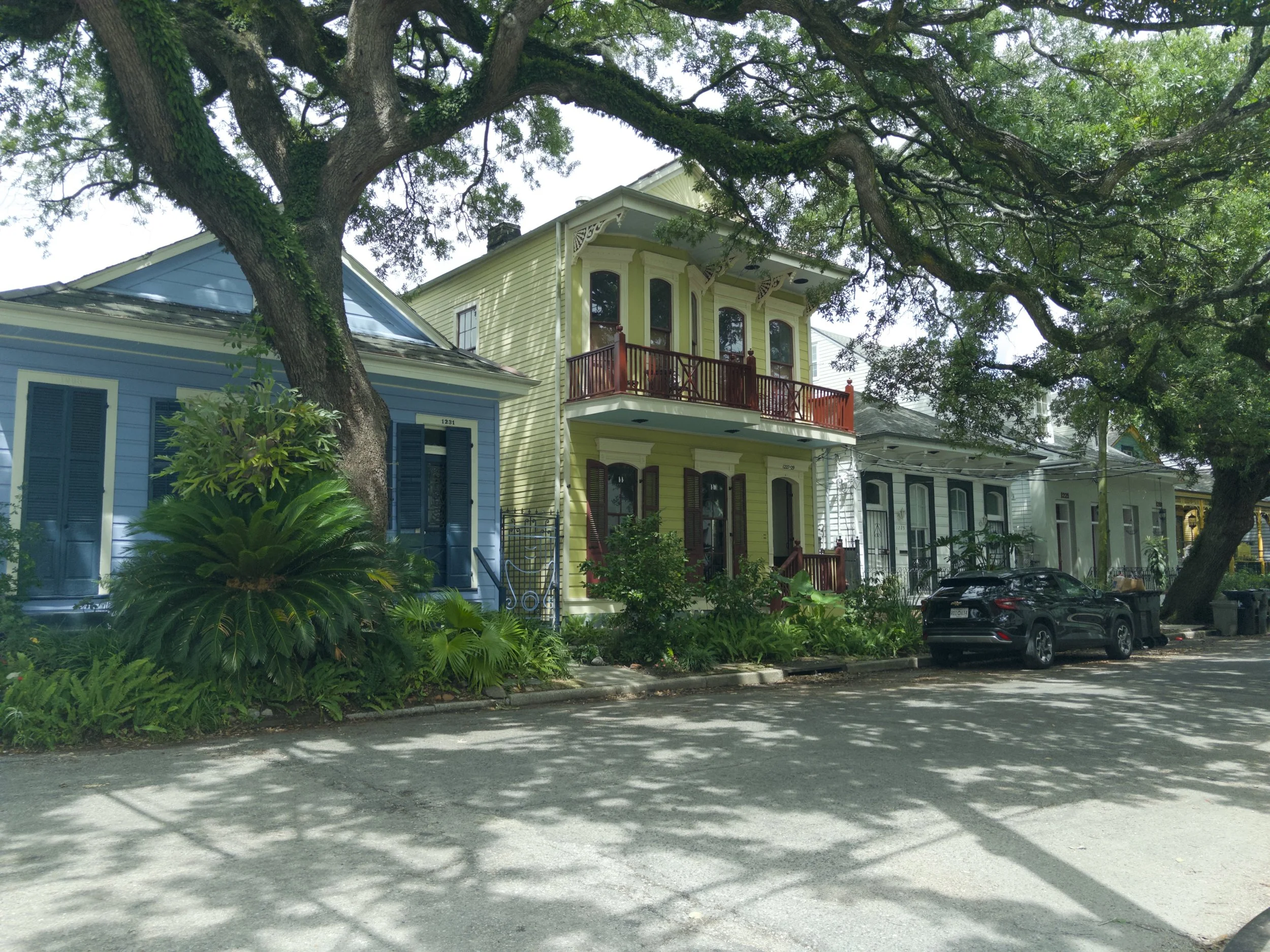
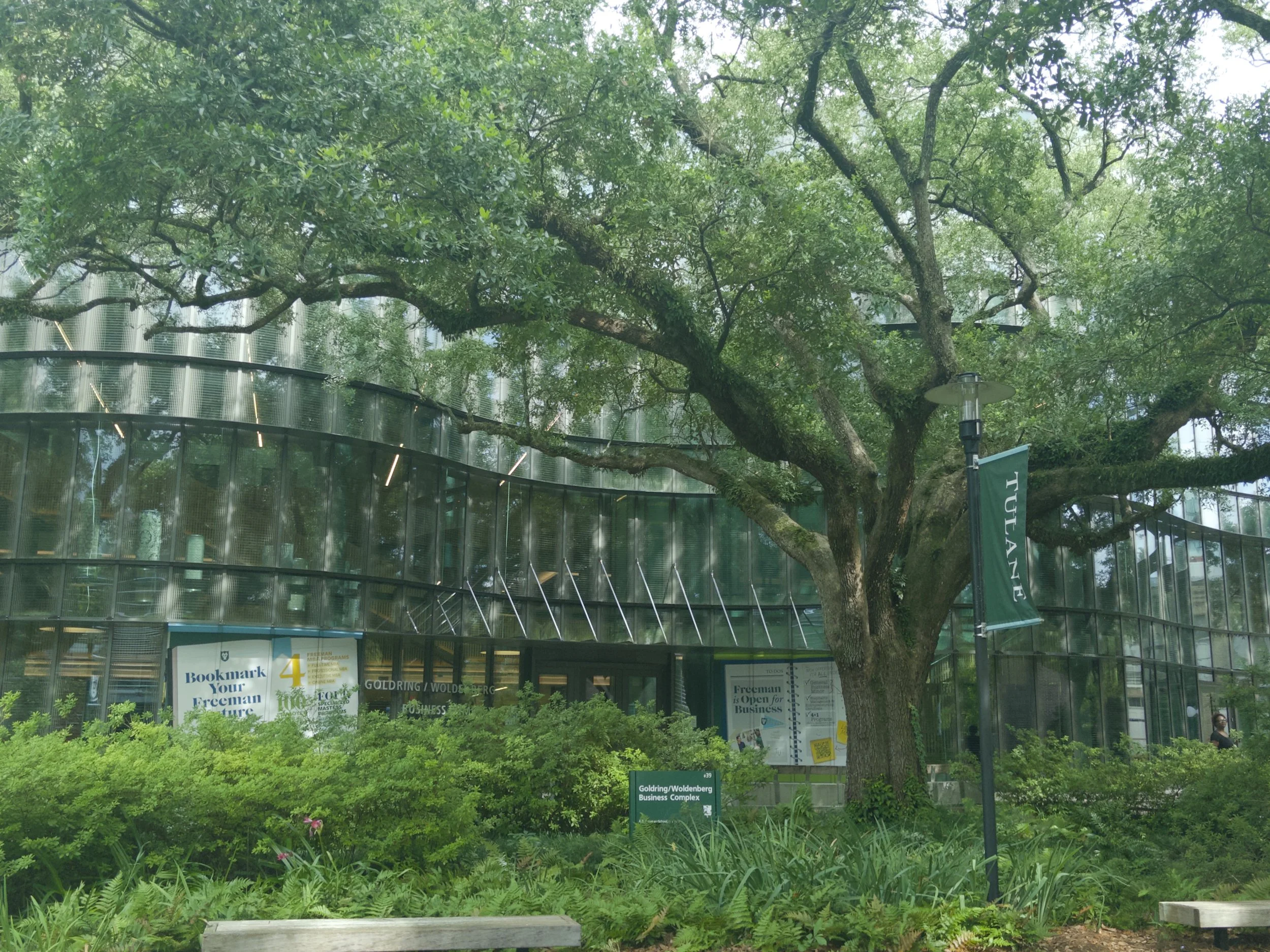
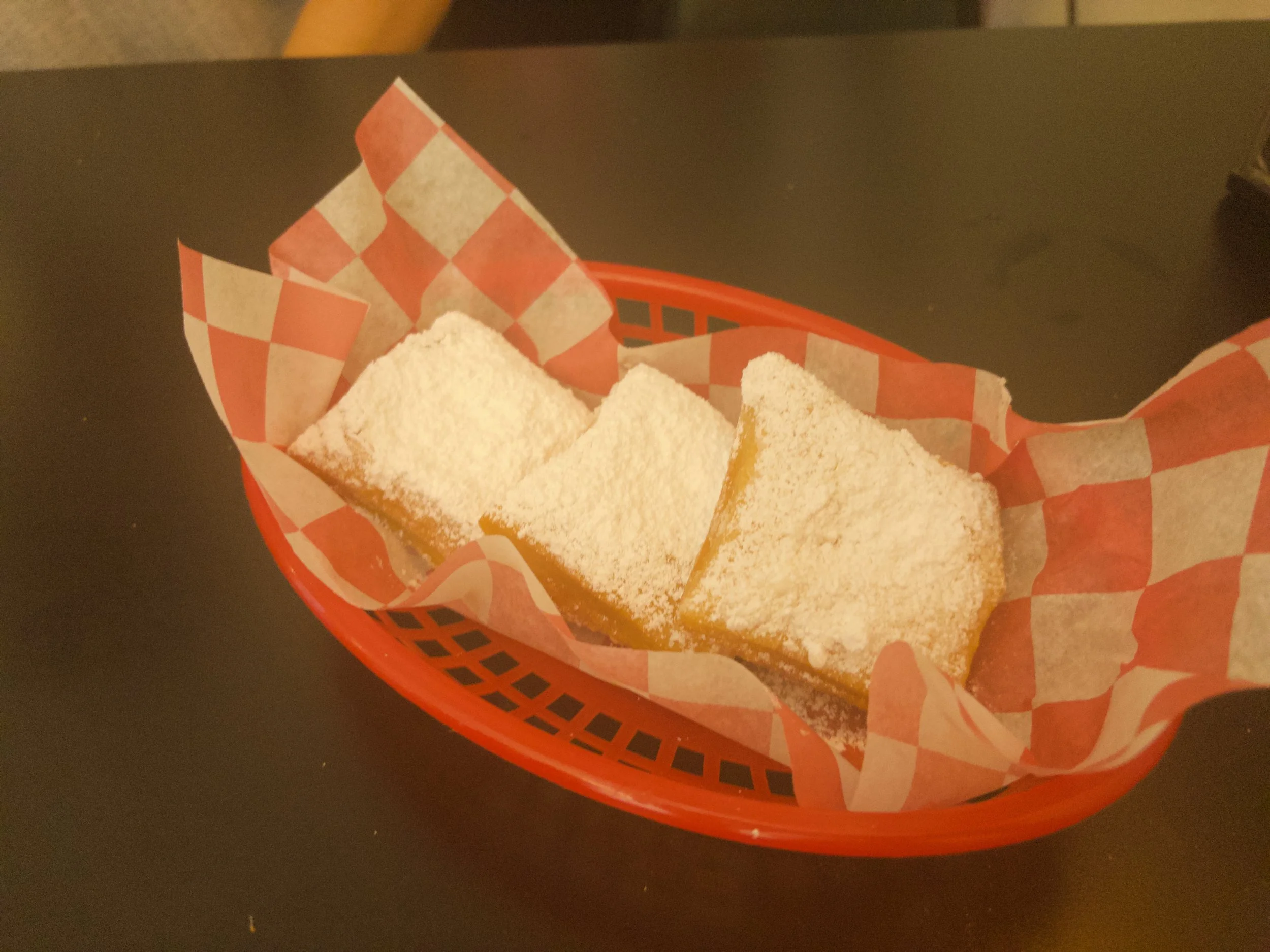
Well, this contradiction has become ever so present in my experience here in Louisiana, in New Orleans. As I walk along the streets of the French Quarter, the Garden District, and the Central Business District, I can’t help but romanticize the experience of being in a new city. I’m a tourist in this city. I’ve gone on a ghost tour, visited the most popular beignet chains like Cafe Beignet and Cafe Du Monde, entered tourist shops, and taken countless pictures for the aesthetic. Yet the same streets I admire carry the history of harrowing enslavement and oppression. They are the same streets that met enslaved people with immense uncertainty for where their lives would lead. They are the same streets where one of the largest slave markets were located, where human beings were viewed and sold like livestock for their Blackness, where mothers were auctioned off from their children, where freed men like Solomon Northup were imprisoned, severely tortured, and torn away from the liberty the white man’s ego could not bear. They were the streets whose liveliness was sustained by the labor of people enslaved to the plantations of Louisiana. Liveliness sustained by 20 hour shifts on plantations like the Whitney, during the most extreme climates, plagued with the most brutal punishments and disease, where death was grace and life was pain. The same streets where the bodies of enslaved people, who led the largest slave uprising in the United States, were severed and placed on spikes down the Mississippi River and in New Orleans. 

“Distance lends perspective, but it can also shade, misinterpret.”

Sarah M. Broom, The Yellow House


I am a tourist in New Orleans, my lens was and still is distant, but as a bookpacker, I’ve been able to sit with the history of this place for much longer. This history sticks with me as I walk the French Quarter, as I read our next book, and as I write this very blog. It guides the pen that maps my experience here, an ink saturated with this contradiction. The contradiction of the past and the present. The wrong and the right that saturates American soil.

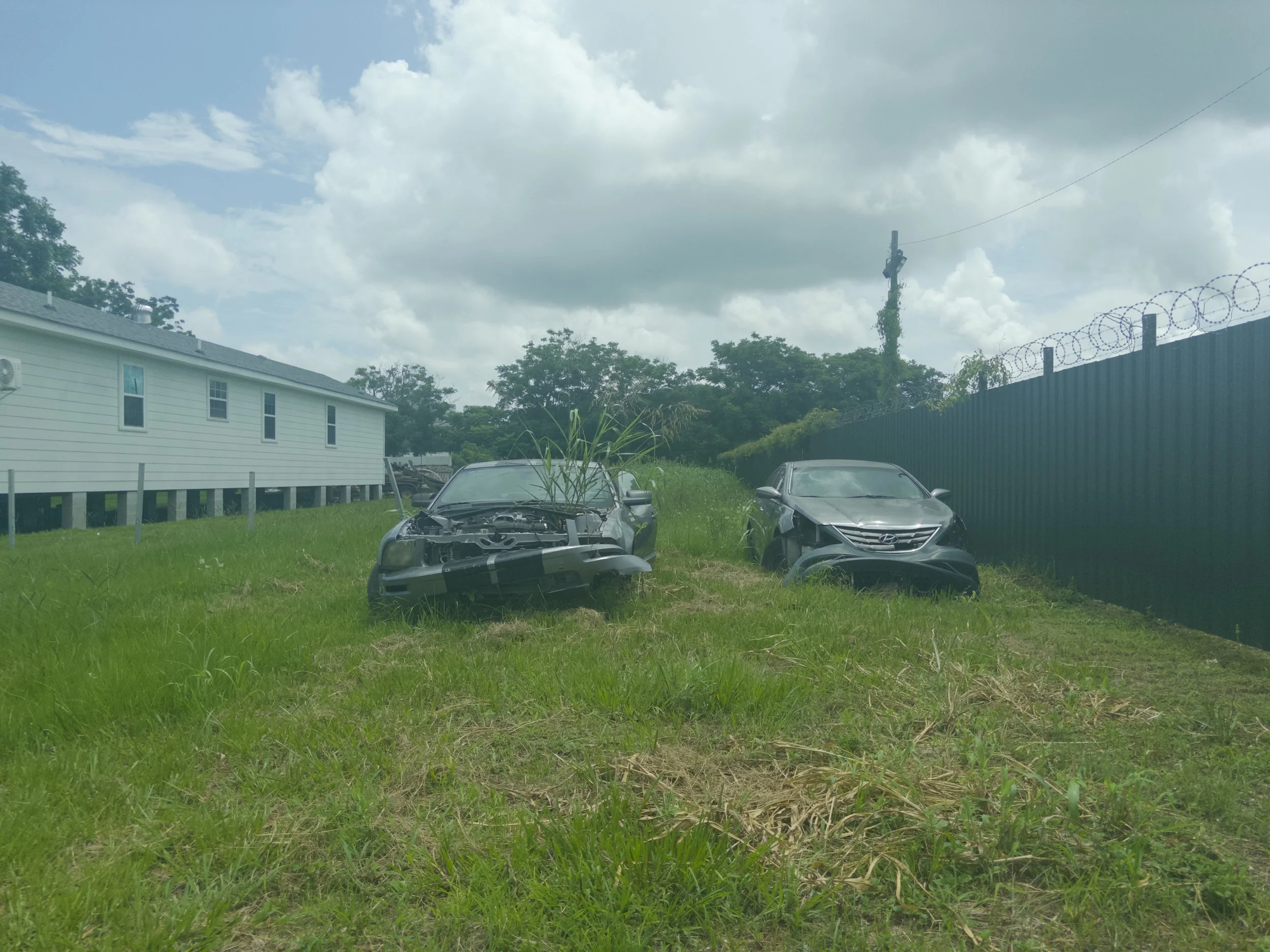
In The Yellow House by Sarah M. Broom, Broom introduces us to her home in New Orleans East through a map. She mentions New Orleans East is hardly mentioned in any history books about New Orleans nor maps of the city. Broom says perhaps the city was excluded from these maps for “a practical matter” being that New Orleans is, “fifty times the size of the French Quarter.” So she’s made one of her own. We used this map to guide our experience in New Orleans East. Where the Yellow House once was, were now two cars abandoned on a plot of overgrown grass. Yet, after reading Broom’s memoir, all I could see was the memory of her life here. 

On our drive back to the Central Business District, I dwelled on what my map would look like. My map would not include New Orleans East, instead it’d include East LA. My map would not include the luxury of Beverly Hills or the waves of Santa Monica, but the endless line of beautifully detailed low riders cruising down the Whittier Blvd as my mom and I rushed to get home. It would include what was once the Golden Gate Theatre, now a CVS, I’d sometimes visit after being picked up from my middle school behind it. It’d include a view of the Evergreen Cemetery where my Dad and I passed by on our way to drop off my best friend at her home in Boyle Heights. It’d include several late night concerts in downtown LA, that my Dad would buy us tickets to without us knowing. And it’d include South Central and USC. But this is where my map becomes blurred. I don’t know how to define it, how to handle this contradiction. 


Although USC is located in South Central, one can say I don’t live in South Central because I live in the USC bubble. I’ve lived on campus at Parkside and have recently moved out from the USC Village. For around 9 months a year, for two years, I’m almost always walking on the red bricks of campus. Crossing Jefferson Blvd down to USC Watt Way, walking to class or work, grabbing lunch at TCC, attending club meetings, or taking late night strolls around campus or to Illy with my roommates. USC has been the home of so many opportunities for me, to learn from amazing academics, to work on film sets for the first time, to pursue my own research, and to build a wonderful community. In the same way I admire New Orleans for its beauty, for the new experiences, independence, and knowledge it has brought me, I admire USC. But in that same light, I must acknowledge its destructive history AND its present. 

What I called home my sophomore year, the USC Village, has replaced local businesses with pricier corporate restaurants and stores that are not as affordable and accessible to the local community. Projects such as the USC Village increase the value of the surrounding area and as a result increase the price of rent for multi-generational residents of the community, forcing them to move elsewhere. Additionally, investors, seeking to build housing for the USC community, have bought out the homes of local residents with cheap cash offers. When speaking with a friend who lives in South Central, she told me how the apartment complex she lived in was at risk of getting bought out by USC but her landlord thankfully refused. My university is the beast of gentrification in the South Central community, the same issue of gentrification present within the region of East Los Angeles. Apart from housing, Annenberg Media recently reported on USC’s sale of cadavers to the U.S. Navy used to train the Israeli Defense Forces at the Los Angeles General Medical Center, just feet away from the high school I went to. It’s disgusting. 

In The Yellow House, Broom mentions the destruction of Hurricane Katrina amongst her community of New Orleans East, along with the tourism it attracts. These tourists can distance themselves from this destruction, but Broom cannot. The students of USC can distance themselves from South Central, but the residents of South Central cannot distance themselves from USC. Americans can neglect the truth, bury it away for their own comfort, but unattended history only resurrects in the present. 

As I create my own map, I can choose to live in the USC bubble or other bubbles of comfortability and privilege, but I find living in these bubbles more disturbing than popping it.

Dead but Alive

Death was always daunting to me. I can recall countless late night conversations with my brother, dwelling on the idea that our life here is only temporary, that the people we love will not always be here, and so what do we make of these connections, these experiences? And what lies after life? What comes with death? Death scares me, but it also tempts my curiosity, which is why I was both wary of and intrigued by the supernatural history of New Orleans. 

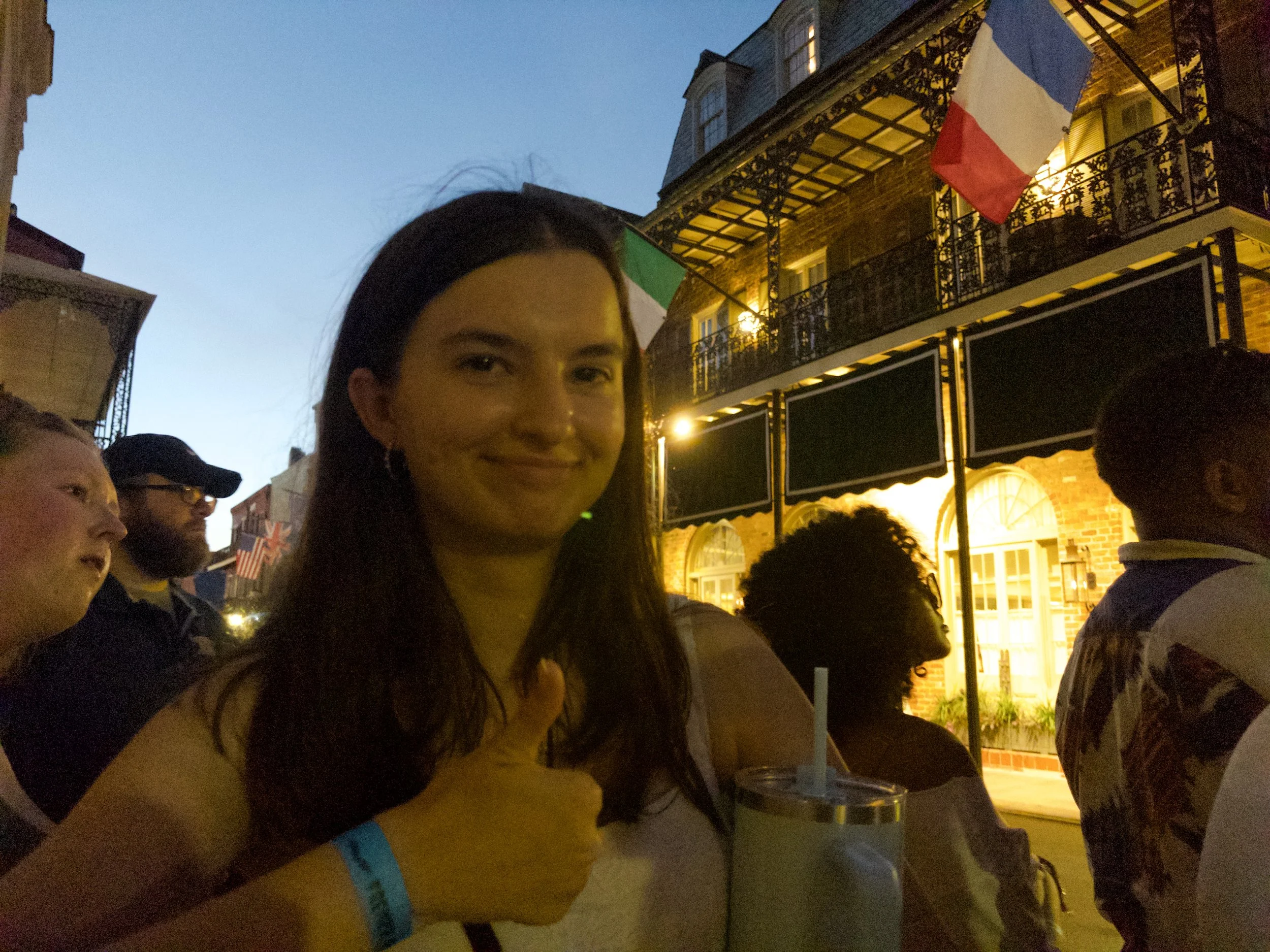
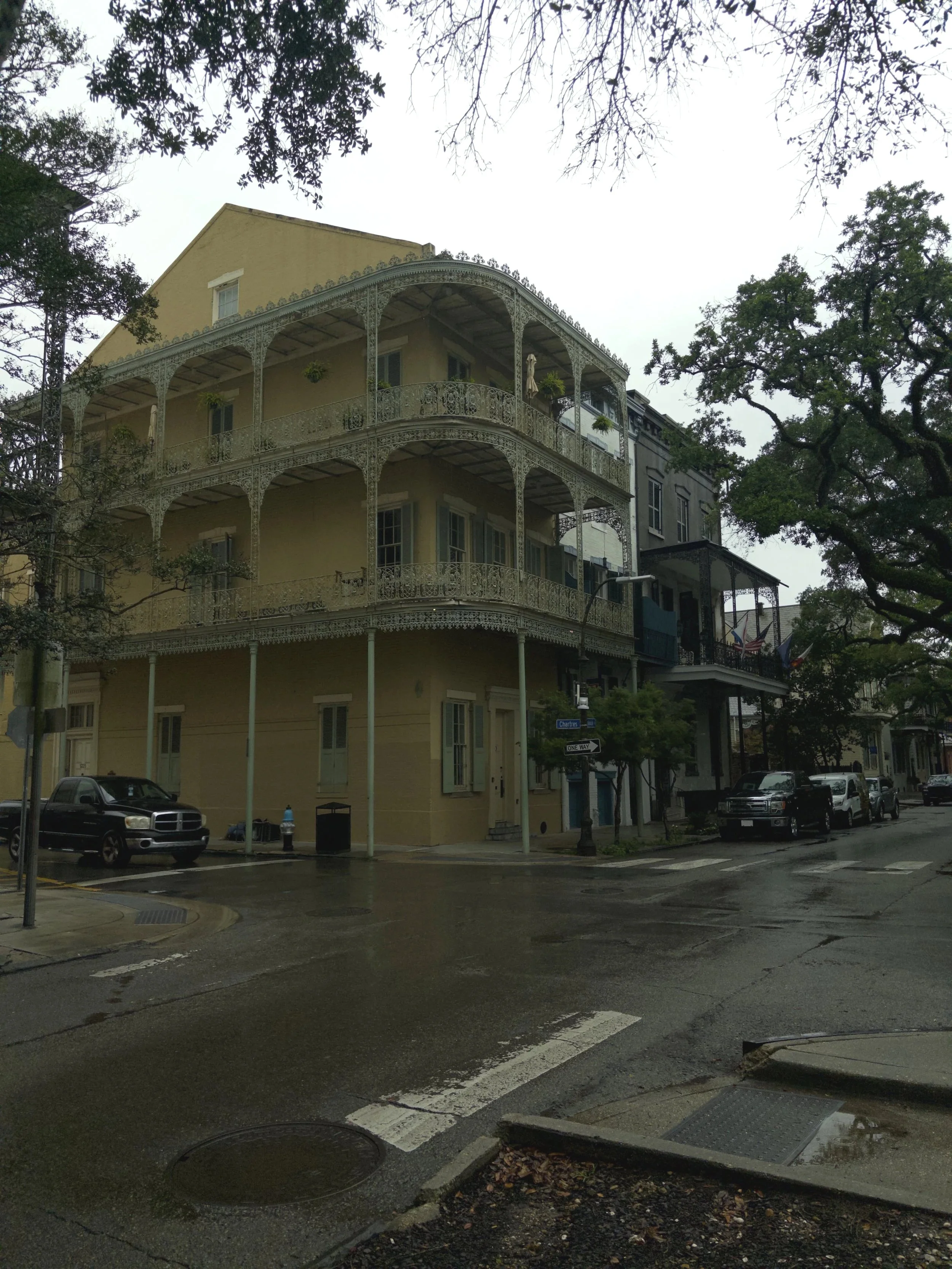
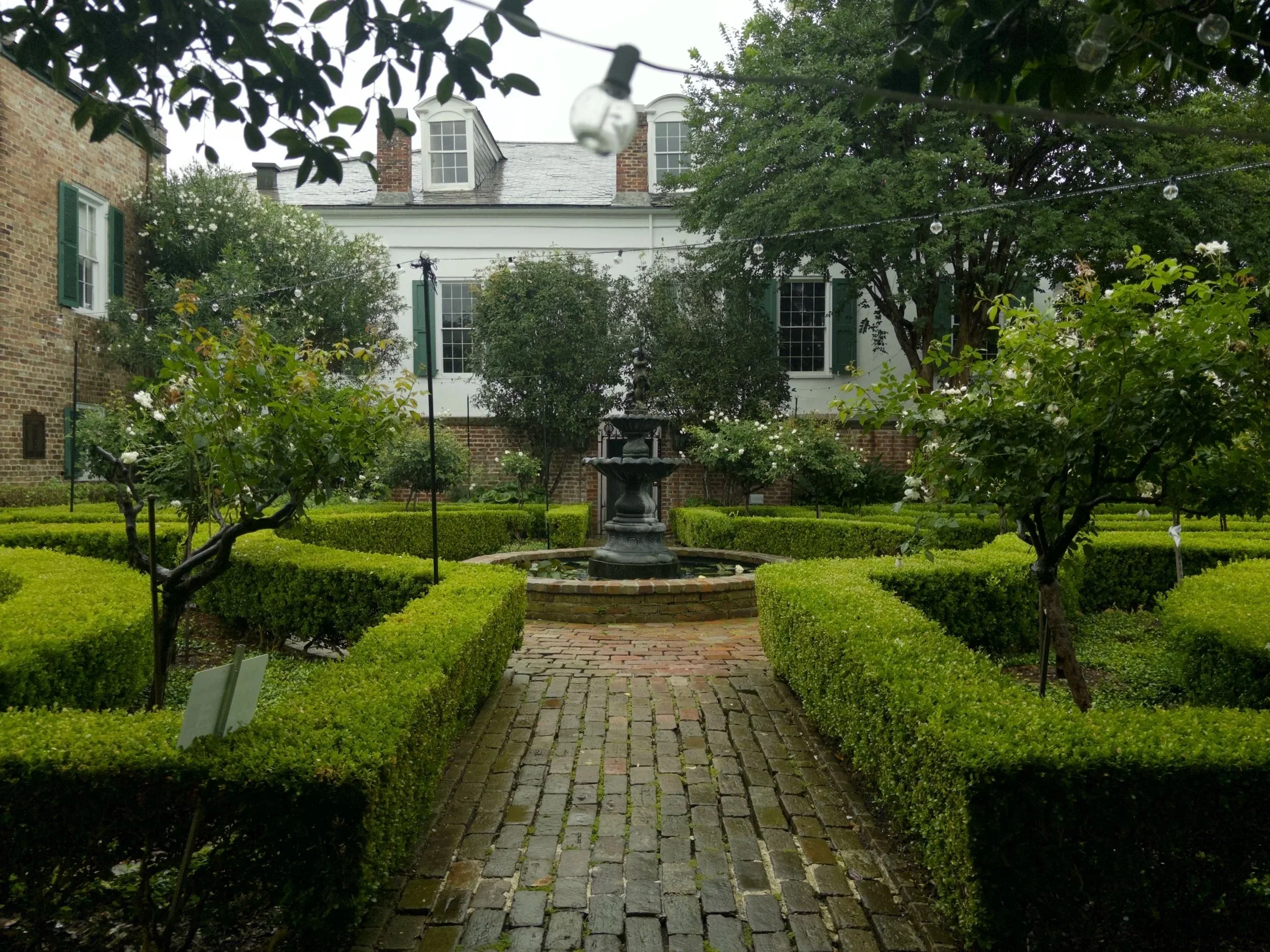
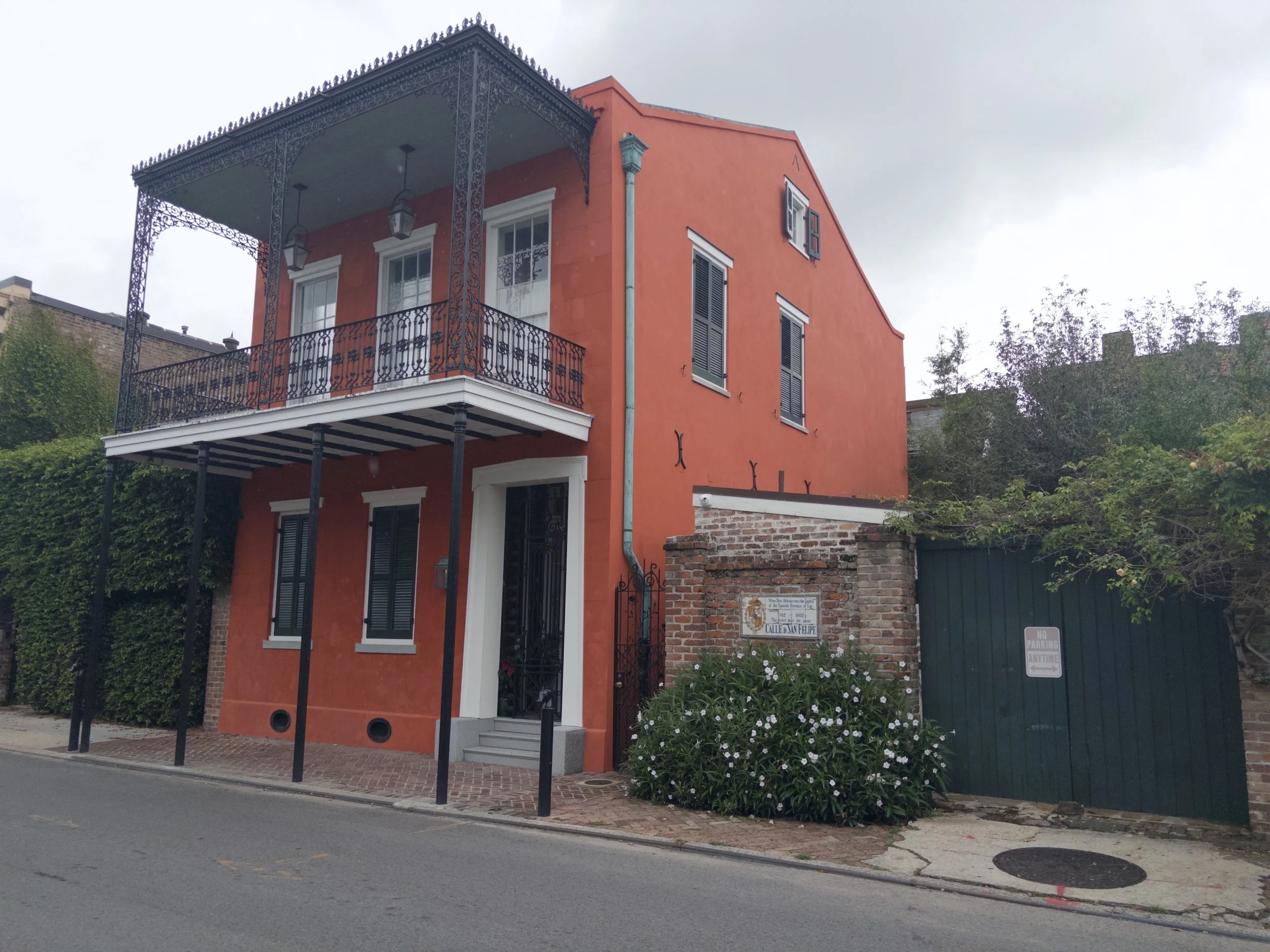
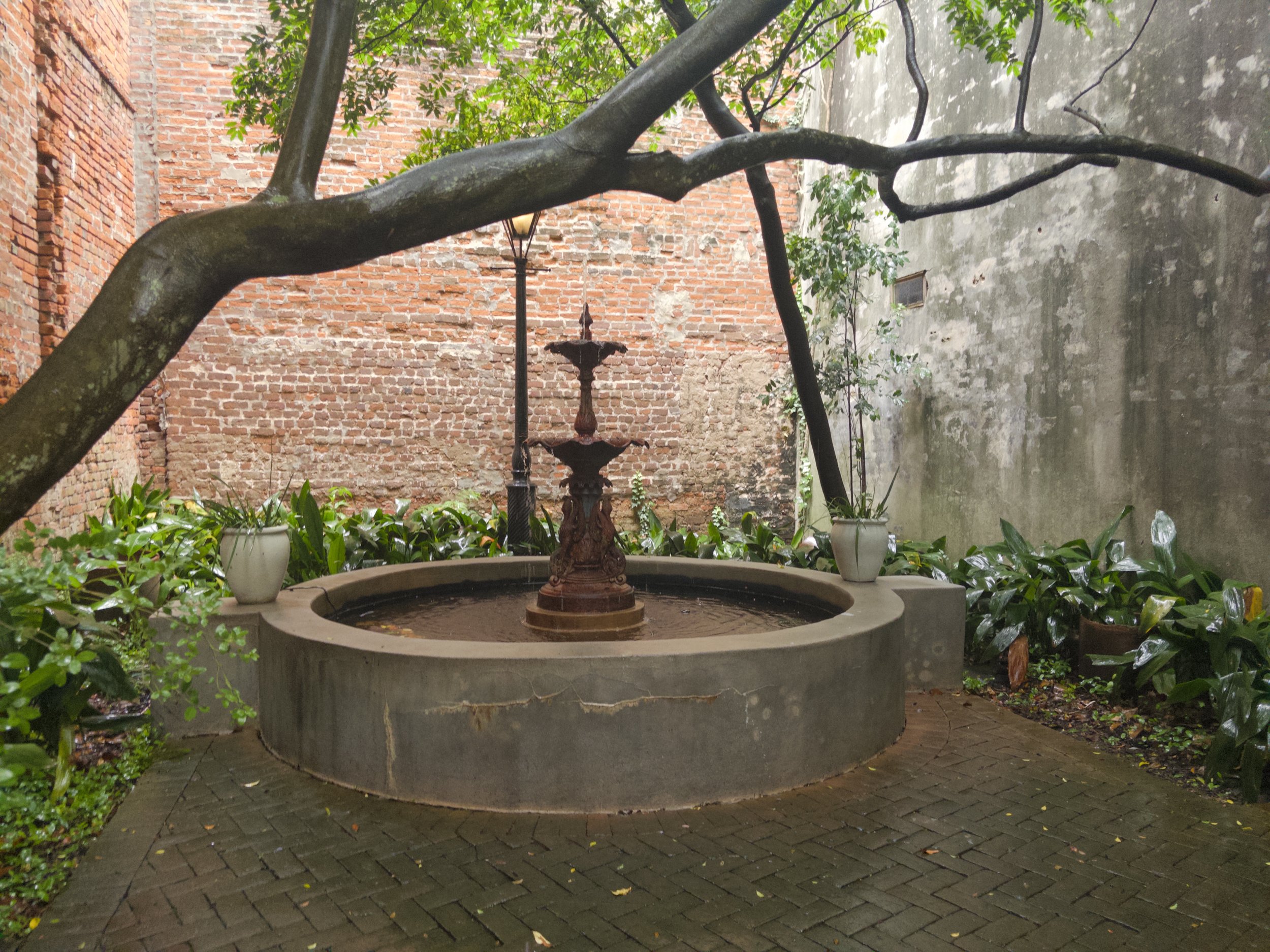
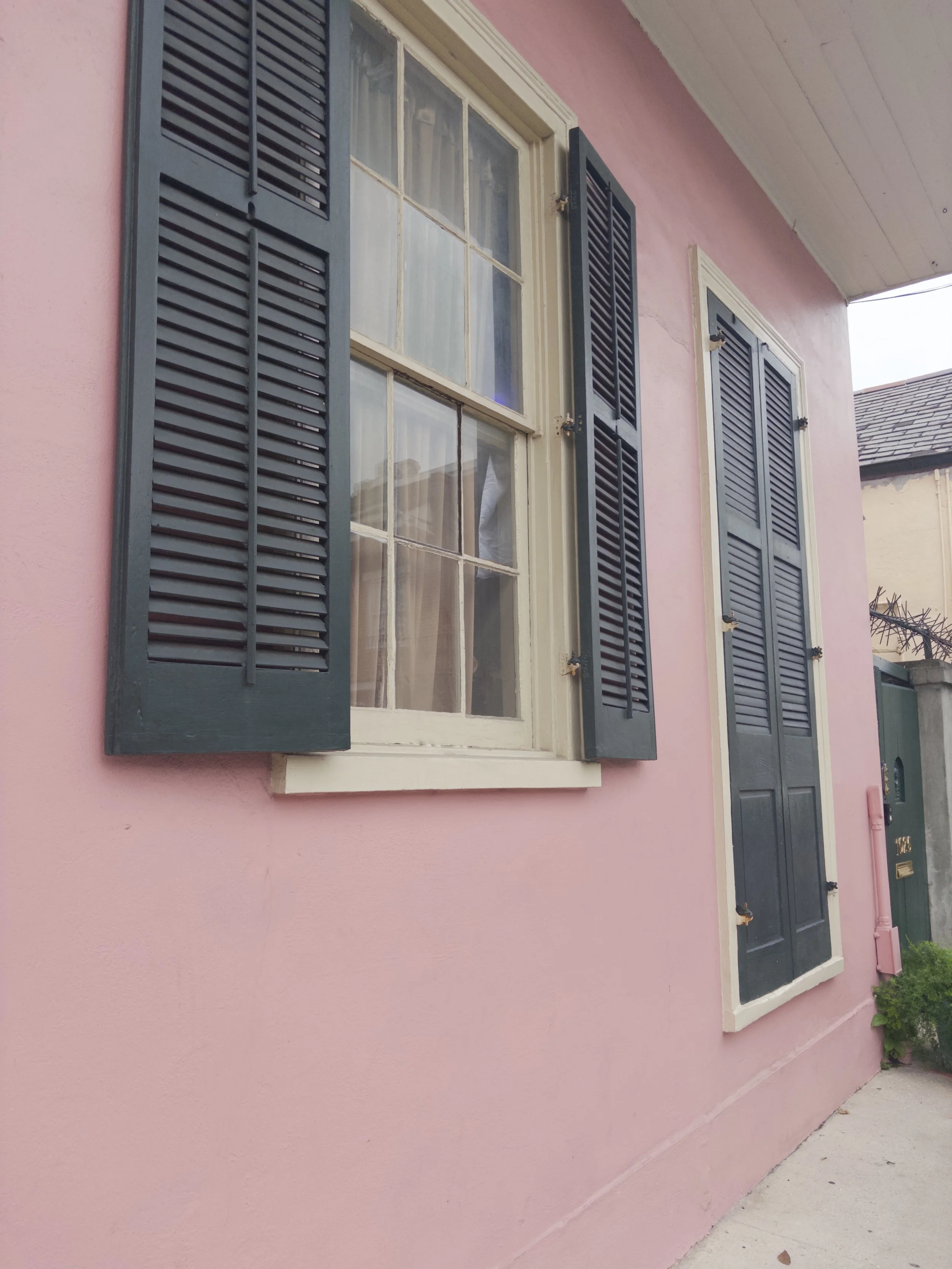
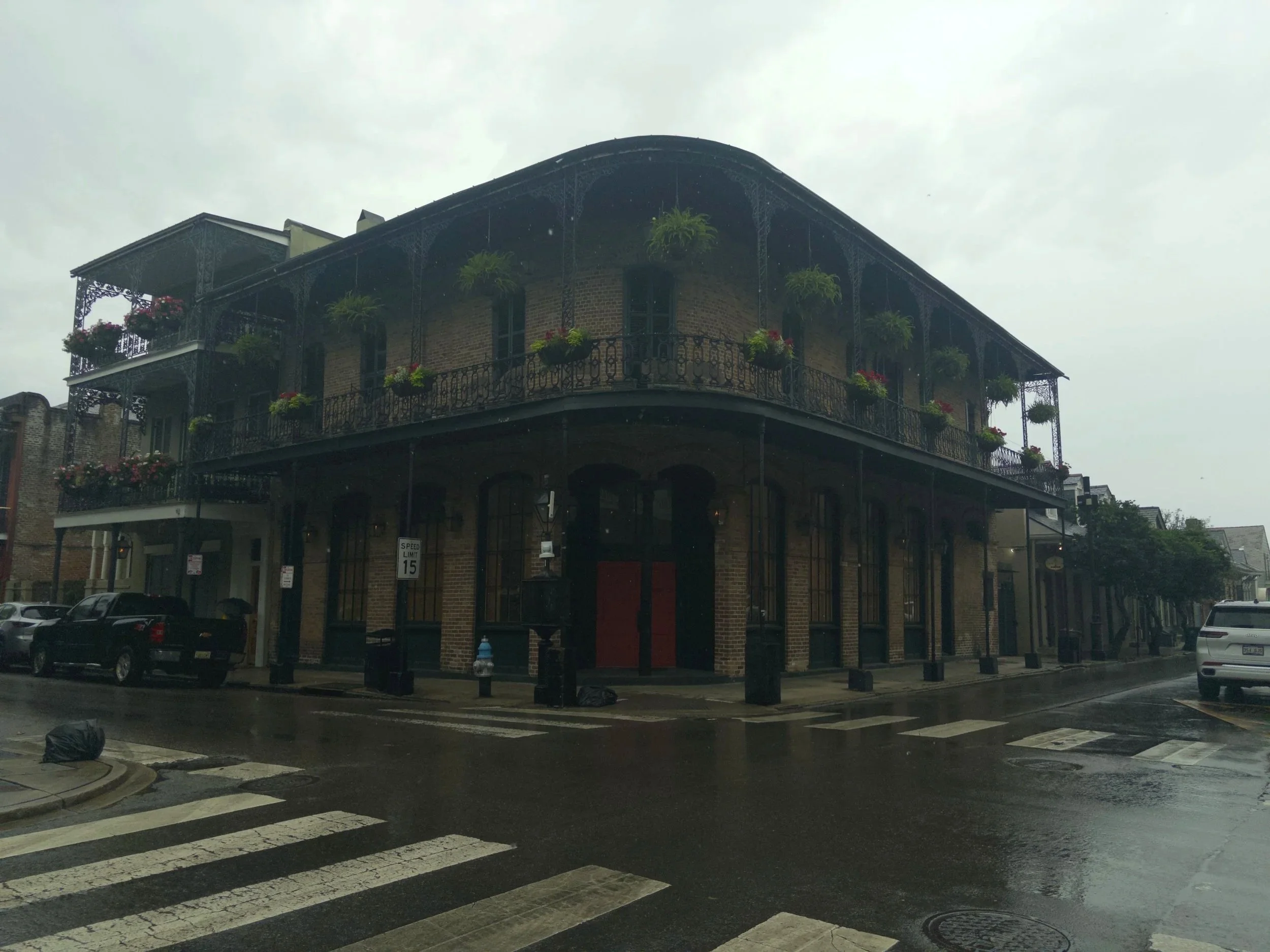
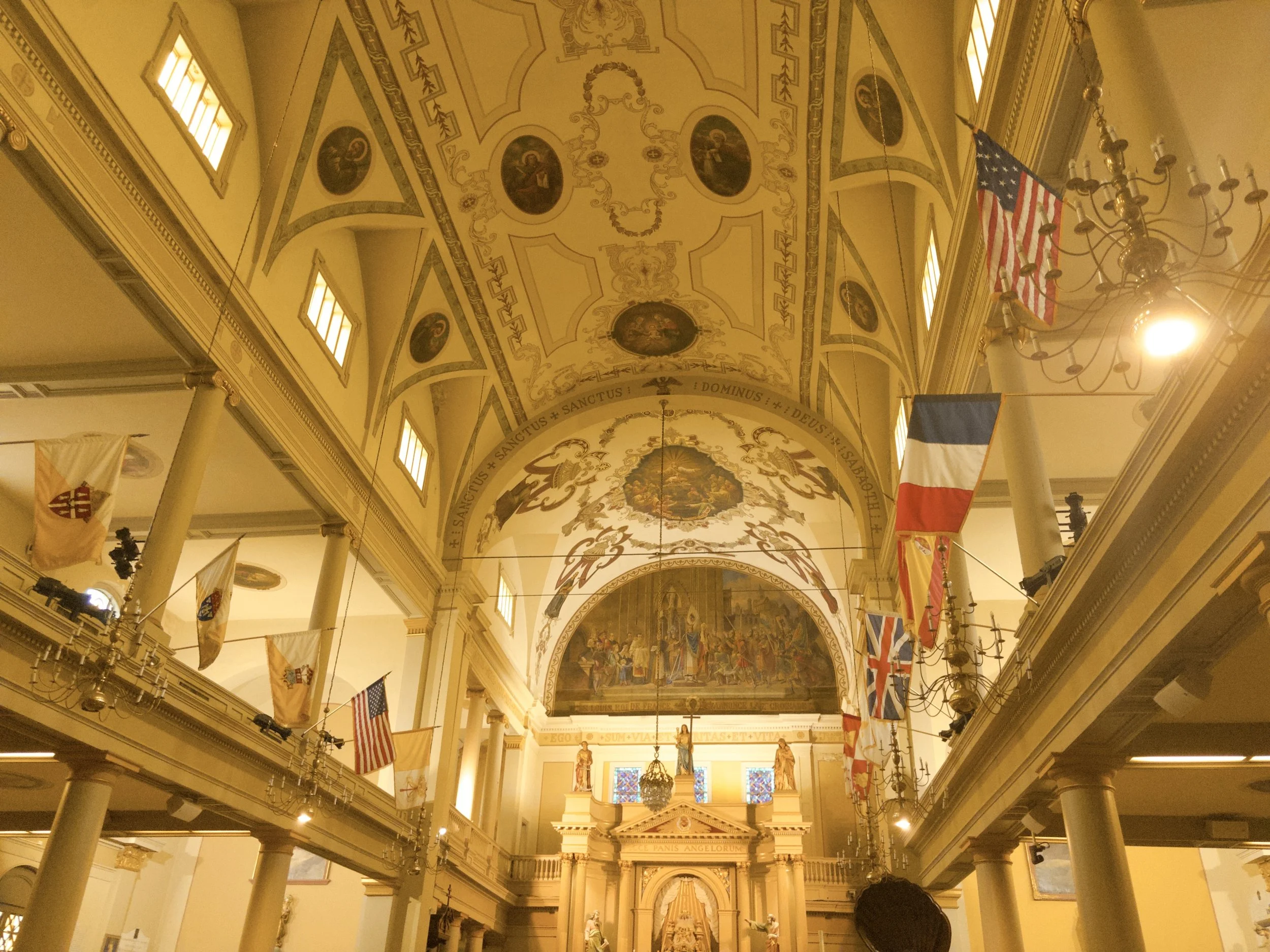
Surrounded by the consuming humidity of the rain, as we walked down the French Quarter I admired the French and Spanish architecture engrained in the city. The wrought iron galleries adorned by beautiful greenery, the rich, bright or moody colors of each building, the calming courtyards, and the lanterns that lit our path along the Quarter. It’s stunning. Sprinkled within such beauty are all things vampires, Voodoo, and death. Skeletons hang over the galleries of varied homes, while bars, cafes, and restaurants monetize off the myth of vampires and the spirituality of Voodoo. Down the block is St. Louis Cathedral in front of Jackson Square, the heart of the French Quarter. Sitting on the church pew, I take in the image above me: God and the Holy Spirit looking over Jesus and his apostles. I can’t help but think I’d love to attend a mass here alongside my mom. The quiet atmosphere of the church is a strange contrast to the noise of the supernatural tourist attractions just steps away from its walls. It’s a unique mix you won’t quite find in Los Angeles, which makes it the perfect setting for Anne Rice’s Interview with the Vampire

“Evil is always possible. And goodness is eternally difficult.” 

Anne Rice, Interview with the Vampire

In Anne Rice’s Interview with the Vampire, what caught my attention most was not the spectacle of vampires, but its themes of morality and faith upon immortality. In an interview, Louis recounts how he became a vampire and his experiences as an immortal being. Prior to his transformation, Louis’s Catholic faith was weakened by the guilt he felt for his brother’s death, whose religious visions were dismissed. In this moment of weakness, the vampire Lestat enters the picture, tempting and transforming Louis into a vampire. Now immortal and relying upon the flesh of humans, Louis fights to maintain his mortality amongst his vampirism, purity amongst sin. He finds himself questioning his relationship with Catholicism and the existence of God. 

I see reflected in my mortality, the moral and religious challenges Louis faces in his death. I am a practicing Catholic, I was baptized as a child, I’ve received my communion, and completed my confirmation. I’m on the “right” track, yet sitting in the Cathedral, while admiring its beauty and faith, I feel like an imposter within my own place of worship. I haven’t been to church since April and even then I hardly go throughout the year. I haven’t prayed and when I do, it's cut short by a selfish eagerness to sleep. I haven’t confessed nor have I dedicated time to read my Bible, a book I haven’t picked up since it was gifted. Instead, I’m consistently overcome with temptation, I fall into the same unhealthy habits that leave me estranged from my faith. 

Similar to Louis, I feel as if there is an evil that surrounds me. However this evil does not stem from fictitious ruthless vampires, like those Louis tries to distinguish himself from, but the evil of our national and world leaders whose actions intend to suppress and eliminate groups of people they so immorally see as subhuman. An evil that I admit does drain my faith, that tires my mind and makes me question if indeed things will get better. Despite all these feelings, I walk out of the Cathedral with the red bracelet I wear every day, carrying the medal of Saint Benedict, unwilling to let my faith go, despite my flawed relationship with it. 

“God kills, and so shall we… for no creatures under God are as we are, none so like Him as ourselves, dark angels not confined to the stinking limits of hell but wandering His earth and all its kingdoms.” 

Anne Rice, Interview with the Vampire

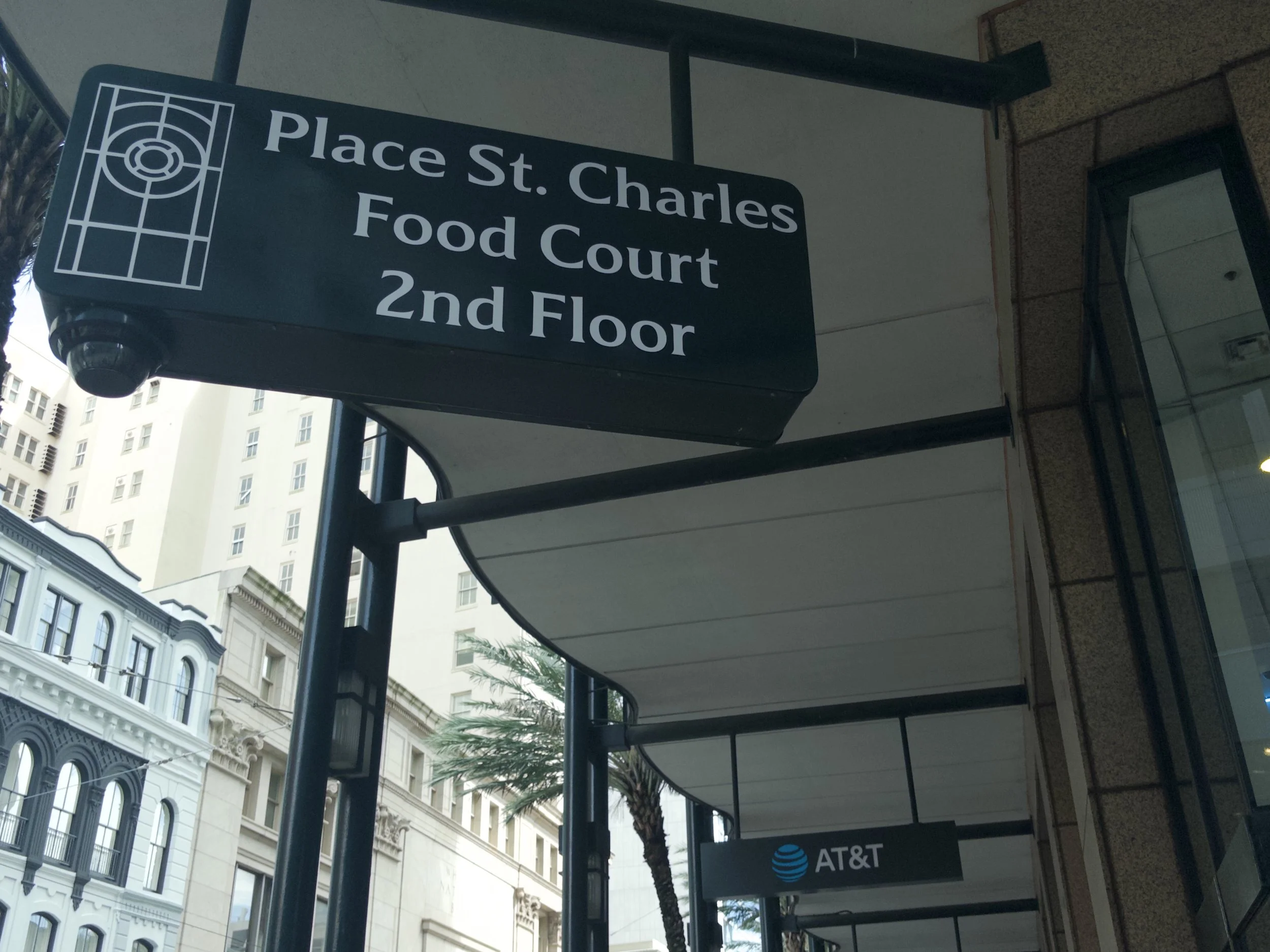
In contrast to Louis, Lestat doesn’t dwell on questions of morality. Instead, he embraces his vampirism and the evil that comes with it. When Louis raises questions of God, Lestat manipulates God’s power and bestows it upon himself to justify his acts of evil. In the midst of the Central Business District of New Orleans lies St. Charles street, now packed with a mixture of banks, hotels, and restaurants. The same street Theodore Clapp walked down in the 1800s, passing the grand St. Charles Hotel, to preach Unitarian beliefs in the Stranger’s Church, whose preachings attracted visitors all over America and Europe. Along our walk, Andrew points out the locations where enslaved people were held in horrific prison-like pens that Clapp would have walked past every day. In spite of his liberal religious beliefs, Clapp believed slavery was warranted under the Bible. And just as Lestat, Clapp uses the word of God as a means of justifying the evil around him and maintaining his power, privilege, and assumed “purity” as a white individual. 

Characters like Clapp are not just those of the past, but of the present. For years and years, religion has been manipulated to establish norms of white supremacy, heteronormativity, and male dominance. In recent times, we’ve seen our very own president assume the role of Jesus through an AI generated photo on Truth Social to push his agenda of a White America. Meanwhile mistranslated and stubborn interpretations of Leviticus 18:22 are used to excuse persistent attacks on the LGBTQ+ community. And even in my family, certain members who claim to be devoted Catholics preach the word of God, while calling for the deportation of peoples whose backgrounds aren’t far off from their own. 

Written in the late 20th century, Rice’s novel still reflects the tensions between morality and faith today, beyond a supernatural context, in the grounds of New Orleans and the United States as a whole. Perhaps the death I feared in the beginning is not the one I fear now. Maybe what is most scary, is not death itself nor the possibility of supernatural beings like vampires. What scares me most is the death of morality amongst the liveliness of faith. 
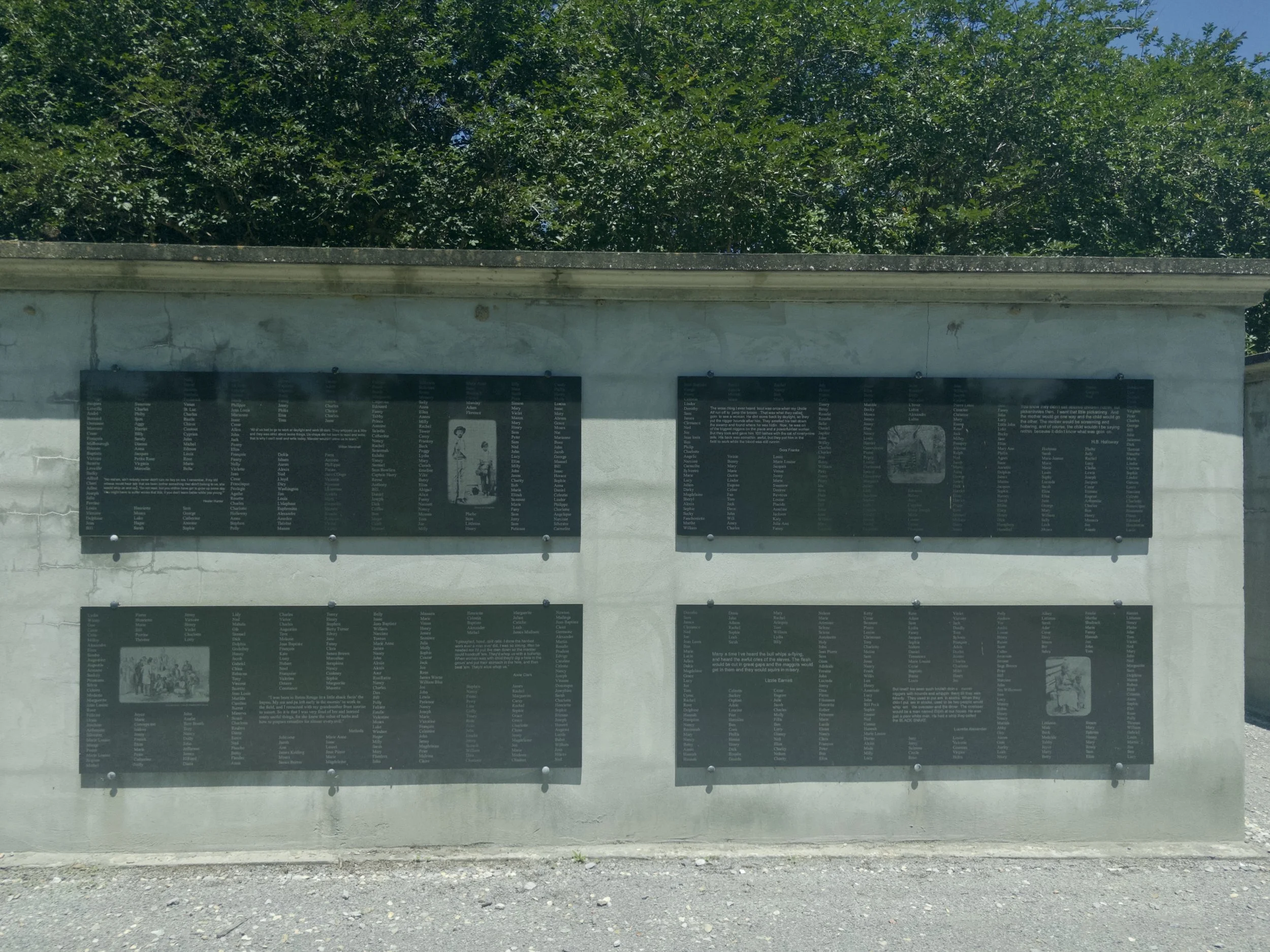
“It is your consciousness, your will, which must keep you alive.” 

Anne Rice, Interview with the Vampire

H2O Psycho

The second you leave LAX, tall cemented buildings, grand crowded highways, and blinding car lights clutter your eyes. The surroundings of MSY are quite different. 

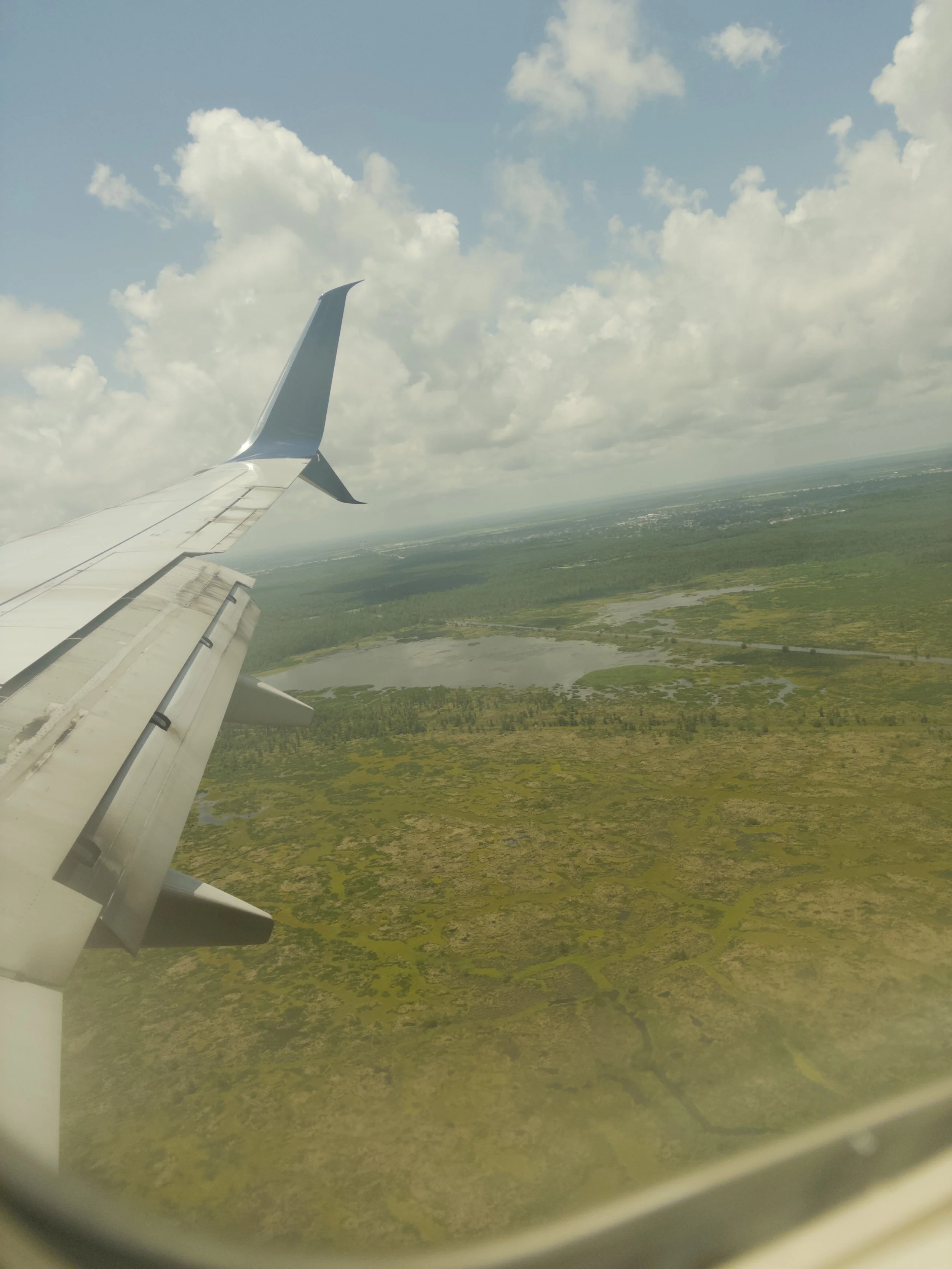
With four minutes till landing, I awakened from my three hour slumber, and my eyes were met with miles and miles of greenery, lakes, and rivers out the plane window. Are you sure we’re only four minutes away? It was 12:31pm when I landed and around 3 when we left as a group from MSY to Grande Isle. 

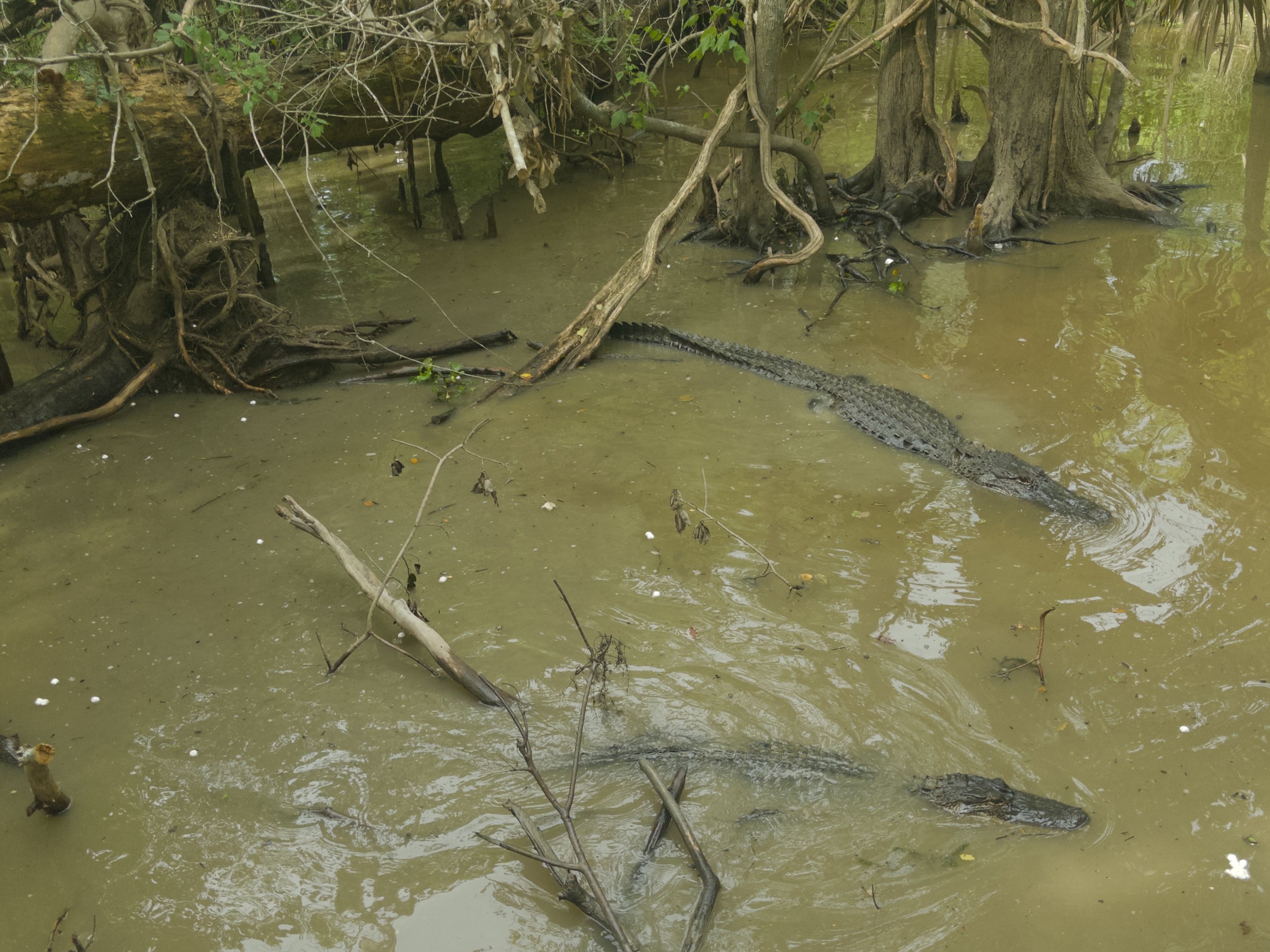
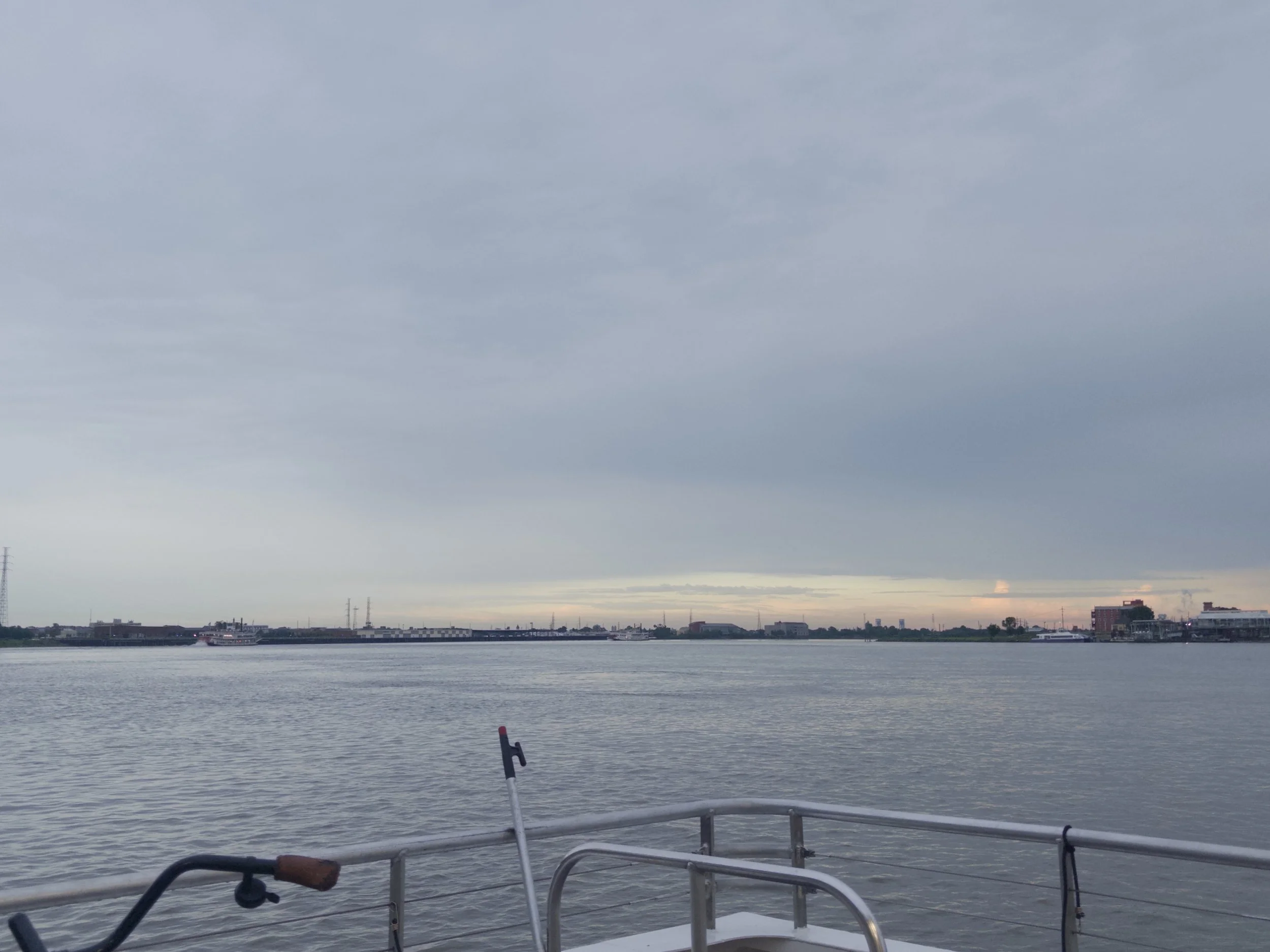
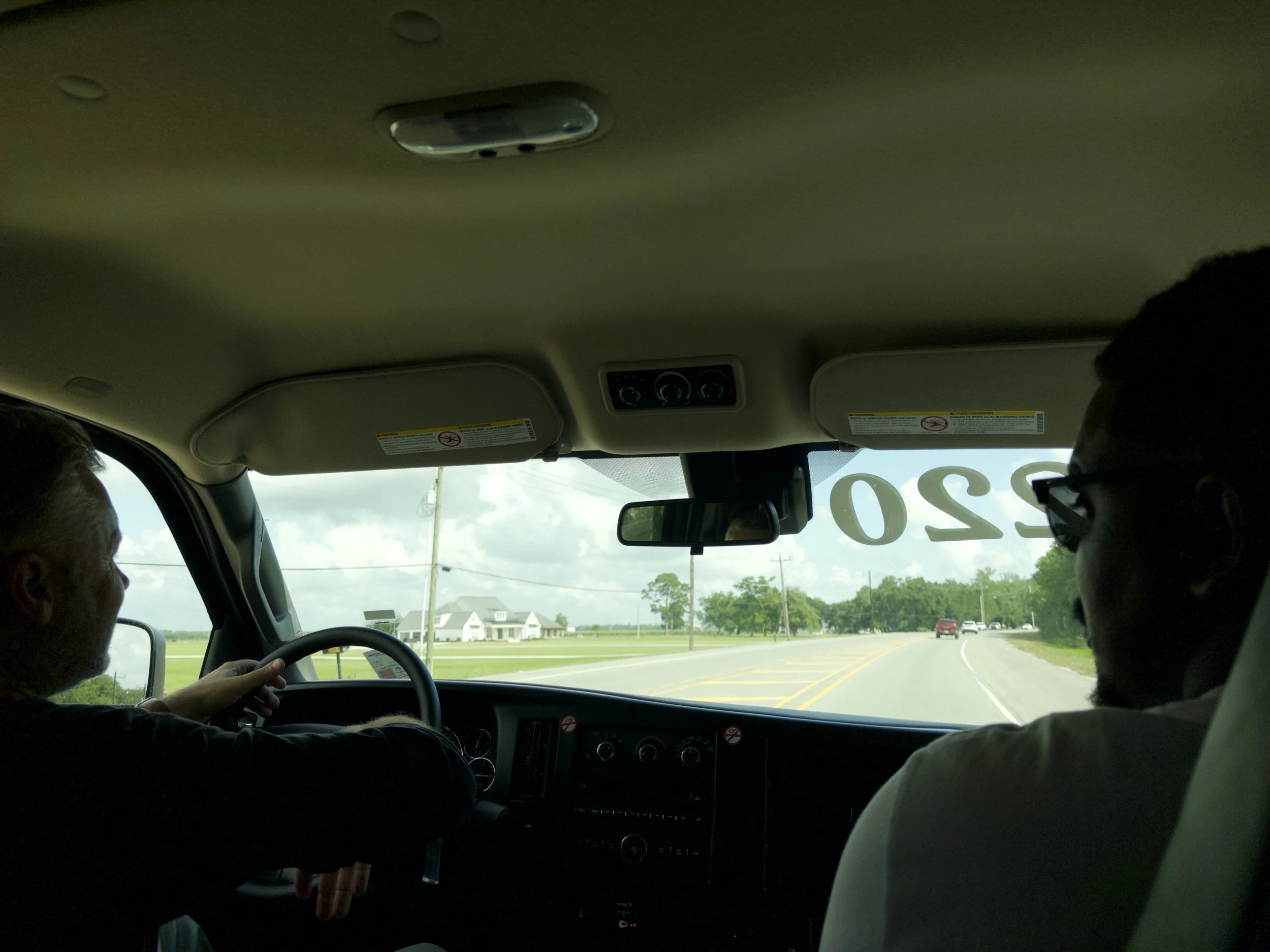
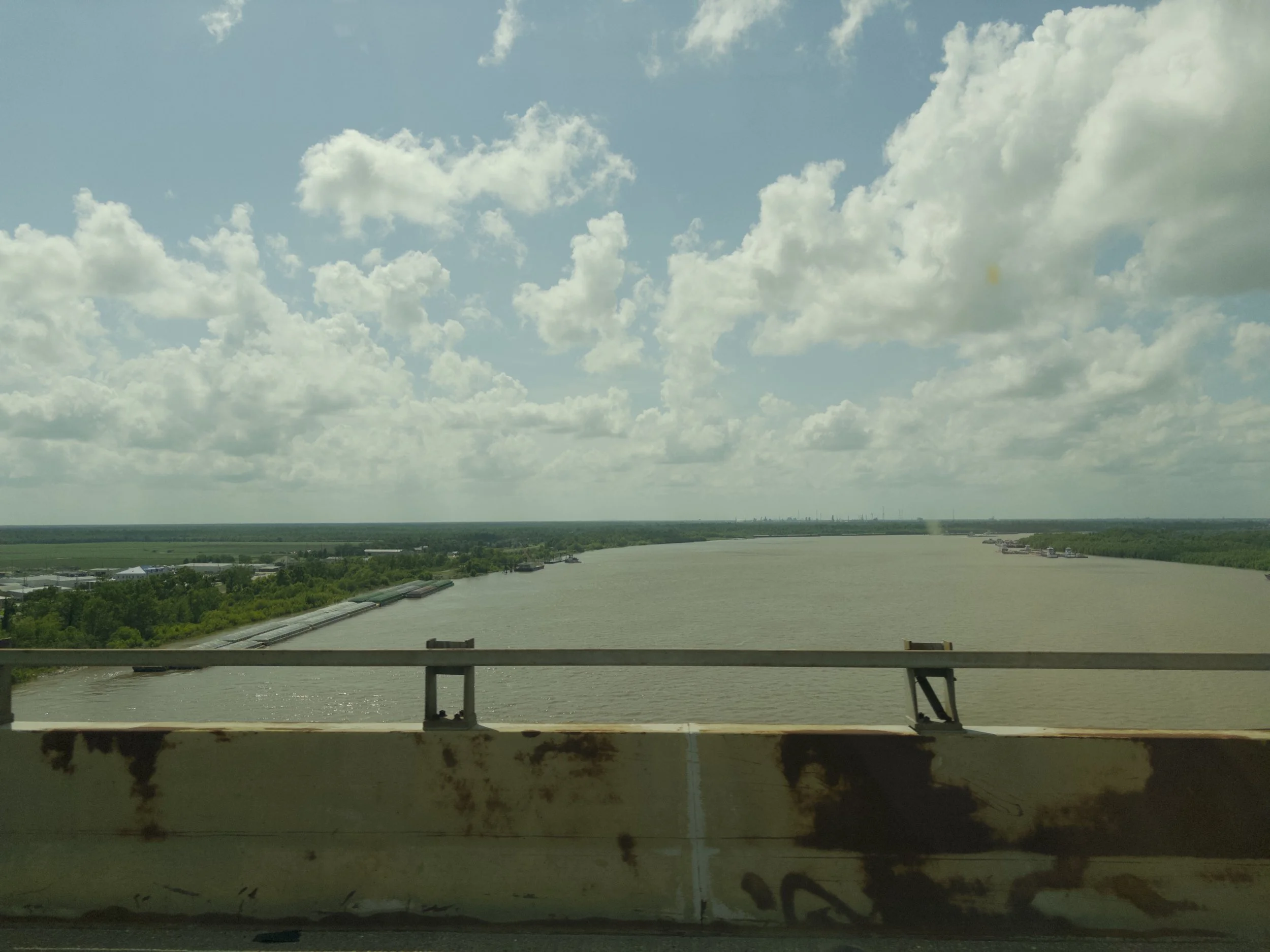
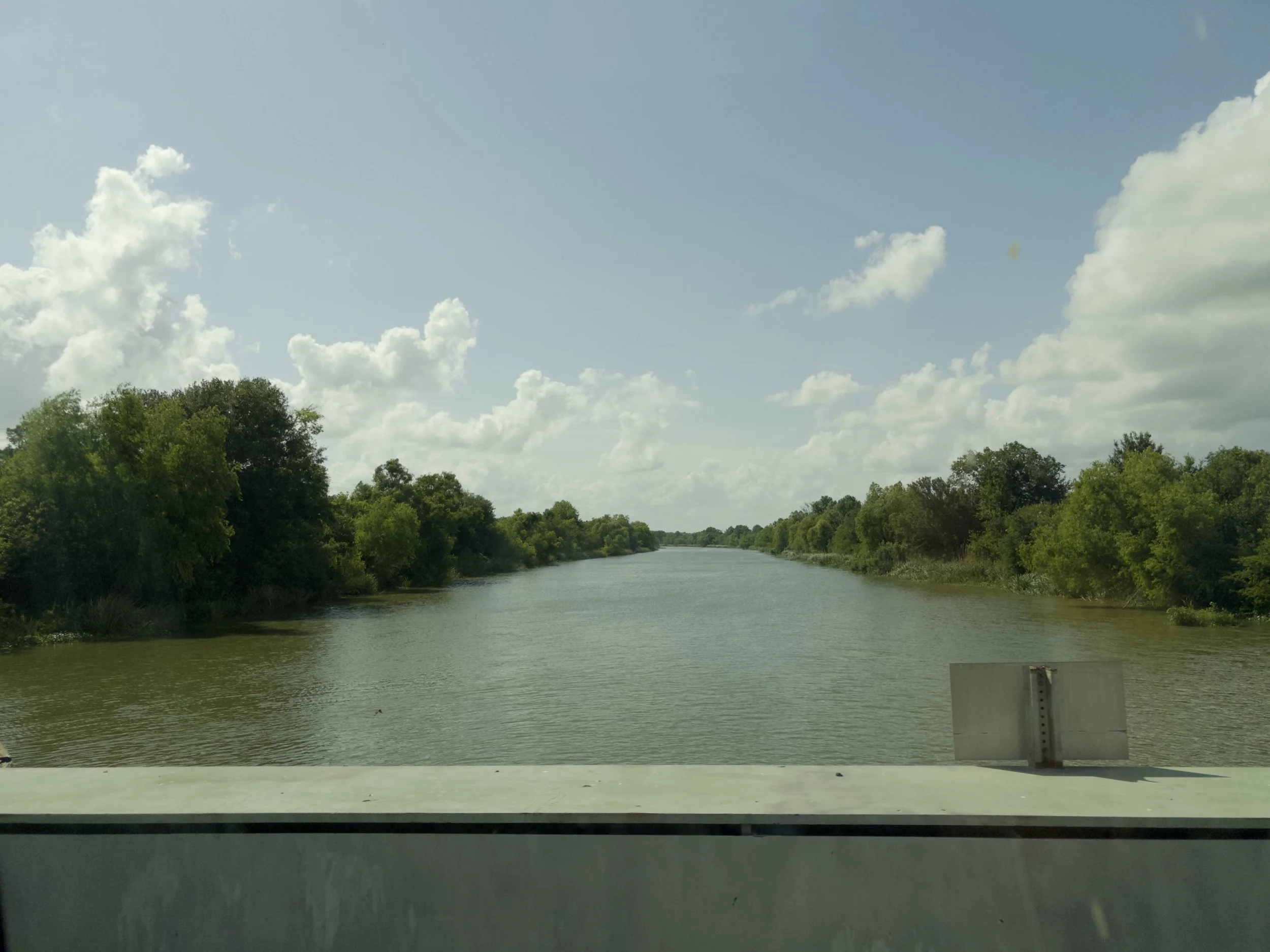
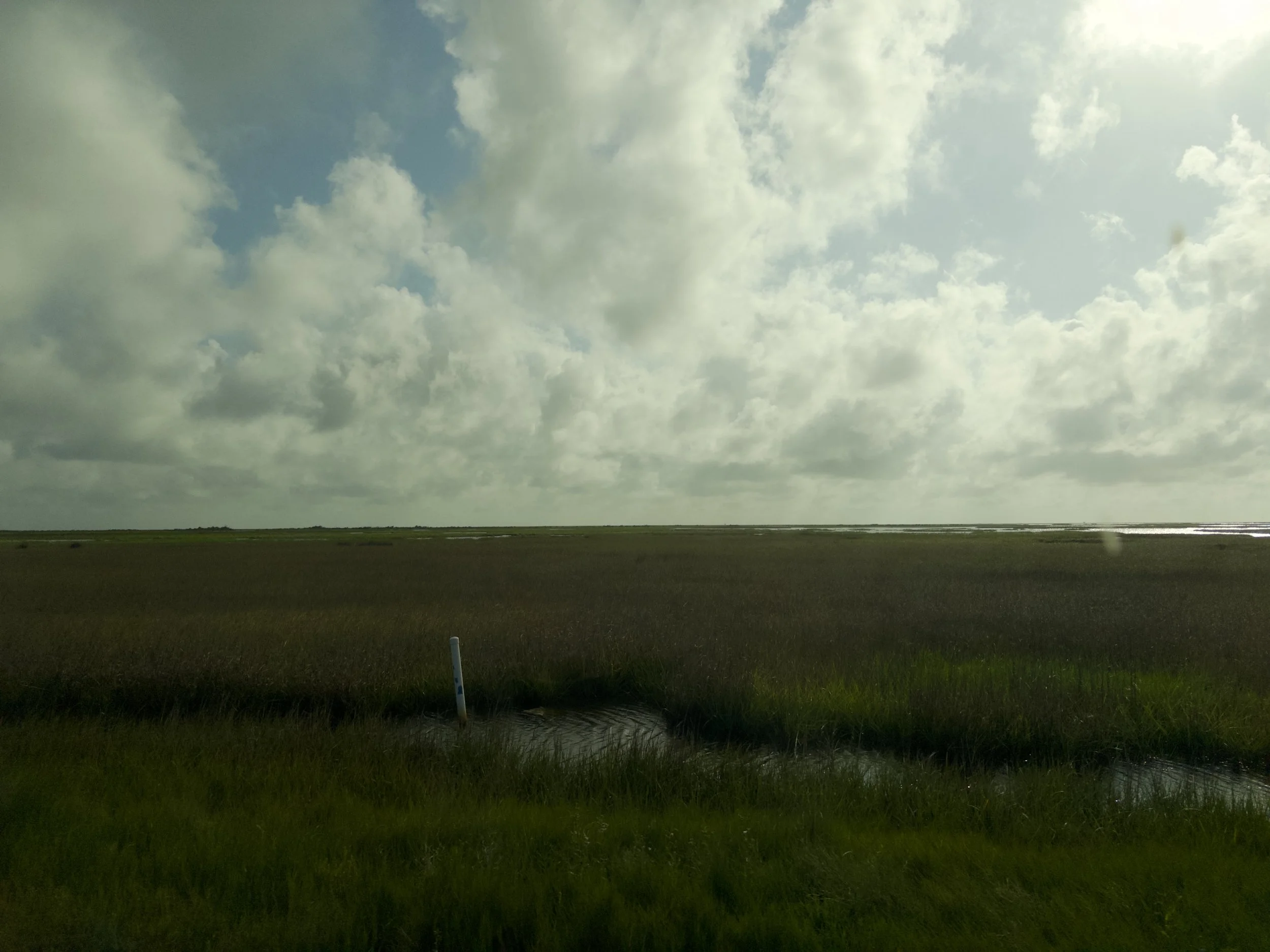
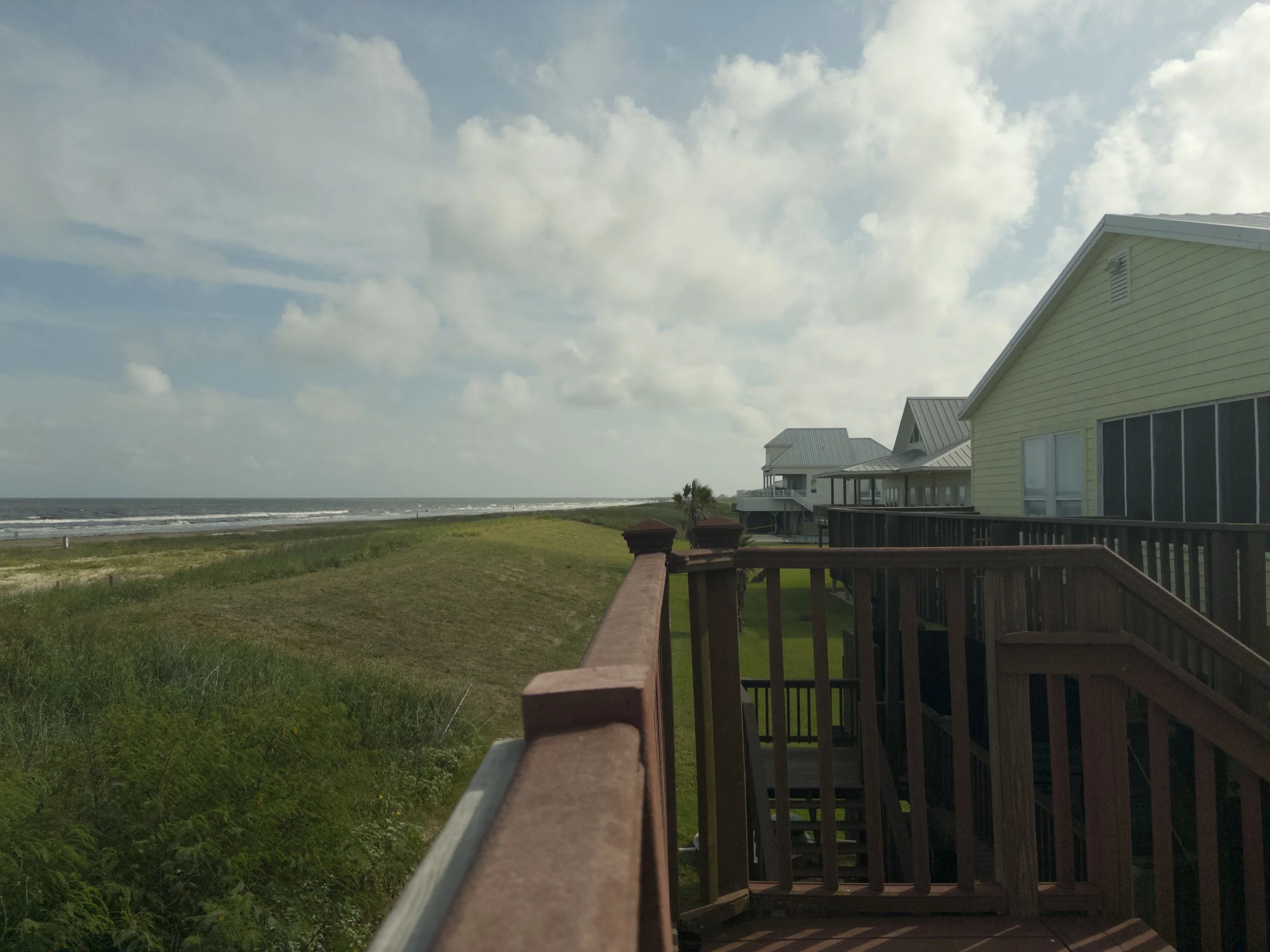
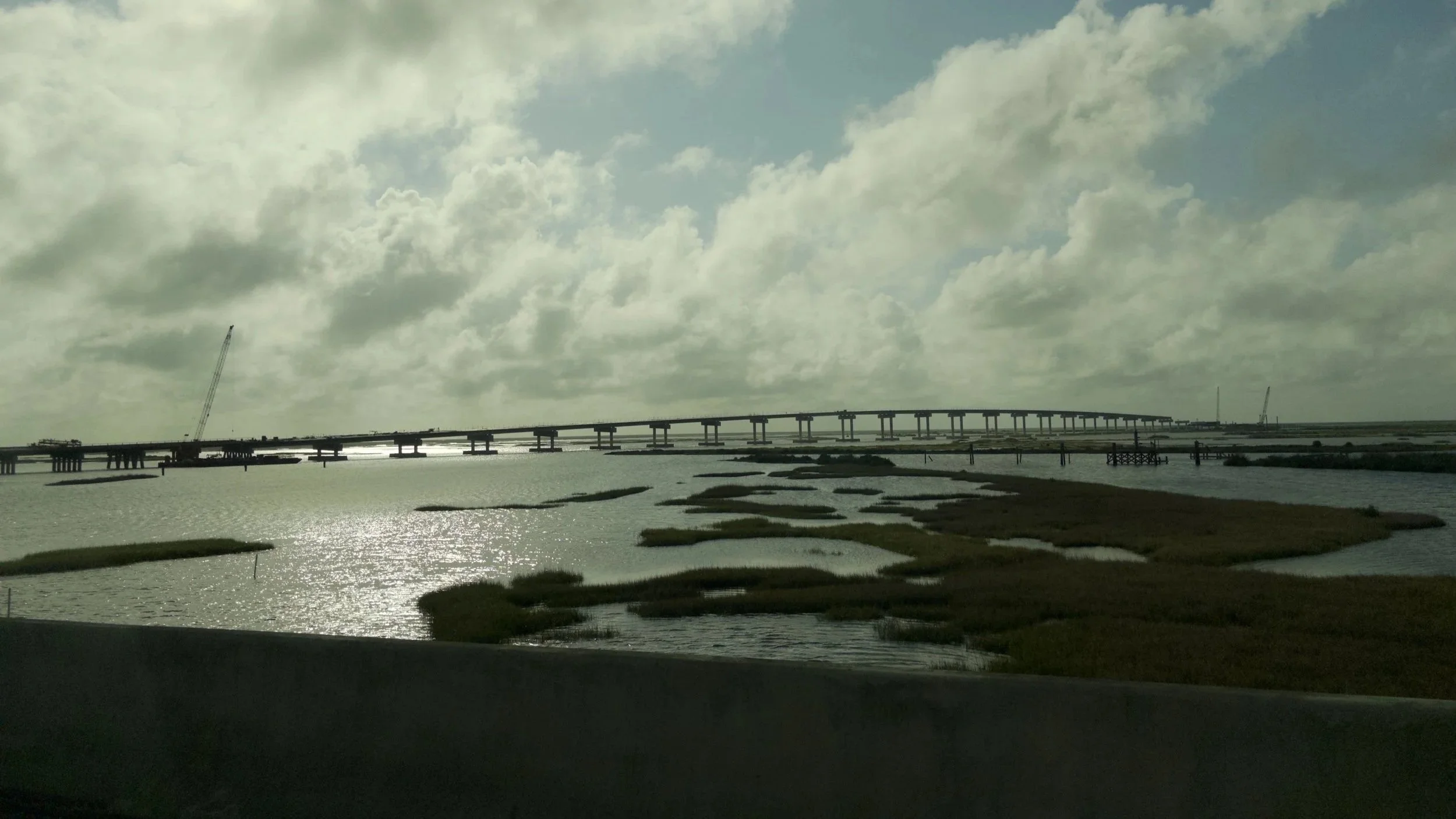
Seated on the edge of the van seats, contemplating when to eat my only nutella snack pack, I was struck with an image that differed from what I had imagined. As we embarked on the I-310 highway, I expected to leave behind images of New Orlean’s French styled homes and buildings that we’d revisit in the coming week. Rather what surrounded large half empty highways were not buildings but vast lands of cypress trees, draped in Spanish moss, and enriched by the moisture of low-lying slowly moving water. Our view of swamps converged to that of a singular bayou to our right, on the LA-308. A long stream of water separating the already isolated houses, surrounded by the sweetness of sugar canes or the destructive footprints of Hurricane Ida. Our last road was the LA-1. What lay beneath it was not land, but a large body of water, where patches of saturated weeds and grasses rested. The peace of the marshlands guided our ears to the noise of the ocean outside our porch on Grand Isle.

“The voice of the sea is seductive; never ceasing, whispering, clamoring, murmuring, inviting the soul to wander for a spell in abysses of solitude; to lose itself in mazes of inward contemplation.”

Kate Chopin, The Awakening

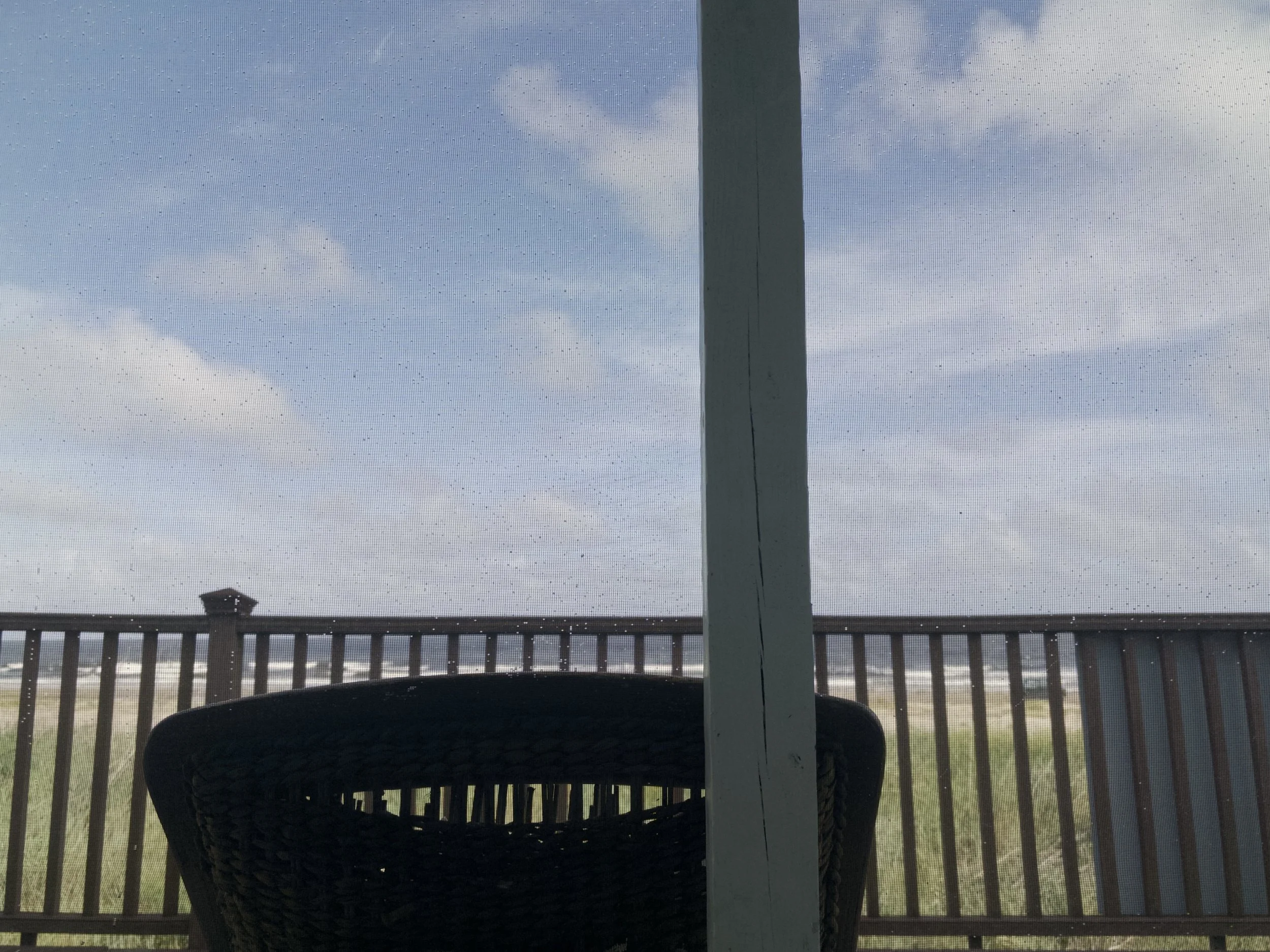
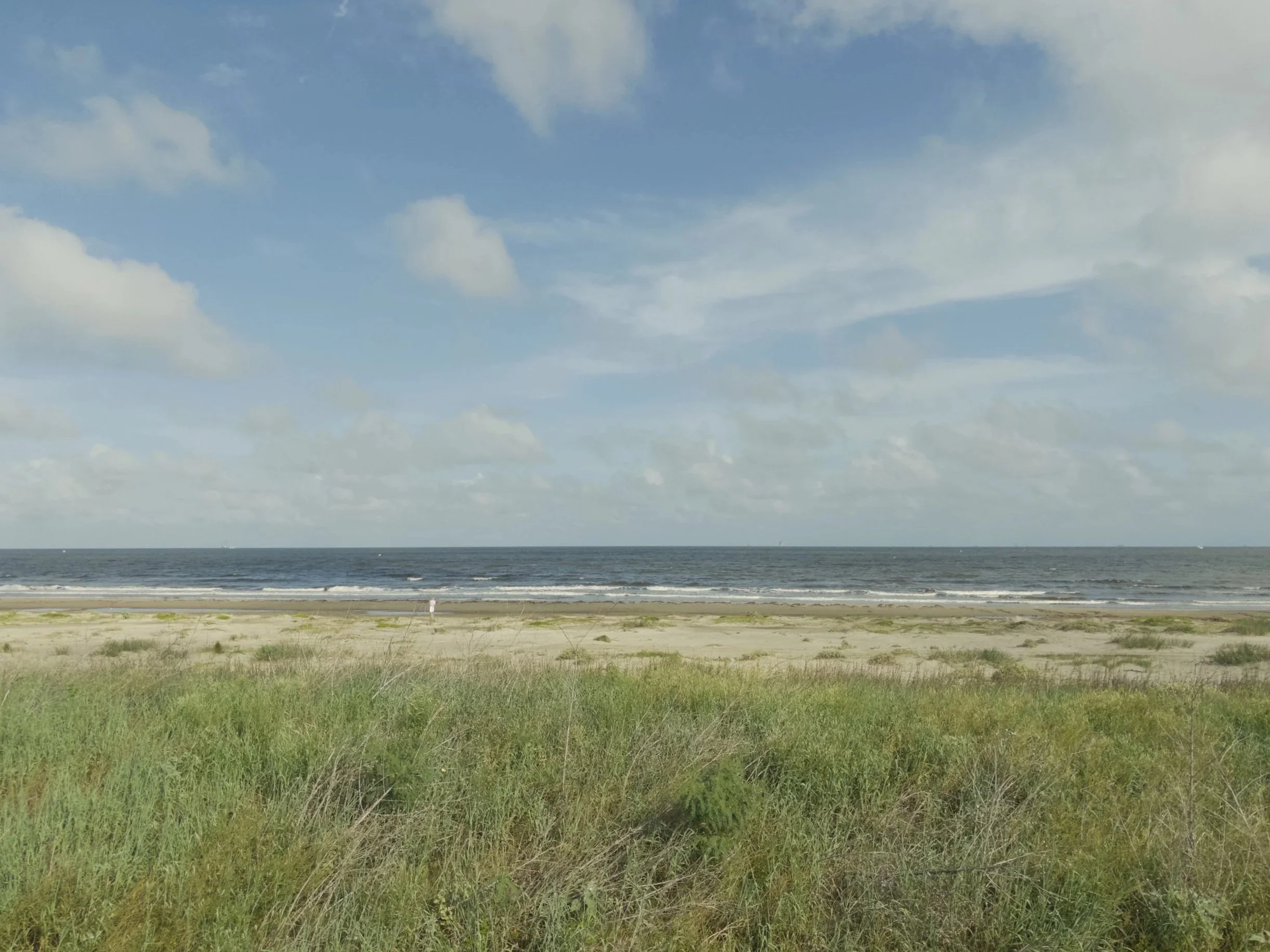
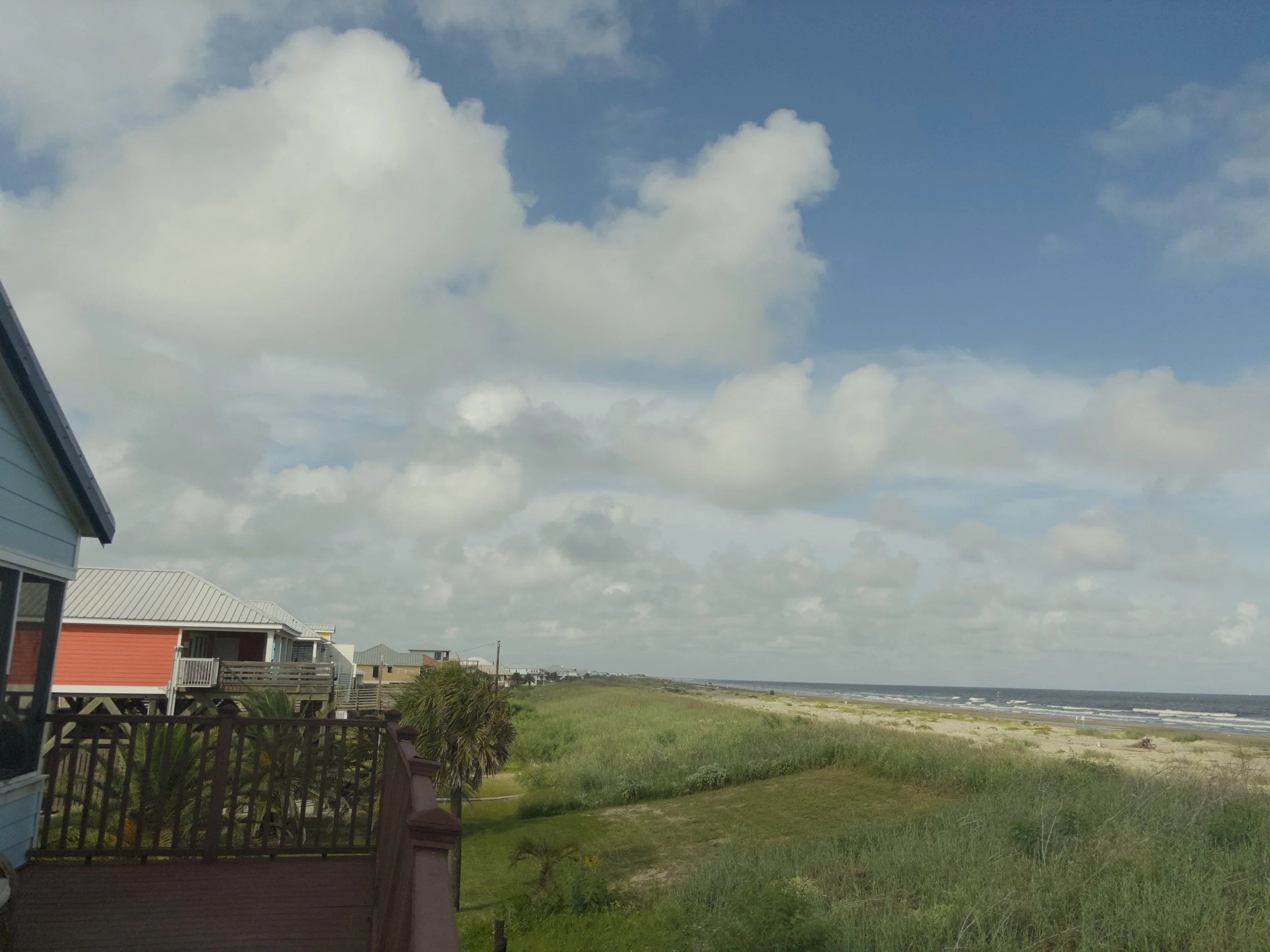
The voice of the Grande Isle sea is not the same as the California coast. It doesn’t remind me of the busy streets I will soon hurry over, the assignments I have yet to complete, or the worries I’ll confront with still no answer, when I arrive back at home in Los Angeles, within an hour drive. It’s everywhere. It’s inescapable, engulfing all edges of Grande Isle, luring me in as it did to Edna. Riveting winds propel the waves forward while winding back my thoughts. My phone is nowhere in sight. I sit on the porch accompanied only by The Awakening and the seductive sea. 

This peaceful sensation was not foreign, but neither had it ever elongated its stay to that of now. Occasionally, my mind would be able to free itself from the constraints of reality's grasp. Catching a breath, before being suffocated by the weight of endless thoughts. But here my breaths were slower, longer, free. And occasionally interrupted by the crunch of a Jo-Bob’s fry. 

In the beginning of Kate Chopin’s The Awakening, Edna chooses to swim alone, further out than any woman has swum before, enthralled by the sea’s space and solitude. As she swims outwards, the sea serves as a source of liberation from the constraints of the society behind her. In the ocean, she is not expected to conform to the role of a mother, a wife, nor that of the woman in the late nineteenth century. Nature doesn’t abide by such conformities. She is purely a body in water and as a result, her presence isn’t found in the expectations of society but within herself. 

“At a very early period she had apprehended instinctively the dual life–that outward existence which conforms, the inward life which questions.” 

Kate Chopin, The Awakening

Writing from the twenty-first century, the expectations of Edna’s outward existence in the late nineteenth century vary from mine. Unlike Edna, I’m not weighed down heavily by the expectation of being a mother, a wife, and to entirely bury my needs, desires, and thoughts for the sake of a patriarchal society. This is not to say these expectations don’t still exist and underplay the much needed progress for gender equality we still face today, however, I am writing this blog on a trip that I choose to go on, as a single undergraduate student, studying what she loves, seeking to explore the world for herself. As a woman in the twenty-first century, I have many more freedoms fought by pioneering women before me. Nevertheless, this “outward existence” does not vanish with the wave of a new generation. As a woman, coming from a working class and immigrant family, these expectations remain and expand from those of Edna’s as a white and wealthy woman of her time. In the pursuit of my education, my career, and in my personal life, I feel the pressure to succeed. To continuously hustle, to worry about the next thing I need to accomplish, the next step I need to take to move up the social scale, achieve financial security, and ensure the love, the sacrifices, and the efforts of my parents are worth it. My “outward existence” is both a privilege garnered by the efforts of those before me and an expectation that overwhelms my inner self. 

On Grande Isle, the movement of each wave brought upon a serenity that washed away my outward existence and revealed an inward life that didn’t question my steps for the future or my regrets of the past, but what I craved for a snack, how I enjoyed the book on my lap, and how I admired the view before me. As it did for Edna, the seductive sea brought upon a presence within myself. 

“The present alone was significant; was hers, to torture her as it was doing then with the biting conviction that she had lost that which she had held, that she had been denied that which her impassioned, newly awakened being demanded.” 

Kate Chopin, The Awakening

Throughout The Awakening, the presence Edna finds within herself battles with her outward existence, a battle that ultimately overcomes her. At the end, the sea is both a place of liberation for Edna and the place of death. Kate Chopin conveys the conflict between the present and presence. It’s like the swamps and the marshlands of Louisiana, ever growing and moving with the slow dance of water whose saturation prompts both life and destruction, beauty and pain. 

After the 11th of June, I will board a plane and land in LAX back at home, where I’ll be welcomed by the sight of tall cemented buildings, grand crowded highways, and blinding car lights. The inevitable expectations of reality will surely overwhelm me again and the voice of the seductive sea will cease to be heard, but whose to say my inner presence cannot remain? 

Well that’s a question for later.