Bound by the Crown

He loved books. Books are cold and dependable friends.
— Les Misérables

One of my favorite places we visited in London was Jarndyce Antiquarian Booksellers, despite the absolute oven of a back office. I am actually quite passionate about antique hunting and collecting, and I myself have a small collection of antique books.
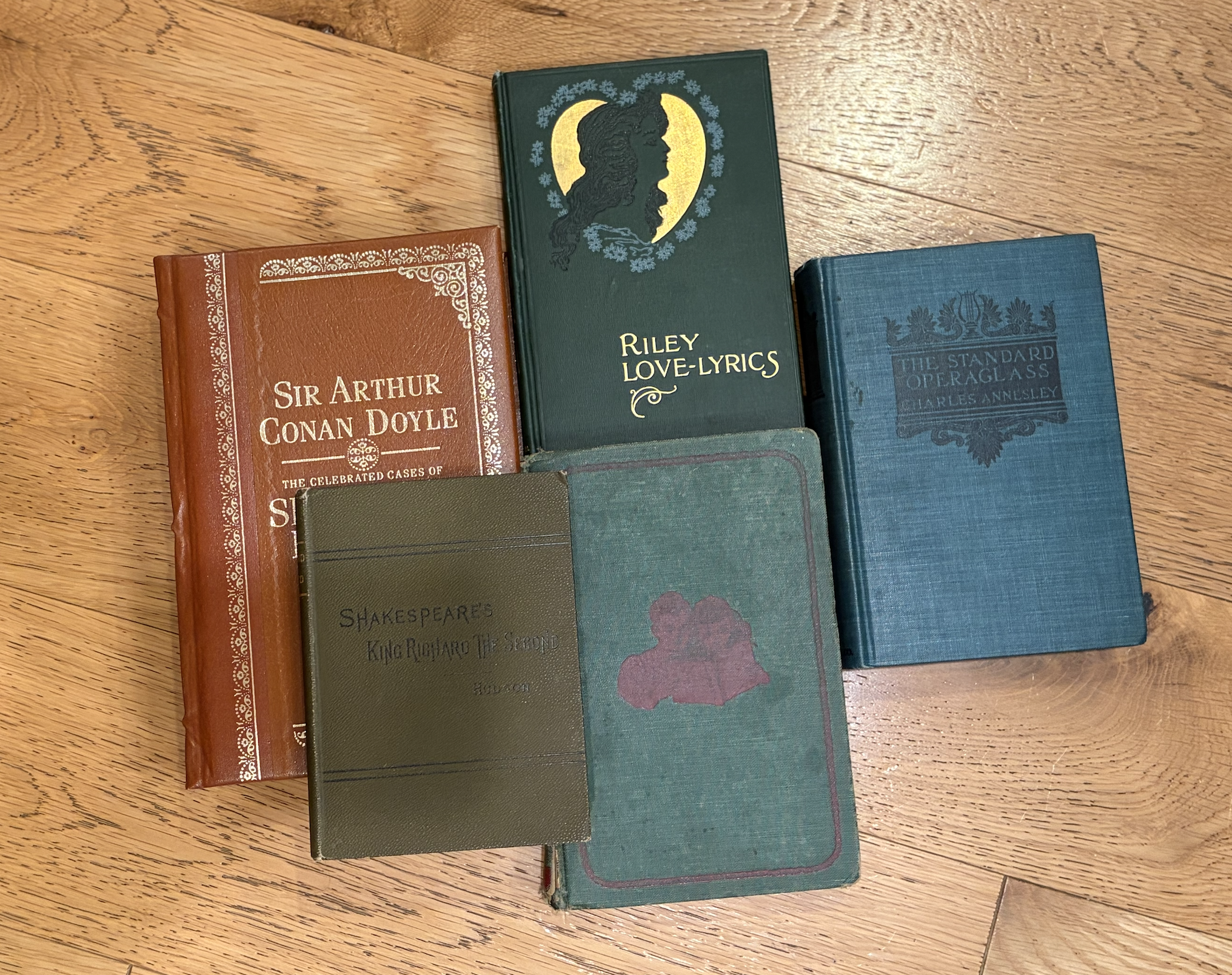
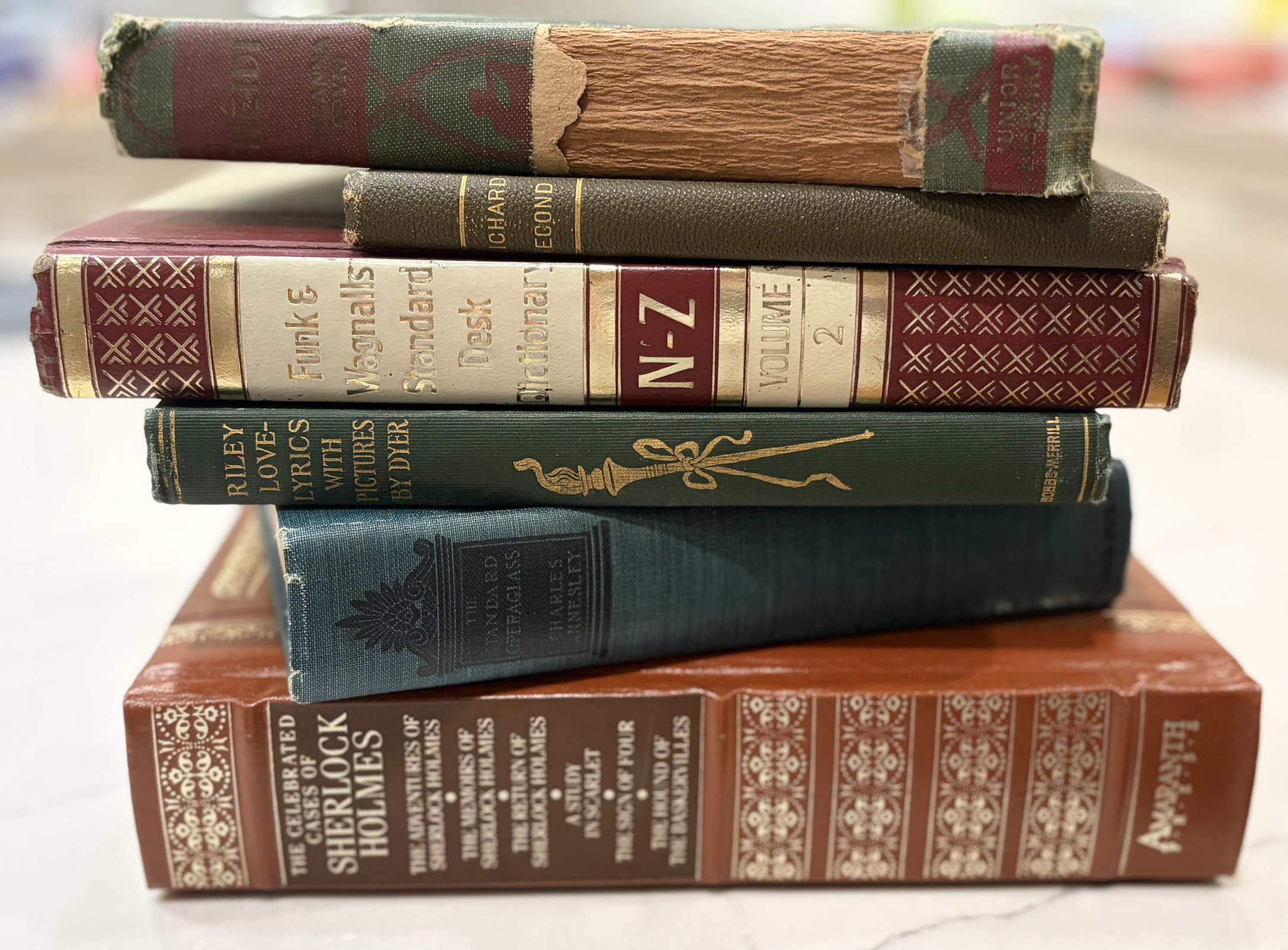
I’ve always loved narrative—especially via literature and history—making antique book-collecting a perfect hobby for myself. I love being able to hold a book and know that some other girl from ages past, in a dress from a different era with interests, relationships, and hobbies of her own once held it. She would have enjoyed it during an age where technology could not document or remember her existence. Therefore the act of antique collection feels to me a way to uncover narratives—whether projected or factual.

Jarndyce was established in 1969 and is across from The British Museum, the last standing of a street that was once filled with antique booksellers. Our class had the privilege of meeting with Mr. Joshua Clayton, a cataloguer of their 19th through 17th century books. 
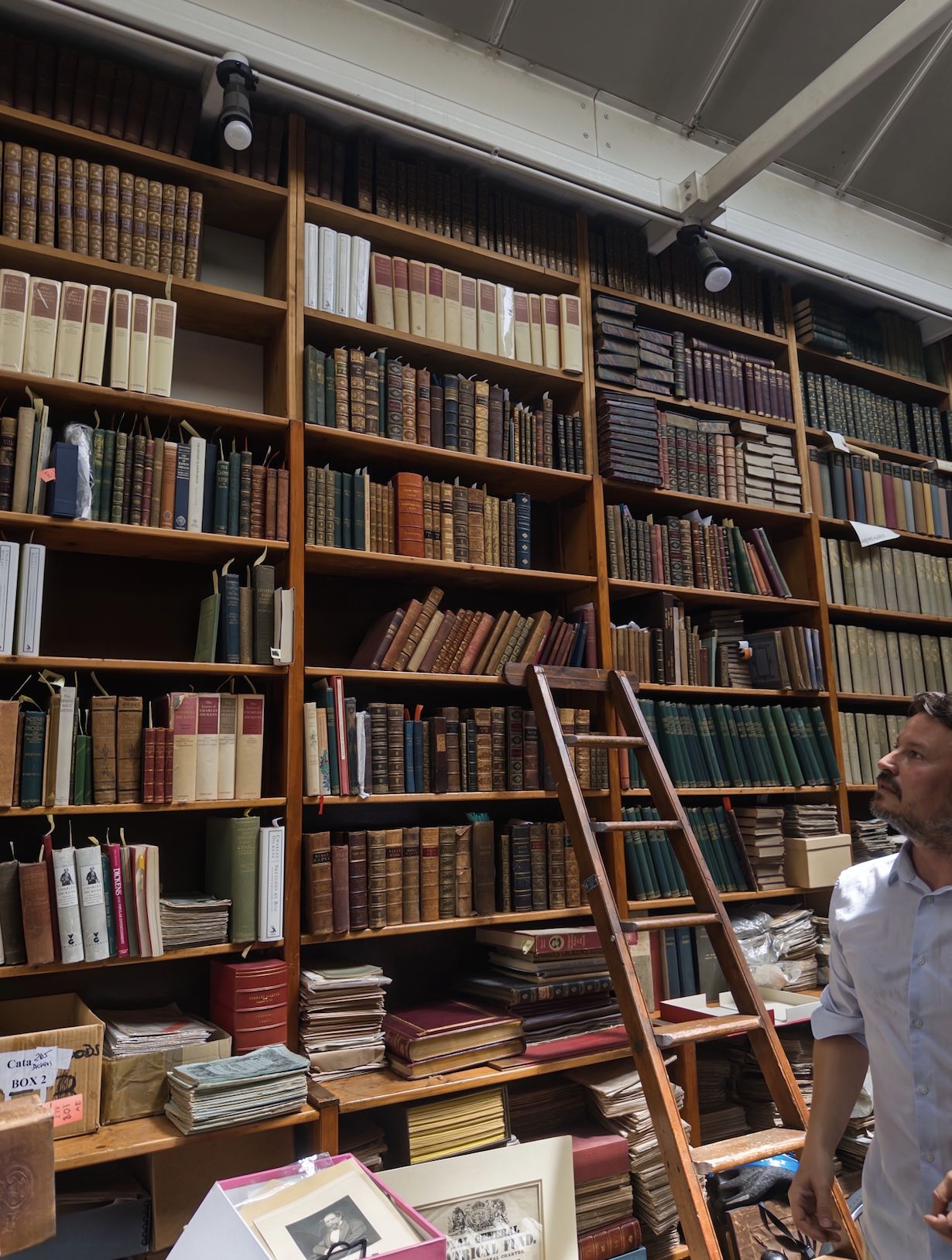
Mr. Clayton in the backrooms of the bookshop, where he does cataloguing.

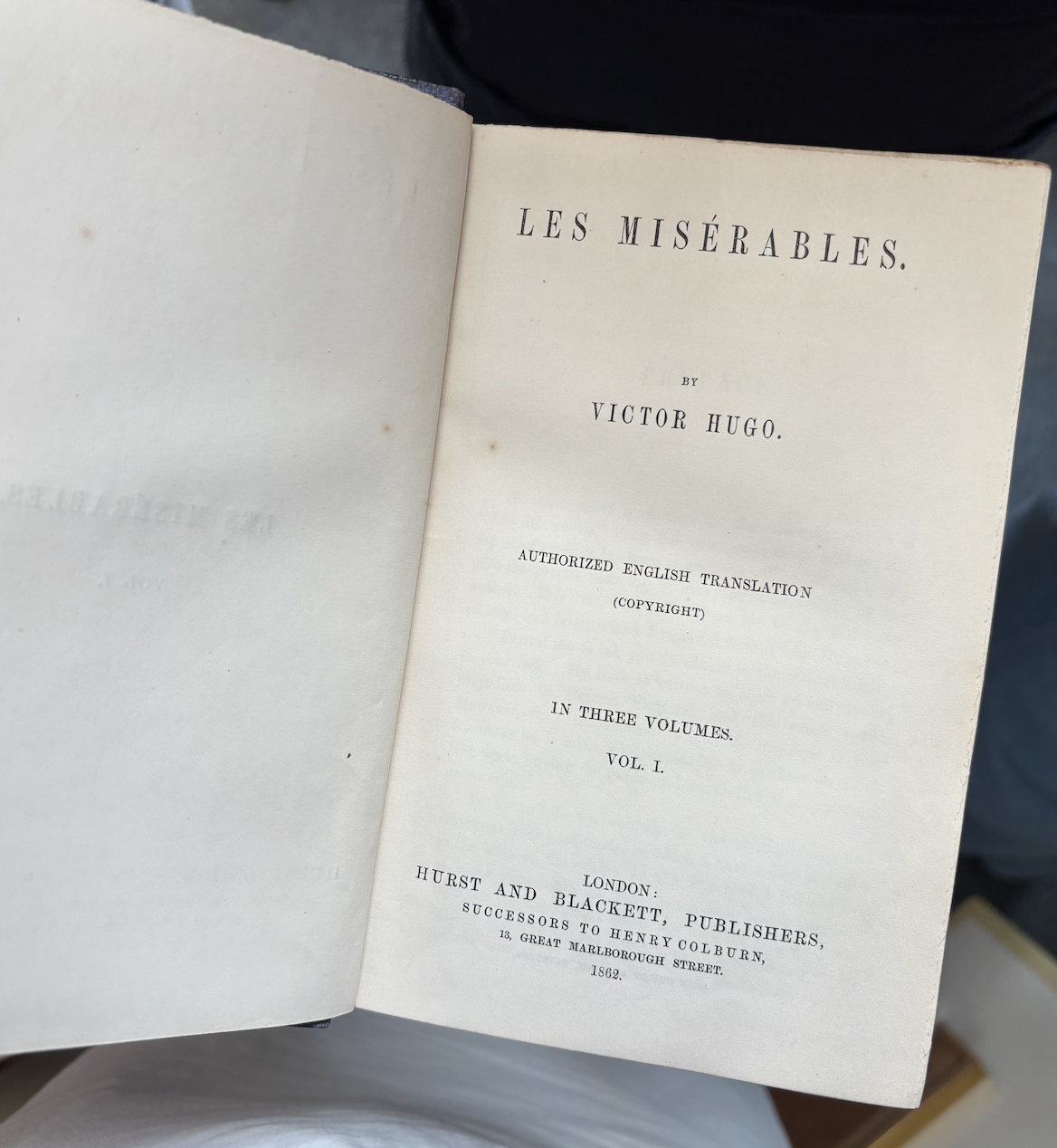
Mr. Clayton showed us a selection of their special collection, ranging from original and first edition Les Misérables to A Tale of Two Cities in parts.
And per the International League of Antiquarian Booksellers,it is the voyage that will give you incomparable pleasure, not the arrival at the destination.”

It really is the hunt of the rare antique book that is so fun for me, rather than seeing it on my shelf each day. On a larger scale, the act of collecting rare books reminds me of the way Britain holds on to traditions of old, whether or not the people of its modern nation desire to do so.

Something we spoke about in class was how England retains certain traditional class divisions and more conservative politics. Not only can you find a castle at every turn, but the country, though a democracy and a labour government, retains a figurehead monarchy. Why hold on to such an old tradition that does not serve its contemporary government or people? Additionally, England still abides by class traditions—such as higher respect for their “sirs” with higher titles, or being able to distinguish someone’s class background—such as financial standing, ancestry, and education—via the nuances of their accent.

Per Thomas Paine in his Rights of Man,

“What is called the splendour of a throne is no other than the corruption of the state. It is made up of a band of parasites, living in luxurious indolence, out of the public taxes.”

The French recognized this, certainly in 1789. La République franchise had its revolution, and it carried with it an anti-clericalism that challenged feudal power and allowed power into the very hands of the people who dismantled its Bastille brick by brick. While England mostly abandoned their belief in the divine right of kings following the Glorious Revolution of the 17th century, power was—and is still—allotted via birthright.

So why does Britain tend towards holding on to these very antiquarian traditions of monarchy, despite the royal family carrying no real power compared to the popular democracy? I would argue that, similar to antique books, the British monarchy—and its associations with class traditions—is entirely preserved through longstanding traditions. Both antique books and social and political traditions of antiquity provide a window to the past. Both are treated with great respect—the same way a bookkeeper like Mr. Clayton must be careful and gentle in his handling of Dickens’ and Hugo’s novels of old, checking temperature levels and cloth versus leather bindings.

In the chapter of Les Misérables on the battle of Waterloo and Wellington, Hugo writes of old England:

After her own 1688 and our 1789 she still cherishes the feudal illusion. She believes in heredity and hierarchy. This people that none surpasses in power and glory respects itself as a nation, not as the people. And as the people it willingly submits to authority and take a lord for its leader. It lets the English workman be scorned, it lets the English soldier be flogged.

While this quote speaks directly to the harm the monarchy can bring, another example in A Tale of Two Cities cements the necessity of stepping away from feudal hierarchy. Le droit du seigneur is the said medieval European tradition of the lord having the right to his subjects’ brides on their wedding nights:

As arbitrary imprisonment had become the exemplary abuse of monarchial power, so droit du seigneur was the exemplary abuse of aristocratic power; Dickens’ plot links these two formative transgressions.

And in conversation with his nephew Charles Darnay, the marquis explains that he does miss the ways of past:

“It not used to be so, but France in all such things is changed for the worse. Our not remote ancestors held the right of life and death over the surrounding vulgar…one fellow, to our knowledge, was poniarded on the spot for professing some insolent delicacy respecting his daughter.”
— A Tale of Two Cities

It is true, England has made much progress and is a stronger country for it today. But the preservation of history is simply that: a remembrance of the past, rather than a blueprint or guide for our future or present. One theme of revolution present throughout A Tale of Two Cities suggests that moving away from inherited traditions that offer respect on the basis of birthright or wealth is necessary, and Britain has done that—though I am unsure the need to hold on to the monarchy still today.

There is no question whether preserving history—such as our beloved antique books—is beneficial for education. In such, so is preserving state history—so that future generations may learn from the mistakes of a nation’s ghosts. In that same vein, preserving outdated class systems is not beneficial, serving a hierarchy of exclusion as it recreates the past in the context of the modern-day—a problematic dilemma.

I truly believe preservation of museums and archives to be vastly important. And don’t get me wrong, I love history. But as a society we should strive to think about history the same way we care for our antique books—they are something to hold close to the heart, but to learn from and display as an artifact of the past—not a blueprint for the future. 
What’s all this then?

I have never been able to do a great British accent. I mean, I’ve never been able to do any accents, period. I grew up in the San Fernando Valley, home to “Valley Girl” accent fame, so I’m quite easily clocked as Californian. When our class moved to London, we all started mimicking British accents and learning some phrases for fun. Our professor, Andrew, taught us “Bless your cotton socks!” A guy at a house party taught me “Say no more” (or in text parlance, SNM). From television, we picked up “Oh my days!” and “What’s all this then?” If a random person walked past us on the street, they would be more than justified to roll their eyes and scoff at our attempts at using British parlance. It was, to say the least, annoying, but selfishly, it's also quite fun.

To me, accents have always been an indicator of geographical difference and nothing more. In the US, for example, we have plenty of different regional accents - a Bostonian will sound different from a New Yorker, and a Texan can sound different depending on what city in Texas they’re from. But aside from the southern drawl and odd miscommunications about what to call soda (not pop), accents essentially told you one thing: where a person was from. When I got to London, I was shocked to find out that it wasn’t the case here.

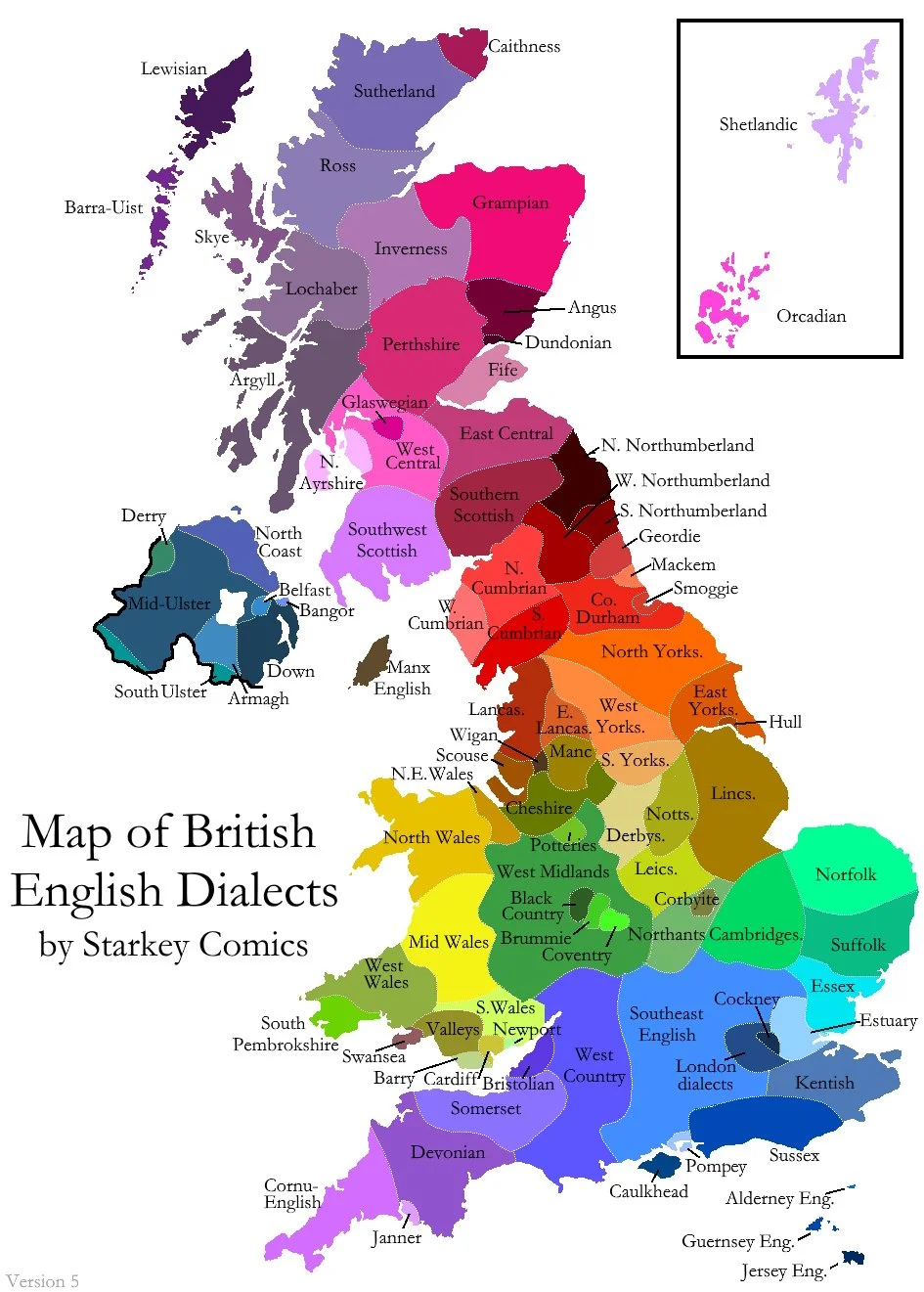
Map of different British accents

I have always been vaguely aware that there are different British accents. Posh accents are usually for those who are wealthy, Scouse accents are for those from the northern parts of England, and Cockney… well, I know it exists. My roommate at USC is from Glasgow, born and raised, and she doesn’t sound anything like any of the people I’ve met in London, because even though Scotland is in the UK, it has its own regional accents and slang. Yet, my awareness of these different accents was quite surface-level. Then, in a seminar one day, we were talking about class and identity, and Andrew revealed something I would have never believed otherwise.

“I can tell if someone went to private school just by the way they speak,” he claimed. "This is just one example of how engrained class has been in British society."

Externally, I nodded, but internally, I thought this was probably hyperbole. You know, accents may be helpful in determining where someone’s from, allowing you to make some educated guesses about their life. But figuring out their educational and family history? Maybe a bit too much. Being the chronic Google addict I am, though, I decided to check my sources. And of course, I was proven wrong.

Class identification by accent is a well-established practice in the UK, with parts of someone’s life made public simply because of the way they move their mouth when they speak. The BBC reported that in 2022, more than a third of university students said they felt self-conscious about their accent, and 47% said they'd had their accent mocked, criticized, or commented on in a social setting. Students from poorer backgrounds and state schools actually stopped participating in class, engaging in discussions, and attending events because they felt that they’d just be perceived as stupid by others. Currently, less than 10% of the UK population speaks “BBC English” (otherwise known as Received Pronunciation), yet it is overwhelmingly the dominant accent of those in positions of power. This self-censorship and the removal of opportunity simply reinforce the class divide that caused the accent difference in the first place, perpetuating the cycle.

In A Tale of Two Cities, Dickens uses accents and slang not just to signify class but also to create a character the audience feels comfortable laughing at. Jerry Cruncher, a porter and Resurrection Man who completes odd jobs for money, has dialogue that is consistently written with misspellings (that are not present in other character dialogue) and slang terms to demonstrate his place in society as low and almost ‘improper.’ His son and wife also speak similarly. For example, take this scene where Cruncher is discussing a funeral procession in the streets with his son.

What d’ye mean? What are you hooroaring at? What do you want to conwey to your own father, you young rip! This boy is getting too many for me!’ said Mr. Cruncher, surveying him. ‘Him and his hooroars! Don’t let me hear no more of you, or you shall feel some more of me. Ye hear?’
’I warn’t doing no harm,’ young Jerry protested, rubbing his cheek.
— Charles Dickens, Book II, Chapter XIV, A Tale of Two Cities

This quote alone is rife with examples of the differences between Cruncher's speech and the more middle class characters like Lucie and Darnay. For example, Dickens spells convey as “conwey” and you as “ye" to characterize Cruncher as this lower-class, and honestly, “less than” character. No other (major) character in the book is really described to speak like this, which is a way of juxtaposing Cruncher’s position with everyone else’s. In this way, throughout the book, we’re invited to laugh at Cruncher, not with him.

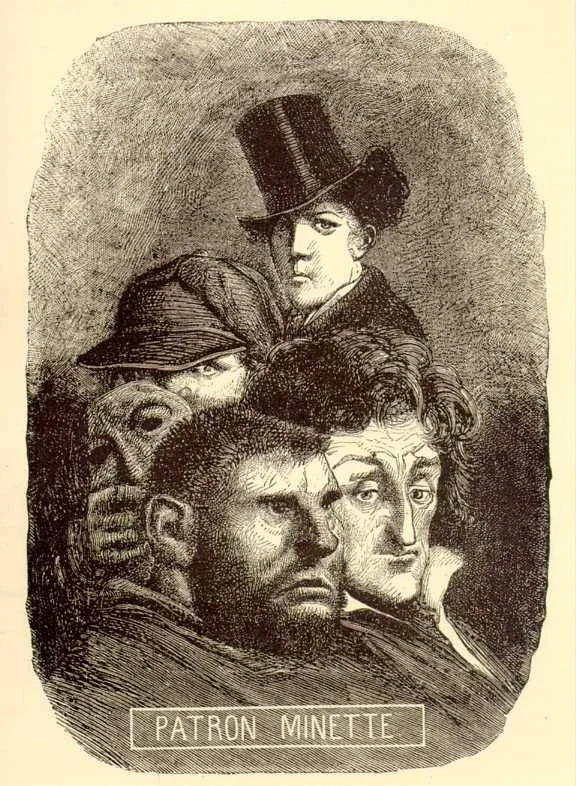
In Les Miserables, Hugo also touches on these concepts of speech in his digression on slang. The criminals in the Patron-Minette gang speak very differently than the other characters. This point is so important that Hugo goes so far to place specific footnotes to explain what they’re saying. Contrary to how Dickens utilizes language as a tool of mockery, Hugo treats these differences as vital to understand.

Certainly it is neither an attractive nor an easy task to go trawling through the lower depths of the social order, where terra firma ends, and the ooze begins… Nothing is more dismal than to contemplate the seething horror of slang exposed like this to the light of the intellect… Now, since when has horror ruled out research? Since when has disease driven away the doctor? … The thinker who recoiled from slang would be like a surgeon recoiling from an ulcer or a wart… For it must be said that for the benefit of those who do not know, slang is both a literary phenomenon and a social consequence. What is slang in its true sense? Slang is the language of wretchedness.
— Victor Hugo, Part IV, Book VII, Les Miserables

Reading this makes it pretty easy to understand why Hugo was considered one of the best thinkers of his generation. In this quote (and overall chapter), he posits that slang has risen as the voice of the underclass and ought to be seriously considered with linguistic integrity. Just because it’s used by “the wretched” doesn’t mean it’s any less valuable. That’s exactly why he goes through all the trouble of explaining the little differences in the Patron-Minette’s vernacular.

Back in the present day, the weaponization of accents to build and reinforce class barriers hasn’t really gone away. While it is certainly an issue that accents are being weaponized to make fun of and discriminate against others, there is also beauty in how communities form their own ways of speaking. Multicultural London English (MLE), for example, has emerged from a wave of immigration to the UK from countries like Pakistan, China, Ghana, Jamaica, and so many more. In this way, Hugo was (as always) prescient, arguing that slang helps us understand each other as humans and build community. It shouldn't be something we ignore because we don't understand it.

So while my classmates and I will continue to parrot British slang, I’ll be aware of the people behind the language. “Say no more" isn’t just fun banter; it mostly originates from MLE. “Bless your cotton socks” is BBC English. As an American, I get to play with these phrases and say them without anyone having a second thought, since I’m just someone who’s joking around. Now, though, I know that this isn’t the reality for everyone in the UK. I suppose we’ll just have to add accent divides to the list of things that Britain needs to modernize,

I Wish I Were a Bird

Be like the bird, who
Resting in his flight
On a twig too slight
Feels it bend beneath him
Yet sings,
Knowing he has wings.
— Poème Dans l'église de *** by Victor Hugo

The gulls at Hyde Park where I spent the day reading A Tale of Two Cities

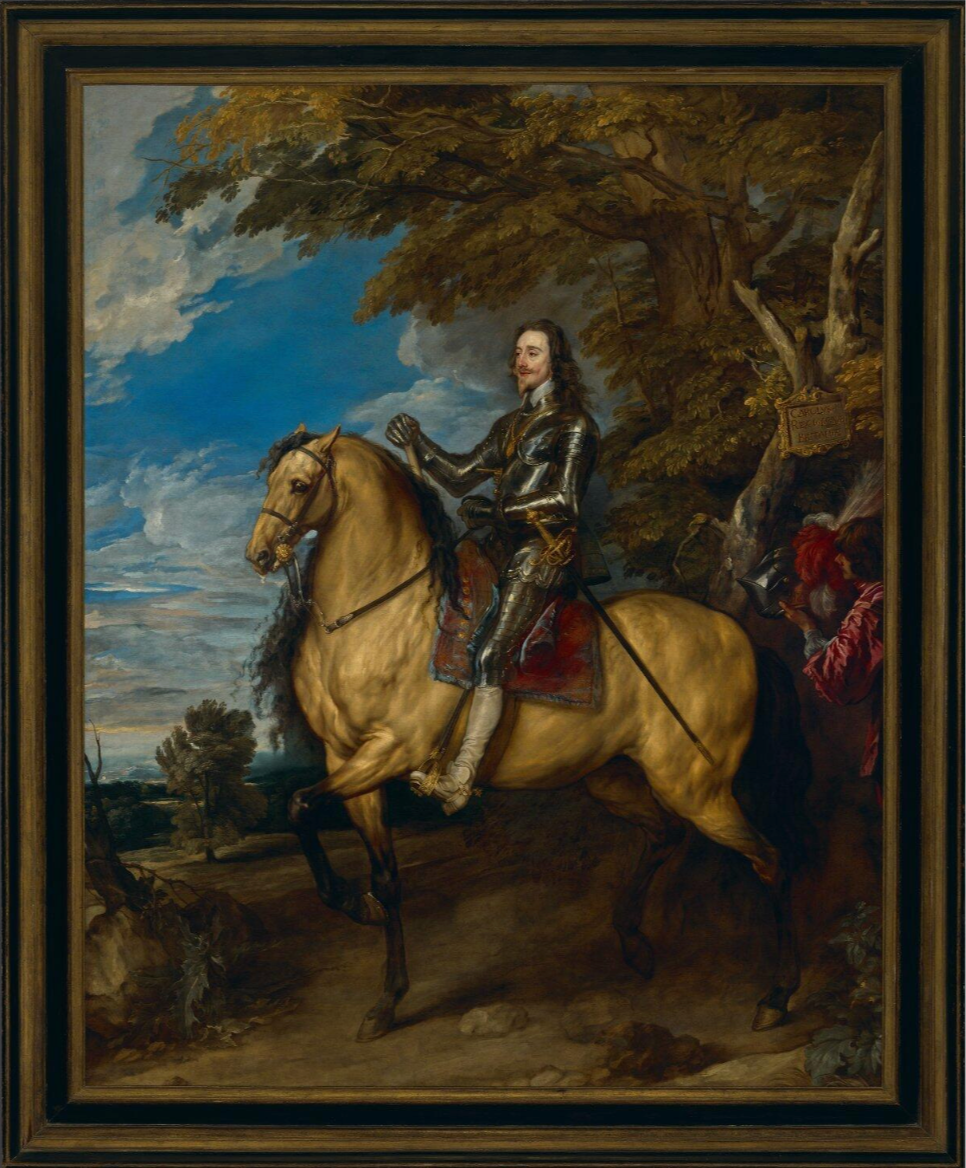
Equestrian Portrait of Charles I, Anthony van Dyck (National Gallery, London)

At the end of our excursion one day, our class found ourselves finishing on the steps of the National Gallery art museum in Trafalgar Square. Exhausted from the heat, it was tough to decide whether or not to extend our already long day of walking by checking out the museum. Arguing with myself in my head, I remember thinking "‘It couldn’t hurt.’ After all, there was only one floor of paintings.

Yet, nothing could have prepared me for the sprawling rooms of artwork with never ending hallways providing previews of the countless rooms to come. We quickly lost ourselves in the maze. There was so much to see and I definitely recommend checking it out (though regrettably Vincent van Gogh’s “Sunflowers” happened to be on loan to the Philadelphia Museum of Art at the time). We explored rooms with high ceilings and enormous paintings which stretched across the halls. Some, like Van Dyck’s “Equestrian Portrait of Charles I”, dominated the wall they adorned. This painting in particular dripped in opulence, unsurprising considering King Charles I’s strong belief in his ‘divine right as king.’ As we learned in class, this belief ultimately led to his execution and beheading (cough cough foreshadowing much?), but this piece of, albeit beautiful, political propaganda was not what stole the show for me that day at the museum. As I roamed the halls of art, my attention was taken by a painting no larger than a sheet of paper. 

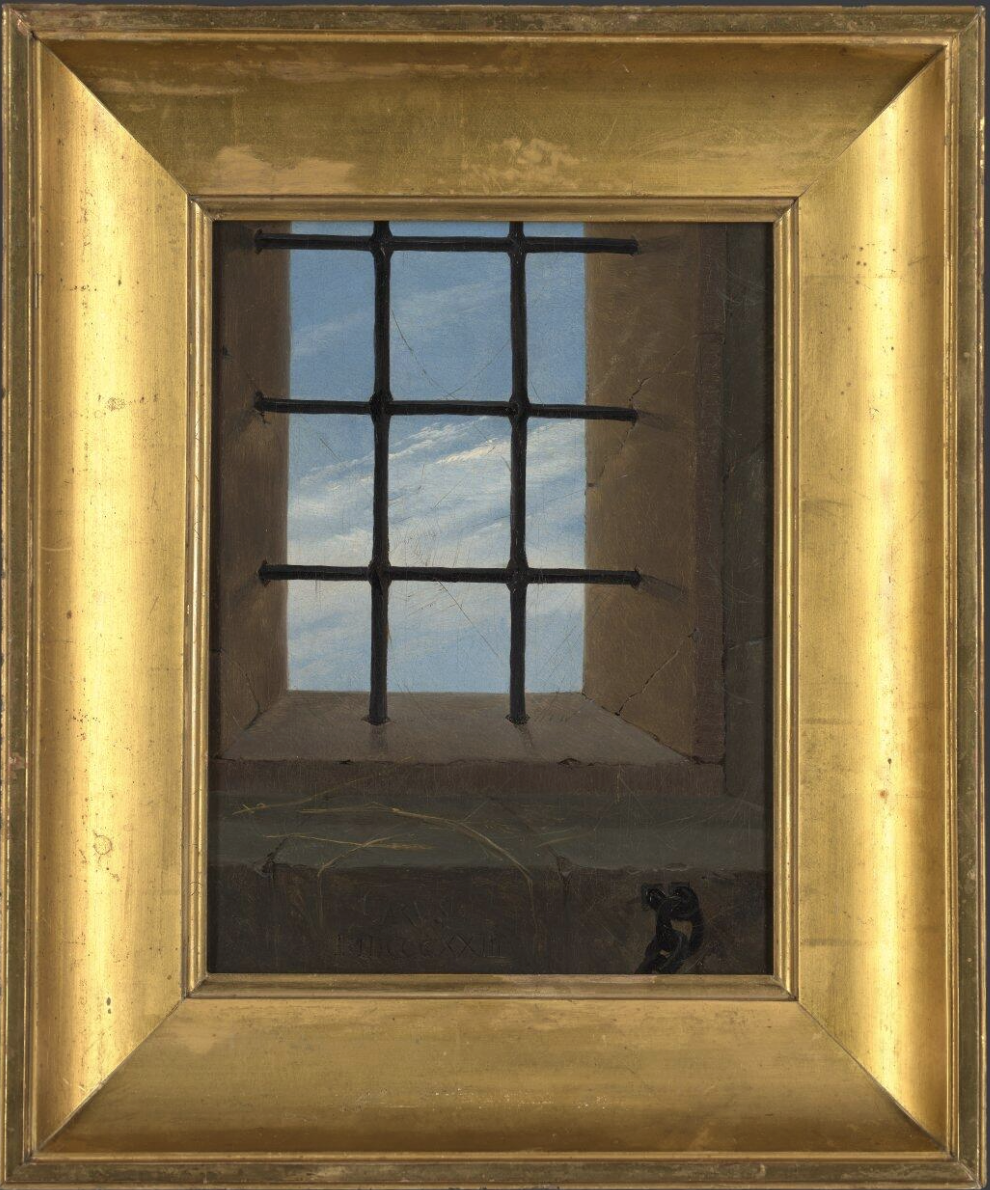
Tucked away in a corner, bordered by a golden frame, is Carl Gustav Carus’ “A View of the Sky from a Prison Window.” The painting is so simple, yet evocative: wrought-iron bars segment the blue sky keeping its freedoms just out of reach. The off-center view of the cell window still fails to conceal the chain in the corner keeping its prisoner fettered. Spiderwebs veil the ledge, a constant reminder of the trap in which they find themself. 

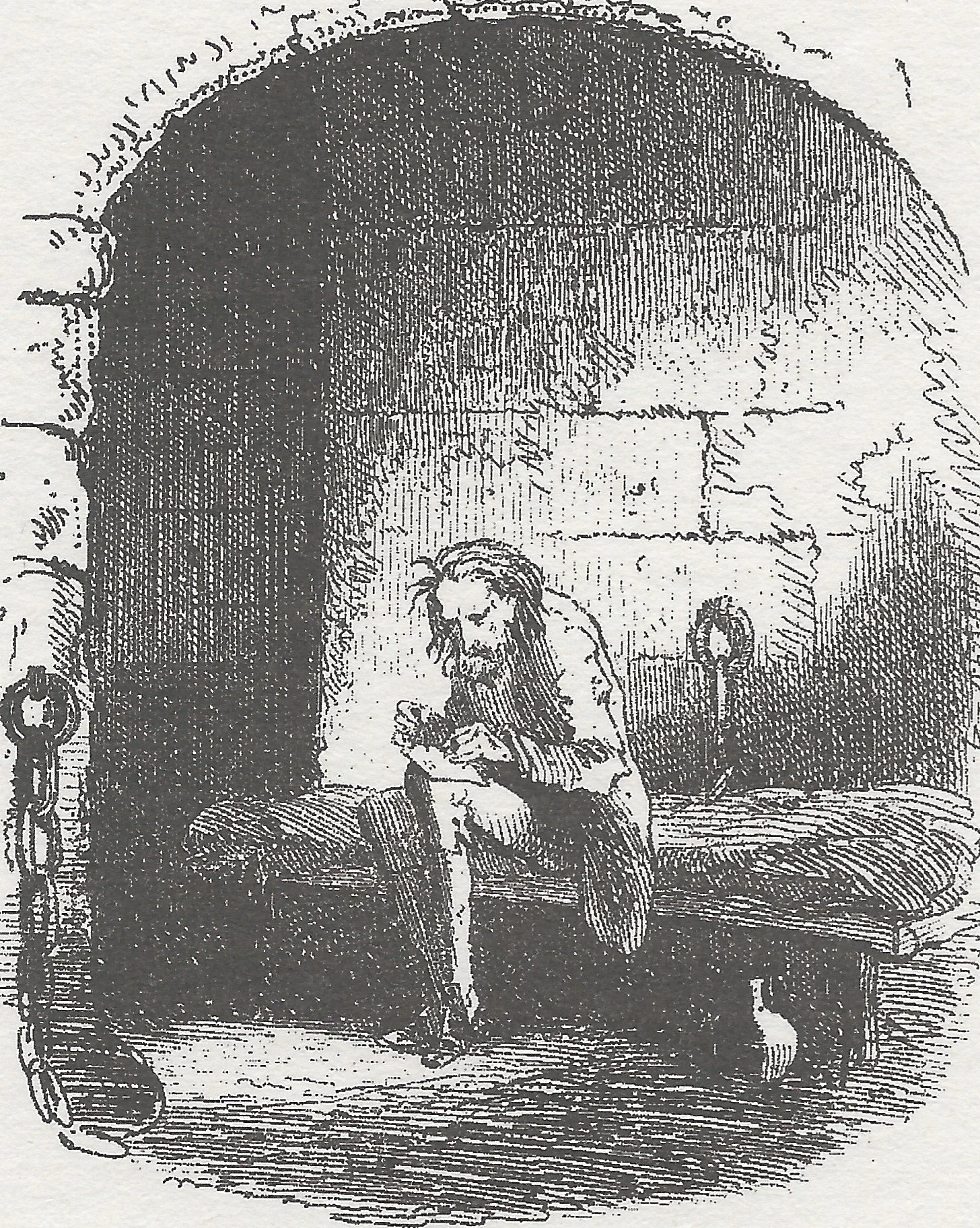
In “A Tale of Two Cities,” prison rends the soul, transforming characters like Doctor Manette into a shell of his former self, prone to fits of traumatic memories which leave him crying out in pain. In “Les Miserables” Jean Valjean’s experience of incarceration consumes him, turning him into a ‘wretch’ unable to think of anything other than his rage for the systems which unfairly imprison him for stealing a loaf of bread to feed his sister’s starving children. While on our trip, through visiting locations of imprisonment like the Bastille or La Force prison, which respectively hold characters like Doctor Manette and his son-in-law Charles Darnay, I got a real sense of these places as penal institutions rather than places in a book. I realized how easy it is to find distance from the suffering of people who live so far removed from ourselves. Though the Bastille and La Force existed in my mind first as settings, they’re also places where real prisoners waited, suffered, and wondered whether they would ever see freedom again.

“Doctor Manette in the Bastille Prison” drawn by Hablot Knight Browne.

Fun (?) fact: “The illustrations for A Tale of Two Cities were not well received and Browne, who had illustrated Dickens for 23 years, never worked with Dickens again.”

A View of the Sky from a Prison Window, Carl Gustav Carus (National Gallery, London)

In looking at “A View of the Sky from a Prison Window”, I can’t help but imagine myself as that prisoner. I’m forced to watch clouds float by like handkerchiefs in the wind, mourning my death to come while rotting in a cell. The only thought which crosses my mind is that: ‘I wish I were a bird with wings that could escape into that blue sky.’ It is heartbreaking to consider the temptation of freedom so close in sight, but so far in actuality. This pain is only exacerbated when you consider how a prisoner would feel in this cell knowing their incarceration was unjust. From Jean Valjean’s disproportionate punishment of 19 years of imprisonment for trying to do a good deed, to Doctor Manette serving 18 years without due process from a ‘lettre de cachet’ where the king or their ministers can order your arrest with no trial, captivity when unfair does more than just take away your freedom. Easily, the prisoner in Carus’ painting could have been anyone: Doctor Manette waiting for release, Charles Darnay fearing execution, Jean Valjean counting the years of his sentence, or any person today staring through a window and wondering when they will see the world again.

When I think about the prison system now in the United States, I wonder how much has really changed. Prisons remain overcrowded, with people enduring inadequate heating and cooling, poor nutrition, and harsh living conditions. Incarcerated people perform essential labor, from maintaining infrastructure to responding to state emergencies and natural disasters for little or no pay, practically indentured servants. ICE agents take people away at their jobs, or on the street, away from their families and children, sometimes even before an immigration judge has heard their case. Others continue to serve sentences for offenses like marijuana possession, even as the substance has been legalized in many states. Carus' painting inspires me to ask what happens when someone is reduced to the walls around them. What are we complicit in when we continue to treat prison as a severe punishment rather than as reformation to right a wrong?

Victor Hugo wrote, “There is a spectacle greater than the sea: that is the sky. There is a spectacle greater than the sky: that is the inner soul.” Looking at Carus' prison window, I find myself wondering if the cruelest prison is not the one which steals your freedom, but the one that changes you fundamentally until you no longer recognize yourself or your soul. It is easy to try to define prisoners by their crimes statistics, or numbers, but behind every Prisoner 24601, there could be the story of someone stealing bread for his nieces and nephews. Someone who is missed by their wife who blows kisses, not to her husband, but to the outside face of his jail in the La Force Prison, hoping he will catch a glimpse of her. Someone in a cell who looks at the sky the same way I do, who dreams of flying away, as free as a bird.

Why England Never Had Its Bastille

When I imagined London before arriving, I pictured history frozen in stone: Buckingham Palace standing proudly behind its gates, Parliament overlooking the Thames, Westminster Abbey preserving centuries of monarchs beneath its vaulted ceilings. I expected these places to feel like relics of the past. Instead, they felt surprisingly alive.

Civil servants hurried past Westminster carrying coffee cups. Tourists crowded around the palace gates waiting for the Changing of the Guard. Politicians walked into Parliament as casually as office workers beginning another Saturday morning. The same institutions that have existed for centuries continue to shape Britain today, not as museums, but as living centers of power.

That realization stayed with me through our first class and exploration, where we were introduced to a question that seems simple until you begin walking through London itself: Why wasn’t there a revolution in England like there was in France?

As we walked from Piccadilly through St. James towards Buckingham Palace and Westminster, I noticed how closely Britain’s symbol of power exists beside one another. The monarchy, the Parliament, the Prime Minister’s residence, and Westminster Abbey are all within walking distance. Each represents a different form of authority – royal, political, and religious – but together they reveal how closely intertwined Britain's institutions remain. Coming from the United States where political institutions are relatively young, I couldn’t fathom how old these buildings are. Westminster Abbey has hosted coronations for nearly one thousand years. Parliament still meets by the same river where generations before debated Britain's future. Rather than replacing its institutions through revolution, England seems to have attempted to reshape them over centuries. 

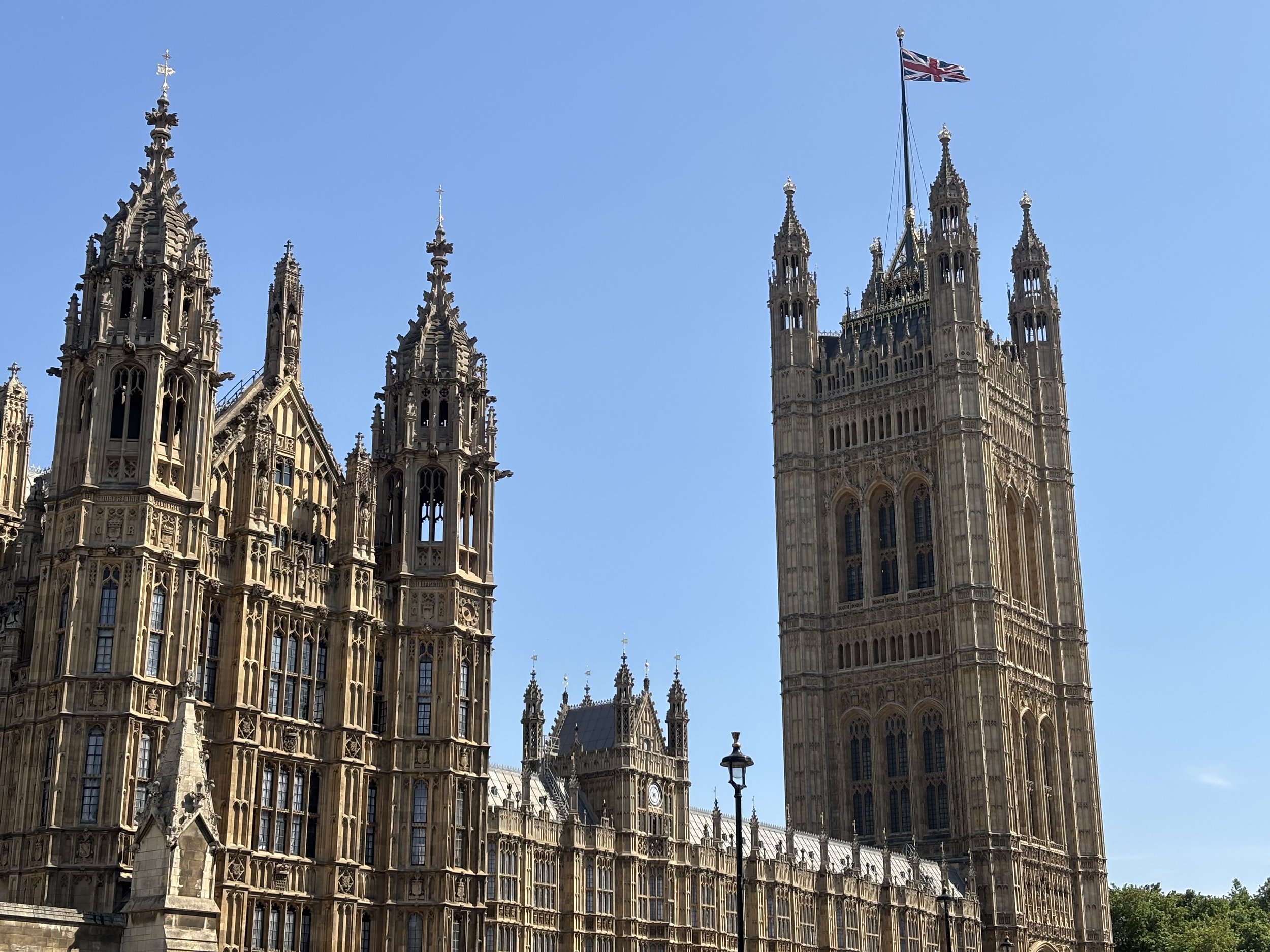
The Palace of Westminster, where centuries of British political tradition continue to shape government today.

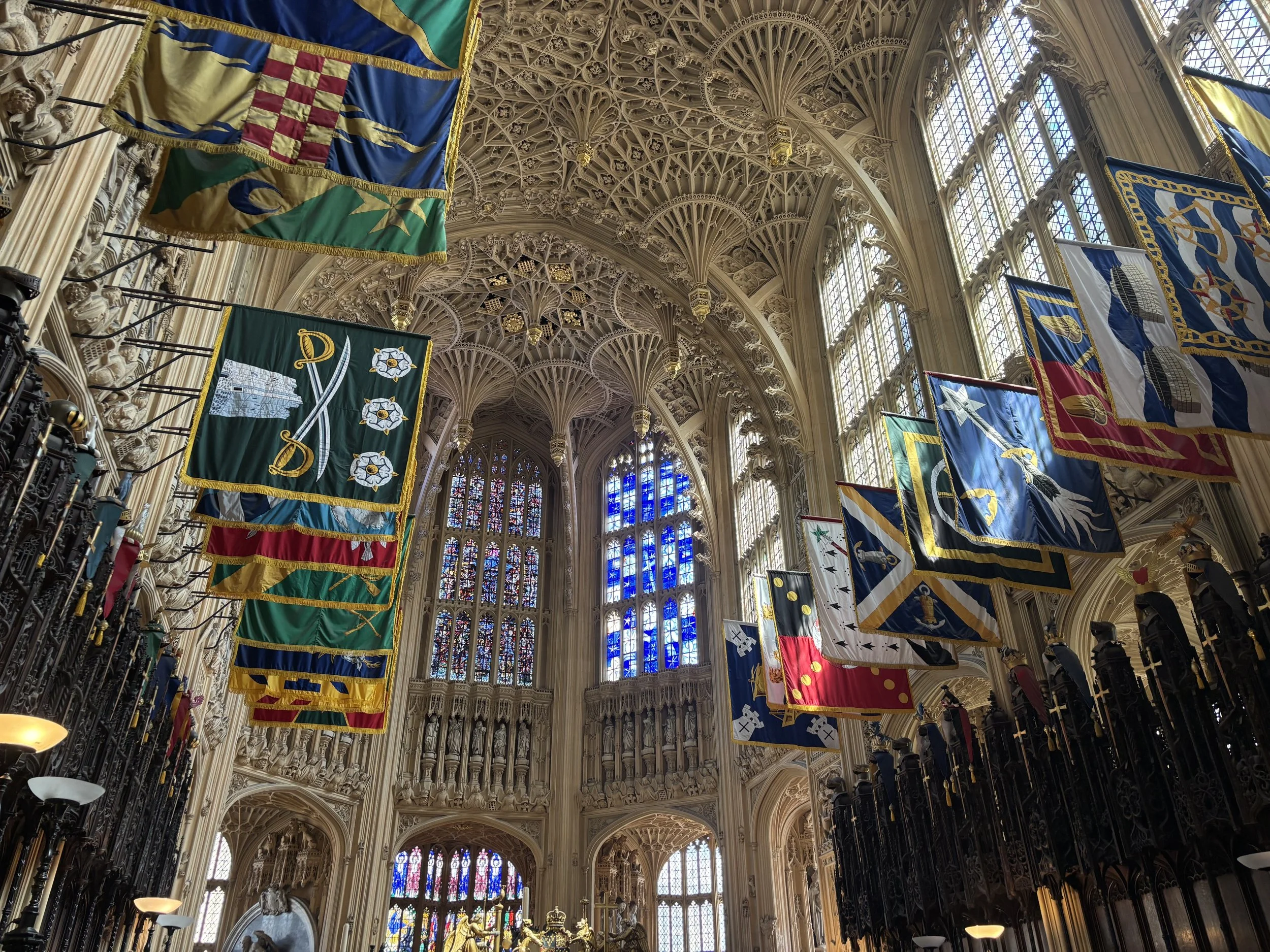
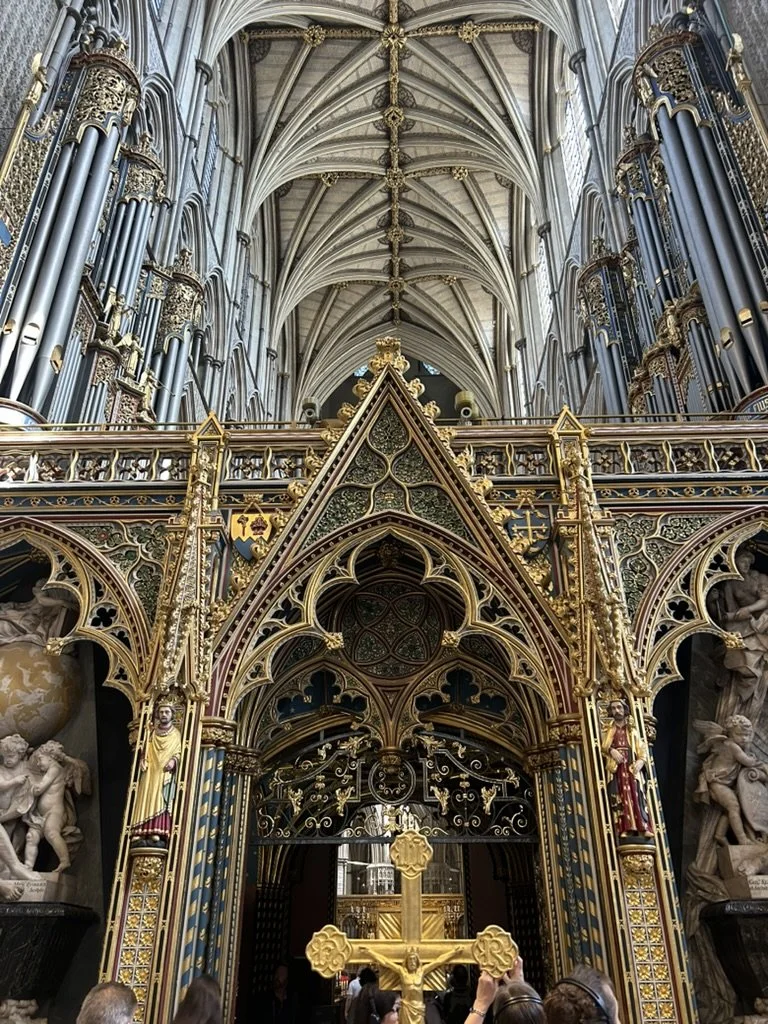
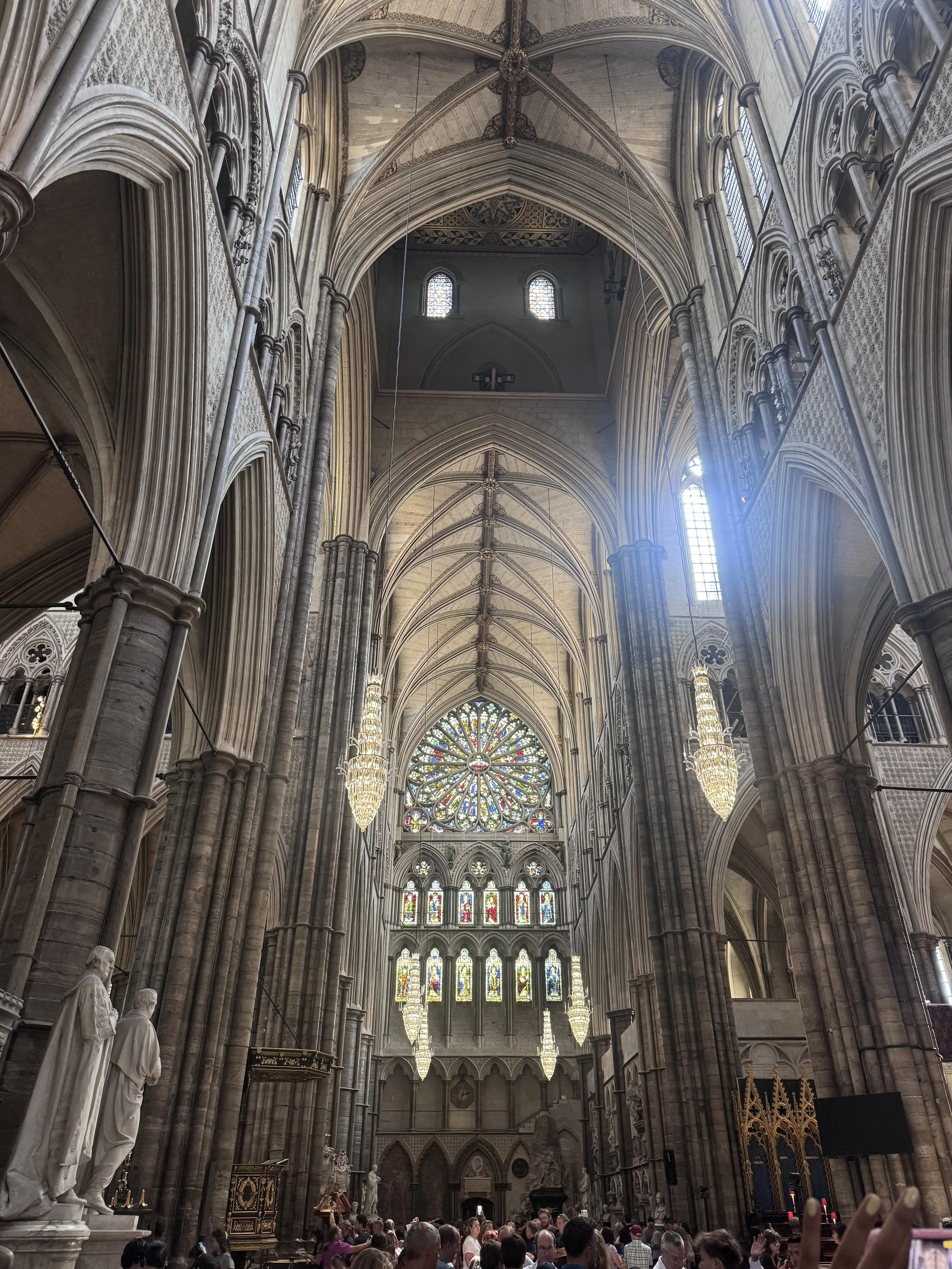
Standing inside Westminster Abbey, I found myself imagining the centuries of people who had stood in the very same place before me.

During our seminar, Professor Chater introduced a Victor Hugo quote, “the feudal illusion”, which is the idea that England preserved many aspects of its aristocratic traditions instead of violently rejecting them. Before arriving in London, I assumed England had simply escaped revolution altogether. Our seminar complicated that assumption. England experienced its own political upheaval in the seventeenth century when King Charles I was executed after the English Civil War, and Oliver Cromwell then abolished the monarchy and ruled as Lord Protector, so for a brief period England became a republic. Yet unlike France, where revolution permanently transformed the political landscape, England eventually restored its monarchy. Rather than dismantling its political system entirely, it absorbed that period of upheaval into its history. Walking through Westminster, the monarchy no longer felt like a relic of the past but instead it felt like an institution that had repeatedly adapted in order to survive. The grandeur of these buildings makes power seem timeless, even natural. Standing before Buckingham Palace, it becomes easy to forget that monarchies are human institutions created, challenged, and reformed over time. Their beauty almost disguises the inequalities they once represented. 

Throughout the week, we discussed how Britain and France developed two very different historical identities. Britain came to represent continuity: loyalty to institutions, constitutional monarchy, and gradual political change. France, particularly in Dickens' imagination, became associated with revolution, equality, rebellion, and the violent rejection of the old order. Of course, history is never that simple. These are broad narratives rather than absolute truths. But walking through London helped me understand why those stories continue to resonate. The city's landmarks celebrate endurance. They tell the story of institutions that have adapted instead of disappeared.

Charles Dickens understood this contradiction well. Although A Tale of Two Cities focuses on the French Revolution, it is told through English eyes. Dickens condemns the cruelty of the French aristocracy while simultaneously warning readers about the dangers of revolutionary violence. He portrays London as deeply flawed, yet capable of reform without complete destruction. Visiting London's political heart helped me understand why Dickens viewed the French Revolution from such a distinctly English perspective. Suddenly, his England wasn’t simply a setting on a page – it was standing right in front of me. 

Certainly, London isn’t only a city of palaces and parliaments. A few days later, we visited Newgate Prison, the Old Bailey, and the neighborhoods that shaped Dickens himself. These places reminded me that England was hardly free of injustice. Poverty, overcrowding, and inequality existed here too. Dickens devoted much of his writing to exposing those realities. The difference wasn’t that England had solved these problems – it hadn’t – but that its path toward change looked different. 

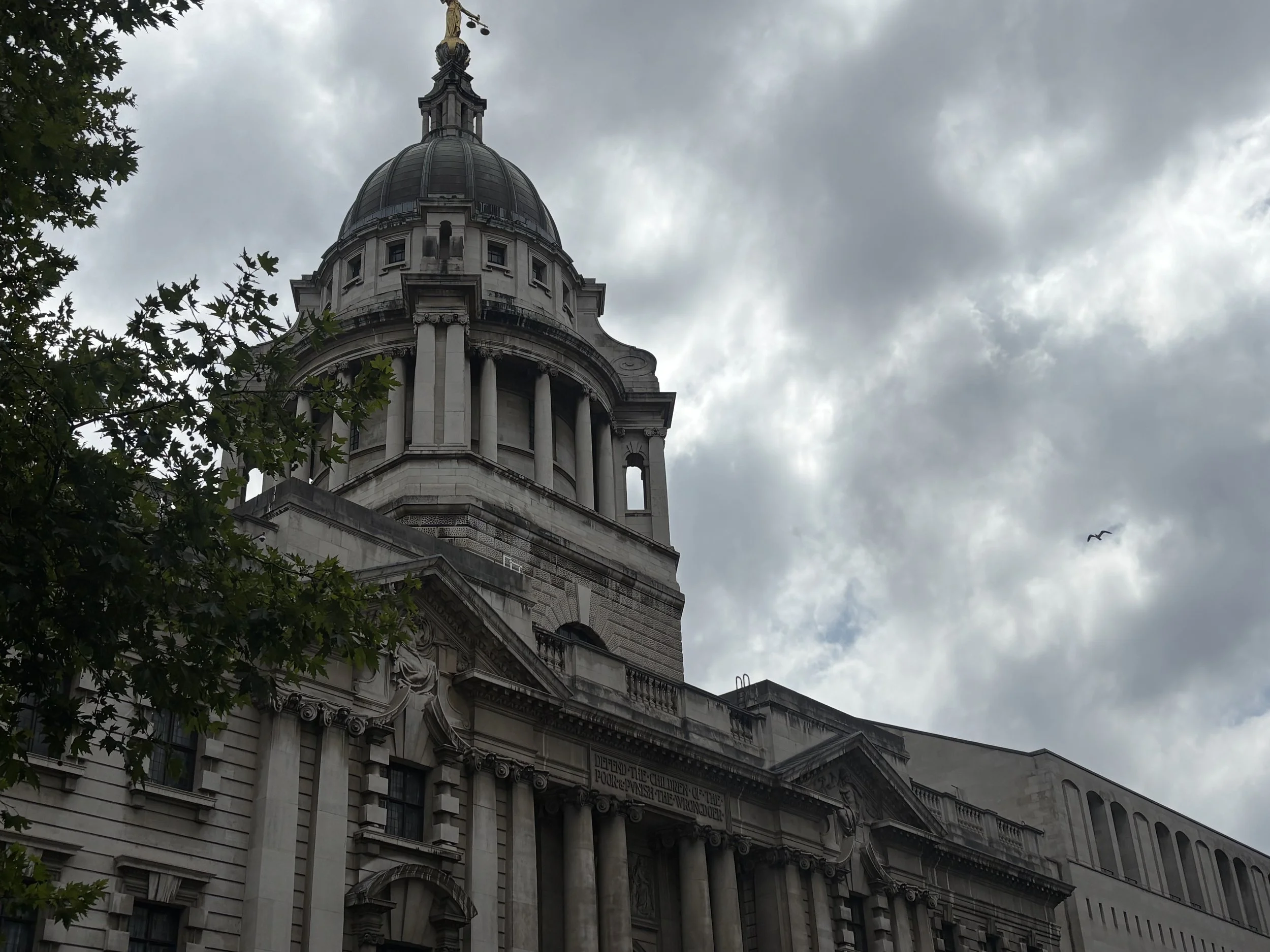
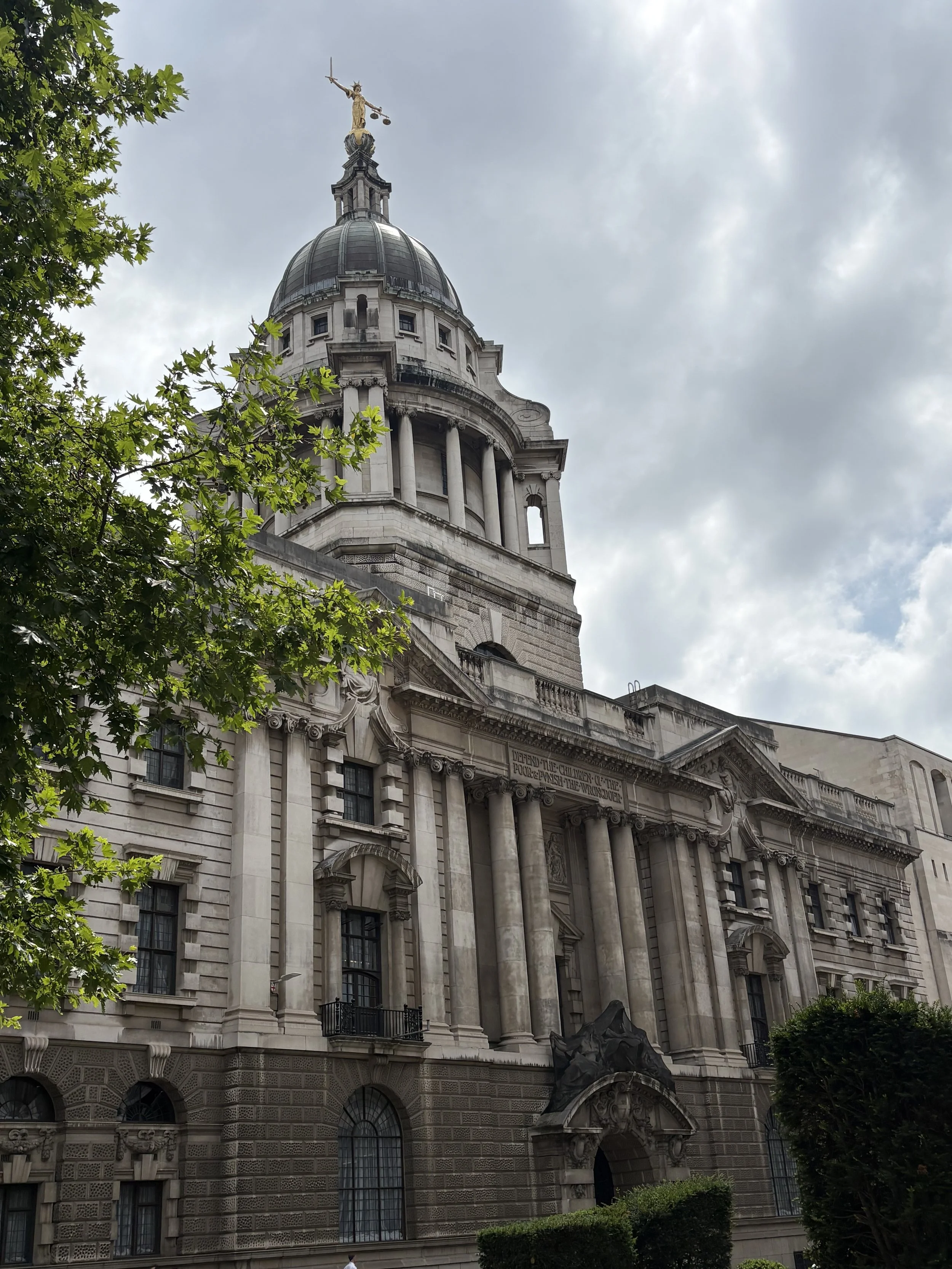
The Old Bailey, London's historic criminal court and the site of Charles Darnay's trial in A Tale of Two Cities. Standing here, Dickens' fiction felt inseparable from the city's history.

A peaceful demonstration near Russell Square, where centuries-old traditions meet modern political expression.

Later in the week, I was walking back to my accommodation near Russell Square Gardens when I heard chanting echoing through the streets. Curious, I followed the sound until I reached the edge of a massive demonstration. Thousands of protesters carrying Palestinian flags filled the roads surrounding the square. People of all ages held handmade signs while speakers addressed the crowd, and police calmly redirected traffic as the march passed through central London. I stopped for several minutes, simply watching the crowd move through the streets.

While observing the protest, I found myself thinking back to our very first seminar.

Only days earlier, we had spent the afternoon exploring Westminster and discussing why England had never experienced a revolution like France's. Here I was again, watching ordinary people gather to demand justice – not for Britain, but for people thousands of miles away. It struck me that although England preserved institutions like the monarchy, it has also developed a long tradition of public protest and political expression. The monarchy remained in Buckingham Palace, Parliament continued its business, and yet the streets belonged to the people.

That contrast fascinated me. A country can preserve centuries old traditions while still making space for citizens to challenge those in power. Perhaps England's history isn't defined by the absence of political passion, but by the different ways that passion has been expressed. Dickens constantly asks what happens when injustice is ignored. In A Tale of Two Cities, France reaches a breaking point because generations of suffering eventually erupt into revolution. Walking through London made me wonder whether England's answer has often been something else – not silence, but conversation. Protest instead of insurrection. Reform instead of rupture.

I still don't know why England never experienced a revolution quite like France's. But after spending this week walking its streets, I no longer think that's the most interesting question. The more interesting question is how a nation manages to preserve institutions that are centuries old while making room for new voices demanding change. And in London, I realized those two stories are unfolding at the very same time.

The Arc of a City

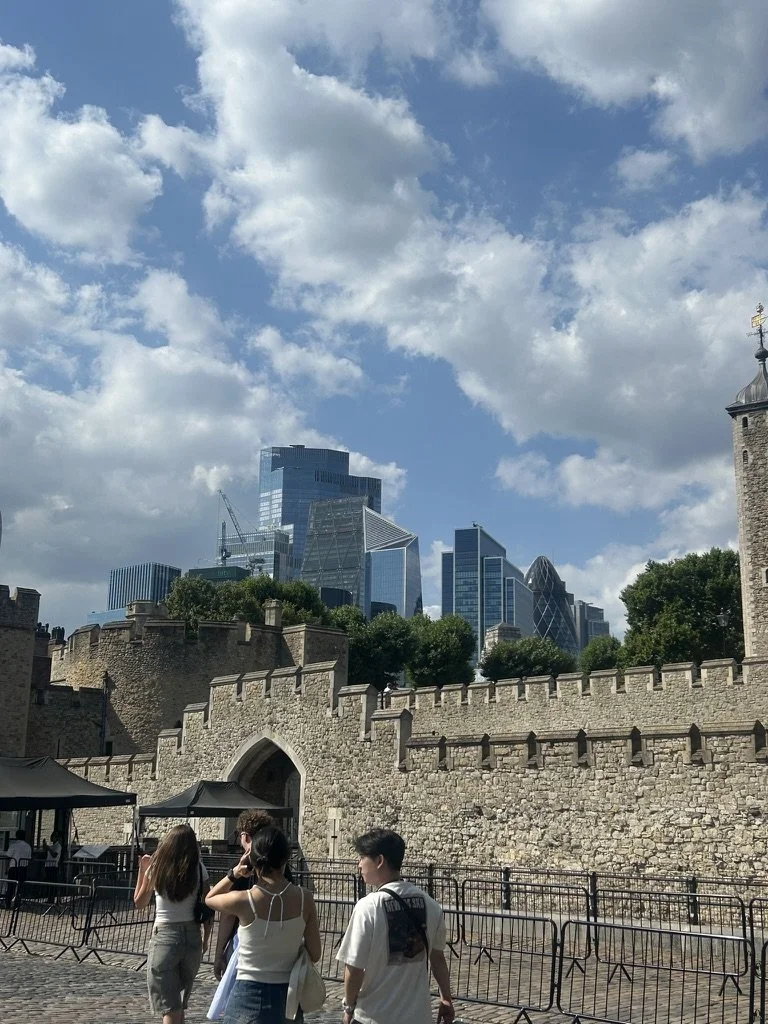
Getting to walk around London has been a wonderful experience. Everywhere you turn is layered with history and progress. I find the mix of modern and old architecture just spectacular. We marvel at the Tower of London, dating back to William the Conqueror in 1066, as it sits in the foreground in front of the gleaming glass of London’s modern skyline. Within this setting, it’s inescapable to connect to Charles Dickens’ own opening of A Tale of Two Cities.

It was the best of times, it was the worst of times, it was the age of wisdom, it was the age of foolishness… in short, the period was so far like the present period that some of its noisiest authorities insisted on it being received, for good or for evil, in the superlative degree of comparison only
— Charles Dickens, A Tale of Two Cities

While Dickens was writing about the comparison of 1775 and 1859, the sentiment holds true in 2026.

When you walk around Westminster Abbey, it’s hard to not feel in awe of the incredible feat of human achievement. It’s easy to wander around and remark at how beautiful it is. It’s nearly inevitable to snap an aesthetic picture for your Instagram story, which I admit, I did. But as the initial shock wears off, you realize the church worships its monarchy as much as its faith. There are plaques commemorating the “brave” souls who, we now recognize, were colonizers. At every moment in time, we reach new highs in human achievements and new lows in humanity.

I started to feel like “the mender of roads”, from A Tale of Two Cities, so easily distracted from reasoning by beautiful presentation. When you look upon the Royalties' beautiful shrines, its difficult to not fall under their influence. From the outside it isn’t easy to understand the royalists of 1775, how could they possibly want a monarchy with how they treat them? But then you walk by Buckingham palace, and while you may not understand, you certainly gleam some insight.

The past is nuanced, complicated, and long. Just as Dickens’ presents many points of views and opinions in his book, London shared its own stories as we made our way around the city.

On a surface level, the many statues scattered around the city add to its artistic and charming nature. But if you read the plaques, or are lucky enough to have a professor who is very knowledgeable in British history, you can get a glimpse into the mixed beliefs of the people's past.

The statue of Oliver Cromwell stands directly outside the House of Commons. Across the way the small bust of King Charles I is mounted to St. Margaret’s Church. While I had never heard of Cromwell before the class, I quickly learned his significance and a brief understanding of his complicated story. Cromwell was a commander in The New Model Army in 1645, who fought against an absolute monarchy in the English Civil War. He later played a large role in the execution of Charles I. In 1899, the statue was placed in front of the parliamentary House of Commons. It was controversial from the beginning. Some people opposed it for his anti-monarchy views, while others opposed his later shift into a military dictator and the role he played in Ireland. The glaring face of Charles I, who looks directly across at Cromwell, highlights this opposition well. The symbol of Cromwell, checking the power of the monarchy as he stands in front of Parliament is powerful and articulates this moment in history better than simply reading about it.

Not surprisingly, many of the statues we saw were described as controversial figures. I suppose if you are important enough to have a statue in England, you probably have to be controversial. There are statues of colonizers, conquerors and kings as well as more modern figures like Winston Churchill.

I also found the statues of Trafalgar Square fascinating. The square contains four plinths, but only three statues. The first of George IV, the second Sir Charles James Napier, the third Sir Henry Havelock. The fourth plinth was, I apologize that I keep using this word, controversial. It remained empty for a while and suggestions kept cropping up. After Margaret Thatcher’s death, she was even in the conversation. That was, even for England, too controversial. Thus it was finally decided to use the fourth plinth as a rotating art installation. When we visited, the artwork included casts of nonbinary and queer peoples faces. It is quite extraordinary to have Charles I on one corner and a testament to human progress on another.

As we read about A Tale of Two Cities, we’ve spoken about the arc of history and the march towards democracy. I feel these statues demonstrate this quite beautifully.

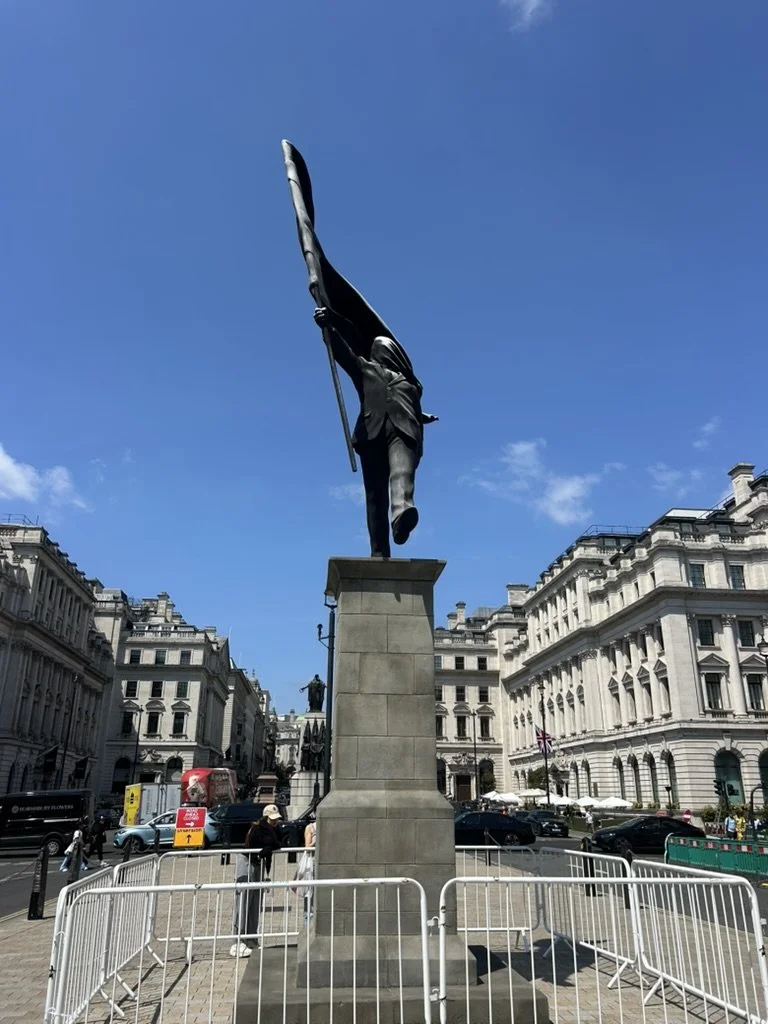
Another statue I found quite moving, and incidentally related to A Tale of Two Cities and Les Miserables, is not really an official statue at all. Banksy, the street artist and activist, has recently installed a piece at Waterloo Place. When the class came across it, we spoke about how we each interpreted it. Blinded by the own flag he carries, the figure is about to step off his own plinth. Most of us felt it is a reference to blind patriotism, especially with its proximity to Britain’s Military prowess. I also thought it was really cool that the statue was being looked over by a security guard. In this instance, the right to speak out was not only being allowed but protected. \

The tragedy during the fight for democracy in A Tale of Two Cities can be harrowing, but I hope that these small yet meaningful acts would make the people in the arc of history proud.

From Page to Stage

Some stories change when they're adapted. Les Misérables simply changes how it tells the story.

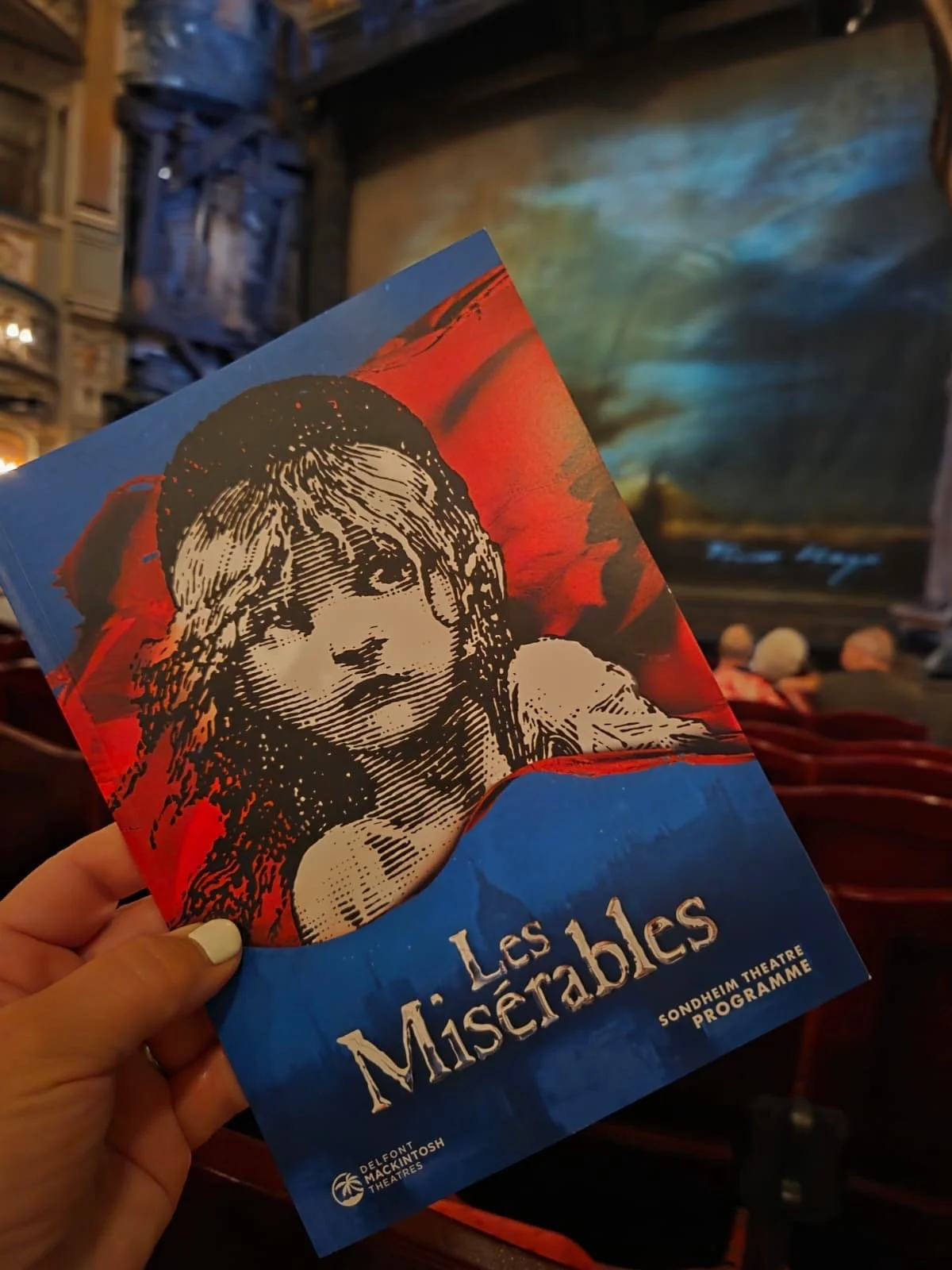
When I first arrived in London, a few days before the program started, accompanied by my family, I had agreed to see Les Misérables, the musical in the West End, with my mom. I knew I would see it again the following week, but when I met with someone who hadn’t had the chance to read or experience the story, I wanted to say yes. I wanted to experience the musical with my mom just as enthusiastically as she did, especially after telling her snippets of many rants while I was reading the novel and hearing about her dream of seeing the show in London. And I don't regret seeing it with her, or seeing it again a week later with my class. The performance is so heartbreaking, brilliant, and exemplary, and if I had a chance to see it again tomorrow, I would.

For anyone unfamiliar, Les Misérables is a musical adaptation of Victor Hugo's 1862 novel. Originally created in French by Alain Boublil and Claude-Michel Schönberg before being adapted into English by Herbert Kretzmer, it has become one of the longest-running musicals in the world. Somehow, it transforms one of literature's longest novels into a performance of just under three hours without losing the emotional heart of Hugo's story.

The first time I saw the musical, I was simply trying to take it all in. The second time, after another week spent immersed in literature and history, I found myself watching less as an audience member and more as a reader asking the question, “How do you turn a 1400-page novel into a three-hour musical without losing its heart?”

Surprisingly, the answer is remarkably well. Herbert Kretzmer took the challenge of writing the English version and did not miss a beat, producing one of the longest-running musicals in the world.

Anyone who's read Hugo's novel knows that Les Misérables isn't just a story. The book is also a history book, a philosophy book, a political essay, and occasionally a very detailed lecture on topics you never expected to read hundreds of pages about. The musical trims almost all of that. Gone are Hugo’s lengthy digressions on Waterloo, the Paris sewers, convent life, Parisian slang, and countless philosophical reflections. I wondered whether cutting so much would make the story feel incomplete or leave noticeable holes in the narrative. Instead, it creates a cohesive story, taking the audience through the same emotional journey as reading the novel.

One of the things that amazed me most was the pacing. Fantine's heartbreaking story seems to fly by. Jean Valjean's transformation happens in what feels like moments. Cossette grows from child to young woman almost immediately. Marius appears out of nowhere. The musical makes you forget that Hugo once spent dozens of pages talking about the Paris sewers. If you've read the novel, it almost feels as though someone is skipping chapters. The musical crams the first four parts of the novel, roughly the first thousand pages, into a single act, leaving the last part of the book to act two. However, rather than it feeling rushed, it felt natural and remarkably intentional. And that’s the astonishing feat of the adaptation.

One thing I noticed far more during my second viewing was that Les Misérables rarely stops the narrative for a "musical number." There wasn’t a spectacle made out of the dancing, and the songs were the dialogue. "Who Am I?" is a powerful solo where Jean Valjean's entire moral crisis is compressed into a few minutes. "Stars" isn't simply Javert singing beautifully. It's his worldview. "One Day More" somehow manages to bring every storyline together while moving each one forward simultaneously. By the time "Empty Chairs at Empty Tables" arrives, the audience hardly needs dialogue to understand grief. We've lived alongside these characters long enough that the music carries the weight for us. Reading Hugo beforehand made these songs even richer. I found myself recognizing themes from the novel hiding inside lyrics I had completely missed the first time I listened. I will admit that the musical, without the context of the book, is difficult to follow if you don’t pay attention, and would leave someone feeling lost at times.


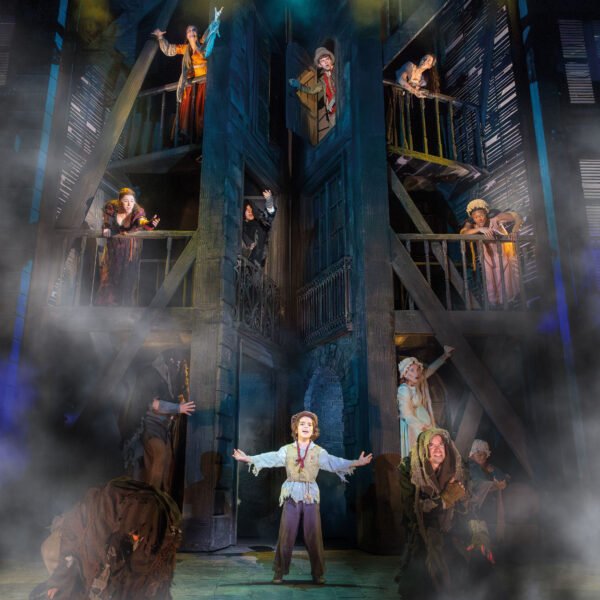
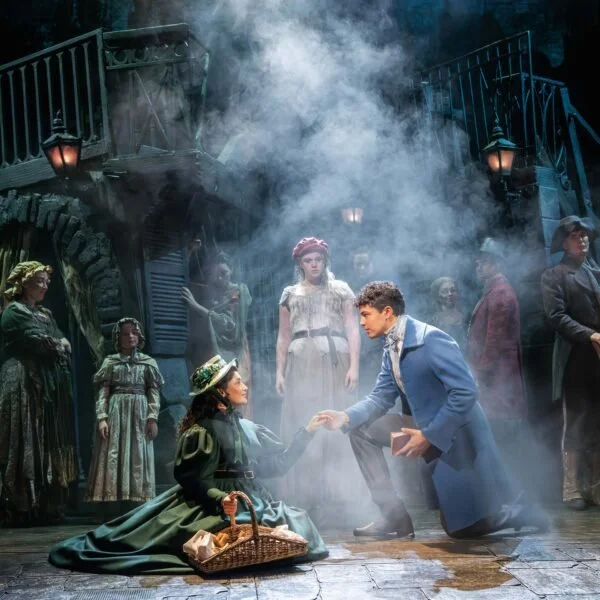
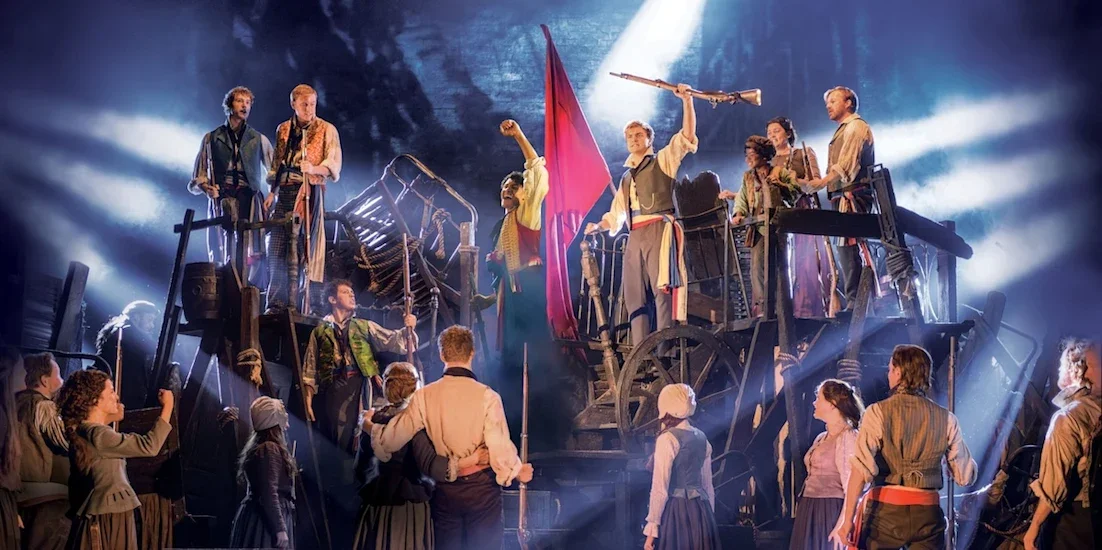
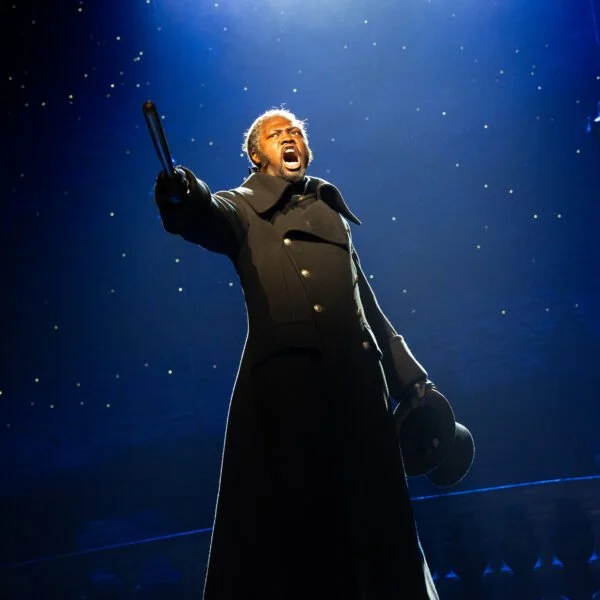
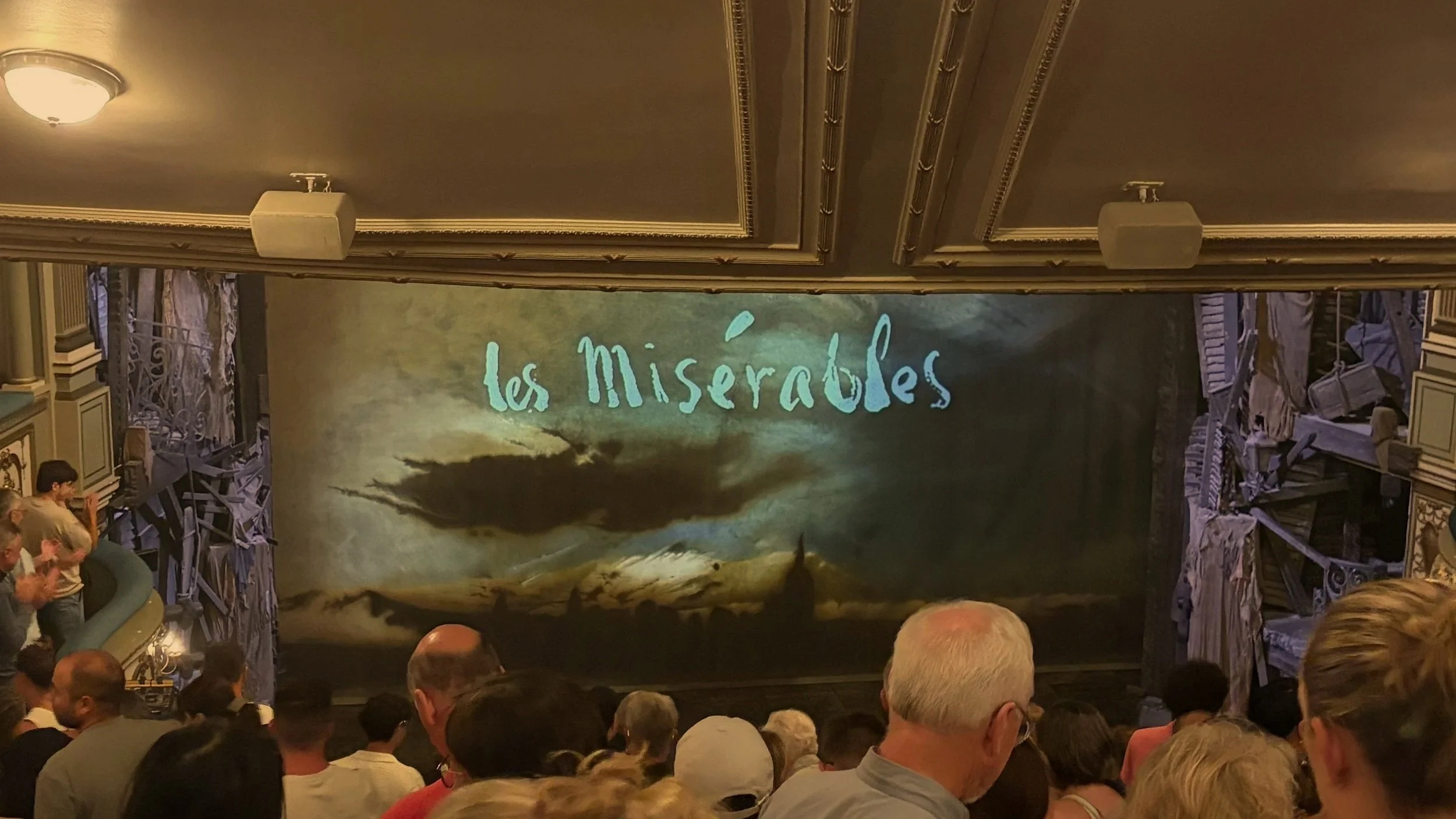
Photos from the London Les Misérables Website Gallery


This blog wouldn’t be a blog by me without a little critique regarding the technical components and casting.

Before diving into the technical side of the production, I have to give credit to the casting because it was phenomenal. One of the things I appreciated most after reading the novel was how closely many of the actors matched the mental images I had formed while reading. The Thenardiers were exactly as I had pictured them: chaotic, over-the-top, and somehow both hilarious and completely unlikable at the same time. Fantine was another standout. From her blonde hair to her delicate frame, she looked remarkably close to the image I had built in my head while reading Hugo's descriptions, making her tragic story even more believable. Beyond appearances, the vocal talent across the entire cast was incredible. Every principal had a distinct sound that suited their character perfectly, from Jean Valjean's warmth and power to Javert's commanding presence. What impressed me most was the range across the ensemble. There wasn't a weak voice on stage, and each performer brought something unique to the score.

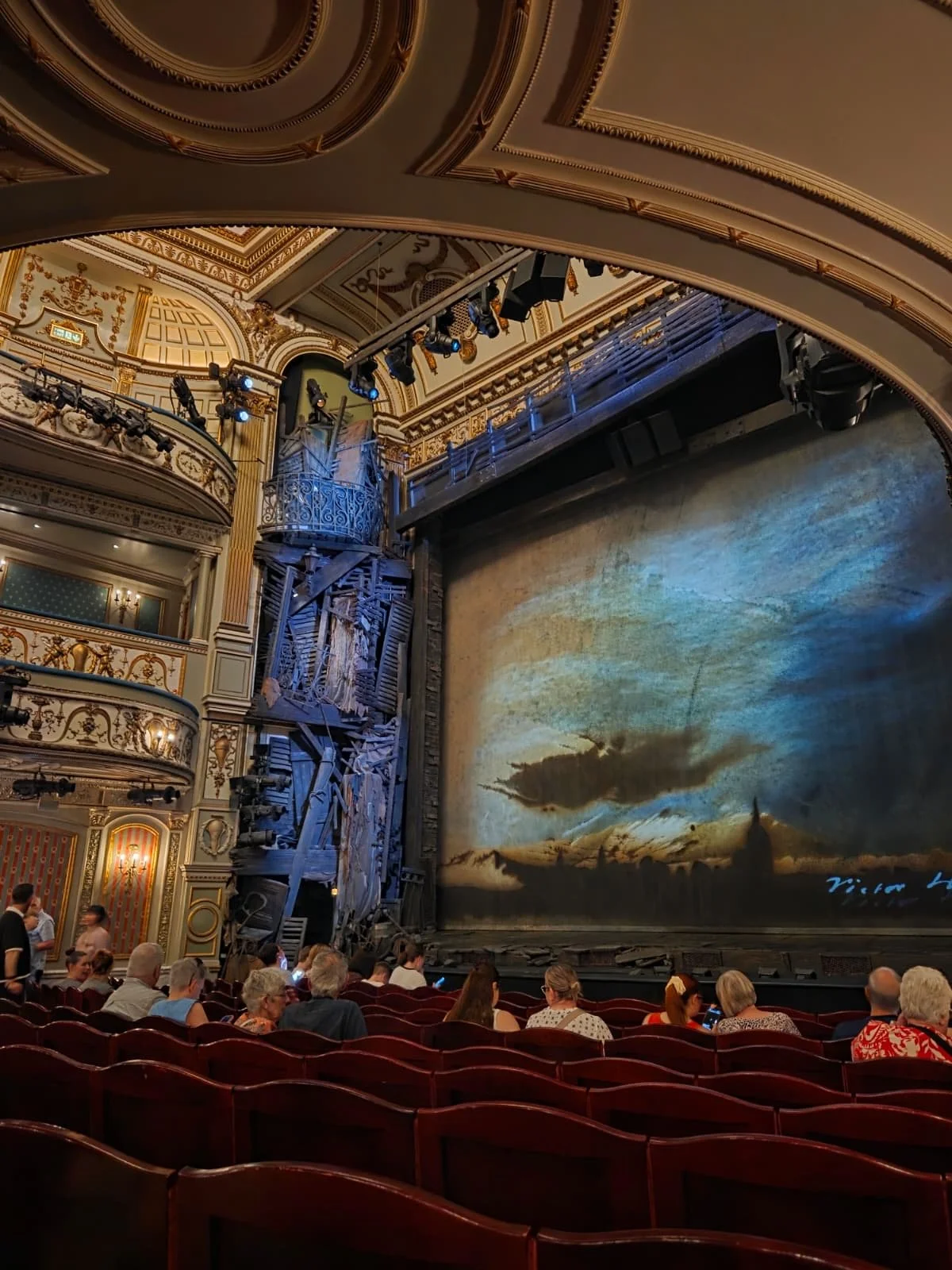
On the technical side, starting with the set, it was absolutely breathtaking. Every moving piece fits together like an enormous puzzle. I couldn’t help thinking of all the planning that must have gone into the design while sitting there, because not only does it have to fit and be reusable on stage throughout the show, but it also has to fit in a probably small backstage space, considering that the theater is in a crammed part of London. On top of the architecture that went into the design, the set was so beautifully detailed in scenes like the barricade or the Thenardiers’ inn. I liked the use of a side vom for additional acting levels on stage left as it added depth. And the lower exit that went below the stage on stage right was also a clever way of utilizing the space in the theatre.

Accompanying the scenic elements was the soundscape. The sound in the show was probably my favorite technical element. From the dripping of water coming from around you during the sewers to the subtle birds chirping in the square, the sound enveloped you completely, making you feel like you were actually there. Together, the sound and scenery brought the “scabrous seepings from the walls, dripping ceilings, blackness” of the Paris sewers described in the novel to fruition. The sound transported you into the world onstage much like Hugo's words transported you into the world on the page. Combined with the orchestra, it created an experience that felt completely immersive. Even more impressive was hearing musical motifs weave in and out of different songs, connecting characters and ideas long before the story explicitly did. Those recurring themes became little musical "Easter eggs." Once I noticed them, I couldn't stop listening for them.

Other miscellaneous elements I applauded were the pyrotechnics and Javert’s flight. During the show, there were pyrotechnics of sparks from Jean Valjean’s gun and off the top of the proscenium during the barricade scene. I thought that these were nice elements to add. I only wish that there were more sparks throughout the barricade scene, and not just the two in one corner. And when Javert takes flight off the bridge when he jumps, I applaud it not for having that additional element but for the smoothness of it. To have an actor fly on stage, they have to be clipped into a rigging system. During this scene, you could tell that he doesn’t get clipped in until he is on the bridge because he crosses downstage sporadically, and if he were to be clipped in during that, the rope would get caught in the lights and would disable the actor from flying due to danger risks. All in all, I applaud this because I love it when something takes you off guard in a show like this, where you don’t see him getting clipped in, so you aren’t expecting it.

Not every technical choice completely worked for me.

Some lighting moments were so dark that characters blended into the background (particularly during Javert's final scene), making it harder to focus on the emotional center of the moment. I don’t think that the light of the exit signs should be the lights drawing my attention more than the stage lights because the green “exits” were brighter than what was on the stage. I understand that the designer was intending for the lights to convey similar themes to the novel, but you shouldn’t have to strain your eyes to make out what was happening on stage. Towards the end of the performance in Act 2, the entirety of the dim lighting throughout the show was thrown off, with the scene in the wedding ball being the brightest and most light-filled scene, almost as if a separate designer had designed only this scene. I did enjoy how there was a consistent “beam of death” light to symbolize when a character passed away. I thought it was a clever way to understand each monumental death. My last comment regarding the lights includes the barricade, which was well designed and communicated the chaos/battle of the scene; however, I thought that it was quite inconsistent with some of the lights matching the sound and music, but some were out of place.

I walked away simply thinking that the costumes served their purpose in communicating the period, social classes, and relationships. Cossette’s costume as a kid in the Thenardier’s house showed that her relationship with the family was not a loving situation, as it juxtaposed Eponine’s gorgeous, clean, and wealthy-looking costume. My only qualm with the costumes throughout the show was that I thought that Jean Valjean’s soldier disguise stuck out like a sore thumb, not because of the other costumes, but because of how the costume itself looked like it was a last-minute addition and a less detailed costume in comparison to all the costumes in the show. Bringing it back to the wedding scene, I thought that the costumes brought such a huge contrast to the rest of the show, but it worked because it portrayed the happy moment. But even those moments didn't diminish the overall achievement of the production. If anything, they reminded me just how many artistic decisions have to come together successfully for a show of this scale to work. What makes this experience even more meaningful is when it happened.

Our class hasn't even begun unpacking Les Misérables together. During our first week in London, we've been exploring Dickens' world through A Tale of Two Cities, walking the same streets that inspired his novel while discussing revolution, justice, and the relationship between England and France. Watching Les Misérables in the middle of that journey felt like standing on a bridge between the two novels. Dickens asks us to think about revolution through England's eyes. Hugo asks us to experience it from within France. Soon we'll leave London and begin tracing Jean Valjean's footsteps through Paris. When we do, I know I'll be reading the novel differently than I did the first time. And I have a feeling that, somewhere in the back of my mind, I'll still be hearing, "Do you hear the people sing?"

.

British Greatness and the Status Quo

While walking through the chambers of Westminster Abbey, I felt an overwhelming sense of “British greatness”. The idea that the church was centuries old, the colorful stained glass, and the names of the greatest contributors of Western culture that has seeped its way throughout the entire world reminded me of the United Kingdom’s cemented position as a world power. It is a nation that many countries look up to in a way. Shakespeare’s plays, Dickens’ literature, the Beatles’ music, and even the royal family’s elegance, are essential parts of knowing culture, history, and entertainment. Westminster Abbey is more than just a church or historical landmark; it is a standing reminder of Britain's tradition, achievements, and power. However, we cannot forget what it took to get Britain into this position. Centuries of imperialism, stealing, slavery, and slaughter, lifted Britain up to its powerful status and allowed the nation to develop the largest empire in world history. It is part of the British tradition to hold onto this concept of pride and exceptionalism. After all, it is uncomfortable to challenge the status quo in any society.

Charles Dickens explores the notion of the British status quo in the Tale of Two Cities through various aspects of society in the novel:

“Any one of these partners would have disinherited his son on the question of rebuilding Tellson’s. In this respect, the house was much on a par with the Country; which did very often disinherit its sons for suggesting improvements in laws and customs that had long been highly objectionable, but were only the more respectable.” 

The refusal to challenge or even improve upon traditions encapsulates Britain’s conservatism and the British people’s cemented notion of their nation being the greatest in the world. Tellson’s Bank holding onto its old-fashioned traditions shows how even smaller aspects of British society reject change and progress. Dickens shows us through storytelling that holding onto tradition is ingrained in British culture. 

We still see this British traditional perspective today through the United Kingdom’s politics. The success of Brexit is an example of this; the British people voted to leave the European Union, partly because of British society’s holding onto the notion of the UK being superior to Europe and the world due to its former position as the largest empire on the globe. A large proportion of British society refuses to recognize that the world has changed and clings on to its former glory by a thread. It fascinates me how this traditionalist mindset has continued to linger throughout history and still remains today.

Dickens’ portrayal of gripping onto the status quo not only reflects British society, but also societies around the world. Japan remains a deeply traditional and conservative society with strict social etiquette rules. Taiwan holds onto a notion of preserving its constitutional status as the “true” China. India still has its hierarchical caste system in place that influences interclass relationships between their people. I believe that the beauty of Dickens literature comes from the fact that it is a universal reflection of society. He presents the small details in a way that is significant to the readers’ connection between his fictional narratives and reality. 


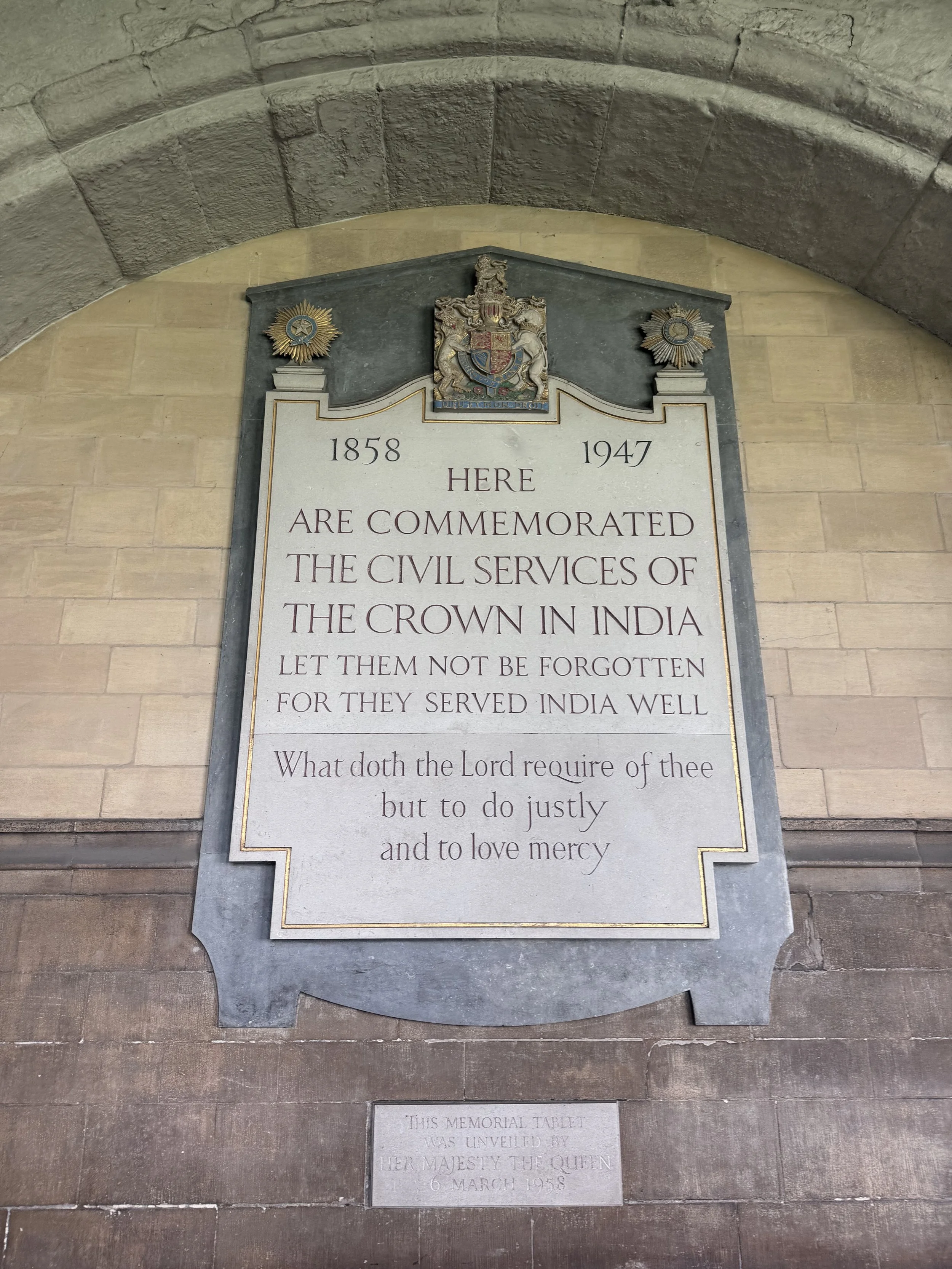
In one of Westminster Abbey’s corridors, I walked past a plaque commemorating the British civil servants in India when it was a colony of the empire. The plaque states, “Let them not be forgotten for they served India well”. This plaque is a remnant of the glossing over of British atrocities committed during their imperial rule. From the British perspective, the times of their vast colonial empire were their glory days. They reminisce about that period, as that was when their nation had the most power, pride, and influence. To them, they “served India well”, because the exploitation of the region resulted in immense wealth for England. To India, their people suffered under institutional violence, theft, and oppression. This directly highlights the blind patriotism that is prevalent among the establishment, as the history in Westminster Abbey is simply told through praise of the British Empire. 


“Neither did [Roger Cly] call it a curious coincidence that true patriotism was his only motive too. He was a true Briton, and hoped there were many like him.”

We see this concept of blind patriotism in A Tale of Two Cities as well as through the characters of John Barsad and Roger Cly. They are presented as credible witnesses due to their “patriotism”. However, they are later revealed to be conmen and spies by Mr. Stryver. I think that it is quite intriguing how Barsad and Cly’s credibility were simply determined by their “patriotism”. The establishment failed to use other perspectives or factors to evaluate a witness’ character. The plaque commemorating the British colonization of India directly aligns with this incident in the book in my eyes. British pride holds utmost importance over anything else, including morality, justice, and human rights. 

Reading A Tale of Two Cities and walking through Westminster Abbey has made me understand that pride and nationalism is a primary driving force of the British establishment’s sense of patriotism, rather than a genuine care of its people. It ignores the grave wrongdoings they have conducted in the past and does not make the effort to improve and change the status quo. In my eyes, being able to talk about and expose the ugliest aspects of one’s nation while having discussions regarding how to progress as a society is true patriotism and greatness. 

Even before discussions regarding British imperialism entered the mainstream, Dickens was still able to highlight the flawed aspects of British society that drive a sense of nationalism. His literature has allowed me to reflect on the implications of British history and Western imperialism. I recognize the violence, oppression, and lies that the nation depended on to achieve its greatness. I recognize Britain’s obsession with utilizing pride and tradition to drive them forward while leaving morals and justice in the dust. However, I believe that we can celebrate the great progress that the West has made, including Britain. I appreciate the diversity, freedom of thought, democratic processes, and scientific feats that Britain has allowed to flourish, as well as the notion that we can fully criticize the history, culture, and actions of the nation; these aspects – not the blind patriotism that ignores the ugly history of the nation – are what makes Britain great.


Defining Justice

A Tale of Two Cities by Charles Dickens explores the definition of justice through the injustice within the French Revolution. Charles Darnay’s character highlights these flaws, and shows how quickly an act meant to personify liberty, equality, and freedom became tyranny. Charles Darnay is sentenced to death—a decision driven from paranoia that he is a spy—with no concrete evidence suggesting he has ever betrayed the people of France. In fact, he renounces his cruel uncle, rejects his inheritance, and seems to align with many of the values of freedom that the revolution is meant to represent. It is simply because of his bloodline that he is persecuted. This turns the revolution for freedom into a bloodthirsty witchhunt. The line that humans draw between just and unjust quickly becomes blurred by emotion, and this ambiguous line that was being drawn in the 18th century can be traced throughout society today.

The two major courthouses in London are a physical example of the convoluted meaning of justice.

Old Bailey, Central Criminal Court, London 2026

The Old Bailey, also known as London’s Central Criminal Court, is the host of trials for murderers, spies, and other serious criminals.

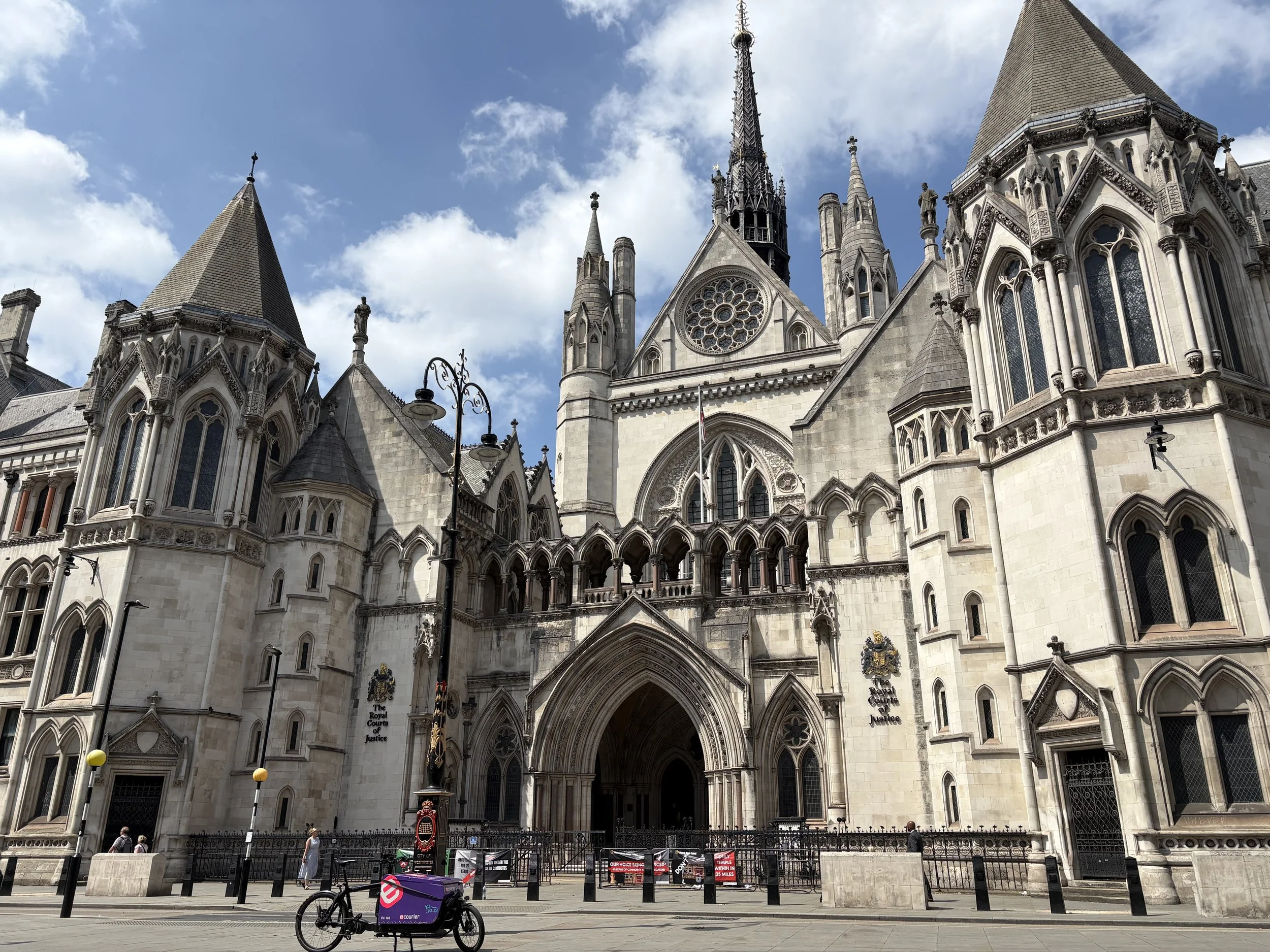
Royal Courts of Justice, London 2026

The Royal Courts of Justice: a posh name for a posh building. In these courts, non-criminal cases are held. Designed by architect George Edmund Street, this building houses the High Court and the Court of Appeal of England and Wales. Cases such as the Paul McCartney v. Heather Mills (2008) divorce, the Madonna v. Guy Ritchie (2008 and 2016) family division, as well as the Johnny Depp v. News Group Newspapers / Amber Heard (2020) defamation trials took place here.


I find it interesting that these two courthouses are split into different buildings. To be tried in the Old Bailey is a statement in and of itself: your case is more serious, and therefore you are a criminal and will be tried as such. Lady Justice herself is atop of this building: a sword in one hand to represent power and authority, and a balance to represent fairness…is that the definition of justice? To me, that inspires fear. No person nor court should be given the power to sentence another human being to death and call itself fair. The French Revolution considered attempts on the lives of spies to be fair and just. How is this reality different from the court system? Paranoia and power are stronger motivators than they are given credit for.

To the credit of the UK, the death sentence was abolished in 1965. However, this was not the reality in the 18th century—and if we are being honest…1965? That was barely 60 years ago.

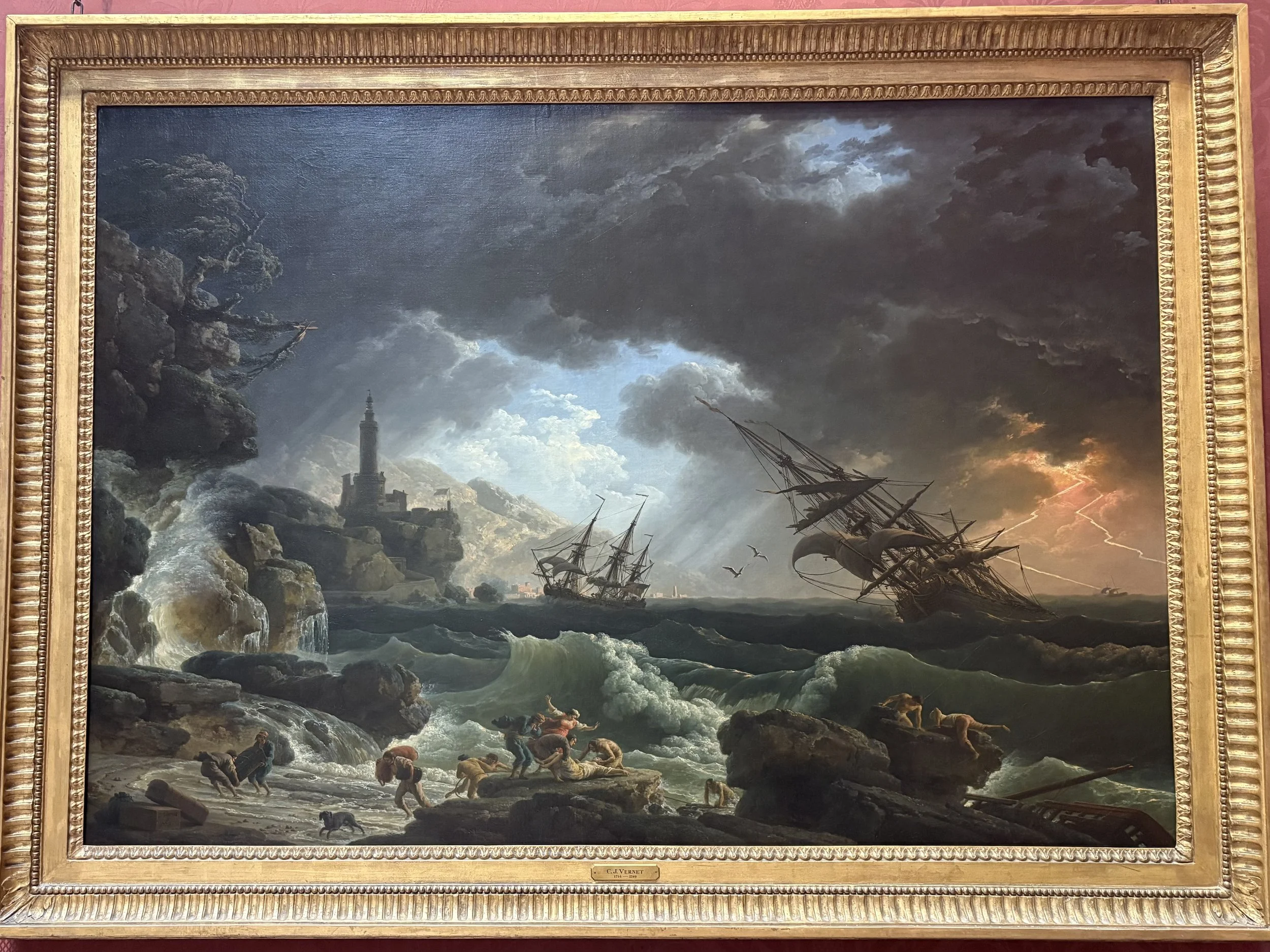
A Shipwreck in Stormy Seas by Clause-Joseph Vernet in 1773. Located in Tate Modern Museum, London.

“In contrast with the tranquil atmosphere of its pair, ‘Calme,’ displayed nearby, this painting depicts a violent storm. Two ships roll in the giant swell, while a third lies shattered against the rocks. Some survivors carry salvaged goods up the shore. Others despair over the body of a woman. Such paintings were fashionable in the 18th century, reflecting contemporary ideas about the beauty and power of the natural world.” 

A Shipwreck in Stormy Seas by Vernet is my favorite painting in the Tate Modern. You may be saying to yourself: “Kendra! What about Van Gogh?! Giovanni!” Yes, I know. There are masterpieces of a lifetime in this museum, but something about this one enraptures me. To be clear, this image fails to show the scale of this painting. Standing at 3.75ft tall and 5.3ft wide, I sat on a bench and stared at this stunning oil painting for the better half of an hour. The representation of power and justice being served by the natural world, equally distributing its force to all, with no regard for the human deemed good versus evil; this was an extremely moving depiction of a reality so often forgotten. At the end of the day, we are all at the mercy of one: Mother Earth. No amount of authority or power can change this.

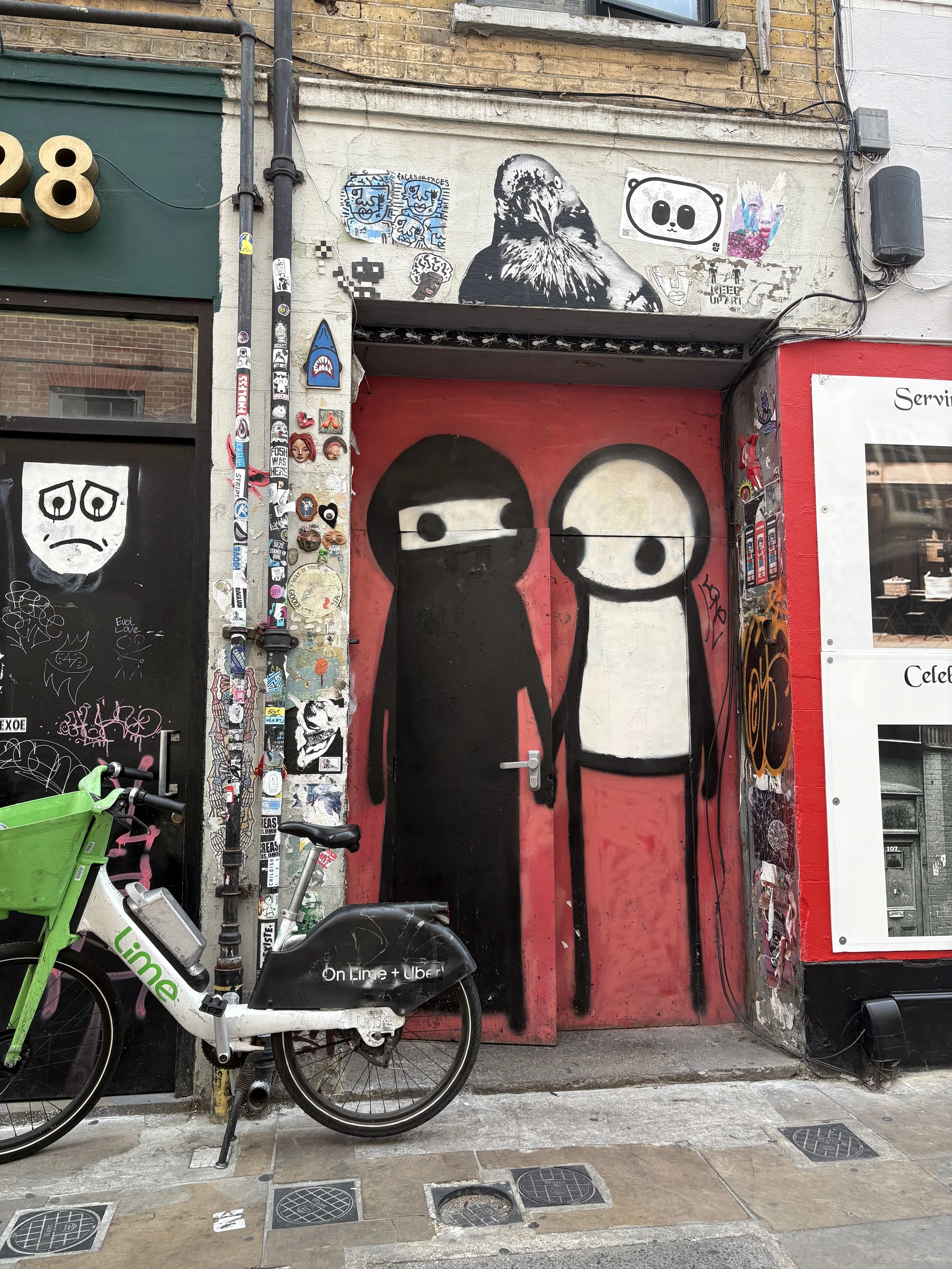
BLM: Black Lives Matter

I found these two pieces of street art while walking around the Bangladesh district in London. I find them extremely calming. While the justice system is brute and absolute, people are kind and forgiving. We as a society tend to forget we are all just human beings. Humanity, reformation, and equity for all without the corruption of power; that is the definition of justice.

Football’s not coming home this year.

I am not a sports fan. It seems to be a fever I never caught growing up. Even though I was born and raised in Los Angeles, home to prolific teams such as the Lakers and the Dodgers, I was never very intrigued.

My disinterest doesn’t mean I don’t get sports, though. There’s something beautiful about having something to rally behind with your friends, family, and even fellow countrymen. Indeed, I’ve always been fascinated by the worldwide obsession with football in particular. To me, it’s always seemed to be an especially patriotic (or nationalistic, depending on how you view it) sport. Sure, most of the season is spent with clubs like Real Madrid and Man City (I had to look them up to confirm I didn’t make them up, so that shows you my general level of knowledge), but when the World Cup comes around, people light up like nothing I’ve ever seen before. Friends of mine who’ve never been interested in soccer tune in. I remember the last World Cup in 2022, when I was still in high school. There wasn’t a single class period where I couldn’t find a classmate watching an ongoing match on their Chromebook instead of listening to the lecture. It’s a real phenomenon!

In many ways, the World Cup brings people together. Everyone’s watching ‘the beautiful game’ while cheering for whoever they may please - their home country, a team with their favorite player, or even whatever country they deem to have committed fewer colonial offenses in their past. So, when I found out that England had made it to the quarterfinals of the World Cup while I would be in London, I was excited! It’s (likely) a once-in-a-lifetime experience for me. I’d get to see what watching football in a proper English pub was like.

My knowledge of English pub culture comes entirely from Ted Lasso.

So, on my first day here, I went straight off my flight from Los Angeles (even though it was delayed by 7 hours) to watch the England v. Norway game at a pub with the rest of the group. It was certainly a fun time! Transparently, while I didn’t fully know what was going on, I got the general gist of the sort of conviviality and fun that these sorts of games brought. And when England won that quarterfinal game, everyone was ecstatic. Going home in high spirits, I thought that it would be quite interesting to see what happened next. I mean, I didn’t have any emotional investment in the game, but come on. England hasn’t won in 60 years! It certainly would be fun to see them have their time.

Cut to Wednesday evening, and it was time for England v. Argentina. A group of us went to the pub, sat to have some drinks and watch the semifinal. The mood in there was joyful the entire time. The first 85 minutes came and went comfortably, with England scoring a goal right before the end of the first half and holding Argentina off. Then, Argentina scored and tied with only five minutes left. 1-1. Some groans, and the bated silence began. Seven minutes later, Argentina scored again. 2-1. The nine-minute extension wasn’t over, but the pub began to clear out. People knew the game was done, and they were right. The mood was certainly down. Of course, it was certainly reasonable to be disappointed.

When we walked out to find a place to sit and chat, I noticed the security presence had increased significantly. As I started to scan the area, I saw some quite intoxicated and belligerent guys outside shouting. While they initially didn’t seem that out of the ordinary, I kept watching and realized just how angry they were. I don’t usually get phased by much, so I was surprised to be put off by what I saw. But there were multiple of them who were gruffly screaming bloody murder at passersby to the point that security had to grab them and order them (somewhat unsuccessfully) to head home.

While I was unsettled, I couldn’t put my finger on why. Then, I opened my phone and saw this.

For lack of a better term: Jesus Christ. I mean, so much to unpack here. In this class, we’ve been reading A Tale of Two Cities and talking a lot about the cruel comedy of the character Jerry Cruncher. He’s a minor character who works as a porter for Tellson’s Bank by day and a grave-robber by night. While he is supposed to demonstrate the plight of the poor in 18th-century London, he’s also supposed to give us something to laugh about.

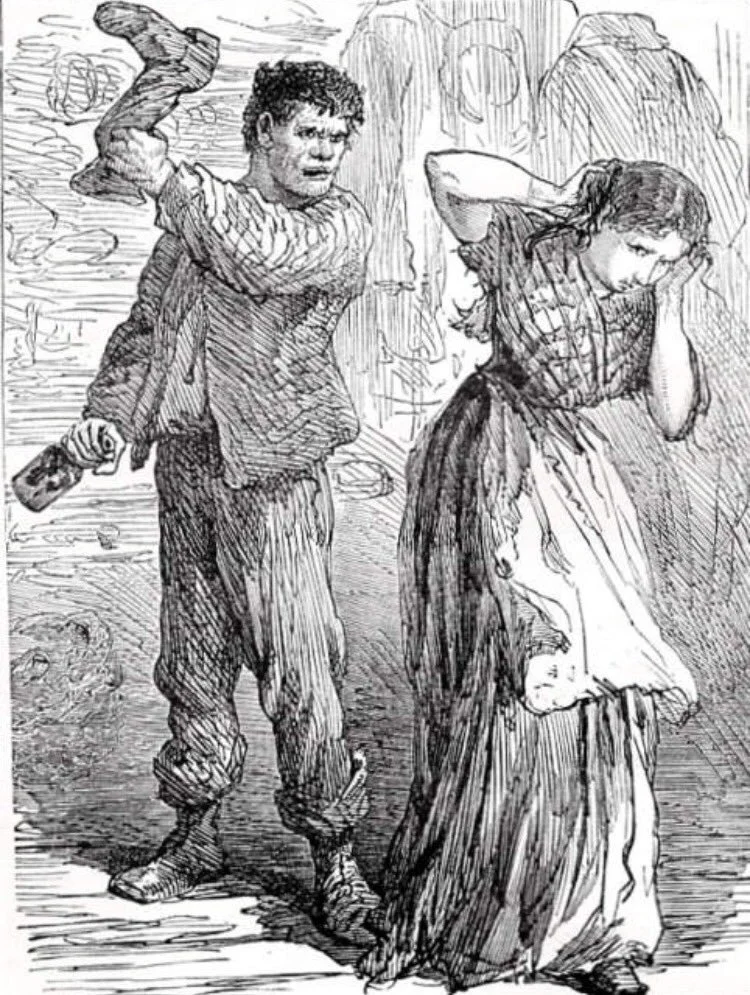
During our first introduction to Cruncher’s home life, we see him wake up already angry at his wife, who’s silently praying in the corner. He throws a boot at her, demands to know why she’s praying, and when she says she’s praying for him, verbally abuses and mocks her in front of their son. This theme continues throughout the novel, as he takes out his fears about his illegal activities at night by shifting the blame onto her.

Reading this in the 21st century, it’s no longer perceived as funny. I mean, it’s pretty well established that throwing a boot at your wife is abuse. It’s clearly not something anyone should have to put up with. As our norms have shifted, our interpretation of Cruncher has as well. But while we'd like to believe that domestic abuse is a shrinking problem of the past, it’s really not.

A 2022 campaign by Women’s Aid found that cases of domestic abuse increased by 38% when England lost a match and 26% when they won or drew. Thinking about those guys outside the pub, I started to wonder if they had partners or children at home who would face that redirected anger. And my discomfort started to make sense.

Being in London and bookpacking these wonderful novels is truly a gift. Putting myself in the characters' shoes is unlike anything I've ever done before. There is so much rich history down every street and alleyway we wander. Yet, my time here has consistently reminded me that England still suffers from its inability to shed its traditional thinking in basically every way, shape, and form. As much as I would like to believe that things have changed since 1859, some themes still ring true.